






Abstract
This article examines how Metropolitan Planning Organizations (MPOs) respond to vehicle electrification and factors that shape these strategies. Using multiple quantitative and qualitative methods, an analysis of planning documents from fifty-two MPOs finds that most MPOs recognize the environmental potential of electric vehicles (EVs), as well as the emerging challenges related to funding, infrastructure, and implementation. The results also highlight the influence of state-level EV policies and regional car dependence on MPO responses. These findings suggest that EV planning should be more closely integrated with state transportation and environmental strategies and coordinated with broader transportation decarbonization efforts.
Keywords
Introduction
Vehicle electrification, as a climate action and transportation policy, represents a complex and often controversial role in urban and regional planning. On one hand, it offers environmental and public health benefits that are especially salient in a car-dependent society. They may particularly benefit communities of color, which experience disproportionate exposure to vehicle-related pollution (Boeing, Lu, and Pilgram 2023). Additionally, rapid technological advances have enabled vehicle electrification to progress at an unprecedented pace. On the other hand, vehicle electrification raises several planning and policy concerns, including declining fuel tax revenues due to electrification (Lewis and Clark 2021; Millard-Ball and Guerra 2025; Taylor, Morris, and Brown 2023) and inequities in access to charging infrastructure and clean vehicle fleets (Yu et al. 2023).
This study focuses on the role of Metropolitan Planning Organizations (MPOs) in planning for electric vehicles (EVs). Established by the Federal Highway Act of 1962, MPOs have long served as key actors in allocating federal and state transportation funding. Although they are neither direct funders nor implementing agencies, MPOs play an important intermediary role in vehicle electrification. The MPOs are involved in state- and federal-level vehicle electrification funding programs, though their roles vary depending on state-specific legal and institutional frameworks. For example, in some states such as Michigan, New York, Oregon, and California, MPOs serve as policy stakeholders in the National Electric Vehicle Infrastructure (NEVI) Formula Program, which supports charging network development (Joint Office of Energy and Transportation 2024). In these contexts, MPOs communicate with local governments to identify EV infrastructure needs, support charging siting decisions, ensure alignment with regional plans, and identify additional funding sources (Joint Office of Energy and Transportation 2024). In other states, such as Texas, MPOs play a more formal role in reviewing and approving proposals from charging station developers seeking NEVI funding (Oden and Gaskill 2023). In the EV era, MPOs must also work with a wider range of actors. In particular, they need to coordinate with local governments to ensure that the implementation of EV charging follows jurisdictions’ building and land-use codes, and work with utilities to optimize deployment of EV charging networks to maintain the resilience of the grid network and availability of charging stations in various communities (Oden and Gaskill 2023; U.S. Department of Transportation, Joint Office of Energy and Transportation, and U.S. Department of Energy 2023). In addition, as regional planning organizations, MPOs focus on strategic and long-term planning and must consider how vehicle electrification aligns with broader decarbonization strategies, such as promoting public transit and transportation demand management.
This study asks a fundamental question: how do MPOs plan for EVs? Despite more than a decade of research on the role of MPOs in regional transportation planning and on EVs (see details in the Literature Review section), no study has examined how MPOs—as major regional transportation agencies—understand opportunities and challenges in transportation planning in an era of rapidly growing EV use, or how they prepare for these changes by adopting specific goals and strategies. It is also unclear which factors drive these variations at the MPO level.
This study examines plans from fifty-two MPOs to understand how regional transportation planning agencies are preparing for the EV era and to identify the underlying factors shaping their EV-related strategies. The findings show that MPOs are leveraging a range of federal and regional funding opportunities to advance vehicle electrification across private and public transportation systems. However, state-level EV policies and regional social and economic conditions also contribute to variations in MPOs’ EV strategies. As the first study to examine the role of MPOs in advancing vehicle electrification, this paper explains why some MPOs have emerged as EV leaders while others lag behind. It also demonstrates how transportation finance and state policy support can better align with goals of vehicle electrification and, more broadly, transportation decarbonization.
Literature Review
This study draws on two distinct but interrelated bodies of research. The first, primarily from planning scholars, examines the role of MPOs in addressing pressing planning issues related to vehicle electrification, such as climate change and transportation technology. The second, mostly done by environmental studies scholars—particularly environmental economists—documents the environmental, social, and economic opportunities and challenges of vehicle electrification, as well as factors related to EV adoption and the local policies that regulate them. We conclude this section by identifying research gaps at the intersection of urban planning and EVs.
The Role of MPOs in Climate Change and Transportation Technology
The MPOs are key players in regional transportation planning. By including state Department of Transportation (DOT) and local officials, MPOs operate under the 3C (continuing, cooperative, and comprehensive) framework to coordinate the allocation of federal and state DOT funding and the implementation of various local transportation projects, including highway management, active travel projects, and transit-oriented development (Sciara 2017). The MPOs’ regional coordination role aligns with the trans-jurisdictional nature of many planning problems, such as urban sprawl, growth management, and vehicle travel management, which require collective actions beyond local boundaries (Mullin, Feiock, and Niemeier 2024; Niemeier, Grattet, and Beamish 2015; Ostrom 2010).
One of the most urgent challenges regional transportation planning must address—through tools like long-range plans (LRPs)—is the transportation sector’s significant contribution to greenhouse gas (GHG) emissions. However, partly because of the absence of federal requirements, only a small number of MPOs have set goals to reduce GHG emissions in their LRPs (Mullin, Feiock, and Niemeier 2024). A major driver of transportation-related GHG emissions is auto-dependent planning. Accordingly, scholars and practitioners have called for a shift from mobility-based to accessibility-based planning, which emphasizes the ease of reaching destinations. Such a shift also has the potential to reduce vehicle travel and, accordingly, transportation-related GHG emissions (Grengs et al. 2010; Levine et al. 2012). Although many LRPs include the concept of accessibility, only a few have developed specific performance metrics related to it (Proffitt et al. 2019).
However, setting goals in LRPs does not necessarily translate into taking transportation decarbonization actions. This is evident in the limited effect of California’s Senate Bill (SB) 375, which requires MPOs to meet state-level GHG reduction goals through smart growth strategies. One important reason for the legislation’s limited success is the mismatch between authority and responsibility among MPOs, resulting in a lack of resources for MPOs—especially small ones—to effectively implement SB 375 (Barbour and Deakin 2012). Additionally, MPOs often lack the ability to control land use, raise revenue and taxes, and influence local-level planning implementation, further reducing their role in executing climate-related strategies (Niemeier, Grattet, and Beamish 2015; Sciara 2017).
Alongside climate change, MPOs must also navigate the growing uncertainties posed by emerging transportation technologies, such as autonomous vehicles (AVs) and EVs. A report conducted by Florida DOT (Srinivasan et al. 2016) demonstrated that, while many MPOs view such technologies positively, they remain uncertain about the planning implications in a future shaped by transportation technologies. Incorporating “nontraditional” stakeholders, such as technology developers and behavior modelers, into the planning process is an emerging planning practice. Still, a national-level study showed that most MPOs are not yet prepared for a driverless era; for instance, they are uncertain about the timing of AV deployment and how it may impact human behavior and urban development; therefore, only a few MPOs have actively engaged in developing travel forecasts in an AV era (Guerra 2016; McAslan, Gabriele, and Miller 2021). A more recent study found that only seven of fifty MPOs have considered planning for transportation technologies using forecasting models and adaptive governance structures, as reflected in their LRPs (McAslan, Gabriele, and Miller 2024).
Understanding Vehicle Electrification and Its Adoption
Limitations in planning for both climate change and new technologies highlight the need to better understand the broader implications of vehicle electrification—in terms of its benefits and adoption challenges. On one hand, scholars have widely recognized the environmental, health, and economic benefits of EVs (Choma et al. 2020; Pan et al. 2023; Yu et al. 2023). Even when life-cycle emissions—including those associated with battery production—are considered, EVs produce lower carbon emissions than internal combustion engine vehicles (Xia et al. 2022). Economists have also noted the potential economic benefits for cities created by EV charging stations (Liang et al. 2023; Zheng et al. 2024). For example, proximity to EV charging stations is related to higher housing prices (Liang et al. 2023), the growth of small businesses, and increased consumer spending (Zheng et al. 2024).
On the other hand, many scholars remain skeptical about the overall role of EVs in addressing broader transportation issues, such as traffic congestion. One challenge is the loss of revenue for transportation planning and investment (Jenn, Azevedo. and Fischbeck 2015). Social equity is another area of concern in vehicle electrification. As Henderson (2020) points out, EV use tends to benefit the companies that sell the vehicles and the wealthy consumers who buy them while reinforcing car dependence. Moreover, the uneven distribution of charging infrastructure across residential and employment areas of varying income levels contributes to socioeconomic disparities in access to EVs and charging stations (Carlton and Sultana 2022). Residents of disadvantaged communities and those living in multifamily dwellings (Pierce and Bui 2024) may therefore gain fewer environmental benefits (Yu et al. 2023).
Beyond documenting the benefits and drawbacks of EVs, prior research has examined how different EV policy instruments affect adoption outcomes. A literature review demonstrated that consumer subsidies and incentives are generally effective in promoting EV adoption, but their marginal impact diminishes once adoption reaches higher levels (Anilan and Vij 2024). In response, some states and localities in the United States have scaled back financial incentives and instead introduced EV-related fees to offset lost revenue (Hayashida, La Croix, and Coffman 2021; Stokes and Breetz 2018). Millard-Ball and Guerra (2025) argue that the shift to EVs necessitates a transition from gasoline taxes to distance-based pricing systems. However, they caution that the new revenue should be used in transit development or other forms of social spending, rather than on highway expansions.
Financial incentives are also more effective when combined with complementary infrastructure policies, particularly charging support (Anilan and Vij 2024; Li et al. 2022; Qiu, Zhou, and Sun 2019). In addition, evidence suggests that subsidies distributed directly to customers tend to be more effective than tax credits and charging infrastructure subsidies (Clinton and Steinberg 2019; Jenn, Springel, and Gopal 2018). Other nonfinancial incentives, such as access to high-occupancy vehicle (HOV) lanes, have also been associated with greater EV adoption (Jenn, Springel, and Gopal 2018; Sheldon and DeShazo 2017). In contrast, parking incentives remain controversial, with studies in China (Qiu, Zhou, and Sun 2019; Wang, Pan, and Zheng 2017) and Sweden (Egnér and Trosvik 2018) showing no effect of free parking or designated parking spots on EV adoption at the municipal level.
Regions exhibit heterogeneous preferences and policy approaches in promoting EVs, and prior research attributes these differences to institutional, political, environmental, and economic factors. First, regions are embedded within subnational and national governance systems that vary in terms of their regulatory frameworks and incentives for EV use, shaping local EV policy responses (Tilly et al. 2025). Second, the political environment, especially environmental ideologies, plays a vital role in shaping EV policies. In the United States, states with higher democratic vote shares are more likely to support EV incentives (Hayashida, La Croix, and Coffman 2021) and less likely to implement EV-related fees (Fonseca et al. 2024). Third, environmental and fiscal pressures predict policy choices, especially when it comes to disincentives such as EV-related fees. Evidence shows that higher fuel efficiency, which suggests greater revenue losses from gasoline taxes, is related to a higher likelihood of implementing EV fees (Fonseca et al. 2024; Soltani-Sobh et al. 2015). Finally, economic considerations also matter: cities with larger populations and higher shares of vehicle manufacturing may be more willing to promote EVs in anticipation of economic benefits from EV-related production and consumption (Chen et al. 2021).
Research Gaps
Although several studies have analyzed the LRPs of MPOs—particularly those of large, leading agencies—to assess efforts in reducing GHG emissions and responding to emerging transportation technologies (Guerra 2016; McAslan, Gabriele, and Miller 2024; Mullin, Feiock, and Niemeier 2024), none have specifically examined how MPOs plan for EVs, a topic that intersects with both climate change mitigation and technological innovation. Meanwhile, research from environmental studies highlights the complex and sometimes contested role of EVs in transportation planning, along with the varying effectiveness of different policy instruments. Given the uncertainties EVs pose—from infrastructure demands to equity implications—and the likely variation in how MPOs approach them, it is crucial to understand how MPOs perceive EVs and what strategies they are adopting to prepare for an EV future. More importantly, it is critical to understand the distinct pathways that lead to different levels of EV policy adoption at the regional scale. Existing studies have paid limited attention to these drivers, and to our knowledge, none have systematically examined them at the regional level.
Methods
In this article, we examine how MPOs plan for vehicle electrification, as reflected in LRPs. We further explore the factors related to vehicle electrification strategies. In this study, we combined quantitative text analysis, content analysis, and fuzzy-set qualitative comparative analysis (fsQCA). In the sections that follow, we detail our data collection strategies and analytical methods.
Data Collection Strategies
We collected recently adopted (2018–2024) LRPs of fifty-two MPOs from their official websites in October 2024. These documents represent the most recent planning goals and strategies of each MPO. Fifty-two MPOs were selected as Metropolitan Statistical Areas (MSAs) that have more than one million people based on the 2015–2019 American Community Survey. 1 Like prior studies (Guerra 2016; McAslan, Gabriele, and Miller 2024; Mullin, Feiock, and Niemeier 2024), we selected these large MPOs because they have the strongest planning capacities and are therefore more likely than others to consider planning for EVs. Although they are not representative in terms of size or location, their LRPs are expected to contain the most comprehensive information on EV planning. Supplemental Appendix A summarizes relevant information about the selected MPOs and their plans.
We first extracted all text related to EVs from all fifty-two plan documents. Supplemental Appendix B details the extraction methods. For example, some MPOs included goals related to EV adoption, such as percentage of vehicle sales, while most outlined strategies to support electrification, such as expanding public charging infrastructure and local incentives for EV adoption and charging support. Some plans also described how they leverage federal- and state-level incentives, such as the NEVI program, by prioritizing projects that qualify for federal or state support. The final sample size is 684 paragraphs from fifty MPO plans. 2 Supplemental Appendix C summarizes the EV-related word and paragraph counts in the MPO plans. Supplemental Table A-2 shows that the number of paragraphs mentioning EVs varies across plans, and Supplemental Figure A-1 demonstrates the locations of the MPOs and the proportions of the text in their LRPs. As shown in Supplemental Figure A-1, most MPOs devote less than 3 percent of their LRPs to EV-related content. The MPOs that discuss EVs in more than 5 percent of their LRP text are primarily concentrated on the East and West coasts, with a few outliers—such as the North Central Texas Council of Governments (NCTCOG), with 6 percent of their LRP comprising EV-related content.
To further examine variation in EV strategies across MPOs and the underlying drivers, we developed a metric (see Table A-6 in Supplemental Appendix F) to measure MPO commitments to vehicle electrification across multiple strategic dimensions. In this metric, we assign scores of 1 or 2 to incentives that support EV adoption and scores of −1 or −2 to disincentives, particularly those involving EV-related fees. Our scoring system distinguishes between strategies mentioned in plans (±1) and strategies implemented in practice (±2). We use each MPO’s total score as an indicator of its overall commitment to EV adoption.
Drawing on the literature reviewed earlier, we identified several factors critical to EV policy adoption at the MPO level: (1) state-level EV incentives and disincentives; (2) state-level emissions standards; and (3) MPO-level characteristics, including population size, the share of commuters traveling by private vehicle, and the share of workers employed in automobile manufacturing sectors. Table A-3 in Supplemental Appendix D summarizes the operationalization and data sources for these variables.
Analytical Strategies
After extracting these paragraphs, we first used structural topic modeling (STM), a quantitative text analysis method, to identify the main topics related to EVs. Topic modeling is an unsupervised machine learning approach that automatically uncovers latent themes in a collection of texts (a corpus; Blei and Lafferty 2009; Blei, Ng, and Jordan 2003). The output contains a set of words that co-occur in the corpus based on probabilities. STM, as used in this study, builds on Latent Dirichlet Allocation (LDA)—one of the most widely used approaches in the planning field (Fu 2024)—by incorporating covariates that account for correlations among topics. Despite recent advances in natural language processing models reviewed by Fu (2024), STM, an extension of LDA, produces highly interpretable results while accounting for correlations among various topics, making it a reasonable method for exploratory analysis in transportation planning. Supplemental Appendix E explains in detail how we derived these topics, including steps we took to clean the corpus and determine the optimal number of topics; this supplemental appendix also discusses how STM advances LDA.
As policy scholars (Isoaho, Gritsenko, and Mäkelä 2021) suggest, topic modeling and qualitative content analysis have great potential to supplement each other: topic modeling can inform the coding framework for content analysis, and scholars can use content analysis and iterate the coding steps to supplement topic modeling. Therefore, similar to Brinkley and Wagner (2024), we further conducted a content analysis based on the topic modeling results. We followed Baer’s (1997) plan assessment approach and coded each sentence based on the following content categories: (1) opportunities of EVs, (2) challenges of EVs, (3) goals related to EVs in the LRP, and (4) strategies related to EVs, especially the influence of federal bills and programs on vehicle electrification. These dimensions served as the initial coding framework. We then refined and expanded the category structure based on the STM results and the content of the MPO plans, following the qualitative content analysis procedures outlined by Schreier (2026). We conducted the content analysis using NVivo 15. Supplemental Appendix F details the analytical steps and explains how we integrated the qualitative analysis with the STM results generated in the first stage of the analysis.
Finally, we employed QCA to identify paths associated with higher levels of commitment to EV strategies. The QCA is a set-theoretical method that identifies a combination of conditions contributing to specific outcomes (Ragin 2014). In this study, we applied fsQCA, in which the outcome—the intensity of support for EVs—was calibrated as an ordinal measure reflecting varying levels of support at the MPO level. This approach enables examining multiple pathways, involving combinations of various state- and MPO-level factors, which can lead to: (1) stronger support for EV strategies and (2) limited support for EVs. As this method is asymmetrical, configurations toward the above outcomes do not mirror each other. We estimated both models and detailed the measurements and calibrations in Supplemental Appendix G. We used the QCA package (Thiem and Duşa 2013) in R 4.2.3 to conduct the analysis.
How Do MPOs Plan for EVs?
In this section, we present the STM results and demonstrate how these findings informed the coding for the content analysis. We then describe the content analysis in three subsections: documented opportunities and challenges about EVs, goals for EVs as indicated in the plans, and planning strategies for EVs. Finally, we discuss the drivers of varying levels of support for EV use.
STM Results
Supplemental Table A-4 presents seventeen topics identified using the STM, ranked by the proportion of text associated with the topic (see the third column). For each topic, we selected the top six words based on the STM results.
Several topics (1, 5, 10, and 12) examine how EVs shape current and future transportation systems. Keywords in Topic 1 include “share” and “autonomous,” suggesting how EVs intersect with other emerging transportation technologies like autonomous and shared mobility. Topics 5 and 12 emphasize electrifying public transit and rail systems, respectively. Topic 10 discusses mobility hubs.
Topics 2, 8, 16, and 17 explore energy and infrastructure demands in the EV era. Topics 2 and 17 address infrastructure needs, such as charging stations, electricity grids, and transportation corridors. Topic 8 centers on energy and battery technologies, while Topic 16 considers future road development.
Another major theme focuses on the connection between EVs and GHG emissions. Topic 3 features terms such as “emission” and “air,” while Topic 13 includes words such as “reduction” and “goal,” emphasizing EVs’ role in cutting emissions. Topic 15 points to the continued rise in vehicle travel, hinting at the needs to promote EVs to help manage GHG emissions. Topic 4, characterized by terms like “clean” and “fuel,” highlights the contribution of alternative fuels to emissions reduction.
Several topics address the policy dimensions of EV planning. Topics 7, 9, and 11 examine financial strategies and implications in an EV era. Topic 7 explores taxation and revenue impacts, Topic 9 focuses on consumer incentives (e.g., “purchase” and “incentive”), and Topic 11 outlines the role of federal programs in encouraging EV use. Beyond transportation finance, Topic 6 highlights regional planning efforts, and Topic 14 emphasizes partnerships with private-sector stakeholders.
The topic correlations shown in Figure 1 further demonstrate that the increase in vehicle miles traveled (VMT) is a common reason for promoting EVs and related infrastructure among MPOs; for example, MPOs might use EVs as a tool to reduce GHG emissions and lower VMT. The figure also highlights a dilemma in transportation finance in an EV era: while EVs may bring in federal and state funding for MPOs, they must also bear declining revenue from the reduction in gasoline taxes paid. Figure 1 also shows notable connections between three pairs of topics: incentives and transit electrification; public charging infrastructure and public–private partnerships; and emerging technologies and future road development. In contrast, some other strategies—such as mobility hubs, rail development, regional planning, and charging and energy—do not appear to be related to any other topics, suggesting that these policies might be specific to a few MPOs.
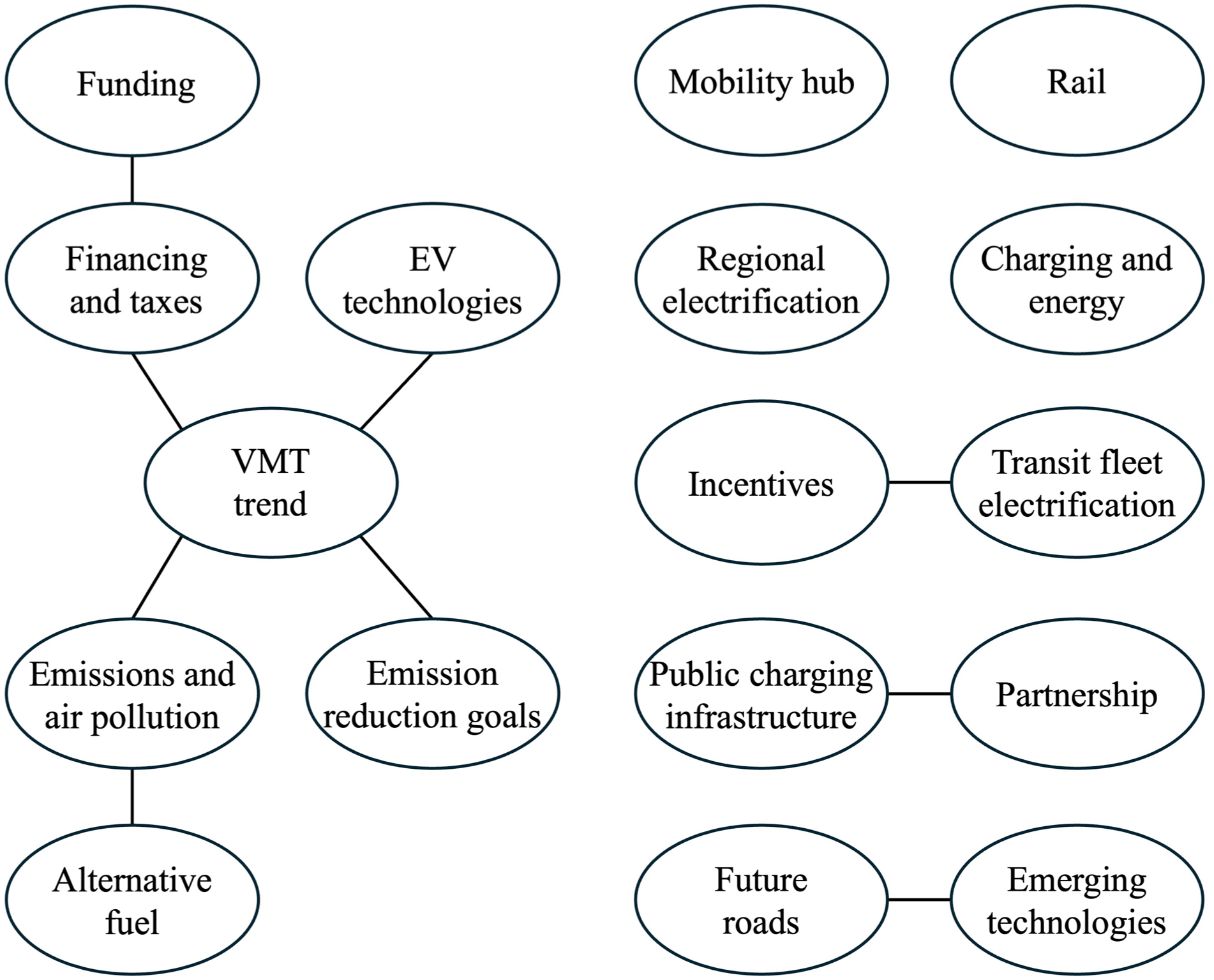
Topic correlations.
The STM results reveal a range of opportunities and challenges in EV planning, along with motivations and strategies. These findings contribute to the subsequent analysis in two ways (see Supplemental Appendices D and F for further details). First, they reveal associations examined in later stages. For example, the relationship between transportation finance and electrification indicates that funding is a prominent component and a contributing factor to electrification efforts. Similarly, trends in VMT are associated with MPOs’ support for EV initiatives. Second, the findings inform the development of subcategories for coding EV-related text, such as framing emissions reduction as an opportunity and positioning electrification of autonomous vehicles as a strategy for supporting EV adoption. 3
Opportunities and Challenges of EV Adoption for MPOs
Aligned with the STM results, a majority of MPOs (thirty-six of fifty) identified environmental benefits as key opportunities (Figure 2), and ten of these thirty-six MPOs further acknowledged the public health benefits of EVs, particularly their role in reducing air pollution for surrounding neighborhoods. Several MPOs noticed that these benefits are especially pronounced for transit and trucks.
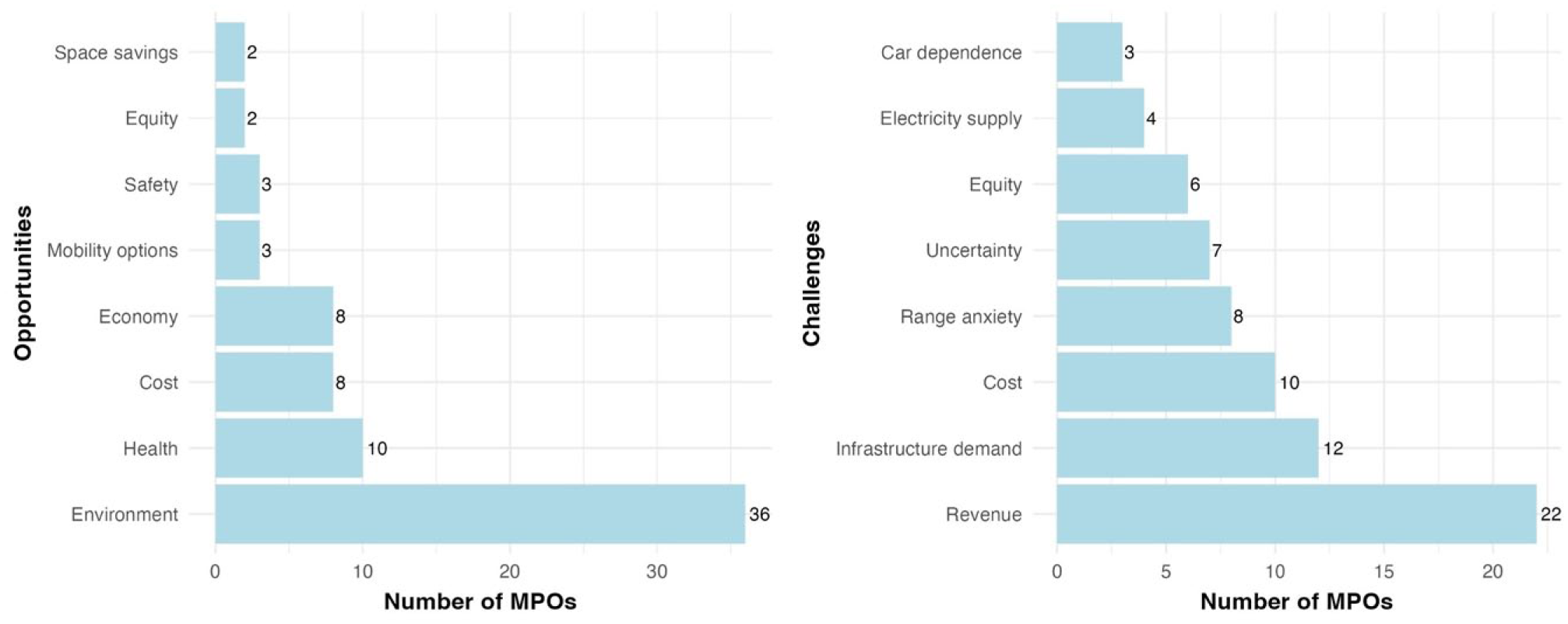
Number of Metropolitan Planning Organization plans mentioning various opportunities and challenges related to electric vehicles.
In addition, economic development and technological innovation are crucial reasons for EV adoption. For example, the Sacramento Area Council of Governments (2023) acknowledged that promoting EVs “will seed new business ventures, encourage new technology training for the regional workforce, and make our region a center of the clean transportation industry.”
As shown in Figure 2, seven MPOs expressed uncertainties about EVs. These concerns mainly include the adoption rates of EVs, the extent to which these technologies can change travel behavior and land-use patterns, and how quickly MPOs and local agencies can build capacity to address these uncertainties. As the Denver Regional Council of Governments (2024) cautioned, “Without adequate planning, a haphazard implementation of connected, automated, shared and electric vehicle technologies may misalign with the region’s vision or lead to negative outcomes.”
In addition to uncertainties about the future, the loss of transportation revenue and a lack of related infrastructure, especially public charging stations, were two major challenges described in the plans: revenue losses were mentioned by twenty-two MPOs, and twelve MPOs acknowledged the infrastructure challenges. For example, as calculated by the Southern California Association of Governments (SCAG 2024), “large-scale fleet conversion to zero-emissions vehicles could result in up to a 75-percent loss of fuel tax revenue for the region.” In addition, eight MPOs mentioned “range anxiety” as a challenge, which is highly relevant to a lack of charging stations.
The MPOs have also recognized the complex implications of EV adoption for transportation affordability and choices. Eight MPOs (e.g., Jacksonville, FL) acknowledged that EVs have lower operational costs compared to gasoline-powered cars. Two MPOs (Hartford, CT, and San Diego, CA) thought that low-speed EVs or other alternatives can provide zero emissions and affordable travel options (equity). Another three MPOs applauded EVs’ potential to create more travel options, particularly when integrated with shared and autonomous technologies. Meanwhile, ten MPOs, including SCAG, raised concerns about the high upfront purchase costs of EVs for low-income households.
Despite ongoing discussions about cost and equity implications of EVs, only three MPOs mentioned car dependence as a possible consequence of accelerating vehicle electrification. For instance, the Wasatch Front Regional Council (2023) noted that, without broader changes in other transportation systems, EVs merely replace gasoline vehicles rather than reduce overall vehicle travel demand. As they noted, “other external forces, such as telecommuting and connected and autonomous vehicles (CAVs), have more implications for shaping our transportation system and land use in the medium and long terms.”
EV-Related Goals and Strategies
Table A-5 in Supplemental Appendix F further demonstrates that MPOs have specific EV-related goals for different geography levels, vehicle types, and purposes. Out of the fifty MPO plans examined, only seventeen explicitly mentioned their goals related to EVs. Table A-5 shows a range of goals: while MPOs such as the Atlanta Regional Commission (ARC) and NCTCOG set EV adoption goals based on federal requirements—50 percent of new sales must be electric by 2030—some other MPOs, such as the Boston Region MPO, have adopted their state’s far more ambitious goal—all new sales must be electric by 2032. This table also highlights that some progressive states, such as California and Massachusetts, and some regions, such as the Metropolitan Council (Met Council) of Minneapolis and the Orlando MPO, have adopted additional aims in terms of electrifying bus fleets. In addition, several MPOs, such as the Puget Sound Regional Council and the Met Council, have included both emissions reduction and EV adoption goals in their plans.
Table A-6 in Supplemental Appendix F further illustrates the different EV strategies mentioned or implemented by MPOs. Charging infrastructure development and electrification for public transit are two dominant approaches. Respectively, forty-one and thirty MPOs mentioned charging infrastructure development and electrifying transit and public fleets in their plans. The prominence of these two strategies is partly attributable to various federal and regional grants aimed at accelerating vehicle electrification, with many MPOs highlighting the significance of the NEVI program.
In response to anticipated losses in gasoline tax revenues resulting from vehicle electrification, MPOs have begun to consider transportation finance responses. As shown in Supplemental Table A-6, only five MPOs reported implementing regional- or state-level purchase incentives in the recent survey, while two reported adopting tax credits. At the same time, many MPOs have explored EV-related user fees. Supplemental Table A-7 shows that several large MPOs, including NCTCOG, ARC, and SCAG, have considered or implemented such fees (Category 9).
Collaboration and coordination also emerge as central components of MPO strategies for advancing vehicle electrification. Supplemental Table A-6 shows that nearly thirty MPOs have considered or enacted strategies to ensure implementation in vehicle electrification, and about half of them coordinated with transportation technology companies and utilities, education, and outreach. For example, the Boston Region MPO encouraged transit agencies to engage in battery leasing and financing programs offered by bus manufacturers. The agency also established programs that allow transit agencies and local governments to defer EV-related utility payments as a reward for energy efficiency gains in electrification (Boston Region MPO 2021). In addition, twenty-one MPOs have mentioned or incorporated coordination with emerging mobility systems, such as autonomous vehicles and shared mobility, into their EV strategies, often necessitating partnerships with technology providers. Beyond local initiatives, interregional efforts such as the West Coast Collaborative Alternative Fuel Infrastructure Corridor Coalition and the partnership between the Dallas and Houston MPOs illustrate expanding coordination of EV planning across state and regional boundaries.
Taken together, Figure 3 shows substantial spatial variation in levels of MPO commitment to EV strategies. In general, MPOs on the East and West coasts exhibit stronger support for EV adoption, whereas MPOs in the South and Midwest demonstrate comparatively lower levels of commitment. Several notable outliers from these regional patterns emerge. For example, the MPOs of Washington, DC, and Sacramento display moderate levels of commitment, while others, such as NCTCOG and ARC, stand out as national leaders in advancing EV adoption.
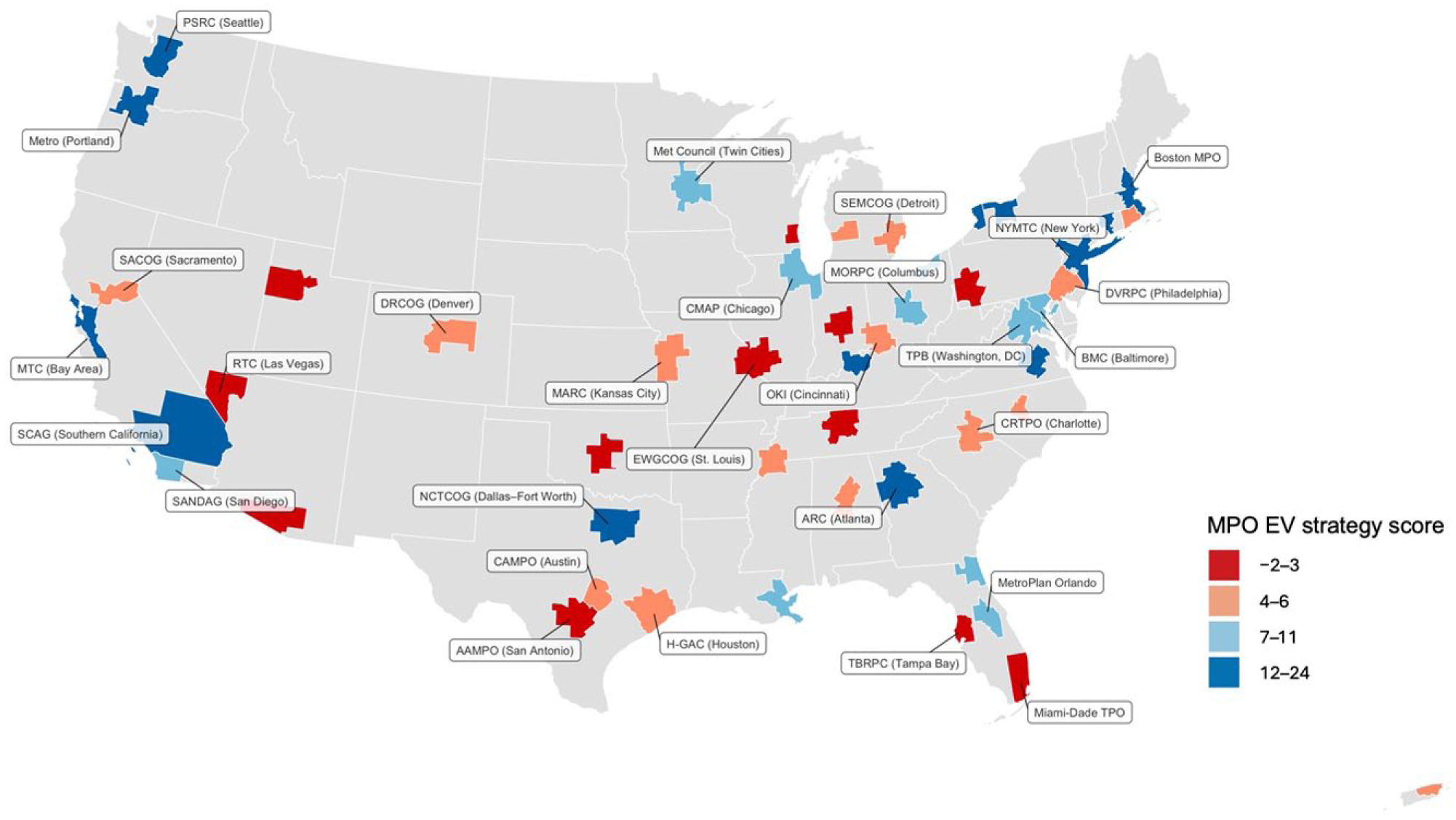
Electric vehicle (EV) strategy score by Metropolitan Planning Organizations (MPOs).
Drivers of Commitment to EVs
The QCA results in Supplemental Table A-9 reveal multiple configurations associated with stronger or weaker support for EV adoption. The MPOs like Portland and the Bay Area are emissions-driven, characterized by low shares of car commuting and the presence of state-level emissions standards. Similarly, MPOs with larger populations, low shares of car commuting, and stronger incentives at the state level, including Chicago (IL) and New York City, also exhibit stronger support for EVs. ARC, NCTCOG, and SCAG tend to be economically driven, with large populations and relatively high shares of people employed by automobile industries. Finally, some smaller MPOs, such as Buffalo (NY) and Hartford (CT), tend to be policy-driven and have zero-emissions vehicle mandates, incentives, and the absence of disincentives at the state level.
In contrast, configurations characterized by high car dependence in commuting tend to align with weaker support for EV adoption. Several MPOs in Florida display limited support, associated with high shares of daily vehicle travel and limited state-level policy engagement. Other MPOs, such as Raleigh (NC), Sacramento (CA), and Houston (TX), exhibit weaker support in conjunction with car dependence, mixed incentive and disincentive environments, and lower shares of employment in automobile manufacturing. Some smaller MPOs, including Detroit (MI), Austin (TX), and Milwaukee (IL), demonstrate comparatively weaker support in configurations involving smaller population size, the coexistence of incentives and EV-related fees, and the absence of state-level zero-emissions vehicle mandates.
The Future of Regional EV Planning
This study employs multiple methods to examine how MPOs plan for vehicle electrification and to identify factors associated with EV adoption across different MPOs. As the first EV document analysis in the planning arena, this study offers insights for policy implications in terms of EV funding and planning priorities and future EV research in planning.
Discussion and Policy Implications
This study suggests that MPOs would benefit from a more holistic understanding of the opportunities and challenges associated with EVs. Based on the amount of text devoted to the topic, the EV transition does not yet constitute a major focus in large MPOs’ plans. While many MPOs emphasize the environmental benefits of EVs and the funding challenges associated with their adoption, few acknowledge emerging concerns identified in the literature, such as their potential to reinforce automobile dependence (Henderson 2020). Similarly, equity considerations, such as ensuring access to charging infrastructure for underserved communities, are addressed in only a few states, notably California. Consistent with findings from previous studies on climate change and emerging technologies (Guerra 2016; McAslan, Gabriele, and Miller 2024; Mullin, Feiock, and Niemeier 2024), many MPOs report difficulty in anticipating how EVs will shape future transportation systems. Broader awareness of these issues could help MPOs better incorporate EVs into comprehensive transportation and climate strategies.
The QCA findings suggest that MPO commitment to EV adoption largely mirrors state-level policies and planning frameworks. State-level zero-emissions vehicle mandates, emissions standards, and incentives are associated with stronger commitment to EVs, whereas the absence of such incentives and the presence of EV-related fees correspond with more limited support for EV adoption. These state-level policy conditions appear particularly influential for smaller MPOs, such as Hartford. Accordingly, state governments should play a more active role in shaping policy frameworks that guide local action and in supporting MPOs—especially smaller ones—in advancing transportation decarbonization.
In addition to the importance of multilevel governance, this study demonstrates that effective EV integration requires coordination with “nontraditional” partners, such as utility providers, vehicle manufacturers, transportation technology companies, and environmental agencies. Because EV deployment sits at the intersection of transportation, energy, environmental, economic, and technology policies, it also demands transboundary cooperation among agencies operating at different scales and across sectors. The MPOs should consider diversifying the composition of their governing boards and increasing their participation in regional coalitions and local partnerships—such as the Clean Cities programs—which can bridge the gap between regional planning and local implementation (Barbour and Deakin 2012; Niemeier, Grattet, and Beamish 2015).
Moreover, the findings highlight the interplay between EV adoption, car dependence, and broader transportation decarbonization strategies. The QCA results indicate that higher levels of EV support are more often observed in pathways characterized by lower car dependence in daily commuting. However, more ambitious electrification agendas may also be established in car-dependent regions, such as ARC and SCAG, particularly where manufacturing activities remains strong. The transition to EVs may influence travel behavior indirectly through factors such as vehicle purchase decisions, shifts from refueling to charging, and the availability and distribution of charging infrastructure. However, MPO plans rarely address these potential effects explicitly and instead focus primarily on infrastructure deployment and potential revenue losses. This gap highlights uncertainty in how EV adoption may shape future travel patterns and suggests that MPOs should consider these implications alongside broader decarbonization efforts, including integrated transportation and land-use strategies and the promotion of active travel and public transit. In regions such as ARC and SCAG, policymakers may need to balance economic development priorities with multimodal planning, as EV promotion alone may reinforce structural reliance on automobile travel.
Finally, this study contributes to the broader conversation on transportation finance in the EV era. The MPOs face growing financial constraints in supporting EV infrastructure, largely due to declining gasoline tax revenue and fluctuating policy support. The findings indicate that some states have implemented EV-related user fees and that the coexistence of such fees with incentives is associated with more limited support for EV adoption. State DOTs could play a role in implementing mileage-based user fees or EV registration charges and use these revenues to strengthen MPO capacity to advance multimodal transportation investments (Millard-Ball and Guerra 2025). Moreover, as many MPOs express interest in electrifying public transit systems amid declining ridership, policymakers must consider how to balance financial priorities between private vehicle electrification and investments in shared, low-emissions transportation options.
Limitations and Future Research Directions
This study has several limitations that suggest avenues for future research. First, the actions identified in the plans represent intended strategies and do not reflect implementation or outcomes, echoing prior literature that finds climate action plans have limited impacts on environmental outcomes (Millard-Ball 2013). However, more recent work suggests that mentioning EVs in plans increased EV charging deployment in their jurisdictions (Brinkley, Regalado, and Boswell 2026). These debates highlight the need to further explore the complex interplay among EV policies, plans, and planning outcomes. Second, we rely exclusively on MPO plans, which limits insights from other public- and private-sector perspectives. Future research should examine how MPOs engage with various levels of government and the private sector, and how these interactions influence EV planning outcomes. Third, both quantitative and qualitative methods may introduce bias toward the analysis of MPO plans that have more content describing EVs, so they cannot give equal weight to the MPOs analyzed in this study. Further studies can address this imbalance by examining how EVs are integrated into urban and regional transportation planning frameworks.
Supplemental Material
sj-docx-1-jpe-10.1177_0739456X261452146 – Supplemental material for Boon or Bane? Regional Transportation Planning in the Vehicle Electrification Era
Supplemental material, sj-docx-1-jpe-10.1177_0739456X261452146 for Boon or Bane? Regional Transportation Planning in the Vehicle Electrification Era by Shengxiao (Alex) Li and Yufei Wang in Journal of Planning Education and Research
Footnotes
Acknowledgements
The authors thank Zhuoyu Wang, a research assistant, who offered excellent research assistance work with text extraction from plan documents.

Funding
The authors disclosed receipt of the following financial support for the research, authorship, and/or publication of this article: This study is supported by a start-up grant at the National University of Singapore titled “Toward Sustainable, Inclusive, and Smart Cities: Behaviour and Governance.”
Declaration of Conflicting Interests
The authors declared no potential conflicts of interest with respect to the research, authorship, and/or publication of this article.
Supplemental Material
Supplemental material for this article is available online.
Notes
Author Biographies
References
Supplementary Material
Please find the following supplemental material available below.
For Open Access articles published under a Creative Commons License, all supplemental material carries the same license as the article it is associated with.
For non-Open Access articles published, all supplemental material carries a non-exclusive license, and permission requests for re-use of supplemental material or any part of supplemental material shall be sent directly to the copyright owner as specified in the copyright notice associated with the article.
