







Abstract
A survey of female employees at Iowa newspapers shows these journalists highly value their newspaper jobs because of the importance, variety, autonomy and flexibility of their positions. However, many complained about low pay and lack of opportunity for advancement.
Keywords
If local newspapers are to fully realize their potential for growth, they must continue to attract younger, diverse generations of employees who have the energy and vision to sustain these vital community news organizations. Studies have shown that women are underrepresented across the newspaper industry, a phenomenon that received attention after the firing in 2014 of The New York Times Executive Editor Jill Abramson, the first woman to hold that position. 1 This study examines job satisfaction among women currently working at community newspapers for insight that could help these newspapers and others in their recruitment and retention efforts. 2
According to the most recent report by the Women’s Media Center, women make up about 37 percent of full-time newspaper personnel and about 34 percent of supervisors, 3 percentages that have been stable for about 15 years even as women’s participation in the overall workforce has increased. 4 Nationally, women represent about 18 percent of publishers, 26 percent of top editors and 31 percent of advertising directors at daily newspapers, 5 but there is reason to think those numbers might be higher at community newspapers. In Iowa, for example, which has a strong tradition of community journalism, women make up about 30 percent of newspaper publishers, 39 percent of top editors and 42 percent of advertising directors. 6 At all types of newspapers, women make up greater proportions of entry-level employees and middle managers than they do senior-level supervisors. 7 In addition, they tend to cluster in areas that are not the usual stepping-stones to higher positions. 8 They are the most underrepresented in the sports and editorial departments. 9
Women make up about two-thirds of the enrollment in journalism and mass communication programs, where they received 65.8 percent of the bachelor’s degrees conferred during the 2011-12 academic year. 10 A 2010 survey of journalism and mass communication graduates showed that young women were more interested in a public relations career than in a newspaper career and that 23.5 percent of the women sought a job on a newspaper versus 30.3 percent of the men. 11 One reason for the difference might be the survey’s finding that young women placed more emphasis on their potential earning power than young men did. Equally striking, however, was the survey’s finding that young women who wanted a newspaper job had a harder time obtaining one. Among the graduates who sought a job in newspapers, only 34.2 percent of the women received an offer versus 44.3 percent of the men. 12 By comparison, the proportion of men and women who received job offers in television was nearly equal.
Not only are women less likely to begin a newspaper career, but they are also more likely to leave once they have entered the industry. In 2002, 27 percent of the nation’s top female newspaper editors told a researcher they would “definitely” or “probably” depart the newspaper industry entirely—four times the percentage of male editors who said the same thing. 13 In contrast, a survey of people working across all media industries found a smaller gender gap, with 21 percent of women and 16 percent of men saying they intended to leave their fields. 14
Women who leave newspapers have cited a lack of opportunities for promotion, struggles with a male-dominated culture and personal experiences with sex discrimination. 15 Women working at newspapers have also indicated higher levels of burnout and exhaustion compared with men and lower levels of organizational support, factors that have negatively affected their longevity in the field. 16 Still, the relationship between women’s job satisfaction and their low retention at newspapers has not been fully explained. 17 A survey conducted for the American Press Institute and the Pew Center for Civic Journalism found that while 20 percent of women expressed unequivocal interest in a promotion, 72 percent of women said they would consider accepting a promotion if they were given the authority to make changes in their organizations. 18 While it is apparent something is happening as women enter and leave the newspaper industry, it is still unclear what that something is. The purpose of this study was to explore the job satisfaction of women in an understudied milieu: community newspapers. A web-based survey was used to gather quantitative data, which assessed employees’ perceptions of job quality, work-life balance and organizational support. In addition, qualitative data were used to contextualize the numbers with the thoughts and perceptions of individual women. The findings contribute to the existing body of knowledge regarding women and newspapers while providing local news organizations with concrete information they can use to recruit and retain a skilled staff.
Literature Review
Survey results have been inconclusive regarding the job satisfaction of female newspaper employees, perhaps because of variations in how the concept is defined and measured. Smucker, Whisenant and Pedersen surveyed members of the Association for Women in Sports Media about six elements of their job: pay, promotions, people, supervision, the work itself and general satisfaction. 19 They found that women working in sports media were satisfied with their jobs in all areas except one: opportunities for advancement. In this area, the older those surveyed were the more likely they were to be dissatisfied with their opportunities for advancement. The researchers concluded that women were optimistic about their prospects for a promotion when they entered sports journalism but became disillusioned when those opportunities did not come.
Reinardy used a more nuanced measure of job satisfaction in his survey of women employed by newspapers, incorporating questions related to organizational support and work-life balance. 20 Using a measure called the Maslach Burnout Inventory, Reinardy found that women who said they intended to leave newspapers reported higher levels of exhaustion, higher levels of cynicism and a lower sense of accomplishment; however, he also found evidence that organizational support and overall job satisfaction served to mitigate those conditions. When he compared women’s perceptions with men’s, he found that women were no more cynical than their male colleagues and, somewhat surprisingly, no more likely to report a work-life imbalance. However, women were significantly more exhausted than men and felt a lower sense of accomplishment. Reinardy attributed those findings to the different social roles placed upon men and women, such as the expectation that women would continue to shoulder a greater share of the housework even in homes where both partners earn an income. 21
After surveying former newspaperwomen around the country, Willard reported that 80 percent of women said they had left their previous positions in search of higher salaries and more opportunities for advancement, citing frustrations with management and heavy workloads. 22 Furthermore, the women reported being so happy in their new positions there was nothing their former employers could do to get them to return. In contrast, a survey of freelance journalists by Massey and Elmore found that a sizeable number of women—while generally satisfied with their freelance work—had considered re-entering what the researchers called “organized journalism” by taking a staff position rather than continue self-employment. 23 Massey and Elmore surmised that while women enjoyed the flexibility of self-employment, which eliminated many of the work-family conflicts reported by women in journalism, their identification with the work itself was strong enough to make them reconsider. 24
Gender has generally been shown to have more salience in studies that use qualitative methods to capture newspaperwomen’s experiences, perceptions and attitudes, such as in-depth interviews, which allow researchers to ask open-ended questions and follow up on the responses. In focus groups with female sports journalists, Hardin and Shain found a clear differentiation between the women’s satisfaction with their career choice and their perceptions of the workplace. 25 While they loved the work itself, they reported experiencing regular harassment and discrimination from male colleagues, sources and fans. They also viewed their gender as an asset when they had been hired into entry-level positions but a barrier to further promotions. Despite their institutional frustrations, however, they cited work-life conflicts as the likely reason they would leave the field if they ever chose to do so. By its nature, sports journalism requires travel and irregular hours, which the women found incompatible with their responsibilities as family caretakers.
Based on interviews with women who had formerly worked at newspapers of varying sizes, Elmore uncovered several themes in the women’s descriptions of what they had experienced and why they had chosen to leave: a male-dominated, exclusionary atmosphere; news judgment and story assignments that seemed to privilege a male perspective; and a culture that seemed to value masculinity over femininity. 26 Most of the women had worked in newsrooms in which men were the majority, and some described feeling left out of the tight networks that formed among male colleagues. They believed the men’s socializing had a professional impact because it facilitated relationships between male supervisors and junior employees that led to more collaboration and mentoring. Several women described overt discrimination, but most described an environment that was simply insensitive and prone to the influences of individual supervisors. Even the women who had achieved positions of leadership were described as unsympathetic. According to the interviewees, the presence of women in leadership roles seemed to make little difference within an institutional culture that privileged qualities usually associated with masculinity, such as toughness, over qualities usually associated with femininity, such as empathy.
In a different set of interviews with women who had left journalism, Everbach and Flournoy found that women had been dissatisfied with their salaries, opportunities, work-life balance and the newsroom environment. 27 Although the women had been passionate about their jobs, working long and unusual hours had taken its toll. Some interviewees cited organizational practices that made it difficult to balance work and family obligations, while others reported a conflict between their professional and domestic roles. In addition, interviewees mentioned low salaries, pay discrimination and a lack of benefits, including maternity leave. They also cited a newsroom culture that looked down upon anyone, male or female, who prioritized family over work. Several women who had worked in large cities had simply decided it was too difficult—and not financially rewarding enough—to try to make their work compatible with their personal lives, opting instead for the higher compensation and predictability of public relations or advertising.
The women interviewed by Everbach and Flournoy said newsrooms might be able to retain more women if they allowed more flexibility in schedules and were more accommodating of working parents. Similarly, Willard recommended newspapers adopt a comprehensive approach if they want to increase their employees’ job satisfaction. “It is not enough to focus on a single area, such as offering a bit more money or a couple of comp hours,” she wrote. “Women at newspapers also need more strong female mentors, greater opportunities for professional development and a better balance of work and personal time.” 28
Given the findings of previous researchers, it seems important to distinguish among several aspects of job satisfaction. For example, newspaper professionals could be satisfied with what they do but not where they do it, or they could be satisfied with their jobs and their organizations but dissatisfied with the balance between their work and the rest of their lives. The literature points to a three-way delineation: the nature of the work itself, the “goodness of fit” between an employee’s work and the rest of her life, and the level of support she receives from her organization. Seeking to build upon and streamline previous work, this study measures job satisfaction according to three components: job quality, work-life balance and organizational support.
In a variety of studies, Reinardy has used the concepts of job quality, 29 work-family conflict, 30 and organizational support. 31 The concept of job quality, based on the work of Hackman and Oldham, separates employees’ perception of their work into four factors: autonomy, variety, importance and feedback. 32 That is, employees consider themselves to have a good job when it offers them a certain amount of freedom to carry out their responsibilities; when their daily tasks are diverse rather than monotonous; when they perceive their work to be important, providing a sense of purpose, and when they receive the appropriate amount of feedback from managers. The second component, work-family conflict, addresses an employee’s perception of conflict between her obligations as a professional and her obligations to her household. The study presented here departs slightly from this approach, using the more neutral concept of work-life balance to account for a spectrum of lifestyles and to avoid the presumption of conflict. Work-life balance measures the degree to which an employee finds that her work interferes with or allows her to pursue outside interests and obligations, whatever those may be. The third component, organizational support, measures women’s perceptions of how they and others are treated in the workplace, the level of tangible and non-tangible support they receive, and how valued they feel within the organization.
Research Questions
Based on these three components, the research questions guiding this study were as follows:
RQ1
How do women at Iowa newspapers perceive their job quality in terms of their autonomy, the perceived importance and variety of their work and the feedback they receive?
RQ2
How do women at Iowa newspapers feel about their work-life balance in terms of their scheduling flexibility, the relative time and energy they spend on work and the impact of their jobs on other aspects of their lives?
RQ3
What kind of support do women at Iowa newspapers say they receive from their organizations in the form of compensation and benefits, appreciation and mentoring and a respectful work environment?
Method
An online survey of 68 questions was sent to newspaper employees listed on a membership roster provided by the Iowa Newspaper Association. The survey was conducted February 25–March 11, 2013. An initial email was sent to 448 people with a request to follow a link to the voluntary survey, and a reminder email was sent one week later. In addition, the survey link was shared through the association’s and the lead author’s Twitter accounts with a message encouraging current employees at Iowa newspapers to complete the survey and pass it along to others. Of the 448 email addresses provided to the researchers, 14 were dead accounts, leaving a sample of 434. Of those, 158 surveys were returned, for a response rate of 36.4 percent, which is within the expected range for a web-based survey introduced by email. 33 Of the 158 surveys returned, 129 were fully completed. Respondents included employees in advertising, circulation, news and management to allow exploration of factors that were organizational rather than specific to one type of job. Only the responses from female employees (53.5 percent of the total) were analyzed for this study, whose purpose was to look closely at the perceptions and satisfaction of a specific group of women at community newspapers rather than to investigate gender differences, a research topic addressed elsewhere.
The survey consisted of questions regarding respondents’ age, level of education, job title, years of experience and salary, as well as the type of ownership and circulation of their newspapers. The first section of the survey also included questions regarding respondents’ reasons for entering newspapers and their plans to remain in the field. Respondents were then given a series of 42 statements equally divided into three sections: job quality, work-life balance and organizational support. They were asked to indicate their agreement with each statement using a 7-point Likert scale from 1 (strongly disagree) to 7 (strongly agree). Finally, respondents were asked four open-ended questions that enabled them to describe their job satisfaction in their own words. Two of the questions prompted respondents to make connections between their attitudes and their intentions to stay in newspapers or leave the industry. The other two questions prompted respondents to describe what, if anything, they would change about their job or the direction of their organization.
Mean scores were calculated for each survey item, and aggregate means were calculated for job quality, work-life balance and organizational support in order to compare the three areas of job satisfaction. In addition, individual mean scores were calculated along the three areas of job satisfaction and cross-tabulated with age, level of education, years of experience, salary, type of ownership and newspaper circulation. The means were separated into five groups ranging from “low” to “very high,” and 18 chi-square tests of independence were conducted to see whether there were any relationships between the respondents’ demographics and the three aspects of job satisfaction. Finally, the open-ended responses were used to provide context for the numbers and to examine individual perceptions, paying special attention to areas or ideas that were not addressed by this model of job satisfaction but might be useful in future research.
Findings
More than two-thirds of the female survey respondents were 45 or older, 65.2 percent were married, and the vast majority was white and heterosexual. 34 Demonstrating the state’s tradition of community journalism, 76.8 percent of the respondents worked at newspapers with circulations of less than 10,000; none worked at a newspaper with a circulation of 50,000 or greater; and 65.2 percent reported in-state ownership of their companies. There was a broad range of experience among the participants, although 42 percent of the respondents had been working in the newspaper industry for 16 or more years, and 47.8 percent said they planned to remain in the industry until they retired. Among the rest, 39.1 percent said they planned to stay five years or less and 13 percent said they were currently looking for other opportunities. Despite the group’s relatively high level of experience, 76.8 percent of the respondents reported annual salaries of less than $40,000 while working full time.
Job Quality
The survey asked participants to respond to 14 statements related to job quality. Overall, the participants indicated a strong level of satisfaction on measures related to job importance, variety and autonomy. [See Table 1] The women surveyed tended to agree that their jobs mattered to their organizations and communities. Indeed, 84 percent of respondents agreed or strongly agreed that what they do matters to the community, and 82.6 percent agreed or strongly agreed that what they do matters to the news organization. On most items, a response of more than four (the scale’s midpoint) indicated satisfaction because it meant respondents agreed with an affirmative statement regarding job quality. The mean responses indicated mild dissatisfaction on just two statements regarding job quality: the quality of the feedback the respondents said they received and their opportunities for advancement. Almost half (47.8 percent) of the respondents disagreed or strongly disagreed they would be given a chance to advance in their news organizations if they had the desire. The chi-square tests showed no significant relationship between job quality and any of the six demographic variables analyzed, including age and experience.
Overall, the participants indicated a strong level of satisfaction on measures related to job importance, variety and autonomy.
Perceptions of Job Quality Among Iowa Newspaperwomen
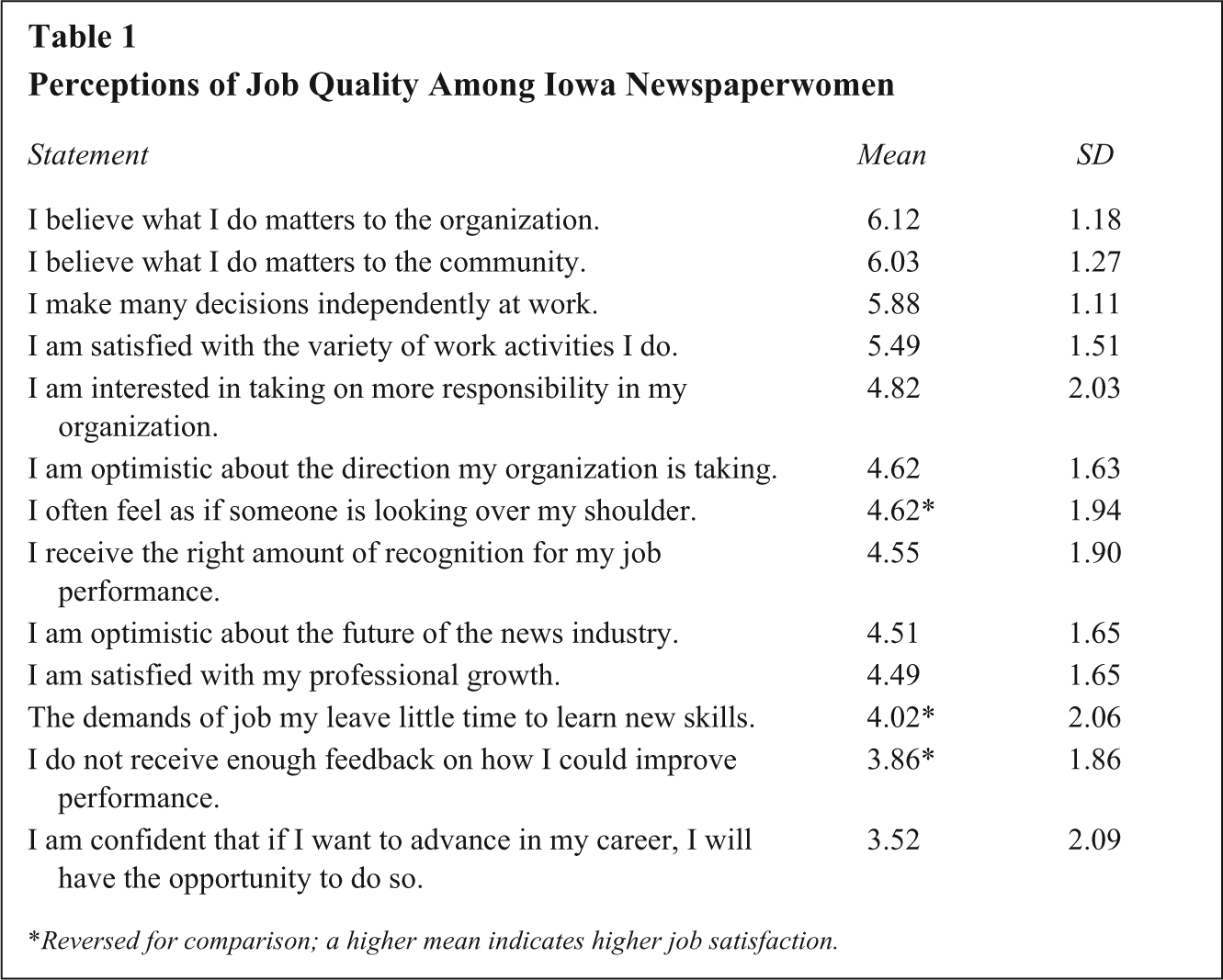
Reversed for comparison; a higher mean indicates higher job satisfaction.
The quantitative findings regarding job quality were supported by the participants’ responses to an open-ended question about why they would choose to stay in the newspaper industry. Common themes in the responses were the participants’ passion for their work and their belief in the importance of newspapers within their communities. The following comments from three participants are representative of this perspective:
I really enjoy the challenges/changes that the industry is facing right now and I strongly believe in the power of newspapers for news and advertising.
35
I enjoy working with people and hearing their stories. It allows you to touch the lives of others when you least expect it.
36
Newspapers still provide the best source of local information—both news and advertising—and they matter!
37
The salience of job quality also emerged in some of the negative comments respondents made in their open-ended answers to the questions of why they would leave the industry or what they would change. For example, several participants expressed frustration with tasks they considered tedious or outside their responsibilities, which diluted their sense of purpose:
If I leave it would be because of so many changes and demands and reports we have to do that it is starting to get overwhelming which is taking a toll on all employees.
38
[Give me] less of the tedious work that could be done by someone who is paid less. Let me do the in-depth work that I know I can do better than anyone else here.
39
Work-life Balance
Respondents were also asked their level of agreement on 14 statements related to work-life balance. For the most part, the professionals surveyed here indicated work-life balance was not a problem for them. [See Table 2] More than half (56.5 percent) of the respondents agreed or strongly agreed they were satisfied with their work-life balance. This finding was consistent with the open-ended responses, in which several participants specifically mentioned their job’s family-friendly schedule or convenient location as reasons they would continue working in newspapers. One participant wrote:
Fits in well with my family schedule, flexibility, creative opportunities, like my co-workers, close to home—which means little travel time.
40
Perceptions of Work-Life Balance Among Iowa Newspaperwomen
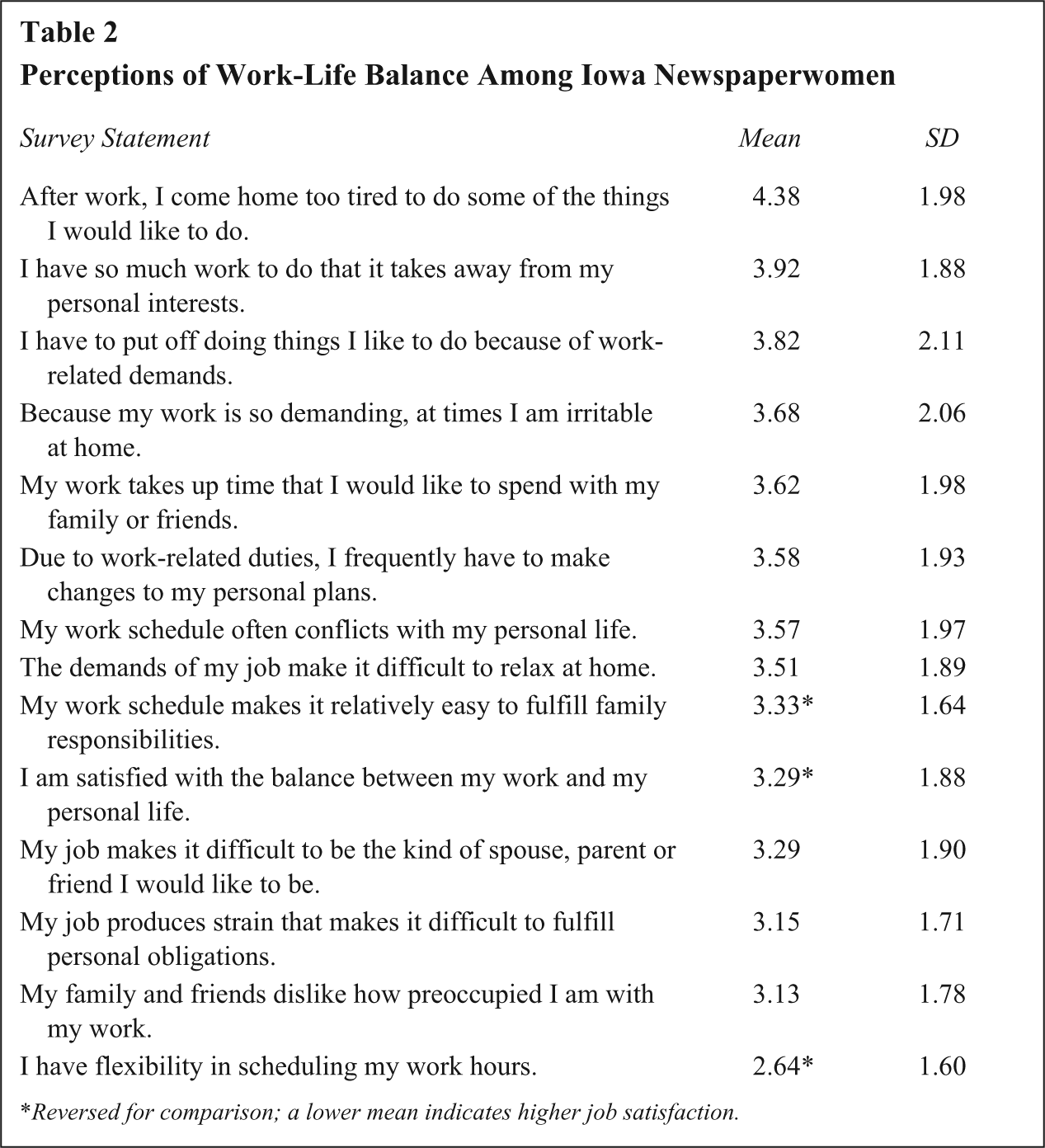
Reversed for comparison; a lower mean indicates higher job satisfaction.
However, the chi-square tests showed a significant relationship between work-life balance and two demographic variables: education [See Table 4] and salary. [See Table 5] The more educated the respondents were and the higher their salary range, the lower their scores on this measure of work-life balance. Perhaps this is not surprising, given the demands of both educational attainment and the responsibility that usually comes with a higher paycheck, but it suggests researchers should take care not to overgeneralize issues of work-life balance. Some respondents mentioned the inconvenience of working or traveling at night, and one participant reported working seven days a week; however, all but one of those comments focused primarily on the issue of low compensation relative to the workload.
Perceptions of Organizational Support Among Iowa Newspaperwomen
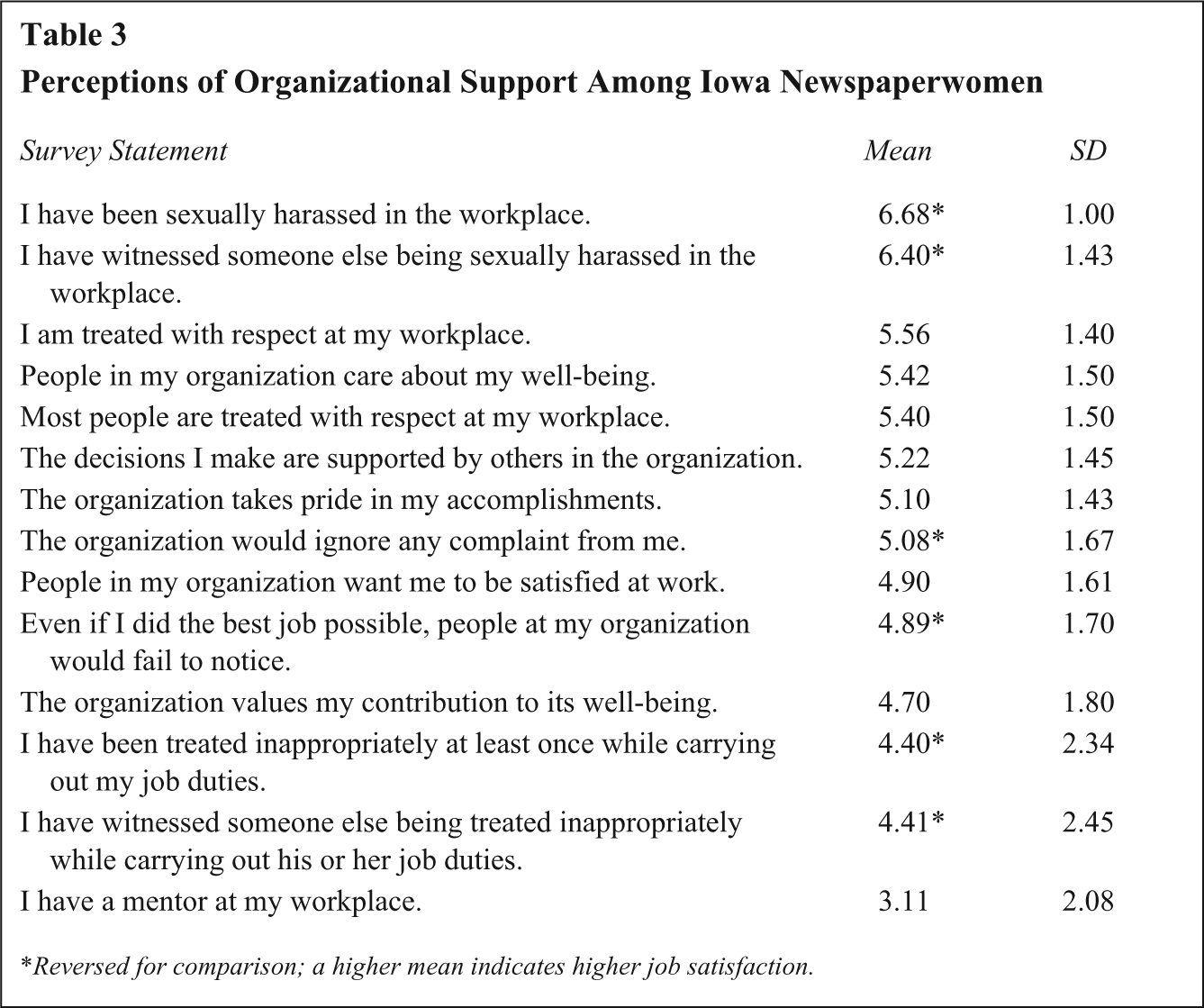
Reversed for comparison; a higher mean indicates higher job satisfaction.
Cross Tabulation of Survey Respondents’ Education Level and Perceived Work-Life Balance
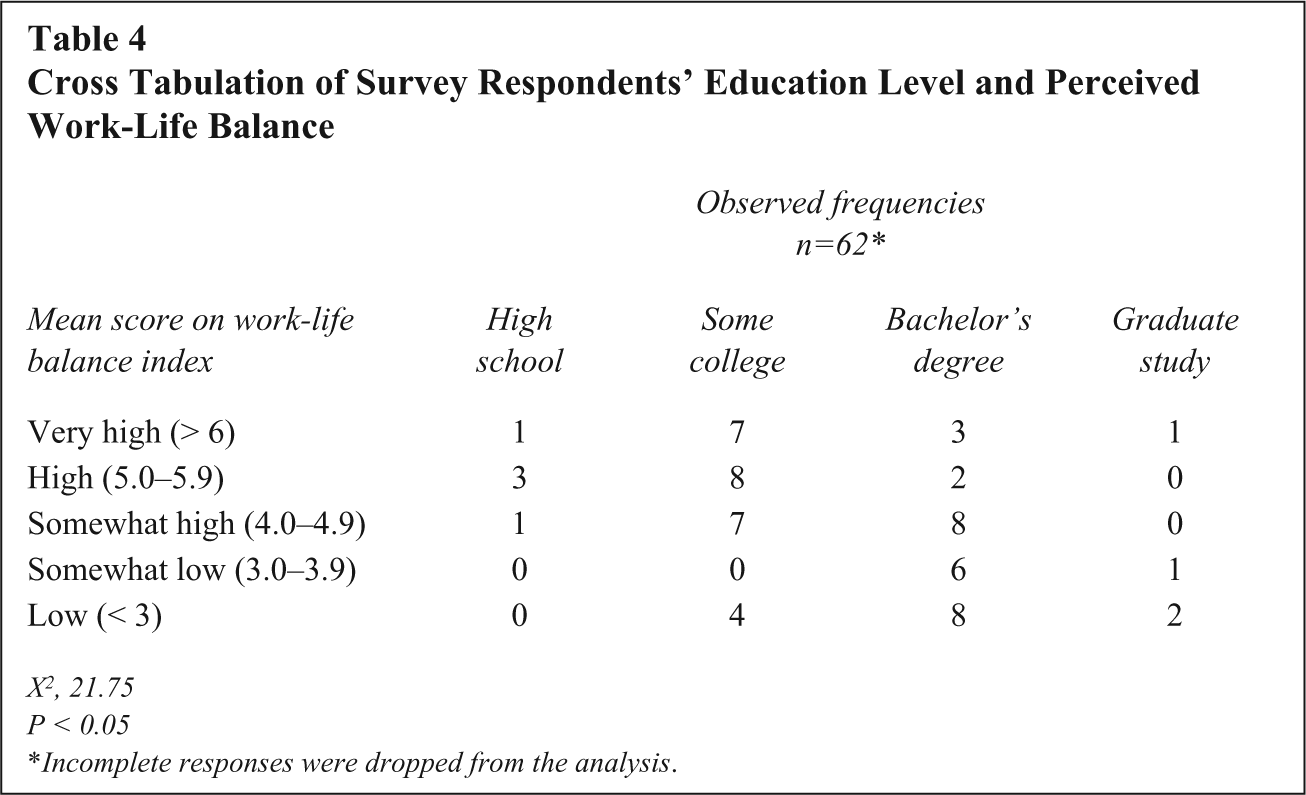
Χ2, 21.75
P < 0.05
Incomplete responses were dropped from the analysis.
Cross Tabulation of Survey Respondents’ Salary Range and Perceived Work-Life Balance
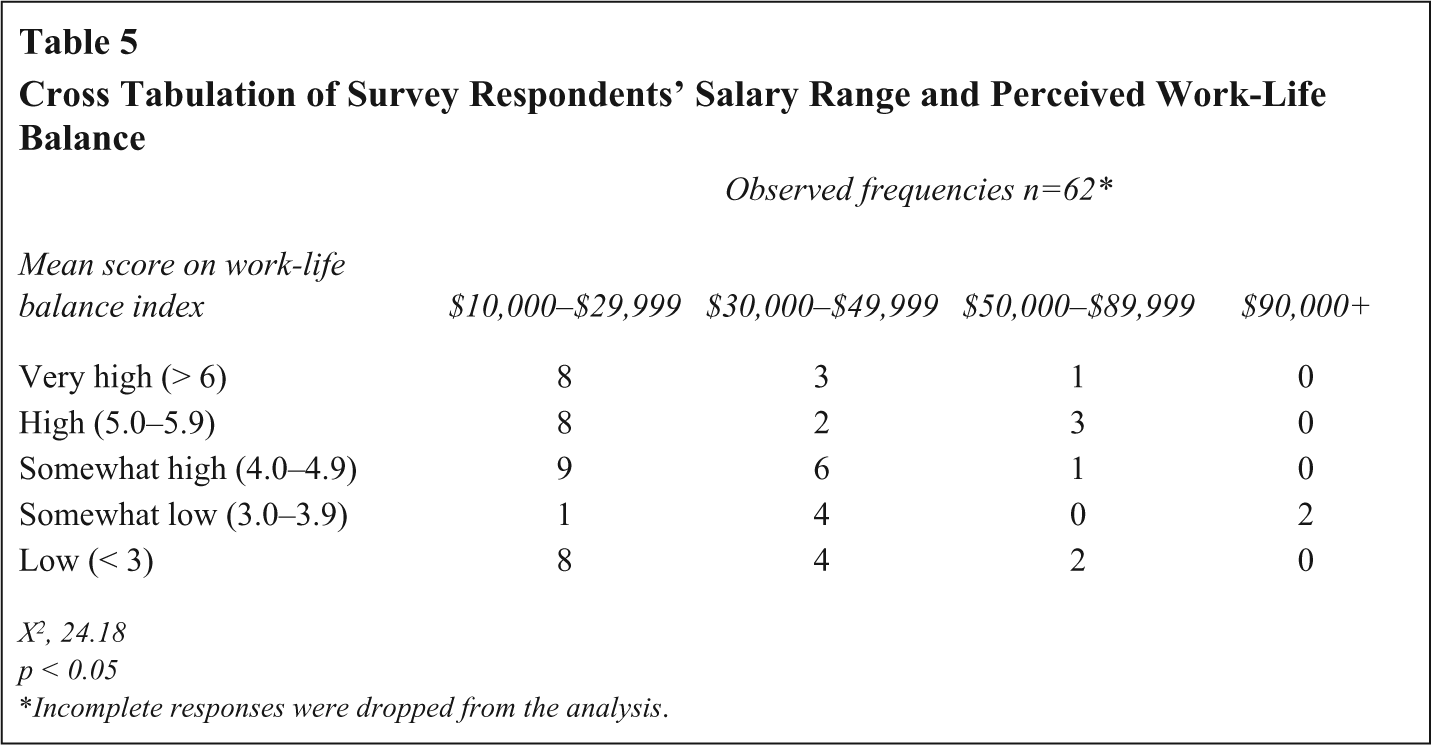
Χ2, 24.18
p < 0.05
Incomplete responses were dropped from the analysis.
Organizational Support
Finally, participants were asked to rate their agreement with 14 statements related to organizational support. This area yielded the highest scores overall. The chi-square tests showed no relationship between organizational support and any of the demographic variables studied. The women surveyed were generally satisfied with the intangible support they received from their news organizations, indicating they were treated respectfully and shown consideration. [See Table 3] More than two-thirds of respondents (68.1 percent) agreed or strongly agreed that people in their organizations cared about their well-being, and 71 percent agreed or strongly agreed they were treated with respect. The only area of dissatisfaction was on the issue of mentoring; only 26.1 percent of respondents agreed or strongly agreed they had a mentor at their workplace.
Notably, the open-ended responses revealed strong concerns regarding pay and professionalism—issues not captured by the Likert-type responses. A full 39.1 percent of participants used their open-ended comments to volunteer their dissatisfaction with their salaries. Many drew a stark picture of survival, using language that conveyed their financial problems:
I am actively seeking other employment because of the poor wages. I can’t continue to work in a job that pays wages that qualify my children for reduced cost lunch at school. I like the work but I can’t afford to do it much longer.
41
If I do not get a raise soon, or offered more hours, I will be forced to look for another job. I am currently part-time and have been for over a year and a half.
42
I know most people in this field aren’t making a lot of money, that’s not why we go into it. But when I can’t make ends meet while working 60 hours a week . . . that takes a lot out of me emotionally.
43
I would [like to] receive a wage that supports a modest middle class lifestyle without requiring a second job. I have been in this position for 17 years and worked a second job for eight of them.
44
Providing evidence for these comments, only 43.5 percent of the respondents answered affirmatively when asked whether they had received a pay increase in the previous year, yet 71 percent reported taking on additional responsibilities.
Professionalism was also salient for these women; a number of open-ended responses expressed a desire for more consistent personnel policies, which the participants hoped would clarify expectations and ensure an equitable distribution of the workload. For example:
I’d like to have more concrete rules/policies from HR in order to supervise my staff members more effectively.
45
Make rules that apply to all. Expect people to follow the rules. PUNISH people.
46
I would like a mentor and more oversight. Right now, I am in charge of a lot, including my own proofreading, and it really taxes my mind from being a better writer and editor when I’m worrying about all steps of the process with no one else to catch mistakes.
47
I would like to see us more goal-oriented in the long-term than how to get the paper out each week and every man for himself.
48
Discussion
The primary goal of this study was to gain a deeper understanding of job satisfaction among one group of women employed at community newspapers through their perceptions of job quality, work-life balance and organizational support. The data revealed that these respondents were passionate about their work and generally satisfied with their jobs. Adding nuance to discussions of work-life balance, this study found it to be a problem associated with higher salaries and educational levels—which are more characteristic of the workforce at metropolitan newspapers than at community newspapers. In contrast, most of the women in this study did not experience work-life tension, and some even found their scheduling flexibility to be a positive aspect of their work.
Consistent with previous studies, low compensation and a lack of opportunities emerged as sources of dissatisfaction for these respondents. Although low salaries are a problem across the industry, this issue appears to be especially acute at community newspapers—many of which are located in rural areas, where they are confronted with declining populations and a shrinking base of advertisers. In addition, the respondents expressed a need for professional mentoring and consistent personnel policies. Although this study is limited by its small sample size, the results align with other studies that have found low pay and a lack of opportunities to be major reasons women leave the newspaper industry. The open-ended responses suggest that future measures of organizational support should include Likert-type items about pay and personnel policies, which were not included in the measures here. Finally, given the value of these qualitative responses in corroborating and contextualizing the quantitative data, future studies might examine male responses to similar questions as part of research on gender differences in job satisfaction.
It is important to note how highly the participants in this study valued their newspaper jobs for the autonomy, variety, importance, and flexibility the positions provided. That has helped many of these women achieve a satisfactory balance between their work and their personal lives, which community organizations should highlight when recruiting future employees. Solving the problem of resources will no doubt require creativity as community newspapers look for ways to multiply their revenue streams and capitalize on the competitive advantage offered by their local news coverage. It is outside the scope of this study to suggest how that might be accomplished, but this study suggests taking a wait-and-see approach might cost newspapers some of their best employees.