






Abstract
Acquiescent (ARS) and extreme response styles (ERS) can have detrimental effects on survey data and, for unknown reasons, are more frequently used by Latino than non-Latino white respondents. This exploratory study examined the influence of culture on these response styles by investigating their associations with individual-level cultural factors and ARS and ERS among 1,296 Mexican American, Puerto Rican, and Cuban American telephone survey respondents. Principal components representing stronger endorsement of marianismo/machismo and social attentiveness (simpatía, personalismo, respect for elders, value for sincerity, collectivism, individualism) were associated with higher ARS and ERS, while higher trust in strangers and more limited health literacy were associated with lower ERS. Findings from this study will enable survey designers to better anticipate ARS and ERS in surveys with Latino populations and, in turn, guide the selection of data collection and analysis methods to mitigate measurement error in the presence of these response styles.
Research over the past century suggests that social groups have different tendencies to engage in systematic patterns of responding to survey questions, known as survey response styles. Two frequently observed response styles include acquiescent response style (ARS), a tendency to agree or respond positively to survey items (Couch & Keniston, 1960), and extreme response style (ERS), a tendency to select response scale endpoints (Cronbach, 1946). ARS and ERS threaten survey data quality, as they can bias statistics and distort relationships among variables (Van Vaerenbergh & Thomas, 2013). These forms of measurement error are particularly evident for items assessing non-observable constructs such as attitudes and beliefs, which are frequently measured via surveys in social science research.
In the U.S., surveys with Latino populations may be at particularly high risk of ARS- and ERS-associated measurement error. Studies with both English- and Spanish-speaking Latino respondents suggest that Latinos are more likely to engage in ARS and ERS than non-Latino whites (NLWs; Davis, Johnson, et al., 2019; Hui & Triandis, 1989; Marín et al., 1992; Ross & Mirowsky, 1984; Warnecke et al., 1997; Weech-Maldonado et al., 2008), which can lead to erroneous comparisons across these groups. ARS and ERS have also been associated with lower education and older age across racial and ethnic groups (Davis, Johnson, et al., 2019; Lechner et al., 2019; Meisenberg & Williams, 2008; Narayan & Krosnick, 1996; Ross & Mirowsky, 1984; Weijters et al., 2010). It is unclear why Latino populations tend to engage in ARS and ERS at higher rates than NWLs and how these tendencies may vary across Latino subgroups. As Latinos now comprise 18.7% of the U.S. population (Jones et al., 2021), developing an understanding of why some Latino respondents engage in ARS and ERS is critical for identifying strategies to improve the quality of data obtained in both Latino-focused and nationally representative surveys.
Culture Influences on ARS and ERS
A handful of studies of acculturation and survey response styles among Latino populations suggests that the social patterning of ARS and ERS may be at least partly attributable to cultural differences. In a study with primarily English-speaking Mexican Americans, a language-focused acculturation measure found positive associations between Spanish use and both ERS and ARS; however, no relationships were found between these response styles and acculturation measures representing the importance of preserving Mexican culture or social interactions with Mexican Americans versus NLWs (Davis et al., 2011). In a study with Mexican American, Puerto Rican, and Cuban American respondents, Davis, Johnson, Lee, and Werner (2019) observed a positive association between ARS and being classified as more Latino or high bicultural on an acculturation measure that assessed language use, personal identification, cultural affinity, and social interaction with Latinos versus NWLs. Using a similar acculturation measure, Marín et al. (1992) found that in two of three studies assessing acculturation among predominantly low-acculturated samples of respondents from Mexican American and other heritage groups, acculturation was inversely associated with both ERS and ARS. These studies suggest that ERS and ARS may be more typically used by Latino respondents with lower acculturation to the U.S. However, these studies do not unpack acculturation to examine whether nativity status, language use, or more specific cultural factors are associated with ERS and ARS.
The social patterning of ARS and ERS may be at least partly attributable to cultural differences. Research on Hofstede’s (2001) cultural dimensions with primarily non-Latino populations further suggests that cultural differences are associated with differential use of ARS and ERS (e.g., Chen et al., 1995; de Jong et al., 2008; Guo & Spina, 2019; Harzing, 2006; Hoffmann et al., 2013; Javeline, 1999; Johnson et al., 2005; Rammstedt et al., 2017; Smith & Fischer, 2008; van Herk et al., 2004). Cultural differences have also been documented for mixed-worded response scales (Schmitz & Baer, 2001; Steenkamp & Burgess, 2002; Wong et al., 2003), response scales of different lengths (Hui & Triandis, 1989; Lee et al., 2002), question order effects (Haberstroh et al., 2002), and use of contextual cues (Ji et al., 2000). However, these previous studies have generally been conducted with non-Latino populations and omitted cultural factors that may be uniquely associated with Latino culture. Prior research has also generally measured culture at the national or group level without assessing individual-level cultural variability. While individuals may identify with the overall subjective cultures associated with their social group(s) (Triandis, 1972, 1995), they may vary in their embrace of particular aspects of those group cultures. Latino individuals, for example, may endorse cultural factors associated with Latino, NWL, or other social groups differentially based on their enculturation experiences. In order to address these limitations, this exploratory study sought to examine associations between individual-level endorsement of cultural factors and use of ARS and ERS among Mexican American, Puerto Rican, and Cuban American survey respondents.
Cultural Factors Examined in the Current Study
The overarching goal of this cross-sectional study was to identify cultural factors that may be related to higher use of ERS and ARS among individual Latino survey respondents. While Latino populations may have a higher overall tendency to engage in these response styles than NLWs, as noted above, it is also clear that there is variability in response style use within Latino populations. It is not known, however, which sociocultural factors are associated with ERS and ARS use among Latino respondents. The present study seeks to better understand this within-group variability by exploring potential relationships between individual-level endorsement of a set of nine cultural factors that may or may not influence ERS and ARS: simpatía, personalismo, respect for elders, value for sincerity, marianismo/machismo, collectivism, individualism, dogmatism, and trust in strangers. Previous research suggests that use of ERS and ARS is generally associated with more traditional cultural attitudes, behaviors, and beliefs (e.g., lower acculturation); thus, the nine cultural factors included in this study tend to represent more traditional cultural orientations.
Simpatía is a traditional emic Latino cultural factor that guides individuals to behave in ways in which they will be “perceived as likeable, attractive, fun to be with, and easy-going” and seek “harmony in interpersonal relations” (Triandis et al., 1984, p. 1363). It may also encourage some people to prevent others from feeling embarrassed, uncomfortable, or disrespected (Triandis et al., 1984). In these ways, simpatía may motivate some individuals to engage in ARS during survey interviews by conveying respectfulness and ERS as a means of conveying clear responses that facilitate easier-going social interactions. At least one study has found positive associations between simpatía and ARS and ERS among mostly English-speaking Mexican Americans (Davis et al., 2011); however, this study was limited by its inclusion of only one Latino heritage group, exclusion of nativity data, and use of a relatively weak measure of ARS, as the former study was not designed to examine response styles. Although these findings were limited, it was anticipated that higher endorsement of simpatía would be positively associated with ARS and ERS.
Personalismo is a traditional Latino value for maintaining warm, trusting, and authentic personal relationships (Cuellar, Arnold, & González, 1995). Although not a well-known term in Spanish, personalismo is frequently identified as an emic Latino cultural construct (e.g., National Alliance for Hispanic Health, 2001), particularly among less-acculturated populations. No studies have investigated personalismo and survey response styles; however, some respondents who endorse personalismo may tend to behave in ways that strengthen personal relationships, such as expressing positivity, minimizing disagreement, and by communicating with clarity and authenticity. It was therefore anticipated that personalismo would be positively related to ARS and ERS.
Respect for elders is another traditional Latino value that emphasizes deference and esteem toward older people during social interactions. It indicates acceptance of social hierarchies and endorsement of the more general construct of respeto, which encourages people to convey and expect to receive respect from others and has been associated with Latino culture (e.g., Marín & VanOss Marín, 1991; National Alliance for Hispanic Health, 2001). No studies have investigated associations between respect for elders and response styles. As a proxy for respeto, respect for elders may motivate some respondents to convey respect to survey interviewers who are functioning in professional roles while respondents are performing informal, potentially more vulnerable roles as a result of disclosing personal information. Hence, some respondents with higher respect for elders may engage in ARS as an expression of respect or deference. No predictions were made for respect for elders and ERS.
Although value for sincerity has not been widely described as a traditional Latino cultural value, it is related to the authenticity component of personalismo. No studies have examined value for sincerity and survey response styles. Because it is unclear that positive responses are systematically interpreted as more versus less sincere, no hypotheses were predicted for ARS. However, value for sincerity may guide some Latino respondents to engage in ERS, as more extreme responses may be perceived as indicating greater honesty than “hiding” one’s opinions by selecting a middle response (Hui & Triandis, 1989; Marín et al., 1992). It was hypothesized that value for sincerity would be positively associated with ERS.
Several studies have explored more traditional gender-related cultural constructs and response styles, although most of these studies did not focus on Latino populations. Mixed findings have been observed in multi-country studies investigating response styles and Hofstede’s (2001) masculinity dimension (defined as valuing assertiveness, competitiveness, and success) at the country level (de Jong et al., 2008; Hoffmann et al., 2013; Johnson et al., 2005; Krautz & Hoffmann, 2019; Smith, 2004, 2011). The previously mentioned study by Davis et al. (2011) examined ARS, ERS, and two traditional Latino gender attitudes among mostly English-speaking Mexican Americans at the individual level: marianismo (exhibiting submissiveness, caretaking, self-sacrifice, honor, high morals, and other characteristics associated with the Virgin Mary; Kulis et al., 2003; Stevens, 1973) and machismo (characterized by sexism and hypermasculinity; Arciniega et al., 2008). While Davis et al. (2011) found a positive relationship between marianismo and ARS, suggesting that marianismo may encourage ARS as a form of submissiveness, they found no relationship between machismo and ARS, no association between marianismo and ERS, and a negative relationship between machismo and ERS. Thus, it was predicted that marianismo and ARS would be positively related, while no predictions were made for machismo or for marianismo and ERS.
Collectivism, defined as prioritizing the needs and interests of one’s social group (Triandis, 1995), has been frequently associated with more traditional Latino culture (e.g., Marín & VanOss Marín, 1991). In multi-country studies, ARS has been associated with more collectivist countries (Harzing, 2006; Johnson et al., 2005; Rammstedt et al., 2017; Smith, 2004, 2011) and stronger endorsement of collectivist practices (Hoffmann et al., 2013), assumedly because collectivism encourages harmony and conformity within social groups (Harzing, 2006; Hoffmann et al., 2013; Smith et al., 2016). Davis et al. (2011) similarly observed a positive association between ARS and familismo, a subtype of collectivism, among Mexican Americans. Previous studies have not found significant relationships between ERS and collectivism (Hoffmann et al., 2013; Johnson et al., 2005); however, Marín et al. (1992) proposed that ERS would be higher among some Latino respondents because ERS may convey clearer, more direct expressions of opinions that could facilitate more harmonious group interactions. Consistent with this premise, Davis et al. (2011) found that ERS was positively associated with familismo among predominantly English-speaking Mexican Americans. It was therefore hypothesized that collectivism would be positively associated with ARS and ERS.
Individualism refers to prioritizing the needs and preferences of individuals over groups (Triandis, 1995). Individualism is generally not associated with Latino culture. However, as it has been broadly identified with U.S. culture, individualism may be more likely to be embraced by some Latino respondents in the U.S. In multi-country studies, individualist countries have been associated with lower ARS (Harzing, 2006; Hoffmann et al., 2013; Johnson et al., 2005; Krautz & Hoffmann, 2019). Studies have found mixed findings for individualism and ERS (de Jong et al., 2008; He et al., 2014; Hoffmann et al., 2013; Johnson et al., 2005). It was hypothesized that individualism would be associated with lower ARS and unassociated with ERS.
Dogmatism refers to being confident in and unreceptive to changing one’s beliefs and is generally associated with more conservative, traditional cultural orientations across social groups (Altemeyer, 2002). While this construct has not been associated with Latino culture, it is expected that those survey respondents who report higher dogmatism may express their answers to survey questions with more certainty or stronger conviction and, thus, more frequent selection of endpoint responses. Thus, a positive association was hypothesized between dogmatism and ERS. No hypotheses were predicted for dogmatism and ARS.
The traditional Latino concept of confianza refers to trust (National Alliance for Hispanic Health, 2001). Confianza may inform how much individual respondents trust interviewers to accept their survey responses in a nonjudgmental manner and safeguard their answers. Since some respondents have little or no experience as survey participants, their trust in their interviewers may be particularly influential on their responses. As it was deemed unlikely that respondents would feel comfortable reporting their trust in interviewers, trust in strangers was assessed as a proxy indicator for how much participants generally trusted interviewers. Since less extreme and more acquiescent responses could be considered as more cautious response styles, it was predicted that higher trust in strangers would be related to lower ARS and higher ERS.
Goal of the Current Study
The purpose of this exploratory study was to identify potential influences of culture on survey response styles by examining associations between individual-level endorsement of cultural factors and use of ARS and ERS among Mexican American, Puerto Rican, and Cuban American survey respondents. Data for this study were obtained through a telephone survey of 1,296 Mexican American, Puerto Rican, and Cuban American respondents.
Methods
Participants
The sample consisted of 1,296 Mexican American (n = 446), Puerto Rican (n = 426), and Cuban American (n = 424) adults. These heritage groups were selected because they comprised a majority (76.6%) of the U.S. Latino population at the time of data collection (Flores, 2017). Participants were randomly selected from a commercial sampling vendor list of landline and cellular telephone numbers associated with addresses in large Latino markets in the mainland U.S. and Puerto Rico, individuals with ≤12 years of education, and households earning ≤$25,000. Respondents were eligible if they were 18 to 90 years old, spoke English or Spanish, self-identified with one of the three targeted heritage groups, and could be classified as either acquiescers or non-acquiescers (there were no other categories), as the original study goal focused only on ARS. By intentionally including a balanced sample of acquiescers and non-acquiescers, this sampling strategy ensured variability in the key ARS dependent variable. As described elsewhere (Lee et al., 2022), ARS classification was determined using responses to the Rosenberg Self-Esteem Scale (RSES, 10 items; Rosenberg, 1965) and Perceived Stress Scale (PSS, 10 items; Cohen et al., 1983), for which 1 (“strongly disagree”) to 7 (“strongly agree”) response scales were used to elicit higher ARS (Saris et al., 2010). The final sample was comprised of 50.5% acquiescers and 49.5% non-acquiescers. The survey response rate was 21.3% (American Association for Public Opinion Research, Response Rate 3, 2016).
Data Collection
The survey was conducted by telephone from April to November 2016 by a team of bilingual, professional interviewers. The interviews were administered in Spanish or English, with participants’ language preferences determined during eligibility screening. The interviews began with an eligibility screening and informed consent script, followed by questionnaire administration with those respondents who agreed to participate. Respondents who completed the survey received a $20 gift card through the mail. The study protocol was reviewed by a university-affiliated Institutional Review Board.
Measures
Data collection materials were translated by a professional company, with translations reviewed by bilingual members of the study team and adjusted, as needed, based on consensus. Items assessing cultural factors were pretested through 61 or 62 (depending on the factor) cognitive interviews conducted in English and Spanish with a convenience sample of Mexican American, Puerto Rican, and Cuban American adults. The alphas reported below were calculated before imputation to address missing data.
ARS and ERS
An advanced statistical method that modeled latent classes (LC) of the ARS trait, ERS trait, and scale traits was used to create the ARS and ERS variables (Kieruj & Moors, 2013; Moors, 2010), with these traits set to be independent. This LC model requires at least two multi-item scales with items worded in the direction of both a high and low trait, and each item serves as an indicator of the ARS trait, ERS trait, and content traits. We combined participants’ responses to 20 items from two well-established scales to assess these traits: the 10-item RSES (α = .64 before reverse coding and .69 after reverse coding; Rosenberg, 1965) and 10-item PSS (α = .72 before and after reverse coding; Cohen et al., 1983), which, as noted above, were administered during eligibility screening. From the LC model, a continuous score for each of the style and scale traits was estimated at the respondent level and used to group respondents into classes that differentiated among levels of ARS and ERS. Further, the models with different numbers of latent classes were fitted, and their fit indices (AIC and BIC) were compared. The model with the best fit was the one with three classes for the ARS trait and for the ERS trait, which allowed us to label them as low, medium, and high for ARS and ERS, respectively. In our analysis using these classes, we used the low class as the reference category.
Simpatía
Simpatía was assessed through a nine-item scale comprised of two subscales, simpatía perceptions and simpatía behaviors (Davis, Lee, Johnson, & Rothschild, 2019a), which permitted separate analyses of the mean scores for each subscale. Simpatía perceptions assessed the importance of being perceived as having simpatía by people one does not know well (four items; α = .79), while simpatía behaviors queried the importance of engaging in behaviors that convey simpatía toward others (five items; α = .77). Values ranged from 1 (“not important”) to 3 (“very important”).
Personalismo
Personalismo represented mean responses to a 12-item scale (α = .81; Davis, Lee, Johnson, & Rothschild, 2019b), Items assessed the importance of doing favors for others, having people to depend on, physical expressions of care for others (e.g., kissing on the cheek during greetings), receiving personalized attention while shopping, and maintaining long-lasting friendships. Values ranged from 1 (“not important”) to 3 (“very important”).
Respect for elders
This variable was measured using a six-item scale developed by the study team (α = .80; e.g., “How important is it to you that a person never raises their voice to people who are older than they are?”). This variable represented the mean of participants’ responses, with values ranging from 1 (“not important”) to 3 (“very important”).
Value for Sincerity
Value for sincerity was measured using four items developed by the study team (α = .69). Items began with “When talking with people you don’t know well” and queried topics such as the importance of conveying that one is being honest. This variable represented the mean of participants’ responses, with values ranging from 1 (“not important”) to 3 (“very important”).
Marianismo/Machismo
Marianismo (nine items; α = .80) was assessed with female respondents and included one item adapted from a previous study (Arciniega et al., 2008) and eight items developed by the study team (e.g., “A woman’s success should be judged by the happiness of her family”). Machismo (nine items; α = .81) was administered to male respondents and included two items adapted from a prior scale (Arciniega et al., 2008) and seven items developed by the study team (e.g., “A man should be the primary bread winner in his household”). To avoid casewise deletion during data analyses, the marianismo and machismo variables were combined to form a single marianismo/machismo variable. Thus, values for females indicated mean marianismo scores and values for males indicated mean machismo scores. Interaction terms were used to examine gender differences. Values for the marianismo/machismo, marianismo, and machismo variables ranged from 1 (“don’t believe that at all”) to 3 (“believe that very much”).
Collectivism
Horizontal and vertical collectivism were separately assessed using slightly adapted items from the Culture Orientation Scale (COS; Triandis & Gelfand, 1998). Reliability was poor for the full COS; thus, only a subset of items was used. Horizontal collectivism emphasized equality (four items; α = .67; e.g., “If a coworker got a prize, I would feel proud”), while vertical collectivism explored acceptance of hierarchy and primarily tapped into family-oriented collectivism (four items; α = .71). Mean scores for both subscales ranged from 1 (“not true”) to 3 (“very true”).
Individualism
Individualism was measured using four items drawn from the COS to maximize reliability (α = .65; Triandis & Gelfand, 1998). These items included one vertical individualism item (“It is important that I do my job better than others”) and three horizontal individualism items (e.g., “I’d rather depend on myself than others”). Values ranged from 1 (“not true”) to 3 (“very true”).
Dogmatism
Dogmatism represented mean responses to an adapted, 3-item version of the DOG Scale (α = .62; Altemeyer, 2002; Crowson et al., 2008). A sample item included, “I am certain that my ideas about the central issues in life are correct.” Values ranged from 1 (“don’t believe that at all”) to 3 (“believe that very much”).
Trust in Strangers
Trust in strangers was assessed using a single item adapted from the World Values Survey (World Values Survey Association, 2005): “In general, how much do you trust strangers?” Responses ranged from 1 (“not at all”) to 10 (“completely”).
Additional Measures
Acculturation was assessed using a 27-item acculturation measure (Cuellar, Arnold, & Maldonado, 1995) that was adapted for telephone administration with the three heritage groups and included as: (1) Latino orientation subscale (LOS) exploring Spanish use and identification with one’s heritage group (15 items; α = .87); and (2) NLW (Anglo) orientation subscale (AOS) querying English use and identification with NLWs (12 items; α = .91). Health literacy was measured using a single item (Chew et al., 2004) that has predicted scores on longer health literacy measures among Spanish-speaking adults (Singh et al., 2015), with values indicating inadequate, marginal, and adequate health literacy. Numeracy was measured using a short, 3-item scale (α = .57; McNaughton et al., 2015). Brief measures were also included to assess gender, residence in the mainland U.S. before age 18, household income, education, and interview language.
Data Analysis
Analyses were conducted using Version 9.4 of SAS for Windows (copyright © 2013, SAS Institute Inc., Cary, NC), Latent GOLD 5.1 (copyright © 2016, Statistical Innovations Inc., Arlington, MA), and R (R Core Team, 2020). Because missing data for any item would result in casewise deletion for the multivariate models, missing data were imputed for 98 items comprising key covariates using sequential imputation (Raghunathan et al., 2001). Missingness was 6.9% for a machismo item, with all other items below 5%. Since six pairs of cultural factors had moderate correlations (r = .30–50) and six pairs had high correlations (r > .50), a principal components analysis was conducted with the cultural factors to create orthogonal cultural variables to include in regression analyses. Six principal components (PCs) were selected, as they accounted for 81% of the cumulative variance in the cultural variables. The PCs are described below and were normally distributed, aside from PC4, which could not be resolved via transformation. General linear models were estimated to explore associations between the PCs and sociodemographic variables to aid in interpreting the PCs. Since the ARS and ERS variables were not normally distributed, multinomial logistic regression models with derived LCA classes were used to estimate the influence of each cultural factor and for all PCs simultaneously on ARS and ERS, respectively. All models controlled for heritage group, interview language, age, gender, education, health literacy, and numeracy. Household income was included in separate models.
Results
Sample Characteristics
As shown in Table 1, participants had a mean age of 59.5 years and were predominantly female (76.5%). The majority (58.0%) had a household income of $20,000 or less. Over one-third of respondents had less than a high school-level education (38.0%), while 37.5% had some education beyond high school. The sample was more oriented toward Latino culture (76.2%) than NLW culture (7.8%). Mean values for both simpatía subscales, personalismo, respect for elders, value for sincerity, both collectivism subscales, individualism, and dogmatism indicated moderately to strong endorsement of these constructs. Mean values for marianismo (females only) and machismo (males only) were moderately strong, with marianismo slightly lower than machismo. Mean trust in strangers was 2.5 on a 10-point scale, indicating low trust. Mean values of the derived LCA classes for ARS were 0.09 (standard deviation [SD] = 0.08) for low (n = 387), 0.50 (SD = 0.13) for medium (n = 494), and 0.91 (SD = 0.08) for high (n = 373). Mean values of the LCA classes for ERS were 0.03 (standard deviation [SD] = 0.06) for low (n = 329), 0.51 (SD = 0.07) for medium (n = 465), and 0.97 (SD = 0.06) for high (n = 460).
Respondent Characteristics (n = 1,296).
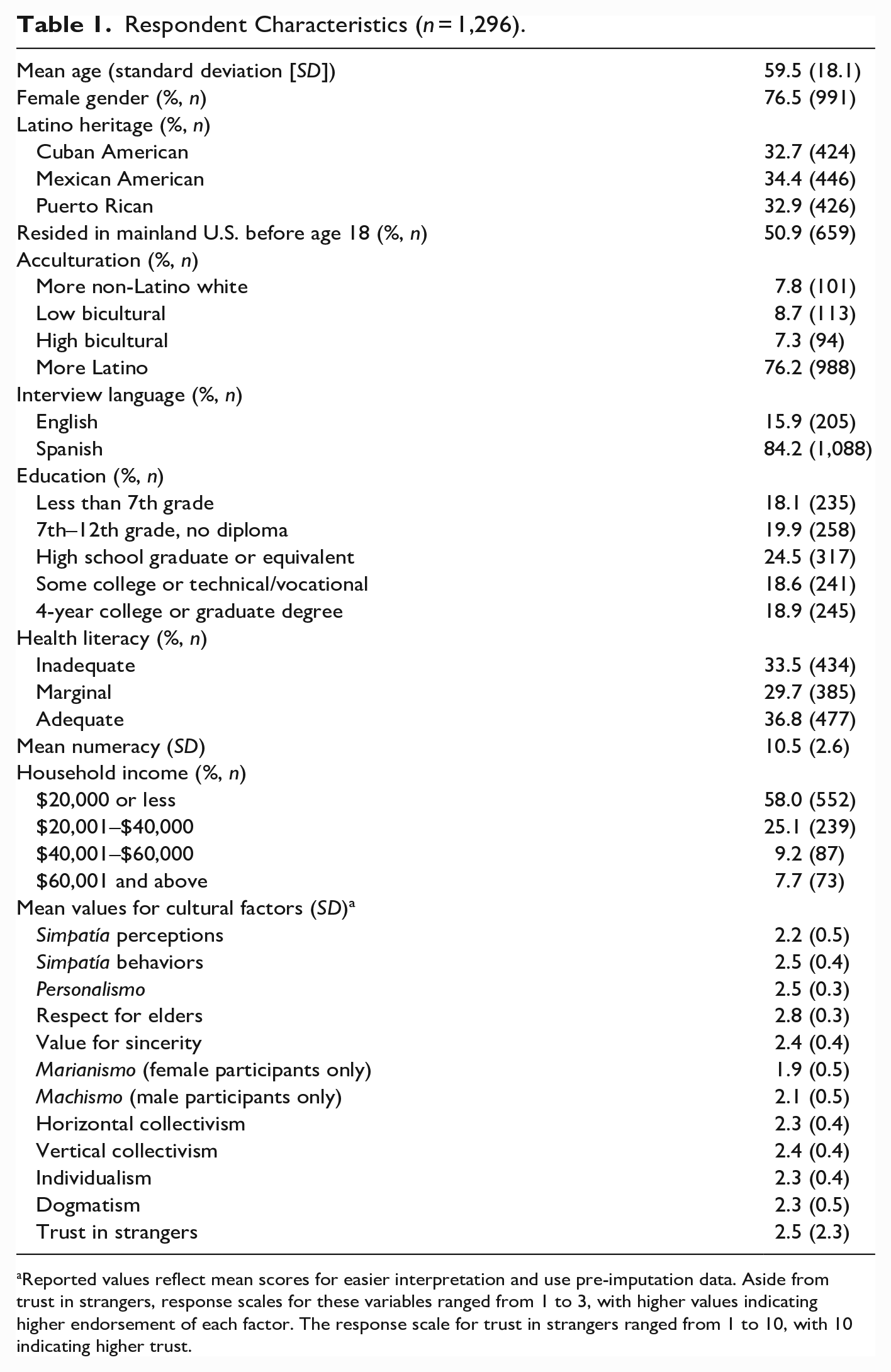
Reported values reflect mean scores for easier interpretation and use pre-imputation data. Aside from trust in strangers, response scales for these variables ranged from 1 to 3, with higher values indicating higher endorsement of each factor. The response scale for trust in strangers ranged from 1 to 10, with 10 indicating higher trust.
Associations Between Individual Cultural Factors and ARS and ERS
The results of multinomial logistic regression models exploring associations between individual cultural factors, ARS, and ERS are reported in Supplemental Appendix A. Main findings include positive associations between high ARS and marianismo/machismo and both forms of collectivism, with an inverse association between high ARS and dogmatism. High ARS was associated with completing the interview in Spanish, older age, lower education, and female gender across all models and sometimes with marginal health literacy. High ERS was associated with stronger endorsement of both aspects of simpatía, personalismo, marianismo/machismo, respect for elders, value for sincerity, and both forms of collectivism but lower dogmatism and trust in strangers. High ERS was consistently associated with completing the interview in Spanish, older age, and adequate health literacy and generally associated with lower education. No significant interactions were observed between gender and marianismo/machismo.
Culture Principal Components
PC1: Social Attentiveness
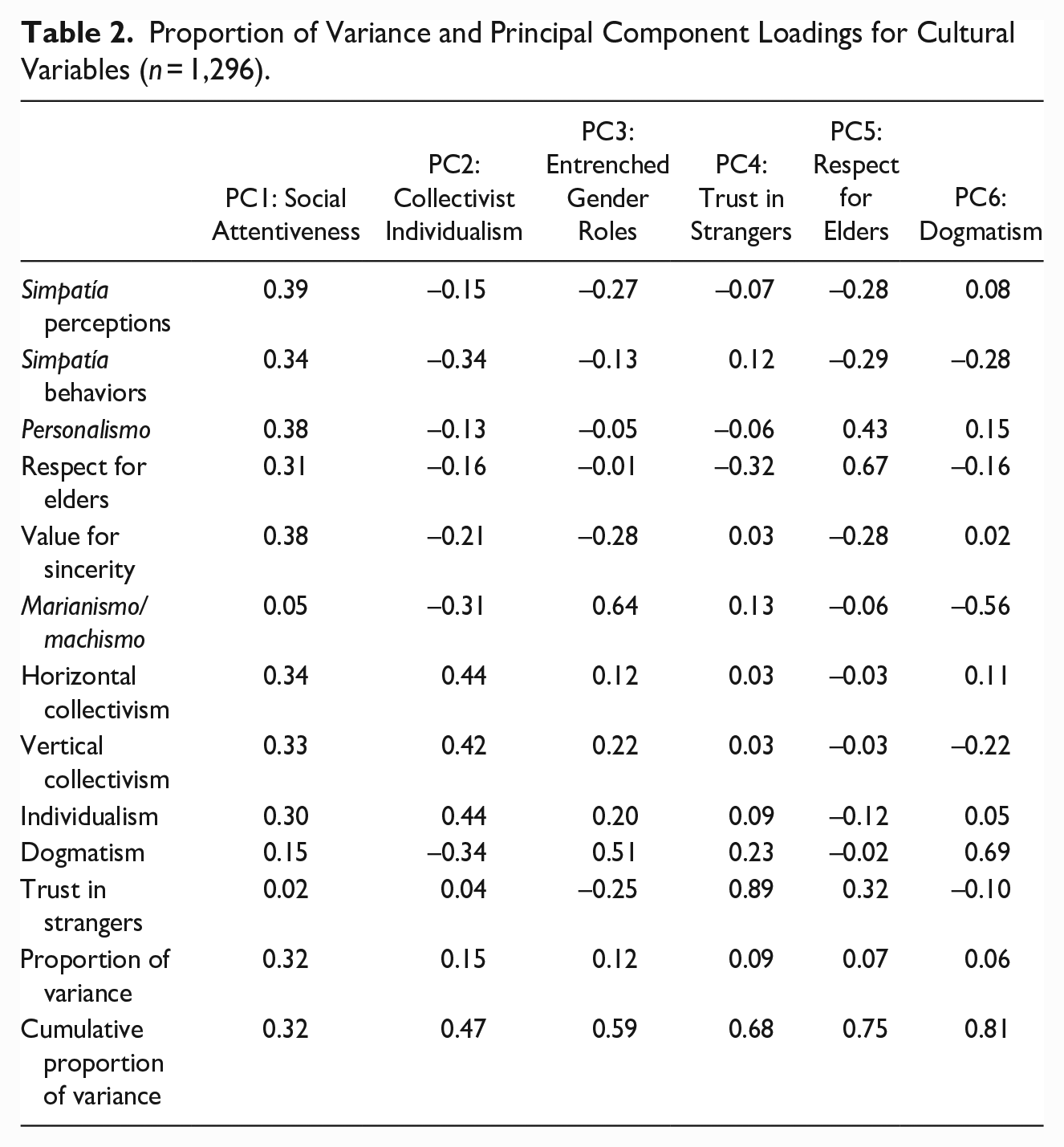
PC1 was comprised of the largest number of cultural factors at their highest loadings (Table 2), including both aspects of simpatía, personalismo, value for sincerity, both forms of collectivism, respect for elders, and individualism. However, no loadings were above 0.40. As shown in Table 3, PC1 was associated with moving to the mainland U.S. as an adult (p = .04), high bicultural orientation (p = .003), and younger age (p = .007). PC1 was interpreted as moderate endorsement of Latino values that may be more socially appropriate among younger, bicultural Latino adults and lower endorsement of more conservative, traditional Latino cultural values (e.g., marianismo). Participants with higher PC1 scores appeared to be attentive to social interactions, motivated to ensure that other people thought well of them, caring about not making people feel badly, and respectful of older people. The loading of individualism on PC1 with collectivism may have indicated the enculturation of participants into Latino social norms related to collectivism during childhood while living within a U.S. cultural environment that prioritizes individual achievement as adults.
Proportion of Variance and Principal Component Loadings for Cultural Variables (n = 1,296).
General Linear Model Estimates of Associations Between Sociodemographic Characteristics and Culture Principal Components (n = 1,293).
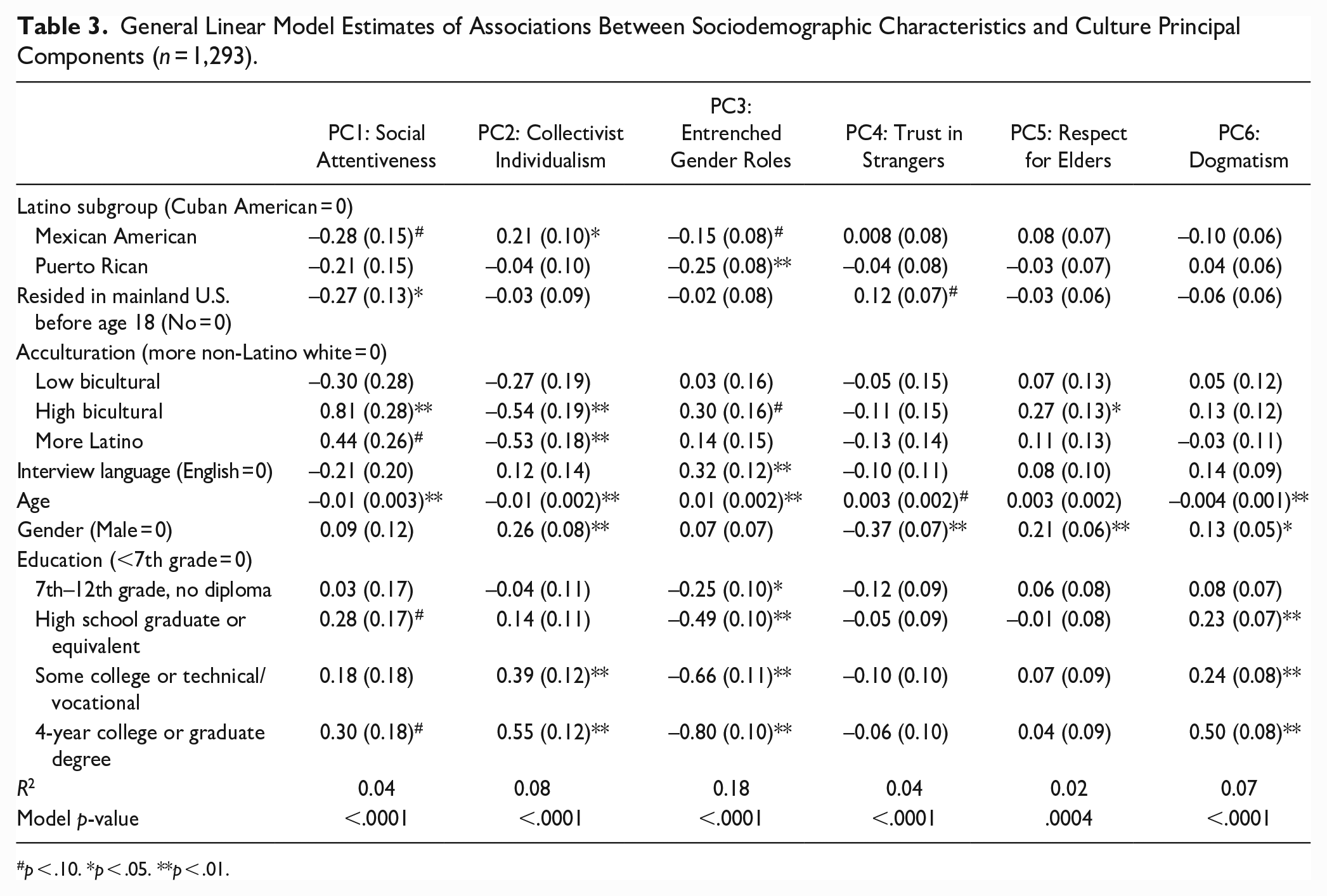
p < .10. *p < .05. **p < .01.
PC2: Collectivist Individualism
PC2 had positive loadings for collectivism and individualism and negative loadings for simpatía behaviors, dogmatism, and marianismo/machismo. PC2 was associated with Mexican American heritage (p = .03), a more NLW than Latino (p = .003) or high bicultural (p = .004) orientation, younger age (p < .0001), female gender (p = .002), and higher education (p < .0001). In a separate model (not shown), PC2 was also positively associated with income (β = .18, p < .0001). PC2 was interpreted as representing a younger, more female, relatively higher socioeconomic status, and more Mexican American population that was oriented more toward NLW culture. These respondents may have tended to engage with close family and friends in ways that preserve harmony (e.g., collectivism) while rejecting traditional Latino cultural norms (e.g., simpatía, marianismo, machismo). Drawing upon collectivism (e.g., getting help from family) and individualism may have also reflected a younger population of more acculturated, higher socioeconomic status respondents functioning within the individualistic context of the U.S. as it relates to achieving educational and economic success.
PC3: Entrenched Gender Roles
PC3 was characterized by endorsement of traditional gender attitudes and, to a lesser extent, dogmatism. PC3 was associated with completing the interview in Spanish (p = .007), older age (p < .0001), lower education (p < .0001), lower likelihood of Puerto Rican heritage (p = .003), and lower income (β = −.07, p = .04; not shown). Thus, PC3 participants tended to be older, Spanish speaking, and of lower socioeconomic status. PC3 appeared to represent participants with long-held, ensconced endorsement of more conservative, traditional Latino gender attitudes that were infrequently re-evaluated. These characteristics may have been artifacts of older age, as participants may have formed many of their attitudes and beliefs earlier in life.
PC4: Trust in Strangers
PC4 primarily reflected trust in strangers and, to a lesser degree, diminished respect for elders. PC4 was significantly associated with male gender (p < .0001) and marginally associated with moving to the mainland U.S. before age 18 (p = .08) and older age (p = .05). These respondents may have had to rely more upon themselves than other people to form judgments about strangers. This self-reliance may have yielded more frequent and higher confidence during interactions with strangers, including those who ultimately proved trustworthy.
PC5: Respect for Elders
PC5 represented strong respect for elders, followed by more tempered endorsement of personalismo and trust in strangers. PC5 was associated with high bicultural orientation (p = .045), female gender (p = .0004), and higher income (β = .09, p = .002; not shown). Hence, these respondents appeared to be more financially secure and more comfortable navigating Latino and NLW social situations than respondents associated with some other PCs. PC5 may have also represented women who valued traditional ways of conveying respect for elders through being nurturing and physically expressive, as consistent with traditional Latino female caretaking roles for children or aging parents. However, respondents with high PC5 scores were less likely to endorse the conservative gender roles represented by marianismo/machismo or the social norms of simpatía behaviors.
PC6: Dogmatism
PC6 represented dogmatism and a rejection of marianismo/machismo. PC6 was associated with younger age (p = .009), female gender (p = .02), higher education (p < .0001), and higher income (β = .06, p = .01; not shown). PC6 appeared to represent younger, higher socioeconomic status respondents who were likely to be female. Like those with high PC3 scores, these respondents seemed to be more confident about their beliefs and less open to changing them. In contrast with PC3, however, participants were more likely to reject the traditional marianismo and machismo gender attitudes.
Associations Between Culture Principal Components and ARS and ERS
PC1 was associated with high ARS (Table 4, Model 1), while PC3 was associated with both medium and high ARS. High ARS was also related to older age, female gender, and lower education. PC1 was associated with both medium and high ERS (Model 2), while PC3 was related to high ERS. PC4 was negatively associated with high ERS. Completing the interview in Spanish, older age, and adequate health literacy were related to high ERS. Similar relationships were observed between age, health literacy, and medium ERS. Female gender was related to medium ERS but not to high ERS. No significant interactions were observed between PC3 and gender, suggesting similar results for male and female respondents.
Multinomial Logistic Regression Estimates of the Influence of Culture Principal Components on ARS and ERS (n = 1,251).
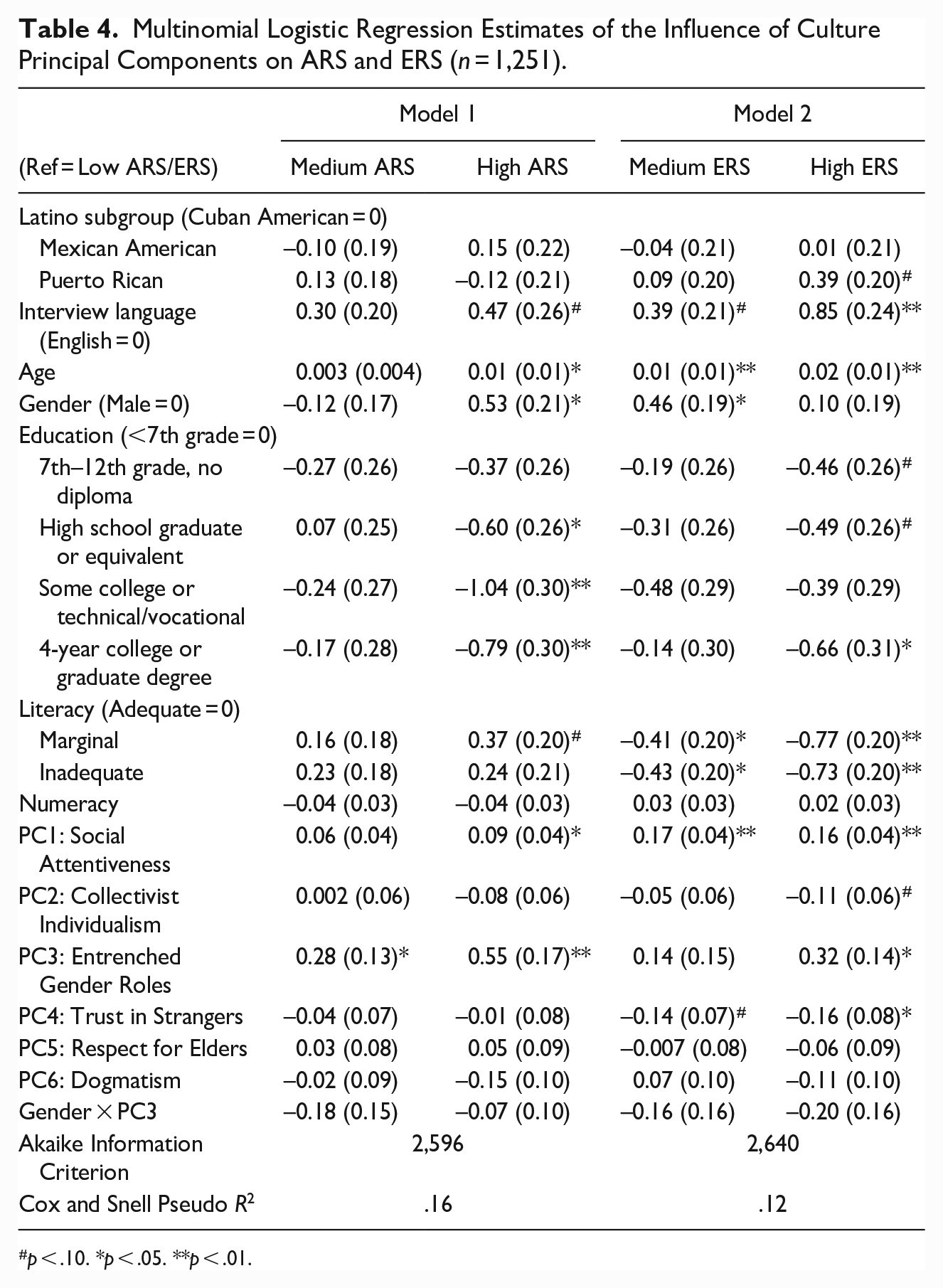
p < .10. *p < .05. **p < .01.
Discussion
Perhaps our most important finding is that Mexican American, Puerto Rican, and Cuban American survey respondents who more strongly endorsed traditional gender attitudes related to marianismo and machismo (PC3) were more likely to engage in ARS and ERS. These findings were not affected by respondent gender, which distinguished between marianismo and machismo, and emerged while controlling for other potential influences on survey response styles such as age, language, Latino heritage group, education, and income. These findings therefore provide evidence that individual-level cultural factors can independently influence use of ARS and ERS among Latino survey respondents.
The study results were consistent with our prediction of a positive association between marianismo and ARS and indicate similar relationships between marianismo and ERS and machismo with ARS and ERS. The findings for marianismo and ARS were consistent with those by Davis et al. (2011) in a study with mostly English-speaking Mexican Americans, thereby providing potential support for the hypothesis that the submissive aspects of the traditional concept of marianismo may be exhibited as a tendency to agree with survey items. Although diverging from the Davis et al. (2011) study, the positive relationship observed in the current study between marianismo and ERS may indicate that some women who endorsed marianismo found it easier to express clear agreement or disagreement rather than more nuanced answers, as the latter may be more likely to invite questions from others to obtain clarity. If true, engaging in ERS could be a strategy for minimizing attention or confrontation that is consistent with marianismo. The finding that machismo was positively associated with ARS and ERS was also contrary to prior research (Davis et al., 2011) and could be attributable to the larger sample, inclusion of three heritage groups, a less acculturated sample (as indicated by language use), and stronger measures of ARS and ERS in the present study. The present findings may indicate that some men who endorsed the traditional construct of machismo utilized ERS as a means of conveying strength via the expression of stronger and more assertively expressed opinions. Conversely, it is unclear why some men with high machismo scores engaged in more ARS. It is possible that consistent agreement enabled more culturally traditional male respondents to express greater confidence, even when such agreement indicated endorsement of more vulnerable responses (e.g., agreement with items indicating lower self-esteem or higher stress), and that negative responses represent more diminished forms of self-presentation when emanating from men evincing high machismo. While it is a strength that two emic gender attitudes were examined, the two gender attitudes assessed in this study, marianismo and machismo, represented very traditional, conservative Latino gender roles, and different findings may emerge in research with more acculturated participants or that assesses a broader range of gender attitudes.
Data from this study also indicate that respondents’ endorsement of traditional cultural factors related to social attentiveness (PC1), such as simpatía and personalismo, were positively associated with ARS and ERS. These findings suggest that the influence of PC1 on ARS was driven by the commonalities among the variables comprising PC1, which appeared to represent endorsement of a more generalized traditional Latino cultural factor related to enhanced attentiveness to how one is both perceived by others and conveys respect toward others during social interactions. These qualities may amplify ARS, as expressing agreement may be a general strategy that some respondents use to present themselves as friendly and positive, convey respect toward others (vs. being disagreeable or argumentative), and preserve social harmony during social interactions. Social attentiveness had an even stronger association with ERS. With the exception of individualism, the cultural factors comprising PC1 were also each independently associated with ERS. These results provide support for the premise that providing honest, clear answers, as expressed through the selection of response scale endpoints, may have been a strategy that some respondents used to maintain social harmony (Hui & Triandis, 1989; Marín et al., 1992).
Findings from this study further indicated that Latino survey respondents with higher trust in strangers were less likely to engage in ERS. Although we anticipated that extreme responses would be considered as less cautious and, thereby, associated with higher trust, it may be that respondents with greater trust were more comfortable with their interviewers and, as a result, were able to think through their answers more carefully, leading to a wider range of responses.
This is the first study to assess relationships between health literacy and response styles. Health literacy has been positively associated with education (Kutner et al., 2006) and is often lower among Latino adults than adults from other racial or ethnic groups (Kutner et al., 2006). Contrary to expectations, respondents in this study with lower health literacy were less likely to exhibit ERS. One possibility is that respondents with lower health literacy had more limited ability to engage in cognitively processing questionnaire items. Since choosing scale endpoints requires a threshold level of item processing ability to commit to a particular scale direction, these respondents may have had a tendency to select middle responses in an attempt to obscure item processing difficulty. Research is needed to better understand the relationships between health literacy and literacy on response styles.
This study has several noteworthy strengths and limitations. For one, the sample was not representative of the three targeted Latino heritage groups; thus, the findings may not be replicated in studies with other populations, such as other heritage groups or samples with more acculturated respondents. Strengths of the sample included a good distribution of acquiescers and non-acquiescers at eligibility screening and its focus on an ethnic group that has been shown to engage in higher levels of ARS and ERS (Davis, Johnson, et al., 2019; Hui & Triandis, 1989; Marín et al., 1992; Ross & Mirowsky, 1984; Warnecke et al., 1997; Weech-Maldonado et al., 2008). Since this study only measured ARS and ERS in two content measures (self-esteem and perceived stress), the results of this study may also not be generalizable to measures of other constructs. Although most cultural scales had acceptable to high internal consistency reliability, some cultural measures had low reliability, which may have adversely affected the findings. For instance, reliability was poor for collectivism and individualism, despite using a pre-existing measure, which may have contributed to the unexpected loadings of these factors on the same PCs. Although endorsement of some cultural factors was moderate, this may be an accurate representation of more traditional cultural factors among a U.S. Latino sample. Further research with non-U.S. Latino populations may further shed light on the role of cultural orientation in survey responding among Latino adults. It is a strength of the study that relationships between a relatively large number of cultural factors and ARS and ERS were examined, both independently and concurrently using PCs. A drawback of using PCs, however, is that the PCs must be subjectively interpreted, and our interpretations of the PCs may not have been optimal. It is also possible that the assessment of the cultural factors themselves was affected by ARS and ERS, although this source of error may have been mitigated for most scales by the avoidance of disagree/agree response options (Saris et al., 2010).
Findings from this exploratory study provide evidence of associations between culture, health literacy, and use of ARS and ERS among U.S. Latino survey respondents. These results suggest that individuals’ cultural orientations and health literacy skills may systematically influence how Latino adults respond to survey questions. Future research is needed to confirm these findings and to better understand the mechanisms through which culture may influence response style use among Latino respondents, as well as those from other ethnic, racial, and national groups. Such knowledge is critical for reducing ARS- and ERS-associated measurement error, informing best practices for collecting and analyzing survey data, and accurately interpreting survey data from social groups with tendencies to engage in different patterns of responding to survey questions.
Supplemental Material
sj-docx-1-hjb-10.1177_07399863231183023 – Supplemental material for Individual-Level Cultural Factors and Use of Survey Response Styles Among Latino Survey Respondents
Supplemental material, sj-docx-1-hjb-10.1177_07399863231183023 for Individual-Level Cultural Factors and Use of Survey Response Styles Among Latino Survey Respondents by Rachel E. Davis, Sunghee Lee, Timothy P. Johnson, Wenshan Yu, Ligia I. Reyes and James F. Thrasher in Hispanic Journal of Behavioral Sciences
Footnotes
Declaration of Conflicting Interests
The author(s) declared no potential conflicts of interest with respect to the research, authorship, and/or publication of this article.
Funding
The author(s) disclosed receipt of the following financial support for the research, authorship, and/or publication of this article: Funding for this research was provided by the National Cancer Institute [R01 CA172283].

Supplemental Material
Supplemental material for this article is available online.
Author Biographies
References
Supplementary Material
Please find the following supplemental material available below.
For Open Access articles published under a Creative Commons License, all supplemental material carries the same license as the article it is associated with.
For non-Open Access articles published, all supplemental material carries a non-exclusive license, and permission requests for re-use of supplemental material or any part of supplemental material shall be sent directly to the copyright owner as specified in the copyright notice associated with the article.
