






Abstract
U.S. immigration policies and enforcement practices make it increasingly difficult for noncitizens to migrate to their countries of origin freely, which has implications for physical and mental distress. This study seeks to answer: (1) how does immigration enforcement impact Mexican immigrants’ mental and physical distress? And (2) what are the consequences of separation from parents for adult Mexican immigrants? Participants (n = 2,334, 95% male, M = 48 years, 93% surveyed in Mexico, M = 95 months in the U.S.) come from the Mesoamerican Migration Project. Using cluster-adjusted logistic regression we apply a stress process theoretical framework. After adjusting for various sociodemographic and structural factors, analyses examine how changes in immigration enforcement budgets and “no parental migration” (i.e., neither parent migrating) might influence the well-being of Mexican immigrants. Our expected findings are that (1) intense immigration enforcement will increase the odds of distress, that (2) Mexican immigrants who migrate without their parents will be more likely to experience distress than those who do, and that (3) the negative effect of separation from parents will be exacerbated by longer periods of time in the U.S. Our results do not support the first hypothesis, do support the second hypothesis, and partially support the third hypothesis. Findings identified a negative association between immigration enforcement and levels of distress experienced by Mexican immigrants, but many of the stressors associated with the immigration experience—including separation from parents, use of a coyote, being surveyed during the Trump era, and longer periods of time in the U.S.—significantly increase the odds of distress. These findings highlight how migration patterns shift in the face of enforcement practices, and how individual immigration experiences—most notably separation from parents for adult immigrants—affect the mental and physical well-being of Mexican immigrants.
Keywords
Introduction
Mexican nationals’ movement across the U.S. and Mexico has shifted significantly over the last couple of decades, due to intense surveillance at the U.S.-Mexico border and increased interior immigration enforcement (A. E. Lee, 2018; Massey et al., 2016; Zamora Salazar & Casillas, 2024). While there has been a decrease of Mexican migration over the last decade (Warren, 2024), Mexicans remain the largest foreign-born population in the U.S., in addition to comprising the largest deportee population as of February 2026 (TRAC Immigration, 2026). Thus, there remains a need to understand how criminalized immigration policy affects the well-being of Mexican migrants in the U.S., as well as those who have returned to Mexico, during different periods of immigration enforcement.
The application of immigration law throughout U.S. history has shaped family formation and migrants’ access to their country of origin (Delgado, 2022; Vasquez-Tokos & Yamin, 2021), and as policies continue to blur the lines between immigration law and criminal law (Abrego et al., 2017), Mexican immigrants are greatly affected socially, economically, and mentally. The research is consistent in documenting the adverse physical and psychological effects that immigration policies have on migrants, including transnational family separation, low healthcare access, heightened anxiety and depression, and cardiovascular disease risk (Cholula, 2026; Stange & Stark, 2019; Torres et al., 2019; Van Natta, 2023). While research indicates a link between immigration enforcement or anti-immigrant rhetoric and the health of immigrants, it is important to note that individuals respond differently to these stressors. Consequently, the effects can manifest in various physical and mental health concerns, such as anxiety, depression, high blood pressure, and hypertension (Burgos & Trillo, 2025).
The adverse health and family impacts stemming from immigration policy can worsen existing mental health issues that migrants may have experienced before arriving in the U.S. In this context, the sociolegal pressures associated with immigration can compound the social, political, and economic challenges that began prior to their migration (Saavedra Solano et al., 2023). When migrants return to their home countries, they often face significant difficulties in reintegrating into society. Return migrants, including those who have been deported or have chosen to return voluntarily to Mexico, encounter various challenges that can be familial, economic, or health-related (Calderón-Villarreal et al., 2022; Oaxaca Carrasco et al., 2025). The impacts of immigration policy remain relevant for Mexican migrants who remain in the U.S. as well as those who have returned to Mexico.
This paper uses budget information from the Department of Homeland Security (DHS) and data from the Mesoamerican Migration Project (MMP) from 2007 to 2019 to analyze how macro-level U.S. immigration enforcement, along with individual sociodemographic indicators, impacts the health of adult Mexican migrants, including return migrants. Empirical evidence highlights how immigration policy affects both the physical and mental health of migrants, therefore we utilize two self-reported health indicators—hypertension for physical health and emotional and psychological for mental health—to create a measure of distress. Employing a physical and emotional measure of distress allows our analysis to address how immigration-related stressors might result in diverse (psychological and physical) representations of health (Burgos & Trillo, 2025; Horwitz, 2002). With this understanding of distress as a physical and emotional outcome, we apply the stress process framework to our analysis and seek to understand how exposure to various levels of immigration enforcement influences the well-being of Mexican migrants in the U.S. and return migrants in Mexico.
To contribute to literature on the health of Mexican migrants across different periods of anti-immigrant rhetoric and politics, our study considers various structural and individual factors, including contact with family and immigration-related experiences, which affect individuals during politically sensitive periods. Additionally, we consider the health impacts of transnational family separation (Fullerton Rico, 2023) and assess how the absence of parental migration (no parental migration) impacts distress.
a. How does immigration enforcement impact Mexican immigrants’ mental and physical health?
b. What are the mental and physical health consequences of separation from parents for adult Mexican immigrants?
Literature Review
Family Formation and Maintenance Amid Anti-Immigration Policies
Immigration policies shape family formation and maintenance by dictating when, how, and who can migrate and reunite with loved ones. For instance, the Immigration Act of 1965 ended the national quota system and set caps on countries, including 120,000 visas for the Western Hemisphere. It prioritized employment skills and family ties but disproportionately hurt Mexican workers who had migrated seasonally under the Bracero program (S. Lee, 2019). The program was limited to men who returned to Mexico after contracts ended, and they would reunite with their families who did not migrate. The Act dismissed many Mexican nationals’ connections to the U.S. that involved low-wage, seasonal labor, yet their labor in the U.S. did not provide a pathway to family settlement. Instead, the 1965 Act offered limited naturalization options to individuals with family ties in the U.S. (Delgado 2022) further marginalizing Mexican migrants, who were seen as economic or security threats (Chomsky, 2014).
Years later, Mexican migrants’ presence in the U.S. was further complicated by additional interior and U.S.-Mexico border immigration enforcement measures. Policies such as the Illegal Immigration Reform and Immigrant Responsibility Act of 1996 (IIRIRA) and Immigration Reform and Control Act of 1986 (IRCA) expanded surveillance on noncitizens (Bhatnagar 2022) that altered Mexican migration patterns. Controlling migration flows restricts admissions and pathways to legalize an undocumented status, making it difficult for families to reunite or visit one another (S. Lee, 2019), thereby creating transnational families.
For instance, IRCA provided a pathway to authorized residency for over a million noncitizens; however, the Act led to increased border enforcement that discouraged return migration to Mexico among immigrants without lawful status. Instead, migrants would remain within the U.S. for extended periods rather than moving freely between the U.S. and Mexico (Massey, 2014; Rosenblum, 2012), which created various harmful economic, familial, and health impacts among immigrants as well as their families on both sides of the border.
Research on transnational families suggests that separation leads to complex and conflicting emotions within family relationships (Rojas et al., 2016; C. A. Solheim & Ballard, 2016). Immigrants often face the difficult decision not to return to their countries of origin, fearing they may not be able to return (Cholula, 2026; Fuller-Iglesias, 2015; C. Solheim et al., 2016). Specifically, within transnational families, separation from family members, including migrants’ parents, can lead to feelings of powerlessness and depression (Fullerton Rico, 2023).
To manage these challenges of transnational separation, immigrants in the U.S. send remittances to their loved ones, and phone calls are essential for maintaining contact and relationships with their families in Mexico (C. Solheim et al., 2016). Both parents and spouses in Mexico of loved ones who migrated to the U.S. must navigate fragmented family relationships (Fuller-Iglesias, 2015), since the U.S. immigration system creates unsafe conditions for border crossings.
The criminalization of immigration policy has been accompanied by increased funding for both interior and border immigration enforcement, beginning with federal immigration policies introduced in the late 1980s and mid-1990s. Research by Grimsley and Vásquez (2024), which analyzed ICE administrative records, found that over 90% of immigrants arrested under the Secure Communities program between 2008 and 2019 were from Mexico or Central America. Their findings support earlier research indicating that immigration enforcement practices disproportionately affect Black and Latine migrants, framing these practices as a gendered and racialized project (Provine & Doty, 2011).
Both the Immigration Reform and Control Act (IRCA) and the Illegal Immigration Reform and Immigrant Responsibility Act (IIRIRA) have contributed to the criminalization of immigrants and the mass surveillance of immigrant communities. This includes collaborations between local and state law enforcement agencies and federal immigration enforcement through programs like Secure Communities and 287(g). The political messaging surrounding immigration policy, particularly regarding immigrants with criminal records, has evolved over the years. For instance, in 2014, then-President Obama emphasized the enforcement of immigration laws against immigrants with criminal records, earning the title of “deporter in chief” due to deportations exceeding 400,000 in 2012 (Greene, 2018). Subsequently, the first Trump presidential campaign and his presidency intensified xenophobic sentiments, particular against Mexican immigrants, and further racialized Latine immigrants. Although the immigration enforcement and deportation has been a racialized practice since its inception, Canizales and Vallejo (2021) add that the Trump effect intensified anti-immigrant sentiment among white groups, which further solidified and expanded racialization under Trump.
Researchers have documented the complex realities faced by Mexican migrants who return to Mexico, whether voluntarily or forcibly, who must navigate Mexico’s barriers to health and economic resources (Oaxaca Carrasco et al., 2025). A study by Rivera-Heredia et al. (2024) examined Mexican families with a U.S. citizen child who returned to Mexico, comparing them to non-migrant families. The study found that intrafamily support served as a protective factor for parents in both groups. However, among families that returned, feelings of warmth and being heard were stronger among those who had previously lived in the U.S. compared to non-migrant families. This research highlights the importance of social and familial support in the reintegration process for returning migrants.
Additionally, A. E. Lee’s (2018) ethnographic study on Mexican deportees from Puebla reveals that migrants face significant physical and psychological trauma when attempting to cross the border, especially given heightened border enforcement since the early 2000s. This increased enforcement exposes migrants to physical harm from both criminal organizations and U.S. authorities (A. E. Lee, 2018). The increase in funding for border and interior immigration enforcement leads to more detentions and deportations of noncitizens, as well as many harmful effects that result in poor health outcomes like higher rates of depression, hypertension, and lack of access to health care. Further, the increasingly militarized southern border is making the migration journey through the Mexican desert more difficult (Miller, 2019), increasing its danger and making border crossers more reliant on coyotes for safe passage (Hernández-Campos & Torre-Cantalapiedra, 2024).
Stress Process: Immigration-Related Stressors
Pearlin’s (1989) and Pearlin’s et al. (1981) Stress Process Theory considers how stressors and inadequate coping resources combine to lead to psychological and physiological distress. It emphasizes the socially patterned nature of stressors (circumstances and events that require adjustment and can be difficult to deal with) and mediators (adaptive coping mechanisms and resources), such that stress and mediators are distributed unequally throughout society. This social patterning is associated with social characteristics such as race, ethnicity, socioeconomic status, and immigration status, and helps explain differences in psychological and physical distress.
The stress process model explains how people conceptualize and make sense of macro- and micro-social stressors (McLeod, 2012). The stress process model comes from Pearlin’s (1989) work on social and individual indicators that form a process of stress. Pearlin considered that individuals shape the meaning of and respond to stressors depending on the availability of personal and social resources. Additional work has expanded this model to examine how various groups respond to stress, which varies by ethnicity, sexual orientation, and immigration status (Del Real, 2019; McLeod, 2012; Valentín-Cortés et al., 2020).
The extension of Pearlin’s Stress Process model (Pearlin, 1989) into the Minority Stress Model (Meyer, 2003) was originally developed to explain how lesbian, gay, bisexual, and transgender (LGBT) individuals are disproportionately affected by psychological distress relative to heterosexual individuals. This perspective aims to explain how stressors like conflict, negative social attitudes, prejudice, stigma, and internalized stigma (or racism) impact mental health, especially in minorities (Williams, 2018). It suggests minority individuals face more severe stressors and have varying resources and coping abilities, which influence mental health outcomes.
Minority Stress theory links marginalization to stress and health effects across different levels, affecting psychological and physiological health. This perspective has been used to understand the mental health of undocumented Latine immigrants (Valentín-Cortés et al., 2020) and how institutional racism, hostility toward immigrants, and stress proliferation processes are important components of a structural/institutional explanation of how race is related to physical and mental health (Williams, 2018).
This theoretical perspective, therefore, highlights that Mexicans and Mexican Americans disproportionately experience stressors related to their race, including discrimination and racist jokes from supervisors in the workplace and from peers at school, along with negative impacts on Mexican young adults’ capacity to interact with friends and families (Del Real, 2019). The impact of stressors on interactions with families and friends suggests that race-related stressors are also more likely to influence key mediators, such as friends and family, who can help potentially reduce stress when it occurs.
Without these mediators, unalleviated stress is expected to increase the odds of psychological and physical harm and to explain any racial or ethnic disparity in distress. The stress process model—and its extension into the Minority Stress framework (Valentín-Cortés et al., 2020)—is helpful for this study of Mexican migrant distress because it theorizes how resources and individual positions intersect with structural and institutional-level stressors (Del Real, 2019; Valentín-Cortés et al., 2020).
Immigration Enforcement’s Impact on Mexican Immigrants’ Well-Being and Access to Resources
Migration experiences can lead to a loss of family or culture, disrupting family ties and support groups and negatively affecting mental health (Abrego, 2014; Castrejón, 2020). The migration journey itself can be an incredibly traumatic experience, especially for Mexican and Central American migrants who may have to cross through the desert, facing environmental and safety concerns (De León, 2015). Additionally, if caught by border patrol, they may be subjected to invasive body searches, adding to the trauma of the journey (Lusk et al., 2021). Immigration enforcement also creates social exclusion among laborers who migrated without family, leading to loneliness and disconnection from society (Negi et al., 2021). Therefore, support networks serve as a protective factors to mental and emotional well-being as well as helping with the development of identify formation among undocumented immigrants (Garcini et al., 2021).
The low accessibility of healthcare services and added stress during anti-immigration policies can exacerbate the risk of developing mental health and physical health issues. Undocumented immigrants’ inability to access affordable healthcare is intensified by fears that their immigration status could be exposed to immigration enforcement agencies (Metcalf et al., 2024; Van Natta, 2023). Consequently, undocumented immigrants often turn to non-profits and low-barrier clinics for resources and services (Carrillo, 2024; Park et al., 2024). Together, the barriers to healthcare services and immigration-related fears that cause toxic stress could lead to underdiagnosis or missed diagnoses of health issues among the immigrant population.
Several studies have documented the adverse physical and psychological effects that immigration policies have on residents, including financial stress, racial profiling, and heightened anxiety and depression (Gonzalez & Consoli, 2012; Menjívar & Abrego, 2012; Stange & Stark, 2019). Torres et al. (2019) found an increased risk of hypertension among Mexican-origin women who reported high deportation worry as compared to those who reported low deportation worry over a 4-year period. Research is clear in highlighting the visible and non-visible harms associated with immigration enforcement that come to affect the overall well-being of immigrants and their families.
Overall, the mental and physical health of Mexican migrants, whether in the U.S. or Mexico, warrants attention, considering that research shows that their health is in part influenced by U.S. immigration policies. The inadequate health care services, combined with stressful migration journeys—such as crossing the Mexican desert—affect both mental and physical health. This impact is further intensified when considering other individual factors, including parental migration, time spent in the U.S., and the social support system in the U.S. and Mexico. Among voluntary and deported return migrants, Galván Reyes et al. (2023) found that the social networks Mexican nationals built in the U.S. helped ease their homesickness and provided them with resources related to employment and empowerment.
This framework allows us to test three research hypotheses, all grounded in this literature and theoretical concepts:
Methods
Participants and Procedures
This study uses data compiled from respondents to the Mesoamerican Migration Project (MMP), a survey of individuals compiled as part of a collaborative research project at Brown University and El Colegio de Mexico (https://mmp.research.brown.edu/data). After receiving IRB approval from our university’s human subjects research review committee, we added national-level U.S. data to the MMP dataset to measure the United States’ (macro-level) immigration policies and budgets.
Our analytic data set uses MMP head-of-household survey information, to which we add U.S. national-level budgetary and immigration enforcement measures from the Department of Homeland Security (DHS) budget reports for each year the MMP survey was conducted. Once the individual-level MMP data were merged with the national-level immigration budget data for each of the relevant years (2007–2019), our resulting dataset includes both individual-level MMP survey data, along with national-level immigration and budgetary data for each of the relevant years. This combined dataset is therefore composed of 2,334 individuals clustered within 13 years (2007–2019); our analytic plan deals with this clustering by calculating clustered standard errors as recommended by Primo et al. (2007). This clustering of standard errors adjusts for the non-independence of observations (individuals clustered within years) by adjusting standard errors appropriately.
Sample
MMP randomly selects households in communities across Mexico to gather social, demographic, and economic data about household members and information about their first and last U.S. migration journey. Interviewers compile information from heads of households to capture their experiences with employment, earnings, and use of U.S. social services. After conducting surveys in Mexico, interviewers in the U.S. administer the same questionnaires to migrants who have settled there from the same Mexican communities. The U.S. and Mexico survey data are combined, creating a binational sample of basic migration data and social, demographic, and economic information.
The most recent year of survey data available comes from 2019. While MMP has surveyed respondents since 1987, researchers first introduced health-related questions to survey respondents in 2007. The analytic sample, therefore, consists of Mexican immigrants who self-reported their various measures of health (the dependent variable) during the MMP survey in the years 2007 through 2019.
Instruments
Dependent Variable
The dependent variable in the analysis is distress. Respondents were asked whether they (a) had emotional, nervous system, or psychiatric problems and (b) whether they had been diagnosed with high blood pressure or hypertension. We considered keeping these two variables distinct, presenting two separate sets of regression analyses predicting psychiatric problems and hypertension, but—when we conducted separate analyses for each dependent variable—our findings were similar for both sets of analyses. We also wanted our findings to speak to the sociology of mental health literature which is summarized by Horwitz (2002, p. 146), saying: “Diverse ethnic, social class, age, and gender groups, among others, might respond to stressors through different types of outcomes. . .To the extent that different groups have different psychological responses to social arrangements, studying single outcomes distorts comparisons of group responses to stressors” (emphasis in original). Horwitz further explains that “Studies that compare the mental health of males and females now routinely use not only a measure of internalized distress. . .but also male-related mental health outcomes” (Horwitz, 2002, p. 146). By using different types of distress (psychiatric and physical) in our dependent variable, we follow the sociology of mental health recommendation to employ an outcome that speaks to varied responses to stressors: internalized indicators of both psychological (more common among females) and physical (more common among males) distress. Our dependent variable combines both variables and uses a dichotomous variable to measure distress (0 = no; 1 = yes). If respondents answered yes to either emotional problems or hypertension, they are coded as 1, and if respondents answered no to both questions, they are 0 in this distress variable.
Independent Variables
Our first independent variable is the immigration enforcement budget index, which we created to help answer our first research question and to test our first hypothesis. The index aims to measure the immigration system’s power, considering its dramatic increase in funding over the last couple of decades (Painter & Singer, 2020; Pope, 2020). The index comprises DHS budget information from 2007 to 2019 and includes three agencies: Customs and Border Protection (including Border Patrol), Immigration and Customs Enforcement, and Citizenship and Immigration Services. The index also includes apprehension probability and visa accessibility because DHS immigration enforcement practices include the hiring and training of agents to screen visa applicants and surveil the nation’s borders. 1
Mediator
Our analysis uses a mediator to determine whether respondents’ social support system in the U.S. and Mexico affects the relationship between immigration enforcement budget and distress. We include a binary variable that asks respondents whether they contacted family in Mexico while in the U.S. (0 = no; 1 = yes) and a categorical variable that asks respondents to report who they received lodging from when they arrived to the U.S. (1 = home-community member; 2 = friend; 3 = employer; 4 = relative; 5 = did not it/no one; 6-other). We combined categories one through four to create a binary variable to create social support related to housing (0 = no one/did not need it, other; 1 = peers).
Moderator
The analysis also includes a moderator to help determine whether parental migration modifies the relationship between immigration enforcement budget, time in the U.S., and distress, allowing us to assess our second and third hypotheses. The MMP survey asks respondents to report the year their mother (min. 1926, max. 2017) and father migrated to the U.S. (min. 1919, max. 2016). We recoded each variable to dichotomously measure whether the parent did not migrate (0 = migrated; 1 = never migrated). Then, we combined both into a binary variable to represent no parental migration (1 = neither parent migrated; 0 = at least 1 parent migrated).
Controls
We use several control variables in this analysis; these controls are added to regression models to identify how other relevant stressors and mediators might be contributing to, and conditioning the effect of immigration enforcement on distress, in line with a stress process model. The first of these controls is for gender: we created a dichotomous measure for male (0 = no; 1 = yes). We also created a dichotomous variable for married or consensual union (0 = no; 1 = yes) to account for respondents in consensual relationships.
We also include age, school years completed, and a Mexico-survey dummy variable (0 = United States; 1 = Mexico) to represent where respondents completed the survey. The coyote variable is categorical, measuring the number of times a respondent used a coyote (0 = no coyote; 1 = used coyote once; 2 = used coyote twice; 3 = used coyote three times; 4 = used coyote four or more times).
We created a Trump-era variable using survey years. Survey years less than or equal to 2015 were set to 0, and years greater than or equal to 2016 were set to 1 in the Trump-era variable. Lastly, MMP respondents were asked to report the number of months they have spent in the U.S.; we used this variable to measure, in 5-year increments, how long respondents were away from family while in the U.S., as well as long how they resided in the U.S.
To further assess the effect of no parental migration on distress, we generated interaction terms to gauge the impact of no parental migration and the number of years spent in the U.S. (in 5-year increments) on respondents’ distress. We also created an interaction to measure the effect of Trump years and the number of years in the U.S. on respondents’ distress.
Analysis
The MMP data are multilevel in that there are individuals clustered within survey years. Conducting standard regression modeling without addressing this clustering violates assumptions associated with regression (standard regression assumes that errors are independent of each other; this assumption is violated when individuals are surveyed [and therefore clustered] within the same year). In these instances, default settings for standard errors “can greatly overstate estimator precision” (Cameron & Miller, 2015, p. 317). Because we seek to understand how both macro factors (immigration policies and enforcement budgets), and individual-level factors (separation from family, use of a coyote, etc.), affect individual probabilities of distress, we conduct cluster-adjusted logistic regression analyses. This approach accounts for the fact that observations within each year are unlikely to be independent (Primo et al., 2007). We use Stata 18.0 to cluster and correct the standard errors of our logistic regression models. This correction tends to result in larger standard errors, making it more difficult to find statistically significant coefficients; as a result, the findings we present using cluster-adjusted results are considered conservative estimates of the likely relationship in the population (StataCorp, 2023).
To test our three hypotheses, our logistic regression analyses with cluster-adjusted standard errors consider: For Hypothesis 1, whether higher immigration enforcement budgets increases distress; for Hypothesis 2, whether migration to the U.S. without a parent (neither parent migrated) increases distress; and for Hypothesis 3: whether the effect of neither parent migrated is moderated by length of time in the United States.
Results
Descriptive Statistics
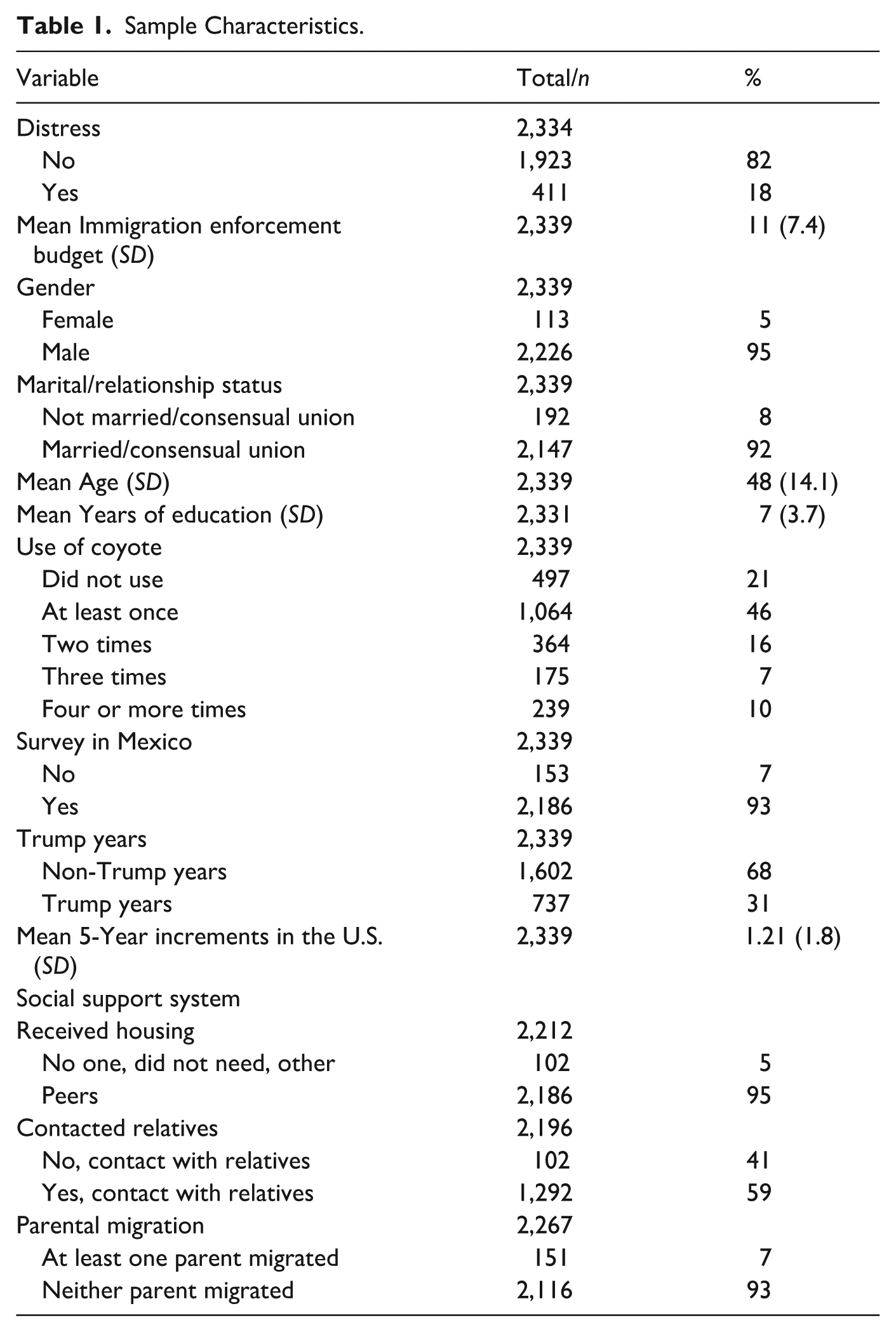
Descriptive analyses in Table 1 show that less than one-fifth (18%) of respondents report distress, consistent with other research that uses the MMP data to assess the relationship between Mexican migration and psychiatric problems (Waldman et al., 2019). The mean score for immigration enforcement budget is 11. Most respondents are male (95%) and married or in a consensual union (93%). The average age of respondents is 48 years, the average years of education is 7. Almost half of respondents reported using a coyote at least once to enter the U.S. (46%), and most completed the survey in Mexico (93%). About one-third of respondents (31%) participated in the survey during the first Trump administration. On average, respondents reported spending 6 years in the U.S. (1.21 × 5-year increments). Regarding respondents’ social support system, most received housing from their peers upon arrival to the U.S. (95%) and over half reported contact with their family in Mexico (59%). Most reported that neither of their parents migrated to the U.S. (93%).
Sample Characteristics.
Predicting Distress Among Mexican Immigrants
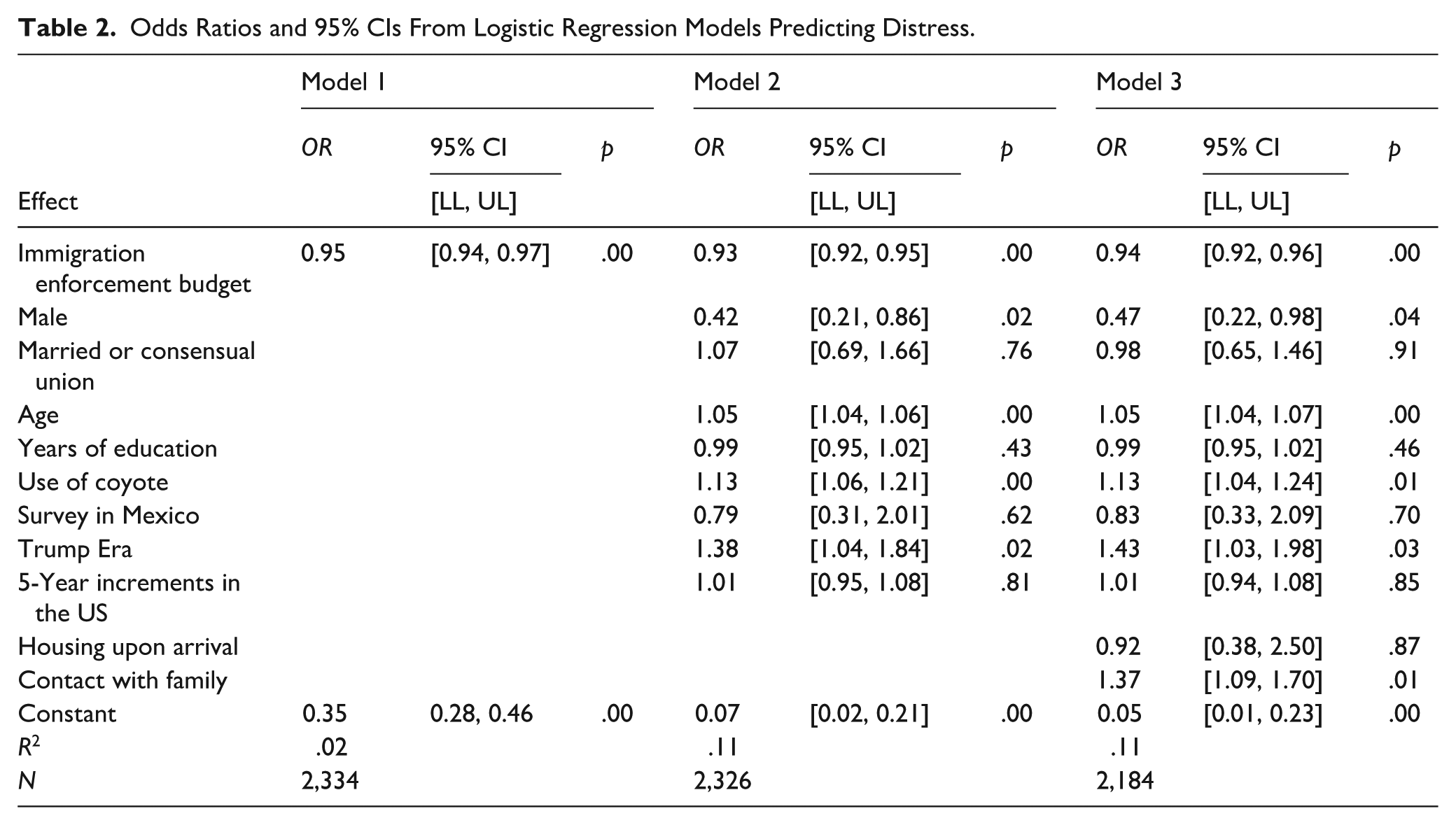
Tables 2 and 3 provide odds ratios results from logistic regression models to predict whether respondents report distress. 2 Model 1 in Table 2 shows the baseline relationship between immigration enforcement budget and distress. Data indicate that at the baseline, immigration enforcement budget decreases the odds of distress by 5% (OR = 0.95). The results are statistically significant (p-value < .00) but are in the opposite direction (negative) of what was expected in our first hypothesis.
Odds Ratios and 95% CIs From Logistic Regression Models Predicting Distress.
Logistic Regression Odds Ratios and 95% CIs Models Predicting Mexican Migrant Distress.
Model 2 in Table 2 introduces control variables, seeking to potentially alter or explain the relationship between immigration enforcement budget and Mexican migrant distress. After controlling for demographics, use of a coyote, and Trump years, the data indicate that immigration enforcement budget decreases the odds of distress by 6.7% (OR = 0.93; p-value < .00). The odds of distress increase by 5.2% (OR = 1.05, p-value < .00) as respondents’ age increases, net of controls. The odds of distress increase 13% on average for each step up in the five categories of coyote use (OR = 1.13, p-value < .00) and increase 38.5% (OR 1.38, p-value = .02) during the Trump years, net of controls.
Model 3 in Table 2 introduces two variables related to respondent’s social support network, the mediator, to assess its relationship to distress. After controlling for other factors, the data continue to show that immigration enforcement budget has a negative effect on distress: the odds of distress decrease by 6.7% (OR = 0.94, p-value < .00) on average. The odds of distress decrease 8% among migrants who received housing from their social support system while in the U.S., though this result is not statistically significant (OR = .092; p-value = 1.87). Respondents who reported contact with family while in the U.S. have a 37% higher chance of distress than those who did not have contact with family; this result is statistically significant (OR = 1.37; p-value = .01). The other coefficients presented in Table 2 do not change appreciably (comparing Models 2 and 3) once the mediator (social support network) is included. 3
There is no evidence that the relationship between immigration enforcement budget and distress is mediated by contact with family. We instead see evidence that family can increase distress (see Cholula, 2026, on family as a stressor rather than a mediator). Consequently, our analysis does not support Pearlin’s stress process perspective that mediators can reduce the effects of stress on psychological distress. We return to this topic in the Discussion.
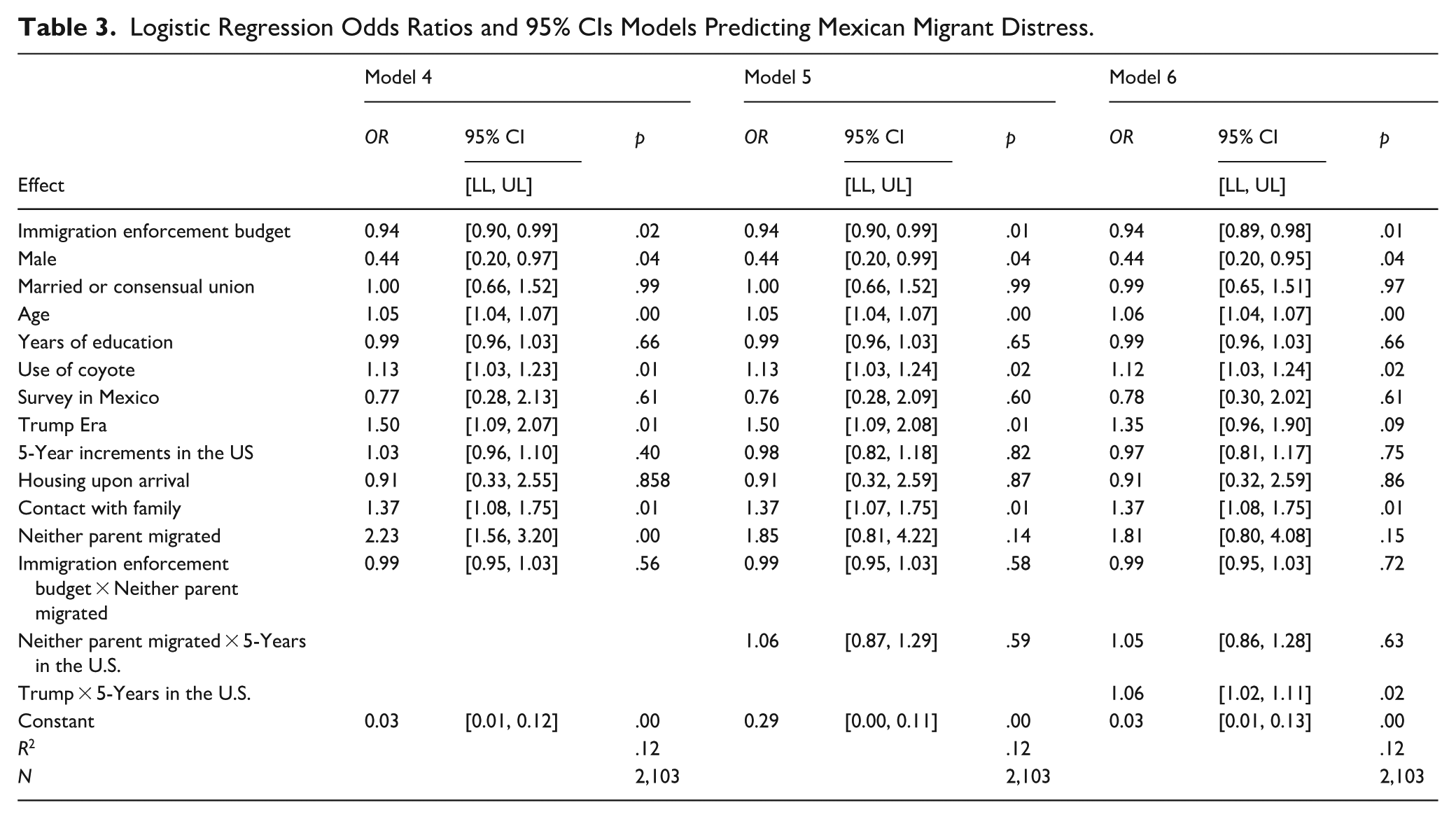
Model 4 in Table 3 introduces parental migration, the moderator, to assess its relationship to distress and to test our second and third hypotheses. As we expected in hypothesis 2, the main effect of neither parent migrating is statistically significant (p-value<.00), indicating that, at the lowest level of immigration intensity, respondents who did not have any parent migrating were 123% more likely to report distress (OR = 2.23). The interaction term modeling neither parent migrated × immigration intensity indicates that the odds of distress are 1% (OR = 0.99) lower, on average, for each step up the immigration intensity index among respondents with parents who did not migrate, but this coefficient is not statistically significant (p-value = .56). Model 4 is the best-fitting model in Table 3, with approximately 12% of the variation in distress explained by the predictors.
To test our third hypothesis, Model 5 in Table 3 emphasizes how the number of years in the U.S. (categorized into 5-year increments) affects respondents with parents who did not migrate by including a different interaction term: years in U.S. × parents did not migrate. Results indicate that the odds of distress increase 6% among respondents with parents who did not migrate, as the years they have spent in the U.S. increases (OR = 1.06); however, these results are not statistically significant (p-value = .59).
Finally, because anti-immigrant rhetoric was especially elevated during the first Trump era, to assess how this period might be especially stressful to MMP respondents, Model 6 of Table 3 assesses the interaction of the Trump era and the number of years a respondent lived in the U.S. These results demonstrate the first Trump years’ effect on respondents as the number of years spent in the U.S. increases: the odds of distress are 6% higher (OR = 1.06, p-value = .02) for each additional 5-year period in the U.S. among respondents surveyed during the Trump years. The main effect of years in the U.S. is negative and nonsignificant, while the main effect of the Trump years is positive and marginally significant (OR = 1.35; p-value = .09). 4
Figure 1 expands on the interaction results shown in Model 6 of Table 3, by using the margins command in Stata (StataCorp, 2023) to plot odds of distress based on the interaction of the Trump era and time in the U.S. This Figure demonstrates that as time in the U.S. increases (and correspondingly, more time separated from loved ones left in Mexico), respondents are more likely to report distress. The interaction term is statistically significant, indicating that more time in the U.S was especially distressing during Trump’s presidency (see higher predicted odds of distress [the upper gray dashed line, with Xs documenting a positive relationship between years in the U.S. and distress] for those completing the survey during 2016 to 2019 versus those [blue line with circles, demonstrating flat or declining distress with more time in the U.S.] who completed the survey in other years). Because the confidence intervals do not overlap for the values of 3 to 5 (representing 15, 20, and 25 years in the U.S.), these opposing trends appear to be especially prominent for those who reported approximately 15 to 25 years in the U.S.
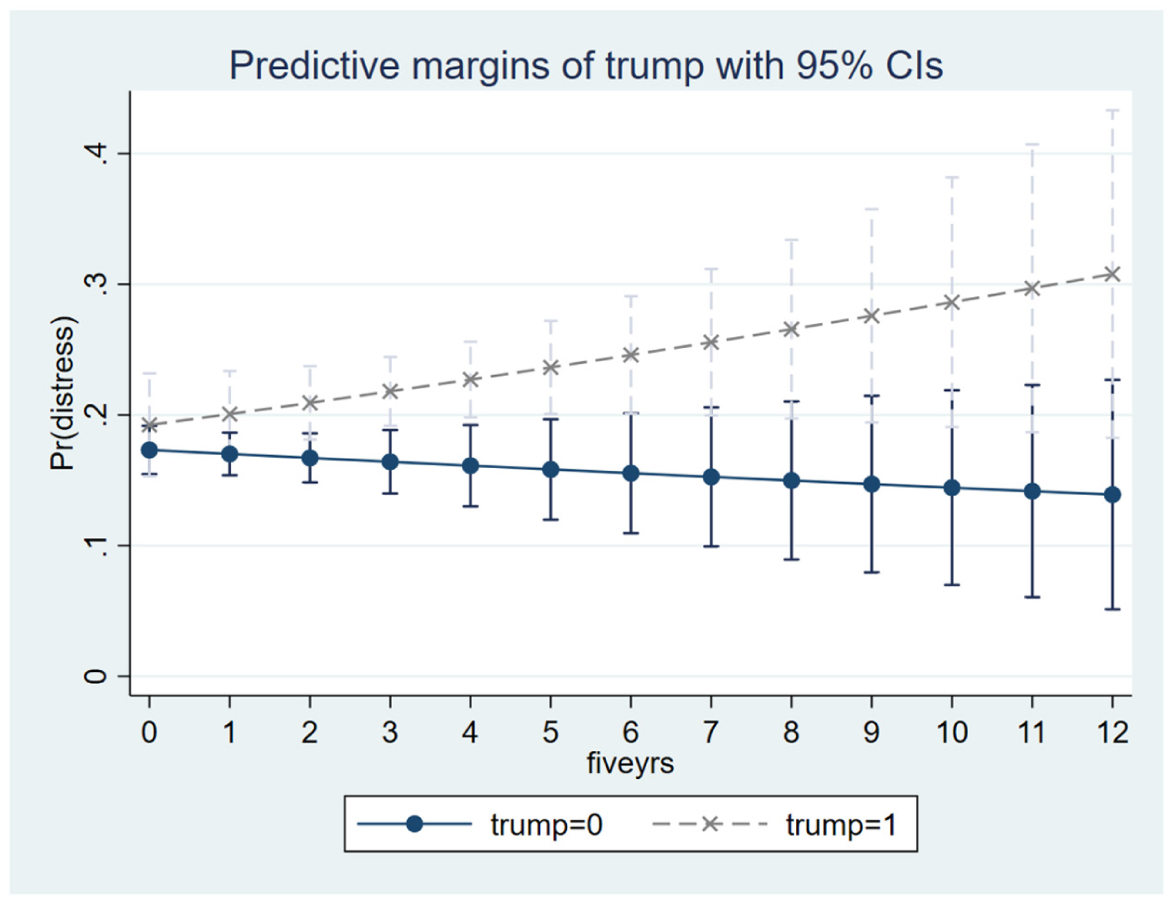
Predicted odds of distress.
The study’s main findings are consistently robust, providing important answers to our research questions regarding how immigration policies and enforcement, along with individual immigration stressors, impact Mexican immigrants’ mental and physical well-being.
Discussion
Previous research demonstrates that fear of immigration enforcement results in distress among Mexican immigrants (Wang & Kaushal, 2019), unstable use of health care services (Rhodes et al., 2015; Van Natta, 2023), and legal and economic exclusions that create further instability (Young et al., 2022). The ongoing merging of criminal and immigration policy causes a net-widening effect whereby noncitizens are increasingly at risk of identification, detention, and deportation. Thus, they remain in a state of vigilance and fear while also facing obstacles to accessing resources that could minimize distress. The implications of immigration policy on health necessitate an ongoing assessment of the ways that immigration enforcement is affecting immigrants’ well-being, particularly Mexicans—the largest foreign-born population in the U.S. and the group with the largest number of deportation (TRAC Immigration, 2026).
To answer our first research question, focusing on the effect of immigration enforcement budget on Mexican immigrant’s health, our results show that the intensity of immigration enforcement has a negative effect on distress. This finding is inconsistent with previous research suggesting that immigration-related concerns, such as discrimination, enforcement practices, and family separation, are associated with distress among noncitizens (Roche et al., 2018), including fear of deportation (Arbona et al., 2010; Lemon et al., 2024) and suicide ideation (Fortuna et al., 2016). One possible explanation for the robustly negative relationship between immigration enforcement budget and distress found in this analysis is cultural gender characteristics that discourage men, in particular, from expressing mental health concerns (Eghaneyan & Murphy, 2020) since the MMP head-of-household sample was overwhelmingly male.
Furthermore, it is worth noting that noncitizens, especially those without lawful status and in mixed-status families, tend to exhibit low levels of mental healthcare utilization (Gearing et al., 2023; Ortega et al., 2018). This can be attributed to their ineligibility for healthcare coverage and the fear of identification and deportation. Stricter immigration enforcement policies and a rise in anti-immigrant rhetoric during the Trump administration resulted in a significant decrease in healthcare utilization and an increase in mistrust among immigrant families (Van Natta, 2023; Wang & Kaushal, 2019). During times of heightened immigration enforcement, many immigrants face significant barriers to accessing healthcare services (Benavides et al., 2021), which can result in a lack of diagnosis for mental health conditions. A lack of health care can be particularly problematic for individuals from Mexican backgrounds who may already be experiencing stress and trauma related to their migration journeys while navigating current policies that criminalize their presence.
The limited range of health services available to immigrants with an unlawful status means that their health concerns may not be identified and diagnosed until they reach a stage of urgency (Cabral & Cuevas, 2020). In our analysis, the makeup of the distress variable requires, at least in part, a diagnosis from a medical professional; therefore, respondents who have not received a formal diagnosis related to distress would likely not report these concerns to the MMP interviewers. Although research links a relationship between psychological health conditions with hypertension and high blood pressure (Stein et al., 2014), there are other ways to define distress outside of the measures we use, such as restlessness and feelings of hopelessness; we are unable to capture these experiences in our analyses, since they were not asked in the MMP.
Regarding the second research question, we find that the odds of distress are greater among Mexican immigrants whose parents who did not migrate. Our results therefore support the second hypothesis that being separated from one’s parents increases Mexican migrants’ level of distress. We expect that this relationship is exacerbated during times of heightened immigration enforcement and in tenuous political eras (such as the Trump era) for immigrants, since the immigrant’s primary relationship with family in their country of origin is affected by restrictive immigration policy that makes it difficult for either party to migrate. Our analysis indicates that contact with family in Mexico increases the likelihood of distress among Mexican migrants. This raises questions about the types of familial or social support that could effectively reduce Mexican migrant distress. In a similar vein, Cholula’s (2026) study on transnational parental separation found that immigrants sometimes limit their contact with parents in Mexico or Central America to avoid the complex emotions associated with being separated from them.
We find partial support for our third hypothesis that longer periods of time in the United States (and therefore separated from family remaining in Mexico) are particularly distressing for Mexican migrants, and that this was especially true during the Trump years. These findings warrant continued analysis and consideration of how being away from parents—and the political rhetoric of the host country—affects the well-being of immigrants.
Previous studies have shown that the physical distance between adult children who migrated and their parents interrupted their relationship and led to less frequent contact between them (Miyawaki & Hooyman, 2021). One way to nurture the adult child and parent relationship is through remittances, which can provide economic benefits and make the extended separation tolerable for transnational families (Rojas et al., 2016; C. Solheim et al., 2016). From the perspective of parents in Mexico with children who migrated to the U.S., the separation from their adult children is a source of constant worry; parents express their fear of never seeing their children again and speak about how their family is broken up because other children migrate to join their siblings in the U.S. (Fuller-Iglesias, 2015). This extended separation adds to the stress and anxiety experienced by both the parents and the adult children, affecting their mental and physical health. It is important to recognize the emotional toll that immigration policies and family separation have on transnational families and to work toward solutions that prioritize family reunification and well-being.
Limitations
The present study could benefit from incorporating more comprehensive measures of psychological and physical health, including measures of anxiety, insomnia, and stress, and/or specific psychological diagnoses. Moreover, future research on the relationship between immigration enforcement and mental well-being could focus on specific regions in the U.S., as enforcement measures vary significantly across states and counties. Also, the majority of the sample in this study was male; to gain a comprehensive understanding of the effects of immigration enforcement on mental health, it is essential to include a more diverse sample that includes females and other genders to help expand our understanding of how Mexican immigrants are affected by immigration policies and the stress they create and exacerbate. Finally, evaluating the immigration system’s power could go beyond the DHS agencies’ budget. Future research might also explore additional factors like detention duration and U.S. regions, which are associated with immigration enforcement practices, to gain a clearer understanding of their impact on immigrants’ physical and mental health.
Conclusion
U.S. immigration policies have significant implications for immigrants’ health and family formation. While some studies have found that Mexican immigrants report lower levels of anxiety and depression than their U.S.-born counterparts, research also suggests that immigrants experience stress, fear, and isolation in the face of growing anti-immigrant rhetoric, as well as heightened immigration enforcement and border surveillance. To better understand the relationship between immigration enforcement budget and Mexican immigrant distress, this study examined various structural and individual factors that contribute to well-being during politically challenging times. The study’s results indicate a negative relationship between immigration enforcement budget and distress, but it also underscores the importance of considering the stress process and the broader context in which immigrants navigate the challenges posed by immigration policies.
As Massey has argued (2020), immigration policy has ignored the economic forces that demand migrant labor; instead, immigration policy is fueled by anti-immigrant rhetoric and dehumanizing enforcement practices that have resulted in counterproductive migration situations. Rather than enabling migrants to enter and leave the U.S. for employment, immigration policy has essentially trapped Mexican migrants, restricting their movement between borders (Massey, 2020; Massey et al., 2016). While expanding access to healthcare and public services is beneficial, the ultimate solution may involve eliminating harsh border enforcement practices that hinder Mexicans from moving freely across the U.S.-Mexico border and advocating for an open U.S.-Southern border policy that allows Mexicans to live and work in both countries.
Footnotes

Ethical Considerations
Use of these data was reviewed by Portland State University’s Institutional Review Board (IRB) (HRPP#237986-18), who determined that this project does not meet the federal definitions of “research” with “human subjects” since the data are secondary and there were no new contacts with human subjects as part of the analyses conducted for this paper.
Author Contributions
Author Contributions: N.J.C. designed the project, the main conceptual ideas, worked out the technical details, performed the quantitative analyses, wrote the first draft of the manuscript, and edited subsequent drafts of the manuscript after seeking feedback from M.T. M.T. supervised the conceptual development of the project and the data analysis, conducted additional analyses, helped with the development of the theoretical framework and review of the literature, and edited and wrote revised drafts of the manuscript.
Funding
The authors received no financial support for the research, authorship, and/or publication of this article.
Declaration of Conflicting Interests
The authors declared no potential conflicts of interest with respect to the research, authorship, and/or publication of this article.
Data Availability Statement
Notes
Author Biographies
Melissa Thompson is a Professor of Sociology at Portland State University. Her research examines the intersections of the mental health and criminal justice systems, and how race and gender shape these intersections. Recent work has been published in the Journal of Correctional Health, Health & Justice, Journal of Developmental and Life-Course Criminology, Society and Mental Health, and the Journal of Experimental Criminology.