







Abstract
Previous studies have not adequately explored the complex relationship between learning satisfaction and perceived learning achievement in adult online education. This study explores the chain mediating effect of online instructional service quality and engagement in online learning on the relationship between learning satisfaction and perception of learning achievement among adult learners in online education. Data from 8,119 questionnaires were analyzed using structural equation modeling. Results indicate positive correlations between learning satisfaction, online instructional service quality, and engagement in online learning. Both service quality and engagement mediate the relationship between learning satisfaction and perception of learning achievement. Enhancing learning satisfaction improves both service quality and engagement in online learning for adult learners. Increased engagement in online learning corresponds to higher learning achievements. These findings provide theoretical insights on satisfaction, service quality, engagement, and learning achievement in online education, offering strong theoretical support and development opportunities for online education practices.
Keywords
Introduction
The development of online education is advancing rapidly, and adult learners, as a significant consumer group, are showing a marked increase in demand for online education (Aldhahi et al., 2022; Xiao & Li, 2021). Online education provides ample learning opportunities for the majority of adult learners (Pan et al., 2024), enabling them to access high-quality education regardless of their location, whether at home, in the workplace, or even in remote areas far from university campuses (Oezdemir & Seckin, 2024; Richards & Thompson, 2023). Learning satisfaction and achievement perception in adult online education are shaped by multiple factors, critically influenced by satisfaction itself. Investigating these factors advances theory and aids in enhancing online teaching effectiveness (Endler et al., 2020; Xiao & Li, 2021).
However, previous studies often overlooked the in-depth exploration of the complex interplay between learning satisfaction and perceived learning achievement in adult online education. The innovation of this study lies in not only filling this gap but also focusing on two critical factors: the quality of online instructional services and engagement in online learning, providing new theoretical perspectives and empirical support for online education practices.
In light of the numerous factors influencing learning satisfaction, this study focuses on two key factors: engagement in online learning and quality of online instructional services (Doo et al., 2023; He & Fu, 2022). Firstly, engagement in online learning is highlighted as a pivotal factor influencing learning satisfaction. Chiu et al. (2021) notably underscore its significance, finding that higher levels of engagement in online learning are positively associated with greater learning satisfaction. This engagement encompasses students’ attention to online learning, as well as the time and effort they invest in the learning process (Verma et al., 2023), further manifested in the implementation of online course strategies and the generation of learning outcomes (Wang et al., 2022; Zeng, 2023).
Secondly, the quality of online instructional services emerges as another key determinant significantly impacting both learning satisfaction and perception of learning achievement. Research by Liu et al. (2022) demonstrates that the construction of a high-quality online instructional services framework, encompassing facets such as teacher responsiveness, provision of teaching resources, interactive classroom dynamics, and study guidance, can notably amplify learners’ satisfaction in the context of online education (Chen, 2022).
Moreover, the quality of online instructional services significantly influences both learning satisfaction and perceived learning achievement (Richards & Thompson, 2023). Tang and He (2022) demonstrate that a strong online instructional services framework, including teacher responsiveness, teaching resources, interactive classroom dynamics, and study guidance, enhances learner satisfaction. Furthermore, a strong correlation exists between learning satisfaction and perceived learning achievement. Research by Wu et al. (2021) suggests that students with higher learning satisfaction have a greater perception of learning achievement. Thus, maintaining optimal learning satisfaction can encourage continuous knowledge acquisition.
Consequently, in the sphere of online education involving adult learners, the mechanism through which learning satisfaction sways the perception of learning achievement is possibly an outcome of the collective function of two chained mediating variables: engagement in online learning and the quality of online instructional services (Mariani & Matarazzo, 2021; Mosher et al., 2023). By nurturing adequate online learning engagement and augmenting the quality of online instructional services (Almusaed et al., 2023; Barth et al., 2023), it is feasible to heighten satisfaction in adult online learning and subsequently boost learners’ perception of learning achievement.
Literature Review and Research Hypotheses
Learning Satisfaction and Learning Achievement
Learning satisfaction refers to an individual's emotional response or attitude toward their learning journey, focusing on whether their expectations and requirements have been met throughout the educational process (Kong & Yan, 2014). This construct plays a critical role in shaping learning outcomes and gains (Wu et al., 2021). Previous studies have indicated that innovative instructional approaches such as blended learning methodologies can significantly enhance students’ learning satisfaction (Alhothali et al., 2022; Salas-Pilco et al., 2022). Learning gains, another important concept, encompasses the breadth of knowledge, skills, and values that students acquire upon the completion of a course. This includes but is not limited to academic proficiency, practical skills, critical thinking abilities, and overall personal development (Ionescu et al., 2023; Tang & He, 2022). Learning gains broadly refer to the knowledge, skills, and values acquired through learning, whereas achievement perception specifically refers to the attainment of learning objectives (Krathwohl, 2002). At its core, learning satisfaction encapsulates the subjective experiences of learners. It includes their level of satisfaction with various aspects of their educational journey, ranging from the instructional materials used and the support provided by faculty to the overall learning environment (Wu et al., 2021; Xiao & Li, 2021). Learning satisfaction, therefore, functions as a critical measure of the effectiveness and quality of educational engagements. This holds particularly in the context of online and blended learning environments, where the traditional parameters of educational success may not apply. By understanding and boosting learning satisfaction, educators and institutions can significantly enhance the educational experience and outcomes for learners. As such, this study aims to delve into the nuances of learning satisfaction, with a particular focus on the pivotal roles played by engagement in online learning and the quality of online instructional services.
Learning motivation is a critical driver of engagement and persistence in learning activities, which in turn can significantly impact how students perceive their learning achievements. According to Dörnyei and Ryan (2015), intrinsic motivation, where students are driven by an internal desire to learn, is positively associated with deeper learning and higher achievement perceptions. Additionally, self-regulated learning strategies, as highlighted by Zimmerman (2002), allow students to take charge of their learning processes, set goals, monitor progress, and adjust strategies as needed. These strategies are instrumental in fostering a sense of autonomy and competence, which are essential for positive learning outcomes and achievement perceptions.
Learning gains represent the accumulation of knowledge, skills, and values that students acquire upon the completion of a course, a specific learning task, or a distinct phase in their educational journey (Yu, 2022; Zhang, Fu, et al., 2023). These gains encompass a broad spectrum of benefits derived from the learning experience. This includes not only academic proficiency and practical skills but also the development of critical thinking abilities and personal growth (Matizirofa et al., 2021; Richards & Thompson, 2023). The assessment of these learning gains is a crucial component in evaluating the effectiveness of educational programs. It provides a tangible measure of the progress made by learners and ensures that they are meeting their learning objectives. Furthermore, it offers valuable insights into the areas of strength and those requiring improvement in the educational process, thereby guiding the refinement of teaching strategies and learning materials. In essence, the evaluation of learning gains serves as a critical tool for enhancing the quality of education and fostering a more effective and enriching learning environment.
Investigations into the implications of learning satisfaction for adult learners engaging in online education are becoming increasingly prevalent among researchers. Amid the escalating integration of blended teaching methodologies, research has unveiled that these strategies can yield a positive influence on students’ learning satisfaction (Doo et al., 2023; He & Fu, 2022). Factors affecting learning satisfaction and perception of learning achievement, like engagement in online learning and the quality of instructional services, are crucial in shaping online educational outcomes (Petrovic et al., 2020; Richards & Thompson, 2023). A deeper exploration of these factors can optimize online platforms and heighten overall instructional outcomes.
Importantly, learning satisfaction considerably influences learning gains—a critical factor in appraising the quality of learning (Bati, 2023; Turner et al., 2023), while building a robust online instructional services framework can significantly enhance learning satisfaction and achievement (Gardner & Leary, 2023; Oezdemir & Seckin, 2024). Consequently, fostering online learning engagement and augmenting instructional service quality can boost satisfaction in adult online learning, thereby advancing learners’ perception of achievement. Does learning satisfaction positively predict learning gains in the context of adult online learning? Thus, the first hypothesis is developed:
Quality of Online Instructional Services and Learning Achievement
Research underlines that to boost student satisfaction, it is essential for higher education institutions to have a thorough understanding of, and continuously strive to enhance, the quality of their online instructional services (Doo et al., 2023; Mariani & Matarazzo, 2021; Zhao & McClure, 2022). However, this task is not without challenges. Not all institutions have the resources or the methodology in place to effectively assess the quality of their online education offerings. A significant number of these institutions routinely encounter difficulties in this domain (Manu & Sreejesh, 2021). These challenges may stem from a lack of standardized evaluation parameters, technical constraints, or limited expertise in online education quality assessment. As a result, there is a pressing need for strategies that can help these institutions overcome such hurdles. This includes the development of robust tools and frameworks for assessing online instructional quality, as well as initiatives to build capacity and enhance institutional understanding of effective online education practices. In essence, carving a path toward improved online instructional quality is crucial in paving the way for higher student satisfaction in the digital learning landscape.
Research points toward the notion that students’ perceived level of learning satisfaction serves as an indicator of the quality of online instructional services (Barth et al., 2023; Endler et al., 2020). Put differently, heightening the quality of online instructional services can directly bolster students’ learning satisfaction. Furthermore, contemporary studies underscore a significant association between the quality of online instructional services and students’ perception of learning achievement (Cao, 2023; Manu & Sreejesh, 2021). This could be due to the exceptional quality of online instructional services providing an enriching learning experience and informative resources, thereby augmenting their cognitive skills and knowledge, culminating in enhanced learning outcomes (Elhussein & Karrar, 2022; Yassine et al., 2022). Does the quality of online instructional services mediate the relationship between learning satisfaction and perception of learning achievement? Accordingly, the following hypothesis is proposed:
Engagement in Online Learning and Learning Achievement
Engagement in online learning occupies a central role in the realm of adult online education. It signifies the extent of learners’ active involvement in the online educational process, as manifested in their commitment to time, the effort they put forth, and their level of participation (Bati, 2023; Cao, 2023). Existing research has shed light on a substantial correlation between engagement in online learning and learners’ perception of their learning achievements. Specifically, learners who invest more time and energy are more likely to achieve satisfactory learning outcomes (Pan, 2022; Wu & Yu, 2022).
The distinct characteristics of an online learning environment, as compared to traditional education, highlight the importance of the influence exerted by engagement in online learning (Chen, 2022). Previous studies have established a strong correlation between college students’ learning outcomes and their investment of time and energy. This investment directly contributes to their academic satisfaction and overall perception of learning achievement (Wu & Yu, 2022; Zhang & Yu, 2022). This body of evidence suggests that engagement in online learning can be considered a key predictor of both online learning satisfaction and learning achievements. It underscores the importance of fostering an engaging online learning environment that motivates learners to actively participate and invest their time and effort. Moreover, the role of engagement in online learning extends beyond individual learning outcomes. It also has broader implications for the overall effectiveness of online education programs. High levels of learner engagement can contribute to the success of these programs by enhancing learner retention, promoting a deeper understanding of course material, and fostering a sense of community among learners.
Given the importance of engagement in online learning, educators and institutions must understand the factors that influence learner engagement in an online environment. These may include the design of the online course, the availability and quality of instructional support, and the use of interactive and engaging learning materials. By understanding and addressing these factors, educators and institutions can create online learning environments that promote high levels of learner engagement and, in turn, enhance learning satisfaction and achievement. Does engagement in online learning mediate the relationship between learning satisfaction and perception of learning achievement? Based on these insights, the following hypothesis is proposed:
The Chain Mediating Effect of the Quality of Online Instructional Services and Engagement in Online Learning
The quality of online education and the degree of learner engagement are indeed key factors influencing adult learners’ satisfaction and perception of learning achievement. A significant body of research conducted in recent years has corroborated the relationship between the quality of online instructional services, engagement in online learning, and learning accomplishment (Alemayehu & Chen, 2023; Johar et al., 2023). These studies have elucidated that the quality of online instructional services acts as a direct influencer on engagement in online learning. This engagement, in turn, has a consequential impact on learning satisfaction and the perception of learning achievement (Alhothali et al., 2022; Salas-Pilco et al., 2022). In essence, high-quality instructional services can stimulate higher levels of engagement, leading to greater learning satisfaction and perceived achievement. This indicates that the quality of online instructional services and learner engagement are not standalone factors. Instead, they interact closely to shape the overall learning experience and outcomes. This understanding underscores the importance of continuously improving the quality of instructional services and fostering a learning environment that promotes active engagement. By doing so, institutions can enhance learning satisfaction and achievement, providing a more fulfilling and effective online learning experience for adult learners.
The quality of online instructional services is a crucial metric in gauging the effectiveness and efficiency of online teaching platforms, encapsulating a variety of elements such as the robustness of teaching content, interactivity, and customization (Mohtar & Yunus, 2022; Zeng, 2023). Online instructional services of superior quality can stimulate student motivation, and augment their engagement in the learning process and satisfaction with it, ultimately culminating in improved learning achievements (Clifft & Assiouras, 2023; Manu & Sreejesh, 2021). Conversely, engagement in online learning is a subjective concept, epitomizing the exertion and commitment level of learners during the online learning process (Wang et al., 2022; Xu et al., 2023). Studies suggest a substantial positive relationship between the degree of students’ engagement in online learning, their satisfaction with it, and their learning accomplishments (Zeng, 2023).
This study examines the interplay between learning satisfaction and achievement perception in adult online education, addressing a gap by exploring how online service quality and learner engagement jointly influence these outcomes, as previous research has often treated these factors in isolation (Mohtar & Yunus, 2022). This study addresses the integration of variables, filling a gap in the literature and offering theoretical and practical insights for online education. It demonstrates how improving service quality and engagement can enhance satisfaction and perceived achievement, leading to a more effective online learning experience for adult learners. Does the quality of online instructional services and engagement in online learning jointly mediate the relationship between learning satisfaction and perception of learning achievement among adult learners in online education? Therefore, the following hypothesis is proposed:
This study employs a quantitative research approach, utilizing Structural Equation Modeling (SEM) to analyze the data and test our hypotheses. The theoretical model constructed in this study aims to reveal the complex relationship between learning satisfaction and perceived learning achievement in online education, and to explore how the quality of online instructional services and engagement in online learning serve as chain mediating variables affecting this relationship. This model is based on an extensive literature review, integrating multiple dimensions such as learning satisfaction, quality of instructional services, engagement in learning, and perception of learning achievement, with the expectation of providing theoretical support and practical guidance for online education practices.
In summary, the conceptual framework of this investigation is depicted in Figure 1.
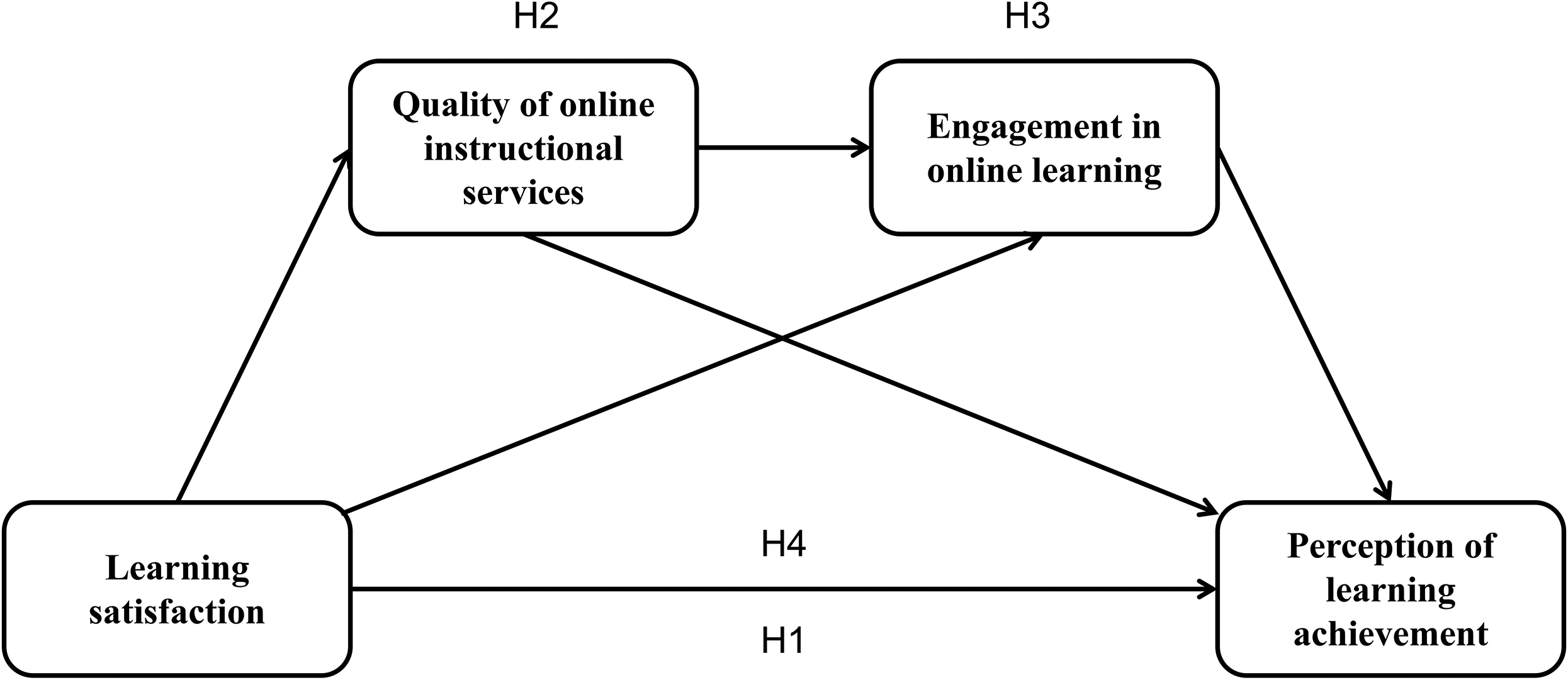
Theoretical model.
Methodology
Participants
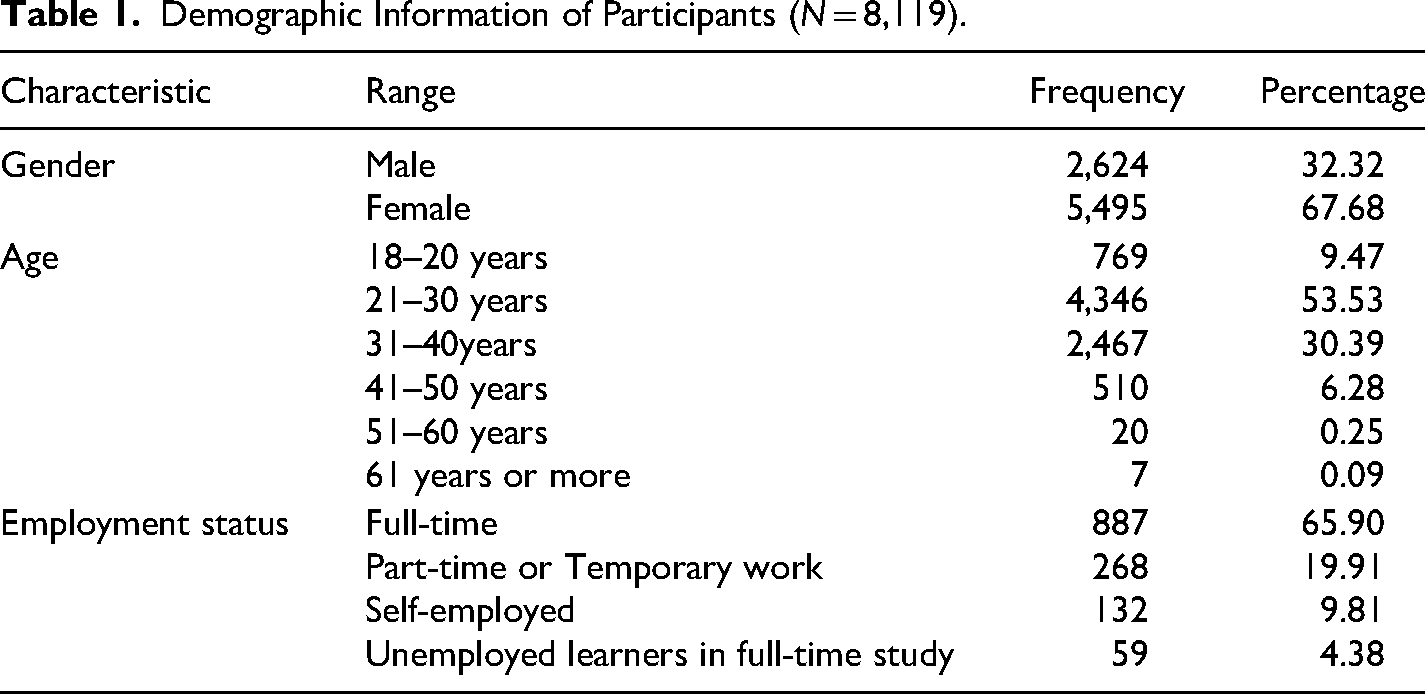
The study presided over adult learners from a designated university in Shanghai, China. A stratified sampling method, based on the learners’ majors and academic years, was utilized. Out of the 8,366 distributed questionnaires, 247 were excluded due to invalidity, satisfying an effectual response rate of 97.05% with a total of 8,119 valid respondents, as shown in Table 1. Before the survey, participants were given preliminary instructions that outlined the objectives of the survey, underscored the voluntary nature of their participation, and guaranteed the confidentiality and anonymity of their responses.
Demographic Information of Participants (N = 8,119).
Instruments
Learning Satisfaction Scale
This study employed the Learning Satisfaction Survey designed by Wu and Wang (2015) targeting university students. This scale encapsulates three domains: instructional quality, support on campus, and peer relationships. The responses were marked on a 5-point scale, with lower scores profiling greater satisfaction in learning. The scale upholds commendable reliability and validity. The “general skills” subscale showed an internal consistency coefficient of 0.932, the “professional knowledge” subscale displayed 0.90, and the complete survey posted a commendable reliability coefficient of 0.94.
Perception of Learning Achievement Scale
The study incorporated the Learning Achievement Survey designed by Wu and Wang (2015) for college students. The survey encompasses two primary dimensions: generic abilities and professional knowledge. The questionnaire employed a Likert 5-point scale, with 1 denoting “completely disagree” and five symbolizing “completely agree.” The scale displayed robust validity and reliability, with an internal consistency coefficient of 0.935 for the “teacher instruction” subscale, 0.893 for the “campus support” subscale, 0.865 for the “interpersonal relationships” subscale, and an overall reliability coefficient of 0.931 for the entire survey.
Quality of Online Instructional Services Scale
The study utilized the Quality of Online Instructional Services Questionnaire, adapted from Pham et al. (2019), which is aptly tailored to reflect China's cultural particularities. The questionnaire comprises three dimensions: the quality of the online learning system, the quality of online teachers and courses, and the quality of online learning management and support services. The responses were evaluated on a Likert 5-point scale, where 1 denotes “strongly disagree” and 5 “strongly agree.” The scale boasts sound reliability and validity, offering internal consistency coefficients of 0.969, 0.979, and 0.961 for the “online learning system quality,” “online teachers and course quality,” and “online learning management and support services quality” factors, respectively. The overall consistency of the questionnaire yielded a coefficient of 0.988.
Engagement in Online Learning Scale
The study adopted the Engagement in Online Learning questionnaire, compiled by Yu (2022), predicated on the assessment scales by Dixson (2015) and Sun and Rueda (2012), used to quantify the students’ engagement in online learning. The responses were ranked on a Likert 5-point scale, with “1” for “completely disagree” and “5” for “completely agree,” demonstrating commendable reliability and validity. The scale integrates four key dimensions: cognitive investment, emotional investment, social contribution, and behavioral involvement. The internal consistency coefficients stood at 0.943 for cognitive investment, 0.851 for emotional investment, 0.926 for social contribution, and 0.931 for behavioral involvement, with a total questionnaire reliability of 0.962, indicating superior validity and reliability.
Data Analysis Methods
SPSS 23.0 software was implemented for testing common method bias in the collected data and deducing correlations among the variables. Furthermore, AMOS 24.0 software was utilized to validate discriminant validity among the variables. The mediation models were examined using the Bootstrap testing method incorporated in the PROCESS 2.16 plugin.
Result
Common Method Bias
To avert the potential overinflation of the predictive capability of the independent variables toward the dependent variable due to severe common method bias in the research data, this study implemented procedural and statistical controls (Podsakoff et al., 2003).
Firstly, an effective randomization of various scales was carried out before questionnaire distribution, coupled with firm assurances to participants ensuring the confidentiality of their data. Subsequently, Harman's single-factor method was utilized for statistical control. An exploratory factor analysis was conducted on the data without factor rotation, whereby the first factor accounted for a variance of 38.76%, falling below the critical threshold of 40% variance explanation (Jordan & Troth, 2020). The aforementioned strategies and resultant outcomes indicate that the data gathered in this study did not face a substantial common method bias.
Fit Test Analysis
The purpose of model fit testing is to measure the degree of fit between the hypothetical model and the observed data. As shown in Table 2, overall, the research model exhibits a good fit.
Model Fit Analysis (N = 8,119).
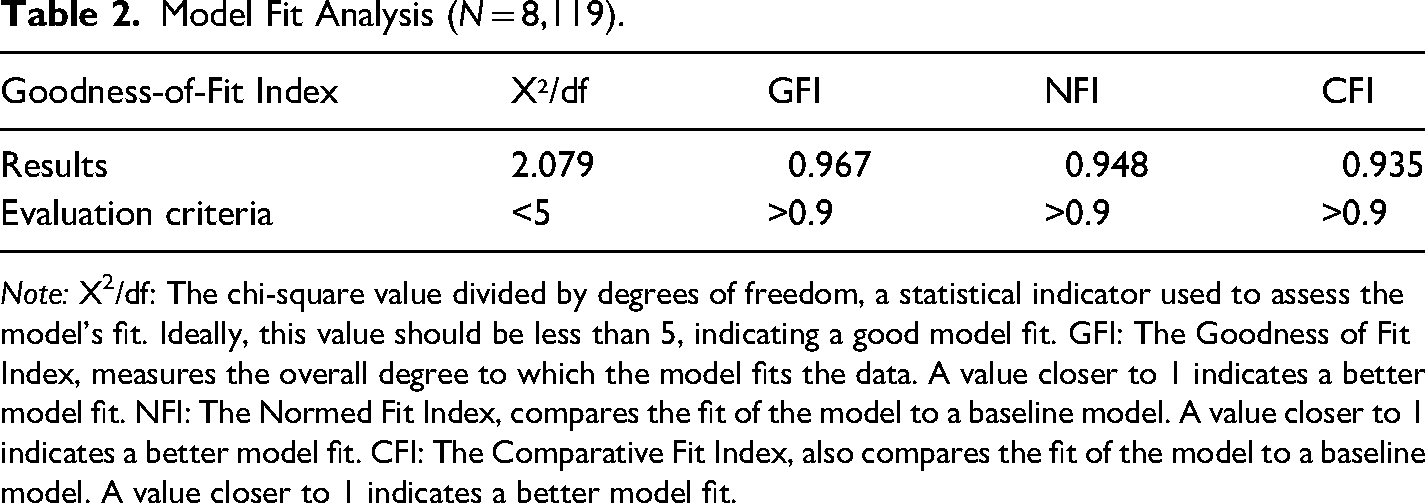
Note: X2/df: The chi-square value divided by degrees of freedom, a statistical indicator used to assess the model's fit. Ideally, this value should be less than 5, indicating a good model fit. GFI: The Goodness of Fit Index, measures the overall degree to which the model fits the data. A value closer to 1 indicates a better model fit. NFI: The Normed Fit Index, compares the fit of the model to a baseline model. A value closer to 1 indicates a better model fit. CFI: The Comparative Fit Index, also compares the fit of the model to a baseline model. A value closer to 1 indicates a better model fit.
Descriptive Statistics and Correlation Analysis of Each Variable (N = 8,119).
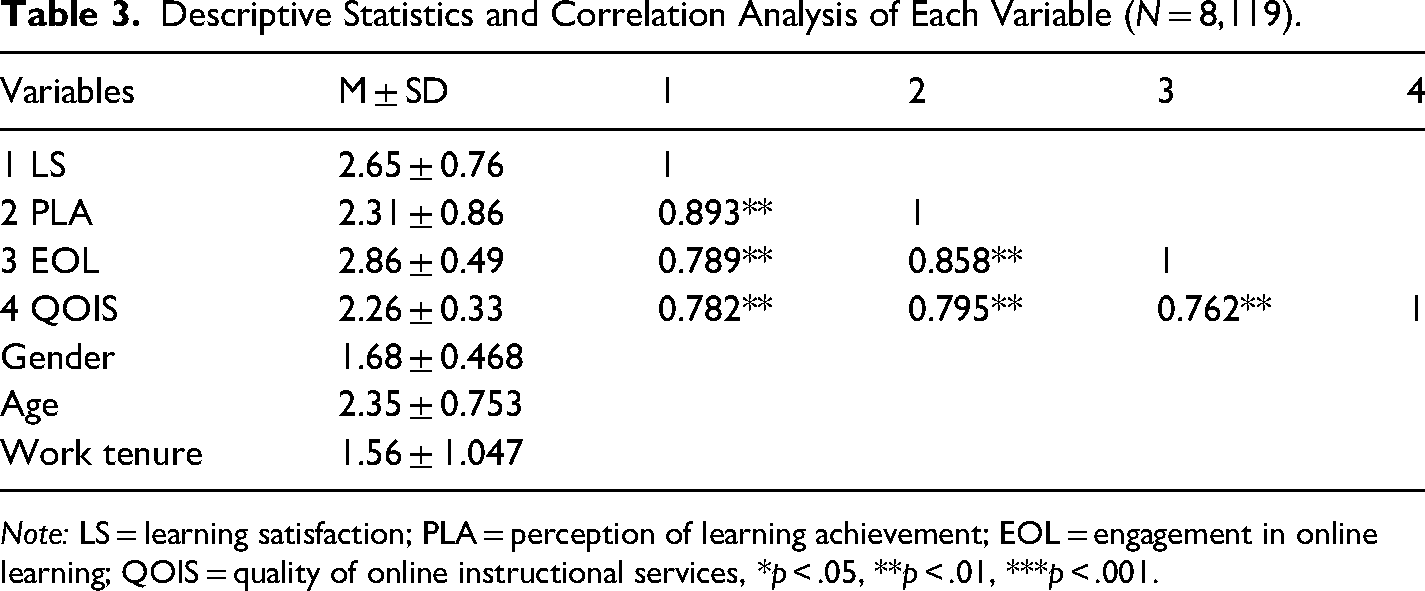
Note: LS = learning satisfaction; PLA = perception of learning achievement; EOL = engagement in online learning; QOIS = quality of online instructional services, *p < .05, **p < .01, ***p < .001.
Descriptive Statistics and Correlation Analysis Among Variables
In the study examining the influence of learning satisfaction on adult learners’ perception of learning achievement in online education, we discovered significant positive correlations among learning satisfaction, perception of learning achievement, quality of online instructional services, and engagement in online learning, as shown in Table 3
These correlations indicate that both the quality of online instructional services and the degree of engagement in online learning are pivotal factors in bolstering learning satisfaction and the perception of learning achievement among adult learners. Hence, we can deduce that these two chain-mediating variables likely dictate the eventual influence of learning satisfaction on the perception of learning achievement for adult learners in online education.
Mediation Chain Effect Analysis
The Bootstrapping method available in the Process macro program was employed to conduct further chain mediation tests, with the number of samples set to 5,000 and a confidence level of 95% (Ferraro & Taylor, 2021). A chain mediation model was built with learning satisfaction serving as the independent variable; quality of online instructional services and engagement in online learning operating as the mediating variables; and perception of learning achievement outlined as the dependent variable. The resultant path diagram of the chain mediation can be found in Figure 2.
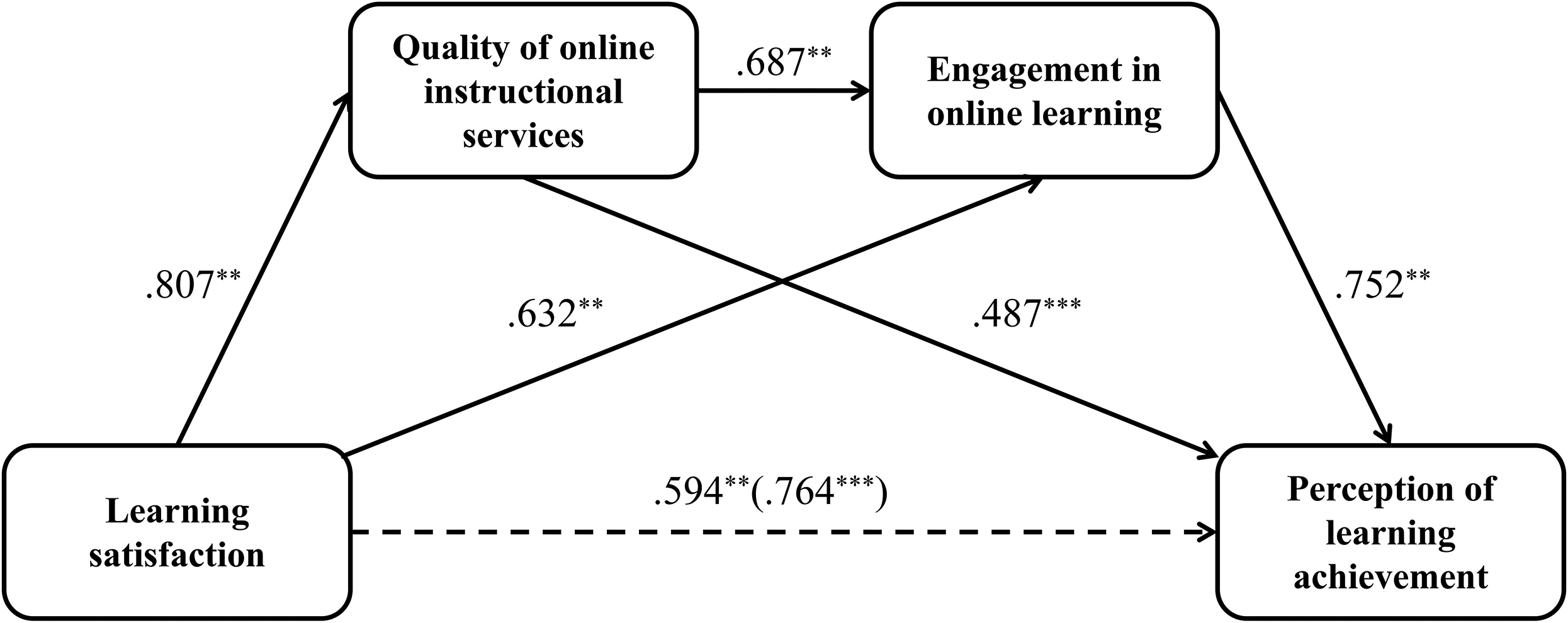
Chain mediation effect model.
Figure 2 and Table 4 demonstrate that the 95% confidence intervals for all indirect effects do not contain zero, indicating that these effects are statistically significant. The direct effect from learning satisfaction to the perception of learning achievement is 0.468, while the total indirect effect is 0.522 and the total effect is 0.880. The results of the mediating effect analysis show that both the direct effect and indirect effect between learning satisfaction and perception of learning achievement are significant, accounting for 48.32% of the total effect value. The ratios of effect values for Paths 1, 2, and 3 in the total effect are 13.07%, 12.55%, and 24.77%, respectively.
Bootstrap Test for Mediation Effect.
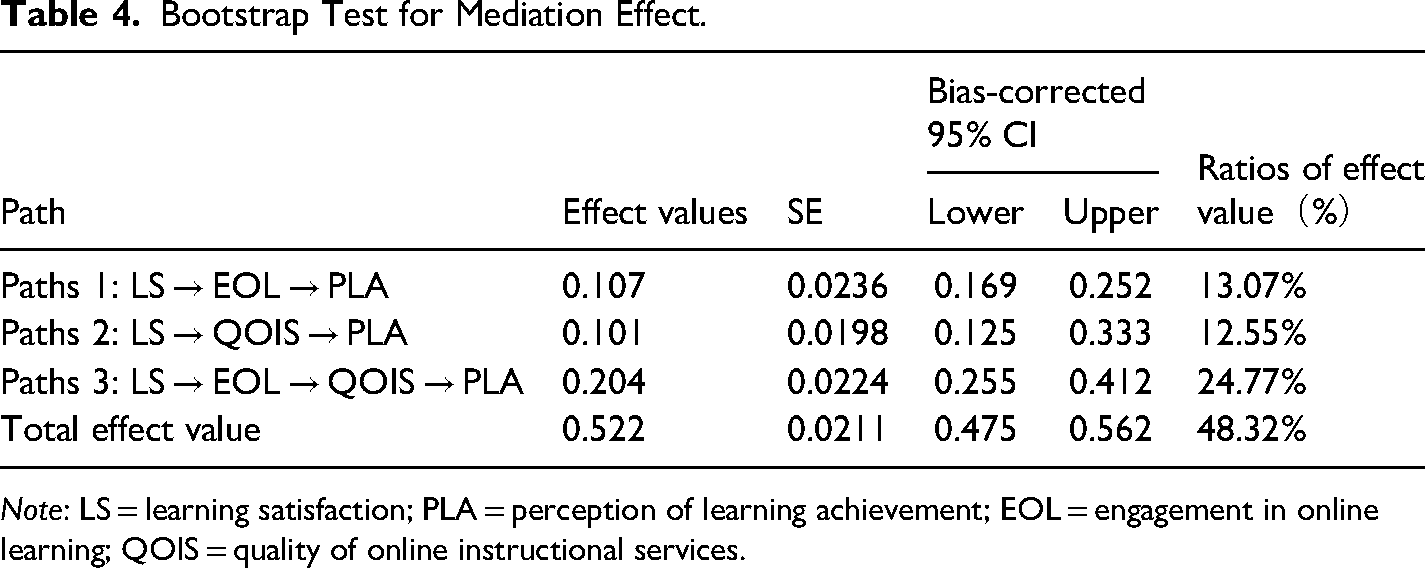
Note: LS = learning satisfaction; PLA = perception of learning achievement; EOL = engagement in online learning; QOIS = quality of online instructional services.
The results from Figure 2 indicate that learning satisfaction has a significant effect on the perception of learning achievement among adult learners (β = 0.594, p < .01), supporting Hypothesis
Discussion
Correlation Analysis
The findings of this research substantially corroborate prior studies, revealing a noteworthy positive correlation between learning satisfaction and perception of learning achievement (Banihashem et al., 2023). This is consistent with the results of Pan's work (2022), which identified that learning satisfaction holds a key role in augmenting the perception of learning achievement, effectively predicting learners’ academic gains. Moreover, the study results demonstrate a considerable positive correlation between learning satisfaction and the quality of online instructional services. This might be attributable to the varied modalities incorporated in online education, including course videos, online assessments, and group projects, which escalate learner participation and consequently enhance their comprehension and discussions (Yu, 2022). With the elevation of instructional services’ quality, learners’ engagement and perceived learning accomplishment follow a similar ascend. Likewise, the study unveiled a significant positive connection between online learning engagement and perceived learning achievement. Cao (2023) underscored that learners frequently experience richer learning results and develop interest when they commit substantial efforts to the learning process. With the progressive improvement in the quality of online instructional services, students’ engagement in online learning is anticipated to rise, which is likely to further enrich their perceived learning achievement (Zhang, Fu, et al., 2023).
The Mediating Role of Quality in Online Instructional Services
The findings of this research largely align with existing literature. The study discovered a significant mediation effect of the quality of online instructional services between learning satisfaction and perception of learning achievement. This discovery is in tune with previous work which consistently illustrates that the quality of education services directly and indirectly impacts learning satisfaction, leading to subsequent influence on students’ perception of learning achievement (Bati, 2023). What's more, further research identified a noteworthy positive correlation between students’ learning satisfaction and their evaluations of the quality of online instructional services. Put differently, higher levels of student satisfaction correspond to higher evaluations of online instructional services’ quality (He & Fu, 2022). High-quality online instructional services, as appraised by the students, further promote learning achievements including knowledge acquisition and elevation of academic performance (Xiao & Li, 2021).
The Mediating Role of Engagement in Online Learning
The findings of our research validate the mediating function of engagement in online learning between learning satisfaction and the perception of learning achievement. This result concurs with extant studies by Wu and colleagues (2021), who discerned a reciprocal relationship between learning satisfaction, engagement in online learning, and the perception of learning achievement. Our study delves further into the essence of this relationship, establishing that elevated satisfaction with online learning parallels greater engagement in online learning, subsequently bolstering the perception of learning achievement (Bati, 2023). Consequently, fostering and endorsing more engagement in online learning can amplify learning satisfaction and directly enhance the perception of learning achievement. Nonetheless, our discovery may stand at odds with other research—for instance, the study by Tang and He (2022) suggests the relationship between online learning satisfaction, engagement, and the perception of learning achievement to be nonlinear. Forthcoming research could delve deeper into these discrepancies to foster a more comprehensive understanding.
The Chain Mediation Effect
Our research certifies unequivocally the chain mediation role of the quality of online instructional services and engagement in online learning between learning satisfaction and perception of learning achievement. Specifically, the chain mediation model displayed in Figure 1 demonstrates how learning satisfaction impacts the perception of learning achievement, mediated by the quality of online instructional services and engagement in online learning. This is congruent with the findings of Cao (2023) who discerned a positive relationship prevailing between learning satisfaction and the quality of online instructional services. Moreover, this complements the perspective of Johar et al. (2023), who proposed that refining instructional service quality fosters enhanced student engagement, thereby bolstering learning efficiency and outcomes. Altogether, these findings accentuate the significance of both augmenting instructional service quality and propelling student engagement in boosting learning satisfaction as well as achievement.
Although existing literature has indicated a correlation between the quality of online instruction and the perception of learning achievement, our study offers a new perspective by employing a chain mediation model, revealing the mediating roles of online instructional service quality and engagement in online learning among adult learners. This finding not only confirms existing theories but also provides new directions for future research, especially in exploring how different teaching strategies can enhance the perception of learning achievement by affecting service quality and learner engagement. Furthermore, the results of our study have significant practical implications for designing more effective online education courses and improving the learning outcomes of adult learners.
Research Significance
The findings underscore practical applications for enhancing online instructional services and engagement strategies, pivotal for educators and policymakers. By focusing on observable variables such as teacher responsiveness and classroom interaction dynamics, and guiding the improvement of online education quality, we can directly impact students’ satisfaction and achievement.
This study significantly contributes to understanding the relationship between learning satisfaction and perceptions of learning achievement in online adult education. It confirms the chain mediation effects of engagement in online learning and the quality of online instructional services. The findings reveal how improvements in learning satisfaction positively impact learning achievement perceptions through these mediating factors. These insights can guide strategies for online educational platforms, administrators, and instructors. By effectively enhancing students’ learning satisfaction, fostering engagement in learning, and improving the quality of online instructional services, these stakeholders can positively impact learning outcomes.
Moreover, the study enriches the literature on the relationships between online education satisfaction, learning engagement, and learning outcomes, providing an empirical basis for further research in this area (Richards & Thompson, 2023).
In conclusion, this study suggests that increasing engagement in online learning and enhancing the quality of online instructional services can not only improve learning satisfaction but also boost perceptions of learning achievement, aligning with the goals of online education. By understanding these relationships, we can enhance our strategies for effective online education delivery (Kozanitis & Nenciovici, 2023).
Limitations and Prospects for Future Research
While this study lays the groundwork with its preliminary insights, it acknowledges several significant limitations. Initially, due to resource constraints and cost considerations, the study sample predominantly comprised participants from a single university in Shanghai. This may limit the ability to extrapolate the research findings across broader contexts. Forthcoming research should strive to diversify its sample selection, encompassing a wide range of geographical zones or educational milieu, thereby bolstering the robustness and generalizability of the outcomes (Barth et al., 2023).
Furthermore, data collection was primarily facilitated via online surveys. While this method provides convenience, it also potentially triggers certain issues like bias and untruthful responses (Gardner & Leary, 2023). Prospective research could strive to elevate the depth and scope of the investigation by incorporating a combination of data-gathering techniques, namely, in-depth interviews and experimental approaches, among others.
Finally, this study leveraged traditional quantitative survey research methodologies. While these techniques provide an efficient way of quantifying adult learners’ learning satisfaction and perception of learning achievement, they may fall short of revealing the intricate interaction sequences and underlying mechanics between these two variables (Pan, 2022). Prospective research could contemplate introducing alternate investigatory methods such as empirical studies, to reinforce the holistic understanding of the phenomena under observation.
In future research, we aim to delve deeper into how different social backgrounds and adult learners’ preferences influence the perception of achievement in the online learning environment (Sitzmann et al., 2006). This exploration is crucial for enhancing our understanding of the multifaceted dynamics at play in online education and can provide valuable insights for the development of more effective educational strategies tailored to the needs of diverse adult learners.
Conclusions
This study illuminates the complex relationship between learning satisfaction and perceived learning achievement in online adult education, highlighting the mediating effects of engagement and instructional service quality. This research contributes to the field, informing future advancements in online education.
In online learning, fostering student satisfaction is paramount as it directly influences their perception of achievement. Educators should prioritize creating positive learning experiences through interactive platforms, encouraging peer-to-peer and learner-to-educator communication, and promoting self-directed learning.
Additionally, enhancing the quality of online instructional services is crucial. Providing high-quality course materials, delivering engaging instruction, and tailoring instruction to individual learning styles is key to improving the learning experience.
To enhance adult learners’ perceptions of achievement in online education, it is essential to focus on improving learning satisfaction, delivering high-quality instructional services, and fostering active engagement in online learning.
Footnotes
Authors’ Contributions
Guoqiang Pan: conceptualization, methodology, validation, data curation, writing—original draft, writing—review and editing. Kaikai Xu: methodology, investigation, writing—original draft, writing—review and editing. Hui Nie: conceptualization, writing—original draft, writing—review and editing, supervision, project administration. Zhi Nie: methodology, investigation, writing—original draft, writing—review and editing, visualization.
Availability of Data and Material
The datasets generated and analyzed during the current study are available in the Zenodo repository, https://doi.org/10.5281/zenodo.11062761.
Declaration of Conflicting Interests
The authors declared no potential conflicts of interest with respect to the research, authorship, and/or publication of this article.
Ethical Approval
The study was conducted in accordance with the Declaration of Helsinki, and approved by the Human Participants Ethics Committee of Shanghai Normal University (protocol code: 2023045 and date: 22 May 2023). Each survey questionnaire includes an informed consent form in the instructions section, which informs the participants of their rights in written form and assures them of confidentiality. The information collected is solely for research purposes. There were no minors among the research participants.
Funding
The authors received no financial support for the research, authorship, and/or publication of this article.
