







Abstract
No universally accepted tool currently exists for assessing self-directed learning (SDL), and few studies have focused on validating new SDL instruments to achieve broad consensus regarding their psychometric rigor and applicability. This study examines the concurrent validity of two SDL tools: the SRSSDL_adult for middle-aged and older adults, and the SDLI for nursing students. These tools were administered to participants in Taiwanese senior learning centers, who were predominantly female (78.8%) and aged 65–74 years (45.6%), with many holding undergraduate degrees (43.8%). The highest scores were observed in “Needs assessment” (SRSSDL_adult) and “Learning motivation” (SDLI). A strong positive correlation (Pearson coefficient = 0.783, p < .001) confirmed the concurrent validity of the SRSSDL_adult against the SDLI. The two SDL assessment tools examined in this study can concurrently provide valuable insights into the identification of SDL abilities. The findings indicate that both scales are directly applicable to middle-aged and older learners.
Introduction
Advancements in medical science and modifications in lifestyle have enabled older adults to experience extended periods of healthy living. However, similar to other stages of life, later adulthood involves navigating changes in work, family dynamics, and health. Self-directed learning (SDL) emerges as a potential approach to managing these transitions (Roberson & Merriam, 2005).
Within the context of aging societies, the importance of continued learning in promoting active and healthy aging cannot be overstated. In this regard, senior learning centers in Taiwan have emerged as vital institutions that provide middle-aged and older adults with opportunities for personal growth and skill acquisition.
SDL is a core theoretical construct of adult learning (Manning, 2007). Importantly, SDL represents a fundamental meta-competence for living and working in our increasingly complex and unpredictable world (Morris, 2024). SDL in adults is often characterized primarily as a process of self-guided instruction. However, this perspective is insufficient, as it overlooks the ongoing nature of learning and disregards those adults who may lack the ability to independently plan their own learning activities (Oddi, 1987).
In the pursuit of lifelong learning and the cultivation of SDL abilities, the educational landscape has witnessed a surge in the application of SDL theories (Clausen, 2023). The demand for appropriate instruments to assess SDL capabilities has become increasingly pressing. While several SDL tools exist in the literature, including the Self-Directed Learning Readiness Scale (SDLRS) (Fisher et al., 2001; Guglielmino, 1977), the Self-Rating Scale of Self-Directed Learning (SRSSDL) (Cadorin et al., 2013; Cadorin et al., 2017; Williamson, 2007), and the Oddi Continuing Learning Inventory (OCLI) (Oddi, 1987), it is essential to note that most of these instruments have been designed and validated for specific populations, such as nursing students and healthcare professionals. The SDLRS, for instance, was originally developed to assess students’ readiness for success in future SDL environments, whereas the OCLI focuses on the attitudinal and behavioral dimensions of lifelong learning, thus offering broader applicability in SDL-related research.
Since a gold standard SDL tool has not yet been established, it is strongly recommended to conduct concurrent validations of related instruments to examine whether they measure similar constructs. Demonstrating concurrent validity helps ensure that different tools provide consistent and comparable results, thereby enhancing the credibility and generalizability of research findings (Cadorin et al., 2016). In the literature, there have been only two attempts to address this issue. First, Shen et al. (2014) attempted to compare Cheng's SDL instrument (Cheng et al., 2010) with Willison's SDL scale (Williamson, 2007). However, the tool adopted by Shen et al. (2014) for criterion validation did not undergo a comprehensive validation, as previously described in the literature (Cadorin et al., 2016). Second, Cadorin et al. (2016) addressed this gap. However, the tools developed by Cheng et al. (2010) and Cadorin et al. (2013) have been validated primarily in nursing students and various healthcare populations.
There is a significant gap in the literature regarding the concurrent validity of SDL tools among middle-aged and older adult learners. To address this, the present study represents the first attempt to establish the concurrent validity between SRSSDL_adult (Liao et al., 2024) and the SDLI (Cheng et al., 2010) within this often-overlooked population.
Cheng et al. (2010) addressed this imperative by undertaking a comprehensive study. The construct validity of the Self-Directed Learning Instrument (SDLI) was scrutinized through an extensive cohort comprising 1072 nursing students from various nursing programs. Cheng et al.'s work thus furnished a validated and reliable tool for appraising SDL abilities in the domain of nursing education. Its availability not only empowers nursing students to evaluate their SDL capabilities but also equips nursing faculty with a means to assess and enhance SDL competencies, ultimately nurturing the growth of lifelong learning abilities within this critical profession.
On a parallel trajectory, Liao et al. (2024) recognized the importance of SDL in the broader context of active aging in societies confronting the challenges of population aging. They embarked on the development and validation of the SRSSDL_adult scale, a specialized SDL assessment tool catering to middle-aged and older adult learners engaged in senior learning centers. Liao et al.'s study has illuminated the pathway for educational institutions and instructors involved in senior education programs, offering a valid and practical tool to facilitate the nurturing of SDL abilities among this vital demographic, thereby contributing to the broader goals of active and healthy aging through continued learning. Table 1 provides a comparison of the results from Cheng et al.'s and Liao et al.'s studies, including research objective, participants, domain, factor structure, and applications.
Comparison of the Results Between Cheng et al.'s (2010) and Liao et al.'s (2024) Studies.
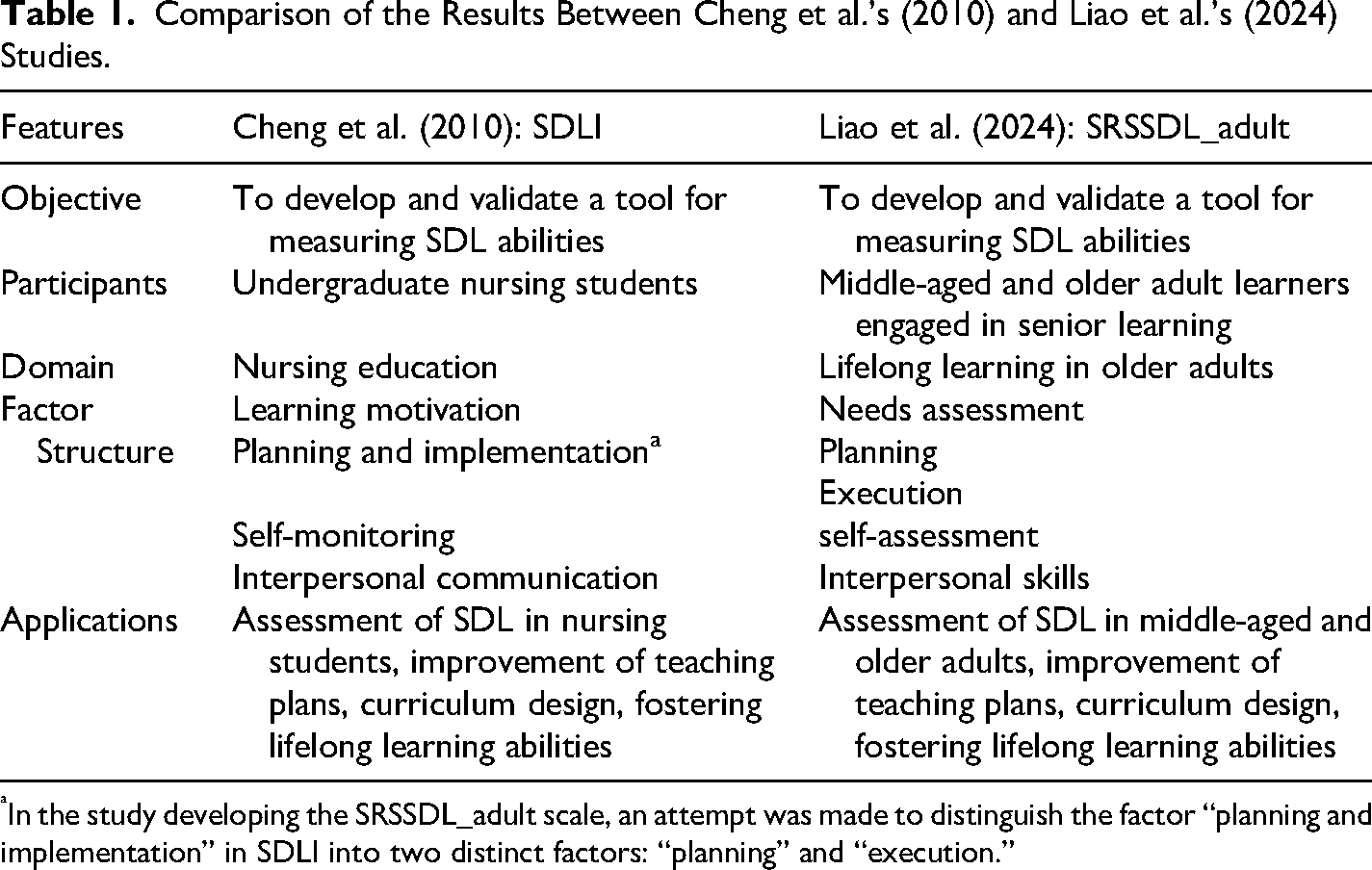
In the study developing the SRSSDL_adult scale, an attempt was made to distinguish the factor “planning and implementation” in SDLI into two distinct factors: “planning” and “execution.”
Together, the contributions of Cheng et al.'s and Liao et al.'s underscore the pivotal role of SDL assessment instruments in various educational contexts, spanning nursing education to senior learning programs. These instruments not only facilitate the assessment of SDL competencies but also hold immense potential in the design of effective pedagogical strategies to foster lifelong learning abilities among diverse learner populations.
In essence, both studies share a common research objective and application in promoting lifelong learning, but they differ in their specific domain and participants, as illustrated in Table 1. Cheng et al. focus on nursing education, while Liao et al. extend their focus to the broader realm of senior education and active aging. Together, they underscore the versatility and significance of SDL in diverse educational settings and for diverse learner populations. It's intriguing to consider whether Cheng et al.'s scale is directly applicable to middle-aged and older learners.
This research aims to address three fundamental questions, each designed to provide a comprehensive understanding of not only SDL abilities but also the concurrent validity of SRSSDL_adult and SDLI among middle-aged and older adult learners in Taiwanese senior learning centers. These research questions are as follows:
To what extent do middle-aged and older adult learners exhibit SDL abilities as assessed by Liao et al.'s and Cheng et al.'s scales: low, moderate, or high? Are there significant differences in SDL abilities (as measured by Liao et al.'s and Cheng et al.'s scales) among middle-aged and older adult learners with different background variables, including gender, age, and educational attainment? Is there a significant correlation between SRSSDL_adult and SDLI for middle-aged and older adult learners?
Literature Review
Given the imperative role of learning skills in navigating an increasingly uncertain future (Morris & Rohs, 2021), individuals acquire the capacity to upskill and meet emerging and unpredictable demands. In this section, we provide a brief overview of key literature encompassing SDL, its relevance to adult education, and the tools designed to assess SDL abilities.
Since the responsibility and self-regulation required for SDL are not equivalent to those required for teacher-directed learning, this difference may partly explain why years of teacher-directed learning in formal schooling do not adequately prepare individuals for competent SDL in adulthood (Morris, 2024).
SDL, often defined as the process in which individuals take the initiative in planning, implementing, and evaluating their own learning experiences, has emerged as a critical educational paradigm. Knowles (1975) played a pivotal role in popularizing the term, highlighting the importance of learner autonomy and intrinsic motivation in the learning process. SDL emphasizes the role of adults as active agents in their education, capable of setting goals, identifying resources, and adapting to changing learning needs. The application of SDL principles to older adult education is of particular significance in the context of aging societies. This is especially pertinent in senior learning centers and lifelong learning programs, where older adults engage in a diverse range of educational activities. It offers a pathway to active aging, empowering older adults to take charge of their learning journeys, explore new interests, and adapt to evolving societal changes. Acknowledging the significance of active aging can enhance the motivation of older adults to participate in activities fostering healthy aging—be they social, intellectual, or physical. Consequently, SDL emerges as a potent mechanism to augment the cognitive, social, and emotional dimensions of active aging. This, in turn, empowers older adults to lead independent lives while sustaining a high quality of life (Chou et al., 2023).
Understanding and measuring SDL abilities is critical for evaluating learners’ autonomy and informing instructional strategies. Early efforts in the 1960s–70s introduced various tools, such as the Autonomous Learner Index (Ferrell, 1978), though these were not widely adopted. By the late 1970s, research began focusing on SDL's role in predicting learning success, particularly in adult education (Brockett & Hiemstra, 2018).
Among numerous SDL assessment instruments, three have gained broad recognition: the SDLRS, the OCLI, and the SRSSDL. The SDLRS (Guglielmino, 1977) evaluates individuals’ readiness for SDL through attributes such as motivation, responsibility, and self-management. However, debates continue over whether SDL is a teachable skill or a stable personality trait. To address such concerns, the OCLI (Oddi, 1987) was developed, viewing SDL more as a personality construct linked to persistence and intrinsic motivation (Clausen & Hansen, 2022). It remains widely used for identifying self-directed learners. Later, the SRSSDL (Williamson, 2007) emerged as a behavior-based alternative, focusing on observable SDL practices rather than readiness. It has been especially validated in fields such as nursing and healthcare education (Cadorin et al., 2017).
The SDLI was developed by Cheng et al. (2010) to support nursing students’ lifelong learning by assessing their SDL abilities. This tool aids both student self-reflection and curriculum planning within nursing education. While SDL instruments like the SDLI have been widely used (Cadorin et al., 2013; Cadorin et al., 2016; Cadorin et al., 2017; Cheng et al., 2010; Fisher & King, 2010; Williamson, 2007), few are tailored for older adults.
Tailored assessments can guide educators in designing strategies that enhance older adults’ learning autonomy and promote active aging. Research links SDL with improved cognitive health, personal growth, and greater life satisfaction among older adults (Verdoodt et al., 2023; Zhu & Zhang, 2019). To address this gap, Liao et al. (2024) developed the SRSSDL_adult, an SDL scale designed specifically for older learners in senior education centers. Unlike earlier tools focused on academic or professional settings, this scale supports lifelong learning and well-being among aging populations by promoting engagement, independence, and resilience.
In the realm of concurrent validity for SDL tools among middle-aged and older adult learners, a standard for judgment or evaluation, there remains a deficiency in comprehensive information. This study aims to fill this research gap by investigating the concurrent validity of two SDL tools within the middle-aged and older adult learner population.
Methods
Participants
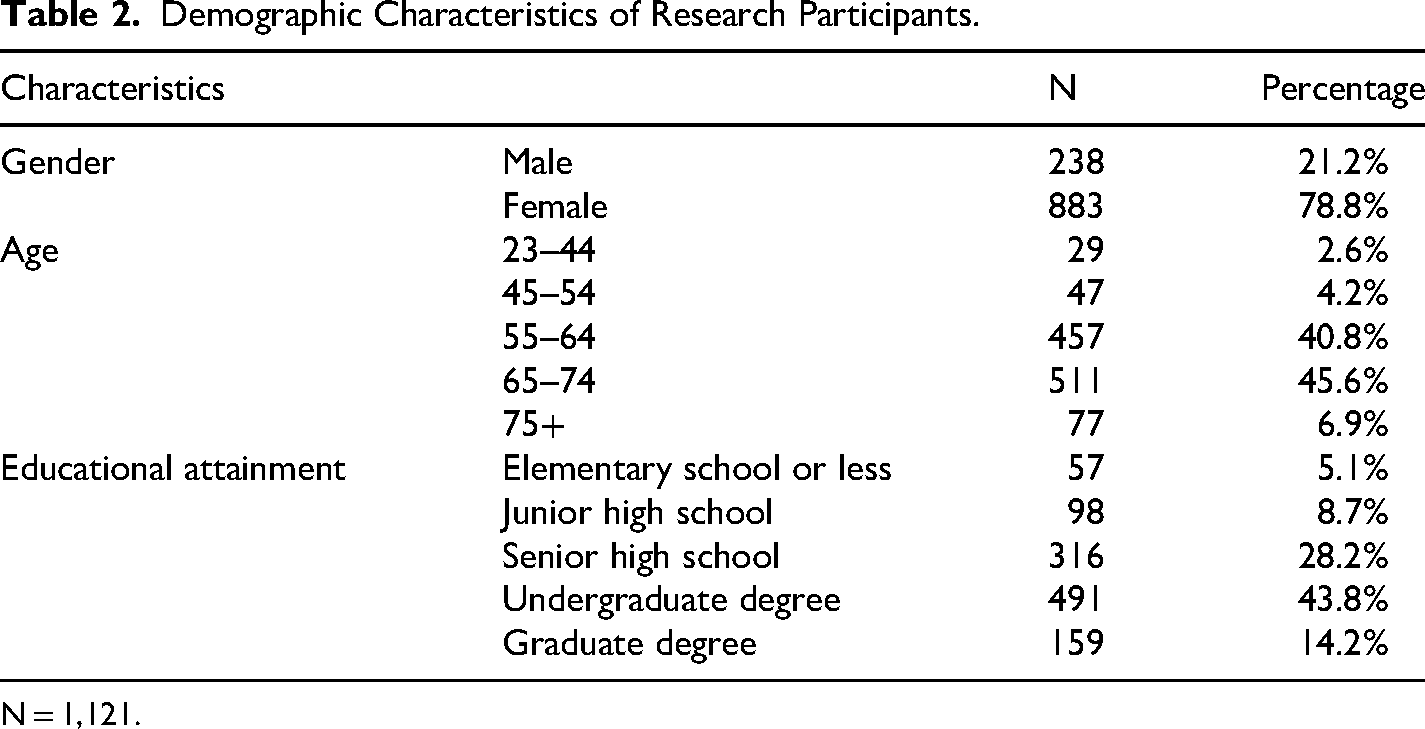
Data were collected through both online and paper-based questionnaires. We enlisted the assistance of senior instructors who were willing to support this research in promoting and distributing the questionnaires. A total of 1,023 responses were collected through the online questionnaire, and 152 responses were collected through the paper-based questionnaire. After excluding 54 invalid responses, we obtained a total of 1,121 valid responses, resulting in an effective response rate of 95.5%. The majority of participants (78.8%) were female. The largest age group was 65–74 years (45.6%), and a significant portion had undergraduate-degree education (43.8%). Table 2 provides detailed demographic information. The demographic variables for the formal sample encompassed three categories, and their structural analysis is presented in Table 2.
Demographic Characteristics of Research Participants.
N = 1,121.
Procedures
Data collection was facilitated through partnerships with directors and instructors at participating senior learning centers. Prior to data collection, all potential participants received comprehensive information regarding the study's purpose, the voluntary nature of participation, and protocols established to ensure anonymity and confidentiality. Online questionnaires were distributed through Google Forms, with directors and instructors sharing links via established group messaging platforms. Paper-based questionnaires were administered during regularly scheduled classes and collected immediately upon completion. Research team members subsequently digitized all paper questionnaires into the study database. All collected data underwent systematic screening procedures. Questionnaires with incomplete responses or invalid data patterns were excluded from the analytical dataset prior to statistical analysis.
To achieve our research goals, we conducted a thorough review of relevant SDL theories and studies to establish the theoretical foundation for our research framework. We then designed measurement tools and created a survey questionnaire, which we distributed using a defined sampling approach and with the collaboration of educators in senior learning centers. After collecting responses, we rigorously examined the data for quality, excluding incomplete entries. Subsequently, we coded and transformed the data, applied statistical analyses to address research questions, and discussed the outcomes. Finally, we synthesized our findings and presented recommendations, resulting in a comprehensive research report.
Materials
The materials used in this study consisted of two primary SDL assessment tools, which were employed to evaluate the SDL abilities of middle-aged and older learners in Taiwan's senior learning centers. These tools were selected based on their rigorous validation and suitability for the target population.
To assess SDL abilities among older learners, two validated instruments were used. The SRSSDL_adult, developed by Liao et al. (2024), was specifically tailored for middle-aged and older adults in Taiwan's senior learning centers. It includes 25 items across five dimensions and demonstrated strong internal consistency (Cronbach's α = 0.968). The scale's development involved both exploratory and confirmatory factor analyses to ensure construct validity. The Self-Directed Learning Inventory (SDLI), developed by Cheng et al. (2010), is a 20-item instrument designed to assess SDL competencies in higher education. It also demonstrated high internal consistency (α = 0.916) and was validated through Delphi methods and large-scale student testing. Both tools adopt a 5-point Likert scale and have shown strong psychometric properties. Their inclusion in this study ensures reliable measurement of SDL among older learners, supporting robust analysis of their learning competencies.
Data Analysis
This study employed a multi-stage analytical approach to address the research questions. First, descriptive statistics (means, standard deviations, and frequency distributions) were calculated to characterize the current levels of SDL among middle-aged and older adult learners, utilizing the scales developed by Liao et al. (2024) and Cheng et al. (2010). These analyses directly addressed the first research question regarding the present status of SDL capabilities in this population.
Second, to examine differences in SDL scores across demographic and educational background variables (Research Question 2), independent samples t-tests and one-way analysis of variance (ANOVA) were conducted. Prior to ANOVA procedures, Levene's test confirmed homogeneity of variance assumptions across all group comparisons. Given that variance homogeneity was satisfied, Tukey's HSD post-hoc tests were employed for pairwise group comparisons to identify specific between-group differences while controlling for familywise error rates.
Finally, Pearson product-moment correlations were computed to examine the intercorrelations among SDL dimensions and to assess relationships between participant characteristics and SDL competencies, providing insights into the structural relationships within the SDL construct.
Results
This section presents the research findings, including descriptive statistics, comparative analysis across different groups, and the correlation between the two SDL scales. The results will be presented with the aid of tables and charts, along with detailed statistical data, to ensure the transparency and readability of the study's findings.
To What Extent Do Middle-Aged and Older Adult Learners Exhibit SDL Abilities (as Assessed by Liao et al.'s and Cheng et al.'s Scales)—Low, Moderate, or High?
The first research question aims to assess the current state of SDL abilities among middle-aged and older adult learners, categorizing them into levels of proficiency, ranging from low to high, as measured by the SDL assessment tools developed by Liao et al. (2024) and Cheng et al. (2010).
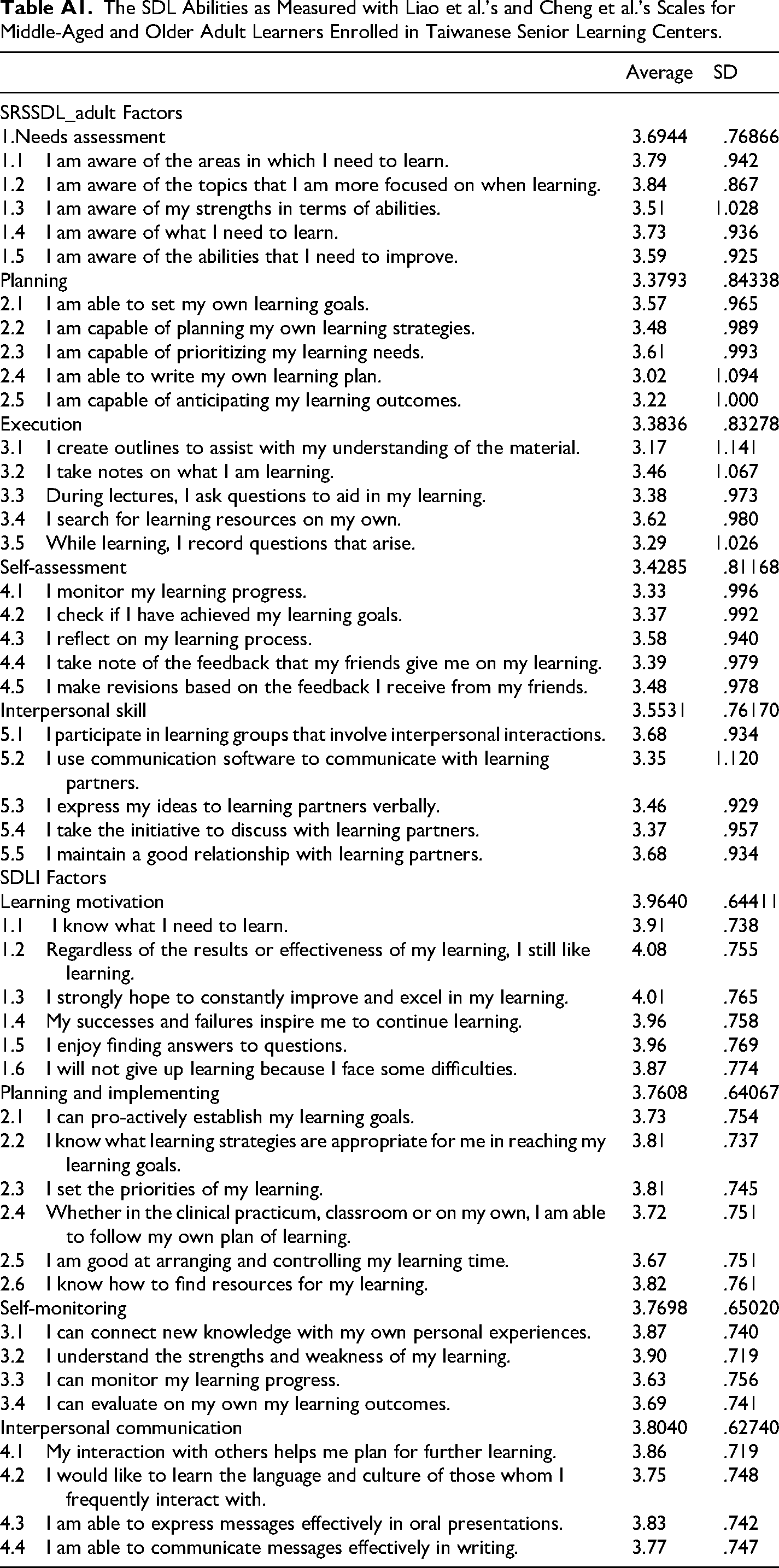
The SRSSDL_adult scale, introduced by Liao et al. (2024), reveals that “Needs assessment” has the highest mean score (3.6944), whereas the factors “Planning” (mean score: 3.3793) and “Execution” (mean score: 3.3836) are rated the lowest. Meanwhile, Cheng et al.'s (2010) SDLI indicates that “Learning motivation” has a highest mean score (3.9640) while “Planning and implementing” has a lowest mean score (3.7608). The outcomes presented in Table 3 (or detailed in the Appendix) provide valuable insights into the SDL abilities of middle-aged and older adult learners in Taiwanese senior learning centers. They reveal diverse proficiency levels across SDL factors, spanning from moderate to high.
SDL Abilities as Measured With SRSSDL_adult and SDLI.
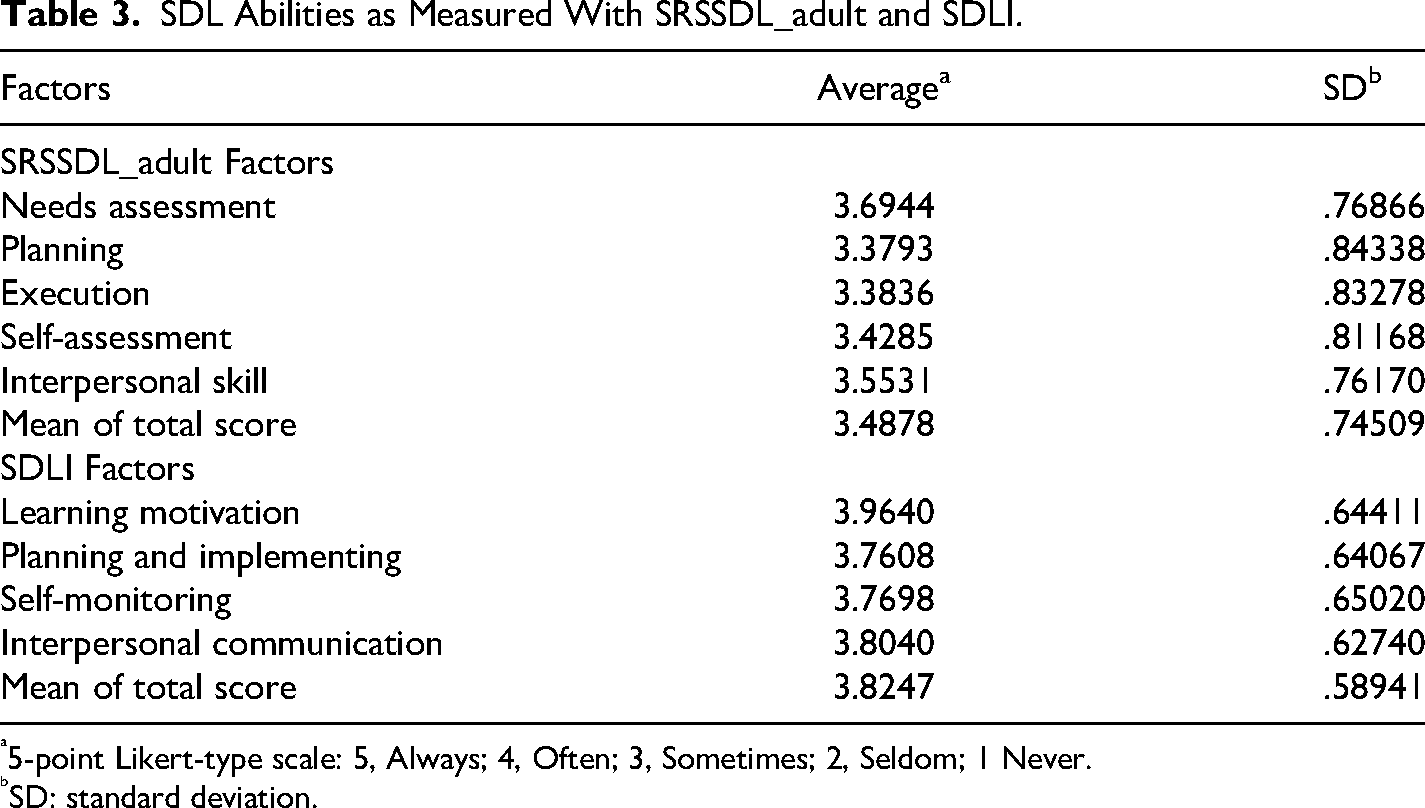
5-point Likert-type scale: 5, Always; 4, Often; 3, Sometimes; 2, Seldom; 1 Never.
SD: standard deviation.
The findings demonstrate consistent results in SDL abilities as assessed by both SDL assessment tools.
Are There Significant Differences in SDL Abilities (as Measured by Liao et al.'s and Cheng et al.'s Scales) among Middle-Aged and Older Adult Learners with Different Background Variables, Including Gender, Age, and Educational Attainment?
The second research question seeks to explore potential variations in SDL abilities among middle-aged and older adult learners based on demographic characteristics such as gender, age, and educational attainment. The goal is to determine whether these variables consistently and significantly influence SDL proficiency, as evaluated by both SDL assessment tools.
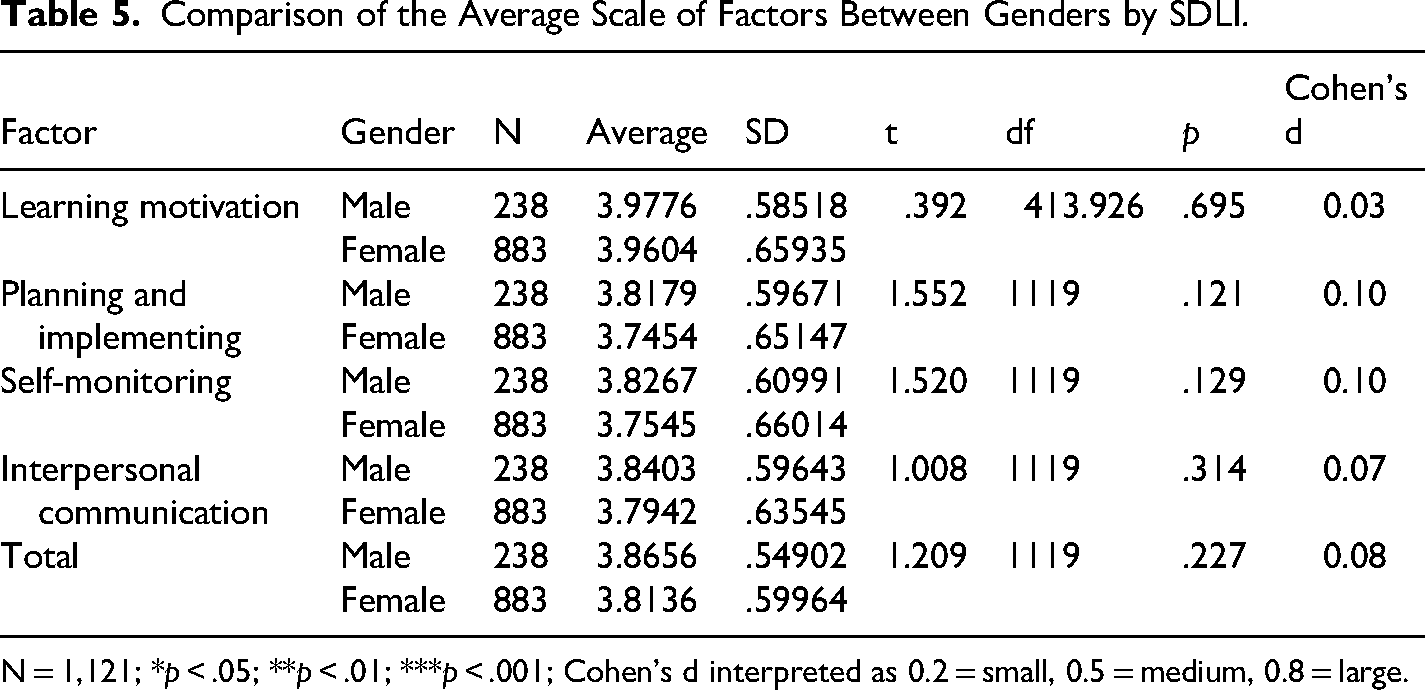
Based on the analyses from Tables 4 and 5, disparities are evident between the SRSSDL_adult and SDLI scales concerning genders. (1) In both scales, there were consistently no significant differences between genders, not only in “self-assessment” and “interpersonal skills” but also in “self-monitoring” and “interpersonal communication,” indicating a lack of distinctiveness in these aspects based on gender. However, significant differences were observed in “needs assessment”, “planning” and “learning motivation”, where males scored significantly higher than females, indicating potentially stronger learning needs and motivation among males in these areas. (2) Notably, the SRSSDL_adult scale exhibited significant gender differences in “execution” aspects, with males scoring significantly higher than females. This highlights a male advantage in execution within the SRSSDL_adult scale. Upon further examination of the score differences in terms of standard deviations, it is evident that these differences are relatively small. Therefore, although the p-values indicate statistical significance, we believe these differences may not have practical significance in real-world contexts. Levene's test results in Tables 4 and 5 indicated unequal variances for several factors (e.g., Needs Assessment, Execution, Learning Motivation, and Planning and Implementing). Therefore, adjustments were made during the t-test analyses to account for these differences and ensure valid comparisons between gender groups.
Comparison of the Average Scale of Factors Between Genders by SRSSDL_adult.
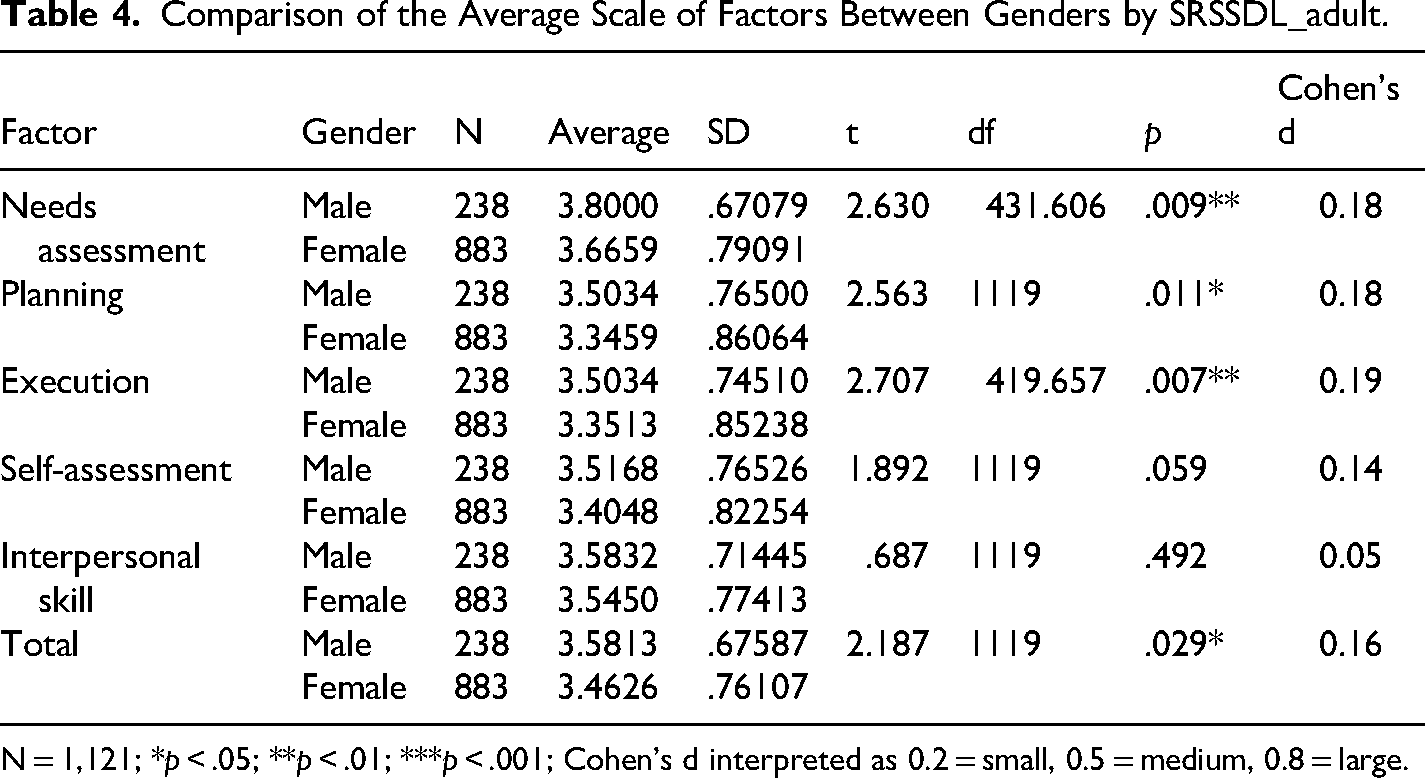
N = 1,121; *p < .05; **p < .01; ***p < .001; Cohen's d interpreted as 0.2 = small, 0.5 = medium, 0.8 = large.
Comparison of the Average Scale of Factors Between Genders by SDLI.
N = 1,121; *p < .05; **p < .01; ***p < .001; Cohen's d interpreted as 0.2 = small, 0.5 = medium, 0.8 = large.
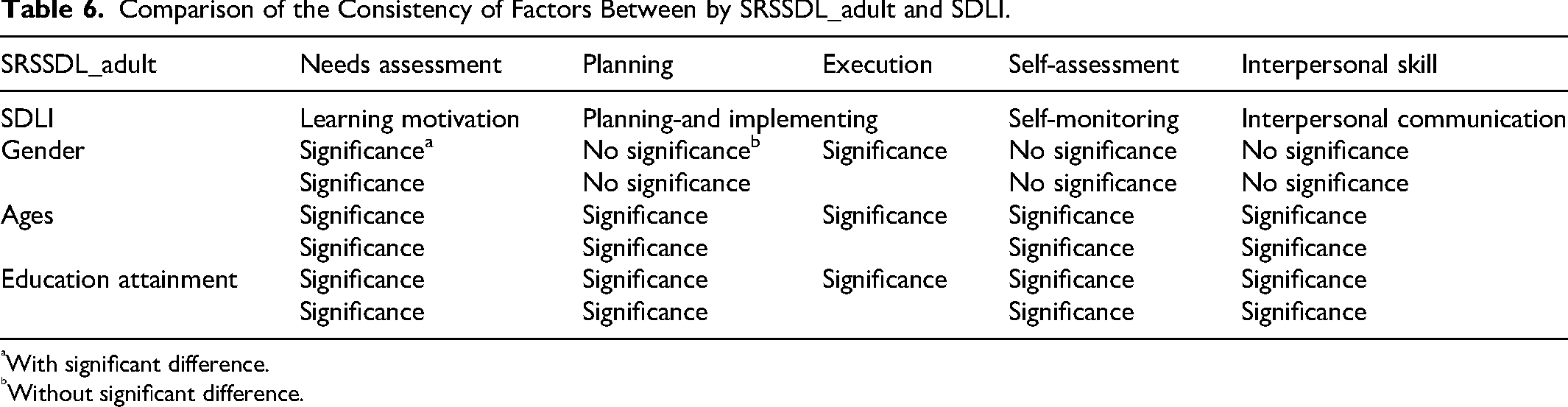
In contrast, the SDLI scale did not show significant differences in “planning and implementing”, suggesting a similarity between genders in planning and implementing according to the SDLI scale. The subsequent Table 6 summarizes the foregoing key findings.
Comparison of the Consistency of Factors Between by SRSSDL_adult and SDLI.
With significant difference.
Without significant difference.
Based on the analyses in Tables 7 and 8, both the SRSSDL_adult and SDLI scales exhibit consistent results regarding ages. Both demonstrate significant differences among age factor in overall scores and across various dimensions. The subsequent Table 6 summarizes the foregoing key findings. In SRSSDL_adult, the age group under 54 scores significantly higher than those aged 55 and above, while the 55–74 age group scores significantly higher than the 75 and above age group. In SDLI, all age groups score significantly higher than the 75 and above age group. Overall, younger age groups consistently demonstrate higher levels of SDL abilities in both the SRSSDL_adult and SDLI scales. For Tables 7 and 8, the Posterior comparisons columns identify which specific age groups differed significantly from each other following significant ANOVA results. Across both SRSSDL_adult and SDLI scales, results consistently reveal that younger participants (<55 years) demonstrated significantly higher SDL abilities than older participants, with the 75+ age group showing the lowest scores across all dimensions. The notation patterns (e.g., “1,2 > 3,4,5” and “3,4 > 5”) indicate which age groups scored significantly higher than others.
Comparison of the Average Scale of Factors Between Ages by SRSSDL_adult.
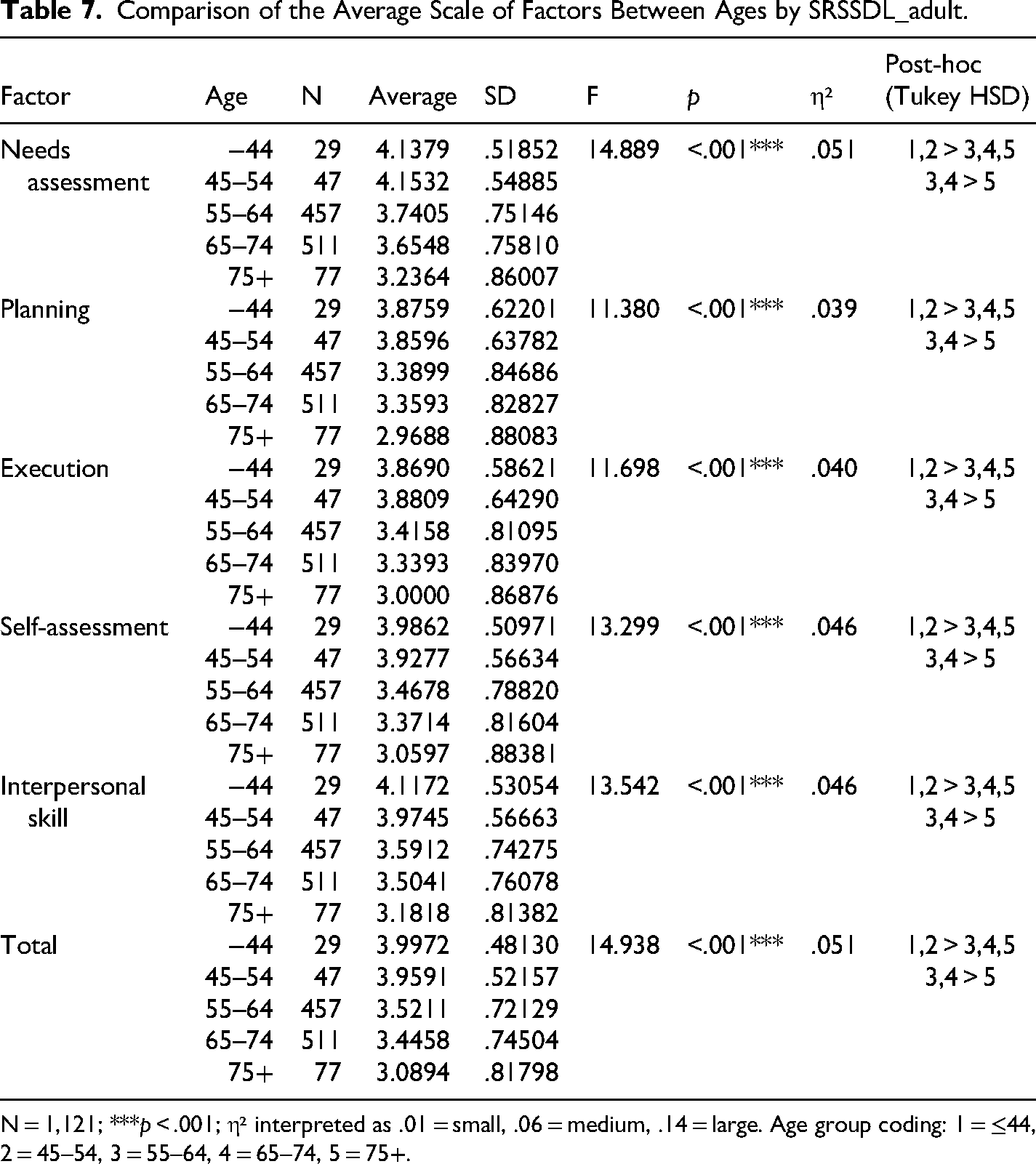
N = 1,121; ***p < .001; η² interpreted as .01 = small, .06 = medium, .14 = large. Age group coding: 1 = ≤44, 2 = 45–54, 3 = 55–64, 4 = 65–74, 5 = 75+.
Comparison of the Average Scale of Factors Between Ages by SDLI.
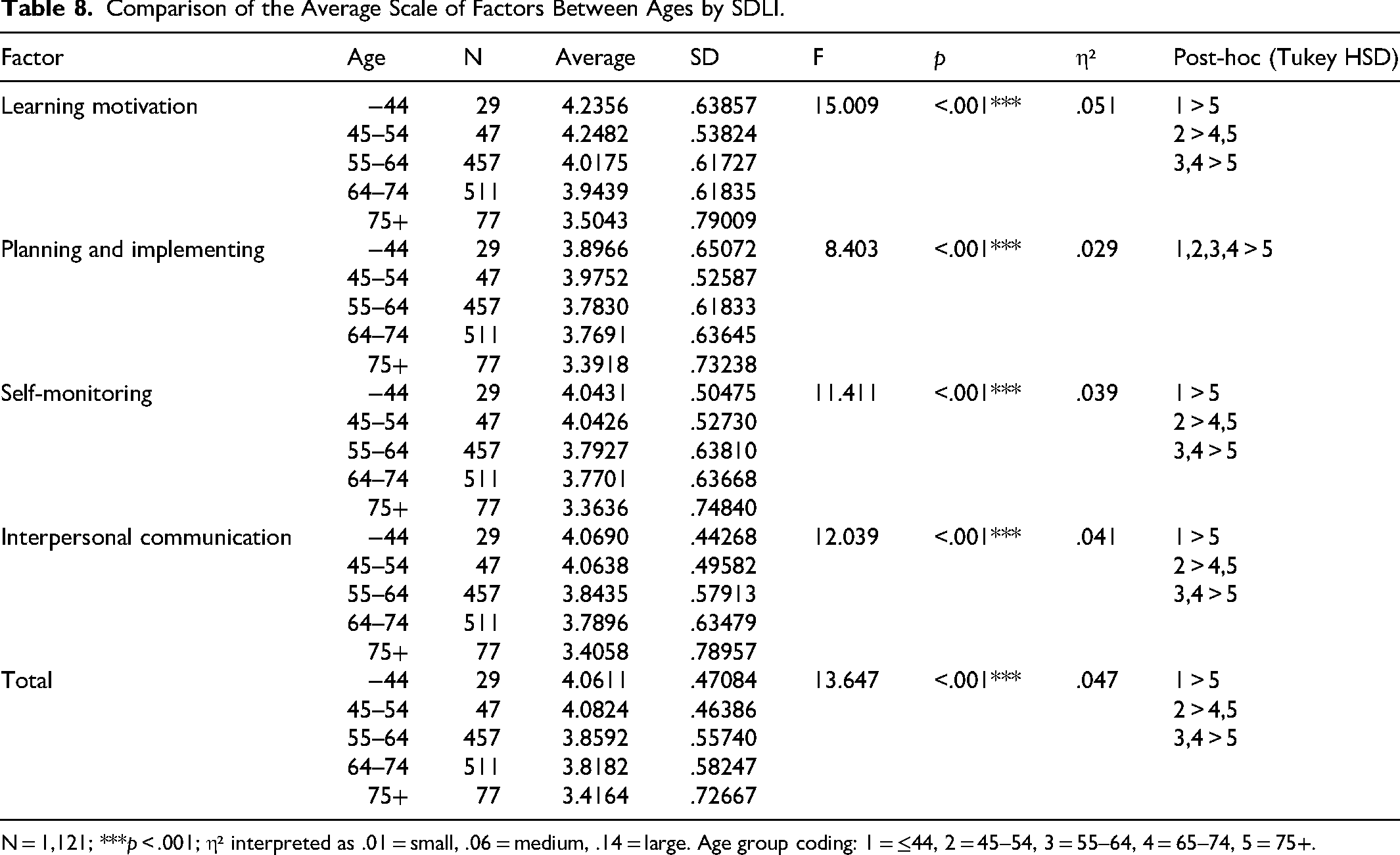
N = 1,121; ***p < .001; η² interpreted as .01 = small, .06 = medium, .14 = large. Age group coding: 1 = ≤44, 2 = 45–54, 3 = 55–64, 4 = 65–74, 5 = 75+.
Based on the analyses of Tables 9 and 10, both the SRSSDL_adult and SDLI scales exhibit consistent outcomes regarding education attainment. Both demonstrate significant effects of different education levels on SDL abilities, both overall and across individual factors. The subsequent Table 6 summarizes the foregoing key findings. Participants with higher education levels consistently exhibit higher SDL abilities in both SRSSDL_adult and SDLI scales. In SRSSDL_adult, scores in various aspects, including learning needs, planning, execution, self-assessment, and interpersonal skills, are higher in the higher education group compared to the lower education group. Similarly, in SDLI, scores in aspects such as learning motivation, planning and implementing, self-monitoring, and interpersonal communication are superior in the higher education group.
Comparison of the Average Scale of Factors Between Education Attainment by SRSSDL_adult.
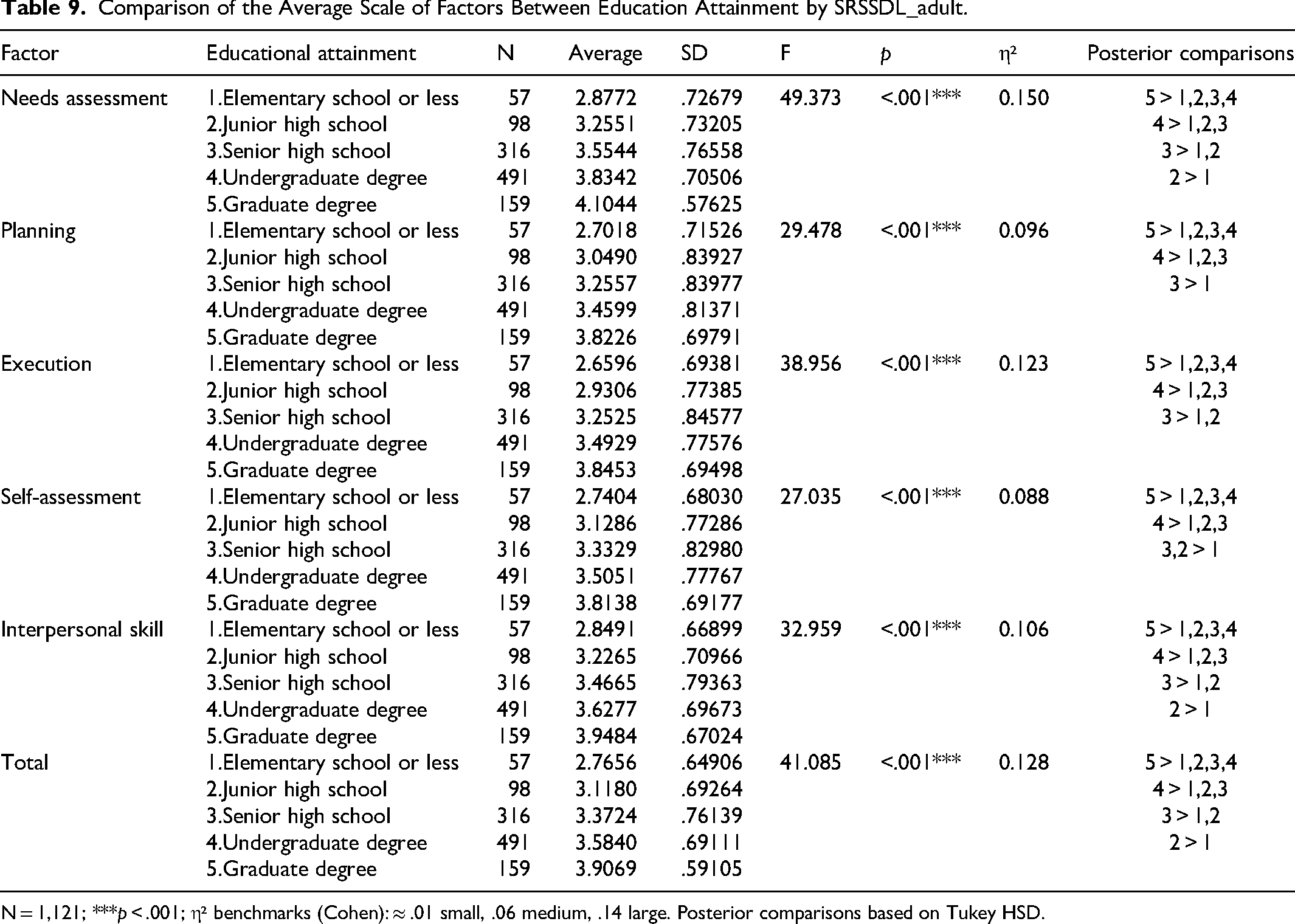
N = 1,121; ***p < .001; η² benchmarks (Cohen): ≈ .01 small, .06 medium, .14 large. Posterior comparisons based on Tukey HSD.
Comparison of the Average Scale of Factors Between Education Attainment by SDLI.
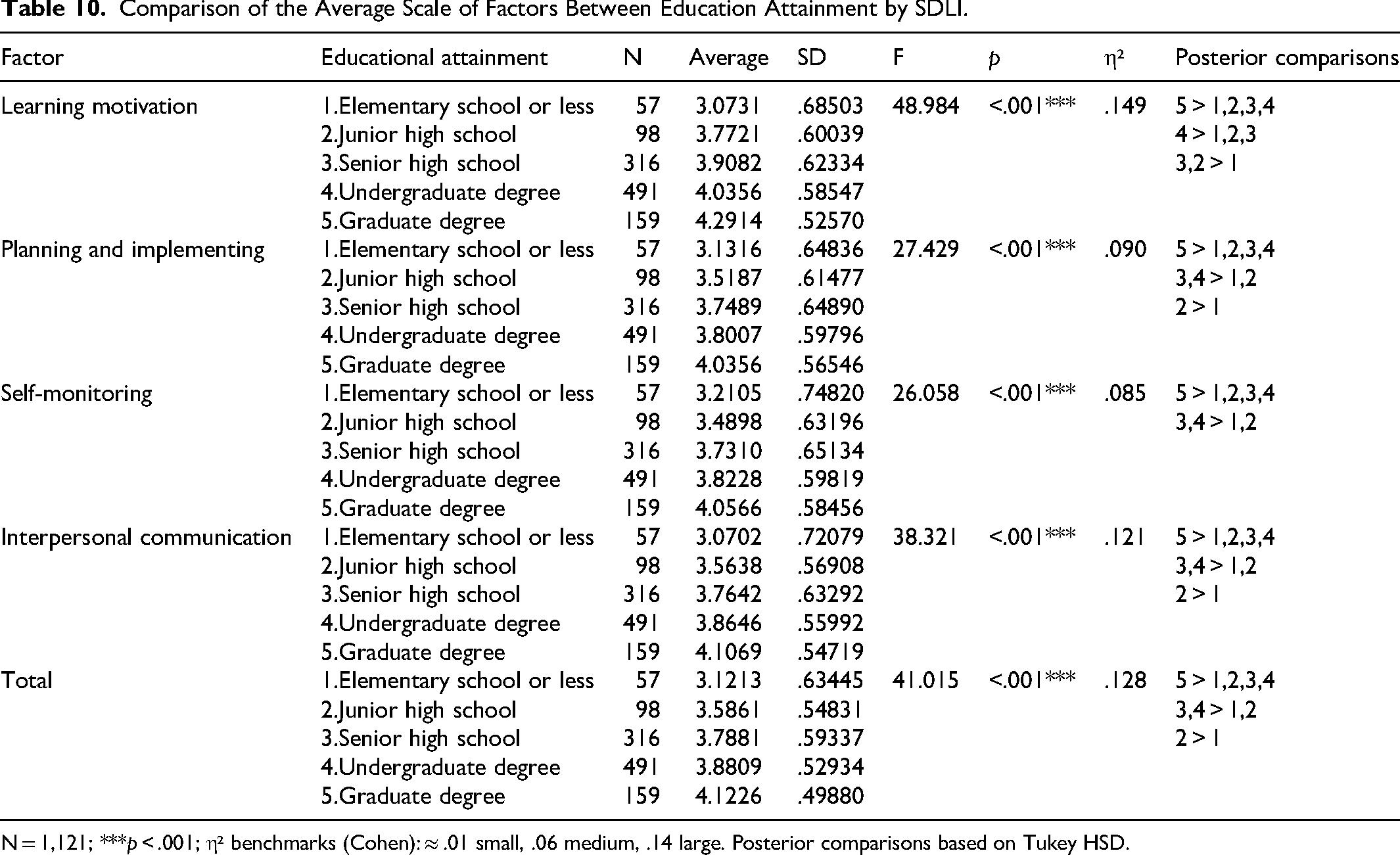
N = 1,121; ***p < .001; η² benchmarks (Cohen): ≈ .01 small, .06 medium, .14 large. Posterior comparisons based on Tukey HSD.
The findings demonstrate the results of consistency in SDL abilities across three dimensions: age, gender, and educational attainment, as assessed by both SDL assessment tools. Table 6 illustrates the comparison of factor consistency between SRSSDL_adult and SDLI.
Gender differences were observed between the two scales, but only partially. On the SRSSDL_adult scale, male participants displayed higher SDL abilities in the “execution” factor compared to their female counterparts. In contrast, the SDLI scale showed no significant gender differences in the “planning and implementing” factor. This finding highlights the importance of distinguishing between “execution” in SRSSDL_adult and “implementing” in SDLI, suggesting that evaluating these aspects separately provides a more nuanced understanding of SDL. This observation aligns with Liao et al.'s (2024) identification that the “planning and implementation” factor in SDLI is divided into two distinct factors, “planning” and “execution,” in SRSSDL_adult.
In terms of age, no significant differences were found between the two scales. Across both scales, younger age groups consistently demonstrated higher SDL abilities, reflecting a similar trend in the assessment outcomes.
Regarding educational attainment, the results revealed no significant differences between the two scales. Both scales consistently indicated that higher levels of educational attainment were associated with greater SDL abilities, underscoring the impact of education on SDL competencies.
Correlation Analysis of SDL Between Cheng et al.’s and Liao et al.’s SDL assessment tools
The third research question aims to investigate the correlation between Liao et al.'s and Cheng et al.'s SDL assessment tools (Cheng et al., 2010; Liao et al., 2024), assessing their concurrent validity.
The analysis revealed that all correlation coefficients among the SDL factors in Liao et al.'s (2024) and Cheng et al.'s (2010) scales were consistently positive and statistically significant at the .001 level or above. Furthermore, the SDL scales developed by Liao et al. (2024) and Cheng et al. (2010) exhibited a significant positive correlation at or above the .001 level. Notably, the two scales demonstrated a high positive correlation, with a correlation coefficient of 0.783, indicating that 61.31% of the variance is explained by the relationship between them (0.783 × 0.783 = 0.613089).
This analysis highlights a robust and statistically significant positive correlation between Liao et al.'s (2024) and Cheng et al.'s (2010) SDL assessments, indicating their effectiveness in evaluating SDL abilities among middle-aged and older adult learners enrolled in senior learning centers. Table 11 presents Pearson correlation coefficients for SDL domains assessed by Cheng et al.'s and Liao et al.'s scales.
Summary of Pearson Correlation Coefficients for SDL Between Cheng et al.'s and Liao et al.'s Scales.
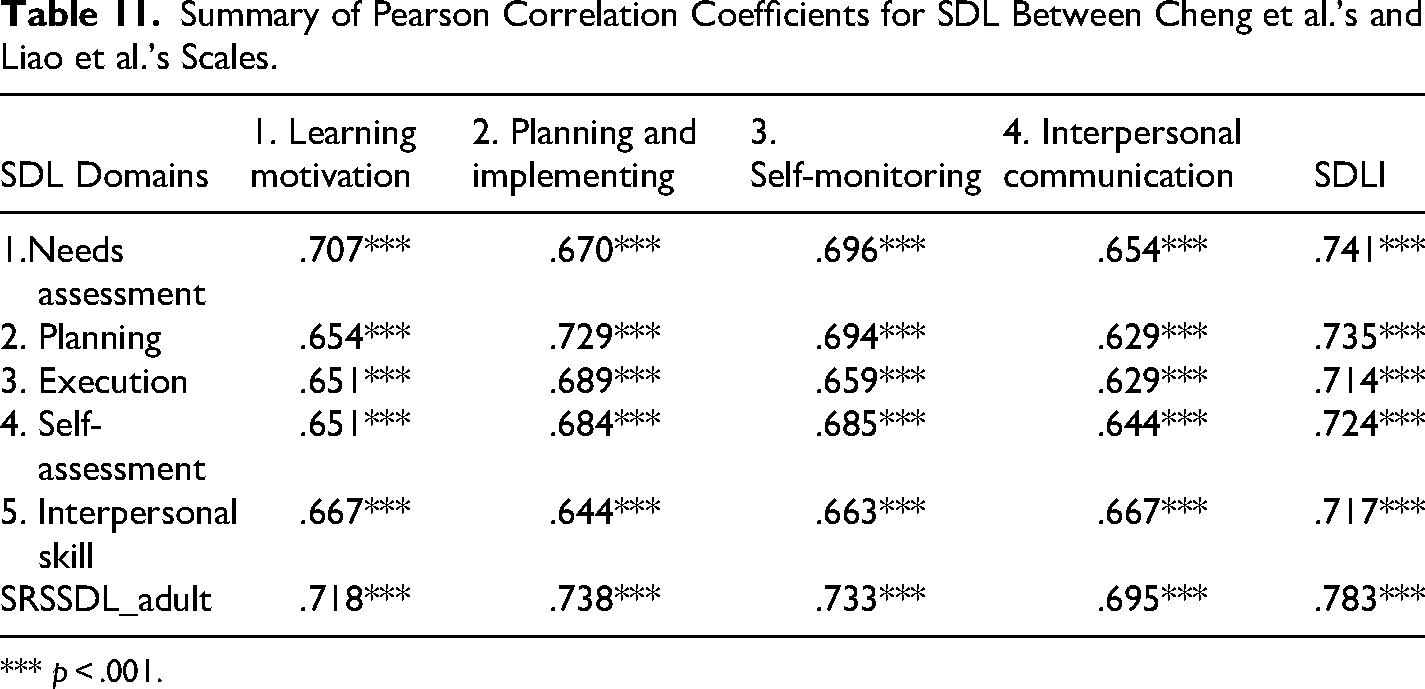
*** p < .001.
Discussions
This section explores the findings from an analysis of middle-aged and older adults’ SDL abilities, focusing on their strengths, areas for improvement, and implications for education and lifelong learning.
Findings and Analysis
Middle-aged and older adults showed strong abilities in needs assessment and learning motivation, but lower scores in planning and implementation, indicating a gap between recognizing learning needs and executing learning strategies.
The SRSSDL_adult and SDLI scales yielded consistent patterns across gender, age, and education, confirming their reliability and suitability for assessing SDL in diverse older populations. Significant differences were found across demographic groups. Younger participants and those with higher education levels scored higher in SDL, suggesting that age and educational background influence SDL capabilities. A strong positive correlation between SRSSDL_adult and SDLI (r = .783, p < .001) supports the concurrent validity of both tools, indicating they assess similar SDL constructs and can be used complementarily in research and practice.
Applications and Implications
To address weaknesses in SDL planning and implementation, educators should offer training in time management and strategy use. Course design can also build on learners’ strengths in motivation and needs assessment, promoting greater autonomy and engagement. Demographic-based differentiation may further improve learning outcomes.
Both SRSSDL_adult and SDLI scales are useful tools for evaluating and enhancing SDL. The former offers a detailed framework for adult learners, while the latter, though developed for nursing students, is adaptable to broader contexts. These instruments also support the evaluation of educational interventions. Fostering SDL supports active aging, helping older adults navigate life changes, maintain resilience, and pursue lifelong growth. Empowering older learners to take ownership of their learning aligns with broader goals of well-being and lifelong learning.
Comparison
A comparison of concurrent validity studies of SDL tools reveals different contexts. The Taiwanese study evaluated the SRSSDL_adult (Liao et al., 2024) and SDLI (Cheng et al., 2010) scales for middle-aged and older adults, focusing on lifelong learning at senior education centers. In contrast, the Italian study examined the SRSSDL_Ita (Cadorin et al., 2013; Cadorin et al., 2016; Cadorin et al., 2017) and SDLI (Cheng et al., 2010) scales among undergraduate nursing students, targeting SDL in professional education.
Both studies employed a concurrent validity design using Pearson correlation coefficients. The SRSSDL_adult emphasized planning, execution, and self-evaluation for older learners, while the SRSSDL_Ita focused on motivation, strategies, and interpersonal skills for younger nursing students. Despite demographic and cultural differences, significant positive correlations were found between SRSSDL and SDLI in both studies (r = .783 for Taiwan; r = .815 for Italy).
Key findings revealed that younger and more educated individuals scored higher on SDL across scales. The Taiwanese study highlighted the need for older learners to improve planning and execution skills, while the Italian study emphasized readiness for professional education among nursing students. Both studies demonstrated the relevance of SDL assessment tools for tailoring education strategies to diverse populations, promoting lifelong learning, and enhancing teaching methods.
Limitation
This study's predominantly female sample (78.8%) may limit generalizability, as gender differences in older adults’ learning behaviors have been reported (Hershey et al., 2007; Lin et al., 2011). Future research should aim for gender-balanced samples or analyze data by gender (Jacobs-Lawson et al., 2004; Pulakka et al., 2019; Sörensen et al., 2021). The SRSSDL_adult and SDLI scales, while validated in Taiwan, may not fully apply in other cultural or educational contexts. Differences in cognitive function due to aging or health may also affect responses; cognitive screening is recommended in future studies. Findings are based on senior learning centers in Taiwan and may not be generalizable to other learning environments. Additionally, self-selection bias may have favored participants already inclined toward SDL. Although the large sample enhances statistical reliability, results may differ in smaller samples with lower power. Reporting effect sizes alongside p-values is advised. Lastly, SDL is a multifaceted construct. While the current scales assess key dimensions, they may not fully capture aspects such as metacognition or learning strategy use. Future studies should aim to refine measurement tools and explore longitudinal changes in SDL.
Conclusions
In this study, we set out to address three fundamental questions regarding SDL abilities among middle-aged and older adult learners, assessed through the instruments developed by Liao et al. (2024) and Cheng et al. (2010). Our research yielded several important findings: First, we identified variations in SDL abilities among middle-aged and older adult learners. “Needs assessment” (Liao et al., 2024) and “Learning motivation” (Cheng et al., 2010) were notably strong, whereas more attention was required for “Planning” and “Execution” (Liao et al., 2024) and “Planning and implementing” (Cheng et al., 2010). Second, there is a general consistency observed in the results of SDL abilities across three dimensions: age, gender, and educational attainment. Third, a highly significant positive correlation between Liao et al.'s (2024) and Cheng et al.'s (2010) scales was found, confirming the concurrent validity of both instruments. Educators and researchers can confidently choose either Liao et al.'s (2024) or Cheng et al.'s (2010) scales for SDL assessment, depending on their specific needs and contexts. Future research should consider investigating distinct perspectives on SDL, specifically focusing on “planning” and “execution,” through interviews based on gender. Additionally, there is a need to explore the significance of SDL “planning” in relation to “execution.”
Footnotes

Funding
The authors received no financial support for the research, authorship, and/or publication of this article.
Declaration of Conflicting Interests
The authors declared no potential conflicts of interest with respect to the research, authorship, and/or publication of this article.
Author Biographies
Appendix A. SDL abilities as measured with Liao et al.'s (2024) and Cheng et al.'s (2010) scales
The SDL Abilities as Measured with Liao et al.'s and Cheng et al.'s Scales for Middle-Aged and Older Adult Learners Enrolled in Taiwanese Senior Learning Centers.
| Average | SD | ||
|---|---|---|---|
| SRSSDL_adult Factors | |||
| 1.Needs assessment | 3.6944 | .76866 | |
| 1.1 | I am aware of the areas in which I need to learn. | 3.79 | .942 |
| 1.2 | I am aware of the topics that I am more focused on when learning. | 3.84 | .867 |
| 1.3 | I am aware of my strengths in terms of abilities. | 3.51 | 1.028 |
| 1.4 | I am aware of what I need to learn. | 3.73 | .936 |
| 1.5 | I am aware of the abilities that I need to improve. | 3.59 | .925 |
| Planning | 3.3793 | .84338 | |
| 2.1 | I am able to set my own learning goals. | 3.57 | .965 |
| 2.2 | I am capable of planning my own learning strategies. | 3.48 | .989 |
| 2.3 | I am capable of prioritizing my learning needs. | 3.61 | .993 |
| 2.4 | I am able to write my own learning plan. | 3.02 | 1.094 |
| 2.5 | I am capable of anticipating my learning outcomes. | 3.22 | 1.000 |
| Execution | 3.3836 | .83278 | |
| 3.1 | I create outlines to assist with my understanding of the material. | 3.17 | 1.141 |
| 3.2 | I take notes on what I am learning. | 3.46 | 1.067 |
| 3.3 | During lectures, I ask questions to aid in my learning. | 3.38 | .973 |
| 3.4 | I search for learning resources on my own. | 3.62 | .980 |
| 3.5 | While learning, I record questions that arise. | 3.29 | 1.026 |
| Self-assessment | 3.4285 | .81168 | |
| 4.1 | I monitor my learning progress. | 3.33 | .996 |
| 4.2 | I check if I have achieved my learning goals. | 3.37 | .992 |
| 4.3 | I reflect on my learning process. | 3.58 | .940 |
| 4.4 | I take note of the feedback that my friends give me on my learning. | 3.39 | .979 |
| 4.5 | I make revisions based on the feedback I receive from my friends. | 3.48 | .978 |
| Interpersonal skill | 3.5531 | .76170 | |
| 5.1 | I participate in learning groups that involve interpersonal interactions. | 3.68 | .934 |
| 5.2 | I use communication software to communicate with learning partners. | 3.35 | 1.120 |
| 5.3 | I express my ideas to learning partners verbally. | 3.46 | .929 |
| 5.4 | I take the initiative to discuss with learning partners. | 3.37 | .957 |
| 5.5 | I maintain a good relationship with learning partners. | 3.68 | .934 |
| SDLI Factors | |||
| Learning motivation | 3.9640 | .64411 | |
| 1.1 | I know what I need to learn. | 3.91 | .738 |
| 1.2 | Regardless of the results or effectiveness of my learning, I still like learning. | 4.08 | .755 |
| 1.3 | I strongly hope to constantly improve and excel in my learning. | 4.01 | .765 |
| 1.4 | My successes and failures inspire me to continue learning. | 3.96 | .758 |
| 1.5 | I enjoy finding answers to questions. | 3.96 | .769 |
| 1.6 | I will not give up learning because I face some difficulties. | 3.87 | .774 |
| Planning and implementing | 3.7608 | .64067 | |
| 2.1 | I can pro-actively establish my learning goals. | 3.73 | .754 |
| 2.2 | I know what learning strategies are appropriate for me in reaching my learning goals. | 3.81 | .737 |
| 2.3 | I set the priorities of my learning. | 3.81 | .745 |
| 2.4 | Whether in the clinical practicum, classroom or on my own, I am able to follow my own plan of learning. | 3.72 | .751 |
| 2.5 | I am good at arranging and controlling my learning time. | 3.67 | .751 |
| 2.6 | I know how to find resources for my learning. | 3.82 | .761 |
| Self-monitoring | 3.7698 | .65020 | |
| 3.1 | I can connect new knowledge with my own personal experiences. | 3.87 | .740 |
| 3.2 | I understand the strengths and weakness of my learning. | 3.90 | .719 |
| 3.3 | I can monitor my learning progress. | 3.63 | .756 |
| 3.4 | I can evaluate on my own my learning outcomes. | 3.69 | .741 |
| Interpersonal communication | 3.8040 | .62740 | |
| 4.1 | My interaction with others helps me plan for further learning. | 3.86 | .719 |
| 4.2 | I would like to learn the language and culture of those whom I frequently interact with. | 3.75 | .748 |
| 4.3 | I am able to express messages effectively in oral presentations. | 3.83 | .742 |
| 4.4 | I am able to communicate messages effectively in writing. | 3.77 | .747 |