






Abstract
Adult learners’ decisions to pursue advanced education are driven by multiple motivations. Guided by Personal Investment Theory's eight goal-oriented dimensions, this study developed a validated instrument to assess the motivations of working professionals pursuing postbaccalaureate education: Continuing Education Motivation Scale (CEMS). We reviewed existing tools and revised items to reflect the multifaceted nature of adult motivation. Using data from U.S. residents, we conducted confirmative factor analysis (CFA) to confirm the instrument's reliability, followed by hierarchical regression and relative importance analyses. Results identified Striving for Excellence, Inherent Interest, Affiliation, Social Concern, and Power as key motivational drivers. Motivations significantly predicted learners’ preferences for instructional activities, with specific dimensions linked to collaborative, research-focused, and reflective tasks. These findings offer practical implications for designing graduate programs, marketing strategies, and learner engagement approaches that align with adult learners’ motivational profiles. By capture nuanced motivations, this study contributes to a deeper understanding of adult learners’ decision-making in formal education settings.
Keywords
Educational attainment is widely regarded as a crucial factor influencing life outcomes, with higher education typically linked to better opportunities and life outcomes. Degrees and certificates have become primary criteria for employment and job placement (Tholen, 2020). Although the perceived value of undergraduate degrees may be waning (Deloitte Center for Government Insights, 2025), postgraduate and graduate training has become essential for better job prospects and higher earnings. This shift has driven the increasing demand for more accessible graduate programs.
As this demand rises, the presence of nontraditional learners (Zamecnik et al., 2022) contributes to a surge in the availability of degree programs (National Center for Education Statistics, 2024). With growing private sector involvement and higher education globalization, professionals have access to a range of post-undergraduate study options. However, this expansion has complicated the creation of sustainable programs.
For working professionals, the decision to pursue advanced education is shaped by varied motivations and contextual factors. Unlike traditional students, adult learners must balance education with career, family, and other responsibilities, making their motivations more nuanced and multifaceted (Council for Adult and Experiential Learning, 2024). Current studies, including Wofford et al. (2022), Agbola et al. (2017), and Espinoza et al. (2024), have identified societal, economic, and environmental factors that influence adult learners’ pursuit of advanced education. However, how these factors interconnect and influence motivation and decision-making remains unclear. This gap challenges faculty and administrators to understand expectations and design and implement programs that meet adult learners’ needs (Bersola et al., 2014).
Goal systems theory (Kruglanski et al., 2002) emphasizes that goal-directed decisions and behaviors emerge from networks of interconnected goals. Based on this theory, Personal Investment Theory (PIT) provides a framework for understanding motivation through eight dimensions (King et al., 2018; Maehr, 1984). Personal Investment Theory is well suited to adult learners by capturing multiple coexisting goals, such as personal growth, career advancement, and recognition. Unlike traditional motivation theories with singular or binary constructs, PIT accommodates intrinsic and extrinsic goals without treating them as opposites. Its emphasis on shifting goal systems reflects how adults reprioritize over time. These features make PIT especially effective for understanding the complex and evolving motivations of adults in continuing education. However, there are currently no PIT-based instruments designed specifically for adult learners in higher education, making it challenging to study variations in adult learner motivations through this lens.
While studies have developed motivation instruments for formal learning settings, they primarily focus on traditional student groups, such as high school and college students. Existing scales fail to capture motivations driving adults to pursue advanced degrees (Zamecnik et al., 2022). Therefore, this study seeks to bridge the gap by developing the Continuing Education Motivation Scale (CEMS), a PIT-based instrument designed to capture motivations of adult learners pursuing advanced degrees. The study also explores whether CEMS captures motivations shaping adult learners’ attitudes, learning preferences, and decision-making regarding continuing education. The following research questions (RQ) guided this study:
RQ1: Does the CEMS align with the motivational factors identified in PIT? RQ2: Do the motivational factors predict attitudes and enrollment intentions? RQ3: What is the relative importance of the motivational factors in shaping attitudes and enrollment intentions? RQ4: Do the RI of the motivational factors vary across different demographic groups? RQ5: How do the motivational factors influence learner preferences for curricular design?
Theoretical Background
Key Drivers of Graduate Education Decisions
Several studies have explored the motivations for pursuing graduate studies: Sallie Mae and Ipsos (2017) identified motivators such as career acceleration, meeting career requirements, professional ambition, staying current and competitive, career change, and intellectual and social benefits. Similarly, Cho-Baker et al. (2022) identified three primary reasons for pursuing a graduate degree: professional development, job alternatives, and enhancing job prospects. Discipline-specific studies, such as Incikabi et al. (2013), McNeese et al. (2009), Dust (2006), and Hinkle et al. (2014), identified common motivations including expertise development, career security, leadership aspirations, research interests, and social responsibility.
Although limited research exists on full-time working professionals’ motivations for graduate study, studies on adult learners returning to undergraduate education offer useful insights. Van Rhijn et al. (2016) found that factors such as occupation, educational background, and family obligations are primary motivators. Secondary factors such as material needs, lifestyle aspirations, social responsibility, and well-being also play important roles. Similarly, Chapin et al. (2024) reported that optimism, hope, efficacy, resilience, and family-related challenges influenced their decision.
Classical and Contemporary Theories of Adult Motivation
Understanding what motivates adults to pursue advanced education requires examining both foundational and contemporary theories of learning. Classical perspectives laid important groundwork for exploring adult motivation. Houle (1961) classifies adult learners as goal-oriented (outcomes-driven), activity-oriented (socially motivated), and learning-oriented (knowledge-seeking). Knowles (1980) emphasizes adults’ self-directed nature, highlighting prior experiences and autonomy in educational choices. Similarly, Tough (1979)'s self-directed learning theory underscores learner agency, suggesting that adults actively plan, manage, and structure their learning based on personal goals. Building on these views, Wlodkowski (1993)'s Motivation to Learn Model outlined motivational conditions that support adult engagement: inclusion, positive attitudes, meaning, and competence.
More recent perspectives build on these foundations by highlighting that adult motivation arises from a dynamic interplay of intrinsic, dispositional, situational, and structural factors (Ahl, 2006; Chapin et al., 2024). Unlike traditional students, adults often balance work, family, finances, and social roles, resulting in overlapping and individualized motivations. Self-Determination Theory (SDT; Ryan & Deci, 2000) positions motivation along a continuum from extrinsic to intrinsic, focusing on the psychological needs for autonomy, competence, and relatedness. However, this binary structure may oversimplify the layered goals of adult learners (Rothes et al., 2017). Achievement Goal Theory (AGT; Senko et al., 2011) distinguishes between mastery and performance orientations in academic settings, but overlooks broader career, social, or structural influences, limiting its use in adult education contexts (Hegarty, 2011). While both frameworks offer useful insights, their limitations in capturing the multidimensional adult learner motivation highlight the need for a more integrative theory.
Personal Investment Theory and Its Relevance to Adult Learners
Personal Investment Theory provides a multidimensional framework for understanding how individuals allocate time and effort toward personally meaningful goals (Maehr, 1984). Personal Investment Theory posits that motivation stems from three interrelated components: sense of self, facilitating conditions, and perceived goals (King & McInerney, 2014; King et al., 2018; McInerney & Sinclair, 1992). Rather than assuming a linear or binary process, PIT allows for the coexistence and shifting of multiple goals over time. It identifies four overarching goal categories: mastery, performance, social, and extrinsic. Each encompasses two specific dimensions. The eight motivational dimensions include inherent interest, striving for excellence, competitiveness, power, affiliation, social concern, recognition, and token rewards (King et al., 2018; McInerney & Ali, 2006). This structure helps PIT capture how adult learners pursue education for personal, professional, or social reasons.
Unlike SDT or AGT, PIT recognizes that adult learners may be simultaneously driven by internal curiosity, external rewards, social responsibilities, and personal ambition. Personal Investment Theory's emphasis on shifting goal systems aligns well with the evolving priorities of adult learners who manage work, family, and educational responsibilities. These strengths make PIT particularly advantageous for studying the motivational drivers of adults considering or pursuing advanced degrees.
Development of the CEMS
Several existing instruments assess motivation in formal education settings. These tools address topics such as online learning readiness, motivations for MOOC enrollment and engagement, school motivation, science class motivation, and continuing education for mature women, as shown in Table A1 in Appendix. However, none of these instruments were specifically designed for adult learners pursuing advanced credentials. The Inventory of School Motivation, grounded on PIT, has been validated for middle school, high school, and undergraduate students (Da Silva & McInerney, 2005; McInerney & Ali, 2006; McInerney & Sinclair, 1992; Nasser & McInerney, 2016), but it does not address the unique needs of adult learners. This highlights the need for a tool that captures the complex, goal-oriented motivations of adult learners in graduate or professional learning contexts.
Guided by PIT, we developed the CEMS to examine adult learners’ motivations for pursuing graduate credentials. Continuing Education Motivation Scale draws on PIT's eight motivational dimensions and was refined to reflect adult-specific goals such as job promotion, leadership roles, financial outcomes, and social impact. This design ensures CEMS captures adult learners’ decision-making and their orientation toward formal learning.
Moreover, understanding how motivations shape learning preferences helps design programs that support enrollment and completion (Fifolt & Breaux, 2018; Gittings et al., 2018). Investigating the multidimensional nature of adult learners’ motivations will therefore be crucial for creating more tailored and effective educational experiences that meet the needs of this diverse and growing learner population (Schladitz et al., 2024).
Methodology
Participants and Procedures
Upon Institutional Review Board approval, participants were recruited through Prolific.co, an online research platform, to access a geographically diverse U.S. sample. We leveraged Prolific.co's internal screening tools to identify a sample with the following characteristics: U.S. residents, full-time workers, 18 or older, 4-year degree, English proficiency, and an equal number of males and females. The survey was administered in English. Participants were not screened for graduate school application or enrollment. Instead, the sample was intended to reflect a broad adult population, aligning with the goal of developing a motivation instrument for adults who vary broadly in their natural motivation for further education. Participants received $2 for completing the survey.
Scale Construction
The CEMS reflects the goal structures in PIT, focusing on the perceived goals component through four goal types: mastery, performance, social, and extrinsic. Each type includes two motivational dimensions, yielding eight subscales (McInerney & Ali, 2006). These eight dimensions were validated in McInerney and Ali (2006) with younger students. We adapted the definitions for working professionals pursuing graduate education. For example, token rewards were adapted to emphasize financial incentives such as higher salaries or job opportunities (Kizilcec & Schneider, 2015; Zamecnik et al., 2022). Affiliation was extended to include long-term professional relationships (Chen et al., 2020). Social concern was broadened to encompass contributions to family, community, and society (Hinkle et al., 2014).
The eight motivational dimensions and their corresponding goal types used in this study are outlined below. Details of items are provided in Table1:
Mastery goals
Inherent interest: seeking knowledge and expertise Striving for excellence: aiming for self-improvement and high achievement Performance goals
Competitiveness: striving to outperform others at school, work, and in life Power: seeking leadership and social status at school, work, and in life Social goals
Affiliation: building professional relationships Social concern: contributing to the well-being of family/community/society/field/world Extrinsic goals
Recognition: seeking validation and praise Token rewards: pursuing financial or career benefits
Factor Loadings and Reliability Measures of the Final Model (Model 3).
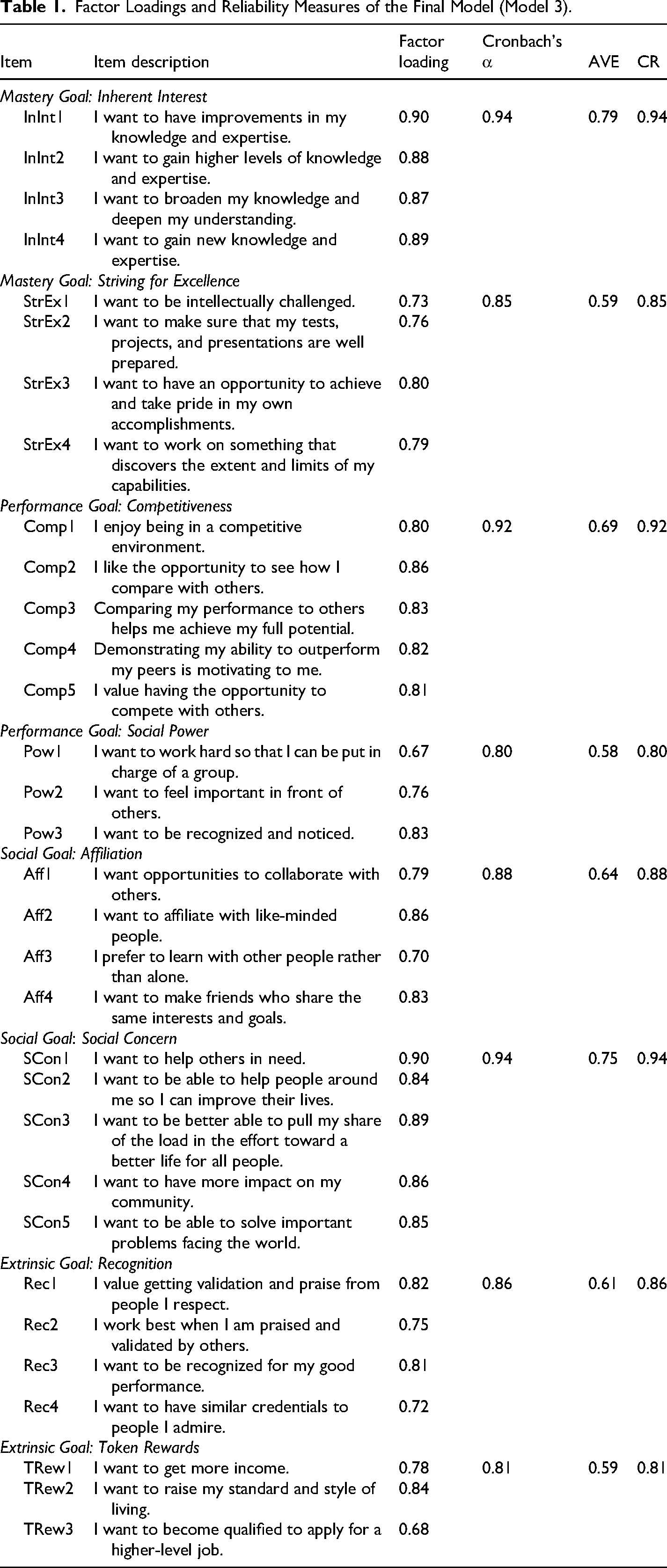
We selected relevant items from validated instruments in Table A1 in Appendix and aligned them with the eight motivational dimensions of the PIT framework. To better reflect working professionals’ motivations, we refined item wording and created six new items, resulting in 47 items. Each item was measured using a 5-point Likert scale (1 = strongly disagree, 5 = strongly agree), beginning with the statement, “I might consider going back to school to obtain an advanced degree or credential, because…”
Development of the Instruments
In addition to the CEMS items, a few additional questions were included in the online survey. Attitude was measured using five semantic differential items (Heise, 1970). Given its utility, contextual fit, and demonstrated reliability (Allen et al., 2022), intention was measured with one 5-point Likert item, assessing likelihood of returning to school within 1–2 years. Preferences for nine common online learning activities (e.g., brainstorming, collaboration, discussion; Binali et al., 2021) were assessed using a 5-point Likert scale ranging from 1 (do not like) to 5 (like a great deal).
Data Analysis
The eight motivational dimensions were modeled as latent variables in RQ1, each measured by 3–4 items. For RQ2–RQ4, these dimensions served as independent variables predicting attitude and intention to pursue graduate studies as dependent variables. Demographic variables such as income, working experience, age, and race were control variables in RQ2. For RQ5, to examine the association, motivations served as independent variables, and preferences for nine learning activities as dependent variables. To reduce common method bias, we ensured participant anonymity, used validated scales with varied formats, and randomized item order. Harman's single-factor test (Podsakoff et al., 2003) showed the first factor accounted for 45% of variance, below the 50% threshold that signals potentially problematic levels of common method variance.
For RQ1, data assumptions were checked, and the data were normalized using R's scale function. Confirmatory factor analysis (CFA) with maximum likelihood estimation using the lavaan package (version 0.6-15; Rosseel, 2012) validated the measurement scales. For RQ2, hierarchical regression assessed CEMS's reliability, entering demographic variables of significant zero-order correlations in Step 1 and motivation dimensions in Step 2. Due to collinearity among predictors, which can distort regression results (Yu et al., 2015; Behson, 2002), RQ3 employed RI analysis via the relaimpo package (version 2.2-6; Grömping, 2007) to evaluate predictors’ practical significance (Cortina & Landis, 2009; Tonidandel & LeBreton, 2011). For RQ4, RI analysis examined motivation's contribution to enrollment intention across demographic groups. RQ5 used regression to explore how motivations relate to learning preferences.
Results
A total of 371 participants completed the survey. Their ages ranged from 21 to 60 years (M = 36.71, SD = 9.72). The sample was balanced in terms of gender: 51.48% male (n = 191), 46.90% female (n = 174), and 1.62% identifying as other (n = 6). Racial distribution included 70.35% White (n = 261), 9.70% Black (n = 36), 11.59% Asian (n = 43), 5.66% Hispanic/Latino (n = 21), and 2.70% other (n = 10). Participants’ full-time work experience ranged from less than one year to more than 15 years, and household income levels varied from less than $25,000 to more than $150,000. Table 2 shows average age, work experience, and income by gender and race using midpoint estimates.
Estimated Averages of Age, Work Experience, and Income by Gender and Race.
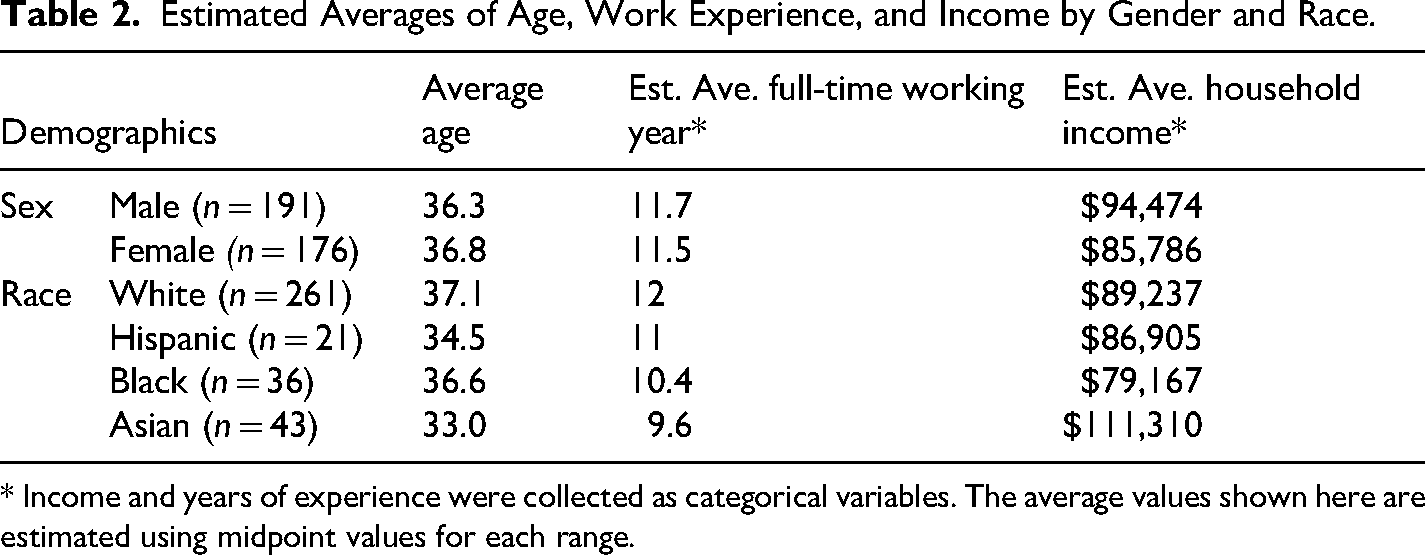
* Income and years of experience were collected as categorical variables. The average values shown here are estimated using midpoint values for each range.
RQ1: Validity of the CEMS Structure
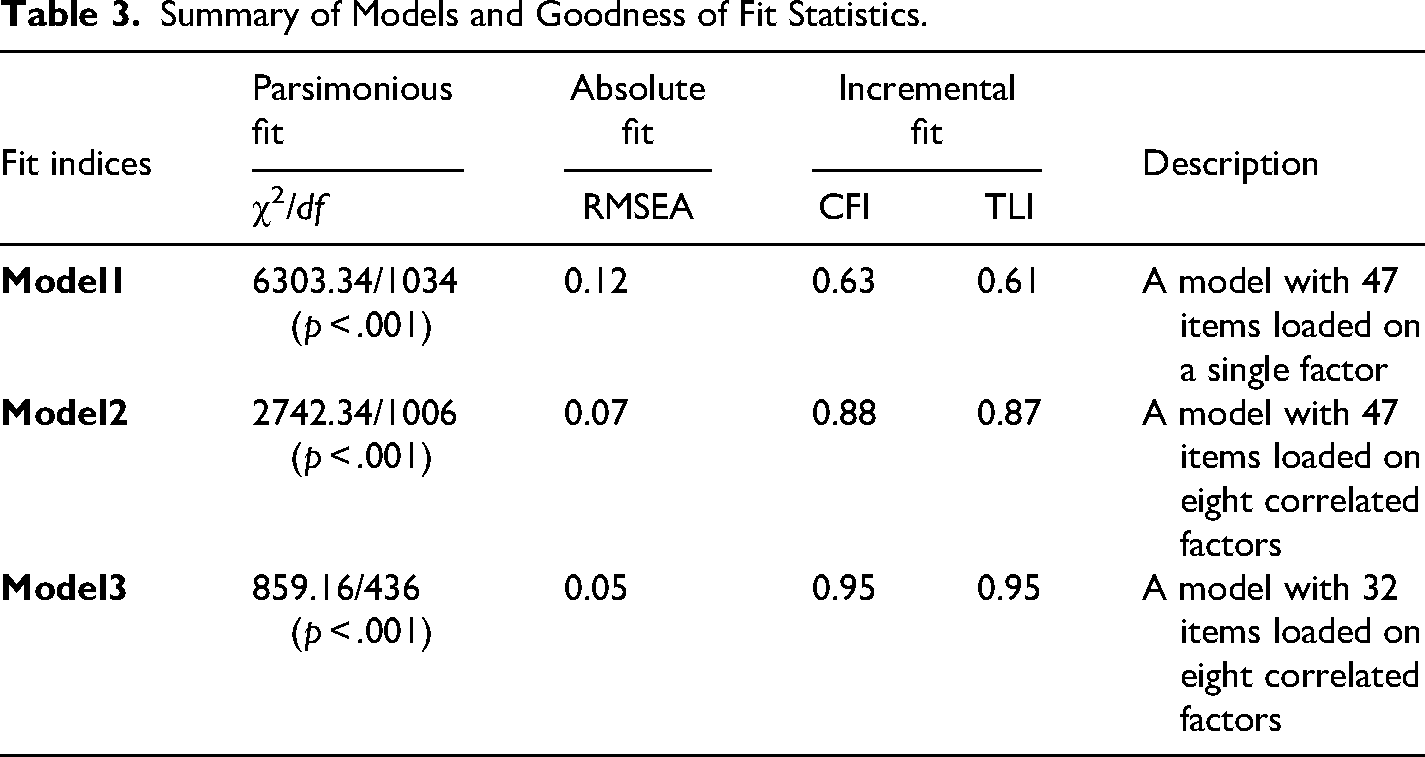
To achieve acceptable fit, items with high cross-loadings were eliminated (Boateng et al., 2018; Hinkin, 1995; Morgado et al., 2017). Model fit indices were checked against established cutoffs. This was repeated until the fit was acceptable. Fifteen items were eliminated, resulting in Model 3, a parsimonious structure with 32 items loading on eight factors. CFAs compared three models: Model 1 (47 items, one factor), Model 2 (47 items, eight factors), and Model 3 (32 items, eight factors), as shown in Table 3. Model 1 and Model 2 failed to meet fit criteria, while Model 3 surpassed recommended cutoffs (Hair et al., 2009; Hu & Bentler, 1999).
Summary of Models and Goodness of Fit Statistics.
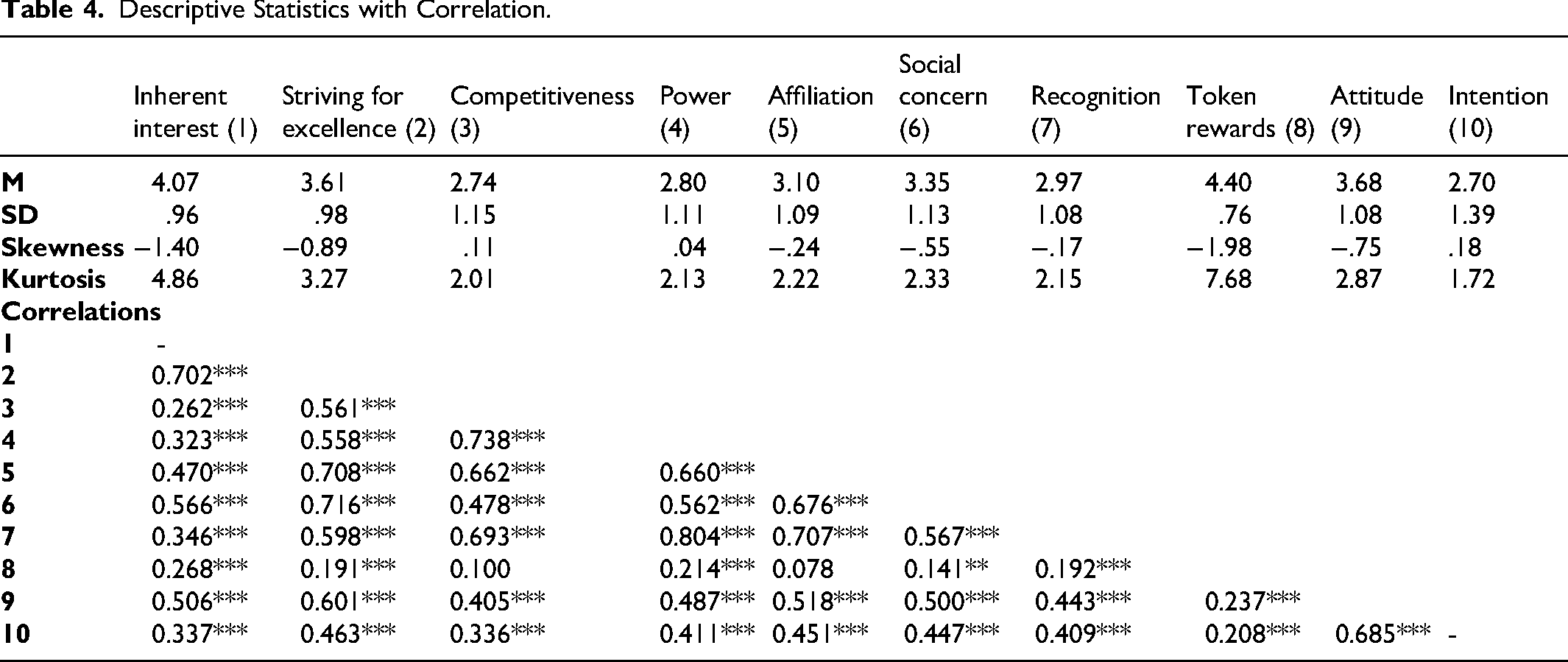
Factor loadings (Comrey & Lee, 2013), AVE (Fornell & Larcker, 1981), construct reliability (CR, Hair et al., 2009), and Cronbach's alpha (DeVellis & Thorpe, 2021) confirmed the measures’ validity and reliability (see Table 1). As shown in Table 4, all eight motivations had above-average scores, while Token Rewards (M = 4.40, SD = .76) had the highest mean followed by Inherent Interest (M = 4.07, SD = .96). The eight dimensions of motivation are correlated, with no discriminant validity issues (Kenny, 2016).
Descriptive Statistics with Correlation.
RQ2: Relationships Between Motivations and Attitude and Intention
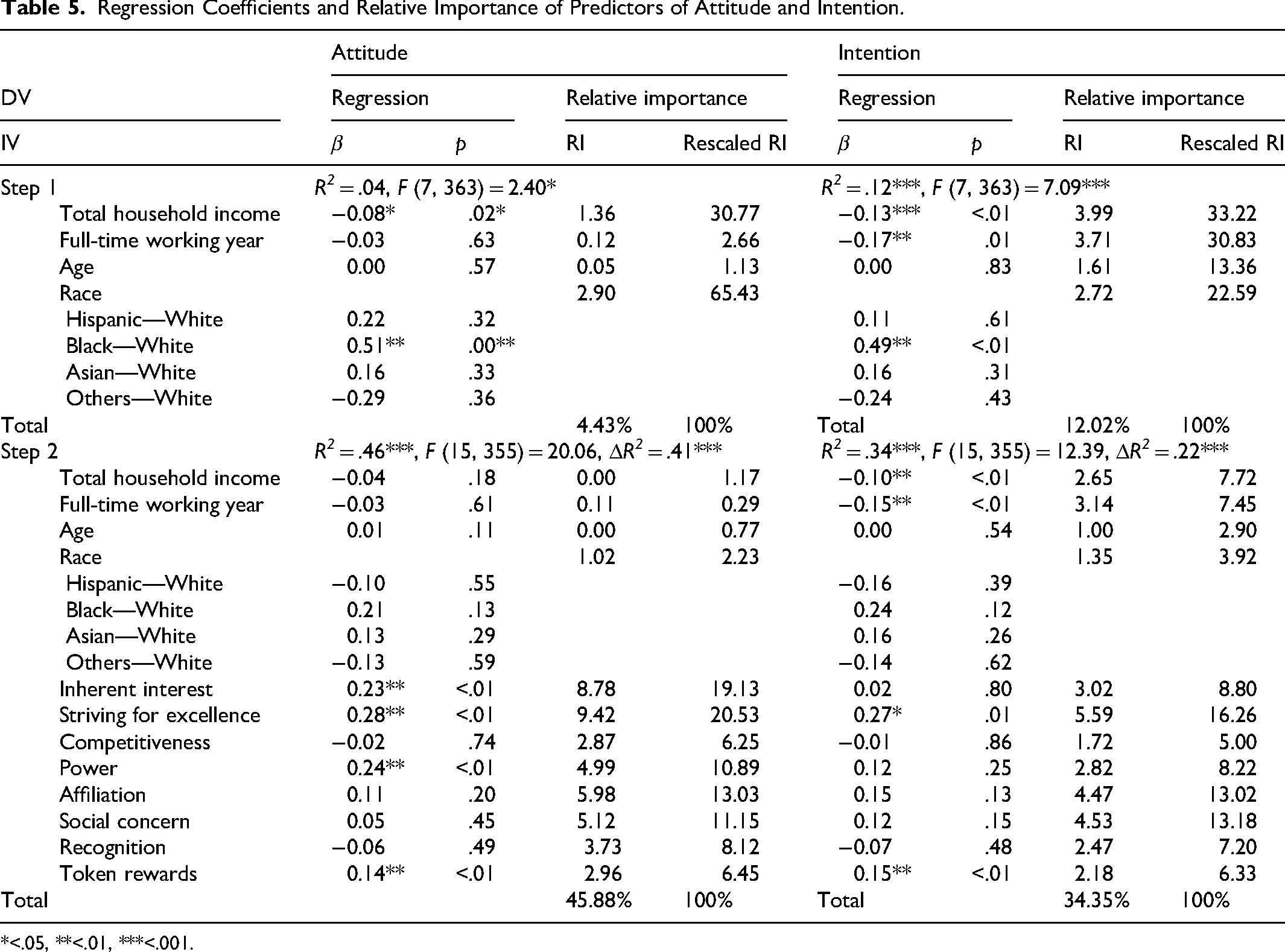
Hierarchical regressions assessed whether motivation improved the prediction of attitude and intention beyond demographics. Demographic explained 4% of the variance in Attitude (R2 = .04, F (7, 363) = 2.40, p < .05), with Total Household Income (β = −0.08, p < .05) and Black Race (β = 0.51, p < .01) as significant predictors (see Table 5). Adding motivation dimensions increased explained variance by 41.45% (ΔR2 = .41, p < .001), accounting for 45.88% of the variance in Attitude (R2 = .46, F (15, 355) = 20.06, p < .001). Demographics lost significance, while Internal Interests (β = 0.23, p < .01), Striving for Excellence (β = 0.28, p < .01), Power (β = 0.24, p < .01), and Token Rewards (β = 0.14, p < .05) became significant.
Regression Coefficients and Relative Importance of Predictors of Attitude and Intention.
*<.05, **<.01, ***<.001.
Demographics explained 12.02% of enrollment intention variance (R2 = .12, F (7, 363) = 7.09, p < .001), with income (β = −0.13, p < .001), working experience (β = −0.17, p < .01), and Black race (β = .49, p < .01) as significant predictors. Including motivation increased explained variance by 22.33% (ΔR2 = .22, p < .001), totaling 34.35% (R2 = .34, F (15, 355) = 12.39, p < .001). Significant predictors of Intention were income (β = −0.10, p < .01), working experience (β = −0.15, p < .01), Striving for Excellence (β = 0.27, p < .05), and Token Rewards (β = 0.15, p < .01).
RQ3: Relative Importance of Motivations on Attitude and Intention
Relative importance statistics were rescaled to represent each predictor's percentage contribution to total R2, allowing cross-model comparison (see Table 6). For attitude, the top contributors included Striving for Excellence (20.53%), Inherent Interest (19.13%), Affiliation (13.03%), Social Concern (11.15%), and Power (10.89%). Although Token Rewards was a significant predictor in the regression analysis, its practical influence was minor (6.45%), suggesting broader motivational factors outweigh simple incentives.
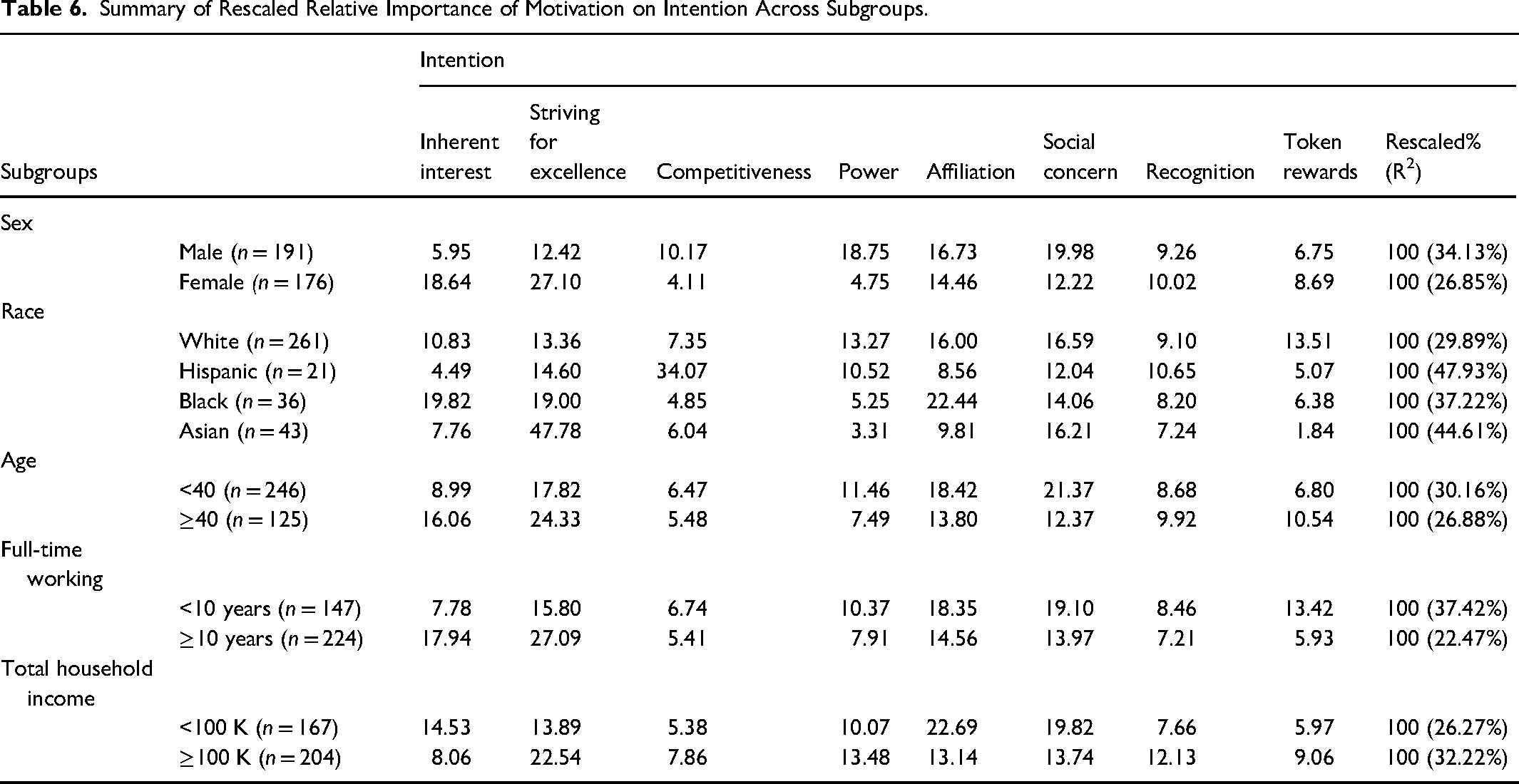
Summary of Rescaled Relative Importance of Motivation on Intention Across Subgroups.
Regarding Intention, the leading contributors were Striving for Excellence (16.26%), Social Concern (13.18%), Affiliation (13.02%), Inherent Interest (8.80%), and Power (8.22%). Striving for Excellence stood out with both statistical significance and high practical impact. Like Attitude, Token Rewards had a significant regression coefficient but low RI (6.33%), indicating limited practical influence.
RQ4: Relative Importance of Motivations on Intention Across Various Learner Groups
While RQ2 evaluated the predictive power of motivation versus demographics, RQ4 explored how motivational profiles differed across demographic subgroups to enrich understanding, rather than to suggest causality. Distinct differences in multidimensional motivation emerged across demographic groups (Table 6; Figures A1–A12). Males (with slightly higher average income) were primarily driven by Social Concern (19.98%), Power (18.75%), and Affiliation (16.73%). Females, on the other hand, showed stronger motivation from Striving for Excellence (27.10%) and Inherent Interest (18.64%).
Across racial groups, Asian participants had the highest average income and showed exceptionally strong motivation for Striving for Excellence (47.78%). White participants (with longest work experience) demonstrated relatively high motivation across multiple dimensions, including Inherent Interest (10.83%), Striving for Excellence (13.36%), Power (13.27%), Affiliation (16.00%), Social Concern (16.59%), and Token Rewards (13.51%). Black participants exhibited a notably strong desire for Affiliation (22.44%).
Age and work experience patterns also emerged: younger participants prioritized Social Concern (21.37%), Affiliation (18.42%), and Striving for Excellence (17.82%), while older participants, with more work experience, emphasized Striving for Excellence (24.33%) and Inherent Interest (16.06%). Those with <10 years of experience favored Affiliation (18.35%) and Social Concern (19.10%), while those with ≥10 years leaned toward Inherent Interest (17.94%) and Striving for Excellence (27.09%). Finally, those earning under $100 K valued Affiliation (22.69%) and Social Concern (19.82%), whereas higher-income participants emphasized Striving for Excellence (22.54%).
RQ5: Relationship Between Motivations and Curricular Design
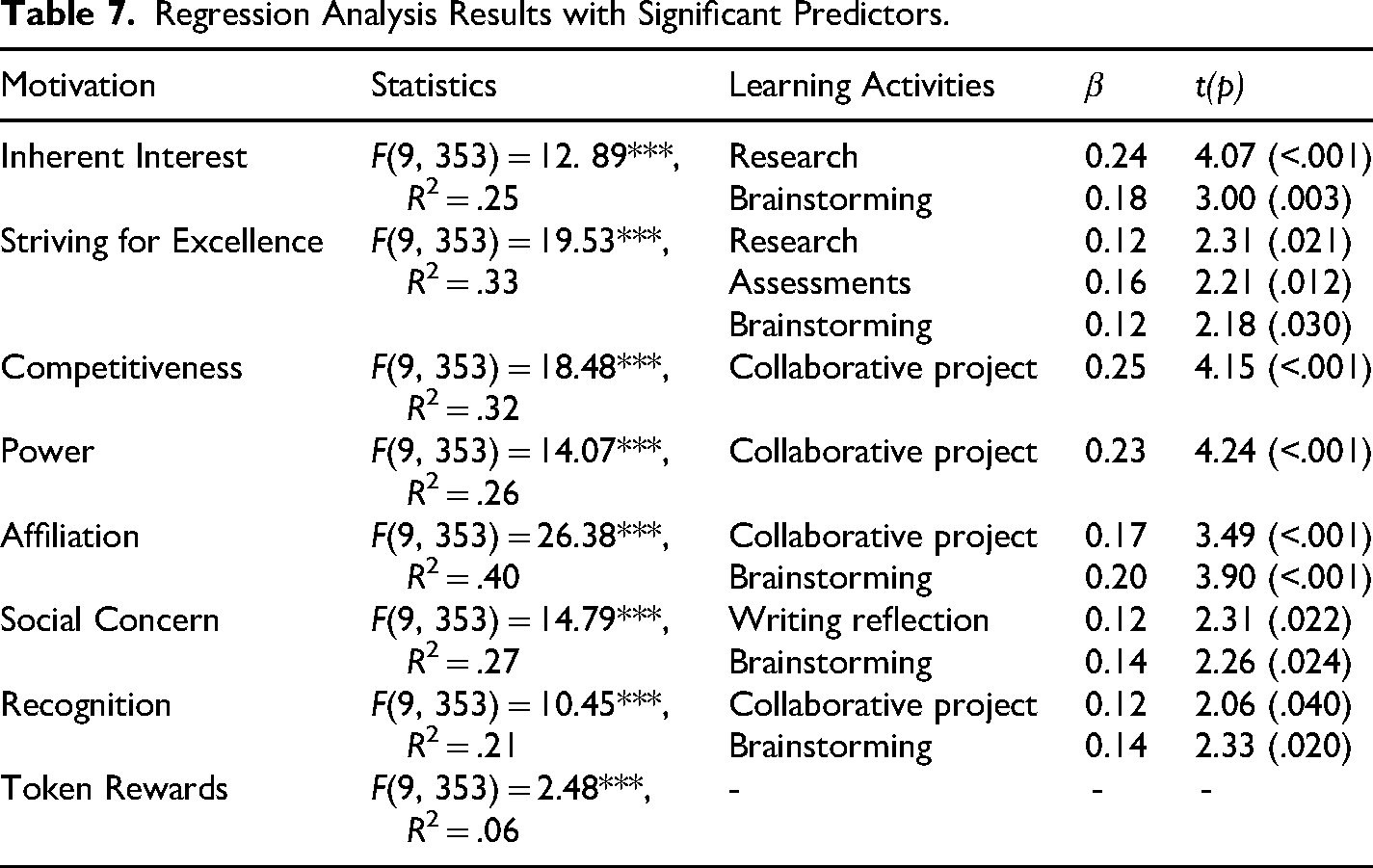
Most motivation dimensions were linked to brainstorming, except performance-goal motivations, Competitiveness and Power (see Table 7). Mastery-goal motivations, Inherent Interest (β = 0.24, p < .001) and Striving for Excellence (β = 0.12, p < .05), were strongly connected to research activity, implying in-depth learning enhances understanding and expertise. Striving for Excellence also relates to assessment preferences (β = 0.16, p < .05), indicating that self-assessment motivates improvement. Competitiveness (β = 0.25, p < 0.001), Power (β = 0.23, p < .001), Affiliation (β = 0.17, p < .001), and Recognition (β = 0.12, p < .05) are linked to collaborative projects, reflecting a desire for achievement, connection, and recognition. Social Concern (β = 0.12, p < .05) was connected to writing reflection, indicating reflection promotes relevance and engagement beyond the classroom. Token Rewards showed no relation to learning preferences.
Regression Analysis Results with Significant Predictors.
Discussion and Implications
We investigated whether the PIT-based CEMS provides a robust framework for understanding adult learners’ motivations, enrollment decisions, and course design preferences. Continuing Education Motivation Scale helps to assess what drives adults to pursue academic degrees and how programs might better support those needs. Findings extend foundational theories by clarifying how adult motivations align with academic goals. As Houle (1961) suggested, career-focused goals—Token Rewards, Striving for Excellence, and Power—were prominent. As in Knowles (1980) and Tough (1979), Inherent Interest and Striving for Excellence reflect the value of autonomy and personal growth. Social goals supported Wlodkowski's (1993) focus on inclusion and community. Personal Investment Theory revealed that motivations coexist and interact, challenging binary theories and offering a multidimensional view. This expands classical theory by merging diverse motivations into one empirical framework for adult learners’ pursuit of advanced study.
The 32-item CEMS demonstrated strong convergent and discriminant validity and reliability. It also helps align programs with learner motivations throughout the educational journey. Demographic factors such as income and experience were included in regression models, but became nonsignificant once motivational variables were added to the model. These findings suggest that motivational differences—rather than demographic characteristics alone—primarily drive further education decisions. This supports prior research emphasizing motivation's predictive power (Urhahne & Wijnia 2023; Van Nieuwenhove & De Wever, 2024). Among the eight dimensions, Striving for Excellence, Inherent Interest, Affiliation, Social Concern, and Power contributed most to attitudes and enrollment intentions. The desire to excel, achieve high standards, and improve expertise is central to both, while motivations related to building connections, fulfilling social responsibilities, and seeking control and authority also play significant roles. These findings extend prior research by identifying key motivations shaping working professionals’ decisions to pursue further education.
Different demographic subgroups exhibit distinct motivational patterns (Zhou et al., 2024). In our sample, men were over four times more likely to be motivated by Power and twice as likely by Competitiveness compared to women. Conversely, women were three times more influenced by Inherent Interest and twice as likely to be driven by Striving for Excellence. Older adults with more work experience and lower income demonstrated twice the level of Inherent Interest. These results highlight motivational complexity within a specific population (working adults with undergraduate degrees).
Our findings reveal strong associations between motivation and learning activity preferences. Learners high in Inherent Interest and Striving for Excellence favor research and assessment-based tasks, reflecting their intellectual curiosity and desire for high standards. Those driven by Competitiveness, Power, Affiliation, and Recognition prefer collaborative projects to assert influence, build relationships, and gain peer recognition (Shatila, 2024). Learners motivated by Social Concern gravitate toward reflection-based tasks, encouraging introspection and engagement with broader societal issues. These insights suggest the importance of instructional design catered to diverse adult motivations (Sogunro, 2015).
These results have implications for higher education administrators, instructors, and marketers. The CEMS framework clarifies motivations among working professionals pursuing advanced credentials. Institutions can leverage these insights to personalize communication, streamline administrative procedures, and enhance recruitment. From a marketing perspective, emphasizing key motivations—Inherent Interest, Striving for Excellence, Affiliation, Social Concern, and Power—may be more effective than focusing on weaker predictors like Competitiveness. Because motivations vary across demographic groups, targeted campaigns can highlight institution-specific advantages if a particular learner profile is known. For administrators and instructors, aligning course design with these key motivational drivers can enhance engagement and satisfaction. For example, students high in Inherent Interest may benefit from research-oriented or problem-solving activities, while those driven by Affiliation thrive in collaborative learning environments. Rather than emphasizing competition, institutions might foster community through networking opportunities and group-based projects. By aligning instructional methods with students’ primary motivations, institutions can create more engaging, supportive learning experiences that meet diverse needs. Effective audience analysis is key. If target characteristics are unknown, best practices suggest focusing on the most common motivations; otherwise, messaging and design strategies should be tailored.
Conclusions and Recommendations
This study contributes to the understanding of working adults’ motivations to pursue advanced academic degrees, offering evidence of CEMS's reliability and theoretical grounding, while linking motivations to enrollment decision-making and learning preferences. Addressing the RQs, the findings demonstrate that the eight motivational dimensions derived from PIT are empirically supported and differentially associated with adult learners’ attitudes toward continuing education, intentions to enroll, and preferences for instructional activities. In particular, Striving for Excellence, Inherent Interest, Affiliation, Social Concern, and Power emerged as the most influential motivational drivers across outcomes.
These findings have several broader implications. Theoretically, the study extends adult motivation research by demonstrating the value of a multidimensional, goal-oriented framework for understanding adult learners’ decision-making, moving beyond single-construct or binary motivation models. Practically, the results suggest that graduate programs can enhance recruitment, retention, and instructional design by aligning program features with dominant motivational profiles, such as emphasizing opportunities for intellectual growth, professional advancement, collaboration, and social impact.
Several limitations should be addressed in future research. While using an online survey research platform allowed access to a geographically diverse U.S. sample, potential issues such as sample bias, self-selection, and limited participants’ environmental control may affect generalizability. Although demographic quotas were used, uneven racial distribution limited subgroup balance. Therefore, RQ4 reported only descriptive subgroup differences without statistical comparison. While RQ2 evaluated motivational and demographic predictors, RQ4 explored subgroup differences to enrich understanding, rather than to imply causality. This prevents misinterpretation of descriptive patterns as explanatory. Despite the methodological and analytical precautions taken, reliance on self-reported measures may still pose a risk of common method bias (Podsakoff et al., 2003), which future research should address.
Further research should incorporate representative sampling and cross-cultural psychometric validation. External validation through expert item review and convergent and discriminant testing will strengthen scale robustness. Experimental studies on program design and promotion could enhance recruitment and communication strategies. Adult learner's motivations for pursuing advanced credentials remain underexplored (Bersola et al., 2014). Clarifying how motivations related to learning preferences may spur further research and inform improved educational practices and support systems. Refining and applying the CEMS across diverse adult learner populations can guide program design and ensure alignment with learner needs and help institutions maintain a competitive advantage in a challenging environment where prospective students have many options.
Supplemental Material
sj-docx-1-aeq-10.1177_07417136261449809 - Supplemental material for A Personal Investment Theory Approach to Examining Adult Workers’ Motivations to Pursue Continuing Graduate Education
Supplemental material, sj-docx-1-aeq-10.1177_07417136261449809 for A Personal Investment Theory Approach to Examining Adult Workers’ Motivations to Pursue Continuing Graduate Education by Hannah Kim and William B. Collins in Adult Education Quarterly
Footnotes

Ethical Approval Statement
The Institutional Review Board (IRB) at Purdue University approved our survey (IRB-2023-299) on March 23, 2023. All participant information was de-identified, and participant consent was not required.
Funding
The authors received no financial support for the research, authorship, and/or publication of this article.
Declaration of Conflicting Interests
The authors declared no potential conflicts of interest with respect to the research, authorship, and/or publication of this article.
Supplemental Material
Supplemental material for this article is available online.
Author Biographies
References
Supplementary Material
Please find the following supplemental material available below.
For Open Access articles published under a Creative Commons License, all supplemental material carries the same license as the article it is associated with.
For non-Open Access articles published, all supplemental material carries a non-exclusive license, and permission requests for re-use of supplemental material or any part of supplemental material shall be sent directly to the copyright owner as specified in the copyright notice associated with the article.
