







Abstract
This study aimed to examine language at the teacher/classroom level among second-grade classrooms that differ in socioeconomic backgrounds. Measures of teachers’ vocabulary input across the school day throughout the school year were examined. There was a significant difference in the proportion of academic word use between classes that differed in the percentage of students on free or reduced-price lunch. Teachers in classes of students from higher socioeconomic backgrounds used more academic words. Class vocabulary level significantly predicted the proportion of academic word use and the proportion of grade-level vocabulary use. Once class vocabulary level was accounted for, the percentage of students on free or reduced-price lunch was no longer predictive. However, some classes of students may be at a disadvantage in their exposure to academic and grade-level vocabulary words given that school is the most likely place for many students to be exposed to these curriculum words.
In the United States, 41% of young children live in homes with families of low socioeconomic status (SES; National Center for Children in Poverty, 2018). Among families considered to have low SES, there is an uneven ethnic and racial distribution of families living at or below the poverty level, with 56% of Hispanic/Latino families; and 59% of African American families reporting poverty in comparison to 27% of White families (National Center for Children in Poverty, 2018). The disproportionally high proportion of families living at or below poverty warrants concern in light of research that indicates that SES influences children’s academic achievement and children’s responsiveness to educational interventions (e.g., Dietrichson et al., 2017).
Children in poverty reportedly experience physical and psychological effects of poverty (e.g., hunger and malnutrition, housing problems, family stress, limited access to health care, lack of access to quality child care) and are generally considered to be at a disadvantage for language and literacy development (Esping-Andersen et al., 2012; Sirin, 2005; von Hippel et al., 2017). However, there are mixed findings in the literature regarding the inevitability and severity of such delays or gaps in word knowledge (e.g., Slates et al., 2012). Findings in the existing literature examining individual variability and malleable factors suggest that low language and literacy is not an inevitable result of low SES (e.g., Slates et al., 2012).
Role of Linguistic Environment
Among potential malleable and contributing factors to children’s individual variability in language and literacy advantage is rich linguistic input. The linguistic environment is thought to play a critical role in the developmental trajectory of early language. The impact of adults’ language models on children’s early language performance is widely regarded as a key influencing factor (Gámez, 2020; Hart & Risley, 2003; Hoff, 2003; Hoff-Ginsberg, 1991; Huttenlocher et al., 1991; Michener et al., 2018; Waterfall et al., 2010). Huttenlocher and colleagues (1991) demonstrated that parental input and child gender accounted for between-child differences in vocabulary growth trajectories. Furthermore, in the classic study of Hart and Risley (1995), the amount of talk that toddlers were exposed to was a strong predictor of children’s vocabulary. The mediation of adult talk on children’s language was particularly evident between groups that differed in SES, with children from families of higher SES experiencing 3 times more talk and a larger number of different words. Aggregating the number of words in a week, children from (a) families of high SES heard 215,000 words, (b) families of middle SES experienced 125,000 words, and (c) families of low SES used 62,000 words. Similarly, Hoff (2003) noted that properties of maternal speech that differed as a function of SES accounted for variations in children’s productive vocabulary growth. Rowe (2017) discussed variations among parents of low SES that could suggest differences in parents’ approach toward their children rather than general communication style differences.
This influence of the linguistic environment on children’s language acquisition aligns with several foundational theoretical frameworks for language development (Bruner, 1983/1985; Vygotsky, 1934). These theories converge on the important role of the linguistic environment in facilitating and influencing children’s language skills. Bruner’s Language Acquisition Support System emphasizes the influence of linguistic environment (Bruner, 1983/1985). Based on this theory, the child’s immediate adult support system plays a critical role in inspiring language learning as adults provide language experiences within meaningful everyday social exchanges and interactions. Perhaps even more pertinent, Vygotzsy’s zone of proximal development emphasizes the role of adults’ language in mediating child language (Vygotsky, 1934). Adult language models are thought to provide scaffolding that provides essential support for children’s progression in linguistic development.
Applying Bruner’s theoretical framework, lexical input in the child’s environment plays an important role in influencing children’s vocabulary acquisition. Support for the role of adults’ word models is also seen in widely implemented evidence-based language learning strategies that fundamentally emphasize the importance of exposure, repetition, and rich linguistic input. Specifically, repeated exposure to adults’ word models in meaningful, authentic contexts is associated with vocabulary acquisition and promotes language learning (Baumann, 2009; Beck & McKeown, 2007; Coyne et al., 2007; Justice et al., 2005; Roberts & Neal, 2004). In fact, enhancing exposure to target words is the core ingredient in a number of evidence-based language learning strategies including: ostensive naming (Axelsson et al., 2010), repetition across successive sentences (Schwab & Lew-Williams, 2016), and consciousness raising (Ardasheva et al., 2017).
Earlier research has produced substantiating evidence of the importance of linguistic input on young children’s language output (Pancsofar & Vernon-Feagans, 2006). Topping et al. (2013) reviewed the evidence across 1,750 studies and found 60 that provided good evidence for mediation of young children’s language by adults in the environment. One such study, Hadley et al. (2011), confirmed that variations in properties of parental language input accounted for differences (28.3% of unique variance) in children’s language growth. Furthermore, Gilkerson et al. (2018) substantiated the effect of mother and father language input on children’s language development even into the school years. However, there is significantly less research examining the language input school-age students receive in their classrooms.
Teachers’ Language Input
Although the most empirical study of vocabulary or language input has focused on parental input, a few studies suggest this relationship could extend to teachers in preschool classroom settings. Dickinson and Porche (2011) reported children’s exposure to sophisticated vocabulary in preschool classes predicted their reading comprehension and word reading in fourth grade. Effects were mediated by the children’s kindergarten language levels. Importantly, Gest et al. (2006) noted that the sophistication of teachers’ talk in preschools was significantly different across different, typical contexts of the school day (e.g., book reading, mealtime, free play) with the richest talk occurring during book reading. It is not known if the findings can be extended to other grades or if teachers’ linguistic input is similar across school contexts that differ in proportions of students from low socioeconomic backgrounds. Additional studies are needed to describe teachers’ language across the school day for elementary school students and to examine classrooms of students from diverse backgrounds.
Although a child’s language begins to develop long before school entry, direct and indirect vocabulary inputs can improve school-age students’ acquisition of language (Elleman et al., 2009; National Reading Panel, 2000; Stahl & Fairbanks, 2006). Oral language used in the home is certainly important to children’s language development; however, school-age children spend a significant amount of time in the classroom as well. Opportunities to experience sophisticated, oral language could be particularly necessary for students who may not be able to read widely, such as young readers or students with reading difficulties, necessitating that teachers effectively use oral language in the classroom to immerse students in rich language (Nagy, 2005; Stahl & Nagy, 2006).
Some children may enter school with significantly lower levels of oral language than their peers depending on access to rich and academic language in the home (Hart & Risley, 1995; Hoff, 2003; Hoff-Ginsberg, 1991; Scarcella, 2003). Low oral language levels upon school entry places students at significant risk of reading and writing difficulties throughout their schooling (Beron & Farkas, 2004; Shanahan, 2006; Verhoeven et al., 2011). Thus, the school classroom environment may play a particularly significant role in language modeling for these students.
Importantly, the classroom may be the most influential environment in which academic language, specifically, is modeled and used. Academic language refers to the oral and written language needed to be successful in learning through school lessons, textbooks, tests, and assignments. It is generally more formal and complex in syntactic structure and level of vocabulary than social language that is commonly used in the home or in conversation (Scarcella, 2003; Schleppegrell, 2012; Uccelli et al., 2015). Academic language is least likely to be used in the home, identifying the school environment as critical to school-age children’s oral language development. As Stahl and Nagy (2006) point out, “the oral language of the classroom has to prepare students for the language they will encounter in text” (p. 134). In fact, many children may encounter academic language for the first time when they enter school, yet students need to develop facility with academic language to gain academic knowledge throughout the grade levels (Wong Fillmore, 2004). The responsibility for teaching this language falls largely on teachers (Schleppegrell, 2012). Snow et al. (2009) demonstrated students’ academic language can be improved when teachers are trained to implement a direct academic language curriculum.
The influence of teachers’ language on student outcomes for school-age children was examined by Gámez and LeSaux (2012). In this study of middle school students’ vocabulary skills, teachers’ total amount of language used during the English language arts class period was not related to students’ end of year vocabulary skills; however, teachers’ use of sophisticated vocabulary was related to students’ vocabulary skills at the end of year. The relationship between teachers’ sophisticated word use and students’ end-of-year vocabulary performance was significant even after controlling for students’ initial status (beginning of the year scores), class (percentage of language minority learners), and school socioeconomic composition (percentage of students eligible for free or reduced-priced lunch). Teachers’ language use was not significantly related to the percentage of language minority students, percentage of students eligible for free or reduced-priced lunch, or the class mean of vocabulary pretest scores.
Hollo and Wehby (2017) examined teacher language in elementary general and special education classes with students with or at-risk for emotional/behavior disorders. Language from three lessons of at least 10 min was coded across 14 general education and 14 special education teachers. Although there was considerable variability in the amount of teacher talk across teachers, language use by individual teachers was generally consistent across lessons. Eighty-seven percent of the words teachers used were within the 1,000 most frequently used words in the English language, but only 1% of the words used were academic words. There were no differences in quantity, complexity, content, or clarity of language across settings (general or special education) or grade level; that is, the variance in teacher talk was not explained by the classroom setting or age of the students.
The focus of language instruction in the elementary grades has been on direct instruction with vocabulary. However, the indirect vocabulary experiences students encounter throughout their time in the classroom are also important to student learning and development. There is limited research on teacher vocabulary use in the classroom for school-age students, a context that brings increased requirements for academic language.
Research Questions
The current study aimed to examine the vocabulary input in second-grade classrooms during the school year. We selected an early elementary grade for this study based on the large amount of work at the early childhood level suggesting language input is important to children’s language development. We also selected a grade where all content areas are regularly taught across districts and schools so that we could examine the amount and type of teacher vocabulary in these content areas in a school day. In addition, this study sought to examine potential differences in vocabulary input provided by the students’ teachers in relation to the students’ SES. Specifically, we addressed the following research questions:
Method
Participants
The study was conducted in 14 public elementary schools in 4 school districts. The schools were located in urban, near urban, suburban, and rural parts of the Southern and Southeastern parts of the United States. There were 38 general education second-grade teachers teaching 35 second-grade classes in the participating schools. All of the teachers were certified and held a bachelor’s degree; 18 of them had earned a master’s degree. Their teaching experience ranged from 0.5 to 43 years (M = 10.37 years, SD = 9.32). The majority of the teachers were female (n = 36). All of the teachers identified their ethnicity as non-Hispanic. The racial composition of the teachers was 89.5% White, 5.3% Black, and 5.3% Asian. Class size ranged from 14 to 22 students, with a mean of 19.18 students.
We randomly sampled half of the students from each class (M = 10.14 per class) for vocabulary assessment in the fall for a total of 355 students. Male students made up 48.5% of the sample. The racial composition of the student sample was 68.2% White, 20.8% Black, 5.9% Asian, and 2.8% other. With regards to ethnicity, 11.8% of the students were identified as Hispanic. Two percent of the sample did not report ethnicity or race. Of those who reported home language, 7.6% were identified as English learners and spoke another language other than English at home. A total of 37.7% of the students were considered low income based on eligibility for the free or reduced-price lunch programs (class M = 39.95%). Approximately 7% of students were identified as having a disability, the majority with specific learning disability or articulation disorder. The sample of students within each district demonstrated representative demographics of the district. Two teachers were unable to complete the full school year of recordings due to medical leaves.
Procedures
Research staff assessed all participating students in the fall (first 6 weeks of school). Teachers for each second-grade classroom recorded a full day of instruction twice per month throughout the school year. Each month the dates of recording were assigned randomly with stratification across all 5 days of the week because the type of instruction might vary systematically on different days of the week. Teachers were provided with a language environment analysis (LENA) digital language processor (DLP) for speech audio recording to wear throughout the day.
Audios were labeled and reviewed to create a supplementary file tagged for the start and end times of each core content area (English language arts, math, science, social studies) as well as other (other instruction, transitions, etc.). Each audio was exported from the DLP using the LENA software that automatically processed the recordings and estimated the total number of adult words for each 15 min segment throughout the day. Identifying 15 consecutive min segments for sampling is in line with language samples used in previous studies (Dickinson & Porche, 2011; Huttenlocher et al., 2002). This information was used to identify any 15 min segments with little or no adult talk (less than 20 words), which were excluded from the language sample analysis as having too little teacher language. The LENA software provides greater than 92% reliability for adult word counts (Xu et al., 2009). These initial screening steps provided a set of 15 min language samples for each content area from each assigned school day for each teacher.
Next, from each day’s set of language samples, we randomly selected one, 15 min segment from each core content area taught and two, 15 min segments from times outside of the core content areas (marked “other” in the initial screening). Each of the teacher language samples was then transcribed by coders at the Systematic Analysis of Language Transcripts (SALT) software company (SALT Software, LLC) using the SALT transcription conventions (Miller et al., 2011), including breaking teachers’ utterances into c-units (independent clause with its modifiers) as is typically used for oral language samples (Nippold et al., 2014). A reliability/accuracy of 90% or greater is guaranteed from the SALT company and is aligned with typical reliability reported in the literature (Fey et al., 2004; Gillam & Johnston, 1992; Windsor et al., 2000). Repetitions, student names, and unintelligible speech were excluded from analyses. Conversation between adult personnel (e.g., adult to adult conversation not directed toward students) was omitted. An average of 13.36 hr (SD = 2.72) of language per teacher was transcribed for a total of 468 hr of teacher language.
We then analyzed the teacher vocabulary content and use. SALT software was utilized by the research team for standard analysis of lexical diversity (i.e., number of total words, number of different words) and custom word list analysis of less common, academic, and grade-level vocabulary word use. These teacher measures are described further in the “Measures” section.
Measures
Socioeconomic status
Student data on free or reduced-price lunch status were provided by the school district for consented students. The percentage of consented student participants identified for the free or reduced-price lunch programs based on low, qualifying income was calculated for each class.
Receptive vocabulary
We assessed receptive English vocabulary based on children’s recognition of spoken words on the Peabody Picture Vocabulary Test (PPVT- IV; Dunn & Dunn, 2007). The test provides an array of four-color pictures for each vocabulary item. The examiner asks the child to point to the picture that matches the spoken word from a four-picture array. The child’s response is scored dichotomously, as correct or incorrect. The items are arranged in sets of 10 items that are intended to become increasingly difficult. A basal is established (a set containing one or no errors) and the child continues until the ceiling of eight or more errors in a set is reached. The PPVT- IV is an untimed test normed through a sample of 3,540 participants for use with individuals 2 to 90 years old. Split half reliability by age for Form A and Form B was M = .94 (SD = 3.6) and ranges from .90 to .97 for ages 5–11, based on normative data on monolingual English speaking children.
Teacher vocabulary use
The total number of words and the total number of different words were calculated for each teacher using the transcripts and standard analysis in accordance with conventions established for SALT (Miller & Iglesias, 2015). These provided information on the quantity and diversity of words students in the class heard from the classroom teacher during instruction. In addition, to further examine the type of vocabulary input students were exposed to during instruction, three word lists and codes were custom loaded into the SALT software. To calculate the number of less common words, we used the Graves et al. (2008) 4,000 most frequently used English words and identified how many words used by the teacher were not on this high-frequency list. We also identified the number of high-incidence academic words teachers used from the Coxhead Academic Word List (Coxhead, 2000). Finally, the research team compiled a list of the identified direct vocabulary instruction words from each school’s core English language arts curriculum and used this list to identify the number of times teachers used the grade-level vocabulary words during the school day.
Results
Analytic Strategy
To address the RQ1 of the study, we first computed descriptive statistics, including means, standard deviations, and correlations for the vocabulary variables obtained from the teacher language samples, as well as scores from the PPVT and free or reduced-price lunch status. To investigate the RQ2, we fit a series of hierarchical linear models (HLM). Because the research questions entailed classroom-level questions, we fit models where the language sample was nested within teacher. This allowed for a partitioning of the variance of the SALT variables into between-teacher variance and within-teacher across time variance.
In the next set of HLMs, we estimated the relationship between the teacher vocabulary variables, classroom level PPVT scores, percentage of students receiving free or reduced-priced lunch, and the simultaneous contribution of these two variables in the prediction of teacher vocabulary variables.
Amount and Type of Teacher Vocabulary
First, we examined the amount and type of vocabulary input for students in the second-grade classrooms. Table 1 provides the means and standard deviations for the number of complete words per hour, number of total words in complete utterances per hour, and the number of different words per hour. In addition, the table provides the average proportion of less common, academic, and grade-level vocabulary words relative to the total number of teacher words spoken.
Average Vocabulary Use of Teachers Across Audio Segments by Content Areas.
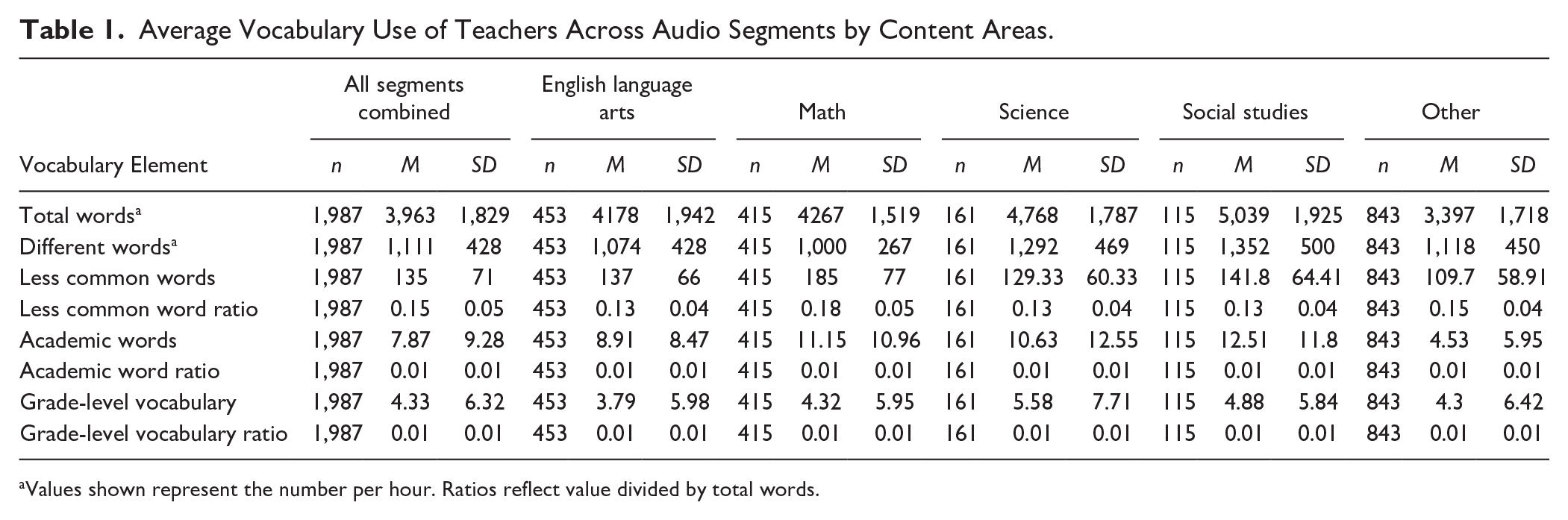
Values shown represent the number per hour. Ratios reflect value divided by total words.
Across content areas and classes, the mean number of complete words spoken per hour of the school day was 3,362.77 (SD = 1,829.45), while the mean number of different words per hour students heard across classes and content areas was 1,110.81 (SD = 428.16). Of the total number of words spoken, 15.02% of words were less common words on average. Similarly, only 0.84% of the total words spoken in complete utterances consisted of academic words, and teachers averaged oral use of only 0.50% of the grade-level vocabulary words.
Within different content areas, average total words per hour ranged from 3,396.54 during other time periods (transitions, assemblies, etc.) to 5,039.14 for social studies instruction. The number of different words heard per hour ranged from 1,000.15 for math instruction to 1,351.74 for social studies instruction. The average proportion of less common to total words spoken ranged from 12.57% (science) to 17.71% (math). Not surprisingly, academic words were used the least during class time that was not part of the core academic subjects (M = 0.57% of total words). Within the core academic areas, academic words were used about 1% in each content area. Teachers orally used the grade-level vocabulary words very little: 0.49–0.60% across all content areas.
Relationship of Class Characteristics and Teacher Language
To address our RQ2, we first computed descriptive information of the teacher vocabulary variables described above by aggregating teachers’ separate recordings to compute average classroom language. In addition, we aggregated the receptive vocabulary scores collected in the fall from students within each classroom (M = 102.80; SD = 8.00) along with the percentage of students in each class that were eligible for free or reduced-priced lunch and correlated them with measures of teachers’ vocabulary. These correlations appear in Table 2. The number of different words per hour, an indicator of teachers’ lexical diversity, showed a small (r = −.16, p = .37) and non-significant negative relationship with the free or reduced-price lunch eligibility. A similar relationship was present for the total number of complete words per hour. Higher proportions of eligibility for free or reduced-priced lunch were associated with lower total words per hour (r = −.13, p = .44) but it was a small, non-significant relationship. A stronger relationship was observed with teachers’ usage of academic words per hour (r = −.39, p =.02). The proportion of academic words teachers used in relation to total words demonstrated a moderate negative correlation with classroom free or reduced-priced lunch status. In other words, a lower percentage of students eligible for free or reduced-priced lunch in the classroom was related to a greater number of academic words spoken in the classroom.
Relationship Between Classroom Characteristics and Teacher Vocabulary Use.
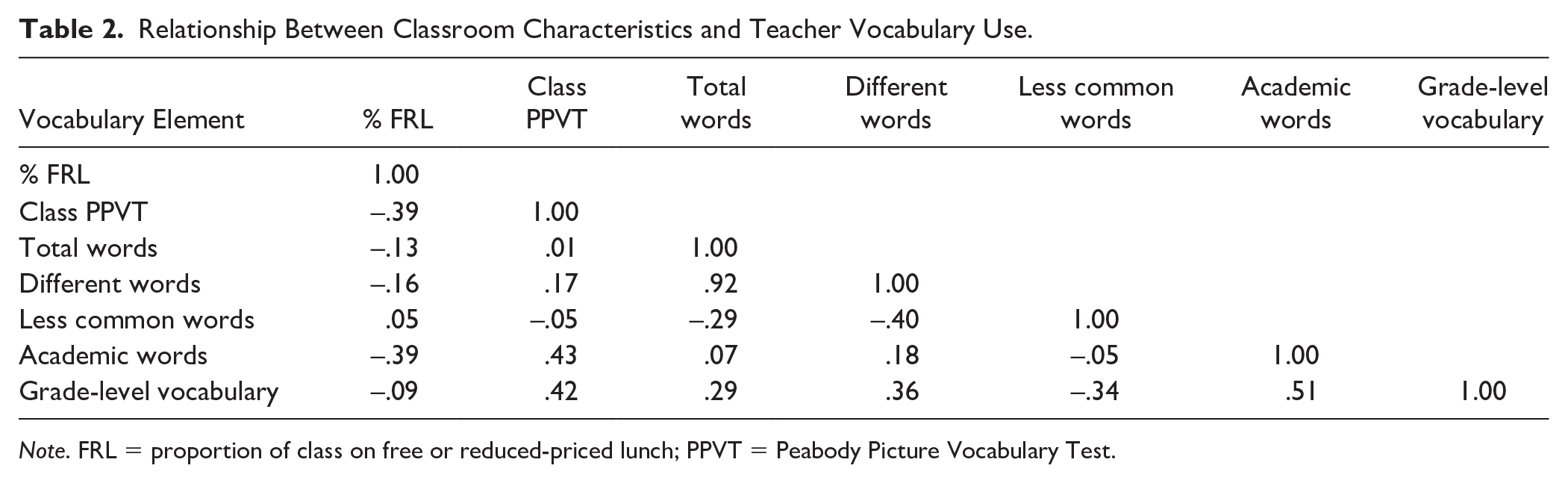
Note. FRL = proportion of class on free or reduced-priced lunch; PPVT = Peabody Picture Vocabulary Test.
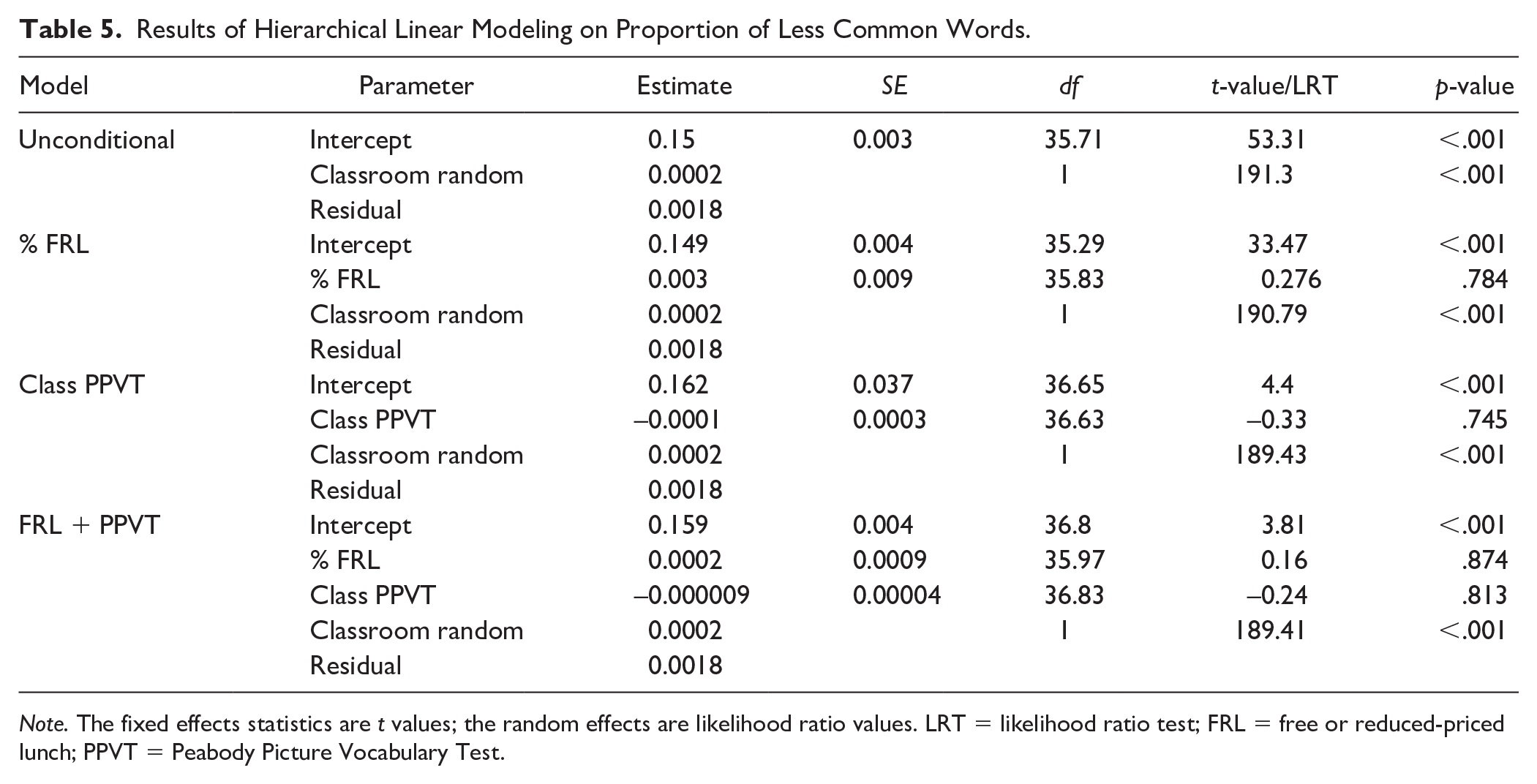
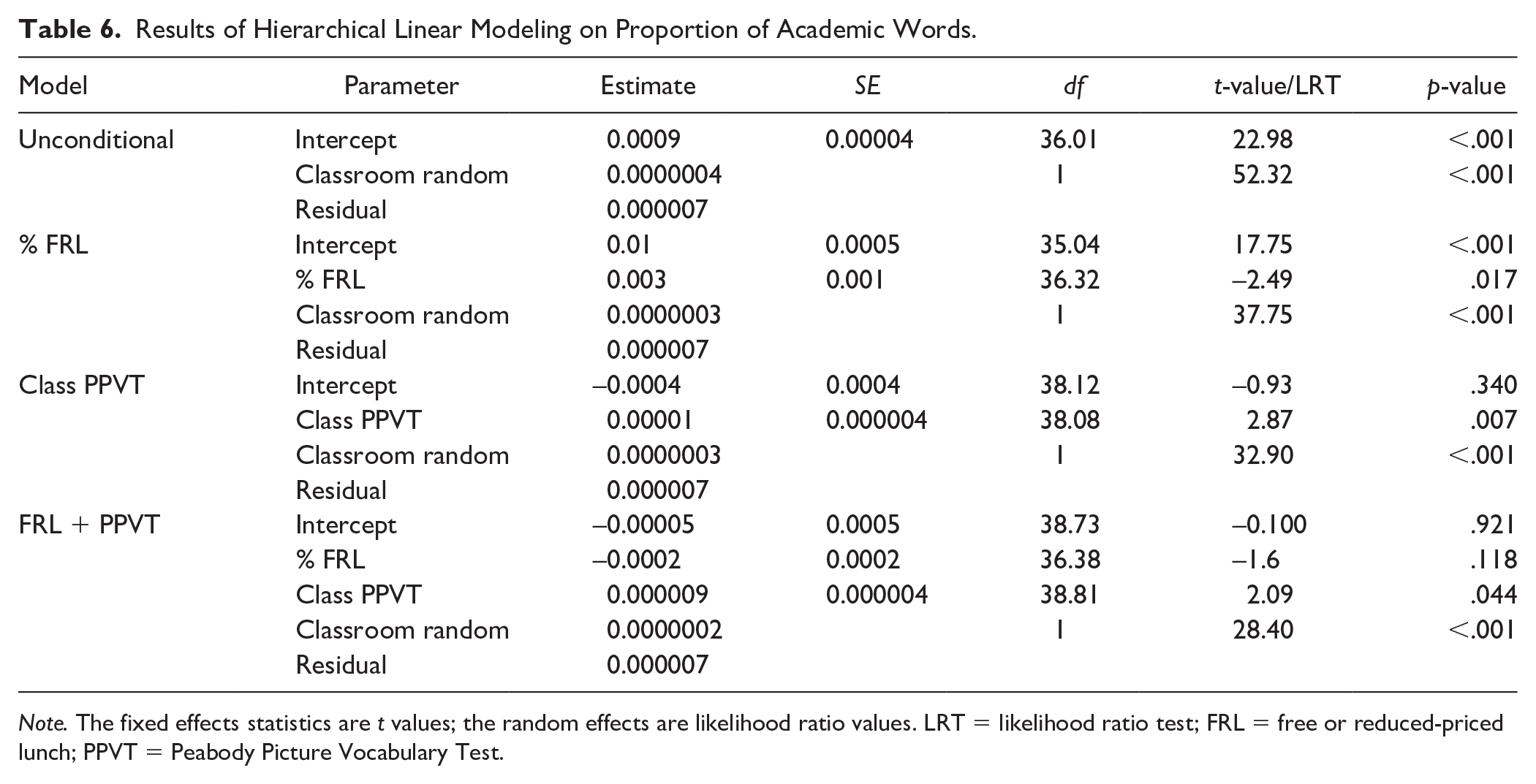
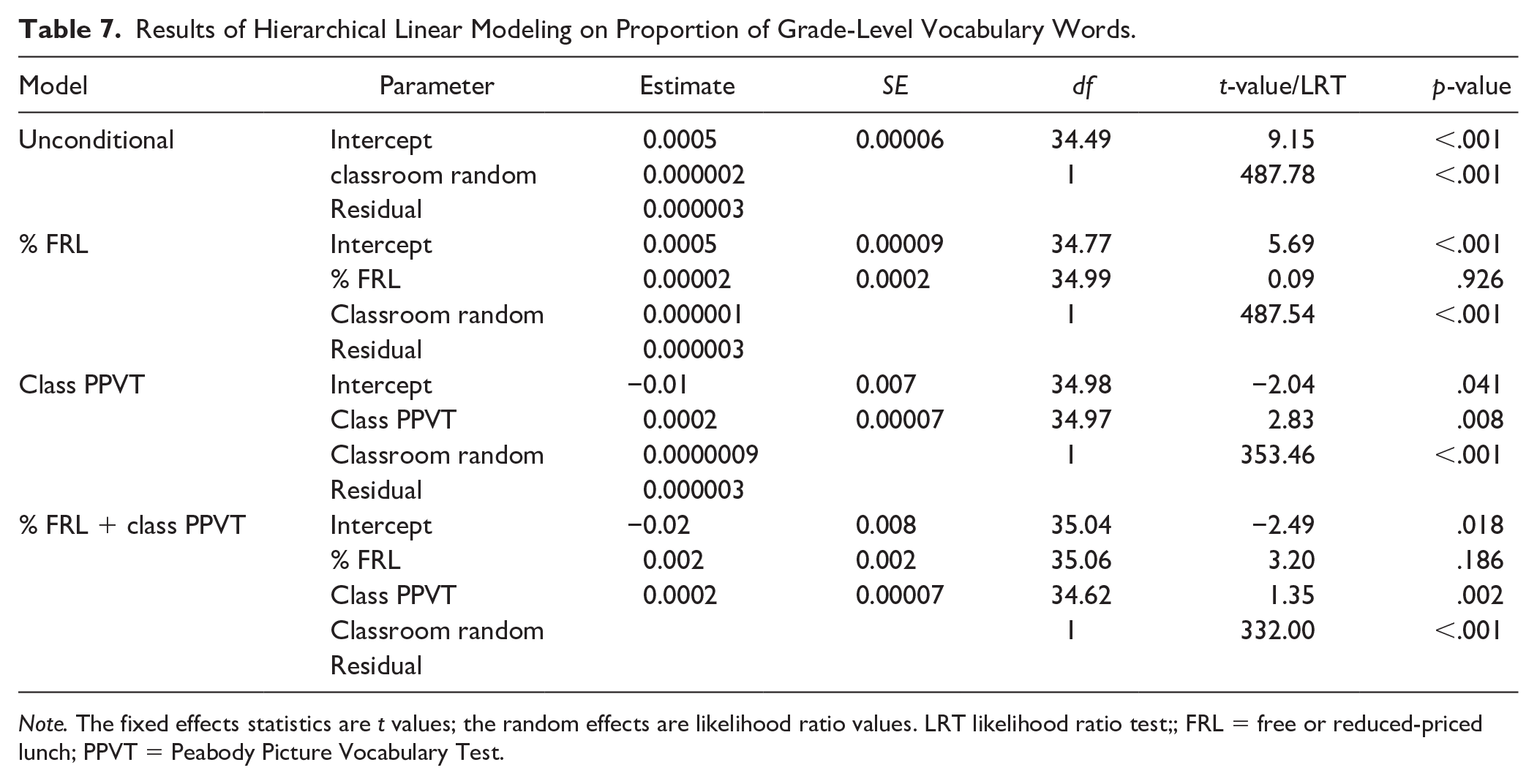
To further explore these relationships, we fit a series of HLM models, with teacher language samples nested within teacher. Model information for each teacher language type is reported in Tables 3–7. The first set of models partitioned the variance of total number of words, number of different words, proportion of less common words, proportion of academic words, and proportion of grade-level vocabulary words. The unconditional models revealed that the variance explained between teachers was 19.40% for number of total words, 13.46% for number of different words, 10% for proportion of less common words, 5.41% for proportion of academic words, and 35.3% for proportion of grade-level vocabulary words. In the next set of models, we added classroom-level PPVT scores as a predictor of these four teacher language variables. Classroom-level PPVT was a significant predictor of academic words (t = 2.87, p = .007) and grade-level vocabulary words spoken (t = 2.83, p = .008). Classroom-level PPVT was not significant for the other three teacher vocabulary variables. Similarly, we fit a series of models where free or reduced-priced lunch was a predictor. Free or reduced-price lunch status was a significant predictor of academic words (t = −2.49, p = .017) but was not a significant predictor of the other four teacher language measures. Finally, in the last set of models, both classroom-level PPVT and free or reduced-priced lunch status were added to the model simultaneously. In predicting academic words, free or reduced-priced lunch was no longer significant (t = −1.60, p = .118) but classroom-level PPVT remained significant (t = 2.09, p = .044). Classroom-level PPVT also remained a significant predictor of grade-level vocabulary words spoken (t = 1.35, p = .002).
Results of Hierarchical Linear Modeling on Total Number of Words Per Hour.
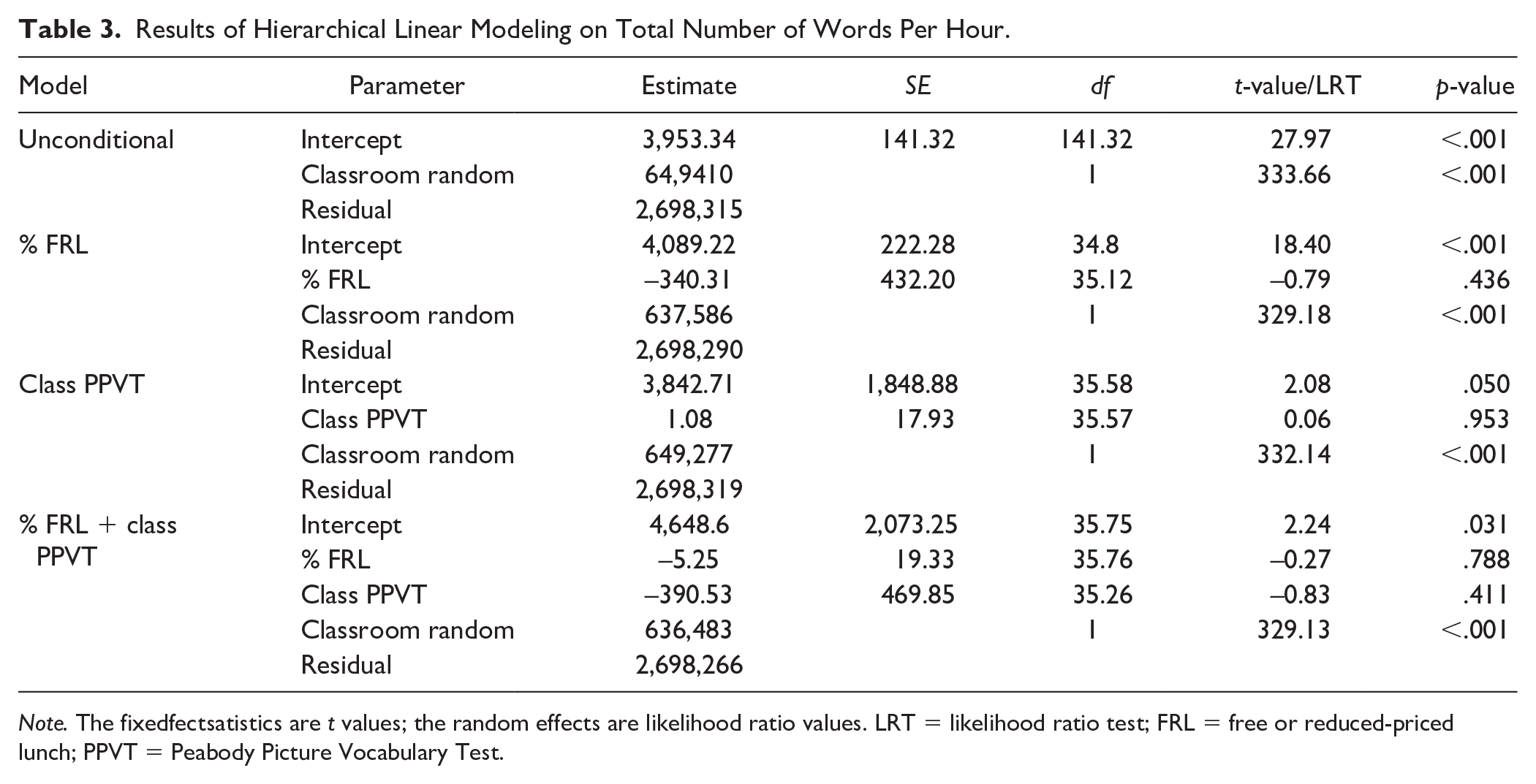
Note. The fixedfectsatistics are t values; the random effects are likelihood ratio values. LRT = likelihood ratio test; FRL = free or reduced-priced lunch; PPVT = Peabody Picture Vocabulary Test.
Results of Hierarchical Linear Modeling on Total Number of Different Words Per Hour.
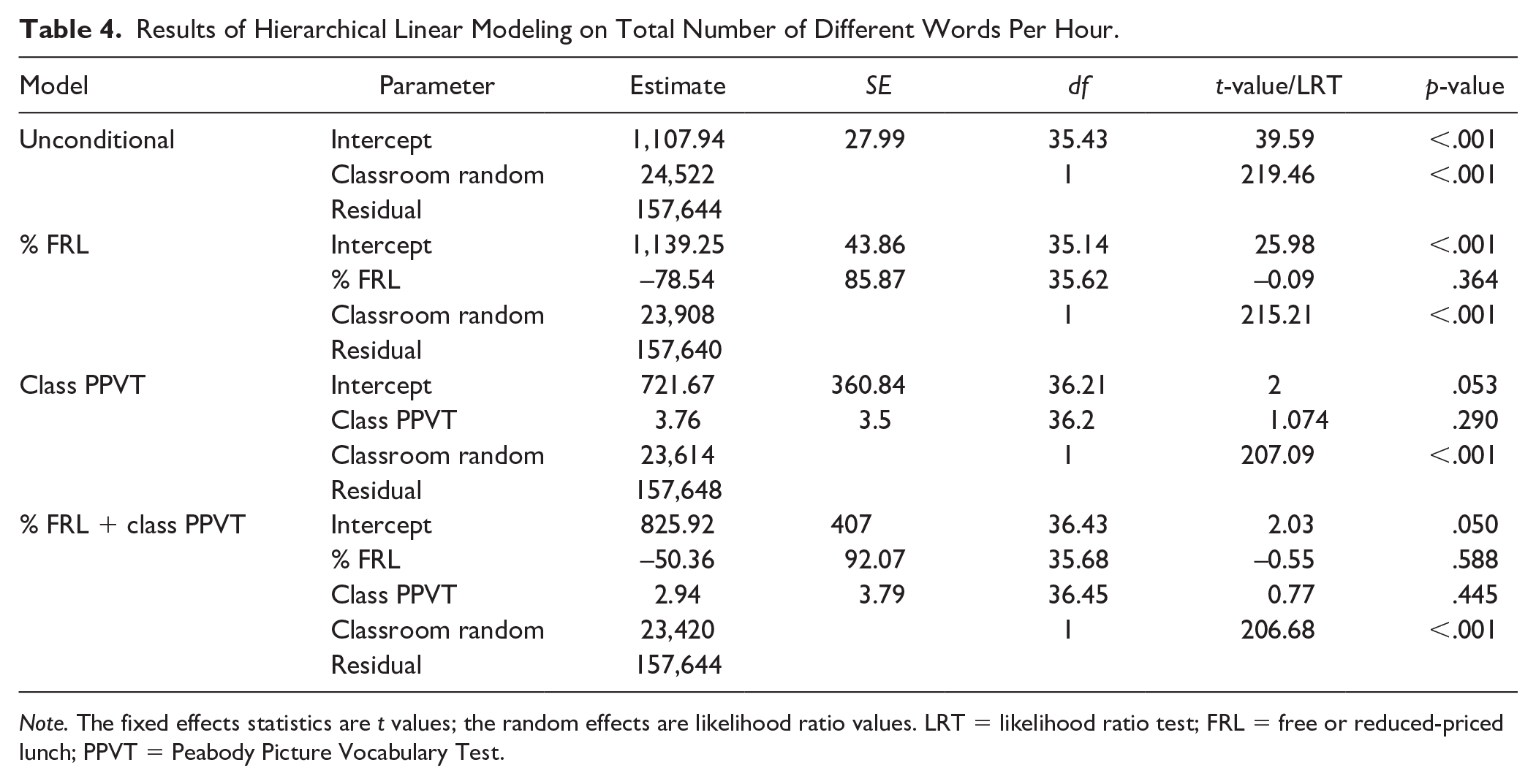
Note. The fixed effects statistics are t values; the random effects are likelihood ratio values. LRT = likelihood ratio test; FRL = free or reduced-priced lunch; PPVT = Peabody Picture Vocabulary Test.
Results of Hierarchical Linear Modeling on Proportion of Less Common Words.
Note. The fixed effects statistics are t values; the random effects are likelihood ratio values. LRT = likelihood ratio test; FRL = free or reduced-priced lunch; PPVT = Peabody Picture Vocabulary Test.
Results of Hierarchical Linear Modeling on Proportion of Academic Words.
Note. The fixed effects statistics are t values; the random effects are likelihood ratio values. LRT = likelihood ratio test; FRL = free or reduced-priced lunch; PPVT = Peabody Picture Vocabulary Test.
Results of Hierarchical Linear Modeling on Proportion of Grade-Level Vocabulary Words.
Note. The fixed effects statistics are t values; the random effects are likelihood ratio values. LRT likelihood ratio test;; FRL = free or reduced-priced lunch; PPVT = Peabody Picture Vocabulary Test.
Discussion
The results of this descriptive study demonstrate second-grade classrooms provide a vocabulary input of thousands of words per hour during the school day, and that input varies across classrooms by thousands of words as well. In other words, students are exposed to a differing amount of vocabulary depending on the classroom to which they are assigned. Teachers use academic words, less common words, and the grade-level vocabulary words in their curriculum in relatively small proportions, and there is significant variance across teachers in the proportion of use of these words.
We found a significant relationship between the proportion of academic words used in second-grade classes and the percentage of students from low socioeconomic backgrounds. Specifically, teachers in classrooms with a higher proportion of students from low socioeconomic backgrounds used fewer academic words during the school day. However, once the average classroom receptive vocabulary was taken into account, class SES no longer significantly predicted the proportion of academic words used, suggesting at least part of the relationship between class-level SES and spoken academic words is related to average classroom level of receptive vocabulary. We also noted a relationship between classroom vocabulary level in the fall and the proportion of grade-level vocabulary words used by the teacher. Thus, classes coming into the school year with higher vocabulary levels on average were also exposed to more academic words and more of the grade-level vocabulary words in the curriculum during the school year. There were no significant relationships noted between socioeconomic background of the classrooms and the total number of words, number of different words, proportion of less common words, or proportion of grade-level vocabulary words.
Theoretical Considerations
Applying Bruner’s (1983/1985) theoretical framework, lexical input in the environment has a critical role in influencing and shaping children’s language acquisition. As such, the relationship between teachers’ academic vocabulary use and classroom socioeconomic background warrants concern that students in classes from low socioeconomic backgrounds may experience disadvantaged access to rich language input (Sirin, 2005). The current findings suggest that vocabulary disparities in parental language input of children from low socioeconomic backgrounds (e.g., Hart & Risley, 1995) may also be present in classroom language experiences in elementary school, specifically with regard to academic vocabulary. Similarly, our findings suggest classes with lower overall receptive language may be disadvantaged in the academic language input they receive, including vocabulary words specifically identified in the curriculum for instruction. In fact, class-level receptive language predicted these aspects of teacher language use over and above the percentage of students enrolled in free and reduced-price lunch programs.
These findings warrant concern for educational outcomes, given claims in the literature that academic language plays a pivotal role in students’ academic success (Nagy, 2005; Stahl & Nagy, 2006). Previous research findings suggest that weak academic language knowledge may place students at additional risk for poor academic achievement (e.g., Townsend et al., 2012). Considering that sophisticated academic language is necessary for students’ academic success, it would seem important for teachers to immerse students in rich language in the classroom to ensure that all students gain sufficient experience and exposure to academic words (Schleppegrell, 2012).
Children from low-income households often begin school with vocabulary levels significantly below that of their more advantaged peers (Hargrave & Senechal, 2000; Snow et al., 1998). Thus, it is not surprising that class percentage of free and reduced-price lunch program use was significantly correlated with a class-level measure of receptive vocabulary in the current study. School is a place where these children can be exposed to more sophisticated language. It is noteworthy that classes of students from low socioeconomic backgrounds or vocabulary levels were related to similar inputs in total words, different words and less common words but fewer experiences with words that are directly related to the curriculum—academic and grade-level vocabulary words. This lower exposure to key academic and curriculum words could further intensify the vocabulary deficits of students in these classes over time. Vocabulary deficits in second grade are linked to middle school reading achievement difficulties (Catts et al., 2006).
Discrepancies in the use of these curriculum words raise concern in light of the fact that adults’ language mediates children’s language development (Topping et al., 2013). Previous evidence in the literature substantiates that features of adult language input matter for child language development (e.g., Hoff-Ginsberg, 1991; Huttenlocher et al., 2002, 2010). Environmental influence is purported to be an essential component of many theories of language development, including Bruner’s theory of language learning (Bruner, 1983/1985). The fundamental role of input and exposure to oral vocabulary models in early word learning lends support to the importance of the current findings that highlight disparities in vocabulary exposure necessary to children’s acquisition of academic and grade-level words in school. Low or infrequent exposure to academic words or grade-level vocabulary words would be expected to influence rate of academic word learning given that exposure in meaningful contexts is essential to word learning and language acquisition (Beck & McKeown, 2007; Coyne et al., 2007; Justice et al., 2005). In fact, frequent exposure to target words is recognized as an active ingredient in numerous evidence-based strategies for word learning (Ardasheva et al., 2017; Axelsson et al., 2010; Schwab & Lew-Williams, 2016). As such, the current findings provide additional support for the need for further research to identify methods to reduce disparities in exposure to sophisticated words in the school environment such as academic or grade-level vocabulary words.
Comparison to the Literature
The current findings add to the existing, small body of literature on teachers’ language for school-age children. The observed relationships in the current study seem to contradict findings reported in Gámez and LeSaux (2012), in which teachers’ language use was not significantly related to the percentage of language minority students, percentage of students eligible for free or reduced-priced lunch, or the class mean of vocabulary pretest scores. Among multiple possible explanations, the contrast in findings may be potentially influenced by age differences. Specifically, the study by Gámez and LeSaux focused on middle school classrooms while the current study examined teachers’ language in second-grade classrooms. A class with lower vocabulary levels in a middle school classroom may be similar or higher in vocabulary level to a higher level vocabulary class of second graders. It is also possible that the higher level curriculums used in middle school necessitate the use of certain more consistent levels of language. In addition, Gámez and LeSaux focused exclusively on English language arts, in contrast to the current study, which sampled teachers’ language across the school day.
Our descriptive findings are in line with a study of elementary teacher language (Hollo & Wehby, 2017). The elementary teachers in that study used the 1,000 most frequent words in the English language about 87% of the time during their lessons. Similarly, we noted about 85% of the words teachers used were a part of the 4,000 most frequent words in the English language. Hollo and Wehby also noted elementary teachers used academic words about 1% of the time, which is the same percentage we noted for our second-grade teachers. The significant differences in academic word use that we found related to class type in the present study add additional information to this previous descriptive work by Hollo and Wehby. This correlational study cannot identify the cause of these relationships; however, it is possible teachers inadvertently adjust their academic language to the perceived language levels of their students. It is also possible the relationship direction starts with the teacher, and perhaps there are differences in teacher training or academic curriculum implementation in these classes with high numbers of students from low socioeconomic backgrounds and/or lower language levels.
Unique Contributions
There are very few prior investigations of teacher language input for school-age children and none to our knowledge that include consideration of lexical diversity, grade-level vocabulary words, less common words, and academic vocabulary using quantitative data. The collection of multiple monthly day-long recordings across the school year in the current study may lend unique descriptive advantages in increasing the likelihood of the samples being representative of teachers’ routine language. The current findings add to the knowledge base by describing teachers’ routine word use and variability; however, further research is needed to expand our understanding of the effect of academic vocabulary exposure (through texts or teachers’ oral language) on discipline learning and children’s gains in language and literacy.
The findings do suggest that early elementary teachers could increase their attention to the language aspects of their curriculum. Regardless of classroom, use of academic and grade-level vocabulary words was very limited (<1% of the language input for students). The grade-level vocabulary as well as the academic language that is embedded not only in that vocabulary but also in other aspects of the curriculum are important for all students. Students require repeated exposure to these school context words to further promote vocabulary acquisition and language learning (Beck & McKeown, 2007; Nagy, 2005). Teachers can also increase student exposure to and learning of academic words through direct academic language curricula (Snow et al., 2009). This more direct access may be particularly helpful for teachers with classes of low receptive vocabulary where our findings show a relationship to less exposure to these words.
Limitations
Results should be interpreted cautiously, recognizing that SES is linked to well-being through multiple mechanisms that make it difficult to disentangle effects of SES from other cofactors. For example, because there are often health disparities between children from different socioeconomic backgrounds (Bradley & Corwyn, 2002), lower performance on language and literacy assessments may be related indirectly to SES but perhaps is specifically related to the higher frequency of absences from school due to poor access to health care, which was not measured in this study.
The observed classroom-level differences in performance on the standardized test of vocabulary by SES may also be attributable to test bias. Historically, there have been concerns raised about the fairness of standardized vocabulary measures for children from culturally, linguistically, and socioeconomically diverse backgrounds (Stockman, 2000). Some studies suggested African American children and children from low-income family backgrounds may show lower scores due to test bias (Champion et al., 2003). In the current study, initial vocabulary performance was partially related to differences in language of teachers; however, it is possible that test bias may have contributed to classroom-level differences in performance.
Future Directions
Although the current study was a descriptive study of exposures to words in diverse classrooms, there are no comparative databases available to use as a gold standard of what is a typical or average amount of exposure to words and word types in second-grade classrooms. Future studies are needed to establish a reference base for the average range of exposure in typical classrooms and illuminate how much exposure is enough or if exposure alone is sufficient for word learning in second grade. Related, there is very limited research across grade levels on teacher language. Future studies of language use at other grade levels are needed to broaden our knowledge regarding the language inputs students’ receive over time.
Given the correlational relationship between academic word use and the proportion of students from low socioeconomic backgrounds or low receptive vocabulary, additional research is warranted to study the underlying mechanisms of teachers’ word choice and identify ways to prevent gaps in exposure between classrooms that differ in SES or language. Further studies are needed to explore ways to neutralize imbalances in exposures to lexically rich language experiences in the classroom.
Footnotes
Declaration of Conflicting Interests
The author(s) declared no potential conflicts of interest with respect to the research, authorship, and/or publication of this article.
Funding
The research reported here was supported by the Institute of Education Sciences, U.S. Department of Education, through Grant R305A170203. The opinions expressed are those of the authors and do not represent views of the Institute or the U.S. Department of Education.