







Abstract
While maladaptive consumption and its consequences are well known, the management and regulation of such consumption is fraught with numerous issues related to definition, locus of responsibility, and potential modes of intervention. The present article provides a review of the conceptual, methodological, and policy issues surrounding maladaptive consumption. The authors suggest that marketing has an important and unique role in the design of products and regulation intended to address maladaptive consumption. Questions for future research and public policy are identified and discussed.
Keywords
Shopping and consumption of products and services are among the most ubiquitous of human activities. Use of products and services contributes to consumers’ health and well-being, gratification, and general quality of life. Most consumption-related behaviors and the resultant experiences are beneficial and valuable when performed appropriately and in moderation. However, consumption-related behaviors can become maladaptive for specific individuals, in specific contexts, and depending on specific types or levels of usage and harm. Consuming social media, technology, and certain foods and beverages; engaging in excessive exercise or shopping; watching television; and texting while driving are all behaviors that can produce adverse consequences, even when the majority of users experience no such adverse effects.
Consumption behavior associated with harmful consequences is called “maladaptive consumption” (Boland, Martin, and Mason 2020; Reimann and Jain 2021). Adverse consequences of such use are not the outcome of consumption per se; rather, they arise from interactions associated with a product and how a consumer uses or experiences a product or service: overconsumption (e.g., excessive online gaming or consumption of food and beverages), underconsumption (especially in the case of food), risky consumption (e.g., texting while driving, engaging in various “challenges” promoted on social media), or the interaction of product use and experience with specific user characteristics (e.g., mental health problems, diminished self-esteem) (Punj and Stewart 1983).
While some products and services carry inherent risks (e.g., tobacco, alcohol, lawn mowers), the way in which consumers use or experience a product or service can result in harm arising from the manner and frequency with which it is used or the consequences of its use and the related experience. This harm may occur even when the product or service is itself safe when used appropriately (e.g., social media). Thus, the aim of the present article is to contribute to an understanding of consumption behavior that can result in adverse consequences and the implications of such behavior for marketing and regulatory practice.
In contrast to products that carry inherent risks, potential harm arising from maladaptive consumption rests on how consumers choose to use the product or the consequences of that use. Such behavior and associated outcomes are the focus of increasing attention among psychologists, the public health community, policy makers, and litigators (Asurion 2019; Twenge 2019; Twenge and Campbell 2018) but has only recently been directly addressed in the marketing literature (Boland, Martin, and Mason 2020; Reimann and Jain 2021). Much of the attention on maladaptive consumption in the marketing literature has focused on the behavior itself rather than the marketing and regulatory issues that arise in the context of such consumption. This is unfortunate because the marketing discipline brings a distinct perspective and unique expertise to questions of product design, consumer behavior, and the regulatory implications of these product- and consumer-related factors.
While specific forms of maladaptive consumer behavior (e.g., alcoholism, eating disorders, tobacco use, drug abuse) have long been recognized as problems, the number of consumption-related behaviors identified as being potentially maladaptive has risen dramatically in recent years, along with increasing calls for greater attention to such problems and potential product regulation (Reimann and Jain 2021; U.S. Surgeon General 2023). Popular and professional media are increasingly underscoring the role of products, ranging from alcohol and drugs to social media, in an “epidemic” of health problems (Marciano et al. 2022; Twenge 2023). Recent litigation against social media companies only serves to highlight concerns (Poritz 2023).
Much of the research on maladaptive consumption has taken place within the public health domain, with medical, disease, and public health models applied to consumption-related behavior. For example, the World Health Organization (2023) classifies maladaptive gaming behavior as addictive behaviors, while the psychiatric profession has described compulsive shopping behavior as an addictive disorder, an obsessive-compulsive disorder, and even a mood disorder (Black 2007). While such conceptualizations may be useful in some contexts, they provide little guidance for marketers or policy makers concerned with product design and use.
The policy implications and regulatory requirements associated with maladaptive consumption are fundamentally different from those associated with products in which the emphasis is on making the product safe for most, if not all, consumers through product design, warnings, instructions and training, and similar activities centered on the product. Maladaptive consumption pertains to how a subset of all consumers use or misuse a product or the adverse consequences arising from an interaction of product attributes with specific user characteristics. As a result, the primary focus of policy making, regulation, and intervention shifts from the product to the behavior of the consumers who engage or might engage in maladaptive consumption—thus, the importance of a marketing perspective.
The literature on maladaptive consumption spans various disciplines, including public health, medicine, psychology, nutrition, technology, and marketing. The range of consumption-related behaviors that may be associated with maladaptive outcomes, as well as the related products and services, is legion. Despite the range of behaviors and the number of disciplines addressing these behaviors, the definition of maladaptive consumption, at both a conceptual and an operational level, still varies widely in the literature. These differences, in turn, give rise to large variances in estimates of prevalence, complicate decisions related to product design and marketing, confound proposals for product and service regulation, add complexity to consumers’ choices about how to use or not use a product, and muddle recommendations for intervention.
Maladaptive consumption is important to marketing because it has implications for product design and availability, as well as instructions for use, product advertising, warning messages, product training, and user satisfaction, among others. It also has implications for public policy related to product regulation, liability, and even legal availability in the marketplace. There are many regulations designed to reduce or eliminate maladaptive consumption, and they involve every element of the marketing mix. Nevertheless, the absence of a clear definition of maladaptive consumption and the ways it should be operationalized impedes the design of coherent product and marketing strategies and the development of regulatory policies and interventions that simultaneously facilitate adaptive use and reduce maladaptive use. The development of strategies and policies in the absence of a well-accepted definition of maladaptive consumption may also produce unanticipated and unintended consequences.
Thus, the objective of this article is to offer a conceptually consistent and marketing-relevant definition of maladaptive consumption and describe specific public policy alternatives that may address such behaviors. These alternatives include individual marketer-initiated choices, industry-wide self-regulation, and government regulation. To achieve this objective, we (1) review and discuss the definitions of maladaptive consumption appearing in the literature and offer a marketing-relevant definition, (2) discuss the challenges associated with the identification and estimation of the prevalence of maladaptive consumption, (3) identify the implications for public policy associated with alternative conceptualizations of maladaptive consumption, (4) differentiate product- versus consumer-focused approaches to policy making and policy implementation in the context of maladaptive consumption, (5) describe the policy implications of maladaptive consumption and discuss alternatives for addressing maladaptive consumption, and (6) offer guidance and specific contributions of the marketing discipline to marketing practice and policy-relevant decisions related to maladaptive consumption.
Defining Maladaptive Consumption
The determination of whether a consumption behavior is maladaptive requires a clear conceptualization of the construct “maladaptive.” As noted previously, a definitive definition of maladaptive consumption is absent in the literature. Indeed, multiple definitions exist; these sometimes contradict or even overlap with other phenomena, are often incomplete, and/or tend to be too broad or too narrow to be useful. Many are indistinguishable from other serious and harmful phenomena, such as physical addiction and compulsive behavior, and most do not fully describe the phenomenon of maladaptive consumption. The result is confusion, with different terms used to refer to the same phenomena in some cases and the same terms used to refer to different phenomena in others. Pathologizing everyday behaviors that are functional for many consumers is also problematic, requiring differentiation of the causes and effects of maladaptive consumption relative to adaptive use of the same product by other consumers (Kuss, Griffiths, and Pontes 2017). Maladaptive consumption is thus a concept in need of clarity.
The utility of any definition must rest on a set of criteria. The European Monitoring Centre for Drugs and Drug Addiction (EMCDDA) suggests criteria for evaluating the utility of a definition: a definition should “provide a basis for describing and explaining repeated occurrence of behaviours that appear to be purposeful and not aimed at causing harm but from which harm typically ensues” (West 2013, p. 25, emphasis added). The EMCDDA characteristics do not include identification of specific causes, contexts, behaviors, or types and degrees of harm. Nevertheless, these criteria represent a starting point for the evaluation of definitions in the literature. Table 1 summarizes definitions of maladaptive consumption that have appeared in the literature and reveals the definitional problem.
Representative Definitions of Maladaptive Consumption.
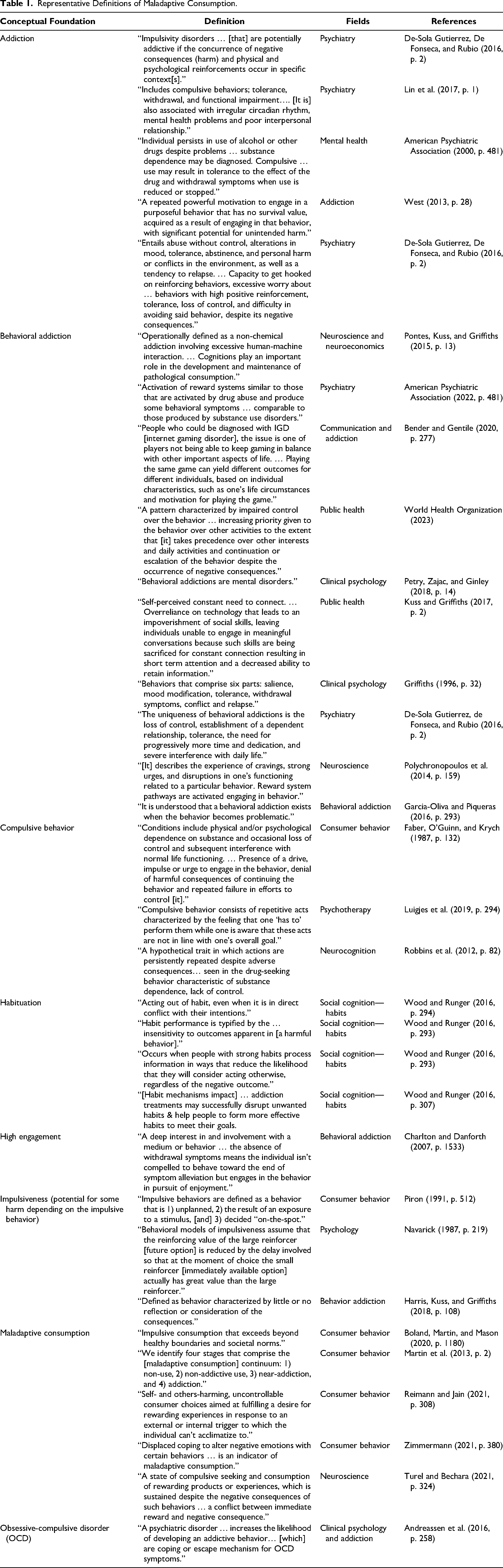
Table 1 identifies no generally accepted definition of maladaptive consumption, nor are any definitive distinctions made between maladaptive consumption and terms such as “addiction,” “behavioral addiction,” “impulsive consumption,” “compulsive consumption,” “habituation,” and “high engagement.” Definitions of maladaptive consumption in the consumer behavior and marketing literature tend to be borrowed from the definitions in other disciplines. As a result, these marketing-based definitions suffer the same limitations as in their originating disciplines and may not be useful in a marketing context.
Reimann and Jain (2021) draw from the consumer behavior literature to develop an integrative theoretical framework that identifies three dimensions of maladaptive consumption: predictors and antecedents, substance-related versus behavioral consumption, and consequences (health, financial, and social). They define maladaptive consumption as “self- and others-harming, uncontrollable consumer choices aimed at fulfilling a desire for rewarding experiences (through use of substances, money, material goods, and information) in response to an external or internal trigger cue to which the decision maker cannot acclimatize to” (p. 308). Similarly, Boland, Martin, and Mason (2020, p. 1180) develop a definition based on the behavioral addiction and consumer behavior literature (e.g., O’Guinn and Faber 1989; Panova and Carbonell 2018) that specifies maladaptive consumption behavior as “impulsive consumption that (a) exceeds beyond healthy behavioral boundaries within one's life and generally recognized societal norms, and (b) if undeterred, is associated with an increased risk of significant harm for individual or societal well-being.” While these definitions share some characteristics (e.g., potential for harm), they differ in the use of terms such as “uncontrollable” versus “impulsive,” reference (or not) to “triggers,” and a baseline (acclimatize vs. healthy behavioral boundaries and societal norms). These definitions focus on use rather than outcomes of use, which may be harmful even when use itself is seemingly appropriate, such as diminished self-esteem in response to the use of social media.
In addition, Reimann and Jain (2021) posit a “rewarding experience,” while Boland, Martin, and Mason (2020) note only potential harm. Neither definition explicitly recognizes engagement in consumption-related behavior as a means to avoid people, situations, or tasks that produce anxiety or are perceived as unpleasant, though such avoidance could be conceptualized as “rewarding” (e.g., Skinner [1953] characterized escape or avoidance of an adverse circumstance as reinforcing).
Neuroscience offers an alternative perspective, though it is similarly confusing. For example, Turel and Bechara (2021) suggest a model based on rewards, self-control/inhibition, and interoceptive awareness and define maladaptive consumption as a state of “compulsive seeking and consumption of rewarding products or experiences, which is sustained despite the negative consequences of such behaviors [and] involves conflict between a potential immediate reward and long-term negative consequences” (p. 324). This definition also focuses on “reward” and emphasizes the trade-offs between positive and negative consequences. It explicitly recognizes a “struggle” between short-term rewards and long-term negative consequences. However, this definition also fails to recognize the role of consumption in avoidance behavior.
Finally, in the clinical psychology literature, Pontes, Kuss, and Griffiths (2015) argue that maladaptive consumption behavior encompasses biological, sociological, and psychological perspectives, which makes defining the construct difficult. They define maladaptive consumption as the “excessive use of [the internet] that exceeds what a person thinks of as normal, usual or planned [and is] guided by cognitions or thoughts which play an important role in the development and maintenance of pathological behaviors” (p. 13). This definition focuses on a causal mechanism (cognitions and thoughts) and renames maladaptive behavior as pathological, without a clear definition of pathology.
These three definitions from different literature streams are representative of the commingled and confusing terminology used to define maladaptive consumption. Similar problems exist for each of the definitions summarized in Table 1. There is no clearly delineated set of conditions that differentiate maladaptive consumption from other forms of harm such as addiction, compulsiveness, and so on. While such definitional ambiguity is challenging for researchers who must address alternative conceptualizations of maladaptive behavior, it also poses practical issues related to estimating prevalence rates and appropriate interventions and regulatory policy. Successfully regulating an ill-defined behavior is difficult, if not impossible, as a practical matter. For marketers to address such behaviors through product design and other actions also requires a generally accepted definition.
The Role of Harm
One characteristic that is endemic to nearly all definitions of maladaptive consumption is the notion of “harm,” or at least the potential for harm. Harm is typically not explicitly defined in extant descriptions, but it refers to some adverse consequence of behavior. Depending on the definition, harm can take on different meanings, ranging from something being so inherently dangerous that it should be avoided altogether to something that is not dangerous per se but requires care and caution in use over time and, perhaps, only among a subset of consumers (e.g., Beauchamp and Childress 1994; Smith and Cooper-Martin 1997).
The definition of harm also differs depending on the context in which a behavior occurs, and may include direct, indirect, short-term, and long-term outcomes. Indeed, harm may arise not from the act of consumption itself but from the frequency and intensity of consumption either directly or relative to participation in or neglect of other activities. Harm may also arise from the consumption experience itself. Thus, a user who otherwise engages with social media with moderate frequency may be harmed by engaging in a “challenge” suggested on social media or by the formation of inappropriate self-ideals. Thus, the contribution of the product or service to a harmful outcome is also important.
Some products may cause harm even when used as intended. Other products may cause harm when used in an inappropriate manner. In other cases, a product may play the role of facilitator. For example, social media can expand the scale and scope of information to which users are exposed and the relationships they may acquire, which in turn may increase the likelihood of exposure to damaging information or harmful interactions. Finally, products may be ubiquitous in the lives of consumers. They may be incidentally present or facilitate behaviors and outcomes that would be maladaptive even if they were absent. For example, any social relationship may influence self-image in powerful ways, even without social media, and obsessive online gaming is only one of many ways to withdraw from aversive social relationships.
Most consumption behaviors are associated with benefits or at least potential benefits, so even when the potential for harm exists, the question of when harm begins to outweigh the benefits is a crucial factor in determining whether a behavior is adaptive or maladaptive. In addition, the severity of harm is frequently contingent on the usage context, the behavior and characteristics of the consumer. For example, texting while driving by even a small subset of the driving population can result in large societal cost (Delgado, Wanner, and McDonald 2016). Harm may take different forms (e.g., psychological, emotional, financial, physical, familial/relational, social) and may range from modest to severe. Finally, the object of harm may be the self-and/or others. Even if the characteristics of harm arising from product use are identified, there are questions about when a specific product-related behavior is maladaptive; the role of the product, if any, in causing or facilitating the maladaptive behavior; and what intervention, if any, is appropriate.
Identifying the Causal Nexus
Most definitions of maladaptive behavior explicitly or implicitly state that behavior is maladaptive (harmful) when it interferes with daily living or the ability to adjust to and participate in particular activities. Definitions also differ with respect to identified causes or whether they address a cause at all. In some cases, definitions identify specific products as playing a causal role (e.g., alcohol, drugs, use of smartphones while driving), while in other cases the product's role is more that of an enabler (e.g., social media, online gaming). In still other cases, outcomes may be harmful even when the product is used as intended (e.g., decreased self-esteem resulting from use of social media). Even in cases in which a product is known to play a causal role, there tends to be far more consumers whose use is not maladaptive or harmful, with such notable exceptions as the use of illicit drugs. Such definitional issues are problematic from a regulatory standpoint because efforts to regulate the design or use of a product must be weighed against the potential of denying product benefits to consumers whose use does not result in harm to self or others.
Defining a behavior as maladaptive solely on the basis of the consequences of its use is problematic. While some consequences may be obviously harmful or dysfunctional, this is not always the case, and disagreement may arise among different parties. For example, a person may experience discomfort or harm from a product even when others do not perceive such outcomes. In other cases, maladaptive behavior and the associated harmful outcomes may be obvious to others and even have an effect on others, but the person performing the behavior may not recognize or acknowledge the harmful consequences. In some cases, individuals may be identified as unusually vulnerable, such as minors and those with intellectual disabilities. For example, increases in on-screen times among tweens and teens has resulted in calls to regulate access to social media and smartphones by increasing the age for accessing social apps and for punishing companies that fail to enforce it, much like access to alcohol by minors (Burn-Murdoch 2023).
The challenges associated with defining maladaptive consumption, as demonstrated in Table 1, are not surprising. It is also important to recognize that at least some of the definitions of maladaptive consumption are driven by the economic interests of those providing the definition. This is particularly the case when a specific definition serves as the basis for regulations related to product design and/or delivery or when payments for “interventions” are contingent on a given definition, such as those used by third parties (e.g., governments, insurers). These challenges, the real harm that is present in some cases, and the economic interests involved all make clear the reasons a robust definition of maladaptive consumption is necessary.
Definition of Maladaptive Consumption
We define maladaptive consumption behavior as “the intentional and repeated use or experience of a product/service that results in identifiable harm to the user and/or others.” This definition is parsimonious and consistent with the criteria for a definition suggested by EMCDDA. It avoids the problems inherent in definitions that associate specific causes, contingencies, and interventions with the basic definition. It recognizes that a consumption behavior may be maladaptive for some consumers even when it is not for most consumers.
The value of this definition, especially in the context of public policy and regulation, is that it separates the behavior and consequent harm into discrete elements that can be addressed individually or in combination. Thus, product features can be separated from product use, usage context, frequency of use, and individual consumer characteristics. This definition also separates an observed consumption behavior and any associated harm from its causes. Indeed, the same observed behavior may occur for different reasons across multiple individual consumers. For example, the harmful effects of the excessive use of social media, such as inattention to work, school, or other significant activities, may arise from a desire to escape a stressful work situation, a need for peer approval, or a combination of these. In another context, the same amount of time devoted to social media may be adaptive, such as with influencers who have monetized their presence on social media.
This definition raises a variety of conceptual, measurement, and methodological issues with important implications for public policy, regulation, and intervention. We discuss these issues and implications in the remainder of this article.
Conceptual and Methodological Challenges
Representative Methodological Problems
The absence of a generally accepted definition of maladaptive consumption and the need for such a definition for product design, individual intervention, and regulation brings the problems into sharp relief. Differing definitions make operationalization of measures, estimation of prevalence, and quantification of the associated degree of harm difficult to ascertain.
Measurement is necessary for any cost–benefit analysis and for making decisions about resource allocation, availability of interventions, and policy decisions. Table 2 provides a summary of representative operationalizations of various consumption-related behaviors identified as maladaptive. A number of measurement and methodological issues emerge from a review of these operational measures. Across studies, and occasionally even within individual studies, these measurement and methodological deficiencies produce large variations in prevalence and magnitude of harm even for what is conceptually identified as the same behavior.
Representative Methodological Problems.
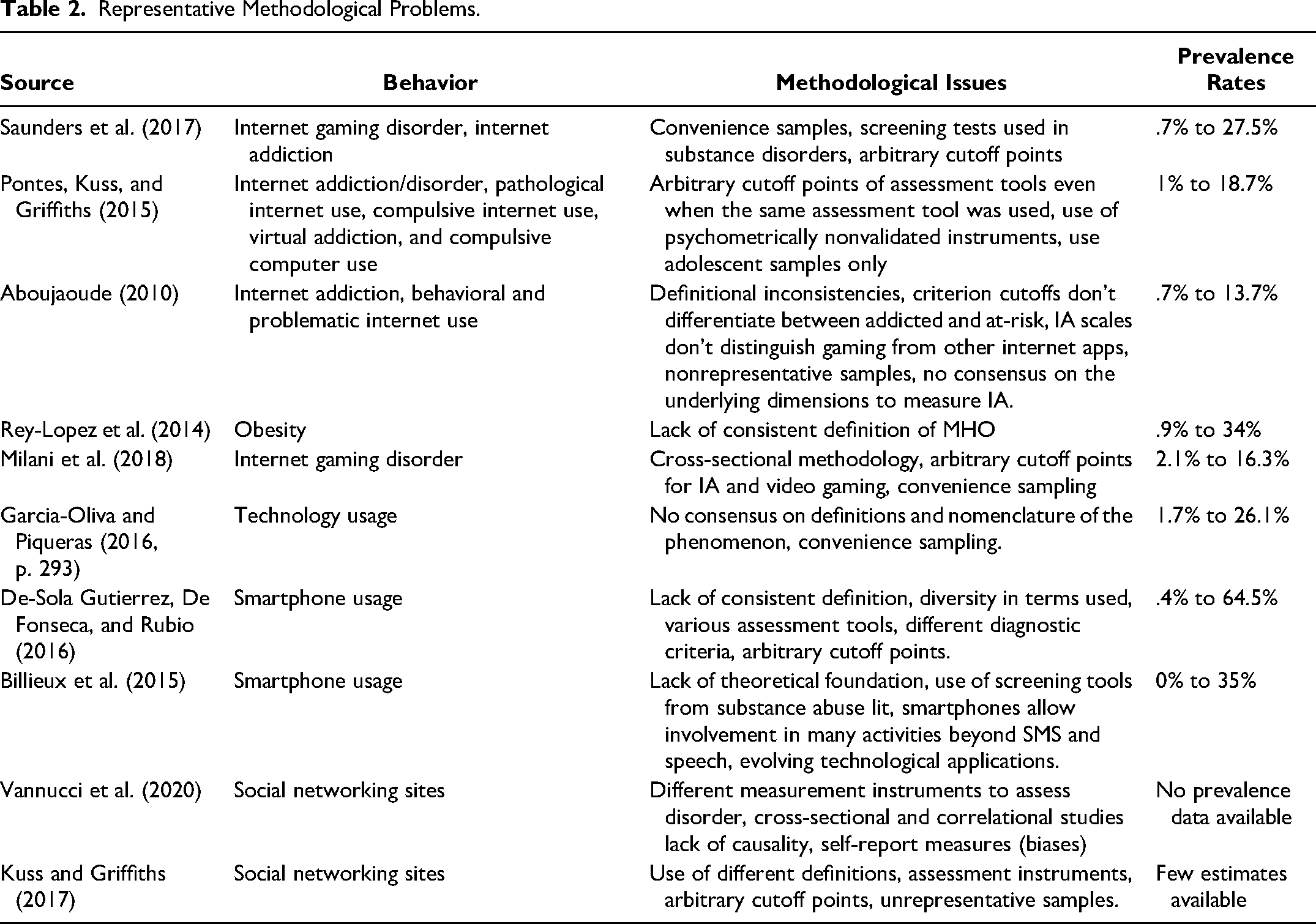
Table 2 provides a summary of representative operationalizations of various consumption-related behaviors identified as maladaptive. Issues that emerge from a review of these operational measures include the use of arbitrary cutoff points for classification, the absence of psychometrically sound measures, language and definitional inconsistencies (is it addiction, behavioral addiction, compulsive behavior, habituation, or high engagement?), use of convenience samples, and a lack of longitudinal studies, among others.
Prevalence rates are customarily used to guide policy related to health issues of a problematic or excessive behavior. When prevalence and the degree of harm are low, there is less likely to be a call for regulatory/public health responses. If prevalence is high, or the degree of harm is high even when prevalence is low, the case for regulatory/public health interventions is stronger. When prevalence rates range from, for example, .9% to 34%, these differences are most likely attributable to methodological issues and lack of conceptual rigor across studies (Pontes, Kuss, and Griffiths 2015). Large variations in prevalence rates also impede the determination of whether a maladaptive behavior is increasing in frequency or has reached epidemic levels, as some have claimed (e.g., U.S. Surgeon General 2023).
The obesity literature contains up to 30 different definitions for metabolic health based on factors such as blood pressure, cholesterol, triglycerides, and body mass index as the main indicators that define metabolically healthy obesity (MHO) (Rey-Lopez et al. 2014, p. 15). The result is a lack of accurate prevalence rates in MHO individuals along with convenience sampling. It is critical to keep in mind that what a researcher and a discipline use as a moniker can either exaggerate or reduce the amount of harm associated with a behavior.
A recent example of the practical measurement problems that arise in the absence of a conclusive operational measure appears in the report of the U.S. Surgeon General (2023) on social media, which concludes that there is no clear-cut answer for parents’ question of whether social media is safe for their children. According to U.S. Surgeon General Vivek Murthy, “Based on our review of the data, there isn’t enough evidence [to state] that [social media] is safe [or not safe] for our kids” (Fitzgerald 2023). As we have noted, this issue is also the focus of litigation.
When estimates of prevalence and harm differ as the result of inconsistencies in definition and poor measurement, among other problems, policy decisions cannot be well-informed. Such information also guides whether a behavior and its outcomes should be treated as an individual mental or social (behavioral) health issue or whether they should be viewed more broadly as a “societal” problem, some combination of the two, or neither alternative. Such a state of knowledge, or lack thereof, also produces opportunities for advocates to selectively use data to advance agendas that may be inconsistent with the greater social welfare.
Convenience sampling is another common methodological issue. Typical examples are studies that recruit student samples, through convenience sampling, based on getting permission from parents to interview their children. Many of these studies involve samples that are not representative with respect to socioeconomic status, education, and living conditions, which may bias findings. The gold standard would involve longitudinal studies of representative samples, but such studies are difficult and expensive to conduct (Kuss and Griffiths 2017; Milani et al. 2018; Vannucci et al. 2020).
Research participants’ self-identification of arbitrary thresholds for various addiction measures (scales for, e.g., internet addiction, internet gaming disorder) also impacts the methodological consistency of results across studies. For example, Aboujaoude (2010, pp. 86–87) demonstrates this through four different internet addiction (IA) scales with arbitrary cutoff points to diagnose addiction. Another example has no explanation as to why, for example, 50–79 points equals “occasional or frequent problems because of internet use” and 80–100 points equals “internet usage is causing significant problems,” while a third IA scale asks participants to focus on the last three months to self-identify whether they have more than five or less than five of the eight diagnostic criteria that demonstrate their level of addiction. A fourth scale measures “problematic or excessive” behavior consumption, which includes the impact on one's personal life, be it physically (cravings, inability to not think about something) or behaviorally (can’t stay away from engaging in the behavior), whether it is idiosyncratic to certain behaviors, and so on. There is no distinction made in terms of what problematic or excessive means or how it causes “problems” in the life of the individual.
The Addiction Model
A common approach to the study and discussion of maladaptive consumption behavior is to focus on its repetitive characteristics and classify it as addictive. Indeed, Table 2 is largely based on the “addiction” literature, which defines diverse behaviors, such as excessive online gaming, obesity, technology uses, extreme exercising, incessant shopping, among other behaviors, as addictive. While some products, such as alcohol, tobacco, and some drugs, do have addictive properties, the addiction analogy is difficult to extend to the ever-growing array of products and their respective uses associated with maladaptive consumption. Eating disorders may be maladaptive because the consumer eats too much, eats too little, or eats a variety of unhealthy foods. Social media may produce outcomes harmful to self-image even when the amount of use is not excessive. Online gaming may be maladaptive for one consumer because it distracts from important activities, such as work, school, or relationships. By contrast, the same amount of time devoted to online gaming by a retired or disabled person with limited mobility may serve as a means to remain active, engaged, and involved with social relationships.
The “addiction model” provides a convenient and relatively well-understood etiological model, but it does not easily explain most maladaptive consumption. It puts inappropriate weight on product characteristics while minimizing the many contextual factors and individual differences that may also contribute to maladaptive consumption. Such emphasis is particularly problematic in product design and regulatory contexts because the most effective design, delivery, and regulation requires an understanding of the full array of influential factors and which ones may be most amenable to influence and most efficacious for reducing maladaptive consumption. The problem is illustrated in recent litigation focused on social media platforms that seeks to blame the product for any harm and argues that these platforms are addictive (Poritz 2023). In contrast, in the context of video games, Wood (2008, p. 173) concludes that until “it can be shown that the inherent structural characteristics of [usage behaviors] can cause problems for relatively large numbers of people … there is no firm basis on which claims about the ‘addictive’ properties of [for example] video games can be made.” Such a conclusion is consistent with the U.S. Surgeon General's (2023) report.
Indeed, in many cases, the product, whether it is food, technology, a consumption behavior, or something else, may only serve as an incidental means for achieving a maladaptive outcome. For example, social media may be a source of bullying or inappropriate self-comparisons. Thus, “it is unclear if symptoms … should take form as a new disorder or are the expression of underlying conditions” (Bean et al. 2017, p. 378). While clearly useful in some contexts, the application of the addiction model is problematic in the context of many maladaptive consumption behaviors. Simply labeling a repetitive behavior as addictive without a causal nexus is tautological; it is not helpful and may even be misleading.
Is It Comorbidity?
The literature is replete with new “disorders” that are characterized by some form of maladaptive consumption. The negative consequences of such consumption may be the same for quite different products while the consequences may be quite different for the same product used by different individuals. This is indicative of the definitional and measurement problems that exemplify maladaptive consumption. In many cases, the observed behavior arises from another underlying source rather than use of a product per se. The public health domain characterizes this as “comorbidity,” defined as the presence of one or more additional conditions often co-occurring with a primary condition. 1 These multiple conditions may or may not be related and linked in a causal fashion. The concept of comorbidity is itself ambiguous because, in some cases, two or more signs or symptoms may not be unique and independent but may represent multiple signs of the same underlying condition (Maj 2005). For example, a young adult may engage in excessive online gaming and appear socially withdrawn in an effort to escape from an uncomfortable relationship.
The modification or even elimination of a specific product may not eliminate the underlying problem; an alternative product or behavior may take the place of the one eliminated. For example, there is general agreement that mental health issues among teens have been exacerbated by conditions related to the pandemic. Studies show that students “are distracted in class, losing sleep, and [experiencing] increased mental health struggles” (Snyder 2023). While these problems may exist, their presence may not be evidence that the characteristics of, for example, social media platforms or specific practices of those platforms (e.g., notifications of news posts) are the cause. Such outcomes are the focus of a lawsuit brought by more than 40 states against Meta, based on the claim “that [it] manipulates and exploits teenagers and children” (Poritz 2023). This case will undoubtedly raise questions and produce evidence relevant to questions about the extent to which problematic outcomes are attributable to specific business practices (e.g., algorithms targeting youth), other causal factors, or both.
Virtually all human behavior is accompanied by some physiological responses. This fact has been used by some researchers to define all repetitive behavior as the result of addiction, distinguishing between substance addiction, where the addiction is to an identifiable substance, and behavioral addiction, where the addiction is to a feeling produced by some behavior (Alavi et al. 2012). The distinction is important because in the case of substance addiction, the causal agent is the substance or product. In the case of behavioral addiction, the product, or behavior associated with a product, is the means for achieving an emotional state. In the case of substance addiction, properties of the product itself create the future desire. In the case of behavioral addiction, it is the desired emotional state that is causal agent. Such states might be produced through multiple means, and the desire itself may be caused by situational factors such as a desire to escape the boredom of a classroom, the absence of other positive sources of positive reinforcement, or avoidance of an aversive environment. The nexus of causality is more complex in the case of conditions defined as behavioral addiction. Addiction is an even less satisfactory explanation of maladaptive consumption when the negative outcomes involve diminished self-esteem and social identity, risk-taking, harassment, and inappropriate modeling of behavior, among others. Thus, while useful in some cases, the addiction model fails as a general explanatory framework for much of maladaptive consumption. In addition, maladaptive consumption itself may often be a comorbid condition arising from some other cause.
Finally, consumption behavior evolves over time but longitudinal research on maladaptive consumption is scarce (for an exception, see Gentile et al. [2010]). Some behaviors that appear maladaptive may be part of the learning or maturing process. Thus, an individual consumer may become obsessed with a new technology, a set of friends on social media, or a new weight loss plan but become less enamored over time. What appears to be maladaptive at one point, and which may have become maladaptive if it persisted over time, ceases to be a source of concern. Markey and Ferguson (2017) state that “for almost all kids and young adults, video games will be a normal part of their development … the overwhelming majority of people appear to be able to play video games while still balancing a productive work schedule and active social life (Markey and Ferguson 2017, p. 196).
Public Policy and Alternative Conceptualizations of Maladaptive Consumption
Product Liability 2
The ambiguity and confusion found in the literature on maladaptive consumption behaviors begs the question whether regulation or other forms of intervention are possible in the absence of a clearly established definition of the phenomenon (Fisher et al. 2022; Owen 2022). The regulatory environment itself adds to the lack of clarity. The regulation of products and maladaptive consumption is divided among many entities, such as industry groups, nongovernmental organizations, and governments at various levels (e.g., U.S. Consumer Product Safety Commission; Bureau of Alcohol, Tobacco, Firearms and Explosives; Food and Drug Administration; Environmental Protection Agency; International Organization for Standardization; Organization for Economic Co-operation and Development). The focus of these organizations is most often on the product rather than consumption or product use. Different organizations appropriately focus on different types of products, and standards established for one category of products may not generalize to other product categories.
Differences among definitions also make cost–benefit analysis difficult, if not impossible. As noted previously, the different definitions of maladaptive consumption often produce wildly different estimates of prevalence (see Table 2). Different definitions are also ambiguous, if not silent, on the extent to which responsibility for maladaptive consumption resides with the product, its design, its manufacture, and/or its delivery; individual consumers; or both.
An examination of the literature on product liability is helpful in framing issues regarding regulation. Product liability is a legal principle that holds that companies offering a defective consumer item can be held responsible for any harm caused by the defect. A defect may take different forms and may include problems of design (design flaws), problems of manufacturing (manufacturing flaws), failure to appropriately warn about potential hazards, or failure to provide instructions for product use that are adequate for ensuring proper use (marketing flaws).
Types of Product Liability
As is the case for any product liability situation, liability in the context of maladaptive consumption may be the result of negligence, strict liability, or a breach of warranty. These three types of liability may not be independent of one another. Negligence is the failure of a party to exercise reasonable care and involves some act of carelessness. By contrast, strict liability does not require proof of actual negligence by some party; it merely requires evidence of injury due to the use of a product in a reasonable manner. Breach of warranty is usually associated with the content of advertising, labels, use instructions, and other representations of the product regarding reasonable expectations of how a product works, the benefits it delivers, or the range of uses for which it is appropriate. A warranty may be explicit or implied. For example, an explicit warranty might state “for outdoor use only; do not use in an enclosed space,” while an implied warranty is based on a consumer's reasonable expectations of a product and its benefits due to marketplace experience, government regulation, or some other authoritative source of information. For example, a reasonable assumption is that a food product does not contain poison. Such breach of warranty is different from specific false misrepresentations that are intended to mislead. In general, a warranty is a promise that something is true about the product, while a representation is a statement of fact that influences the purchase. The standards for proof and available remedies are different (Sepinuck 2015).
A finding of liability requires evidence that (1) harm occurred and (2) the product or some characteristic or absence of a characteristic of the product was responsible for the harm. Given the interaction between a consumer and a product that produces outcomes, some courts have decreed joint liability and apportioned damages between the manufacturer and the consumer based on some division of responsibility; they have also found users solely responsible (Fisher et al. 2022). This situation makes clear that users may bear some or even all of the responsibility for any harm that results from product use.
This discussion shows the difficulty in determining and allocating responsibility for maladaptive consumption. While manufacturers certainly bear responsibility to proactively ensure reasonable product safety and to avoid negligence, the vast majority of producers and distributors do not sell their products to facilitate maladaptive outcomes, nor do they have ultimate control over how the product is used after it is in the hands of consumers. However, for some products, among some consumers, and in some contexts, the use of a product in a way that produces maladaptive outcomes is potentially foreseeable. In such cases, marketers need to invest efforts in mitigating such outcomes or regulations need to require such mitigation efforts while recognizing the costs and benefits of the mitigation for consumers and manufacturers.
The complexity of the issues surrounding responsibility and liability requires thoughtful consideration of alternative ways to reduce the prevalence and severity of harm from maladaptive consumption while preserving consumers’ ability to use products and enjoy their intended benefits without unnecessary costs and harm. These decisions should also rest on consistent philosophies of management, governance, and regulation that include an appreciation of the roles of both the marketer and the consumer. As Table 2 makes clear, different definitions and assumptions can lead to radically different characterizations of the scale, scope, and responsibility for maladaptive consumption.
While product design issues can certainly contribute to harmful outcomes, many of the outcomes resulting from maladaptive consumption arise from the way consumers use products and respond to such use. The harm suffered by an individual consumer may be highly idiosyncratic, with the majority of users suffering no harm. The product in such cases may be an incidental factor in any harm suffered, with other relatively noncomparable alternatives being able to produce the same effect. This is especially the case when consumption provides an escape or a source of reward that can be obtained from other sources (e.g., human interaction) that may involve no products at all. This situation also makes it difficult to anticipate when and where harmful consequences may arise. For these reasons, a tension exists between establishing reasonable expectations for product design through corporate policy and regulation and holding individual consumers responsible for the consequences of their own behavior. A similar tension exists between concerns for protecting a few at risk consumers and the cost of inconveniencing or increasing costs for a large number of other consumers.
Product-Focused Versus Consumer-Focused Approaches to Policy Making and Policy Implementation
Many regulations focus on the product because the potential hazards associated with product use are common to all users, even when they use the product as intended. Thus, chainsaws, tobacco products, and many over-the-counter pharmaceutical products, among others, are required to meet specific design and/or communication regulations (e.g., warning labels, disclosures). Other product-focused regulations protect known classes of consumers for which a product represents a hazard by virtue of some characteristic of the consumers, even though most consumers are not at risk. For example, products that contain phenylalanine or gluten are required to provide warning labels. These warning labels appear on all products with the known hazard to ensure exposure to all those for whom it is relevant to avoid serious harm, even if the information may not be relevant to many consumers. Such regulation is an effective way to protect relevant consumers, and it imposes low costs on the marketer and other consumers.
By contrast, some product regulations focus on consumer characteristics or the purchase or usage context. Such regulations commonly apply to products for which there is a high potential for misuse among an identifiable set of consumers. For example, products such as alcoholic beverages, tobacco, and online games have age requirements and restrictions for purchase and use (Zhai 2021). Other products may be restricted to consumers who meet specific qualifications, such as completion of training in product use. For example, the operation of automobiles and the use of scuba diving equipment both require a license or certification of knowledge in proper use. There may also be restrictions on how a product may be obtained or used. Some products, such as alcoholic beverages and cannabis, can only be legally purchased through licensed sellers and distributors who meet specific requirements.
Product- and consumer-focused regulations are not mutually exclusive. For any given product, one or both types of regulation may exist, but the objectives may differ. Thus, alcoholic beverages in the United States carry warnings about hazards relevant to all consumers and require a minimum age of purchase to reduce use among consumers believed to engage in overconsumption and those more likely to engage in maladaptive consumption.
Maladaptive consumption, in its many forms, poses a particularly difficult regulatory challenge. Unlike a hazard that is an inherent characteristic of a product or that is associated with a specific, identifiable characteristic of a consumer, such as a peanut allergy, the harm associated with maladaptive product use may arise from the way the consumer intentionally uses the product, which may not be as intended by the marketer. While designing products to reduce the probability and consequence of maladaptive use is desirable, the ability to foresee all possible maladaptive uses is limited by the idiosyncratic nature of such uses, especially for new-to-the-world products such as online games that integrate virtual reality, augmented reality, and generative AI. In many cases, elements of the product itself are not specifically harmful; rather, the harm arises from experiences with the product, the amount of time engaged with it, how it is used, and/or the result of use. At best, marketers could provide a warning about some types of use (e.g., the potential for exposure to information inconsistent with a positive self-image), but it is still difficult to foresee all misuses and their consequences.
While maladaptive consumption and the harm arising from it should be sources of concern, such concern must be situated in the context of the broader market and consumption behaviors occurring in the market. Regulations designed to protect consumers from the negative consequences of their own product usage decisions must be weighed against consequences of these regulations for consumers who use the product as intended. The costs of such regulation must be evaluated in relation to the benefits of such regulation. The frequency and harm associated with maladaptive consumption should also be part of the deliberations around regulation, as should any costs and consequences imposed by the regulations on more typical users. Thus, having an accurate measure for prevalence rates for the maladaptive use of products is necessary for effective regulatory analysis.
Also necessary is the assurance that regulation will not produce significant unintended consequences, such as overstating the potential for harm and causing users who could benefit from a product by avoiding the product because of misperceptions of the potential for harm (Martin and Stewart 2019; Stewart and Martin 1994). The regulation of a specific product or particular class of products also should not give an unfair competitive advantage over their competitors (Barrett 1991; Bird 2011). Thus, analyzing the benefits and the costs of a regulation or intervention is critical to avoid unintended negative consequences.
Policy Implications and Alternatives
Much product regulation and public health policy focuses on identification of a specific problem for which a specific solution is sought. This approach to regulation is myopic and ignores the broader context in which regulation exists (Nair and Howlett 2020). The complexity and idiosyncratic nature of maladaptive consumption poses a particularly difficult challenge for the regulation of products because such regulation exists within the context of a broader market in which the problems of individual consumers must be weighed against the welfare of other consumers, firms, and other relevant stakeholders. While some product characteristics may facilitate maladaptive consumption, the harm stems from the interaction of the product, usage context, and user. An example occurs when a consumer uses a product as an escape from reality, even if there is nothing specific about the product that promotes maladaptive consumption. This is precisely the type of problem for which a marketing perspective is particularly appropriate. For example, the amount of time a gamer spends in online gaming can potentially result in various types of harm (e.g., financial, social, psychological). In response to such risks, authorities in human factors may focus on the products’ characteristics, while health care professionals may focus on the behavior and characteristics of the users. These are appropriate and important foci, but they are also self-limiting because they rarely consider the broader market and usage contexts that interact with consumers to produce maladaptive behavior.
When considering product design requirements, whether enforced by the government or by business self-regulation, a broad set of dimensions should be considered simultaneously. A useful starting point, consistent with the customer-centric orientation of marketing, is the determination of the target for regulation. Targets may range from the individual consumer to an identifiable subset of consumers or society at large (when product use has an impact on all potential users or individuals beyond product users).
Another question pertains to the objectives of regulation. As noted previously, product design and regulatory decisions related to maladaptive consumption focus on the prevention of harmful usage behaviors by a subset of consumers rather than the more general, broadly applicable goal of facilitating safe use for all users. These two goals are not mutually exclusive, but they require different types of analyses. Facilitation of safe use requires a general understanding of the product's hazards confronting a typical user and methods for protecting that user in a reasonable way. By contrast, reducing the probability of maladaptive consumption requires a deeper analysis of individual use patterns and identification of behaviors and outcomes that may not be within the scope of the intended use of the product, but which research might identify. Some maladaptive behaviors and/or outcomes may be readily anticipated or discovered through research, but others may be so idiosyncratic and beyond the control of the marketer that regulation of product design may be difficult or impossible. Thus, protection of consumers from maladaptive behavior may shift to a focus on the user and regulation of user behavior.
A variety of common means for protecting consumers that differ in their scope, breadth, and costs (to firms and consumers) exist. Among the most common approaches to protection is education or the provision of information such as usage instruction, explicit warnings, and requirements for formal instruction (e.g., certification, license). It may also include voluntary or required supervision, such as that provided by a parent who oversees the usage behavior of a child engaged in online gaming. Thus, the provision of appropriate information is consistent with the reduction of marketing liability.
While much of this information is provided to consumers in advance of product use, some information may be provided during or after product use or a behavior. For example, a speedometer provides real-time information or feedback that facilitates the safe operation of an automobile, and some computer applications provide feedback on the amount of time used as an aid to parents to monitor and control their children's use. Such information may also be helpful to consumers who want to regulate their own behavior with respect to product use. For example, Nevskaya and Albuquerque (2019) find that improving reward schedules and imposing time limits can help consumers manage overuse of products.
Regulations may differ in terms of the source of control or enforcement. On the one hand, the provision of information is the responsibility of the marketer, while the engagement in safe and adaptive usage behavior is the responsibility of the consumer/user. On the other hand, government regulation may control the design, purchase, and use of specific products. The marketer and/or the consumer is bound by legal or regulatory requirements in such cases. Thus, the locus of control and the associated liability must be considered when creating specifications, whether in the product design for the marketer or the process of regulation. Locus of control defines responsibility for (1) identifying the need for regulation, (2) creating and implementing a regulatory requirement, and (3) enforcing the regulation.
Two foundational questions for any approach to regulation related to maladaptive consumption are (1) What are the likely measurable effects of the regulation on the intended target (costs and benefits), and who is at risk of maladaptive consumption (prevalence rates)? and (2) What costs and benefits might be imposed on the broader market, including the marketer, distributors, service providers, and consumers? Well-informed and effective regulatory policies will explicitly state the trade-offs embodied in these questions by evaluating the effectiveness of the benefits and the costs to all concerned parties. To be useful and effective, such analyses should be driven by generally accepted definitions, methodologies, and data collection.
A Conceptual Foundation for Cost–Benefit Analysis
Representative Methodological Problems
With these two foundational questions in mind, we can identify a stylized approach to the formulation of policies and regulations relevant to reducing potential harm and maladaptive consumption associated with product usage. Figure 1 provides a template for considering alternative means to address maladaptive consumption focused on specific targets and goals. In contrast to common approaches to regulation, which focus on a problem and solution for an identified class of consumers, the template explicitly recognizes the need to simultaneously consider multiple constituencies (market segments) and potential approaches to regulation. The process suggested by the template begins with specification of the intended target actors (consumers) and desired outcomes within a larger market context. The impact of the maladaptive behavior and a regulatory intervention may be positive, negative, or neutral depending on the externalities created by the use of the product and/or the regulation. Ideally, a cost–benefit analysis would reveal an outcome (regulation) that makes the situation better or at least not worse for all affected stakeholders, a Pareto optimum. The relevant stakeholders may range from society at large, to users whose behavior is the target of regulation, to users for whom regulation may by unnecessary, and even to nonusers who may be affected by the consumption behavior of others (e.g., nonsmokers affected by secondhand smoke). In many cases there will be no Pareto optimum, in which case the policy decision must include consideration of important differences in the costs and benefits for different stakeholder groups. Efforts to globally aggregate all the benefits and all the costs will mask important differences that should be made explicit and given consideration during the policy making process. Such differences provide the opportunity to identify and consider such factors as uncertainty and temporal differences in the realization of outcomes. Because of their expertise in consumer behavior, marketers can make an important and unique contribution to such analyses.
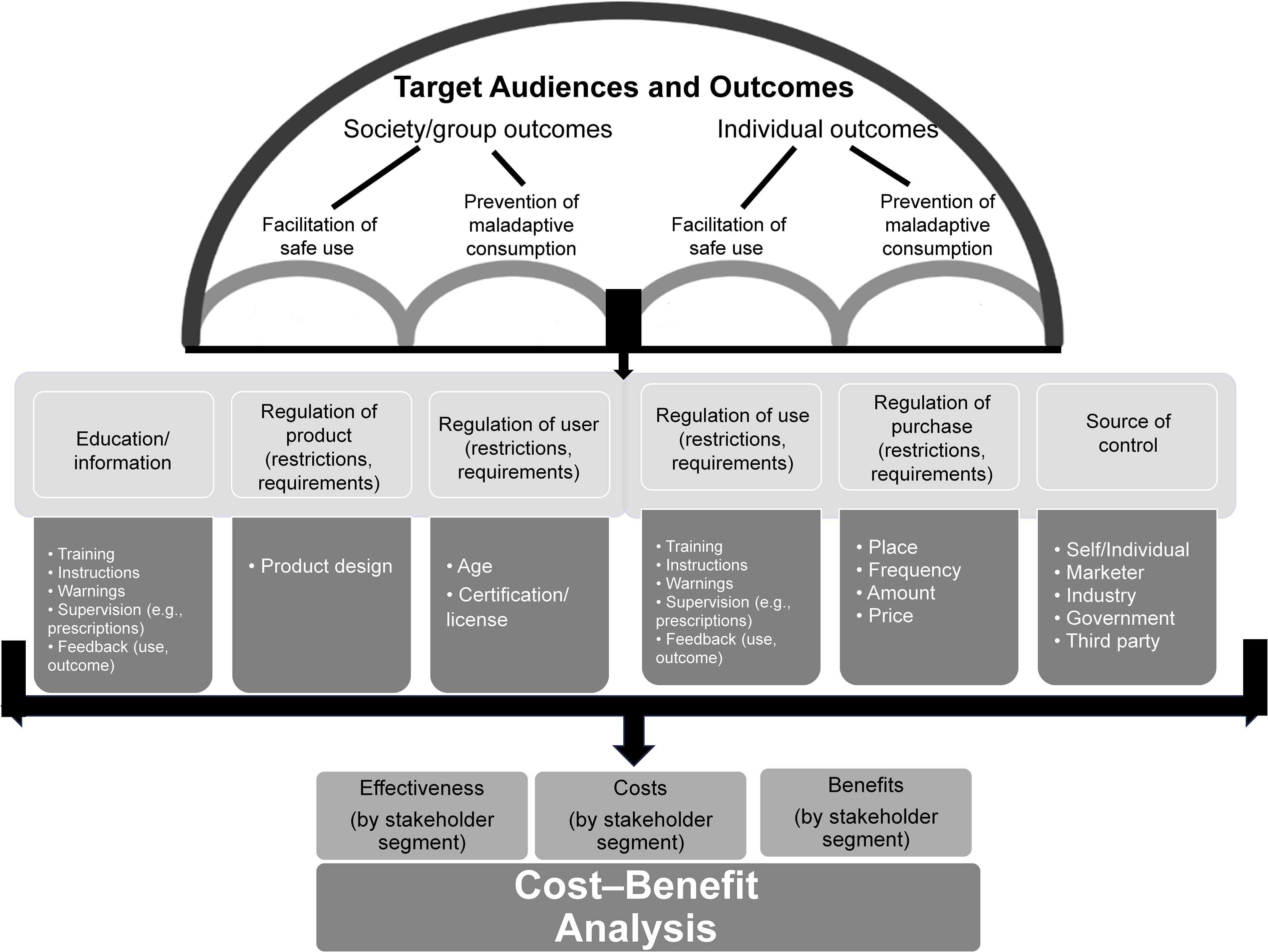
Taxonomy of Regulation.
Figure 1 provides exemplars of specific types of actions related to each means. These approaches are not mutually exclusive. After identification of these various means, they can be evaluated to determine their effectiveness with the calculated costs and benefits. Such analyses will often need to be carried out at the stakeholder level to fully understand the consequences in the market to arrive at a final cost–benefit analysis and to identify the trade-offs inevitably associated with actions that will differentially affect groups that differ in terms of the realized costs and benefits associated with any regulatory action. Such analyses are predicated on a generally accepted definition of maladaptive consumption and appropriate methods for operationalizing this definition. Embedded in this process is the need to understand differences among consumers, characteristics of consumption behavior, and market dynamics. It is in this regard that marketing can make a unique contribution.
Contributions to Marketing Practice and Policy-Relevant Decisions
The marketing discipline brings a unique contribution to the analysis of maladaptive consumption. In contrast to other disciplines, such as psychology, public health, and human factors, that focus on specific syndromes or behaviors, the broader market context and the behavior of individual consumers are the domain of marketing. While a focus on a specific syndrome, such as specific instances of maladaptive behavior, may be useful for identifying and implementing interventions at the individual level, it is limited in its ability to inform the range of consequences arising in the context of product design, marketing, or specific regulations. The limitations of the public health perspective were illustrated during the pandemic when a singular focus on “protecting” citizens from the disease resulted in policies with serious adverse consequences in a wide range of other domains, including the economy, education, mental health, and even the treatment of other diseases (Stewart 2020; World Health Organization 2020). Marketing, with its focus on market behavior and the interactions that grow from it, is uniquely positioned to play a coordinating role in market-wide efforts.
Marketing has long recognized that product design and its regulation must be based on information about individual consumers. A real “average” consumer does not exist. Making decisions based on the “average” of aggregate data, which is common in regulatory practice, is dangerous (Schmarzo 2021). Marketers understand that effective decision-making must begin with individual level, which can then be aggregated as appropriate and necessary. This is also the case for a cost–benefit analysis.
The marketing discipline possesses the tools and expertise to examine product use, identify maladaptive behaviors and their negative outcomes, and pinpoint potentially vulnerable consumers. Marketing also has the tools and expertise to identify product design features that may reduce the probability and/or severity of maladaptive consumptive behavior while minimizing adverse consequences in the broader market. Such expertise may also be applied to the identification of tools and approaches for intervention in individual cases of maladaptive behavior when broader product regulation is not feasible or efficient. For example, application of the template in Figure 1 can be facilitated by an in-depth understanding of the effect of specific interventions (e.g., information, product design, restrictions) on the outcomes of concern. Such interventions (regulations) often operate indirectly on behavior. Thus, how a warning message may influence the incidence of a specific type of harm is not immediately obvious. However, consumer research can provide insights into such linkages.
The facilitation of adaptive consumption will also have a positive impact on brand loyalty and profit for organizations (Sheth, Sethia, and Srinivas 2011). Building deep and long-lasting customer relationships focused on loyal product usage is a central goal of marketing-focused organizations. At the same time, discouraging maladaptive product use can benefit both the marketer and the consumer. Research and marketing practice on the design of the user experience would be particularly appropriate to identify maladaptive consumption and ways to help consumers reduce such potentially harmful behavior and engage in adaptive consumption. Product consumption trackers that provide real-time feedback on the amount, time, and/or intensity of use can assist consumers in monitoring and controlling their use. For example, UScellular has implemented the “US Mode” campaign to help consumers reset their relationships with their smartphones by enabling and designing their own US Mode settings to include preset times, putting time limits on social media apps, and more (UScellular 2023). Clearly identified portion sizes may help consumers control their consumption of food and beverages. Gauges that provide feedback on the amount of use may also be helpful. This approach is already common among technology companies (e.g., Apple's Screen Time, Google's Digital Wellbeing). These tools have become integral to most forms of technology use, such as smartphones, tablets, online gaming, social media, and more.
Such design features may not only reduce maladaptive consumption but also facilitate more adaptive consumption. For example, children typically do not like to brush their teeth, but Philips Sonicare developed a toothbrush that makes brushing fun through gamification. Sparkly, a colorful, furry creature, uses a game with a timer to encourage children to brush their teeth: the child accompanies Sparkly on a brushing adventure, who then topples over in exhaustion when the adventure is over (Aguilar 2015). Such product features and packaging can contribute to more conscious behavior and adaptive usage levels.
Advertising has a long history of encouraging appropriate use of products, from seatbelts to alcoholic beverages. Marketers can direct consumers’ attention away from excessive product consumption and toward features to balance behaviors while reducing harm (e.g., “Don’t text and drive”). Another form of messaging in technology use is in-game educational information that provides parental controls in online games through posts such as “We believe that real-world priorities such as homework, chores, and family dinner should take precedence over entertainment” (Boland, Martin, and Mason 2020, p. 1186). These types of promotional messages serve as warnings or reminders to the user and educational messages to parents and guardians. The provision of guidelines for healthy consumption at the point of purchase (e.g., usage warnings, data on cell phone usage, dietary panels) and purchase restrictions (e.g., age restriction, verification on gambling and alcohol websites) can also help encourage more adaptive consumption behaviors (Boland, Martin, and Mason 2020).
Usage-based pricing strategies are another tool that social marketers can use to decrease or increase consumption of everyday products and services (e.g., Gourville and Soman 2002). One common usage-based pricing strategy is peak-load pricing in which the per-unit price of electricity and water is based on how much consumers use and at what time of day they use it. For example, the more a homeowner waters their lawn during the day (peak-load usage), which is counter to the goal of reducing energy consumption, the higher their per-unit rate of water. Marketers can apply this strategy to encourage lower consumption of online gaming and other technologies and increase consumption of more adaptive options, such as charging more for in-game purchases according to how much time the gamer has been in front of the screen.
Finally, many maladaptive consumption behaviors that have received recent attention are associated with the use of rapidly changing technology. This means that the continuous monitoring of consumer behavior is important. This not only suggests an important role for consumer research but also suggests that actions at the firm or industry level are likely to be more responsive and timely than those of governments, especially when safer use and reduction in maladaptive behavior provide competitive advantage.
Technology may itself hold potential solutions to the problem of responding to technological change. For example, generative AI and other rapid technological changes present an opportunity to “bring together experts from different industries and policymakers to research, discuss, and make recommendations. These charter taskforces or committees should be empowered and resourced to report and recommend to policy makers more rapidly” (Steinberg 2022). Marketing can and should play a unique role in such collaboration given its expertise in consumption behavior, methods of studying consumers and markets, and designing products and value delivery systems.
Future Research
In this article, we argue that marketing has an important, unique, and proactive role to play in addressing maladaptive consumption. Such consumption transcends the product; it is inherently about consumer behavior and the interaction of consumers and products. It also represents a rich vein for future research. Our definition of maladaptive consumption may serve as a starting point for the development of a psychometrically consistent and stable set of measures for maladaptive consumption. Such measures may require adaptation for specific types of behaviors, products, and usage contexts but should be consistent with the common definition. An especially relevant and practical set of research questions revolve around attribution of the extent to which a product, or product characteristics, are a causal factor, a contributory factor, or an incidental factor in maladaptive consumer behavior. Conversely, the same sets of questions regarding attribution to the consumer are also relevant. Answers to such questions are critical for the analysis of the benefits and the costs of regulation or intervention.
Research is needed to examine the broader impact of regulation beyond the intended outcomes for targeted products and consumers to avoid or mitigate unintended negative consequences. Thus, research should be consistent with the requirements for Regulatory Impact Analysis mandated by Executive Orders 12866 and 13563 and the Congressional Review Act (Department of Health and Human Services 2016). Figure 1 is a useful template for such analyses.
There is also a need to determine the extent to which any particular regulation or intervention achieves its intended purpose. Such research should focus on both the efficacy and efficiency of intended objectives, such as providing information, and the ultimate goal of mitigating harm. Such research can inform decisions on public health policy interventions, strategies that marketers can use for self-regulation, interventions for vulnerable populations, and the allocation of research funding and health resources (Stevens et al. 2021). Marketing has a body of knowledge and research toolkit that should make it a central contributor to such research.
Finally, there are important research questions related to enforcement and compliance and the implications of noncompliance. A set of especially important questions revolves around users who ignore information, product design features, and restrictions on use that are intended to reduce the potential for harm.
Conclusions
As the article's discussion and Figure 1 illustrate, marketers have a variety of tools to both reduce the incidence of maladaptive consumption and encourage more adaptive consumption. These tools are most effectively applied in the context of an in-depth understanding of consumers’ use experiences and the aggregate effect of product design, promotion, pricing, and distribution decisions in the market as a whole. A critical issue for any societal approach to regulation focused on maladaptive consumption is the inclusion of the measurable costs and benefits of a regulation, or other intervention, on both adaptive and maladaptive users. Well-informed and effective regulatory policies will explicitly consider the trade-offs between benefits and costs while minimizing unintended consequences. Effective regulations and decision-making are not possible without a generally accepted definition of maladaptive consumption. This is followed by well-designed studies to attain accurate prevalence rates and a clear picture of the degree of maladaptive consumption of a product. This deep understanding of maladaptive consumer behavior can inform policy and regulation, whether that regulation is through firm policy/marketing strategies, industry self-regulation, or government regulation. The marketing discipline has an important and unique contribution to make to such an understanding.
Footnotes
Acknowledgments
The authors gratefully acknowledge the helpful comments and suggestions of Ronald Paul Hill and Martin Reimann on an earlier draft of this article.
Joint Editors in Chief
Jeremy Kees and Beth Vallen
Associate Editor
Melissa G. Bublitz
Declaration of Conflicting Interests
The author(s) declared no potential conflicts of interest with respect to the research, authorship, and/or publication of this article.
Funding
The author(s) received no financial support for the research, authorship, and/or publication of this article.