Abstract

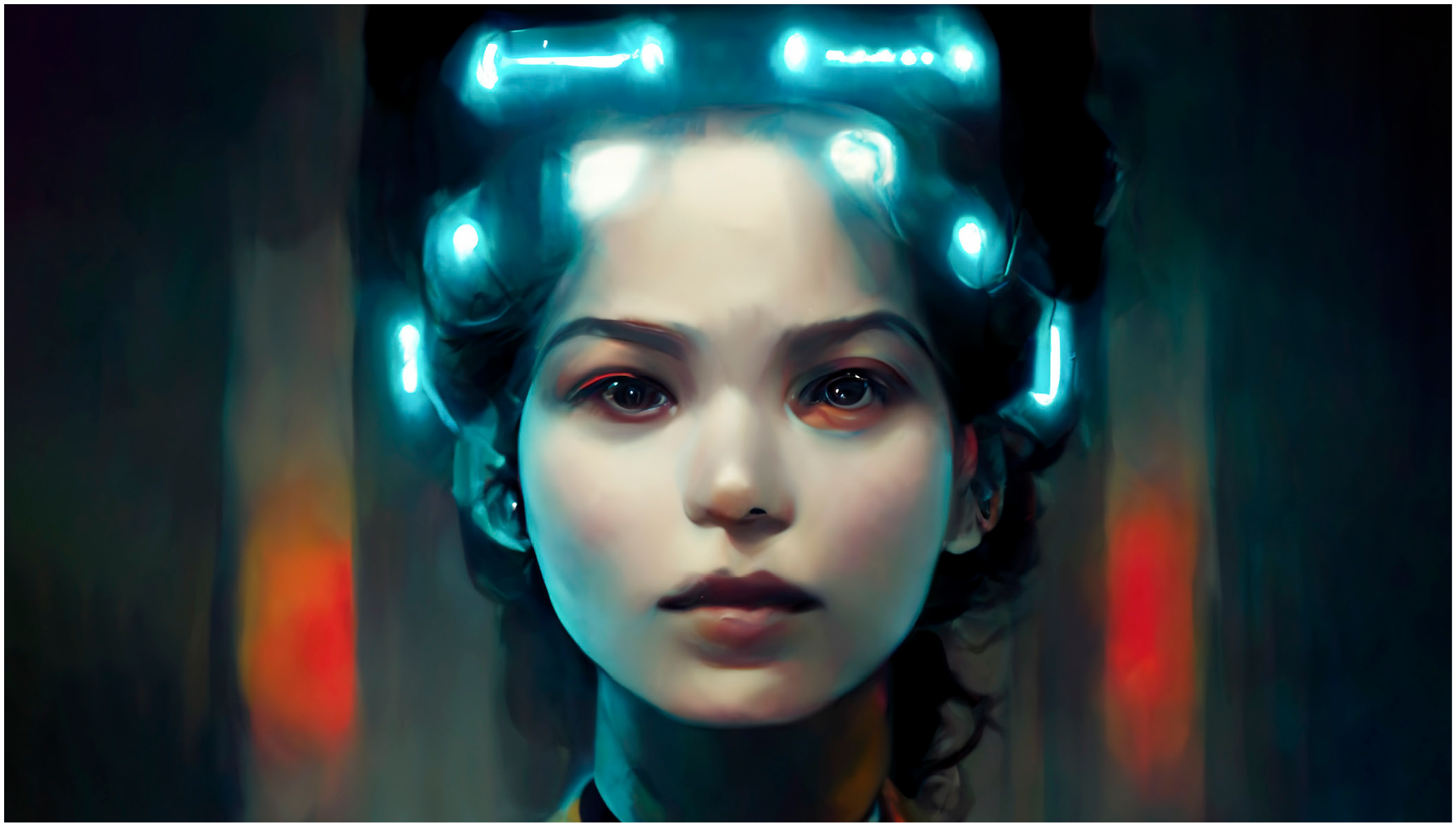
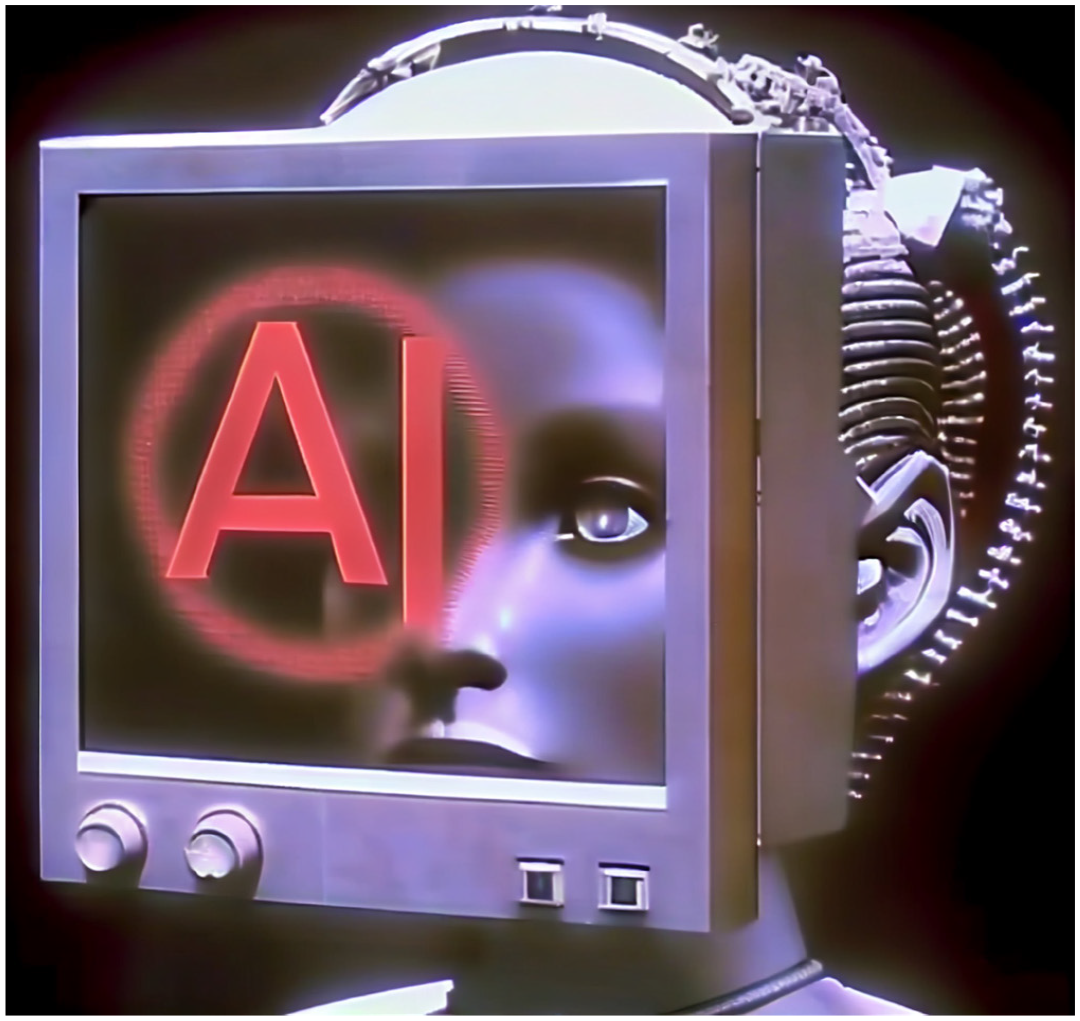
Image of an AI generated female face in The Hyper Human Exhibit which is exploring AI technology and genome editing and their roles in future planning. Credit: Anna Gerdén, National Museum of Science and Technology.
Over the last few years, most of us have become aware of the presence of AI and its growing influence. Some of us probably logged into sites such as DALL-I and ChatGPT to examine or test their services. Most of us were also aware of the subtle (and at times, not so subtle) impact it is having on our searches, as well as its growing presence in the media. But in the last year or so there has suddenly been a tsunami of articles and media events expressing alarm about the speed in which AI is growing, and influencing many areas of commerce, media, and the government.
There has been continued discussion at the highest levels because of the deep concern that there are no real controls in place. Recently, over 30,000 researchers and academics have signed a letter urging caution and suggesting that immediate action to put some controls in place to manage its growth needs to occur. In 2017, just a short time before his death at the age of 75, Stephen Hawking said AI could be the “world’s worst event in the history of our civilization”—unless society finds a sound way to control it, “the development of a full AI could spell the end of the human race.”
There has been continued discussion at the highest levels because of the deep concern that there are no real controls in place.
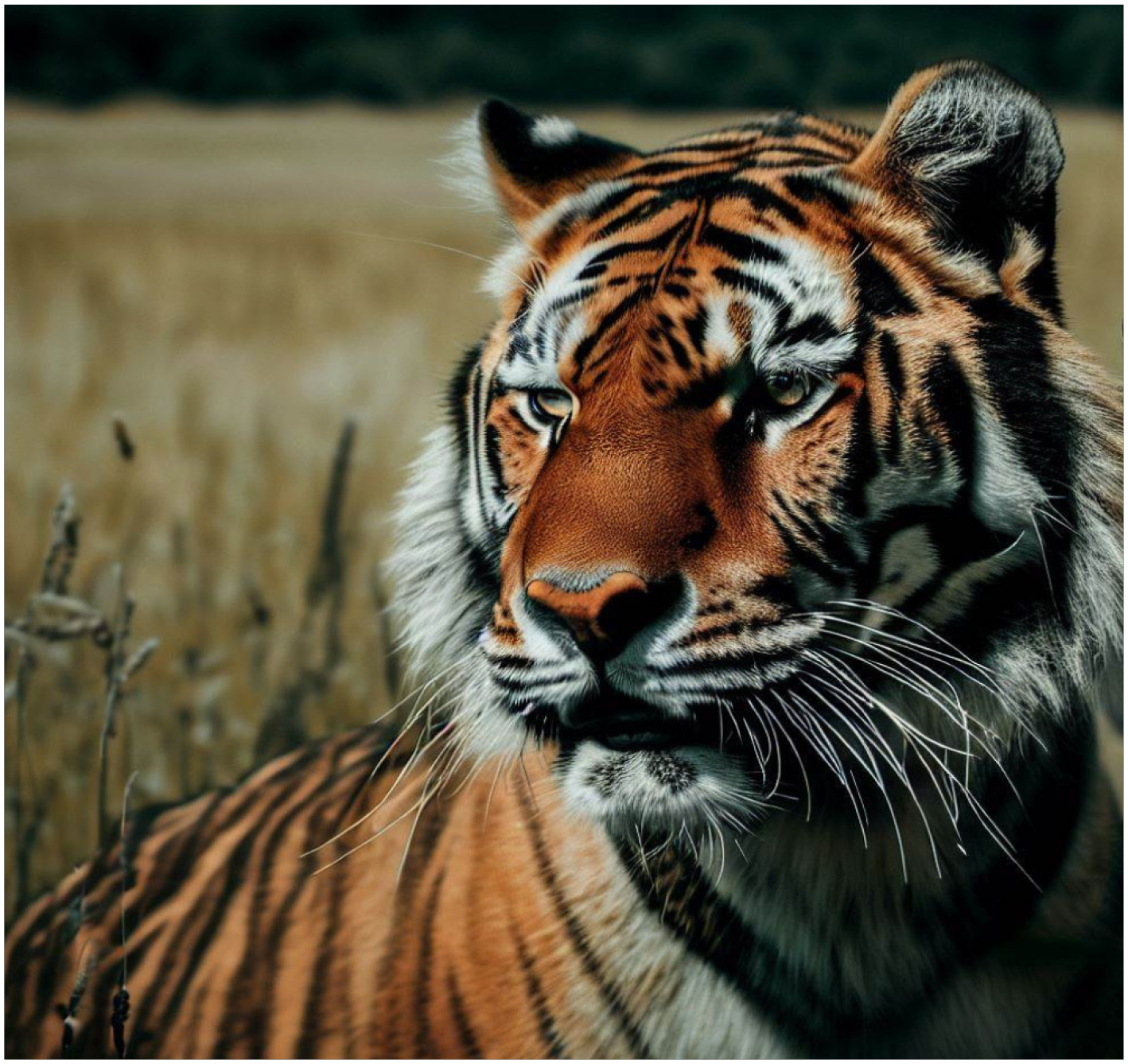
An AI generated image of a tiger in the wild. Credit: https://aigeneratedimages.in, Public domain, via Wikimedia Commons.
It is timely that a film on Oppenheimer and the development of atomic energy and the atomic bomb just opened in theaters. Much has been recently said about the existential impact both will have on our society and on the future. The concerns expressed about the possible impact of an AI getting out of control mirror a similar concern the occurred in the 1940s, when fears were shared about the development of the atom and the possibility that for the first time, the human race would be able to completely destroy the world on our own.
Oppenheimer voiced some of the same concerns about atomic energy now being expressed by scientists discovering AI. At one point, Oppenheimer thought it could be useful to share the secrets of the atomic bomb with other friendly countries, in order to have them more fully understand and realize its deadly impact, in the hopes that seeing the danger, would help efforts to protect against such an occurrence. Unfortunately, unfriendly authoritarian governments gained the secrets, and now we are constantly reminded of the danger, as we live with the almost monthly threats by Russia to use nuclear devices against the Ukrainians and indirectly us.
Interestingly, The New York Times recently put out a series of statements that were uttered in the early 1940s alongside those now being expressed about the dangers both technologies pose to society. The paper asked readers if they could determine which statements were made at which period of time. Not surprisingly, most readers could not identify which period the statements were originally expressed.
In 2018, the prestigious Turing Award was given to three scientists for their ground-breaking roles in the development of artificial intelligence. Often referred to as the godfathers of AI, all three men, Yoshia Bengio, Geoffrey Hinton, and Yarm LeCun, have since expressed differing degrees of concern for AI’s future development. All have resigned from their previous positions, and Hinton, who was the head of the Google’s efforts for over 10 years, indicated that he wanted to be able to speak more freely about the science. Both Hinton and Benji have recently expressed the need to control its growth and development, even joining a group of professionals who have suggested that there should be a moratorium on its development, to consider what safeguards might be put in place to monitor its growth.
Earlier estimates suggested that major advances in AI would probably take decades to develop beyond its human potential. But recent estimates now suggest that major shifts could occur in five years. When asked about its ability to function at a significant level, Hinton suggested that some aspects of AI were already functioning at a human level—i.e., in a relatively short span of time, AI could quickly advance beyond the current threshold. There is also a concern that big tech companies are already engaging in competition that could exacerbate our concerns, when the real problem should also be what these resources can do in the hands of bad actors. There is a real concern that authoritarian governments and other bad actors could weaponize AI. Just recently, General Mark Milley indicated that within a few decades, a third of the infantry in the field might consist of robotics, which shows just some of the motivation in place to drive those governments to pursue it. Hopefully, all of this will quicken our resolve to act immediately to control the advancement of AI development.
Earlier estimates suggested that major advances in AI would probably take decades to develop beyond its human potential. But recent estimates now suggest that major shifts could occur in five years.
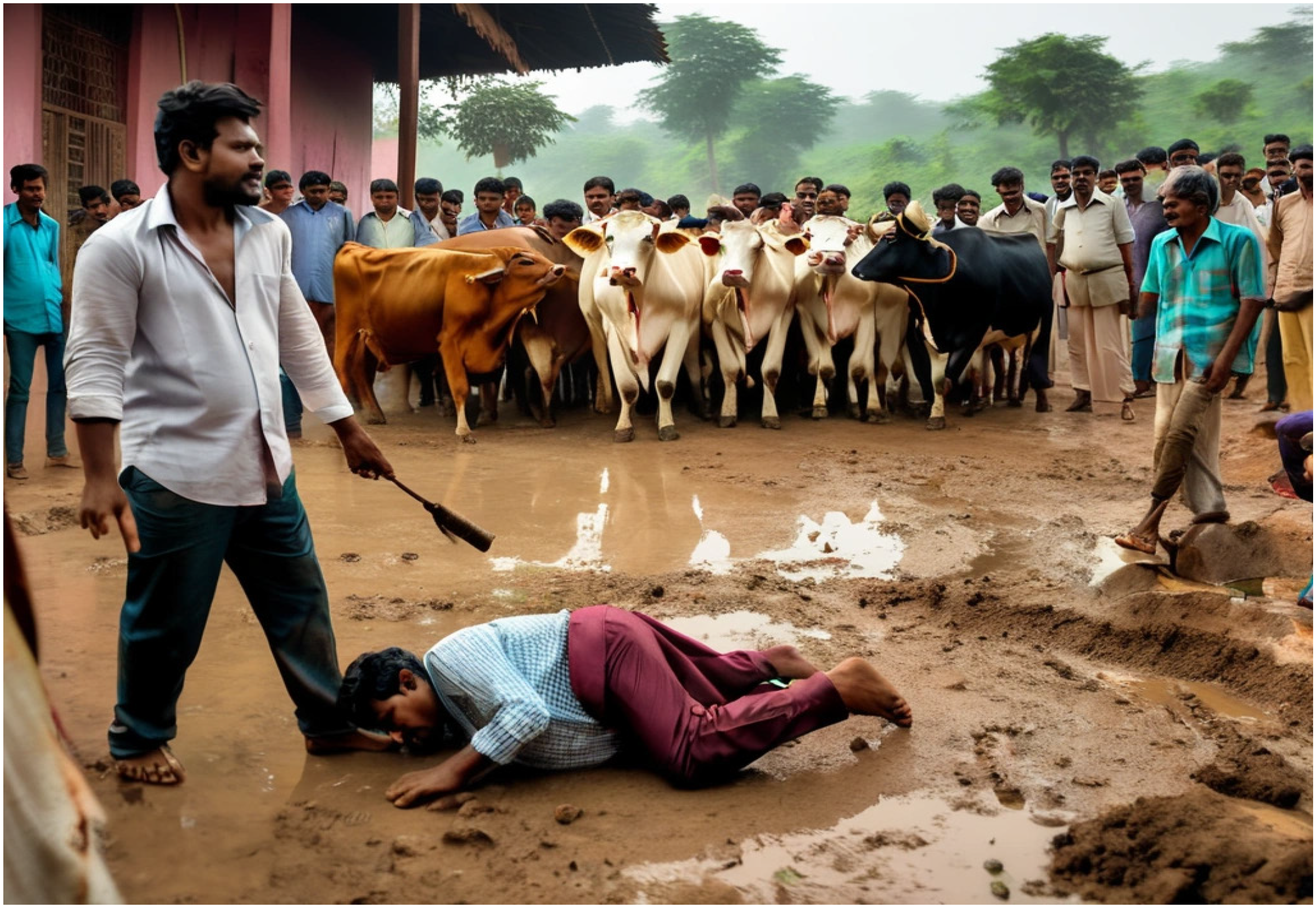
Cow vigilante beating a man on the ground in order to protect cows. AI art generated using Stable Diffusion XL. Credit: Stable Diffusion XL, Public domain, via Wikimedia Commons
With the lack of control already discussed in the general fields involving the development of AI, I fear the impact AI could have on the arts will also be alarming. First, there are vast archives and resources that already exist, which are easily accessible to AI systems. Much of it has probably already been uploaded into their systems.
Writing, poetry, and music are probably the most vulnerable at this time. Access to archival literature and poetry could make available to AI systems virtually everything that has been written by an author, as well as material written about the author themselves, and critical notes and reviews. Currently, AI systems can be asked to write something “in the style of” a particular author, and from this request something can be produced rather quickly. In fact, even several close variations can be produced quickly. And while an author might take a year or longer to complete a book, how would a writer be able to compete in this kind of environment? This is especially true as AI continues to become more competent in its absorption of existing literature and poetry.
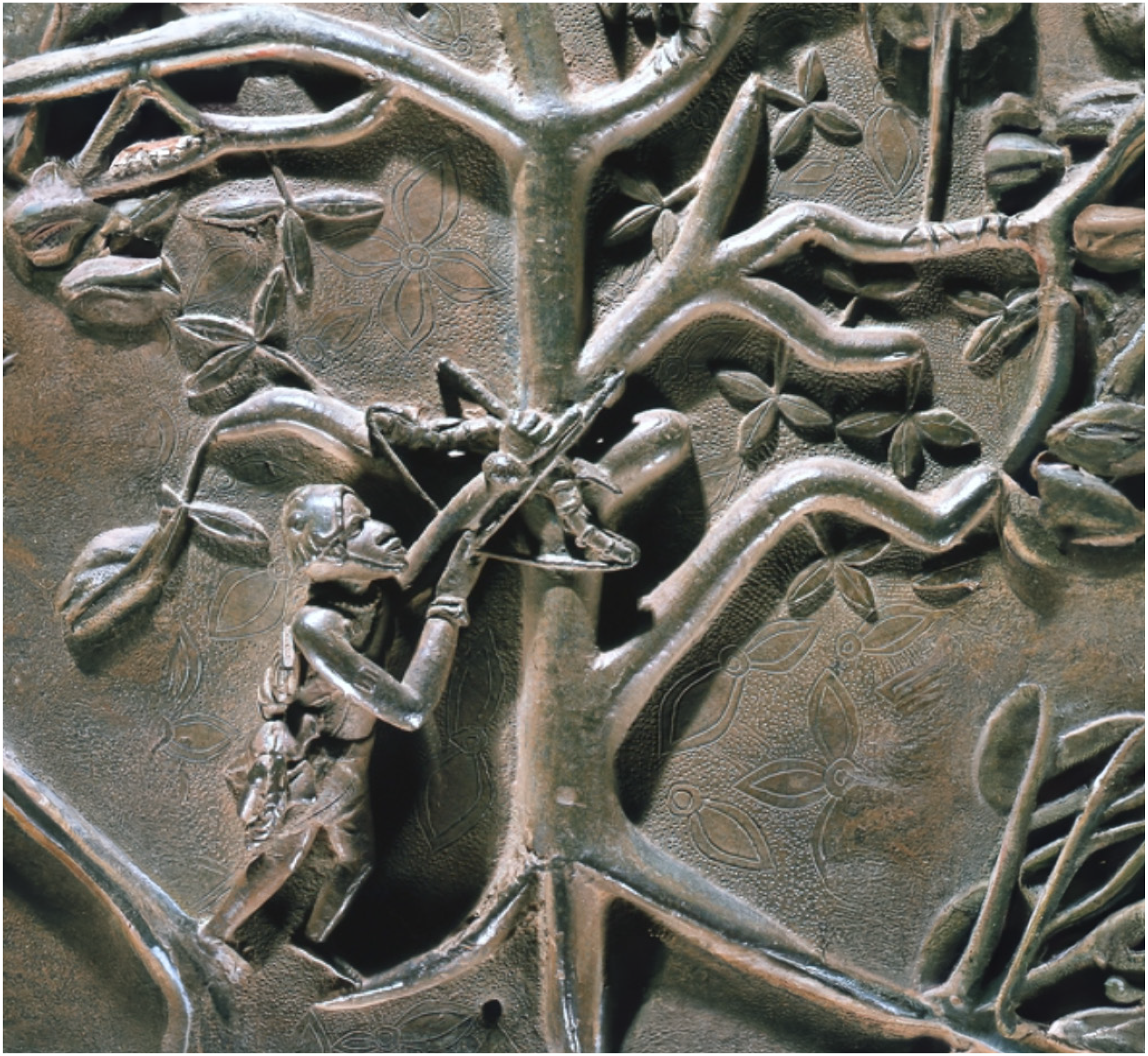
This artificially restored Benin Bronze is part of the project, AI-Restored Benin Bronzes conceived by artist Minne Atairu. The project—a conceptual art restoration employs DALL·E 2 (Open AI’s Text-to-Image algorithm) to generate visually plausible restorations of damages caused by colonial looting, natural weathering, and conservation practices. In this case, DALL·E “restored” missing regions around the periphery.
Credit: Ethnologisches Museum der Staatlichen Museen zu Berlin. Stiftung Preußischer Kulturbesitz, CC BY-SA 4.0 <https://creativecommons.org/licenses/by-sa/4.0>, via Wikimedia Commons
Currently, in the Hollywood writers’ strike, members are asking that controls be placed into the new contracts to prevent studios from replacing writers with AI systems to write scripts and material necessary for film production. Actor John Cusack recently suggested that the strikers should also put language in their contracts that would prevent studios from using AI to replace background and supporting actors in films.
The Impossible Sculpture was created by AI specialists incorporating information they took from various sources of five sculptors, Michelangelo, Rodin, Savage, Kollwit and Kotaro to design and assemble the sculpture using AI systems.
Credit: Anna Gerdén, National museum of Science and Technology.

Over a year ago, I opened one of the AI services and asked it to write a two-paragraph piece on a particular art topic. Almost before I finished, it came back with two paragraphs mostly filled with generic information on the subject, but it did include one element which was interesting. Then, it asked me to tell “it” how I would improve on the two paragraphs it had sent—quite willing to take my original suggestions and incorporate it into its AI “stew” for its own use. How many thousands of willing users has AI already taken original material from for its own uses? Currently, high school teachers and university professors are already having trouble dealing with students who have used AI in compiling their assignments, rather that creating material on their own.
“No AI” image that circulated on AriStation during the AI art protest. Credit: Cameron Butler, CC BY-SA 4.0 <https://creativecommons.org/licenses/by-sa/4.0>, via Wikimedia Commons.
Music will also be very vulnerable to the incursion of AI into the music world. Like the archives and material available in literature and poetry, music will also be available to the AI systems, and quite possibly most if not all of the music ever written and soundtracks of its recordings by several artist of the same piece, could be incorporated into the AI systems. Like writing, AI will also be asked to produce music “in the style of” a particular artist, and AI will produce music to satisfy such a request.
Copyright issues will even be more difficult to protect in music than in written material. AI can use just bits and short “phrases” of musical pieces to come up with material, which can be difficult to identify. To understand how difficult it already is to review copyright issues, you only need to go back to a recently held trial on the Led Zeppelin song, “Stairway to Heaven,” or even a more recent court case against Ed Sheeran, which focused on just a short element in his song.
Not only would AI be able to potentially saturate the field with material, but it could oversaturate the systems in place that search out good music and bring it to audiences.
The visual arts are also under extreme threat and pressure from the incursion of AI. AI systems have access to vast achieves of visual material on the arts that dates back centuries. They also have access to everything that has been written about artists and the art they create. And now with some artists actively using GAN AI systems to aid them in creating art projects, interacting back and forth to develop ideas and solutions, AI is not only getting original material from artists, but also is learning how the artist performs problem-solving and creating skills to form their projects.
AI is not only getting original material from artists, but also is learning how the artist performs problem-solving and creating skills to form their projects.
There have already been serious problems with countries not abiding or subject to western copyright laws, such as when companies continue to produce popular pieces of western art and replicate copies for their own markets without paying royalties to the artists.
Recently a piece of sculpture was produced by a group of AI specialists from the Swedish Engineering Company, Sandvik, and it was installed in the National Science and Technological Museum in Stockholm. The AI specialist fed into their systems all the material available on five artists to formulate the base of their design. The sculptors chosen were Michelangelo, Auguste Rodin, Katte Kollwitz, Takamura Kotaro, and Augusta Savage. They named the sculpture The Impossible Sculpture. You can search the project and hear the comments of the seemingly pleased specialists, but as you look at the completed sculpture and consider the process they went through, it does look a little like it was a sculpture formed by a committee. The sculpture, which is a highly polished and machine-carved stainless steel sculpture, does have an interest and certain appeal to it, but it is a far cry from the strong torsos of Michelangelo, and his interest in balancing figures while holding them in tension, as well as the great importance given to space, light, and shadow. Rodin, who had a great interest in integral strength of Gothic and Renaissance sculpture, would have never selected a smooth shiny surface, as his deep interest was in the balance of light and shadow, and the interplay that occur on sculpted surfaces. And his figures often showed great strength and sometimes a subtle tension created in the piece. The other artists, some of whom were also influenced by Rodin, only appeared to subtly influence the design in the piece.
There will be more and more examples of The Impossible Sculpture as organizations will continue to learn and access archives on art, as well as learn from existing artists and specialists who use AI systems to initially aid them in their projects, allowing the AI systems to get new information, as well as learn how to manipulate it to make new projects of their own.
In Germany, a photographer recently won first prize in a prestigious photographic competition. He intentionally did not collect the prize, as he had used AI in processing and producing the photograph. He wanted to test the system to see if they could detect it, as well as illustrate to the competition the potential threat AI poses.
One piece of news did come out recently that can give a little hope regarding the growing threat AI has brought to the art world, and that is in the testimony of Dan Navarro, who testified in the House Judiciary Committee on copyright issues affecting music. He gave important testimony on the complex problem of identifying the unique and sometimes individual ways an artist gets inspiration and where ideas, often over a long period of time, come to influence artists in the making of music, or any art for that matter. The concept in his testimony that gave me heart, when I think of confronting the potential threat AI poses for the arts and mankind in general, is when he describes the point where an artist can sometimes get goosebumps in creating something really original and unique. He asked if we could really believe whether art created by AI could give us goosebumps, and pointed out that since only a human can get goosebumps, how could an AI give us one if it cannot get one! ●