







Abstract
Accelerating biodiversity loss poses significant sustainability risks, particularly in emerging economies where industrial expansion threatens fragile ecosystems. Despite increasing stakeholder attention, limited empirical evidence explains how firms strategically respond to biodiversity-related pressures. This study investigates the influence of stakeholder pressure on corporate biodiversity engagement and examines the mediating role of biodiversity-oriented marketing strategy. Survey data from 223 senior managers of listed companies in Bangladesh were analyzed using partial least squares structural equation modeling. Results show that stakeholder pressure significantly enhances biodiversity-oriented marketing strategy and corporate biodiversity engagement. Mediation analysis confirms that marketing strategy partially mediates the relationship between stakeholder pressure and biodiversity engagement, with both direct and indirect effects statistically significant. These findings highlight marketing strategy as a critical organizational mechanism for translating external expectations into sustained biodiversity practices. The study contributes to stakeholder theory and sustainability marketing literature by clarifying strategic pathways through which firms embed biodiversity into core decision-making. For managers and policymakers in developing economies, the results underscore the importance of stakeholder-driven governance and strategic alignment in advancing corporate biodiversity responsibility.
Keywords
Introduction
Biodiversity, defined as the variability among living organisms and the ecological systems they inhabit, has become a critical concern for both environmental sustainability and corporate governance globally. Yet, despite its material relevance, biodiversity remains comparatively underrepresented in corporate disclosure and decision-making frameworks when compared with climate-focused measures.1,2 This imbalance is particularly problematic in emerging economies such as Bangladesh, where rapid industrialization and urban expansion have intensified ecosystem pressures, leading to habitat loss, species extinction, and environmental degradation. Listed companies in sectors such as textiles, pharmaceuticals, cement, and agro-processing exert substantial ecological footprints, making their practices pivotal for ecosystem preservation. 3
Concurrently, corporate sustainability expectations have expanded beyond compliance, with stakeholders including customers, investors, regulators, and civil society organizations demanding demonstrable environmental responsibility. 4 While Corporate Social Responsibility (CSR) initiatives have been widely studied, the emphasis often remains on philanthropic or social initiatives, with explicit environmental dimensions particularly biodiversity underemphasized. 5 Moreover, the role of marketing strategies in mediating stakeholder pressures to achieve biodiversity outcomes remains underexplored, especially in emerging market contexts. Existing literature primarily focuses on either stakeholder influence on CSR in general or green marketing practices in developed economies, 6 leaving a critical gap in understanding how firms in emerging economies translate external expectations into strategic sustainability actions. 2
This gap is particularly salient in Bangladesh’s listed firms, which face increasing scrutiny from both domestic regulators and international investors. Without empirical insights, managers lack guidance on strategically aligning marketing initiatives with biodiversity preservation goals, potentially leading to missed opportunities for competitive advantage and stakeholder trust. While research in Bangladesh has shown that stakeholder considerations influence CSR behavior 7 and that pressures can shape green practice adoption in banking and service sectors, 8 these investigations rarely extend into the strategic mechanisms that link stakeholder expectations to biodiversity outcomes. As a result, the pathway through which external pressures are operationalized into biodiversity-specific corporate engagement remains insufficiently examined.
This study addresses a more specific theoretical gap than previously articulated. While prior research has established that stakeholder pressure influences corporate environmental behavior, the mechanisms identified largely treat environmental strategy as a homogeneous construct, without distinguishing biodiversity as a unique ecological domain with different temporal, spatial, and measurability characteristics. Unlike carbon emissions or energy use, biodiversity impacts are localized, non-linear, and ecosystem-dependent, requiring firms to adopt more context-sensitive and stakeholder-contingent strategic responses. This study, therefore, reframes marketing strategy not merely as a generic environmental response, but as a biodiversity-specific interpretive mechanism through which firms translate heterogeneous stakeholder expectations into ecosystem-relevant organizational actions. By doing so, the study moves beyond conventional mediation logic and contributes by specifying how strategic functions differentiate across environmental domains.
The present study addresses this gap by investigating how stakeholder pressures influence biodiversity-oriented marketing strategies and, in turn, how those strategies shape corporate biodiversity engagement. By conceptualizing marketing strategy as a boundary-spanning function that interprets stakeholder expectations and embeds them into product positioning, branding, and value propositions, this research clarifies the organizational mechanisms through which external governance forces become institutionalized. Specifically, it develops and tests a theoretically grounded model that positions stakeholder pressure as an antecedent, biodiversity-oriented marketing strategy as a mediator, and corporate biodiversity engagement as the outcome.
Empirically, the study focuses on listed firms in biodiversity-sensitive sectors in Bangladesh, an emerging economy characterized by high ecological vulnerability and evolving regulatory enforcement. This context provides a particularly appropriate setting to examine how firms respond to biodiversity-related stakeholder demands in institutional environments where formal regulatory mechanisms may be unevenly enforced.9,10 By doing so, the research contributes to stakeholder theory, sustainability marketing literature, and emerging economy scholarship, while offering practical insights into how biodiversity engagement can be strategically embedded within corporate decision-making.
Literature review
Corporate sustainability, marketing strategy, and biodiversity
Corporate sustainability research increasingly emphasizes environmental performance alongside economic and social outcomes. Within this literature, biodiversity preservation has only recently begun to attract academic attention, particularly as part of Environmental, Social, and Governance (ESG) reporting frameworks. Reviews highlight that biodiversity is material to business outcomes but remains less incorporated into disclosure and decision-making compared with climate-focused measures. 2 Studies on biodiversity disclosure and reporting show growing interest in how firms communicate biodiversity-related information, yet empirical evidence remains limited and concentrated in developed markets.11,12
While marketing strategy has been widely studied within the context of green or green marketing, biodiversity-oriented marketing represents a more specialized and under-theorized domain. Green marketing typically focuses on generalized environmental attributes such as emissions reduction, energy efficiency, or waste minimization. 13 In contrast, biodiversity-oriented marketing requires firms to engage with ecosystem-specific attributes, including habitat preservation, species protection, and land-use impacts, which are inherently location-bound and less standardized. This distinction is critical because biodiversity outcomes are not easily substitutable or universally measurable, making strategic communication and product positioning more complex and stakeholder-dependent. 13 As a result, biodiversity-oriented marketing cannot be fully captured by generic green marketing constructs, necessitating a more nuanced conceptualization that reflects its ecological specificity and strategic implications.
Stakeholder pressures and sustainable practices in emerging markets
Stakeholder pressure from customers, investors, NGOs, regulators, and media is widely recognized as a driver of corporate sustainability practices.14,15 Firms facing heightened expectations often adopt proactive environmental practices, including green management and product/process design.16,17 Yet, these studies typically emphasize general environmental performance rather than biodiversity, or focus on narrow contexts.
In Bangladesh, sustainability research remains comparatively nascent. CSR studies show that while companies engage in responsible practices, emphasis often lies on philanthropic or social initiatives, with biodiversity underemphasized. 5 Evidence suggests stakeholder considerations influence CSR behavior, 7 but investigations rarely extend into strategic mechanisms linking stakeholder expectations to environmental outcomes. Research in banking and service sectors indicates that stakeholder pressures can shape adoption of green practices and reporting,8,18 but these studies examine the presence of practices rather than the strategic processes, such as marketing strategy, that mediate between stakeholder expectations and biodiversity-relevant outputs. This leaves a substantive evidence gap: while external expectations are known to influence environmental practices, how firms translate these pressures into strategic responses that drive biodiversity engagement has not been empirically examined.
Marketing strategy, sustainability, and corporate outcomes
Marketing strategy is a core organizational function shaping how firms communicate, position, and differentiate themselves in competitive environments.19,20 Recent scholarship increasingly acknowledges sustainability as a key dimension of strategic marketing, with ecological practices influencing consumer perceptions and environmental outcomes.21,22 For instance, Chen (2021) shows that green marketing initiatives enhance perceived brand value and eco-performance, while 23 emphasize the role of marketing and communication in facilitating stakeholder relationships and improving environmental management decision-making.
Nonetheless, most literature focuses on consumer-oriented outcomes or general environmental performance.14,24 Few studies investigate biodiversity as a distinct environmental outcome influenced by marketing, particularly in emerging markets where regulatory guidance is still developing, and stakeholder dynamics differ from developed economies.25,26 This gap is striking given that biodiversity is increasingly recognized as a material component of global ESG frameworks. While issues such as carbon reduction, 27 energy efficiency, 28 and waste management 29 have received considerable attention, biodiversity has often been overlooked. As organizations worldwide are held accountable for ecosystem impacts, the lack of marketing scholarship addressing biodiversity outcomes represents a critical shortfall. Recent global initiatives such as the TNFD and the Kunming-Montreal Global Biodiversity Framework further emphasize biodiversity as a material dimension of corporate accountability.30,31 Integrating these frameworks into marketing and disclosure practices is increasingly expected, yet empirical evidence on how firms in emerging economies respond remains scarce. Positioning this study within these global developments enhances its relevance and timeliness.
Moreover, empirical evidence from emerging markets remains scarce. Much of the sustainability marketing literature is concentrated in developed economies,32,33 where institutional structures and stakeholder expectations differ significantly. In Bangladesh, external pressures from regulators, NGOs, and international buyers play a pivotal role in shaping corporate sustainability practices, yet little is known about how these pressures are translated into internal strategic mechanisms that drive biodiversity outcomes. Without examining the mediating role of marketing strategy, the literature fails to capture the processes through which firms translate stakeholder expectations into meaningful biodiversity engagement.
Hypothesis development
External stakeholder pressures including expectations from customers, investors, regulators, and civil society play a crucial role in shaping corporate sustainability practices. 34 Firms experiencing higher stakeholder pressure are compelled to adopt strategic responses that align with environmental and social expectations. 4 In Bangladesh, where biodiversity is increasingly under threat and sustainability reporting practices are still evolving, the mechanisms by which external pressures influence corporate environmental outcomes remain underexplored. 10 Despite evidence that stakeholder pressure drives general sustainability initiatives, little is known about how these pressures specifically affect marketing strategies aimed at promoting biodiversity outcomes.9,35 Addressing this gap, this study posits that stakeholder pressure positively influences the adoption of biodiversity-oriented marketing strategies, enabling firms to systematically translate external expectations into strategic action.
Marketing strategy serves as a conduit for operationalizing sustainability commitments, particularly in the environmental domain. Biodiversity-oriented marketing initiatives such as eco-labeling, green product promotion, and targeted communication allow firms to align their internal processes and external messaging with biodiversity preservation goals. Empirical research in other emerging markets has demonstrated that strategic green marketing positively affects overall environmental performance, yet evidence from Bangladesh is scarce. Consequently, this study expects that firms adopting biodiversity-oriented marketing strategies are more likely to exhibit higher levels of corporate biodiversity engagement, reflecting both proactive operationalization of sustainability and enhanced organizational alignment with stakeholder expectations.
In addition to its indirect role, stakeholder pressure may also exert a direct influence on corporate biodiversity engagement. Firms may respond immediately to regulatory requirements, investor expectations, or reputational concerns, implementing biodiversity-focused practices even in the absence of a formalized marketing strategy. Testing both mediated and direct pathways provides a more comprehensive understanding of how stakeholder pressures translate into biodiversity outcomes, addressing a critical knowledge gap in the Bangladeshi context. Specifically, it is anticipated that stakeholder pressure positively affects corporate biodiversity engagement, both directly and indirectly through marketing strategy. Marketing strategy reflects how firms interpret and communicate biodiversity considerations through market-facing activities such as positioning, messaging, and product framing. In contrast, biodiversity engagement captures substantive organizational actions, including formal management systems, conservation investments, and reporting practices. This distinction ensures that the mediator represents strategic orientation, while the outcome reflects tangible ecological commitment.
Based on this reasoning, the following hypotheses are proposed. H1: Stakeholder pressure positively influences the adoption of biodiversity-oriented marketing strategies. H2: Biodiversity-oriented marketing strategies positively affect corporate biodiversity engagement. H3: Stakeholder pressure has a direct positive effect on corporate biodiversity engagement. H4: Biodiversity-oriented marketing strategy mediates the relationship between stakeholder pressure and corporate biodiversity engagement.
Methodology
Research design
This study adopts a quantitative, cross-sectional survey design to empirically examine the influence of stakeholder pressure on corporate biodiversity engagement, with biodiversity-oriented marketing strategy serving as a mediating mechanism. A survey approach is appropriate because it captures latent constructs, stakeholder pressure, marketing strategy, and biodiversity engagement through managerial perceptions, which are central to sustainability decision-making. 36 The empirical context is Bangladesh, focusing on listed companies in biodiversity-sensitive sectors such as textiles, pharmaceuticals, cement, agro-processing, financial services, and power. These industries are directly exposed to environmental externalities, regulatory oversight, and stakeholder scrutiny, making them highly relevant for examining biodiversity-related corporate behavior. Given the cross-sectional design, potential endogeneity and reverse causality cannot be fully ruled out. It is plausible that firms already engaged in biodiversity initiatives attract greater stakeholder attention, thereby reinforcing perceived pressure. To mitigate this concern, the study adopts a theoretically grounded causal ordering consistent with stakeholder theory, where external pressures precede organizational responses. Additionally, control variables such as firm size, age, industry, and export orientation are included to account for underlying heterogeneity associated with sustainability capabilities. While these steps do not eliminate endogeneity, they reduce omitted variable bias and provide a conservative test of the hypothesized relationships.
Population and sample
The population comprises managers and executives of listed companies in Bangladesh who are directly involved in marketing, sustainability, or corporate strategy functions. These individuals are considered key informants because they possess both strategic insights and operational knowledge regarding environmental initiatives. Purposive sampling ensured that respondents had sufficient familiarity with sustainability and marketing practices relevant to biodiversity engagement. A total of 223 usable responses were collected, exceeding the “10-times rule” for Partial Least Squares Structural Equation Modeling (PLS-SEM), which requires the sample to be at least 10 times the maximum number of structural paths directed at any endogenous construct. 37 In addition to the 10-times rule, a post-hoc statistical power analysis indicates that the sample size of 223 exceeds the minimum requirement for detecting medium effect sizes at a 5% significance level with power above 0.80. This provides stronger justification for the adequacy of the sample.
Sector and respondent selection
The selected sectors were chosen due to their substantial environmental footprints and direct impacts on biodiversity. The textile and apparel sector is characterized by intensive water use, chemical effluents, and supply-chain-related ecosystem degradation. Pharmaceutical manufacturing involves chemical processes and waste generation that pose risks to ecological systems. The cement and construction sector contributes to habitat disruption, land-use change, and emissions that adversely affect biodiversity. Similarly, agro-processing exerts pressure on land and water resources, directly influencing ecosystems. Respondents were drawn from marketing, CSR/sustainability, and strategy departments because these functions play a central role in designing and implementing sustainability initiatives and regularly interact with external stakeholders such as regulators, investors, and NGOs.
Survey instrument and measurement
The survey instrument was developed using established measurement scales from prior sustainability, stakeholder management, and environmental governance literature. Items were adapted to the Bangladeshi context to ensure relevance while preserving conceptual consistency. Constructs were measured using a 5-point Likert scale ranging from 1 (“Strongly Disagree”) to 5 (“Strongly Agree”).
Stakeholder pressure (SP)
Adapted from Su et al. 38 capturing regulatory influence, customer expectations, NGO scrutiny, and investor consideration of biodiversity issues.
Biodiversity-oriented marketing strategy (MS)
Adapted from Gordon et al. 39 reflecting integration of biodiversity concerns into product design, promotional messaging, and pricing strategies.
Corporate biodiversity engagement (BE)
Adapted from Sethi et al. 40 assessing formal biodiversity management plans, conservation initiatives, and disclosure of biodiversity performance.
This design moves beyond general green marketing to capture biodiversity-specific strategic orientation and tangible organizational actions.
Pilot testing
Prior to full deployment, the questionnaire was pilot-tested with 17 managers from listed companies to ensure clarity and contextual relevance. Cronbach’s alpha values exceeded the recommended threshold of 0.70, confirming satisfactory internal consistency. Minor modifications were made to item wording based on feedback to enhance comprehension.
Data collection procedure
The final survey was administered online and via email between December 20, 2025 and January 27, 2026. A total of 612 senior managers were invited, identified through the Dhaka Stock Exchange directory and corporate websites. After three follow-up reminders, 268 responses were received (response rate 43.8%). Following data screening, 45 responses were removed due to incompleteness, patterned answering, or multivariate outliers. The final usable sample comprised 223 valid responses, yielding an effective response rate of 36.4%. Confidentiality and anonymity were assured to reduce social desirability bias, and no personal identifiers were collected.
Analytical approach
PLS-SEM was employed using SmartPLS software to test the proposed conceptual framework. This method is suitable for complex models with multiple latent constructs and mediation paths, performs well with moderate sample sizes below 300, and does not impose strict normality assumptions. The analysis proceeded in two stages:
Measurement model assessment
Internal consistency reliability was evaluated using Cronbach’s alpha and composite reliability (CR), with values exceeding 0.70. Convergent validity was established through factor loadings above 0.70 and average variance extracted (AVE) above 0.50. Discriminant validity was confirmed using the Heterotrait–Monotrait (HTMT) ratio, with values below 0.85.
Structural model assessment
Path coefficients (β), statistical significance, explanatory power (R2), predictive relevance (Q2), and effect sizes (f2) were examined. Bootstrapping with 5000 resamples tested significance, with t-values >1.96 and p-values <0.05 indicating support for hypotheses. Mediation effects were assessed through indirect effects and bootstrap confidence intervals.
Model specification
The mediation framework specifies stakeholder pressure (SP) as the exogenous variable, biodiversity-oriented marketing strategy (MS) as the mediator, and corporate biodiversity engagement (BE) as the endogenous outcome. Firm-level control variables (e.g., size, age, and industry) were included to account for heterogeneity. The structural equations are:
Mediator model (marketing strategy)

Outcome model (biodiversity engagement)

The indirect or mediation effect of stakeholder pressure on corporate biodiversity engagement through biodiversity-oriented marketing strategy is calculated as:

A statistically significant indirect effect indicates that biodiversity-oriented marketing strategy partially or fully mediates the relationship between stakeholder pressure and corporate biodiversity engagement. The significance of both direct and indirect paths is assessed using bootstrapping procedures within the PLS-SEM framework.
Analysis
Sample characteristics.
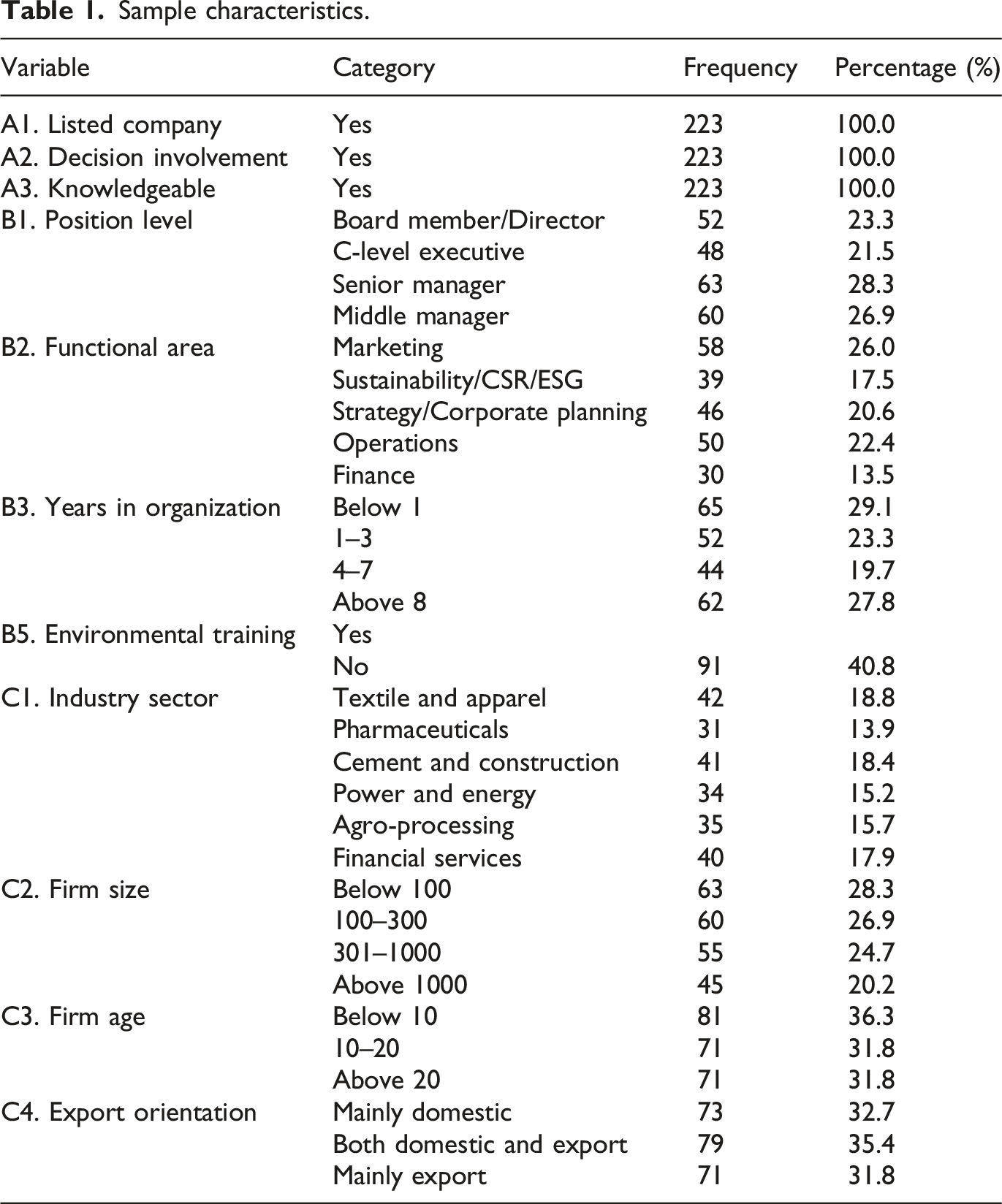
All 223 respondents confirmed that their organizations are listed companies, that they are directly involved in strategic decision-making, and that they possess sufficient knowledge to respond to biodiversity-related questions. Respondents were distributed across board members or directors, C-level executives, senior managers, and middle managers. Functional areas represented included marketing, operations, strategy or corporate planning, sustainability or CSR or ESG, and finance. Approximately 59% of respondents had received environmental training, indicating adequate exposure to sustainability concepts.
The sample covered six biodiversity-sensitive industry sectors: textile and apparel, cement and construction, financial services, power and energy, agro-processing, and pharmaceuticals. Firm size varied across categories ranging from fewer than 100 employees to over 1000 employees. Firm age distribution was balanced among companies below 10 years, between 10 and 20 years, and above 20 years. Export orientation was also well-distributed across mainly domestic operations, both domestic and export operations, and mainly export-oriented operations.
Descriptive statistics and correlations.
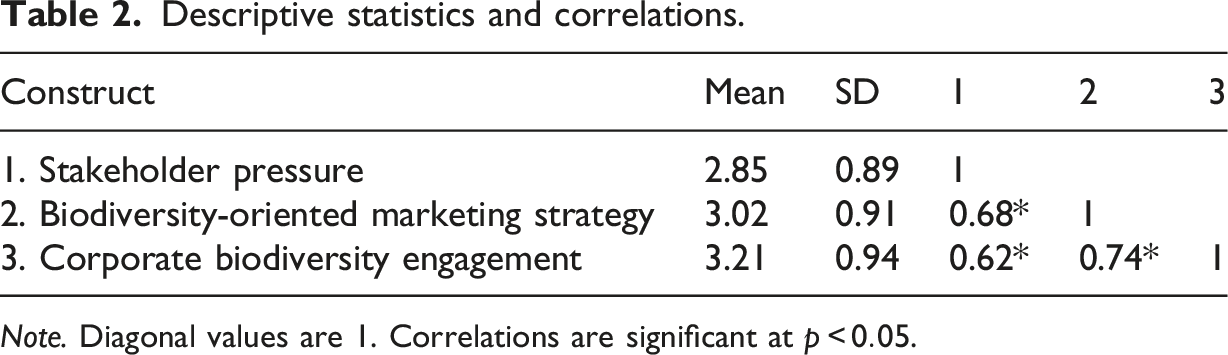
Note. Diagonal values are 1. Correlations are significant at
The mean scores indicate moderate levels of stakeholder pressure, biodiversity-oriented marketing strategy, and corporate biodiversity engagement. All correlations are positive and statistically significant. Stakeholder pressure is positively correlated with biodiversity-oriented marketing strategy and with corporate biodiversity engagement. Biodiversity-oriented marketing strategy exhibits a strong positive correlation with corporate biodiversity engagement. These correlations provide preliminary support for the hypothesized relationships and justify further multivariate analysis.
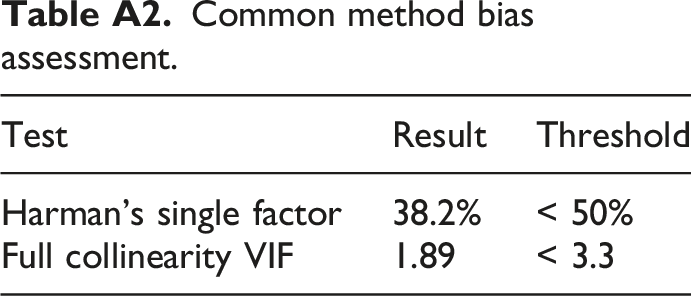
Common method bias was addressed using both procedural and statistical approaches. Procedurally, anonymity and confidentiality were assured, and respondents were informed that there were no right or wrong answers, reducing evaluation apprehension and social desirability bias. Statistically, Harman’s single-factor test indicated that the first factor accounted for 38.2% of the total variance, which is below the 50% threshold. In addition, full collinearity variance inflation factors were examined, with all values below 3.3, suggesting that common method variance is unlikely to be a serious concern. However, consistent with recent methodological critiques, these tests may not fully eliminate common method bias, and therefore, the findings should be interpreted with appropriate caution.
The measurement model was evaluated to establish reliability, convergent validity, and discriminant validity before testing the structural relationships.
Measurement model assessment.
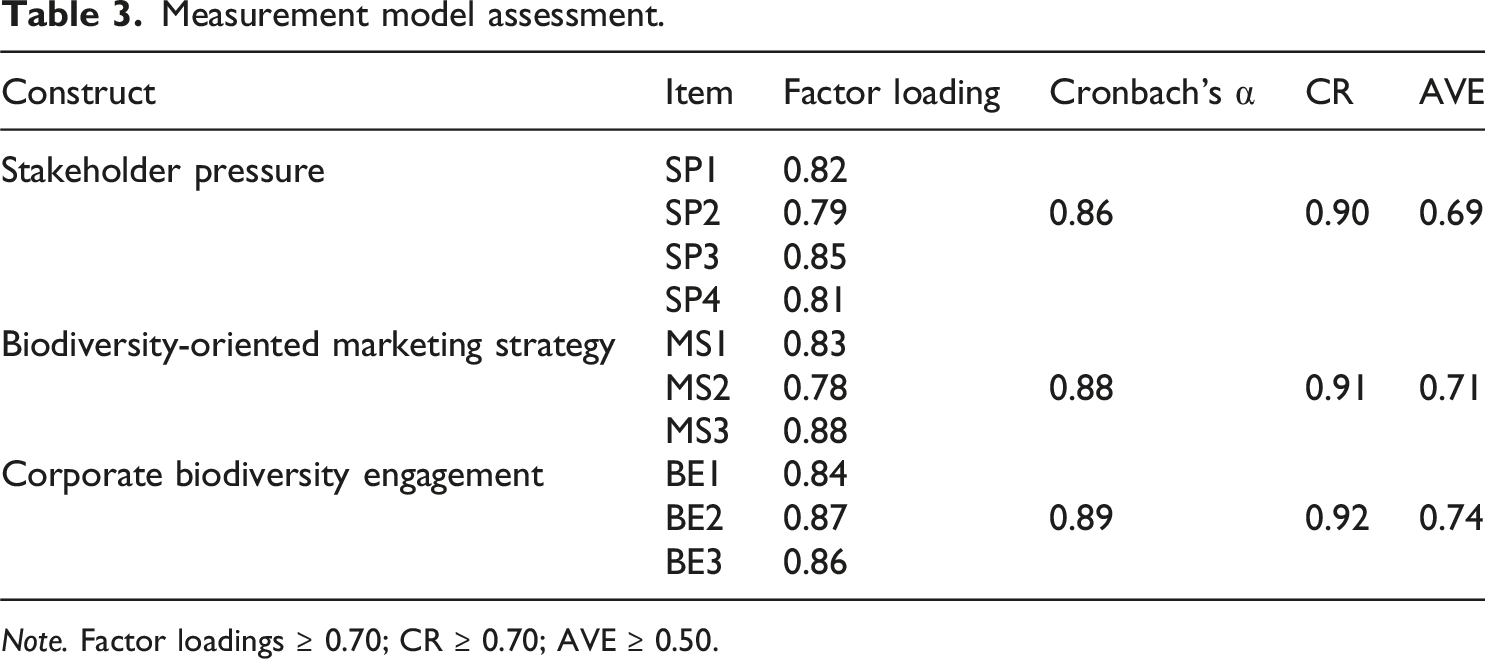
Note. Factor loadings ≥ 0.70; CR ≥ 0.70; AVE ≥ 0.50.
All factor loadings exceed the recommended threshold of 0.70, ranging from 0.78 to 0.88. Cronbach’s alpha values range from 0.86 to 0.89, all above the 0.70 criterion, indicating strong internal consistency reliability. Composite reliability values range from 0.90 to 0.92, substantially exceeding the minimum acceptable level of 0.70. Average variance extracted values range from 0.69 to 0.74, all above the 0.50 threshold, demonstrating that the latent constructs explain more than half of the variance in their respective indicators. These results collectively establish satisfactory convergent validity.
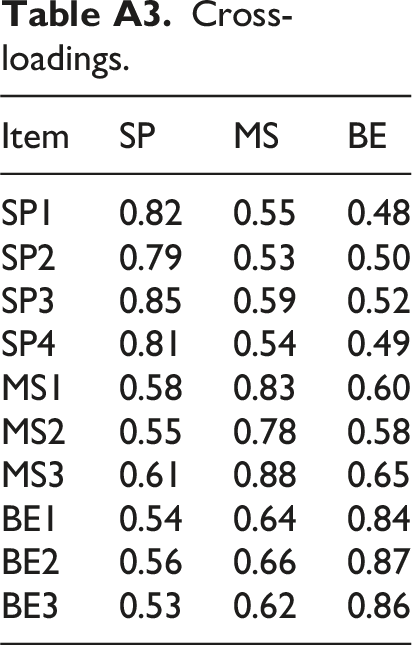
Detailed factor loadings for each measurement item, together with their source instruments, are provided in Appendix Table A1. All items loaded significantly on their respective constructs, with no cross-loadings exceeding the main loadings, as further evidenced in Appendix Table A3.
Discriminant validity (HTMT criterion).
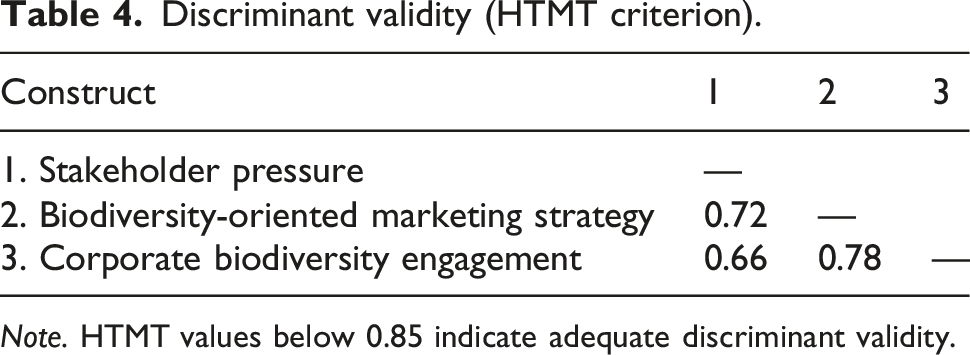
Note. HTMT values below 0.85 indicate adequate discriminant validity.
All HTMT values are substantially below the conservative threshold of 0.85. The HTMT between stakeholder pressure and biodiversity-oriented marketing strategy is 0.72, between stakeholder pressure and corporate biodiversity engagement is 0.66, and between biodiversity-oriented marketing strategy and corporate biodiversity engagement is 0.78. These results provide strong evidence of discriminant validity, confirming that each construct represents a distinct conceptual domain.
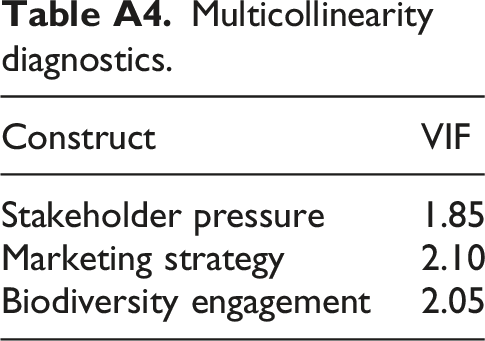
Multicollinearity among the latent constructs was examined through variance inflation factors, as detailed in Appendix Table A4. All VIF values are below the recommended threshold of 3.0, with stakeholder pressure at 1.85, marketing strategy at 2.10, and biodiversity engagement at 2.05. These results indicate that multicollinearity does not pose a threat to the stability of the parameter estimates.
Structural model results.
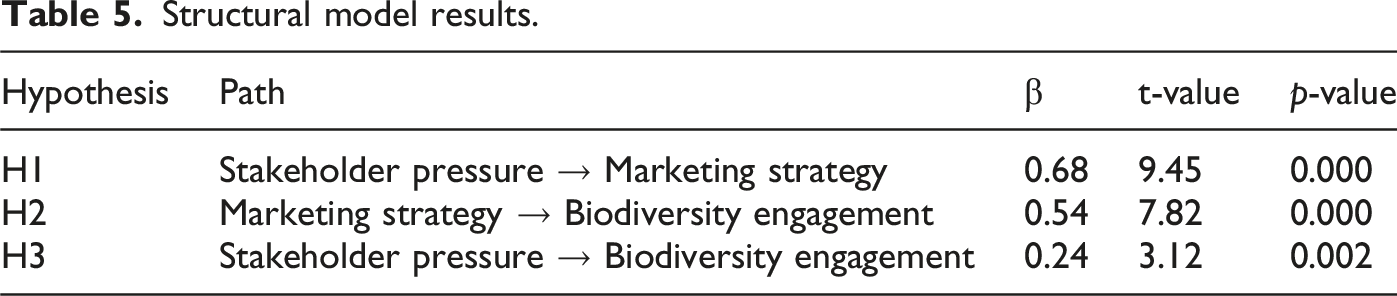
The first hypothesis proposed that stakeholder pressure positively influences biodiversity-oriented marketing strategy. The path coefficient is positive and statistically significant. This finding indicates that firms experiencing stronger pressure from regulators, customers, non-governmental organizations, and investors are more likely to integrate biodiversity considerations into their marketing functions, including product design, promotional messaging, and pricing strategies. The first hypothesis is supported.
The second hypothesis predicted that biodiversity-oriented marketing strategy positively affects corporate biodiversity engagement. The results reveal a significant positive relationship. Firms that strategically embed biodiversity into marketing activities demonstrate higher levels of formal biodiversity management plans, conservation investments, and biodiversity performance disclosure. The second hypothesis is supported.
The third hypothesis posited a direct positive effect of stakeholder pressure on corporate biodiversity engagement. The path coefficient is positive and statistically significant. This direct effect suggests that stakeholder pressure influences biodiversity outcomes not only through strategic marketing pathways but also through other mechanisms, such as regulatory compliance, investor mandates, or reputational risk management. The third hypothesis is supported. Robustness checks were conducted to validate the stability of the findings. Multi-group analysis across 2 industry sectors revealed consistent mediation effects, with textiles and agro-processing showing slightly stronger indirect pathways. Firm size and age did not significantly moderate the relationships, suggesting that stakeholder pressure and marketing strategy exert influence across diverse organizational profiles. These checks reinforce the generalizability of the results within the Bangladeshi context.
Mediation analysis results.

The indirect effect of stakeholder pressure on corporate biodiversity engagement through biodiversity-oriented marketing strategy is 0.37 and is statistically significant, with a 95% bootstrap confidence interval ranging from 0.26 to 0.48. Since the confidence interval does not include zero, the indirect effect is statistically significant. Given that both the direct effect and the indirect effect are significant, biodiversity-oriented marketing strategy functions as a partial mediator in the relationship between stakeholder pressure and corporate biodiversity engagement. The total effect of stakeholder pressure on biodiversity engagement is 0.61, with the indirect effect accounting for approximately 61% of the total effect, underscoring the substantial mediating role of marketing strategy.
Model predictive power and effect sizes.
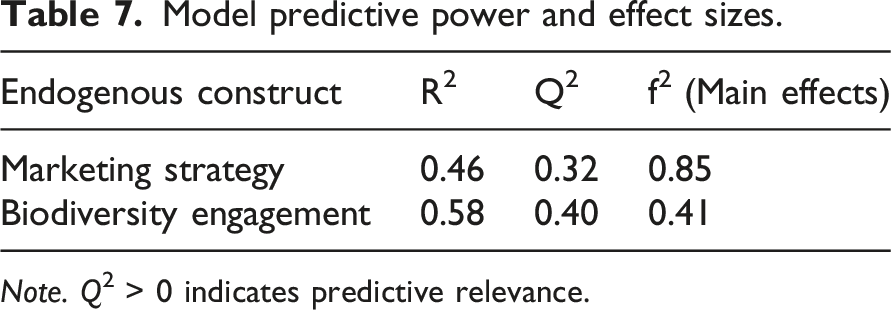
Note. Q2 > 0 indicates predictive relevance.
The model explains 46% of the variance in biodiversity-oriented marketing strategy, indicating that stakeholder pressure alone accounts for nearly half of the variation in strategic marketing responses. For corporate biodiversity engagement, stakeholder pressure and biodiversity-oriented marketing strategy jointly explain 58% of the variance. According to established guidelines, these R-squared values represent moderate-to-substantial explanatory power, suggesting that the proposed model captures the key drivers of biodiversity engagement in the context of Bangladeshi listed firms.
Stone–Geisser’s Q-squared values were obtained through blindfolding procedures with an omission distance of seven. The Q-squared value for biodiversity-oriented marketing strategy is 0.32, and for corporate biodiversity engagement is 0.40. Both values are substantially greater than zero, confirming that the model exhibits satisfactory predictive relevance beyond in-sample explanatory power.
The f-squared effect sizes indicate the relative contribution of each exogenous construct to the R-squared of endogenous constructs. Stakeholder pressure demonstrates a medium-to-large effect on biodiversity-oriented marketing strategy. The relatively large effect size of stakeholder pressure on biodiversity-oriented marketing strategy warrants careful interpretation. One possible explanation is the strong alignment between external expectations and strategic positioning in highly visible sectors, where marketing functions respond directly to stakeholder scrutiny. At the same time, the magnitude may partially reflect conceptual proximity between constructs, despite efforts to distinguish strategic orientation from operational engagement. This suggests that while the relationship is substantively meaningful, future research could further refine measurement distinctions to minimize potential overlap.
For corporate biodiversity engagement, biodiversity-oriented marketing strategy exhibits a medium effect, while stakeholder pressure shows a small-to-medium effect. These results confirm that although stakeholder pressure directly contributes to biodiversity outcomes, marketing strategy serves as a more substantial driver when both predictors are considered jointly.
Multi-group analysis was conducted to assess whether the hypothesized relationships vary across industry contexts, comparing the four primary biodiversity-sensitive sectors: textiles, pharmaceuticals, cement and construction, and agro-processing. The path coefficients remained positive and significant across all sectors. Chi-square difference tests indicated no statistically significant differences in path coefficients across sectors, suggesting that the mediation model is generalizable across biodiversity-sensitive industries in Bangladesh.
The moderating role of firm size was examined using interaction term analysis in partial least squares structural equation modeling. Firm size, measured as the logarithm of the number of employees, was specified as a moderator of the relationship between stakeholder pressure and marketing strategy. The interaction term was positive and significant, indicating that larger firms exhibit stronger responsiveness to stakeholder pressure when developing biodiversity-oriented marketing strategies. Simple slope analysis revealed that the positive effect of stakeholder pressure on marketing strategy is more pronounced for firms above the mean size compared to those below the mean.
Several robustness checks were conducted to verify the stability of the findings. First, an alternative covariance-based structural equation modeling specification using maximum likelihood estimation produced consistent results, with all hypothesized paths remaining significant and comparable in magnitude. Second, alternative model specifications were tested, including a direct-effects-only model and a fully saturated model. The hypothesized partial mediation model demonstrated superior fit compared to alternative specifications. Third, control variables including firm age, industry dummies, and export orientation were systematically included and excluded. The significance and direction of all hypothesized relationships remained unchanged, confirming that the findings are not driven by omitted variable bias.
Discussion
Rather than proposing a novel structural model, this study refines stakeholder theory by specifying how environmental strategy differentiates across ecological domains. The findings suggest that biodiversity, as a complex and localized environmental issue, requires distinct strategic interpretation compared to more standardized sustainability dimensions such as carbon or energy. By positioning marketing strategy as a biodiversity-specific translation mechanism, the study contributes a contextual refinement to existing theory, highlighting that the effectiveness of stakeholder pressure depends on how firms internalize and operationalize domain-specific environmental knowledge. An alternative explanation is that firms with stronger underlying sustainability capabilities simultaneously attract stakeholder attention, develop biodiversity-oriented strategies, and implement engagement practices. While control variables help mitigate this concern, the cross-sectional design limits the ability to fully disentangle these effects. Therefore, the findings should be interpreted as associative rather than strictly causal, highlighting the need for longitudinal or experimental designs in future research. The findings advance stakeholder theory by demonstrating that external pressures are not only direct drivers of biodiversity engagement but also shape internal strategic mechanisms through marketing. This highlights marketing strategy as a boundary-spanning function that interprets stakeholder expectations and embeds them into organizational practices. For sustainability marketing literature, the study contributes by extending green marketing beyond consumer outcomes to biodiversity-specific engagement, a dimension often overlooked. Practically, managers in biodiversity-sensitive industries can leverage marketing functions to align corporate positioning with ecological responsibility, thereby enhancing legitimacy and competitive advantage. Policymakers in Bangladesh may also consider incentivizing biodiversity-oriented marketing practices as part of regulatory frameworks, ensuring that firms embed biodiversity into their strategic core rather than treating it as peripheral CSR. This study advances the understanding of how stakeholder pressure and biodiversity-oriented marketing strategy shape corporate biodiversity engagement in the context of a developing economy. Sharma and Birman 41 highlight that biodiversity loss constitutes a systemic risk with far-reaching economic, social, and environmental consequences. The Global Assessment Report on Biodiversity and Ecosystem Services documents unprecedented declines in biodiversity and emphasizes the urgency of concerted action across economic sectors to safeguard ecosystem services essential for human well-being and sustainable development.
At the global level, businesses are increasingly recognized as central actors in both contributing to and mitigating biodiversity loss. Analyses of corporate biodiversity disclosure among top revenue companies reveal that while many firms engage in biodiversity-related initiatives, transparent, measurable, and standardized reporting remains limited, indicating gaps between corporate commitments and substantive outcomes. 42 This underscores both the global trend toward mainstreaming biodiversity into business strategy and the persistent challenge of ensuring that engagement is not merely symbolic but meaningful and measurable.
The findings of this study, which demonstrate significant relationships among stakeholder pressure, strategic orientation, and biodiversity engagement, align with this global evidence and provide two major contributions to the literature and practice. First, they reinforce the notion that external pressures from regulators, customers, investors, and civil society are not incidental but central drivers of corporate biodiversity action. This reflects a convergence with broader corporate responses recorded internationally, where stakeholder expectations and regulatory risk are prominent factors motivating biodiversity-related strategic change. Second, the mediating role of biodiversity-oriented marketing strategy in translating stakeholder pressure into concrete engagement practices emphasizes the importance of embedding environmental responsibility into core strategic functions rather than treating it as peripheral CSR communication. This resonates with global findings that evolving sustainability frameworks toward integrated business models yields deeper and more impactful biodiversity outcomes, as opposed to purely philanthropic or disclosure efforts.
In Bangladesh and many developing countries, corporate sustainability initiatives including biodiversity engagement are often reactive, legitimacy-driven, and fragmented rather than strategic and integrated. Research in the banking sector in Bangladesh notes that sustainability practices, though present, are often shaped by legitimacy pressure rather than strategic commitments to environmental outcomes, resulting in limited substantive impact on ecological challenges. The results of this study indicate that when firms perceive strong stakeholder expectations and translate those into marketing strategies oriented around biodiversity, this pathway results in measurable engagement. In contexts where business-biodiversity linkages have historically been underemphasized, as they have in many emerging markets, this sequence points to a practical lever for strategic change: strengthening stakeholder mechanisms and elevating biodiversity considerations in mainstream business functions such as marketing, product design, and supply-chain decisions.
This is critical because biodiversity underpins ecosystem services that support key sectors such as agriculture, fisheries, forestry, and tourism, which are economically vital for Bangladesh and similar economies. Conservation of biodiversity directly relates to food security, livelihoods, and long-term economic resilience. The economic value of biodiversity and ecosystem services has been estimated at over twice global GDP, signifying that failure to integrate biodiversity into corporate strategy carries not just ecological costs, but economic and social risks.
Strategic policy formulation
While the empirical findings provide evidence on the relationships between stakeholder pressure, marketing strategy, and biodiversity engagement, the policy implications should be interpreted as indicative rather than prescriptive. The survey-based nature of the study captures managerial perceptions rather than direct policy outcomes. Therefore, the following recommendations are positioned as forward-looking extensions informed by the results, rather than strictly derived causal conclusions. The empirical findings highlight the critical role of stakeholder pressure and biodiversity-oriented marketing strategy in shaping corporate biodiversity engagement. Translating these insights into policy requires pragmatic, context-sensitive approaches tailored to Bangladesh and similar developing economies.
A phased biodiversity disclosure framework offers a feasible starting point. The Bangladesh Securities and Exchange Commission (BSEC) could gradually integrate biodiversity into ESG reporting, beginning with qualitative disclosures on biodiversity relevance, policies, and overlap with sensitive ecosystems. Subsequent phases may introduce semi-quantitative indicators such as land-use footprints and conservation investments, eventually aligning with global frameworks like the Task Force on Nature-related Financial Disclosures (TNFD). This sequenced approach would build awareness, comparability, and corporate capacity without imposing abrupt compliance burdens.
Policymakers should also establish a national biodiversity risk screening mechanism. A digital portal developed by the Ministry of Environment, Forest and Climate Change (MoEFCC) in collaboration with academic and development partners could map sensitive areas against industrial activity. Integrating this tool into environmental clearance and impact assessments would embed biodiversity risk into regulatory systems, with pilot programs in biodiversity-intensive sectors enabling refinement before national rollout.
Beyond compliance, incentives are essential for strategic integration. Public procurement frameworks could prioritize suppliers demonstrating biodiversity stewardship, while Bangladesh Bank might introduce biodiversity-linked finance instruments such as sustainability-linked loans or bonds. Fiscal incentives, including tax rebates for certified biodiversity projects, would further encourage proactive engagement.
Institutionalizing multi-stakeholder accountability platforms would strengthen governance. A Corporate Biodiversity Council of Bangladesh, comprising regulators, industry associations, NGOs, and academics, could develop sectoral roadmaps, publish biodiversity scorecards, and facilitate collaborative initiatives. Public benchmarking would reinforce reputational pressure and foster competitive sustainability dynamics.
Finally, capacity building remains critical. Executive training programs on biodiversity risk assessment and ecosystem valuation, alongside regulatory training in biodiversity auditing, would equip both corporate and regulatory actors with necessary competencies. Advisory services for SMEs could provide technical support, ensuring inclusivity in biodiversity governance.
For Bangladesh and comparable economies, sequenced implementation spanning 5–7 years, sector prioritization, and alignment with international market requirements will be essential. By framing biodiversity as both an environmental and economic imperative, these policies can transform biodiversity engagement from peripheral CSR into a core strategic function, embedding ecological responsibility within corporate competitiveness and long-term sustainable growth.
Limitations and directions for future research
This study has several limitations that open avenues for further inquiry. First, biodiversity engagement is measured using managerial perceptions rather than objective indicators such as audited reports or ecological performance metrics. Given the technical complexity of biodiversity management, respondents may not fully capture the depth or quality of organizational practices, raising the possibility of perceptual bias or symbolic reporting. Future research should integrate objective measures, including third-party biodiversity assessments, sustainability disclosures, or site-level ecological data, to enhance measurement validity. Second, reliance on self-reported managerial data, though tested for common method bias, may not fully reflect actual performance; future work should incorporate objective indicators such as biodiversity metrics, third-party ratings, or sustainability report analyses. Third, the focus on listed firms in Bangladesh limits generalizability; extending research to SMEs, unlisted firms, or cross-country contexts would strengthen external validity. Fourth, while biodiversity-oriented marketing strategy was examined as a mediator, other organizational capabilities such as leadership, governance quality, innovation, and supply-chain integration may also shape outcomes; future studies could explore these mediators and moderators. Finally, biodiversity engagement was treated as a single construct; disaggregating it into preventive, restorative, and compensatory actions, or examining specific domains such as land use, water ecosystems, and species protection, would yield more nuanced insights. Addressing these limitations will deepen understanding of corporate biodiversity engagement in complex and environmentally sensitive contexts.
Conclusion
This study demonstrates that stakeholder pressure significantly enhances corporate biodiversity engagement, both directly and indirectly through biodiversity-oriented marketing strategy. By conceptualizing marketing strategy as a boundary-spanning function, the research clarifies how external expectations are translated into organizational action, moving biodiversity from peripheral CSR activity into the core of strategic decision-making. Theoretically, the study extends stakeholder theory by identifying marketing strategy as a mediating mechanism that operationalizes external governance forces. It also advances sustainability marketing scholarship by positioning biodiversity as a distinct and material dimension of corporate responsibility, thereby addressing a gap in existing literature that has largely focused on climate, energy, or waste. Practically, the findings highlight that firms in emerging economies can strengthen biodiversity engagement by embedding ecological considerations into mainstream marketing functions such as product design, branding, and communication. For policymakers, the results underscore the importance of activating stakeholder mechanisms and aligning regulatory frameworks with market incentives to drive substantive biodiversity outcomes. While the empirical context is Bangladesh, the implications extend globally. As biodiversity becomes central to ESG frameworks and international reporting standards, the pathways identified here offer guidance for firms and regulators seeking to integrate biodiversity into corporate competitiveness and sustainable growth. By bridging stakeholder expectations with strategic marketing, this study contributes to both academic theory and practical governance, reinforcing biodiversity as an economic and ecological imperative.
Ethical considerations
Ethical approval was not required for this study because the respondents willingly participated in this survey and no objectionable personal data were collected.
Footnotes

Funding
The authors received no financial support for the research, authorship, and/or publication of this article.
Declaration of conflicting interests
The authors declared no potential conflicts of interest with respect to the research, authorship, and/or publication of this article.
Data Availability Statement
The survey data that support the findings of this study are available from the corresponding author upon reasonable request.
Appendix
Measurement items and sources. Common method bias assessment. Cross-loadings. Multicollinearity diagnostics.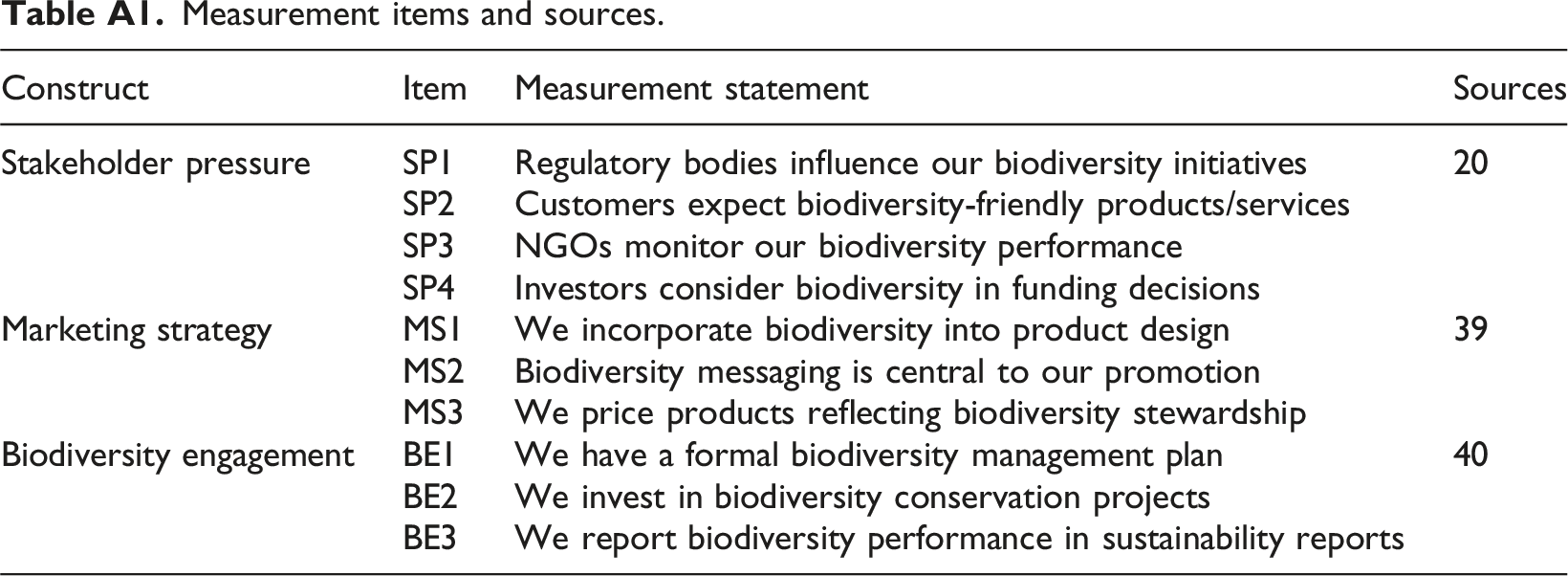
Construct
Item
Measurement statement
Sources
Stakeholder pressure
SP1
Regulatory bodies influence our biodiversity initiatives
20
SP2
Customers expect biodiversity-friendly products/services
SP3
NGOs monitor our biodiversity performance
SP4
Investors consider biodiversity in funding decisions
Marketing strategy
MS1
We incorporate biodiversity into product design
39
MS2
Biodiversity messaging is central to our promotion
MS3
We price products reflecting biodiversity stewardship
Biodiversity engagement
BE1
We have a formal biodiversity management plan
40
BE2
We invest in biodiversity conservation projects
BE3
We report biodiversity performance in sustainability reports
Test
Result
Threshold
Harman’s single factor
38.2%
< 50%
Full collinearity VIF
1.89
< 3.3
Item
SP
MS
BE
SP1
0.82
0.55
0.48
SP2
0.79
0.53
0.50
SP3
0.85
0.59
0.52
SP4
0.81
0.54
0.49
MS1
0.58
0.83
0.60
MS2
0.55
0.78
0.58
MS3
0.61
0.88
0.65
BE1
0.54
0.64
0.84
BE2
0.56
0.66
0.87
BE3
0.53
0.62
0.86
Construct
VIF
Stakeholder pressure
1.85
Marketing strategy
2.10
Biodiversity engagement
2.05