







Abstract
Attempts were made in this study to examine the efficiency of Fenton’s reagent with different dosing processes and H2O2 and Fe2+ concentrations for the treatment of carbofuran wastewater. Carbofuran degradation, total organic carbon (TOC) removal and H2O2 consumption were determined during the experiments. Increases in H2O2 and Fe2+ concentrations led to an increase in the degradation of carbofuran. Almost 100% of carbofuran could be degraded at pH 3, 120 mg L-1 H2O2, 24 mg L-1 Fe2+ and 30 minutes reaction time; removals of TOC were among 48.8%–53.3% under different dosing processes. A continuous dosing process was beneficial to improve the removal of TOC by Fenton’s reagent. Rate constants of carbofuran degradation could be calculated by the first-order kinetics; increase in the Fenton’s reagent generally increased the rate constants. Gas chromatography-mass spectrometry analysis found five degradation products by hydroxyl radicals attack. Thus, this study might offer an effective dosing way for carbofuran wastewater treatment by Fenton’s reagent.
Introduction
Fenton’s reagent, a mixture of ferrous ion and hydrogen peroxide which produces hydroxyl radicals (·OH), has been used extensively for the oxidation of organic matters in water and to reduce the chemical oxygen demand (COD) and total organic carbon (TOC) content. The use of Fe2+/H2O2 as an oxidant for wastewater is attractive due to its high oxidation power, rapid oxidation kinetics, being relatively inexpensive and easy to operate and maintain. In addition, iron is highly abundant and non-toxic, and a 30% hydrogen peroxide aqueous solution is easy to handle and environmentally friendly (Neyens and Baeyens, 2003). There are many successful investigations in the treatment of dyeing and textile wastewaters, paper pulp wastewaters, phenols, pesticides, cosmetic wastewaters, wheat straw black liquors, livestock wastewater and petroleum wastewater which are mentioned in this decade (Catalkaya et al., 2007; Fang et al., 2002; Gulkaya et al., 2006; Lee and Shoda, 2008; Ma and Xia, 2009; Ma et al., 2009; Oliveira et al., 2006; Pérez et al., 2002; Segura et al., 2009; Torrades et al., 2007; Zhang et al., 2009).
Momani et al. (2004) investigated different advanced oxidation processes (AOPs) such as UV, UV/H2O2, Fenton and photo-Fenton treatment at laboratory scale for the treatment of 2,4-dichlorophenol (DCP) solutions. The authors found that the Fenton’s reagent was an efficient process for the elimination of DCP. The degradation rate depended on the initial H2O2 concentration; increasing the amount of H2O2 led to increased DCP removal percentages. Gulkaya et al. (2006) investigated the effectiveness of the Fenton’s reagent for the treatment of carpet dyeing wastewater under different operational conditions, namely, H2O2 and FeSO4 concentrations, initial pH and temperature. Up to 95% COD removal efficiency was attained using 5.5 g L-1 FeSO4 and 385 g L-1 H2O2 at a pH of 3 and temperature of 50oC. The H2O2/Fe2+ ratio (g/g) was found to be between 95 and 290 for the maximum COD removal. Torres et al. (2007) proposed that the Fenton process showed better performances in the mineralization of bisphenol A (BPA), as evidenced by the lower TOC value than in the ultrasonic experiment. After 180 minutes, 75% of COD and 20% of TOC have been removed with the Fenton process whereas, at the same time, only 40% of COD and 5% of TOC have been eliminated using ultrasound. Sun et al. (2007) used the ultrasonic process and Fenton process to treat the wastewater containing acid black 1 (AB1) dyes. Degradation of AB1 by an ultrasound only, ultrasound/Fe2+ and ultrasound/H2O2 could almost not be observed but occurred by the Fenton oxidation. This was due to active species such as ·OH/·OOH that could be generated by the inter-reaction of hydrogen peroxide with ferrous and ferric ions in acid solution. The main reaction pathway for the degradation of AB1 in solution was the oxidation by ·OH attack. Lee and Shoda (2008) used the Fenton’s reagent to remove COD and color from high-strength livestock wastewater. The optimum ratio of H2O2 (mg L-1) to the initial COD was 1.05 and the optimum molar ratio of H2O2/Fe2+ was 2. Under optimal conditions, the removal ratios of COD and color of the supernatant were 88% and 95.4%, respectively. Addition of Fenton’s reagents in several aliquots did not affect the efficiencies of COD and color removal. Therefore, find out a better operation condition of H2O2 and Fe2+ dosages is a principal course in the treatment of wastewaters by Fenton’s reagent.
Carbofuran (2,3-dihydro-2,2-dimethylbenzofuran-7-yl methylcarbamate, C12H15NO3) is a well-known methylcarbamate pesticide which has aroused considerable concern due not only to its heavy rate of use (10.5% of the total pesticides in Taiwan, 2003–2007) but also due to its high oral toxicity. Residues of carbofuran, even in small quantities can accumulate in the surrounding soil and groundwater, which can create potential toxicity to human health. The lethal dose for 50% of target species on long term exposure (LD50) of carbofuran is 11 mg/kg (Wang and Lemley, 2003). Several chemical treatment methods including photo-Fenton, ultrasound and sono-Fenton have been investigated to reduce the amount of carbofuran present in wastewater (Benitez et al., 2002; Hua and Thompson, 2001; Lu et al., 2010; Lu et al., 2011; Ma et al., 2009, 2010; Ma and Sung, 2010; Wang and Lemley, 2003). However, it is seldom to discuss the effect of Fenton’s reagent dosing types on the oxidation of organic pollutants. Hence, the objective of this study is the assessment of carbofuran degradation by different Fenton’s reagent dosing processes (one stage, two stages, three stages and continuous stages). Several parameters, including oxidation reduction potential (ORP) change, carbofuran removal, TOC removal and H2O2 consumption are monitored. Moreover, the kinetic study and oxidation mechanisms of experimental results are carried out.
Materials and methods
The chemical reagents used in this study were carbofuran (C12H15NO3, purity >98%), ferrous sulfate (FeSO4·7H2O, purity >99.5%), and an aqueous solution of hydrogen peroxide (H2O2, 30% w/v). During the analytical processes, potassium iodine (KI), hydrogenophtalate potassium (C8H5KO4) (KHP) and dichloromethane (CH2Cl2) were used in determining H2O2, TOC and carbofuran concentrations, respectively. These chemicals were the purest grade commercially available and were used without further purification.
The reactor consisted of a water-jacketed cylinder glass reactor (1000 ml) provided with the necessary equipments such as magnetic mixer, ORP and pH meters (Suntex PC-3200, Taiwan) and microtube pump for the development of the experiments. This reactor was equipped with a circulating temperature to keep the temperature at constant stage. Seven reaction temperatures including 15, 20, 25, 30, 40, 50 and 60oC were designed for the carbofuran degradation by Fenton”s process in this study. Initially, the reactor was loaded with 1000 ml in all cases, and the initial concentration of carbofuran was 50 mg L-1. Reaction sets were sampled periodically (0, 2, 5, 10, 12, 15, 20, 22, 25 and 30 minutes) for analyses.
All the experiments were carried out at pH 3 and the initial pH was adjusted by adding appropriate amounts of 1N H2SO4. Oxidation experiments of carbofuran by Fenton’s reagent were carried out by varying the dosages of H2O2 (30–240 mg L-1) and Fe2+ (6–48 mg L-1), and keeping the ratio between both concentration (R = [H2O2]/[Fe2+]) constant at 5. Table 1 details the experimental conditions of these experiments. Four different types of Fenton’s reagent dosing processes such as the one stage, two stages, three stages and continuous stages were carried out in this work. For example, in run B-1, half the Fenton’s reagent was dosing into the reactor initially and other half was dosing into the reactor at the reaction time of 10 minutes, where the total H2O2 and Fe2+ dosages were 30 and 6 mg L-1, respectively. In the continuous stages, H2O2 and Fe2+ were individually pumped into the reactor by the microtube pump with a flow rate of 1 ml min-1; total volumes of both H2O2 and Fe2+ pumped into the reactor after 30 minutes were 60 ml.
Degradation and mineralization of carbofuran by different types of Fenton reagent addition
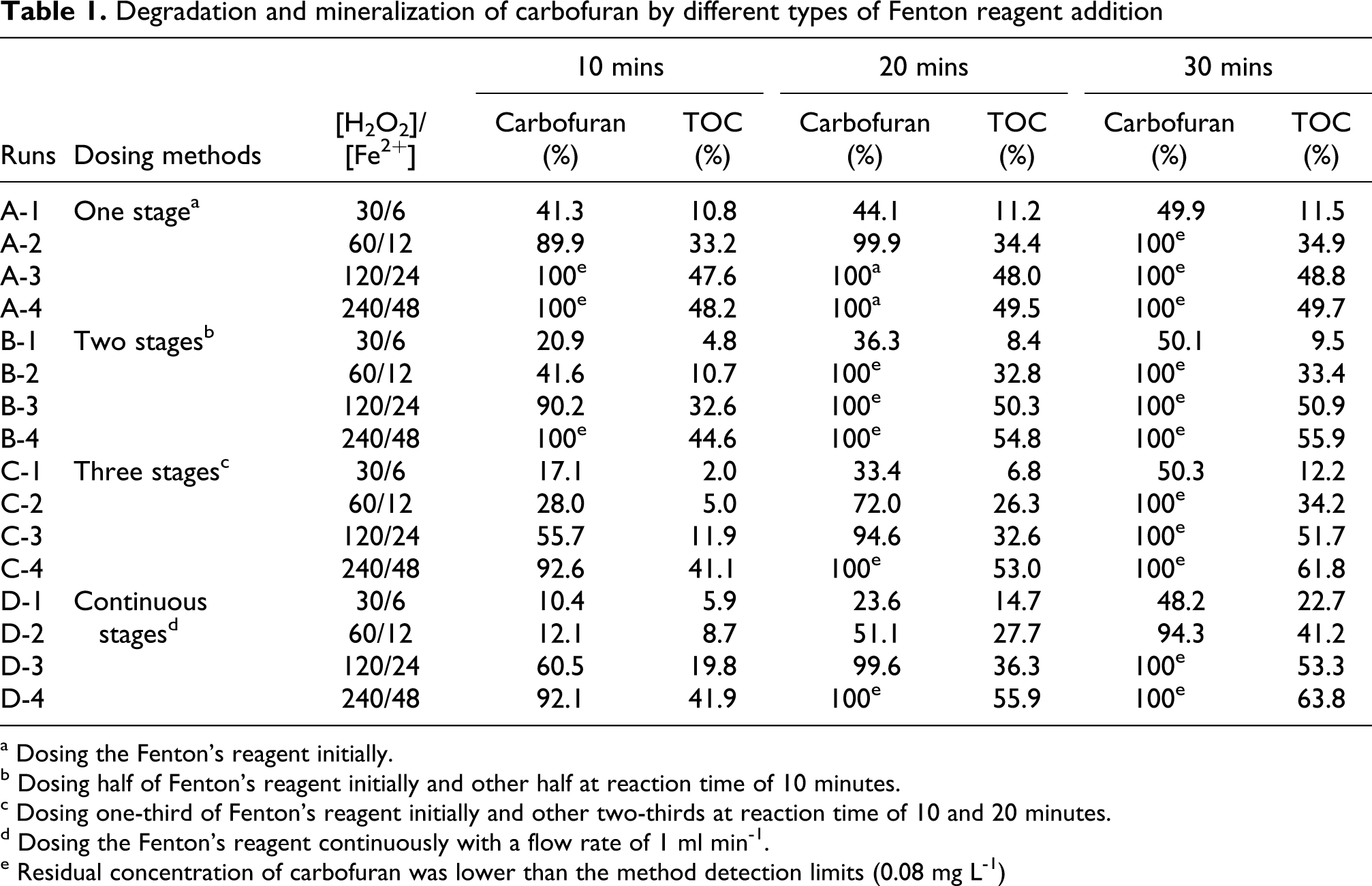
a Dosing the Fenton’s reagent initially.
b Dosing half of Fenton’s reagent initially and other half at reaction time of 10 minutes.
c Dosing one-third of Fenton’s reagent initially and other two-thirds at reaction time of 10 and 20 minutes.
d Dosing the Fenton’s reagent continuously with a flow rate of 1 ml min-1.
e Residual concentration of carbofuran was lower than the method detection limits (0.08 mg L-1)
Concentrations of carbofuran and the degradation by-products present were analyzed by a gas chromatography/mass spectrometry (GC-MS-QP2010, Shimadzu, Japan). Before GC-MS, the sample containing carbofuran and degradation by-products was extracted with the dichloromethane following the steps described by Wang and Lemley (2003). The H2O2 concentration was measured by KI titration method. Mineralization of carbofuran was determined by the removal of TOC, measured using a total organic carbon analyzer (TOC-500, Shimadzu, Japan).
Results
Oxidation of carbofuran by Fenton’s reagent
In the present study, the Fenton’s reagent was carried out using Fe2+ and H2O2 concentrations of 6 to 48 mg L-1 and 30 to 240 mg L-1, respectively, added to initial carbofuran concentrations of 50 mg L-1 and the reaction time of 30 minutes. In all experiments, the pH values were pre-adjusted to 3.0 initially then were monitored using a laboratory pH meter with combination electrode. The observed pH changes within the carbofuran degradation at different runs were small (in order of 0.3–0.5 pH units). The initial ORP values for all the experiments were around 330–340 mV. There was a sharp increase in the ORP value around 500–520 mV when the Fenton’s reagent was dosing into the reactor. After that, the changes in ORP values for four experiments (runs A-1 to A-4) were very small. The ORP values during the experiments for run A-4 were higher than those of other three runs, which was recognized that the increase in the concentrations of Fe2 + and H2O2 increased the oxidation potential by amplifying the oxidant level in the reaction system. In runs D-1 to D-4, the Fe2+ and H2O2 solutions were continuously dosing into the reactor by a microtube pump with a flow rate of 1 ml min-1. Therefore, to make sure the total volumes of Fenton’s reagent pumped into the reactor for runs D-1 to D-4 were consistent, the original stock solutions of Fe2+ and H2O2 should be pre-adjusted as desirable concentrations. As an example, increase of Fenton’s reagent led to a continuous increase in the ORP values. However, the ORP values kept constant within the reaction time of 15 minutes (data were not shown).
The resulting carbofuran degradations carried out by different Fenton’s reagent dosing processes are given in Figure 1a and b. It was observed that the carbofuran degradation increased from 49.9% to 100% when the initial Fenton’s reagent increased from 30/6 mg/mg (run A-1) to 60/12 mg/mg (run A-2). In addition, in runs A-3 and A-4, almost 100% of the carbofuran was degraded within 1 minute, where the residual carbofuran concentration at this reaction interval was lower than the method detection limits (MDLs) of 0.08 mg L-1. This indicated that adding the sufficient Fenton’s reagent produced adequate ·OH radicals in aqueous solution leading to rapid degradation of carbofuran. However, the rapid degradation might be made by an excess of Fenton’s reagent in runs A-3 and A-4. Gulkaya et al. (2006) discussed the effect of H2O2 concentration on Fenton’s treatment in the carpet dyeing wastewater. It was found that at 19.3 g L-1 H2O2, COD removal was 67% and it increased to 95% when H2O2 was raised to 385 g L-1, due to increase in the formation of ·OH radicals. However, for an excess of H2O2 dose, no further increase in the COD removal was observed since Fe2+ concentration became deficient to reacting with H2O2, which could be explained by the phenomena taking place in runs A-3 and A-4. In Figure 1b, the continuous dosing process was carried out and the carbofuran degradation also apparently increased from 48.2% to 94.3% when the Fenton’s reagent increased from 30/6 mg/mg (run D-1) to 60/12 mg/mg (run D-2). When the Fenton’s reagent was increased to 120/24 mg/mg, a complete degradation of carbofuran was observed within the reaction time of 20 minutes. However, comparing the results shown in Figure 1a) and b, faster degradation of carbofuran took place in the first 5 minutes in one stage dosing process, due to the higher Fenton’s reagent was carried out initially leading to an effective degrade of the carbofuran. Oliveria et al. (2006) used the Fenton’s process to degrade DCP-containing wastewater where the initial DCP concentration was 100 mg L-1. The level of Fe2+ increased leading to enhanced DCP degradation. In this study, it was also found that increased Fenton’s reagent enhanced the degradation of carbofuran.
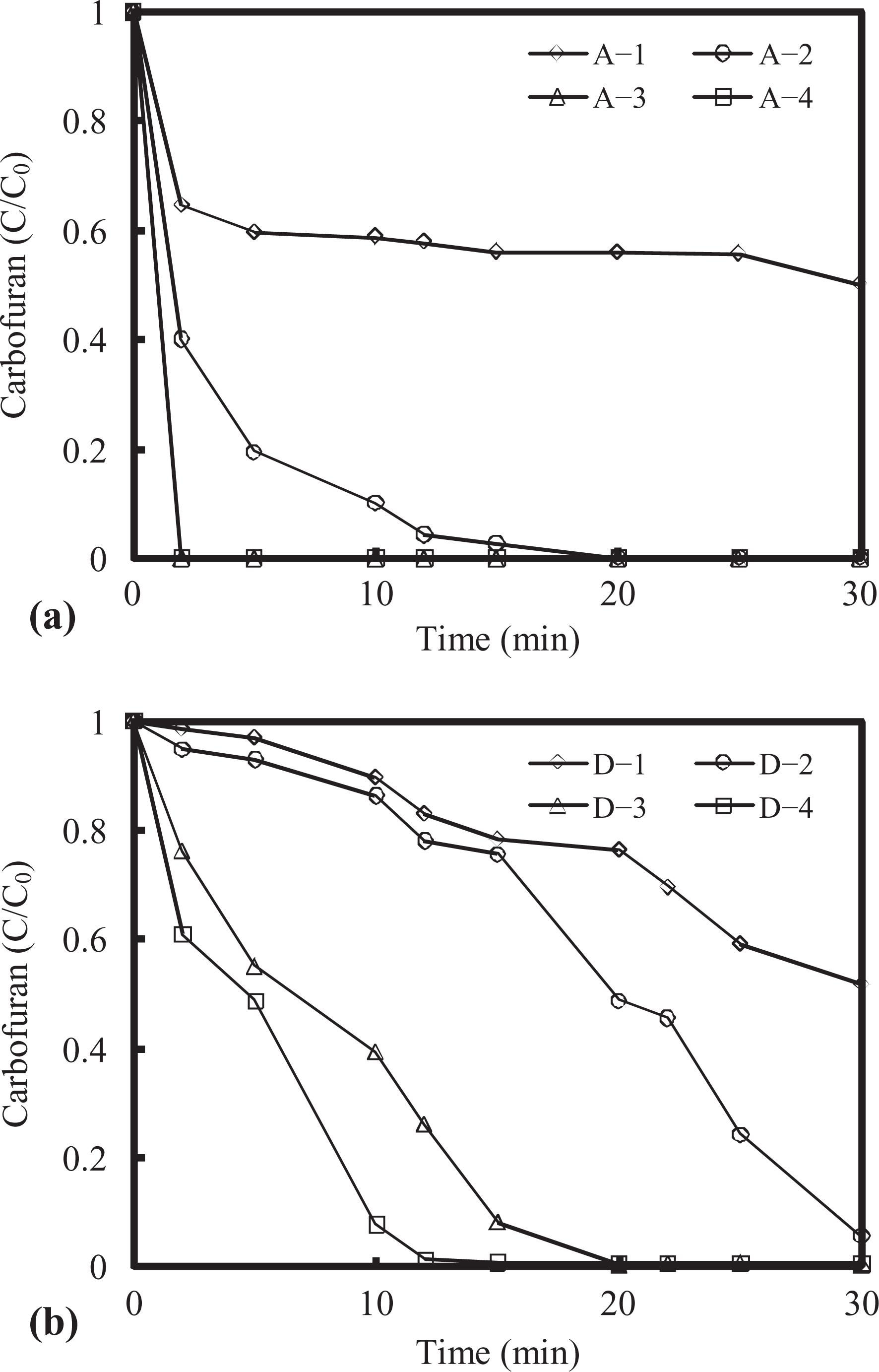
Evolution of carbofuran concentration in carbofuran oxidation by Fenton’s reagent (a) one stage dosing (b) continuous stages dosing.
Figure 2 shows the results of TOC removal by Fenton’s reagent for different dosing processes. It was evident from Figure 2a that approximately 10.8% of the carbofuran was immediately mineralized when the Fenton’s reagent of 30 mg L-1 and 6 mg L-1 of H2O2 and Fe2+ was conducted; TOC removal slightly increased to 11.5% after 30 minutes. When the Fenton’s reagent was increased to 240 mg L-1 and 48 mg L-1 of H2O2 and Fe2+, removal of TOC after 30 minutes significantly increased to 49.7%. Comparing the results of TOC in runs A-3 and A-4, both runs gave almost the same mineralization (TOC decreased between 48.8% and 49.7%). A comparable result was observed in Momani et al. (2004), where the author proposed that the DCP and TOC removal were as a function of initial Fe2+ concentration for Fenton reaction. It was observed that the iron ion concentration has a positive effect on DCP removal at small concentrations. But, at higher concentrations the degradation decreased and a maximum DCP removal around 75% was reached. Gulkaya et al. (2006) proposed that increase in H2O2 concentrations increased the overall TOC removal in the oxidation stage. However, enhancement of TOC removal by additional H2O2 concentrations in the overall treatment was almost negligible. Figure 2b shows that removal of TOC for runs D-1 to D-4. Removal of TOC gradually increased with reaction time, where 22.7% of TOC was removed after 30 minutes in run D-1 and increased to 63.8% in run D-4.
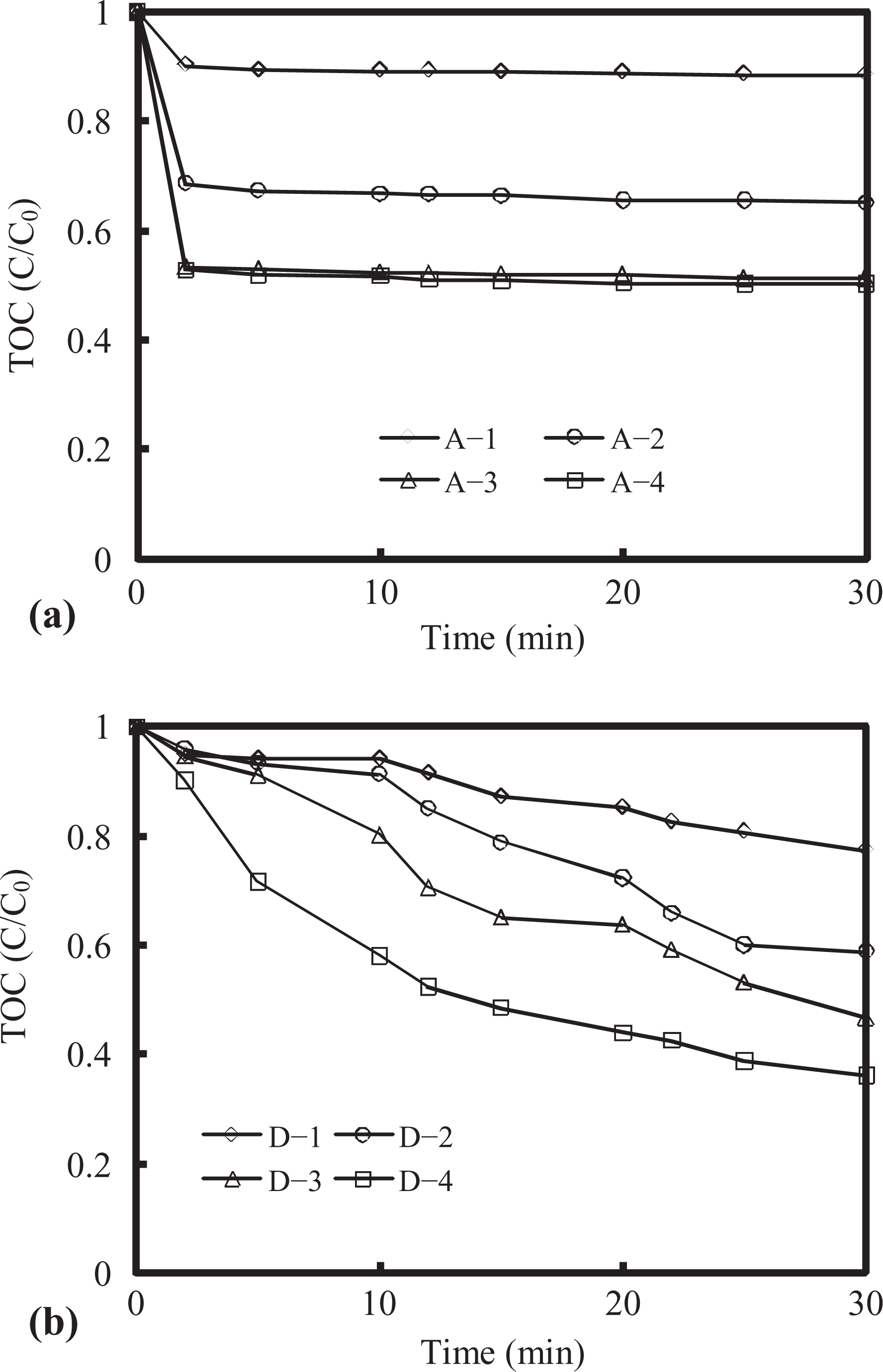
Evolution of TOC in carbofuran oxidation by Fenton’s reagent (a) one stage dosing (b) continuous stages dosing.
Hydrogen peroxide cost was one of the major costs of the intended treatment and so it was important to design the process in such a way that the minimum concentration could be used to reduce the concentrations of the target pollutants to a desired level (Lipczynska-Kochany and Kochany, 2008). In addition, Watts and Teel (2005) proposed that the high concentrations of hydrogen peroxide should to be avoided due to its toxicity to microorganisms. Therefore, residual of H2O2 are investigated in Figure 3 to point out how much amounts of H2O2 are consumed during the oxidation of carbofuran by Fenton’s reagent. As it was observed in Figure 3a, there was a sharp decrease in the residual H2O2 concentration when the Fenton’s reagent was carried out for the degradation of carbofuran then the change in H2O2 concentration was insignificant. Similar profiles were observed in Figure 2a, where the consumption of H2O2 was used to degrade the carbofuran but useless to mineralize the organic pollutant. In Figure 3b, a reverse phenomenon was observed that a progressive increase of the residual H2O2 concentration was appreciated with reaction time in all the experiments (runs D-1 to D-4). In addition, in run D-4, the final residual H2O2 concentration was 32 mg L-1, which revealed that the consumption of H2O2 during the reaction was 208 mg L-1 (86.7% of total H2O2 additions); it was higher than the result of A-4 (197 mg L-1). TOC analyses (Figure 2) showed that the continuous dosing process was slightly more efficient than one dosing process for the mineralization of carbofuran by Fenton’s reagent due to the better consumption of H2O2 taking place in the continuous dosing process.
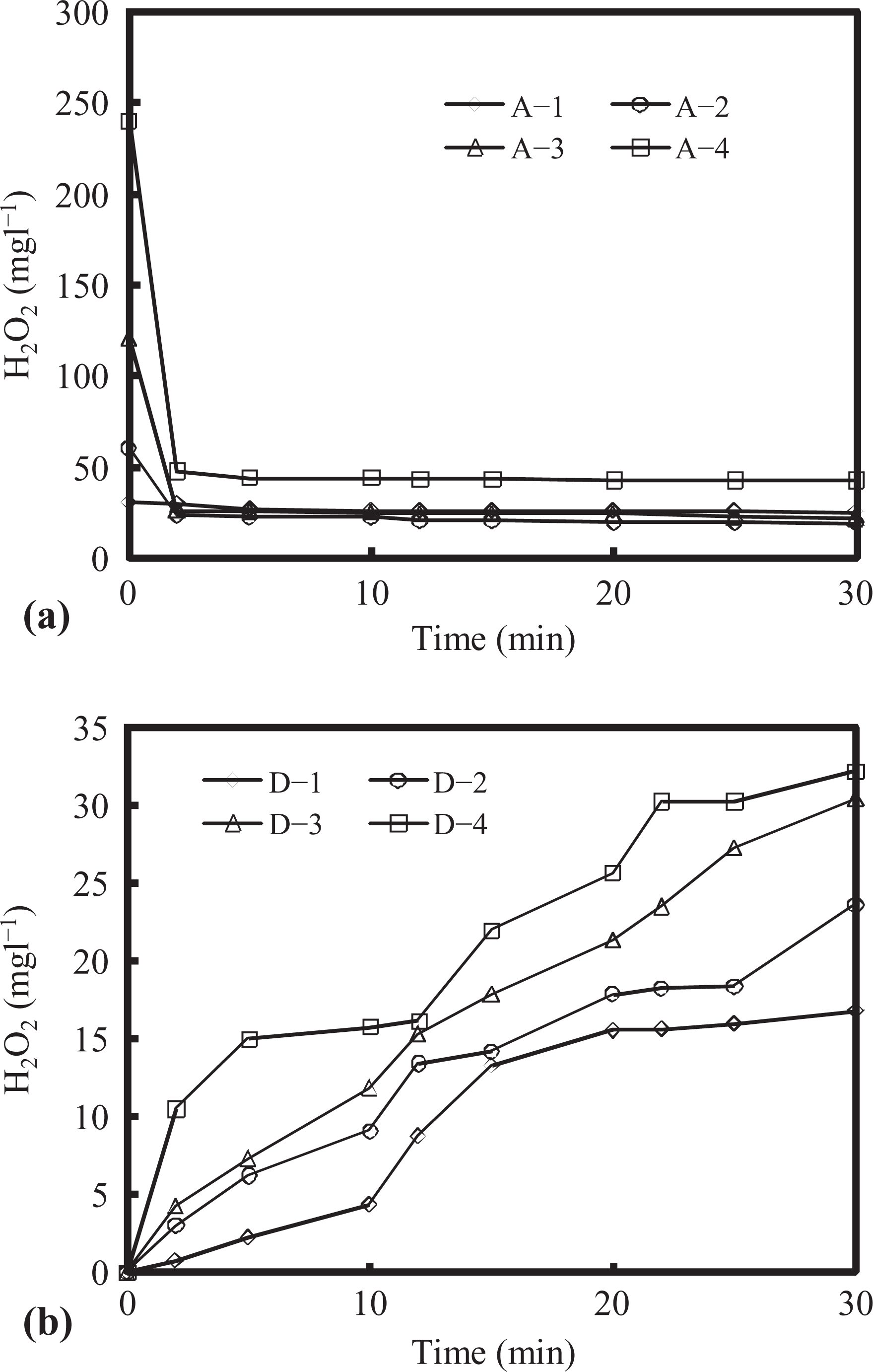
Evolution of residual H2O2 concentration in carbofuran oxidation by Fenton’s reagent (a) one stage dosing (b) continuous stages dosing.
Effect of different dosing stages on carbofuran degradation
Table 1 also shows the results of carbofuran degradation and TOC removal by Fenton’s reagent for runs A-1 to D-4 within the reaction time of 10, 20 and 30 minutes, respectively. In all experiments a progressive decrease of the carbofuran and TOC was appreciated with reaction time. As it was observed, there was an increase in the degradation efficiency of the carbofuran when the [H2O2] and [Fe2+] was increased for runs A-1 to D-4. In runs A-1 to A-4, major degradation and mineralization took place in the reaction time of first 10 minutes. In addition, residual carbofuran concentrations in the collected sample for runs A-3 and A-4 within the reaction time of 10 minutes were lower than the MDLs, which revealed a complete elimination of organic pollutant. In runs B-1 to B-4, half of Fenton’s reagent was dosed initially and the other half was dosed at the reaction time of 10 minutes. Degradation and mineralization of carbofuran by Fenton’s reagent for runs B-1 and B-2 were lower than those of A-1 and A-2, respectively (Table 1). For runs B-3 and B-4, results of carbofuran mineralization were higher than those of A-3 and A-4 within the reaction time of 30 minutes. It was an example that the second dosing stage could provide the sufficient oxidation potential to extend the destruction of carbofuran to carbon dioxide. Moreover, as a result of this situation, the first dosing stage has been found efficient in carbofuran degradation and the second dosing stage leads to the fair to high TOC removal. In runs C-1 to C-4, Fenton’s reagent was divided into three parts and dosed into the reactor at the reaction time of 0, 10 and 20 minutes, respectively. In run C-1, less amounts of H2O2 (10 mg L-1) and Fe2+ (2 mg L-1) was dosed into the reactor therefore only 17.1% of carbofuran was degraded by Fenton’s reagent within the reaction time of 10 minutes. Degradation of carbofuran increased to 33.4% and 50.3% within the reaction time of 20 and 30 minutes, which revealed that a continuous carbofuran decrease by the second and third Fenton’s reagent dosing stages. In run C-4, more than 92.6% of carbofuran was decreased within the reaction time of 10 minutes by the Fenton’s reagent where the initial dosages of H2O2 and Fe2+ were 80 and 16 mg L-1, respectively. Residual of carbofuran in solution was lower than the MDLs in the water samples collected at 20 and 30 minutes. In TOC removal, it was found that 41.1% of carbofuran was mineralized within the reaction time of 10 minutes and increased to 61.8% of 30 minutes. This result showed that the sufficient Fenton’s reagent dosed into the reactor with more stages could lead to superior TOC removal in carbofuran oxidation.
Arnold et al. (1995) used the Fenton process to degrade atrazine-containing wastewater and investigated the effect of H2O2 and Fe2+ dosages on the degradation process. The findings indicated that additional H2O2 dosage also reacted with ·OH radicals leading to a competitive effect between atrazine and ·OH radicals; a lower degradation rate of atrazine was observed. Stefan et al. (1996) used the UV/H2O2 process to degrade acetone and discussed the effect of H2O2 addition on acetone oxidation. A comparable result was found where the additional H2O2 was transferred as a scavenger of the ·OH radicals leading to a decrease in acetone degradation efficiency. Lipczynska-Kochany and Kochany (2008) proposed the classic procedure consisted of the addition of H2O2 and Fe2+ to a treated solution and the mechanism included many steps during which iron cycles between +2 and +3 oxidation states and hydroxyl radicals shown as Eqs. (1)–(4).




Therefore, as the H2O2 and Fe2+ are introduced into the reactor, a rapid reaction takes place to produce the OH radicals. However, overdosing the Fenton’s reagent will lead the OH radicals reacting with H2O2 and Fe2+ to diminish the reaction between OH radicals and organic pollutants. To study the above hypothesis, the continuous dosing stage experiments, D-1 to D-4, were carried out and the observation of carbofuran degradation and TOC removal were shown in Table 1. In runs D-1 and D-2, degradation of carbofuran at different time intervals were lower than those of runs C-1 and C-2. However, TOC removal in runs D-1 and D-2 were efficient than runs C-1 and C-2, which indicated that the continuous Fenton’s reagent dosing process provided the sufficient oxidation potential to destroy and mineralize the carbofuran molecule. An evident result was observed in runs D-3 and D-4, where the TOC removal reached 53.3% and 63.8% within the reaction time of 30 minutes. It was concluded that the Fenton’s reagent carried out with the continuous dosing process was more efficient in carbofuran degradation and TOC removal than other dosing processes.
Effect of temperature on carbofuran degradation
Based on the industrial process design of advanced oxidation technology, it is essential to determine the appropriate reaction temperature, at which higher destruction efficiency of organic compounds is achieved (Chen and Huang, 2009). In this study, the results of TOC removal and the first-order reaction rate constant of TOC removal in carbofuran degradation by continuous Fenton’s reagent dosing process are shown in Table 2. The tests shown in Table 2 were carried out at 15–60ºC with 60 mg L-1 H2O2 and 12 mg L-1 Fe2+. Apparently, higher reaction temperature is effective on the increment of TOC removal. The TOC removal increased from 31.5% to 52.0% since the temperature was increased from 15 to 50oC. However, as the reaction temperature reached as high as 60ºC, removal of TOC decreased to 43.0%. Gulkaya et al. (2006) proposed a comparable result when the carpet dyeing wastewater was oxidized by Fenton process. Their observation indicated that the obtained TOC removal efficiencies after oxidation and coagulation were 89.1%, 93.9%, 94.4% and 94.7% at 25, 40, 50 and 70ºC, respectively, for the initial TOC value of 2000 mg L-1; the TOC removal at 50 and 70oC were similar. Therefore, the reaction temperature should be lower than 50oC for Fenton process. Profiles of TOC removal at different reaction temperatures were simulated with the first-order kinetics and the results were also summarized in Table 2. A satisfactory results was observed in the simulation of first-order kinetics where the fitted R 2 values were all higher than 0.86. Based on Arrhenius equation (k = Ae-Ea/RT), there is a logarithmic relationship between the reaction rate constant and temperatures, and this phenomenon is shown in Figure 4. This figure shows that a logarithmic simulation can be used to describe the relation between rate constant and temperature and the calculated activation energy (Ea) is 0.59 J/mol.
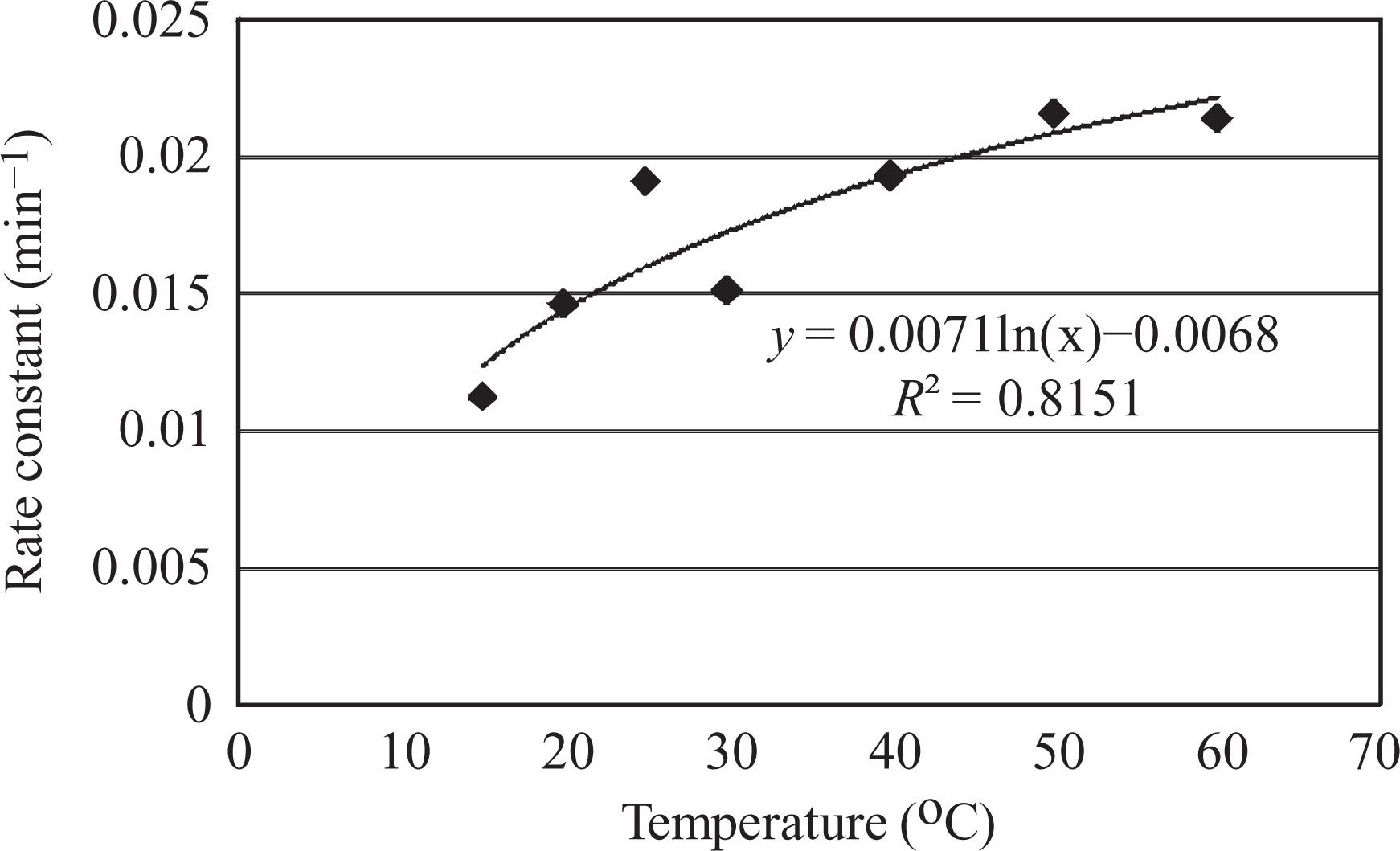
Relationship between reaction temperature an first-order rate constant of TOC removal in carbofuran degradation.
TOC removal and first-order reaction rate constant of TOC removal in carbofuran degradation by continuous dosing Fenton process

Discussion
Silva et al. (2007) used the Fenton process to degrade wastewater containing the herbicide tebuthiuron and evaluated the effect of adding Fe2+ on the degradation of the herbicide tebuthiuron. The authors found that the reaction kinetics constant and the degradation efficiency of this herbicide were increased when the level of Fe2+ added was increased. The first-order kinetics was used in this study to obtain the carbofuran degradation constant (k) under different reaction conditions. The effect of the Fe2+/H2O2 additions on the kinetic constant of the carbofuran degradation by Fenton’s reagent was investigated in Table 3. The carbofuran degradation constant was 6.9 × 10⁻³ min-1 ([H2O2]/[Fe2+] = 30/6) when the one stage dosing process was carried out for the oxidation of 50 mg L-1 carbofuran by Fenton’s reagent, and slightly increased to 12.5 × 10⁻³ min-1 ([H2O2]/[Fe2+] = 100/1, data obtained from Ma et al., 2010) due to the increase in H2O2 concentration. An apparent increase in k was observed in the experiment carried out in [H2O2]/[Fe2+] = 60/12, which could be explained by the increase in Fe2+ concentration. Calculation of the rate constants was not necessary because no carbofuran was present in the aqueous solution after the Fenton process had been carried out for 2 minutes in runs A-3 ([H2O2]/[Fe2+] = 120/24) and A-4 ([H2O2]/[Fe2+] = 240/48). In continuous stage experiments, it was also found that the rate constant of carbofuran degradation by Fenton’s reagent increased with an increase of [H2O2]/[Fe2+]. However, the carbofuran degradation constant decreased from 228.3 to 158.8 × 10⁻³ min-1 with an increase of the Fenton’s reagent to [H2O2]/[Fe2+] = 240/48 (run D-4). In this study, our previous investigation was also compared in Table 2 where the sono-Fenton process was applied in the oxidation of 50 mg L-1 carbofuran solution at [H2O2]/[Fe2+] = 100/10. The rate constant was 102.7 × 10⁻³ min-1, which was slightly higher than the result of run D-2 and lower than runs D-3 and D-4. Therefore, the Fenton’s reagent carried out in the continuous dosing process showed the better results for carbofuran degradation.
First-order kinetic constants for carbofuran degradation in cases of one stage and continuous stage Fenton processes
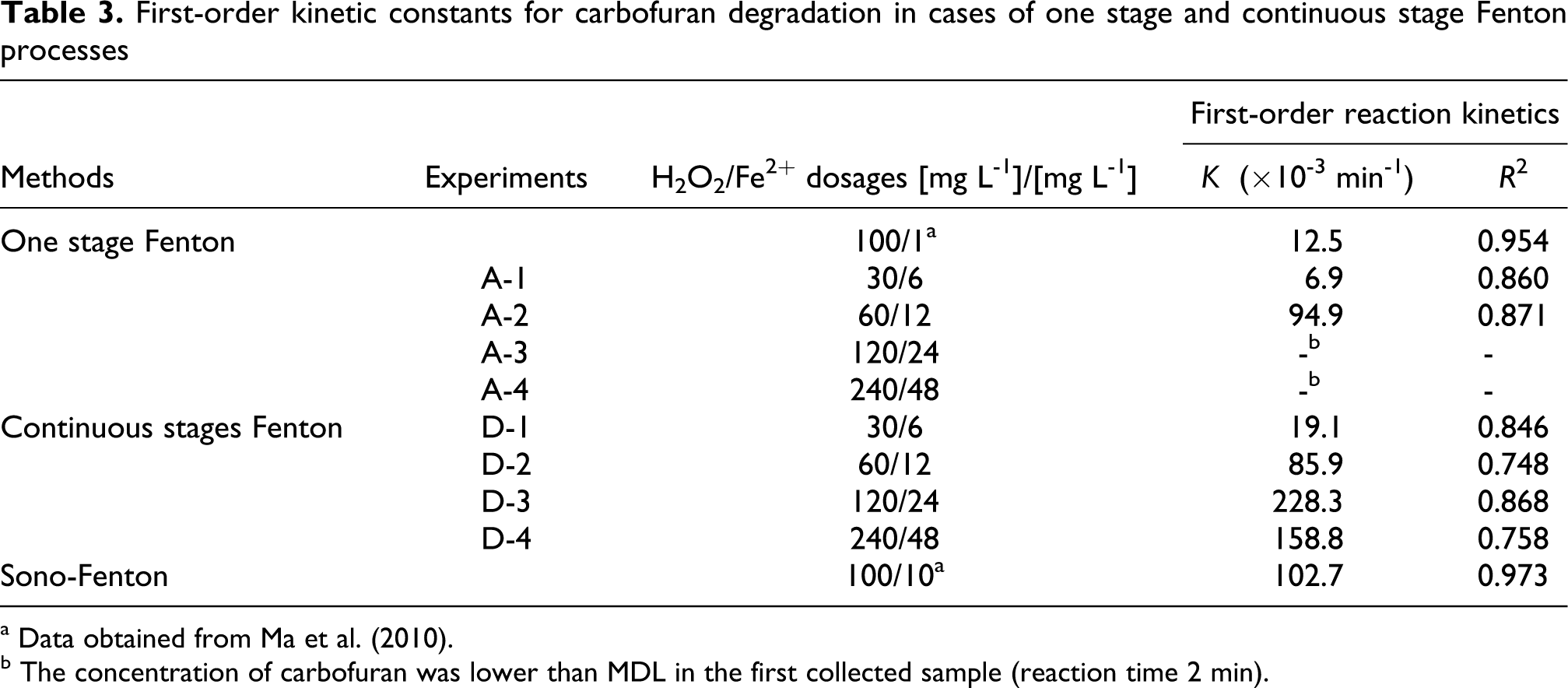
a Data obtained from Ma et al. (2010).
b The concentration of carbofuran was lower than MDL in the first collected sample (reaction time 2 min).
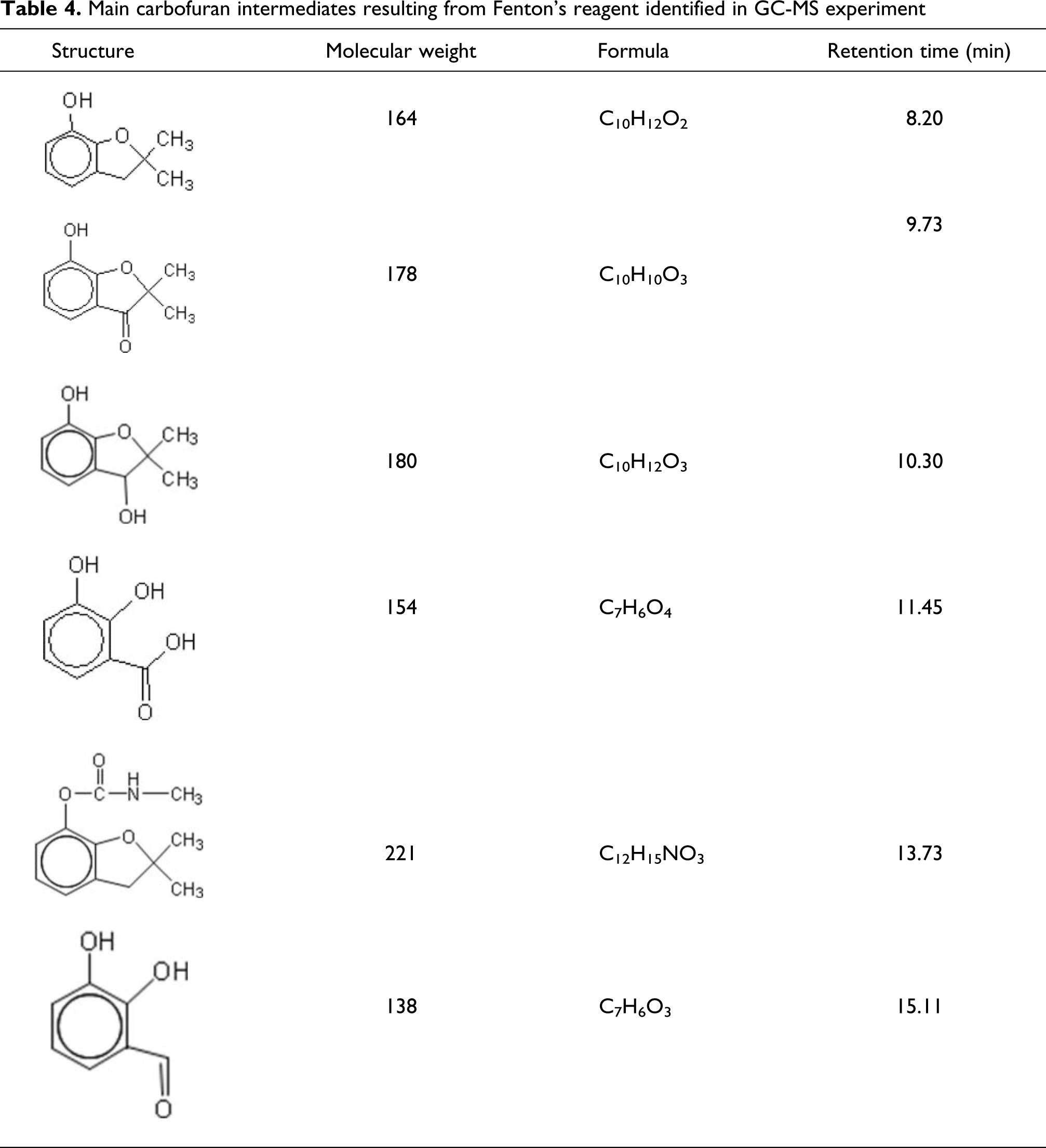
Catalkaya and Kargi (2007) used the Fenton process to degrade 25 mg L-1 diuron-containing wastewater at pH 4.2 and investigated the effect of H2O2 (1.5–340 mg L-1) and Fe2+ (0.25–56 mg L-1) addition on the degradation of diruon. It was found that the maximum degradation efficiency of diuron was 98.5% within 15 minutes, however, mineralization was only 58% after 240 minutes. Torres et al. (2007) showed the decays of TOC, COD and BPA during the treatment by Fenton’s process of BPA solutions. It was observed that the BPA concentration was under the detection limit after 90 minutes but COD and TOC evolutions indicated that Fenton’s process conducted to the formation of more oxidized intermediates (significant decrease of COD) which were hardly mineralized (slight decrease of TOC). Therefore, as TOC was not completely removed in our experiments, the identification of main by-products formed during the oxidation of carbofuran by Fenton’s reagent was carried out in GC-MS experiments. GC-MS analysis of degradation by-products generated after 30 minutes by Fenton’s reagent showed several peaks in the total ion current spectrum, corresponding to six compounds including carbofuran and five by-products (Table 4). The presences of carbofuran by-products such as 2,3-dihydro-2,2-dimethyl-benzofuran-7-ol, 7-hydroxy-2,2-dimethyl- benzofuran-3-one, and 2,2-dimethyl-2,3-dihydro-benzofuran-3,7-diol were reported by other investigations (Katsumata et al., 2005; Wang and Lemley, 2003). Wang and Lemley (2003) indicated that 2,3-dihydro-2,2-dimethylbenzofuran-7-ol was produced first by the cleavage of the carbamate group from the parent compound. Then 2,3-dihydro-2,2-dimethylbenzofuran-7-yl formate was formed through partial cleavage of the carbamate branch and followed by 2,3-dihydro-3-oxo-2,2-dimethylbenzofuran-7-ol and 2,3-dihydro-3-hydroxyl-2,2-dimethylbenzofuran-7-ol, respectively. The authors also mentioned that other degradation products still possibly existed in the oxidation system but were not detected because of their low concentration and extraction efficiency and limited sensitivity in GC-MS. In this study, five intermediates such as 2,2-dimethyl-2,3-dihydro-benzofuran-7-ol, 2,2-dimethyl-2,3-dihydro-benzofuran-3,7-diol, 7-hydroxy-2,2-dimethyl-benzofuran-3-one, 2,3-dihydroxybenzaldehyde and 2,3-dihydroxy-benzoic acid were identified after the reaction. Based on the appearance of the identified intermediates in different interval samples, possible carbofuran degradation pathway is proposed in Figure 5. It was evidenced that oxidation of carbofuran by Fenton’s reagent follow the reaction pathway involving OH radicals, where the OH radicals attacked first on the methylcarbamate group of carbofuran to form 2,2-dimethyl-2,3-dihydro-benzofuran-7-ol followed by 2,2-dimethyl-2,3-dihydro-benzofuran-3,7-diol and 7-hydroxy-2,2-dimethyl-benzofuran-3-one. With further OH radicals oxidation, 2,3-dihydroxybenzaldehyde and 2,3-dihydroxy-benzoic acid were formed, then the ring opening reaction could take place and the by-products were mineralized to carbon dioxide represented by a decrease in TOC concentration.
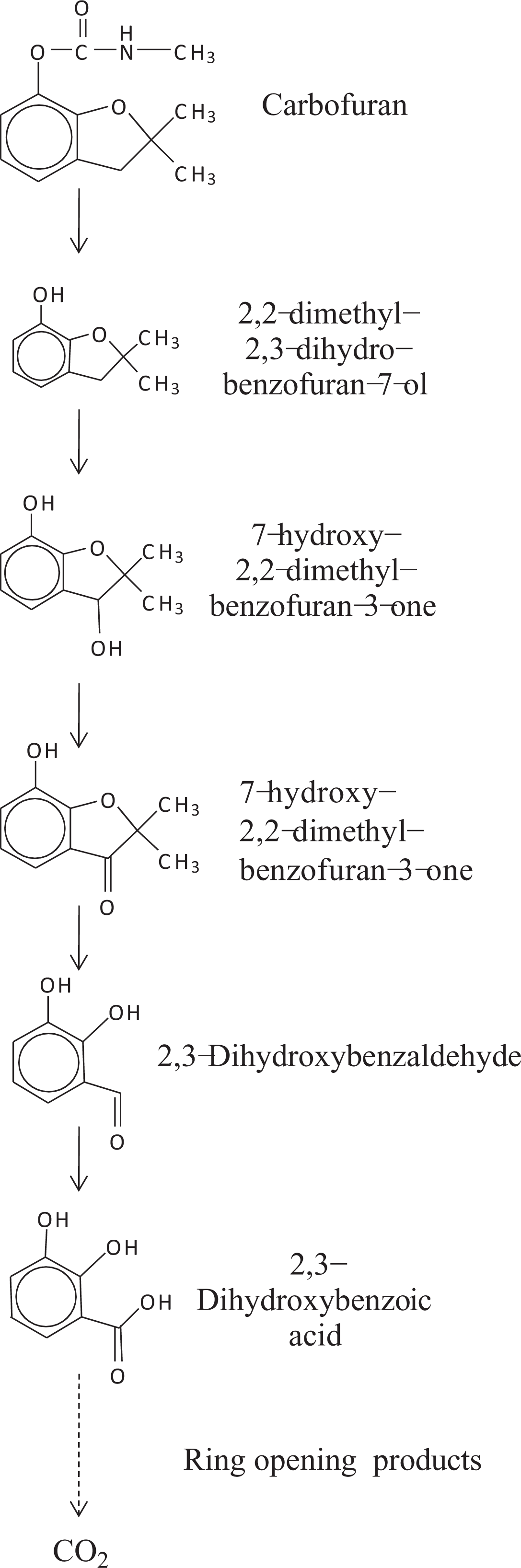
Possible carbofuran degradation pathways by Fenton’s reagent.
Main carbofuran intermediates resulting from Fenton’s reagent identified in GC-MS experiment
Treatment of the carbofuran containing wastewater by Fenton’s reagent with different dosing processes and Fenton’s reagent concentrations was conducted in this study. In one stage dosing process, almost 100% of carbofuran degradation and 49.7% of TOC removal could be obtained after 30 minutes reaction by Fenton’ reagent at the following conditions: pH 3, dosages of H2O2 and Fe2+ were 240 mg L-1 and 48 mg L-1, respectively. Better TOC removals (55.9–61.8%) were observed when the carbofuran oxidation carried out with two and three stages dosing processes at the same Fenton’s reagent concentrations. In a continuous dosing stage process, degradation of carbofuran, removal of TOC and consumption of H2O2 showed reached 100%, 63.8% and 86.7%, respectively, indicating that the Fenton’s reagent in continuous dosing stage was effective for carbofuran wastewater treatment. Carbofuran degradation rate constants generally increased with an increase of Fenton’s reagent in both one stage and continuous stage dosing processes. GC-MS analyses identified five degradation products and the cleavage of the carbamate group from the carbofuran by ·OH radicals was taking place first followed by further OH radicals attack to mineralize carbofuran. It might offer potential application in the treatment of carbofuran wastewater by Fenton’s reagent.
Footnotes
This research received no specific grant from any funding agency in the public, commercial, or not-for-profit sectors.