







Abstract
Since toxicity is based on the effect that a toxicant produces at a target site within an organism, establishing the relationship between the concentration of substance at the target site and the subsequent toxic effect can provide a tool for predicting toxicity. The behavior of a single toxicant could not be fully understood without the knowledge of the fact the physical and biochemical properties of substances that can change. To understand this, the acute toxicity of mercury (as HgSO4) and silver (as AgSO4) to Capoeta fusca (6 treatments in triplicate) was determined. During September 2009, C. fusca belonging to the family Cyprinidae, weighing 2.95 (±0.55) g, were obtained from qanats in Birjand, East of Iran. The fish were maintained in an aquarium system at a holding temperature of 21 (±0.2) and were allowed to adjust to lab conditions for 1 week before experimentation. The lethal concentration 50 (LC50) values for HgSO4 at 24, 48, 72, and 96 h of exposure were 0.32, 0.28, 0.26, and 0.24 mg L–1, respectively. Also, the LC50 values for AgSO4 at 24, 48, 72, and 96 h of exposure were 0.014, 0.013, 0.013, and 0.013 mg L–1, respectively. Results of this study showed that C. fusca was very sensitive to AgSO4.
Introduction
Qanat is a water-management system used to provide a reliable supply of water to human settlements or for irrigation in hot, arid, and semiarid climates; the technology is known to have developed in ancient Persia and then spread to other cultures. Qanats are up to 3,000 years old artificial, subhorizontal underground water channels, 5–80 km long (Ebrahimpour, 2010b; Stiros, 2006). The qanat is a unique environment for fish comprising an adit that taps groundwater and provides a permanent flow. In many districts of the Iranian plateau, fish are only observed in qanats, some of them have flowed for hundreds of years (Coad, 1996). There are 25 different kinds of qanat fish in Iran according to Coad’s research, which comprises 40% of the plateau fauna. The qanat fauna is a subset of the pool in qanat containing small spread spawner species, lacking in specific food requirements, non-migratory, and mainly tolerant of environmental situation. One of the most significant fish in qanats of eastern Iran is C fusca, a cyprinid (Johari et al., 2009).
Heavy metals, among the various toxic pollutants, are specifically severe in their action because of their tendency of biomagnification in the food chain (Senthil Murugan et al., 2008). Pollution of the natural environment by heavy metals is a worldwide issue since these metals are non-destructible and many of them have toxic effects on living organisms when they reach a certain concentration (Ghrefat and Yusuf, 2006). In order to manage the aquatic ecosystem, it is important to know the biological status of the system, especially when evaluating the impact of a chemical stressor on the biota. Bioavailability is a dynamic process with two different phases: a physicochemically driven desorption and a physiologically driven uptake (Ebrahimpour and Mushrifah, 2008). Heavy metals can enter into the aquatic ecosystem through atmospheric deposition, erosion from the geological matrix or from anthropogenic sources, such as manufacturing discharges and mining wastes (Alam et al., 2002). When heavy metals enter the aquatic ecosystems, their ability to accumulate can cause stress effects (Baldantoni et al., 2004). Most of the heavy metal ions exhibit toxicity through the formation of coordination complexes and clusters in the animal cells. Low concentration of heavy metals may cause a chronic stress that might not kill the fish by itself but decrease its size and body weight therefore reducing their capability to fight for food and habitat. Fish have a tendency to bioaccumulate heavy metals as well and human beings can however be at severe risk through contamination of the food chain (Rajamanickam and Muthuswamy, 2008a). In addition, many physiochemical factors, such as pH, hardness, temperature, dissolved oxygen, and flow rates, affect the toxic properties of a compound toward aquatic species in freshwater (Yim et al., 2006). Among animal species, fish are the inhabitants that cannot escape from the detrimental effects of these pollutants (Rajamanickam and Muthuswamy, 2008b). As a result, fish are generally used as indicators that traces metals’ contamination in the aquatic ecosystem comprising health risks because they take the place of higher trophic chain and are a significant food source (Agah et al., 2009; Farkas et al., 2002; Palaniappan and Karthikeyan, 2009; Rajamanickam and Muthuswamy, 2008b). The amount of toxic metal uptake, translocation, and final detoxification through an organism depends on various kinds of metals but also varies strongly among organisms (Laing et al., 2002). Acute toxic influence happens in two levels, immediate and delayed. First symptoms of overexposure to heavy metals are perplexity and lack of breath; the postponing effects (10–36 h) are bluish discoloration of the skin and finally death (Abdullah and Javed, 2006). Bioassays allow study, under controlled conditions, of some parameters such as mortality, behavior alterations, or damage in tissues or cells and can help predict some effects of mercury (Hg) in natural aquatic ecosystems (Olivera ribeiro et al., 1996). Previously, no work has been done on the determination of tolerance limits of C. fusca against Hg (as HgSO4) and silver (Ag; as AgSO4). Therefore, the objective of the present investigation was to utilize static test for examining the acute toxicity of the two elements, Hg (as HgSO4) and Ag (as AgSO4), to C. fusca.
Materials and methods
Birjand is the capital of South Khorasan province in the east of Iran. The province has a dry climate with significant difference between day and night temperatures, with an annual rainfall of 172 mm. During September 2009, C. fusca (Nikolskii, 1987) belonging to the family Cyprinidae, with average wet weight (±SD) of 2.95 (±0.55) g, were collected from qanat in Birjand. The fish were transported to the laboratory in polythene bags with qanat water. Prior to the experiment, the fish were acclimatized to the laboratory conditions for 1 week in precleaned glass aquariums with tap water. Thereafter, sets of 10-fish specimens (in triplicate) were exposed randomly to 50 L of water containing Hg (as HgSO4) and Ag (AgSO4) in separate aquariums. The exposure time of fish to Hg (as HgSO4) and Ag (as AgSO4) was 96 hours, without adding any food. Mortalities were recorded at 24, 48, 72, and 96 hours of exposure, and the dead fish were removed regularly from the test aquariums. A control was also used for test with three replicates. No mortality was observed during the experimental period in controls. Thereafter, six different concentrations of Hg (as HgSO4) in geometrically decreasing amounts of 1, 0.5, 0.25, 0.125, 0.062, and 0.031 mg L–1 in three replicates were used. Also, six different concentrations of Ag (as AgSO4) in geometrically decreasing amounts of 0.020, 0.017, 0.015, 0.012, 0.010, and 0.007 mg L–1 in three replicates were used.
Stock solutions (1,000 mg/L) were prepared by dissolving analytical-grade Hg (as HgSO4, from Merck) and Ag (as AgSO4, from Merck) in distilled water. Preliminary tests were carried out to estimate the minimum lethal and maximum nonlethal concentrations of Hg (as HgSO4) and Ag (as AgSO4). Dissolved oxygen (mg/L), temperature (°C), and pH were recorded individually in each test aquarium at exposure times. Water quality of the experimental tank was determined according to standard procedures. Total hardness, magnesium (Mg), nitrite, and ammonia (mg/L) were determined before starting the experiments by a photometer, Palintest 8000. Lethal concentration for 50% (LC50) values were calculated from the data obtained in acute toxicity bioassays, using the US Environmental Protection Agency (EPA) computer probit analysis program (Version 1.5).
Results and discussion
Toxicity is the measure of how harmful a substance is to living tissue. Two types of toxicity arise in biota based on these kinds of exposure: acute toxicity from a single large dose of toxin or chronic toxicity from a long exposure period or repeated exposures to small doses (Maczulak, 2010). The purpose of fish acute toxicity is for decision whether a certain xenobiotic is dangerous for the aquatic system. Acute toxicity tests are short-term tests designed to measure the effects of toxic agents on aquatic species during a short period of their life span (Ebrahimpour et al., 2010b). Since there is no report about the effects of HgSO4 and AgSO4 on C. fusca, this research was conducted to investigate the effects. The acute toxicity of HgSO4 and AgSO4 in C. fusca was evaluated by static bioassays for calculating the LC50 (lethality concentration for 50%). Environmental conditions like oxygen concentration, pH, hardness, temperature, and presence of other metals might influence metal toxicity to the fish. Hypoxic conditions, temperature, increase and acidifications usually render the fish more susceptible to intoxication, while increases in mineral contents (hardness and salinity) decrease metal toxicity (Abdullah and Javed, 2006; Rathore and Khangarot, 2003). On the other side, as the pH of the near environment can influence mucus secretion or formation, reduction in the pH might alter the mucus, causing reduced metal uptake (Karthikeyan et al., 2007).
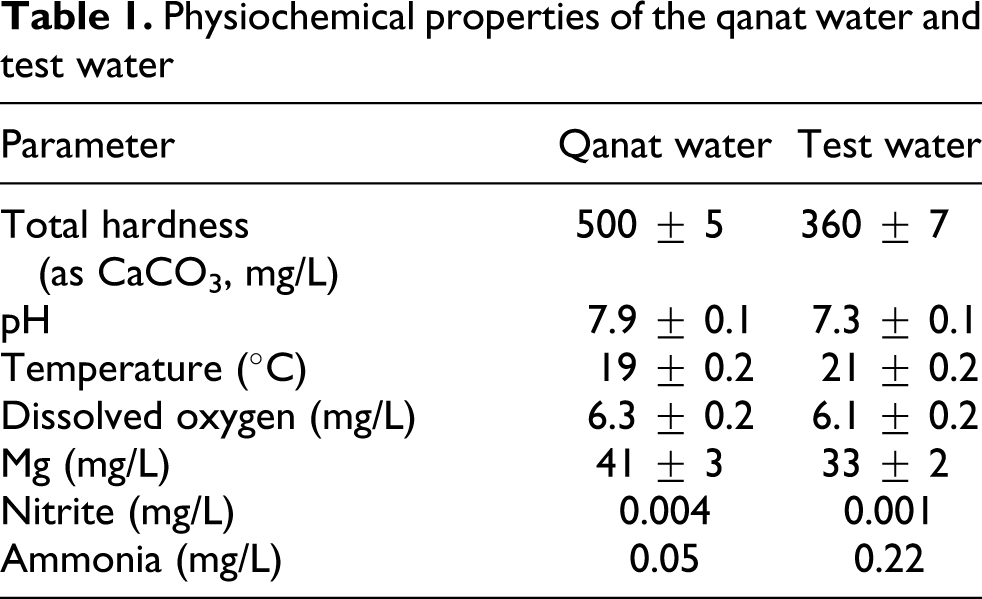
The physicochemical properties of test water and qanat water are shown in Table 1 . Results showed that water hardness concentration were much higher in the qanat water than in the test water. Generally in freshwater, as water hardness increases, heavy metal toxicity decreases due to competition between metal ions and calcium (Ca2+) and magnesium (Mg2+) ions for the uptake sites of organisms (Ebrahimpour et al., 2010a; Yim et al., 2006). The uptake of Ca2+ and Mg2+ ions by the cell membrane causes it to stabilize, and that decreases its permeability to metal ions (Yim et al., 2006). Calcium (Ca) and Mg exist at very much higher concentrations than heavy metals, in the natural environment. Thus, the Ca and Mg levels are significant considerations with respect to the toxic influences of heavy metals on the biota in aquatic systems, by competing with heavy metals and blocking their access to aquatic organisms (Yim et al., 2006).
Physiochemical properties of the qanat water and test water
The present study shows that as the concentration of Hg and Ag increased, fish mortality also increased, indicating that there is a direct proportional relationship between mortality and concentration of HgSO4 and AgSO4 (Figures 1 and 2 ). The most important cause of mortality might be because of respiratory epithelium damage by oxygen culmination over the formation of a mucus film on the gills of fish (Ebrahimpour et al., 2010b). Bury (2004) pointed out that a complex array of physiological processes that control the bioreactive concentrations of Ag in the gills, including cytoplasmic sequestration, a down-regulation of apical entry and potentially an increase in basolateral membrane extrusion (Bury, 2004). The gill is a multifunctional organ performing vital functions, including respiration (gas exchange), osmoregulation, acid–base balance, and nitrogenous waste excretion in fish (Evans, 1987; Oliveira-Filho et al., 2010). It is known that special factors (pH, hardness, temperature, etc.) affect the bioavailable quantity of metallic ions and thus the toxic potential of heavy metals. In addition, the metal toxicity evaluation changes depending on the endpoint used in the bioassays (Martin-Gonzalez et al., 2006).
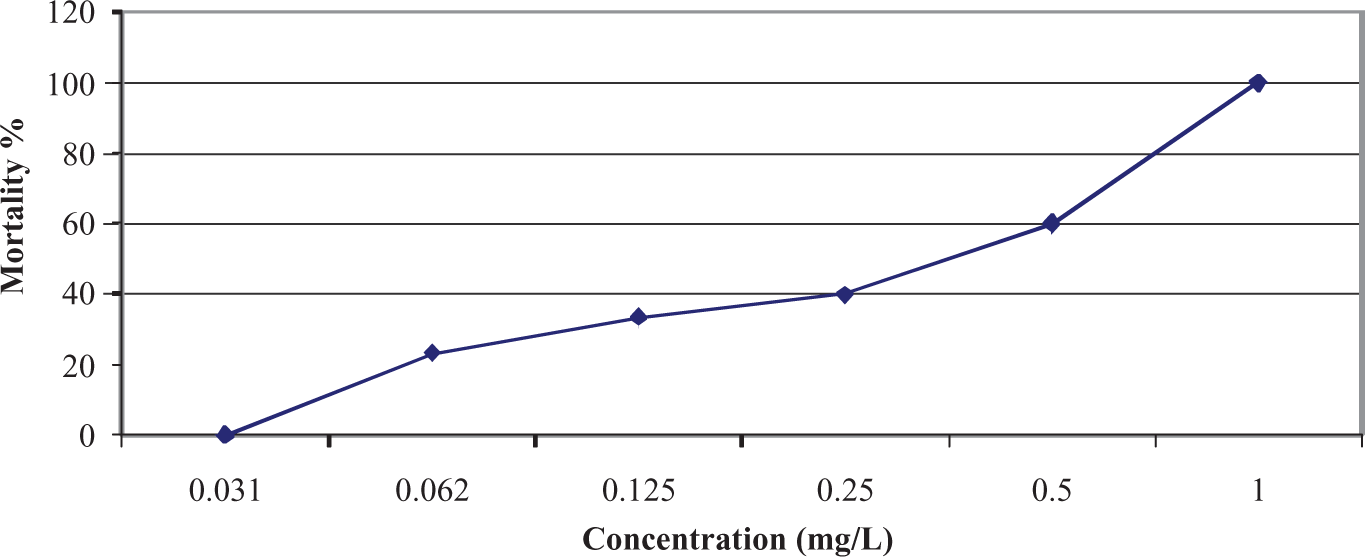
Percentage mortality of Capoeta fusca after 96 h exposure to different concentrations of HgSO4.
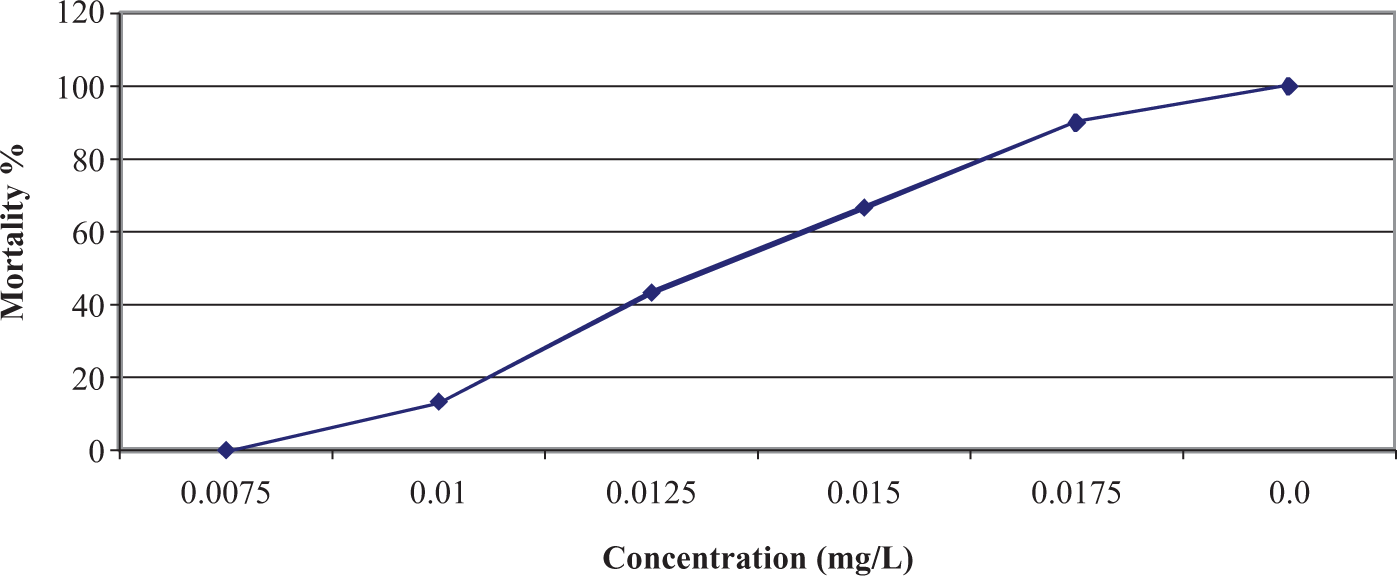
Percentage mortality of Capoeta fusca after 96 h exposure to different concentrations of AgSO4.
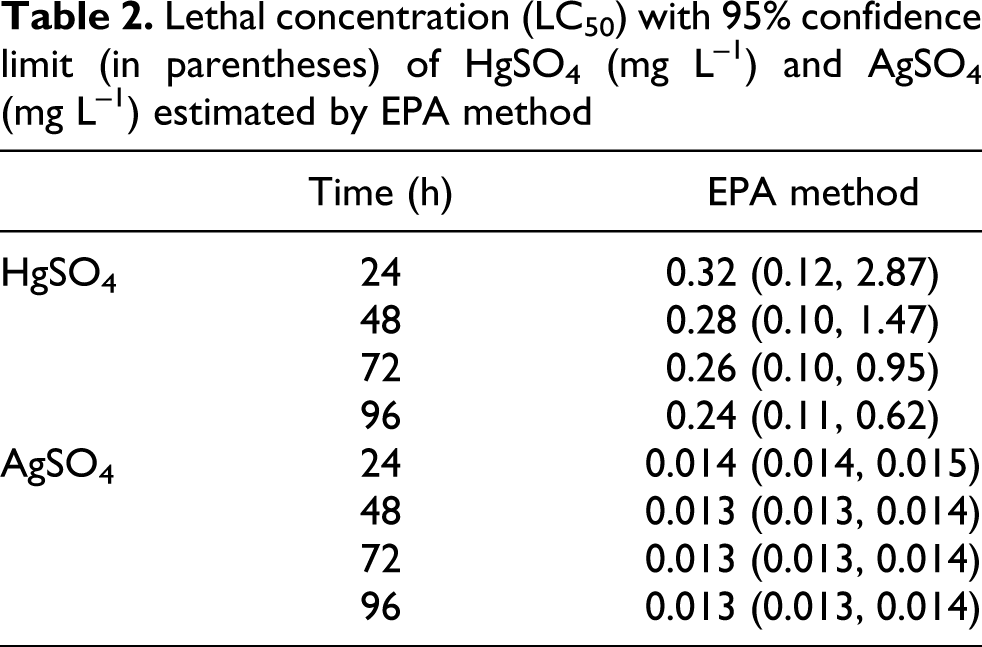
Similarly, the 96-h LC50 values of fish vary from species to species and from metal to metal. Veena et al. (1997) and IIiopoulou-Georgudaki and Kotsanis (2001) reported 96-h LC50 values of 0.181, 0.51, 0.13, and 0.51 mg L–1 Hg for Etrophus maculates and Salmo gairdneri, respectively. Also, Ebrahimpour et al. (2010b) reported 96-h LC50 values of 0.56, 0.41, 0.36, and 0.36 mg L–1 Hg for Gambusia holbrooki. The LC50 values of HgSO4 and AgSO4 in C. fusca were generated from the mortality data. The LC50 value for HgSO4 and AgSO4, calculated by EPA method at 24, 48, 72, and 96 h of exposure is shown in Table 2 . The LC50 value for HgSO4 at 24, 48, 72 and 96 h of exposure were 0.32, 0.28, 0.26, and 0.24 mg/L, respectively; while for AgSO4, the LC50 values at 24, 48, 72 and 96 h were 0.014, 0.013, 0.013, and 0.013 mg/L, respectively. The LC50 value for AgSO4 at 96 h is the same as 72 and 48 h, showing no mortality occurrence after 48 h. Therefore, the result is that toxicity of AgSO4 is higher than that of HgSO4. The study reported here also showed that the LC50 values are decreasing as time increases, so that about 50% of all mortality occurred in the first 24 h. This might be due to prior intoxication during proceeding hours, which enhanced in subsequent hours (Ebrahimpour et al., 2010b). Also, mortality depends on retention time of HgSO4 and AgSO4 in water, so that the more the retention time of HgSO4 and AgSO4 in the water, the more the mortality rate of the fish. During the first 24 h, more of the HgSO4 and AgSO4 in water are taken up by the fish and its concentration decreases. In other words, the mortality rate of the fish decreases as the time of toxicity exposure increases.
Lethal concentration (LC50) with 95% confidence limit (in parentheses) of HgSO4 (mg L– 1) and AgSO4 (mg L– 1) estimated by EPA method
According to the test solution concentration, a variety in the test animal’s abnormality behavior was found (Das and Sahu, 2005). Fish exposed to high concentrations of HgSO4 and AgSO4 showed some abnormal behavior. In the study of lesions caused by poisons, poisoned fish showed clinical symptoms such as abnormal swimming, turning, severe convulsions, and falling into the floor of the aquarium. Also, the fish tried to avoid the toxic water through fast swimming; the fish were observed to have breathing difficulties and tried to breathe air from the surface water. Finally, the fish swam downward and settled at the bottom of the aquarium until they died.
The LC50 value for HgSO4 and AgSO4 was higher in the present study than values available in the literature; the reason might be due to high water hardness (˜300 mg L–1). In the present study, the pH of the test water was higher than 7. A report by Khangarot et al. (1985) shows that by increasing the pH from 5.5 to 8.5 the acute toxicity of common carp (Cyprinus carpio) lowered. We noticed that compared to high pH (>7), low pH (<7) Hg was more toxic, which might be because of acid toxicity caused by the loss of bicarbonate in the body fluids (Das and Sahu, 2005). It is generally considered that under acidic conditions more energy is required for maintenance of basic functions than under non-acidic conditions (Karthikeyan et al., 2007). Results of bioassay are still fragmentary and highly variable as the change in species, chemical, biological, and environmental factors influence the toxicity (Ebrahimpour et al., 2010b). It seems that two factors, water hardness and pH levels, could affect the acute toxicity of HgSO4 and AgSO4 on C. Fusca.
Conclusion
The C. fusca (black fish) is a sub-endemic fish of eastern Iran. The C. fusca is a fish resistant to extreme environmental conditions, as evidenced by its survival in natural and artificial waters in the deserts of eastern Iran. In this study, we examined acute toxicity of HgSO4 and AgSO4 on C. fusca. According to the results of these experiments, it was determined that the toxicity of AgSO4 is higher than that of HgSO4.
Footnotes
Acknowledgements
This research was supported by the Faculty of Agriculture, University of Birjand, Iran.
This research received no specific grant from any funding agency in the public, commercial, or not-for-profit sectors.