







Abstract
The aim of this study was to investigate the effects of taurine (TA) on serum lipid profiles following chronic coadministration of chlorpyrifos (CP) and lead acetate (Pb) in male Wistar rats. Fifty rats randomly distributed into five groups served as subjects. Distilled water (DW) was given to DW group, while soya oil (SO; 1 mL kg−1) was given to SO group. The TA group was treated with TA (50 mg kg−1). The CP + Pb group was administered sequentially with CP (4.25 mg kg−1; 1/20th median lethal dose (LD50)) and Pb at 233.25 mg kg−1 (1/20th LD50), while the TA + CP + Pb group received TA (50 mg kg−1), CP (4.25 mg kg−1), and Pb (233.25 mg kg−1) sequentially. The treatments were administered once daily by oral gavage for 16 weeks. The rats were euthanised, and the blood samples were collected at the termination of the study. Sera obtained from the blood samples were analyzed for total cholesterol, high-density lipoprotein cholesterol, triglycerides, and malondialdehyde, and also the activities of serum antioxidant enzymes including superoxide dismutase, catalase and glutathione peroxidase were analyzed. The low-density lipoprotein cholesterol, very-low-density lipoprotein cholesterol, and atherogenic index were calculated. The results showed that CP and Pb induced alterations in the serum lipid profiles and evoked oxidative stress. TA alleviated the disruptions in the serum lipid profiles of the rats partially by mitigating oxidative stress. It was concluded that TA may be used for prophylaxis against serum lipid disorders in animals that were constantly co-exposed to CP and Pb in the environment.
Introduction
Lipids are crucial for the generation of energy to carry out biological activities. Environmental contaminants such as organophosphorus (OP) insecticides and heavy metals are capable of inducing alterations to lipid profiles in biological systems. The disruptions in serum and tissue lipid profiles could be risk factors for atherosclerosis and coronary heart disease (Ibrahim and El-Gamal, 2003).
OP compounds are currently the most commonly used pesticides in agriculture (El-Demerdash, 2011). They produce their insecticidal activity and their systemic toxicity in off-target species by inhibiting cholinesterase (Slotkin, 2011). Chlorpyrifos (CP) is a widely used OP insecticide that alters lipid profiles and increases the risk of inflammation, diabetes, and atherosclerosis (Ambali et al., 2011b).
Lead is a toxic heavy metal and a pervasive environmental and industrial pollutant (Newairy and Abdou, 2009). Pb alters lipid metabolism, and it also increases the production of reactive oxygen species (ROS) (Ademuyiwa et al., 2009; Liu et al., 2010).
Oxidative stress has been identified as a common molecular mechanism of toxicity of CP (Kammon et al., 2011) and Pb (Jackie et al., 2011). Oxidative stress may be evoked by ROS generation or failure of the cellular antioxidant system (Abdel Moneim et al., 2011). Consequently, modifications of critical cellular macromolecules such as membrane lipids, DNA, and/or protein occur in the body (Aly et al., 2010). Oxidative stress has been identified as the main factor in the rate of progression of atherosclerosis (Abdollahzad et al., 2009).
It is notable that the body is endowed with numerous antioxidant molecules for the counteraction of oxidative stress. Taurine (2-aminoethanesulfonic acid; TA), an antioxidant, is present in high concentrations in many tissues (Issabeagloo et al., 2011). The antioxidant is capable of scavenging peroxyl radical, nitric oxide, and superoxide radicals (Oliveira et al., 2010). It is a safe food additive in commercial products, including energy drinks and infant formula (Yang et al., 2010). TA has been shown to inhibit lipid peroxidation, depress serum low-density lipoprotein (LDL)/very low-density lipoprotein (VLDL) cholesterol levels, and elevate high-density lipoprotein (HDL) levels in hypercholesterolemic animals (Ito and Azuma, 2004).
The aim of this study was to investigate the effects of TA on serum lipid profiles of male Wistar rats co-treated with CP and Pb.
Materials and methods
Animals
Fifty male Wistar rats, weighing between 150 and 200 g, were obtained from the animal house of the Department of Pharmacology and Therapeutics, Faculty of Pharmaceutical Sciences, Ahmadu Bello University, Zaria, Nigeria. They were housed in cages in the Toxicology Laboratory of the Department of Veterinary Physiology and Pharmacology, Ahmadu Bello University, Zaria, Nigeria. The experimental animals were acclimatized for 2 weeks before the commencement of the study. They were given access to standard rat chow and tap water ad libitum. The study was conducted in accordance with the guidelines of the National Institute of Health Guide for Care and Use of Laboratory animals (Garber et al., 2011). The approval for the study was granted by Ahmadu Bello University Research Ethics Committee.
Chemicals
Commercial-grade CP marketed as Excel Termikill® (Excel Crop Care Limited, Mumbai, Maharashtra, India) was purchased from an Agrochemical Company (Zaria, Nigeria). Excel Termikill is a 20% emulsifiable concentrate of CP. It was prepared by reconstitution in soya oil (SO; Grand Cereals and Oil Mills Limited, Jos, Nigeria) to make a 1% stock solution.
Analytical grades of TA and lead acetate trihydrate (Pb) were obtained from Sigma Aldrich® (Steinheim, Germany). Prior to daily administration, 100 mg of TA was reconstituted in distilled water (DW) to obtain 100 mg mL−1 suspension, while 400 mg of Pb was dissolved in DW to obtain 400 mg mL−1 suspension.
Toxicological study
The Wistar rats were weighed and divided at random into five groups, with 10 rats in each group. DW was given to the DW group, while the SO group was administered with SO (1 mL kg−1). The TA group was treated with TA only (50 mg kg−1), while the CP + Pb group was administered sequentially with CP (4.25 mg kg−1, 1/20th median lethal dose (LD50)) and then Pb at 233.25 mg kg−1 (1/20th LD50). The combination treatment group received TA (50 mg kg−1), CP (4.25 mg kg−1), and Pb (233.25 mg kg−1) sequentially. The treatments were administered once daily by oral gavage for 16 weeks. The rats were observed for clinical signs of toxicity and weekly body weight changes during the study.
At the end of the study, the rats were euthanised by severing the jugular veins after light ether anesthesia, followed by collection of 3 mL of blood samples into centrifuge tubes. Subsequently, the blood samples were incubated at room temperature for 30 min and then centrifuged at 1000g for 5 min to obtain sera samples.
Evaluation of serum lipid profile
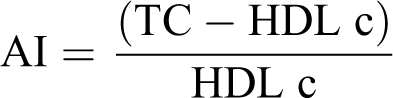
The serum lipid profile evaluated included total cholesterol (TC), HDL cholesterol (HDL-c), and triglycerides (TG). The parameters were assayed with an auto analyzer (Bayer Express Plus, Bayer, Germany). The LDL cholesterol (LDL-c) level, VLDL cholesterol (VLDL-c) level, and atherogenic index (AI) were calculated.
Determination of serum MDA concentration
The concentration of malondialdehyde (MDA) was evaluated in the serum. The method described by Draper and Hadley (1990) was used. The principle of the method was based on the spectrophotometric measurement of the color developed during the reaction of thiobarbituric acid with MDA. The solutions were cooled under tap water, and the absorbance was measured with an ultraviolet (UV) spectrophotometer (T80+ UV/visible Spectrometer®, PG Instruments Ltd., Leicestershire, United Kingdom) at 532 nm. The concentration of MDA in the samples was calculated by using the absorbance coefficient, MDA-TBA complex 1.56 × 105 cm−1 M−1.
Assays of serum antioxidant enzymes
Superoxide dismutase (SOD) was assayed with the NWLSS™ SOD activity assay kit, based on the method described by Martin et al. (1987).
Catalase (CAT) activity was measured by the NWLSS CAT activity assay kit, using the method described by Beers and Sizer (1952). Glutathione peroxidase (GPx) activity was measured with the NWLSS GPx activity assay kit (based on the method of Paglia and Valentine, 1967). The assay kits were purchased from Northwest Life Science Specialities, LLC, Vancouver, Washington, DC, USA.
Calculations
The VLDL-c level was calculated using the following equation:
Statistical analysis
The data obtained were expressed as mean ± standard error of the mean. The biochemical parameters were analyzed using one-way analysis of variance, followed by Tukey’s multiple comparison post hoc test. The statistical package used was Graphpad Prism version 4.00 for Windows (Graphpad software, San Diego, California, USA). Values of p < 0.05 were considered statistically significant.
Results
Physical responses of the rats to the treatments
Clinical observations
The Wistar rats in the DW, SO, TA, CP + Pb, and TA + CP + Pb groups did not exhibit any clinical sign of toxicity, and there was no mortality during the study.
Effects of the treatments on the body weights of the rats
The body weights of the rats in the DW, SO, and TA groups increased steadily during the study (Figure 1). The percentage changes in the body weights of the rats at week 0 compared with week 16 were as follows: DW (22%), SO (21%), TA (22%), CP + Pb (14%), and TA + CP + Pb groups (23%). The lowest percentage change in body weight was recorded in the CP + Pb group, while the highest percentage change in body weight was observed in the TA + CP + Pb group at week 0 compared to week 16.
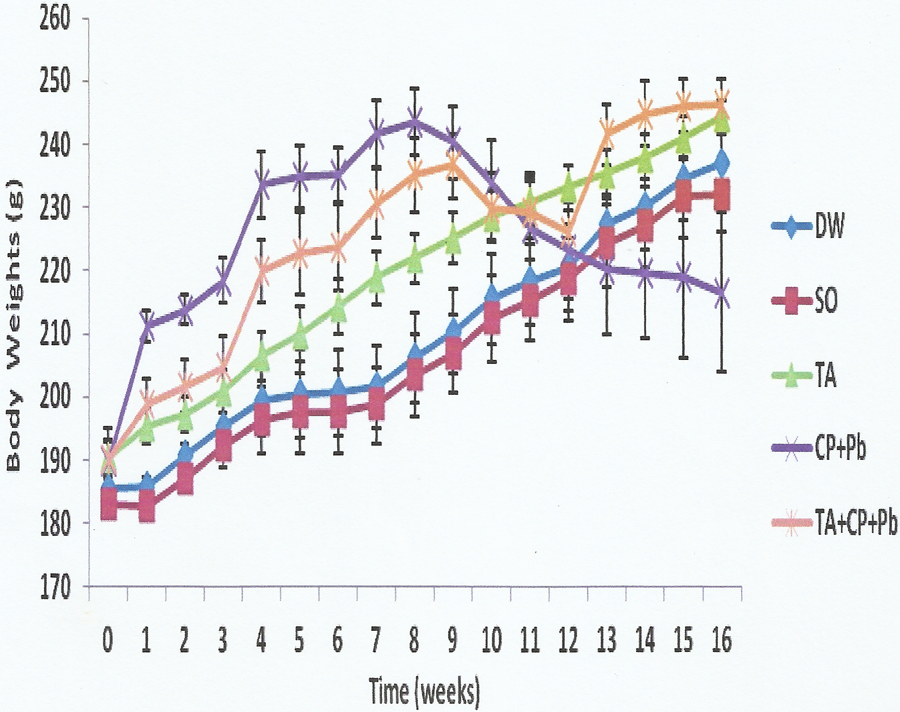
Effects of DW, SO, TA, CP + Pb, and TA + CP + Pb on the dynamics of weekly body weight changes in Wistar rats (n = 10). DW: distilled water; SO: soya oil; TA: taurine; CP: chlorpyrifos; Pb: lead acetate.
Effects of the treatments on serum lipid profiles
Effects of the treatments on TC concentration
There was no difference in the TC concentration between the groups (Figure 2).
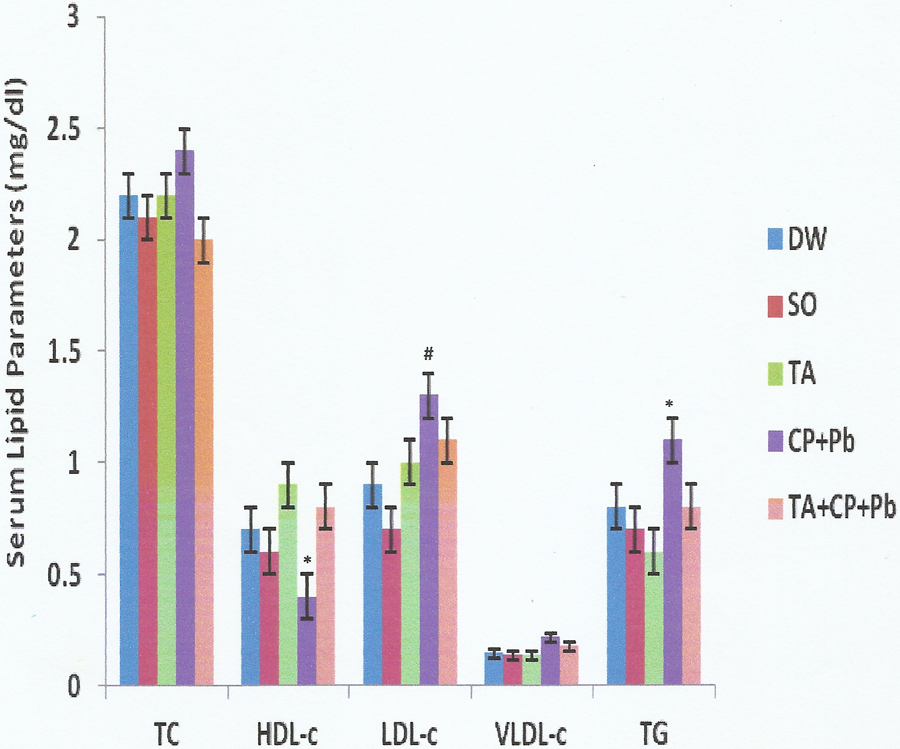
Effects of DW, SO, TA, CP + Pb, and TA + CP + Pb on serum lipid parameters such as TC, HDL-c, TG, LDL-c, and VLDL-c of Wistar rats (n = 10). *p < 0.05: CP + Pb group versus TA group; # p < 0.01: CP + Pb group versus SO group. DW: distilled water; SO: soya oil; TA: taurine; CP: chlorpyrifos; Pb: lead acetate; TC: total cholesterol; HDL-c: high-density lipoprotein cholesterol; TG: triglyceride; LDL-c: low-density lipoprotein cholesterol; VLDL-c: very low-density lipoprotein cholesterol.
TA increased HDL-c concentration
There was an increase (p < 0.05) in the HDL-c concentration in the TA group compared with the CP + Pb group (Figure 2). There was no difference in the HDL-c concentrations of the TA + CP + Pb, DW, and SO groups compared with the CP + Pb group.
CP and lead coadministration elevated LDL-c concentration
The LDL-c concentration of the CP + Pb group was elevated (p < 0.01) compared with the SO group (Figure 2). There was no difference in the LDL-c concentrations of the TA + CP + Pb, TA, and DW groups compared with the CP + Pb group.
Effects of the treatments on VLDL-c concentration
There was no difference in the VLDL-c concentration between the groups (Figure 2).
TA decreased serum TG concentration
The serum TG concentration was decreased (p < 0.05) in the TA group compared with the CP + Pb group (Figure 2). There was no difference in the serum TG concentrations of the TA + CP + Pb, DW, and SO groups relative to that of the CP + Pb group.
TA reduced AI
The AI in the TA group was reduced (p < 0.05) compared with the CP + Pb group (Figure 3). There was no difference in the AI of the TA + CP + Pb, DW, and SO groups compared with the CP + Pb group.
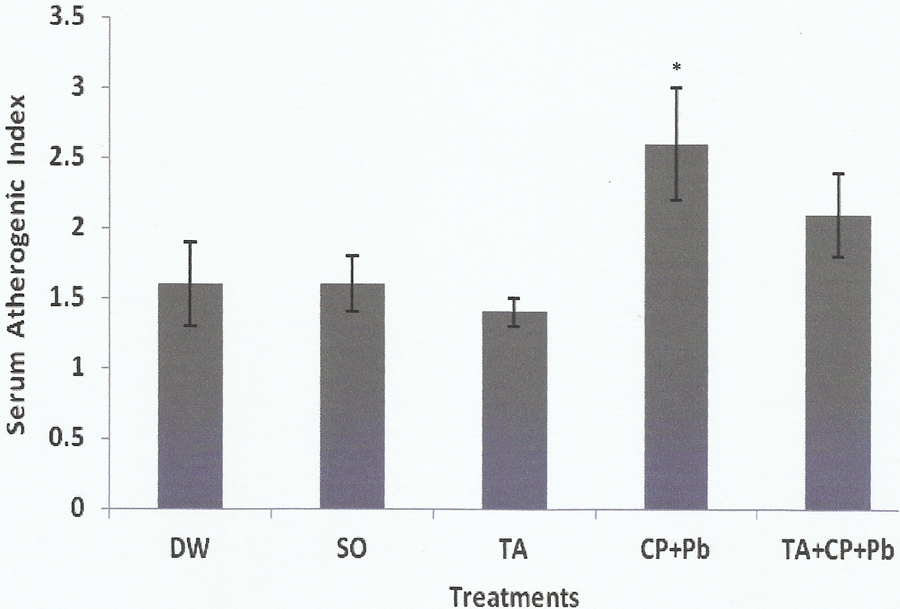
Effects of DW, SO, TA, CP + Pb, and TA + CP + Pb on serum AI. *p < 0.01: CP + Pb group versus TA group. DW: distilled water; SO: soya oil; TA: taurine; CP: chlorpyrifos; Pb: lead acetate; AI: atherogenic index.
Effects of the treatments on lipid peroxidation
TA decreased serum MDA concentration
There was a reduction (p < 0.001) in the serum MDA concentration of the TA group compared with the CP + Pb group (Figure 4). There was no difference in the serum MDA concentration of the TA + CP + Pb group relative to that of the CP + Pb group. The serum MDA concentrations of the DW and SO groups were reduced (p < 0.01) compared with the CP + Pb group.
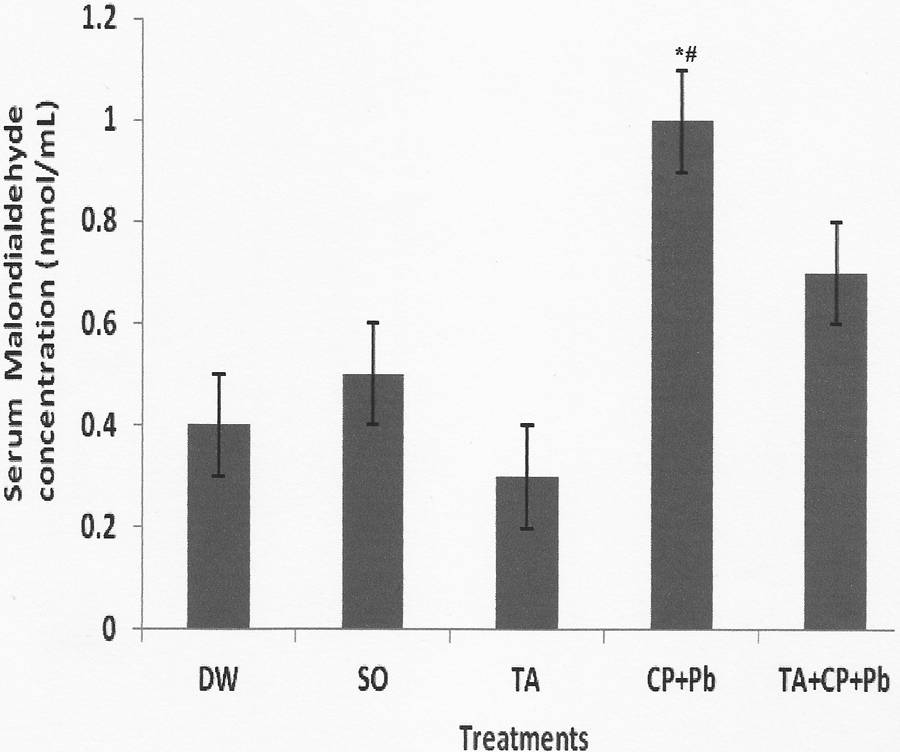
Effects of DW, SO, TA, CP + Pb, and TA + CP + Pb on serum MDA concentration. *p < 0.01: CP + Pb group versus DW and SO groups, respectively; # p<0.001: CP + Pb group versus TA group. DW: distilled water; SO: soya oil; TA: taurine; CP: chlorpyrifos; Pb: lead acetate; MDA: malondialdehyde.
Activities of serum antioxidant enzymes
TA elevated serum SOD activity
There was an elevation (p < 0.01) in the serum SOD activity in the TA group compared with the CP + Pb group (Table 1). There was no difference in the serum SOD activities in the TA + CP + Pb, DW, and SO groups compared with the CP + Pb group.
Effects of DW, SO, TA, CP + Pb, and TA + CP + Pb on activities of serum antioxidant enzymes.a
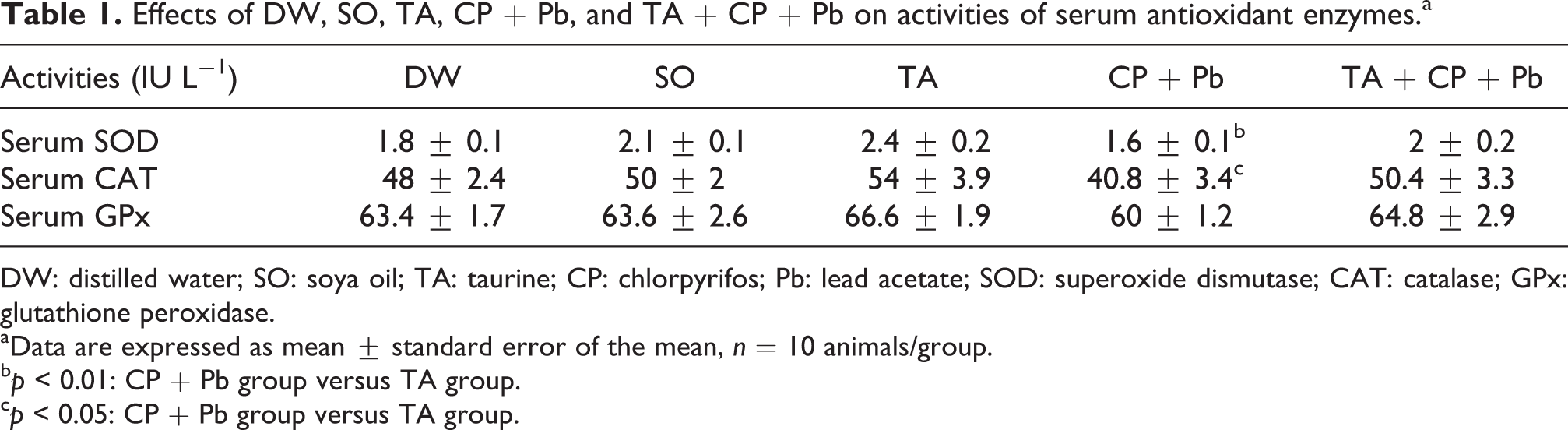
DW: distilled water; SO: soya oil; TA: taurine; CP: chlorpyrifos; Pb: lead acetate; SOD: superoxide dismutase; CAT: catalase; GPx: glutathione peroxidase.
aData are expressed as mean ± standard error of the mean, n = 10 animals/group.
b p < 0.01: CP + Pb group versus TA group.
c p < 0.05: CP + Pb group versus TA group.
TA increased serum CAT activity
The serum CAT activity of the TA group was increased (p < 0.05) compared with the CP + Pb group (Table 1). There was no difference in the serum CAT activity in the TA + CP + Pb, DW, and SO groups relative to that of the CP + Pb group.
Effects of the treatments on serum GPx activity
There was no difference in the serum GPx activity between the groups (Table 1).
Discussion
In the current study, the initial increase in the body weights of the rats coadministered with CP and Pb (between weeks 0 and 8) may be partially attributed to the enhancement of adiposity by CP (Meggs and Brewer, 2007). However, it has been observed that CP stimulates weight loss in rats through the induction of lipid peroxidation, oxidative stress, adrenal-mediated stress, and cholinergic mechanism-mediated stress (Ambali et al., 2011a, 2011b). Pb induces body weight loss by enhancing lipid peroxidation, generation of ROS, and depletion of antioxidant reserves (Abdel Moneim et al., 2011). Therefore, the decrease in body weights of the rats in the CP + Pb group between weeks 9 and 16 may be due to the reduction of body weight evoked by the coadministration of CP and Pb. Conversely, the increase in the body weights of the rats pretreated with TA (between weeks 0 and 9 and between 13 and 16) may be due to the enhancement of the utilization of nutrients in the diet by TA (Devi et al., 2009).
The CP + Pb group exhibited adverse effects on serum lipid profiles by evoking elevations in TC, LDL-c, VLDL-c and TG while eliciting a reduction in HDL-c levels. Ambali et al. (2011b) reported that CP induced increased levels of TC and LDL-c and decreased the levels of HDL-c and VLDL-c in Wistar rats. It has been shown that OPs can cause an increase in TC and TG levels, and this may predispose individuals to premature atherosclerosis (Lasram et al., 2009). Similarly, enhanced synthesis of TC and decreased synthesis of HDL-c have been observed in the liver of rats poisoned with Pb (Newairy and Abdou, 2009). Ugbaja et al. (2013) affirmed that Pb poisoning induces dyslipidemia and this is capable of predisposing subjects to atherosclerosis. It is posited that the elevated VLDL-c concentration in the CP + Pb group may be due to the combined hepatotoxic effects of CP (Uzun and Kalender, 2013) and Pb (Thenmozhi et al., 2013), since the synthesis of VLDL-c occurs in the liver (Uchendu et al., 2013). The vulnerability of the liver to toxic assault may preclude it from metabolizing lipids effectively. However, it is surmised that TA ameliorated the VLDL-c concentration in the TA + CP + Pb group partly due to its hepatoprotective effect (Issabeagloo et al., 2011).
Furthermore, the findings in this study indicated that TA improved the serum lipid profiles in the TA + CP + Pb group. It has been shown that TA normalizes the lipid profiles of rats by increasing the concentration of HDL-c and the activities of lipoprotein lipase and lecithin cholesterol acyl transferase in the plasma (Nandhini et al., 2002). In addition, TA exhibits its hypocholesterolemic effect in rats by enhancing the catabolism of cholesterol and by reducing the absorption of dietary cholesterol (Saleh, 2012).
There was an increase in the AI in the CP + Pb group, and this may be an indication of atherogenic dyslipidemia. CP enhanced the AI in rats in a study conducted by Acker and Nogueira (2012), and this may culminate in coronary heart disease (Lee and Nieman, 1996). Conversely, the AI was reduced in the TA + CP + Pb group in the present research. TA improves the AI in experimental animals by increasing the levels of the antiatherogenic lipoprotein, HDL-c (Yang et al., 2010). The hypolipidemic effects of TA (as demonstrated in this study) may have been evoked by the enhancement of bile acid synthesis and the activity of cholesterol 7α-hydroxylase enzyme, which is the rate-limiting enzyme in the catabolism of cholesterol into bile acids (Russell, 2003).
In the current investigation, the serum MDA concentration was increased, while the activities of serum antioxidant enzymes (SOD, CAT, and GPx) were reduced in the CP + Pb group. The increased MDA concentration in the CP + Pb group may be ascribed to an excessive production of ROS by both toxicants, and this may have evoked the decreased activities of the serum antioxidant enzymes. MDA is a major oxidation product of peroxidized polyunsaturated fatty acids, and it is considered to be an important indicator of lipid peroxidation (Ma et al., 2013). Increased oxidative stress may cause the oxidation of LDL-c and HDL-c, thereby increasing the risk of atherosclerosis and cardiovascular diseases (Abdollahzad et al., 2009; Ambali et al., 2011b; Uchendu et al., 2013). Therefore, it is deduced that the co-treatment of the rats with CP and Pb also elicited dyslipidemia through the induction of oxidation stress. In contrast, there was attenuation of the serum MDA concentration and augmentation of the activities of serum antioxidant enzymes in the TA + CP + Pb group. TA has been shown to demonstrate its anti-lipoperoxidative and antioxidant effects in biological systems (Ito and Azuma, 2004; Oliveira et al., 2010).
Conclusion
The co-treatment of the rats with CP and Pb induced disruptions in the serum lipid profiles. TA alleviated the disruptions in the serum lipid profiles, partially by inducing elevations of HDL-c, counteracting oxidative stress and lipid peroxidation, enhancing bile acid synthesis and the activity of the cholesterol 7α-hydroxylase enzyme. TA may be administered for the prevention of serum lipid disorders in animals following co-exposure to CP and Pb in the environment.
Footnotes
Conflict of interest
The authors declared no conflicts of interest.
Funding
This research received no specific grant from any funding agency in the public, commercial, or not-for-profit sectors.