







Abstract
In this study, the association between heavy metals in water and cyprinids sampled from the Yeşilırmak River stretch, which is frequently exposed to pollutant sources (a sugar production factory (Turhal) and solid wastes dump area (Taşlıçiftlik) was explored, and the oxidative effects of heavy metals on cyprinids were evaluated through analyzing some liver enzymes, namely, superoxide dismutase (SOD), catalase (CAT), malondialdehyde (MDA), and cortisol. The heavy metal concentrations of both fish and water, collected from three different locations along the river during the summer of 2011 and winter of 2010 (Turhal, Taşlıçiftlik, and Gümenek), were determined by inductively coupled plasma atomic emission spectroscopy (ICP-AES). The water and fish liver heavy metal concentrations exhibited increasing trends from upstream (Gümenek) to downstream (Turhal). The water and liver samples collected during the summer had higher heavy metal concentrations than those obtained during the winter. The mean heavy metal concentrations increased from Gümenek to Turhal. The liver heavy metal concentrations were higher than those in the water and exhibited almost the same increasing trend from Gümenek to Turhal. Positive relationships between liver and water heavy metal concentrations, especially for cadmium (R 2 = 0.91) and lead (R 2 = 0.98), were obtained. Among the liver enzymes, only MDA followed the same increasing trend from Gümenek to Turhal as was obtained for heavy metals. On the other hand, CAT and SOD had a contrary spatial pattern of change to those of heavy metals and MDA. Although the values of heavy metals and MDA in Taşlıçiftlik were between the two other locations, fish inhabiting this locality had significantly higher values of cortisol, which is an indication of the other stress-causing factors for fish.
Keywords
Introduction
In our rapidly industrialized world, effluents from various industries have become threats for water sources and their inhabitants. Among the various industries, sugar mill effluents and dumpsites located in the riparian zone of rivers are considered as threats to water sources in Turkey but studies on their effects on water and their inhabitants are scarce.
The sugar mill effluents worldwide are regarded to be the main sources of pollutants including organic materials, carbohydrates, heavy metals, oil/grease, and cleaning agents. In addition, the sugar mill effluent might change the temperature and pH, biological/chemical oxygen demands of the receiving ecosystem. Volumes of waste produced in sugar beet processing can be considerable. It is reported that one ton sugar generated up to 3 m3 effluent, which can have substantial pollutants sources (Cheesman, 2005). The Turhal sugar mill, which is one of the potential point pollutants of Yeşilırmak River, generates approximately 500,000 tons of sugar beet, which may result in 1,500,000 m3 industrial wastes (liquid and solid). Although compositions of effluents can vary, as mentioned above, here in this study we are interested only in heavy metal pollutions and their relationship between fish health. Previous studies showed that sugar mill effluent include heavy metals, such as, copper (Cu), zinc, lead (Pb), cadmium (Cd), and iron (Fe) (Samuel et al., 2014; Saranraj and Stella, 2012). Focusing on heavy metal-induced oxidative stress in fish led us to choose appropriate heavy metals to study. It has been known that heavy metals such as Cu, Cd, Fe, and Pb chelate complexes play an important role in stimulating carcinogenic activity during and after lipid peroxidation (Choudhary et al., 2007).
Unorganized dumping of solid waste is also another threat to the environment. When dumped with municipal solid wastes, sources such as electronic goods, painting wastes, used batteries, and so on, increase the heavy metals in dumpsites. Slow leaching of these heavy metals under the acidic environment during the degradation process leads to leachates with high metal concentrations (Esakku et al., 2003). Also runoff of heavy metals is also another route to the receiving water body. In addition to sugar mill, in this study, we tried to document the heavy metals induced by unorganized dumping of solids in the area of Tokat municipality.
Heavy metal pollutants have been the subject of many studies due to their toxicity and ability to accumulate in ecosystems (Miller et al., 2002). Among water pollutants, heavy metals may result in greater ecological disasters (Brousseau et al., 2000; Gagnaire et al., 2004). Heavy metals may affect fish health. Fish may uptake heavy metals directly from the water or indirectly from other organisms such as small fish, invertebrates, and aquatic vegetation (Kime et al., 1996). Determination of heavy metal concentration in fish organs and tissues may be used to indicate the chronic effects of heavy metals, distinguish polluted areas, and evaluate aquatic ecosystem health (De La Torre et al., 2002; Heath, 1995; Kotze et al., 1999).
The liver plays an important role in storing, recirculating detoxification, and converting pollutants. The liver behaves as an active region for the pathological effects caused by the pollutants (El-Shahawi and Al-Yousuf, 1998). The fish liver is one of the organs synthesizing metal-binding proteins such as metallothionein and glutathione, which overcome the effects of pollutants by binding heavy metals. The studies relating to metal accumulation in various fish species showed that metal concentration in the liver is far higher compared to other organs and tissues. This indicates the importance of the liver in binding metals (Sağlamtimur et al., 2003).
It is known that environmental pollutants such as pesticides and heavy metals contaminating aquatic habitats by various ways cause the production of free radicals in the aquatic animal body, and thus, oxidative stress by effecting antioxidant defensive systems (Bekmezci, 2010). Under normal physiological conditions, cells are protected by antioxidant defensive systems against oxidative destruction caused by molecules such as free radical products and peroxides. These systems can be divided into two groups, namely, enzymatic and nonenzymatic ones. Enzymatic ones are superoxide dismutase (SOD) and catalase (CAT) (De Zwart et al., 1999; Deaton and Marlin, 2003).
Cortisol stimulates glyconeogenesis in the liver and increases the effects of glucagon and epinephrine. Glucocorticoids inhibit protein synthesis and increase protein catabolism with lipid mobilization. As a result of this, the destruction and release of amino acids occur (Stryer, 1991; Turgut, 2000). Cortisol is secreted from the cortex layer of the adrenaline gland as a response to any type of environmental stress source (Idler and Truscott, 1972). An increase in cortisol secretion duration can cause many physiological changes, including metabolic imbalance (increase in protein catabolism, increase in thyroid hormones, increase in eagerness of the body to work, leading to exhaustion of the body, etc.). In addition, it may cause bacterial, viral, fungal, and protozoan infections by putting increased pressure on the immune system (Robertson et al., 1963; Roth, 1972; Wechsler et al., 1986).
In this study, conducted in the Yeşilırmak River, which is one of the important rivers of Turkey, the possible effects of heavy metals on cyprinids, a group of fish that was the most abundant and the most consumed, were investigated in samples collected from the river section mostly affected by the pollutants (the Turhal sugar factory and wastes dump area). In addition, heavy metal effects on fish were investigated by evaluating some liver enzymes (SOD, CAT, and malondialdehyde (MDA)) and cortisol values of cyprinids.
Materials and methods
Study area and sampling stations
The study was performed on the section of the Yeşilırmak River in the city of Tokat, Turkey, by collecting samples from three stations during December 2010 and June 2011, representing the winter and summer season, respectively. Sampling stations were chosen to take into account the possible effects of the Turhal Sugar Factory in the district of Turhal and the Tokat city municipality trash dump area on the riparian zone of the river in the Taşlıçiftlik region. These two stations were compared with a station near Gümenek, which was considered a ‘clean site’ because it is located upstream of the city residential area (Figure 1). December, when the sugar factory starts to process sugar beets, was chosen as a sampling month for detecting possible effects by the factory on the river. Cyprinids were chosen as the study material because they are the most abundant fish family in this river. Among cyprinids, freshwater mullet (Squalius cephalus) and Capoeta banarescui were collected as fish samples.
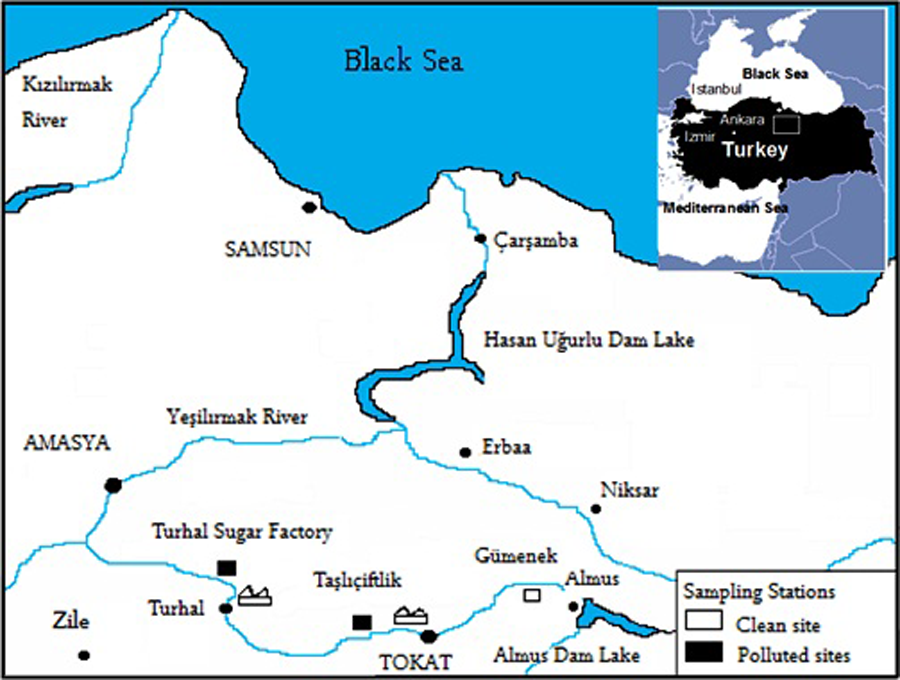
Study site and sampling stations.
Sample collection
The water samples collected seasonally at the aforementioned stations were poured into 100 cm3 bottles following filtering. For heavy metal analysis, water samples were acidized by adding 1 cm3 hydrochloric acid (HCl; Merck, Kenilworth, New Jersey, USA). This allowed the prevention of the biological activities of bacteria and microorganisms and metals to turn into other forms of metals. The treated samples were stored at +4°C in the refrigerator until analysis (Tuncer and Uysal, 1983). The samples of fish were collected using a LR-24 Smith-Rooth Backpack Electrofisher (Vancouver, Washington, USA). The fish collected were transferred into an aquarium containing the river water and were kept in the aquarium until they recovered from the effects of the electroshocker. After the fish began behaving normally in the aquarium, 21 specimens (Gümenek, 5; Taşlıçiftlik, 8 and Turhal, 8) during winter and 22 specimens (Gümenek, 8; Taşlıçiftlik, 6 and Turhal, 8) during summer were selected from the aquarium for the collection of blood samples. The blood samples were collected from the heart without applying chemical anesthetizers. For this purpose, the fish were anesthetized mechanically by applying force to their head and were placed on the table on their side. After lifting up the operculum, a 5 ml disposable injector with a green tip was applied to the heart at a 40–45° angle in front of the pectoral arch formed by cleithrum bones for collecting the blood, and then the blood was ejected into the test tubes. The fish were brought to a laboratory at, Department of Fisheries, Faculty of Agriculture, Gaziosmanpaşa University, Turkey, for the removal of liver tissues with stainless steel pens, scissors, and bistouries. Liver tissues were stored in a freezer at −80°C until analysis.
Reagents
Deionized water (18.2 MΩ) from a Milli-Q system (Millipore, Belford, Massachusetts, USA) was used to prepare all aqueous solutions. All mineral acids and oxidants (nitric acid (HNO3), HCl) used were of the highest quality (Suprapure, Merck, Darmsadt, Germany). All the plastic and glassware were cleaned by soaking (with contact) overnight in a 10% (w/v) nitric acid solution and then rinsed with deionized water.
Apparatus
Heavy metal analysis was performed in the Central Laboratory of Mustafa Kemal University, Hatay, using Liberity 2 model ICP-AES equipment; the blood and liver enzyme analyses were carried out in the Medical Faculty of Gaziosmanpaşa University using Roche Hitachi Cobas 6000 (Pleasanton, California, USA) equipment and a NF 800 R centrifuge.
Digestion procedure and heavy metal analysis
After removing the liver tissues from the freezer, the tissues were defrosted for a while. Following defrosting, a 0.2 g piece of liver tissue was placed into a pre-weighed Erlenmeyer flask. Then flasks with liver tissues in them were dried in a drying oven at 105°C for 24 h. Then the tissue’s dry weight was calculated by subtracting the final weight (flask + dry tissue) from the flask weight. Each sample of dried tissue in each flask was dissolved by adding 2 ml of HNO3 into the flask. Then, the HNO3 was evaporated by heating dissolved samples on a hot plate at 85–90°C. Following evaporation of this acid, 6 ml of HCl were added to the samples, then the HCl was evaporated from the samples by again heating them on a hot plate at a relatively warmer temperature (50–60°C). After the evaporation of HCl, the volume of each flask with a sample in it was increased to 50 ml by adding 2 ml of 0.1 N HCl and then filtered through filter paper. Finally, the sample on the filter paper was read by an ICP-AES (Uysal and Tuncer, 1984).
Analysis of blood parameter (cortisol) and liver enzymes
In order to produce serum, which was used to determine cortisol concentrations, the blood inside the anticoagulant-free centrifuge tubes was centrifuged with NF 800R centrifuge at a rate of 3500 r/min for 5 min. After the serum was passed to the upper phase, concentrations of cortisol in the phased serum were read by a Cobas 6000 autoanalyzer using kits in the biochemical laboratory of the Faculty of Medicine, Gaziosmanpasa University, Turkey. In order to analyze liver enzymes (SOD, CAT, and MDA), the weighed tissue samples (0.29 g) were homogenized by adding distilled water under ice isolation using a Ultra Turrax Homogenizer (homogenate). Homogenized samples were centrifuged with NUVE NF 800R refrigerated centrifuge for supernatant. CAT, SOD, and MDA in each supernatant were spectrophotomerically determined using ultraviolet–visible spectrometry according to the methods described by Luck (Luck, 1963), Fridovich (Mc Cord and Fridovich, 1969), and Big (Beuge and Aust, 1978), respectively. Analyses were performed in the biochemical laboratory of the Faculty of Medicine of Gaziosmanpasa University.
Statistical analysis
A two-way analysis of variance (ANOVA) was used to test for significant differences in heavy metal concentrations in the water and liver among sites and months. Prior to the analysis of variance, all variables were tested for normality (Kolmogorov and Smirnov test) and homogeneity of variances (Cochran tests). The Cu concentration data of the liver and MDA followed a normal distribution after converting the data by applying (log x + 1). The cortisol and Pb data obtained from the water and liver did not show normal distribution after converting them into various forms, so these were tested with a Scheirer–Ray–Hare extension of the Kruskal–Wallis test (Sokal and Rohlf, 1998). In order to detect whether the heavy metals accumulated in the liver through dissolving in the water, regression analysis of the concentration in the water and liver was performed. The significance of regression was tested by a one-way ANOVA. The statistical analyses were performed in SAS and WINKS SDA Version 6.08.
Results
Spatial variations in heavy metal concentrations and blood parameters
Averaging the data for the entire season (winter and summer), each of the heavy metal concentrations in the water and liver showed an increasing trend from the site near Gümenek, which was considered a clean, control site, to the site near Turhal (Figure 2; Table 1). This trend exhibited statistical differences for all of the four heavy metal concentrations in water (Fe : F2,17: 245.36; p < 0.0001 (range 0.245–0.610 µg/g); Cu: F2,17: 108.20; p < 0.0001 (range 0.014–0.034 µg/g); Pb: H: 14.97; p < 0.05 (range 0.001–0.011 µg/g); and Cd: F2,17: 552.68; p < 0.0001 (range 0.0005–0.0053 µg/g)) and in the liver (Fe: F2,17: 139.25; p < 0.0001 (range 1.850–3.817 µg/g), Cu: F2,17: 1219.60; p < 0.0001 (range 0.334–1.789 µg/g), Pb: H:15.43; p < 0.05 (range 0.002–0.013 µg/g), Cd: F2,17: 327.38; p < 0.0001; (range 0.001–0.008 µg/g)).
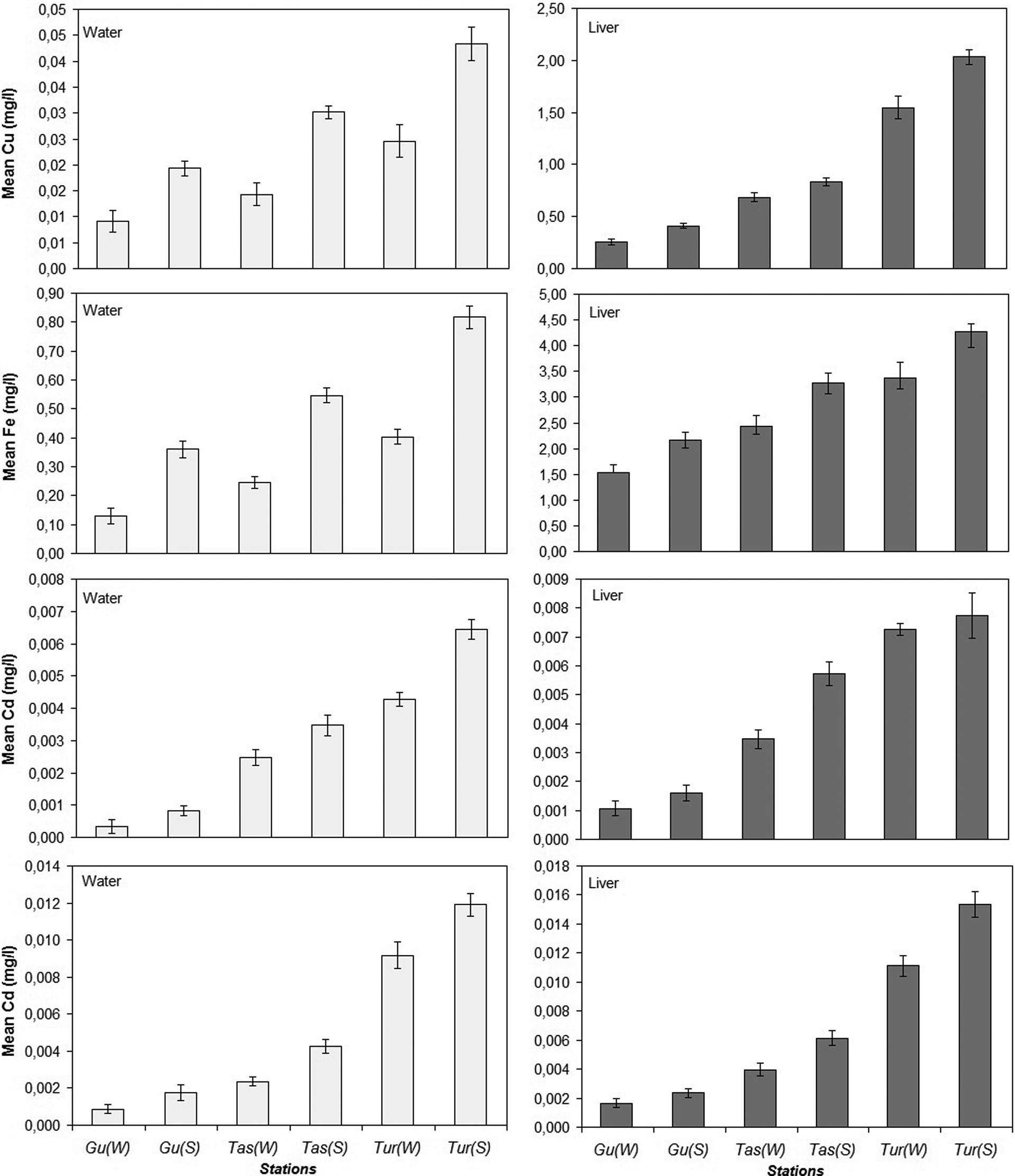
Temporal and spatial variations in heavy metal concentrations in water and liver.
The heavy metal concentrations in cyprinid liver and Yeşilırmak River water obtained during winter and summer at three locations.
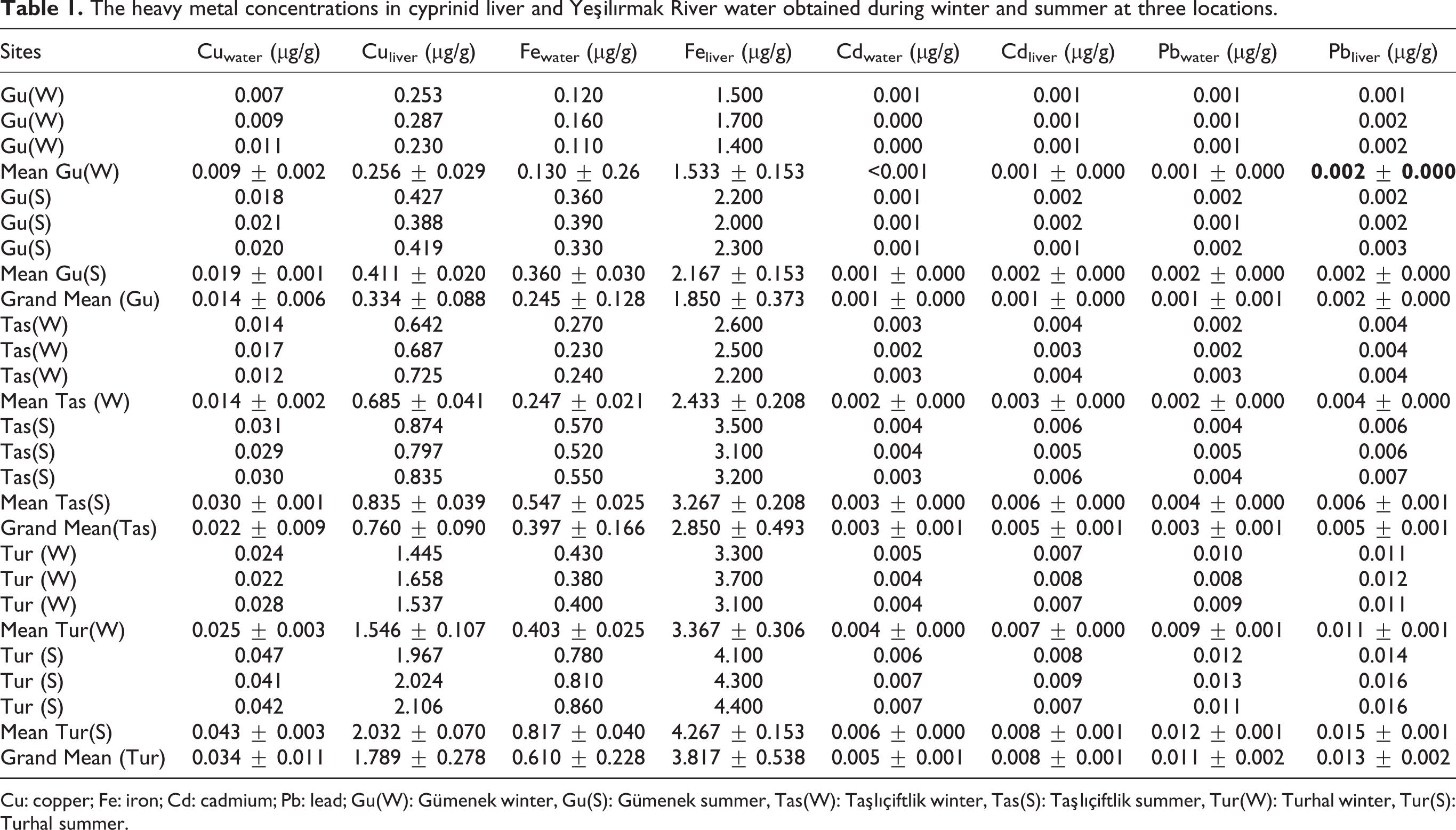
Cu: copper; Fe: iron; Cd: cadmium; Pb: lead; Gu(W): Gümenek winter, Gu(S): Gümenek summer, Tas(W): Taşlıçiftlik winter, Tas(S): Taşlıçiftlik summer, Tur(W): Turhal winter, Tur(S): Turhal summer.
SOD varied significantly among the sites (F1,17: 17.56; p = 0.0003 (range: 0.001–0.035 U/mg protein)) (Figure 3; Table 2). The fish individuals inhabiting the Gümenek (0.022 U/mg protein) and Taşlıçiftlik (0.016 U/mg protein) areas had significantly higher mean values of SOD than those in Turhal (0.004 U/mg protein). The individuals obtained from each site had significantly different CAT values from each other (F2,17: 26.02; p < 0.0001 (range 0.231–2.782 U/mg protein)). The individuals in Gümenek had the highest mean value of CAT (1.888 U/mg protein), followed by Taşlıçiflik (1.104 U/mg protein) and Turhal (0.462 U/mg protein). The mean values of MDA obtained from individuals inhabiting each site differed significantly from each other (F2,17: 214.59; p < 0.0001; range 3.537–91.770 (nmol/g protein)). The spatial change pattern of MDA was contrary to that obtained for CAT. Individuals in Turhal had higher mean values of MDA (mean: 72.173 nmol/g protein) than those in Taşlıçiftlik (mean: 18.336 nmol/g protein) and Gümenek (5.119 nmol/g protein).
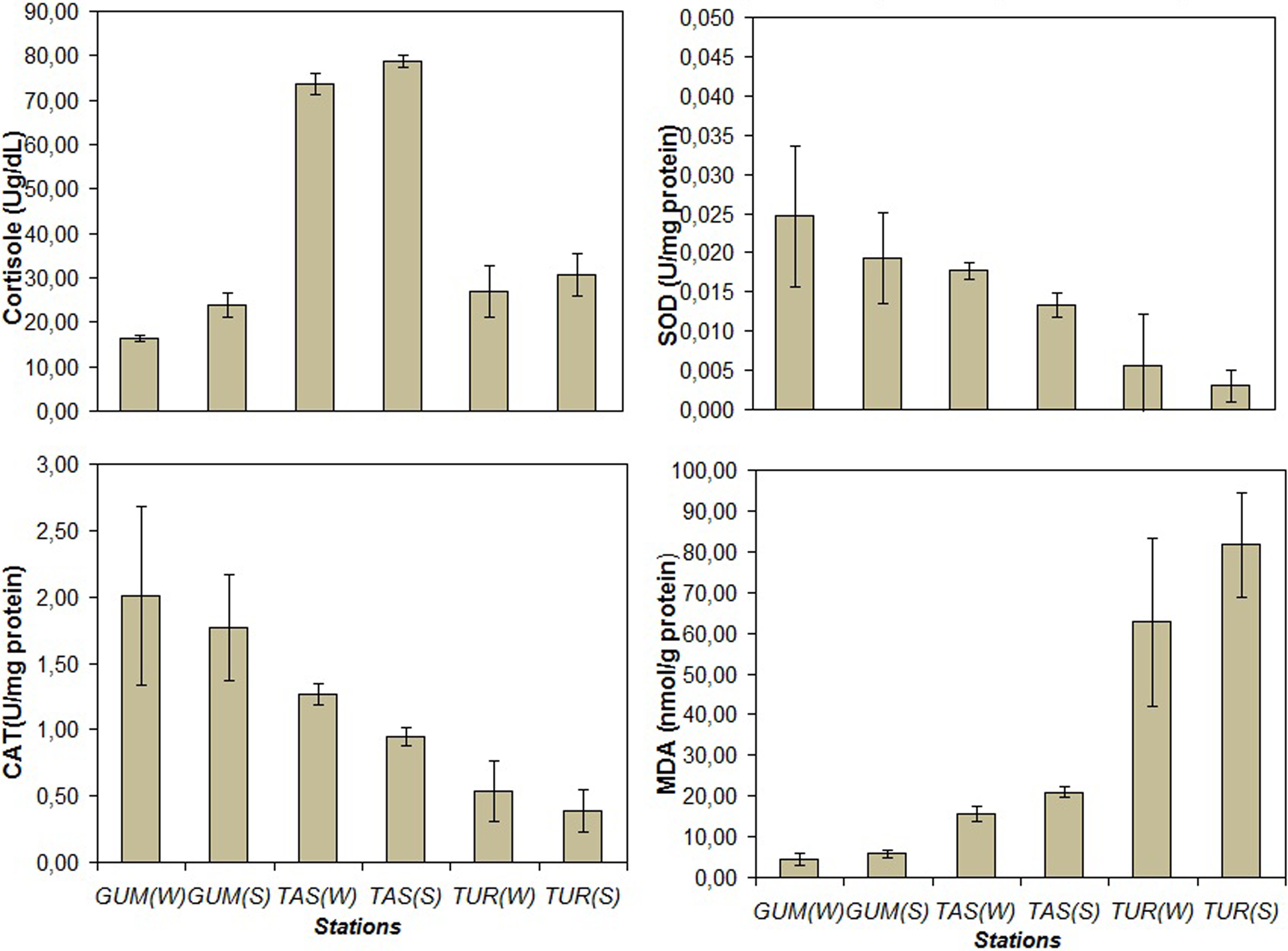
Temporal and spatial variations in the concentrations of enzymes and cortisol (ug/dL) in liver of cyprinids.
The concentrations of enzymes and cortisol in liver of cyprinids. Gu: Gümenek; Tas: Taşlıçiftlik; Tur: Turhal. W and S stand for Winter and Summer seasons, respectively.
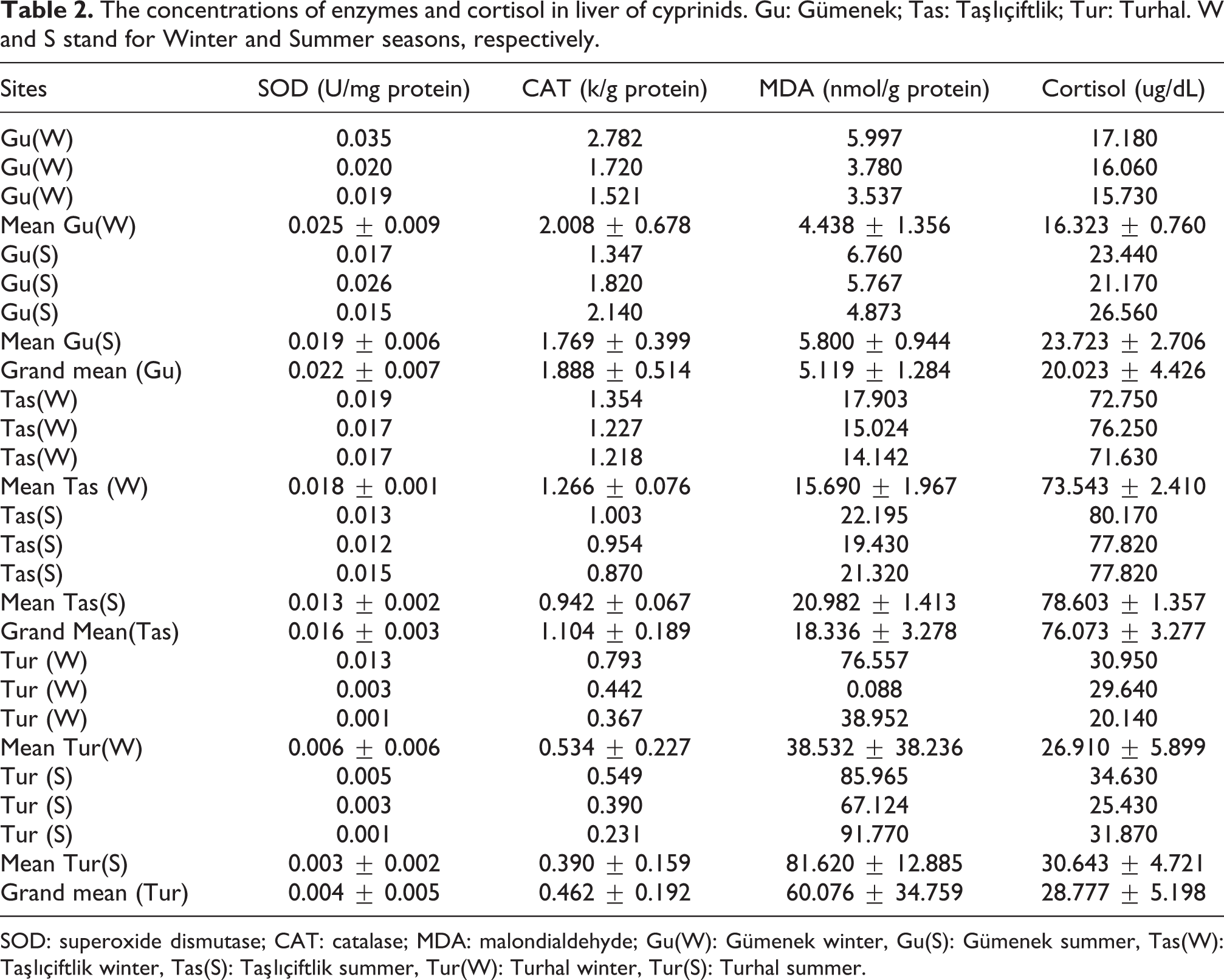
SOD: superoxide dismutase; CAT: catalase; MDA: malondialdehyde; Gu(W): Gümenek winter, Gu(S): Gümenek summer, Tas(W): Taşlıçiftlik winter, Tas(S): Taşlıçiftlik summer, Tur(W): Turhal winter, Tur(S): Turhal summer.
Cortisol values changed significantly among sites (H: 13.66; p < 0.05). Individuals in Taşlıçiftlik had a higher mean value of cortisol (76.073 ug/dL) than those in Turhal (28.777 ug/dL) and Gümenek (20.073 ug/dL).
Temporal variations in heavy metal concentrations and blood parameters
Averaging the data across sites (Gümenek, Taşlıçiflik, and Turhal), the concentrations of each one of the heavy metals (except for Pb) in water and liver were significantly higher in summer than those in winter (Fewater F1,17: 541.14; p < 0.0001; mean: 0.260 and 0.574 µg/g; Cuwater F1,17: 184.44; p < 0.0001; mean: 0.016 and 0.031 µg/g; Pbwater H: 1.53; p > 0.05; mean: 0.004 and 0.006 µg/g; cadmiunwater F1,17: 109.01; p < 0.0001; mean: 0.002 and 0.004 µg/g; Feliver F1,13: 67.21 p < 0.0001; mean: 2.444 and 3.233 µg/g; Culiver F1,17: 104.68; p < 0.0001; mean: 0.829 and 1.093 µg/g; Pbliver H: 1.05; p > 0.05; mean: 0.006 and 0.008 µg/g, cadmiunliver F1,17: 30.59; p = 0.0001; mean 0.004 and 0.005 µg/g) (Figure 2; Table 1) .
The mean SOD, CAT, and cortisol values for individuals taken in winter and summer did not differ significantly (SOD; F1,17: 2.79; p = 0.121; mean: 0.016 (winter) and 0.012 (summer); CAT; F1,17: 2.12; p = 0.179; mean: 1.269 (winter) and 1.034 (summer); cortisol; H: 1.64; p > 0.05; mean: 44.323 (summer) and 38.926 (winter)). MDA, on the other hand, showed significant variation between the seasons (F1,17: 7.66; p = 0.017; mean: 27.618 (winter) and 36.134 (summer)) (Figure 3; Table 2).
In order to test the effects of heavy metal concentrations in water on SOD, CAT, and MDA, Pearson correlation analysis was performed. SOD and CAT decreased with increase in Cu (r = −0.76 p = 0.0003 SOD; r = −0.75 p = 0.0003 CAT), Fe (r = −0.71; p = 0.001 SOD; r = −0.72, p = 0.0008 CAT), Cd (r = −0.82; p = 0.000 SOD; r = −0.87 p = 0.000 CAT), and Pb (r = −0.84, p = 0.000 SOD; r = −0.83 p = 0.000) concentrations, whereas heavy metals increased MDA activities (r = 0.76 p = 0.0003 for Cu; r = 0.75 p = 0.0004 for Fe; r = 0.90 p = 0.000 for Cd; r = 0.95 p = 0.000 for Pb).
In order to see whether the source of accumulated heavy metals in the liver are received directly from the water by the fish, we applied regression analysis between the heavy metal concentrations in water and the liver (Figure 4). Interestingly, all heavy metals in the water exhibited very significant relationships with those in the liver ( Cu : R 2 = 0.694, F1,17: 36.30; p = 0.000; Fe: R 2 = 0.833, F1,17: 79.71; p = 0.000; Cd: R 2 = 0.904, F1,17: 150.94; p = 0.000; Pb: R 2 = 0.972, F1,17: 563.88; p = 0.000).
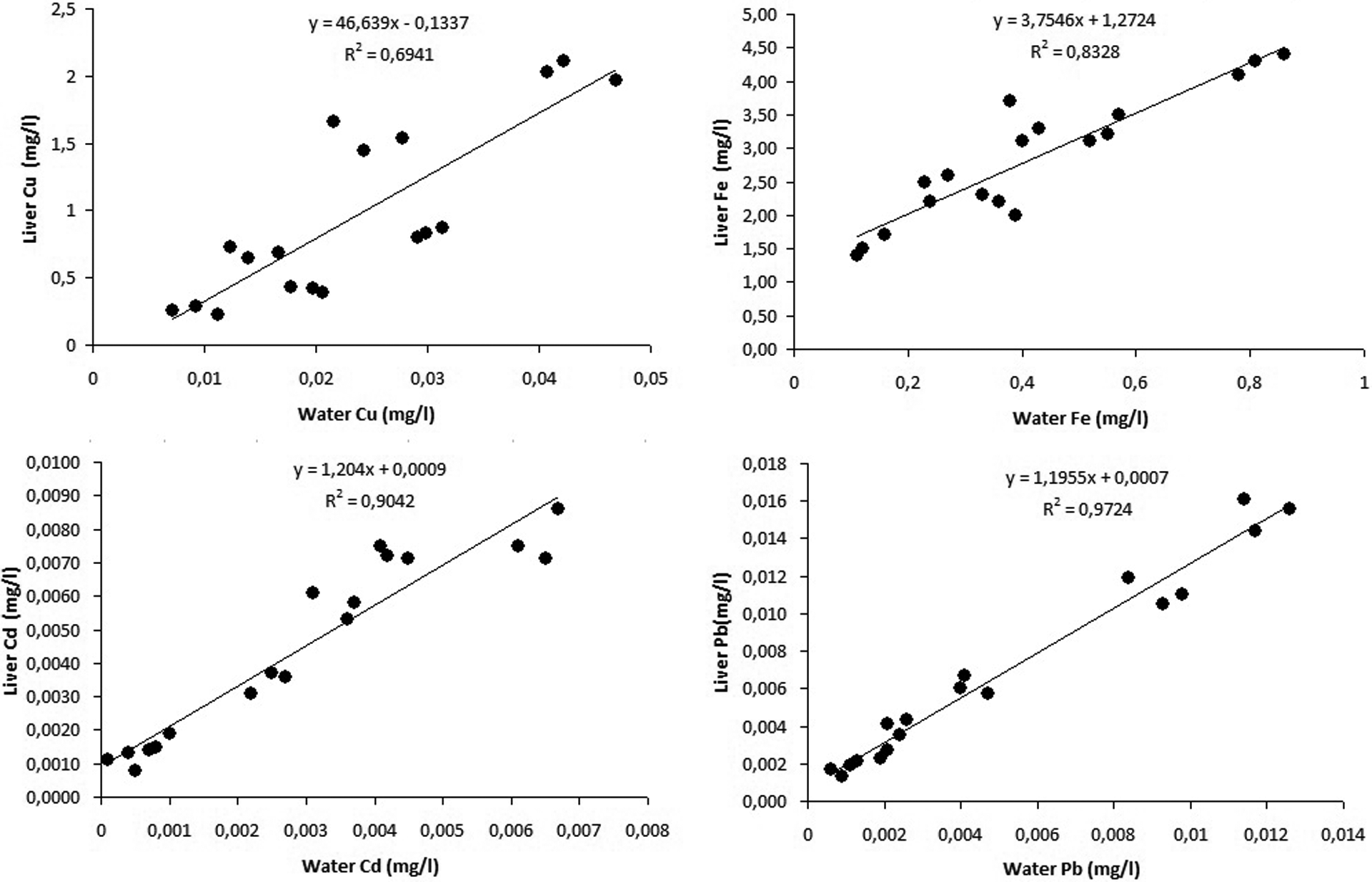
The relationships between heavy metal concentrations in liver and water. Gu(W): Gümenek winter, Gu(S): Gümenek summer, Tas(W): Taşlıçiftlik winter, Tas(S): Taşlıçiftlik summer, Tur(W): Turhal winter, Tur(S): Turhal summer.
Discussion
There are numerous studies investigating the heavy metal contents of water and fish tissues (Authman, 2008; Begum et al., 2005; Canlı et. al., 1998; Kotze et al., 1999; Mansour and Sidky, 2002). In these studies, as we determined here, heavy metal concentrations were higher in the polluted areas. That the heavy metal concentrations attained the highest level in Turhal could be related to a sugar production factory operating in this city and the location of Turhal. The sampling site near Turhal is located in a downstream direction, which receives polluted water from upstream areas that are under the effects of the Tokat city municipality trash dumping area and agriculture production lands around the river.
The results showed that the concentration of each one of the heavy metals in the water and liver was higher during the summer than in the winter, which could be attributed to higher evaporation rates that increase the occurrence of heavy metal content per milliliter of water during summer. In addition, the fact that the winter is the rainy season in the study area and dam operating upstream regulates the flow in the main channel especially not releasing much water during summer dilutes river waters during winter, thus reducing the occurrence of heavy metals per milliliter of water. The result of higher concentrations of heavy metals obtained in our study area in the summer was supported by another study performed in the same area (Mendil et al., 2010).
There were significant linear relationships between heavy metal concentrations in the liver and water. Contrary to Cd (R 2 = 0.904) and Pb (R 2 = 0.972), which are not used for metabolic activities or for other vital purposes, relatively lower regression coefficients for Fe (R 2 = 0.833) and Cu (R 2 = 0.694) could be attributable to the fact that Fe and Cu are essential trace elements in fish nutrition (Watanabe et al. 1997) and found in various cells and tissues (Funes et al., 2006). However, when Cu and other trace metals are present in excess amounts, they can be toxic and cause several biochemical effects (Gaetke and Chow, 2003; Viarengo, 1985).
Our data showed that SOD and CAT values gradually decreased and MDA values increased from Gümenek to Turhal. The decreasing trend obtained for SOD and CAT was the opposite of those of heavy metals, whereas the spatial trend for MDA was in accordance with those of heavy metals. Heavy metals such as Cu, chrome, nickel, and Cd and chelate complexes play an important role in stimulating carcinogenic activity during and after lipid peroxidation. Choudhary et al. (2007) showed that MDA content increases with an increase in heavy metal concentrations, indicating a concentration-dependent free radical generation. Previous studies on fish showed that heavy metals, such as Cr and Cd reduce the activity of CAT and SOD and increase the activity of MDA, a product of lipid peroxidation (Valavanidis et al., 2006). Cd has been reported to lead to lipid peroxidation by corrupting antioxidant enzymes (SOD, CAT, and glutathione peroxidase) (Berntssen et al., 2000). In another study, it was observed that exposing Sparus aurata to 2.5 mg/kg concentrations of cadmium chloride for 3 and 6 days substantially reduced the activities of CAT, an antioxidant enzyme, in the liver of the fish (Vaglio and Landriscina, 1999). In addition to Cd, the other measured heavy metals have been reported to show the similar effects on lipid peroxide activities. For example, Dimitrova et al. (1994) found a decreasing trend in SOD and CAT activities after 5-day exposure of Cyprinus carpio to Pb. In another study, Liu et al. (2006) showed that 0.005–0.025 mg/l concentrations of Cu decreased the CAT activities in gold fish. Bagnyukova et al. (2007) demonstrated that exposure to high Fe concentrations did not affect SOD but reduced the CAT activity. Therefore our results on spatial variations on SOD, CAT, and MDA were parallel to the results of those obtained by the aforementioned studies. According to Ohkawa et al. (1979), MDA is a cytotoxic product of lipid peroxidation and an indicator of free radical production and consequent tissue damage. Our findings showed that even a small increment in the heavy metal concentrations especially in Cd and Pb affected cyprinids in the Yeşilırmak River, a result supported by higher and significant correlation coefficients, presented in the result section, between heavy metals concentrations and SOD, CAT as well as MDA.
An increase in the concentrations of plasma cortisol, glucose, and lactase in different species of fish under the effects of stress induced by substances like heavy metals has been observed in various studies (Acerete et al., 2004; Biswas et al., 2005; Malhilakath et al., 1997; Small, 2004). Our result of higher cortisol levels in polluted areas is in accordance with previous studies. Although the cortisol level as expected was lower in Gümenek, which is a relatively cleaner site, it was greater in Taşlıçiftlik, which receives higher rates of anthropogenic pollutants than Turhal. In a study performed on the Yeşilırmak River, it was determined that phosphorus and nitrous compounds were higher and oxygen concentration was lower in the Taşlıçiflik region due to anthropogenic wastes (Akın et al., 2011). Although heavy metal concentrations showed an increasing trend from Gümenek to Turhal, the higher concentration of cortisol, an indicator of stress in fish, observed in Taşlıçiftlik demonstrated that phosphorus and nitrous compounds were pollutant sources in addition to heavy metals for the river.
In conclusion, heavy metal concentrations in the water and liver exhibited an increasing trend from Gümenek to Turhal. In addition, the river water and fish liver sampled in summer had higher heavy metal concentrations than those obtained in winter. However, the heavy metal concentrations were within the limits set by Food and Agriculture Organization (FAO)/World Health Organization (WHO) (1976). Although the heavy metal concentrations were within the limits of FAO/WHO, this study concluded that even small increment in the heavy metal concentrations affected SOD, CAT, and MDA levels, which are the indicator of oxidative stress in fishes. Although the heavy metal concentrations increased from Gümenek to Turhal, cortisol data indicated that fish living in the Taşlıçiftlik area were stressed more than the other regions and ammonium, phosphate, and lower dissolved oxygen concentrations could be the sources of the stress on fish.
Considering fishes as an important biotic component of the ecosystem and partly responsible for keeping health of the ecosystem in a desirable level, any of the stress sources threatening fish health should be avoided for ecosystem health. This study showed that even small increment in heavy metal concentrations caused oxidative stress in fish, which highlighted the importance of preventing stress causing factors for the river system. Various measures can be taken to reduce the quality and polluting potential of sugar mill effluents. Before the sugar mill effluents are released to the receiving water body, the heavy metals and the other pollutant agents arising from cleaning and poor equipment maintenance should be treated using appropriate methods and more regularly. Since some of the heavy metals’ concentrations are almost the same as those of untreated sugar mill effluents (Siddiqui and Wasem, 2012), the way of treating sugar mill effluents should be reconsidered. Rehabilitation of dumpsites should be started as soon as possible to prevent deteriorations of the surrounding environments and new dumpsites need to be formed, away from riparian zones of the river.
Footnotes
Acknowledgments
The authors gratefully acknowledge Agricultural and Medical Faculties of Gaziosmanpaşa University for allowing us to use their facilities and Mustafa Kemal University for analyzing heavy metal concentrations of water and fish liver.
Funding
This research received no specific grant from any funding agency in the public, commercial, or not-for-profit sectors.