






Abstract
The WEEL for triethylenetetramine (TETA; CAS No. 112-24-3) was originally established in 1991 and updated in 1998 and 2009. Recent literature searches to identify new toxicity information were performed in 2016 and January 2021. No new studies or data relevant to the WEEL were identified. TETA is used in manufacturing; the hydrochloride salt of TETA is used as a copper-chelating drug in the treatment of Wilson’s disease. TETA is severely irritating to the skin and eyes and produces skin sensitization; however, it is of low to moderate acute toxicity via the oral and dermal routes of exposure. In subchronic studies, signs of toxicity included multi-organ effects (lung, liver, and spleen) in mice, but not rats. TETA was genotoxic/mutagenic in short-term in vitro assays but not in in vivo assays. No data on reproductive toxicity were available. Embryo/fetal toxicity occurred at maternally toxic doses and was associated with copper deficiency. In humans, the use of TETA·2HCl for treatment of Wilson’s disease during pregnancy resulted in no miscarriages or fetal abnormalities. No evidence of carcinogenicity was noted in a lifetime dermal study in mice. Based on a subchronic drinking water study in mice, 600 ppm (95 mg/kg-day) was determined to be the no-observed-adverse-effect level (NOAEL) and the point of departure (POD). This NOAEL was converted to an equivalent inhalation concentration by adjusting for respiratory rate, interindividual variability, and uncertainty. The resulting 8-h time-weighted average WEEL value of 1 ppm is expected to provide a significant margin of safety against any potential adverse health effects in workers exposed to airborne TETA.
Identification
Chemical Name: Triethylenetetramine
Synonyms: Trientine; N,N′-bis(2-aminoethyl)-1,2-ethanediamine; 1,4,7,10-Tetraazadecane; 1,8-Diamino-3,6-diazaoctane; 3,6-Diazaoctane-1,8-diamine, TETA; TECZA
CAS Number: 112-24-3
Molecular Formula: C6H18N4
Structural Formula: 
(Note: Commercial grade ТЕТА typically contains 80% of the linear congener and а number of tetramine congeners: 8% piperazinoethylethylenediamine, 8% diaminoethylpiperazine, and 4% triaminoethylamine.)
Chemical and physical properties
(OECD, 1998; PubChem, 2022; Union Carbide, 1996)
Molecular Weight: 146.238 g/mol
Conversion Factors: 1 mg/m3 = 0.17 ppm; 1 ppm = 6 mg/m3
Physical Description: Colorless to yellow viscous liquid with a mild ammonia-like odor
Boiling Point: 266–267°C (510.8–512.6°F) at 760 mmHg
Melting Point: 12°C (54°F)
Flash Point: 126.6–143.3°C (260–290°F) closed cup
Auto-Ignition: 366°C (640°F)
Flammability Limits in Air (by volume): Lower Explosive Limit (LEL): 1% Upper Explosive Limit (UEL): 6.5%
Water Solubility: ≥100 mg/mL at 22°C (68°F); completely soluble
Other Solubilities: Alcohol, acid
Specific Density: 0.9818 g/mL at 20°C (68°F)
Vapor Density (Air = 1): 5.04
Viscosity: 27.24 mm2/s at 20°C (68°F)
Vapor Pressure: <0.0013 kPa (<0.01 mmHg at 20°C [68°F])
LogKow: −1.4/−1.66
Stability: Volatile
Reactivity: Can react exothermically with oxidizing materials
Uses
Triethylenetetramine is used in the manufacture of imidazoline and aminoamide surfactants, water-soluble plastic films, and polyamide resins. It is also used as а curing agent in the vulcanization of alkyl acrylate polymers and methacrylonitrile polymers, and as а hardener for liquid epoxy resins. The hydrochloride salt of ТЕТА also has been used as а copper-chelating drug in the treatment of Wilson’s disease.
Animal toxicity data
Acute toxicity
Lethality data
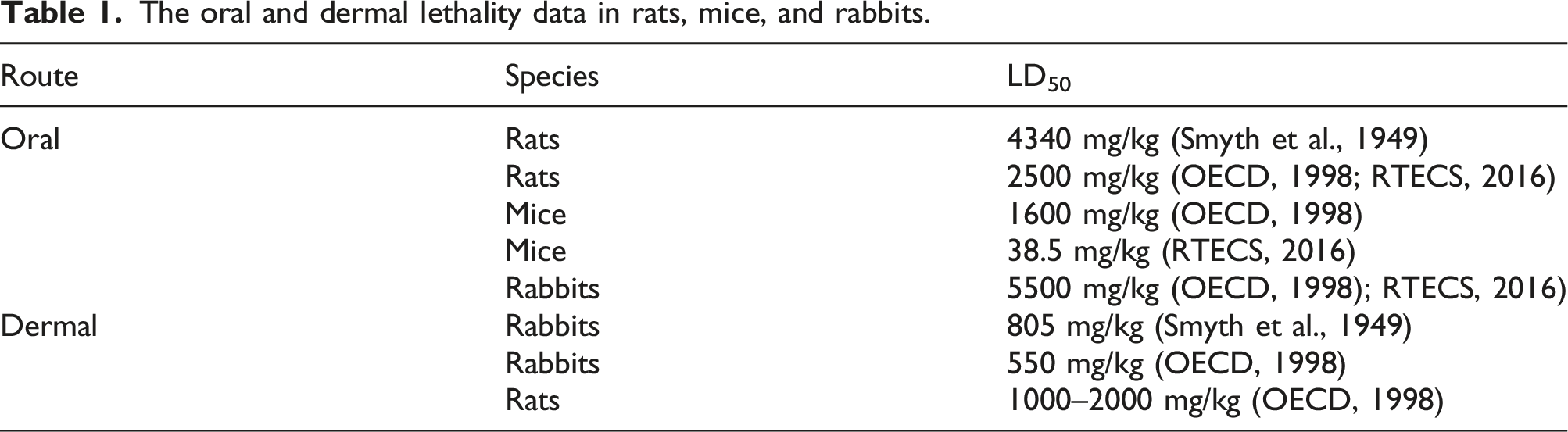
The oral and dermal lethality data in rats, mice, and rabbits.
Inhalation toxicity
No deaths were reported in a group of rats exposed to saturated vapor for 4 h (Smyth et al., 1949).
Eye irritation
Rabbits: Severe burn from 0.05 mL undiluted TETA in the eye (Smyth et al., 1949).
Skin absorption
No data besides lethality data were available.
Skin irritation
Rabbits: Corrosive to the skin (Smyth et al., 1949).
Skin sensitization
TETA has demonstrated skin sensitizing potential in the guinea pig maximization test and mouse ear swelling test (Maisey et al., 1988). Positive results have been reported in а human patch test (Krajewska and Rudzki, 1976; Rudzki and Krajewska, 1976; OECD, 1998).
Subacute toxicity
Inhalation
No subacute toxicity data were available.
Oral
Harlan Wistar rats were fed a diet containing TETA for 7 days. At the high dose (2980 mg/kg/day for males, 2630 mg/kg/day for females), decreased body weight gain, decreased relative and absolute liver weights, and increased relative kidney weights were observed. At the mid-dose (1230 mg/kg/day for males, 1380 mg/kg/day for females), increased relative kidney weight was noted. No significant body weight or organ weight effects were seen at the low dose (410 mg/kg/day for males, 470 mg/kg/day for females) (Chemical Hygiene Fellowship, 1976).
Dermal
Wistar rats rubbed with 1 drop of TETA into their shaved skin daily for 17 days developed skin irritation, body weight loss, and hyperemia of the liver and kidneys. Increased activity of γ‐glutamyltranspeptidase in the kidney and aspartate and alanine aminotransferases in the liver were also reported (Woyton et al., 1975).
Subchronic toxicity
Inhalation
No subchronic toxicity data were available.
Oral
В6СЗF1 mice and F344 rats received ТЕТА in the drinking water at concentrations of 0, 120, 600, or 3000 ppm (≈0, 18, 95, or 460 mg/kg body weight/day) for up to 92 days. In the 3000-ppm mice, increased frequencies of inflammation of the lung interstitium and periportal fatty infiltration of the liver were observed in both sexes, and hematopoietic cell proliferation was observed in the spleen of males. Absolute kidney and body weights were reduced in males as was the incidence of renal cytoplasmic vacuolization. In rats, the only effect noted at 3000 ppm was reduced liver copper level in both sexes (Greenman et al., 1996).
Dermal
No subchronic toxicity data were available.
Chronic toxicity/carcinogenicity
Inhalation
No chronic toxicity or carcinogenicity data were available.
Oral
No chronic toxicity or carcinogenicity data were available.
Dermal
No increase in the incidence of skin tumors or any internal tumor were observed in C3H/HeJ mice (50 males/group) dosed with 0.025 mL of 5% aqueous solution of TETA (≈1.2 mg/mouse) on the skin 3 times a week for their lifetime (mean survival time was 627 days) (DePass et al., 1987).
Reproductive/developmental toxicity
C3H/HeNJc1 mice (14, 6, 11, and 8 dams/group, respectively) were provided drinking water ad lib containing 0, 3000, 6000, or 12,000 ppm TETA⋅2HCl throughout pregnancy. No information aboutel the effects of treatment on the dams was reported. Mean litter size and number of live fetuses per dam at birth were not significantly different among the four groups. The frequency of gross brain abnormalities in live fetuses at birth such as hemorrhages, delayed cranial ossification, hydrocephaly, exencephaly, and microcephaly showed an increased dose-related response at 6000 ppm and 12,000 ppm (Tanaka et al., 1993). Fetal copper concentrations in the liver and cerebrum were significantly lower in the treated groups than in the controls. The authors concluded that the fetal brain abnormalities caused by TETA⋅2HCl might be due in part to induction of copper deficiency (Tanaka et al., 1992).
Sprague Dawley rats (7, 5, 9, and 5 dams/group) were fed a diet containing 0, 0.17, 0.83, or 1.66% TETA⋅4HCL (0, 170, 830, and 1660 mg/kg/day, respectively) throughout pregnancy. Maternal weight gain was significantly reduced at 0.83% and 1.66%. A dose-related increase in the frequency of resorptions and fetal abnormalities was observed. The primary abnormalities were massive hemorrhage and edema. Maternal and fetal tissue copper levels were significantly lower in the TETA-treated groups than in controls (Keen et al., 1983). Copper supplementation reduced the severity of the developmental effects, suggesting that they were likely due to an induction of copper deficiency (Cohen et al., 1983).
No developmental effects were seen in Wistar rats (10/group), after daily dermal application of TETA (volume, concentration not reported) for 17 days during the pregnancy period (Dobryszycka et al., 1974). In another study conducted by the same laboratory, guinea pigs received one drop of TETA on their skin for the first 10, then every other day for 45 days (volume, concentration not reported) during the pregnancy period. Another group of 11 nonpregnant guinea pigs was also treated with TETA. Seven of the eleven TETA-treated animals in each group died. Maternal effects included cachexia, skin lesions, liver fatty degeneration, kidney and brain tissue congestion, and necrotic changes in the placenta. Miscarriage or mortification of fetuses was observed (Szacki et al., 1974).
New Zealand White rabbits (22/group) were treated with 0, 5, 50, or 125 mg/kg/day TETA by occluded cutaneous application 6 h/day on gestational days (GDs) 6 through 18. Two does treated with 125 mg/kg/day died before scheduled necropsy on GD 29. Maternal toxicity was also indicated by a significant decrease in body weight gain at 125 mg/kg/day and severe skin irritation at 50 and 125 mg/kg/day. There were no differences among groups for maternal serum or urinary copper. No increase in the incidence of developmental effects including external, visceral, or skeletal malformations was observed (Tyl et al., 1998).
Genotoxicity/mutagenicity
In vitro, TETA was positive in the Ames test with or without S9 metabolic activation, the sister-chromatid exchange test with S9 in Chinese hamster ovary (CHO) cells, and the unscheduled DNA synthesis test in CHO cells. However, it was negative in the HGPRT gene mutation test in CHO cells with or without metabolic activation. In vivo, TETA was negative in the mouse micronucleus test and the recessive lethal test in the fruit fly (Leung, 1994).
Metabolism/pharmacokinetics
Approximately 6.5% of 25-mg/kg TETA⋅2HCl given orally to rats was absorbed after 4 h. Urinary excretion of total TETA including unidentified metabolites during 24 h was 36% of the orally administered dose (Kobayashi et al., 1990). TETA was not detected in breast milk of women treated for Wilson’s disease at doses up to 1750 mg daily (Izumi, 2012).
Human use and experience
No adverse effects have been reported in the treatment of Wilson’s disease with TETA (typical dose: 1.6–2.4 g/day orally for several years) (Walshe, 1982). The serum monoamine oxidase (MAO) activity of 15 workers handling epoxy resin and TETA hardener was reported to be significantly elevated. The elevated MAO activity was indicative of increased TETA metabolism (Yano, 1987). Twelve workers exposed to Araldite and TETA hardener were examined 2–4 times at 6-month intervals. A decrease in the relative percentage of lymphocytes and an increase in neutrophils were reported after 1 year. Five workers reported symptoms of drowsiness, headache, gastric pain, fatigue, and decreased appetite. Seven showed signs of dermatosis (Zielhuis, 1961). A worker was reported to have developed asthma following exposure to TETA fumes (Fawcett et al., 1977).
The TETA concentrations in workplace air were reported to be less than 0.15 mg/m3 in plants where workers potted electrical equipment in epoxy (Grandjean, 1957).
Rationale
Occupational exposure to TETA occurs mainly via skin contact because of its low vapor pressure. TETA is corrosive to the skin and eyes and is a potential skin sensitizer. It has shown activity in some in vitro genotoxicity tests but was negative in in vivo tests. There was also no evidence of carcinogenicity from a lifetime skin painting study in the mouse. Several developmental toxicity studies have reported that TETA can cause adverse embryo-fetal effects. These effects, however, were associated only with high maternally toxic dosages with induction of severe copper deficiency. No developmental effects were noted when the tissue copper concentrations were normal. A subchronic toxicity study established a no-observable-adverse-effect level (NOAEL) of 95 mg/kg/day (600 ppm in drinking water) in both the rat and mouse. This NOAEL was converted to an equivalent inhalation concentration by adjusting for respiratory rate, interindividual variability, and uncertainty in extrapolating from a subchronic study.
The resulting 8-h time-weighted average WEEL value of 1 ppm is expected to provide a significant margin of safety against any potential adverse health effects in workers exposed to airborne TETA. A skin notation is included owing to the corrosiveness of TETA.
Recommended WEEL guide
8-h Time-Weighted Average: 1 ppm (6 mg/m3), skin
Footnotes
Declaration of conflicting interests
The author(s) declared no potential conflicts of interest with respect to the research, authorship, and/or publication of this article.
Funding
The author(s) received no financial support for the research, authorship, and/or publication of this article.