







Abstract
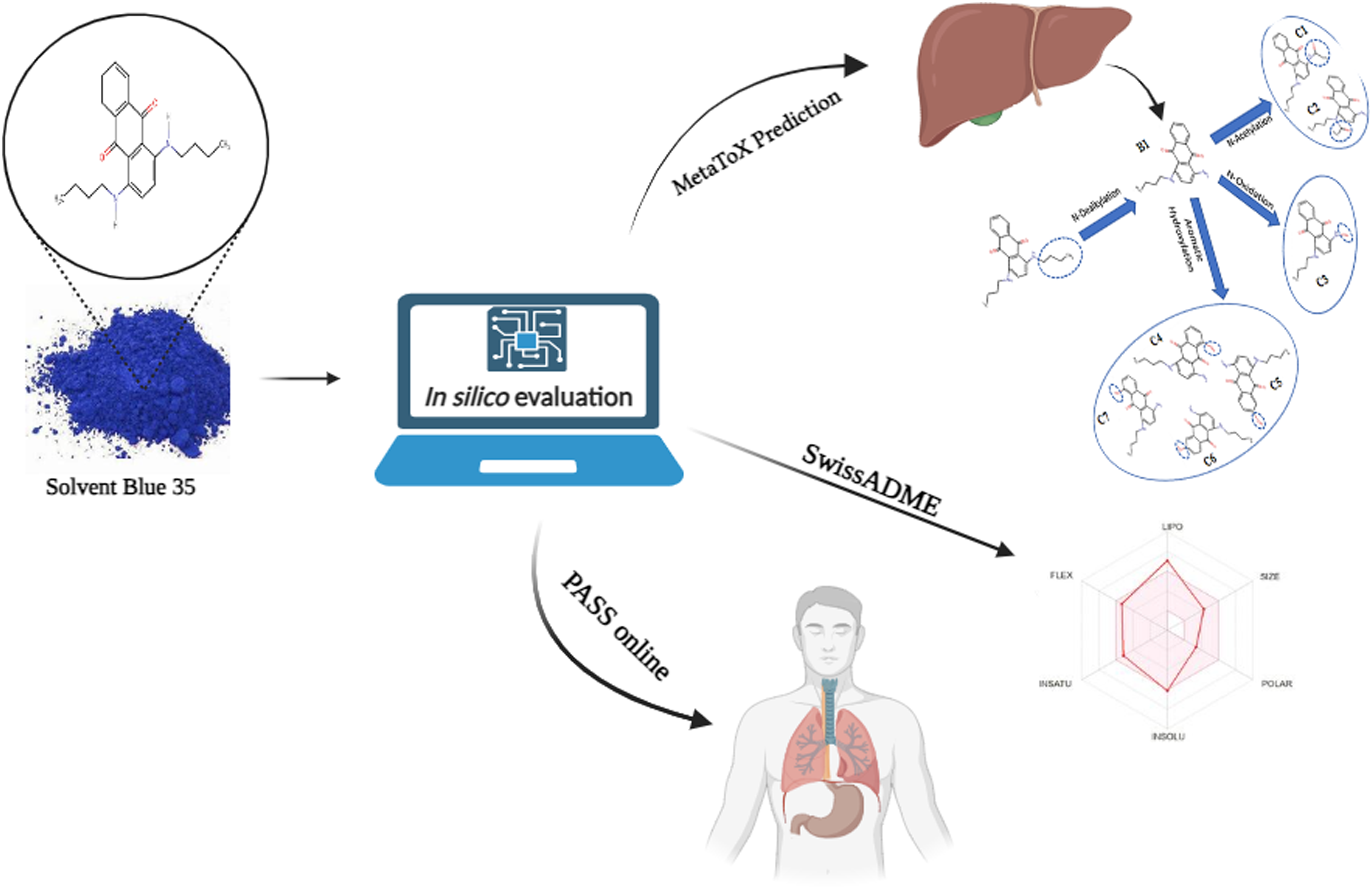
The utilization of synthetic dyes increases the risk to human health. Despite the progress of information on azo dyes, very little attention has been reported on toxicity assessment of anthraquinone dyes. Solvent Blue 35 (SB35) is one of the anthraquinone dyes likely to be encountered because of its increasing use in various industries. Whereas the design of laboratory tests is very expensive, in silico screening was used to predict the metabolic profile and toxicity effect of SB35. MetaTox software was used to predict the metabolites of phase I and II in two layers. Since airborne exposure has been considered, the pathways of inhalation and dermal absorption of SB35 were investigated through the SwissADME model based on the modified Lipinski’s rule of five. To predict the biological effect and toxicity of SB35 and each of the metabolites, PASS online software was used. Chemical activity was considered according to the probability of activation values (Pa) higher than the probability of inactivation values (Pi). N- dealkylation of SB35 was predicted in the first layer, while seven active compounds were obtained in the second layer from phases I and II reactions. Investigating the physicochemical properties of SB35 confirmed inhalation absorption for occupational exposure scenarios. All metabolites are absorbed from intestinal routes based on the RO5 rules. SB35 and their metabolites have an effective substrate role for the sub-type of CYP 450 enzymes. The toxicity effect of carcinogenicity for SB35 and mutagenicity for metabolites are predicted while confirmed with some biological effects. However, reproductive disorders are pointed with SB35 by probability higher than 70%. Virtual screening methods are efficient tools for creating cost-effective predictions in the hazard’s evaluation of SB35. However, a perspective view is suggested before decision-making for laboratory designing tests.
Introduction
The utilization of hazardous material for dyeing processes within various industries poses a significant challenge to human health (Fried et al., 2022; Qu et al., 2022). This risk could be tracked in food, cosmetics, pharmaceutical, textile, and leather industries. Inappropriate wastewater cleaning of dyes has an impact on environmental contamination (Chaudhari et al., 2017; Entezari et al., 2016). Thus, the production of synthetic dyes increases the risk of ecosystem pollution. Synthetic dyes are classified into main categories such as azo dyes, anthraquinones, and phthalocyanines (Patel et al., 2022), with azo dyes comprising 60% of worldwide dye usage (Sun et al., 2017). Studies have primarily focused on the toxicity assessment of azo-type dyes (Gičević et al., 2020; Kamali et al., 2023). Therefore, it is challenging to identify the impacts linked to alternative dyes.
Anthraquinones (AQ), the second most commonly used dyes, are stable components widely utilized across various industries (Li et al., 2019). Solvent Blue 35 (SB35) with a molecular weight of 350.45 (Chemical Formula: C₂₂H₂₆N₂O₂) and in the form of a blue powder without odor, is also one of anthraquinone dye known under various commercial names, such as Sudan Blue II, Oil Blue 35, Blue 2N, Blue B, and Oil Blue B (Souza et al., 2017; Tomic and Nada Uzorinac, 2015). In different countries, it was extensively applied for fuel marker, including dyeing alcohol-based solvents and hydrocarbons such as oils, greases, fats, and waxes, as well as diesel fuels (Tomić et al., 2018). Day-to-day use of these organic chemicals made them an emerging environmental concern (Barnard et al., 1995). However, occupational exposure to fuel additives such as Blue35 is not unexpected.
Some in vivo studies have indicated health risks associated with the oral consumption of anthraquinones, highlighting concerns regarding hepatotoxicity and carcinogenicity in feed containing these chemicals (Doi et al., 2005; Wu et al., 2018). Furthermore, the metabolic pathway is important in the toxicity exhibition of anthraquinone chemicals toxicity (Alam et al., 2021; Cheng et al., 2020). Although there are reports for anthraquinone structure with food and pharmaceutical usage, no studies have assessed the risk of industrial dyes like SB35. On the other hand, the generation of unknown metabolic products through phase I and II reactions can result in side effects of SB35.
Nowadays, advancements in informatics have led to the development of systems capable of predicting metabolic products and chemical biological activity, reducing the reliance on experimental approaches (Tang et al., 2019). For instance, the combination index-isobologram model has been utilized to forecast the toxicity effects of metal mixtures (Tang et al., 2019) and mycotoxins (Juan-García et al., 2019). Informatic programs anticipate toxicology profiles using chemical structure, polarity, and descriptions. The virtual screening method is a suitable technique for saving time and cost instead of long-time toxicity assays. However, successful computational results need to be confirmed with further assessment. Thus, prediction of toxicity scenarios could be forwarded by on-line programs like PASS online (Filimonov et al., 2014a), Meta-Tox (De Souza et al., 2019), and Swiss ADME (Mahanthesh et al., 2020). PASS online, and Swiss ADME provide the biological activity of chemicals, and Meta-Tox anticipates metabolite production of a component (Agahi et al., 2020). Here, we highlight phase I and phase II metabolism of SB35 with the Meta-Tox program, and then the risk of SB35 as well as its metabolites were predicted by PASS online and the Swiss ADME screening method.
Methods
In this study, in Silico methods were used to predict the metabolic pathway of SB35 and then forwarded to virtual screening programs to toxicity assessment (Figure 1). Toxicity assessment of SB35 and its metabolite.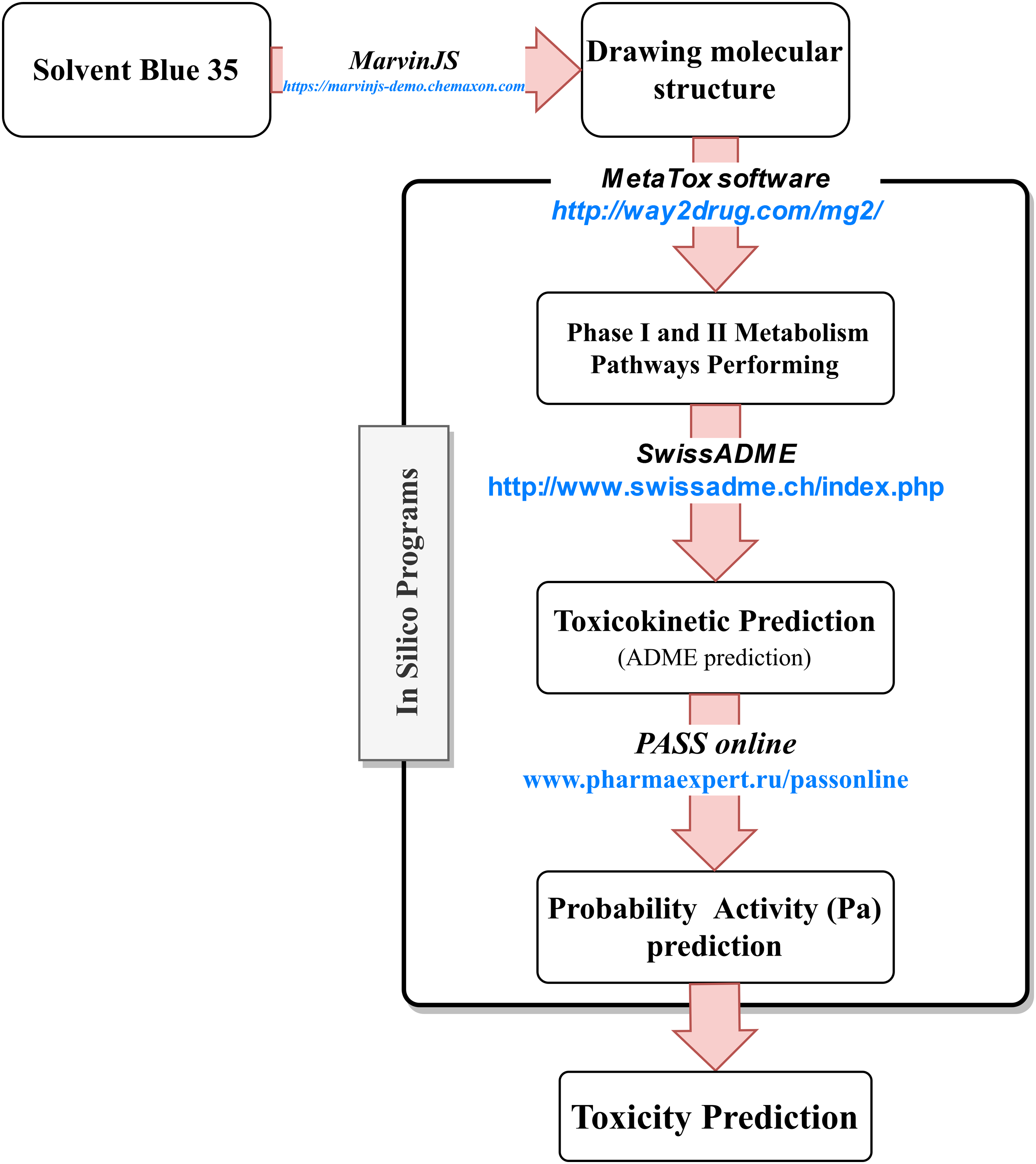
In the first stage, the molecular structure of SB35 was designed using Marvin JS chemical editor as a chemical structure designer (access: https://marvinjs-demo.chemaxon.com/latest/demo.html). Subsequently, the compounds undergo in silico process, wherein toxicity assessment is carried out by leveraging the capabilities software such as MetaTox, SwissADME, and PASS online.
Metabolite prediction of SB35
Phase I and II metabolites formation for SB35 was evaluated using MetaTox software at the https://way2drug.com/mg2/. MetaTox is a web application for predicting component metabolisms according to chemical structure. The last version of MetaTox in 2023 predicted metabolites with 19 classes of reactions such as aliphatic and aromatic hydroxylation, N and O-glucuronidation, N-, S-, and C-oxidation, and N- and O-dealkylation. Five human cytochrome P450 isoforms catalyzed these reactions, including 1A2, 2C19, 2C9, 2D6, and 3A4, and human UDP glucuronosyltransferase. Bayesian framework has been used to assess biotransformation reactions (Rudik et al., 2017). In this study, molecular structure of SB35 was drawn with Marvin JS chemical editor (access: https://marvinjs-demo.chemaxon.com/latest/demo.html). The probability of activation values (Pa) and probability of inactivation values (Pi) were considered the base of compound activity. Two layers of metabolism for SB35 were selected, while metabolites were predicted for Pa > Pi based on all the reaction classes.
In the context of biologically active compounds, the probability of activation (Pa) and probability of inactivation (Pi) values refer to the likelihood or chances of a compound activating or deactivating a specific biological target or pathway such as a receptor or enzyme. These values are considered fundamental in determining the activity of a compound owing to they provide insights into how likely the compound is to interact with its target and induce a biological response. In MetaTox software, Pa estimates the chance that this predicted class of reaction will be occurred in the experiment. Pi estimates the chance that this predicted class of reaction will not be occurred in the experiment. As a result, the metabolites of SB 35 were predicted in the MetaTox program with optimal cut-off values of 0.7 and Pa > Pi (Rudik et al., 2017, 2019b).
Anticipation of chemicals toxicokinetic
Christopher’s rules for non-oral absorption.
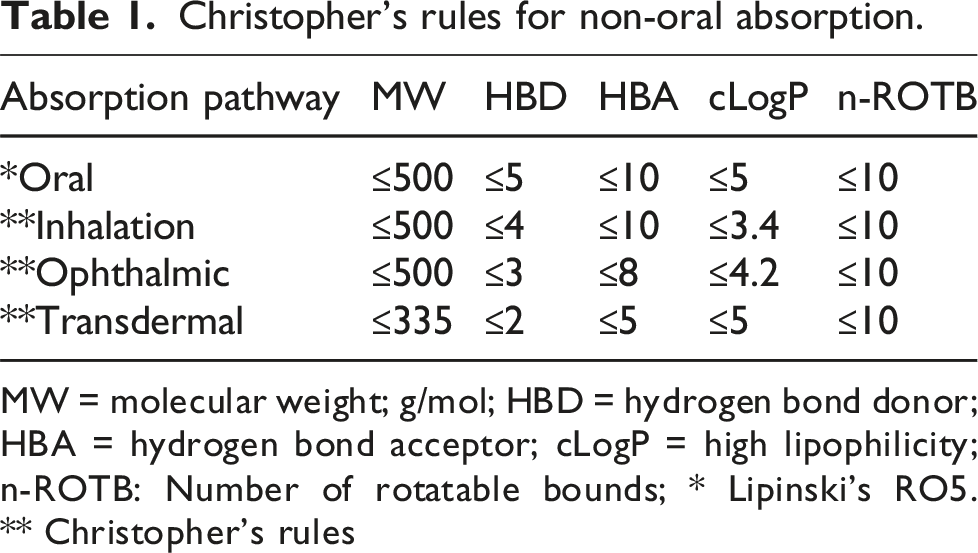
MW = molecular weight; g/mol; HBD = hydrogen bond donor; HBA = hydrogen bond acceptor; cLogP = high lipophilicity; n-ROTB: Number of rotatable bounds; * Lipinski’s RO5. ** Christopher’s rules
However, in silico prediction of p-glycoprotein (P-gp) efflux and blood–brain barrier (BBB) penetration were studied (Wolf et al., 2000).
Toxicity predicting
The potency of SB35 and its metabolites for the biological activities and potential toxicological effects such as tissue toxicity, mutagenicity, carcinogenicity, and reproductive dysfunction were anticipated using PASS online method (https://www.way2drug.com/PassOnline/info.php). The probability of activation values (Pa) and inactivation values (Pi) was estimated for each component according to gene expression, caspases 3, 8 stimulation or inhibition, interactions with metabolic enzymes, transporters, inhibiting and substrate for different isoforms of Cytochrome P450 (Filimonov et al., 2014b). PASS Online is an InSilico web-based software that includes more than 4000 biological activities, including pharmacological effects, mechanisms of action, toxic and adverse effects. It makes predictions based on the chemical structures. It is possible to determine the likelihood of activity as well as the likelihood of toxicity and undesirable consequences by applying and selecting each component.
Results
Based on the presented molecular structure in Marvin JS chemical editor total of 7 compounds were obtained in MetaTox software as the predicted metabolites (Figure 2). In layer I, regardless of the phase I reaction of dealkylation pathways, the B1 component is produced with the formula of C18H18N2O2. Two reactions in phase I and one reaction in phase II were performed in layer 2 prediction. C1 and C2 components in the acetylation reaction of phase I were created with C20H20N2O3 composition, and oxidation of B1 was led to C3 formation with C18H18N2O3 molecule. C4, C5, C6, and C7, by the structure of C18H18N2O3, are generated according to aromatic hydroxylation as a phase II reaction. Metabolites obtained from the output of MetaTox software. Part B illustrates the layer I of metabolite formation through the N-dealkylation pathway, while Part C demonstrates the formation of seven metabolites in the layer II via pathways such as aromatic hydroxylation, N-Acetylation, N-Hydroxylation, and N-Oxidation.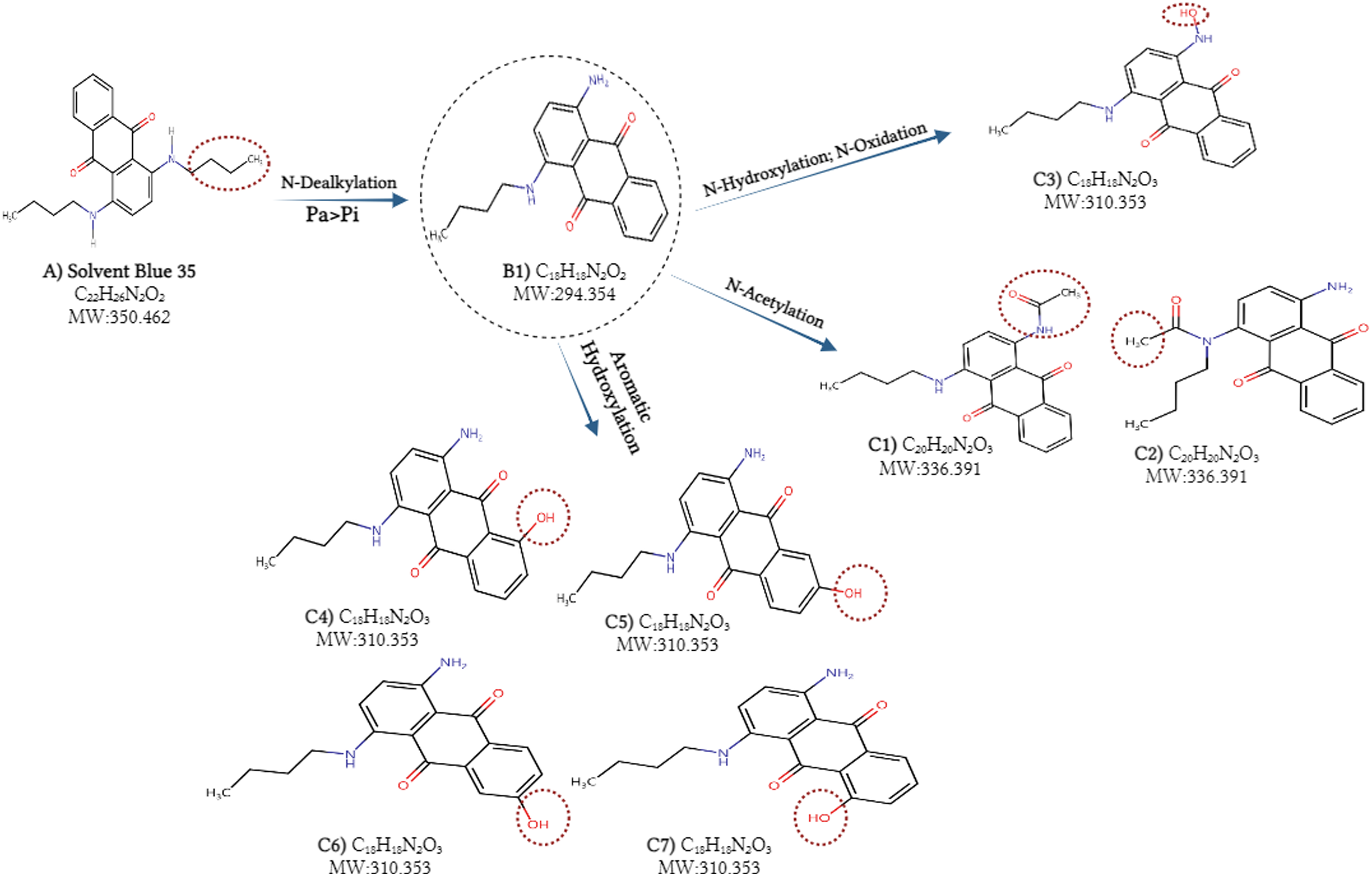
Physicochemical properties of SB35 and their metabolites.
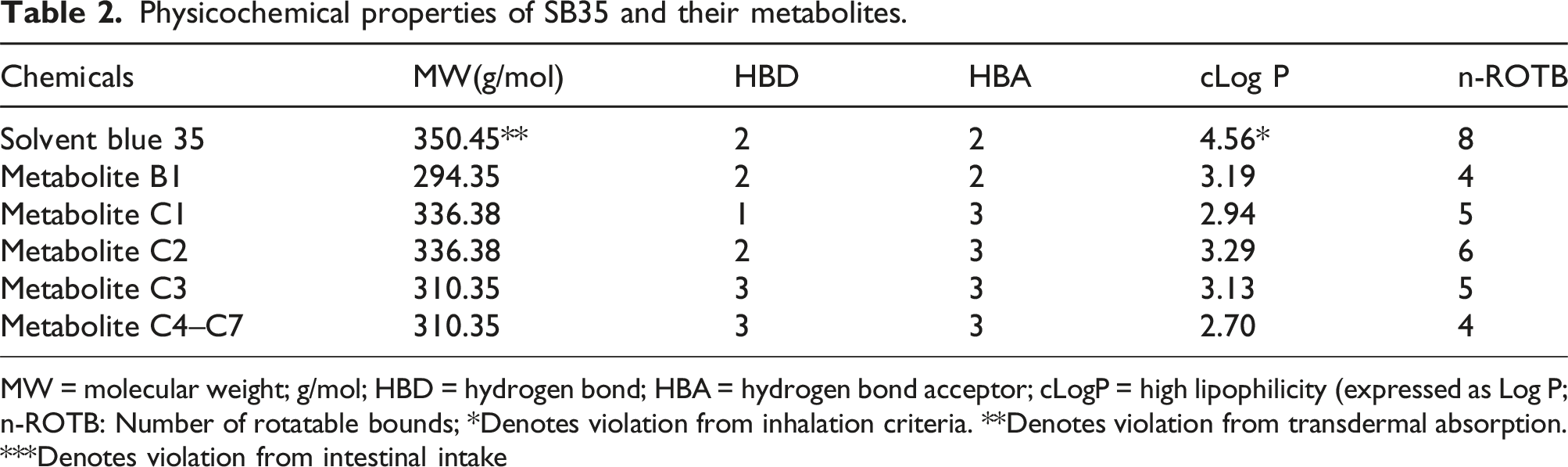
MW = molecular weight; g/mol; HBD = hydrogen bond; HBA = hydrogen bond acceptor; cLogP = high lipophilicity (expressed as Log P; n-ROTB: Number of rotatable bounds; *Denotes violation from inhalation criteria. **Denotes violation from transdermal absorption. ***Denotes violation from intestinal intake
PASS Online software evaluated seven different toxicities of methemoglobinemia, visual acuity impairment, reproductive dysfunction, apnea, carcinogenicity, red cell aplasia, mutagenic, and nephrotoxic. These effects were selected through probability higher than 50% in one studied component. The biological activity of SB35 and its metabolites in the human body was predicted using PASS online web server and reported in Figure 3. This section explains how the biological activity and potential effects of some substances on a living organism can be predicted by understanding the properties of these substances and their metabolites. However, it also acknowledges that these effects can vary. Toxicity effects prediction of SB5 and metabolites. The blue columns are probability of toxicity attributed to SB 35, whereas the gray columns are the probability of toxicity associated with different metabolites of SB 35. The X-diagram demonstrates the wide spectrum of toxicity types. Based on the results, pseudo porphyria is the most likely effect caused by SB35, while mutagenic is the least likely. For metabolites, mutagenic is the most likely effect, and pure red cell aplasia is the least likely.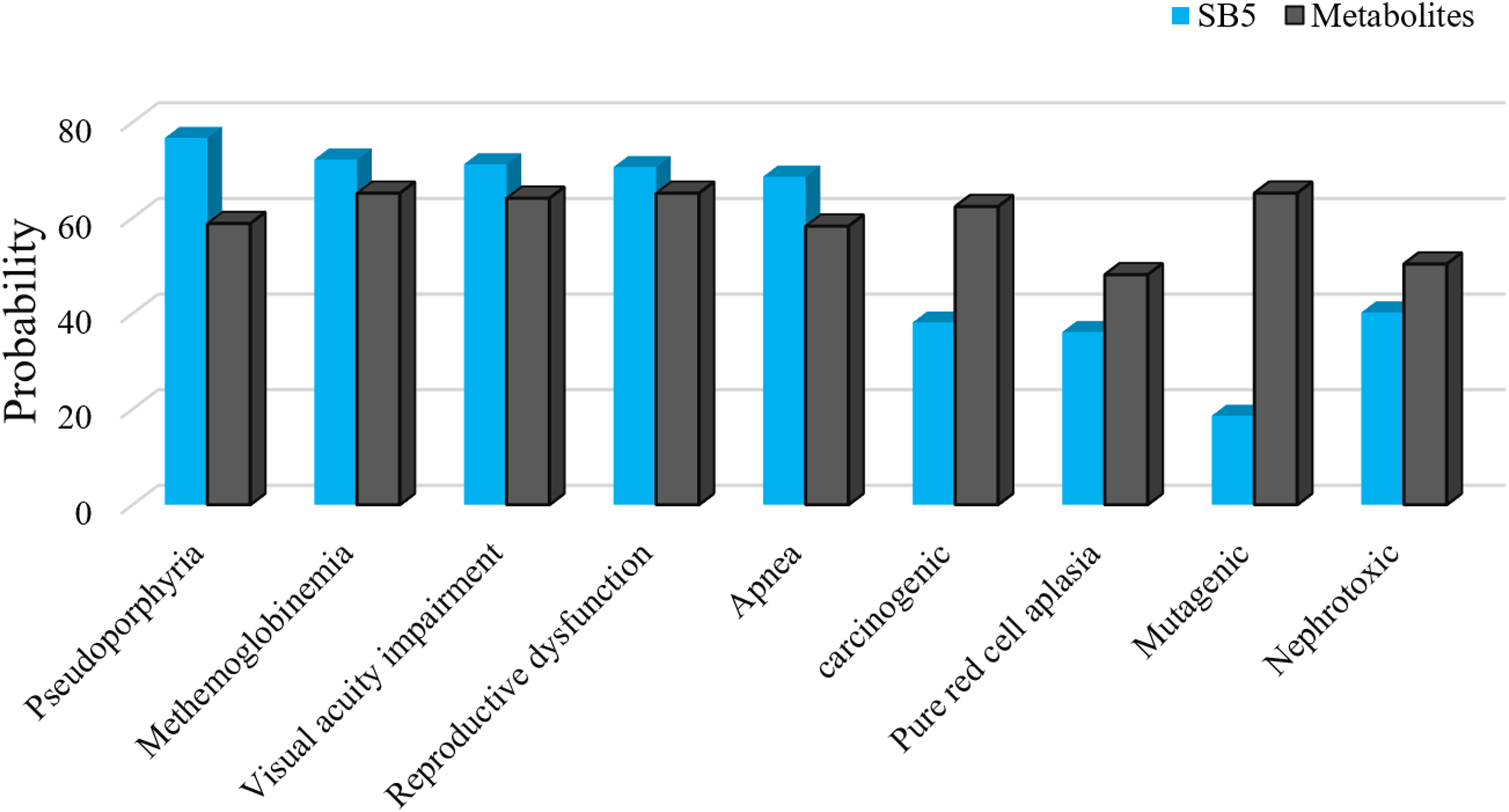
The results indicated that the toxicity of SB35 was arranged to methemoglobinemia> visual acuity impairment> reproductive dysfunction> apnea> nephrotoxic> carcinogenicity> red cell aplasia> mutagenicity. It can be highlighted that among studied toxic effects, there is the highest probability for methemoglobinemia (72.2%), visual acuity impairment (71.2%), and reproductive dysfunction (70.6%). In the metabolites, mutagenicity is in the higher level of probability and followed by reproductive dysfunction> methemoglobinemia> visual acuity impairment> carcinogenicity> apnea> nephrotoxic> red cell aplasia. Among the metabolites, the component of C3 has the highest mutagenic (probability>70%) and carcinogenic (probability>70%) effect than others.
Chemical activity was present in two items, including biological effects and substrate function of different cytochrome P450 isoforms, while the probability activities were 50% at least in one component. The results show that choline-phosphate cytidylyl transferase inhibitor and membrane integrity antagonist is a considerable biological activity for SB35 and all metabolites (Figure 4). Biological activity of studied components. The blue columns are related to SB 35 and gray columns are related to different metabolites of SB 35. The X-diagram illustrates a diverse range of chemical activity types in two cases, including biological effects and substrate function of different cytochrome P450 isoforms.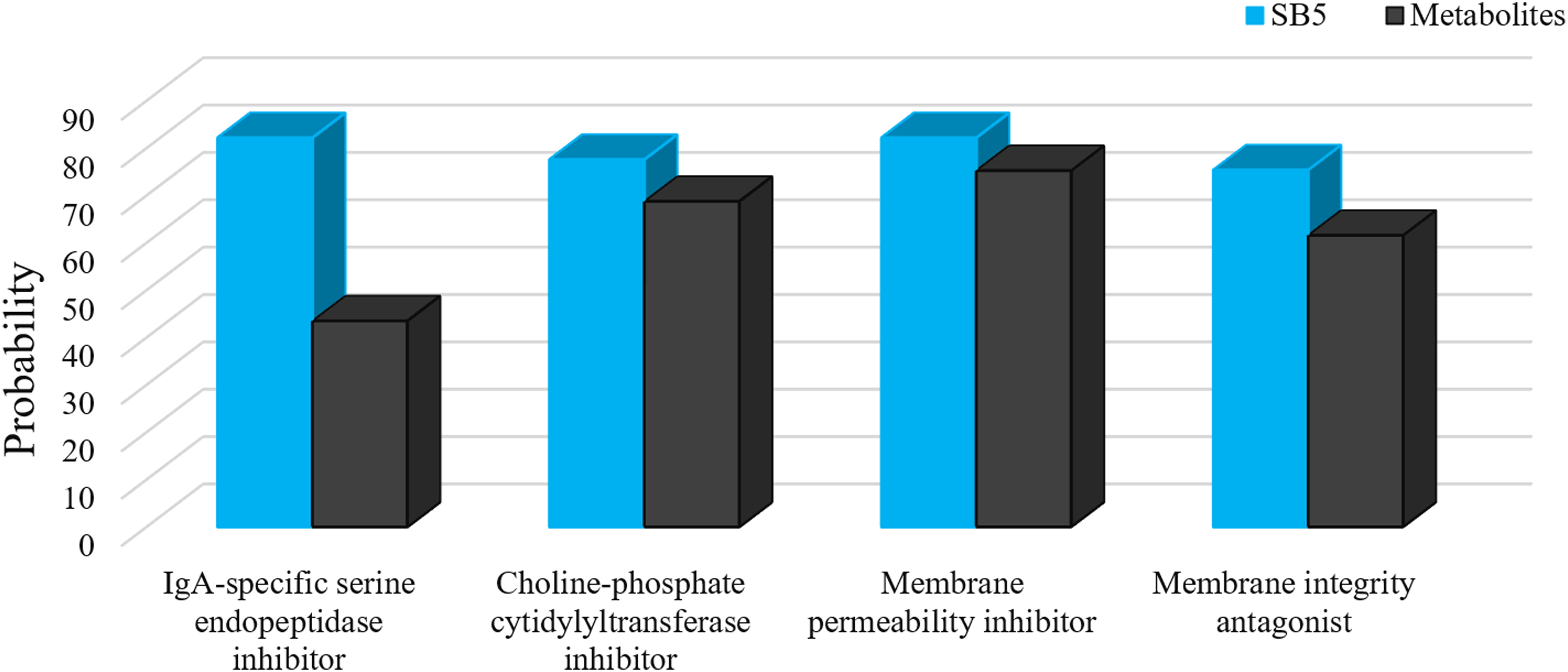
On the other hand, SB35 and their metabolites have substrate roles for CYP2C12, CYP2J, CYP2J2, and CYP2E as the isoforms of cytochrome P450. Isoform CYP2C12 has a substrate function with the highest probability prediction (>80%) for SB35, and the metabolites are the substrate role for CYP2E with a probability prediction of 68.6% (Figure 5). Substrates in CYP enzymes include metabolic intermediates such as lipids and steroid hormones, as well as xenobiotic such as toxic chemicals. In this research, enzymes that have a high probability of binding SB35 and its metabolites (as substrates) were selected. Substrate function prediction of SB5 and metabolites for cytochrome P450 enzymes. The blue columns are related to SB 35 and gray columns are related to different metabolites of SB 35. The X-diagram illustrates different types of substrate cytochrome P450 isoforms.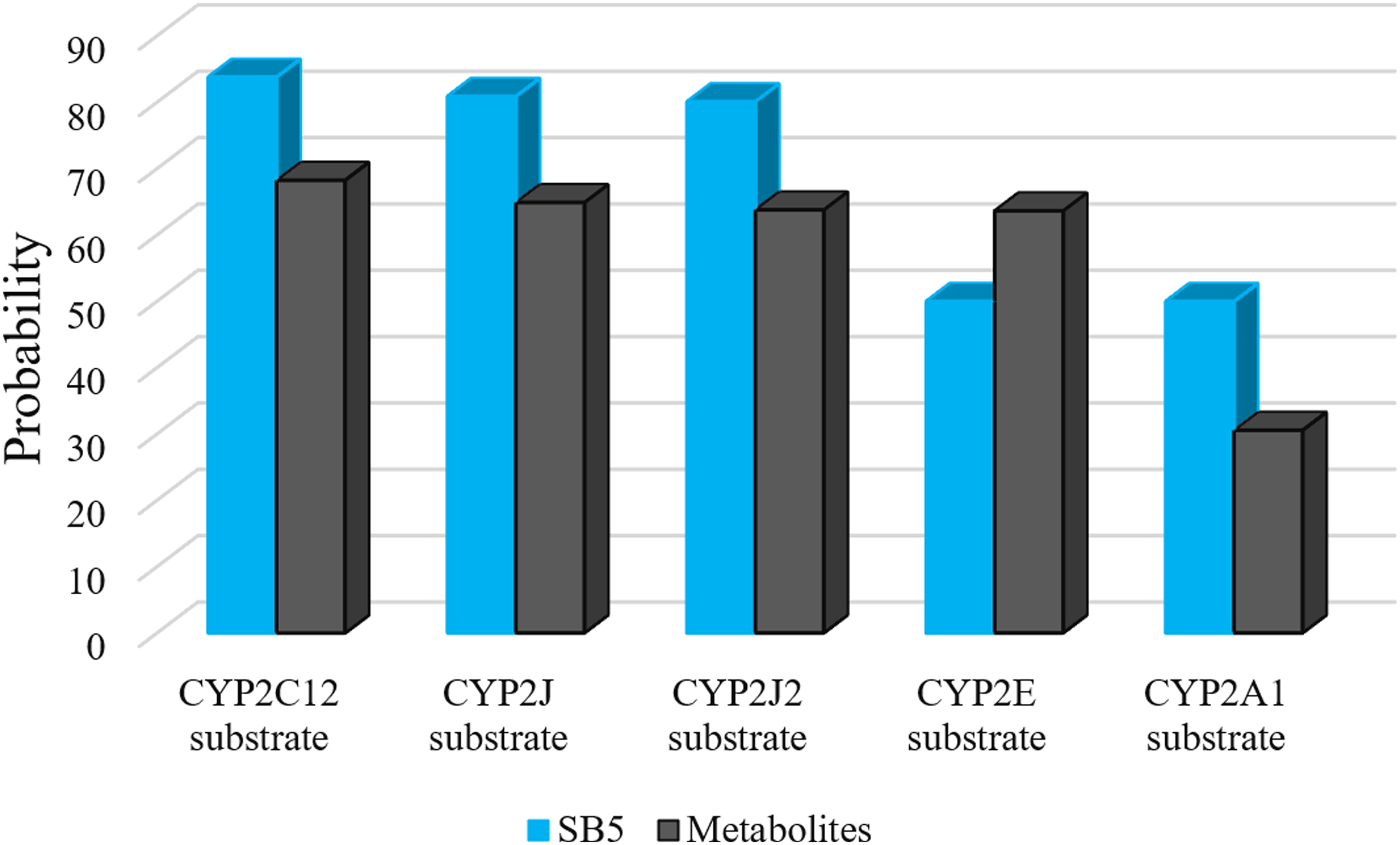
Discussion
Toxicity assessment for all chemicals is very challenging owing to the significant expansion of chemical applications in industries. In dyeing industries, up to 84,000 tons of dyes are utilized across different sectors (Routoula and Patwardhan, 2020). Despite the well-studied effects of azo dyes, the impact of anthraquinone chemicals like SB35 is less explored. Three computational toxicology software tools, namely MetaTox, SwissADME, and PASS Online, were employed in this study to estimate the metabolomic toxicity of SB35.
Solvent Blue 35, an anthraquinone dye, is recognized as a irritant and carcinogen in certain species (Chaudhari et al., 2017; Yigit et al., 2016). Nevertheless, the unknown potential hazards related to SB35 and its metabolites have caused concerns for the occupational health of workers as well as industrial economic losses. Computational toxicology programs utilize various parameters for prediction; however, similar in vitro or in vivo studies, these parameters and predictions should be interpreted cautiously (Agahi et al., 2020; Rudik et al., 2019a).
Based on the MetaTox software output, eight active compounds were obtained as predicted metabolites from layer I and II reactions. In layer I, the active compound B1 resulting from N-Dealkylation was predicted, while in layer II, metabolites from Aromatic Hydroxylation (C4–C7), N-Acetylation (C1, C2), and N-Hydroxylation; N-Oxidation (C3) were predicted (Figure 2). These pathways are detoxification reactions that facilitate the elimination of SB35 (Rim, 2020). Indeed, these reactions have likely been explored and recognized in various chemical substances, however, the metabolic pathway of SB35 and its effects were still unstudied and unknown. This study presents a detailed analysis of metabolite production of SB35 based on in silico predictions for the first time.
The absorption route is an important factor of the exposure paradigm. In occupational assessment, inhalation and dermal exposure are the most critical routes of absorption. Our results highlighted lung and dermal absorption of SB35 from airborne exposure in an occupational exposure scenario. However, according to SwissADME prediction, intestinal absorption of metabolites from B1, C1 to C7 is probable. Dilger et al. reported inhalation toxicity for SB35 at the level of “very high” using the QSAR method (Routoula and Patwardhan, 2020). Common toxic effects attributed to anthraquinone dye, include dermatitis skin irritation, eye irritation, and respiratory issues (Majlesi et al., 2012; Sun et al., 2017). Other effects of Methemoglobinemia, visual impairment, and reproductive effects are noticeable for SB35 based on PASS online software predictions. Conversely, the carcinogenic and mutagenic effects of metabolites are higher than SB35. However, the phase I reaction of n-oxidations produced a metabolite with the highest carcinogenic and mutagenic toxicity potency. Whereas, Ames teat has presented mutagenicity and carcinogenetic effect of some anthraquinone textile dyes (Mathur et al., 2005, 2006), the International Agency for Research on Cancer classified anthraquinone as group 2B, possibly carcinogenic to humans. The toxicity potency of this chemical has been attributed to its quinone-containing structure (Malik and Müller, 2016). It seems that, besides carcinogenic toxicity, the mutagen effect of SB35 metabolites seems to be an important consideration.
Cytochrome P450 enzymes play a role in detoxifying extracellular compounds such as environmental pollutants (Rahbar M, 2021). Cytochrome (P450) CYPs are key enzymes in the formation and treatment of cancer. Therefore, many researchers have found that P450s (1A1, 1A2, 1B1, 2A6, 2A13, 2E1, and 3A4) play a role in the activation of various carcinogenic compounds in the environment (Alzahrani and Rajendran, 2020). CYP2A1, CYP2E, CYP2C12, CYP2J, and CYP2J2 play the most important role in the metabolism of SB35 and metabolites as an enzyme substrate, which ultimately leading to various disorders and failures, including carcinogenesis (Agahi et al., 2020). The results of a similar study conducted by Easterbrook et al. showed that many isoforms of P450s, including CYP2C9, CYP2C19, CYP2E1, and CYP3A4, are inhibited by dimethyl sulfoxide (DMSO), which can be effective in causing subsequent complications (Easterbrook et al., 2001). This is also mentioned in the study of Gonzalez et al., where these enzymes can activate compounds to electrophilic derivatives due to chemical compounds, leading cause toxicity, cell death, and sometimes cell transformation, resulting in cancer (Gonzalez, 2005). Xenobiotics and chemicals, due to their impact on enzymes involved in metabolism, can create conditions for adverse effects, including cancer (Reed et al., 2018).
Choline-phosphate cytidylyl transferase catalyzes the biosynthesis of phosphatidylcholine in cells. Then, choline-phosphate cytidylyl transferase inhibitors cause phosphatidylcholine deficiency with mutant potency (Dias and Nylandsted, 2021). This deduction aligns with our study through the prediction of SB35 and metabolites biological activity. However, membrane integrity antagonist is a risk of cancer (Van der Veen et al., 2017), which is in agreement with the prediction results.
Conclusion
There are many problems for assessing component toxicity and metabolic profiles owing to chemical variety and expensive experimental design. The results of this study showed that in silico methods are efficient tools for evaluating metabolites of SB35 and screen the biological activity of all chemicals. In the MetaTox prediction, n-dealkylation, n-acetylation, n-oxidation, and aromatic hydroxylation are the most important pathways for SB35 metabolism. According to ADME software, inhalation and dermal absorption are predicted for airborne exposure to SB35. Reproductive impairment and methemoglobinemia are two important effects of SB35, while metabolite reactions produce mutagenic and carcinogenic toxicity for this chemical in PASS online results. In conclusion, the InSilico workflow creates a cost-effective method for hazards virtual screening before experimental designs and decision-making for the control process of chemicals.
Footnotes
Acknowledgements
The authors are grateful for the support of Environmental and Occupational Hazards Control Research Center, Research Institute for Health Sciences and Environment, Shahid Beheshti University of Medical Sciences, Tehran, Iran and all those who helped us in this study.
Author contributions
SVE and RZ conceptualized the study. Data collection was supervised by RZ and SVE and analysis was conducted by VF and AA. The manuscript was conceptualized by SVE, RZ, and drafted by VF, AA and FRN. All authors contributed to revising the manuscript and approval of the final version. All authors read and approved the final manuscript.
Declaration of conflicting interests
The author(s) declared no potential conflicts of interest with respect to the research, authorship, and/or publication of this article.
Funding
The author(s) received no financial support for the research, authorship, and/or publication of this article.
Ethical statement

Data availability statement
Data generated or analyzed during this study are available from the corresponding author upon reasonable request.