






Abstract
In 1950, as the first year of the sixth decade of the twentieth century began, the Korean War started, the Mayo Clinic discovered the use of cortisone for the treatment of rheumatoid arthritis, the Peanuts comic strip was first published in newspapers, the first Volkswagen bus was produced, the first use of a credit card occurred, and the game of baseball was 1 year away from the rookie seasons of two of its most famous players of that time, Mickey Mantle and Willie Mays. 1950 was also the first year of the Toxicology Roundtable (TRT), the first ever ongoing series of annual meetings dealing with issues in toxicology. As the TRT completed its 75th year in 2024, it predated the Society of Toxicology (SOT) by over 10 years, the American College of Toxicology (ACT) by over 20 years, and the toxicology discussions at the annual Gordon Conferences. However, while the TRT is the oldest, continuous annual meeting of toxicologists in existence, it is clearly not as well known or recognized by many current professionals in the field of toxicology owing to both the practical nature of its beginnings and the focus and traditions associated with its evolution and intent.
It is believed that the first TRT meeting was conceived and organized by Don Irish and VK Rowe of Dow Chemical in Michigan who felt that it would be a great idea to bring some toxicologists together on an informal basis to openly and confidentially discuss mutual problems and concerns. At that time, there were no Environmental Protection Agency (EPA), Toxic Substances Control Act (TSCA), Good Laboratory Practices (GLPs), People for the Ethical Treatment of Animals (PETA), or Institutional Animal Care and Use Committees (IACUCs). The Food and Drug Administration (FDA) was trying to figure out what tests were necessary for drug approval, and their Goldenthal Guidelines (FDA 1966) for such testing were over 10 years away from being issued. The Federal Insecticide, Fungicide, and Rodenticide Act (FIFRA) was a few years old but dealt primarily with labeling. Contract testing was in its infancy, and while laboratories such as Hazleton and Food and Drug Research Laboratories (FDRL) were in existence, most contract toxicology was being conducted at university laboratories. It is generally believed that the first TRT Meeting was held in a cabin owned by Don Irish in the woods of Missaukee County, located east of Cadillac, Michigan. During that time, toxicology was mostly descriptive with little knowledge or interest in mechanisms. There were no guidelines for conducting toxicology studies, no consistent data quality standards, test designs, or laboratory techniques, and the interpretation of study results differed among the various laboratories that were conducting toxicology testing. Studies were generally conducted according to the inclinations of the investigator, and pathological investigations were almost nonexistent. Presumably Don Irish and VK Rowe invited a number of industrial and academic toxicologists to this first meeting in the fall of 1950 to discuss the issues and challenges in toxicology of that time, and today one could speculate that this was the first known effort towards harmonization of toxicology testing procedures and methodologies.
The TRT meetings were not secret gatherings, but attendance was by invitation of the meeting host. It became a tradition to keep to a manageable size and to allow for good interchange among the attendees. The group was limited to around 40–50, with two from each attending organization, ideally a senior person and a junior investigator. The hosting organization could invite more than two people, but it was expected that the number would not take away from the manageable size of the meeting. The data that are available indicate that actual attendance ranged from 17 in 1983 (only a partial list of attendees being available based only on the agenda) to 68 in 2023, with almost all other meetings following the 40–50 criteria. Preference for invitations was directed towards organizations that had contributed to previous discussions and/or had previously hosted meetings or had offered to host future meetings. If any of the preferred organizations could not attend, the meeting host had the option of inviting others to fill in the remaining spots. There were no official memberships, by-laws, dues, or official records of proceedings. The absence of official notes and/or minutes was felt to stimulate free and open exchange of ideas and opinions, which remain the hallmark of the TRT to this very day. Over the years, this general format has remained relatively constant. Organizations in attendance have come and gone owing to a combination of events such as laboratories being closed; new laboratories being opened; people changing affiliations or retiring; and companies having changed hands, reorganized, merged, downsized, or restricted travel. When the SOT came into existence in 1961, for many this became the preferred meeting venue of choice if only one meeting could be attended in any given year. Nevertheless, the TRT has survived those changes, and it is as vibrant and vigorous today as it was 75 years ago.
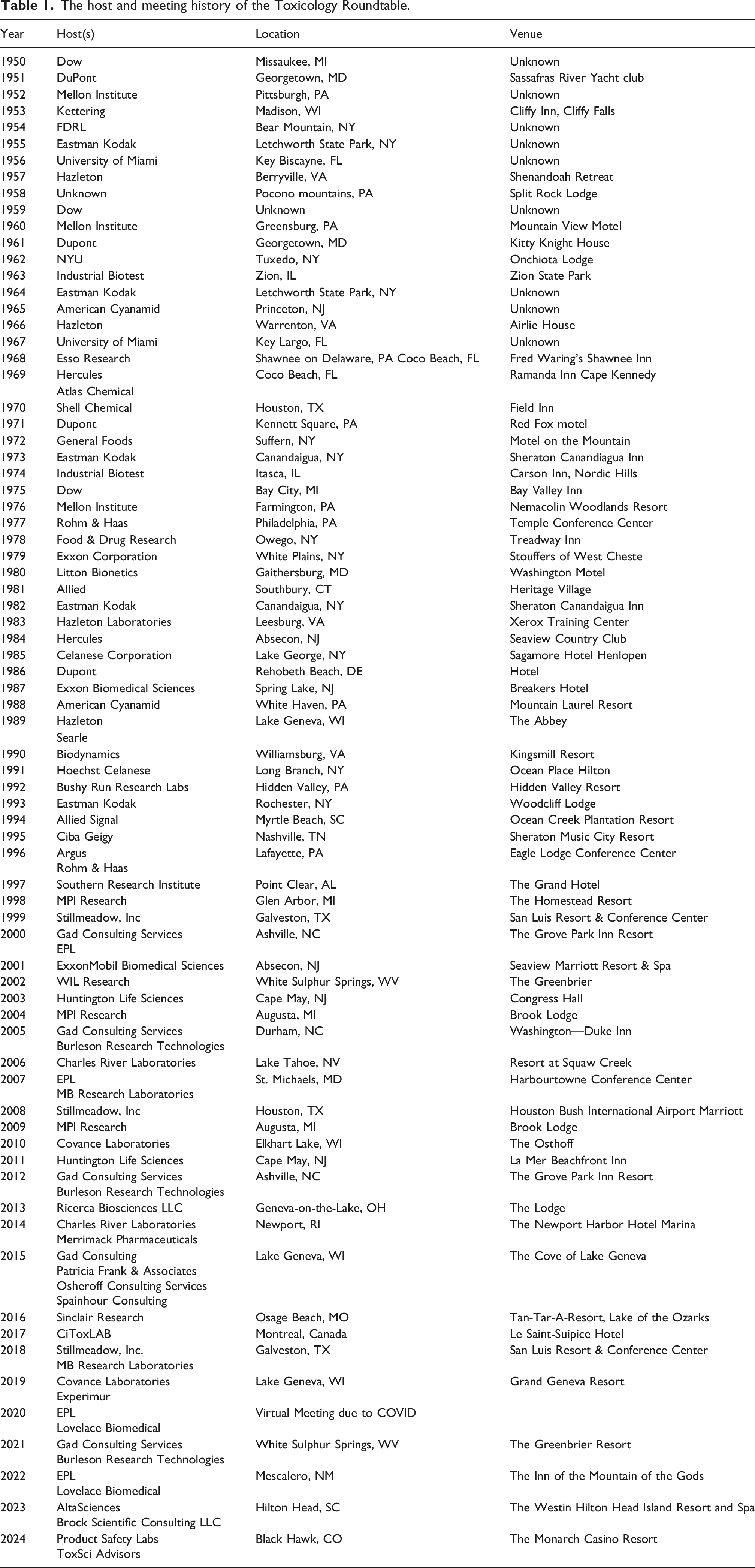
The host and meeting history of the Toxicology Roundtable.
The meeting agenda is set by the meeting attendees. The hosting organization, when issuing the invitational information, also requests that attendees recommend one or more topics that the attendee is interested in hearing discussed, with the understanding that the attendee will lead the discussion of that topic if it is selected for presentation. The hosting organization reviews these topics and prepares the program accordingly. Sessions are generally scheduled in 20-min increments to allow for questions/comments from the audience, although over the past several years we have seen both 15-min “tiny talks” and 30-min sessions. The presentations were not to be given as lectures, rather they were to introduce issues in toxicology that the presenter had experienced and/or to share information in an informal forum for open discussion of issues facing the profession and sharing of how toxicologists might address and respond to those issues. Over the years, the number of topics has ranged from 10 (1987) to 57 (2015), with an average number of topics ranging from 35 to 45. This is considered the preferred number of topics since it provides adequate time for both presentation and discussion, whereas topics ranging beyond 45 result in limited opportunities for meaningful discussion.
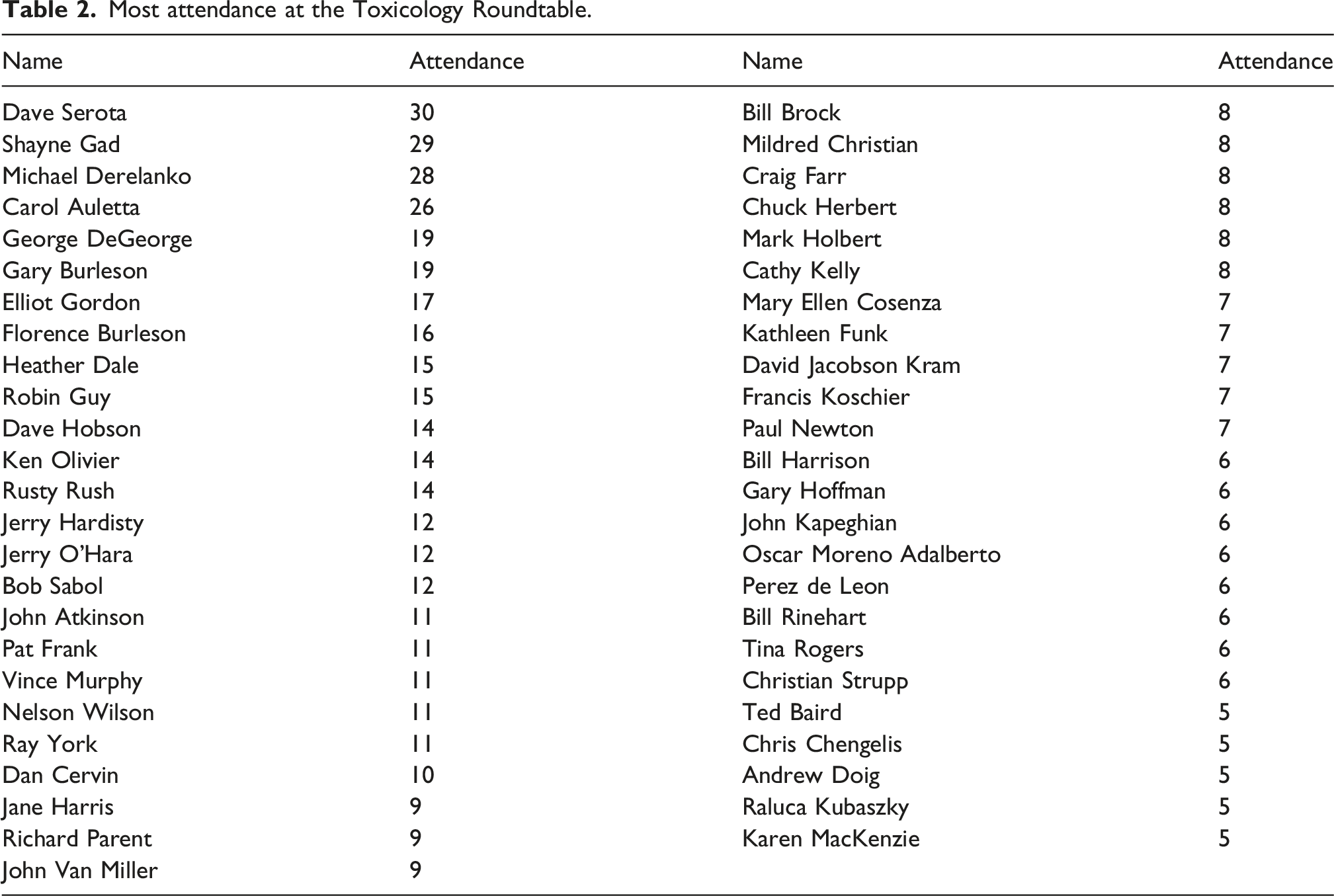
As far as it is known, there are no existing lists of attendees or agendas from those early meetings. The information used for this publication is based on agendas from 1983 and from 1987–2024, and from attendee lists from those same years, except for 1983, 1992, 1996, and 2004 when attendee lists could not be found other than those listed on the agendas for these meetings. Around the year 2000, Bill Rinehart, the longest known TRT attendee at that time, worked with Michael Derelanko to write the history of the TRT and that history has been orally presented at the Sunday night host dinner at every meeting since 2000 (apart from the 2023 meeting). While attendee lists are not available from the earlier meetings, Bill Rinehart remembered a number of individuals who had attended those meetings, including Henry Smyth, Ted Hatch, Bob Kehoe, Sid Laskin, Bill Deichman, Bob Scala, Norton Nelson, Carrol Weil, and Horace Gerarde—all well-known industrial and academic toxicologists of that time. In addition, the lead author who attended his first TRT Meeting in 1978 remembered many additional individuals who attended meetings in the late 1970s through the mid-1980s including Dick Waritz, Marshall Steinberg, CJ Ter Har, Charlie Ward, Jerry Smith, Florence Kinoshita, Mike Gallo, Kent Stevens, Bob Drew, John Clary, Bob Weir, Dave Serrone, Elmer Rauckman, Bob Hinderer, Rudy Jaeger, Phil Watanabe, Myron Mehlman, John Kirschman, Jim Killeen, Bill Snellings, Gordon Loewengart, Paul Garvin, Elton Holman, Frances Koschier, Gary Burin, Karen MacKenzie, Fred Johannsen, John Keller, Martin Bernstein, and Marvin Friedman—all well-known toxicologists among various industrial firms and contract research organizations (CROs).
Most attendance at the Toxicology Roundtable.
Quite frankly, based on its size, traditions, and format, the TRT meetings are unique from other scientific meetings. Since the intent of the TRT is not only to share information but also to provide an informal forum for the open discussion of issues facing the profession of toxicology and a sharing opportunity of how to address and respond to those issues, most attendees would attest that this is their all-time favorite meeting. Attendees are encouraged to not only discuss events that went well but also those that failed, and to share how to avoid those pitfalls and to seek the help of peers with issues that they are currently dealing with. In essence, the TRT provides an audience with 100 shoulders to cry on if desired and an equal number of ears to listen if you need to get something off your chest. Similar opportunities are generally not available at the larger scientific meetings of our profession outside of discussions late at night in hotel bars.
While no information exists from the early TRT meetings, it is known that based on the list of hosts of these earlier meetings that representatives from companies like Dow, Dupont, and Eastman Kodak were present, along with representatives from CROs such as Hazleton and FDRL, and university laboratories such as Kettering of the University of Cincinnati, New York University, University of Miami (Florida), Rutgers (associated with Esso Research), and the Mellon Institute (associated with Union Carbide and later known as Bushy Run), and the University of Pittsburgh.
Organization attendance at the Toxicology Roundtable (number of occasions).
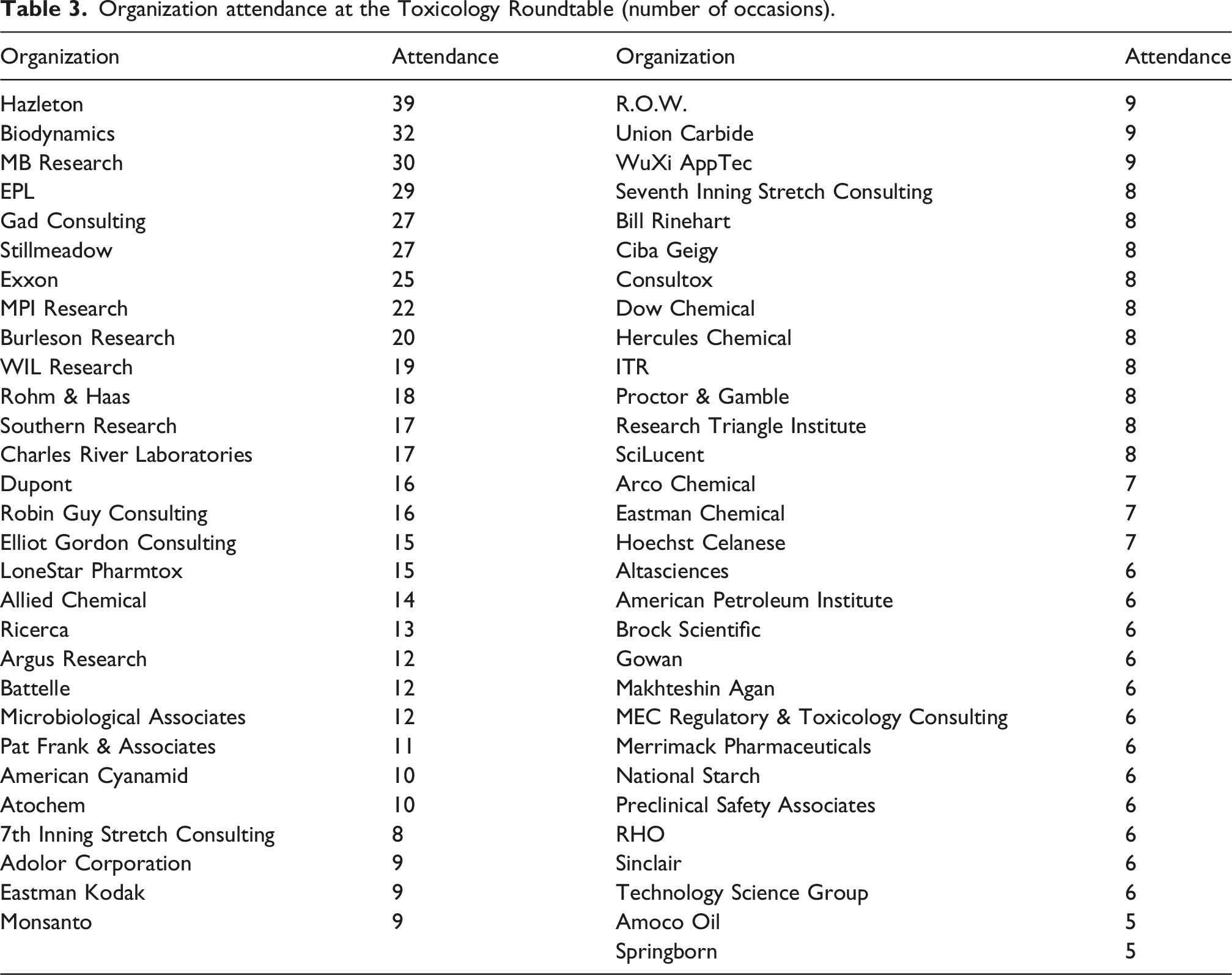
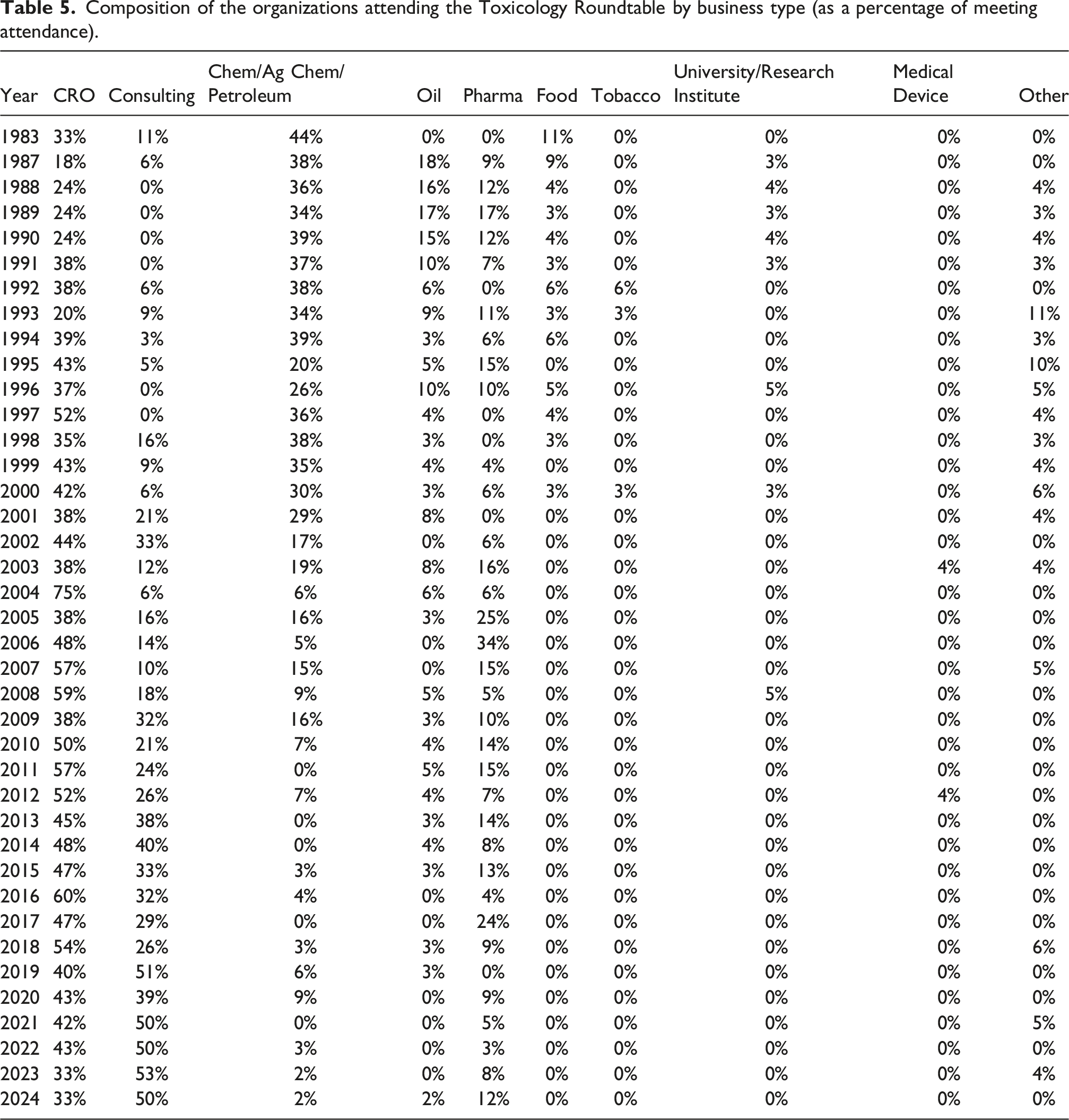
Initially, the TRT dealt primarily with chemical, agrochemical, rubber, and petroleum industry issues as attendees were generally employed in those industries that at one time all had their own in-house toxicology laboratories, or with issues experienced by the few CROs of that time (Hazleton, FDRL, Industrial Bio-Test (IBT)). Among companies in the chemical, agrochemical, rubber, and petroleum industries, Exxon, Rohm & Haas, and Dupont have attended the most TRT meetings. However, the last meetings attended by Exxon, Rohm & Haas, and Dupont were in 2015, 2009, and 2009, respectively, indicating a shift of these legacy attendees to no longer participating in the TRT meetings, most likely due to a change of emphasis in toxicology within their organizations and/or cost cutting issues. CROs occupy 8 of the top 10 slots in meeting attendance, indicating how the growth of this industry and the critical roles that they currently play in toxicology have expanded over the years. This should not be surprising as more small and mid-sized contract research laboratories were created during the 1980–2000 period, due to more companies downsizing/closing their in-house toxicology laboratories, and because of the emergence of the biotech era with those organizations having little in-house vivarium capabilities. As a result of some of this downsizing that occurred in many larger companies, a greater number of independent toxicology consultants emerged in the industry, leading to a greater number of such attendees at TRT meetings over the past 20 years. Pharmaceutical companies did not play a significant role in most of the earlier meetings, probably in large part because of the proprietary nature of their business, and some may have felt that they had to limit their input into the open discussions held at the TRT meetings. Representation of the pharmaceutical and biotech industries has only become somewhat more common during the beginning of the twenty-first century based primarily on hosting organizations inviting such companies in the face of the demise of the toxicology laboratories in the chemical, agrochemical, rubber, and petroleum industries, and to an evolving increase in openness of professionals in the pharmaceutical and biotech industries to transparently discuss their issues. However, these industries currently only represent a small percentage of the attendees at any annual meeting. What has not changed over the years is the experience level and name recognition of many of the senior attendees at TRT meetings, and that is why it has always been important to bring younger toxicologists to the meetings so that they can benefit and learn from interactions with more seasoned professionals.
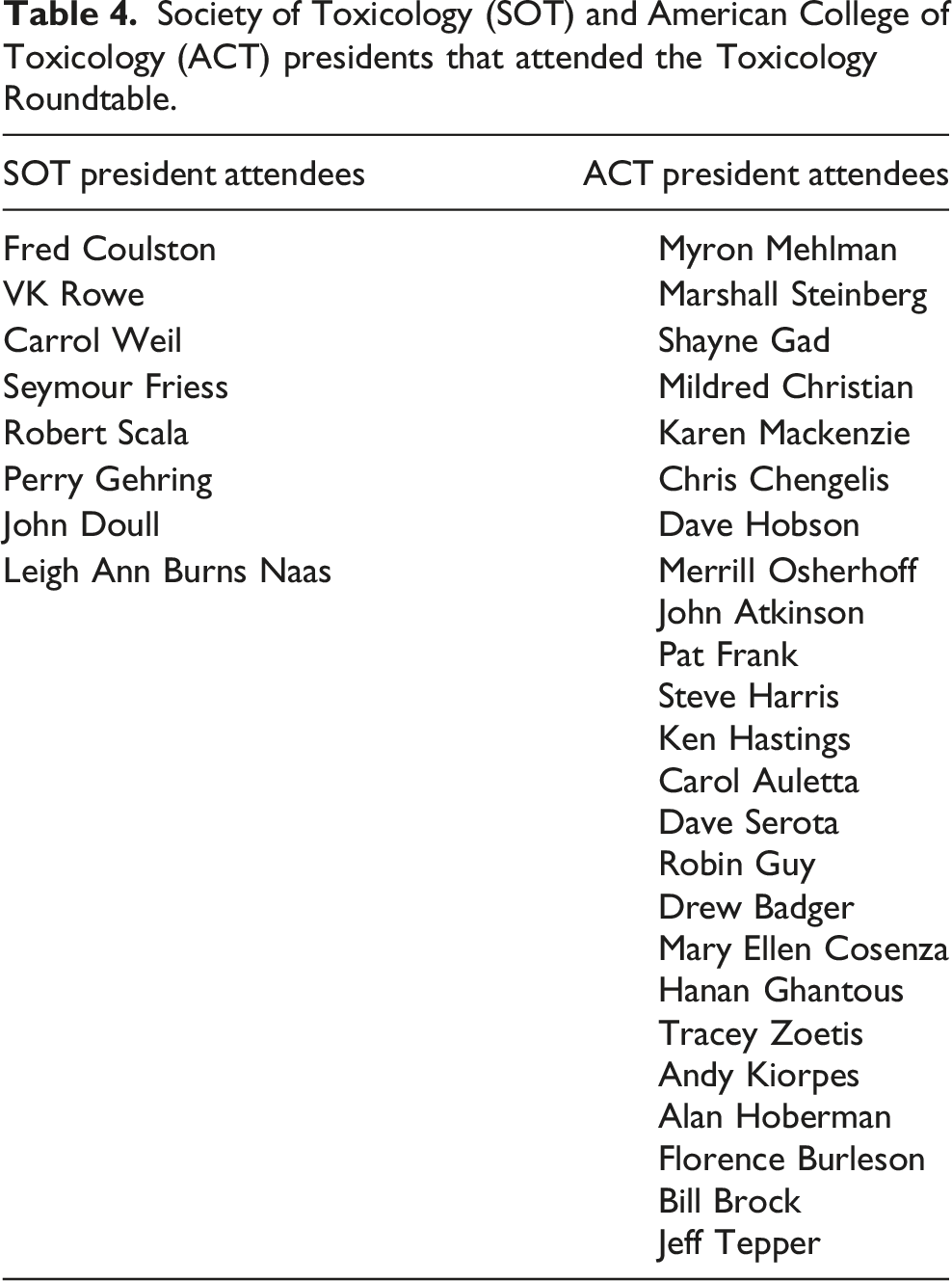
Society of Toxicology (SOT) and American College of Toxicology (ACT) presidents that attended the Toxicology Roundtable.
Composition of the organizations attending the Toxicology Roundtable by business type (as a percentage of meeting attendance).
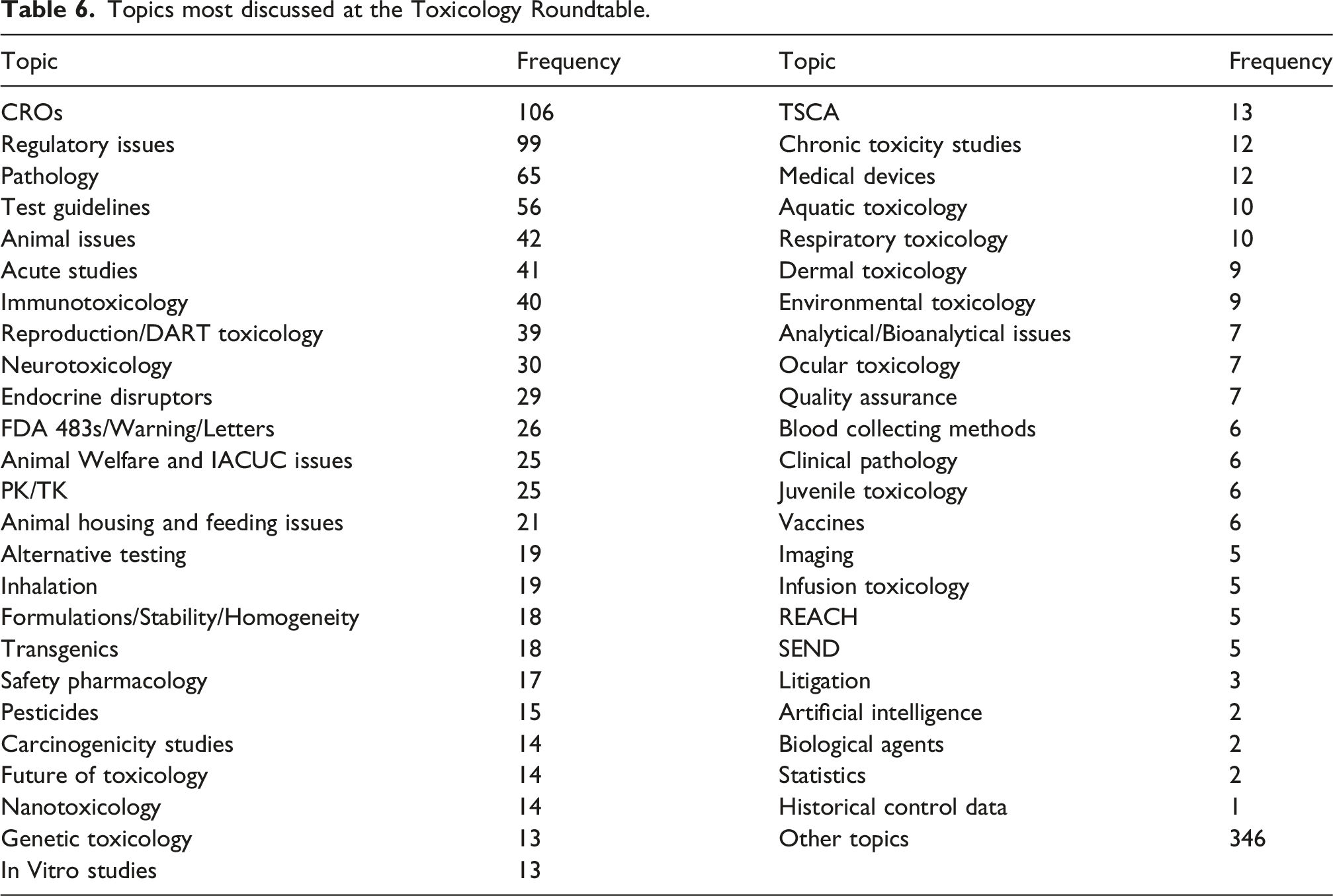
Topics most discussed at the Toxicology Roundtable.
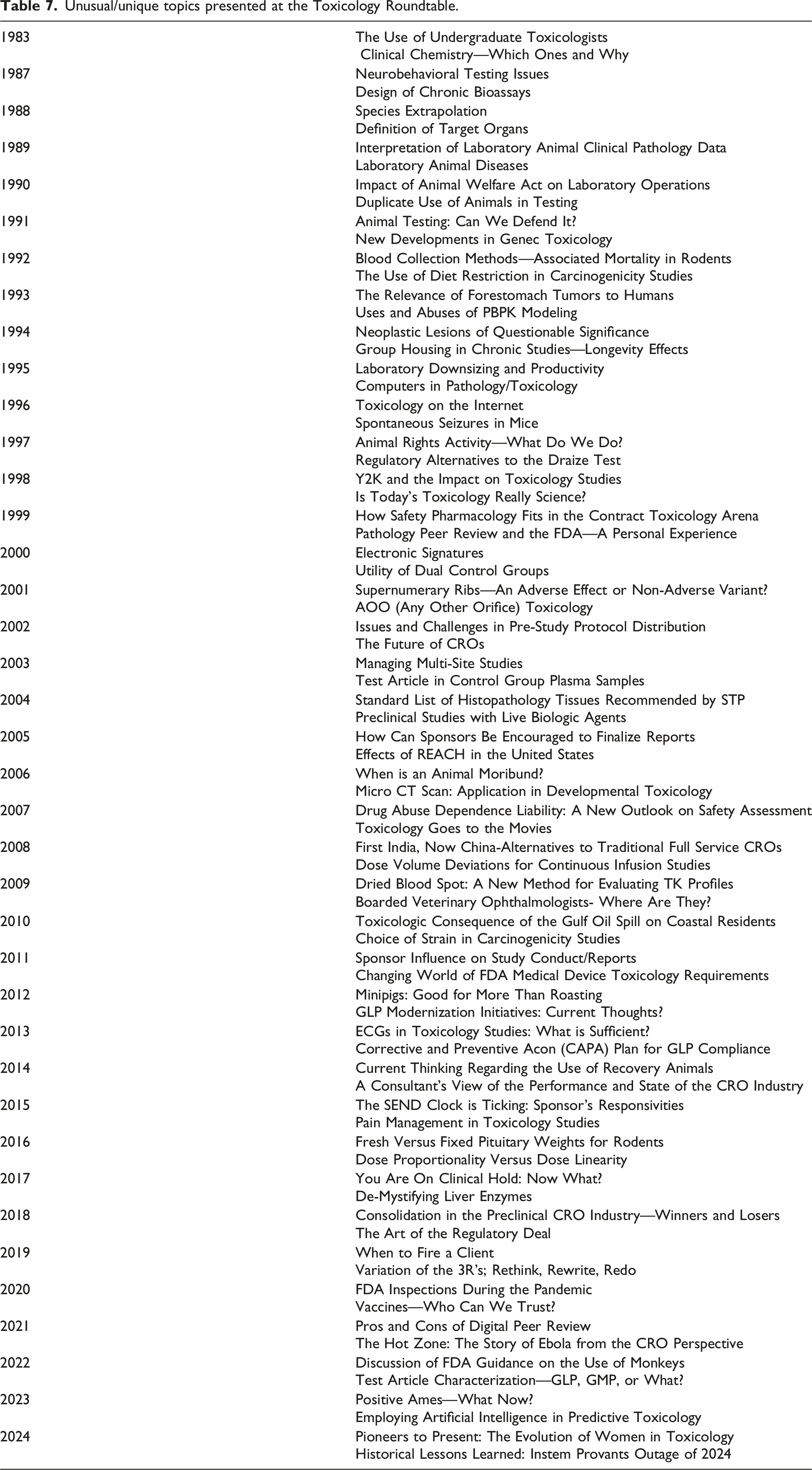
Unusual/unique topics presented at the Toxicology Roundtable.
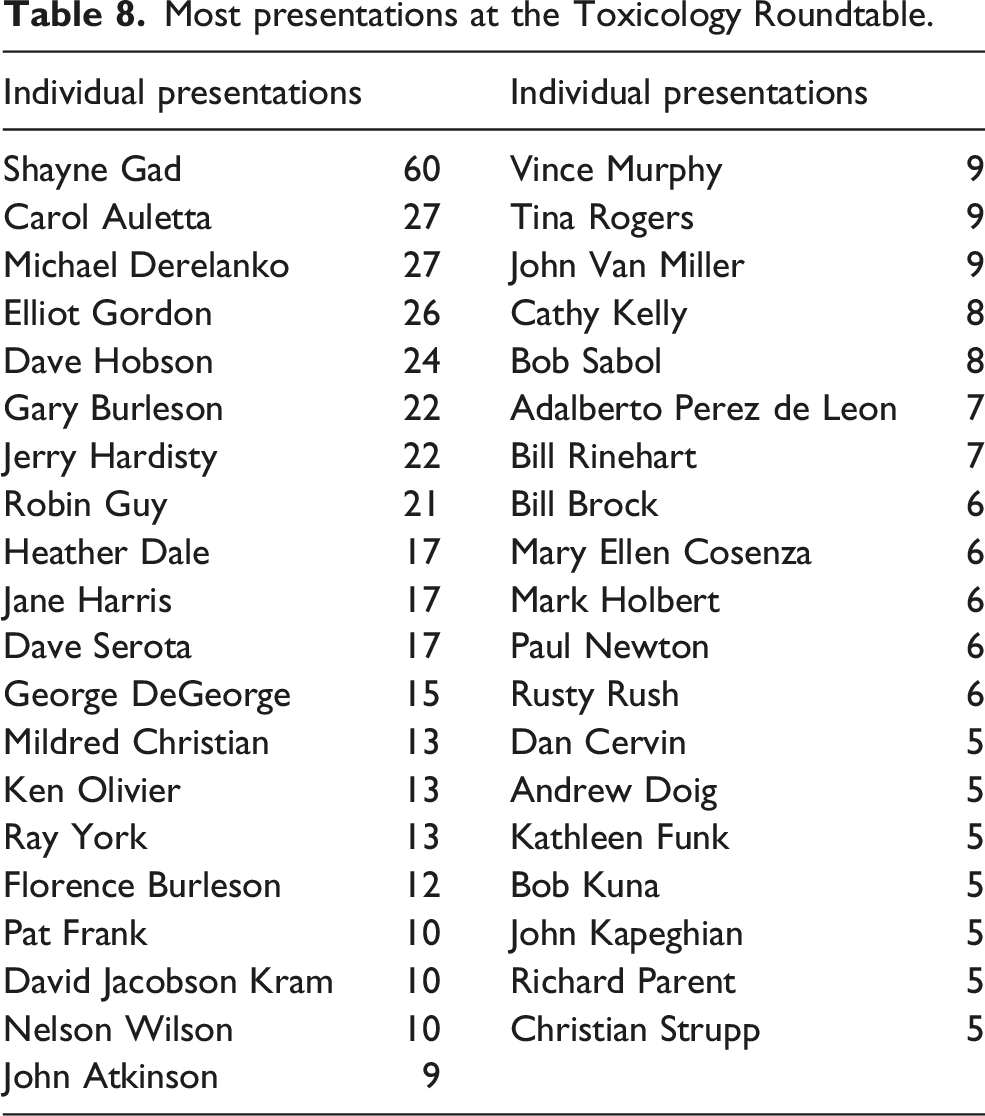
Most presentations at the Toxicology Roundtable.
The continuity of the TRT is predicated on an organization or organizations stepping forward to host the meeting. Hosting should be considered a privilege and not an obligation. Organizations that regularly attend meetings but that have never hosted one or who have not hosted in a while are strongly encouraged to do so. At some past meetings, organizations have competed to host a future meeting and that is always a good sign. Organizations desiring to serve as a host should be prepared to make a presentation at the current TRT meeting, discussing where they plan to host the meeting if chosen to do so. Attendees at the meeting would then vote on who would be the host for the following year. Having hosted three previous meetings, the lead author would estimate that the current cost of hosting the meeting is between $20,000 to $25,000, with this amount including costs associated with the host dinner, meeting amenities and snacks, and potential meeting coordination costs, with attendees covering their own costs for travel and lodging. Smaller organizations desiring to host a future meeting might consider co-hosting with another organization and sharing the expenses, and, indeed, over the past 10 years this has become very commonplace. The only unofficial requirement has always been that the meeting site has a golf course or offers easy access to one although over the past 10 years this appears to be less important as the current generation of toxicologists do not seem to be as thrilled about golf as their predecessors.
The history of the TRT meetings is not without some notable events. The meeting in 1981 at Heritage Village in Southbury, CT featured late night poker games in Bill Rinehart’s room. The meeting in 1983 at the Xerox Training Center in Leesburg, VA was memorable because of the tamed deer that roamed the lodging site that were very aggressive in coming after attendees who did not stop and offer them food. The meeting in 2002 at The Greenbrier in White Sulphur Springs, WV, featured a tour of the underground bunker beneath the hotel that was designed as a refuge for Congress in case of a nuclear attack and which was constructed in secrecy. The meeting in 2006 at the Resort at Squaw Creek in Lake Tahoe, NV, created a bit of controversy when Charles River, the host organization, which had just opened their new facility in Reno only invited non-CRO attendees to visit the site during the free time on Tuesday afternoon. The pushback from the other attendees was so great that the tour was cancelled. The 2008 meeting was scheduled to be held at the San Luis Resort & Conference Center in Galveston, TX, but several weeks earlier Hurricane Ike devastated Galveston and the resort was being used as the staging area for all the recovery operations. Stillmeadow, Inc, the hosting organization, did an outstanding job in arranging a new meeting site at the Houston Bush International Airport Marriott and working out the last-minute logistics to make the meeting a success. The meeting in 2017 in Montreal, Canada, was the first meeting held outside of the United States and the only meeting to-date to do so. The meeting in 2018 at the San Luis Resort & Conference Center in Galveston was memorable for both the wet and rough sunset harbor tour on the 50-foot Seagull II and an attendee experiencing a medical crisis during the meeting, causing him to be transported by ambulance to a hospital with another attendee staying with him the entire time—the individual recovered and returned to the meeting the next day. In 2020, the host organizations, Experimental Pathology Laboratories (EPL) and Lovelace Biomedical, did not let the occurrence of COVID-19 diminish the legacy of the TRT meeting as the meeting was held as a virtual event. And at the meeting in 2021, Satish Patel had his tie cut in half for not following the TRT tradition of an informal dress code.
When SOT published its 50-year history in 2011 (The Society of Toxicology (2011): 74–75), an early TRT attendee, past president of SOT, and a noted industrial toxicologist, wrote a historical article regarding contract laboratory toxicology and the TRT in which he stated “Today contract toxicology laboratories are multimillion dollar businesses at one end of the spectrum and small, highly focused, very high tech operations on the other end. They continue to provide a valuable service in premarket and other testing of an even wider range of materials and are clearly international in scope. There is also an informal association of consulting toxicologists, and, with all this, the Toxicology Roundtable seems to have outlived its usefulness.” While the authors have great respect for the individual who wrote those comments, they note that this individual has not attended a TRT since 1987 and respectfully take exception with this statement as they believe that most if not all attendees feel that the TRT remains an extremely valuable meeting for information sharing, open and frank discussions, and mentoring of younger toxicologists, and for the most part has stayed true to the original concept as proposed by its legacy founders 75 years ago. The TRT has weathered many changes over the past many years, but it has successfully navigated through all those challenges. It is as strong and vibrant as ever, and its need is just as important today as it was in 1950.
