







Abstract
This article examines the need for and importance of culturally responsive behaviour support for Indigenous students. Many of the educational challenges currently faced by Indigenous students can be explained by cultural disconnect and a mismatch between school expectations and cultural values. Principles of Indigenous approaches to behaviour support are described and compared with school-wide positive behavioural interventions and supports (PBIS), a framework for building a positive school culture that shows promise in relation to culturally responsive practice. The authors provide a brief overview of PBIS and adaptations of this practice to meet the needs of Indigenous students. A descriptive case study of PBIS implementation in a high school in the Northwest Territories provides an example of culturally responsive implementation of PBIS.
For Indigenous peoples, education represents a key pathway to ameliorating negative outcomes (Richards & Vining, 2004), including higher rates of poverty, drug and alcohol abuse, suicide, and poor health outcomes (Friesen & Krauth, 2010; Mykota & Schwean, 2006). Yet, despite positive changes in Indigenous education as a result of the 1972 Indian Control of Indian Education Act, large gaps remain in educational outcomes between Indigenous and non-Indigenous students (National Indian Brotherhood/Assembly of First Nations, 1972). Recent statistics show that 60% of Indigenous adults aged 20 to 24 received a high school diploma, as compared with 87% of non-Indigenous Canadians (Canadian Council on Learning, 2009). According to data from British Columbia (British Columbia Ministry of Education, 2012), the graduation rate of Indigenous students is 54%, as compared with 83% for non-Indigenous students. In addition, a disproportionate number of Indigenous students are labelled with disabilities; Indigenous students are 1.5 times more likely to be diagnosed with a learning disability and 3.5 times more likely to be diagnosed with a behaviour disorder than the general student population.
A commonly noted reason for this discrepancy in educational outcomes, besides structural risk factors such as poverty (Sirin, 2005), is the dissonance between Indigenous cultures and the dominant Western culture. A student’s behaviour may seem characteristic of a behaviour disorder, yet student problem behaviour may reflect a mismatch between the school environment and the student’s culture. Some teachers may view culturally based behaviours as inappropriate or disrespectful at school, when they may actually be acceptable or even prosocial in the home and community (Utley, Kozleski, Smith, & Draper, 2002; West, Leon-Guerrero, & Stevens, 2007). Student behaviour such as silence and aversion of eye contact may be seen by Westerners as signs of disrespect, low motivation, or academic deficits, but viewing these actions as problematic may be due to a difference in values between the school and home culture. West et al. (2007) discussed how a lack of consistency between school and home expectations can become a source of stress for students. They described that student success at school is enhanced when teachers are mindful and respectful of a student’s home culture. Weinstein, Curran, and Tomlinson-Clarke (2003) discussed that discrimination can transpire when teachers do not see that behaviour is culturally based and punish or devalue the behaviours of minority groups, which alienates and marginalizes some students.
This underlying cultural bias in Western educational systems is one factor that led to the residential schooling of Indigenous children and youth in Canada. From 1860 to 1996, approximately 100,000 Indigenous children in Canada were removed from their families and placed in residential schools (Smith, Varcoe, & Edwards, 2005). Children were forbidden from speaking their Native languages and engaging in traditional practices. In addition, many students experienced abuse and neglect at these schools. Residential schools isolated children from their parents and forced them to grow up without traditional culture and positive parenting models. Lack of contact with parents and Elders has arrested the transmission of culture from survivors of residential schools to their children. Consequently, there has been a loss of Indigenous cultural traditions and languages in younger generations (Kirkness, 1999).
Residential schools and the subsequent loss of self-determination have precipitated present issues in Indigenous communities of family violence and abuse (Royal Commission on Aboriginal Peoples, 1996). Due to growing up isolated from their families and communities, many individuals have not had the opportunity to learn how to create healthy family relationships, resulting in an exponential increase in problems with alcohol, drug, physical, and emotional abuse. Furthermore, the apprehension of children and placement in non-Indigenous foster placements have resulted in continued cross-generational family disruption, hindering the transmission of cultural knowledge and values (Mussell, Cardiff, & White, 2004). As a result of residential schooling, mistrust of school officials and the institution of education is common among Indigenous peoples (Kirkness, 1999).
A related aspect of cultural mismatch in education relates to teachers’ expectations of students. Due to disparities between Indigenous and dominant Western cultures, teachers’ expectations of Indigenous students are typically lower than for non-Indigenous students. Neegan (2005) related that teachers’ expectations play an important role in student learning. She argued that many Indigenous students are typically streamed into life skills or vocational programs because of lower teacher expectations. These low expectations can severely negatively affect student academic outcomes (Castagno & Brayboy, 2008). Students are often cognizant of these lower expectations and, in turn, this awareness negatively affects teacher–student relationships and engagement in learning. Godfrey, Partington, Richer, and Harslett (2001) assessed Indigenous students’ perceptions of their teachers and found that 39% of students reported feeling that their teachers did not care about them or what happened to them.
What Is Cultural Responsiveness?
In education, the term cultural responsiveness (also known as cultural relevance, cultural congruence, or cultural appropriateness) is described by Gay (2000) as using “the cultural knowledge, prior experiences, frames of reference, and performance styles of ethnically diverse students to make learning more relevant to and effective. . .it teaches to and through strengths of these students” (p. 29). Similarly, Klingner and colleagues (2005) suggested that all students have the potential to be academically successful when their culture, language, heritage, and experiences are valued in combination with access to quality teachers and services. According to Villegas and Lucas (2007), educators who are culturally responsive have an understanding of how students construct their knowledge, have an awareness about their students’ lives, are socio-culturally conscious, hold affirming views about diversity, use congruent instructional strategies, and advocate for the rights of their students. However, there seems to be a disconnect between theory and classroom practice (Johnston & Claypool, 2010). There is a need for teachers to apply what is known about Indigenous learning to the classroom. Thus, teachers can make use of the unique experiences, behaviours, and traditions of their students to create a curriculum that is within a familiar context and can easily bridge the gap between what the student knows and what they must learn (Villegas & Lucas, 2002). Accordingly, a culturally responsive approach views culture as an essential element to learning rather than a barrier that must be overcome (Ares, 2006).
Characteristics of Indigenous Approaches to Supporting Positive Student Social Behaviour
The Canadian Council on Learning (2009) reported that an Indigenous approach to learning is lifelong, holistic, experiential, rooted in Indigenous language and culture, spiritually oriented, communal (i.e., including family, elders, and community), and integrated with Western knowledge. Traditional Indigenous education focuses on the community as a whole and is based on the assumption that individual learning is inextricably linked to communal well-being. Learning often occurs through storytelling, with legends used to transmit social values such as humility, honesty, courage, and respect (Kirkness, 1999). As echoed by the Elders of the Assembly of First Nations in the 1972 policy paper, Indian Control of Indian Education, We want the behaviour of our children to be shaped by those values which are most esteemed in our culture. When our children come to school, they have already developed certain attitudes and habits that are based on experiences in the family. School programs that are influenced by these values respect cultural priority and are an extension of the education which parents give children from their first years. These early lessons emphasize attitudes of: self-reliance, respect for personal freedom, generosity, respect for nature, and wisdom. (p. 2)
From this statement, one can see that an Indigenous perspective to education advances the notion that effective classroom management does not emphasise enforcing compliance. Throughout history, Western approaches to education typically involved pressure on children to become autonomous (i.e., independent) and competitive at an early age. According to Brendtro, Brokenleg, and Van Bockern (2006), traditional Indigenous education contrasts with this approach by providing students the opportunity to be dependent while learning to value and respect others through modelling and providing explanations for appropriate behaviour. Thus, actively teaching the cultural values of the community and viewing social development as a goal for schooling are just as important as academic achievement. As a result, it is seen as vital that schools continue the social education that begins within the family and community. This approach involves broadening the simple notion of a teacher’s role as teaching only academic subjects. Instead, an Indigenous approach involves connecting with Elders, engaging with the community, inclusion of students’ culture and experiences, and actively teaching social responsibility.
The Importance of Elders
Elders play an essential role in Indigenous education, as they have the responsibility to transmit cultural learning. Elders are the “living embodiment of Indigenous traditions and cultures” (Royal Commission on Aboriginal Peoples, 1996, “Voices of Elders,” para. 3) and can help link cultural values and expectations across the school, community, and family environments (Canadian Council on Learning, 2009). Elders facilitate learning through a holistic lifelong learning model and teach cultural values (e.g., responsibility, the importance of family and community) through parables, allegories, and lessons. Elders reinforce cross-generational connections, and thus, school and teacher relationships with Elders are important for building links to the community (Curran, 2003). Educators are urged to take advantage of Elders’ knowledge when devising culturally responsive educational programs, especially because fewer and fewer Elders are left to impart their valuable knowledge (Kirkness, 1999). Rather than inviting Elders into the school only for cultural awareness events, Elders could play an integral role in reshaping social behaviour support systems to reflect culture (Royal Commission on Aboriginal Peoples, 1996). In 2006, approximately 40% of Indigenous youth in Canada reported that they spent time at least once per week with an Elder, and 93% of Métis people wanted youth to spend more time with Elders (Canadian Council on Learning, 2009). These results demonstrate community respect for Elders and the potential impact that Elders can have in the school system in developing and maintaining culturally relevant educational practices.
Community Engagement
In traditional Indigenous society, all adults in the community are responsible for each child’s learning (Kirkness, 1999). There is no separation of children and adults for educational purposes, and community events are an integral part of the learning process. Children are encouraged both to show autonomy and to make decisions that take the collective well-being into consideration (English-Currie, 1990). Consequently, a culturally responsive school environment extends beyond that of the classroom and school into the larger community, including parents and relatives.
Parental involvement in education is beneficial for positive student outcomes and is associated with higher marks, attendance, positive behaviours, and graduation rates (Friedel, 1999). An important predictor of parent involvement is the extent to which parents feel accepted in the school environment and by their child’s teacher. However, as previously described, many Indigenous parents may be wary and mistrustful of the education system. Therefore, teachers may need to work more actively and deliberately to create an environment of open communication and provide more opportunities for parents to be involved in the classroom. Castagno and Brayboy (2008) recommended that teachers increase communication with parents and extended relatives, as well as attend community events and incorporate these events into their teaching to create a broader notion of education.
Inclusive Education
Soodak (2003) described inclusive education as consisting of belonging, membership, and acceptance for all students. One sign of a school with an inclusive community is the extent to which all children are able to participate in the general education classroom. A sense of community may be undermined when a student’s participation in the classroom is conditional on behaviour or academic expectations and students are expected to earn their right into the classroom instead of being accepted members from the start. Acceptance and active inclusion of diversity requires teachers to use management styles and lesson plans that accommodate a diverse range of student learning and behavioural differences (Soodak & Erwin, 2000). It is important for teachers to be aware of different communication styles and incorporate these into learning activities and to promote a sense of community (Brown, 2003). Recognition and respect of cultural communication styles can help to build a respectful relationship with students.
In many Indigenous communities, listening and observing are valued skills, and Indigenous students may be more likely to listen and observe at school than Western students (Castagno & Brayboy, 2008). In a case study of a Yup’ik teacher, Lipka (1991) found that this teacher talked much less than typical Western teachers, particularly in terms of introductory discourse. Students were expected to follow modelled behaviour, and classroom management strategies encouraged peer group solidarity and respect for the students. Students were actively engaged in the lesson, which was designed to reflect student culture and experiences.
Teaching Social Responsibility Through Teaching Cultural Values
Although there is a strong diversity seen among Indigenous cultures, cultural values that are common across these cultures include “generosity and cooperation, independence and freedom, respect for elders and wisdom, courage and responsibility and silence, reflection, and spirit” (Skinner, 1999, p. 17). These values can be taught and reinforced throughout all subjects rather than taught as a discrete subject (Castagno & Brayboy, 2008). Through infusing these values throughout the curriculum, students may have increased self-esteem, be more self-directed, have a positive influence on others, and exhibit more engaged and positive classroom behaviour (Agbo, 2004; Cleary & Peacock, 1998; Garcia & Ahler, 1992). Instruction can include teacher-led instruction and traditional Indigenous avenues, such as storytelling or local traditional practices. McCarthy and Benally (2003) implemented a culturally relevant behaviour support program for students with behavioural difficulties at a middle school on a Navajo reservation. Because the majority of students with discipline referrals did not have strong ties to traditional Navajo culture, the intent of this program was to teach students Navajo cultural values through the use of sweat lodge ceremonies. In the sweat lodge, students were given the opportunity to reflect on their identity and behaviour with a Navajo medicine man and counsellor. Students also received follow-up sessions with the counsellor. After implementation, participating students showed increased cultural engagement and prosocial behaviour.
As seen in these examples, culturally responsive support for student social behaviour is a vital objective for enhancing the success of Indigenous students (Canadian Council on Learning, 2009). Educators may be able to enhance the sense of community and promote an understanding of and respect for Indigenous traditions and values by incorporating them into the school’s social behaviour curriculum. Because such an endeavour requires cultivating a collaborative school community, a whole-school, systems approach to culturally responsive education is advantageous.
School-Wide Positive Behavioural Interventions and Supports
One example of a collaborative, systems approach to social behaviour is school-wide positive behavioural interventions and supports (PBIS), an applied science of building a safe, positive, and caring school environment rather than using punitive approaches to address student behaviour. The primary goal of PBIS is to promote student quality of life while reducing problem behaviours (Carr et al., 2002). Schools adopting this approach work to increase the capacity of teachers, families, and communities to work together to design positive and predictable social learning environments in which all students can be successful (Sugai et al., 2000). Implementation of PBIS with the support of families and communities then facilitates a coordinated and more seamless transition between home and school values and expectations. Because school teams implement and adapt strategies based on the local school and community context, practices within one school may differ from those implemented in another school.
Although PBIS is intended to be adapted to fit the values and needs of each school, there are underlying components that characterize the PBIS approach (Lewis & Sugai, 1999). For instance, PBIS focuses on prevention of problem behaviour through proactive, evidence-based practices, including explicit instruction of positively stated school-wide behaviour expectations in different contexts throughout the school, consistent acknowledgement of expected behaviours through praise and/or tangible acknowledgment systems, instructional consequences for inappropriate behaviour, and the use of data to monitor progress and inform decisions (Sprague & Horner, 2006). With a positive school climate and instruction in prosocial skills, students learn more effective ways of meeting their needs than through problem behaviour. Sugai and Horner (2002) suggested four critical components essential to effective behaviour support within a PBIS framework: (a) acknowledgement and consideration of outcomes that are valued by all parties involved; (b) sustained use of research-validated practices that maximize outcomes valued by the community; (c) the use of data from multiple individuals, in different contexts, with multiple outcome measures to guide effective implementation of PBIS; and (d) consideration for the systems and processes that are needed to support school personnel in implementing the first three components.
The PBIS approach is proactive. Teaching prosocial skills rather than waiting for behavioural failure provides a universal level of support for all students. When students know the expectations and have the skills to follow them, outcomes are enhanced, and school personnel are less likely to use reactive approaches, such as punitive or exclusionary discipline. Although exclusionary discipline practices may temporarily create a safe environment for other students, they do not provide the disciplined student with the skills and support to achieve social success. Instead, they may provide a message that school may not be for them. Research has consistently shown that punishment and exclusion without positive, proactive supports is an ineffective method for behaviour change (Attar, Guerra, & Tolan, 1994; Skiba & Peterson, 2000).
Full implementation of the core components of PBIS is associated with overall reductions in office discipline referrals and improved academic outcomes (Bradshaw, Mitchell, & Leaf, 2010; Bradshaw, Reinke, Brown, Bevans, & Leaf, 2008; Ervin, Schaughency, Goodman, McGlinchey, & Matthews, 2006; Horner et al., 2009). For instance, one mid-sized school district in British Columbia implementing PBIS found a reduction in problem behaviour, increased achievement scores, and improved student perceptions of safety at school when PBIS was implemented (McIntosh, Bennett, & Price, 2011).
Principles of PBIS That Are Consistent With Indigenous Approaches to Supporting Student Social Behaviour
Although the specific practices and strategies vary based on the culture of the school and community, the core principles and components of PBIS can be examined to identify consistencies with Indigenous approaches to supporting student social behaviour. There are many aspects of a PBIS approach that fit well with theories and knowledge regarding Indigenous approaches to supporting positive social and emotional development. Although the terms used may vary, the philosophies of these approaches can be seen as similar, with common strategies such as teaching and modelling core social values as school expectations, acknowledging prosocial behaviour, incorporating the family and community into the school, and seeking to understand the underlying causes of problem behaviour (Brendtro et al., 2006).
The first principle of PBIS consistent with an Indigenous approach to supporting student social behaviour involves instruction of prosocial behaviour through shared social values. In PBIS, school personnel frame positive behaviour within a small number of memorable, positive school-wide expectations that are agreed upon by the school community, such as “be safe, be respectful, and be responsible” or “take care of yourself, take care of others, and take care of the environment.” These expectations are taught and modelled, and teachers regularly refer to these expectations when teaching, acknowledging, or correcting behaviour. According to the Assembly of First Nations (1972), Indigenous children are taught cultural values from a young age before even stepping foot in a classroom. This approach to Indigenous student social development then continues within the school. Educators and community elders often teach values through first modelling appropriate behaviour and providing increasingly more autonomy to students to make their own decisions (Lipka, 1991). Brendtro and colleagues (2006) discussed the need to teach students skills to achieve belonging and acceptance, mastery, independence, and generosity. The authors put forward these four components as the central values essential to providing positive school cultures for all children.
A second principle of PBIS comparable with Indigenous social behaviour support strategies is a focus on reinforcing positive rather than punishing negative behaviour. This method emphasises proactive strategies over reactive, punitive approaches (Carr et al., 2002; Sprague & Horner, 2006). In a traditional Indigenous education approach, students are taught social responsibility and autonomy through attending to and providing consistent praise for appropriate behaviour, rather than focusing on negative behaviour or completing tasks for the student. According to Brendtro and colleagues (2006), traditional Indigenous educators avoid speaking negatively or harshly to students, but instead speak clearly and positively about their expectations. For example, instead of responding to misbehaviour with yelling or time-outs, an Indigenous response would be to explain briefly how the student’s behaviour affects others (Ballenger, 1992).
A third principle of PBIS that is comparable with Indigenous views on education is the notion of changing the school environment to support all students, rather than attempting to change individual students. Both approaches promote positive school environments based on togetherness, including not only members of the school but their families and community members as well. This thinking is grounded in the idea that a sense of belonging and community well-being is necessary for learning to occur (Canadian Council on Learning, 2009). The success and long-term stability of PBIS depends on identifying shared values and goals of all key stakeholders (Bradshaw, Koth, Bevans, Ialongo, & Leaf, 2008). A similar approach is taken with Indigenous practices of social behaviour support that imbues the community’s sense of shared responsibility for each child’s learning and social development (Kirkness, 1999). Therefore, open communication about shared visions and goals for students is important to ensure that all parties involved have their voices heard and a sense of group cohesion is maintained.
Another principle consistent with an Indigenous approach to social behaviour support is seeking to understand the underlying causes of problem behaviour, which then informs appropriate behaviour support. PBIS research has shown that behaviour support is most effective when it reflects specific maintaining consequences of problem behaviour rather than general support that is based on a student’s diagnosis or label (Marquis et al., 2000; McIntosh, Brown, & Borgmeier, 2008). This approach is known in behavioural science as functional behaviour assessment (FBA), an approach used to identify the basic human need the student is trying to meet through problem behaviour (Crone & Horner, 2003). FBA is an individualized approach to supporting students that is rooted in understanding the context for each individual’s behaviour, because problem behaviour may be used for different purposes by each individual based on their perceptions and learning histories. As such, it is also consistent with Indigenous and social constructivist approaches (Brendtro et al., 2006; Glasser, 1999). In Indigenous approaches, there is a tenet that one must not merely observe behaviours but also decode behaviours to understand their meaning. To understand why a behaviour is occurring, one must examine what basic unmet need (i.e., belonging, mastery, independence, generosity) the behaviour is fulfilling (Brendtro et al., 2006). Therefore, the FBA process is useful for identifying and teaching more prosocial ways for students to meet their needs than through the use of problem behaviour (Carr et al., 1994).
Cautions Regarding PBIS and Indigenous Students
Because PBIS focuses on changing the social culture of the school, it is important to be aware of applications that may not be culturally responsive. A major component of PBIS, explicitly teaching and reinforcing behavioural expectations, is based on developing a shared set of cultural values. Without thorough consideration, it may be inadvertently based on the norms of the majority culture, potentially leading to further oppression and marginalization through continued colonization (Jones, Caravaca, Cizek, Horner, & Vincent, 2006). Thus, creating school-wide expectations without consideration of students’ diverse cultural values may perpetuate inequalities in opportunities for success for children from non-dominant cultures. The use of data to monitor progress is helpful for determining whether interventions are culturally appropriate and effective. However, cultural and learning backgrounds must be considered when interpreting and using data (Sugai et al., 2000).
It is important to recognize that Indigenous cultures are not static and thus are constantly evolving and adapting in response to changing environmental conditions and interactions with other cultural groups. Schools, therefore, have the task of validating both traditional and contemporary Indigenous cultures (Maina, 1997). In addition, Indigenous cultures are not homogeneous, and it is important to understand that although there are many similarities, Nations and bands vary in their histories, languages, belief systems, and customs (Royal Commission on Aboriginal Peoples, 1996; Starnes, 2006). In Canada alone, there are more than 615 nations, which speak more than 50 languages (Statistics Canada, 2008).
The oppression of Indigenous peoples through placement in residential schools and racism inflicted on many students on later entry into local schools has created lasting effects on Indigenous peoples (Marker, 2009). As a result of the experiences lived by Indigenous peoples, Western educators and educational practices may be met with an understandable degree of resistance. To dispel any hesitations, efforts must be made to understand Indigenous students and their histories on a deeper level. Applying Villegas and Lucas’ (2007) principles of culturally responsive teaching through discussions with students, families, elders, and the community surrounding students’ backgrounds, methods of constructing knowledge, values, and beliefs can help teachers avoid these pitfalls.
School-Wide PBIS and Cultural Responsiveness
To systematically address these concerns, researchers have recommended careful attention to cultural responsiveness when implementing PBIS. PBIS can become more complex when considering disparate cultural behaviours and expectations within a school (Jones et al., 2006; Utley et al., 2002). Carr (2007) proposed three issues that must be addressed when considering PBIS with culturally diverse populations: (a) conceptualizing problem behaviour within the given cultural context, (b) understanding cultural values to inform shared goals, and (c) cross-cultural competence for overall design of acceptable interventions. Vincent, Randall, Cartledge, Tobin, and Swain-Bradway (2011) proposed additional features of PBIS implementation to foster a culturally responsive behaviour support system: (a) systematically promoting cultural knowledge and self-awareness among school personnel, (b) establishing a commitment to culturally relevant student support practices, and (c) making decisions based on data to enhance culturally equitable student outcomes. Without attention to cultural responsiveness, schools implementing PBIS may reduce overall problem behaviour but not disparities in discipline for students from minority cultures (Kaufman et al., 2010; Vincent & Tobin, 2011).
When building a positive, culturally responsive learning environment, it is necessary to involve members of the school community who represent the diverse cultures within the school to identify and define core behavioural values to be taught and practiced within the school (Jones et al., 2006; Utley et al., 2002). In one school’s effort to implement culturally responsive PBIS, school personnel at a Navajo elementary school in New Mexico developed school-wide social expectations in collaboration with the community, families, and students. Teachers provided explicit instruction in these expectations and acknowledgement for following expectations, then collected data to monitor student progress. These efforts were successful in increasing student knowledge of school-wide expectations and reducing the use of office discipline referrals (Jones et al., 2006). This case study demonstrates how PBIS can be incorporated into a culturally responsive manner to meet the unique needs of Indigenous students. Another recent study (Greflund, McIntosh, Mercer, & May, 2014) showed that schools implementing PBIS did not suspend or send Indigenous students to the office at higher rates than non-Indigenous students, which documented a lack of discipline disproportionality when implementing a PBIS approach.
Theoretically, adaptation based on fit with culture has always been considered influential in effective implementation of PBIS (e.g., Carr, 2007; Sugai & Horner, 2002). However, aside from the aforementioned study, there is little research regarding how cultural responsiveness can be applied within a PBIS framework to address the needs of Indigenous students. Therefore, a descriptive case study is provided to examine the promise of implementing PBIS in First Nations schools in Canada.
Case Study: Chief Jimmy Bruneau School
Community and School Background
Chief Jimmy Bruneau School (CJBS) is located in the Northwest Territories in the community of Behchokǫ̀. Behchokǫ̀ has a population of 2,174 people, of whom 94% are Indigenous (Northwest Territories Bureau of Statistics, 2013). The local Indigenous people are part of the Tłı̨chǫ Nation and the Dene Nation. The Tłı̨chǫ peoples have a long history of residential schooling; many of the residents of Behchokǫ̀ and surrounding areas attended the residential schools throughout the Northwest Territories and Northern Alberta, far removed from their traditional community. Where parenting and social skills used to be taught through traditional practices in the community, residential schooling created a gap in this instruction. This gap left a need for members of the community to re-learn these values and transmit them to their children.
Chief Jimmy Bruneau was Chief of the Tłı̨chǫ nation from 1936 to 1975 and was a strong advocate for Indigenous control of Indigenous education. Chief Bruneau recognized the importance of local education for Tłı̨chǫ youth that encompassed both Western education and traditional Indigenous teachings and practices for Indigenous youth to become “strong like two people” (Tłı̨chǫ Community Services Agency, 2009). Through his leadership, in 1969, the Nation became the first Indigenous community in Canada to have self-governance of their school system (Tłı̨chǫ Community Services Agency, 2007).
In 1971, CJBS was opened. At the opening of the school, Chief Jimmy Bruneau was quoted as saying, I have asked for a school to be built . . . on my land . . . and that school will be run by my people, and my people will work at that school and our children will learn both ways, our way and the whiteman’s way. (Dogrib Community Services Board, 1998, p. i).
CJBS is now a pre-K to Grade 12 school, and the current student population is 99% Indigenous, with an enrolment of 418 students. CJBS is recognized by the Northwest Territories (NWT) governments as an exemplary school in leadership, cultural programming, academic programming, and the number of students going on to post-secondary school. In addition, the school was recognized by the Society for Achievement and Excellence in Education as one of the top 10 performing Indigenous schools in Canada (Tolley, 2007).
Under the motto of “Strong Like Two People,” CJBS uses a curriculum that focuses both on academics and building a strong connection to traditional community values. This occurs through instruction in locally developed courses such as Drumming, Gonàowoò K’èè (on the land instruction), Trails of Our Ancestors (the annual traditional canoe journey), and Tłı̨chǫ Yatııì (traditional language). These courses are taught by community leaders, elders, and teachers in a naturalistic setting to develop knowledge and skills in areas of language, hunting, trapping, fishing, tool making, crafts, and history (Tłı̨chǫ Community Services Agency, 2007; Tolley, 2007).
Implementation of School-Wide Expectations at CJBS
Everyone is born a miracle . . . The child has everything and will have everything if he is respected and respects.
In 1993, Jim Martin, then principal of CJBS, introduced “The Golden Rules” to students and the community of Behchokǫ̀ with the hope of addressing the behavioural needs of the student population. They were intended to provide guiding principles to students and staff that were clear, positively stated, and grounded in traditional ways of knowing and learning. In the Dene culture, “rules” exist to help maintain a balance between the land, the self, the people, and the spiritual world. The concept of respect is a central theme in these traditional rules. A child’s coming of age is thought to be most affected by the respect afforded to them by their Elders (Northwest Territories Department of Education Culture and Employment, 2002). Martin’s proposed Golden Rules were vetted through the School Board (consisting of parents and community members), who provided feedback and direction regarding cultural appropriateness. Furthermore, Martin’s own wife, Ceclia Zoe-Martin, a CJBS teacher, school counsellor, and respected community member, suggested that the concept of respect and hard work were not sufficient and that the rules needed to specifically teach students how and when to ask for help. In the end, the community introduced five Golden Rules as school-wide expectations: Have Positive Goals, Respect Yourself, Respect Others, Respect Your School and the Environment, and Ask for Help when You Need It (Golby & CJBS Staff, 2007).
Implementation of PBIS
In 2002, as part of a teacher-driven initiative to embed the Golden Rules into a comprehensive system for teaching and promoting social responsibility, PBIS was implemented at CJBS. Initial planning for PBIS began in the 2002-2003 school year, and PBIS was introduced to students in 2003-2004. CJBS staff were mindful that this new initiative needed to engage the local community and include cultural values and connection to elders and community. The goal of this initiative was to establish a school-wide system that would “maximize students’ academic achievement and social competence, promote positive school climates, improve collaborations among schools, families, and communities, enhance teacher success and retention” (Golby & CJBS Staff, 2007, p. 3).
Universal practices
The PBIS systems implemented at CJBS have a strong focus on universal, or preventive, strategies for all students. The Golden Rules, developed with extensive community input, provide a platform and common language for teaching the school-wide expectations. The Golden Rules are posted around the school and in every class in both English and Tłı̨chǫ. These expectations are explicitly taught, modelled, and positively reinforced through lessons at the beginning of each semester. In addition, booster lessons are taught in classes prior to the bi-weekly assemblies. During assemblies, the entire school meets to discuss themes related to the Golden Rules and to celebrate student success in this area. These strategies provide an avenue for teaching values and skills that were lost as a result of residential schooling.
In keeping with an Indigenous focus on positive over punitive practices, staff at CJBS strive for a 4:1 ratio of positive acknowledgements to corrections. To assist in achieving this goal, school personnel provide students with Golden Tickets for displaying behaviours consistent with the Golden Rules. Students who receive Golden Tickets are honored through ticket draws at assemblies. In addition, students who regularly demonstrate positive behaviour can be honored by teachers at the assembly through a Golden Student nomination and a Positive Office Referral. To document incidences of problem behaviour and clarify appropriate and instructional consequences, CJBS has specific guidelines for behaviours that can be teacher managed or behaviours that require office notification and assistance.
Community engagement
The history of residential schooling continues to leave mistrust for school in the community of Behchokǫ̀, and as a result, the school staff recognizes an ongoing need to build community relationships and trust. For this reason, an important goal of the PBIS initiative is encouraging community involvement and participation. To ensure a community presence at the school community members, elders, chiefs, and other community leaders are invited to attend and participate in all assemblies. As the practices were being implemented, the PBIS team held regular “Parent Nights,” where parents could learn about the PBIS principles, discuss the Golden Rules, and learn strategies for incorporating proactive behaviour support in the home. In an attempt to make the Golden Rules a living document—something that transcends the school walls and becomes a common language throughout the community—the Golden Rules are posted throughout Behchokǫ̀ in government buildings, local stores, and the local restaurant.
Continuum of support
In addition to universal support, additional strategies are made available for students who require more support. These strategies include increased access to specialized support (e.g., educational assistance, counselling), team meetings, problem-solving sessions, and a Check-In-Check-Out program in 2005 (Crone, Hawken, & Horner, 2010). Support for students with the most need includes an inter-agency approach (i.e., wraparound), for supporting students with neglect, emotional issues, or high risk behaviours that arise from poverty or family challenges. Traditionally, in Dene culture, if a person demonstrated an offensive behaviour that was deemed too difficult for the chief to address alone, the concern would be taken to a gathering with senior community members who would collectively advise on the best way to address the issue (Ryan, 1995). The intent of wraparound support at CJBS is to mirror this traditional concept. Wraparound provides a venue for community leaders, other departments (e.g., social services, counselling, health services, Royal Canadian Mounted Police [RCMP], families, teachers, and the student to meet and address the child’s needs through a community problem-solving approach.
School-wide teaming process
To support implementation of PBIS at CJBS, staff created a school PBIS team that had representation from teachers, support staff, administrators, parents, and community members. As a result, the team has active input from and partnerships with families and communities. The team met weekly at first and then bi-weekly to review progress, monitor school data, and make recommendations for actions at staff meetings. These decisions were informed by data that were collected through staff and student surveys and office referrals. Concerns in particular settings and at given times of the day were problem solved by the staff, resulting in changes to supervision, teaching, and school expectations. For example, when tardiness and general “hall wandering” were highlighted by data as a concern, the PBIS team brought this problem to a staff meeting, resulting in a decision to increase teacher and administrator visibility in hallways during and directly after all transitions.
Each year, members of the team were sent for PBIS Coaches’ training and to conferences on PBIS, to ensure that the school had sustainable local knowledge to assist the team through the implementation of PBIS. This culminated in 2006 with all teachers from the Behchokǫ̀ Region attending the annual Making Connections Conference in Vancouver, British Columbia to ensure that they all had training in a preventative school-wide behaviour approach. This training provided teachers with a common language for addressing behaviour concerns in their own classrooms and in the school as a whole.
Outcomes
One outcome measure that can be used to quantify the effectiveness of a PBIS program in reducing serious problem behaviour and the use of exclusionary discipline is the number of suspensions per student per school year, which controls for changes in enrolment (McIntosh, Fisher, Kennedy, Craft, & Morrison, 2012). At CJBS, suspensions are given for major infractions, such as violence, fighting, threats, blatant defiance, or drug or alcohol use. One focus at CJBS was to increase the accurate identification of behaviours that would result in a suspension, consistent with guidelines created by school personnel, as many staff perceived that severe incidents were inconsistently reported and recorded. Therefore, in the first year of implementation, there was an increase in the number of recorded suspensions, to a rate that staff felt reflected the actual rates of severe problem behaviour. However, from the 2004-2005 school year to the 2010-2011 school year, there was a steady decrease in the rate of suspensions, with the number of days of suspensions per student cut by more than half from pre-PBIS rates in ensuing years (see Figure 1). In addition, anecdotal evidence of the effectiveness of PBIS can be seen through reports of teachers, students, and visitors to CJBS. In an external review of the school, Tolley (2007) noted the positive school climate at CJBS. For example, visitors to the school described the school environment as calm, caring, respectful, and purposeful.
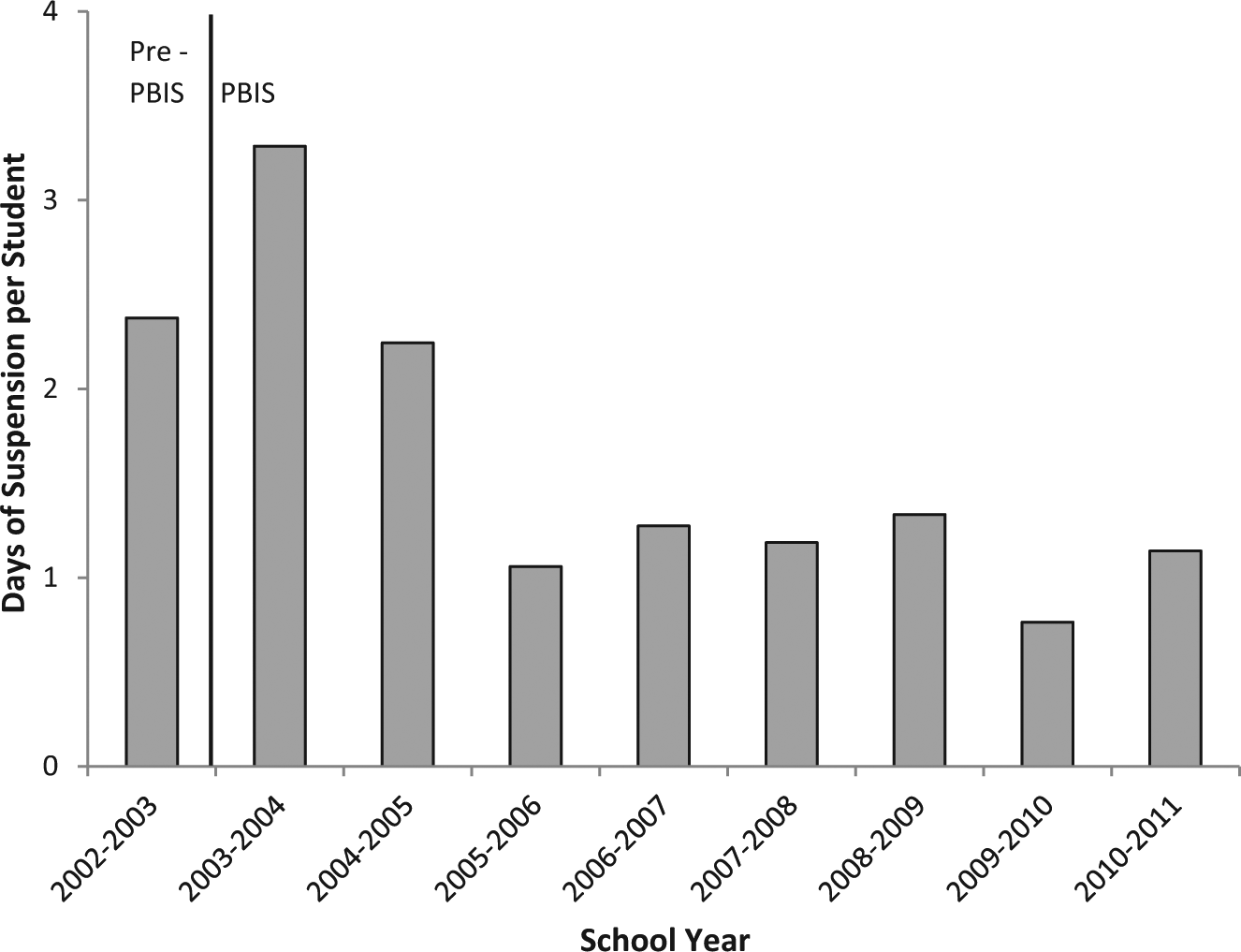
Total days of suspension per student per school year before and after implementation of PBIS.
In addition, the sustained positive outcomes over many years point to the long-term sustainability of the PBIS approach. There is a pattern in schools, particularly in rural and remote schools, of continual adoption and abandonment of school practices (McIntosh, Filter, Bennett, Ryan, & Sugai, 2010). Commitment to PBIS in this school, without measurable district, territorial, or national assistance, provides an estimation of its continued value to school staff, students, and families.
Conclusion
A mismatch between Indigenous cultures and the dominant Western culture can explain many of the adverse education outcomes for some Indigenous youth. Culturally responsive educational practices are vital to ameliorating these difficulties. As a universal framework for cultivating safe and positive school climates, PBIS has many aspects that compliment an Indigenous approach to education. Because PBIS is not a rigid practice, features can be adapted to support cultural values and beliefs specific to a school and community population.
As shown in the case study, the adoption of PBIS at CJBS supported the beliefs and values of the Tłı̨chǫ Nation. Culturally relevant PBIS practices are a core aspect of the curriculum, and the local community, especially Elders, is incorporated into the school community. The five Golden Rules promote prosocial behaviour and support shared cultural values. Although it is important to note that the descriptive nature of the case study and lack of formal fidelity of implementation assessment preclude any causal connections, the decreased number of suspensions provides initial evidence for the promise of culturally responsive implementation of PBIS as a social and behaviour support framework for Indigenous students. Future studies should examine this hypothesis through rigorous experimental research with a wider range of student outcomes.
Footnotes
Acknowledgements
The authors wish to thank Jim Stauffer of Aurora College for guidance regarding fonts and typesetting.
Declaration of Conflicting Interests
The author(s) declared no potential conflicts of interest with respect to the research, authorship, and/or publication of this article.
Funding
The author(s) received no financial support for the research, authorship, and/or publication of this article.