






Abstract
Background
Clinical research nurses and clinical study coordinators serve a critical role in the management of clinical studies. However, their efforts are underrecognized. Exploring the factors that shape the study coordinator's experience can provide deeper insights necessary for affirming and advancing this role.
Purpose
This review explored the factors that shape the study coordinator's experience.
Methods
This integrative review identified key factors that shape the study coordinator's experience. Relevant articles were retrieved from PubMed, CINAHL, and manual searches. Only articles that focused on the experience of study coordinators were included.
Results
Findings were organized under individual, relational, and structural dimensions. Factors from the individual dimension represent the core of the experience and include fulfillment and distress. Factors from the relational dimension include advocacy identity and team cohesion, which can moderate experience by contributing to fulfillment or intensifying distress. The structural dimension, which includes organizational structure and organizational support, exerts the most influential effect by shaping factors from the other dimensions.
Conclusion
Organizational engagement is necessary to provide support for the study coordinator's role. Role clarity, increased leadership support, mentorship, and training can mitigate burnout and improve psychological well-being.
Introduction
Clinical research is a vital and continually evolving enterprise that drives medical improvements in health care practice and outcomes. The term clinical research coordinator refers to individuals who conduct trial-related procedures under the supervision of the principal investigator (PI) in accordance with Good Clinical Practice (GCP) regulations (Peralta & Sánchez-Santiago, 2024). Their primary responsibility is to implement the research protocol while ensuring the ethical and safe conduct of the study to protect participants’ welfare. Effective performance in this role requires not only a strong foundation in clinical and research knowledge but also effective communication skills and the ability to collaborate within the multidisciplinary care team (Xing et al., 2024).
Clinical trials, however, remain challenging for patients and providers to navigate due to multifactorial barriers (Rodríguez-Torres et al., 2021). One such barrier is the lack of formal recognition by the U.S. Bureau of Labor Statistics, which limits the visibility and awareness of the profession. Furthermore, this role is rarely introduced in nursing education as a viable career path (Peralta & Sánchez-Santiago, 2024). As a result, the contributions of clinical research team members, particularly clinical research nurses and coordinators, remain largely unrecognized by the public. This limited awareness also extends to healthcare professionals. One study found that 40% of clinical nurses significantly misunderstood the role, while 60% demonstrated only a limited understanding, often confusing research nurses with nurse researchers (Adan, 2023). In addition, some clinical nurses undervalue the coordinator role, perceiving protocol management as primarily administrative work with minimal patient care responsibilities (Godskesen et al., 2018).
Research nurses play a critical role in driving trial progress, ensuring data integrity, and maintaining research ethics. However, staffing shortages continue to delay trial progress, with 95% of cancer centers reporting such delays (Freel et al., 2023). Turnover rates also remain consistently high, ranging from 22% to 30% between 2022 and 2024 (BDO, 2024). In addition, it is estimated that for every research nurse available, there are approximately 10 open positions (Freel et al., 2023). Limited awareness and understanding of the role further restrict organizational and professional support for research nurses. As a result, clinical trials may struggle to sustain their projected growth, despite their importance to medical advancement and economic productivity. Without an adequately staffed and well-prepared nursing workforce, trial safety may be compromised due to understaffed and undertrained research teams. Furthermore, the continued underdevelopment of the research nurse role as a distinct professional identity may hinder both the advancement of the nursing profession and the strengthening of support systems for research nurses. These challenges can ultimately lead to downstream effects on patient safety, regulatory compliance, and research quality.
Understanding the experiences of research nurses is, therefore, both important and timely. Greater insight into the factors that shape research nurses’ work experiences can help inform more effective interventions to support and sustain this valuable role. An increasing number of studies have examined the experiences of study coordinators, a role that encompasses both clinical research coordinators and clinical research nurses. However, the existing literature still lacks a cohesive and comprehensive synthesis of the major research on this topic. For example, Hernon et al. (2020) conducted a qualitative evidence synthesis exploring research nurses’ role experiences, particularly the alignment between role expectations and the realities of practice. Although the review provided valuable insights, its scope was limited to research nurses and primarily emphasized issues related to professional identity. The review also focused extensively on qualitative studies and excluded the perspectives of coordinators who perform similar functions. In addition, it included only studies published between 2002 and 2018, potentially overlooking more recent findings shaped by evolving cultural, ethical, and political contexts in clinical research.
Therefore, a broader and more contemporary understanding of study coordinators’ nuanced experiences is needed to better understand, affirm, and advance this role within today's healthcare settings. The purpose of this literature review is to explore the factors that shape the experiences of study coordinators, including clinical research nurses.
Methodology
The review will follow Whittemore and Knafl's (2005) approach to integrative review, which emphasizes the systematic inclusion and synthesis of diverse methodologies to generate a more comprehensive understanding of a phenomenon. Using this approach, the present review seeks to answer the question, “What factors shape the experience of clinical research nurses and coordinators in managing research studies?” To address this question, the review involves conducting a thorough search of the literature, evaluating the quality of included studies to ensure rigor, synthesizing and interpreting the evidence to identify meaningful patterns, and presenting the findings.
The search strategy for this review included the use of PubMed and CINAHL databases to identify articles published between 2012 and 2025 that explored the experiences of study coordinators involved in conducting clinical trials to extract the factors that shaped those experiences. Due to the limited literature available on research nurse experiences, 2012 was selected as the start date to ensure comprehensive coverage of the contemporary evidence. Keywords and their derivatives included: clinical trial, research study, interventional study, study coordinator, clinical research coordinator, research nurse, clinical trial nurse, research nurse, research personnel, experience, qualitative study, quantitative study, lived experience, interview, challenges, barriers, job satisfaction, burnout, stress, and turnover. Additionally, manual searches were conducted using Google Scholar to identify further search terms and concepts consistent with those used in the database search.
The inclusion criteria for this review consisted of published peer-reviewed articles that focused on the experiences of study coordinators. Initially, the goal of this review was to focus specifically on research nurses, but due to the limited amount of published literature on research nurses, the search expanded to include study coordinators more broadly, as they perform similar functions in the administration and conduct of clinical trials. Additionally, to increase its depth, the review incorporates studies and articles from international sources.
The exclusion criteria eliminated any study that did not directly address the experiences of study coordinators. This review omitted articles focusing on experiences from patients and other research personnel serving in roles other than study coordinators. Studies containing too diverse a participant pool commonly did not reveal specific insights from the study coordinators and were thus excluded. Most studies were omitted based on relevance, as they fell out of the scope of this current review.
PubMed and CINAHL yielded a total of 646 articles, and an additional 22 articles were manually identified through Google Scholar for screening. Articles were excluded based on scope, population, and relevance. Studies outside the scope of this review included those that focused primarily on study coordinator competencies or role functions rather than their experience. Any studies involving populations other than study coordinators, such as PIs, clinical staff, or patients, were also excluded. Finally, studies were excluded for lack of relevance if they did not address the broader experiences of individuals in the study coordinator role. In total, 16 articles met the inclusion criteria and were evaluated in this review, as illustrated in the PRISMA flowchart in Figure 1.
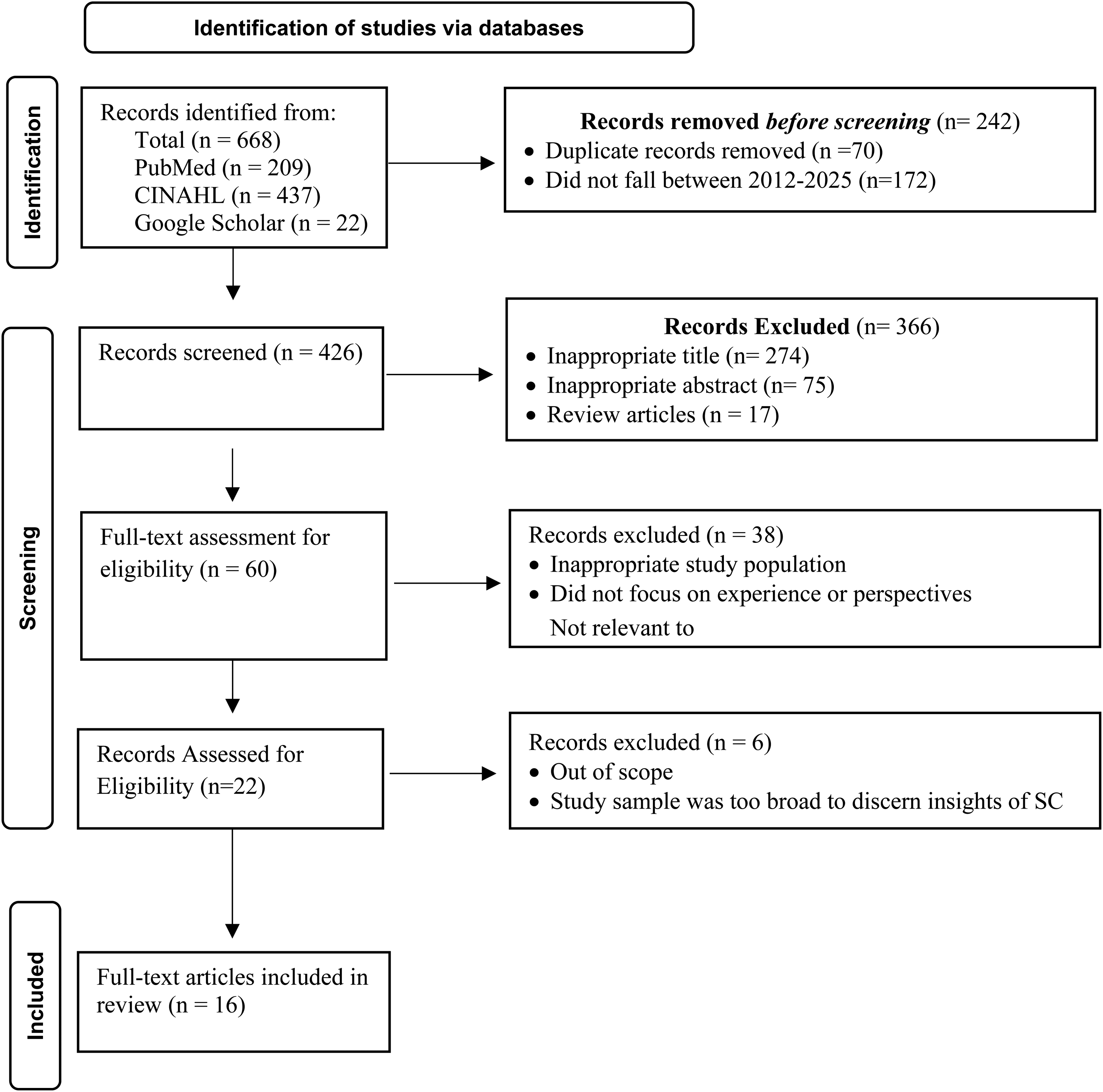
Prisma Flowchart of Study Identification. The PRISMA flowchart depicts the systematic identification of the studies examining the experiences of clinical research nurses and study coordinators.
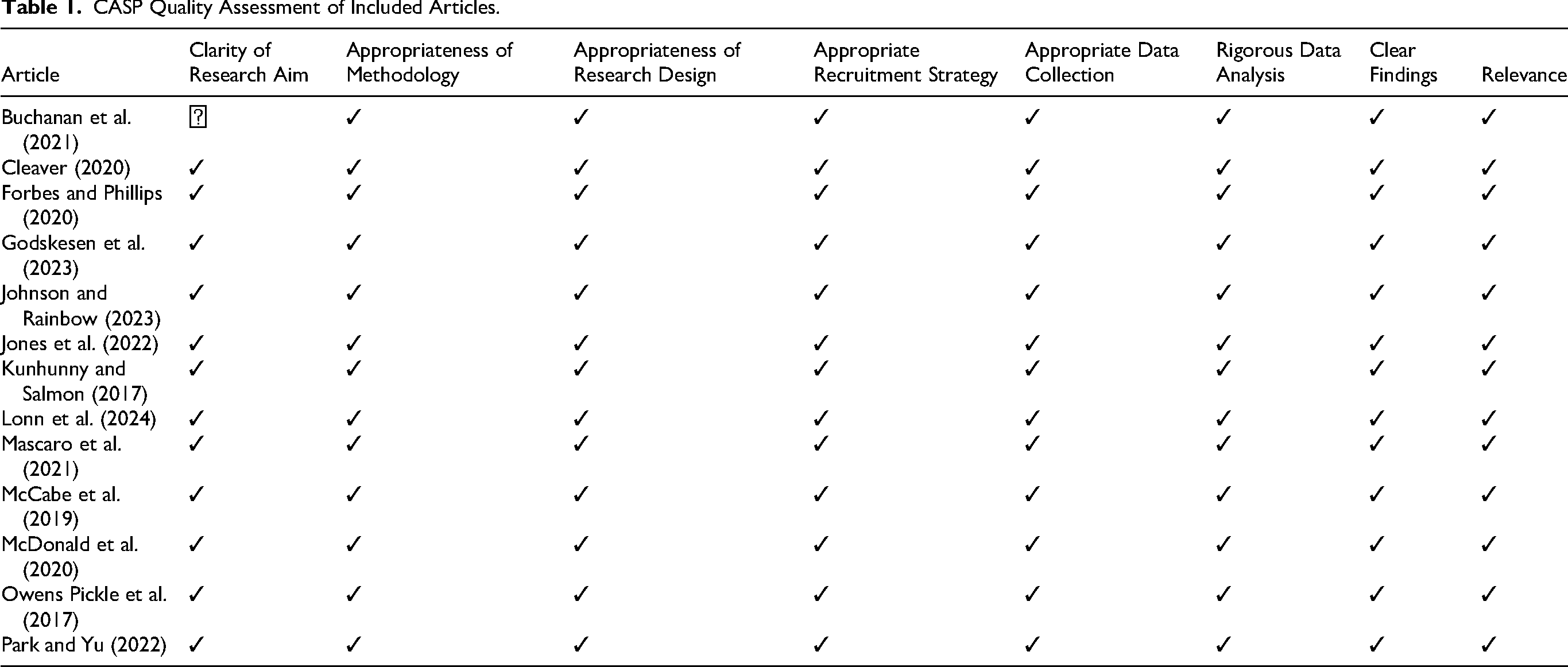
This review used the Critical Appraisal Skills Programme (CASP) checklist (Table 1) to evaluate and validate the appropriateness of the selected articles. The CASP evaluations address key elements such as the study's purpose, methodology, and findings. Together, the systematic search and screening process guided by PRISMA and quality appraisal conducted using CASP helped ensure that only relevant and high-quality articles were included in this review.
CASP Quality Assessment of Included Articles.
Results
This review included 16 articles published between 2012 and 2025, comprising seven qualitative, six quantitative, and three mixed methods studies. Nine studies were conducted in the United States, six were conducted internationally, and one study included participants from both the United States and other countries. Across these studies, participants included 1,989 clinical research coordinators, 506 clinical research nurses, and 456 clinical research associates, for a total of 2951 individuals. Across the studies included, 2637 participants were drawn from quantitative study designs, 220 from mixed methods designs, and 94 from qualitative studies.
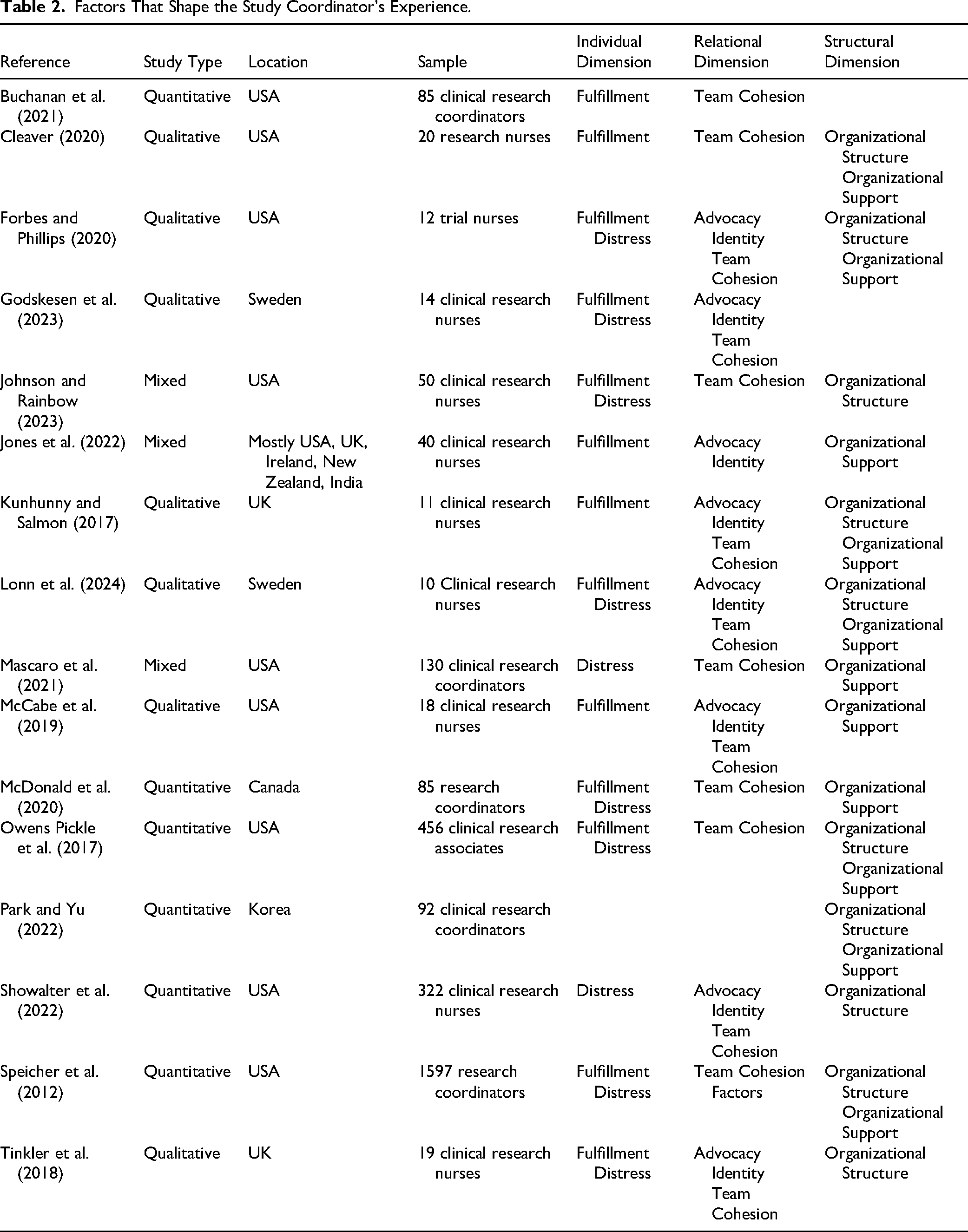
The findings were organized into three overarching dimensions: individual, relational, and structural. Key factors within each dimension are summarized in Table 2. Though the studies were conducted across differing geographic regions, findings exhibited common themes without discernible differences based on setting. The individual dimension includes elements such as fulfillment and distress factors that directly shape the study coordinators’ internal experience. The relational dimension reflects interpersonal dynamics that influence the role, including advocacy and team cohesion. Finally, the structural dimension encompasses external forces such as organizational structure and organizational support that shape coordinators’ experiences within the broader clinical research environment.
Factors That Shape the Study Coordinator's Experience.
Individual Dimension
Fulfillment
Fulfillment was shaped by both intrinsic and extrinsic motivators. Many study coordinators described finding meaning and purpose in their work, particularly through contributing to science, research, and patient care (Johnson & Rainbow, 2023; Jones et al., 2022; Kunhunny & Salmon, 2017; Lonn et al., 2024; McCabe et al., 2019; Owens Pickle et al., 2017; Speicher et al., 2012; Tinkler et al., 2018). Professional development also emerged as a major source of fulfillment, as coordinators valued opportunities to gain specialized knowledge, develop expertise, and strengthen their professional identity (Cleaver, 2020; Forbes & Phillips, 2020; Godskesen et al., 2023; Lonn et al., 2024). The complexity of the role required adaptability, critical thinking, and the integration of clinical and research skills, all of which contributed to personal and professional growth.
Professional development also carries extrinsic benefits, including opportunities for career advancement into supervisory or leadership positions. However, limited advancement opportunities contributed to turnover and attrition, highlighting the tension between intrinsic fulfillment and external career rewards (Owens Pickle et al., 2017; Speicher et al., 2012). Autonomy similarly contributed to fulfillment and self-efficacy, particularly when coordinators were trusted to work independently and guide other healthcare professionals (Buchanan et al., 2021; Kunhunny & Salmon, 2017; McCabe et al., 2019).
Extrinsic factors such as salary, job security, and work-life balance also influenced fulfillment and retention (Cleaver, 2020; Jones et al., 2022; Owens Pickle et al., 2017). Low compensation was linked to staff turnover, while work-life balance was identified as a particularly important motivator. Interest and engagement in meaningful, diverse, and intellectually stimulating work further supported long-term satisfaction, although these experiences were often influenced by organizational and environmental conditions.
Distress
Distress stemmed from occupational stressors and the ethical dilemmas encountered by study coordinators. Occupational stressors included heightened expectations that were disproportionate to the role, increasing job complexity, and incivility from patients and families. Excessive responsibilities and unmanageable workloads contributed substantially to emotional distress and burnout (Johnson & Rainbow, 2023; Lonn et al., 2024; Mascaro et al., 2021; Owens Pickle et al., 2017; Speicher et al., 2012). Burnout was often associated with excessive working hours. Speicher et al. (2012) reported that 42% of study coordinators worked more than 40 h per week, while 62% indicated that their PIs expected more time than was officially allotted. The burden of responsibility was further intensified by time pressures and the demands of simultaneously managing multiple studies for multiple PIs (Lonn et al., 2024; McDonald et al., 2020; Speicher et al., 2012). Tinkler et al. (2018) noted that although job complexity could be intellectually stimulating and rewarding, it also contributed to discomfort and strain. Challenges such as industry sponsor involvement, increased workload, and overseeing studies at different stages of completion elicited varied responses among study coordinators; some appreciated the diversity and challenge of the work, whereas others felt overwhelmed by its complexity. Mascaro et al. (2021) was the only study to specifically identify distress related to patient and family incivility, while also noting that resilience may function as a protective factor against burnout.
Ethical dilemmas were another significant source of distress, as highlighted across five studies (Forbes & Phillips, 2020; Godskesen et al., 2023; Lonn et al., 2024; Showalter et al., 2022; Tinkler et al., 2018). Study coordinators described experiencing moral distress and emotional labor when navigating ethically challenging situations or circumstances with the potential for ethical conflict (Forbes & Phillips, 2020). Showalter et al. (2022) and Tinkler et al. (2018) described the emotional toll associated with maintaining equipoise when discussing clinical trials perceived to offer limited or no benefit to patients. Godskesen et al. (2023) further reported that study coordinators expressed concerns regarding patient voluntariness, particularly when they perceived patients’ decisions as rushed or overly influenced by the physician's recommendations. Information overload and physician influence were viewed as barriers to patient agency, voluntariness, and truly informed consent, contributing to feelings of unease and ethical discomfort among study coordinators.
Advocacy Identity
Advocacy is deeply rooted in study coordinators’ relational identity and emerged across eight studies addressing the issue of dual fidelity (Forbes & Phillips, 2020; Godskesen et al., 2023; Jones et al., 2022; Kunhunny & Salmon, 2017; Lonn et al., 2024; McCabe et al., 2019; Showalter et al., 2022; Tinkler et al., 2018). Conflicts related to dual fidelity arose when study coordinators felt divided between their responsibility to advocate for patients and their obligation to fulfill protocol requirements. Despite these tensions, study coordinators consistently prioritized patient advocacy, viewing their role as essential in safeguarding patient rights and safety (Forbes & Phillips, 2020; Kunhunny & Salmon, 2017; Lonn et al., 2024; McCabe et al., 2019; Tinkler et al., 2018).
The informed consent process emerged as a primary context in which this tension was experienced, particularly when study coordinators were expected to enroll patients while simultaneously questioning whether participation was truly in the patient's best interest (Kunhunny & Salmon, 2017; Showalter et al., 2022; Tinkler et al., 2018). Kunhunny and Salmon (2017) described instances in which patients withdrew consent after receiving a more comprehensive explanation of the study from the coordinator, illustrating the coordinator's commitment to informed consent over enrollment targets. In these situations, study coordinators upheld patients’ rights by ensuring they had a clear and comprehensive understanding of the study before making a decision. Similarly, Tinkler et al. (2018) demonstrated how study coordinators sought to restore patient agency by reducing the pressure patients felt to participate and reminding them of their rights to choose freely. In doing so, coordinators advocated for patients even when doing so conflicted with the protocol expectations or the priorities of the PI.
Team Cohesion
Team cohesion was shaped by engagement with the clinical and research teams as well as by experiences of respect. Engagement reflected the extrinsic experience of working within a team, while respect represented a more intrinsic aspect of the study coordinator role. Multiple studies emphasized the importance of interdisciplinary collaboration and relationship-building to support communication, information exchange, and successful protocol implementation (Lonn et al., 2024; McCabe et al., 2019; Tinkler et al., 2018). Positive engagement with clinical teams and PIs improved collaboration and enhanced the research experience, while peer support and mentorship further strengthened team cohesion and job satisfaction (Cleaver, 2020; Forbes & Phillips, 2020; McDonald et al., 2020).
However, strained engagement often negatively affected study coordinators’ experiences. Some coordinators described conflicts with PIs, inappropriate delegation of responsibilities beyond their scope, and the emotional burden of maintaining positive relationships with clinical teams (Forbes & Phillips, 2020; Godskesen et al., 2023; Showalter et al., 2022; Tinkler et al., 2018). To gain support and visibility, some coordinators reported assisting with clinical duties beyond their formal role, although this occasionally contributed to overwork and distress (Kunhunny & Salmon, 2017; Tinkler et al., 2018). Study coordinators reported discomfort when left to complete the entire consenting process, especially when they did not feel they had the competence to fully address all questions (Godskesen et al., 2023). They emphasized the importance of protocol knowledge and self-reliance in managing these challenges and protecting patient safety (Forbes & Phillips).
Respect, characterized through recognition, appreciation, and understanding, emerged as another major factor influencing team cohesion and professional identity (Johnson & Rainbow, 2023; Lonn et al., 2024). Several studies found that study coordinators often felt overlooked or undervalued despite carrying substantial responsibilities, particularly when their role was poorly understood by clinical teams, leadership, or healthcare organizations (Kunhunny & Salmon, 2017; Mascaro et al., 2021; Tinkler et al., 2018). This was felt when leadership reallocated study coordinators' efforts to cover clinical areas of need (Kunhunny & Salmon, 2017) and within institutions that classified the role as non-essential (Johnson & Rainbow, 2023). The absence of recognition contributed to feelings of isolation, especially in highly autonomous roles. Conversely, appreciation from PIs, supportive teamwork, and mentorship helped strengthen professional identity and served as protective factors against dissatisfaction and exclusion.
Structural Dimension
Organizational Structure
Role delineation and leadership involvement emerged as two major organizational factors influencing study coordinators’ experiences. Six studies reported unclear role expectations and poor role delineation, which contributed to role ambiguity, stress, and frustration (Forbes & Phillips, 2020; Kunhunny & Salmon, 2017; Lonn et al., 2024; Owens Pickle et al., 2017; Park & Yu, 2022; Tinkler et al., 2018). Lonn et al. (2024) further noted that inconsistent expectations and varying oversight structures intensified this ambiguity. Kunhunny and Salmon (2017) attributed these challenges to organizational misunderstanding of the study coordinator role despite its overlap with clinical nursing skills. These findings suggest that organizational involvement is essential for improving role clarity, visibility, and recognition. Although concerns about inappropriate delegation were common, Speicher et al. (2012) found that most study coordinators viewed their assigned responsibilities as appropriate.
Leadership involvement also significantly shaped study coordinators’ experiences (Cleaver, 2020; Forbes & Phillips, 2020; Johnson & Rainbow, 2023; Kunhunny & Salmon, 2017; Lonn et al., 2024; Owens Pickle et al., 2017; Speicher et al., 2012; Tinkler et al., 2018). Several studies highlighted insufficient organizational support, lack of designated leadership, and limited advocacy for the role. During the COVID-19 pandemic, study coordinators reported fewer resources and support despite unchanged expectations (Johnson & Rainbow, 2023; Showalter et al., 2022). Poor leadership involvement was often linked to a limited understanding of the role, resulting in inappropriate task delegation and reduced support. For example, some research nurses were reassigned to frontline clinical duties without recognition of the specialized training and regulatory responsibilities required for research compliance (Kunhunny & Salmon, 2017). Owens Pickle et al. (2017) further emphasized that effective leadership is essential for retention and satisfaction.
As leaders of research teams, PIs strongly influenced organizational power dynamics and study coordinators’ experiences (Forbes & Phillips, 2020; Lonn et al., 2024; Speicher et al., 2012; Tinkler et al., 2018). Some coordinators reported expectations to work beyond allotted hours and described feeling pressured to meet research demands. Others felt unable to challenge physicians or address workplace concerns because of fears related to job security and conflict within the work environment.
Organizational Support
Organizational support factors identified throughout the literature included adequate preparation through training and the presence of a supportive work environment. Lack of training and insufficient preparation for the role were consistently reported across nine studies (Cleaver, 2020; Forbes & Phillips, 2020; Jones et al., 2022; Kunhunny & Salmon, 2017; Lonn et al., 2024; McCabe et al., 2019; Owens Pickle et al., 2017; Park & Yu, 2022; Speicher et al., 2012). The need for education also extended beyond study coordinators to other healthcare team members because of widespread misunderstanding of the role. Some study coordinators even reported that they themselves had little understanding of the position before entering it (Cleaver, 2020; Kunhunny & Salmon, 2017; McCabe et al., 2019).
Cleaver (2020) and Jones et al. (2022) found that existing graduate-level education was often insufficient for preparing individuals for clinical trial research, resulting in longer adjustment periods to the role. Forbes and Phillips (2020) described experiential learning as essential, with study coordinators often learning through trial and error, while Jones et al. (2022) noted that skills improved over time with experience. Several studies also found that study coordinators with nursing backgrounds relied heavily on prior clinical experience to navigate the role (Forbes & Phillips, 2020; Kunhunny & Salmon, 2017; Lonn et al., 2024). Although training needs were frequently emphasized, the literature provided little guidance regarding what an ideal training program should include.
A supportive work environment was another important organizational factor. Studies recommended greater institutional support through training, mentorship, burnout prevention strategies, and increased recognition and appreciation for the role (Mascaro et al., 2021; McDonald et al., 2020; Speicher et al., 2012). Additional recommendations included providing tools to address workplace incivility, increasing administrative support and resources, improving role preparation, and creating career ladders to strengthen professional development and role visibility (Cleaver, 2020; Mascaro et al., 2021; Park & Yu, 2022; Speicher et al., 2012).
Discussion
The purpose of this integrative review was to examine the factors that shape the experiences of clinical research nurses and research coordinators. Findings revealed a complex interplay of individual, relational, and structural influences that collectively shape study coordinator experiences. These factors affected not only individual well-being but also staff retention, organizational functioning, and the sustainability of the clinical research workforce. Distress and burnout among study coordinators may ultimately jeopardize workforce stability, patient safety, and research quality.
The findings demonstrated that the individual, relational, and structural dimensions were deeply interconnected. The individual dimension represented the core of the study coordinator experience, with fulfillment factors helping explain why individuals enter and remain in the role, while distress factors influence burnout and retention. The relational dimension moderates these experiences through advocacy, engagement, team cohesion, and respect. The structural dimension served as the broader organizational context shaping how individual and relational experiences manifested through organizational culture, leadership, support, and role expectations.
Within the individual dimension, fulfillment was supported by both intrinsic and extrinsic motivators. Intrinsic motivators included missional purpose, meaningful contribution, and professional growth, while extrinsic motivators included work-life balance, compensation, job security, and advancement opportunities. These findings suggest that organizations play an important role in sustaining mentorship and supportive work environments. Understanding these motivators has important implications for recruitment, retention, and long-term role development.
Distress was shaped largely by occupational stressors and ethical dilemmas. Heavy workloads, role complexity, time pressures, and unresolved ethical tension contributed to burnout and psychological strain (Lonn et al., 2024; McDonald et al., 2020; Speicher et al., 2012). These findings suggest that resilience-building strategies, mentorship, and stronger organizational support may protect against burnout and improve professional well-being and agency (Mascaro et al., 2021). More structured training programs are also needed, as experiential learning alone appeared insufficient for preparing coordinators for the demands of the role (Owens Pickle et al., 2017). With adequate support, unresolved distress may contribute to disengagement, turnover, and compromised psychological health (Godskesen et al., 2023).
Within the relational dimension, advocacy, team cohesion, and respect strongly shaped study coordinators’ experiences. Advocacy reinforced professional identity and fulfillment, but could also contribute to distress when coordinators faced tensions between patient advocacy and protocol obligations. Team cohesion, engagement, and respect supported fulfillment, whereas conflict, lack of recognition, and undervaluation contributed to dissatisfaction and isolation. Organizations can strengthen these relational dynamics by promoting role recognition, supportive leadership, mentorship, and collaborative team cultures. Institutional efforts to reinforce the advocacy role may also help empower coordinators to prioritize patient welfare without fear of retaliation.
Within the structural dimension, organizational weaknesses included poor role delineation, insufficient leadership involvement, and inadequate training programs. Poorly defined roles and inconsistent expectations created ambiguity and contributed to inappropriate task delegation. Lack of leadership oversight weakened advocacy, reinforced unhealthy power dynamics, and increased burnout risk. In contrast, stronger organizational support could help counterbalance these challenges. Clearer role delineation, dedicated leadership structures, comprehensive training programs, and mentorship opportunities may strengthen professional identity, improve confidence, reduce burnout, and foster healthier organizational cultures that better support study coordinators and research teams.
Organizational support can help counterbalance many of these challenges. Clearer role delineation may prevent coordinators from practicing outside their scope and promote more consistent expectations. Establishing leadership structures with dedicated oversight can mitigate unhealthy power dynamics, reduce the risk of retaliation, and ensure study coordinators’ concerns are acknowledged and addressed. Without adequate support, coordinators may experience isolation and unresolved ethical challenges. Organization-wide research education programs can foster a culture that better supports research teams, while coordinator-specific training and mentorship may reduce burnout, build confidence, and strengthen professional identity.
Implications for Practice
The role of the study coordinator is an established yet evolving field that continues to expand worldwide. This review provides a broader understanding of the study coordinator role, including the protective and detracting factors that shape coordinators’ experience. The findings have important implications for research, practice, education, and policy.
For research, the findings identify opportunities to further examine study coordinators’ experience and evaluate how targeted interventions may improve retention, well-being, and role development. For practice, clearer role delineation is needed to ensure coordinators work within their scope or practice, improve workflow efficiency, and reduce ethical challenges associated with inadequate PI oversight or inappropriate task delegation.
For education, healthcare organizations should incorporate research-specific training for healthcare professionals. Increasing awareness of research operations among non-research healthcare staff may improve clinical trial recruitment, collaboration, and regulatory compliance. Organizations can support study coordinators through structured training, mentorship, and professional development opportunities that strengthen competence and confidence within the role. Nursing programs may also support this workforce by increasing the visibility of the role and integrating clinical trials management into nursing curricula, allowing students to better understand research integrity and clinical research operations.
For policy, organizational leaders should establish policies that support the development, expansion, and standardization of the study coordinator role. Strengthening professional identity and creating clearer pathways for advancement may improve retention, motivation, and recognition of the role while also increasing broader understanding of clinical research operations.
Limitations of the Review
While this review systematically identified and analyzed relevant literature, several limitations should be acknowledged. First, many of the included studies were conducted internationally across diverse healthcare systems and regulatory environments. Variations in organizational structures, cultural contexts and research practices may limit the generalizability of the findings across settings. Additionally, thematic extraction from quantitative studies may have resulted in some oversimplification, as interpretations were derived from statistical findings rather than rich narrative accounts.
Conclusion
There is a critical need to shift the healthcare culture surrounding study coordinators. Improving work conditions requires not only addressing existing structural barriers but also anticipating future needs to expand and strengthen the role. Organizations play a central role in shaping workplace culture, and meaningful institutional support is essential for fostering environments in which study coordinators feel valued and respected. Leadership can enhance recruitment, retention, and long-term role sustainability by promoting factors that support professional fulfillment while mitigating those that contribute to distress and burnout. Addressing structural weaknesses may ultimately improve psychological well-being, strengthen professional identity, and enhance the overall experience of study coordinators within the clinical research environment.
Ethics Statement
This study did not involve human participants or identifiable personal data and therefore did not require Institutional Review Board approval, in accordance with the guidelines of MD Anderson Cancer Center.
Footnotes

Funding
The authors received no financial support for the research, authorship, and/or publication of this article.
Declaration of Conflicting Interests
The authors declared no potential conflicts of interest with respect to the research, authorship, and/or publication of this article.