






Abstract
Background
Healthcare systems face difficulties in retaining nurses due to the demanding nature of the work. Turnover among mid-career nurses is of particular concern, as it diminishes the pool of experienced staff available to provide patient care and mentorship. While retention strategies for early-career nurses are well-documented, less is known about interventions targeting mid-career nurses.
Methods
We conducted a scoping review following Arksey and O’Malley's framework, systematically searching PubMed and CINAHL, including grey literature sources, for studies on mid-career nurse retention published between January 2014 and February 2025. Our goal was to map the scope, nature, and focus of the existing research, and to identify key knowledge gaps.
Results
Twenty-two studies from 10 countries met the inclusion criteria, with 16 examined interventions tailored for mid-career nurses. Among these, ten focused on retaining nurses within their current roles, while six aimed to reduce attrition from the organization entirely. The interventions were grouped into three thematic areas: optimizing role satisfaction, work culture, and customized retention strategies. While these strategies appear promising, their actual impact on retention remains unclear. Many studies provided limited outcome data, lacked consistent measures at both individual and organizational levels, and rarely addressed potential unintended effects. Moreover, there is no widely accepted definition or clear conceptualization of what constitutes a mid-career nurse.
Conclusions
Our findings highlight the lack of focused initiatives to retain mid-career nurses and point to an urgent need for innovation in this space. Future efforts should prioritize the formal evaluation of existing programs to assess their effectiveness.
Background
Nurses serve at the frontline of healthcare organizations worldwide, delivering patient care as integral members of interprofessional teams (Drennan & Ross, 2019; World Health Organization, n.d.). The nursing workforce comprises professionals who hold different roles, titles and designations across a wide array of healthcare sectors. Nurses are not a homogeneous group. They represent individuals with varying demographic profiles, diverse experiences, and at distinct life-cycle stages (Tourangeau et al., 2014).
The demanding and high-stress nature of the nursing environment presents considerable challenges in both recruiting and retaining nurses (Lavoie-Tremblay et al., 2019; Marć et al., 2019). In 2023, the global nursing deficit was estimated at 5.8 million (World Health Organization, 2025), and shortages are expected to worsen (Drennan & Ross, 2019; Lavoie-Tremblay et al., 2019). Countries within the Organization for Economic Co-operation and Development (OECD), including Australia, Canada, and the United Kingdom, were already experiencing high nurse turnover before the COVID-19 pandemic, with projected shortages estimated at 2.5 million nurses by 2030 (Scheffler & Arnold, 2019).
The COVID-19 pandemic further compounded the healthcare human resources crisis, with many nurses transitioning to other roles, retiring early, or leaving the profession entirely (Canadian Federation of Nurses Unions, 2022; Jackson et al., 2020; Tomblin Murphy et al., 2022). In a 2024 global survey conducted by the International Council of Nurses (ICN), 48.4% of respondents who were members of national nursing associations reported a moderate or significant increase in the number of nurses leaving healthcare (ICN, 2025).
The costs associated with nurse turnover are substantial, both economically and in terms of patient safety (Kelly et al., 2021; Kok et al., 2020; McHugh et al., 2016; Torres et al., 2024), underscoring the urgent need for effective retention strategies. Retention refers to employees remaining in their roles, which may also include registered nurses who change positions within the same organization (Lee et al., 2018). In contrast, turnover involves employees leaving their job or exiting the organization entirely (Hom et al., 2017). In this review, we considered: (1) retention within the same role or unit, (2) retention within the same organization but in a different role, and (3) retention within the nursing profession more broadly. For retention strategies, we considered interventions that establish and maintain a work environment that supports employees staying in their roles by implementing policies and practices that address their needs (Xuecheng et al., 2022).
Experienced mid-career nurses, recognized for their clinical expertise and valuable experience, are often tasked with a disproportionate share of responsibilities, including managing complex patients, supervising students, and supporting peers (Ko et al., 2024; Lobo et al., 2012). The turnover of mid-career nurses exacerbates the shortage of experienced staff at the bedside and results in the loss of institutional knowledge and mentorship for early-career nurses (Hirschkorn et al., 2010; Lartey et al., 2014). Recognizing this, our scoping review focused on mid-career nurses as a cohort warranting targeted retention efforts.
While various person-directed and organizational strategies for nurse retention show promise (Halter et al., 2017; Rickard et al., 2012), their impact and whether these interventions align with their workforce's needs and preferences remain largely unassessed. Many organizations fail to evaluate their effectiveness and outcomes adequately (Twigg & McCullough, 2014), hindering comprehensive understanding and implementation efforts.
Research exists on retention interventions for early-career nurses (Brook et al., 2019; Buckley et al., 2025). However, there is limited research on strategies aimed at retaining experienced mid-career nurses in healthcare settings (Lartey et al., 2014). This scoping review aims to address this gap by exploring existing evidence on retention strategies for mid-career nurses and identifying areas for further research.
The findings of this study have the potential to influence healthcare policies and drive advocacy efforts, emphasizing the importance of nursing retention strategies for enhancing nursing quality of care, ensuring patient safety, and achieving better patient outcomes.
Methods
The research team utilized Arksey and O'Malley’s (2005) methodological framework to conduct a scoping review of the literature on retention strategies for mid-career nurses. The study aimed to systematically identify the existing body of evidence on the topic, map the breadth and nature of the studies, and determine any gaps in knowledge. Global inclusion was intentional to capture the scope of evidence and identify contextual variation.
Step 1. Identifying the Research Question
The primary research question was: “What is known about the retention strategies for mid-career nurses?” To ensure a comprehensive study and to gather data that can be used to address the shortage of experienced healthcare professionals, two additional questions were included:
What types of retention interventions have been implemented for mid-career nurses worldwide? How effective are these interventions at retaining nurses, and do they have the potential to be replicated?
Step 2. Identifying Relevant Studies
We gathered worldwide peer-reviewed and grey literature on retention strategies for mid-career nurses published in English from January 2014 to February 2025. Our search was conducted on PubMed and CINAHL. The decision to focus on literature from the most recent decade was due to the significant changes in global health development initiatives, the evolving nature of healthcare delivery with increased digitalization and improved health analytics, changes in nursing practice, and the ongoing shortage of healthcare workers over the last decade. This timeframe also considers the departure of nurses from the profession during the COVID-19 and post-pandemic. The search databases were identified in consultation with a professional librarian, and terms included keywords such as mid-career, experienced or seasoned nurse, retention and strategy (see Table 1). The final search was completed on February 28, 2025, and the review followed the PRISMA reporting standards (Tricco et al., 2018), as outlined in the PRISMA checklist provided in the Supplementary Material (Table S1).
Terms Used for the Literature Search.
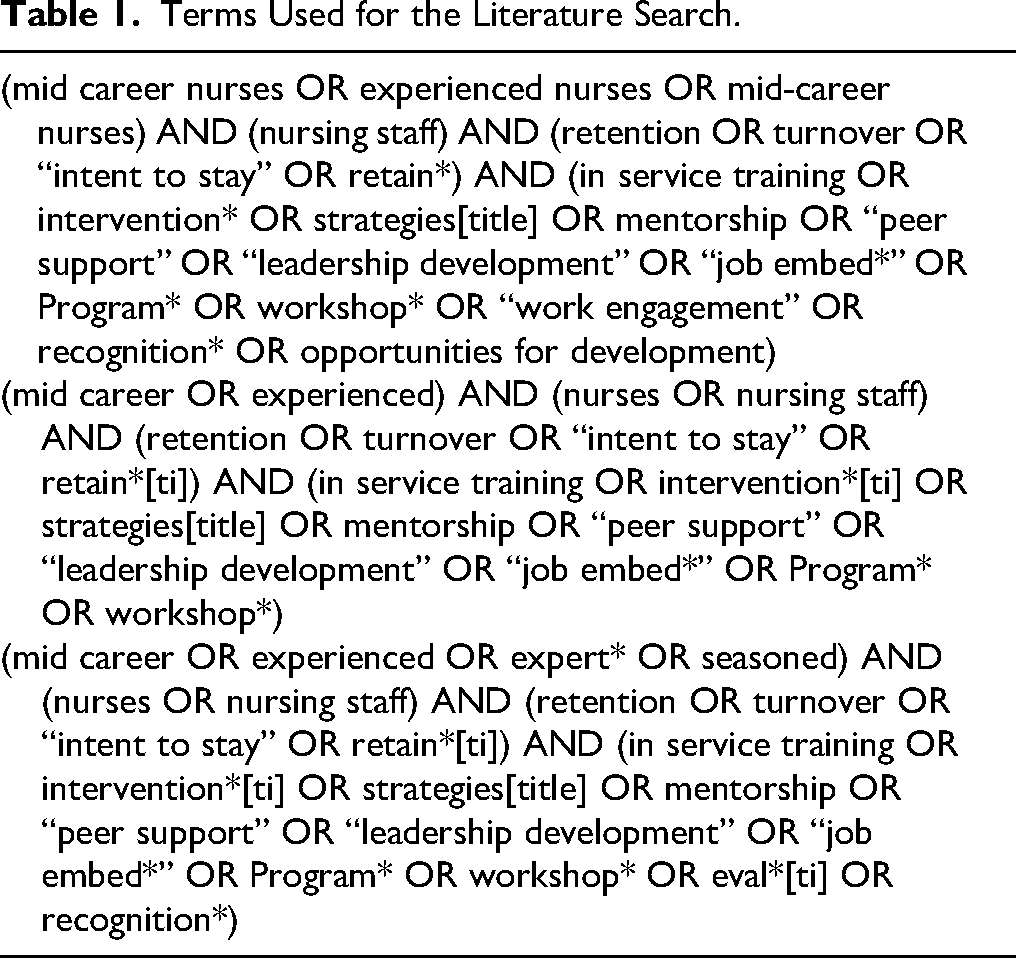
Grey literature search included government and union publications from Canada, the United States, the United Kingdom, Australia, and selected OECD countries represented in the included studies. These searches were conducted through targeted website review and keyword searches rather than a fully systematic grey literature strategy. Dissertations were identified through ProQuest. Relevant papers were imported into Covidence for independent screening and were reviewed by both authors. While this approach enhanced breadth, it does not represent an exhaustive grey literature review.
Step 3. Selecting Studies to be Included in the Review
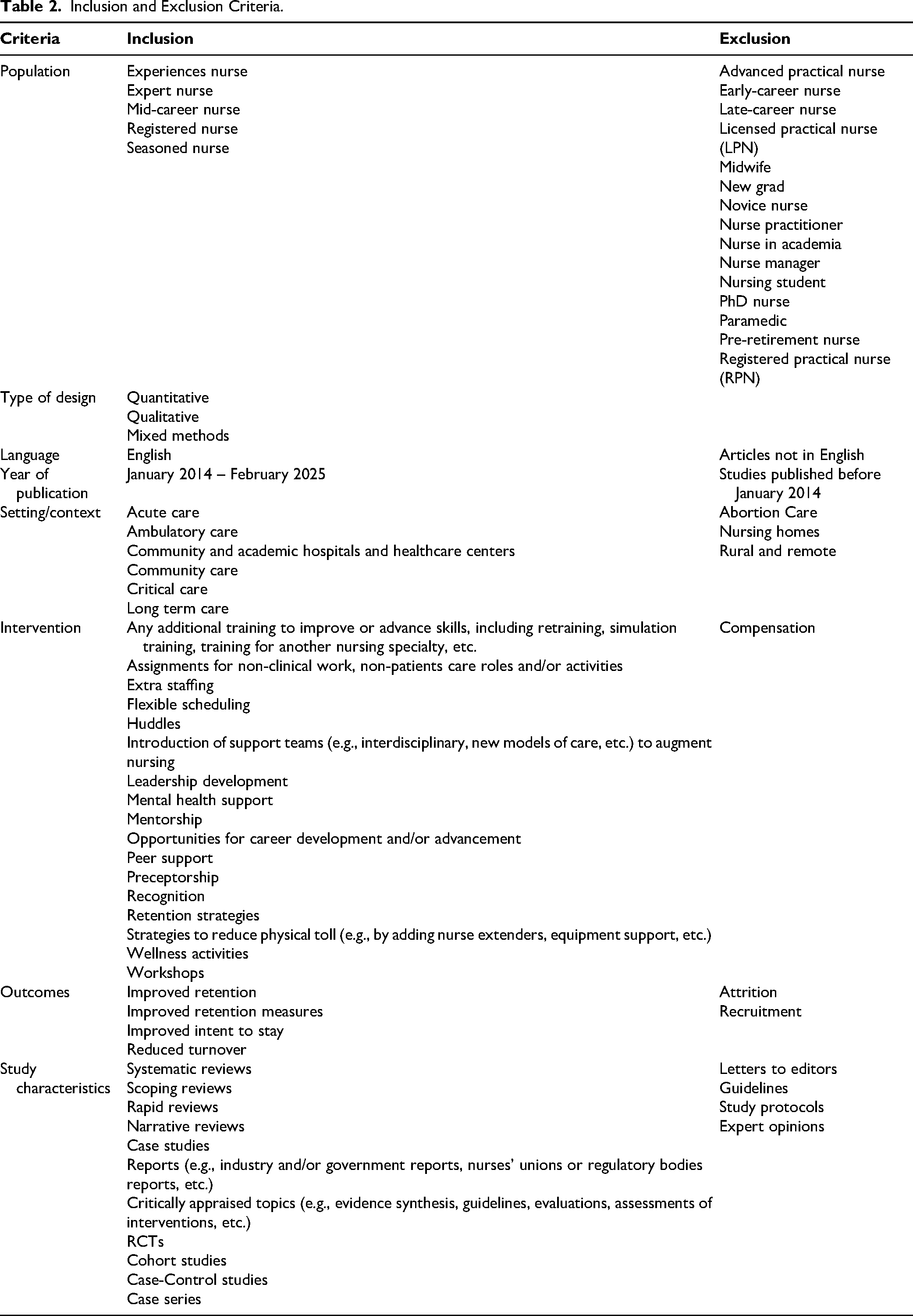
This scoping review focused on the population of experienced, expert, seasoned and mid-career nurses who had worked for three or more years and were under the age of 55. This age limit was chosen since age 55 and above is frequently used in literature to describe late-career nurses (Buchan et al., 2020; Canadian Institute for Health Information, 2020; Centers for Disease Control and Prevention, 2012; Stewart et al., 2020). We excluded articles that described nurses as early or late-career and/or did not include information about their job tenure.
Regarding the setting and context, we considered acute care, ambulatory care, healthcare centers, academic, community hospitals and long-term care.
Table 2 provides a detailed outline of the inclusion and exclusion criteria applied in the scoping review.
Inclusion and Exclusion Criteria.
In total, 892 references were imported into Covidence, and 255 were identified as duplicates and removed. Additionally, 18 studies (2%) were added through citation search by screening through the reference lists of included studies.
Initially, 637 titles with corresponding abstracts were screened, leaving 61 studies (10%) for full-text review. The researchers (VB and EN) met several times to clarify inclusion and exclusion criteria and discuss points of agreement and disagreement during the title and abstract screening process.
Out of the 61 articles, 39 (64%) were found to be outside the scope of this review due to participant population, study settings, context, lack of description of strategies, outcomes, or interventions. Articles that described retention strategies for early- or late-career nurses underwent full-text review to ensure they did not include nurses who met our inclusion criteria. The final screening resulted in 22 articles included in the present review. The results from the search and selection of articles are presented in the PRISMA flow diagram (see Figure 1).
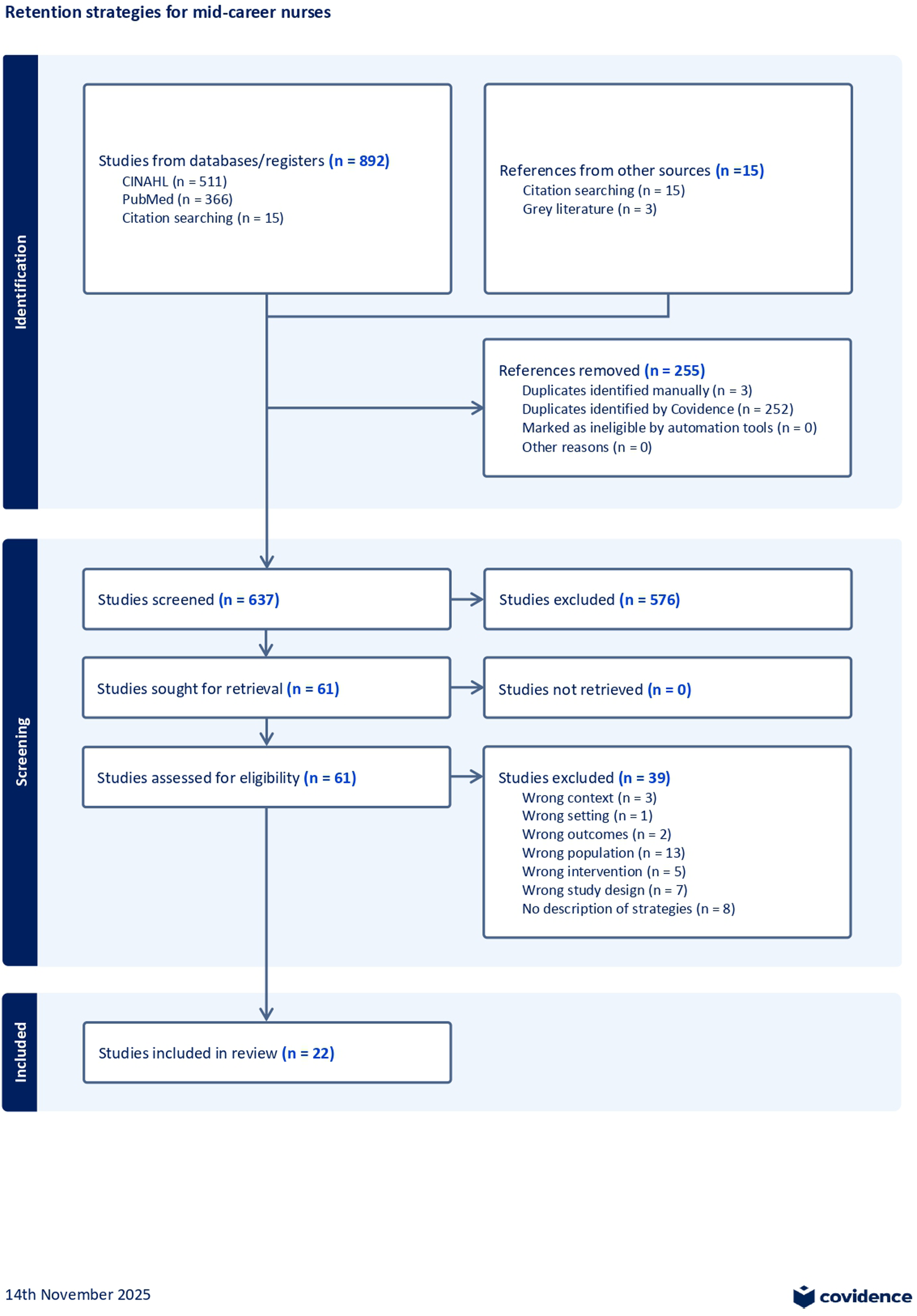
PRISMA Flow Diagram.
Step 4. Charting Data
The Microsoft Excel data extraction tool was developed and included the following categories: author, year, country, study aims and design, sample size and characteristics, context, intervention, and main findings. Once data was extracted from 10 papers, the researchers (VB and EN) met to review the tool and refine the form.
Step 5. Collating, Summarizing, and Reporting Findings
After gathering data from selected articles, we conducted a thematic analysis (Braun & Clarke, 2006). This involved analyzing excerpts of the articles in relation to research objectives to identify key themes. The authors practiced reflexivity, engaged in consensus discussions, and conducted auditing to ensure rigor. Each study was inductively coded without an a priori framework, to avoid imposing pre-established assumptions on the literature. Through this process, the authors discussed the findings and agreed on the final coding scheme, resulting in the development of the following themes: optimizing role satisfaction, work culture and customized retention strategies.
Results and Findings
Twenty-two studies from 10 countries were included in the scoping review: Canada: n = 2, UK: n = 3, USA: n = 10, China: n = 1, Indonesia: n = 1, Netherlands: n = 1, Sweden: n = 1, Korea: n = 1, Denmark: n = 1 and Oman: n = 1. Sample sizes ranged from 9 to 1146.
Care settings varied in adult care and included a single study for nurses working with the pediatric population (Gilroy et al., 2020). Only one study was specific to male nurses (Shin & Lim, 2021), while others had male and female participants.
Retention strategies for mid-career nurses were examined directly or indirectly in all studies. The latter refers to interventions aimed at improving factors such as job satisfaction, empowerment, or professional development, where retention was measured as a secondary outcome rather than the primary endpoint. The main characteristics of the included studies are represented in Figure 2.
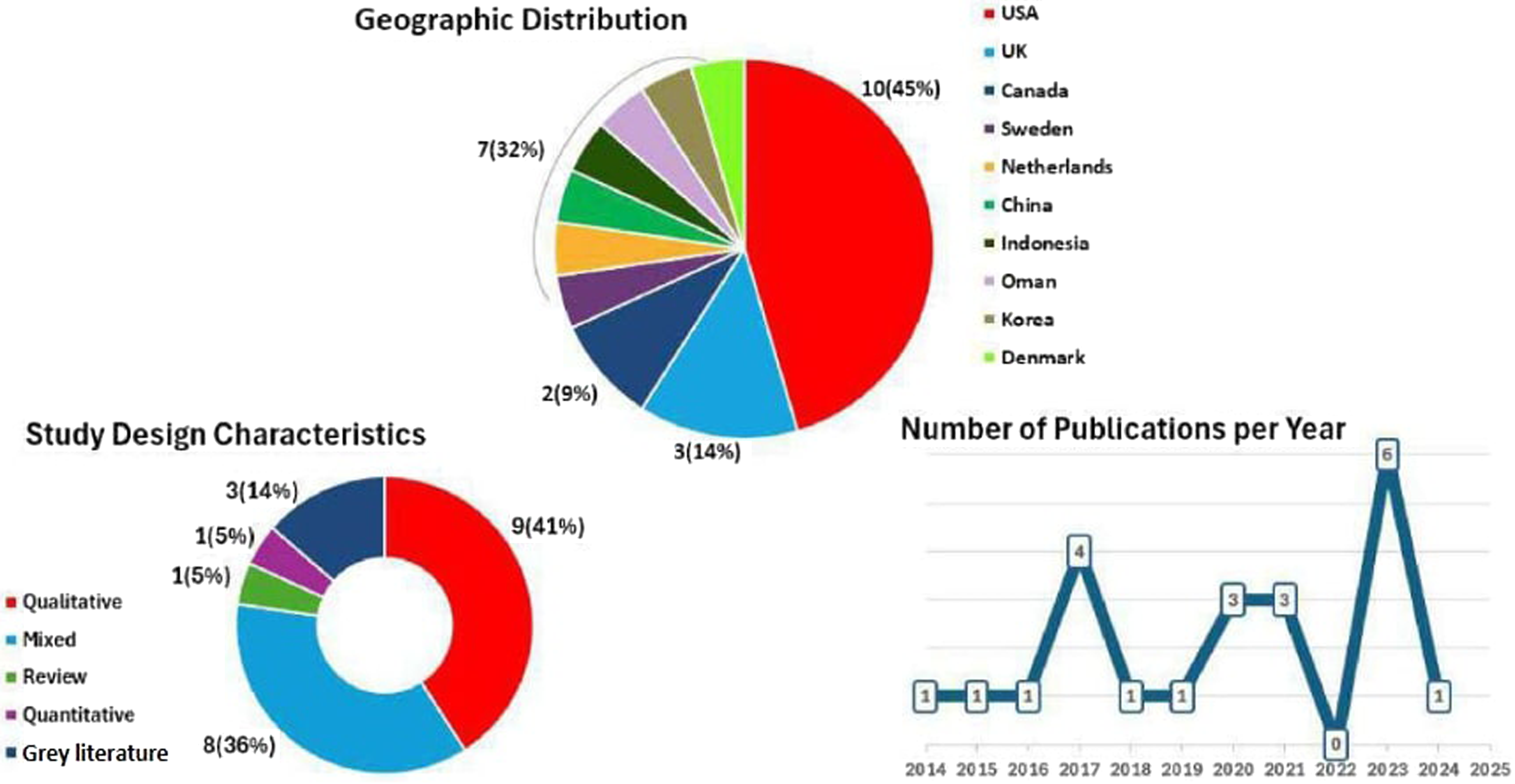
Characteristics of Included Studies.
In terms of methodology, there were qualitative (n = 9), mixed (n = 8), quantitative (n = 1) studies and a rapid review (n = 1). The main findings for each study are summarized in Table 3.
Summary of the Included Papers.

The majority of studies, 16 (73%), described specific retention intervention projects for mid-career nurses. Of these studies, the types of the interventions could be divided into improving retention for the same position (n = 10) or preventing outward migration of nurses from the organization (n = 6).
The first category of the interventions with the goal of retaining nurses to work in the same unit and role included three mentorship programs (Allen, 2017; Bélanger-Hardy et al., 2024; Kramer et al., 2021), three multifaceted customized strategies addressing the needs of specific sub-groups of mid-careers nurses (Folden et al., 2023; Maqbali, 2018; United Lincolnshire Hospitals NHS Trust, 2020), one reward initiative (Kuykendall et al., 2014), one orientation project (Rogers & Burke, 2021), one wellness program (Guo et al., 2020) and one project targeting professional development for the same unit and job role (Embree et al., 2015).
The purpose of the second category of retention initiatives was to prevent outward migration of human resources outside the organization, and it was represented by four programs for nurses considering switching to alternate nursing roles (Dawood & Gamston, 2019; Evans, 2017; Shinners, 2017; Torres et al., 2024) and two transition programs to continue working in the nursing role at another level of care or unit in the same healthcare organization (Gilroy et al., 2020; Knighten & Yvanovich, 2023).
Within each of the three main themes (optimizing role satisfaction, work culture and customized retention strategies) there were also identified subthemes, summarized in Figure 3.
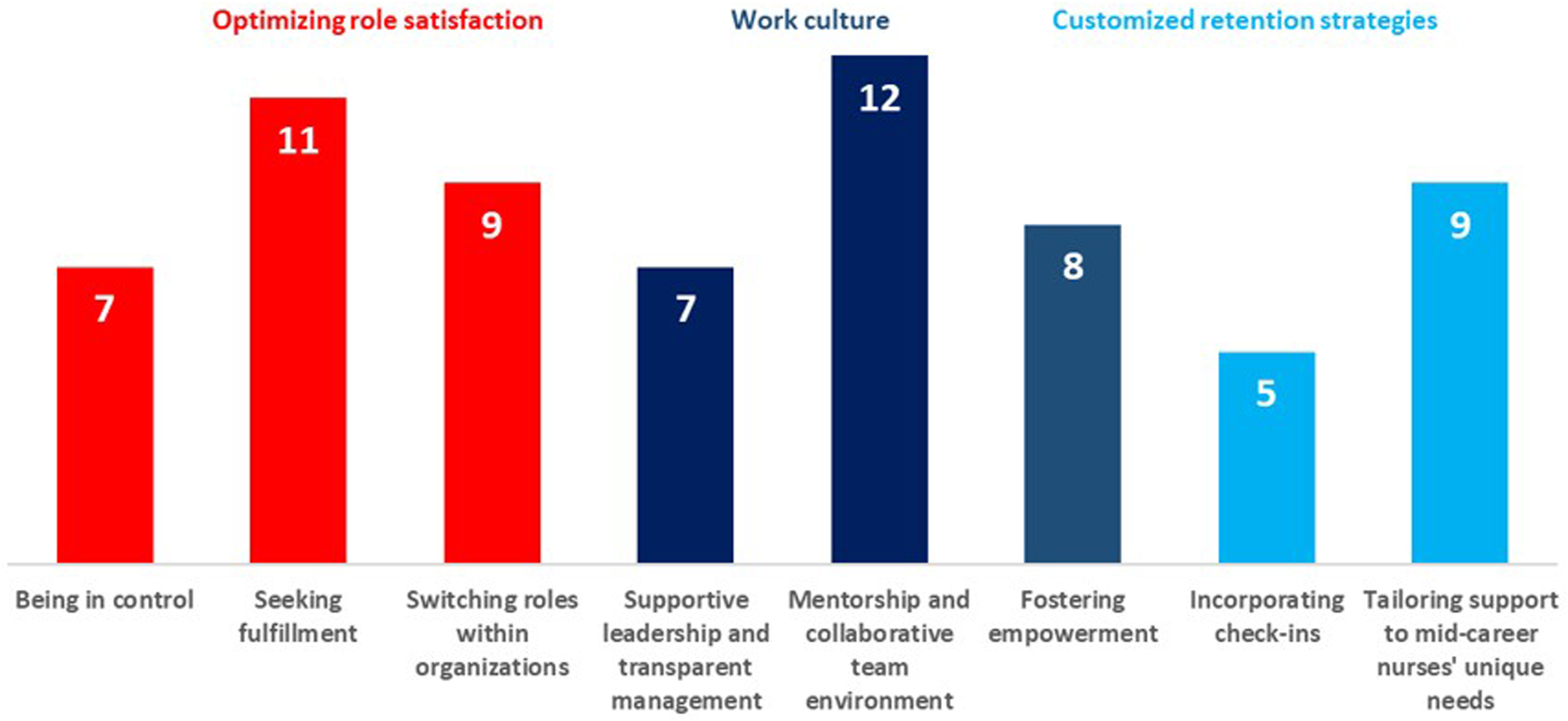
Summary of the Prevalence of Sub-Themes within Each Thematic Group.
Theme 1. Optimizing Role Satisfaction
The overarching theme of optimizing role satisfaction describes the core elements influencing nurses’ fulfillment of professional roles and aspirations and the desire to remain in their positions. It emphasizes the significance of autonomy, career advancement opportunities, and diverse career pathways in improving job satisfaction and retention among mid-career nurses within healthcare organizations. In this thematic category, we coded 16 articles that included the subthemes of “Being in control” over nursing work (n = 7), “Seeking fulfillment” of desire for career progression (n = 11), and “Switching roles within organizations” to alternative nursing positions (n = 9).
Being in Control
This subtheme underscores the role of autonomy and control over professional practice in retaining mid-career nurses (Hayward et al., 2016; Hörberg et al., 2023; Seller-Boersma et al., 2023; Wardhani & Hariyati, 2023). A study of nurses’ perception of turnover and retention in Denmark demonstrated that experienced nurses who feel that they have influence over their daily tasks are less likely to leave their roles (Folden et al., 2023). It showed that nurses prioritized the quality of patient care and valued clinical challenges, seeking positions with flexible planning and input into the organization of their work.
Factors such as autonomous decision-making, alignment with personal values, and the ability to influence work routines and schedules were identified as motivational (Hörberg et al., 2023). Giving control over nursing work and offering professional development opportunities were also recognized by the article from the Netherlands as non-monetary incentives that enhanced job satisfaction (Seller-Boersma et al., 2023). Experienced nurses, as highlighted by studies in this sub-theme, wanted to feel valued and have ownership over their practice (Allen, 2017; Torres et al., 2024).
Seeking Fulfillment
Studies in this subtheme underlined the importance of career pathways and opportunities for career progression that align with mid-career nurses’ aspirations, with “seeking fulfillment” meaning achieving personal and professional satisfaction as a nurse (Folden et al., 2023; Hörberg et al., 2023; Seller-Boersma et al., 2023; Wardhani & Hariyati, 2023). One article demonstrated a correlation between career fulfillment, a positive workplace atmosphere, and nurse retention, indicating the significance of career advancement opportunities (Gilroy et al., 2020).
A study of critical care nurses in Oman concluded that as nurses gain experience, their interest in professional development and education increases (Maqbali, 2018). Factors that motivate career progression among mid-career nurses included satisfaction from clinical roles, skill development, and the transferability of acquired skills (Dawood & Gamston, 2019). Personalized career advancement plans were found to enhance communication between organizations and experienced nurses, leading to better awareness of available roles and positions (Shinners, 2017). Engaged nurses were more likely to pursue advanced degrees, discuss potential career paths, and experience professional growth, ultimately benefiting patient care (Kuykendall et al., 2014).
Safe learning environments and clear career paths favourably influenced job satisfaction and experienced nurses’ retention (Seller-Boersma et al., 2023; Torres et al., 2024; Wardhani & Hariyati, 2023). Challenges such as perceived job growth limitations, particularly felt by male nurses, spotlighted the need to promote diversity in leadership roles and to continue supporting career aspirations (Shin & Lim, 2021).
Switching Roles Within Organizations
Articles under this subtheme shed light on the trend of nurses considering diversifying or expanding their current roles or pursuing alternative positions within healthcare organizations. The desire of mid-career nurses to transition to alternate nursing roles or different units, including specialty or intensive care units, suggested a need for diverse nursing employment opportunities (Evans, 2017; Gilroy et al., 2020). It was noted that nurses might consider changing job roles as part of preparing for a better future, indicating a proactive approach to career development (Shin & Lim, 2021).
A study from the UK found that retaining experienced nurses in high-stress areas like emergency care (Evans, 2017) could be a challenge. However, this could be overcome by offering dual roles, such as combining emergency department (ED) nursing with an emergency nurse practitioner role, to retain nurses who find the constant pressures of the ED exhausting (Dawood & Gamston, 2019). One article stressed the importance of clinical nurse specialists actively participating in clinical work, not just managerial duties, to maintain the quality of patient care (Folden et al., 2023).
Three articles from the US highlighted the need for organizations to develop plans to advance nurses into new roles in order to retain them (Knighten & Yvanovich, 2023; Shinners, 2017; Torres et al., 2024). For example, one study found that professional development programs for experienced nurses foster organizational loyalty by offering pathways to roles beyond direct clinical care (Torres et al., 2024). Knighten and Yvanovich (2023) proposed the creation of an internal workforce pipeline to stem the outward migration of nurses, promoting resilience and facilitating transitions to perioperative specialty practice. Several healthcare facilities in the UK implemented initiatives such as showcasing career pathways through video case studies and introducing an internal transfer policy to encourage staff to move to different roles within the hospital, aiming to retain experienced nursing staff within the organization (United Lincolnshire Hospitals NHS Trust, 2020).
Theme 2. Work Culture
The work culture theme encompasses the organizational atmosphere and interpersonal dynamics that shape nurses’ experiences and influence their decision to stay in their roles. It was discussed in fifteen articles and was coded with the following subthemes: “Supportive leadership and transparent management” (n = 7), “Mentorship and collaborative team environment” (n = 12) and “Fostering empowerment” (n = 8).
Supportive Leadership and Transparent Management
A Dutch study found that support of leadership was paramount for experienced nurses’ retention (Seller-Boersma et al., 2023). Researchers exploring Indonesian nurses’ experiences found that effective leadership styles were characterized by supervisors’ reliability and ability to manage and motivate staff, which positively impacted the work environment and team cohesion, influencing nurse retention (Wardhani & Hariyati, 2023). Supportive leadership behaviour included guidance for autonomous decision-making, acknowledgement and recognition of contributions, transparent communication, and encouragement of professional development (Hayward et al., 2016). A qualitative study of experienced nurses in Canada concluded that challenges in communication and teamwork resulting from inadequate leadership can lead to nurses’ decisions to leave (Hayward et al., 2016).
One study found that nursing expertise was retained when their managers listened to their perspectives (Dawood & Gamston, 2019) as the nurses valued transparent leadership and trust, particularly through programs offering clear career progression paths open to all nurses (Gilroy et al., 2020).
One article from the UK advocated for establishing multidisciplinary learning and development boards to oversee design and implementation of educational initiatives, thereby nurturing workforce development in collaboration with local stakeholders (Evans, 2017). Meanwhile, another UK article suggested actively engaging with staff to solicit input on implemented strategies and providing feedback on successes (United Lincolnshire Hospitals NHS Trust, 2020).
Mentorship and Collaborative Team Environment
More than half of the included articles elaborated on how a positive work environment, camaraderie, effective communication, and constructive collaboration at the team level, along with supportive management, contributed to retaining experienced nurses (Dawood & Gamston, 2019; Gilroy et al., 2020; Hayward et al., 2016; Hörberg et al., 2023; Seller-Boersma et al., 2023; Wardhani & Hariyati, 2023; Yarbrough et al., 2017). Several authors emphasized communication as the cornerstone of good teamwork and stressed the importance of a conducive and stimulating learning culture (Folden et al., 2023; Wardhani & Hariyati, 2023).
Passionate and engaged mid-career nurses may be key for mentoring and contributing to organizational success. A US study that examined the level of engagement of experienced nurses identified the need to cultivate collegial support between experienced and novice nurses to enhance retention of both nursing cohorts (Kuykendall et al., 2014).
Mentorship was demonstrated to directly reduce turnover rates among nursing staff while enhancing their proficiency, confidence, and abilities, as well as promoting a culture of support and safety within healthcare environments (Kramer et al., 2021). Mentorship was described as a means of raising professional standards and fostering a sense of belonging among mid-career nurses (Allen, 2017). It was noted that collegiality within engaged and competent teams could keep experienced nurses in their positions longer despite increased workloads and high patient acuity (Hayward et al., 2016).
A study from Korea that focused exclusively on male nurses found that they felt a particular need for support and encouragement from male colleagues or men in more senior nursing roles, as it was difficult for them to form personal relationships with female counterparts (Shin & Lim, 2021).
Fostering Empowerment
The retention of mid-career nurses is influenced by the concepts of empowerment and a sense of belonging in the work environment, where nurses feel resilient, optimistic, and fully engaged (Allen, 2017). Organizational empowerment involves providing equal access to information, support, resources, and learning opportunities (Laschinger et al., 2001; Seller-Boersma et al., 2023). A Swedish study concluded that nurse empowerment, whether at an individual or team level, served as a motivational factor that aided in achieving operational goals and delivering high-quality of care (Hörberg et al., 2023).
Leaders who tailored specific strategies to meet the unique needs of mid-career nurses were found to prolong these nurses’ tenure within the organization (Evans, 2017). However, top-down decisions without frontline staff input may lead to strategies failing to address nurses’ concerns (Maqbali, 2018). A UK article suggested that engaging with staff to gather their input and provide updates on successes would be effective for fostering a sense of involvement among mid-career nurses (United Lincolnshire Hospitals NHS Trust, 2020). A study from Denmark found that high-performing hospitals were characterized by flat organizational structures, staff involvement in development policies promoting lifelong learning and career opportunities, and structured educational programs (Folden et al., 2023). The US study concluded that fully engaged nurses significantly contributed to organizational success and proposed that nurse executives should prioritize creating environments where nurses take pride in their work (Kuykendall et al., 2014).
Theme 3. Customized Retention Strategies
Thirteen articles coded in this thematic category focused on the multifaceted nature of nurse retention and emphasized the importance of analyzing nurses’ profiles to understand their life cycle and career stage needs in order to design and implement customized programs with well-defined objectives and pathways. This approach was described as ensuring that the interventions cater to the unique requirements of nurses at different points of their lives and careers. Two subthemes were included in this thematic category: “Incorporating Check-ins” (n = 5) and “Tailoring Support to Mid-Career Nurses’ Unique Needs” (n = 9).
Incorporating Check-ins
Checking-in refers to the initial step in the process where organizations seek to understand the diverse needs of mid-career nurses before crafting and implementing interventions. For instance, critical care nurses have specific workload concerns based on their experience levels as they are assigned to care for patients with more comprehensive needs and often have to assist their less experienced novice colleagues, indicating a need for tailored approaches (Maqbali, 2018). To address these challenges, one of the articles from the UK emphasized the importance of understanding staff preferences to implement initiatives accordingly (United Lincolnshire Hospitals NHS Trust, 2020). Another example from the US was to provide customized training opportunities to retain experienced nurses transitioning to specialized roles within the same healthcare facility, which could help prevent outward migration (Knighten & Yvanovich, 2023).
There are complex relationships between the quality of leadership, nurses’ well-being, and turnover (Hayward et al., 2016). The US study that examined relationships of professional values orientation, career development, job satisfaction, and intent to stay indicated that managers should strive to understand mid-career nurse profiles (e.g., younger experienced nurses versus mature expert nurses) to facilitate targeted interventions and maintain staff work engagement (Yarbrough et al., 2017).
Tailoring Support to Mid-Career Nurses’ Unique Needs
The unique needs of mid-career nurses could be met through a combination of strategies, including lifelong learning, fostered collaboration with colleagues and physicians, and active involvement in shaping organizational interventions (Folden et al., 2023; Rogers & Burke, 2021). An article from the UK proposed to simultaneously utilize short-term solutions and long-term investments to improve nurse retention in challenging circumstances (Evans, 2017).
Since there is no one-size-fits-all approach, segmented retention strategies were suggested to address the varying needs of nurses throughout their life-cycle and career stages (Maqbali, 2018). One article described the effectiveness of programs led by bedside nurses (Gilroy et al., 2020), while others advocated for thinking “outside the box” in creating strategies to enhance nurse engagement (Rogers & Burke, 2021) or advised on the use of best practices for organizational-level interventions (Kuykendall et al., 2014). In addition, a Dutch study acknowledged the interconnectedness of factors influencing retention and advocated for interventions targeting multiple elements at individual, team, and organizational levels (Seller-Boersma et al., 2023).
Discussion
Our scoping review on global retention strategies for mid-career nurses aimed to address a gap in evidence by systematically exploring existing literature on retention strategies for this nursing cohort, mapping the extent and nature of studies, and identifying areas for further research in this critical area of healthcare workforce management.
Three primary thematic categories were identified in the literature: optimizing role satisfaction, work culture, and customized retention strategies. The theme of optimizing role satisfaction highlights the fundamental factors that contribute to nurses’ sense of fulfillment in their professional roles, emphasizing autonomy, career advancement opportunities, and diverse career pathways as crucial elements in enhancing job satisfaction and retention among mid-career nurses. The work culture theme spotlights the organizational atmosphere and interpersonal dynamics that shape nurses’ experiences, underscoring their impact on their decisions to remain in nursing. The customized retention strategy's theme accentuates the complex landscape of nurse retention, underscoring the necessity of analyzing nurses’ profiles to understand their lifecycle and career stage needs.
The findings align with Kanter's Structural Empowerment Theory, which emphasizes access to resources, support, information, and opportunity as determinants of workplace engagement and retention (Kanter, 2008). Our synthesis suggests that mid-career nurse retention is strengthened when organizations intentionally create conditions that enhance perceived control, professional growth, and meaningful contribution.
While leadership support and professional development are common retention factors across nursing career stages, the literature on mid-career nurses places particular emphasis on career mobility, diversification of roles, and autonomy as key to sustained engagement.
The effectiveness of examined interventions in improving mid-career nurse retention remains uncertain, as many studies offered minimal reporting on outcomes or specific metrics at both individual and organizational levels, with limited discussion on unintended consequences or unanticipated results. Nonetheless, some authors conducted formal assessments, including evaluations (Allen, 2017; Torres et al., 2024), pre-and post-assessments of vacancy rates (Evans, 2017), balanced scorecards with strategy maps (Embree et al., 2015), comparisons of turnover rates between participants and non-participants (Gilroy et al., 2020), measuring the number of retained nurses (Dawood & Gamston, 2019), and reductions in turnover intentions (Guo et al., 2020).
However, while these studies provided some evidence on efficacy retention projects, it is challenging to generalize strategies to other healthcare settings. Only three articles discussed scalability, one focused on a transition program to another unit (Gilroy et al., 2020), another on professional development for nursing specialist roles (Evans, 2017), and the third on improving organizational retention through nurse career advancement programs (Torres et al., 2024). Furthermore, despite evidence highlighting the significance of rewards, recognition, and wellness activities in nurse retention (Baljoon et al., 2018; National Health Service Employers, 2024), few projects focused on these factors, with only one addressing rewards (Kuykendall et al., 2014) and another focusing on wellness programs (Guo et al., 2020).
Notably, external push and pull factors, such as caregiving responsibilities, wage progression, geographic mobility, and broader socioeconomic conditions, were not addressed in included studies. While these factors are widely recognized in nurse workforce literature (Huang et al., 2025), they remain underintegrated into mid-career–focused retention strategies. Future research should consider how organizational interventions intersect with life-stage transitions and external labor market dynamics.
A significant gap identified in this review is the lack of a clear concept and universal definition of mid-career nurses within the reviewed literature. In particular, finding literature on retaining mid-career nurses proved challenging, as many articles did not explicitly mention mid-career or experienced nurses in their titles.
The definitions of mid-career nurses across the reviewed literature varied significantly, contributing to ambiguity in the identification of this cohort. Terminology, such as experienced, mid-career, expert, and seasoned nurses, was used interchangeably, while mid-career and late-career retention strategies were often merged (Bélanger-Hardy et al., 2024). Some authors provided vague descriptions recognizing mid-career nurses as those who have been with the organization for a year or two (Knighten & Yvanovich, 2023). Others excluded participants with less than 3 years (Dawood & Gamston, 2019) or less than 6 months of experience (Gilroy et al., 2020) from their study samples of mid-career nurses.
Several authors classified mid-career nurses based on years of experience, such as more than 5 years (Hayward et al., 2016; Wardhani & Hariyati, 2023; Yarbrough et al., 2017), more than 6 months in an acute care setting (Rogers & Burke, 2021), more than 3 years working as a nurse (Ko et al., 2024; Seller-Boersma et al., 2023) or 5–15 years of experience (Shin & Lim, 2021). Some papers relied on the age of the nursing workforce to categorize mid-career nurses as belonging to the 35–50-year-old age group (Bélanger-Hardy et al., 2024) or 45 years or older with at least 10 years of experience (Kuykendall et al., 2014).
The lack of consistency in terminology emphasizes the need for a standardized and universally accepted definition of mid-career nurses in order to facilitate clearer research outcomes and targeted retention strategies. Future research should consider a dedicated scoping review to explore and consolidate existing definitions, offering a more systematic exploration of this topic.
Our review is subject to several limitations. First, although we developed a working definition of the mid-career nurse to guide our search process, we recognize that considerable variation exists in how this cohort is described across the literature. To capture the breadth of relevant evidence, we included studies that referred to nurses as experienced, seasoned, expert, or mid-career. We excluded only studies that focused exclusively on early- or late-career nurses or lacked information on job tenure. Nevertheless, our operational definition may have influenced the selection of included studies and, consequently, the interpretation of the findings.
Second, we restricted our search to papers published in English after January 2014, potentially overlooking insights from non-English sources and older publications. Third, all included studies were conducted in high-income countries, which may limit the transferability of findings to low- and middle-income country (LMIC) settings where health system contexts and workforce challenges may differ. Fourth, a comprehensive systematic search of grey literature was not performed. While selected grey literature sources were consulted, think tank and nursing association reports were not systematically searched, which may have resulted in the omission of additional relevant evidence.
Fifth, no formal quality appraisal was conducted, which is consistent with Levac et al.'s (2010) guidance. We acknowledge that not assessing the studies’ quality may influence the robustness of our findings. Lastly, due to limited data availability, we were unable to assess or compare the effectiveness of interventions, highlighting the need for further research in this area.
Included studies spanned pre-pandemic, pandemic, and early post-pandemic periods. However, no studies explicitly evaluated retention strategies designed in direct response to COVID-19 workforce pressures. Comparative evidence examining pre- and post-pandemic intervention effectiveness was notably absent, representing an important gap for future research.
Conclusion
This scoping review provides a broad mapping of the current grey and peer-reviewed literature regarding retention strategies for mid-career experienced nurses, shedding light on existing gaps and suggesting avenues for future research. By analyzing the existing interventions and definitions, we advocate for greater clarity in mid-career nurses’ terminology. A universal definition would facilitate a deeper exploration of nurse profiles, the identification of their needs, and the development of tailored retention policies and strategies.
The review revealed a scarcity of research studies and emphasized the necessity for more experiments in the field. It highlighted the need for formal evaluations of existing projects and gathering nurses’ perspectives on the effectiveness of these initiatives.
It is imperative to shift from asking “what could work” to examining “how it works” and “whether it can be scaled” across healthcare settings, drawing on established implementation science frameworks, such as, for example, CFIR (Damschroder et al., 2022) and RE-AIM (Glasgow et al., 2019), to guide evaluation and adaptation. This shift in focus will facilitate the development and implementation of effective and scalable retention strategies for mid-career nurses, enhancing healthcare workforce stability and improving patient care outcomes.
Supplemental Material
sj-docx-1-cjn-10.1177_08445621261463085 - Supplemental material for Exploring Retention Strategies for Mid-Career Nurses: A Scoping Review and Thematic Analysis
Supplemental material, sj-docx-1-cjn-10.1177_08445621261463085 for Exploring Retention Strategies for Mid-Career Nurses: A Scoping Review and Thematic Analysis by Victoria Babysheva and Elena Neiterman in Canadian Journal of Nursing Research
Footnotes
Acknowledgements
Preliminary findings from this study were presented at the 8th Nursing World Conference held in 2024.

Authors Contributions
Victoria Babysheva (V.B.): Co-developed the study concept and research question with E.N., screened abstracts and full-text articles, drafted the initial manuscript, prepared tables and contributed to revisions and final approval.
Dr. Elena Neiterman (E.N.): Co-developed the study concept and research question with V.B., advised on the data extraction tool, screened abstracts and full-text articles, and contributed to final manuscript revisions.
V.B. and E.N. met regularly during the screening process to review and refine the inclusion and exclusion criteria and resolve any disagreements. Both authors provided critical review and editorial input during the final stages and approved the completed manuscript.
Funding
The authors received no financial support for the research, authorship, and/or publication of this article.
Declaration of Conflicting Interests
The authors declared no potential conflicts of interest with respect to the research, authorship, and/or publication of this article.
Data Availability Statement
No new data were created or analyzed in this study. Data sharing is not applicable to this article.
Supplemental Material
Supplemental material for this article is available online.
References
Supplementary Material
Please find the following supplemental material available below.
For Open Access articles published under a Creative Commons License, all supplemental material carries the same license as the article it is associated with.
For non-Open Access articles published, all supplemental material carries a non-exclusive license, and permission requests for re-use of supplemental material or any part of supplemental material shall be sent directly to the copyright owner as specified in the copyright notice associated with the article.
