






Abstract
Multiple sclerosis can affect pediatric patients. Our aim was to compare characteristics between pediatric-onset multiple sclerosis and adult-onset multiple sclerosis in Hispanic Americans. This was a cross-sectional analysis of 363 Hispanic American multiple scleroses cases; demographic and clinical characteristics were analyzed. A total of 110 Hispanic patients presented with multiple sclerosis before age 18 and 253 as adult multiple sclerosis. The most common presenting symptoms for both was optic neuritis. Polyfocal symptoms, seizures, and cognitive symptoms at presentation were more prevalent in pediatric-onset multiple sclerosis (P ≤ .001). Transverse myelitis was more frequent in adult-onset multiple sclerosis (P ≤ .001). Using multivariable analysis, pediatric-onset multiple sclerosis (adjusted odds ratio, 0.3OR 95% confidence interval 0.16-0.71, P = .004) and being US born (adjusted odds ratio, 0.553, 95% confidence interval 0.3-1.03, P = .006) were less likely to have severe ambulatory disability. Results suggest that pediatric-onset multiple sclerosis and adult-onset multiple sclerosis in Hispanics have differences that could be important for treatment and prognosis.
Background
Between 3% and 5% of all cases with multiple sclerosis, a demyelinating and progressive disease of the central nervous system, are diagnosed below the age of 18. 1 -5 Recent studies suggest that immunological and radiological abnormalities can differ between pediatric-onset and adult-onset. 6 -11 Disease characteristics are likely to be influenced by environmental and genetic factors; therefore, it is important to investigate cohorts with multiple sclerosis from similar racial and ethnic backgrounds. 1,12 -18
Hispanics or Latinos are considered to have a lower rate of multiple sclerosis compared to non-Hispanic groups. 19 -21 Nevertheless, adult Hispanics in the United States, predominantly of Mexican background, have been reported to have greater prevalence of optic neuritis and spinal cord syndromes at presentation compared to non-Hispanic groups. 3,20,22 Differences have been noted by birth region where US-born Hispanics appear to have less disability than immigrants. 14 The objective of our study was to compare clinical characteristics, treatment patterns, and disability levels of pediatric-onset multiple sclerosis and adult-onset multiple sclerosis who received care in the same academic center and assess if place of birth has a relationship with disability. Prior publications have focused on examining these differences in mostly non-Hispanic white cohorts of European background or have combined multiple ethnic and racial groups with limited inclusion of Hispanic Americans. 17,23 -26 Thus, we compared the clinical characteristics between pediatric-onset multiple sclerosis and adult-onset multiple sclerosis in only Hispanic background.
Methods
Population and Study Design
This study included participants of both the University of Southern California Hispanic MS Registry and Children’s Hospital Los Angeles MS Registry. The University of Southern California Hispanic registry was established in 2008, of multiple sclerosis patients followed at the multiple sclerosis clinics at the University of Southern California Medical Center. 14 Inclusion criteria for the University of Southern California Hispanic MS Registry were (1) a diagnosis of multiple sclerosis confirmed by an expert neurologist in multiple sclerosis using the McDonald criteria, (2) that individuals self-report with a Hispanic background, 27 (3) have the ability to complete a questionnaire using semistructured interview, and (4) consent to their medical records: clinical, immunologic, and MRI data for review recorded in the CAFÉ (Common Application Framework Extensible) electronic framework that data captures. Similarly, in this fashion, the Children's Hospital Los Angeles collects information into its registry, which was started in 2013. Patients of all ethnicities are enrolled into the database at Children’s Hospital Los Angeles, but for the purpose of this study, only cases that self-identified as Hispanic were considered. Cases were abstracted from both registries at University of Southern California between September 2013 and April 2014. Pediatric-onset multiple sclerosis was defined as multiple sclerosis diagnosis before age 18 years. 2 -6 Pediatric cases met criteria for multiple sclerosis as outlined by the International Pediatric MS Study Group (IPMSSG) in 2012. 28,29 Patients were excluded if they had an alternative diagnosis such as neuromyelitis optica. Because acute disseminated encephalomyelitis in children can precede the diagnosis of multiple sclerosis, we collected those cases that eventually went on to have a diagnosis of multiple sclerosis. Criteria for acute disseminated encephalomyelitis diagnosis were primarily based on historical data as patients were not enrolled in the multiple sclerosis database until they met criteria for multiple sclerosis diagnosis. The study was approved by the Institutional Review Board at the University of Southern California.
Clinical Characteristics
Clinical characteristics collected included age of first symptom, age of diagnosis and clinical presentation, current disease-modifying treatment, and ambulatory disability. Children were considered as prepubertal (defined as 10 years of age or less) as well as postpubertal (11 years of age or greater). Presenting symptom categories included brainstem, motor/sensory, purely motor, purely sensory, optic neuritis, transverse myelitis, and other, which included seizures and cognitive changes. Cognitive difficulty was defined as acute change in processing speed or alertness. The presence of cognitive changes was abstracted from the parent/patient questionnaire, which asks for details regarding presenting symptoms. This includes questions related to presence or absence of confusion, change in speech, change in thinking and alertness. Information was confirmed by review of medical records. Polyfocal symptoms were defined as involving multiple CNS sites, which is compatible with the definition used in previous studies. 2,4,25 Patients with transverse myelitis were considered separately from the polyfocal symptom group. Transverse myelitis was defined as partial sensory level with motor disturbance and with or without bladder or bowel dysfunction and confirmed by a medical record as previously described. 4 Disease duration and lag time were calculated using age at first symptom. Place of birth was also collected through questionnaire because we have shown this to be an important factor that can affect disability in Hispanic multiple sclerosis. 12,14,16,28 An Expanded Disability Status Scale (EDSS) score of less than 6.0 was used to indicate individuals who were still ambulating without assistance. Cases were thereby divided as having an Expanded Disability Status Scale of <6.0, whereas those using constant support of a cane, walker, or wheelchair where assigned an Expanded Disability Status Scale score of 6.0. Reaching an Expanded Disability Status Scale score of 6.0 was considered a clinical endpoint of severe disability.
Statistics
The cohort was stratified by pediatric-onset and adult-onset. Two sample t tests were performed for group comparisons to test for statistically significant differences in means of continuous variables. Binary or categorical variables were analyzed using chi-square and Fisher exact tests, respective to the sample size in the analysis. Logistic regression was used to assess the difference between pediatric-onset multiple sclerosis and adult-onset multiple sclerosis in ambulatory disability and in adjusting for age at first symptom, gender, US born, and disease duration. All statistical analyses were performed on SAS 9.3, and a P value of .05 was deemed significant.
Results
Demographic information is presented in Table 1 (n=363). Information was collected on 110 pediatric-onset multiple sclerosis and 253 adult-onset multiple sclerosis. Most were of the relapsing remitting form of multiple sclerosis and were US born. The cohort of pediatric-onset multiple sclerosis consisted of almost equal distribution of female and male participants with a mean ± standard deviation age at the time of diagnosis of 14.7 ± 2.5 years (range 5-18 years). There were no differences in the female-to-male ratio by prepubertal age (Table 2). The cohort of adult-onset multiple sclerosis had a female predominance, with a mean ± standard deviation age at the time of diagnosis of 32.1 ± 9.8 years (19-66 years). Interestingly we found 2.7% of pediatric-onset multiple sclerosis to have a diagnosis of acute disseminated encephalomyelitis (ADEM) initially. The average age of children diagnosed initially with ADEM was 9.7 years (age range 5-13), whereas the average age of the pediatric multiple sclerosis cohort was 14.7. The average lag time from initial event fulfilling ADEM criteria to diagnosis of multiple sclerosis was 10.6 months.
Demographics.
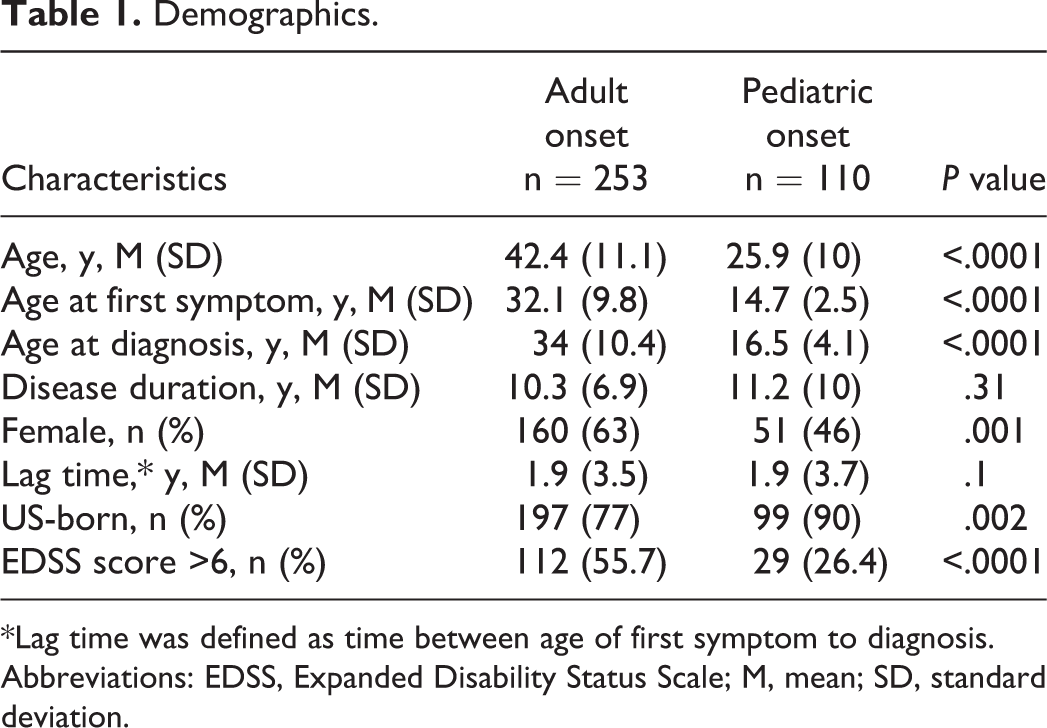
*Lag time was defined as time between age of first symptom to diagnosis.
Abbreviations: EDSS, Expanded Disability Status Scale; M, mean; SD, standard deviation.
The Gender Distribution in Pediatric-Onset Multiple Sclerosis by Age Range.
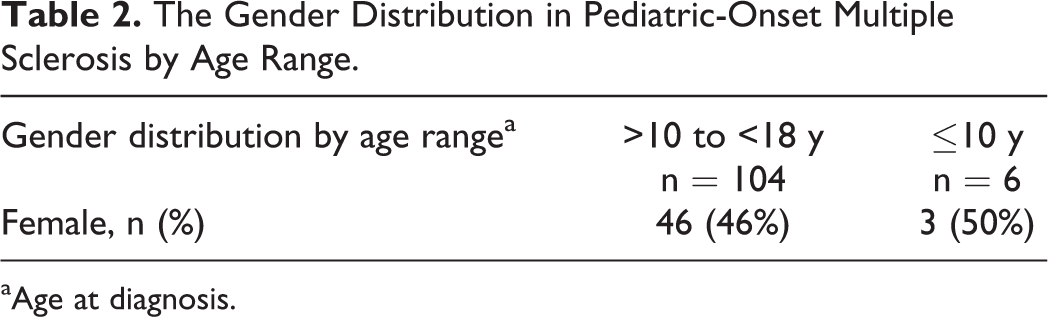
aAge at diagnosis.
The most common presenting demyelinating event in both groups was optic neuritis, with no significant difference by group (Figure 1). Transverse myelitis was the second most common presentation, and it was more frequent in the adult-onset cases (25% vs 18%, P < .001). As expected, polyfocal symptoms at presentation (17% vs 8%, P < .001), was more common in pediatric onset as was cognitive changes and seizures at onset.

Presenting symptoms by age of onset.
The type of disease modifying treatments for multiple sclerosis varied across both groups. A majority of patients with pediatric-onset multiple sclerosis were on glatiramer acetate, whereas this medication was used significantly less frequently in the adults (43% vs 32%; P value < .001) (Figure 2). Pediatric-onset multiple sclerosis patients and adult-onset multiple sclerosis patients had similar rates of treatment with immunosuppressive treatments (ie, rituximab, cyclophosphamide, azathioprine, alemtuzumab). There was no difference in the frequency of treatment with interferon.

Treatment patterns for pediatric-onset multiple sclerosis vs adults. (A) Pediatric-onset multiple sclerosis disease-modifying treatment. (B) Adult disease-modifying treatment.
Pediatric-onset multiple sclerosis had overall lower EDSS scores than did the adult-onset multiple sclerosis (Table 1). Adults were also found to have significantly more severe (EDSS >6) ambulatory disability than pediatric-onset cases despite similar disease duration and lag time to diagnosis (Figure 3). Using a logistic regression model to correct for gender, age of first symptom, and disease duration, individuals with adult-onset multiple sclerosis still had significantly more ambulatory disability than did those with pediatric-onset multiple sclerosis (P = .004). However, younger age at first symptoms (P = .004) and being born in the United States (P = .006) were less likely to have ambulatory disability (Table 3).

Expanded Disability Status Scale score by age at diagnosis.
Factors Affecting Disability.
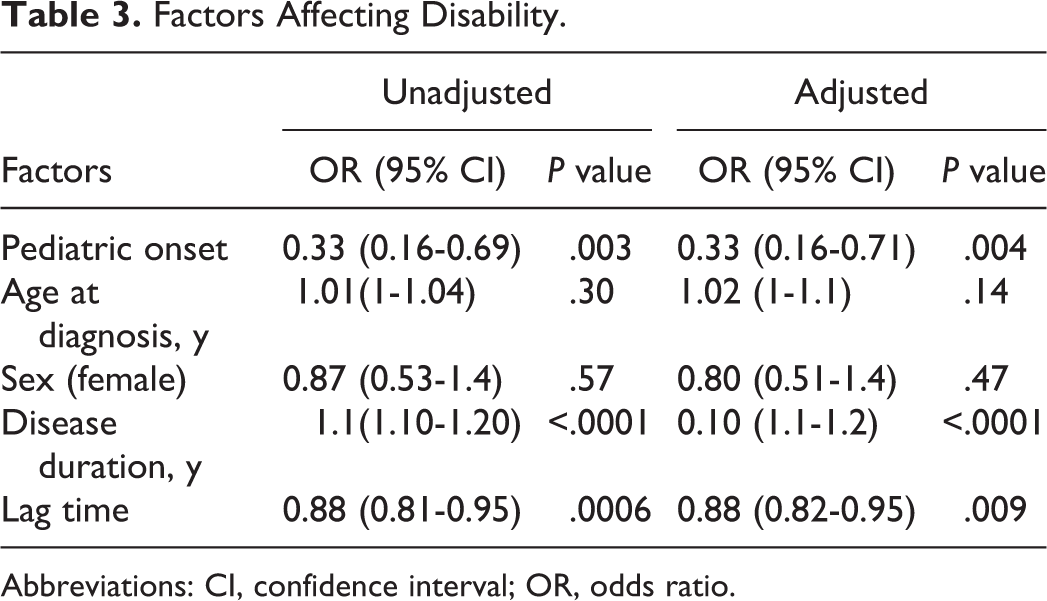
Abbreviations: CI, confidence interval; OR, odds ratio.
Discussion
This is the first study to compare pediatric-onset multiple sclerosis to adult-onset multiple sclerosis in an all Hispanic American cohort. Our results show age-related differences in Hispanic Americans with multiple sclerosis, a group that is generally considered to have a lower incidence of disease but higher incidence of optic neuritis and possibly transverse meyltiis. 17,20 Specifically, we found that adult-onset multiple sclerosis are more likely to have severe ambulatory disability compared to pediatric-onset multiple sclerosis independent of other factors. Furthermore, place of birth was an important factor. Although optic neuritis was seen equally across both groups, a higher frequency of polyfocal and cognitive symptoms at presentation were seen in the pediatric-onset multiple sclerosis, whereas spinal cord involvement was significantly more common in the adult-onset multiple sclerosis.
Optic neuritis and spinal cord involvement was the most frequent presentation, which is not surprising. We, as well as others, have observed optic neuritis to be the most common presentation in Hispanic Americans, particularly those who reside in Southern California and are of Mexican background. 20,30 -34 Langer-Gould et al 35 investigated the presenting symptom across 468 multiple ethnic and racial backgrounds with multiple sclerosis and found that Hispanics (n=149) were more likely to present with optic neuritis (P = .006). Although a recent study that focuses on Hispanics of Caribbean background in the United States reported sensory symptoms to be the most common presentation. 36 This could be partly explained by the genetic and/or cultural background, which differs within Hispanics of different origins. Nevertheless, transverse myelitis was more common in adult-onset multiple sclerosis. This could suggest that age of onset might be involved in the regional distribution of multiple sclerosis. Not surprisingly, the long-term effect of spinal cord disease at presentation could be responsible for observed difference between pediatric-onset multiple sclerosis and adult-onset multiple sclerosis in ambulatory disability. 35
Irrespective of presentation, more ambulatory disability in the adult-onset multiple sclerosis was observed compared to pediatric-onset multiple sclerosis, which is in concert with other studies that have reported less disability in pediatric-onset multiple sclerosis. 37 -40 Despite this, there were no statistically significant differences between pediatric-onset and adult-onset multiple sclerosis in disease duration. Therefore, the higher disability scores of adult-onset multiple sclerosis are unlikely to be solely the result of longer disease duration. This suggests that there are likely other factors (ie, environmental and/or genetic), including the possibility that spinal cord presentation, which appears to be more common in adult-onset multiple sclerosis, places them at risk of more prominent disease severity in adult-onset multiple sclerosis compared to pediatric-onset multiple sclerosis. In addition, pediatric-onset multiple sclerosis has been reported to have less accumulation of irreversible disability over time. 39 -44 Gorman et al 39 report increased relapse rates in a multiethnic pediatric-onset multiple sclerosis cohort compared to adult-onset multiple sclerosis; however, the pediatric group did not have the same degree of disability as the adults. These results, however, do not eliminate the concern that pediatric-onset multiple sclerosis are at risk of reaching disability at an earlier age compared to the adult-onset cases and could be at risk of poorer outcomes. 40
One difference between pediatric-onset multiple sclerosis and adult-onset multiple sclerosis is the majority of the pediatric-onset multiple sclerosis cohort was reported as US born whereas statistically more of adult-onset multiple sclerosis were born outside of the United States. A recognized factor involved in early age of onset of multiple sclerosis is birth at higher latitudes. 37,42 -44 Long-term outcomes, including disability are likely to be impacted by this as well. We recently reported that late timing of migration to the United States appears to be a risk factor in disability progression in Hispanic multiple sclerosis immigrants compared to US born. 14 This was found to be irrespective of socioeconomic status, which was assessed by place of health care access. Although this may partially be due to differences in environment (ie, vitamin D deficiency, infections) and less so genetics; socioeconomic and cultural factors are also recognized to play a role in influencing health outcomes and should be further explored. Whether outcomes in multiple sclerosis are related to age of onset, however, are still unresolved.
Although the frequency of second-line treatments was similar between pediatric-onset and adult-onset multiple sclerosis, the distribution of disease-modifying treatments by age of onset can only provide an overall view that may be the result of patient, parent, and physician preference and/or disease activity. Future studies should examine treatment by disability level to better understand that relationship in absence of guidelines.
Limitations of our study include the cross-sectional design, the convenience sample, and overrecruitment of pediatric-onset cases. Thus, this study should not be interpreted as a prevalence study. The cross-sectional nature of the study also did not allow for examining longitudinal changes between groups. In addition, the predominantly Mexican background in this Hispanic cohort, which is representative of our geography, may not apply to other Hispanic groups. Nevertheless, Mexican background is the largest Hispanic group in the United States and any finding related to this population is likely to influence the care of Hispanics with multiple sclerosis. Future studies should compare Hispanics to other racial and ethnic groups such as non-Hispanic whites and African Americans. The strengths of this study include the large sample size and the consistent characteristic findings that have been reported in the pediatric multiple sclerosis cohorts and adult Hispanics with multiple sclerosis in the United States.
Conclusions
In summary, this is a large sample that compared adult-onset multiple sclerosis to pediatric-onset multiple sclerosis within a Hispanic American cohort. Both have optic neuritis as the most common presenting symptom and, compared with pediatric-onset multiple sclerosis, immigrants with adult-onset multiple sclerosis have more ambulatory disability. Continued efforts to study age-related factors, place of birth, and minority populations are needed in order to better understand the long-term clinical implications and potential mechanisms behind these findings.
Footnotes
Acknowledgments
The authors would like to express gratitude to Jose Aparicio for his work maintaining the University of Southern California Hispanic MS Registry, and also to all the patients who participated.
Author Contributions
MML contributed to study concept, design, completed data acquisition, statistical analysis, interpretation of data, and drafting of the manuscript. TI contributed by guiding statistical analysis, providing interpretation of findings and manuscript preparation. MB contributed to the study by assisting with revision of the manuscript and interpretation of data. LA contributed to study concept and design, acquisition, statistical analysis, and interpretation of data, and drafting of the manuscript.
Declaration of Conflicting Interests
The authors declared no potential conflicts of interest with respect to the research, authorship, and/or publication of this article.
Funding
The authors disclosed receipt of the following financial support for the research, authorship, and/or publication of this article: This work was supported by the National MS Society though fellowship award to M. Langille. L. Amezcua has received support through National Center for Advancing Translational Sciences, National Institutes of Health (NIH), through Grant Award Number KL2TR000131 and Race to Erase Foundation Young Investigator award. M. Burnett and T Islam have no disclosures. The funding agencies had no role in the study design and conduct; data collection or analysis; or manuscript preparation.
Ethical Approval
This study was approved by the IRB at University of Southern California and Childrens Hospital Los Angeles. IRB number CCI-12-00121.