







Abstract
Enzyme-inducing antiseizure drugs taken concomitantly with perampanel are known to influence perampanel serum concentrations. In this study, we examined perampanel dosage, serum concentrations, and the effect of concomitant enzyme-inducing antiseizure drugs in children for a 3-year period. A retrospective chart review determined patient age, weight, perampanel serum concentration and prescribed dose, and concomitant drugs. Of 87 patients included in the study, 41 were prescribed an enzyme-inducing antiseizure drug. Although perampanel dosage did not differ between patients prescribed/not prescribed enzyme-inducing antiseizure drugs, serum concentrations were significantly lower in patients taking enzyme-inducing antiseizure drugs (average serum concentration for the enzyme-inducing antiseizure drug group was still above the previously reported efficacious serum concentration of 70 ng/mL). Although perampanel serum concentrations are negatively influenced by enzyme-inducing antiseizure drugs in children, it is likely that efficacy would be improved in patients not concomitantly prescribed enzyme-inducing antiseizure drugs because pediatric perampanel dosing is similar to that reported in prior adult efficacy trials.
Perampanel—sold under the brand name Fycompa—is an antiseizure drug with a unique mechanism of action that selectively antagonizes AMPA receptors. 1 It binds allosterically to the link between the glutamate binding domain and the gating region, which negatively modulates the channel. 2 Perampanel is orally active and highly bioavailable with a clinical half-life of 48 hours, and is metabolized by hepatic CYP3A4. 1,3 It was approved for use in patients 12 years of age and older by the United States Food & Drug Administration (FDA) in 2012 as adjunctive therapy for partial-onset seizures with or without secondary generalization. The FDA later approved it as adjunctive treatment for primary generalized tonic-clonic seizures in 2015, and as a stand-alone treatment for partial-onset seizures in 2017. However, further clinical research in the pediatric population is needed concerning perampanel concentration-effect relationships, concomitant drug interactions, and adverse effects for pediatric epilepsy patients younger than 12 years. 4
As a newer medication, perampanel is likely to be prescribed concomitantly with other antiseizure drugs and is not expected to interact directly with other medications. 1 Because CYP3A4 extensively metabolizes perampanel, concomitant drugs that modulate hepatic CYP3A4 can reduce the half-life of perampanel by 50% to 70%, and they may indirectly affect perampanel serum concentrations, and as a result lower the efficacy. 5 Nevertheless, there are no published data available regarding the pharmacokinetics of perampanel in children. The available pediatric studies of perampanel examine efficacy but neglect blood serum concentrations, warranting investigation and identification of perampanel interactions specific to children.
Studies have shown that the exposure-efficacy of perampanel in adolescent patients pharmacokinetically matches that of adults. In addition, data from studies of other antiseizure drugs have been successfully and safely extrapolated from adult to pediatric patients to show medication efficacy. 6 We hypothesize, therefore, that dosages (mg/kg/d) of perampanel can be pharmacokinetically extrapolated from adult studies to children younger than 12 years, and that our results will yield similar serum concentrations. We retrospectively reviewed patient charts for dosages given and serum concentrations obtained as part of standard care to test our hypothesis, and we sought to determine the range of pediatric serum concentrations of perampanel compared with established adult serum concentrations. To our knowledge, this study is the largest real-world review of perampanel dosing in children and the effect of concomitant enzyme-inducing antiseizure drugs on perampanel serum concentrations in this population.
Methods
We performed a retrospective medical chart review of children treated with perampanel and at least 1 other antiseizure drug at Le Bonheur Children’s Hospital in Memphis, TN, between January 2014 and May 2017. Patients in this population were either taking concomitant enzyme-inducing antiseizure drugs or non–enzyme-inducing antiseizure drugs. (Patients were counted in the inducing group if they were taking both types of antiseizure drugs; patients taking only noninducing antiseizure drugs were counted in the noninducing group.) Data extracted included patient gender, date of birth, perampanel serum concentrations, dates of perampanel serum concentrations taken, weight at time serum concentrations were taken, prescribed perampanel dose, and concomitant drug information. We organized patients into 4 age groups (0 to <2 years old, 2 to <6 years old, 6 to <12 years old, and 12 and older), and into 2 groups based on the presence or absence of a concomitantly prescribed enzyme-inducing antiseizure drug. We defined the presence of an enzyme-inducing antiseizure drug as at least one of the following drugs prescribed concomitantly within 2 weeks of the perampanel serum concentration being measured: carbamazepine, felbamate, oxcarbazepine, eslicarbazepine, pentobarbital, phenobarbital, phenytoin, rufinamide, topiramate, rifampin, or dexamethasone. We did not include a third group with enzyme-inhibiting antiseizure drugs as none of these significantly elevate perampanel serum concentrations. 1
We performed a 1-way analysis of variance of the average perampanel mg/kg/d dosage prescribed among the 3 age groups, and of the average perampanel mg/kg/d dose prescribed between the 2 enzyme-inducing antiseizure drug groups. We also performed a one-way analysis of variance of average perampanel serum concentration between age groups and of the average perampanel serum concentration between enzyme-inducing antiseizure drug groups.
Results
From our institution’s medical records, we found that 140 total children were prescribed perampanel during the 2014 to 2017 time frame. Eighty-seven children with 155 measured perampanel serum concentrations were extracted from this group. Of these, 41 patients were found with 72 measured perampanel serum concentrations who were also concomitantly prescribed a CYP3A4 enzyme-inducing antiseizure drug. The 0- to <2-year-old age group contained only 2 patients and was therefore not included in our statistical analysis. Statistics concerning the patient groups can be found in Tables 1 to 3.
Descriptive Statistics Between Age Groups and Enzyme-Inducing Antiseizure Drug Groups.
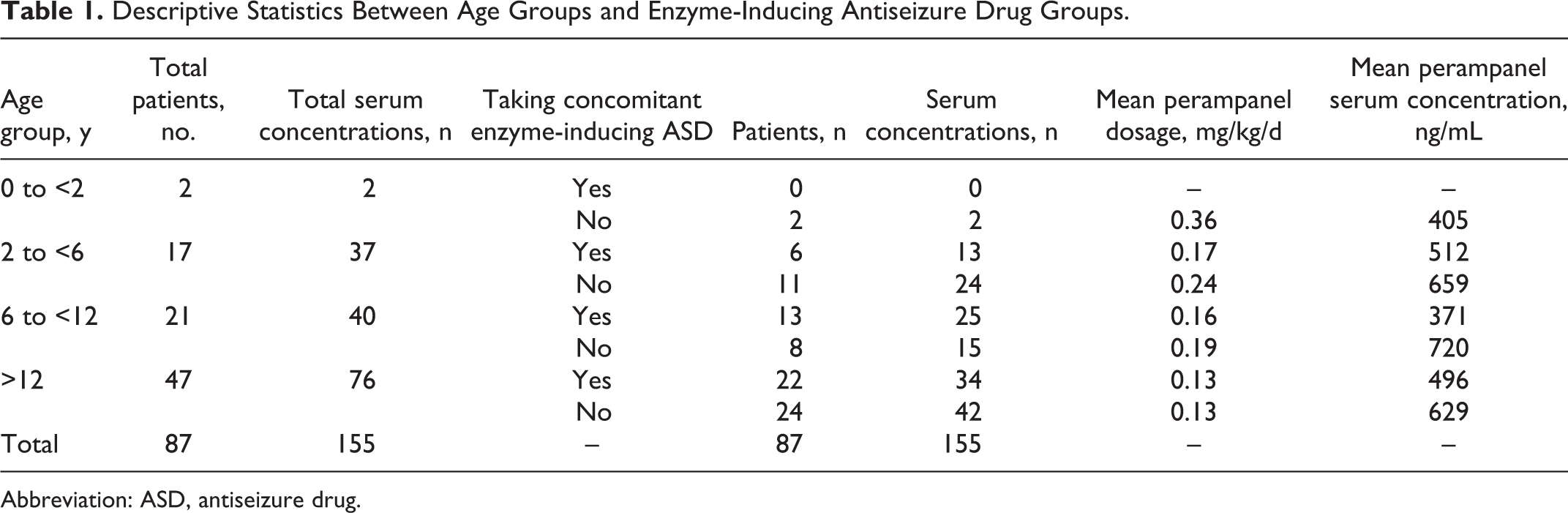
Abbreviation: ASD, antiseizure drug.
Descriptive Statistics for Age Group Only.
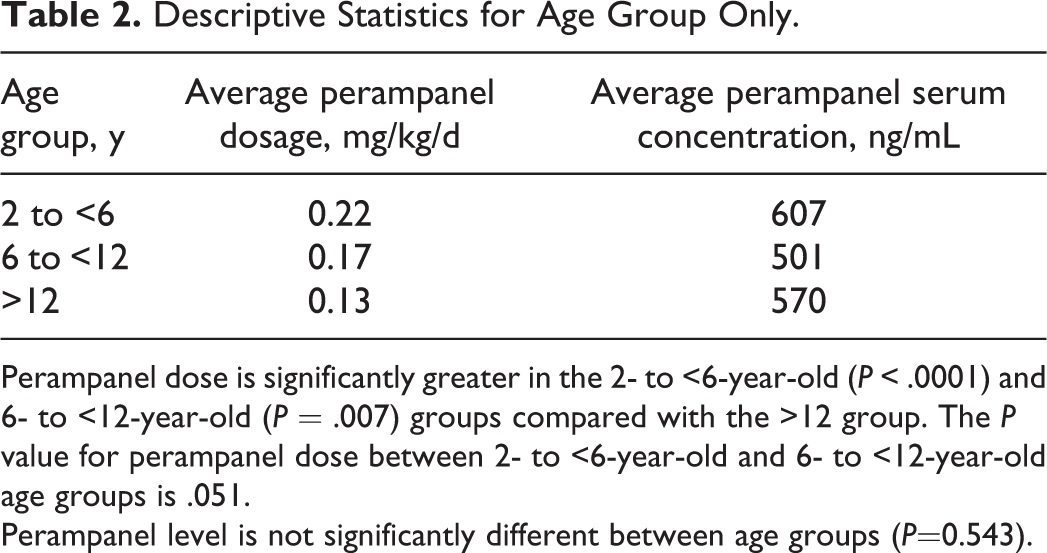
Perampanel dose is significantly greater in the 2- to <6-year-old (P < .0001) and 6- to <12-year-old (P = .007) groups compared with the >12 group. The P value for perampanel dose between 2- to <6-year-old and 6- to <12-year-old age groups is .051.
Perampanel level is not significantly different between age groups (P=0.543).
Descriptive Statistics Between Enzyme-Inducing Antiseizure Drug Group Only.
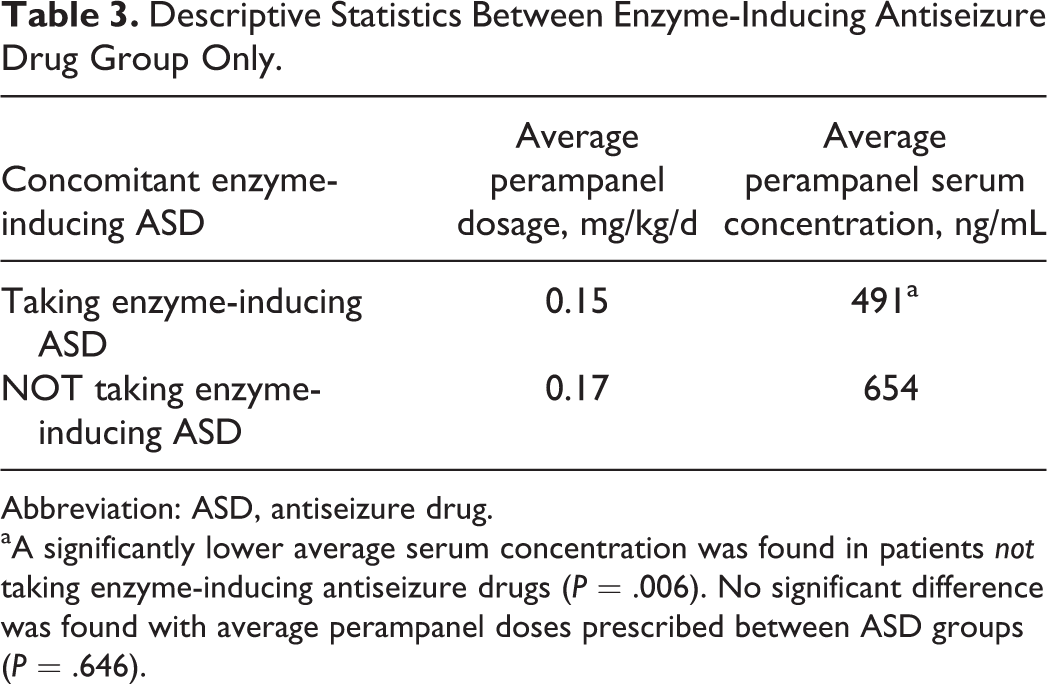
Abbreviation: ASD, antiseizure drug.
aA significantly lower average serum concentration was found in patients not taking enzyme-inducing antiseizure drugs (P = .006). No significant difference was found with average perampanel doses prescribed between ASD groups (P = .646).
Over the entire age range (2 years and older), perampanel dosages were not significantly different among patients whether they were prescribed concomitant enzyme-inducing antiseizure drugs with perampanel or non–enzyme-inducing antiseizure drugs with perampanel (P = .646) (Table 3). Additionally, when analyzed by age group, perampanel dosages were not significantly higher in any age cohort when comparing those not taking enzyme-inducing antiseizure drugs to those taking enzyme-inducing antiseizure drugs (Figure 1). Prescribed dosages did significantly differ among the age groups (Figure 2). Perampanel dosages were significantly higher in the 2- to <6-year-old (P < .0001) and the 6- to <12-year-old (P = .007) age groups each when compared with the 12 and older age group (Figure 3). Overall age groups’ serum concentrations of perampanel in patients concomitantly prescribed an enzyme-inducing antiseizure drug were significantly lower than in patients not concomitantly prescribed an enzyme-inducing antiseizure drug (P = .006) (Table 3). Among age groups, however, perampanel serum concentrations were only significantly lower for the 6- to >12-year-olds on enzyme-inducing antiseizure drugs (P = .008) (Figure 1). The most commonly prescribed daily doses for each age category were 2 mg and 6 mg at frequencies of 30% and 27%, respectively, for the 2- to <6-year-old group, 6 mg and 8 mg each at frequencies of 23% for the 6- to <12-year-old group, and 8 mg at a frequency of 36% for the 12-year-old and older group.
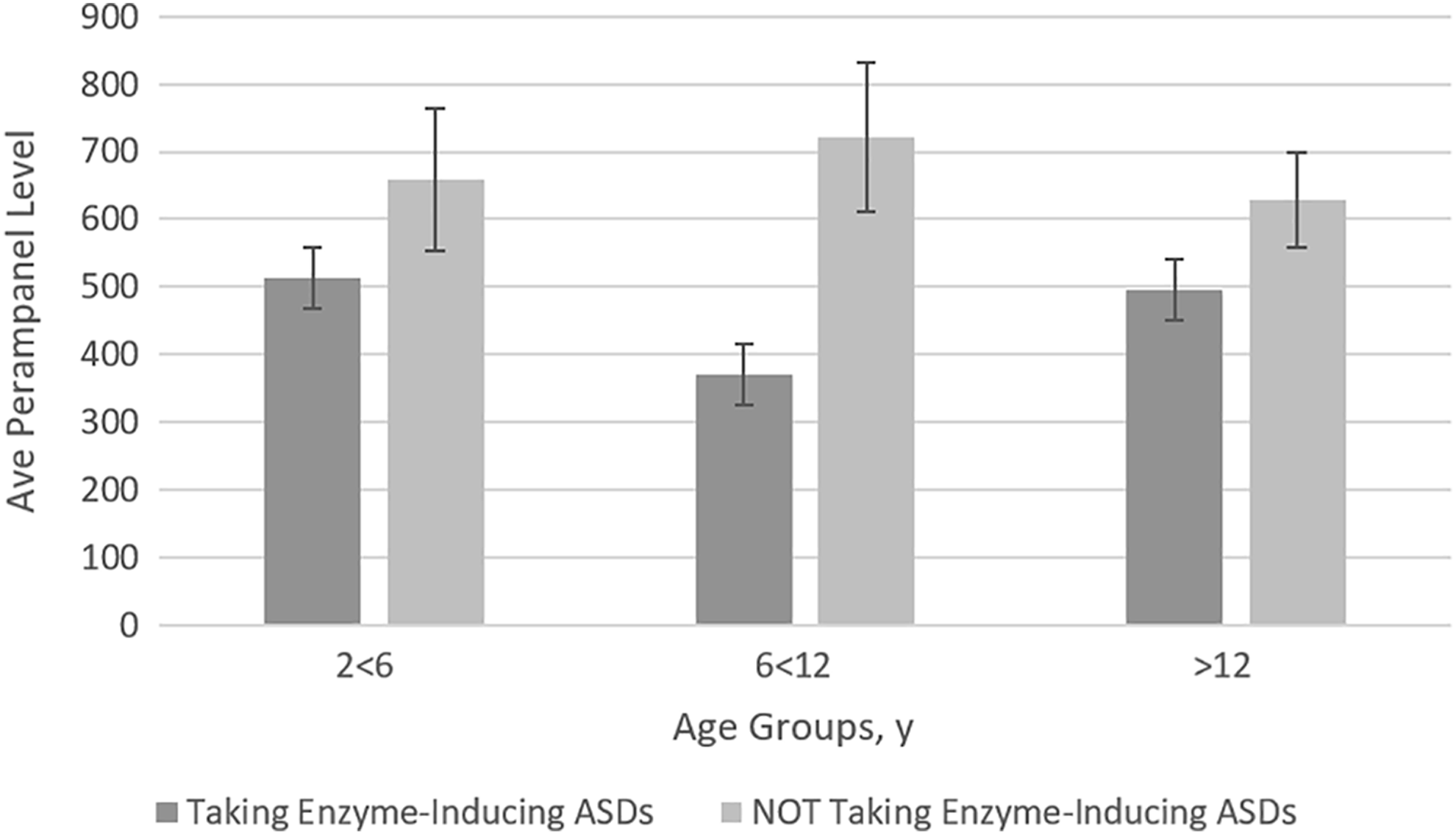
Average perampanel serum concentration (ng/mL) across age group. A significant difference for perampanel serum concentration was found only between the group prescribed an enzyme-inducing antiseizure drug and not prescribed an enzyme-inducing antiseizure drug within the 6- to <12-year-old age cohort (P = .008).
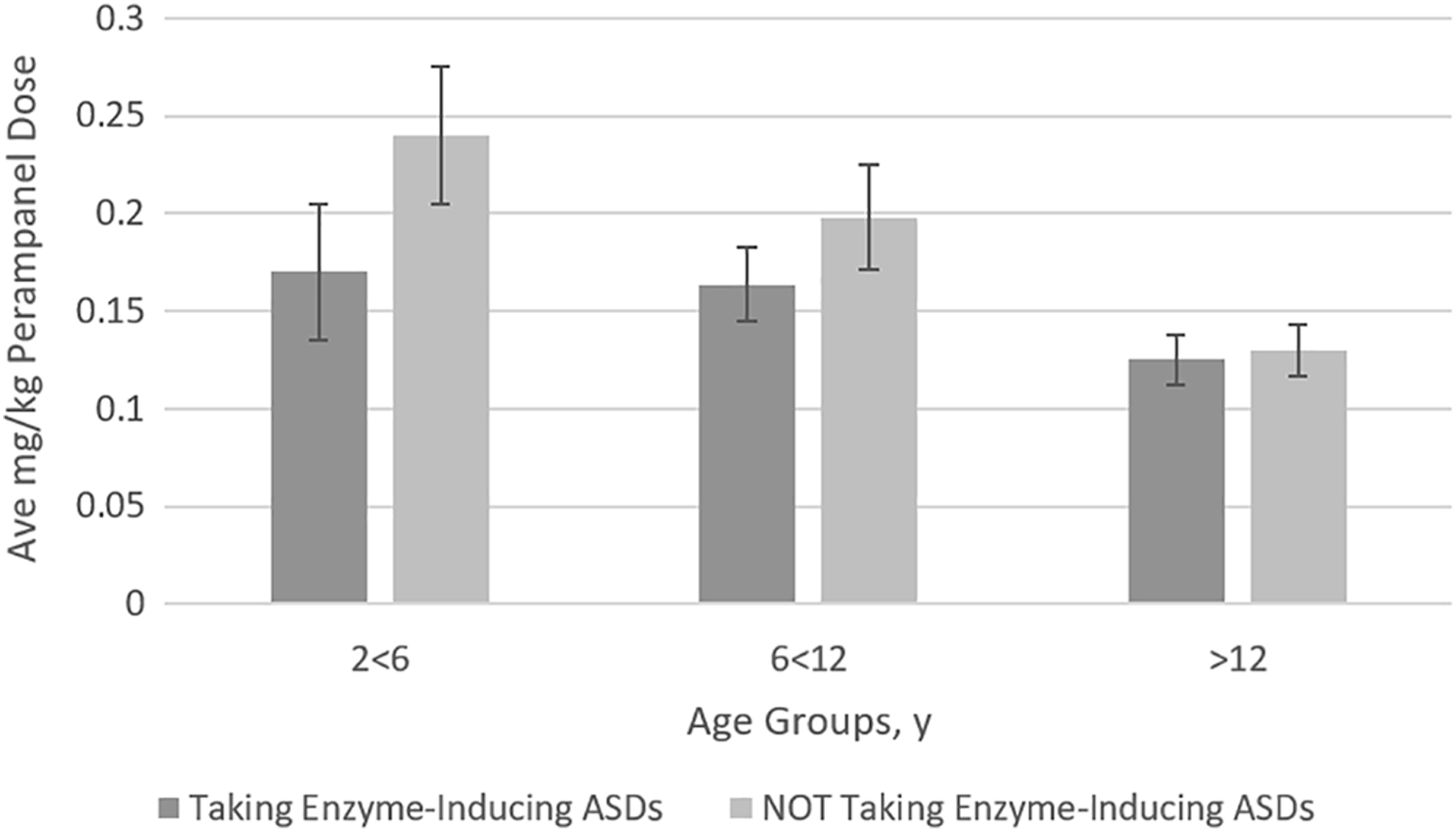
Average perampanel dosage (mg/kg). No difference in perampanel dose was found based on whether patients were taking an enzyme-inducing antiseizure drug or not (for each age group).
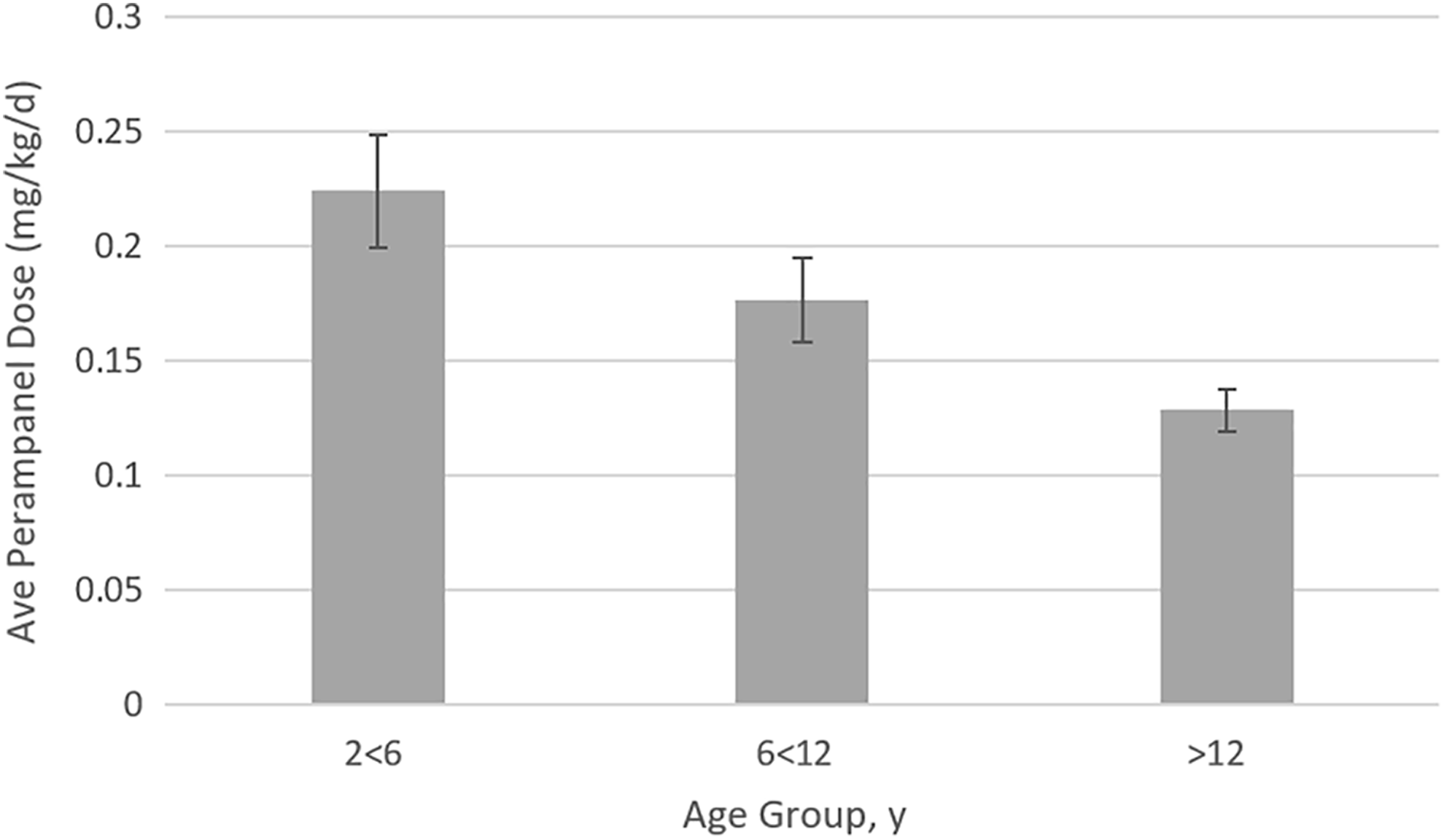
Average perampanel dosage (mg/kg/d) by age group. Perampanel dose is significantly greater in the 2- to <6-year-old (P < .0001) and 6- to <12-year-old (P = .007) groups compared with the >12-year-old group. The P value for perampanel dose between 2- to <6-year-old and 6- to <12-year-old is .051.
Discussion
The children at our center taking perampanel with or without concomitant enzyme-inducing antiseizure drugs were prescribed statistically similar perampanel doses, indicating that our prescribers were not taking concomitant medications into account when prescribing perampanel to the pediatric population. Overall, we found that our patients concomitantly taking enzyme-inducing antiseizure drugs with perampanel had significantly lower perampanel serum concentrations than patients who were not prescribed a concomitant enzyme-inducing antiseizure drug. This effect was expected because of the induction of the CYP3A4 system responsible for metabolizing perampanel. Previously, authors suggested perampanel plasma concentrations of 70 ng/mL and greater for efficacy in adolescents and adults. 5 Increases in perampanel serum concentrations have been correlated with increases in efficacy. 5 The average perampanel serum level achieved for our patients on concomitant enzyme-inducing antiseizure drugs (ie, about 420 ng/mL) is within the range of efficacious plasma concentration of perampanel obtained in the prior studies, 5 indicating that perampanel is likely efficacious in patients regardless of the presence of a concomitant enzyme-inducing antiseizure drug. However, increased plasma concentrations of perampanel are generally more effective, and efficacy might be improved in patients not concomitantly prescribed an enzyme-inducing antiseizure drug. 7 –9 The most common daily doses of perampanel prescribed were 6 and 8 mg (corresponding to approximately 0.15 mg/kg/d) and are in the range of effective adult doses, 8 to 12 mg/d. 1,7 Interestingly, this is the same mg/kg/d dosage achieved by adults in open-label long-term extension studies. 3,10 (Here the average dose was 10 mg/d and the average weight was ∼69 kg, resulting in a 0.145 mg/kg/d equivalent dosage.) Dosages resulting in serum concentrations found to be efficacious in adults are expected to be efficacious in the pediatric population, based on the principle of extrapolation. 11,12
Concomitant enzyme-inducing antiseizure drugs are important to consider when prescribing perampanel, especially with adjunct pharmaceutical care of the pediatric epileptic population. It is also important to consider age-dependent effects of drug metabolizing enzymes, such as CYP3A4. In the first 2 years of life, the CYP family of hepatic enzymes are reduced to a fraction of adult enzyme activity, but in young children older than 2 years of age, hepatic CYP family (including CYP3A4) activity is actually greater than adult CYP function. 13
Drugs like perampanel that are metabolized by age-dependent enzymes may have different serum concentrations in children of varying ages even with similar mg/kg dosing. 13 Concomitant enzyme-inducing antiseizure drugs may have similar effects on drug clearance and measured drug serum concentrations. We determined that children in the 2- to <6-year-old and 6- to <12-year-old age groups were prescribed significantly higher mg/kg dosages of perampanel than patients in the 12-year-old and older group. Patients concomitantly taking an enzyme-inducing antiseizure drug with perampanel were prescribed dosages of perampanel comparable to patients not concomitantly taking an enzyme-inducing antiseizure drug; however, patients taking concomitant enzyme-inducing antiseizure drugs had significantly lower perampanel serum concentrations, possibly indicating that age was considered by the prescribing clinician whereas the concomitant enzyme-inducing antiseizure drugs were not.
Limitations of this study include the following: retrospective chart review design; random perampanel concentrations instead of troughs (serum levels were obtained when patients were seen in clinic and collection times were often not noted by the lab); uncertainty as to whether perampanel and/or concomitant antiepileptics were at steady state (levels were assayed in patients who had been on antiepileptics long enough to be at presumed steady state [ie, at least 2 weeks]); assumption of medication compliance; dependence on accuracy of medication lists documented in the electronic medical record; and inability to account for as-needed concomitant medications. Concentrations were analyzed separately; so many patients were looked at more than once if they had more than 1 level documented. However, these were approximately evenly split between those on inducers and those not on inducers
Conclusion
When prescribing perampanel to children, it is important to consider the effects of medications that interact with the CYP 450 system and make necessary adjustments in dosage. Final perampanel dosages in children (0.15 mg/kg/d) were generally similar to those reported in adult studies and resulted in serum concentrations that have been shown to be correlated with efficacy in adults.
Footnotes
Author Contributions
JW conceived of the study concept, helped review data, assisted in writing , obtaining references and editing the article. EG obtained IRB approval, performed chart review to obtain data, performed statistics, and authored first draft. AG assisted with medical writing and formatting for JCN.
Declaration of Conflicting Interests
The authors declared no potential conflicts of interest with respect to the research, authorship, and/or publication of this article.
Funding
The authors received no financial support for the research, authorship, and/or publication of this article.
Ethical Approval
Institutional review board approval for this study was obtained prior to data collection from the University of Tennessee Health Science Center (UTHSC IRB approval 17-05237-XP on May 25, 2017). Patient consent was not required as we were retrospectively analyzing data that had previously been obtained as part of routine clinical care.