







Abstract
Chitosan is a marine-based polysaccharide deacetylated chitin that is characterized by versatility, biocompatibility, biodegradability, and controllable physicochemical characteristics. Sulfation, phosphorylation, carboxymethylation, quaternization, and guanidinylation are structural changes that increase the solubility, bioadhesion, antimicrobial activity, and biological performance of physiological conditions. Depolymerized derivatives, such as chitosan oligomers, have enhanced permeability, antioxidant, and immunomodulatory properties and physically engineered forms, such as nanoparticles, hydrogels, and electrospun fibers provide superior platforms to targeted drug delivery, tissue scaffolds, and controlled drug delivery. Together, these multifunctional derivatives have demonstrated potential in a variety of biomedical applications such as wound healing, antimicrobial therapy, gene delivery and regenerative medicine and in food preservation, agriculture and environmental remediation. The recent advances of selective O-/N-substitution and green chemistry-based synthesis have enhanced reproducibility, scalability and regulatory compliance, but it is still difficult to achieve standardized production, high quality, and whole biocompatibility inspection. This review presents a systematic synthesis of the synthesis pathways, structural-functional interaction, and the general application scope of the chitosan derivatives, whereas the essential translational issues and emerging opportunities are outlined. It combines the approach of chemistry, biology, and engineering to emphasize the future potential of chitosan derivatives as the next generation biomaterials in clinical, pharmaceutical, agricultural, and environmental practices.
Keywords
Introduction
Chitosan is a linear polysaccharide made by the partial deacetylation of chitin and has become one of the most versatile marine-derived biopolymers with inherent biocompatibility, biodegradability, nontoxicity, and polycation character. 1 Chitosan is a β-(14)-linked D-glucosamine and N-acetyl-D-glucosamine copolymer providing an attractive substrate to perform structural modifications, influencing both the solubility and the chemical reactivity and performance of the polymers.2,3 Chitosan and its derivatives are especially appealing in a highly diverse range of biomedical and industrial uses such as tissue engineering, drug delivery, wound healing, antimicrobial coatings, environmental remediation, and food packaging due to these characteristics. In recent years, chitosan functionalization has received much attention due to the necessity of adjusting the physicochemical properties of chitosan and increasing its performance under physiological conditions or environment-specific conditions.4–6 Sulfation, phosphorylation, carboxymethylation, quaternization and guanidinylation are also chemical modifications that add functional groups that enhance solubility at neutral pH, add metal ion chelation, and augment bioadhesion and antimicrobial activity. Physical modifications of chitosan to nanoparticles, hydrogel, electrospun mat, and nanofiber have increased the possibility even more through control release of drugs, formulation into injectable scaffolds and immobilization on surfaces.7–11 Remarkably, molecular-level control over interactions with biological targets and use of extracellular matrices can be achieved by targeted modifications of O- or N sites, to adjust therapeutic effect and material behavior. In spite of the increasing literature on chitosan derivatives, existing reviews have been either focused on a particular application or on a restricted group of derivatives, without providing a systematic correlation of structure-function relationships among the various types of derivatization.12–15 In addition, the majority of the current reviews do not recognize the emergence of new derivatives like guanidinated chitosan and do not contextualize the importance of a specific selection of substitution in certain functional sites. The detailed discussion of scalable, green synthetic methods and its potential clinical translation, regulatory compliance and industrial application is also lacking. This review intended to bridge these important gaps by bringing an integrated and current review of multifunctional chitosan derivatives. It categorizes chitosan modifications as chemical, depolymerized and physically engineered forms and explains their synthesis pathways, structure, and customized functions.16,17 There is a special focus on the derivatives, including quaternary ammonium and guanidine-modified chitosan, that are becoming relevant to antimicrobial, anti-biofilm, and targeted drug delivery platforms. Further, the aspect of reproducibility, safety, and scalability will be examined in this review by applying selective O-/N-modification strategies and green chemistry idea. The manuscript also provides derivative-specific biomedical, environmental, and industrial applications, substance critical translational bottlenecks, and emerging opportunities in the regulatory and technology spaces. 18 By doing this comparative and comprehensive analysis, the review attempts to act as a critical source to further researches and material formulation which involves chitosan-based systems. As a high-molecular-weight polysaccharide of biological origin (>5000 Da), chitosan and its derivatives are recognized as biological macromolecules, aligning with the scope of this journal.
Literature search strategy
The literature evaluated in this work was found using a systematic search of major scientific databases such as Scopus, PubMed, Web of Science, and Google Scholar, spanning the years 2000–June 2025. The algorithm used combinations of keywords like “chitosan derivatives,” “chemical modification of chitosan,” “carboxymethyl chitosan,” “sulfated chitosan,” “phosphorylated chitosan,” “quaternary ammonium chitosan,” “guanidine-modified chitosan,” “chitosan nanoparticles,” “hydrogels,” “tissue engineering,” “drug delivery,” “wound healing,” “antimicrobial,” “food packaging,” “environmental remediation,” plus “agriculture.” Boolean operators (AND/OR) were used to fine-tune the search and ensure full coverage. The inclusion criteria were peer-reviewed original research publications, systematic reviews, patents, and clinical trials that offered experimental data, mechanistic insights, or translational significance to chitosan derivatives. Publications were chosen based on their novelty, relevance, and impact, with a preference for works published in high-quality journals indexed by Scopus and Web of Science. Exclusion criteria excluded papers with inadequate methodological detail, duplicate findings, or research unrelated to biological, pharmacological, environmental, or industrial uses of chitosan derivatives. 19 Additionally, reference lists for significant publications were manually searched to find relevant research that were not caught in the first database queries. This review’s translational and application-oriented approach was strengthened by consultations with recent clinical trials, regulatory documents, and industry reports. This multi-step strategy ensured a balanced covering of fundamental chemistry, biological activity, application-specific discoveries, and future potential in chitosan derivatives.
Chemical derivatives of chitosan
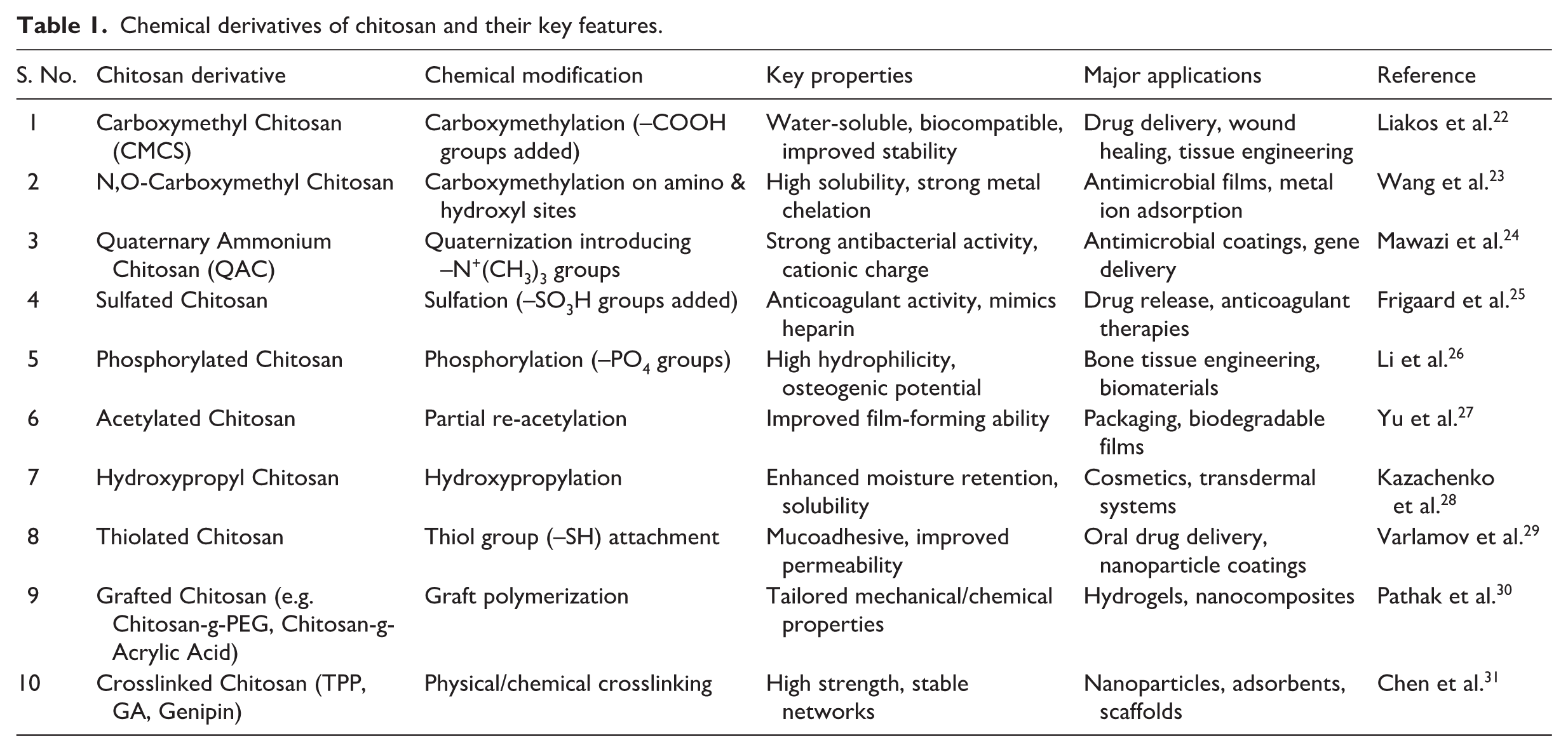
Chitosan has numerous functional groups that are reactive especially the amino groups at the C-2 location as well as the hydroxyl functional groups at C-3 and C-6 which can be precisely chemically modified. These are chemically derived materials that are optimized to increase solubility, bioactivity, and suitability in terms of structure matching the biomedical and environmental systems. The main chemical derivatives are sulfated, phosphorylated, carboxymethylated, quaternary ammonium, and guanidine-modified chitosan. 20 Such modifications help in the introduction of anionic or cationic functionalities leading to changes in surface charge, water dispersibility and biomolecule/ions affinity. Sulfated and phosphorylated chitosans are associated with glycosaminoglycans mimicry and mineralizing or signaling cells . The carboxymethyl chitosan enhances aqueous solubility and has an added advantage of better film-forming and wound-healing ability. Quaternary ammonium chitosan is a strong antimicrobial and mucoadhesive substance because the charge is always positive and thus it may be used as a cytotoxic substance in mucosal and ophthalmic delivery systems. Compared to chitosan, guanidine-functionalized chitosan exhibits better bactericidal and anti-biofilm property because of its highly cationic character and membrane-disruptive activity. All the derivatives have distinct physicochemical properties that combine toward drug delivery, regenerative medicine, biosensing, and agriculture. 21 It is important that synthesis method, point of substitution, and polymer molecular weight are important in deciding the test functionality of the chitosan derivative, and hence, specific adjustments need to be created depending on results required (Table 1).
Chemical derivatives of chitosan and their key features.
Sulfated chitosan
Sulfated chitosan is prepared by the addition of sulfate to the hydroxyl or amino groups of chitosan with sulfating reagents like chlorosulfonic acid or a complex of sulfur trioxide and pyridine. Sulfation is essential with regard to the level and pattern that are critical to shape the biological characteristics. 32 This derivative imitates and resembles heparin and other natural glycosaminoglycans and has the capability to modulate cellular signaling pathways as well as binding the growth factors. It has polyanionic character, which can be used in increased anticoagulant, antiviral and anti-inflammatory applications, and therefore, it has applications in cardiovascular, wound healing and tissue engineering. Sulfated chitosan is also known to electrostatically interact with cationic molecules and proteins and as such can enhance the bioavailability and controlled release properties of certain pharmaceutical formulations. 33 It is a prospective multi-functional biomaterial due to its stability in physiological conditions and ability to activate cellular response.
Phosphorylated chitosan
Phosphorylated chitosan is prepared by the addition of phosphate groups to the hydroxyl groups (mainly at C-3 and C-6) of reagents that include phosphoric acid, urea or phosphorus oxychloride. The attachment of phosphate group increases hydrophilicity and endows a chelation property of divalent metal ions, particularly favorable in bone regeneration and removal of heavy metals. It has a high biocompatibility and is sensitive to pH thus contributing to its application as a drug carrier, especially in targeted release systems. 34 Also, phosphorylated chitosan facilitates hydroxyapatite formation and proliferation of osteoblasts, which means that it can be used widely as scaffold material during tissue engineering of bone tissue. It is also proven to have strong antioxidant and mild antibacterial properties extending its applicability in biomedicine and functional food packaging systems where control of reactive oxygen species is essential.
Carboxymethyl chitosan
Carboxymethyl chitosan (CMCS) is made through etherification or reductive amination of chitosan with monochloroacetic acid at alkaline pH. Depending on process parameters, this reaction can lead to either O-substitution, N-substitution, or both. CMCS is also water-soluble over a wide pH range enhancing its application to physiological conditions. It can form polyelectrolyte complexes with oppositely charged biomolecules and drugs and can facilitate long-term release and enhanced stability. 35 CMCS has good mucoadhesive, antimicrobial properties, and anti-inflammatory characteristics which suggests that it is suitable for wounds dressing, injectible gel, drug delivery system. In addition, it is a good film former as well as a biocompatible that makes it preferable for the preparation of transdermal systems and tissue engineering matrices. 36 It has also carboxyl functional groups that can be further conjugated to more bioactive ligands or even nanoparticles in its targeted therapeutic use.
Quaternary ammonium chitosans
Quaternary ammonium chitosan is formed by adding permanent positive groups to the chitosan backbone through alkylation of its amino groups with a compound such as glycidyl trimethylammonium chloride (GTMAC). 37 This alteration enhances water solubility considerably at neutral and basic pH which is one of the largest limitations of native chitosan. This increased charge density of the cations further increases the interaction with negatively charged cell membranes resulting in a significant antimicrobial action against Gram-positive and Gram-negative bacteria. Moreover, this derivative has strong mucoadhesivity and the increase in permeation, which makes it useful in transmucosal drug delivery systems. It also has biofilm inhibition properties and this is appealing to ophthalmic, nasal and buccal formulations. 38 It has high chemical stability and low toxicity which favor its application in antimicrobial coatings and gene delivery vectors.
Guanidine-modified chitosan
Guanidine-modification of chitosan involves grafting guanidino groups at the primary amine groups of chitosan and producing derivatives with high cationic density at physiological pH. 39 The presence of guanidinium functionality improves the capacity of the polymer in micobial membrane penetration or membrane disruption and biofilm inhibition at low concentrations. This derivative has excellent antimicrobial activity against drug-resistant strains because of its high pKa and hydrogen bonding ability. Cell adhesion and migration can also be promoted using guanidinated chitosan, which is used in regenerative scaffold, wound healing, and hemostatic agents. It can also be seen that its membrane-interacting nature can enhance gene delivery and transfection of siRNA (siRNA). 40 The capacity to retain functionality in physiological environments makes it a potential candidate in terms of biosurface modification and implantable biomaterials.
Comparative evaluation and critical insight
Chemical compounds of chitosan have complimentary characteristics, but their use is largely context-dependent. Sulfated chitosan, which mimics glycosaminoglycans, has significant anticoagulant, antiviral, and anti-inflammatory characteristics; nevertheless, its production requires harsh chemicals such as chlorosulfonic acid, raising issues regarding scalability, repeatability, and environmental safety. Carboxymethyl chitosan, on the other hand, is manufactured under gentler circumstances, has high water solubility, and improves wound healing characteristics but, it lack the signaling mimicry and mineral potential of sulfated derivatives. 41 Phosphorylated chitosan is very useful for bone regeneration due to its osteoconductivity and metal-ion chelation properties, although its stability changes with pH, preventing consistent performance across conditions. Quaternary ammonium chitosan has outstanding antibacterial and mucoadhesive characteristics, making it ideal for drug administration and coating applications. However, cytotoxicity at high doses remains a translational obstacle. Finally, guanidine-modified chitosan has the most powerful antibacterial and anti-biofilm action of the derivatives; nevertheless, high synthesis costs and insufficient toxicological validation limit its widespread application. Overall, chemical derivatives enable exquisite functional tailoring of native chitosan; nevertheless, there are trade-offs between bioactivity, biocompatibility, and manufacturing practicality. 42 Future investigations should focus on (i) green synthesis techniques to decrease hazardous byproducts, (ii) comprehensive structure-function correlation studies to predict biological performance, and (iii) comparative in vivo validation of derivatives to find the most therapeutically feasible options.
Depolymerized chitosan derivatives
The chitosan derivatives in the depolymerized form are a group of low-molecular-weight forms of chitosan created through controlled degradation reactions, including acid hydrolysis, enzymatic cleavage, oxidative depolymerization, or gamma irradiation. 43 These derivatives have unique physicochemical and biological properties compared with high-molecular-weight chitosan, especially enhanced solubility, low viscosity, and improved biological permeability. Depolymerization affects the degree of polymerization, the molecular weight distribution and functional group exposure that has a direct effect on derivative bioavailability and interaction with biological membranes. Chitosan oligomers (COS) are of interest among them because they characterize specific chain lengths and degree of acetylation. The short-chain molecules still present the reactive amine functionalities of parent chitosan and provide enhanced flexibility of formulation and bioconjugation. The depolymerized varieties of chitosan derivatives have inherent antimicrobial activities, antioxidant and immunomodulatory activities as well as enhanced mucosal transport and cell uptake than native chitosan. 44 They are also less toxic, have increased renal clearance and are suitable in parenteral delivery because of low molecular size. Also, they are easily soluble in water and can be incorporated into hydrogels, nanoparticles, films, and nanofibers to achieve temporal and specific delivery of therapeutics. 45 Their capacity to adjust their physicochemical profile by depolymerization kinetics makes them the attractive constituent of advanced biomedical and pharmaceutical products.
Chitosan oligomers
Chitosan oligomers (COS) are low-molecular-weight derivatives of chitosan usually with 2–20 units of glucosamine, produced by limited enzymatic or chemical hydrolysis. 46 These oligomers still have the groups of primary amines of chitosan, so they can interact with the surface of negatively charged biological molecules and cell by electrostatic interaction. COSs have very good solubility in aqueous medium at neutral PH and enhanced permeability through epithelial membranes, and this can be beneficial when designing oral, transdermal, and mucosal drug delivery systems. Their activities show potent antimicrobial, anti-inflammatory and antioxidant activities and in several cases they can outcompete high-molecular-weight chitosan because of a larger surface area and greater mobility. They can easily be integrated into hydrogels, sprays, nanocomposites due to their low viscosity, and biocompatibility. 47 The role of COS as immune response stimulators and facilitators of the wound healing process makes them even more useful in pharmaceutical and nutraceutical fields.
Comparative evaluation and critical insights
Depolymerized chitosan derivatives, notably chitosan oligomers (COS), outperform their high-molecular-weight counterparts due to their good water solubility, low viscosity, and improved epithelial permeability. These properties make COS ideal for oral, mucosal, and transdermal drug administration, as well as antioxidant, and immunomodulatory uses. However, their fast renal clearance, low mechanical strength, and short systemic retention limit their usefulness in tissue engineering or long-term treatment systems. 48 When compared to chemical derivatives, COS eliminate complicated synthesis steps and are less toxic, but they cannot fully mimic the structural stability or specific functioning of sulfated, phosphorylated, or quaternary modifications. A significant gap is the lack of established manufacturing techniques that assure constant polymerization and acetylation levels, both of which have a direct impact on bioactivity. 49 Future study should concentrate on enhancing depolymerization kinetics, increasing in vivo half-life, and combining COS with physical carriers (such as hydrogels or nanoparticles) to counteract fast clearance.
Synthesis strategies and selective modification
Chitosan derivatives are synthesized through various chemical, enzymatic, and physical methods that would improve the physical characteristics of the polymer and customize it to intended purposes. Free amino groups at C-2 of the glucosamine units or hydroxyl groups at C-3 and C-6 of the glucosamine units are usually the target of functionalization. The effectiveness and selectivity of the reactions are also influenced by the choice of reagents, reaction conditions (solvent, pH, temperature) and level of deacetylation and molecular size of the parent chitosan. Sulfonic, carboxylic, quaternary ammonium and guanidine groups are extensively applied through methods involving nucleophilic addition, reductive amination, and free-radical grafting. 50 Tight control conditions are needed with enzymatic modifications, which do provide regioselective modifications. It is important to perform selective O-/N-substitution to maintain biocompatibility and have the same performance, especially in biomedical systems. Protecting group strategies are commonly used to control reaction site, pH adjustment or controlled activation. More environmentally friendly and scalable synthesis methods are also being investigated, which focus on demonstrating non-toxic synthetic routes with the use of aqueous systems and low energy. Synthesis techniques such as microwave-assisted, ultrasonication, and solvent-free are made with ample processing time and environmental load. Furthermore, the in situ crosslinking and self-assembly techniques enable hydrogels, nanoparticles or films to be readily constructed directly in the process of functionalization. 51 Combinations of these strategies provide flexibility, scalability, and process rate flexibility in derives manufacture.
General synthesis routes of derivatives
Chitosan derivatives are synthesized in general by chemical synthesis of the amino groups and hydroxyl groups. Common reactions are acylation, alkylation, carboxymethylation, sulfation, phosphorylation, and quaternization performed in mixed conditions with organic or aqueous solvents. The degree of substitution and structural integrity of the polymer depends on such parameters as the temperature of reaction, reaction time, and molar ratio of reactants. To increase the reactivity, catalysts or activation reagents such as EDC/NHS or acid chlorides are possible. 52 The most common procedures to purify it are dialysis, precipitation or ultrafiltration to produce unreacted species. The degree of substitution and structural confirmation is also determined by FTIR, NMR, elemental analysis or conductometric titration. These pathways permit synthesis of derivatives with customized physico-chemical and biological characteristics to particular biomedical and industrial applications.
Selective O-/N-modification strategies
Chitosan can be modified selectively in O- or N-positions to control the placement of the functional groups, which provides control of the solubility, bioactivity, and interactions with other biomolecules. The N-site of C-2 and the O-sites of C-3 and C-6 have varying nucleophilic strengths which can be utilized by controlled reaction conditions. 53 In N-selective modification, hydroxyl groups are frequently protonated using mild aqueous acidic medium as preferred conditions, whereas in O-substitution, bases and aprotic solvents are usually used. Competing sites are commonly blocked in a sequential substitution by protecting group chemistry (e.g. Schiff base formation or phthaloylation). This site-specific functionalization is important in ensuring sustained biocompatibility and performance of a target in biological applications such as drug delivery, tissue scaffolds and gene transfer.
Green Chemistry and scalable processes
Green methods of synthesis of chitosan derivatives are being developed to minimize toxic solvent consumption, waste and enhance green processes. The usage of water based reactions, solvent free conditions or benign solvents such as ethanol and ionic liquids are increasingly used. New methods include microwave-assisted synthesis, ultrasonication, and enzyme catalysis, which have a higher reaction efficiency and make the use of energy more economical. Natural crosslinking reagents including genipin, are preferred to synthetic aldehydes. 54 The use of downstream processes such as continuous flow systems, spray-drying or freeze-drying improves scale-up feasibility. Such green measures do not only comply with green laws but also improve the safety of products and ease the process of reproduction. The application of green principles in synthesis of chitosan derivatives favors a sustainable and cost-effective synthesis across clinical, pharmaceutical and industrial uses.
Applications of chitosan derivatives
The derivatives of chitosan have improved physicochemical and biological characteristics, which make them more acceptable to be used in various biomedical, industrial and environmental applications. Sulfation, carboxymethylation, and quaternization have a significant effect on increasing (or lowering) water solubility, charge density, and bio-interactivity, allowing the creation of novel delivery systems and therapeutic biomaterials. Physically altered forms, which include hydrogels, nanoparticles, and electrospun fibers offer structural flexibility in the integration of bioactives or functional agents with desired release characteristics. 55 Chitosan derivatives have been used in drug delivery to increase encapsulation efficiency, increase mucoadhesion and allow targeted or stimuli responsive release. Antimicrobial In antimicrobial applications, quaternary derivatives have shown potent bactericidal and biofilm disruptive properties, in addition to guanidine derivatives. Applications in regenerative medicine derivatives promote cell adhesion and matrix mineralization and angiogenesis in tissue engineering, such as bone and skin regeneration. Chitosan coating inhibits microbial spoilage in food packaging, prolongs the shelf life and serves as a carrier agent of preservatives or antioxidants. Some of the environmental applications involve adsorption of metal ions, removal of dyes and carrier of biodegradable agricultural chemicals. Chitosan-based formulations are characterized by their antimicrobial and plant growth-promoting qualities, which are of agricultural use. 56 The use of chitosan derivatives in multiple functions and tunability makes them important products in various industries that demand biocompatible, functional, and application-specific behavior. Such applications are also complemented with sustainable and scalable modification plans adapted to addressing particular end use desires.
Drug delivery systems
The derivates of chitosan have extensively been used in drug delivery because of their enhanced solubility, biocompatibility, and capacity to formulate stable nanoparticles, hydrogels, and polyelectrolyte complexes. Oral, ocular, and transdermal delivery is possible with derivatives of carboxymethyl and quaternary chitosan increasing mucoadhesion and permeation. Sulfated and phosphorylated derivatives provide control release and targeting potentials by interaction using ions and binding to receptor. These host systems enhance drug loading capacity, extend retention in circulation and allow stimulus-responsive or targeted release. Carriers based on chitosan also have increased delivery of proteins, peptide, and nucleic acids, reducing their degradation and increasing their bioavailability. 57 These are easily tunable and can be used as effective candidates in traditional and modern therapy application mediums (Figure 1).
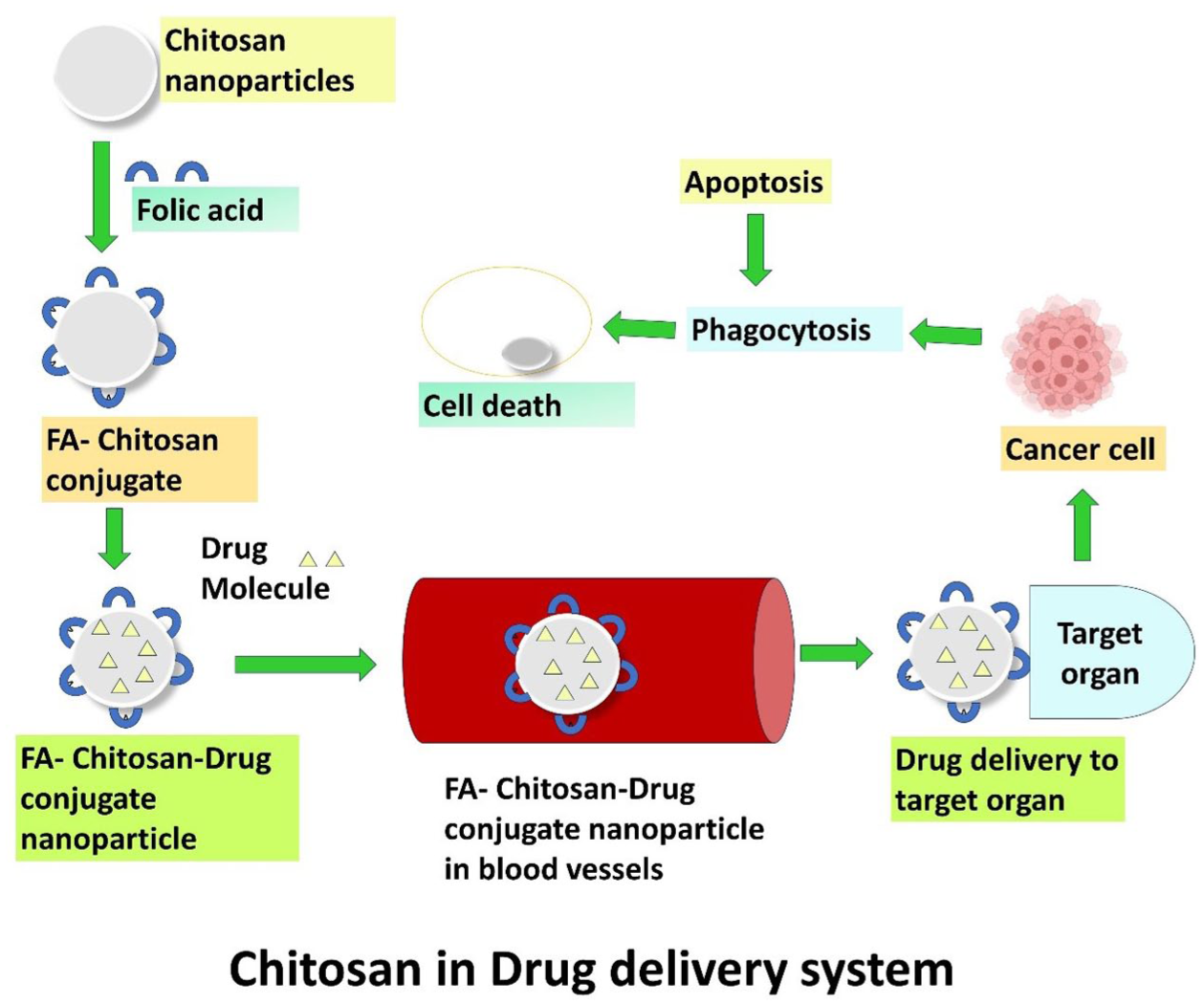
Chitosan-based nanoparticle drug delivery system.
Chitosan nanoparticles are functionalized with folic acid (FA) to form FA–chitosan conjugates, which are subsequently loaded with therapeutic drug molecules. These FA–chitosan–drug conjugate nanoparticles circulate in the bloodstream and selectively accumulate in target organs by receptor-mediated uptake. Upon reaching cancer cells, the nanoparticles enhance intracellular drug delivery, triggering apoptosis and phagocytosis, ultimately leading to cell death. This targeted system improves therapeutic efficacy while minimizing off-target effects, highlighting the translational potential of chitosan derivatives in cancer nanomedicine.
Antimicrobial and anti-biofilm applications
Chitosan derivatives have very good antimicrobial and anti-biofilm activity because of their cationic character and membrane-disrupting. The quaternary ammonium and guanidine-functionalized chitosans stand out to be even more effective in Gram-positive and Gram-negative bacteria, fungi and strain resistant of antibiotics. These derivatives break the cell membrane of microbes, cause the cellular contents to leak out, and interfere with adhesion and colonization on a surface. They are also active in planktonic and associated cells on the biofilm, which is useful in medical devices, wound-healing agents, and mouth system products.58,59 These derivatives can also be produced in the form of films, coatings or nanoparticles further strengthening their antimicrobial potency and stability. Their non-toxic and biodegradable characteristics would make them useful alternatives to traditional pharmaceutical, food and personal care biocides.
Wound healing applications
Chitosan derivatives have a major role in wound healing, as they enhance hemostasis, regulate inflammation, and stimulate cellular proliferation. 24 Carboxymethyl chitosan has high hemostatic and anti-inflammatory activities and sulfated and phosphorylated amino acids show faster angiogenesis and extracellular ridge remodeling. Their inherent antibacterial properties further protect against infection and expedite tissue repair. Integration into hydrogels, nanofibers, or films offers high porosity, water retention, and oxygen permeability, which forms an ideal setting to regenerate skin. Chitosan dressings with growth factors enhance re-epithelialization and neovascularization. 60 These mechanically flexible bioresorbable materials, therefore, emerge as the potential candidates in future wound dressing, skin graft substitutes, and injectable compounds with the aim of providing quick curing and minimizing complications (Figure 2).
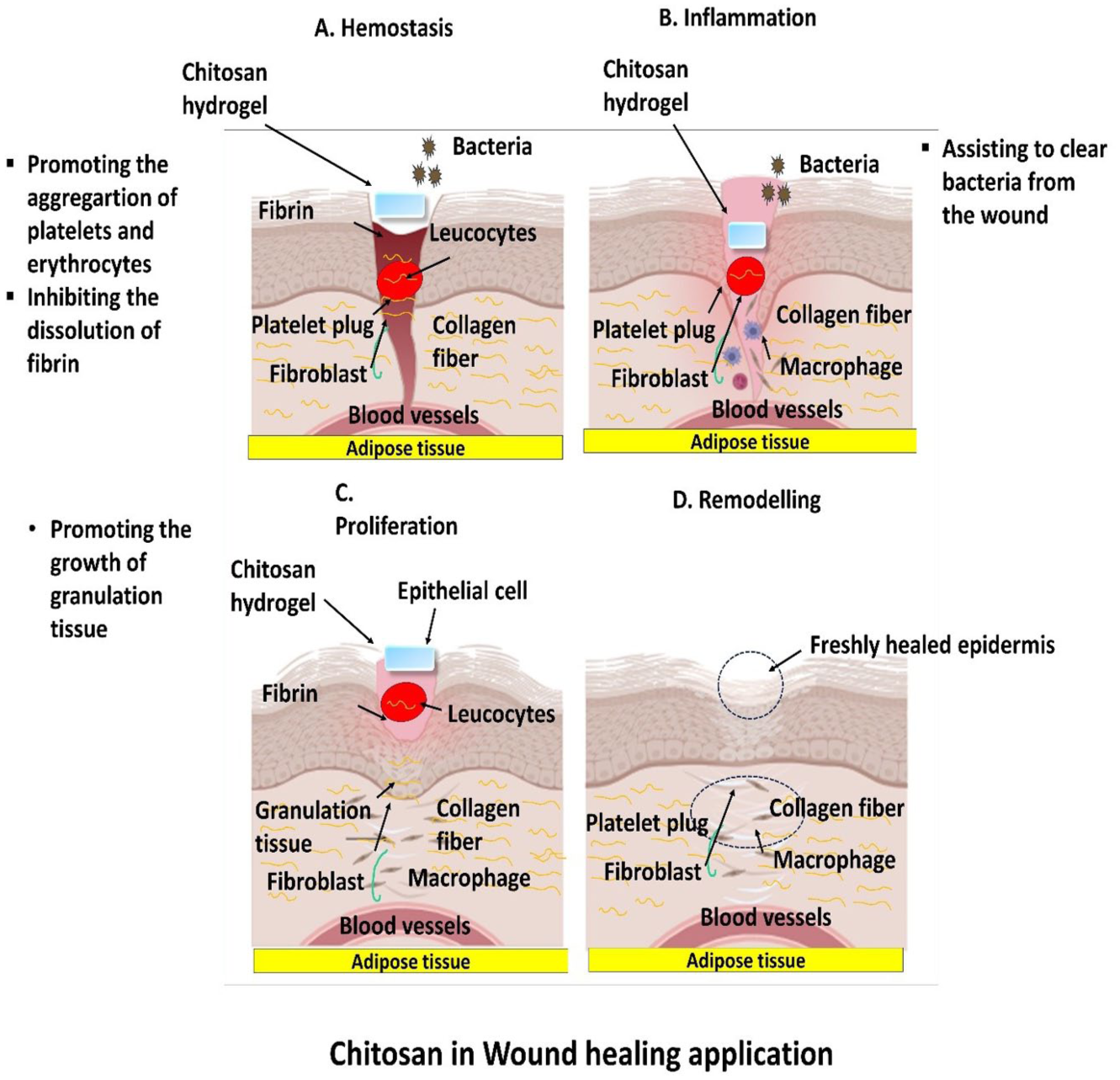
Mechanistic role of chitosan hydrogels in wound healing.
Chitosan hydrogels aid in the successive stages of wound healing by boosting hemostasis, reducing inflammation, increasing proliferation, and aiding tissue remodeling. (A) During the hemostasis phase, chitosan promotes platelet and erythrocyte aggregation and inhibits fibrin disintegration, resulting in a stable clot. (B) During inflammation, chitosan aids in bacterial clearance and regulates immune cell function, lowering infection risk. (C) During the proliferation stage, it stimulates granulation tissue development, fibroblast migration, and epithelialisation while preserving a wet healing environment. (D) During the remodeling phase, chitosan promotes collagen deposition, fibroblast activity, and vascular organization, ultimately restoring the epidermal barrier. Collectively, these bioactive properties demonstrate chitosan-based hydrogels’ therapeutic promise as advanced wound dressings in regenerative medicine.
Applications to tissue engineering
Chitosan derivatives have been applied in tissue engineering as versatile scaffolding biomaterials that facilitate cell adhesion, proliferation and differentiation. Phosphorylated chitosan is most appropriate in bone regeneration because phosphorylated chitosan improves mineralization and osteoblasts and because sulfated chitosan analogs emulate glycosaminoglycans to modulate signaling pathways. Hydrogel toxicity Carboxymethyl chitosan and guanidine-modified formulations are commonly incorporated into hydrogel, electrospun fibers or composite scaffolds to enhance mechanical integrity and bioactivity. 61 These materials are tunable, biodegradable, and capable of loading bioactive molecules or nanoparticles, which allows them to therapeutically target individual sites. Their action encompasses the cartilage, bone, and skin tissue regeneration. Chitosan-based scaffolds have a great translational potential in regenerative medicine by integrating structural similarity to the extracellular materials with controlled degradation (Figure 3).
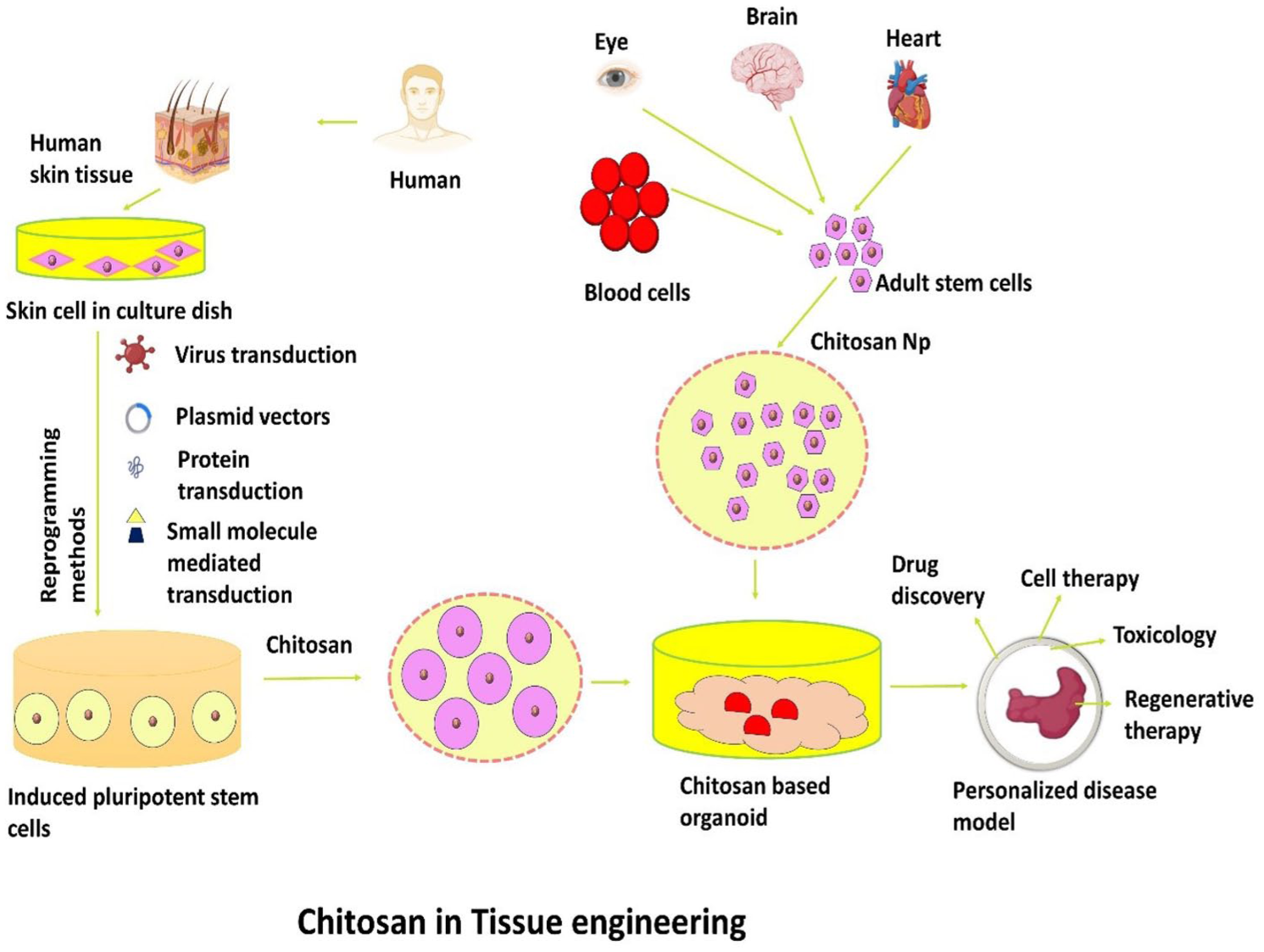
Role of chitosan in tissue engineering and regenerative applications.
Chitosan nanoparticles and scaffolds aid tissue engineering by promoting cell reprograming, stem cell growth, and organoid formation. It is possible to cultivate and reprogram human skin cells into induced pluripotent stem cells (iPSCs) by small molecule-mediated techniques, protein transduction, plasmid vectors, and viral transduction. These iPSCs, or adult stem cells, develop into several lineages when combined with chitosan-based carriers, aiding in the regeneration of blood, heart, brain, and ocular tissues. Chitosan-based organoids are adaptable models for drug discovery, toxicological testing, and personalized disease modeling, and they also offer potential platforms for regenerative therapy and cell-based therapeutics. This image demonstrates chitosan’s multifunctional significance in improving translational efforts for tissue engineering and precision medicine.
Food packaging uses
The derivatives of chitosan are extensively employed in food wrappings because of their biodegradability, transparency and antimicrobial characteristics. Carboxymethyl and quaternary chitosans create flexible transparent films which prevent growth of microbes as well as minimize oxidative degradation. Upon mixing with natural polymers like starch or cellulose, they are able to offer better mechanical strength and resistance to moisture and gases. Incorporation of bioactive agents such as essential oils or antioxidants further enhances preservation and safety. 62 Sulfated chitosan has added antifungal effects, thus effective in the preservation of perishable products. These are chitosan-based packaging systems that offer food safety and sustainability, a substitute to synthetic plastics.
Food preservation uses
Chitosan derivatives can be used as edible coating and antimicrobial coating on fresh food, meat, and dairy products in food preservation. 63 Their film-forming ability reduces respiration, moisture loss, and microbial contamination during storage. Carboxymethyl chitosan is able to preserve its freshness by inhibiting oxidative interactions and quaternary chitosan has a high level of antibacterial effects against foodborne pathogens. Food coatings that deliver natural preservatives, antioxidants or essential oils extend the life of food and enhance the sensory properties. 64 These products are biodegradable, non-toxic and in line with the global food safety regulations. Chitosan-based preparations can also be a sustainable approach in current food preservation procedures by increasing the shelf life of food and decreasing the use of synthetic preservatives.
Environmental applications
Chitosan derivatives are also being utilized in environmental remediation due to their high adsorption capacity, biocompatibility and biodegradability. Carboxymethyl and phosphorylated chitosan have high affinity to heavy metals, dyes, and organic pollutants via chelation and electrostatic interaction. The derivatives are integrated into membranes, beads or filter systems to treat the wastewater so that the systems are effective in getting rid of contaminants and at the same time are not harmful to the environment. 65 Their antioxidant and antimicrobial properties further enhance suitability in water purification and air filtration systems. Chitosan-based materials are environmentally friendly, non-toxic, and affordable, which implies they are suitable as sustainable alternatives to large-scale remediation and environmental protection technologies compared to conventional synthetic adsorbents (Figure 4).
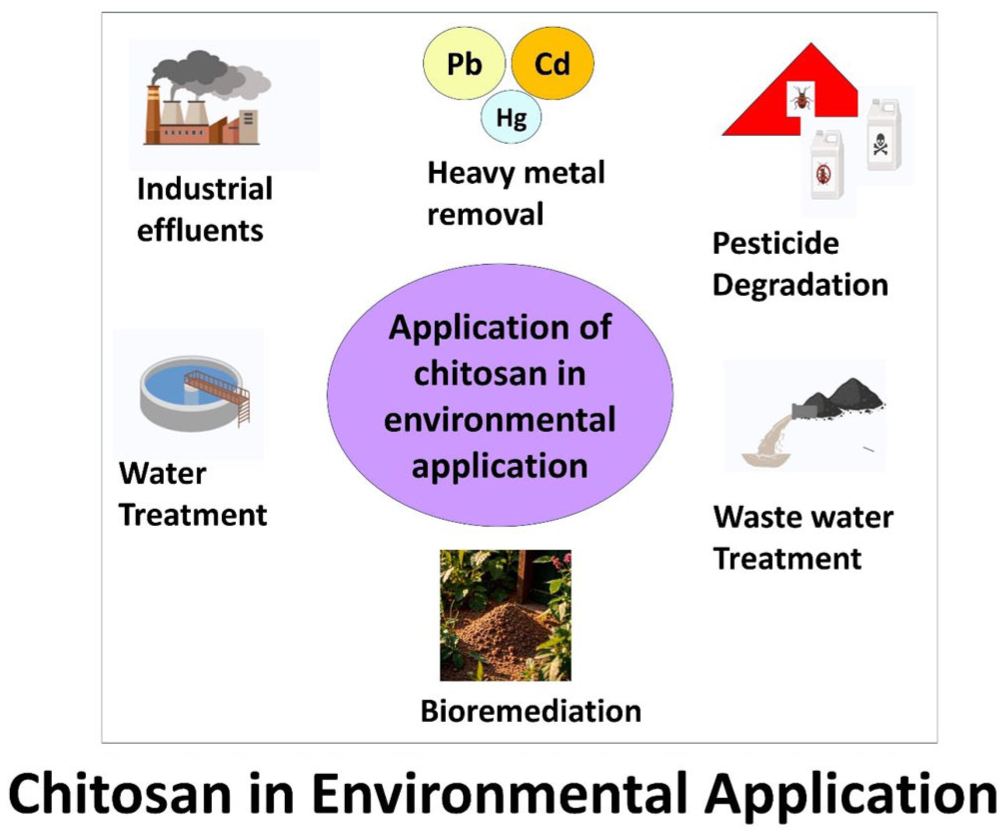
Environmental applications of chitosan and its derivatives.
Chitosan and its variants are non-toxic compounds that have a wide range of uses. Their high adsorption and chelation capabilities allow for the efficient removal of harmful heavy metals from industrial effluents and wastewater, including lead (Pb), cadmium (Cd), and mercury (Hg). Chitosan-based systems are also used for pesticide breakdown, which reduces toxic residues while enhancing soil and water safety. Furthermore, chitosan increases wastewater treatment efficiency by flocculating suspended particulates and neutralizing contaminants. Chitosan-based bioremediation methods promote microbial activity, which accelerates the breakdown of organic pollutants in soil and water. Collectively, these multifunctional activities highlight chitosan’s promise as a sustainable and biodegradable alternative to traditional chemical agents in environmental protection and restoration.
Agricultural application
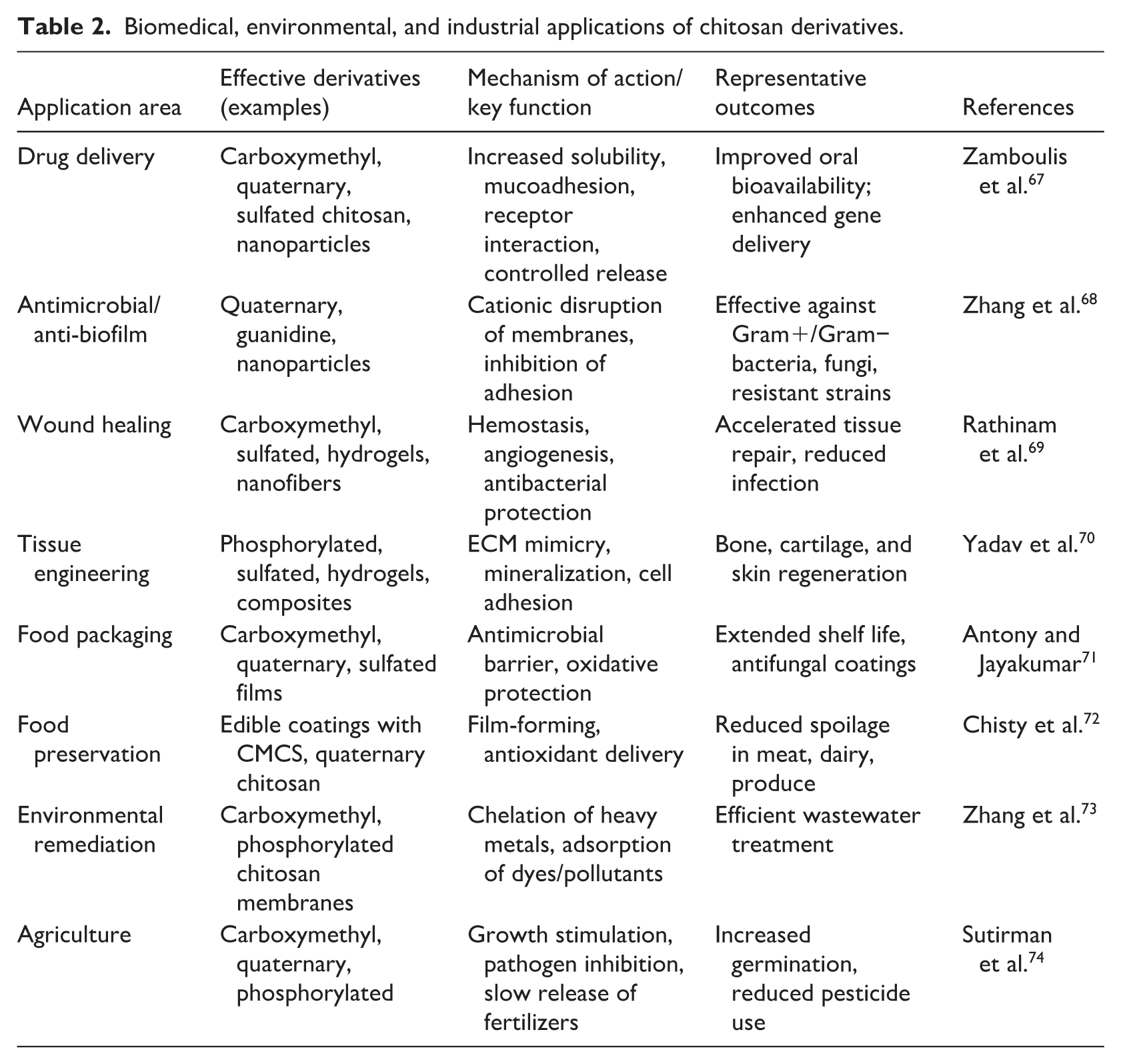
As an agricultural product, chitosan derivatives have the role of natural growth stimulating agents, plant protectants, and controlled-release delivery agents to fertilizers or agrochemicals. Carboxymethyl and quaternary chitosans improve seed germination, root growth, and nutrient absorption, increasing crop production and tolerance. They inhibit microbes that cause diseases, eliminating the use of chemical pesticides to boost agricultural production and ensuring environmentally friendly farming. Phosphorylated derivatives also act as micronutrient carriers and nanoparticle-based formulations allow fertilizers to be released steadily, reducing leaching of nutrients and environmental runoff. 66 Chitosan derivatives are biodegradable and non-toxic, which means that they align with sustainable agriculture and soil health maintenance. Their application as the biofertilizers as well as biocontrol agents underscores their translational use in contemporary precision farming (Table 2 and Figure 5).
Biomedical, environmental, and industrial applications of chitosan derivatives.
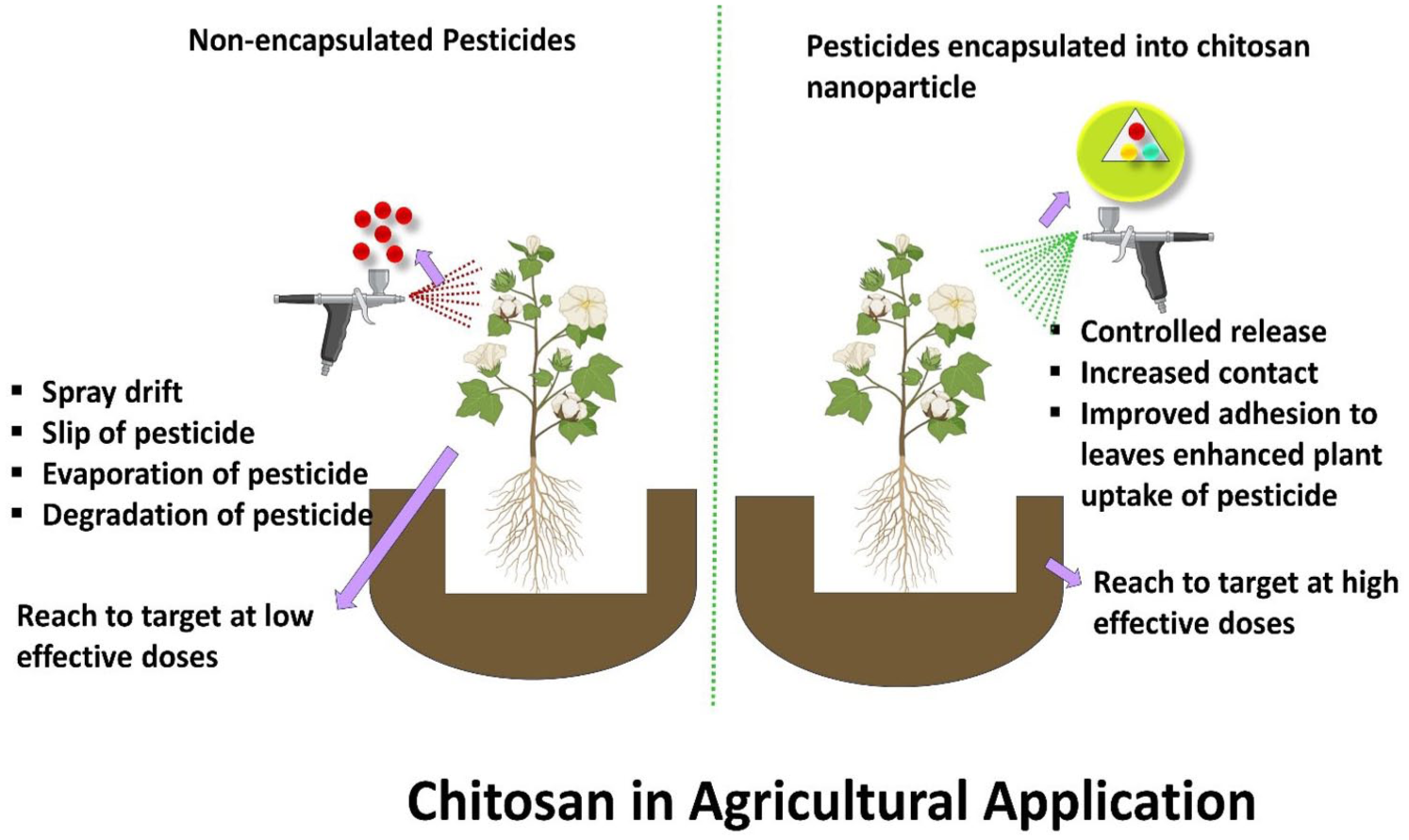
Role of chitosan nanoparticles in improving agricultural pesticide delivery.
Conventional pesticide spraying frequently leads in inefficiencies owing to spray drift, slippage, evaporation, and premature degradation, resulting in poor pesticide absorption and effective dosages reaching target plant tissues. Pesticides encapsulated in chitosan nanoparticles, on the other hand, have a more regulated release, better adherence to leaf surfaces, and last longer. This encapsulation enhances the pesticide’s interaction with plant tissue, boosts absorption efficiency, and assures that greater effective dosages reach the target location. Chitosan-based delivery methods increase agricultural output while promoting sustainable and eco-friendly farming practices by lowering environmental losses and pesticide use.
Conclusion
Chitosan derivatives are a dynamic and diverse group of biomaterials with extensive biomedical, environmental and industrial opportunities. Their physicochemical characteristics can also be customized through specific chemical, depolymerization and physical modifications to address the natural constraints of native chitosan, including low solubility, and low physiological stability. Such derivatives have shown a lot of potential in drug delivery, wound healing, tissue engineering, antimicrobial use, food packaging, preservation, and ecological remediation. Notably, selective O-/N-substitution strategies and green synthesis methods improve reproducibility, scalability, and compatibility with regulation, and these materials are now closer to clinical or commercial translation. Nevertheless, there are issues with standardizing synthesis, achieving batch-to-batch consistency and complete coverage of safety, immunogenicity and long-term degradation profiles. Additional interdisciplinary studies that will combine chemistry, biology, materials science, and engineering are needed to ensure their design is optimized and their therapeutic efficacy proven. Aligning regulatory frameworks with sustainable production technologies should also be part of future efforts to ensure the adoption of these all over the world. Chitosan derivatives have the potential to develop next-generation biomaterials in healthcare, food security, and environmental sustainability through the combination of basic research and translational approaches.
Footnotes
Acknowledgements
This paper is part of the author’s Ph.D. research work at SIMATS University. The author sincerely appreciates the academic guidance and infrastructure support provided by the institution during the course of this study.

Author contributions
Divya Vijayakumar - Conceptualization and Methodology, Writing- Reviewing and Editing, Writing- Original draft preparation, Validation and Supervision. All data were generated in-house, and no paper mill was used. The author agrees to be accountable for all aspects of the work ensuring integrity and accuracy.
Funding
The author received no financial support for the research, authorship, and/or publication of this article.
Declaration of conflicting interests
The author declared no potential conflicts of interest with respect to the research, authorship, and/or publication of this article.