







Abstract
Biocompatible polyesters were prepared from isosorbide, various aliphatic diacid via a simple non-solvent polycondensation with a low toxicity catalyst. The successful synthesis of the polyesters was confirmed by gel permeation chromatography, 1H-nuclear magnetic resonance and Fourier transform infrared spectroscopes, and differential scanning calorimetry. The degradation tests were performed at 37°C in phosphate buffer solution (approximately pH 7.3). The in vitro cytocompatibility test results following culture of osteoblasts on the polymer surface showed that relative cell number on poly(isosorbide sebacate) and poly(isosorbide adipate) films after 5 days of culture on polymer films proliferated at least as well as those on a culture plate.
Introduction
Over the past two decades, considerable progress has been made in the development of new polymers to prepare suitable biocompatible/biodegradable polymers
1
–
4
which have significant potential in various fields of bioengineering, such as tissue engineering, drug delivery, and in vivo sensing.5,6 Because many biomedical devices are implanted in a mechanically dynamic environment in the body, implants are subjected to dynamic loading. It is important that the polymers do not physically degrade, as this can cause irritation to the surrounding tissues. Several families of biodegradable polymers have been developed including poly(aliphatic esters), poly(phosphate esters), and poly(orthoesters).7,8 Poly(aliphatic esters), such as poly(
The sugar-based economy, together with technical developments, is leading to the production of novel raw materials that could be applied for innovative oil-independent polymer synthesis. Dianhydro hexitols (DAHs): 1,4:3,6-dianhydro-
To focus our polymer design, we considered the following factors: (a) as a degradation mechanism, we chose hydrolysis to minimize individual differences in degradation characteristics caused by enzymes; 6 (b) to provide a hydrolyzable chemical bond, we chose ester; and (c) we required that specific monomers be non-toxic and at least one be difunctional. We chose isosobride, as the alcohol monomer because it satisfies these requirements. From the same toxicological and polymer chemistry standpoints, we chose sebacic, adipic, and succinic acids as the dialkyl acid monomer.
In this study, we synthesized biocompatible polyesters by bulk polycondensation of isosorbide and succinic acid, adipic acid, or sebacic acid. In order to decrease the toxicity, we used a lower toxicity of titanium tetraisopropoxide. 23 The chemical structure was confirmed by 1H-nuclear magnetic resonance (NMR) and Fourier transform infrared (FT-IR) spectroscopy, and the physical properties were determined by gel permeation chromatography (GPC) and differential scanning calorimetry (DSC). We also investigated the mechanical properties and degradation rate of poly(isosorbide succinate) (PISU), poly(isosorbide adipate) (PIA), and poly(isosorbide sebacate) (PIS).
Experimental section
Materials and instruments
Sebacic acid (99%), succinic acid (99%), adipic acid (99%), isosorbide (98%), and titanium tetraisopropoxide were purchased from Sigma–Aldrich (St. Louis, MO, USA) and phosphate buffered saline (approximately pH 7.3) was obtained from OXOID LTD (Basingstoke, Hampshire, England). All chemicals were used without further purification.
Preparation of PIS, PIA, and PISU
PIS was synthesized as described previously (Acta paper to insert) using a non-solvent polymerization (Scheme 1). Briefly, synthesis was carried out in a 500 mL round-bottomed four-neck flask with reactant stoichiometry of 1:1 of sebacic acid (SA): isosorbide under a dry nitrogen atmosphere. A nitrogen-flushed four-neck flask equipped with a mechanical stirrer, thermometer, and condenser was charged with 0.9 mol of SA (182.03 g). The flask was maintained at 150°C and stirred under a nitrogen atmosphere. After the solid contents were melted completely, 0.9 mol of isosorbide (131.45 g) was added to the reaction system, then titanium tetraisopropoxide was added and the mixture maintained at 180°C for 24 h. Esterification was carried out at 180°C for 24 h. H2O was removed under vacuum conditions. The synthesized polyesters were dissolved in chloroform and the solution was precipitated into a large amount of ethyl alcohol and washed with ethyl alcohol. The product was dried at 40°C for 72 h under vacuum and stored in desiccators. PISU was synthesized with reactant of 1.027 mol of succinic acid (121.24 g) and 1.027 mol of isosorbide (150 g) under a dry nitrogen atmosphere. PIA was synthesized with reactant of 1.027 mol of adipic acid (150.08 g) and 1.027 mol of isosorbide (150 g) under a dry nitrogen atmosphere. PIA and PISU were prepared by similar procedures as described above. Polymer yields of 85% were obtained.
PIS, PIA, and PISU synthesis. PISU: poly(isosorbide succinate); PIA: poly(isosorbide adipate); and PIS: poly(isosorbide sebacate).
Polymer characterization
1H-NMR spectra for the synthesized PISU, PIA and PIS were recorded with a Bruker Avance 600 spectrometer at 600 MHz and performed at ambient temperature with 5% (w/v) polymer solution in CDCl3. Tetramethylsilane was used as the internal reference.
FT-IR spectra were obtained at room temperature using a Bio-Rad Excaliber TS-3000MX (Bio-Rad, Tokyo, Japan) in the range 4000–800 cm−1. A 2.5% solution of polymer in chloroform was placed directly onto a KBr pellet (Sigma–Aldrich, USA). Subsequent evaporation of chloroform at 50°C under vacuum was performed for 2 h. The spectra did not show evidence of residual solvent.
Molecular weight
The number average (Mn) and weight average (Mw) molecular weights of PIS, PIA, and PISU were measured by GPC, using a Futecs NP-4000 instrument (Futecs, South Korea) equipped with a model P-4000 pump, a model AT-4000 column oven, GPC KF-804 column, and a Shodex (Shodex, Japan) R1-101 refractive index detector. Tetrahydrofuran (THF) was used as the eluent at a flow rate of 1.0 mL/min, and a sample concentration of 2.5 mg/mL was used.
Thermal analysis
DSC data were recorded with a Perkin Elmer PYRIS Diamond DSC instrument. Specimens (approximately 10 mg) were sealed in a DSC aluminum pan before being placed in the calorimeter, cooled to −70°C, and then heated to 300°C at a rate of 10°C/min using a nitrogen atmosphere. Thermogravimetric analysis (TGA) tests were conducted on the samples using a Shimadzu TGA 50 (Shimadzu, Japan) equipment operating from 30°C to 600°C at a heating rate of 10°C/min and under a nitrogen atmosphere. Thermal decomposition temperature was defined as the temperature corresponding to the maximum rate of weight loss.
Preparation of polymer films
Following synthesis of the polymer, films of the polymer for mechanical testing and degradation testing measurement were prepared by solvent casting in chloroform at a 10% polymer concentration followed by air drying to give films of thickness 0.2 mm.
Mechanical properties
Tensile strength and elongation at the break of PISU, PIA, and PIS were measured on an Instron universal testing machine (Model 3344, Instron Engineering Corp., Canton, MA, USA) at a crosshead speed of 10 mm/min at room temperature. The sample was prepared with a dumbbell-shaped cutter. The thickness and width of the specimens were 0.2 and 5 mm, respectively. The length of the sample between the grips of the testing machine was 15 mm. Five sample measurements were conducted for each polymer and the results were averaged to obtain a mean and SD.
Contact angle and surface-free energy
The wetting ability of polymer surfaces was evaluated on the basis of the contact angle measurements using a KSV Cam200 contact angle system (L.O.T.-Oriel, UK). Tests were carried using the sessile drop mode with ultra-pure water and hexadecane that were used to represent both polar and non-polar characteristics, respectively. Droplets of approximately 5 µL of the test liquid were placed on polymer specimens using a manual syringe. The drop profile was then recorded at 1 s intervals for 1 min, and the measurements were carried out on triplicate samples. Evaluation of the contact angle values was carried out using CAM KSV software. PIS, PIA, and PISU were dried for 24 h prior to contact angle measurement. The calculation of the surface-free energy was carried out using OWRK method via KSV software.
Degradation test
PISU, PIA, and PIS film (Φ = 12 mm) degradation was quantified by changes in dry weight. The PISU, PIA, and PIS samples were degraded for 2, 4, 8, and 12 weeks. Dry films were weighed (W0) and immersed in a conical tube containing 10 mL phosphate buffered solution (approximately pH = 7.3). The degradation was conducted at 37 ± 1.5°C in an incubator (Leec Limited, Colwick Nottingham, England). Samples were taken at intervals, rinsed with water, dried in a vacuum oven for 2 days at 50°C, and weighed (Wt), after which they were discarded. The weight remaining was calculated as

Cell culture
Polymer films were sterilized by soaking them in 50%, 70%, and 100% ethanol for 30 min prior to use and then they were dried for 2 h. Rat bone marrow mesenchymal stromal cells and MC3T3-E1 cells, were maintained in standard T75 tissue culture flasks in normal growth medium composed of α-MEM (Invitrogen, Paisley, UK) supplemented with 10% foetal bovine serum (Gibco, Daejeon, South Korea) and 1% penicillin/streptomycin (Gibco, Daejeon, South Korea). Prior to cell seeding, sections were cut from films of the synthesized polymers, placed into wells of 24-well plates and seeded with 1 × 10⁴ cells suspended in 1 mL normal growth medium and maintained at 37°C with 5% CO2 for subsequent time course analysis of cell number.
Cell proliferation
Cells were cultured on the polymer films (the films were held down on the bottom of the plates with polytetrafluoroethylene (PTFE) insert rings) in 24-well plates for 1, 3, and 5 days, at which time the number of attached cells was determined using a commercially available kit (CellTiter 96® Aqueous One Solution Cell Proliferation Assay kit and CellTiter 96®, Promega, Madison, WI, USA), based on 3 -(4,5-dimethylthiazol-2-yl)-5 -(3-carboxymethoxyphenyl)-2 -(4-sulfophenyl)-2 H-tetrazolium, inner salt (MTS), and the stabilizing phenazine ethosulfate. Briefly, 20 µL of CellTiter 96® reagent was added to each well and incubated at 37°C for 3 h. After 3 h, the absorbance was measured at 490 nm using spectrophotometer (Bio Rad, Seoul, South Korea).
Results and discussion
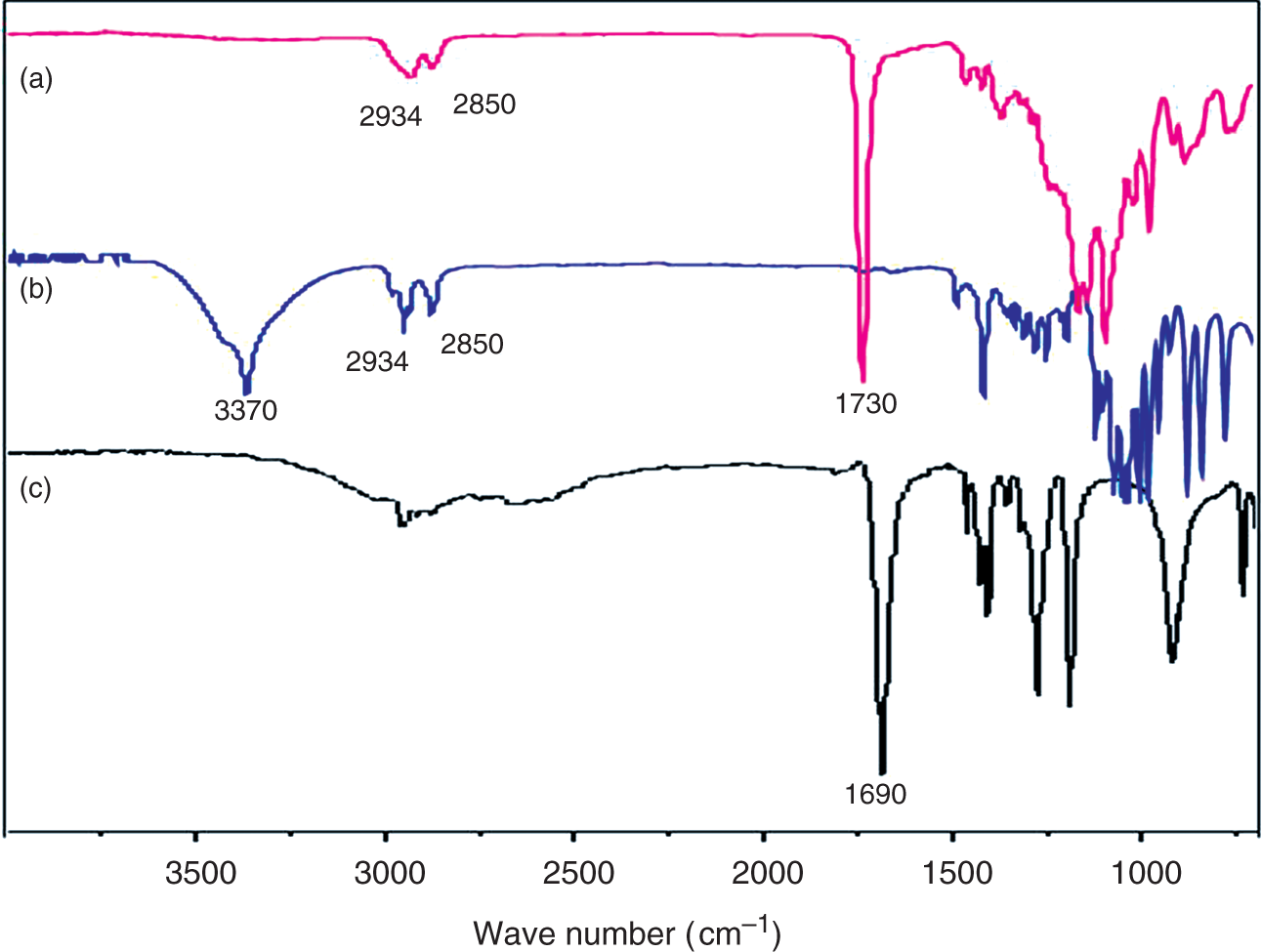
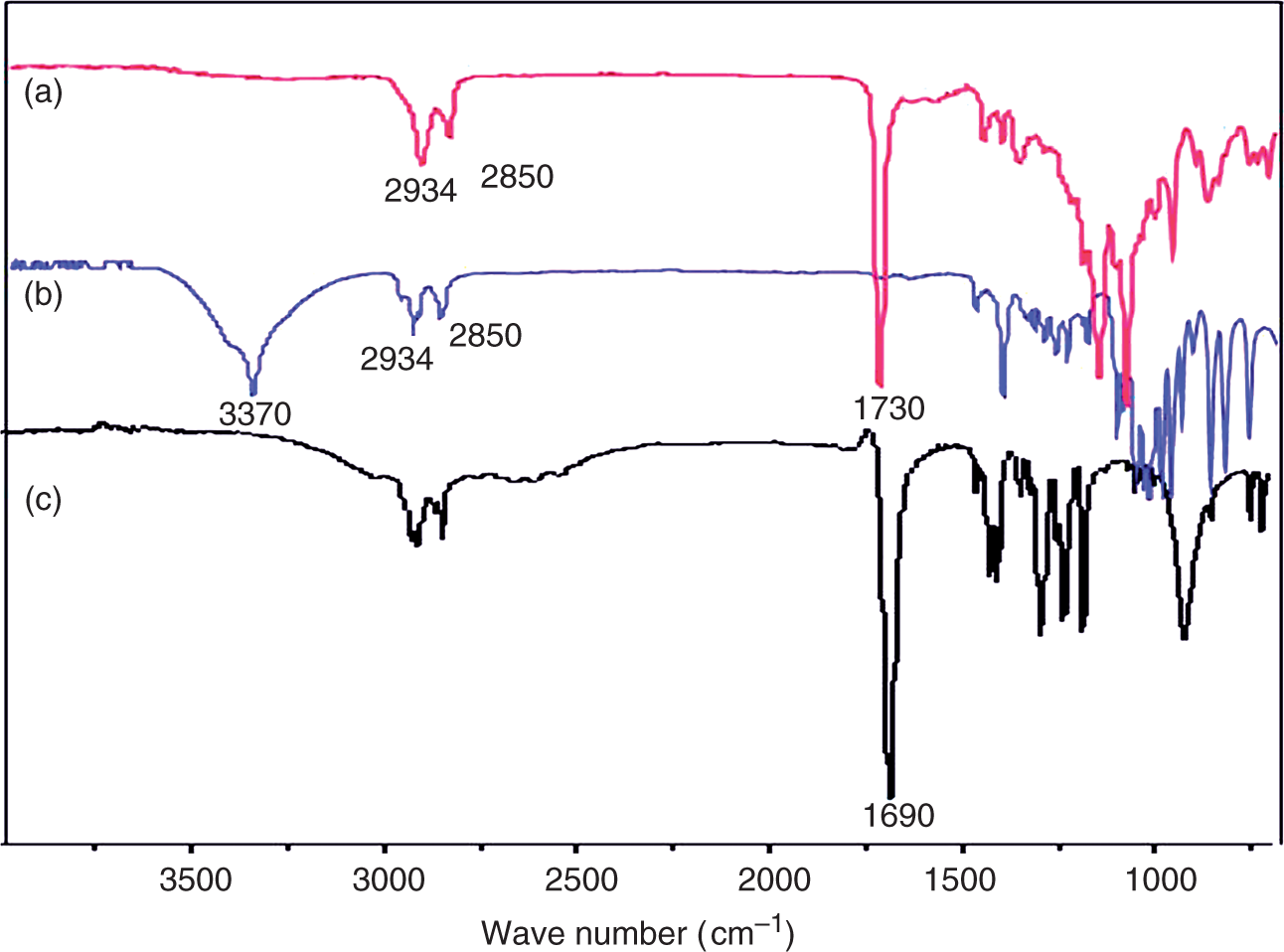
FT-IR is useful for rapid characterization of the functional groups present in the polymers. The FT-IR spectrum (Figures 1 to 3) confirmed that the PISU, PIA, and PIS structures had a pronounced carbonyl (C=O) peak of the ester bond at 1730 cm−1. Asymmetric and symmetric CH2 stretching bands were seen at 2934 and 2850 cm−1, respectively. The C–C stretching and C–H bending vibration bands were seen in the range from 1500 to 600 cm−1.
24
Compared with sebacic, adipic, and succinic acids spectra, the IR spectra of PISU, PIA, and PIS showed obvious differences in the intensity and shape of ester related
25
absorption bands at 1730 and 1690 cm−1; the band shift to 1730 cm−1 indicated that PISU, PIA, and PIS influenced the chemical structure of the ester groups. Figures 1 to 3 show the FT-IR spectra for PISU, PIA, and PIS. It can be seen in the profile of PISU, PIA, and PIS that the peak ascribed to the–OH stretching was not observed in the region around 3300 cm−1 confirming that the synthesis was successful.
FT-IR spectra of (a) PISU, (b) isosorbide, and (c) succinic acid. FT-IR: Fourier transform infrared; PISU: poly(isosorbide succinate). FT-IR spectra of (a) PIA, (b) isosorbide, and (c) adipic acid. FT-IR: Fourier transform infrared; PIA: poly(isosorbide adipate). FT-IR spectra of (a) PIS, (b) isosorbide, and (c) sebacic acid. FT-IR: Fourier transform infrared; PIS: poly(isosorbide sebacate).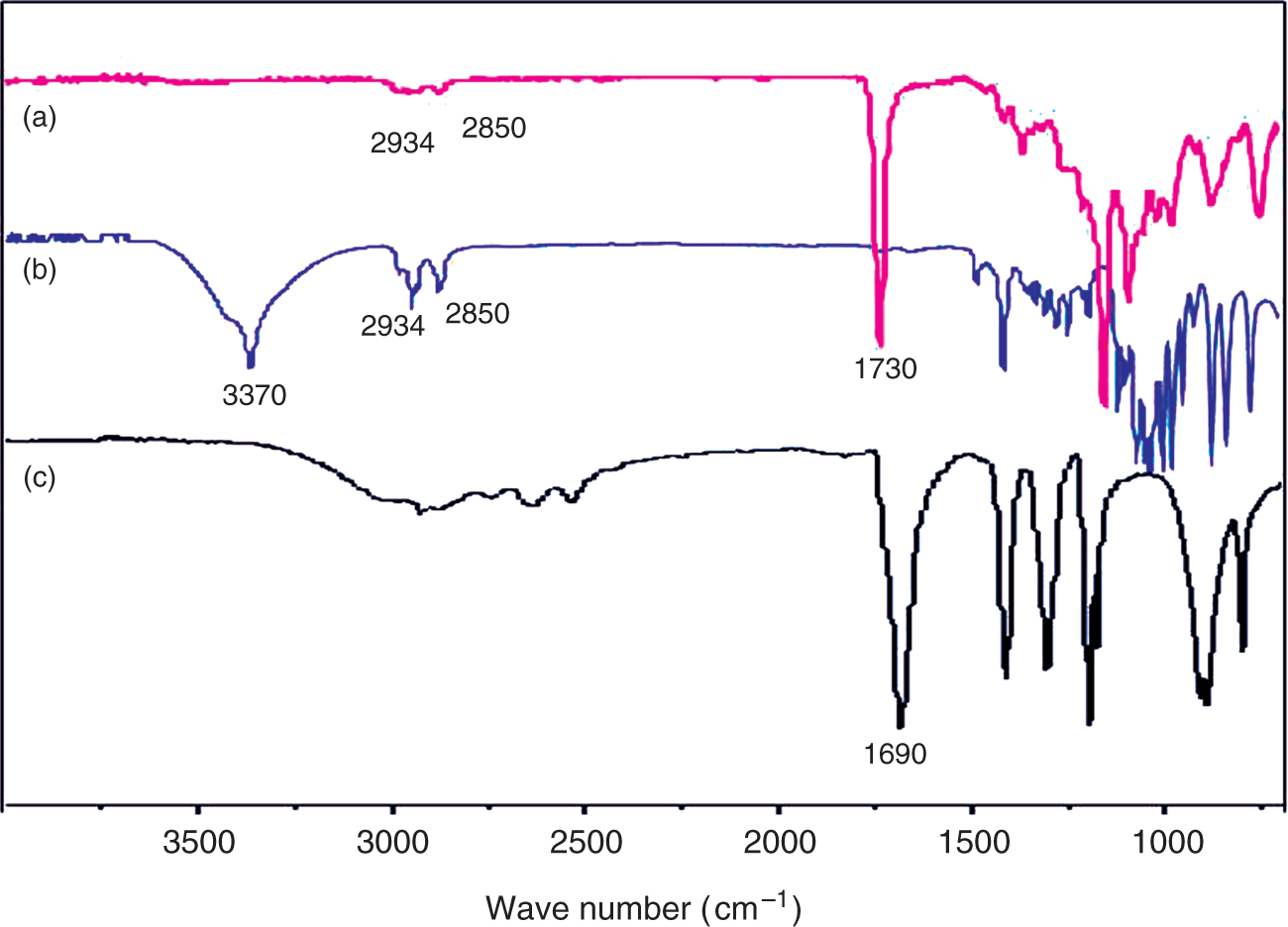
The chemical structure of PISU, PIA, and PIS were characterized by 1H-NMR spectra (Figure 4). The signals (Figure 4(b) and (c)) occurring at 1.3 (δH1), 1.6 (δH2), and 2.4 (δH3) ppm could be reasonably assigned to methylene protons of sebacic and adipic acids and at 1.3 (δH3) and 2.7 (δH1,
2
) ppm could be reasonably assigned to methylene protons of succinic acid. The signals also occurring from 3.7 (δH) to 5.2 (δH) ppm (Figure 4(a)) could be reasonably assigned to protons of isosorbide.
1H-NMR spectra of (a) PISU, (b) PIA, and (c) PIS. NMR: nuclear magnetic resonance; PISU: poly(isosorbide succinate); PIA: poly(isosorbide adipate); and PIS: poly(isosorbide sebacate).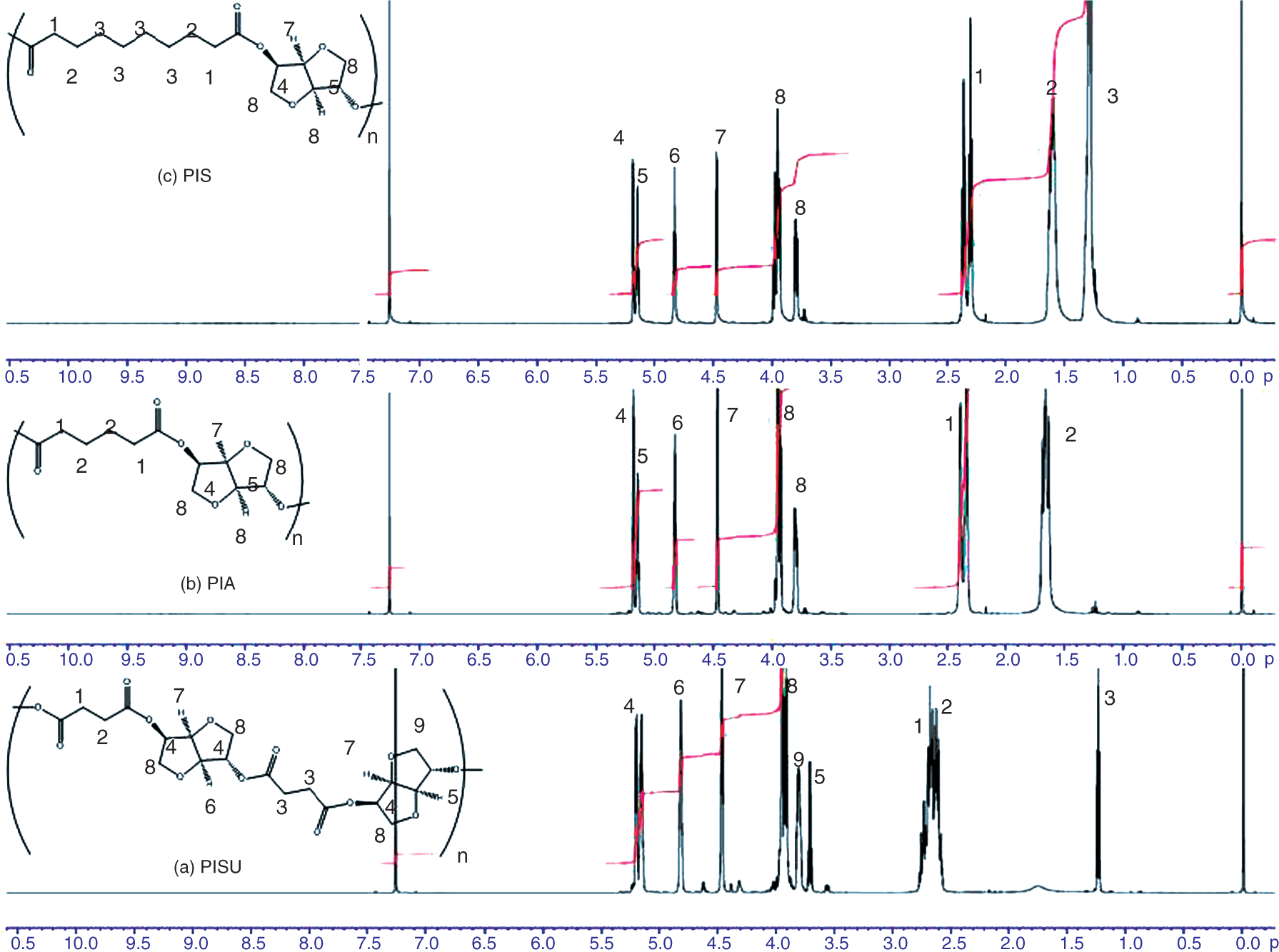
Molecular weights and thermal properties of resulting PIS, PIA, and PISU.
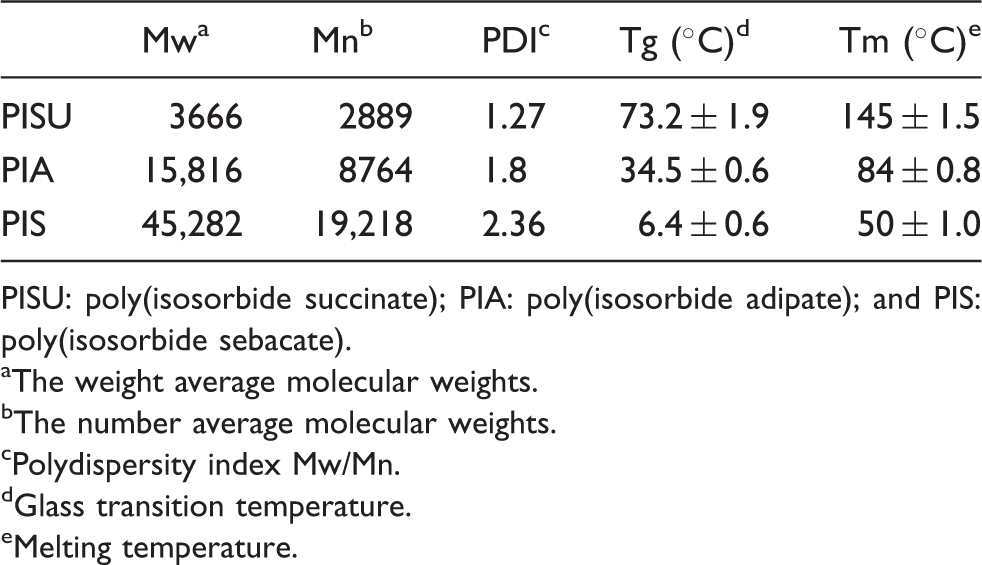
PISU: poly(isosorbide succinate); PIA: poly(isosorbide adipate); and PIS: poly(isosorbide sebacate).
The weight average molecular weights.
The number average molecular weights.
Polydispersity index Mw/Mn.
Glass transition temperature.
Melting temperature.
It is important to understand the thermal behavior of polymers developed for biomedical applications, because it determines the physical properties of the materials. For example, if the glass transition temperature (Tg) value of the polymer is above that of body temperature, the polymer is in the rubbery state. 26 In contrast, if the Tg-value is below body temperature, this indicates that the material is more rigid in structure. Table 1 presents the data obtained from DSC measurements of the three synthesized polymers. DSC analysis was conducted to characterize the thermal behaviors of PIS, PIA, and PISU. Only one glass transition was detected for all samples. The Tg’s of PIS, PIA, and PISU were 6.4°C, 34.5°C, and 73.2°C, respectively. Comparison of the limited previous work in the literature 27 – 29 for the PIS gives a Tg-values of around −10°C indicating the polymer presented here has a much higher molecular weight. The melting temperatures of the soft segments were 50°C, 84°C, and 145°C, indicating that PISU and PIA possessed a relatively high Tg.
TGA was used to confirm the composition of the copolymer as well as to evaluate the thermal stability of polyesters. Figure 5 shows the TGA scan results for PIS compared with PIA and PISU. PISU, PIA, and PIS showed their 5% weight loss at about 193°C, 268°C, and 344°C and completes at about 520°C, 540°C, and 561°C, respectively. TGA curves showed an increase in the initial thermal stability of polyester by increasing diacid length. It can be said that diacid length participation into the polymer chain length will be increased over molecular weight which contains more thermally stable long-chain diacid.
TGA curves of polyester: (a) PISU, (b) PIA, and (c) PIS. TGA: Thermogravimetric analysis; PISU: poly(isosorbide succinate); PIA: poly(isosorbide adipate); and PIS: poly(isosorbide sebacate).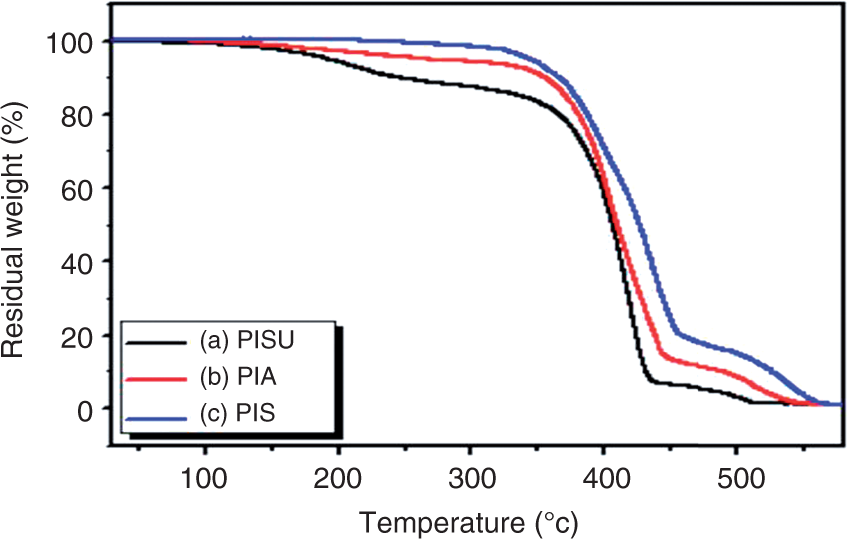
Figure 6 shows ultimate tensile strength and Young’s modulus for PISU, PIA, and PIS, respectively. Highly molecular weight polymer was obtained with PIS, with a mean stiffness (also called Young’s modulus) of 53 MPa, which was similar to that of ethylene vinyl acetate. The ultimate tensile strength was 10.5 ± 1.5 MPa.
(a) Ultimate tensile stress and (b) Young’s modulus graphs.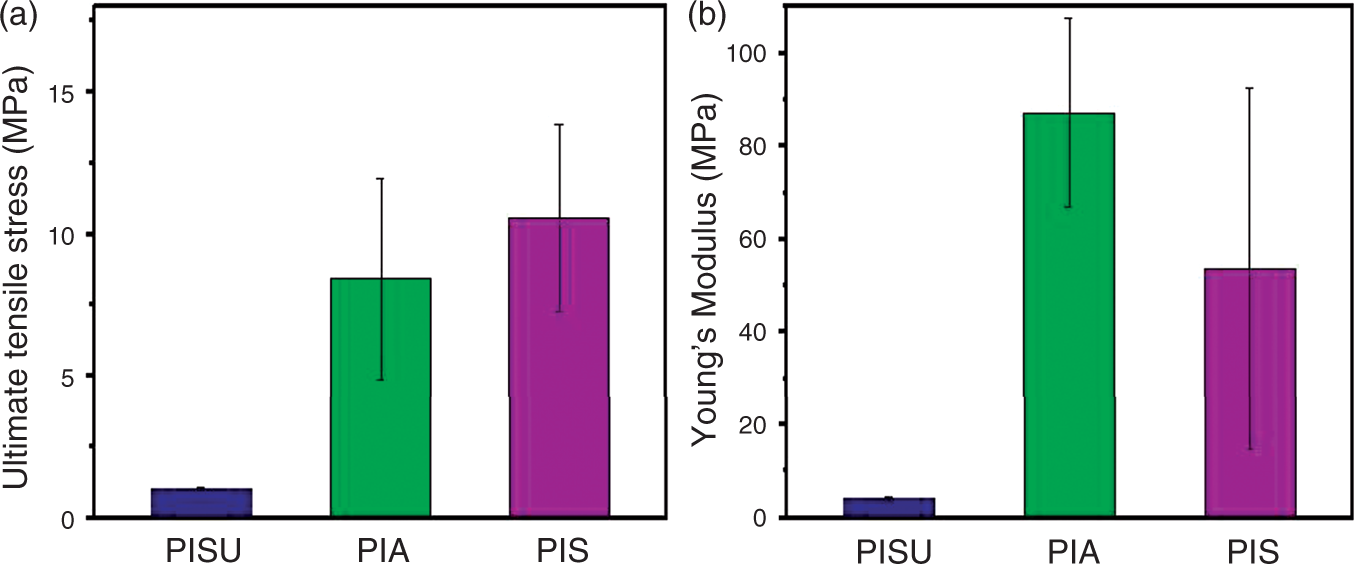
Total surface-free energy (SFEtot in mN/m) with the dispersive (SFEd) and polar part (SFEp) of PIS, PIA, and PISU according to the OWRK method, and contact angle measurements (°) with ultra-pure water (CAH2O) and hexadecane (CAHEX) as test liquids.

PISU: poly(isosorbide succinate); PIA: poly(isosorbide adipate); and PIS: poly(isosorbide sebacate).
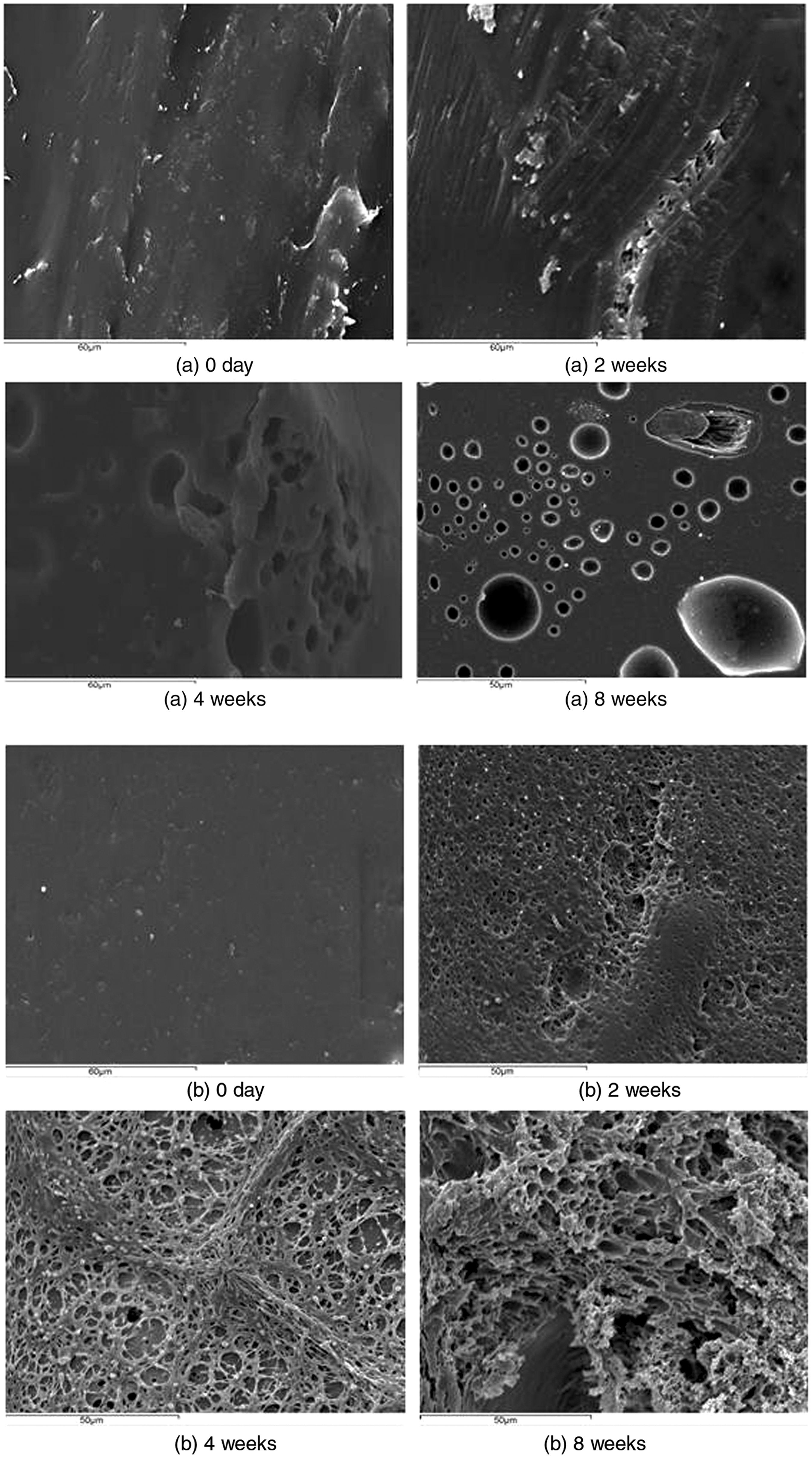
The degradation characteristic of PISU, PIA, and PIS were examined in vitro. Polymer samples were immersed in a phosphate buffer solution at 37°C. Figure 7 shows the percentage weight loss of polymers with time. It is evident that the polyesters are undergoing slow degradation except PIA. Scanning electron microscope (Model JSM-5410LV, JEOL, Japan) photographs showed the changes in film surface after degradation. Initially, all the surfaces appear relatively smooth, with few defects. The PIS was undergoing slow degradation but PIA and PISU were faster degradation than PIS, because high hydrophobicity of PIS is slower than rate of water diffusion into the PIA and PISU. For all polymers, the surface became rougher with time (Figure 8), although the extent of changes differed depending on the type of material tested.
In vitro degradation profile of PISU, PIA, and PIS. Residual weight is shown as a function of degradation time. PISU: poly(isosorbide succinate); PIA: poly(isosorbide adipate); and PIS: poly(isosorbide sebacate). Scanning electron micrographs of hydrolytic degraded polyester in phosphate buffer solution during 3 months (a) PISU, (b) PIA, and (c) PIS. PISU: poly(isosorbide succinate); PIA: poly(isosorbide adipate); and PIS: poly(isosorbide sebacate).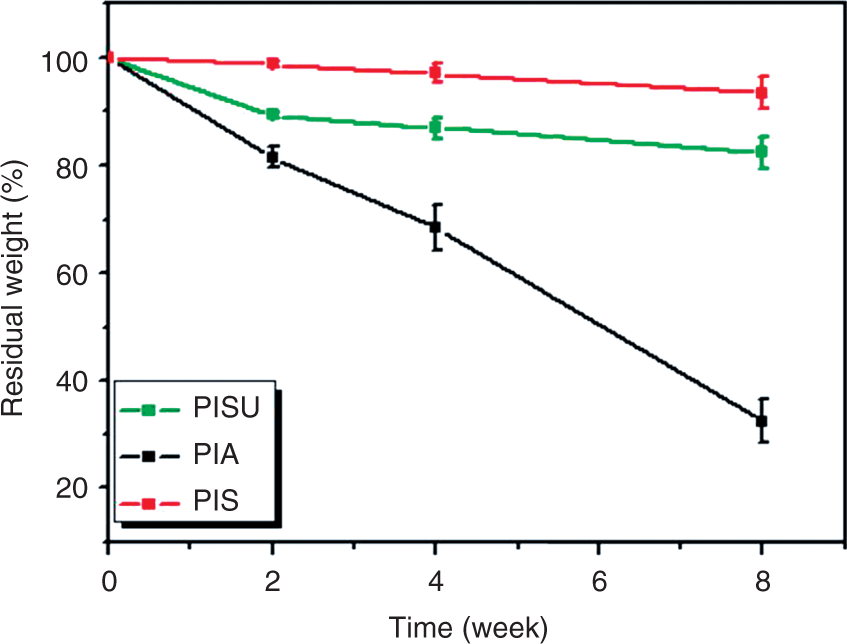
The in vitro cytocompatibility of the synthesized polymers was evaluated by monitoring the metabolic activity of rat bone marrow stromal cells (MSC) seeded on polymer surfaces. An examination of the relative cell number revealed that for primary MSCs, cell number on all polymer films was less than the control at all time points (Figure 9), whereas for the robust osteoblast cell line, relative cell number on polymer films after 5 days of culturing on polymer films proliferated at least as well as those on a culture plate. This suggests that PIS is cytocompatible and may be suitable for biomedical applications including tissue engineering, wound healing, and drug delivery.
MTS assay of rat bone MSCs cultured on PISU, PIA, and PIS wells showed that there were more metabolically active cells on PIS than on PISU during the first 5 days. Data are mean ± SD. Significantly different from the control (*p < 0.05, **p < 0.01, analysis of variance, and n = 3). Normalized values shown. MSC: marrow stromal cell; PISU: poly(isosorbide succinate); PIA: poly(isosorbide adipate); and PIS: poly(isosorbide sebacate).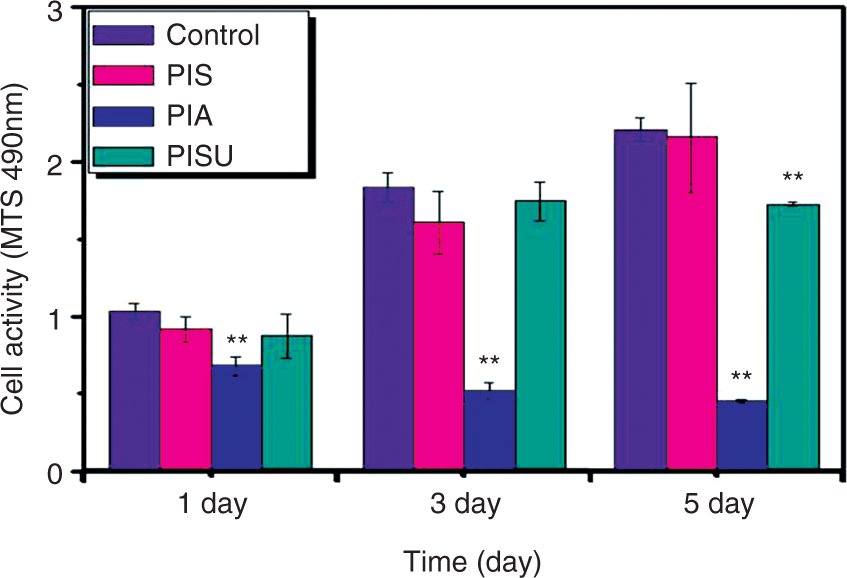
Discussion
In this study, we synthesized PIS, PIA, and PISU and compared physical, mechanical, and thermal properties. The synthesis methods presented here, offer advantages over previous synthesis strategies. Previous methods 26 – 29 employed solvent methods and stepwise polymerization. These methods also require the removal of synthesis by-products (e.g. acid such as HCl) and solvents via various purification methods. Our synthesis route is a simplified one-step reaction which gives higher yields and high molecular weights.
Good biocompatibility and biodegradability was confirmed. The result of thermal properties test of PISU, PIA, and PIS showed their 5% weight loss at about 193°C, 268°C, and 344°C and completes at about 520°C, 540°C, and 561°C, respectively. It can be said that diacid length participation into the polymer chain length will be increased over molecular weight which contains more thermally stable long-chain diacid. Factors influencing the biodegradation of degradable bioelastomers mainly include the chemical structure and composition, molecular weight and its distribution, cross-link bond type and cross-link density, condensed state (crystallinity/amorphousness), surface property (hydrophilicity/hydrophobicity), porosity, and biological conditions in bodies (e.g. pH value). The bioelastomers with anhydride and orthoester structures usually hydrolyze most rapidly, followed by the ones with ester and amide structures; the bioelastomers with low molecular weight, low cross-link density, low crystallinity and glass transition temperature, strong hydrophilicity, and high porosity will degrade fast. 32 Degradable bioelastomers also degrade by the way of surface degradation (or surface erosion) and/or bulk degradation as other biodegradable polymers do. 33 Recording the mass loss (or weight loss) and molecular weight, and observing the shape and morphology of degradable bioelastomers during in vitro and in vivo degradation are the most common, simple, and direct methods to describe the degradation behavior of these materials. Surface degradation usually occurs when the degradation rate of a material is higher than the rate of water diffusion into the material. The surface degradation rate is easily predictable because the degradation first occurs on the surface of the material 34 and is controlled by the ester linkage which hydrolyzes. In the in vitro degradation test, PIS was undergoing slow degradation but PIA and PISU were faster degradation than PIS, because high hydrophobicity of PIS is slower than rate of water diffusion into the PIA and PISU. After 2 months, residual weight percentage of PISU, PIA, and PIS were 82%, 32.5%, and 93.5%, respectively. The result of in vitro cytocompatibility test of polymer, relative cell number on PIS and PISU films after 5 days of culturing on polymer films proliferated at least as well as those on a culture plate. But we could confirm that did not proliferate on PIA film, because PIA degradation rate is much faster than PIS and PISU. Especially, PIS have great mechanical strength, thermal stable, biodegradability, and cytocompatibility.
Conclusion
The series of polyester based on isosorbide was synthesized from succinic, adipic, and sebacic acids via simple non-solvent polycondensation with low-toxic catalyst that could have significant clinical applications. The in vitro cell culture with mouse osteoblasts showed that the cells effectively grew on the new types of high molecular PIS films. Due to their versatile properties, including Tg, Tm, biodegradability, and mechanical strength, these high molecular PIS have great potential for biomedical use.
Footnotes
Funding
This work was supported by WCU Program through the National Research Foundation of Korea (NRF) funded by the Ministry of Education, Science and Technology (No. R31-10069).
Acknowledgments
This study was supported by WCU Program through the National Research Foundation of Korea (NRF) funded by the Ministry of Education, Science and Technology (no. R31-10069).