






Abstract
This article summarizes and synthesizes empirical research on relationships between youth physical activity and urban form across several disciplines, for a planning audience. It highlights how physical activity is characterized, introduces ecological theories of physical activity behavior, provides a conceptual model of interactions between urban form and other influences on youth physical activity behavior, and discusses implications of new evidence for future research and policy. Further research is needed to address several gaps and inconsistencies across studies and to build on recent methodological developments. Despite the limitations of existing research, it is evident that urban form can either serve to constrain or promote physical activity. Urban form interventions have the potential to result in lasting influences on the behavior of large populations of youth.
Background
Widespread evidence indicates that many children and adolescents in the United States and internationally do not engage in adequate physical activity (Sisson and Katzmarzyk 2008). Findings vary depending on the physical activity measurement methodology used (Trost 2007), but studies generally point toward low and in some cases declining engagement in physical activity (Troiano et al. 2008; Butcher et al. 2008; McDonald 2007a). Troiano et al. (2008) found that 42 percent of U.S. children aged 6 to 11 obtained the recommended 60 minutes per day of physical activity. In adolescents aged 12 to 19, this proportion drops to 8 percent.
This is consistent with other findings showing that children engage in progressively less physical activity as they age (Nader et al. 2008; Bélanger et al. 2009). Thus, older children are often described as being at risk of developing physically inactive lifestyles (Poulsen and Ziviani 2004). Other vulnerable populations include girls and children from lower socioeconomic status (SES) households (Poulsen and Ziviani 2004). Low prevalence of specific types of physical activity has also been noted, with patterns of walking and cycling to school particularly well documented. Martin, Lee, and Lowry (2007) found that 47.9 percent of children aged 9 to 15 years, who lived within one mile of their school walked or cycled to school at least one day per week. However, 65 percent of children sampled lived more than one mile from school. Distance to school has been shown to be an overriding barrier to active travel in youth (Ewing, Schroeer, and Greene 2004; Frank 2008; Schlossberg et al. 2006; Frank 2008). When considering all children (regardless of the distance to their school), McDonald (2007a) found that the number of children walking or biking to school in the United States dropped from 40.7 percent in 1969 to 12.9 percent in 2001.
Such findings have prompted considerable interest in the study of correlates of physical activity in youth. Inadequate physical activity may be directly linked to trends in increasing childhood overweight and obesity (WHO 2006), because weight status is a function of both energy intake (diet) and energy expenditure (via resting metabolic processes and physical activity). In their recent review, Jiménez-Pavón, Kelly, and Reilly (2010) found consistent evidence of negative associations between objectively measured physical activity and adiposity of children. Overweight and obesity in childhood are in turn associated with a range of health problems including increased prevalence of type 2 diabetes; sleep apnea and asthma; hypertension and adverse lipid profile; social stigma and decreased self-esteem; back pain and other orthopedic problems; and nonalcoholic fatty liver disease and other gastrointestinal problems (Denney-Wilson and Baur 2007; Yeung and Hills 2007). Benefits of physical activity among youth more generally include promotion and maintenance of muscle mass and improved aerobic fitness; reduced risk of osteoporosis in later life by enhancing peak bone mineral density; and improvements in self-esteem as well as reductions in anxiety, stress, and depression (Armstrong and Welsman 1997; Byrne and Hills 2007; Sallis and Owen 1999; Tomson et al. 2007). Finally, some evidence exists of tracking of both physical activity behavior and health consequences from childhood to adolescence and adulthood (Kristensen et al. 2008; Chin A Paw et al. 2007; Denney-Wilson and Baur 2007; Gordon-Larsen, Nelson, and Popkin 2004), further highlighting the need to promote physical activity starting at a young age.
Interest in studying potential environmental influences on physical activity has been prompted by a recognition that individuals are likely influenced not only by intrapersonal characteristics (e.g., age, gender, and psychological traits) but also by the environments in which they are situated. In particular, because physical activity consists of diverse behaviors, it is likely to be influenced by a wide variety of factors. Models taking into account both intrapersonal and environmental correlates of physical activity are therefore more realistic than those addressing only intrapersonal factors (Sallis and Owen 1999). Urban form characteristics may in turn constitute an important subset of environmental influences on physical activity behavior because they characterize environments to which children are regularly exposed. Interest in this topic within the public health community continues to grow over time. This is exemplified by the recent publication of a policy statement entitled The Built Environment: Designing Communities to Promote Physical Activity in Children by the American Academy of Pediatrics (Committee on Environmental Health 2009).
Purpose and Significance
This article synthesizes public health and planning literature on the relationships between youth physical activity and urban form where they live or attend school. It is written for a planning audience. This review updates and expands on past reviews, including Davison and Lawson (2006), which has most closely examined the subject, and reviews examining specific components of physical activity such as active commuting (McMillan 2005; Davison, Werder, and Lawson 2008; Panter, Jones, and van Sluijs 2008; Pont et al. 2009; Sirard and Slater 2008) or groupings of correlates such as those relating to neighborhood safety (Carver, Timperio, and Crawford 2008a; Limstrand 2008). With the exception of McMillan (2005), these reviews were published in health science journals. Missing from these past reviews is a general synthesis of research on urban form influences on youth physical activity targeted toward planners.
First, approaches to characterizing physical activity are presented to illustrate typical dependent variables used in the study of built environment correlates of physical activity. Next, an overview of correlates of physical activity behavior within an ecological framework is provided. This overview provides the context for studies of built environment correlates of physical activity behavior, by situating these correlates within a broader typology. The results of empirical studies of objectively measured built environment correlates are then presented. Following this discussion, interactions of built environment characteristics with individual and social environment characteristics are considered. Finally, implications for future research and planning practice are highlighted.
Characterizing Physical Activity Behavior
Physical activity refers to any form of muscular movement that results in energy expenditure (Sallis and Owen 1999) and as a result encompasses diverse behaviors ranging from free play to walking, running, and organized sports. Physical activity is commonly described in terms of duration, frequency, intensity, and type or mode (Katzmarzyk and Tremblay 2007). The three dimensions of frequency, duration, and intensity together represent the major quantitative dimensions of physical activity and can therefore be used to create measures of overall volume of physical activity, which can subsequently be linked to particular health benefits. For example, Australian Government guidelines specify that children engage in 60 minutes (duration) of moderate to vigorous physical activity (intensity) per day (frequency; Byrne and Hills 2007). Similarly, U.S. guidelines specify a minimum of one hour per day of physical activity, most of which should be comprised of moderate or vigorous intensity aerobic activities (CDC 2008).
Duration refers to the length of time that youth engage in physical activity, often expressed in terms of specific episodes or bouts of physical activity. Children spend most of their time in low-intensity activities interspersed with sporadic bouts of high-intensity physical activity (Tomson et al. 2007). Longer bouts of physical activity may however be associated with additional health benefits above and beyond those associated with more sporadic physical activity (Mark and Janssen 2009). Alternately, duration may simply refer to the total amount of time spent in physical activity over a specified time frame, as in the physical activity guidelines noted above. Frequency refers to the number of bouts of physical activity engaged in over a given time frame, usually a day or a week. Specific activities may occur frequently in a child’s regular routine, and targeting these types of activities may present opportunities for increasing overall physical activity levels. For instance, walking to and from school may be an important source of physical activity for children because it can become part of their regular routine. More generally, children may benefit more from interventions supporting unstructured activities like active free play that can occur in short bouts spontaneously throughout the day, rather than structured activities that may require more preplanning.
Intensity describes the level of exertion at which a physical activity is performed or the “magnitude of the physiologic response to physical activity” (Marshall and Welk 2008). Intensity is substantially more difficult to gauge than either duration or frequency, and debates continue regarding the definition and measurement of different levels of intensity (Guinhouya et al. 2006). Intensity of physical activity is usually expressed in terms of three specific thresholds: light, moderate, or vigorous (CDC 2007). These may in turn be contrasted with lower intensity sedentary activities. Specific activities may be performed at different levels of intensity. Walking for instance may commonly be performed at either light or moderate intensity (Andersen et al. 2006; Jago, Baranowski, and Baranowski 2006). Some health benefits may only be associated with a certain minimum level of intensity. The majority of health benefits are generally assumed to be associated with physical activity of at least moderate intensity (Guinhouya et al. 2006). Because of this, measures of moderate-to-vigorous physical activity (MVPA) are commonly cited dependent variables (e.g., de Vries et al. 2007; Kligerman et al. 2007) and generally form the basis for government physical activity guidelines.
While quantitative dimensions of physical activity are useful for describing overall volume of physical activity, qualitative descriptors are also needed to distinguish between different types or modes of physical activity that may be influenced by unique factors and therefore require unique approaches to description and analysis. Two examples of specific types of physical activity frequently referenced in studies of environmental correlates of physical activity are considered here: independent mobility or activities and active transportation. Independent activities are of interest in part because of the wide ranging benefits for children beyond those of supervised activities. These include experiential learning and the discovery of personal limits (Malone 2006; Ungar 2007), the acquisition of environmental knowledge (Risotto and Tonucci 2002), and greater opportunities for social interaction (Boardman and Saint Onge 2005). Further, the supervision and chauffeuring of children may also reduce the quality of life for caregivers, by adding trips, limiting work schedules, or reducing job opportunities (McMillan 2005). Both independent and supervised activities occur throughout the environment, but the extent of independent mobility granted to children may be particularly sensitive to neighborhood built and social environment characteristics as perceived by parents. While site-specific design might encourage limited independent mobility (e.g., design of a local playground to incorporate adequate lighting and clear sight lines), truly independent mobility may require that the built environment is designed for safe accessibility by children in a much more encompassing sense, incorporating elements such as neighborhood traffic calming (Freeman 2006; Tranter 2006).
Active transportation refers to physical activity for the purposes of transportation, primarily walking and cycling (Sallis et al. 2004). Active transportation may be an independent activity or supervised (e.g., walking school buses). The predominant form of active transportation for children of interest to researchers to date is travel to school (e.g., Evenson et al. 2006; Timperio et al. 2006). Active transportation is of particular interest to planners because it takes place in large part on transportation facilities (e.g., roads and sidewalks) and is dependent on the design and connectivity of these facilities. Active transportation may also lead to other physical activity opportunities at parks or recreational facilities. Finally, active transportation is also associated with health benefits that extend beyond the individual child, to the broader neighborhood as a whole, especially when it substitutes for transportation by private vehicles. These benefits include reduced noise, air pollution, and traffic hazards associated with reduced traffic (Gleeson and Sipe 2006; Wilson, Wilson, and Krizek 2007). In a recent study of daily trips made by children in the Greater Montreal Area, Morency and Demers (2009) found that 33 percent of trips under one kilometer were motorized trips, providing one example of the potential for substitution of motorized trips with active transportation.
Typical Dependent Variables in Research on Environmental Correlates of Physical Activity Behavior
Studies of environmental correlates of physical activity specify a variety of different measures of physical activity as dependent variables. While inconsistencies in measure specification often limit direct comparability across studies, groupings of similar variables can be identified, as illustrated in Table 1.
Dependent Variables Commonly Used in Studies of Environmental Correlates of Physical Activity
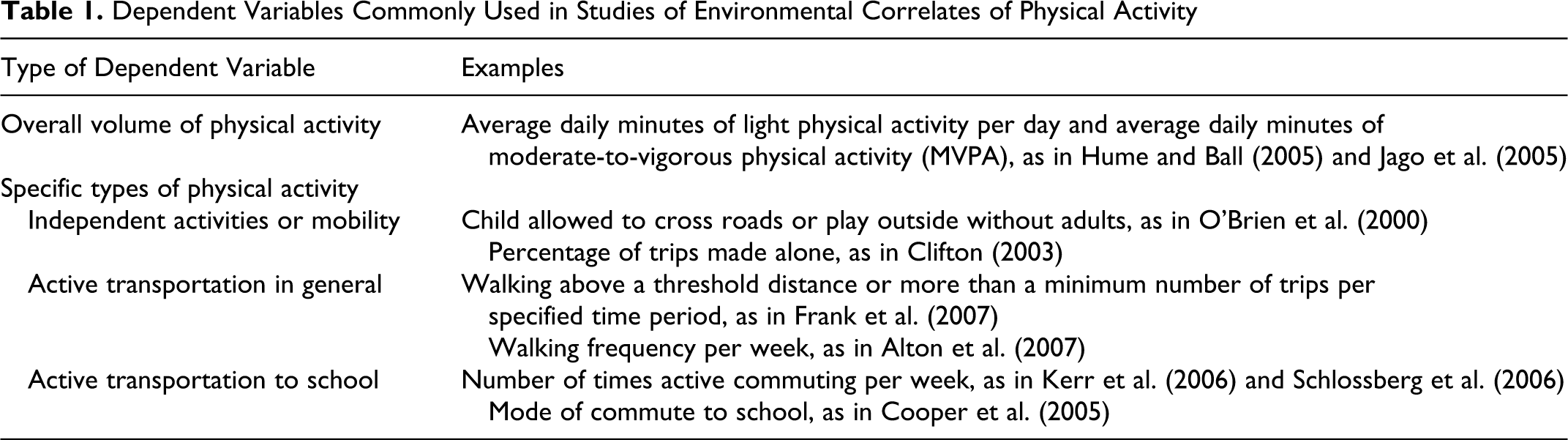
The dependent variables identified in Table 1 are divided into two broad categories: measures of overall volume of physical activity (e.g., minutes of MVPA per day) and measures of specific types of physical activity (e.g., active transportation to school), each of which have associated benefits and disadvantages. Studies considering specific types of physical activity are important for understanding behavior-specific correlates of physical activity and behavior-specific policy responses. For instance, active transportation to school may be promoted through school siting policies and safe route to school programs, whereas independent mobility may be fostered through policies that address real and perceived safety more broadly, such as traffic calming initiatives. In this vein, de Vries et al. (2010) found different environmental correlates of walking and cycling among children according to trip purpose and commuting mode. However, studies using measures of specific types of physical activity also may need to be interpreted with caution because of the possibility of substitution between different types of physical activity. This possibility can be described in terms of the “activity stat” hypothesis, whereby an individual is hypothesized to maintain relatively constant total physical activity levels over time by compensating for physical activity in one time period with a corresponding reduction in activity in another period (Baggett et al. 2010). The alternative is the “displacement” hypothesis that conversely suggests that sedentary activities may displace physical activity and vice versa (Baggett et al. 2010). Further research is required to clarify which of these competing hypotheses is valid in specific contexts.
One type of physical activity that has been particularly well studied in this regard is active commuting to school. In one study, Cooper et al. (2005) found that both boys and girls who walked to school were more physically active in general than those who traveled by car. Similarly, Cooper found that boys (but not girls) who cycled to school were more physically active than those traveling by car. Cooper noted that the journey to school itself contributed relatively little to overall physical activity levels, possibly suggesting that active commuting might somehow engender in children a motivation to engage in additional physical activity. An alternate hypothesis is that naturally active children choose to travel by active means. Based on an evaluation of weekend physical activity data, Cooper concluded that observed differences in overall activity levels could not be explained by the natural differences in activity behavior of children, but rather was related to active commuting. Faulkner et al. (2009) based on a broader review of studies examining associations between active transportation to school and physical activity outcomes also conclude that children who actively commute to school tend to be more physically active overall than those driven or bused to school. More recent studies generally confirm this conclusion (Abbott et al. 2009; Chillon et al. 2010; Cooper et al. 2010b; Daly-Smith et al. 2010; King et al. 2010; van Sluijs et al. 2009) and thus appear to support the displacement hypothesis. Nonetheless, such findings do not necessarily extend to other activities.
Active commuting to school may be a special case because it is a regular, routine source of physical activity. Other incidental recreational activities may in contrast substitute for each other, with children compensating for an increase in one type of physical activity by limiting other types of activities, consistent with the activity stat hypothesis. Hargströmer et al. (2009) lend support to this possibility, finding that an organized weekly exercise intervention occurring over 13 weeks resulted in decreased total daily physical activity among obese adolescents participating in the trial. Other recent studies appear to support the displacement hypothesis by demonstrating that volume of physical is positively associated with outdoor play (Cooper et al. 2010a; Nilsson et al. 2009) and independent mobility (Page et al. 2009), while still others report null findings (Veitch, Salmon, and Ball 2010). In light of such mixed findings, the possibility of compensation introduces some degree of uncertainty as to the implications for overall volume of physical activity when specific types of physical activity are used as dependent variables. The time scale over which compensatory effects occur in particular requires further study, because they may occur over longer time frames than typically considered (Eisenmann and Wickel 2009) and further longitudinal studies may also be necessary to more conclusively evaluate these effects.
Ecological Models of Physical Activity Behavior
As outlined by Spence and Lee (2003), there is no single universally accepted theory or model of physical activity behavior. What is increasingly agreed upon is that there are a wide variety of correlates of physical activity, spanning individual, physical environmental and social environmental characteristics (Barnett et al. 2006; Sallis and Owen 1999; TRB 2005). Theories of physical activity behavior may be broadly described as specialized, emphasizing a specific influence or group of related influences, or integrative, emphasizing a wider range of influences. Examples of the former include many theories developed in the health sciences that emphasize individual psychological characteristics, including the theory of planned behavior, the transtheoretical model, and the health belief model (e.g., Craig, Goldberg, and Dietz 1996; Strauss et al. 2001). A limitation of such theories is that individual psychological characteristics comprise only one potential branch of the entire set of correlates of physical activity. Acknowledging this limitation, researchers are increasingly drawing on models that emphasize a wider variety of influences, and in particular, environmental influences (e.g., de Bruijn et al. 2006; Wechsler et al. 2000). Many recent physical activity studies thus rely on a set of integrative models referred to as ecological models.
Characteristics of Ecological Models of Physical Activity Behavior
Ecological models share a number of important features in common. First, these models are premised upon the nesting of individuals within multiple levels of environments or sociospatial contexts (Sallis and Owen 2002). These environments may correspond to specific physical settings such as neighborhood parks or they may describe social environments such as workplaces or jurisdictions responsible for policies that influence behavior. For youth, the home and the school are likely particularly important environments because of the proportion of time spent in these settings. Of greater interest to planners, neighborhoods environments may also play an important role in shaping youth physical activity.
Most empirical studies of urban form influences on physical activity behavior focus on the neighborhood surrounding a child’s home (e.g., Roemmich, Epstein, and Raja 2007). However, it is logical that multiple neighborhoods where children spend their time would be relevant. The need to consider multiple neighborhood environments is highlighted by an ecological model proposed by Lee and Moudon (2004), the “Behavioral Model of Environment” or BME. While this model best describes environments relevant to travel between two points, it nonetheless provides a useful illustration of the importance of multiple environments for influencing physical activity behavior more broadly. In this model, environmental settings are identified based on the origin, the route, and the destination of a trip. According to this model, characteristics of each of these are highlighted as potentially influencing physical activity, in addition to characteristics of the areas surrounding the origin and destination (Lee and Moudon 2004). Applied to youth physical activity, the BME might for instance specify the following as important environments: a child’s home, their school, the route between the home and the school, and the neighborhoods surrounding both the home and the school.
An additional complication in identifying environments that may be relevant for influencing physical activity patterns is that some environments may have clearly definable boundaries, while others may not. An example of a clearly defined, discrete environment is the school, which may be delimited by a school building together with the school property it is located on. In contrast, the neighborhood around a child’s home cannot be clearly demarcated. For analytical purposes, neighborhood definition may involve use of predefined spatial units such as census tracts or municipally defined neighborhoods. The alternate, more common approach is to define a “buffer” centered around a child’s home, although there is no consensus on what size or shape this should take.
A second characteristic of ecological models of physical activity behavior, following from the first, is that specific characteristics of environments may be identified which influence physical activity behavior (Sallis and Owen 2002). An ecological model might therefore specify that in addition to individual characteristics (e.g., age and gender), household characteristics (e.g., household income and car ownership) and neighborhood characteristics (e.g., access to parks) all exert independent influences on physical activity patterns. In some cases, similar measures may be used to characterize multiple environments. For instance, measures of SES assessed at both the household and the neighborhood levels may be independently associated with physical activity patterns.
An Ecological Framework for Conceptualizing Correlates of Child Physical Activity
A framework for conceptualizing correlates of child physical activity behavior is presented in Figure 1. This model illustrates: (1) the nesting of children within multiple environments; (2) the hierarchical nesting of proximate within more extensive environments (e.g., the home and the school within neighborhoods); and (3) the social and physical components of environments.

An ecological classification of correlates of child physical activity. Examples of correlates of physical activity are illustrated in the unshaded boxes to the right, corresponding to the categories indicated by the shaded boxes on the left. This review focuses on neighborhood built environment correlates (corresponding to the highlighted box).
Each of the boxes highlighted in this illustration represents major groupings of correlates of physical activity, corresponding to the individual child or the environments they are situated within. For example, correlates corresponding to the individual child include age, gender, weight status, and a variety of psychological characteristics (Kahn et al. 2008; Van der Horst et al. 2007). Relevant psychological characteristics include self-efficacy, which refers to an individual’s confidence in their ability to engage in physical activity (Strauss et al. 2001), and norms, which refer to the motivation to comply with the perceived beliefs of others (Sallis and Owen 1999). Individual characteristics also include perceptions of environmental characteristics such as perceptions of neighborhood safety, discussed at length below.
Physical activity behavior of children is also likely shaped by proximate environments they are regularly exposed to such as their home and school. Relevant characteristics of each of these environments may be further classified as either social or physical. Physical correlates corresponding to the school environment include availability of recreational features (Barnett et al. 2006; Nichol, Pickett, and Janssen 2009), school and play area size (Cradock et al. 2007), and classroom design (Lanningham-Foster et al. 2008). Social influences related to the school include peer and staff support (Barnett et al. 2006; Hohepa et al. 2007). With regard to the home environment, relevant physical characteristics include yard size (Spurrier et al. 2008), level of access to sedentary activities such as TVs (Singh et al. 2008), and availability of home exercise equipment, although findings in this regard are mixed (Davison and Lawson 2006). Social correlates associated with the home environment largely center around parents, who can influence physical activity patterns of their children through engagement and modeling of physical activity behaviors (Bauer et al. 2008; Hohepa et al. 2007; Ornelas, Perreira, and Ayala 2007).
Children’s homes and schools are in turn situated within neighborhood and regional environments. Relevant characteristics of neighborhood social environments include measures of neighborhood disorder (Molnar et al. 2004), neighborhood SES (Oliver and Hayes 2005), and neighborhood social interactions or social capital (Carver et al. 2005; Hume et al. 2009b). Social aspects of regional environments that may influence physical activity patterns include social marketing campaigns (Mccreedy and Leslie 2009) and school district policies concerning physical education. The focus of the following review is on the neighborhood physical environment, as indicated by the highlighted box in Figure 1. In particular, characteristics of the neighborhood built environment are focused on, in conjunction with correlates that likely interact with these characteristics to shape youth physical activity (e.g., parent and child perceptions and child age). In addition to elements of the built environment (urban form characteristics), the physical environment of neighborhoods and broader regional environments encompasses elements of the natural environment. Characteristics of the natural environment, which have been associated with child physical activity patterns include weather or season (Tucker and Gilliland 2007; Shephard and Aoyagi 2009) and topography (Timperio et al. 2006). Characteristics of the built environment thought to influence youth physical activity are now considered.
Empirical Evidence of Urban Form Influences on Child Physical Activity Patterns
Figure 2 presents a categorization of urban form influences on youth physical activity. Based on this framework, elements of the built environment are classified as relating to access (how close and well connected different land uses are) or design of streets and play spaces. Elements of the built environment may be assessed using either measures of perceptions assessed with survey data or objective measures. Objective measures are generally derived using observational methods (audits) or archival data sets (e.g., property tax records and census data), which can be spatially referenced and integrated using Geographic Information Systems. The emphasis of this review is on studies using objective measures: unless otherwise noted, studies referred to here employed objective measures of urban form characteristics. Following a review of studies examining unique influences of individual built environment characteristics according to the typology presented in Figure 2, studies examining differences in physical activity patterns based on neighborhood type are considered. Finally, examples of recent methodological developments are highlighted. Examples of studies examining measures of parent and child perceptions of neighborhood environments are discussed in the following section, in the context of interactions between urban form and other correlates.
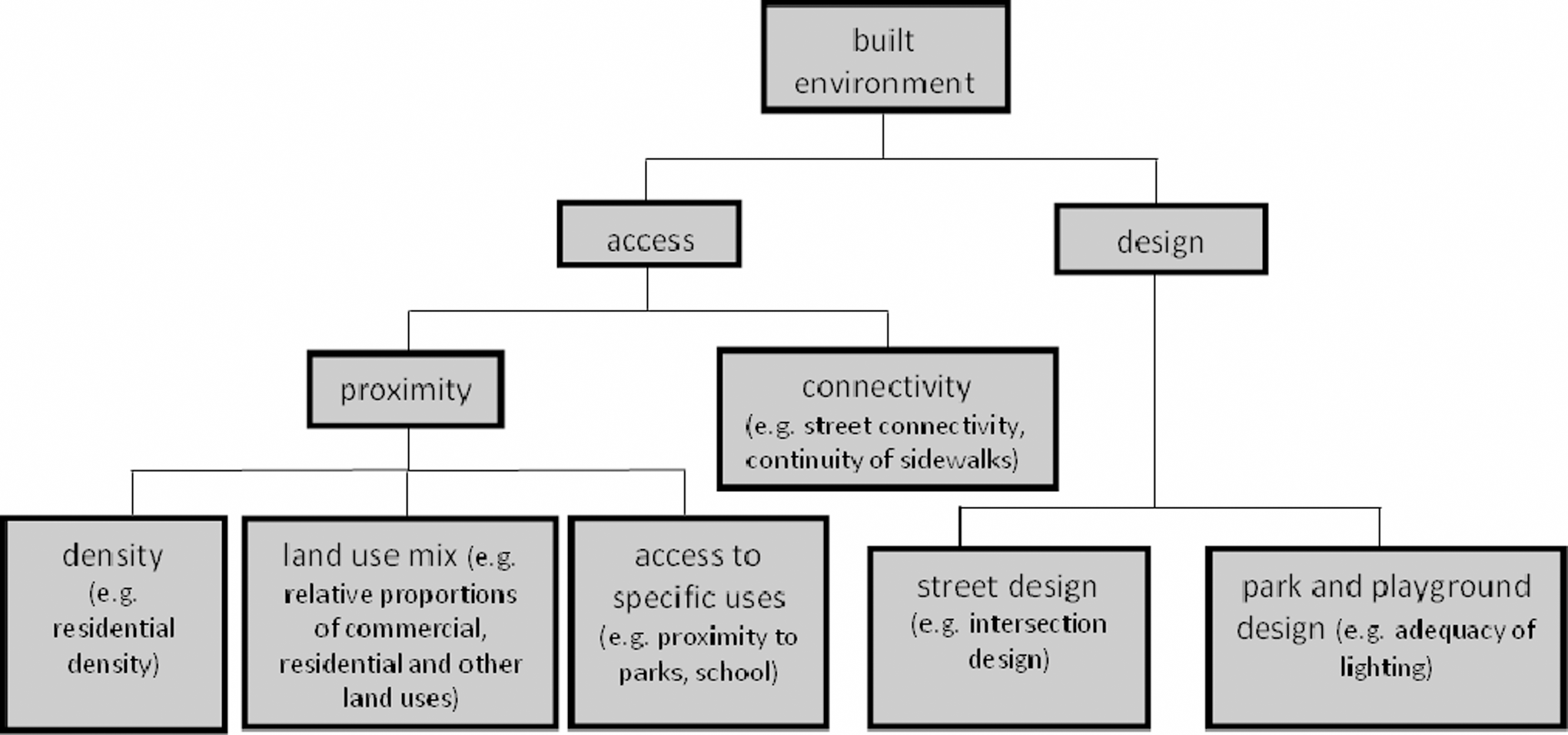
A typology of built environment correlates of physical activity.
Access-Related Characteristics of Urban Form
Access-related characteristics of urban form are hypothesized to influence physical activity patterns by increasing the physical proximity of origins and destinations. This may translate into: active transportation: for example, in higher density environments, it may be easier for children to walk or bike to a friend’s house than in lower density environments and/or physical activity at specific sites: for example, parks located close to where children live may be more likely to be used by children for play.
These mechanisms may be complementary, with accessible recreation sites possibly translating into increased physical activity through both active transportation and physical activity on site (Grow et al. 2008; Sallis et al. 2004).
Density and land use mix
In addition to the above noted mechanisms, both density and land use mix might also encourage if not enable physical activity by increasing the number of eyes on the street, thus engendering a feeling of greater safety (Jacobs 1961). With some exceptions (e.g., Ewing, Schroeer, and Greene 2004 and housing density in Cradock et al. 2009b), positive associations have generally been noted between objective measures of density and measures of physical activity, including measures of walking (Frank et al. 2007; Kerr et al. 2007), active transportation to and from school (Braza, Shoemaker, and Seeley 2004; McDonald 2007b), and weekly moderate to vigorous physical activity (de Vries et al. 2007). Similarly, objective measures of land use mix have also generally been positively associated with measures of walking (Frank et al. 2007; Kerr et al. 2007) and active commuting to school (McDonald 2007b; McMillan 2007; Larsen et al. 2009). While aggregate results are commonly reported, however, such findings do not necessarily apply to all age or demographic groups. In their study of walking behavior of Atlanta youth, for example, Frank et al. (2007) stratified results by age group and found that while all urban form variables studied were related to walking in 12–15 year olds, only access to recreational space was associated with walking across all age groups. Density for instance was associated with walking at least once over two days for youth aged 9–15 but not those aged 5–8 or 16–20, and land use mix was associated with walking for youth aged 12–20 but not 5–12. The importance of a variety of destinations beyond recreational space for older children likely reflects their increasing independence with age (Frank et al. 2007).
Access to specific uses
In contrast to measures of density and land use mix, a variety of objective measures of access to specific land uses have been tested for associations with physical activity-related variables. These include measures of access to commercial destinations, schools, parks, and recreational areas. While commercial destinations may not be sites for physical activity, they may act as destinations for children either to shop or more generally for social purposes. Frank et al. (2007) for instance found a positive association between the presence of commercial land uses and walking in youth. Perhaps, more than commercial destinations, close proximity to school may be important for youth physical activity because active transportation to and from school constitutes a regular, habitual form of physical activity. Consistent with this hypothesis, objectively measured distance to school (or measures of travel time) has been negatively associated with rates of active commuting to school in a number of studies (Ewing, Schroeer, and Greene 2004; Schlossberg et al. 2006; Timperio et al. 2006; Larsen et al. 2009; Napier et al. 2010) and with MVPA (Cohen et al. 2006). Given their importance as both sites for play and destinations for active transportation, measures of access to parks and other recreational areas have also been extensively studied as correlates of child physical activity patterns. As with other correlates, there are exceptions to findings indicating support for the hypothesis that access to recreational resources is positively associated with youth physical activity (e.g., Kligerman et al. 2007; Timperio et al. 2008; Ries et al. 2009). However, numerous recent studies have found positive associations between objective measures of access to recreational facilities and measures of physical activity for children and adolescents (Boone-Heinonen et al. 2010b; Frank et al. 2007; Kerr et al. 2007; de Vries et al. 2007; Dowda et al. 2007; Gordon-Larsen et al. 2006; Powell et al. 2007; Tucker et al. 2009; Epstein et al. 2006; Dowda et al. 2009). Frank et al. (2007) for instance found that access to recreation or open spaces was the only urban form variable related to walking for all age groups examined (ranging from ages 5 to 20).
Characteristics of specific land uses may also moderate the influences of access on physical activity behavior. For example, characteristics of recreational facilities likely to influence physical activity patterns include monetary costs of use (Limstrand 2008), and type of facility. Programming may also be an important factor, as noted by Tester and Baker (2009) who found that following a park design intervention, only a park with programming changes was used by a significantly increased number of female teens. Dowda et al. (2009) similarly found that only “multipurpose” recreational facilities were significantly associated with vigorous physical activity of high school girls, speculating that such facilities house the types of activities in which girls participate. Dowda et al. define these as facilities housing recreation centers or youth organizations or clubs, as distinct from a variety of other individual or team-focused facilities housing activities such as basketball, self-defense instruction, sailing, and rock climbing. Finally, the design of recreation and transportation facilities more broadly may also influence child physical activity patterns (discussed further below).
Connectivity
Studies examining objective measures of street connectivity have produced more ambiguous results than those relating to density and land use mix, with several studies indicating positive associations with measures of physical activity (Bungum et al. 2009; Frank et al. 2007; Kerr et al. 2007; Roemmich, Epstein, and Raja 2007; Schlossberg et al. 2006) and several others indicating that street connectivity is negatively or not correlated with physical activity related variables (Braza, Shoemaker, and Seeley 2004; Copperman and Bhat 2007; Timperio et al. 2006; Roemmich et al. 2006; Larsen et al. 2009; Panter et al. 2010a). Such mixed findings may be explained in part because while increased street connectivity may increase access to destinations and calm traffic, smaller block sizes may also create more conflicts between motorists and children walking or bicycling, making less connected street networks more desirable for recreational activity (Copperman and Bhat 2007) or because children take advantage of cul-de-sac streets, sheltered from traffic (Timperio et al. 2006). Further supporting this explanation, Veitch et al. (2006) note that parents consider cul-de-sacs or courts safe places for their children to play.
An additional complication in the assessment of connectivity as a relevant urban form characteristic is that streets themselves may not be the most important components of the transportation network for children engaging in physical activity. Potentially more important components of the transportation network include sidewalks, bike paths, and informal paths (e.g., cutting across properties). Some studies considering linkages between youth physical activity and objective measures of the presence and condition of sidewalks indicate positive associations (Boarnet et al. 2005a; Ewing, Schroeer, and Greene 2004; Frank 2008; Jago et al. 2005; Jago, Baranowski, and Baranowski 2006) while others indicate null associations (McMillan 2007). Studies examining the role of bike lanes have not found associations with physical activity variables (Ewing, Schroeer, and Greene 2004; Jago et al. 2005).
Design-Related Characteristics of Urban Form
As discussed above, measures of access are used to assess elements of urban form relating to the distribution of land uses and connections between them. In contrast, design characteristics correspond to smaller scale elements of urban form such as the availability of seating, the presence of street trees, safe street crossings, and adequate lighting. Two categories of design elements have received substantial research attention to date: street design and park/playground design. Each of these are now considered.
Street design
Street design refers to the presence, arrangement, and scale of a range of elements within road rights of way. Wide streets with more lanes and faster traffic placed between where youth live, their schools, and recreation spaces may act as barriers, reducing opportunities for active travel and physical activity. Timperio et al. (2006) lends support to this hypothesis, finding an objectively assessed busy road barrier on route to school to be a negative correlate of active commuting to school. Given the potential barrier effect of major roads, some studies have also considered possible associations between presence of controlled crossings and child physical activity. Boarnet et al. (2005a) found that children who passed by completed infrastructure improvements including sidewalk improvements, crossing improvements, and improved traffic control were more likely to show increases in active transportation to school than children who did not pass by such projects. De Vries et al. (2007) also found the frequency of parallel parking in a neighborhood to be positively associated with MVPA. The authors speculate that this may result from a number of factors, including children using empty parking spaces during the daytime and an increased perception of safety because of the barrier that parked cars create from traffic. Another possibility is that parallel parking covaries with other environmental characteristics such as slow speed zones and less heavy traffic (de Vries et al. 2007). de Vries et al. also found that MVPA of children was negatively associated with neighborhood traffic levels, which may in turn be associated with street design. Carver, Timperio, and Crawford (2008b) found variable influences of street design on youth, depending on their age, gender, and type of physical activity. Relationships noted include positive associations between speed humps and adolescent boys' MVPA during evenings and between presence of two to three traffic/pedestrian lights in the neighborhood and walking/cycling trips of adolescent girls. Finally, while not gauging a specific physical activity outcome for individuals, Morrison, Thomson, and Petticrew (2004) found the introduction of traffic calming to be associated with increases in observed counts of pedestrians, including children.
Park and playground design
Park and playground design may also play an important role in physical activity patterns of children. Ridgers et al. (2007) found that a park design intervention that involved retrofitting a park with color coded areas specifying different types of play zones and physical structure upgrades including soccer goal posts, basketball hoops, and fencing resulted in increases in school recess time MVPA. Similarly, Colabianchi et al. (2009) found that renovated playgrounds were used by more adults and children than unrenovated playgrounds and that the proportion of children who were vigorously active was greater at renovated playgrounds. Numerous other recent studies provide further evidence of associations between playground design (as rated by trained observers or school administrators) and physical activity including Fernandes and Sturm (2010), Haug et al. (2010), Loukaitou-Sideris and Sideris (2010), McKenzie et al. (2010), and Willenberg et al. (2010). Research in environmental psychology also lends support to the hypothesis that the design of park and other play spaces influences their use (Kytta 2004) and may therefore shape broader physical activity patterns. Play spaces may for instance be made more conducive to play by incorporating elements that can be easily used or manipulated by children, such as climbable features, shelters, and moldable features such as sand (Kytta 2004). Diversity of unique play opportunities may also be important to provide variety for individual children as well as for different children of varying ages and interests (Limstrand and Rehrer 2008; Walsh 2006). Design of play areas should also take into account parental needs and preferences, since parents will often be attending to their children at such areas. Specific design features of importance to parents include availability of toilets, drinking water, water attractions, lighting, and shade (Sallis and Owen 1999; Tucker, Gilliland, and Irwin 2007). Notably, in a survey of parents attending parks with their children, Tucker, Gilliland, and Irwin (2007) found that fewer than half of parents surveyed frequented the most accessible parks, suggesting that in some cases, design may be more important than access.
Studies Assessing Physical Activity Differences by Neighborhood Type
In contrast to the above studies focusing on the independent influences of individual built environment characteristics, some studies have examined differences in youth physical activity by neighborhood type. These studies are based on widely varying methodologies, both in terms of sampling strategies, and with regard to the level of complexity used to distinguish between neighborhood types. Some studies for instance rely on simple urban versus rural distinctions (e.g., Huang et al. 2010), while others use more nuanced definitions developed by assessing spatial covariation of built environment characteristics (e.g., Boone-Heinonen et al. 2010c). One example of the latter type of study is Nelson et al. (2006), which relied on cluster analysis to identify neighborhoods characterized by sociodemographic and built environment characteristics. In their final typology, neighborhoods were given labels such as “rural working class,” “exurban,” and “mixed race urban.” Nelson et al. found that adolescents living in older suburban areas were more likely to be physically active than those living in newer suburbs and also that adolescents living in lower SES inner-city areas were more likely to be active than residents of mixed race urban areas. Based on a recent review of such studies, Sandercock, Angus, and Barton (2010) conclude that substantial differences in physical activity levels between rural and urban areas are not generally evident. However, when studies distinguish between urban, rural, and suburban areas, suburban environments are generally characterized by higher physical activity levels in children (Sandercock, Angus, and Barton 2010). Such findings stand in contrast to the results of many studies focusing on individual urban form characteristics, since as described above, many of these imply that dense, mixed use environments with accessible recreational amenities are supportive of child physical activity. One possible explanation for such findings is that combinations of environmental characteristics may relate to activity levels in ways that are not evident when studying individual factors (Norman et al. 2010).
Recent studies not incorporated in the review by Sandercock et al. present complex and varying findings, pointing towards the need for further research in this area. For instance, in a study of adolescents in San Diego County, Norman et al. (2010) use latent profile analysis to define three neighborhood types: “open space,” “residential with cul-de-sacs,” and “housing and facility dense.” Among other findings, they note that boys were less sedentary in the open space and residential with cul-de-sacs neighborhoods than in housing and facility-dense neighborhoods. No differences in MVPA levels of boys were noted by neighborhood type. In contrast, lower MVPA levels were noted for girls living in the residential with cul-de-sacs neighborhoods when compared to those living in the open-space neighborhoods (Norman et al. 2010). Findings from a study of students in Alberta, Canada, indicate that students attending schools in towns and rural areas report more physical activity than students attending urban schools, despite less perceived access to playgrounds or parks and recreational programs (Simen-Kapeu, Kuhle, and Veugelers 2010). Finally, in contrast to these findings, Huang et al. (2010) based on a sample of grade 5 and 6 students in Taiwan found that urban children reported more physical activity compared to rural children.
Recent Methodological Developments
Two recent methodological developments highlight new research directions: the use of Geographic Positioning Systems (GPS) and the use of longitudinal studies and natural experiments as alternatives to typical cross-sectional study designs. A first step in the objective assessment of neighborhood environment influences on physical activity behavior is to identify a specific neighborhood or neighborhoods thought to be of relevance. These are typically defined as an area surrounding the home or school. However, such approaches are generally premised on untested assumptions about where children engage in physical activity. In contrast, the use of GPS enables researchers to track individuals as they move around in the course of their daily activities and thus more accurately identify relevant behavior settings (Cummins et al. 2007). Several recent studies have used GPS for this purpose (Cooper et al. 2010a, 2010b; Jones et al. 2009; Quigg et al. 2010). Certain findings from these studies support existing approaches and assumptions. For instance, Jones et al. (2009) found that children tend to be active close to home. In particular, they found that 63 percent of MVPA bout time occurred inside neighborhoods that were defined as the area within 800 meters from their homes along roads and designated public footpaths. Cooper et al. (2010a) also highlight the importance of outdoor environments as sites for physical activity with their finding that physical activity was more than 2.5 times higher outdoors than indoors. Conversely, other findings appear to challenge current assumptions and suggest the need for further research. In this vein, Quigg et al. (2010) found that only 1.9 percent of total daily physical activity occurred within city parks, which appears to run counter to studies discussed above which have found measures of access to parks or recreation facilities to be important correlates of physical activity. Findings of other studies using GPS also indicate relatively low proportions of physical activity in parks, although not as low as Quigg et al. (2010). Jones et al. (2009) for instance found that 7.3 percent of children’s MVPA bout time occurred within parks. Wheeler et al. (2010) similarly found that for boys, 9 percent of MVPA occurred within greenspace, and for girls, 6 percent of MVPA occurred within greenspace.
While the majority of studies to date have been based on cross-sectional research designs, some recent studies have employed alternative longitudinal or quasi-longitudinal designs tracking changes in behavior of individuals over time. As with studies using GPS, findings of longitudinal studies are relatively preliminary and mixed with regard to built environment influences on child physical activity patterns. Several such studies report complex, and in some cases, unexpected findings. For instance, Evenson et al. (2010) found that many of their hypotheses were not supported by their results that indicate for instance that the perception that streets were well lit was associated with steeper declines in nonschool physical activity. Similarly, the perception that a neighborhood had bicycle and walking trails was associated with a significant decline in physical activity and several other measures of perceptions of neighborhood characteristics were not associated with changes in physical activity (Evenson et al. 2010). Both Boone-Heinonen et al. (2010a) and Crawford et al. (2010) similarly report several null or counterintuitive findings in their longitudinal studies. Conversely, Carver et al. (2009) found several safety-related aspects of urban form to be supportive of physical activity for youth concluding that passive road safety interventions may be particularly important to promote physical activity among less active girls. The most beneficial urban form characteristics for physical activity in this study were speed humps, traffic/pedestrian lights and local (moderate speed limit) streets (Carver et al. 2009). Hume et al. (2009a) similarly report many intuitive findings including that children whose parents knew many people in their neighborhood were more likely to increase active commuting compared to other children. Such mixed findings highlight the need for additional longitudinal studies. Additional longitudinal studies could also benefit from the inclusion of a broader range of built environment measures and in particular, more objective built environment measures to enable further comparisons with findings from cross-sectional studies.
Numerous recent studies have also employed research designs based on natural experiments, which as noted by Petticrew et al. (2005) represent an underutilized tool in public health research, despite their potential to provide insight into the impact of urban form interventions. These are primarily observational studies examining the use of specific facilities following localized retrofits. Several of these have evaluated the influence of park interventions in particular. In one such study, Tester and Baker (2009) found that park playing field renovations including the installation of artificial turf and the addition of lighting, fencing and picnic benches, increased visitation, and overall physical activity. In their quasi-experimental study (employing both intervention and control schools), Brink et al. (2010) found schoolyard improvements including installation of age-appropriate play equipment and tree planting was associated with significantly higher volume of schoolyard use and higher activity levels of students. In another quasi-experimental study, Fitzhugh, Bassett Jr., and Evans (2010) report some null findings with regard to an urban form intervention, retrofitting a neighborhood with a greenway. In particular, although physical activity levels in the intervention neighborhood increased, no changes were noted in active transportation to school for students attending nearby schools.
Interactions between Urban Form and Other Correlates of Child Physical Activity
In addition to identifying a range of correlates corresponding to the individual child and the multiple environments within which they are situated (Figure 1), ecological models suggest the possibility of complex interactions between correlates (Sallis and Owen 1999). These interactions may occur between different types of urban form correlates, with for example distance to destinations moderating the effect of other urban form characteristics on active transportation choices of children (McDonald 2007b). Alternately, interactions may arise between urban form characteristics and household environment characteristics. For example, neighborhood urban form characteristics (e.g., density of development and land use mix) may influence household characteristics such as car ownership, which may influence physical activity behavior of individual children. Despite evidence of such interactions, studies often fail to consider potential complexities, modeling the relationship between urban form and child physical activity patterns with few control and/or moderator variables (Panter, Jones, and van Sluijs 2008; Davison and Lawson 2006).
One particularly important example of interactions between different types of correlates of physical activity centers on perceptions. While ecological models may anticipate some direct influences of environmental characteristics on physical activity behavior (Sallis and Owen 1997), much of the influence of environmental characteristics may be mediated by perceptions of the environment (McMillan 2005). Perceptions of the environment are in turn likely influenced by a number of other characteristics in addition to the environmental characteristics themselves. Figure 3 presents a conceptual model of how perceptions and other characteristics may interact and mediate between neighborhood environmental characteristics and independent physical activity of children, building on the model presented by McMillan (2005). This illustration represents a general conception based on relationships either identified or hypothesized in the literature to date, as discussed below. Parental perceptions may be especially important insofar as parents act as “gate keepers” between children and access to their environment (Davison and Lawson 2006; Carver, Timperio, and Crawford 2008a).
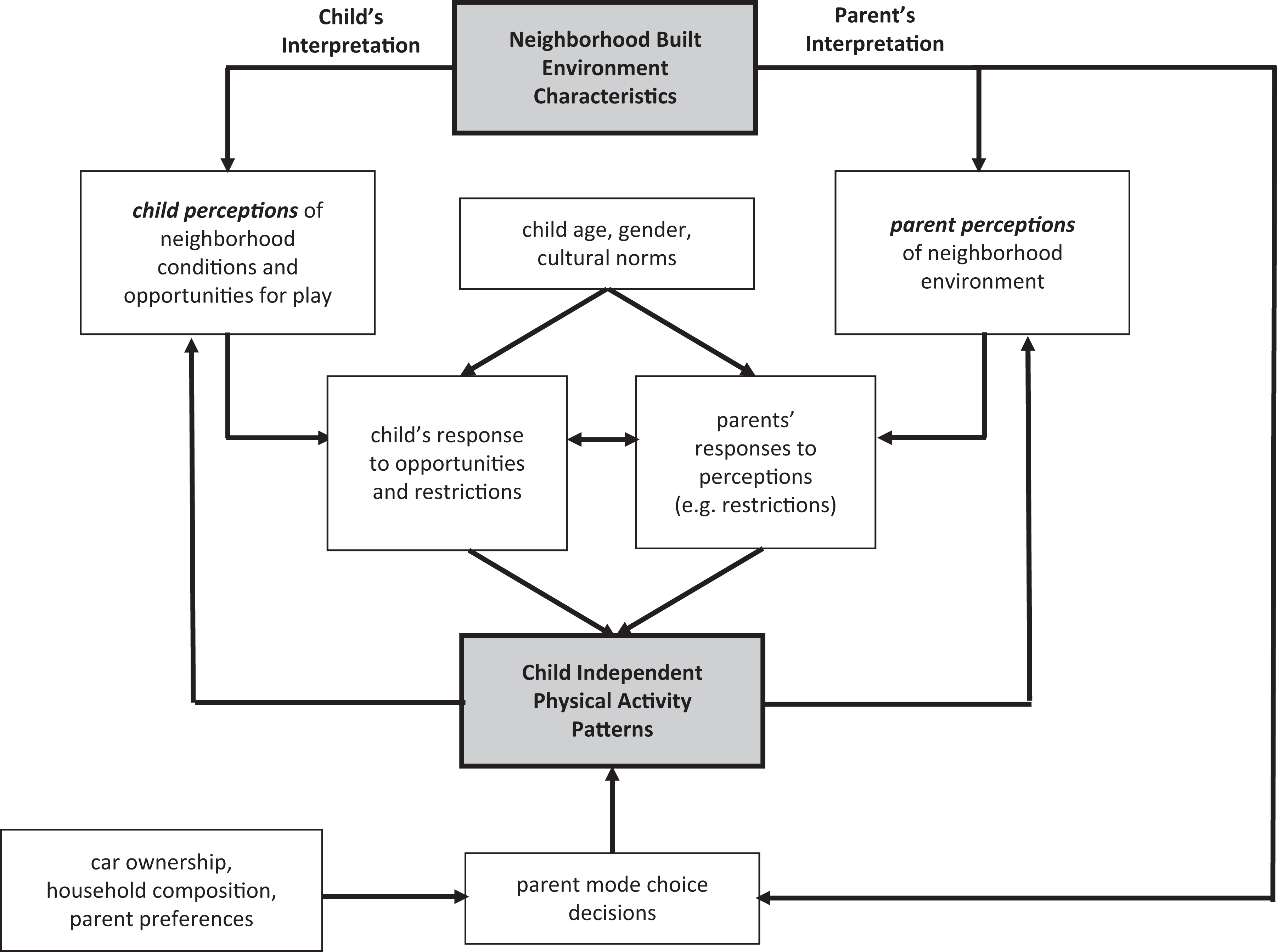
A conceptual model for indirect influences of urban form on independent physical activity patterns of children. This figure illustrates the importance of perceptions and other factors in mediating between environmental characteristics and physical activity behavior as well as hypothesized feedback loops.
There is a strong evidence base that perceptions of environmental characteristics influence physical activity. This is because measures of perception are easier to obtain and are often used instead of objective measures to assess urban form characteristics (primarily using survey instruments of parents and/or children). However, the extent to which perceptions mediate between objective environmental characteristics and physical activity is poorly understood because studies using perceptions as measures of environmental characteristics do not generally simultaneously assess objective measures of the same environmental characteristics. Several recent studies have contributed toward filling this gap in understanding, including Prins et al. (2009), Ries et al. (2009), and Voorhees et al. (2010), but more comparative research is necessary. The need to better understand the relationships between perceptions and objective characteristics is highlighted by the findings of Prins et al. (2009), which indicate considerable discrepancies between objective and perceived assessments of the built environment.
As conceived in Figure 3, two main causal pathways connect urban form characteristics to independent physical activity patterns: one via child perceptions and one via parent perceptions. According to this conceptual model, children and their parents independently perceive a variety of opportunities and hazards in the environment and may therefore initially envision different options for independent activities. Because the options envisioned by parents do not necessarily align with those envisioned by their children, neither causal pathway alone explains independent physical activity. Rather, the two causal pathways intersect when parents make decisions on how their children should engage with the environment via such actions as restrictions on free play or decisions about whether or not to chauffeur their children.
Child Perceptions as Correlates of Physical Activity Behavior
Many studies have found that children’s perceptions of urban form characteristics are associated with physical activity behavior. For example, Timperio et al. (2004) found that girls who perceive that there are no parks in their neighborhood are less likely to walk or bicycle in their neighborhood. Similarly, Hume, Salmon, and Ball (2005) conducted a cognitive mapping exercise, in which children were asked to draw and in some cases photograph their home and neighborhood. Hume et al. found that those girls who identified more opportunities for physical activity in their neighborhood engaged in more objectively measured low-intensity physical activity. With regard to perceptions of traffic safety, Carver et al. (2005) found that girls who perceived local roads to be safe spent more time walking for exercise on weekends and for transportation on weekdays. Liu et al. (2007) similarly found a positive association between a child’s perception of safe drivers and pleasant walks in the neighborhood with self-reported physical activity. While not considering physical activity outcomes specifically, Mullan (2003) further highlights the importance of traffic safety in shaping activity patterns. Specifically, Mullan found that adolescents in Wales who reported living with busy traffic and car parking were less likely to have positive perceptions of their local area, effectively viewing it as less safe and pleasant for play. However, not all studies share similar conclusions. In contrast to these findings, several studies have found null associations between child perceptions of safety and physical activity outcomes, including Zakarian et al. (1994) and Mota et al. (2005). Such findings may be a result of conflicting parental perceptions, discussed below.
Children’s perceptions of their neighborhood conditions and opportunities for play are likely also shaped by characteristics of the social environment. In addition to examining perceptions of the traffic environment, Carver et al. (2005) examined associations between measures of physical activity and adolescents' perceptions of their neighborhood social environment. Carver and colleagues concluded that important explanatory factors for walking and cycling within their neighborhoods included adolescents' reports of having friends nearby, having young people of similar age nearby to socialize with, knowing neighbors, and waving or talking to neighbors. Kim et al. (2010) similarly found adolescent’s perceptions of how well residents know each other to be associated with the odds of meeting an MVPA guideline. Findings that adolescents' perception of crime threat in their neighborhoods are negatively related to active transportation to recreational sites (Grow et al. 2008) also highlight the potential importance of perceptions of the neighborhood social environment.
Children’s perceptions of characteristics of the neighborhood built and social environments are not solely shaped by the characteristics themselves but also by the matching of environmental features with individual characteristics such as their physical abilities and social needs (Kytta 2004). Thus, individual children with different interests and physical abilities may perceive their environments in diverse ways. Perceptions of opportunities for physical activity in the neighborhood environment may also be subject to characteristics of the household environment, including level access to sedentary activities in the house, which may moderate the exposure of children to their environment. For example, access to TVs or computers in a house with few restrictions may effectively “pull” children inside, limiting their exposure to characteristics of the neighborhood environment (Epstein et al. 2006; Roemmich, Epstein, and Raja 2007; Wong et al. 2010), although findings on the displacement of physical activity by TV viewing are mixed (Biddle et al. 2004; Smith et al. 2008).
Influences of Parental Perceptions on their Children’s Physical Activity Behavior
As noted above, parents may directly influence physical activity patterns of their children by preferring certain venues for play and accompanying their children to these venues. But parents also influence the independent physical activity patterns of their children through restrictions. As gate keepers for their children, parents are concerned with wide ranging characteristics of the neighborhood built and social environment, centering on safety (Carver, Timperio, and Crawford 2008a; Prezza et al. 2007). With regard to characteristics of urban form specifically, fear of injuries or fatalities from traffic are major concerns that parents have about active transportation to school or leaving children unattended outdoors (Ahlport et al. 2008; Gielen et al. 2004; Ridgewell, Sipe, and Buchanan 2009). Such fears are in turn influenced by urban form and traffic conditions. Timperio et al. (2004) found that parental perceptions of the need to cross several roads to reach play areas (for older girls) and lack of traffic lights or crossings (for older boys) were negatively associated with children regularly walking or cycling to local destinations. Carver et al. (2005) similarly found that parental reports of heavy traffic were associated with lower rates of cycling and walking. Parental concerns about traffic may also help to explain anomalous findings regarding the relationship between street connectivity and physical activity. Specifically, findings that connectivity is negatively or not associated with physical activity-related variables (Braza, Shoemaker, and Seeley 2004; Copperman and Bhat 2007; Timperio et al. 2006) may arise because parents perceive of cul-de-sacs as safer than through streets (Veitch et al. 2006) and may therefore consider neighborhoods with disconnected street networks to be safer for their children than highly connected networks. Further evidence of interactions between environmental characteristics and perceptions is provided by Panter et al. (2010b) who found that distance to school moderated the influence of certain attitudes and safety concerns on active commuting behavior of children.
As with children, parental perceptions of the neighborhood environment are not solely a function of urban form characteristics but likely depend on a number of other factors including perceptions of safety of the social environment. Major parental concerns relating to social safety include fears of “stranger danger” and bullying (Freeman 2006; Carver, Timperio, and Crawford 2008a). McDonald (2007b) and McDonald, Deakin, and Aalborg (2010) for instance found measures of social control and cohesion to be important explanatory factors for active transportation to school, suggesting that parents require a neighborhood with high levels of social trust to allow their children to walk or bike to school. Cradock et al. (2009a) similarly found social cohesion to be positively associated with participation in general physical activity. Another important characteristic that may influence parent’s perceptions about the safety of their children is the perception of the presence of other children (Salmon et al. 2007; Timperio et al. 2006). The presence of other children might for example make parents feel more confident about neighborhood safety because it suggests a level of confidence in other parents regarding neighborhood safety (Tranter 2006). Alternately, the presence of other children might be seen as important as it implies more “eyes on the street” (both those of the children and of other parents watching after them). The amount of time parents spend in their neighborhood may also influence their perceptions of the neighborhood environment. Lam (2001) for instance found that parents with full-time jobs felt their local environment was safer than those with part-time jobs. Lam hypothesized that this was because parents spending more time at home might be more likely to observe firsthand the dangers that their children are exposed to. Gebel, Bauman, and Owen. (2009) found that simply having children is associated with differences in environmental perceptions of adults. They noted that adults with children were significantly more likely than other adults to misperceive a high walkable environment as low walkable, speculating that due to time constraints, such adults would be less familiar with their environment. In general, it is likely that perceptions of risk and fears are modified by a range of individual factors including prior experiences and preconceptions (Loukaitou-Sideris 2006) as well as parent’s gender (Cloutier, Bergeron, and Apparicio 2010). In contrast to studies examining individual components of parental concerns, Kerr et al. (2006) developed a composite parental concerns scale incorporating measures of fears of stranger danger, gangs, bullying, traffic, availability of sidewalks, among others. Kerr and colleagues found that parental concerns as gauged by this measure were associated with active commuting.
Subsequent to forming perceptions about the environment, parents may choose to influence how their children engage with the environment through either defensive behavior (e.g., accompanying children during play or teaching children how to cross streets safely) or avoidance behavior (e.g., restrictions; Carver, Timperio, and Crawford 2008a). Parental restrictions on the independent mobility of their children are often conceptualized in terms of “activity or mobility licenses,” which include licenses to cross roads, use buses, go to school on their own, go to other places on their own, cycle on the road, and go out after dark (Hillman 1993; Jago et al. 2009). Specific restrictions that parents place on their children are highly dependent on the age and gender of their children, with greater restrictions on independent mobility generally imposed on younger children (Veitch, Salmon, and Ball 2008) and girls (Kytta 2004; Carver, Timperio, and Crawford 2008a; O’Brien et al. 2000). The influence of parental restrictions on child physical activity patterns was studied by Evenson et al. (2006) who found that girls were more likely to report physical activity when they had parents who allowed them to walk on their own, use public transit on their own, or walk/bike to transit from their home. Similarly, Carver et al. (2010) found constrained behavior to be negatively associated with active transport for male and female children as well as female adolescents. While such findings intuitively confirm the importance of parental influence on physical activity patterns, even this relationship may not be direct, because children may perceive and respond to their parental restrictions in a variety of ways.
Intersection of Parent and Child Responses to Environmental Characteristics
Given parental restrictions, children may respond in a variety of ways. Although parents may in some respects act as gate keepers, children may also extend the spatial extent of their activities through the influence of peers or completely independently (Cornell et al. 2001). Further, parents often do not have a good sense of what their children are actually doing, including how far or where they are going independently (Cornell et al. 2001). In many instances, children do not accept their parents' restrictions and may even prefer places outside of the control of their parents (Korpela, Kytta, and Hartig 2002). In a study of favorite places, Korpela, Kytta, and Hartig (2002) did not find associations between mobility licenses given by the parents and the distance of children’s favorite places from home. One reason for noncompliant reactions to parental restrictions may be that children perceive their environment in very different ways than their parents. Carver et al. (2005) found that adolescents had more favorable views of neighborhood safety than did parents and speculate that some discrepancies between parental concerns and adolescent behavior can be explained by the desire of adolescents to seek increased autonomy. Finally, parents may also not be able to enforce restrictions on their children, as a result of scheduling issues relating to their job or for other reasons. Such factors may underlie null findings of several studies with regard to associations between perceptions of safety and physical activity (Carson et al. 2010).
Aside from enforcing restrictions, parents may also influence the independent physical activity behavior of their children in other ways. For example, as illustrated in Figure 3, mode choice decisions of parents influence the extent to which children are chauffeured or engage in active transportation on their own. A complex suite of factors in turn influence parental travel habits and preferences. Once the sunk costs of car ownership are incurred, driving may be seen as a cheap and highly convenient mode of transportation for families with children. Johansson (2006), for example, found that the number of cars in a household was one of the most important variables correlating positively with chauffeuring of children. Similarly, Wen et al. (2008) found that number of cars in the household was associated with children being driven to school. Traveling by transit, bike, or foot with young children may be seen as tiresome for parents (Dieleman, Dijst, and Burghouwt 2002), while driving may be seen as relatively convenient.
Perhaps indicative of such mode choice preferences, a number of studies have found associations between car ownership and physical activity-related variables or found that car ownership moderates the relationship between urban form and physical activity (Frank et al. 2007; Kerr et al. 2007; Timperio et al. 2004). Frank et al. (2007), for instance, found that children in households with two or less cars were more likely to walk than those in households with three or more cars. Kerr et al. (2007) found that car ownership rates strongly moderated the influence of urban form on youth physical activity patterns. In general, Kerr and colleagues found weaker associations between built environment characteristics and physical activity for children in households with fewer cars, suggesting that youth in such households were much more likely to walk for transportation, regardless of the environmental conditions.
A variety of other factors likely also influence parental mode choice decisions, including household size. In households with children, the coordination of a variety of activities becomes necessary, reflecting complex intra-family dynamics and trip planning, which in turn may lead to complex trip chaining patterns (Lee and McNally 2006; Srinivasan and Ferreira 2002). Thus, parents with more children may be more likely to chauffeur their children because of the convenience of trip planning. Srinivasan and Ferreira (2002) provide evidence of substantial trip chaining in families with children, finding that less than 6 percent of tours in two-worker households with children were without nonwork activity chaining. Finally, an extensive body of research has found that urban form also influences mode choice of adults (Frank, Engelke, and Schmid 2003), including parents. In general, a highly dispersed urban form with little mixing of uses is associated with higher rates of car use and lower rates of active transportation (Frank, Engelke, and Schmid 2003). With regard to the driving of children in particular, trends toward increased structured activities rather than unstructured play (Prezza 2007) may result in more adults chauffeuring their children as such activities are often located at specialized facilities that may be seen as being too far from home for children to transport themselves. In a study of children’s mode choice for getting to soccer games, for example, Tal and Handy (2008) found that driving was the predominant mode of transport, with 76.8 percent of players driven versus 18.4 percent biking and 4.8 percent walking. Major factors underlying this modal split included distance to the game and logistical barriers such as the need to carry equipment and snacks (Tal and Handy 2008).
Behavioral Reinforcement through Feedback: the potential for Social Traps
Figure 3 illustrates two feedback loops, one corresponding to parental perceptions and the other to child perceptions. Each of these feedback loops may operate through two mechanisms. First, they may arise as a result of the behavior of individual children and their parents. For example, the more mobile individual children are, the more likely they are to acquire environmental knowledge, which in turn creates an increased motivation to explore and be more mobile (Kytta 2004). Similarly, increased exposure to rewarding activities in the neighborhood may increase the motivation of children to be outside (Epstein et al. 2006). In contrast, restrictions on mobility may set in place a vicious cycle, whereby individual children lose interest in their environment and become less motivated to explore it (Epstein et al. 2006). Similarly individual parents accustomed to supervising their children may find it difficult to let them go out on their own. As hypothesized by Prezza et al. (2001), parents' confidence in their child’s ability to be responsible on their own may set in motion a virtuous cycle whereby acquisition of self-confidence on the part of children increases in tandem with parental increases in confidence.
An alternate mechanism through which these feedback loops may operate is in response to the aggregate behavior of other children and parents in the neighborhood. Neighborhoods with many children playing outdoors may, for instance, be more conducive to independent play, since children have more options to go outside and play with other children at their leisure than children living in neighborhoods with few other children playing outdoors. Carver et al. (2005), for instance, found various physical activity-related variables to be associated with child reports of many peers to hang out with locally. Santos et al. (2009) similarly found that seeing people being physically active in the neighborhood is positively related to physical activity for boys. While the presence of children in a neighborhood might thus set in motion a positive feedback by encouraging more parents to let their children out, the absence of children might conversely set in motion a vicious cycle, whereby parents are afraid to let their children out as long as no one else does. This interaction may be further nuanced, reflecting the demographic composition of children outdoors. Veitch et al. (2006), for instance, note that parents report the presence of teenagers at parks as a deterrent to the use of these facilities by younger children, as a result of fears of undesirable behaviors such as bullying, swearing, and drinking alcohol.
Concerns about traffic safety may similarly lead to a vicious cycle. In this case, increasing numbers of parents chauffeuring their children reduces the safety of the neighborhood environment for child pedestrians and cyclists, further encouraging other parents to drive their own children (Kearns and Collins 2006). Aside from the increased risk of injury or death that chauffeuring creates for children not being driven, such activity also contributes to decreased air quality and fears about exposure to air pollution may further contribute toward parental restrictions on their children’s outdoor physical activity (TRB 2005). The net effect of all of these feedback loops may be what has been described as social traps (Carver, Timperio, and Crawford 2008a) whereby chauffeuring and mobility restrictions become entrenched behaviors over large areas. In parallel with such changes, children may also become increasingly involved in structured activities after school in place of unstructured activities (Prezza 2007). These activities may be characterized by high levels of parental chauffeuring by car (Tal and Handy 2008), further reinforcing social traps that discourage independent activities by children within the built environment.
Discussion: Implications for Future Research
While more research is required to address a variety of limitations, the number of studies on this subject has increased substantially in recent years and gaps in understanding are gradually being filled. As noted above, one gap in understanding concerns relationships between perceptions and objective measures of environmental characteristics. Many studies use either objective or perceived measures of environmental characteristics, but relatively few have examined both jointly, to explicitly study relationships between the two (exceptions, as noted above include Prins et al. 2009; Voorhees et al. 2010). More sophisticated models are also required to investigate causal pathways extending from objective environmental characteristics to physical activity behavior, since these may be highly complex with numerous mediators, moderators, and potential feedback loops as illustrated in Figure 3. Such models could benefit from mixed methods, combining survey data on specific physical activity behaviors such as active transportation to school, active transportation to other destinations, and outdoor play, together with objective measures of the overall volume of physical activity. Several studies discussed above have examined relationships between overall volume of physical activity and a single behavior (e.g., active transportation), but additional insight could be gained from studies examining multiple behaviors jointly. Such studies could also benefit from use of statistical techniques such as structural equation modeling to better represent complex causal pathways than conventional single equation models, as in studies such as Davidson, Simen-Kapeu, and Veugelers (2010) and Maddison et al. (2009). Given practical constraints relating to data collection and modeling, an alternative approach might be to employ a mixture of qualitative and quantitative methods.
A second major limitation of research to date has been previously noted by many authors (e.g., Davison and Lawson 2006; Ferreira et al. 2007; Faulkner et al. 2009): the lack of longitudinal studies. The widespread reliance on cross-sectional studies is viewed as a limitation because these studies cannot be used to make causal inferences (Godin et al. 2005). As discussed above, this limitation is beginning to be addressed, but more longitudinal studies are necessary, and these would benefit by incorporating a broader range of objective urban form measures. In the interim, despite the limitations of cross-sectional studies, consistency in findings from studies conducted in different contexts and with different research designs lends some degree of confidence to the results (Saelens, Sallis, and Frank 2003). Thus, the relatively high degree of consistency in findings relating to certain correlates (e.g., proximity to school) may be interpreted as reasonable evidence of causal influences on physical activity behavior.
Two other recent methodological developments discussed above also illustrate possible directions for future research. These are studies employing GPS and those based on natural experiments. The use of GPS as in several recent studies (e.g., Cooper et al. 2010a, 2010b; Jones et al. 2009) enables researchers to more accurately identify relevant activity settings and thus to better model neighborhood environmental influences on behavior. Until now, most studies have simply made unverifiable assumptions about where activities take place. As noted by Sallis and Owen (1997), the application of ecological models in many cases outpaces research. Thus, opportunities for studies based on natural experiments are also widespread. This type of study offers the potential to better inform future policy and practice by closely examining impacts of current policies and practice. Finally, additional research is required to rationalize differences in findings between studies examining the influence of individual built environment characteristics with those quantifying differences in physical activity patterns by neighborhood type.
Discussion: Opportunities for Planning Practice
Starting with an ecological model of behavior implies a vast number of possible interventions to influence physical activity (Kok et al. 2008), targeting multiple levels of environmental influence. This section begins by stepping back from the particularities of empirical research and presenting a general argument for urban form interventions. Next, several more specific issues surrounding policy design and implementation are discussed, starting with a consideration of whether the environment or perceptions of the environment should be targeted. This is followed by an overview of planning policies to promote physical activity. Given the level of research and policy attention targeting active transportation specifically, policies to promote active transportation are then considered in greater depth. Finally, several options for focusing policies are considered.
The Case for Urban Form Interventions
Despite the uncertainty resulting from limitations of existing research, a number of important considerations lend support to the potential for urban form interventions to influence youth physical activity. First, in contrast to many other correlates of physical activity (e.g., age, gender, and weather), urban form characteristics are generally modifiable. Existing urban environments are changing all the time and decisions affecting the design of new communities are made on a regular basis, presenting opportunities for interventions. Second, even if urban form changes cannot be immediately causally linked to behavior changes, this may be a result of social traps or other factors, and urban form changes may at least be enabling of future behavior change by creating more settings and opportunities for physical activity. Conversely, urban form may act as a barrier to future behavior changes, and so urban form interventions may be a prerequisite for the success of other joint interventions targeting behavior change more directly. For example, initiatives persuading parents to encourage their children to substitute outdoor play for indoor sedentary activities might be futile and potentially dangerous if the targeted families live in neighborhoods with heavy traffic and few parks. Third, although long periods of exposure to environmental changes may be required before behavior change occurs (Spence and Lee 2003), urban form interventions may also have longer lasting effects than many alternative interventions because of the permanency of the built environment (Saelens Sallis, and Frank 2003). Further, the types of physical activities that occur within the built environment might also be easier to adopt and maintain than other activities. These include activities such as walking and cycling to school, which can easily be incorporated in daily routines as well as other more incidental activities like unstructured play. As noted by Deforche, De Bourdeaudhuij, and Hills (2007) such lifestyle activities provide the opportunity for children to divide energy expenditure into several small bouts as opposed to a single bout as in structured activities, a pattern of activity more consistent with children’s observed physical activity patterns. Fourth, ecological models suggest that higher level environmental interventions influence greater numbers of people than lower level environmental and individual interventions (Spence and Lee 2003). Urban form interventions can thus influence entire populations, in contrast to interventions which target individuals. Urban form interventions to develop freely accessible public infrastructure (e.g., creating new parks or installing traffic calming as opposed to investing in structured recreational facilities that charge entry fees) may be especially important in this regard, since people from all socioeconomic backgrounds may benefit from the changes. Finally, urban form interventions to promote youth physical activity may also promote physical activity among adults, as many of the correlates are shared. To highlight the potential for such broader benefits, Watson and Dannenberg (2008) estimated that in large and small urban areas in the United States, approximately 65.5 million people could benefit from Safe Routes To School projects implemented within 0.5 miles of schools.
The Environment or Perceptions of the Environment—Which Should be Targeted?
Research to date suggests the importance of interventions that target both objective characteristics of the environment and perceptions. In particular, it may be necessary to target perceptions that diverge widely from objective characteristics of the environment. Kerr et al. (2006), for example, note that their findings suggest the possibility of overly concerned parents preventing their children from walking despite supportive built environments. Carver, Timperio, and Crawford (2008a) similarly observe that parents often exaggerate the risk of stranger danger and become overly anxious about the safety of their children as a result. As indicated above, such fears may lead to social traps whereby built and social environments become progressively less conducive to physical activity. Interventions addressing perceptions may therefore play an important complementary role to built environment interventions. Conversely, objective characteristics should clearly be targeted where these characteristics present real risks or barriers to children safely engaging in physical activity. As noted by Kerr et al. (2006), interventions addressing parental perceptions without ensuring the safety of children through environmental interventions may put children at unnecessary risk. For example, while programs promoting active transportation to school through encouragement by parents or teachers may be desirable, simultaneous improvements to street design to enhance safety may also be necessary. Child pedestrian or cyclist injury rates need to be interpreted with caution since these reflect both the traffic risks and the level of exposure of children to these risks (Sonkin et al. 2006). Thus, low rates of injury or death do not necessarily reflect a safe environment but may also arise from few children being exposed to these risks. Finally, programs designed to enhance safety need to be carefully designed to ensure that the desired safety benefits are well established. Dumbaugh and Frank (2007) note that many safety benefits associated with Safe Routes to School countermeasures are assumed rather than known, suggesting the need for further research in this area.
Planning Policies to Promote Physical Activity
Based on an ecological model of behavior, interventions to promote physical activity by modifying urban form may occur at multiple levels of environmental influence, including for example at the state level via growth management legislation, at the city level via zoning bylaws, or at the neighborhood level via installation of local traffic calming infrastructure. Table 2 categorizes and presents examples of such policies. Additional examples of planning policies designed to promote physical activity are summarized by Frank and Kavage (2009). Many of these may be applicable to children either directly or via their influence on parents. Barriers to implementing such policies are highlighted by Grant et al. (2010), while Mccreedy and Leslie (2009) and Guldbrandsson, Wennerstad, and Rasmussen (2009) present specific examples of policy implementation and evaluation.
Examples of Planning and Complementary Policies to Support Child Physical Activity


Ecological models also suggest the possibility of multisectoral interventions, involving agencies dealing with transportation, land use planning, parks and recreation, and more diverse stakeholders such as public health agencies, schools, and media (Pate et al. 2000; Sallis and Owen 2002). Collaborative efforts among diverse stakeholders may lead to more effective or complementary policies. Several examples illustrated in Table 2 might be developed through such collaborative efforts, including the evaluation of health impacts as part of a comprehensive planning process and the implementation of WSB programs in conjunction with SRTS programs. Additional examples of policies that might complement built environment interventions include the use of recreation facilitators to connect children to existing recreational resources (McNeil et al. 2009) and programming of recreational activities to further support the use of these resources (Cohen et al. 2009; Tester and Baker 2009).
Policies to Promote Active Transportation
Initiatives targeting active transportation are particularly widespread and evidence to date generally confirms their effectiveness. Key among these are SRTS programs administered by State Departments of Transportation (DOTs) and funded through the Federal Highway administration. Evaluations of California’s SRTS program have found certain traffic safety improvement projects (e.g., sidewalk gap closures and replacement of four-way stops with traffic signals) to be associated with increased active transportation to school (Boarnet et al. 2005a, 2005b). As part of the nationwide SRTS program, $370.6 million has been awarded up to January 1, 2009, to more than 4,566 schools throughout the United States by State DOTs (National Center for Safe Routes to School 2009). According to the National Center for Safe Routes to School, there is substantial unmet demand for SRTS programs, with only 37 percent of programs applying to state DOTs for funding being selected in the last quarter of 2008 (National Center for Safe Routes to School 2009). Further, even among successful applications, many schools have only received a portion of the requested funds (National Center for Safe Routes to School 2009).
Although such initiatives are important and in need of additional funding, their effectiveness may be limited without supporting policies. In addition to design-related retrofits supported by SRTS initiatives, those initiatives targeting access need to be addressed. Improving access implies more comprehensive land use initiatives such as revised school siting policies. As noted by McDonald (2007a), distance to school has increased and may account for half of the declines in active commuting to school in recent decades. The increasing distance that youth have to walk reflects policies and decisions that have encouraged the closure of old neighborhood schools and construction of new schools on large campuses, typically sited on the outskirts of urban areas (MacDonald 2007a). Specific reasons include school siting standards (e.g., minimum acreage standards), school funding formulas, and lack of coordination between school officials and planners (National Center for Safe Routes to School 2007). Such practices have resulted in an approximately 58 percent reduction in the number of all elementary and secondary schools between 1940 and 2003, even while the population of students almost doubled (National Center for Safe Routes to School 2007). The effects of these practices are dramatically highlighted by Falb et al. (2007), who found that in Georgia, only 6 percent of elementary school students, 11 percent of middle-school students, and 6 percent of high school students could reasonably be expected to walk to school. The location of schools may also raise safety concerns since schools located near multilane high-speed roads may result in high risk of involvement of child pedestrians/cyclists in traffic accidents (Abdel-Aty, Chundi, and Lee 2007). The need to revisit school location policies sooner rather than later has been highlighted by McDonald (2008a) who notes that substantial new school construction and renovations are currently planned across the United States. McDonald considers the increased development of community schools as one possible solution (McDonald 2008a).
Options for Focusing Policies
Given limited public resources, it may be necessary to focus policies by targeting specific populations of youth at risk of physical inactivity, including those living in low SES neighborhoods (Poulsen and Ziviani 2004). Because access to recreational areas may be an especially important correlate of youth physical activity, spatial patterns in the distribution of these areas has been examined, with some evidence indicating that fewer recreational resources are located in low SES areas (Gordon-Larsen et al. 2006), although evidence todate is mixed (Dowda et al. 2007). Nonetheless, even if recreational resources are distributed relatively evenly across neighborhoods by SES, these spaces may vary in quality or safety, with the implication that some areas may benefit from interventions targeting design of recreational facilities rather than access to them. Crawford et al. (2008), for instance, found that public open spaces in high SES neighborhoods had more amenities, were more likely to have shade trees, water features, walking and cycling paths, and lighting among other features than those in lower SES neighborhoods, concluding that open spaces in high SES neighborhoods are equipped with more features likely to promote physical activity among children. Neckerman et al. (2009) similarly found that low-income neighborhoods in New York City are less conducive to walking than they would appear if only considering measures of access like density and land use mix. Among other findings, Neckerman and colleagues note that poor census tracts had fewer street trees, landmarked buildings, and clean streets, further highlighting the importance of urban form interventions in low SES neighborhoods in particular. Similar findings indicating that recreational amenities in low SES or inner-city neighborhoods are less safe or of lower quality have been noted by Cutts et al. (2009), Franzini et al. (2010), and Holt et al. (2009).
Initiatives might also be focused by specifically targeting older youth and girls since these too constitute populations at risk of inactivity. Urban form interventions could thus adopted to design recreational facilities specifically for these populations. Ries et al. (2008) highlights the need for such policies in a study of use of recreational facilities by urban African American adolescents. In this study, Ries et al. noted that many small neighborhood parks are designed for young children and are lacking in amenities desired by older youth. Ries et al. also found that young women rarely use outdoor facilities on their own but that indoor facilities provide positive social settings for both young men and women (Ries et al. 2008).
Finally, given the possibility of social traps arising from feedback loops as illustrated in Figure 3, initiatives may only be effective if they change the behavior of a critical mass of the population of an area. This also implies the need to prioritize environmental interventions, although in a potentially different sense than targeting at-risk populations. Specifically, this implies the need to target interventions spatially. That is, in order to reverse cycles that lead to social traps, resources should be geographically targeted in areas likely to benefit the most. Such interventions may have the added benefit of enhancing overall safety of area residents because the likelihood of a pedestrian or cyclist being struck by a motorist varies inversely with the amount of walking or cycling (Jacobsen 2003).
Conclusion
A better understanding of correlates of youth physical activity is critical, given mounting evidence that many youth obtain insufficient physical activity which is associated with substantial health risks. Many empirical studies to date support the hypothesis that specific urban form characteristics are related to youth physical activity. Some characteristics are often associated with physical activity related variables, including access to recreational facilities and distance to school. Findings associated with other characteristics, such as street connectivity, are however mixed. Furthermore, results of studies examining differences in physical activity by neighborhood type in some cases stand in contrast to findings of studies focusing on individual urban form characteristics. Additional research is required to resolve such differences and to build on recent methodological developments such as the use of GPS. Additional research will also benefit from further studies examining the impacts of built environment interventions as they are implemented. Despite the limitations of existing research, it is evident that urban form can either serve to constrain or promote physical activity and that urban form interventions may result in health benefits for youth. The potential benefits of such interventions may however only become apparent when implemented in conjunction with supporting policies addressing parental concerns, time constraints, and other barriers. Without such additional supports, behaviors entrenched by social traps may prevent parents and their children from deriving potential benefits from changes in urban form. Planners interested in promoting physical activity supportive development may achieve greater success through partnerships with diverse stakeholders including school administrators and public health officials. Finally, intersectoral collaborations between academics and practitioners make it is possible to conceptualize, test, and refine evidence-based approaches to improving the built environment.
Footnotes
The author(s) declared no potential conflicts of interests with respect to the authorship and/or publication of this article.
The author(s) received no financial support for the research and/or authorship of this article.