







Abstract
Animal-assisted intervention (AAI) research involving Autistic participants has grown over the past decade. This literature, however, has not been thoroughly evaluated through a critical lens that interrogates how a historically ableist system produces such knowledge. Guided by Critical Disability Theory (CDT), this critical literature review evaluates the extent to which AAI literature aligns with CDT tenets and social work professional values. A review of empirical, peer-reviewed literature between 2013 and 2023 yielded 46 studies that demonstrate the emerging evidence on the impact AAI has on social, behavioral, and emotional outcomes of Autistic participants. This paper contributes a novel operationalization of CDT tenets that, when applied to the literature, show areas of AAI scholarship that require attention. Findings show that current literature overwhelmingly centers on the use of a medical model of disability, rarely gathers data directly from people with lived experience, and continues to perpetuate ableist goals of symptom reduction. These patterns demonstrate how these studies not only contribute to intervention science, but also reinforce harmful narratives about Autistic bodies, behaviors, and culture. Implications for social science research and social work practice is discussed.
Research in the field of disability has historically been guided by a medical model of disability that pathologizes the lived experiences of this community (Retief & Letšosa, 2018). If we were to review the history of disability in research and higher education, we would find decades of oppressive practices and demeaning language that has evolved overtime (Botha, 2021; Dolmage, 2017; Fine & Asch, 1988). Despite the social work profession's commitment to values of social justice and self-determination (National Association of Social Workers [NASW], 2021), social work professionals have contributed to various forms of oppression including the promotion of eugenics and institutionalization in the early 1900's, the creation of educational and training programs that perpetuate ableist norms (DeZelar et al., 2022; Sherwood & Kattari, 2023; Wernick et al., 2024), and our ongoing complicity with systems of care that use the medical model to justify the violation of human rights for people with disabilities (Mackelprang & Salsgiver, 1996; Trecartin et al., 2024).
A specific population within the larger compilation of disability communities has profoundly fascinated the interests of researchers, autism spectrum disorder (ASD) or autism (Freeman Loftis, 2023; Pellicano & den Houting, 2022). ASD is a neurocognitive developmental disability that features two areas of neurodivergence, social communication and restrictive and repetitive behaviors (American Psychiatric Association [APA], 2013). Modern diagnostic criteria from the medical model then rates the level of support an Autistic individual needs to access their community with level one indicating minimal support and level three indicating a high level of support is needed. While understanding and appreciating the spaces in which the medical model may be necessary, this paper will utilize identity-first language in accordance with the preferences of many Autistic advocates and guidance from the Autistic Self Advocacy Network (ASAN), the largest self-advocate run organization dedicated to Autistic advocacy in the U.S. (Autistic Self Advocacy Network [ASAN], 2021; Sinclair, 1999; Wooldridge, 2023). As such, this paper will use the word Autistic as a proper name with capitalization when referring people and ASD or autism will be lower case when referring to medical or diagnostic concepts. This commitment to consistent language usage highlights an important shift away from the medical model that seeks to treat and eliminate Autistic traits and promotes a social model of disability that dually aligns with the larger neurodiversity movement (Beck, 2024; Botha et al., 2024; Walker, 2021).
There are numerous examples that show the ways in which Autistic people specifically have exploited by the larger research industry, including academia, that social work is embedded (ASAN, 2021; Botha, 2021; Dolmage, 2017; Freeman Loftis, 2023). Exploitation of Autistic people by researchers has been documented historically, for example the eugenics program during World War II that sought to understand the cognitive gifts associated with savant-like presentations of ASD (Sheffer, 2018). Beck (2024) highlights that many of the Autistic behaviors that treatment options seek to reduce, are often purposeful in the lives of the individual. For example, stimming behaviors may be a manifestation of self-soothing and coping but are frequently pathologized and “treated”. Thus, it calls to question how and what we are measuring (Bölte, 2014; Jones, 2022; Pellicano & den Houting, 2022) and who has the authority to construct scientific knowledge that directly impacts a community with its own unique culture.
This history provides important context for social work researchers and practitioners. It suggests that our work continues to perpetuate and support ableist narratives and approaches to knowledge creation (Dwyer, 2022). Researchers seeking to understand how their area of expertise is impacted by this history and seeking to align their work with concepts of social justice may find that feminist methods provide the space needed to guide their work (Garland-Thomson, 2005; Harding, 2006; Sprague, 2016). Feminist research methods seeks to understand the power differences within society at multiple levels, often focusing on emancipatory practices and lived experience (Lokot, 2021; Naples & Gurr, 2014; Swigonski, 1993).
As a doctoral student navigating the values and aspirations of a justice-oriented field such as social work, I struggled to make sense of the science we take for granted and consume in academia. My scholarship explored the impact of animal-assisted interventions (AAI) on Autistic people, a growing field of complimentary treatment (Berry et al., 2013; Davis et al., 2015; Nieforth et al., 2021; O’Haire, 2013). To ground my work in the values of my profession, I gravitated towards the use of feminist methodologies and research practices.
Feminist scholars emphasize that community voice is an essential feature of ethical research (Alcoff, 1991; Harding, 2006; Sprague, 2016; Swigonski, 1993). This fundamental principle is supported in literature that calls for more feminist driven, qualitative work to support research that impacts the Autistic community (ASAN, 2021; Bölte, 2014; Jones, 2022). Social workers also reflect on the potential problems of excluding a marginalized community from the research process (Swigonski, 1993). Therefore, Critical Disability Theory (CDT) became central to my research. CDT is comprised of several tenets that center lived experiences, questions traditional power structures, and interrogates whose knowledge is considered valid (Ellis et al., 2019; Garland-Thomson, 2005; Hosking, 2008).
Before designing my dissertation project, I first needed to explore to what extent the current knowledge base aligned with CDT tenets so that I could purposefully design research that could address the ableist systems that sustain unethical approaches to autism research. This paper will answer the research question, to what extent does the current literature on AAI align with CDT tenets, and provide ample justification for the operationalization of those tenets developed and implemented by this writer. The operationalization of these tenets is provided to illustrate a critical approach that may be further developed and adapted to other areas of research impacting people with disabilities. The application of these operations onto AAI literature will serve as an illustration of the value this approach has for researchers interested in furthering social justice through science.
Creating a Critical Lens: Operationalizing Critical Disability Theory
CDT, like other critical theories, has a close tie to feminism (Hall, 2019). The broad category of feminism in research has historically called attention to the way we conduct research endeavors and how these practices provide power to those with the ability to create knowledge (Sprague, 2016). Critical theories explore these power dynamics and CDT is specifically concerned with the oppression and marginalization of individuals within disability communities (Hall, 2019). CDT seeks to emancipate people with disability from the socially constructed barriers embedded within a society created for non-disabled people (Siebers, 2001). For all these reasons, social workers are particularly well positioned to integrate these frameworks into our research methodologies guided by our commitment to social justice (NASW, 2021).
Hosking's (2008) approach to CDT includes seven tenets for analysis: models of disability, multidimensionality, valuing diversity, language, voice, rights, and transformative politics. A CDT review protocol was created that operationalized each tenet (Table 1). A rationalization the operationalization of each tenet is reviewed first, followed by the results of applying each operation to the literature review.
Operationalization of CDT Tenets.
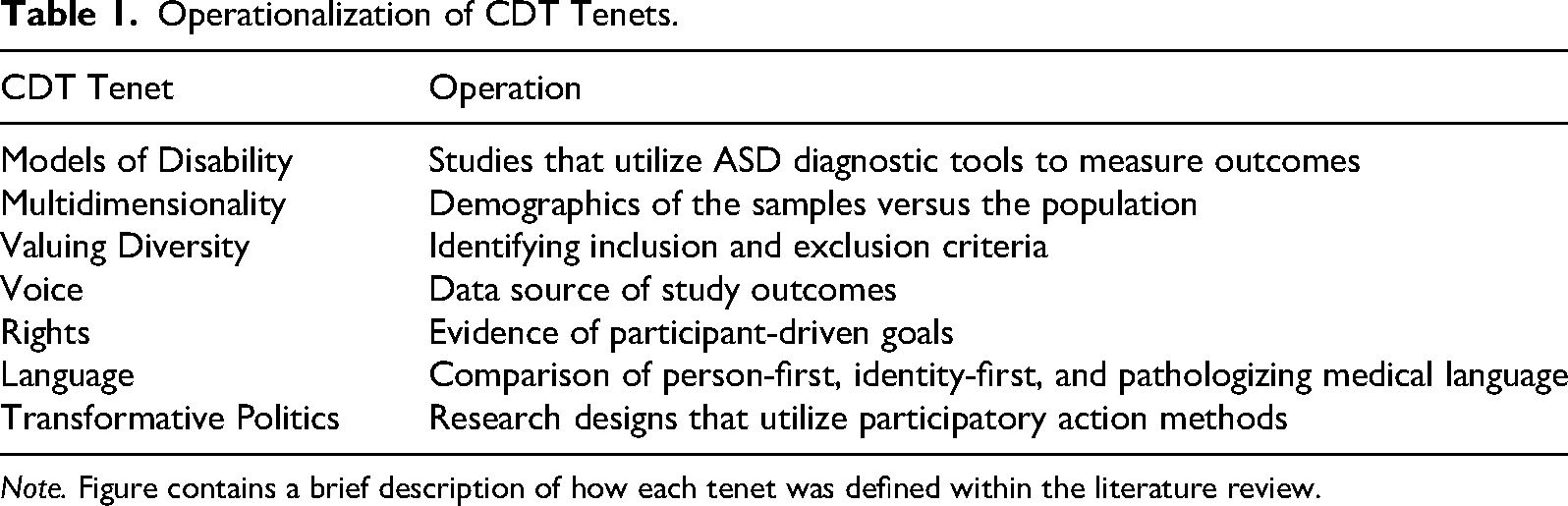
Note. Figure contains a brief description of how each tenet was defined within the literature review.
Models of Disability Operation
‘Models of Disability’ refers to the perspective used to view the experience of disability (Hosking, 2008). Under the medical model of disability, for example, we see disability as something that can be treated and cured (Retief & Letšosa, 2018). This pathologizes and pities the experience of disability as ‘less than’(Gray-Hammond, 2023). Researchers using CDT approach the experience of disability from a social model (Hosking, 2008). Under the social model of disability, we use a constructivist approach and acknowledge that disability is a socially constructed concept.
Under social construction, disability is created by the external environment, not within the human being itself (Wilkie, 2023). Conversely, the use of ASD diagnostic tools speaks to the medical model that seeks to treat and cure disease. By utilizing diagnostic tools to assess outcomes, the outcome you seek must be to eliminate the subject of the tool. For this critical assessment of the literature, studies that utilize ASD diagnostic tools to measure decreased ASD symptomology are inherently seeking to treat or “cure” ASD and use a medical model of disability in their understanding of the Autistic experience.
According to the Centers for Disease Control and Prevention (Centers for Disease Control and Prevention, 2022) the following measures are considered diagnostic tools for ASD: the Autism Diagnostic Observation Schedule (ADOS), the Gilliam Autism Rating Scale (GARS), and the Childhood Autism Rating Scale (CARS). Thus, these measures will be the indicator within the literature of alignment to the medical model of disability.
Multidimensionality Operation
Under CDT, there is a robust approach to understanding the how the intersection of identities impacts an individual's personal experience. Each individual and their experience is valid, unique, and dynamic. Under CDT, intersectionality is multidimensional (Hosking, 2008). One's experience with disability is impacted by diverse intersections with gender, ethnicity, and race (Guerrero-Arias et al., 2020); but it is also impacted by the concept of disability itself. Unlike other identities, disability is fluid and, at times, changing. According to the Americans with Disabilities Act (ADA, 1990), disability is defined as any physical or mental experience that impacts your activities of daily living. Thus, humans can experience a temporary disability when they break a bone or have a flare-up of an intermittent chronic illness. Individuals may also experience acquired disabilities, meaning disability that occurs after an acute injury (such as a traumatic brain injury) or even aging.
In addition to the variability of disability experiences across the life course, disability also exists on a spectrum of visibility. Goffman (1956) first theorized that humans will alter their behaviors to better fit in during social experiences, an effort to make our differences invisible to others. Today, we use the terms masking or camouflaging to refer to this pattern that is known to particularly impact Autistic women (Bernardin et al., 2021). Visibility of disability has been linked to how people relate to their identity within disability communities and their perception of self (Nario-Redmond et al., 2013). To evaluate this tenet, a review of demographic information within each study provides insights into representation.
Valuing Diversity Operation
The core tenet of valuing diversity poses the “Dilemma of Difference” originally coined by Martha Minow (1985). The dilemma of difference raises important questions about difference, individualization, and stigma. This concept is easily understood when examining special education services and the multitude of educational programs available. Self-contained classrooms and specialized education programs separate children with disabilities from their typically developing peers. There are benefits to having an education created specifically for your needs, but it is arguably disenfranchising and stigmatizing to separate children based on their differing abilities. This is the dilemma of difference, an ethical argument about the value of seeing difference while balancing the harmful effects of marginalization (Hosking, 2008). To evaluate this tenet, a review of the literature's inclusion and exclusion criteria provides additional insight into representation.
Rights Operation
Disability rights are human rights and the right to self-determination is a key feature of this analysis. The social work value of dignity and worth of all people is closely tied to the fight for people with disabilities to practice self-determination (NASW, 2021). According to the NASW Code of Ethics, social workers should promote the right for all people to exercise choice in their lives.
The operation for exploring this tenet subsequently sought to identify studies that utilized participant driven goals. Specifically, this operation was looking for evidence within the literature that the Autistic participants, regardless of age, had clear input into their goals for the AAI. Participant driven goals show a commitment to self-determination by focusing on outcomes self-advocates themselves desire.
Voice Operation
The issue of voice raises important questions about whose knowledge matters. A common saying within disability communities is “nothing about us, without us”, highlighting the common misstep in leaving out the voices of lived experience with disability when making decisions that impact the community. According to the ASAN (2021) ethical research is driven by, and listens to, people from the community directly. To evaluate the commitment to voice within the literature, exploring the sources for the collected data allows us to evaluate who has the power to create knowledge.
Language Operation
Language preferences within individual disability communities are ever changing, and are also influenced by individual preferences. In the 1990s, person-first language was thought of as best practice (Wooldridge, 2023). The premise was simple, always put the person first. In recent years, however, a shift towards identity-first language has emerged. Identity-first language aligns with the social construction of disability, in which disability is not something that can be cured, removed, or treated. Instead, it asserts ownership of your differences (Sinclair, 1999). For this paper, for example, the first author is utilizing identity-first language when discussing the Autistic experiences and the Autistic community. This is influenced by current trends within the Autistic community and specifically strives to align with the ASAN's white paper on ethics in Autistic research (ASAN, 2021). While both approaches are currently acceptable, language that pathologizes disabled communities as pitiful, less-than, deficient, or otherwise ‘bad’ is not tolerated. This operation will concretely assess language by identifying if the authors use person-first or identity-first language but also leaves room to discuss other language issues within the literature.
Transformative Politics Operation
An essential feature of CDT is the theory's focus on transformative politics. Like other feminist approaches, research that uses CDT should aim for real systems change (Harding, 2006; Sprague, 2016). It is difficult to assess the intent of the authors of these studies to confirm if their intent was transformational. Instead, this tenet will be evaluated through an examination of research methodologies. The ASAN (2021) suggests that participatory action research is an essential component of ethical research into treatment options for Autistic people and current trends in the field show a movement towards Autistic involvement in research as co-investigators and co-interviewers (Kaplan-Kahn & Caplan, 2023; Nicolaidis et al., 2019). These methods involve members of the community being studied to provide feedback and input throughout the research process itself. Given that consumer opinion and feedback is one of the three markers for EBP as well, this operation will identify the number of studies that utilize participatory action research as a methodological approach to gathering data.
Literature Review Methods
To address the research question to what extent does the current literature on AAI align with CDT tenets, a literature review protocol was developed. The databases searched included EBSCO Host (Academic Search Premier, American Psychological Association (APA) PsychArticles, APA PsychInfo, ERIC, Family and Society Studies Worldwide, Social Work Abstracts, Psychology and Behavioral Sciences Collection, Primary Search, and MED LINE), Google Scholar, and The APA Human-Animal Interaction Bulletin. A university librarian with a focus on social work content and human-animal bond aided in the confirming the search protocol.
AAI is an emerging field, making literature searches complicated by a lack of consistent language (O’Haire, 2013). Subsequently, search terms were selected based on previously published literature reviews on the same topic (Berry et al., 2013; Davis et al., 2015; Hoagwood et al., 2017; Nieforth et al., 2021; O’Haire, 2013). Search terms included Autis* OR asperger OR “pervasive developmental disorder” AND “animal assisted” OR “assistance dogs” OR “canine assisted” OR “dolphin assisted” OR “equine assisted” OR hippotherapy OR “horseback riding” OR “pet facilitated” OR “service dog” OR “therapeutic animal” OR “therapeutic horseback” OR “therapy with animals”.
Inclusion and exclusion criteria were based on the guiding research question. AAI consists of therapies or non-goal oriented activities that engage different species of therapy animals to aid in the intervention process (American Veterinary Medical Association, n.d.). This includes interventions that utilize horses (Gabriels et al., 2015; García-Gómez et al., 2014; Lovrić et al., 2020), canines (Germone et al., 2019; Hill et al., 2020; Wijker, Leontjevas et al., 2020; Wijker, van der Steen et al., 2020), and other animals as well (Barnhart et al., 2020; O’Haire et al., 2015). Thus, studies that explored the impact of robotic animals, pets, or service animals only were excluded from the final analysis despite being included in the search terms. Only studies that incorporated therapy animals as part of the treatment procedure were included in this literature review, as therapy animals are the only classification of working animals that provide AAI (Alliance of Therapy Dogs, 2017; Pet Partners, 2019).
Additional inclusion criteria included the synthesis of empirical, peer reviewed articles only. While other expressions of lived experience exist and would be important to a researcher using CDT, these were not explored due to the guiding research question that seeks to evaluate the scholarly literature base. Due to the limitations of the author, only studies that were available in English were included. The research question also identifies the targeted population, thus research not focusing on Autistic participants was excluded. Autistic experience and voice is central to a project guided by CDT (Botha, 2021; Hosking, 2008), but this methodological choice does not imply that Autistic individuals can only receive services alongside other Autistic individuals or in the context of interventions designed for Autistic individuals (ASAN, 2021). This review was originally conducted in the Spring of 2023 and literature in this review was published between 2013–2023.
The 254 articles populated by the search terms were screened by this author using abstracts to exclude duplicates, studies that were not available in English, and studies that were not available in full text. The remaining 106 articles were then reviewed to exclude non-peer reviewed work such as dissertations and non-empirical published work. Again, these sources of data and knowledge are important, but the focus on the research question guided the decision to select this specific collection of literature for further critical analysis.
Results
After fully screening the literature, 46 articles were included in this review (Figure 1). A full chart of the articles included in this analysis is available in Appendix A. Results have been organized to address each research question.
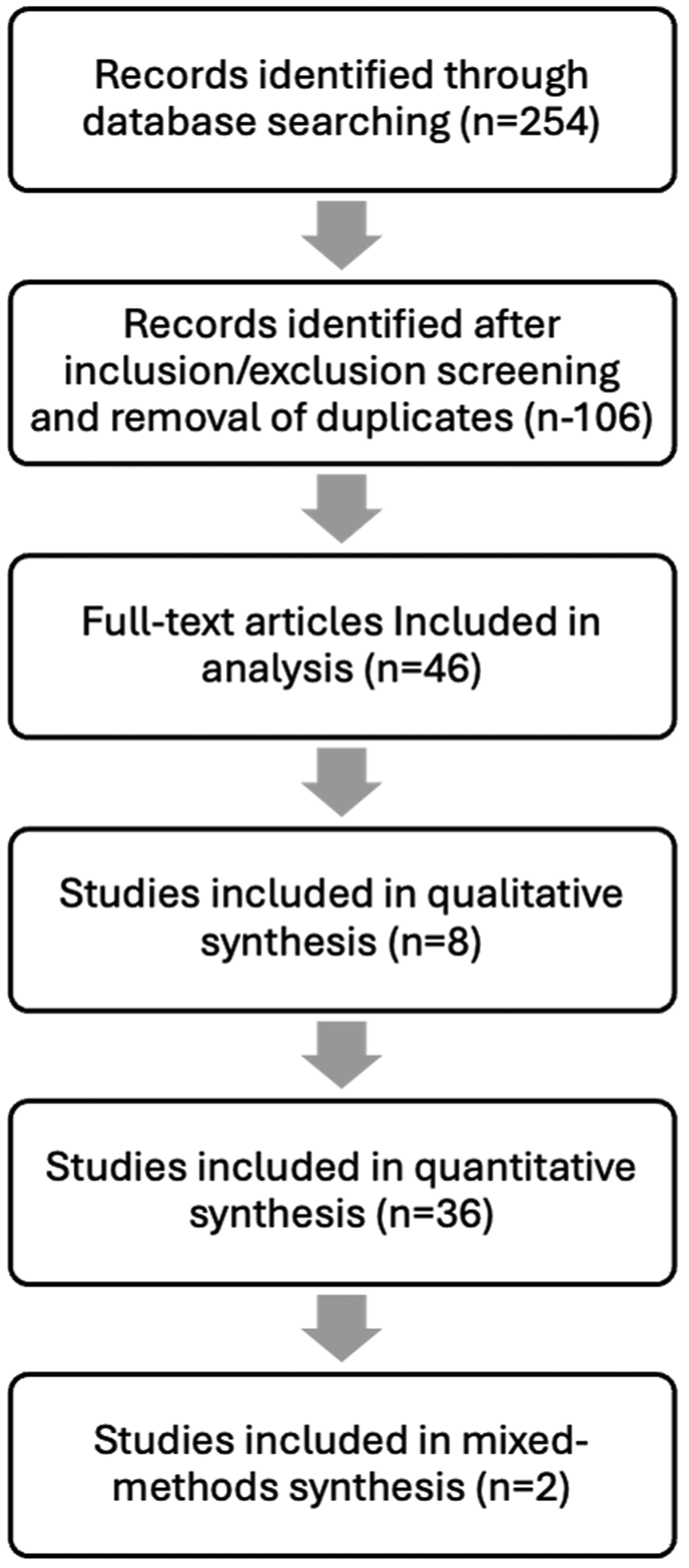
Search protocol flow chart.
Brief Summary of Literature
The 46 studies included in this review show AAI with Autistic individuals has been associated with social, behavioral, and emotional outcomes. Across the included studies, horses (N = 23, 50%) and canines (N = 18, 40%) were the most commonly engaged animals. AAI was implemented either as a standalone intervention or as a complement to established evidence-based practices (EBPs). Findings suggest that both models can yield benefits, with complementary approaches enhancing outcomes beyond that of EBPs alone.
Social outcomes, including increased verbal and nonverbal communication, engagement, and prosocial behaviors, were the most frequently observed benefits, particularly in studies involving canines and horses (Becker et al., 2017; Buck & Lavery, 2020; Gabriels et al., 2015, 2018; Germone et al., 2019; Grigore & Rusu, 2014; London et al., 2020; Michelotto et al., 2019; O’Haire et al., 2014; Protopopova et al., 2019; Silva et al., 2019; Souza-Santos & Teixeira-Machado, 2018). Behavioral outcomes, such as reductions in externalized behaviors and improvements in self-regulation and daily living skills, were also common (Ajzenman et al., 2013; Anderson & Meints, 2016; Borgi et al., 2016; Coman et al., 2018; Gabriels et al., 2012, 2015, 2018; García-Gómez et al., 2014; Holm et al., 2014; Lanning et al., 2014; Michelotto et al., 2019; Protopopova et al., 2019; Tan & Simmonds, 2018; Ward et al., 2013), with equine-assisted interventions showing sustained effects over time. Emotional outcomes were least studied but indicated potential reductions in stress and increases in positive affect, supported by both self-report and physiological measures (Buck & Lavery, 2020; Funahashi et al., 2014; Lanning et al., 2014; Malcolm et al., 2018; Michelotto et al., 2019; O’Haire et al., 2015; Pan et al., 2019; Silva et al., 2019; Tan & Simmonds, 2018; Wijker, Leontjevas et al., 2020). Overall, the literature suggests that AAI may support multiple domains of functioning in Autistic individuals, with emerging evidence that outcomes may vary by animal species and mode of implementation.
To What Extent is This Knowledge Base Aligned with CDT Tenets?
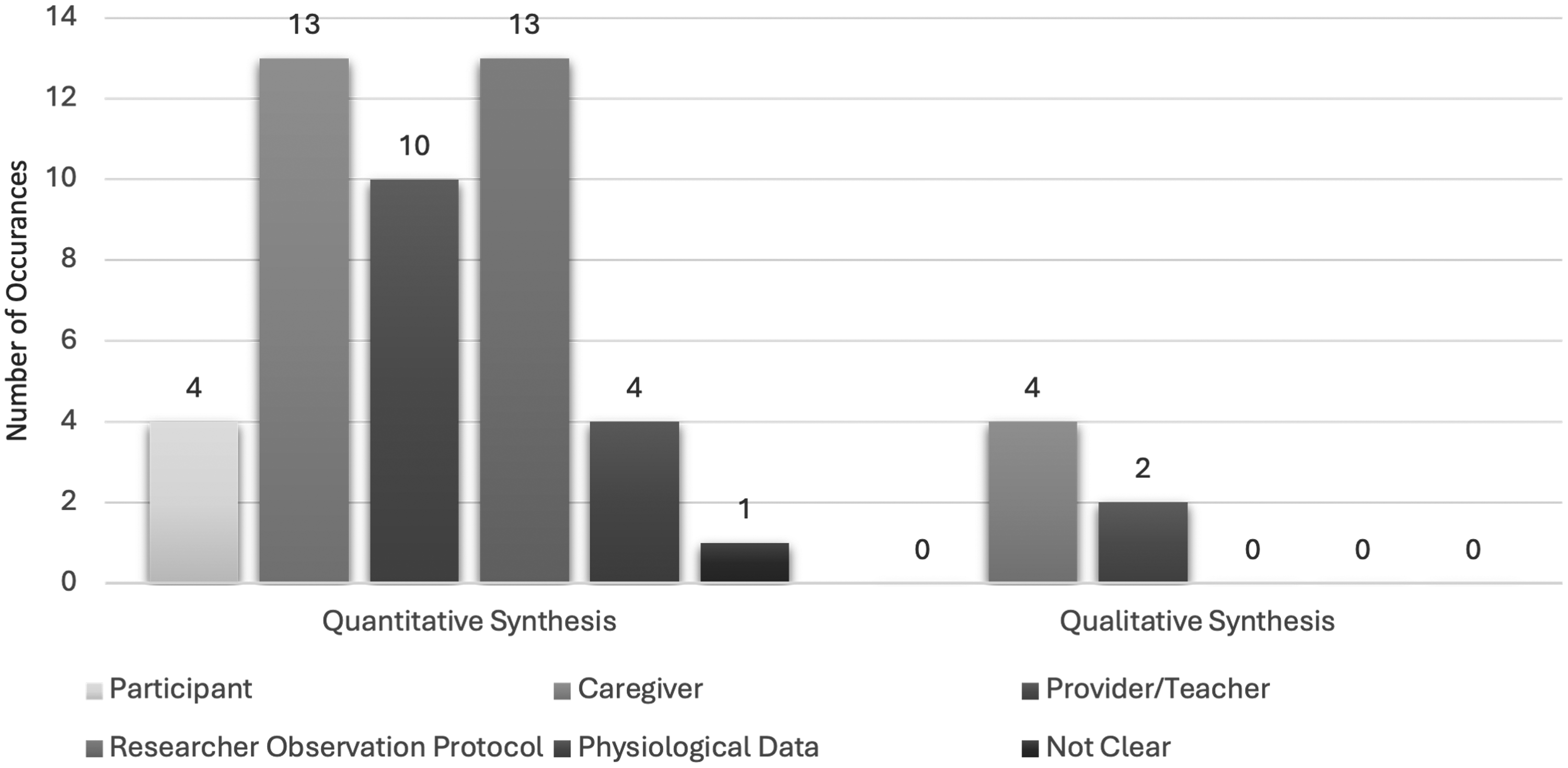
Bar graph depicting data sources utilized in the literature. Note. Total number of data sources does not equal total number of studies due to some studies utilizing more than one data source.
Other examples of pathologizing language in the literature includes studies that continue to use the word ‘aspergers’ when describing individuals with a level one ASD diagnosis, despite a negative history and connotation of the word's association with Hans Asperger and the Nazi regime during World War II (Sheffer, 2018) and its removal from the diagnostic manual in the United States in 2013 (APA, 2013). Studies often discuss differences as deficits when it comes to disability and words such as ‘comorbidity’ have a pathologizing connotation as well.
Discussion
The results of this critical literature review and the use of CDT to evaluate research has broad implications for social workers. Ethical research practices are part of our commitment to the profession and the people we serve (NASW, 2021). This paper also helps emphasize the importance of using theory to guide research so that it is aligned with professional values and consistent with our professional commitments. Considering concepts highlighted by CDT, such as voice and human rights, during the research process helps us reduce the risk of research harming or exploiting the vulnerable populations that are the focus of social work practice and are at the heart of feminist inquiry. The critical analysis of the literature base calls into question the validity of the current knowledge base due to the identified ethical gaps. By addressing those gaps, the field becomes stronger, more reliable, and more just.
The state of growing evidence to support the use of AAI to benefit Autistic individuals has implications for micro, mezzo and macro practice. For example, sample demographics, specifically for gender and race, are lacking in the literature base. In recent years, diagnosticians in neuropsychology have recognized how ASD diagnostic tools have historically missed Autistic women. For decades, women were misdiagnosed, and current trends show more women being diagnosed later in life (Bargiela et al., 2016; Beck et al., 2020). This has had significant impacts on the samples used in the current knowledge base that predominantly capture the experiences cisgendered males with ASD.
The inadequacy of standardized measures in capture the lived experiences of Autistic individuals is likely a contributing factor for why emotional outcomes were the least studied outcome in the literature. If parent drive the focus of research, it is important to recognize that externalizing behaviors are often given priority due to the burden they place on the entire family system and the immediate need to address safety concerns (Banks et al., 2020). Literature has also found incongruence between raters when comparing self-advocates, parents, and professionals (Kalyva, 2010), calling to question the validity of standardized measures to capture the internal experience of Autistic voices and, again, highlighting why Autistic voice through qualitative research and overall research design alongside Autistic co-researchers is a clear gap that requires attention.
Another gap identified in this review was the lack of utilizing identity-first language. This is not surprising given that the change from person-first to identify-first is recent. It does highlight a need for academics and researchers to incorporate the change that is being promoted by self-advocacy organizations, like ASAN, into future research. This also has implications for social work educators and professionals who may also be unaware of the linguistic change. This calls for advocacy to raise awareness around language usage and recent changes in the field.
One of the largest gaps identified in this review is the stark absence of lived experience and self-advocate choice. Eight qualitative studies were included in this analysis (Abihisira, et al., 2020; Barnhart et al., 2020; Buck & Lavery, 2020; Grigore & Bazgan, 2017; London et al., 2020; Lovric et al., 2020; Malcolm et al., 2018; Tan & Simmonds, 2018). Of these, none interviewed participants themselves, thus excluding first-hand lived experience from the entire literature base. This absence may be a result of research publication, versus this being an oversight of the research teams. Publication places limitations on authors through word count and journal standards, raising important issues around power, privilege, and knowledge in scientific inquiry that feminist inquiry is well positioned to interrogate (Lokot, 2021).
Despite Autistic people being the participants in these studies, caregivers and providers are overwhelmingly the data source. This places the power to create knowledge on those who do not have ASD and have not necessarily experienced AAI firsthand. This practice creates outcomes that may be subjective and biased, regardless of how rigorous the research methods are, because the respondents have assumptions and perspectives that may differ from the participants themselves (Alcoff, 1991). In fact, feminist scholars often use standpoint theory to justify the use of qualitative work with marginalized populations, citing that the use of a first-hand experience can actually increase objectivity (Naples & Gurr, 2014; Swigonski, 1993).
The non-disabled researchers dominating the field have failed to provide opportunities for community involvement throughout the research process. While their research procedures are mapped out with scientific integrity, the absence of voice is reminiscent of Harding's (2006) description of inequality in science. By only allowing professionals and caregivers to provide data, the literature is dominated by outsider knowledge rather than the lived experience. This may further harm the ASD community by devaluing the voices of community members, and looking through human beings, instead of seeing them. As social workers, working WITH the community is always at the center of what we do, even in our research (NASW, 2021). This aligns our work with feminist approaches to research by reinforcing the importance of recognizing power hierarchies and calling attention to whose voice is not included (Garland-Thomson, 2005; Lokot, 2021). Researchers should refer to the growing literature base on involving Autistic co-researchers (Kaplan-Kahn & Caplan, 2023; Nicolaidis et al., 2019; Pickard et al., 2022), giving preference to recommendations provided by self-advocates directly (ASAN, 2021).
There are several limitations to this study. The research question specifically focused on ASD, and this author acknowledges that not all Autistic people benefit from this type of research design. For example, it contradicts the value of diversity tenet by not including outcomes for Autistic people who may have participated in an AAI program outside the search criteria. Regarding representation and diversity within the samples, it is important to not be over critical of certain exclusions. Notably some studies reviewed excluded individuals with co-occurring diagnoses such as mental health, medical conditions, and intellectual disabilities. This can lead to a more homogenous sample that is not representative of the diverse experience of ASD, further marginalizing those with more severe or significant impacts on their daily living skills. However, the safety of the animals involved in AAI work is also an important consideration that justifies the exclusion of individuals with aggressive behaviors or other risk factors (Fine & Griffin, 2022).
Another limitation is highlighted by the tenet of transformative politics and the emphasis on participatory action research and co-researchers. We must acknowledge the burden these methods place on our community by encouraging disclosure of identities frequently discriminated against in academia. Issues regarding ableist structures in higher education continue to limit opportunities for disabled academics and disabled social workers (Sherwood & Kattari, 2023; Trecartin et al., 2024). This has impacts on the ability of engaging co-researchers that represent the broader experience of ASD (Pickard et al., 2022). For example, continued gatekeeping is reinforced by the current sociopolitical climate that has impacted U.S. higher education and the use of diversity, equity, and inclusion programs that seek to reduce barriers of minority populations like those within the various disability communities (The Lancet, 2025). Meanwhile, the focus on speed and quantity of publications in the tenure process also threatens the ability of researchers to spend time gathering information from stakeholders and engaging in qualitative research (Berg et al., 2017; Pickard et al., 2022). In summary, while researchers and academic leaders may talk about the importance of these critical methods, many barriers and risks exist that continue to limit the ability of social scientists to do this work, especially early in their careers. While it is imperative that future projects about AAI involve Autistic self-advocates at every stage of the research process (ASAN, 2021), we must also examine the pitfalls and burdens of self-disclosure.
Conclusion
The results of this critical review highlight several implications for the future of research in the field of AAI and ASD. First, we must consider the different applications of AAI and how to effectively generate the outcomes that clients desire. Second, as the field gains momentum, researchers should consider ways to create more qualitative opportunities through mixed methods that incorporate semi-structured interviewing. We can only truly understand the why and how of the human animal bond by incorporating firsthand, lived experience. Additionally, the recruitment of Autistic co-investigators, focus groups, or other feedback opportunities is essential. To avoid potential harm to this community, researchers must involve individuals with varying experiences of ASD and their intersectional identities. AAI researchers should prioritize triangulating their empirical data with the community's voice to ensure our work is reliable, valid, and just.
Supplemental Material
sj-docx-1-aff-10.1177_08861099261458770 - Supplemental material for Assessing Animal-Assisted Intervention Research Literature Through the Lens of Critical Disability Theory: A Critical Literature Review
Supplemental material, sj-docx-1-aff-10.1177_08861099261458770 for Assessing Animal-Assisted Intervention Research Literature Through the Lens of Critical Disability Theory: A Critical Literature Review by Tiffany Banks in Affilia
Footnotes

Funding
The author received no financial support for the research, authorship, and/or publication of this article.
Declaration of Conflicting Interests
The author declared no potential conflicts of interest with respect to the research, authorship, and/or publication of this article.
Supplemental Material
Supplemental material for this article is available online.
Author Biography
References
Supplementary Material
Please find the following supplemental material available below.
For Open Access articles published under a Creative Commons License, all supplemental material carries the same license as the article it is associated with.
For non-Open Access articles published, all supplemental material carries a non-exclusive license, and permission requests for re-use of supplemental material or any part of supplemental material shall be sent directly to the copyright owner as specified in the copyright notice associated with the article.
