







Abstract
This study examines the motherhood experiences of women with disabilities living in Türkiye from a feminist social work perspective and analyzes how dominant ideologies surrounding gender, motherhood, and disability shape these experiences. Drawing on a feminist qualitative research design, the study is based on semi-structured interviews with 21 women with diverse disabilities residing in different regions of Türkiye. Using reflexive thematic analysis, three interrelated themes were identified: (1) The Double Burden of Mothering in the Shadow of Ableism and Patriarchy; (2) The Struggles of Mothering in the Shadow of Policy Gaps; and (3) Resisting and Growing Stronger against Oppressions and Challenges. The findings reveal that the dominant norms of good motherhood place intense pressure on women with disabilities. In Türkiye, these pressures are reinforced through social policies and services that institutionalize patriarchal and ableist ideologies. Simultaneously, women actively navigate these constraints through coping, resistance, and empowerment strategies in their daily mothering practices. By making these power relations visible, this study highlights the transformative potential of feminist social work and underscores the need for rights-based social policies and social work interventions at the micro, mezzo, and macro levels to empower women with disabilities.
Keywords
Introduction
Motherhood is not a purely personal experience but a historically, socially, culturally, and politically constructed institution (Biswas, 2022), shaped by dominant ideologies. Patriarchal ideology frames motherhood as a normative expectation tied to women's reproductive capacity and sustains this expectation through cultural and political discourses that reproduce patriarchy (Timurturkan, 2019). Within this context, contemporary ideals of “good motherhood” are shaped by intensive mothering ideology, which constructs motherhood as child-centered, labor-intensive, and emotionally demanding (Hays, 1996). This ideology establishes normative standards that regulate mothers and stigmatize those who fall outside them (Arendell, 2000). While these standards exert pressure on all women, women with disabilities are often positioned outside the hegemonic ideal (Malacrida, 2024). Therefore, an intersectional perspective (Crenshaw, 1991) is required to understand how interlocking systems of oppression shape the motherhood experiences of women with disabilities. Intersectionality operates across multiple levels of social life, shaping women's lived realities through structural inequalities as well as political arrangements that marginalize those with multiple identities (Crenshaw, 1991). From this perspective, women with disabilities’ motherhood experiences are shaped not only by gender but also through its mutual constitution with disability norms, highlighting how patriarchy, intensive mothering, and ableism are co-constitutive (Erevelles, 2011).
Intensive mothering discourse presumes that care is provided independently, places responsibility for risk prevention on mothers, and rewards the construction of a “sacred” childhood free from hardship (Frederick et al., 2018), implicitly assuming maternal capacities such as constant energy, speed, physical and emotional stability, independence, and autonomy (Daniels, 2020). Motherhood ideology is thus intertwined with ableism, which defines and normalizes what counts as “normal” in relation to bodily, cognitive, and emotional capacities, based on dominant cultural norms (Campbell, 2009). Within this framework, women with disabilities, often assumed to lack the capacities required for motherhood (Daniels, 2020) and constructed as dependent and inadequate (Xiong & Chen, 2024), are excluded from dominant motherhood ideologies due to their perceived violation of prevailing gendered expectations of caregiving.
These assumptions, reflecting an ableist ideology of motherhood, are embedded in social policies, services, and institutional practices (Malacrida, 2024). In everyday life, this structural exclusion appears in barriers across private and public spaces, including inaccessible housing, parks, and playgrounds (Daniels, 2020), healthcare services such as hospitals (Blair et al., 2022), limited availability of accessible market goods, inadequate childcare information resources (Frederick, 2017), and stigmatizing social work practices (Malacrida, 2009). As a result, women with disabilities face greater difficulties in meeting normative motherhood expectations and experience intensified social stigma (Malacrida, 2020). These experiences are further shaped by the cultural, social, economic, and political conditions in which they are situated (Frederick et al., 2018).
Most research on the motherhood experiences of women with disabilities is concentrated in North America (Morais et al., 2024). Studies from European Union contexts, where disability policies are more institutionalized (Micalizzi, 2026; More, 2023), and Global South contexts, characterized by patriarchal and family-centered structures (Xiong & Chen, 2024), remain limited. In this regard, Türkiye offers a context where the exclusion of women with disabilities from motherhood becomes particularly visible at the intersection of patriarchal and ableist ideologies and assistance-based disability policies, providing a relatively open context for analysis. However, existing Turkish scholarship largely focuses on health-centered experiences of pregnancy, childbirth, postpartum, and caregiving challenges (Cetisli et al., 2018; Erbay, 2021), treating motherhood and disability primarily as individual experiences and overlooking broader ideological and policy structures such as dominant ideologies and social policies. At this point, understanding Türkiye's specific socio-political context becomes essential.
In Türkiye, motherhood is shaped by patriarchal and familist ideologies intertwined with intensive mothering, positioning women as self-sacrificing caregivers. This is reinforced by family-centered social policies, including maternity and parental leave and family-based social assistance, which primarily assign caregiving responsibilities to women (Sadıkoğlu & Erdoğan Coşkun, 2024; Yelsalı Parmaksız, 2012). In disability policy, although Türkiye ratified the Convention on the Rights of Persons with Disabilities (CRPD) in 2007, a significant gap remains between legal commitments and implementation. Disability continues to be framed within a charity-based rather than rights-based approach, positioning persons with disabilities as objects of pity (Ergün et al., 2023). Currently, support for persons with disabilities is largely limited to family-mediated cash benefits under strict eligibility criteria, such as dependency on care and household income thresholds, reflecting a departure from a rights-based approach (Atasü-Topcuoğlu, 2022). Despite Article 23 of the CRPD guaranteeing women with disabilities’ right to motherhood, their gendered needs remain largely invisible within national legislation (Abay & Kahraman Güloğlu, 2015), with no direct policy measures supporting mothers with disabilities in Türkiye.
Considering the social, cultural, and political contexts shaping motherhood, a feminist social work perspective is necessary to examine how women with disabilities are expected to conform to normative ideals of motherhood, are stigmatized when they do not, and are constrained by exclusionary social policy frameworks. Drawing on feminist motherhood literature, matricentric feminist social work highlights that mothers are oppressed not only through patriarchal norms but also through service paradigms that reproduce them. It shifts the focus from individual maternal capacities to the structural and institutional arrangements shaping motherhood and seeks to transform policies that sustain unequal power relations (Epstein & Mulley, 2024). Although mainstream social work has historically contributed to defining and regulating the “good mother,” it also has the potential to make power relations visible and reshape practice and policy (Kuri & Fierheller, 2022).
Taken together, this study examines the motherhood experiences of women with disabilities in Türkiye from a feminist social work perspective within their cultural, social, and political context. It addresses three research questions: (1) How do women with disabilities in Türkiye experience motherhood in relation to patriarchy and ableism? (2) How do social policies in Türkiye shape the motherhood experiences of women with disabilities? (3) How do women with disabilities who are mothers respond to oppression and develop resistance strategies?
Methods
Study Design
Qualitative research methods were used to develop a deep understanding of the motherhood experiences of women with disabilities, to addressing this experience within a social context (Patton, 2025), and to hear their silenced voices (Creswell, 2025). The study was designed and conducted in line with feminist methodological principles, including reflexive positionality, a bottom-up epistemological stance, and mutual awareness (Mies, 1996). Throughout the research process, we critically engaged with power relations and sought to foster trust-based, collaborative knowledge production by minimizing hierarchical dynamics between researcher and participants. Drawing on Stanley and Wise (2012), we also challenge universalized understandings of womanhood and adopt an intersectional perspective that recognizes the differentiated social positioning of women. In addition, participants’ narratives were positioned as central to the research process, and recommendations aimed at contributing to their empowerment were developed (Hesse-Biber, 2013).
Participants
The participants were purposefully selected (Patton, 2025) from women with disabilities who had at least one child aged 0–18, since ideal motherhood is often associated with physical caregiving capacity. Motherhood is also associated with emotional and psychological competence; however, the Turkish Civil Code No. 4721 allows guardianship decisions to be made regarding individuals with mental illness or disability. This legal framework, which contradicts Article 12 of the CRPD and limits individuals’ legal capacity through guardianship arrangements (Engelli Kadın Derneği [Association of Women with Disabilities], 2021), also requires interviews to be conducted through a guardian. The ethical risks this poses regarding freedom of expression and confidentiality shaped the decision to conduct the research with women with physical disabilities.
Maximum variation sampling (Patton, 2025) was employed to enact an intersectional design by capturing how disability intersects with socio-demographic, socio-economic, geographic, and age-based differences, thereby avoiding the homogenization of mothers with disabilities. Due to the lack of institutionalized services for mothers with disabilities in Türkiye, participants could not be accessed through a single institutional setting.
Recruitment invitations were first disseminated through one of the three associations actively advocating for women with disabilities in Türkiye, but no responses were received, possibly due to gendered caregiving responsibilities limiting organizational engagement (Çamur Karataş & Sepin İçli, 2021). Since mothers with disabilities constitute a hard-to-reach and geographically dispersed population, snowball sampling was also employed (Parker et al., 2019), with participants were ultimately recruited through announcements shared in online communities. A total of 21 women with hearing, visual, and orthopedic disabilities participated in the study, recruited from nine cities across four geographical regions in Türkiye. Detailed socio-demographic characteristics are presented in Table 1.
Socio-Demographic Information About Participants.
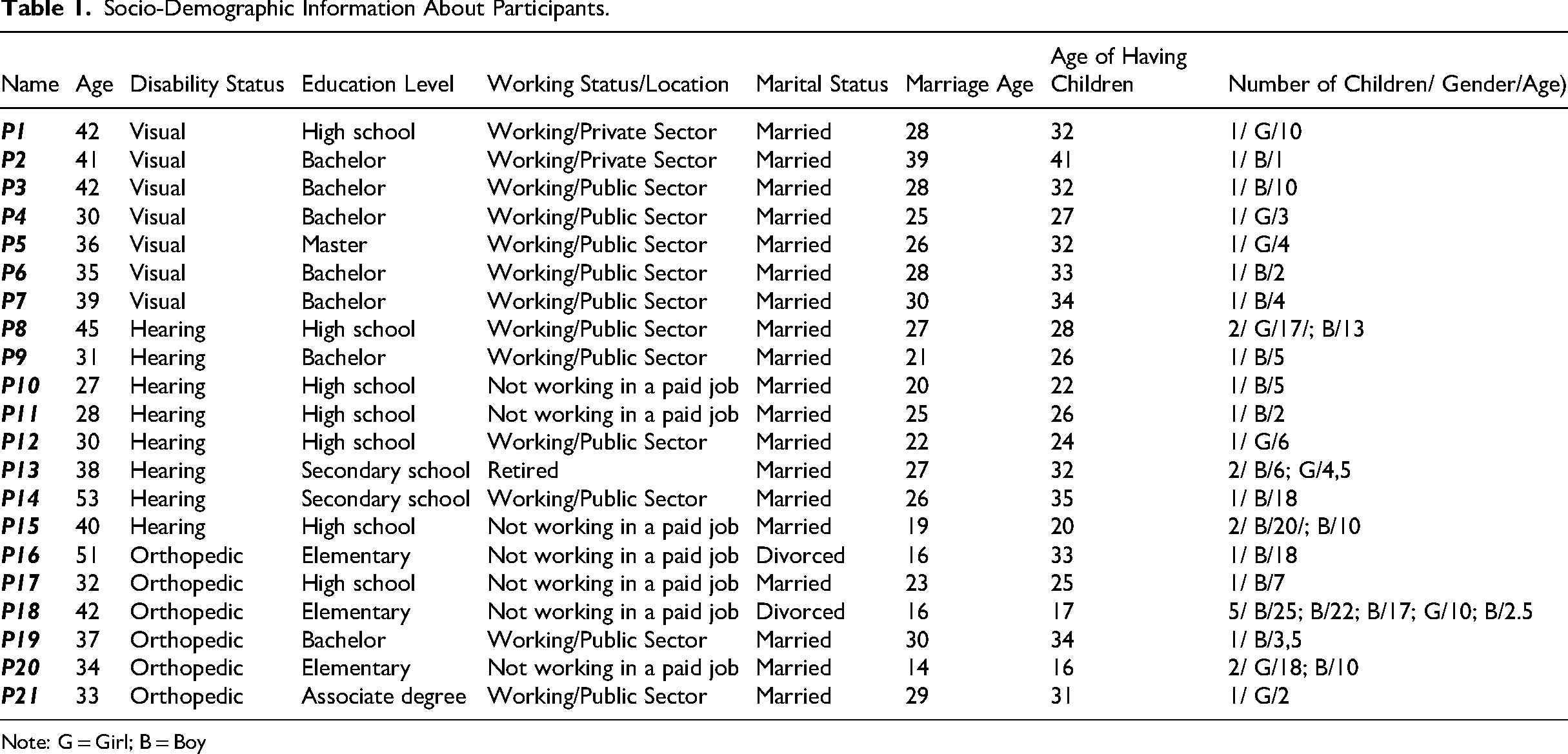
Note: G = Girl; B = Boy
Data Collection
In-depth interviews were conducted using a semi-structured interview form consisting of open-ended questions developed by the researchers based on the literature on mothers with disabilities. The questions in the form were divided into three sections: The first section contained socio-demographic information questions aimed at identifying the participants. The second section, linked to the first and second research questions, consisted of open-ended and narrative-prompting questions focusing on participants’ motherhood experiences as women with disabilities, including the decision to become a mother, pregnancy, childbirth, the postpartum period, and experiences in private and public spaces. The third section, linked to the second and third research questions, examined participants’ coping strategies, including resistance practices and their relations with social policies and social service systems.
Interviews were conducted via video calls on online platforms chosen by the participants to accommodate their caregiving responsibilities and enhance accessibility. To ensure data security, encrypted platforms such as WhatsApp and Zoom were used, and interviews were audio-recorded with informed consent. Sign language interpreters were present during interviews with hearing-impaired participants and were reminded of confidentiality and ethical obligations prior to each session. Data collection continued until data saturation was reached, which was defined as the point at which no new themes emerged across interviews.
The interviews, conducted between April and July 2022, lasted an average of 90 min (range: 30–160 min). The transcripts of the interviews produced a dataset totaling 315 pages (approximately 107,250 words) in Times New Roman, 12-point size, and 1.5 line spacing. Audio recordings were stored in an encrypted folder accessible only to the first author until transcription and were subsequently destroyed. De-identified transcripts were then shared with all authors through an encrypted workspace for analysis.
Data Analysis
The data were analyzed using reflexive thematic analysis (Braun & Clarke, 2022). NVivo 12 + was used to support the organization of the dataset and coding structures; however, analytical decisions were guided by the researchers’ interpretive engagement rather than by the software.
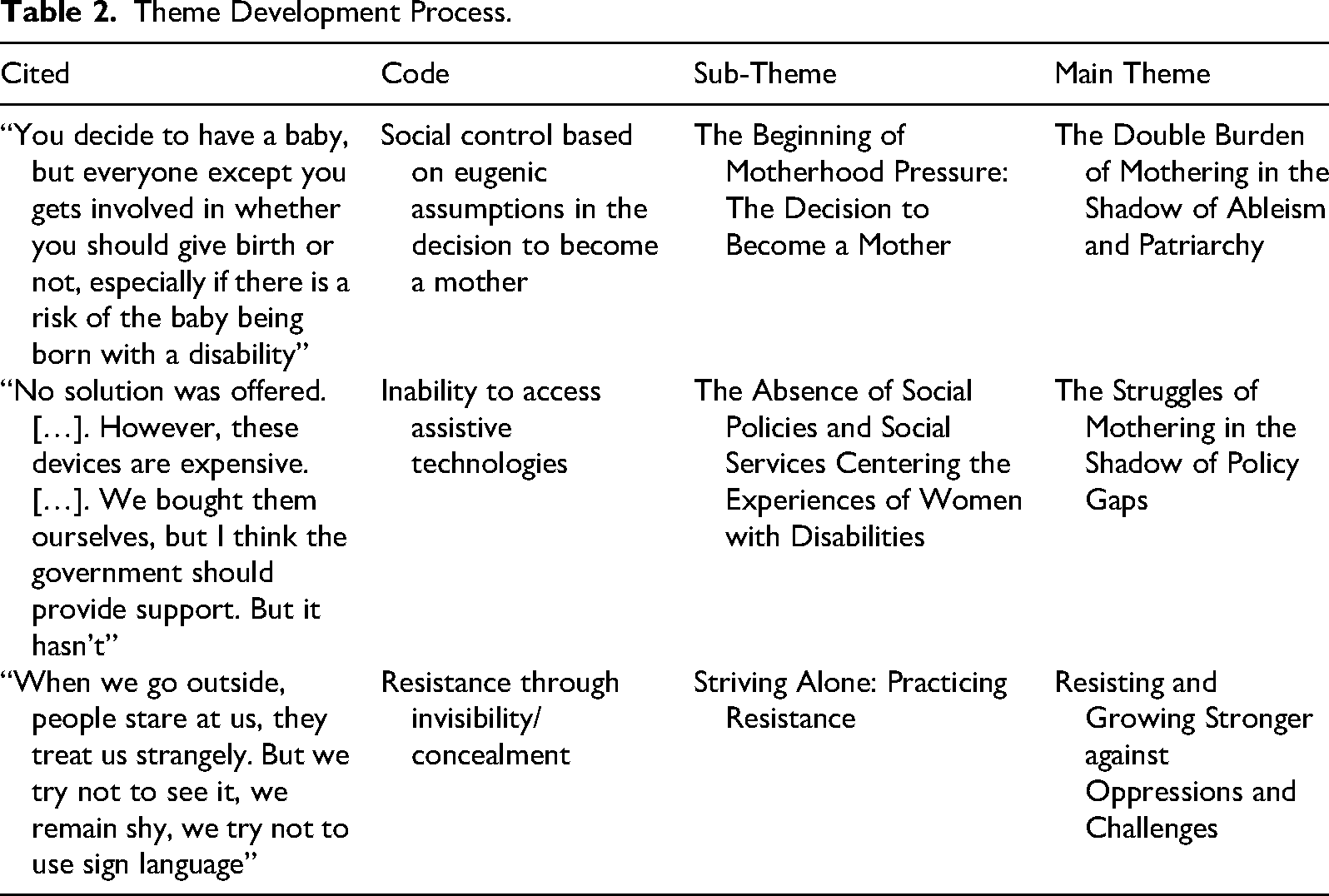
In the first stage, the data were transcribed verbatim together with observational notes documenting gestures, facial expressions, crying, laughter, and changes in tone of voice. These notes contributed reflexively to the interpretation of participants’ experiences. The transcripts were read repeatedly to enhance familiarity with the data, after which open coding was conducted systematically. Related codes were grouped into subthemes and overarching themes through an iterative process of comparing interviews, identifying recurring patterns and contradictions, and revisiting the data. In the reporting phase, illustrative direct quotations were selected to support analytic claims (Braun & Clarke, 2022). Two researchers independently reviewed each stage of the analysis, and analyst triangulation was employed to reduce single-perspective bias (Patton, 2025). Consistent with the reflexive thematic analysis (Braun & Clarke, 2022), themes were constructed through the researchers’ active interpretative engagement with data. In total, 490 excerpts were coded, generating approximately 130 initial codes. These were consolidated into nine subthemes, which were synthesized into three overarching themes. For a detailed overview of the theme development process, refer to Table 2.
Theme Development Process.
Reflexivity and Researchers’ Positionality
In line with the role of the researcher's positionality in knowledge production and the importance of reflexivity in feminist research (Harding, 1988), reflexivity was integral to this research. As an activist woman with a disability researcher and a non-disabled woman researcher, considering that we were both single and childless, we simultaneously experienced both insider and outsider positions (Dwyer & Buckle, 2022) in this research through our intersecting social positions. As female researchers living in Türkiye, we had an insider's perspective when participants shared their gendered experiences. Outsider positionality in relation to disability sometimes limited our ability to fully grasp the embodied dimensions of care; however, it also enabled us to approach the field as unknowing subjects and to recognize participants as epistemic authorities on their own experiences, fostering a research process grounded in openness and curiosity. Meanwhile, the insider perspective evoked dual emotions, anger toward structural conditions and hope emerging from women's resistance, which sharpened our analytical attention to the interplay between structural inequalities and practices of resistance. As researchers positioned within academia, we recognized that participants differed in socio-economic status, educational background, professional position, and activist engagement within the study's intersectional framework, and therefore remained attentive to our hierarchical positions while continuously negotiating these power relations. The presence of participants with activist identities was considered during the analytical process. While these narratives contributed to a deeper understanding of structural inequalities, all accounts were analyzed together without privileging any single perspective, in order to avoid the dominance of a particular interpretive framework.
Ethical Approval
The Hacettepe University Ethics Commission granted the ethical approval of this study.
Findings
The analysis generated three interrelated themes, each comprising several subthemes, reflecting the structural, policy, and resistance dimensions of mothers with disabilities’ experiences in Türkiye. The identified themes are as follows: (i) The Double Burden of Motherhood in the Shadow of Ableism and Patriarchy, (ii) The Struggles of Mothering in the Shadow of Policy Gaps, and (iii) Resisting and Growing Stronger in the Face of Oppression and Challenges.
The Double Burden of Mothering in the Shadow of Ableism and Patriarchy
This theme highlights the double burden experienced by the mothers in this study, shaped by the intersection of patriarchal norms of caregiving motherhood and ableist assumptions that their disabilities would prevent them from meeting these expectations.
The Beginning of Motherhood Pressure: the Decision to Become a Mother
The mothers in this study reported that once they shared their decision to become mothers with their close social circles, a social cycle of scrutiny and judgment emerged around them. Most mothers emphasized that when they announced their decision to become mothers, they encountered more negative reactions than positive ones, and that the first concern of their close circle was the possibility of the child being disabled. You decide to have a baby, but everyone except you gets involved in whether you should give birth or not, especially if there is a risk of the baby being born with a disability (P3, woman with a visual disability).
These narratives illustrate how the intersection of motherhood and ableist ideologies positions these women as responsible for preventing the birth of children with disabilities (Brunet, 2020), thereby linking them to the reproduction of disabled bodies that are often socially devalued.
Motherhood Under Scrutiny: Stigmatization and Blame
The social surveillance that begins with the decision to become a mother intensifies significantly once the caregiving role is assumed. The mothers’ narratives reveal that women who are perceived as deviating from the ideal maternal figure due to their physical differences are labeled by both acquaintances and strangers as inadequate caregivers or as mothers who may endanger their children's safety, based on the assumption that they are unable to provide care independently. If you are a blind woman, they think you won’t be able to take good care of the child. This adventure begins after the child is born. […]. ‘Don’t go out alone; the child will suddenly disappear from your sight, and you won’t be able to find them’ (P6, woman with a visual disability).
These narratives reflect the intersection of ableism and patriarchal ideology, through which women with disabilities are perceived as unable to adequately meet motherhood ideals. They also demonstrate how motherhood extends from the private sphere into the public domain.
Negotiating Caregiving Challenges: Self-Questioning and Guilt
Although the mothers emphasized that they provide the best possible care for their children within their own circumstances, normative expectations of “good motherhood” place significant pressure on them. The first person to hold a child is the mother, but I could never get up and run to hold my child. […] I did what I could, but I couldn't do as much as a full mother could because of my disability. This has always been a wound inside me, not being able to care for my child fully (P17, woman with an orthopedic disability).
Grounded in ableist ideals of perfection and constant adequacy, these expectations deepened feelings of inadequacy, guilt, and failure while shaping mothers’ interpretations of their caregiving experiences. The description of a “wound” in the narratives highlights how idealized expectations of motherhood erode the subjective experiences of motherhood among women with disabilities.
Responding to Societal Expectations of Good Motherhood Through Mothering Practices: Performing Double Mothering
The mothers’ narratives show that mothers with disabilities experience a double burden in coping with motherhood norms that reflect intensified patriarchal social surveillance and ableist expectations. If you want perfection, you must work harder. If you want it to be cleaner, if you want it to be neater… If you are blind, you must take better care of your child. Because that child is scrutinized in every way outside, down to the clothes you dress them in. If someone else's child is dirty, it doesn't attract attention, but if your child is dirty, it's because you can't see it. […] I tried to learn; I tried to do everything properly (P4, woman with a visual disability).
The narratives reveal that, in an effort to counter the stigma attached to disability, these women often end up intensifying the very ideals of motherhood that constrain them—by performing heightened selflessness and devotion. This double burden borne by mothers encompasses not only the effort to meet cultural expectations of good motherhood, but also the struggle to cope with the challenges they face in motherhood in the face of inadequate public social services.
The Struggles of Mothering in the Shadow of Policy Gaps
This theme explores how gaps in social policies and services shape the everyday struggles of mothers with disabilities in motherhood.
The Absence of Social Policies and Social Services Centering the Experiences of Mothers with Disabilities
Mothers reported that there are almost no social services specifically designed to address the challenges they face, provide additional support in childrearing, or empower them, and that they remain largely overlooked within Türkiye's social policy framework. There is no policy for people with disabilities; therefore, would there be any policy for those who have become parents? I also cannot say that there are many services available. […]. There is nothing at all (P5, woman with a visual disability). They do nothing to help us raise our children comfortably. To take them to school, to take them outside… Everything is a problem. We are very lonely (P13, woman with a hearing disability).
This feeling of loneliness among women goes beyond a personal emotional state; it expresses structural exclusion and highlights the fact that they are forced to struggle with difficulties on their own. The lack of institutional recognition of motherhood among women with disabilities, at the intersection of ableist norms and gendered policies, further deepens their invisibility.
Existing Social Policies and Social Services That Fail to Center the Experiences of Mothers with Disabilities
The narratives highlight the inadequacy of existing policy arrangements and service provision in addressing the needs of mothers with disabilities. Mothers reported that although certain childcare tasks—such as feeding, bathing, or accompanying children to school—were occasionally shared with their spouses, these responsibilities were primarily constructed as their own, reflecting the gendered division of care within patriarchal norms. Shortcomings in social policy, such as the physical environment, products on the market, and social services not being adapted to the needs of women with disabilities, create additional oppression and challenges in these roles.
Instead of developing social policies or services that consider the needs of women with disabilities in Türkiye, these women are expected to benefit from standard maternity and childbirth services or the limited social services offered to people with disabilities. For example, one of the services provided within the scope of maternity services is postnatal care education covering topics such as breastfeeding, care, and postpartum issues. The narratives of mothers with different types of disabilities show that these trainings are designed to meet the needs of women with normative physical characteristics only and are not accessible. How can an orthopedically women with disabilities be adequate for her child? How can it be easy to care for her? Information like this would make our lives easier, but I haven't been able to find any (P17, woman with an orthopedic disability).
Additionally, accessible products such as electric vehicles, vibrating devices, and Braille children's books, which are needed by parents with disabilities and could alleviate the burden of care, are not included in social services in Türkiye and are sold at high prices on the market. No solution was offered. […]. However, these devices are expensive. Vibrating devices, hearing aids… We bought them ourselves, but I think the government should provide support. But it hasn't (P12, woman with a hearing disability).
Mothers with relatively higher socio-economic status are able to obtain these assistive products through their own resources, whereas the narratives of low-income or single mothers indicate that, when they cannot access such products, they become dependent on the assistance of others. I would like to take my child to and from school myself, but I can't go. I don't have an electric wheelchair, and I can't walk. I always have to rely on someone else (P18, woman with an orthopedic disability).
Mothers receiving social assistance have to put their own needs second in order to meet not only their own living expenses but also their children's care, education, or socialization needs. Furthermore, although mothers with disabilities have to bear additional costs for adaptive equipment, transportation support, or care personnel for child care, the social assistance available in Türkiye is far from covering such additional expenses. The narrative of a P18, also emphasizes that the temporary and inadequate nature of social assistance in Türkiye leads women with disabilities to become economically dependent on their families and social circles. I only have my disability pension, which is 1300 TL (about 30 $). That's not enough either. […]. I beg my siblings to help me. I don't know how long they will continue to help me. […]. I can't make ends meet. […]. I don't want anything for myself, only for the children. It would be enough if I could meet their needs. My daughter goes to school; she has needs I can't afford (P18, woman with an orthopedic disability).
These findings show that gaps in social policies targeting women with disabilities who are mothers not only lead to discriminatory practices but also cause them to experience challenges in parenting. The lack of accessible public support resources forces mothers to find their own solutions to eliminate these challenges.
Resisting and Growing Stronger Against Oppressions and Challenges
This theme examines how the inadequacy of formal support mechanisms compels mothers with disabilities to develop their own coping strategies to address the burdens of care and resist multiple forms of oppression.
Compensating for the (Non-)Existence of Social Policies: Seeking Informal Support
The narratives indicate that, due to insufficient formal support mechanisms, they rely on informal support networks to meet their physical, social, emotional, and economic needs. In the absence of adequate institutional support, both the family of origin and the spouse's family emerged as primary sources of assistance, particularly in sharing caregiving responsibilities. I received substantial support from those around me. Whenever I faced difficulties, my spouse, neighbors, friends, siblings, mother-in-law, and father-in-law were there for me. With their support, I was able to get through these times (P8, woman with a hearing disability).
While family support helps alleviate the burden of care for some women, for others, the support provided has eliminated their autonomy or failed to adequately meet their needs. I remember saying, ‘Let me do it, I can feed him too.’ They said, ‘No, you can't hear, you won't understand.’ They never gave me any responsibility for the baby (P11, woman with a hearing disability). You need to learn how to change the diaper; you need to learn how to clean it. I asked my mother to show me. But you can’t learn it properly from someone who can see. It doesn’t get depicted the way you want (P4, woman with a visual disability).
These narratives highlight some of the ways in which informal support can be disempowering.
Striving Alone: Practicing Resistance
Resilience developed through lived experiences of disability enables mothers to adapt their caregiving practices in various ways. They make behavioral adjustments, utilize accessible baby-care equipment when available, and creatively modify or repurpose products that are otherwise inaccessible. Through these strategies, mothers partially compensate for the lack of formal or informal informational support and attempt to navigate caregiving challenges independently. Baby bottles also have measurements on them. I measured it out for myself with a cup. I was making a formula with them. The formula also has its own measurements. […]. You definitely find a method that works for you (P1, woman with a visual disability).
Some mothers have resisted the stigma of being a mother with a disability by distancing themselves from their stigmatizing social circles, avoiding social spaces or situations where stigmatizing interactions occur, ignoring stigmatizing attitudes, or concealing their disability. When we go outside, people stare at us, they treat us strangely. But we try not to see it, we remain shy, we try not to use sign language (P13, woman with a hearing disability).
For others, the way to cope with oppression is to be visible. Mothers challenge this pressure by directly responding to the microaggressions directed at them in public spaces where they are with their children and by making their presence visible. Participants working in the field of disability rights, in particular, emphasized that the way to overcome prejudice against motherhood is to embrace their identity as mothers with disabilities and to be visible with their children. The best way to cope is to go out more often. You'll be more visible with your child. When you're visible, things become easier. Because you get used to the reactions, you can respond more comfortably (P4, woman with a visual disability).
Seeking Pathways to Empowerment: Solidarity among Mothers with Disabilities
Solidarity networks formed with other mothers with disabilities are becoming an important source of resistance and empowerment. In the context of inadequate public services and limited disability-sensitive support within their immediate environments, participants built connections grounded in shared experiences with women who they believed could best understand their realities. Through these self-created communities, mothers with disabilities established networks that provided both practical guidance and emotional affirmation. This demonstrates that solidarity functions not only as a support mechanism but also as an important site of subjective empowerment. We have a group […]. For example, the mothers repeatedly asked each other how they gave syrup to their children. Since these questions were asked repeatedly until I became a mother, I found them beneficial (P6, woman with a visual disability). When the person in front of you has a disability, they can understand you, and you can understand them. Wherever they are struggling, or wherever you are struggling, they can understand you (P17, woman with an orthopedic disability).
All these narratives highlight the diversity of coping and resistance strategies developed by mothers with disabilities despite all oppression; thus, they also make their subjective paths to empowerment visible.
Discussion
This study, from a feminist social work perspective, examines the motherhood experiences of women with disabilities by drawing on the relationship between their lived experiences and social positions (Dominelli, 2002). From this perspective, understanding the intertwined forms of oppression shaping women's lives requires an intersectional framework (Mehrotra, 2010). In light of Crenshaw's (1991) framework of structural intersectionality, our findings demonstrate how patriarchal caregiving norms and ableist assumptions toward mothers with disabilities shape motherhood experiences. This intersection produces a contradictory position in which, although patriarchal ideology assigns mothers the role of primary caregivers, the competence of mothers with disabilities is continuously questioned. Our findings show that, within Türkiye's patriarchal context in which motherhood is central to women's social status, women are not fully regarded as competent mothers because they are perceived as unable to meet normative maternal roles. In line with previous literature (Aunos et al., 2024; Malacrida, 2020; Micalizzi, 2026), they are stigmatized on the grounds that they fail to meet idealized motherhood standards and are perceived as endangering their children's well-being, including through assumptions of disability transmission. In this context, our findings suggest that women demonstrate increasing levels of self-sacrifice in their mothering practices to meet the demands of intensive mothering ideology, counteract stigma, and avoid criticism (Aunos et al., 2024; Malacrida, 2009). The resulting cumulative caregiving burden reflects not only compensatory mothering (Malacrida, 2009), but also the ongoing intersectional pressure on women with disabilities to continuously intensify their maternal performances in order to meet idealized standards of motherhood. Our findings further suggest that the implicit construction of physical capacity as a prerequisite for good motherhood (Micalizzi, 2026) may be internalized by mothers with disabilities and, through internalized ableism (Campbell, 2009), reflected in feelings of guilt, inadequacy, and deficiency. Previous literature suggests that these emotions, closely linked to structural arrangements and normative expectations, may have long-term implications for mothers’ mental health (Liss et al., 2013). From a feminist social work perspective, engaging mothers’ narratives situates these experiences within broader socio-cultural and political structures rather than individual shortcomings (Davies et al., 2007). This shifts attention from individualized blame to collective and political critique by exposing the structural impossibility of idealized motherhood norms, opening up space for empowerment (Epstein & Mulley, 2024).
Beyond stigma, our findings also indicate that these women encounter various challenges in both private and public spheres while fulfilling their roles as mothers, consistent with previous literature (Malacrida, 2024; Morais et al., 2024). Although some previous studies have framed these experiences either as general challenges or as disability-related difficulties (Acheampong et al., 2022), they reflect a mismatch between normative and ableist expectations of motherhood and the structural conditions in which women mother. Our findings, consistent with previous literature, confirm gaps in social policies and show that the choices available to parents vary depending on who they are (Gibson, 2019; Malacrida, 2020). In Türkiye, shortcomings in implementing legally mandated accessibility regulations (Polat Subaşı, 2023) appear to deepen the difficulties mothers with disabilities face in fulfilling maternal roles in private and public spheres. Moreover, fragmented cash assistance (Ergün et al., 2023) and the absence of personal assistance services, a key international support for parents with disabilities (Selander & Engwall, 2021), reduce women's autonomy, intensify caregiving burdens, and reinforce stigmatization (Engelli Kadın Derneği [Association of Women with Disabilities], 2021). Considering that social assistance for people with disabilities in Türkiye is insufficient even to meet basic needs (Buluş, 2022), our findings further suggest that mothers with disabilities whose only assurance is such assistance experience increasing difficulty balancing their own needs with those of their children. This also reflects patriarchal motherhood ideology, which constructs the ideal mother as one who prioritizes her child over herself, leading women to internalize this norm and subordinate their own needs (Aykara & Albayrak, 2025). This policy context reflects a perspective that, as Nishida (2022) notes, overlooks the relational nature of care and renders the caregiving roles of women with disabilities invisible, positioning them primarily as recipients of care. This highlights the need to reconceptualize care through interdependence to move beyond the caregiver/care recipient binary (Runswick-Cole et al., 2026). Shortly, in line with Crenshaw's (1991) framework of political intersectionality, policies that ignore intersecting identities render the structural oppression of women with disabilities invisible, deepening their marginalization. In such a context, feminist social work should critically interrogate these assumptions in order to challenge the risk of reinforcing oppressive gender regimes, and transformative social work practices and social policies should be grounded in the lived conditions of mothers with disabilities to disrupt this framework (Epstein & Mulley, 2024). In the face of social policy gaps, our findings demonstrate that family support plays a particularly central role within Türkiye's traditional family structure (Kağıtçıbaşı & Ataca, 2005). However, although family support is important in alleviating caregiving burden, our findings also indicate that when family members are unable to provide accessible guidance, this support can also produce disempowering effects. This situation highlights that social support networks alone are insufficient and underscores the need to strengthen social work in order to achieve sustainable and structural solutions.
In this context, women develop certain strategies of resistance in order to mother within formal and informal conditions that provide insufficient support. From a feminist social work perspective, recognizing these strategies is as important as transforming the structural conditions that make them necessary (Takak & Atasü-Topcuoğlu, 2026). Our findings suggest that motherhood for women with disabilities can be understood as a form of resistance that challenges dominant discourses by occupying a socially “normal” role through bodies constructed as “abnormal” (Aunos et al., 2024). In addition, consistent with the literature, other resistance strategies developed by mothers with disabilities include practices such as concealment, managing visibility, avoidance, and creative caregiving (Frederick, 2017; Jacob et al., 2017; Powell et al., 2019). Although these strategies may be seen as individual coping mechanisms, resistance, as Scott (1990) argues, extends beyond overt confrontation and is often embedded in survival and endurance. Frederick (2017) suggests that these everyday practices should be understood as micro-resistances that create limited spaces of agency within patriarchal and ableist structures. However, framing them as resistance also risks valorizing adaptation rather than questioning normative motherhood ideals, shifting responsibility back onto women. This tension highlights a key challenge for critical social work in linking individual practices with broader sociopolitical structures.
In contrast to previous literature that has primarily focused on micro-resistance strategies, our findings highlight the significance of collective forms of resistance developed by women with disabilities that are not supported by formal mechanisms. Although disability organizations in Türkiye attempt to address gaps in access to rights (Ergün et al., 2023), these structures often render the intersectional experiences of women with disabilities invisible. Meanwhile, women's organizations also appear to fall short in fully including women with disabilities (Çamur Karataş & Sepin İçli, 2021). Consequently, associations of women with disabilities and informal organizing networks function both as self-help spaces that compensate for inadequate social services and as sites of resistance against the exclusionary practices of civil society. In a context where the experiences of mothers with disabilities are individualized, collective strategies such as solidarity are critical in making visible the power that emerges from unity (Cornwall, 2016) and in alleviating feelings of inadequacy, guilt, and loneliness through the sharing of similar experiences (Aunos et al., 2024). From a feminist social work perspective, supporting such collective networks is crucial for challenging the structural and ideological conditions that individualize and marginalize mothers with disabilities.
Conclusions
As one of the first studies to examine the experiences of mothers with disabilities in Türkiye, this research addresses a significant gap in the literature. The results reveal that gendered policies place the burden of care on mothers, while ableist perspectives simultaneously deny women with disabilities the structural support they require, thereby producing a clearly uneven experience of motherhood. The findings further demonstrate a cyclical dynamic in which inadequate social policies both generate and exacerbate everyday caregiving challenges, which in turn intensify stigma and self-blame among mothers with disabilities, thereby reproducing structural inequality. Within this cycle, vulnerability is particularly heightened for single and low-income mothers with disabilities, whose intersecting marginalized positions further deepen their exposure to these inequalities. Against this backdrop, women with disabilities actively navigate and resist oppressive conditions rather than occupying passive victim positions, with solidarity emerging as a key resource for empowerment.
In light of these policy gap, the findings strongly highlight the need for social work interventions at the micro, mezzo, and macro levels to support and empower women with disabilities in Türkiye. At the micro and mezzo levels, social work practice should prioritise the development of mental health–supporting and empowerment-oriented models that recognise mothers with disabilities within their socio-political contexts and engage with their maternal narratives in non-judgemental and affirming ways. Within this approach, feminist solidarity spaces where women with disabilities can collectively share experiences and develop critical awareness of hegemonic motherhood ideology constitute a central component of transformative practice. At the macro level, disability policies must integrate a gender perspective in line with the CRPD and explicitly address women's social roles, including motherhood. Public services such as maternity care, parenting programmes, and parental leave should be made fully accessible through concrete measures, including physical accessibility in healthcare settings, accessible information materials, and inclusive service delivery models responsive to diverse disability needs. Advocacy is crucial for developing empowering care models, including personal assistance services, that support independent living. Policy interventions should also address the unequal distribution of care by challenging its gendered allocation and promoting fathers’ caregiving responsibilities. Together, these interventions have the potential to disrupt the cyclical dynamic through which inadequate policies, caregiving burdens, and stigma mutually reinforce one another, thereby alleviating both the policy gap and the social stigma experienced by mothers with disabilities.
Limitations and Implications for Future Research
This study was conducted within the socio-cultural and political context of Türkiye; therefore, the transferability of its findings to other settings should be approached with caution, given cross-national variations in motherhood norms and disability policy regimes. The exclusion of women with intellectual and psychosocial disabilities limits the representation of diverse maternal experiences. Additionally, interviews conducted through sign language interpreters may have constrained certain nuances due to structural differences between Turkish Sign Language and Turkish. We hope that future research will expand on this study.
Socio-economic status significantly shaped participants’ motherhood experiences, underscoring the need for further research on classed dimensions of disability and mothering. Although our findings point to the empowering role of solidarity among mothers with disabilities in Türkiye, this dimension remains underexplored; future studies should examine solidarity as a key resistance strategy within feminist social work and empowerment frameworks. Future research should also critically investigate how social workers’ assumptions about motherhood ideology shape service provision and either reproduce or challenge oppression, while further integrating feminist disability studies with social work theory and practice.
Footnotes

Funding
The authors received no financial support for the research, authorship, and/or publication of this article.
Declaration of Conflicting Interests
The authors declared no potential conflicts of interest with respect to the research, authorship, and/or publication of this article.