







Abstract
Dating violence is a complex phenomenon, and researchers continue to examine a wide range of precursors and contributing factors. Evidence indicates that violent intimate partners may be more likely to have personality disorders and dependency and attachment problems compared with non-violent ones. The aim of the present study is to evaluate the interaction between the personality profiles, pattern of psychopathology, and dating violence among university students in Obafemi Awolowo University, Ile-Ife. The study utilized a cross-sectional survey design with a total of 400 students selected using a multistage sampling technique. They completed the Sociodemographic Data Schedule, the Conflict Tactic Scale (CTS), Eysenck Personality Questionnaire (EPQ), and the General Health Questionnaire (GHQ). Univariate analysis was used to determine the prevalence of dating violence, psychopathology, and personality traits, and these were expressed in percentages. Association at bivariate level was assessed using chi-square and at multivariate level using logistic regression and correlations as was appropriate depending on the type of variable. The age of the respondents ranged between 18 and 35 years (M = 21.44, SD = 2.99). The prevalence of dating violence in the previous 12 months was 34%, and the prevalence of psychopathology was 15%. In the logistic regression model constructed, it was found that the significant predictors of dating violence were the psychoticism and neuroticism personality traits, which were also found to be positive correlates of psychopathology. The magnitude of dating violence found in this study is comparable with those found in other countries of the world. This study found an association between dating violence and personality in the study population and also between certain personality traits and psychopathology. The personality profiles of students could affect their interpersonal relationships greatly, and this fact must feature in dating violence prevention programs.
Introduction
Background
Dating violence is a pattern of controlling behavior that one partner uses to exercise power over the other (Shipway, 2004). It often involves physical violence or threat of physical violence, emotional or mental abuse, and sexual abuse including threats of it (Bureau of Justice, 2000; Price, Sears, Whelan, & Pierre, 2000). The U.S. Department of Justice (2001) conceptualizes dating violence as the perpetration or threat of an act of violence by at least one member of an unmarried couple on the other member within the context of a dating relationship.
In the past several decades, dating violence has emerged as a significant social and public health problem (M. O’Keefe, 2005). Dating violence is a significant problem not only because of its alarming prevalence and physical and mental health consequences (Callahan, Tolman, & Saunders, 2003; Coker, Smith, & McKeown, 2000) but also because it occurs at a life stage when intimate relationships are blossoming and patterns of interaction that may carry over into adulthood are being learned (Werkerle & Wolfe, 1999). Dating violence may have serious consequences for the college student because it happens while the members of the relationship are working on identity formation and looking for their niche in life (Stith, Jester, & Bird, 1992). It does seem that violent behaviors in a dating relationship are a likely precursor to violent behaviors in a marital relationship (Gelles & Cornell, 1990).
An examination of much of the literature indicates that the prevalence of courtship violence is approximately 33% of all dating couples (Davis, 2008; Hanley & O’Neill, 1997), and battering of the partner is most likely to occur in young couples below the age of 30 years (Straus, Gelles, & Steinmetz, 1980). Although the reported incidence of dating violence appears relatively high, it may be possible that it is underrepresented. This may be due to fear of retaliation or perhaps because the form the violence has taken has been of a milder nature and the victim may be hesitant to place these incidents into the category of abuse (Lloyd & Emery, 2000). In Nigeria, Balogun, Owoaje, and Fawole (2012) found the lifetime prevalence of intimate partner violence was 64% in the rural and 70% in the urban areas whereas Mapayi et al. (2013) found a prevalence of 37% among their respondents in a primary care facility.
Factors Associated With Dating Violence
The few available studies conducted in Africa suggest the existence of strong patriarchal values that encourage males to become sexually, physically, and psychologically abusive toward their female partners (Jewkes, Penn-Kekana, & Rose-Junis, 2005). Pervasive male control of wealth, power, and decision making; women’s isolation and lack of support; male peer group norms that condone and legitimize their violence; rigid gender roles; concepts of masculinity linked to toughness; male honor or dominance; cultural tolerance of the physical punishment of women and children, and beliefs that men own women; gender norms that encourage physical aggression; and women’s general lack of access to information, support, and services, including the criminal justice system are some of the key issues that make adolescent females in Africa vulnerable to dating violence (Heise, 1998; Jewkes et al., 2005; Swart, Seedot, Stevens, & Richardo, 2002).
Personality Factors in Dating Violence
The study of personality factors in dating violence has been filled with many arguments, and although there is no distinct typology for a “battering personality,” some have tried to give a description of a batterer. The unifying principle of the batterer is the attitude of ownership (Bancroft, 1998). Although a percentage of batterers have psychological problems, the majority do not. They are often thought to have low self-esteem, high insecurity, dependent personalities, or other results from childhood wounds, but in fact batterers are a cross-section of the population with respect to their emotional makeup (Lundy Bancroft, 1998). A number of studies have attempted to identify whether certain personality factors or disorders are consistently related to partner violence. Kantor in a review of studies from Canada and the United States found that men who assault their partners are more likely to be emotionally dependent, insecure, and low in self-esteem, and are more likely to find it difficult to control their impulses (Kantor & Jasinski, 1998). They are also more likely than their non-violent peers to exhibit greater anger and hostility, to be depressed, and to score high on certain scales of personality disorder, including antisocial, aggressive, and borderline personality disorders (Black, 1999). Finkel et al. (2009) described self-regulatory failure is an important predictor of violence perpetration in intimate relationships.
Psychopathology and Dating Violence
Studies that have assessed psychopathology in perpetrators of dating violence found that males and females who were severely violent (i.e., beat up, choke, strangle) significantly differed from those who were not severely violent on some measures of psychopathology. For example, antisocial personality disorder symptoms have been strongly associated with severe physical violence (Magdol, Moffitt, Caspi, Fagan, & Silva, 1997). Although rates of psychopathology generally appear higher among men who abuse their partners, not all physically abusive men show such psychological disorders. Anxiety and depression are prominent patterns of psychopathology found among victims of violence in intimate relationships (Mapayi et al., 2013). Others include posttraumatic stress disorders and eating disorders (Bean & Moller, 2002). Studies in Nigeria have reiterated the associations between experience of violence and having serious adverse mental health effects (Mapayi et al., 2013).
Significance of the Study
Research into dating violence in the Nigerian environment is limited. There is a need to bridge this information gap because of the public health importance of dating violence and its documented relationship with mental health concepts especially specific personality profiles and psychopathology. An electronic search did not reveal any study in Nigeria that looked into the association between dating violence, personality factors, and psychopathology with standardized instruments. The current study is designed to bridge this research gap by using standardized instruments to measure dating violence, the pattern of psychopathology and personality profiles, and the relationship between these concepts in the Nigerian environment. Data obtained through this study will provide the empirical base necessary for comparison of findings on factors associated with dating violence in our environment with those published elsewhere and also for possible interventions and policy formulations and reviews.
Objectives of the Study
Thus the aim of the present study is to evaluate the personality profiles, level of psychopathology, and the nature of interaction between these concepts and dating violence among university students in Obafemi Awolowo University, Ile-Ife. The specific objectives include the following: (a) to determine the pattern of personality traits among the students of the Obafemi Awolowo University, Ile-Ife, (b) to identify the level of psychopathology in the study population, and (c) to determine the association, if any, between dating violence, psychopathology, and specific personality profiles in the study population.
Method
Research Design
The study was a descriptive cross-sectional study with the sample population drawn from the student population of Obafemi Awolowo University Ile-Ife Osun State, situated in the southwestern geographical zone of Nigeria. A multistage, stratified sampling technique was used to recruit students for the study.
Sample Size Determination
The sample size that was used for this study was computed based on the formula by Lenth (2000) and Araoye (2004):
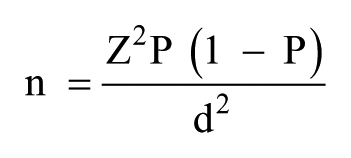
Prevalence of 32% given by the Centers for Disease Control and Prevention (CDC) and National Center for Injury Prevention and Control (2000) was used.
A sample size of 334 was arrived at as the minimum, but a sample size of 400 was used to increase the power of the study and account for instances of dropouts or incomplete data.
Population and Sample
The student body made up the population for the study out of which the sample was selected. There are 10 halls of residence of which 1 is located at the outskirts of the university campus and managed by a private body. There are four male halls, four female halls, and one postgraduate hall.
Sampling Procedure
A multistage, stratified, systematic sampling technique was used in this study.
Stage 1: All the halls of residence were stratified into 2 based on gender. There are a total of 10 halls of residence within the university campus. Two of these 10 halls of residence were excluded from this study. One of the halls of residence that was excluded was the Muritala Muhammed hall, which is a postgraduate student’s hall whereas the other was a female hall built within the university and is being managed by a private body.
Stage 2: Six halls, three each from each of the gender groups, were selected randomly from each of the groups by balloting.
Stage 3: The total number of students and total number of rooms in each of the selected halls was obtained from the hall supervisors of the halls. The 400 questionnaires were distributed among the six halls. The number to be interviewed in each hall was determined by proportional sampling.
Stage 4: After determining the number to be interviewed in each hall, subjects to be interviewed were chosen by systematic random sampling. Odd numbered rooms on odd numbered floors were selected, and then one student was randomly selected from each odd numbered room until the target study number for that hall was achieved. Research assistants (RA) who were volunteer medical students were trained on how to select the respondents and how to obtain informed consent. The RAs approached the selected respondents in their rooms in the halls of residence usually in the afternoons and evenings and encouraged them to fill the questionnaire while they, the RAs, waited to collect the filled questionnaires after the respondents had read the information sheet and endorsed the consent form. The respondents were given a pen that they used to fill the questionnaire. The RAs sometimes had to revisit the room twice or thrice to collect the filled questionnaires.
Instruments
A questionnaire packet was specially constituted for this study that included four sections as described below: the Sociodemographic Data Schedule, the Conflict Tactic Scale (CTS), the General Health Questionnaire (GHQ), and the Eysenck Personality Questionnaire (EPQ).
Sociodemographic Data Schedule
A semi-structured Sociodemographic Data Schedule was designed purposely for this study to elicit information on variables such as age, average monthly allowance, cumulative grade point average (GPA), parent’s marital status, and occupation of parents.
CTS–Revised (CTS-R)
The original CTS document contained 39 questions on 5 subscales, but the revised edition CTS-2 (Straus, Hamby, Boney-McCoy, & Sugarman, 1996) doubled the number of items; it was expanded to measure psychological and sexual abuse, in addition to physical attacks in intimate relationships, and included a variety of conflict responses. The CTS-2 shows good internal consistency reliability with alpha coefficients ranging from .79 to .95 for the individual scales. There is also evidence of construct and discriminant validity (Straus et al., 1996). A participant is considered violent if the score is greater than 0 for the physical assault scale, and this rule was adapted for the current study. The scale has not been hitherto used in Nigeria and was pretested among 40 students not included in the current study. The CTS showed face validity and good internal consistency with a Cronbach’s alpha of .86 in the pilot sample.
GHQ
David Goldberg developed one of the most widely used mental health screening devices (GHQ). The GHQ is an instrument that has been found useful in screening for mental ill-health among adolescents and adults especially in our settings and has been extensively used and validated in Nigeria (Adelekan, Abiodun, & Imuokhome-Obayan, 1993; Fatoye & Morakinyo, 2003). The GHQ is a widely used screening instrument. Originally designed in a 60-item format, a number of shorter versions have subsequently been derived. Thus, in common use, there are 30-, 28-, and 12-item versions. The 12-item instrument has been widely used in Nigeria for detecting presence or absence of psycho-social morbidity. Its major value lies in its ability to segregate those who are mentally healthy from those who are mentally ill.
Studies among young adults reported that the GHQ-12 is a particularly useful measure with adolescents where there are likely to be a number of different threats to their psychological health, such as poor self-esteem, that may not necessarily constitute a formal psychiatric condition (Tait, Obiaya, & Hulse, 2003).
The GHQ-12 is scored using either the Likert method (0-1-2-3) or the bimodal method (0-0-1-1). Using the bimodal method, the total possible score on the GHQ-12 ranges from 0 to 12 with a cutoff point of 2/3. In a study by Gureje et al. (1991), the alpha coefficient of the GHQ-12 was .82. It is also known that the higher the score on the instrument, the higher the likelihood of the severity of the psychopathology. The bimodal method of scoring was used in this study, and a cutoff score of equal to or greater than 3 was adopted.
The EPQ
The EPQ is a questionnaire to assess the personality traits of a person. It was devised by the psychologists Hans Jürgen Eysenck and his wife Sybil B. G. Eysenck. Hans Eysenck’s theory is based primarily on physiology and genetics. Eysenck conceptualized personality as three, biologically based categories of temperament, namely, extraversion/introversion, neuroticism/stability, and psychoticism (Eysenck & Eysenck, 1975). Extraversion is characterized by being outgoing, talkative, high on positive affect (feeling good), and in need of external stimulation; neuroticism or emotionality is characterized by high levels of negative affect such as depression and anxiety; and psychoticism is associated not only with the liability to have a psychotic episode (or break with reality) but also with aggression. Psychotic behavior is rooted in the characteristics of tough-mindedness, non-conformity, inconsideration, recklessness, hostility, anger, and impulsiveness. The physiological basis suggested by Eysenck for psychoticism is testosterone, with higher levels of psychoticism associated with higher levels of testosterone.
The EPQ is a forced choice instrument and consists of 90 “yes” or “no” questions about mood, habits, and social behavior. The EPQ generates scores on neuroticism (emotionality), psychoticism (tough-mindedness), and introversion. There is also a “lie scale” that attempts to measure a tendency on the part of some respondents to “fake good.” A typical high scorer on introversion–extroversion dimension will be depicted an extrovert whereas a low score is considered an introvert. The typical high N scorer is described as anxious, worrying individual, moody, and frequently depressed. A high P scorer may be described as being solitary, not caring for people, often troublesome, and does not fit anywhere (Oladimeji, 2005). The questionnaire has been extensively used and validated in Nigeria (Awaritefe & Obiaya, 1985; Jegede, 1980; Tenibiaje, 2008) Eysenck and Eysenck (1975) reported reliabilities lying in the .8 to .9 region. This finding is supported by Idemudia (1997) in Nigeria. Respondents were grouped into high and low scorers using median splits.
Data Collection and Analysis
All participants who agreed to participate in the study completed a questionnaire packet after they had been assured of the confidentiality of their information and written consent obtained from them. Data analysis was carried out using the SPSS 12 software. To achieve the objectives of the study and test the proposed hypotheses, appropriate descriptive and inferential statistics were used for the data collected. Univariate analysis was used to determine the prevalence of dating violence, psychopathology, and personality traits, and these were expressed in percentages. Association at bivariate level was assessed using chi-square and Pearson’s correlation coefficient. Multivariate analysis was carried out to determine statistical associations and to control for confounding effects. A p value of <.05 was considered statistically significant in all cases.
Inclusion and Exclusion Criteria
Individuals were eligible to participate if they were
single (not married)
in a dating/courtship relationship or had been in a dating/courtship relationship within the past year.
Individuals were not eligible to participate if they were
married
had a diagnosed mental disorder
Ethical Consideration
The study protocol was approved by the Research and Ethical Committee of the Obafemi Awolowo University Teaching Hospitals Complex. The nature of the study, its aims, and objectives were explained to the participants, and written consent was freely obtained. The participants were assured of confidentiality, and information concerning where help may be obtained was made available.
Results
Sociodemographic Characteristics of Respondents
A total of 400 questionnaires were distributed, 200 among the male and 200 among the female respondents. The retrieved questionnaires were 380, out of which 18 were not included in the study due to their being poorly completed. This brings the response rate of this research to about 91%. A total of 362 respondents had their data included in the final analysis of this research. The age of the respondents ranged between 18 and 35 years (M = 21.44, SD = 2.99) with a median age of 21 years. Two hundred and fourteen (59.1%) were between the ages of 21 and 35 years. One hundred and seventy five (48.3%) of the subjects were males, and 187 (51.7%) were females.
Two hundred and eighty four respondents (78.5%) received an average monthly income below 20,000 naira. One hundred and forty eight (41%) of them were receiving between 10,000 and 19,999 naira monthly. In 302 (83.3%) homes of origin of the respondents, parents were married whereas 20 (5.4%) were separated or divorced and 40 (11.3%) were widowed. Two hundred and sixty seven respondents (73.7%) had cumulative GPA of 3.50 to 4.90 (Table 1).
Sociodemographic Characteristics of Respondents.
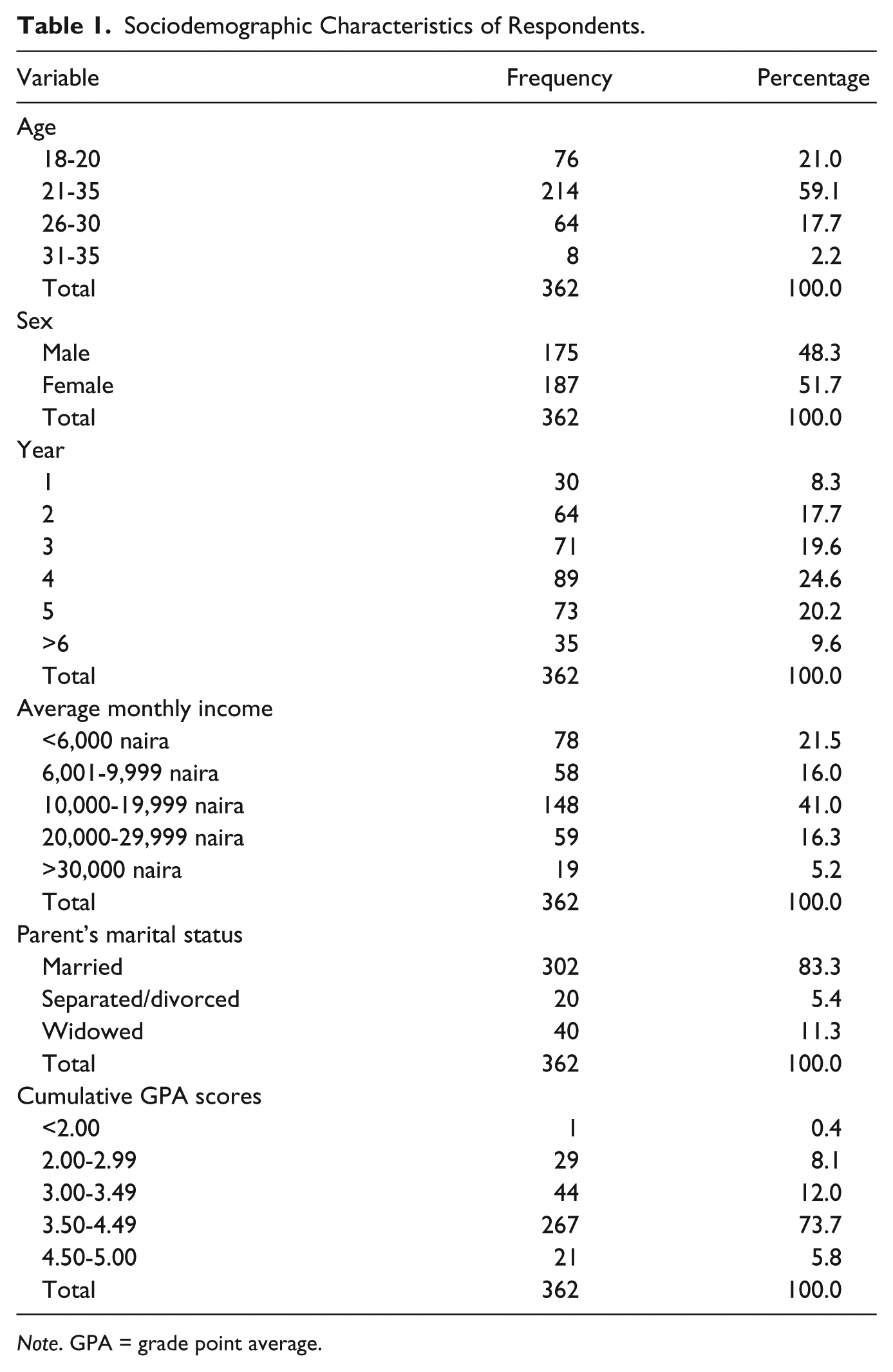
Note. GPA = grade point average.
Dating Violence
Figure 1 shows the prevalence of dating violence in the study population in the past 1 year. One hundred and twenty two respondents (34%) admitted having experienced dating violence in the past 12 months.
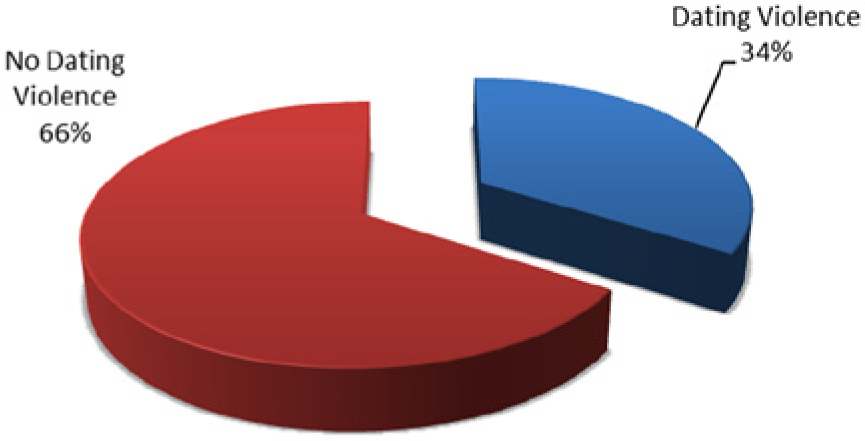
Prevalence of dating violence.
Distribution of Personality Trait Scores by Sex
Figure 2 shows the percentage distribution of personality traits by gender. Higher percentages of males showed more traits of extroversion (85% in males as opposed to 72% in females) and psychoticism (6% in males as opposed to 1% in the females) whereas higher percentages of females showed more traits of neuroticism (43% in females as opposed to 42% in males).
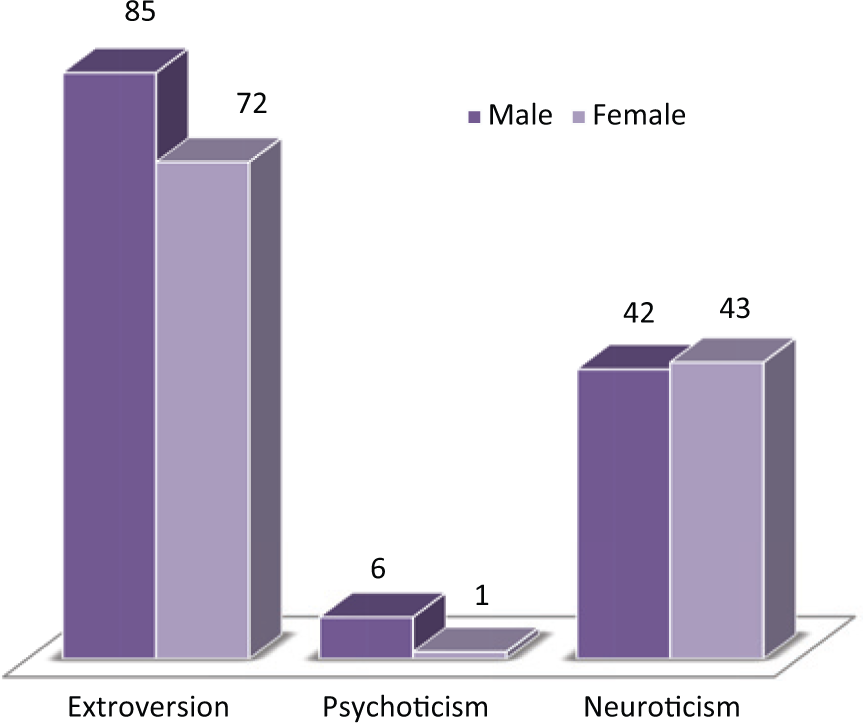
Percentage distribution of personality traits by gender.
Level of Psychopathology
Figure 3 shows the percentage distribution of scores on the GHQ in the study population. Fifty four respondents (15%) scored above the cutoff of equal to or more than 3 on the GHQ suggesting an increase in the probability of this group of respondents having some psychopathology compared with those who scored below 3.
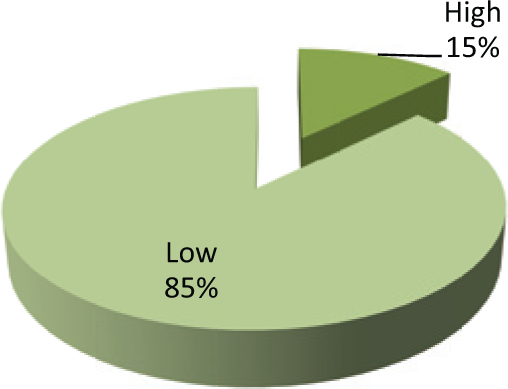
Percentage distribution of psychopathology.
Relationship Between Personality Traits and Dating Violence
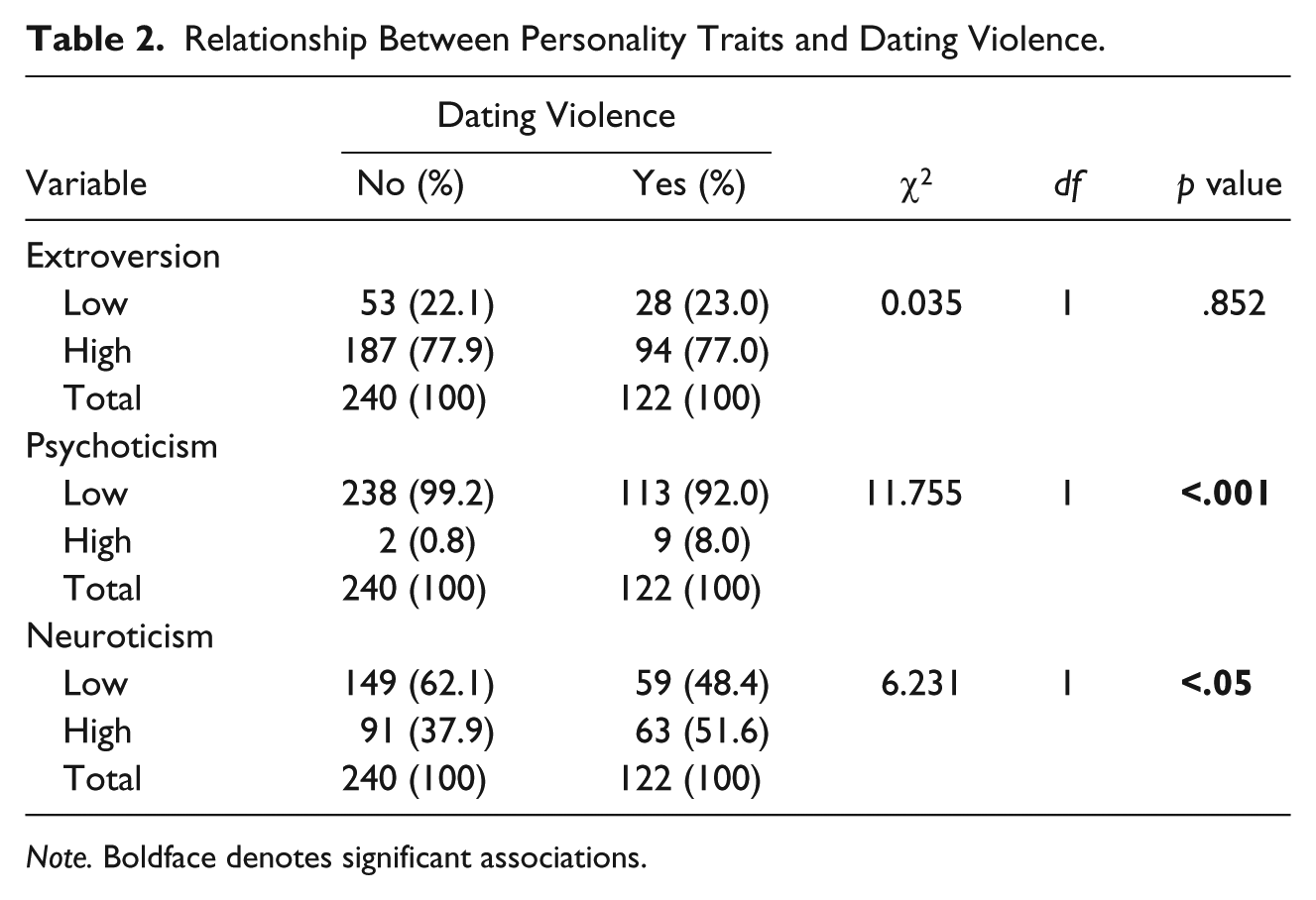
Table 2 shows the relationship between personality traits and respondents’ experience of violence in their relationships. Being a high P scorer was associated with a statistically significant increase in reporting violence in the dating relationship. Those who had high neuroticism scores experienced more violence than those who did not and the difference was statistically significant.
Relationship Between Personality Traits and Dating Violence.
Note. Boldface denotes significant associations.
Relationship Between Personality Traits and Level of Psychopathology
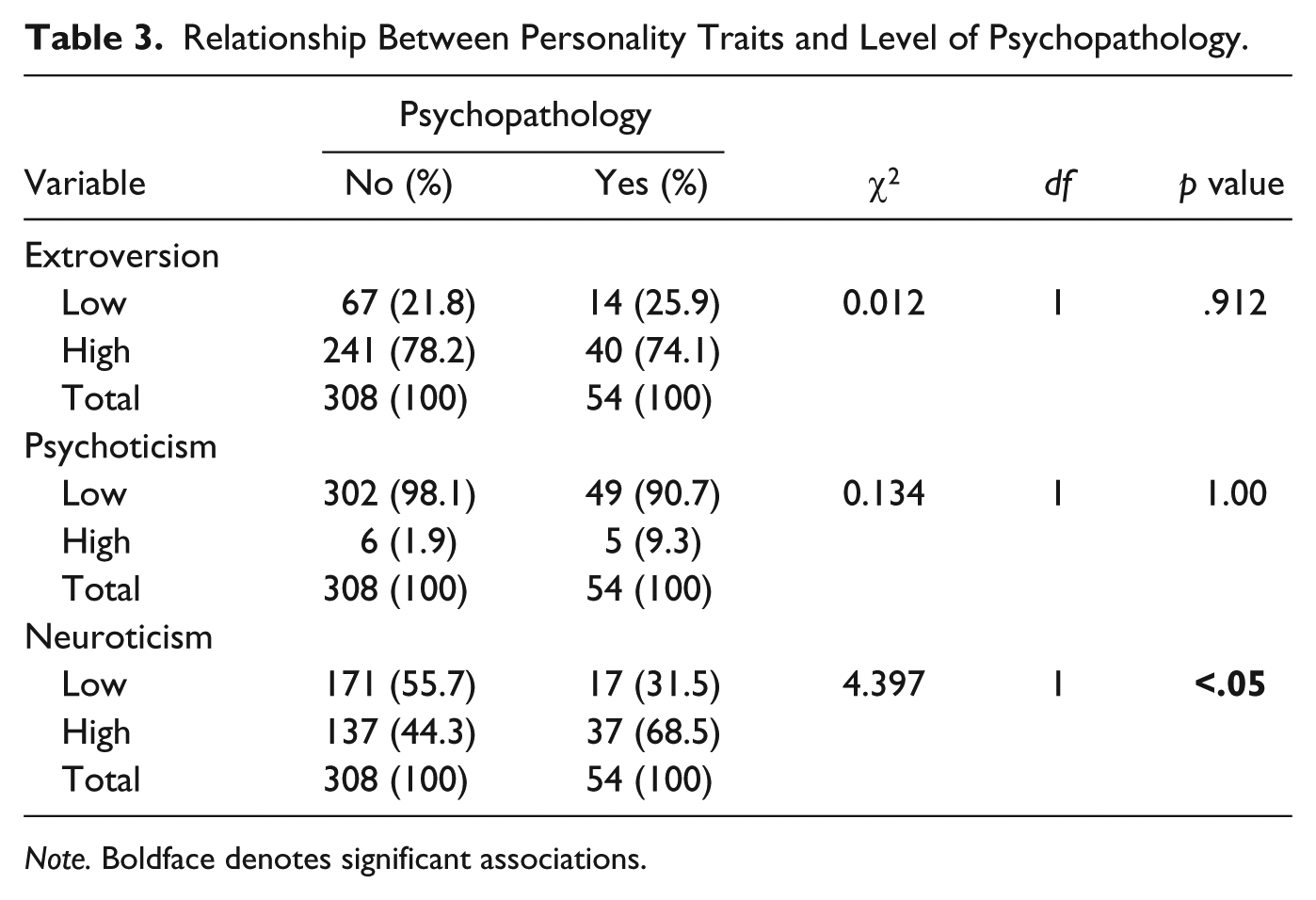
Table 3 shows the relationship between personality traits and level of psychopathology. Being a high N scorer was associated with a statistically significant increase in likelihood of having a higher level of psychopathology.
Relationship Between Personality Traits and Level of Psychopathology.
Note. Boldface denotes significant associations.
Relationship Between Personality Traits, Psychopathology, and Dating Violence
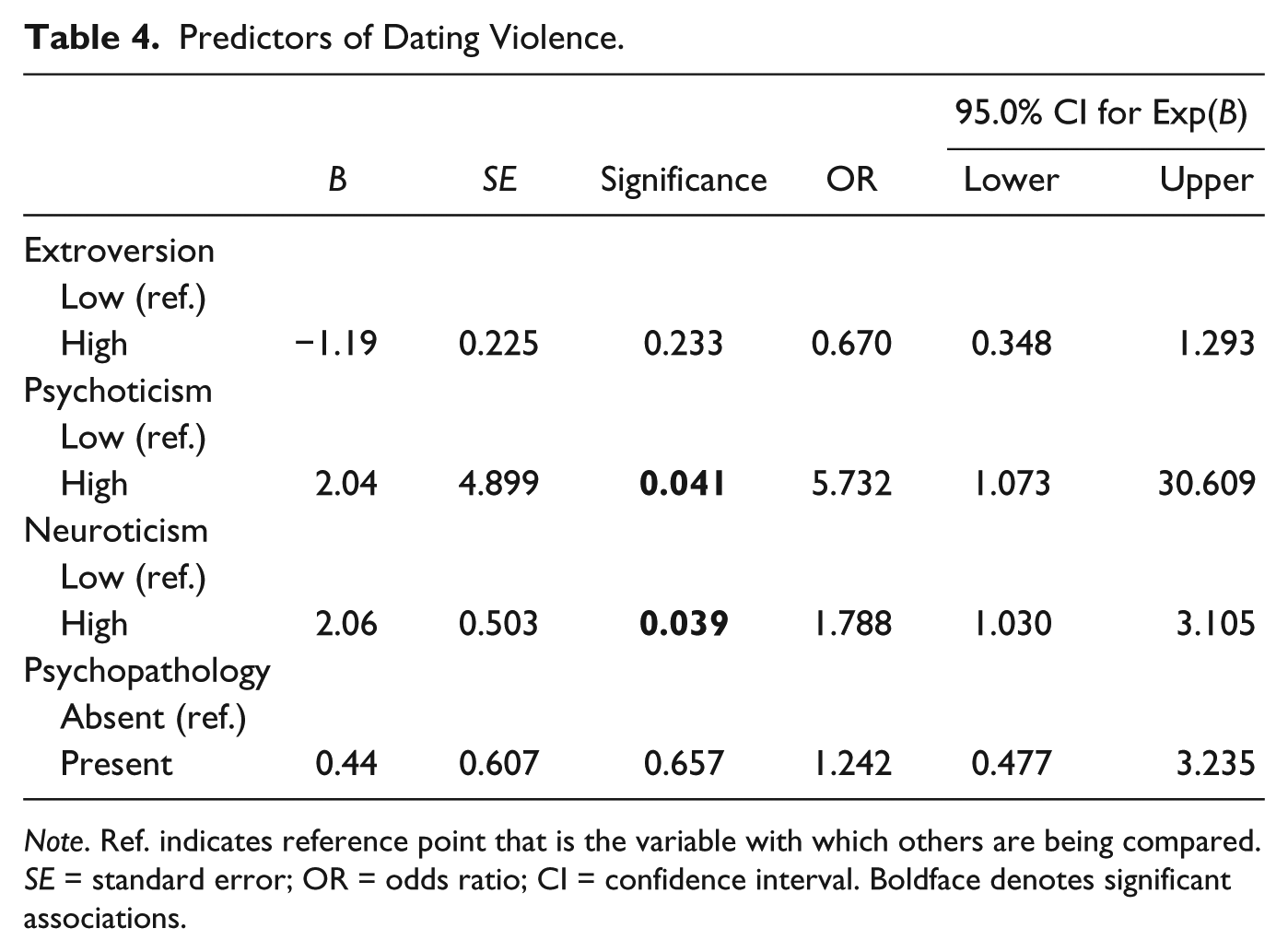
In the regression model constructed (Table 4), it was found that psychoticism and neuroticism personality traits were significant predictors of dating violence. Respondents who scored high on the psychoticism scale had a six fold increase in the risk of violence in their dating relationship whereas those who had high scores on the neuroticism scale had a two fold increase in that risk. In the correlations constructed (Table 5), the statistically significant correlates of dating violence included the following:
Significant positive correlations with the personality trait of psychoticism (r = .231, p < .000).
Significant positive correlations with the personality trait of neuroticism (r = .204, p < .000).
Predictors of Dating Violence.
Note. Ref. indicates reference point that is the variable with which others are being compared. SE = standard error; OR = odds ratio; CI = confidence interval. Boldface denotes significant associations.
Correlation Analysis of Dating Violence, Psychopathology, and Personality Traits.
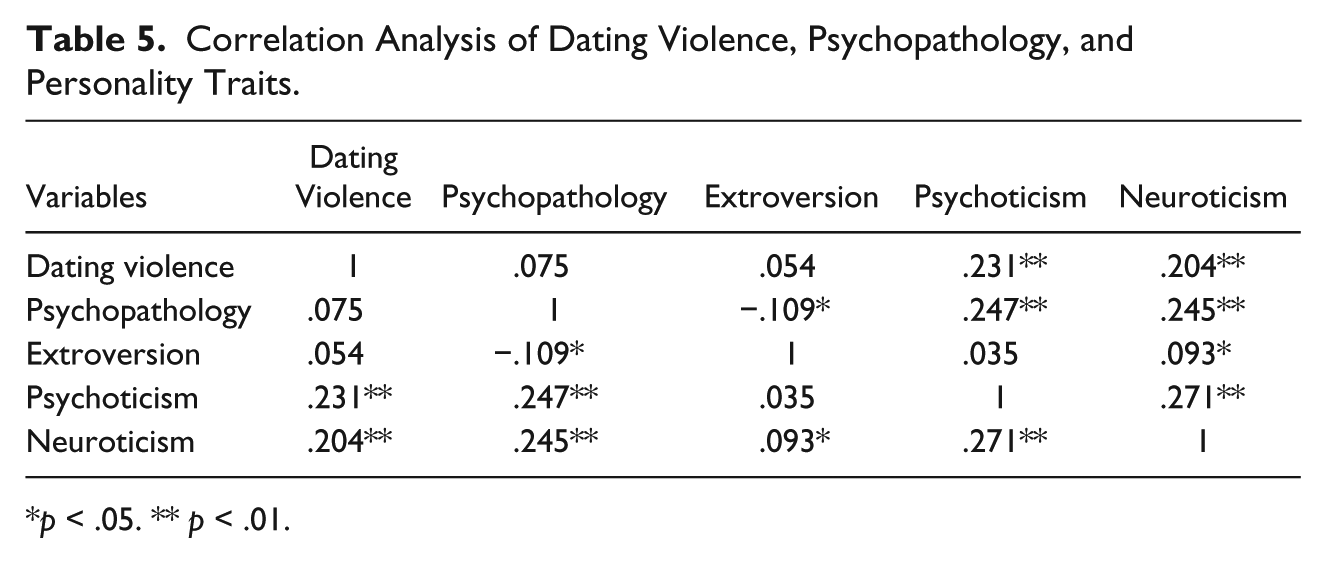
p < .05. ** p < .01.
The statistically significant correlates of psychopathology included the following:
Significant positive correlations with the personality trait of psychoticism (r = .247, p < .000).
Significant positive correlations with the personality trait of neuroticism (r = .245, p < .000).
Discussion
Sociodemographic Characteristics of Respondents
The overall pattern seems to be a reflection of the demographic structure of the catchment area of the university and conforms to previous reports in other institutions in southwestern Nigeria (Fawole, Abass, & Fawole, 2011; Okonkwo, Fatusi, & Ilika, 2005).
Dating Violence
One third (34%) of the sample population admitted having experienced dating violence in the past 12 months. This figure is similar to that of CDC and National Center for Injury Prevention and Control (2000) of 32% of college students reporting dating violence as well as the prevalence of 25% to 30% reported by Sabina and Straus (2008). This buttresses the fact that the burden of dating violence in our environment is comparable with others globally and calls for immediate action at every level of planning and implementation of interventions and policy for young people in Nigeria for the prevention of violence in intimate relationships.
Level of Psychopathology
The finding of 15% of respondents scoring above the cutoff score of 3 for the GHQ suggesting higher probability of psychopathology is similar to those found in other studies in this environment: 13% in Mume, Adeagbo, and Osundina (2011); 22% in Amoran, Lawoyin, and Oni (2005), who also found that the adolescents in their study had the highest prevalence of psychiatric morbidity; 36% in Ani, Kinanee, and Ola (2011); and 20% in Issa, Yussuf, Olatinwo, and Ighodalo (2010). The slight differences in the results may have to do with the variation between scoring methods (bimodal or Likert) and cutoff scores of 2 or 3 for the GHQ depending on the study.
Profile of Personality Traits
In this study, the trait with the highest mean score was extroversion. This was followed by the trait of neuroticism. The trait of psychoticism had the least mean score. The highest percentage of the sample was extroverts, next were those with high neuroticism scores, and the least was the high psychoticism scorers. These findings are similar to those by Ewhrudjakpor (2006). Personality is a key factor in both vulnerability and resilience. Higher percentages of males showed more traits of psychoticism whereas higher percentages of females showed more traits of neuroticism. These findings are also similar to those of Ewhrudjakpor (2006).
Relationship Between Personality Traits and Dating Violence
Being a high P scorer was associated with a statistically significant increase in reporting violence in the dating relationship. In addition, those who had high neuroticism scores experienced more violence than those who did not. Low self-esteem, common among neurotic individuals, has been found to be associated with being the victim of dating violence (M. O’Keefe & Treister, 1998).
Relationship Between Personality Traits and Level of Psychopathology
Being a high N scorer was associated with an increase in likelihood of having a higher level of psychopathology although this finding was not statistically significant at bivariate level. This is not surprising as the typical N scorer is an anxious, worrying individual, moody, and frequently depressed.
Relationship Between Personality Traits, Psychopathology, and Dating Violence
In the regression model constructed and the correlations done, it was found that psychoticism and neuroticism personality traits were significant predictors of dating violence and psychopathology. It seems that psychoticism is a higher predictor of experiencing dating violence than neuroticism. The typical high scorer on the neuroticism trait is described as an anxious, worrying individual, moody, and frequently depressed (Oladimeji, 2005), which would usually be associated with low self-esteem. Low self-esteem was found to discriminate between males initiating dating violence and their non-violent controls (M. O’Keefe, 1997). This finding could contribute to the argument that calls for early intervention in adolescents with certain personal and psychological characteristics to prevent future likelihood of perpetrating or being a victim of violence in intimate relationships.
The association between neuroticism, psychoticism, and dating violence does not answer the question of causation and whether they are risk factors, consequences, or related to dating violence through a third variable. The same goes for the findings of the association between these personality traits and psychopathology. However, these findings do raise pertinent issues. Neuroticism and psychoticism traits appear to be the traits that are most frequently associated with psychological and emotional distress. This could be a pointer to the need to pay attention to these traits especially in adolescence to enable early interventions for adolescents with high levels of these traits before they become emotionally distressed.
Limitations of the Study
The study was conducted in one university in the southwestern zone of the country. This might limit the generalization of the findings to all university students in Nigeria.
The study is subject to both recall and reporting bias because all measures of dating violence, psychopathology, and personality traits were based on self-report, although we expect our estimates to be no less reliable than those of other self-report surveys in which self-report is used.
The cross-sectional nature of the study limits the ability to determine the temporal nature of the relationships between dating violence, psychopathology, and personality traits.
Conclusion
This study has shown that the magnitude of dating violence among the study population is comparable with those found in other countries of the world. An exploration of variables revealed that there were statistically significant interactions between personality traits, level of psychopathology, and dating violence, and this undoubtedly has serious implications in planning and implementing services for young adults in the country. High scores on the neuroticism and psychoticism scales turned out to be associated with dating violence and psychopathology. This study recommends more research on neuroticism and psychoticism personality traits as possible markers for vulnerability to psychological distress. It is recommended that further studies focus on other measures of psychological distress including coping strategies and quality of life to tease out their interactions with dating violence. In addition, more studies on dating violence prevalence and associated factors need to be carried out in this environment to have the necessary baseline pool of data as evidence that dating violence in the young people of this country is a public health priority; this evidence is necessary for advocating for intervention and prevention programs, for changing and amending policies that concern the youth and govern their welfare.
Footnotes
Declaration of Conflicting Interests
The author(s) declared no potential conflicts of interest with respect to the research, authorship, and/or publication of this article.
Funding
The author(s) received no financial support for the research, authorship, and/or publication of this article.