







Abstract
Despite the growing salience of sexual assault victimizations on college campuses, reporting of such events remains low. A better understanding of what affects students’ reporting behavior and to whom they are likely to report victimizations can aid in developing policies and programs that promote reporting. Using a sample of 336 college students, this study uses hypothetical scenarios to examine the factors that affect individuals’ likelihood to report sexual assaults to the police and to university officials. Results show that students are significantly more likely to report sexual assaults to the police than to university officials. In addition, wanting justice, trust in police and university officials, and a desire for services are among the most consistent factors that affect students’ likelihood to report to both the police and university officials.
With a recent string of high-profile cases, the issue of sexual violence on college campuses is an increasingly salient topic. Although the phenomenon of rape and sexual assault is certainly not new, and indeed the Bureau of Justice Statistics’ (BJS) National Crime Victimization Survey (NCVS) has indicated that the prevalence of sexual assault has decreased over the past two decades, the rate of sexual assault remains high (BJS, 2015). According to the 2013 Uniform Crime Report (UCR), the rate of sexual victimization in the United States was 25.2 per 100,000 (Federal Bureau of Investigation, 2013). The NCVS, though, estimates the rate at approximately 110 per 100,000, or 300,165 incidents of rape and sexual assault (BJS, 2015). Particularly relevant to the phenomenon of campus sexual assault is a recent report from the BJS (2014) that tracked the rate of sexual assault victimizations among college-aged women (18-24 years old) between the years of 1995 and 2013. This study indicated that nonstudents experienced a victimization rate of 760 per 100,000 and students experienced a rate of 610 per 100,000 (BJS, 2014).
Although the rate of sexual victimization appears to be higher among nonstudents, estimates of reporting among victims of campus sexual assault are quite different. The NCVS indicates that whereas 33% of the sexual victimizations perpetrated against unenrolled women are reported to the police, only 20% of sexual victimizations perpetrated against college women are reported to police (BJS, 2014). Even fewer victims aged 18 to 24 years sought assistance from agencies offering victim support services, with 16% of students and 18% of nonstudents receiving such assistance (BJS, 2014).
Given the exceptionally low rates of reporting among victims of sexual assault, a great deal of research has been dedicated to determining what factors may influence the likelihood of an individual reporting his or her victimization. Among the most frequently cited factors that affect the decision to report are characteristics of the victim, characteristics of the incident, and the victim’s psychological response to the incident (Bachman, 1998; Finkelson & Oswalt, 1995; Fisher, Daigle, Cullen, & Turner, 2003; Gartner & Macmillan, 1995; Lizotte, 1985; Orchowski, Meyer, & Gidycz, 2009; Pino & Meier, 1999; Ruback, Menard, Outlaw, & Schaffer, 1999; Sabina & Ho, 2014; Sable, Danis, Mauzy, & Gallagher, 2006; Zinzow & Thompson, 2011).
In addition to looking at factors that influence reporting, and perhaps even more salient for reporting of campus sexual assault, research has also been directed to whom individuals report their victimization. The extant research indicates that victims are most likely to tell a friend (Fisher et al., 2003; Orchowski et al., 2009; Pitts & Schwartz, 1993), followed by family members and significant others (Dunn, Vail-Smith, & Knight, 1999; Feldman-Summers & Ashworth, 1981; Fisher et al., 2003; Golding, Siegel, Sorenson, Burnam, & Stein, 1989), with reporting to campus authorities and police as the least likely avenue of reporting (Fisher et al., 2003). Despite the research directed toward the reporting behaviors of victims of sexual assault, there has been little work directed toward examining specific factors that influence to whom one reports his or her victimization. Rather, the majority of research efforts have examined reporting practices more broadly, with an emphasis on why victims do or do not report. This article seeks to address this gap in the research by exploring the factors that contribute to whether college students would report a sexual victimization to two types of officials: police and university officials. Before discussing the results of the present study, we first examine the relevant prior literature and detail our data and methods.
Review of Prior Literature
Characteristics of the Victim
Prior research has identified characteristics of the victim as potential factors that can contribute to whether or not sexual victimization is reported. Previous reviews of the literature have identified age, income level, education, race, and the victim’s characterization and memory of the incident as characteristics that contribute to the decision to report (Fisher et al., 2003; Sabina & Ho, 2014). Specifically, using a sample of college women, Fisher and colleagues (2003) found that older, lower income, less educated African American women were more likely to report than younger, higher income, more educated White women. It should be noted that many of these characteristics associated with victims who choose not to report are characteristics typical of college women in general, with most college women being relatively young, White, and of higher socioeconomic status. A recent meta-analysis conducted by Sabina and Ho (2014) has also identified the acknowledgment of an incident as rape and clear memory of the sexual assault as additional victim characteristics associated with higher levels of reporting sexual victimization to the police. The ability to recall the sexual victimization is particularly salient when considering that many campus sexual assaults are alcohol-related (Fisher et al., 2003; Krebs, Lindquist, Warner, Fisher, & Martin, 2007; Sabina & Ho, 2014).
A second set of victim characteristics were identified by Orchowski et al. (2009) in a survey of college women in which they investigated to whom women would most likely report if they believed they had been sexually assaulted. Orchowski et al. (2009) found that women with higher levels of assertive sexual communication were most likely to report that they would tell a friend or the police. Higher levels of self-protective behaviors were also associated with a higher likelihood of telling a friend about the incident (Orchowski et al., 2009). Furthermore, college women who exhibited higher levels of self-efficacy in resisting an attacker reported that they would most likely tell a friend and would be more willing to tell a resident advisor over a counseling center or the police (Orchowski et al., 2009). Finally, they found that participants who reported a history of moderate or severe sexual victimization were less likely to tell a friend, a resident advisor, a counseling center, or the police (Orchowski et al., 2009).
Characteristics of the Incident
In addition to the characteristics of the victim, characteristics of the incident also contribute significantly to the decision to report. The review conducted by Fisher et al. (2003) indicated that the seriousness of the crime, the relationship between the victim and the offender, the location of the offense, and consumption of alcohol were the primary incident characteristics associated with a victim’s decision to report. Fisher et al. (2003) found that the more serious the crime, the more likely the victim is to report to the police. Factors that increase the seriousness of the crime include the presence of a weapon, whether the assault caused physical injury, the threat or use of force, monetary loss, and whether or not the rape was completed (Fisher et al., 2003).
Characteristics of the offender have also been found to affect rates of reporting (Fisher et al., 2003; Sabina & Ho, 2014). Fisher and colleagues (2003) found that sexual assaults perpetrated by a stranger were more likely to be reported than those perpetrated by a significant other or acquaintance, indicating that the victim–offender relationship is significant. This finding is of particular note, given that approximately 80% of victims of campus sexual assault knew the offender (BJS, 2014). Similarly, a meta-analysis conducted by Sabina and Ho (2014) found that the race and number of offenders also contribute to a victim’s decision to report. The authors reported that assaults involving an offender of a different race than the victim and assaults involving multiple offenders were more likely to be reported to police than intraracial or single offender assaults (Sabina & Ho, 2014).
In addition, the location of the offense has been identified as significant along two dimensions, with an offense in a location unfamiliar to the victim leading to increased reporting, and on-campus incidents being more likely reported than off-campus incidents (Fisher et al., 2003). Finally, whether the incident involved the consumption of alcohol influenced the decision to report, with alcohol-related incidents being less likely to be reported. This may be due to the fact that alcohol consumption is correlated with increased feelings of self-blame among victims (Fisher et al., 2003).
Psychological Barriers to Reporting
Along with the literature on victim and incident characteristics, there is a great deal of research on the psychological barriers to reporting. Among the most frequently cited barriers are guilt, shame, embarrassment, concern over others discovering one’s victimization, fear of not being believed, fear of retaliation, and beliefs that the victimization is personal and not criminal (Fisher et al., 2003; Krebs et al., 2007; Nasta et al., 2005; Sable et al., 2006; Walsh et al., 2010; Zinzow & Thompson, 2011). The Campus Sexual Assault Study conducted by Krebs and colleagues (2007) identified the belief that the incident was not serious enough to report, a lack of clarity on whether the incident was criminal or harm was intended, and not wanting others to know about the incident as the top three reasons for not reporting among victims of forced or incapacitated sexual assault (Krebs et al., 2007). For victims who were incapacitated at the time of the assault, feelings of responsibility for the incident and the inability to remember the incident clearly also contributed to the decision not to report (Krebs et al., 2007). Other psychological barriers to reporting include a desire to handle the victimization on one’s own, belief the incident was not serious or criminal, not wanting other people to know, not wanting the police or courts involved, fear of not being believed, fear of retaliation, as well as shame, guilt, and embarrassment (Sable et al., 2006; Zinzow & Thompson, 2011).
In addition to barriers to reporting victimization, barriers to seeking out campus-sponsored sexual assault services have been examined. In one study, Nasta et al. (2005) found that although the majority of victims and nonvictims were aware that psychological and health services were available to victims of sexual assault, only 22% of victims sought out a campus-based resource. Twelve percent of victims received health services, 8% received psychological services, and 4% reported the incident to university security (Nasta et al., 2005). When asked why the participants would not utilize the resources offered through the university, 93% cited concerns over confidentiality, whereas 92% reported feelings of fear, embarrassment, and guilt (Nasta et al., 2005). Relatedly, a study by Walsh, Banyard, Moynihan, Ward, and Cohn (2010), in which victims of sexual assault were interviewed about their decision to seek out sexual assault services offered through their campus, found that it was very unlikely for both male and female survivors to seek out such services. Victims of unwanted sexual contact attributed their decision to not seek services to the belief that the incident was not serious and a private matter (Walsh et al., 2010). In contrast, victims of unwanted intercourse cited shame, embarrassment, fear of others discovering their victimization, negative consequences for the offender, not being believed, and fear of being blamed, in addition to the belief that the incident was a private matter (Walsh et al., 2010). These studies indicate that there is overlap between the psychological barriers to reporting sexual victimization and the psychological barriers to seeking out campus-sponsored victimization services.
Prevalence of Reporting
Although the research indicates that most survivors will inform someone of their victimization, with some estimates indicating that approximately 70% will do so (Fisher et al., 2003), there are many victim characteristics, incident characteristics, and psychological characteristics that present barriers to official reporting. As Fisher and colleagues (2003) have demonstrated, only 4% of students reported their victimization to campus authorities and an additional 1% reported the incident to campus authorities if the victimization occurred on the campus. Other work has similarly shown that victims of sexual assault are more likely to inform a female friend, a family member, health workers and social work personnel, and intimate partners than police (Dunn et al., 1999; Feldman-Summers & Ashworth, 1981; Golding et al., 1989; Pitts & Schwartz, 1993). Among work conducted with college students, most participants indicated that, if they were sexually victimized, they would be more likely to tell a friend than the police, and more likely tell the police than counseling services or their resident advisor (Orchowski et al., 2009). In one recent study, Orchowski and Gidycz (2012) found that among college women who had ever experienced a sexual assault, 74.6% had told someone about the event. Furthermore, they found that among the respondents who had been sexually assaulted in the 4 months or 7 months between study waves, 55% had disclosed their sexual victimization to someone, with the majority telling a female peer.
Current Study
Given the large degree of underreporting of sexual assault, especially among college students (BJS, 2014), this study aims to examine how various characteristics of an incident, psychological factors, and individual characteristics affect a sample of university students’ likelihood to report a sexual assault victimization to police and their likelihood to report to a university official other than campus police.
Data and Method
To evaluate the predictors of university students’ likelihood to report sexual assault, we surveyed a convenience sample of 411 college students at a large urban research university located in the southern United States. Students in a variety of classes were asked to participate in the survey during class time. The survey was an in-person, paper survey containing 62 questions. Of the 411 students asked to take the survey, 369 completed or partially completed the survey, resulting in a response rate of 89.8%. After listwise deletion for missing data, the final sample size was 336. The sample is 63% female, 48% White; the mean age is 21 years old; junior undergraduate was the most common year in school reported; and 72% of the sample reported being criminal justice or forensic science majors.
To account for the characteristics of the incident, we presented all of the participants with scenarios that varied the location of the assault (on campus or off campus) and the respondent’s familiarity with the assailant (someone you know or someone you did not know). This resulted in four separate scenarios: being assaulted on campus by someone you know, being assaulted off campus by someone you know, being assaulted on campus by a stranger, and being assaulted off campus by a stranger. The exact language presented to students was “If someone you know (someone you did not know) were to touch you sexually without your consent while you were on campus (off campus) how likely would you be to report this incident . . .”
Dependent Variables
Separately, in response to each of the four scenarios, respondents were asked their likelihood to report each incident to “The Police” and their likelihood to report to “A University Official (not including campus police).” 1 The scenarios vary the characteristics of the incident to examine how two characteristics of the incident (familiarity with the offender and location of the event) affect reporting. As such, each respondent indicated on a scale from 1 = very unlikely to 6 = very likely, how likely they would be to report each scenario to these two authorities, thus resulting in eight separate dependent variables: (a) likelihood to report to police if assaulted on campus by a stranger, (b) likelihood to report to a university official if assaulted on campus by a stranger, (c) likelihood to report to police if assaulted on campus by someone you know, (d) likelihood to report to a university official if assaulted on campus by someone you know, (e) likelihood to report to police if assaulted off campus by a stranger, (f) likelihood to report to a university official if assaulted off campus by a stranger, (g) likelihood to report to police if assaulted off campus by someone you know, and (h) likelihood to report to a university official if assaulted off campus by someone you know. 2 Table 1 shows the mean likelihood of reporting for each scenario.
Mean Likelihood of Reporting Sexual Assault to the Police/to a University Official by Assailant and Location With t Test for Comparison With Mean by Scenario.
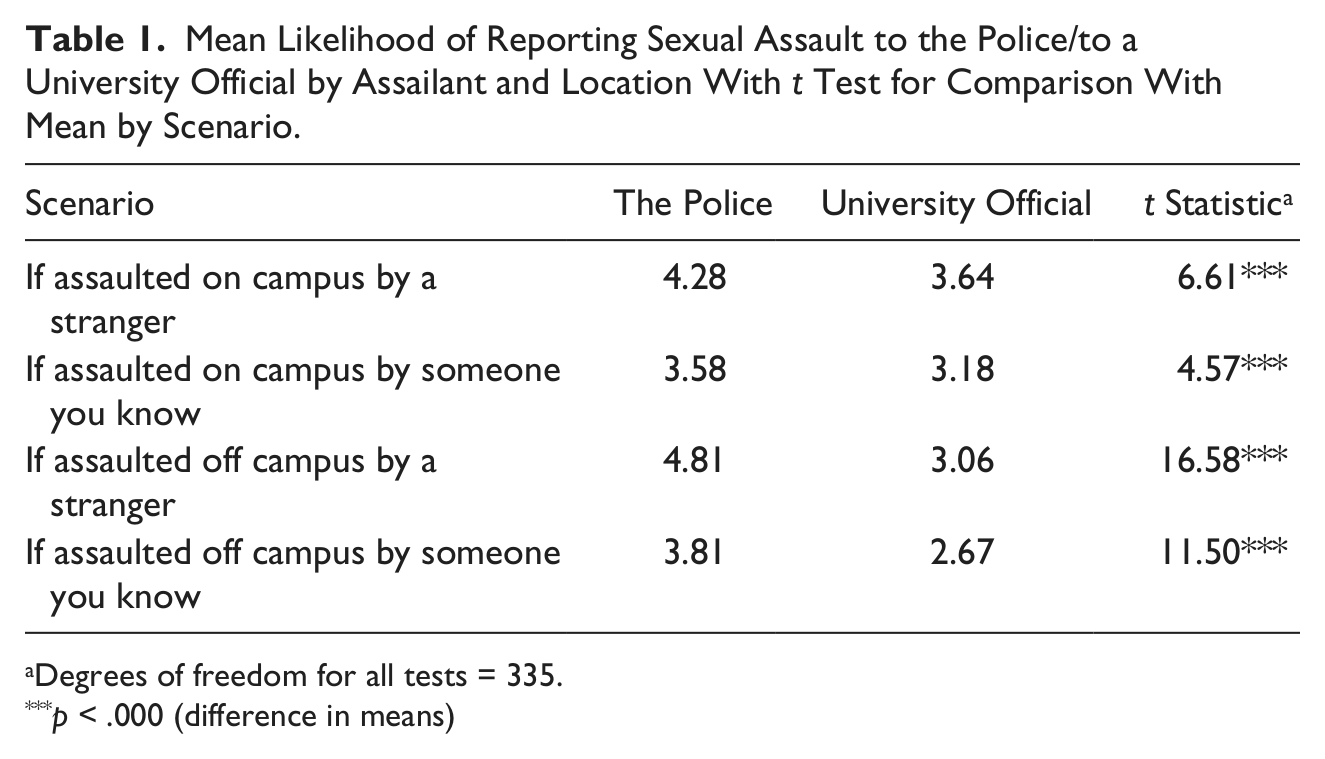
Degrees of freedom for all tests = 335.
p < .000 (difference in means)
Independent Variables
Following the presentation of each of the separate scenarios, each respondent was asked, “Please indicate to what extent each of the following factors would affect your decision to report such an incident”: “Feeling ashamed about the incident?” “Feeling embarrassed about the incident?” “Fear that the offender would come after you?” “Fear that others would judge you?” “Wanting justice?” “Wanting to prevent such an incident from happening to others?” “Wanting assistance to help you deal with the incident?” and “Wanting the offender punished?” Response categories for each of these item ranged from 1 = not at all to 6 = a great deal. Each of these items represents different components of various psychological responses that may affect the decision to report. To explore the psychological factors related to the emotional barriers to reporting, the shame, embarrassment, and fear of judgment measures were combined into a single standardized index: negative emotions. The measures combined with high reliability across all four scenarios with Cronbach’s alphas ranging from .86 to .92. Next, to measure psychological factors related to desire for justice, the justice, prevention, and punishment measures were combined into a single standardized index: justice. Again, the measures combined well with Cronbach’s alphas ranging from .89 to .92. The two remaining measures were examined as individual items representing the psychological factors: fear of reprisal and desire for services.
Because trust in police has been linked with crime reporting behavior (Carr, Napolitano, & Keating, 2007; Silver & Miller, 2004; Warner, 2007), a series of questions were asked at the end of the survey to measure both overall trust in police and trust in university officials. To measure trust in police, respondents were asked, on a scale from 1 = strongly disagree to 4 = strongly agree, how much they agreed or disagreed with each of the following statements: “You can trust the police to fix and solve problems,” “You can trust the police to help people in need,” “The police are trustworthy,” and “The police often behave dishonestly (reverse coded).” The four items were combined into a single standardized index with a Cronbach’s alpha of .72. To measure trust in university officials, respondents were again asked how much they agreed or disagreed with the following statements: “University officials can be trusted to help students in need,” “University officials are trustworthy,” and “You can usually trust university officials to fix and solve problems.” These three items were combined into a single standardized index with a Cronbach’s alpha of .80.
Control Variables
We examine a series of demographic control variables, including age (in years), race (White = 1, non-White = 0), sex (Male = 1), year in school (Freshman = 1 to Graduate student = 5), grade point average (GPA: 0.00 to 0.99 = 1, 1.00 to 1.99 = 2, 2.00 to 2.99 = 3, 3.00 to 4.00 = 4), and college major (criminal justice or forensic science = 1, all other majors = 0). Finally, we control for whether the respondent or one of their immediate family members had been a victim of a crime in the past 5 years, and whether that crime was reported to the police. These two questions were used to create two dummy variables that were included in all of the multivariate models: crime victim and reported (1 = yes, 0 = no), crime victim not reported (1 = yes, 0 = no) with not a crime victim omitted as the reference category for these two dummy variables.
Analytic Strategy
We begin by examining how the characteristics of the incident affect the likelihood to report and to whom to report (police vs. university official). To do this, we examine the difference in mean likelihood to report across each of the means in Table 1 for each of the scenarios, and then compare the differences in mean likelihood to report to police versus a university official. Then, using ordinary least squares (OLS) 3 regression, we conduct eight multivariate analyses using the independent variables and controls to predict the likelihood to report to police and the likelihood to report to a university official for each scenario.
Results
For each of the scenarios, students’ mean likelihood to report to police was significantly greater than their mean likelihood to report to a university official based on the results of difference of mean t tests. Regardless of location (on campus or off campus), students were on average significantly more likely to say that they would report an offense involving a stranger than one involving someone they knew. Furthermore, the highest mean likelihood of reporting to the police (or either authority for that matter) was off campus by a stranger (M = 4.81), and this likelihood of reporting is significantly greater than any other likelihood of reporting. Perhaps, not surprising, the greatest likelihood to report to a university official was attributed to the scenario involving an on-campus assault by a stranger (M = 3.64). Although significantly greater than any other scenario, the likelihood to report to a university official for the “on campus by a stranger” scenario still had a mean likelihood between somewhat unlikely and somewhat likely to report (between 3 and 4 on the likelihood scale presented). The scenario with the significantly lowest likelihood of being reported to a university official was being assaulted off campus by someone you know. This same scenario was also the second least likely scenario to be reported to police and was significantly less likely to be reported to police than being assaulted either on or off campus by a stranger.
Next, we examined the multivariate models examining what factors might affect a student’s likelihood to report a sexual assault to the police or a university official. Each model was assessed for multicollinearity using variance inflation factors (VIF). No individual VIF exceeded 1.96 and no model produced a mean VIF greater than 1.36.
The results in Table 2 show the effect of the independent variables and the controls on students’ likelihood of reporting a sexual assault that occurred on campus by a stranger to the police and the likelihood of a reporting such an event to a university official. For both models (police and university official), justice was positively and significantly associated with students’ self-reported likelihood to report. In addition, trust in each of the relevant authorities was positively and significantly associated with greater likelihood to report. That is, trust in the police was positively and significantly associated with likelihood to report to police, and trust in university officials was positively and significantly associated with likelihood to report to a university official. Desire for services was also positively and significantly associated with students’ self-reported likelihood to report a sexual assault to police and to university officials. Among the control variables, having been a crime victim but not reporting it was significantly and negatively associated with likelihood to report to police, whereas age was positively and significantly associated with reporting to police. Finally, Whites reported being significantly less likely to report to a university official than did non-Whites.
Likelihood of Reporting Sexual Assault to the Police/to a University Official if Assaulted On Campus by a Stranger (N = 336).
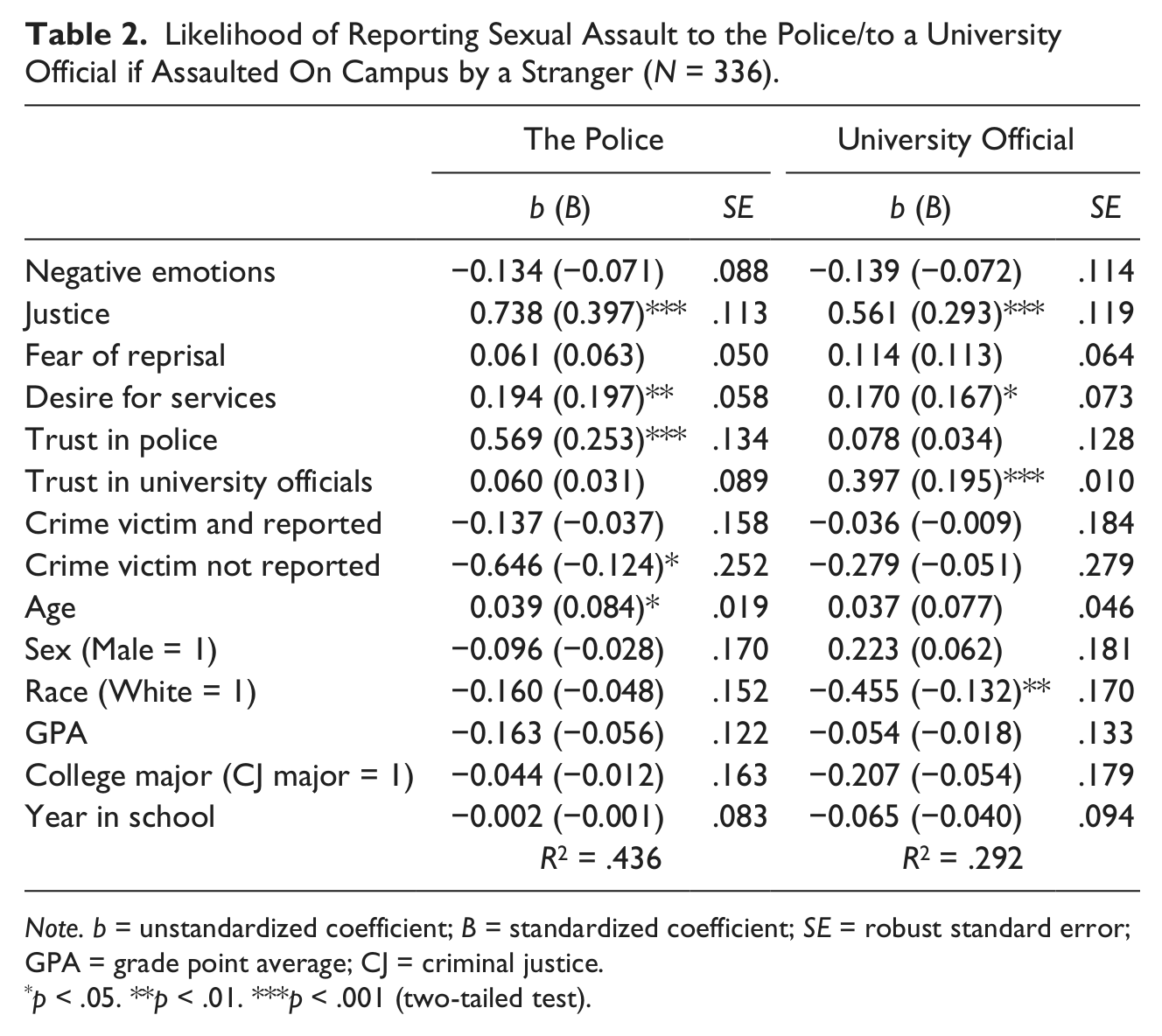
Note. b = unstandardized coefficient; B = standardized coefficient; SE = robust standard error; GPA = grade point average; CJ = criminal justice.
p < .05. **p < .01. ***p < .001 (two-tailed test).
Table 3 shows the effect of the independent variables and the controls on students’ likelihood of reporting a sexual assault that occurred on campus by someone they knew to the police and the likelihood of a reporting such an event to a university official. Again, for both models, justice was positively and significantly associated with students’ self-reported likelihood to report. Also, trust in the police was positively and significantly associated with likelihood to report to police, and trust in university officials was positively and significantly associated with likelihood to report to a university official. Desire for services was again positively and significantly associated with students’ self-reported likelihood to report to both police and to university officials. Among the control variables, age was positively and significantly associated with reporting to police and a university official, whereas GPA was negatively and significantly associated with reporting to police, and Whites again reported being significantly less likely to report to a university official than did non-Whites.
Likelihood of Reporting Sexual Assault to the Police/to a University Official if Assaulted on Campus by Someone You Know (N = 336).
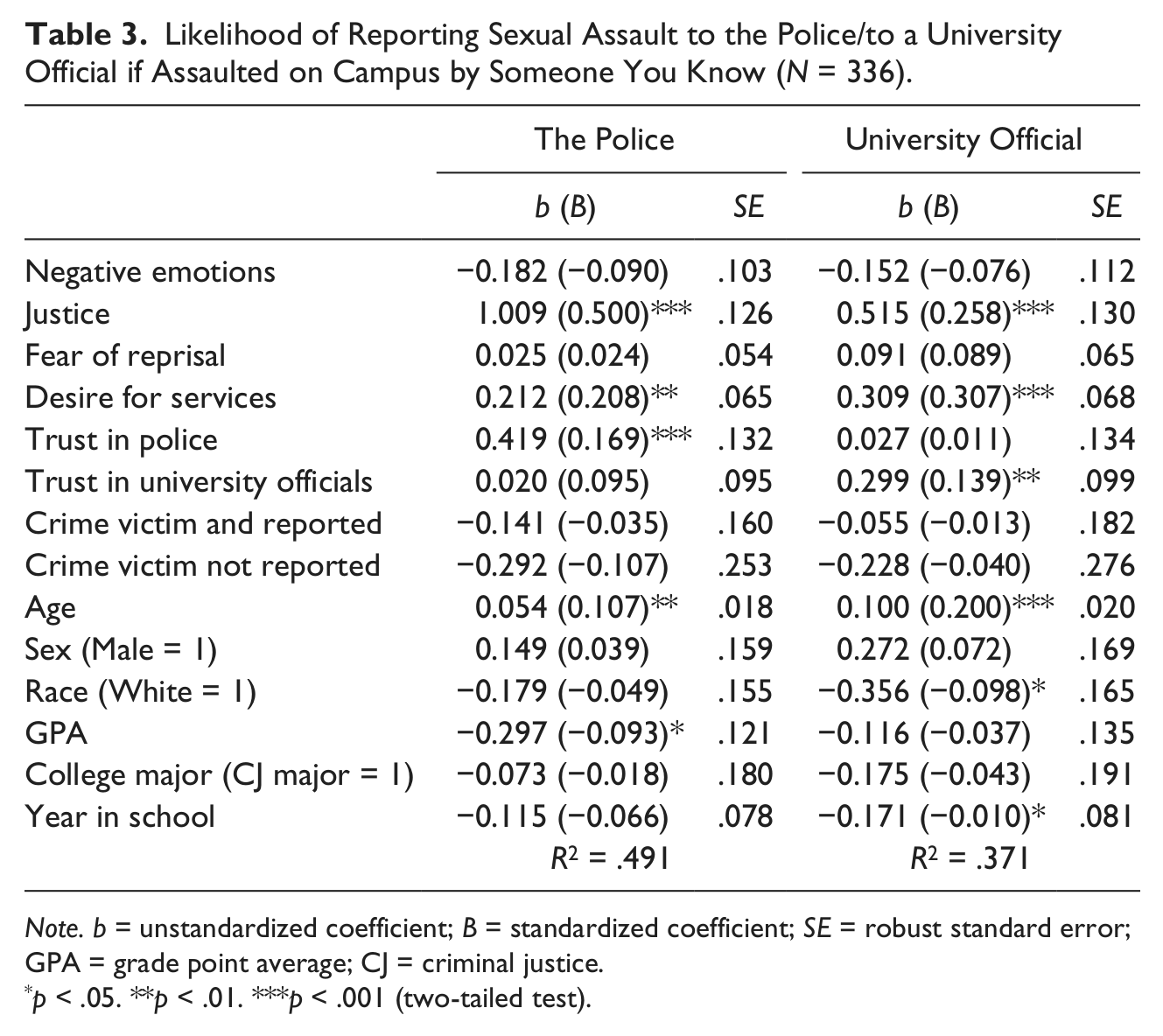
Note. b = unstandardized coefficient; B = standardized coefficient; SE = robust standard error; GPA = grade point average; CJ = criminal justice.
p < .05. **p < .01. ***p < .001 (two-tailed test).
The results of the OLS models examining students’ likelihood of reporting a sexual assault that occurred off campus by a stranger are presented in Table 4. Each of the key independent variables is significantly associated with reporting to the police. Negative emotions is negatively and significantly associated with reporting to police. Justice, fear of reprisal, desire for services, and trust in police are all positively and significantly associated with students’ likelihood to report an off-campus assault by a stranger to the police. For reporting to a university official, only desire for services and trust in university officials are significantly and positively associated with reporting. Although none of the controls are significantly associated with reporting to the police, Whites again report being significantly less likely to report to a university official than non-Whites.
Likelihood of Reporting Sexual Assault to the Police/to a University Official if Assaulted Off Campus by a Stranger (N = 336).
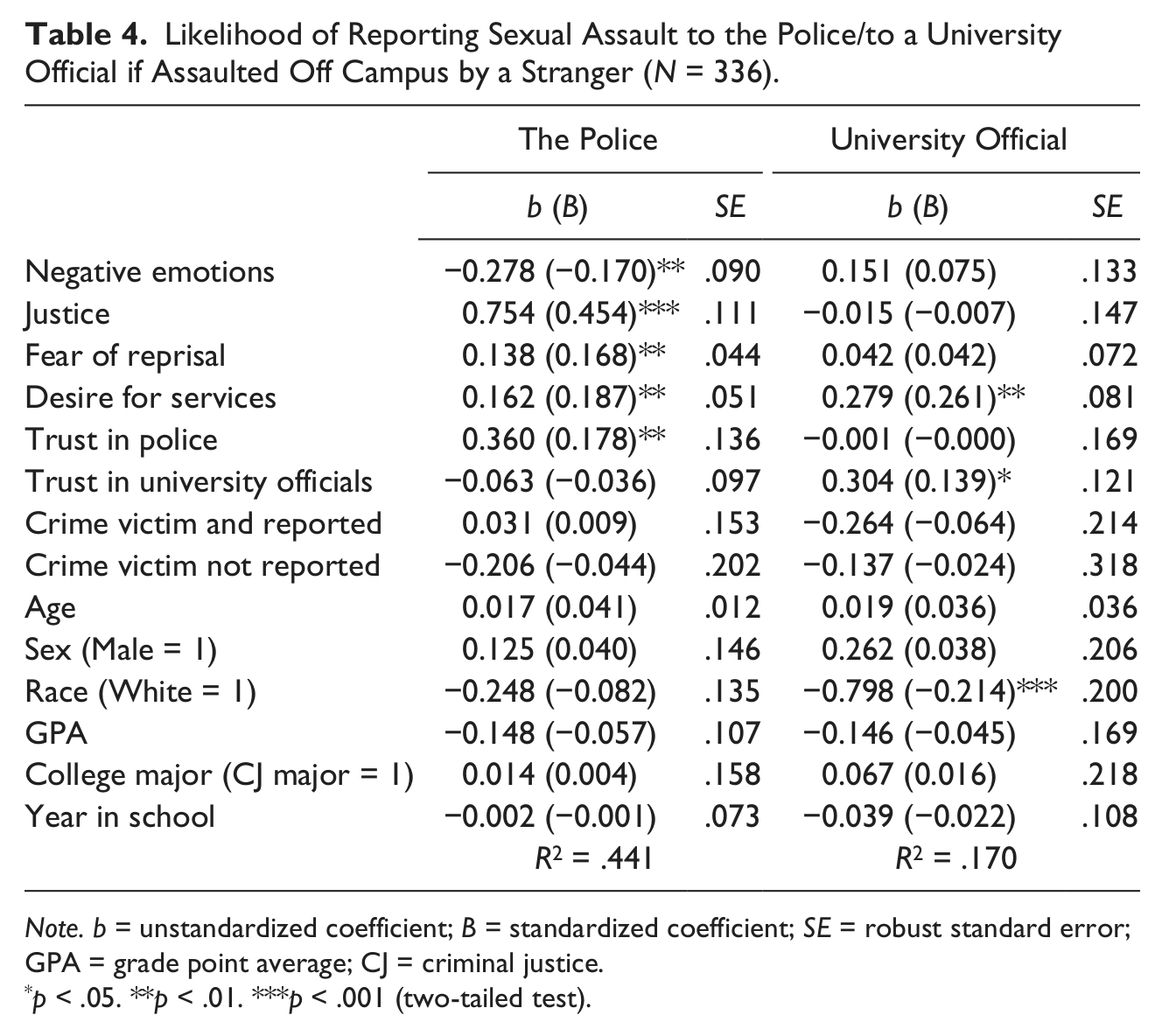
Note. b = unstandardized coefficient; B = standardized coefficient; SE = robust standard error; GPA = grade point average; CJ = criminal justice.
p < .05. **p < .01. ***p < .001 (two-tailed test).
Finally, the models examining students’ likelihood to report an off-campus assault by someone they know are presented in Table 5. For this scenario, justice, trust in the respective authority (police or university officials), and desire for services are all significantly and positively associated with reporting to police and a university official. Fear of reprisal is also significantly and positively associated with students’ likelihood to report to police. Among the controls, age is significantly and positively associated with students’ self-reported likelihood to report to police, and Whites reported significantly lower likelihoods of reporting to either police or a university official.
Likelihood of Reporting Sexual Assault to the Police/to a University Official if Assaulted Off Campus by Someone You Know (N = 336).
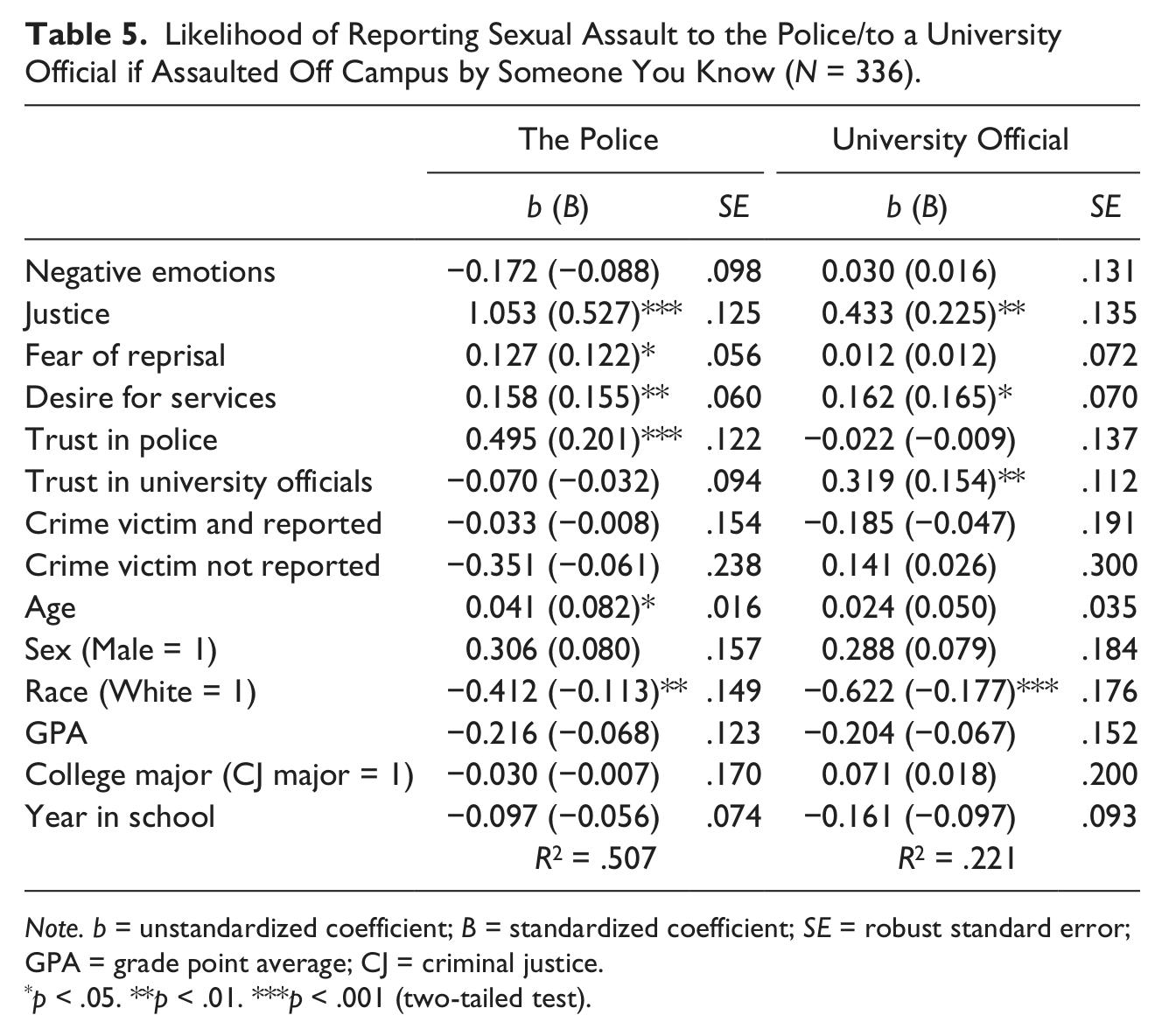
Note. b = unstandardized coefficient; B = standardized coefficient; SE = robust standard error; GPA = grade point average; CJ = criminal justice.
p < .05. **p < .01. ***p < .001 (two-tailed test).
Discussion and Conclusion
Sexual assault victimization, especially on college campuses, is an ever salient problem. This should come as no surprise as “females ages 18-24 had the highest rate of rape and sexual victimizations” (BJS, 2014, p. 1). However, one of the biggest problems facing both law enforcement and college campuses is lack of reporting. According to the same BJS (2014) report, only 20% of rape and sexual assault victimizations of students were reported to police. It might be assumed that students are instead choosing to report the event to university officials, but only 4% of students said they did not report to police because they reported to a different official (BJS, 2014). Unfortunately, it is unclear who or what constitutes a “different official” as “the NCVS does not ask victims for information about the types of other officials to which they may have reported” (BJS, 2014, p. 9).
Prior research has identified several factors that play a key role in understanding individuals’ likelihood to report a sexual assault, including the characteristics of the incident, psychological factors, and individual characteristics (Fisher et al., 2003; Sable et al., 2006; Zinzow & Thompson, 2011). In addition, prior research has examined to whom sexual assault victims are most likely to report (Orchowski et al., 2009). Using four separate hypothetical scenarios varying the characteristics of the incident, this study added to this prior literature by examining students’ self-reported likelihood to report a sexual assault to the police and to a university official other than campus police.
Similar to prior research (Orchowski et al., 2009), we found that for each of the scenarios, students reported that they would be significantly more likely to report an incident to the police than to report to a university official. Of the antecedents of reporting, we found that a desire for justice was a key predictor of students’ likelihood to report to police in all four scenarios and an important factor in reporting to a university official in three of the four scenarios. Unlike much of the prior literature, this study included the perceptions of both males and females, and although 93% of the analyzed sample were between the ages of 18 and 24 (the age range examined by the BJS, 2014 report), this study also includes older students. However, given the similarities in the characteristics of this sample to previous college students samples, such as those collected by Fisher and colleagues (2003), it should perhaps not be surprising that the individual-level factors examined in this study, such as age and race, were similarly associated with reporting behavior as those found in prior studies (Fisher et al., 2003). Specifically, when significant, older individuals, non-Whites, and those with lower GPAs were more likely to report than younger respondents, Whites, and those with higher GPAs.
Given the findings in previous studies (Nasta et al., 2005; Walsh et al., 2010), it was surprising that negative emotions were only significant in reporting to police in one of the scenarios. The impact of emotions on likelihood to report may be difficult to assess when removed from actually having experienced the situation. That is, the hypothetical scenarios may not accurately capture the emotional trauma of a sexual assault, and how a victim’s emotions will actually affect their reporting and reaction to victimization. Negative emotions, such as shame and embarrassment, may be the result of other contextual factors not captured in the scenarios (and perhaps not well-assessed in the hypothetical). In addition, the wording of the hypothetical scenarios “touch you sexually without your consent” may not elicit the same emotions as other phrases might have, for example, asking directly about being sexually assaulted or raped.
It is worth noting, though, that although negative emotions was only significantly associated with reporting to police in the “off-campus stranger” scenario, it was marginally significant (p = .077) in the “on campus someone you know” scenario and marginally significant (p = .080) in the “off campus someone you know” scenario, as well. A fuller measure of negative emotions, perhaps including anger, may more accurately capture these measures. Furthermore, actual events that have more immediate emotional affect than a hypothetical scenario should be explored. For example, the BJS (2014) report on campus sexual assault does not include negative emotions as a reason for not reporting, though they do include “personal matter” which was the most common reason for not reporting (26% among students) followed by fear of reprisal, an effect we actually examine in our analysis. However, unlike the findings of the BJS (2014) report, we find that fear of reprisal is actually positively associated with self-reported likelihood of reporting a sexual assault to the police, though only in the scenarios that occurred off campus.
The difference in the effect of fear of reprisal in the current study and the BJS (2014) report may be due in part to the fact that the BJS report is based on actual sexual assault victims describing why they chose not to report their victimization, whereas the current study examined hypothetical scenarios. Attempts to understand how fear of reprisal would affect reporting may be more difficult to assess in a hypothetical scenario, and not accurately reflect the effect that such fear would have on reporting behavior. It is also possible that our measure of fear of reprisal does not reflect the fear of reprisal described in the BJS (2014) study of sexual assault victimization. Unfortunately, the BJS (2014) report does not further elucidate what fear of reprisal encompasses, so a direct comparison of our study measures and what they conceptualize as fear of reprisal is not possible. In addition, although the BJS (2014) report finds that 20% of their sample described not reporting based on fear of reprisal, they did not examine what caused those who reported to do so. As such, it is possible that many of the individuals in the BJS (2014) study who did report their victimization did so as a result of fear of reprisal (which would be consistent with our findings), but it is not possible to assess this from the data collected. Future research should more fully explore the impact that fear of reprisal has on sexual assault reporting behavior to better understand whether individuals are more or less likely to report victimizations as a result of such fear.
Despite the fact that it is the most common type of sexual victimization to occur—78% of all actual victimizations of college females aged 18 to 24 are by a known assailant, and only 5% of all victimization occur while attending or traveling to school (BJS, 2014)—the scenario with the significantly lowest likelihood of being reported to a university official, and the second lowest likelihood of being reported to police, was being assaulted off campus by someone you know. Considering this is the most likely actual event to occur, further discussion of students’ self-reported likelihood of reporting such an event to police or a university official is warranted. Two of the most important predictors of likelihood to report such an event to police are factors that may be within the control of law enforcement: desire for justice, punishment, prevention, and an underlying belief that police are trustworthy. Given the low prosecution rate of reported sexual assaults—estimates suggest only 22% to 25% of reported rapes are prosecuted (Campbell, 2005)—victims may be discouraged from reporting their victimizations. So, though complex, promoting the prosecution and punishment of perpetrators of sexual assault could increase reporting, as victims may believe that perpetrators will actually be held accountable. Improving prosecution as well as reporting practices generally could be enhanced by developing specialized units for sexual assault victims that bring together legal, medical, and community stakeholders (Greeson & Campbell, 2013).
Police, therefore, play a critically important role as they have the potential to encourage crime reporting (and subsequently encourage prosecution) by engaging in trustworthy practices, such as treating individuals fairly and with dignity and respect (Tyler & Fagan, 2008). Alternatively, the police may reduce the likelihood of prosecution, punishment, and future reporting by discouraging or failing to file reports of victimizations, discouraging the pressing of charges, or questioning victims about their sexual histories—all practices in which a large proportion of rape victims (≥40%) in one study reported the police engaged (Campbell, 2005). University officials would similarly benefit from trustworthy practices as students report a higher likelihood of reporting to them in this scenario when they want justice and trust university officials.
Although only 16% of female college victims received assistance from a victims assistance agency (BJS, 2014), in all eight models a desire for services increased students’ likelihood to report. Increasing awareness and availability of services could promote sexual assault reporting to both police and other authorities. These victim assistance agencies can further increase the likelihood of reporting as they often offer advice and guidance for victims on how to navigate the criminal justice process.
Like all studies of this nature, ours is not without limitation. This study only examined a single university located in the southern United States. In addition, it oversampled criminal justice majors (though there was no significant difference in any of the models for likelihood to report based on major). Although we provided a variety of scenarios, we were not able to vary the seriousness of the event, focusing only on a basic definition of sexual assault. Prior research suggests more serious events are more likely to be reported (Fisher et al., 2003); respondents in our study were posed with a less serious scenario than rape or attempted rape, potentially limiting self-reported likelihood to report. We were also unable to vary certain characteristics of the incident in our hypothetical scenarios, such as the presence of alcohol and drugs. Future studies using hypothetical scenarios may wish to vary these types of characteristics.
Despite these limitations, this study helped to bridge an important gap in the literature by examining specific factors that influence college students’ likelihood to report sexual assault victimization to the police and to university officials. Considering the dismal rates of reporting (and subsequently prosecution) of sexual assaults, understanding the factors that affect reporting is critically important. This study revealed that individuals’ desire for justice, trust in police and university officials, and a desire for services are all essential for the reporting practices of college students.
Footnotes
Declaration of Conflicting Interests
The author(s) declared no potential conflicts of interest with respect to the research, authorship, and/or publication of this article.
Funding
The author(s) received no financial support for the research, authorship, and/or publication of this article.