







Abstract
This article uses data from the 2015 Spanish Survey on Violence Against Women, a nationally representative survey of 10,171 women aged 16 or above, to analyze the relationship between the severity of intimate partner violence and formal and informal help-seeking strategies, the link between the severity of abuse and the reasons for not seeking formal help, and the influence of social reactions to violence disclosure on the process of leaving a violent relationship. The results show that in Spain, many abused women disclose violence and seek help. However, the severity of the violence strongly determines their help-seeking strategies, especially the search for formal help. Women who experienced less severe incidents tended to minimize their importance and did not seek formal help. For informal help, the differences were smaller, and a high proportion of women talked about the abuse with someone within their social environment, regardless of the severity of the suffered violence. A supportive reaction to violence disclosure had a strong and positive influence on the process of leaving the abusive relationship. The implications of these findings for the design of public policies, education, and awareness-raising campaigns are discussed.
Keywords
Introduction
Intimate partner violence (IPV), defined as physical, sexual, or psychological violence perpetrated by current or former partners, is a serious, preventable public health problem that affects millions of women worldwide (Breiding, Basile, Smith, Black, & Mahendra, 2015; World Health Organization, 2013a). The World Health Organization estimates that worldwide, 30% of all women who have been in a relationship have reported physical and/or sexual violence by their intimate partner (World Health Organization, 2013b), though the estimated prevalence varies greatly across regions, even in Western societies. Approximately 32.9% of women in the United States have reported physical violence by an intimate partner, 9.4% have been raped by a partner, and 15.9% have disclosed sexual violence other than rape by an intimate partner in their lifetime (Breiding, Chen, & Black, 2014). According to the European Union (EU), 20% of women have experienced physical violence by a partner since age 15, and 7% have reported sexual violence by a partner since age 15 (European Union Agency for Fundamental Rights, 2014). In Spain, 10.3% of women aged 16 and above have reported physical violence by a partner in their lifetime, and 8.1% have reported sexual violence by a partner in their lifetime (Ministry of Health, Social Services and Equality, 2015).
Research has demonstrated the adverse physical and mental health outcomes of IPV (Beydoun, Beydoun, Kaufman, Lo, & Zonderman, 2012; Black, 2011; Breiding, Black, & Ryan, 2008; Campbell, 2002; Coker et al., 2002; Plichta, 2004). In addition to immediate impacts, IPV has lifelong consequences. A number of studies have shown that beyond injury and death, victims of IPV are more likely to report a range of negative mental and physical health outcomes in both the short and long term (Bonomi, Anderson, Rivara, & Thompson, 2009; Bott, Guedes, Goodwin, & Mendoza, 2012; Campbell, 2004; Ellsberg et al., 2008; Garcia-Moreno, Jansen, Ellsberg, Heise, & Watts, 2005; Domenech del Rio, & Sirvent Garcia del Valle, 2016). Many survivors of IPV experience physical injury, depression, anxiety, low self-esteem, posttraumatic stress disorder, suicide attempts, and other health conditions, such as gastrointestinal disorders, substance abuse, sexually transmitted diseases, and gynecological or pregnancy complications (Breiding et al., 2014; Campbell, 2002).
A growing body of research focuses on examining the ways in which victims of IPV seek formal or informal help and how the support battered women receive influences their process of leaving the violent relationship and improves their mental health (Kaukinen, 2004; Liang, Goodman, Tummala-Narra, & Weintraub, 2005). Women’s decisions to seek help can be viewed within an ecological model, whereby help seeking is influenced by several individual, interpersonal, community, and sociocultural factors (O’Doherty, Taft, McNair, & Hegarty, 2016), such as social norms; women’s experiences of inadequate responses from criminal justice, social, health, and other services; economic insecurity; emotional attachment to the perpetrator; severity of violence; or the presence of children. The present research focuses mainly on the severity of abuse. Previous studies have suggested that victims are more likely to seek help or leave a violent relationship as the frequency and severity of the abuse increase (Bachman & Coker, 1995; Bell & Naugle, 2005; Fugate, Landis, Riordan, Naureckas, & Engel, 2005).
Women might seek help and support from formal or informal sources. Formal support may be provided by the police, actors within the criminal justice system, social services, medical service staff, crisis hotline workers, mental health professionals, clergy members, advocates, and staff at battered women’s shelters (Goodman, Dutton, Vankos, & Weinfurt, 2005; Kaukinen, 2004). Friends and relatives often provide women informal support (Gondolf & Fisher, 1988; Horton & Johnson, 1993). Even if abused women seek social support, they may not receive the support they need because potential support providers may blame or ignore them as victims. Social reactions to disclosure, defined as the ways in which informal supports respond both verbally and non-verbally to victims’ disclosures, are hypothesized to affect women’s processes of leaving abusive relationships (Edwards, Dardis, Sylaska, & Gidycz, 2015; Liang et al., 2005). Previous research has suggested that women’s perception that the violence is “not serious” could be an important inhibitor of their asking for help. However, it is not clear whether this perception is due to women’s belief that the situation is not serious enough for formal intervention or to their perception of the reluctance of others to intervene unless there are visible signs of violence (Fugate et al., 2005). Embarrassment about the abuse, fear for their own safety, or concerns about social reactions have also been documented as barriers to disclosure (Edwards, Dardis, & Gidycz, 2012; Mahlstedt & Keeny, 1993).
To build upon the results of earlier research, we attempted to further analyze (a) the relationship between the severity of IPV and help-seeking processes, (b) the link between the severity of abuse and the reasons for not seeking formal help, and (c) the influence of social reactions to the disclosure of IPV in the leaving processes of the abused women. There are few studies on help-seeking and leaving processes that draw from nationally representative samples. The present research is intended to contribute to fulfilling this gap.
Method
Participants and Data Collection
Data from the Spanish Survey on Violence Against Women 2015 were used. This survey is a nationally representative, cross-sectional and dedicated survey of 10,171 women aged 16 years or older residing in Spain (Ministry of Health, Social Services and Equality, 2015).
Respondents in the sample ranged in age from 16 to 98 years (M = 48.54, SD = 18.46). At the time of the survey, 39.6% of respondents reported being employed, 14.7% were homemakers, 20.0% were retired, 19.6% were unemployed, and 6.2% were students. Of the respondents, 88.6% were born in Spain, and 11.4% were born abroad. Regarding education, 6.7% of the respondents had not finished primary school, 21.3% had completed primary studies, 22.6% had completed lower secondary education, 29.8% had completed upper secondary education, and 19.6% had earned a college degree or had completed postgraduate work. Regarding relationships, 96.4% had ever been partnered (71.5% were partnered at the time of the survey, and 24.9% were formerly partnered); 60.2% of respondents reported having had only one partner in their lifetime, 20.0% reported two partners, 10.3% reported three partners, and 5.8% reported more than three partners (M = 2.14, SD = 7.42).
Data were collected through face-to-face interviews with household women by female interviewers who ensured confidentiality and anonymity. Interviews were conducted during the last quarter of 2014. Utilizing female interviewers increases the disclosure of sensitive information, particularly information relating to experiences involving sexual victimization and violence perpetrated by male partners (United Nations Office on Drugs and Crime & United Nations Economic Commission for Europe, 2010). Face-to-face interviewing leads to increased disclosures of sensitive experiences (Coker & Stasny, 1995). Cards were used for the most sensitive questions to increase the privacy of the responses. For each sensitive question, the interviewer, instead of reading the question to the interviewed woman, handed her a card containing the text of the question and the various possible answers, numbered. Thus, the women could read the question and tell the interviewer the number of the selected answer, minimizing the woman’s possible discomfort. In those cases in which the woman was unable to read (illiterate, vision problems, etc.), cards were not used, and the interviewer read the questions normally.
Estimates regarding IPV are extremely sensitive to the specific definitions used and to the manner in which the questions are asked. Thus, the questions asked about specific behaviors rather than about general abuse (Krug, Dahlberg, Mercy, Zwi, & Lozano, 2002). Previous research has shown that this technique yields more positive answers than questions that inquire about violence in general (Fisher, Cullen, & Turner, 2000; Percy & Mayhew, 1997; Russell, 1982). Moreover, the phrasing of the questions was based on the Guidelines for Producing Statistics on Violence Against Women developed by the United Nations (United Nations Statisitcs Division, 2014).
Measures of IPV
The women were asked if any current or former intimate partner had ever abused them physically, sexually, emotionally, economically, or through the abuse of control. An additional question about fear of their partner was included to screen for non-revealed IPV because it was observed in the pilot study of the survey that some women who did not report any act of violence, but from the point of view of the specialized interviewers were battered women, did answer affirmatively to the question regarding fear of their partner. Furthermore, in the final survey, 91% of women who reported being fearful of their partners had experienced some form of psychological violence, so fear of a partner can be considered an adequate proxy variable of psychological violence. The exact phrasing of the items can be found in the study of the Ministry of Health, Social Services and Equality (2015).
The women who reported having experienced any of the acts of physical or sexual violence in question and those who indicated fear of an intimate partner (N = 1,579) were asked a specific set of questions to determine different aspects such as seeking help from formal support services, reporting the violence to the police, informal support sources, or ending the relationship as a consequence of the abuse. For the present study, we considered this group of women.
Measures of IPV Severity
The following items were considered for physical violence by a current or former intimate partner: (a) “has ever slapped you or thrown something at you that could hurt you,” (b) “has ever pushed you or shoved you or pulled your hair,” (c) “has ever hit you with a fist or with anything else that could hurt you,” (d) “has ever kicked you, dragged you, or beat you up,” (e) “has ever tried to choke or burn you on purpose,” (f) “has ever threatened to use or has actually used a gun, knife or other weapon against you.” Following the United Nations Guidelines for Producing Statistics on Violence Against Women (United Nations Statistics Division, 2014), in the classification of severity, at least one act in Categories (c), (d), (e), or (f) classified the experience of physical violence as “severe” due to the increased risk of injury. Reporting only Items (a) or (b) classified the experience of physical violence as “moderate.”
For sexual violence, the following questions were asked: (a) Your (current/former) partner “has ever forced you to have sexual relations when you did not want to,” (b) “Did you ever have sexual relations you did not want to because you were afraid of what your partner could do if you refused,” (c) Your (current/former) partner “has ever forced you to do something else sexual that you did not want or that you found degrading or humiliating,” and (d) Your (current/former) partner “has ever attempted to force you into sexual relations by holding you down or hurting you in some way.” If requested by the interviewee, the term sexual relations was clarified, specifying that it comprised anal or vaginal penetration or oral sex.
To properly analyze the effects of IPV severity, we created the following mutually exclusive categories: (a) respondents ever experiencing fear of an intimate partner without physical or sexual violence, (b) respondents ever experiencing moderate physical violence without sexual violence, (c) respondents reporting lifetime moderate physical violence with sexual violence, (d) respondents ever experiencing severe physical violence without sexual violence, and (e) respondents reporting severe physical violence with sexual violence.
Formal Support and Informal Social Support Measures
The women who reported having experienced any of the acts of physical or sexual violence in question or who indicated fear of an intimate partner were asked the following question to determine whether violence was the reason for ending the relationship: “Did you end the relationship with any of your partners due to these behaviors or to fear?” Seeking help from formal support services was measured by means of the following question: “As a consequence of your current or former partners’ behavior toward you, did you get in contact with any of the following services?” (a) “psychologist or psychiatrist”; (b) “doctor, health center, or other health care institution”; (c) “social services”; (d) “women’s shelter”; (e) “NGO/Women’s association”; (f) “Church/Faith-based organization”; (g) “legal services/lawyer”; (h) “016 Helpline”; and (i) “another service/organization.” Respondents were able to give more than one answer. If a respondent answered affirmatively to seeking at least one of the services, it was considered that she sought help from formal support services. In addition, women were asked whether they (or someone else) reported violence to the police or the court.
We measured disclosure of abuse within the social environment with the following question: “I will now mention some persons. Could you tell me if you discussed your (current/former) partner’s behavior with . . .?” (a) “mother,” (b) “father,” (c) “sister,” (d) “another female family member,” (e) “another male family member,” (f) “female member of your partner’s family,” (g) “male member of your partner’s family,” (h) “female friend,” (i) “female neighbor/co-worker,” (j) “female teacher/mentor,” and (k) “other female/male.” Respondents were able to give more than one answer. Those who answered affirmatively were questioned about the feedback they received from each of these people, including (a) “recommended leaving the relationship,” (b) “recommended giving the partner another opportunity,” (c) “recriminated the woman for her attitude,” (d) “reacted with indifference,” and (e) “other answer.”
A variable was created with three mutually exclusive categories: (a) women who did not disclose the abuse to anyone within their social environment, (b) women who told at least one person but were advised by nobody to leave the relationship, and (c) women who disclosed the abuse to at least one person, and received at least one positive feedback (recommendation for leaving the abusive relationship).
Reasons for Not Seeking Help
Women who did not seek help from any service or did not report the abuse to the police or the court were asked about their reasons. In each case (not reporting violence to the police or not seeking help in support services), respondents were able to give more than one answer among the following possible options offered: (a) “too minor/not serious enough/never occurred to her/handled it herself”; (b) “fear of offender, of reprisal”; (c) “the partner or somebody else stopped her or discouraged her”; (d) “shame, embarrassment, did not want anyone to know”; (e) “the problem ended” (only for those not reporting violence to the police); (f) “thought it was her fault”; (g) “thought she would not be believed”; (h) “afraid to lose her children”; (i) “did not want her children to lose their father” (only for those not reporting violence to the police); (j) “did not want the offender arrested or to get in trouble with the police” (only for those not reporting violence to the police); (k) “lack of own economic resources” (for those not reporting violence to the police), or “she could not afford it” (for those not seeking help in support services); (l) “went someplace else for help” (only for those not reporting violence to the police); (m) “did not want the relationship to end/she was in love”; (n) “those were other times”; (o) “it happened when the woman was living in another country where such things are not reported to the police” (for those not reporting violence to the police), or “it happened while living in another country where such services do not exist” (for those not seeking help in support services); and (p) “these services were too far away or they were difficult to access” (only for those not seeking help in support services). Details on the number of abused women mentioning each of these reasons can be found in the study of the Ministry of Health, Social Services and Equality (2015). For this study, we wanted to analyze the relation between the reasons for not reporting violence to the police and for not seeking help in support services and the severity of the reported violence. Therefore, only the three main reasons were considered to have enough cases for the disaggregation, that is, “too minor/not serious enough/never occurred to her/handled it herself”; “fear of offender, of reprisal”; and “shame, embarrassment, did not want anyone to know.”
Demographics
The following variables were considered: age (16-34, 35-59, +60), education level (no formal education, primary education, lower secondary education, upper secondary education, university), children (yes/no), country of birth (Spain vs. other), and size of municipality (less than 10,000, +10,000).
Statistical Analyses
Data were analyzed using SPSS, Version 21. First, the data were summarized using frequencies and percentages for categorical data. The associations were measured with the chi-square test. Statistically significant variables were retained for the logistic regression models. Four regressions were performed, one for each of the following dependent variables: (a) seeking help from formal support services (yes = 1, no = 0), (b) reporting violence to the police or the court (yes = 1, no = 0), (c) talking to people in the social environment about the violence (yes = 1, no = 0), and (d) the violence was the reason for ending the abusive relationship (yes = 1, no = 0). The adjusted odds ratio (OR) and 95% confidence intervals (CIs) are reported.
Results
The prevalence of lifetime physical IPV among Spanish women aged 16 and above was 10.3%, whereas 8.1% reported sexual IPV (Table 1). Thirteen percent had ever experienced fear of a partner, and 81.4% of the women who reported violence sought formal or informal help. Forty-five percent had attended formal services, 28.6% reported violence to the police or the court, and 75.6% revealed the abuse to someone within their social environment (Table 2), including their friends (54.7%), mothers (40.1%), sisters (32.2%), or fathers (20.0%); Ministry of Health, Social Services and Equality, (2015).
Prevalence of Lifetime Intimate Partner Violence Among Women Residing in Spain Aged 16 or Above by Type and Category.
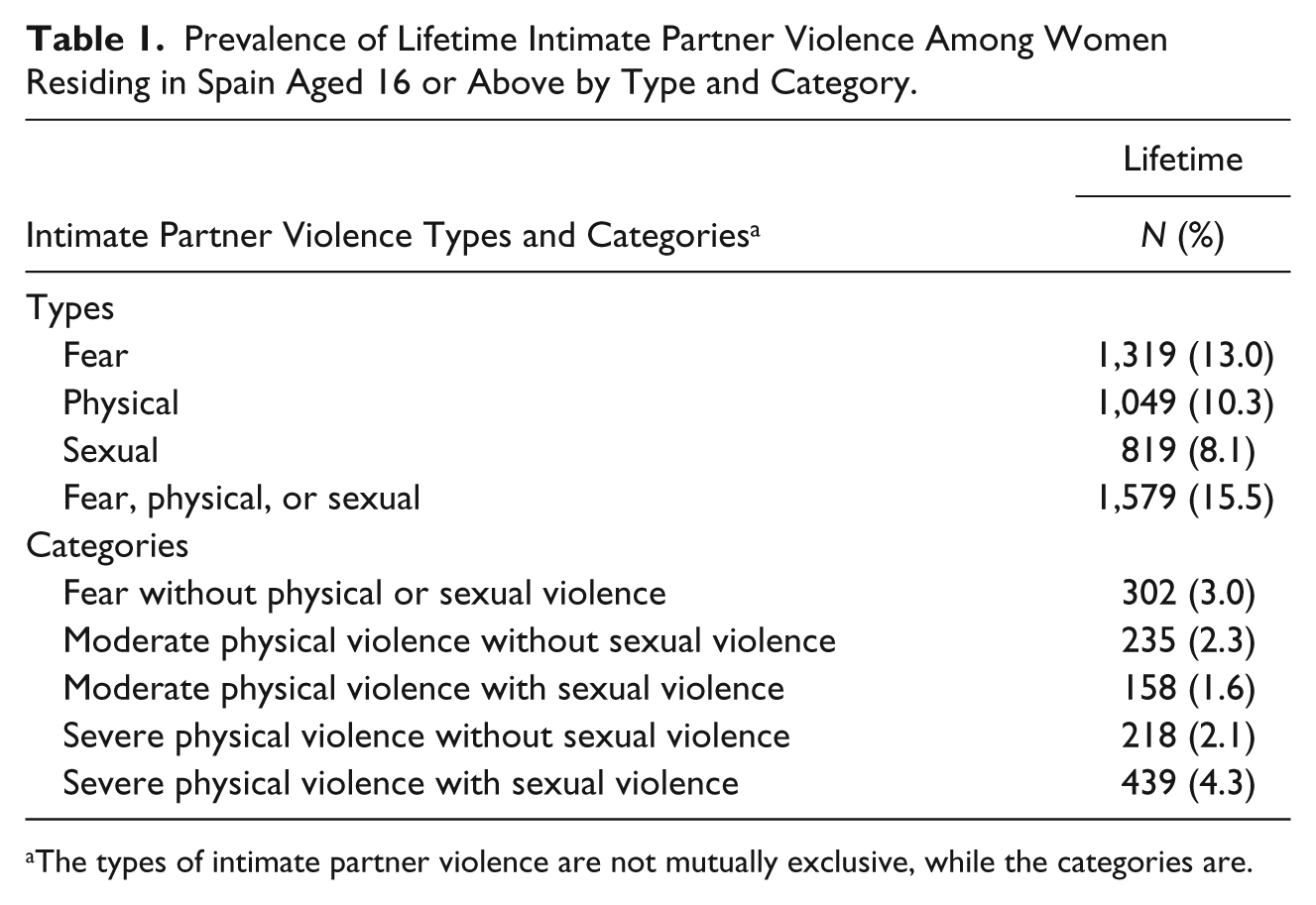
The types of intimate partner violence are not mutually exclusive, while the categories are.
Help Seeking Among Spanish Women Aged 16 or Above Who Reported Intimate Partner Violence: Formal Support Services, Police, and Informal Help Sources.
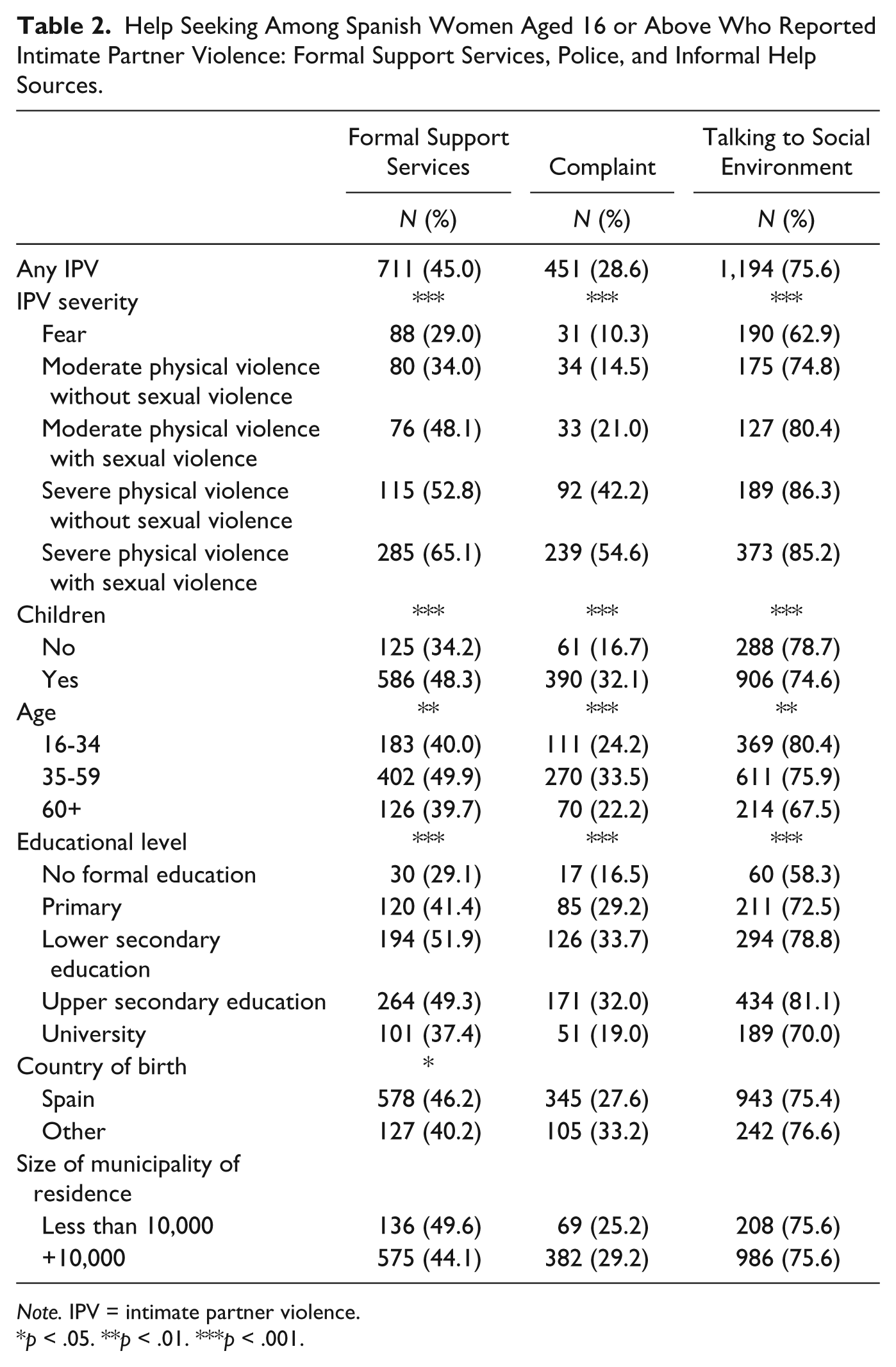
Note. IPV = intimate partner violence.
p < .05. **p < .01. ***p < .001.
The severity of the violence increased the likelihood of abuse disclosure after adjusting for other sociodemographic factors. Severe physical violence with sexual violence (e.g., a woman reported that her partner had beaten her up and had forced her to have sexual relations) increased by 8 the odds of reporting the violence to the police (OR = 8.60, CI = [5.57, 13.28]), by 3 the likelihood of seeking help from formal support services (OR = 3.54, CI = [2.47, 5.09]), and by 2 the probability of talking about the abuse to somebody in their social environment (OR = 2.00, CI = [1.31, 3.08]).).” Severe physical violence without sexual violence (e.g., a woman reported that her partner had kicked her but did not report any type of sexual abuse) increased by 5 the odds of reporting violence to the police (OR = 5.14, CI = [3.18, 8.29]), by 2 the likelihood of seeking help from formal support services (OR = 2.45, CI = [1.62, 3.70]), and by nearly 2 the probability of talking about the abuse to somebody in the social environment (OR = 1.84, CI = [1.10, 3.09]). The likelihood of reporting violence to the police (OR = 2.00, CI = [1.40, 2.87]) or seeking help from formal support services (OR = 1.83, CI = [1.32, 2.52]) was also higher among women who had children (Table 3).
Logistic Regression Analyses for Seeking Help From Formal Support Services, Police, and Informal Help Sources.
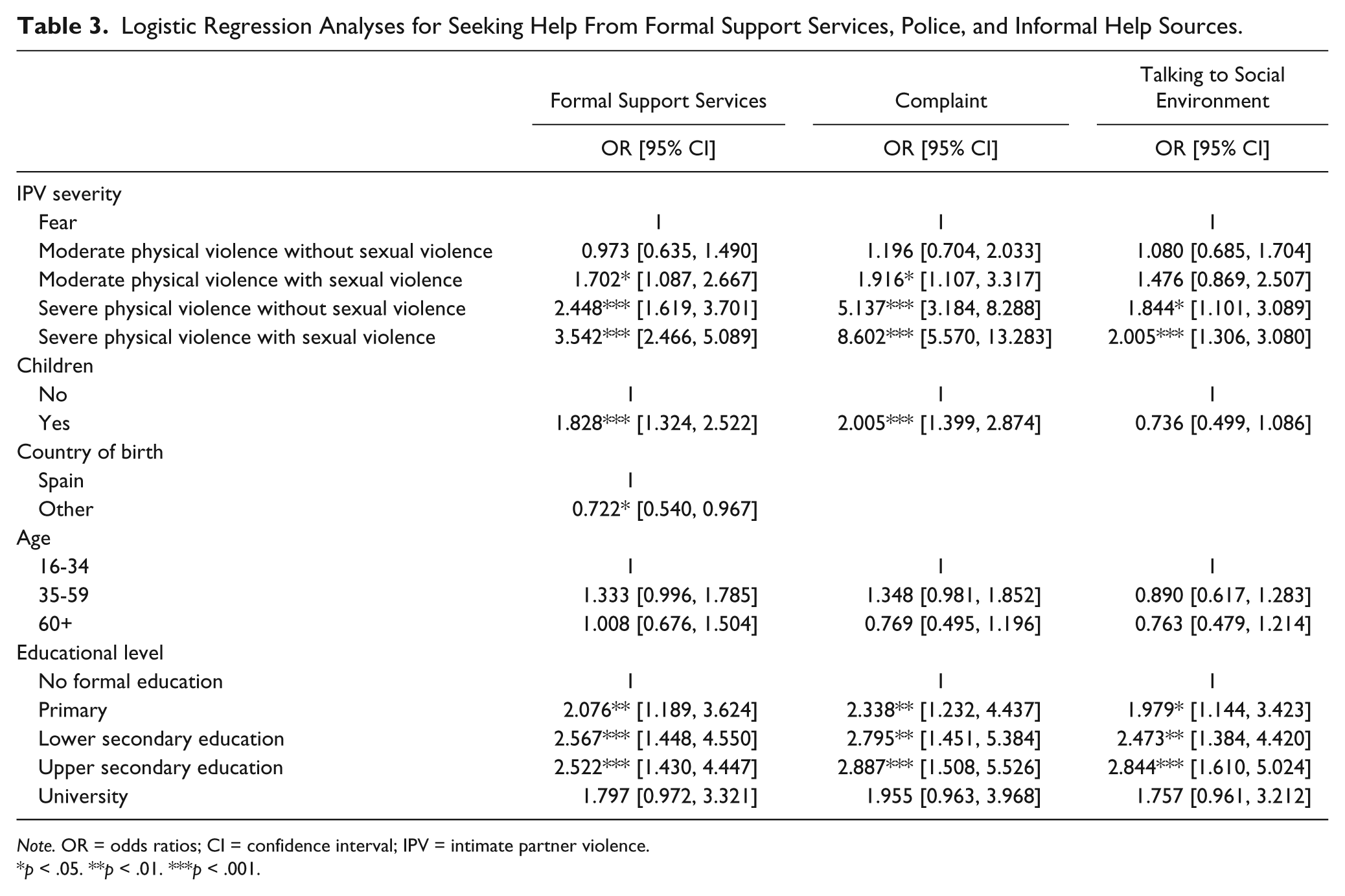
Note. OR = odds ratios; CI = confidence interval; IPV = intimate partner violence.
p < .05. **p < .01. ***p < .001.
Respondents who were advised, after revealing the abuse to someone within their social environment, to leave the violent relationship had a higher likelihood of leaving the violent relationship (OR = 2.61, CI = [1.92, 3.56]) than those who did not tell anyone (Table 4). Receiving negative feedback after disclosing abuse slightly decreased the odds of leaving the violent relationship in comparison with those women who did not tell anyone (OR = 0.64, CI = [0.43, 0.97]). Seeking help from formal support services or reporting violence to the police or the court increased by nearly 2 the odds of leaving the abusive relationship due to the suffered violence (OR = 1.91, CI = [1.46, 2.49]) in comparison with those who did not seek help from formal services or did not file a formal complaint.
Ending the Relationship Due to Its Violent Nature Among Spanish Women Aged 16 or Above Who Reported Intimate Partner Violence (Prevalence and Logistic Regression Results).
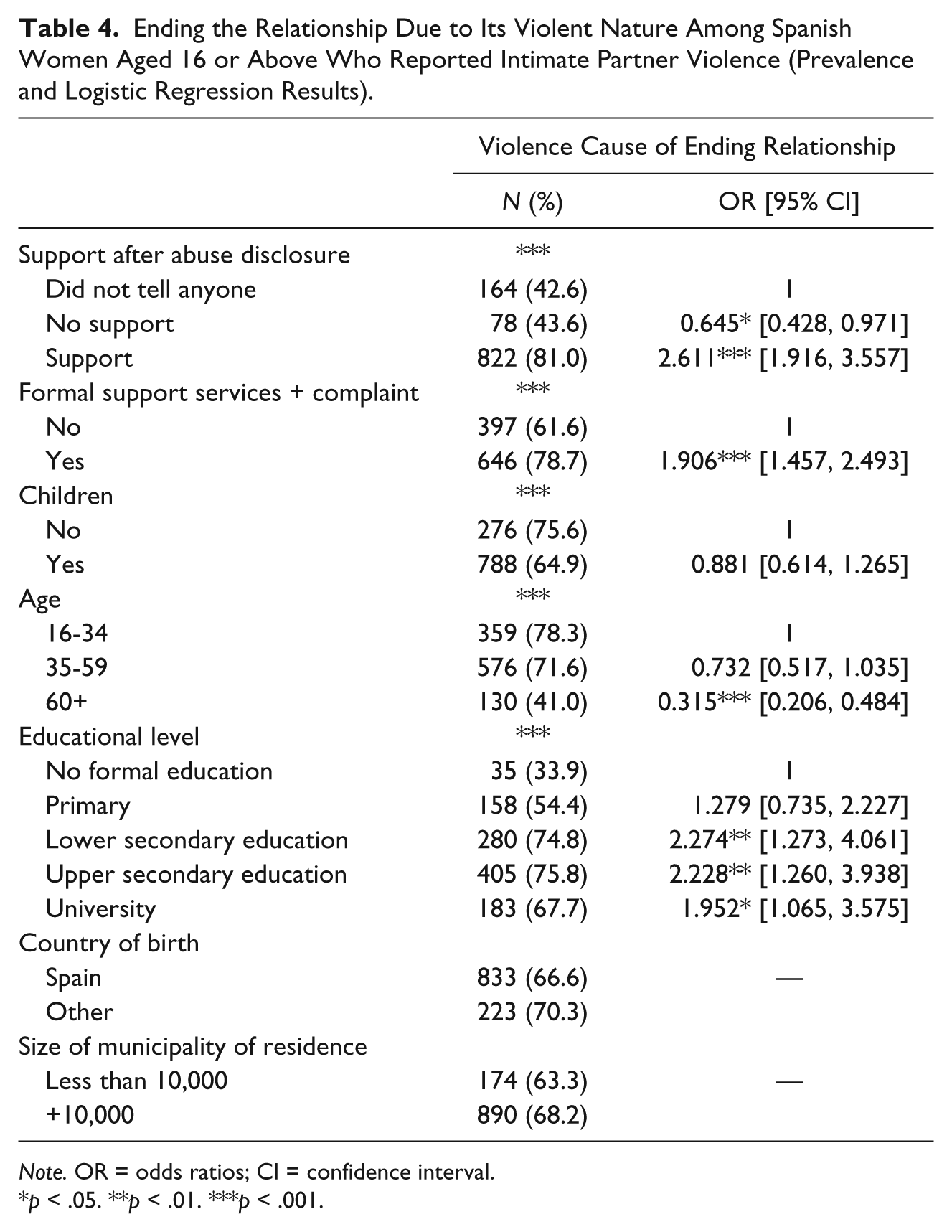
Note. OR = odds ratios; CI = confidence interval.
p < .05. **p < .01. ***p < .001.
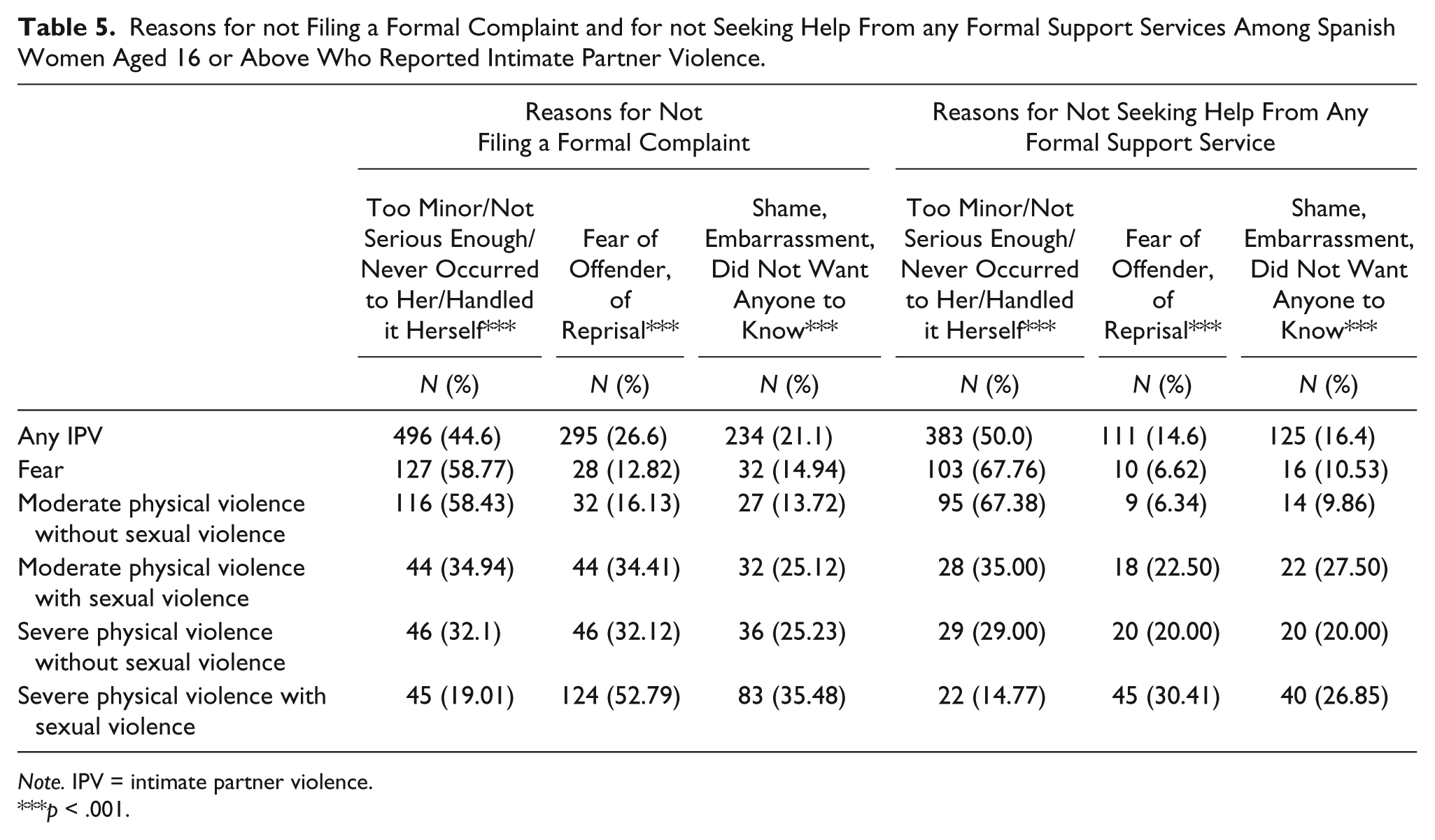
Women who had not sought help from any formal services (n = 765, 48.4% of the sample) or did not themselves report the violence to the police or the court (n = 1,112, 70.4% of the sample) were asked for their reasons. As previously stated, the three main reasons were “too minor/not serious enough/never occurred to her/handled it herself”; “fear of offender, of reprisal”; and “shame, embarrassment, did not want anyone to know.” The order of the reasons differed according to the severity of violence: The greater the severity, the lower the percentage of women, reporting that they did not ascribe importance to the abuse as a reason for not seeking help or not filing a formal complaint. For example, 67.8% of women who reported fear of a partner (but not physical or sexual abuse) mentioned this reason for not seeking help from a formal service, whereas only 14.8% of women who reported severe physical violence with sexual violence mentioned it. This pattern reverses for the other two reasons, as shown in Table 5.
Reasons for not Filing a Formal Complaint and for not Seeking Help From any Formal Support Services Among Spanish Women Aged 16 or Above Who Reported Intimate Partner Violence.
Note. IPV = intimate partner violence.
p < .001.
Discussion
Of the women who experienced IPV, 81.4% reported that they had told someone about the violence. This result is in line with the prevalence found in other studies (Fanslow & Robinson, 2010) and suggests that in Spain, IPV is no longer a secret and private problem that women try to hide, although it could also be that the disclosure of violence in the survey was low. As revealed in the introduction, the reported rates of violence in our survey were considerably lower than those in the United States, though the estimates were closer to the EU average. When comparing the estimates of physical and sexual violence by a partner in Spain in our survey and in the survey of the European Union Agency for Fundamental Rights, the estimates were similar: In the European survey, 12% of women interviewed in Spain reported lifetime physical violence by a partner, and 4% disclosed sexual violence (European Union Agency for Fundamental Rights, 2014), compared with 10.3% and 8.1%, respectively, in our survey. This comparison should be interpreted with care because the questionnaires were not identical, the age of the respondents was 16 and above in our sample but 18 to 74 in the EU survey, and the sample for Spain in the European survey was considerably small (1,520 interviews).
In line with previous research, the severity of abuse was revealed to be a determining factor for help seeking. The current study revealed that the importance of this factor varies depending on the type of help sought. The smallest differences were found in the search for informal help: Women who reported severe physical violence with or without sexual violence were about twice as likely to talk about the abuse to someone within their social environment as those who reported fear of a partner. Differences in severity were significantly higher when considering the search for formal support such as medical care, mental health services, social services, or legal aid, or reporting the violence to the police. This result is consistent with the so-called stage model (Liang et al., 2005). According to this model, IPV survivors progress from more private attempts to address abuse to informal support seeking and, as the violence worsens, to more public help seeking. This suggests the existence of a threshold for abuse, implying that after a certain point, either the injuries are serious enough or the situation becomes frightening enough to seek formal intervention (Fugate et al., 2005).
Filing a formal complaint was the action that victims of IPV, regardless of the severity of the abuse, were more reluctant to perform. However, at the same time, this action showed the greatest differences in the severity of violence. Only 10.3% of women who experienced fear of a partner and 14.5% of women who reported moderate physical violence without sexual violence took the action of reporting the violence to the police or the court, but 42.2% of those who experienced severe physical violence without sexual violence and 54.6% of those who reported severe physical violence with sexual violence did so. After controlling for potential confounders, severe physical violence increased by 5 the likelihood of filing a formal complaint if it was not accompanied by sexual violence and by 8 if, in addition to severe physical violence, the women also reported sexual violence. These results are consistent with previous research suggesting that victims are more likely to report incidents when the assault is more serious because the desire for protection is greater (Felson, Messner, Hoskin, & Deane, 2002). At the same time, calling the police may not be perceived as worth the effort, especially in the case of minor incidents, because women may consider that police will not intervene unless there are visible signs of violence. The combination of these two factors results in the sharp contrast observed in the severity of abuse for reporting violence to the police. This result can also be observed by looking at our findings regarding the reasons for not filing a formal complaint: Approximately 60% of women who experienced low-severity violence and did not report the abuse to the police or the court stated the reason was that they considered the incidents too minor or not serious enough, whereas only 19% of those who reported severe physical violence with sexual violence and did not contact the police cited this reason. Therefore, it seems urgent, on one hand, to launch public-awareness campaigns and education programs to help women identify any type of abuse and to send the message that no type of violence should be tolerated and, on the other hand, to increase knowledge and awareness among police officers and other professionals who work with IPV victims to guarantee that all abused women are adequately treated.
We should also wonder why, even among those women who reported severe abuse, a high percentage did not contact the police or formal support services. These women mentioned, first, that they were afraid of the offender and possible reprisal and, second, their shame; they did not want anyone to know about their abuse. Both these reasons, but especially fear, were cited more often for not getting in contact with the police than for not seeking support from formal services. Women may perceive reporting abuse to the police as very different from other interventions because medical care or social service interventions focus on the victim, whereas much police intervention focuses on the abuser. Furthermore, women cannot control the process or outcomes of police intervention, and may be afraid of its consequences. According to our survey, women avoid contacting the police mainly because they fear retaliation from the abuser and not because they fear the abuser will be arrested or sent to jail (Ministry of Health, Social Services and Equality, 2015). Many abused women have heard about or experienced negative police responses and ineffective or even harmful criminal justice responses to IPV, such as failure to arrest the batterer, mistaken identification of the victim as the batterer, the failure to listen to the victim, or the trivialization of the situation. Therefore, women’s safety should be considered a top priority. Efforts must be made to guarantee that reporting the abuse does not expose women to an increased risk of suffering violence by the perpetrator, and that the women receive respectful treatment (avoiding revictimization). However, even if services and police responses are effective, many abused women feel shameful about publicly disclosing their victimization and consider its potential costs, including the loss of privacy, stigmatization, and social judgments (Liang et al., 2005).
According to our findings, social reactions to the disclosure of IPV did influence the abused women’s leaving processes, as seeking formal help or filing a formal complaint did. Receiving supportive advice significantly increased the likelihood of leaving the violent relationship. In our questionnaire, support after violence disclosure was measured by means of having received the advice to leave the violent relationship. Previous research has suggested that being told to leave is interpreted by some victims as positive and helpful, and by others (mainly those who do not want to terminate the abusive relationship) as negative and unhelpful (Edwards et al., 2015; Fugate et al., 2005). In our study, 81% of women who received this advice ended the relationship due to its abusive nature, almost doubling the percentage of women who took this step, compared with those who either did not talk about the abuse to anyone or received negative advice in the form of recrimination, indifference, or the suggestion to give the partner another opportunity. This clear result, in contrast to the mixed evidence found in other studies, may be due to the nature of awareness-raising campaigns in Spain. For years, the focus in all the public campaigns in Spain has been on encouraging women to leave the abuser, something that might have led to a strong identification of this advice as positive. Seeking formal help or contacting the police also increased the likelihood of leaving the violent relationship, though the impact of positive social support was stronger. Because most battered women seek support through informal sources, it would be helpful to inform society about the emotional and physical consequences of IPV, access to formal supports, and how to offer appropriate responses to ensure that family and friends are able to provide appropriate and supportive assistance when women communicate with them about the violence they are experiencing.
Literature regarding children and disclosure is somewhat contradictory. Some studies have found evidence that victims are more likely to seek help or end an abusive relationship when their children’s risk of becoming emotionally or physically harmed by the family violence increases (Fugate et al., 2005; Short et al., 2000). Other studies have noted that fear of losing child custody might prevent women from contacting authorities (Short et al., 2000; Wolf, Ly, Hobart, & Kernic, 2003). Our results indicate that the presence of children contributed to contacting the police and seeking help from formal support services, though it was not related to an increased likelihood of talking to someone within the social environment. Fear of losing their children was mentioned by only 8.4% of women who did not contact the police and 4.3% of women who did not seek help from formal support services (Ministry of Health, Social Services and Equality, 2015).
A limitation of our study is its cross-sectional design, which prevents us from determining the causal direction of the associations we found. Another limitation is our exclusive focus on female victimization and male perpetration because men may also suffer violence by their female intimate partners, and violence also occurs in same-sex relationships. However, women’s violence is less likely to injure, is taken less seriously, is less likely to produce fear, and is therefore less likely to be intended as a control tactic or to be successful as one. Social norms regarding intimate heterosexual relationships are still heavily gendered and rooted in a patriarchal model that validates men’s power (Johnson, Leone, & Xu, 2014). Violence perpetrated by men toward women is usually more frequent and more injurious, leading to greater consequences for the mental and physical health of victims.
The study also has a number of important strengths, including the use of a large, nationally representative sample of women aged 16 years or above, a rigorous methodological design that included the pre-testing of survey instruments, extensive interviewing training and specific training on violence against women, fieldwork carried out exclusively by female interviewers and the development of a questionnaire based on the Guidelines for Producing Statistics on Violence against Women by the United Nations, which includes reliable and valid measures of a range of violence. This sound methodology is likely to increase the disclosure of sensitive information and to minimize the reporting bias of partner violence. To our knowledge, this study is the first utilizing nationally representative data for Spain fulfilling these quality standards.
Conclusion
There are few studies on help-seeking and leaving processes that draw from nationally representative samples. The present research attempted to contribute to fulfilling this gap. In Spain, abused women disclose violence and seek help. However, the severity of the violence strongly determines the help-seeking processes, especially the search for formal help. Women who experienced low-severity incidents tended to minimize its importance and did not seek formal help. Concerning the search for informal help, there were fewer differences in severity.
A high proportion of women, regardless of the severity of the suffered violence, talked about the abuse with someone within their social environment. Furthermore, social reactions to violence disclosure had a strong influence on the process of leaving an abusive relationship, with supportive reactions to violence disclosure having a positive influence on this process. The provision of support and the process of help seeking should not be assumed to be a universally positive experience, as it can be a source of danger, conflict, rejection, and criticism. Public-awareness campaigns and education programs are needed to enable women to identify any type of abuse and to inform society about the emotional and physical consequences of IPV, access to formal supports, and how to offer appropriate responses, as well as to send the message that no type of violence should be tolerated. Effort must be made to raise knowledge and awareness among professionals working with IPV survivors, so that they treat them with a respectful and non-judgmental attitude to prevent revictimization and guarantee women’s physical and emotional safety.
Footnotes
Declaration of Conflicting Interests
The author(s) declared no potential conflicts of interest with respect to the research, authorship, and/or publication of this article.
Funding
The author(s) received no financial support for the research, authorship, and/or publication of this article.
