






Abstract
Child and adolescent victims of violence are often exposed to more than one kind of physical, sexual, or emotional maltreatment. Both individually and cumulatively, such victimizations have significant ramifications on mental health. Yet little is known about the relationships in which these different kinds of victimizations occur and how the relationship between the victim and perpetrators may influence later mental health. This retrospective, self-report study of a nationally representative sample of 2,500 young adults in Sweden examines associations between different types of victimization (including poly-victimization), the victim’s relationship to the perpetrator, and how these factors are related to current mental health. Results indicate differential patterns of abuse based on the perpetrator; parents were most likely to use physical aggression, whereas siblings typically perpetrated property crimes and partners committed sexual assault. Peers were the most likely perpetrator of both physical and verbal victimizations and also most often committed poly-victimization by subjecting youth to multiple forms of violence. While males were more likely to be victimized by peers, females were more likely to be victimized by parents, siblings, and partners. Significant positive relations were found for the amount of victimization by peers and mental health problems among both males and females. In addition, for females, higher amounts of youth victimization by parents and partners related to higher levels of mental health problems during young adulthood. Taken together, these results suggest that peer victimization presents the greatest risk for males, whereas dysfunctional family relationships are most detrimental to victimized females.
Most studies examine child maltreatment only in terms of abusive or neglectful behavior perpetrated by primary caregivers. Yet the World Health Organization (WHO; 2014) defines child maltreatment as “the abuse and neglect that occurs to children under 18 years of age. It includes all types of physical and/or emotional ill-treatment, sexual abuse, neglect, negligence and commercial or other exploitation, which results in actual or potential harm to the child’s health, survival, development or dignity in the context of a relationship of responsibility, trust or power.” To more accurately reflect the experiences of most victimized youth, this study uses the latter wider definition to examine the retrospective reports of lifetime victimization across a wide range of perpetrators (parents, siblings, peers, and dating partners) in a sample of young adults, with a focus on how specific perpetration patterns within and across victimization types may be associated with mental health problems in early adulthood.
In the family, young people are not exclusively subjected to conflict and violence by their parents. Conflict and violence between siblings is also common (Finkelhor, Turner, Ormrod, & Hamby, 2010). Studies of college students have found that between 8% and 28% of individuals had a violent and abusive relationship with a sibling during childhood and that males were more likely to be the perpetrators while females were more likely to be the victims of sibling violence (Duncan, 1999; Graham-Bermann, Cutler, Litzenberger, & Schwartz, 1994). Sibling abuse is typically defined in terms of both physical and emotional abuse that is persistent and unremitting (e.g., Hoffman, Kiecolt, & Edwards, 2005). Other definitions also include the sexual abuse of one sibling by another (e.g., Kiselica & Morrill-Richards, 2007). Given the variable definitions of sibling abuse and its inconsistent examination in studies of conflict and violence, there exists a dearth in the literature on how this form of abuse equates to parental maltreatment or the impact of sibling aggression on mental health at later points in development. Furthermore, violence is not only committed in the home, as youth also encounter victimization in other settings. Given that there is ample evidence that the perpetrators of violence, both in and out of the home, may be diverse, there exists a significant gap in our understanding of the extent and nature of children’s risk for developing psychopathology in the wake of violent victimizations.
Some literature explicitly includes violence against children in schools as a form of child abuse (Krug, Dahlberg, Mercy, Zwi, & Lozano, 2002). For example, some studies focus on bullying, which refers to repeated acts of aggression intended to harm directed at young people who cannot defend themselves (Juvonen & Graham, 2014; Olweus, 1999; Smith, 2014). However, power imbalance is hard to operationalize (Finkelhor, Turner, & Hamby, 2012) and single events may be just as traumatic as repeated (Juvonen & Graham, 2014). Therefore, peer victimization is the experience among children of being a target of the aggressive behavior of other children (Hawker & Boulton, 2000). It does not necessarily involve repetition, intent to harm, or a power imbalance. It should be noted that sexual victimization is not always included in studies on bullying and peer victimization.
In addition, young people can be victimized by their dating partners. Within this research field, some studies focus on teen dating violence (e.g., Hamby, Finkelhor, & Turner, 2012) and others on a wider age range and previous dating partners (e.g., Vagi et al., 2013). Hamby et al. (2012) found that physical dating violence was closely associated with several other forms of victimization, such as having been physically abused by a caregiver or having been raped. Vagi et al. (2013) emphasize that aggression in dating relationships can take the form of physical, emotional (psychological), or sexual assaults. In a similar vein, Hamby et al. (2012) stress that physical assaults alone contribute to an incomplete picture of dating violence.
Thus, although the terminology and research fields of “child maltreatment,” “sibling abuse,” “peer victimization,” and “dating violence” all refer to the perpetrator–victim relationship and generally include physical and psychological/emotional/verbal acts of aggression, they often differ in whether unwanted sexual acts by that perpetrator are included in assessments. The experience of sexual abuse has been linked to more emotional and behavioral problems, a weaker sense of coherence, and lower self-esteem when compared with nonabuse (Priebe, Hansson, & Svedin, 2010). Furthermore, sexual victimization has consistently been associated with increased risks of later problems, such as depression, anxiety, and excessive substance use, especially among females (Fergusson, Boden, & Horwood, 2008; Simpson & Miller, 2002). Another form of victimization often inconsistently classified is property offenses. Although victimization to property is common among young people and constitutes a risk for exposure to other adversities, as well as emotional or behavioral problems (Brottsförebyggande rådet [BRÅ], 2013; Finkelhor, Ormrod, Turner, & Hamby, 2005), it is generally not included in research on child maltreatment, peer victimization, sibling abuse, and dating violence. Overall, most research on violence victimization makes assumptions as to the identity of the perpetrator. Yet little is known about victimization by different perpetrators for the various and diverse kinds of victimization.
Beyond the complexities of perpetration within each type of victimization, recent studies show that different forms of victimization often co-occur (Higgins & McCabe, 2000; Radford, Corral, Bradley, & Fisher, 2013) and that so-called “poly-victims” comprise a substantial proportion of victimized youth (Aho, Gren-Landell, & Svedin, 2016; Cater, Andershed, & Andershed, 2014; Finkelhor, Ormrod, & Turner, 2007; Robboy & Anderson, 2011). Poly-victimization in children refers to those who experience multiple types of violence (e.g., physical abuse and bullying) rather than multiple victimizations of a single type (e.g., multiple instances of bullying; Hamby & Grych, 2013). Poly-victimization is related to particularly adverse mental and physical health problems, such as depression, suicide attempts, excessive alcohol use and severe obesity, and aggressive behaviors (e.g., Cater et al., 2014; Felitti et al., 1998; Miller, Grabell, Thomas, Bermann, & Graham-Bermann, 2012). Furthermore, when taken into account, poly-victimization can significantly reduce the association between single victimizations (e.g., sexual abuse) and problematic outcomes (Finkelhor et al., 2007; Radford et al., 2013). In one recent study, Turner, Shattuck, Finkelhor, and Hamby (2016) uncovered six distinct groups of youth with specific victimization profiles. In their study, poly-victims were the only victim group with substantial probabilities of experiencing victimizations perpetrated by adult family members. Poly-victims also had elevated exposure to nonvictimization adversity and the highest levels of trauma symptoms. The researchers concluded that a core basis of the particularly damaging effects of poly-victimization is the experience of victimization across multiple domains of the child’s life.
The study of poly-victimization, however, is complicated in that a single perpetrator may victimize a child or adolescent in multiple ways or a child may experience poly-victimization perpetrated by multiple different individuals. To date, most research on the effects of the child–perpetrator relationship on the association between victimization and mental health have focused on survivors of sexual abuse (c.f. Beitchman, Zucker, Hood, daCosta, & Akman, 1991). In this literature, it has been suggested that the child–perpetrator relationship may have differential effects on outcomes based on both the closeness of the relationship and the extent to which the victim is dependent on the perpetrator to meet core caregiving needs; however, the literature has produced mixed results. For example, one recent study evaluating both physical and sexual abuse indicated that children abused by noncaregiving adults had more severe psychiatric symptoms as compared with those abused by caregivers (Kiser et al., 2014). Few studies examining the child–perpetrator relationship, however, have examined the full range of children’s victimization experiences (Steinberg et al., 2014). Yet such work is critically needed to advance the field of victimization research to better understand how and why children are placed at differential risk for the effects of trauma.
Although the relationships between child and adolescent poly-victimization and mental health are well established (e.g., Cater et al., 2014), associations between the victim’s relationship with the perpetrator and mental health have been rarely considered in this literature. To better understand the complexities of childhood victimization, research must assess exposure to different forms of victimization and different relationships with perpetrators. Furthermore, such research should examine the impact of victim gender on the relationships between poly-victimization, perpetration patterns, and mental health, given evidence from previous studies on single forms of victimization that mental health problems may differ for males and females (Edleson, 1999; Kitzmann, Gaylord, Holt, & Kenny, 2003). Large, nationally representative samples from both the United States and Sweden suggest that girls and boys are at differential risk for specific forms of victimization (Cater et al., 2014; Hamby, Finkelhor, & Turner, 2013). In Sweden, boys appear to have higher rates of exposure to physical violence, witnessed violence, and property crimes while girls appear to report higher levels of neglect and verbal and sexual abuse (Cater et al., 2014). In the United States, alternatively, boys appear to report higher prevalence of physical assault and bullying while girls reported higher prevalence of sexual assault (Hamby et al., 2013). In this context, nonphysical forms of victimization were relatively equal across genders (Hamby et al., 2013). Given evidence that violence is often gendered in nature (Hamby et al., 2013), the potentially influential role of victim gender is critical to examine within the context of poly-victimization.
Current Study
This study examines associations between different types of victimization, including poly-victimization, and the victim’s relationship to the perpetrator. The aim of the present study is to further understand the complexities of youth victimization by addressing the following questions:
Method
Participants
The data used in this study comes from the RESUMÉ project (Cater et al., 2014), which is a cross-sectional, retrospective study of 2,500 Swedish young adults from the general population (1,186 [47.4%] males and 1,314 [52.6%] females), aged 20-24 years (M = 22.15; SD = 1.38). Participants were randomly selected from the population born during the years 1987-1991 in the Swedish national inhabitant register. The sample was stratified proportionally by gender and geographic region of residence. The goal was to recruit until 2,500 individuals were enrolled in the study. In the register, 20,827 had a registered telephone number and thus could be contacted as a potential participant. Of these individuals, 4,455 were contacted and they agreed to participate in the study. However, of these, 1,955 were not included in the study, because it was not possible to schedule an interview appointment, the participant did not show up for the interview, or the participant changed his or her mind and refused participation after the interview was scheduled. Tests for differences between the 2,500 participants and a random selection of 30 nonparticipants indicate that the participating individuals were not significantly different on variables of interest in this study from those who chose not to participate (see Cater et al., 2014).
Procedure
The regional ethical review board in Uppsala, Sweden, reviewed and approved all components of this study. The data were collected from March through December 2011 using the services of a Swedish survey and marketing company. Staff of this company, who were trained by the research team, were responsible for the recruiting, interviewing, and administration of the study questionnaire. Using the Sweden national inhabitant register, potential study participants were identified at random using proportional draws based on gender and county of residence. Potential participants were contacted by phone and provided with an overview of the study, and then those who were interested selected a time and location to complete the survey. Most participants chose to complete the study at their home.
The self-report survey took approximately 1 hr to complete and was administered electronically on portable devices. A variety of topics were assessed in the survey, including participant’s lifetime (childhood and adolescent) victimization experiences, characteristics of the perpetrators who victimized the participants, and current psychosocial functioning and mental health problems. Prior to initiating the survey, interviewers obtained informed consent and then used a brief, structured interview to collect participant demographic information. While the participant completed the survey privately, the interviewer was available nearby to answer any questions. At the conclusion of the survey, the interviewer debriefed the participant and offered mental health resources. Participants received a voucher worth 400 Swedish Kronor to compensate them for their time.
Measures
Victimization
The present study examined four types of childhood victimization: Physical, Verbal, Sexual, and Property crime. In all, 24 items were used to measure victimization, 11 to measure physical victimization (internal reliability, α = .86), two to measure verbal victimization (α = .58), seven to measure sexual victimization (α = .84), and four to measure the frequency of victimization by property crimes (α = .66). Of these 24 items, 15 were drawn from the Juvenile Victimization Questionnaire (JVQ; Finkelhor, Hamby, Ormrod, & Turner, 2005; Hamby, Finkelhor, Ormrod, & Turner, 2004) and were modified to cover victimization throughout childhood and adolescence, as well as to assess various perpetrators (e.g., “Have you ever gotten scared or felt really bad because someone called you names, said mean things to you, or said that they didn’t want you?” “Has anyone ever touched your private parts when you didn’t want it or make you touch their private parts or forced you to have sex?”). Nine supplementary items that have been used in other studies were added to examine types of victimization not included in the JVQ (Janson, Långberg, & Svensson, 2007; May-Chahal & Cawson, 2005; for example, “Has anyone ever held you around the neck so it was hard for you to breathe?”). All items concerning victimization had the same 6-point response scale ranging from “zero times” to “five times or more”. Given that the focus of the current study was on the impact of perpetrators on the negative effects of violent victimization, rather than the frequency of exposure to victimization, the responses were dichotomized into “zero times” and “one time or more.” All questions were framed to ask whether the person ever (lifetime) had experienced the different types of victimization. For additional details about these measures, consult Cater et al. (2014).
Perpetration patterns
Directly after responding to the questions in each type of victimization (e.g., all items concerning physical victimization), the participants responded to items to indicate any perpetrators of that type of victimization from the following list: biological mother, step-/adoptive/foster mother/father’s partner, biological father, step-/adoptive/foster father/mother’s partner, other children and adolescents at school or work, a group of children or adults, friend, sibling, current boyfriend/girlfriend/partner, boyfriend/girlfriend/partner at the time, previous boyfriend/girlfriend/partner, daycare personnel/babysitter/teacher or personnel at school, stranger, I don’t know, and other. In the present study, these responses were categorized into parents (biological mother, step-/adoptive/foster mother/father’s partner, biological father, step-/adoptive/foster father/mother’s partner), siblings, peers (other children and adolescents at school or work, a group of children or adults, friend), partners (current boyfriend/girlfriend/partner, boyfriend/girlfriend/partner at the time, previous boyfriend/girlfriend/partner), and others (daycare personnel/babysitter/teacher or personnel at school, stranger, I don’t know, and other). Participants could select more than one perpetrator in each category of victimization.
Mental health problems
To assess anxiety and depression symptoms, the Hospital Anxiety and Depression Scale (HADS; Zigmond & Snaith, 1983) was used. The HADS consists of two subscales; HADS-A measures anxiety using seven items (α = .79), and HADS-D measures depression using seven items (α = .69). All items use a past week timeframe and a 4-point scale with slightly different wording for different items, but all range from 0 (not endorsing the item at all) to 3 (endorsing the item very much). To assess posttraumatic stress symptoms, the Impact of Event Scale–Revised (IES-R; Weiss & Marmar, 2004), consisting of 22 items (α = .96), was used. It is a self-report questionnaire measuring symptoms of avoidance, intrusion, and hyperarousal. All items use a past week timeframe and a 5-point scale ranging from 0 (not at all) to 4 (extremely).
Data Analysis
To gain a better understanding of the patterns of childhood and youth victimization, the participants’ answers were categorized into different groups depending on which and how many different kinds of victimization they experienced from each category of perpetrator. This categorization resulted in four ordinal scales, with four groups ranging from one to four reported types of victimization (physical, verbal, sexual, and property) by perpetrator. Each variable represented one kind of perpetrator, that is parent, sibling, peer, and partner, and each category described how many types of victimization (of the above described) the young adult reported by each perpetrator. Following the report of descriptive statistics for each type of victimization, chi-square analyses were used to ascertain whether there were significant gender differences within the various types of victimization. Next, z tests were used to analyze whether there were significant gender differences regarding perpetrator category for different combinations of victimization. All z test p values were Bonferroni corrected. Finally, the four different victimization perpetrator scales were correlated with the measures of mental health (anxiety, depression, and posttraumatic stress symptoms) using Spearman’s rank correlation.
Results
The Perpetrators of Different Kinds of Victimization
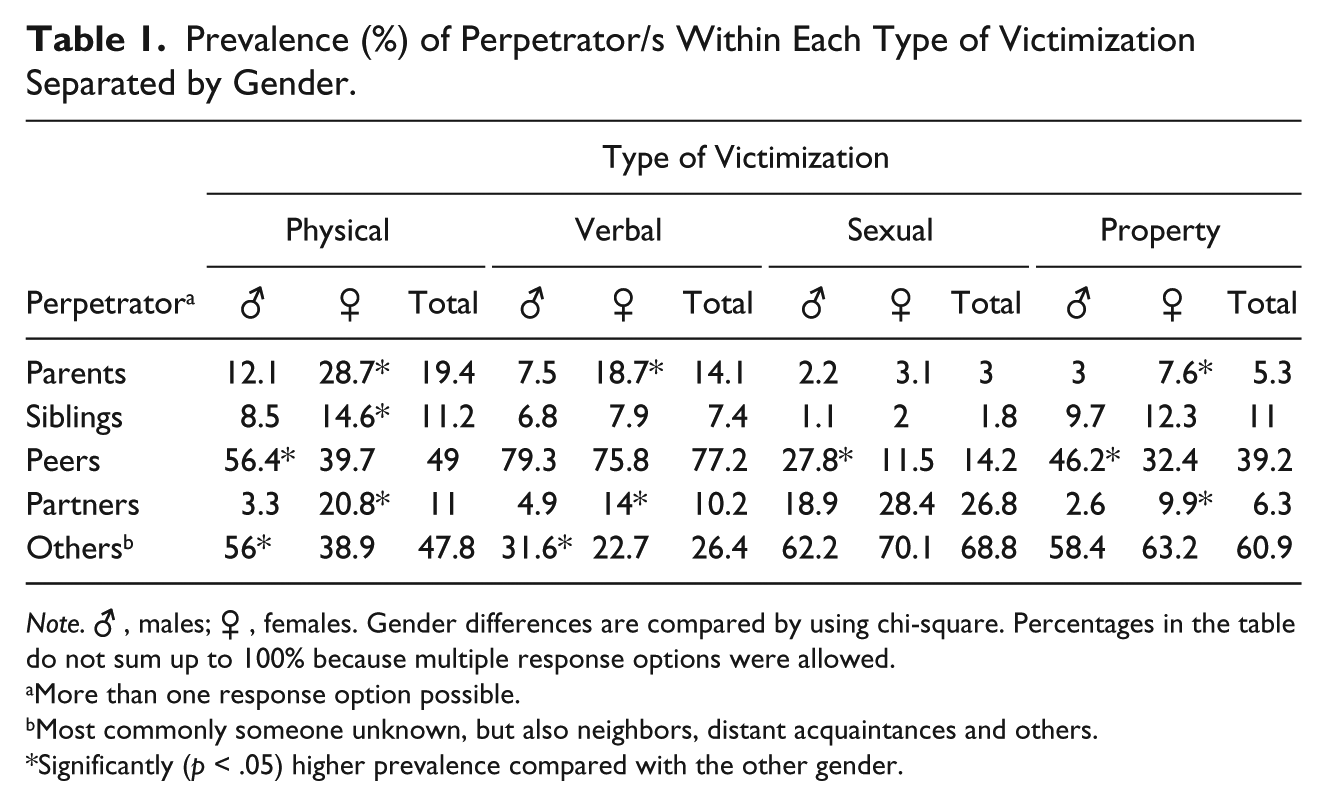
The first research question concerned who the reported perpetrators are for young men and women who have been subjected to physical, sexual, and verbal victimization and property crime during childhood or adolescence. To test this question, chi-square analyses examined whether men or women reported higher prevalence rates of the different perpetrators within the various types of victimization. Across both genders, 57.6% of participants reported having been victimized physically, 45.6% verbally, 21.1% sexually, and 54.7% by property offences. Table 1 summarizes who the perpetrator(s) was/were for each type of victimization separately for males and females, including significant gender differences.
Prevalence (%) of Perpetrator/s Within Each Type of Victimization Separated by Gender.
Note. ♂, males; ♀, females. Gender differences are compared by using chi-square. Percentages in the table do not sum up to 100% because multiple response options were allowed.
More than one response option possible.
Most commonly someone unknown, but also neighbors, distant acquaintances and others.
Significantly (p < .05) higher prevalence compared with the other gender.
Physical victimization
The most common perpetrators of physical victimization for both males and females were peers (49.0%), followed by the category others (47.8%). The third most common perpetrator category for physical victimization was parents (19.4%), followed by siblings (11.2%) and partners (11.0%). Gendered patterns emerged regarding perpetrators of physical victimization. Females reported significantly higher levels of physical victimization from the following three perpetrator groups: parents, χ2(1, N = 1450) = 63.1, p < .01; siblings, χ2(1, N = 1450) = 13.3, p < .01; and partners, χ2(1, N = 1450) = 111.7, p < .01. Males, on the contrary, were significantly more likely than females to experience physical victimization from peers, χ2(1, N = 1450) = 40.1, p < .01, and others, χ2(1, N = 1450) = 42.1, p < .01.
Verbal victimization
Peers, others, and parents were the first (77.2%), second (26.4%), and third (14.1%) most reported perpetrators for verbal victimization for both males and females. Partner(s) were reported as the fourth most common perpetrator (10.2%) whereas sibling(s) (7.4) were reported as the least common perpetrator for verbal victimization. Some gender differences appeared (see Table 1 for descriptive statistics). Significantly more females than males were verbally victimized from parents, χ2(1, N = 1142) = 28.9, p < .01, and partners, χ2(1, N = 1142) = 24.9, p < .01. Verbal victimization from others, such as a stranger or neighbor, was more represented among males than females, χ2(1, N = 1142) = 12.7, p < .01.
Sexual victimization
The most common perpetrator of sexual victimization for both females and males were others (68.8%). Females reported the second and third most common perpetrator of sexual victimization to be partner(s) and peers, respectively. Males, on the contrary, reported the reversed condition with peers followed by partner(s) as the second and third most common perpetrator of sexual victimization. Males reported significantly higher levels of sexual victimization from peers than did females, χ2(1, N = 541) = 16.2, p < .01. No other significant gender differences were found regarding sexual victimization.
Property crime
The most common perpetrator victimizing both females and males for property crime was others (60.9%), such as teachers or strangers. Peers were reported as the second most common perpetrator for property crime (39.2%) for both males and females and sibling as the third most common perpetrator (11%). Partners (6.3%) and parents (5.3%) were the least reported perpetrators of property crime. Some gender differences regarding property crime were found in the sample. Significantly more females than males were subject to property crime from both parents, χ2(1, N = 1488) = 16.1, p < .01; and partners, χ2(1, N = 1488) = 34.2, p < .01. However, males reported significantly higher levels of property victimization from peers than females, χ2(1, N = 1488) = 29.5, p < .01. There were no gender differences regarding property crime committed by sibling and partners.
Types of Victimization per Perpetrator
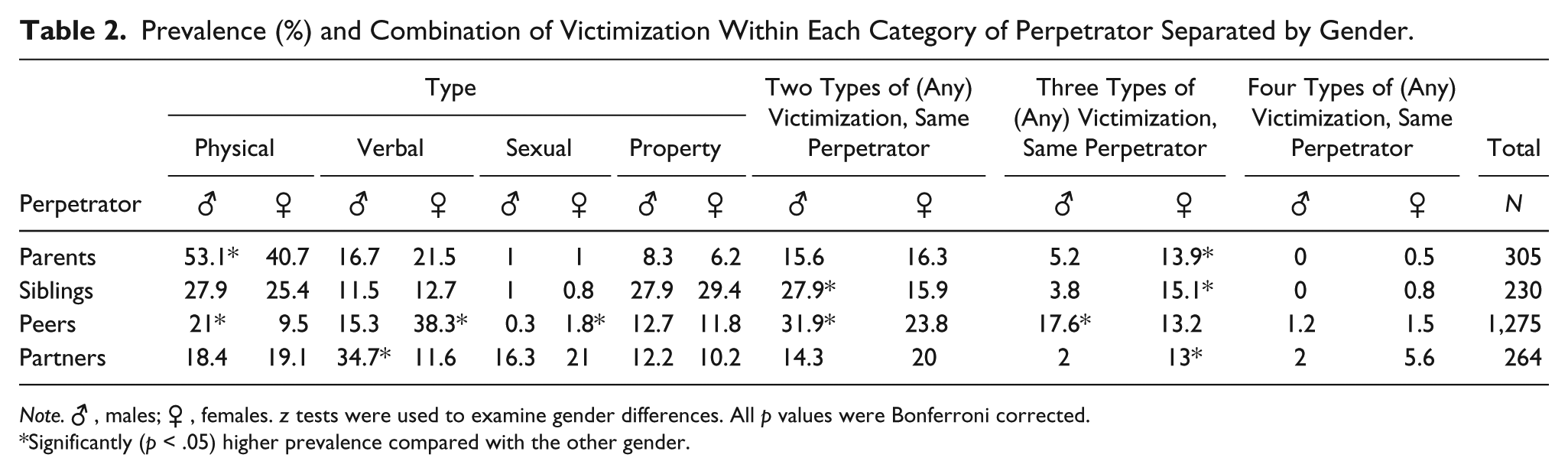
Research Question 2 regarded what the most common forms and patterns of victimization are for each type of perpetrator. To test this question, first, each category of perpetrator was examined to assess the combinations of victimization participants had experienced from each type of perpetrator (see Table 2). This allowed for an examination of poly-victimization in the sample. Responses were categorized into groups depending on which type of physical, verbal, sexual, or property victimization was committed, and how many different kinds of victimization (two, three, or four) participants experienced from each group of perpetrators. To detect patterns of victimization for each perpetrator category, the categories were exclusive, making it possible to determine whether a person had experienced solely one or a combination of victimizations. Thus, Table 2 shows different patterns regarding what kind of victimization(s) were most common depending on who the perpetrators were. Gender differences in combination of victimization within each category of perpetrator were examined by z tests (p < .01).
Prevalence (%) and Combination of Victimization Within Each Category of Perpetrator Separated by Gender.
Note. ♂, males; ♀, females. z tests were used to examine gender differences. All p values were Bonferroni corrected.
Significantly (p < .05) higher prevalence compared with the other gender.
Victimization from parents
Of those participants who were victimized by their parents, the most common victimization was to only have experienced physical (44.6%) victimization, followed by solely verbal victimization (20%). The third most common experience of victimization from parents was a combination of two types of victimization (16.1%). A minority (11.1%) of the sample experienced three different types of victimization from parent(s), while only 0.3% experienced all four types of victimization from their parents. Finally, 1% experienced only sexual victimization from parents. Concerning gender differences for victimization from parents, many similarities across males and females appeared, but experiencing solely physical victimization was significantly overrepresented among males (53.1%). Females were overrepresented for being poly-victimized (three types of victimizations) by parents (13.9%).
Victimization from siblings
For those who had experienced victimization from their sibling(s), property crime as the only crime experienced was the most reported (28.7%) and the second most reported victimization from siblings was physical victimization (26.5%). The third most frequently reported victimization pattern from sibling(s) was to have endured a combination of two types of victimization (21.3%). Experiencing only verbal victimization was the fourth most reported form when a sibling was the perpetrator (12.2%). Furthermore, 10% had experienced a combination of three different kinds of victimization from siblings. Nearly 1% had experienced sexual victimization as the only form from siblings and 0.4% experienced all four types of victimization from siblings. Males were significantly more likely to report that they experienced two types of victimization from a sibling than females. Females were significantly more likely to experience poly-victimization from siblings than males.
Victimization from peers
Those who had experienced victimization from peers reported poly-victimization (two types; 28.1%) as the most common form and solely verbal victimization (26.1%) as the second most common form of victimization. Being subjected to solely physical (15.6%) victimization was the third most reported form of victimization experienced from peers, closely followed by a combination of three different kinds of peer-based victimization (15.5%). Finally, 1.3% experienced all four types of victimization when the perpetrator was a peer. Being solely the victim of either verbal or sexual crime was overrepresented among females, whereas physical victimization from peers was significantly higher for males compared with females. Males also had significantly higher rates of poly-victimization, with either two or three types of victimization from peers, as compared with females.
Victimization from partners
Sexual victimization was the most reported victimization from those who had been victimized by their partner (19.7%). However, both being solely physically victimized (18.9%) and having experienced two different types of victimizations (18.9%) were almost as frequently reported as being sexually victimized by a partner. Verbal victimization was the fourth most frequently reported form of victimization from partners (15.9%), followed by a combination of three types of victimization (11%). Finally, 10.6% experienced property crime from their partner and 4.9% experienced a combination of all four types of victimization. Regarding victimization from partners and gender differences, males reported significantly higher levels of verbal victimization than females. However, females reported significantly higher levels of poly-victimization (three types of victimization) from partners, than did males.
For nearly all perpetrator categories, one type of victimization was reported as the most frequently experienced victimization as compared with poly-victimization. For crimes committed by parents, physical victimization was most reported, while for crimes committed by siblings, property crimes were most frequently endorsed. When victimized by a partner, sexual victimization was most common. The only perpetrator category in which poly-victimization was most common was peers, who most frequently committed two types of victimization. Few respondents reported having experienced all four types of victimization—property, physical, verbal, and sexual—by the same perpetrator. For those victimized by their parents only, 0.3% had experienced all four types. For those victimized by their sibling, the same low prevalence was found (0.4%). When peers were the victimizer, 1.3% of participants had experienced all forms of victimization and 4.9% of partner victimization included all four forms of abuse.
Relations Between Victimization and Mental Health
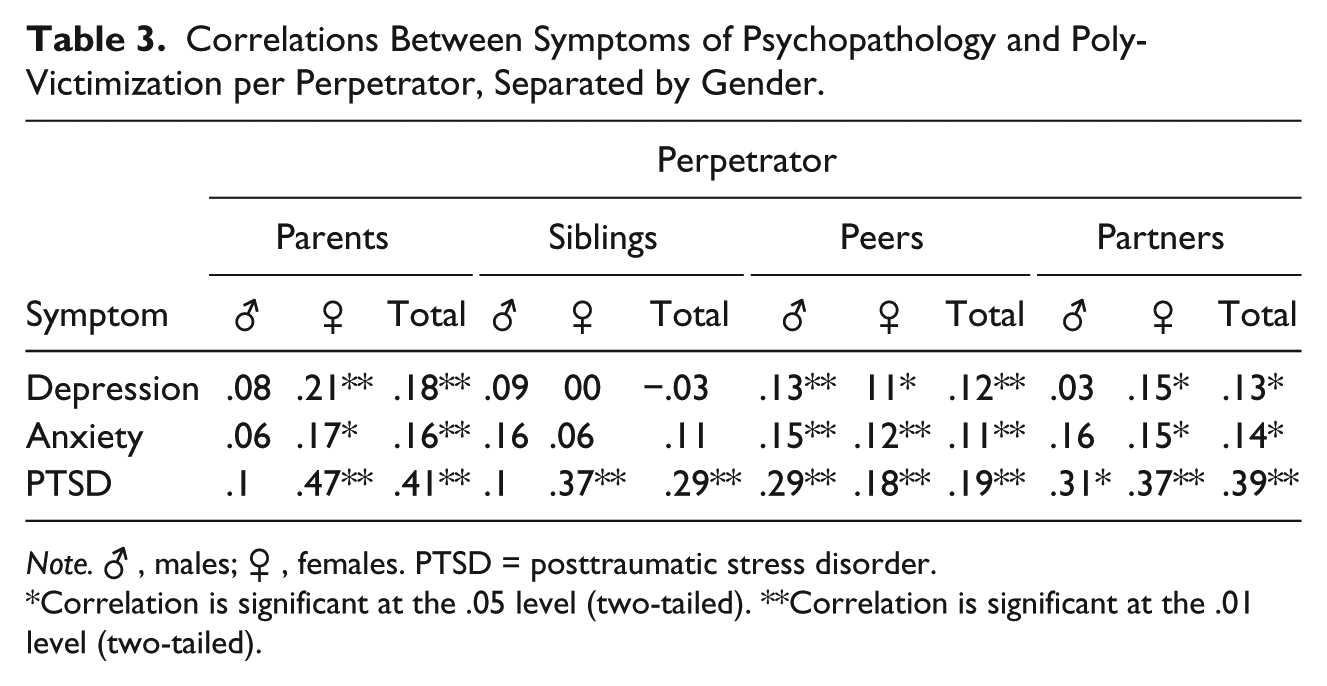
The third research questions asked whether certain perpetration patterns were associated with more mental health problems. The relations between being victimized once or several times by any one perpetrator and symptoms of mental health problems were examined using Pearson correlations. Results are presented in Table 3. Correlations between the amount of victimization by parents and symptoms of depression and anxiety were relatively low, but significant, for the total sample. However, when running analyses separately for males and females, depression (r = .21, p < .001) and anxiety symptoms (r = .17, p < .05) were only significantly related to poly-victimization for females, but not for males. Similar results were found for the relation between amount of victimization by parents and posttraumatic stress symptoms, which is a moderately strong relation for females (r = .47, p < .001), but not significant for males. These positive correlations for females indicate that higher amounts of childhood victimization by parents relate to higher levels of mental health problems during young adulthood.
Correlations Between Symptoms of Psychopathology and Poly-Victimization per Perpetrator, Separated by Gender.
Note. ♂, males; ♀, females. PTSD = posttraumatic stress disorder.
Correlation is significant at the .05 level (two-tailed). **Correlation is significant at the .01 level (two-tailed).
An examination of the relations between victimization from siblings and depression/anxiety showed no significant associations. Among females, there was a significant relationship between victimization and posttraumatic stress symptoms (r = .37, p < .001). Here, the amount of victimization by a sibling that females experienced was associated with more symptoms of traumatic stress in young adulthood. For both females and males, significant positive relations were found for the amount of victimization by peers and depression (males r = 13, p < .001; females r = .11, p < .05), anxiety (males r = .15, p < .001; females r = .12, p < .001), and posttraumatic stress symptoms (males r = .29, p < .001; females r = .18, p < .001). The results regarding relations between types of victimization by partners and depression and anxiety were similar to those for victimization by parents. Specifically, although the correlations were low but significant in the full sample, when separated by gender, the relations were only significant for females, but not for males. For both females (r = .37, p < .001) and males (r = .31, p < .05), significant correlations were found between victimization from a partner and posttraumatic stress symptoms.
Discussion
This study aimed to provide a nuanced examination of youth victimization, by specifically assessing perpetration patterns in relation to victim gender and mental health. By evaluating victimization by different perpetrators, as well as assessing multiple forms of victimization, this study offers unique insight into the complexities of violence across childhood and adolescence. Furthermore, this study evaluates a representative sample of Swedish young adults, thus providing important data on a population rarely investigated in the victimization field.
With regard to the primary study aim of identifying perpetrators of youth victimization, it was found that for both physical and verbal victimizations, peers were the most likely perpetrators. It appears that in this sample of Swedish youth, these forms of victimization were more likely to occur outside of immediate family relationships. Given that many violence intervention programs and clinical services focus on victimization within the family, these findings highlight the importance of developing programs to address victimization in peer-oriented settings, such as schools, clubs, and sports groups. These findings held across male and female participants, indicating a pattern of peer perpetration that was consistent for both sexes. Thus, services for youth at risk for victimization need not be gender specific, as both males and females are the targets of peer physical and verbal assaults. The most common perpetrator of sexual victimization and property crime was within the category “other,” which included, for example, strangers and neighbors. Thus, when assessing youths’ experiences with victimization, especially sexual assault and property offenses, it is critical that youth be asked not only about victimization by family and friends but also about victimization by more distant acquaintances and complete strangers.
In terms of patterns of poly-victimization perpetrated by different individuals, findings indicate that parents, siblings, and partners were likely to commit one type of victimization, rather than multiple forms of victimizations. However, peers most often committed poly-victimization by subjecting participants to multiple forms of victimization. Furthermore, gender differences emerged, with poly-victimization by peers committed against males more often than females. This finding reflects descriptions of peer aggression in other studies where bullying behavior can take multiple forms, including physical assaults as well as psychological maltreatment, such as name calling, humiliation, spreading rumors, or excluding (Hawker & Boulton, 2000; Juvonen & Graham, 2014; Smith, 2014). Previous research indicates that experiencing poly-victimization is associated with a multitude of negative consequences (Finkelhor et al., 2007; Robboy & Anderson, 2011) and is typically more detrimental than enduring single forms of abuse (Cater et al., 2014; Felitti et al., 1998). Therefore, the potential potency of victimization by peers should not be underestimated.
Also of important clinical utility are the current study’s findings regarding the associations between perpetrator and victimization type. Here, some types of violence were more commonly perpetrated by certain individuals than others. For example, parents were most likely to be reported as perpetrators of physical aggression while siblings were most likely to be the reported perpetrators of property crimes, and partners were most likely to be the reported perpetrators of sexual assault. Such information may be of great use to intervention and prevention programs, especially in informing which relationships may be an area of particular programmatic focus.
Gender differences in the types of perpetrators most frequently reported are consistent with other research on specific types of victimization, and extend past research by providing an integrative analysis of these types of victimization in a nationally representative sample of Swedish young adults. Consistent with previous research on peer victimization, men in the sample reported higher levels of physical victimization than did women (Paquette & Underwood, 1999). Similarly, higher rates of (specifically) physical victimization have been reported in boys in this and other studies (e.g., Thompson, Kingree, & Desai, 2004). Results of this article, however, not only demonstrated that men and women appear to report different rates of exposure across types of childhood victimization, but there is gender-specific variation in the perpetrators of this violence as well. The presence of gender differences in perpetrator relationship patterns within victimization domains (e.g., physical abuse) has significant implications for policy and intervention. For example, while males were more likely to report victimization by peers, females were more likely to report victimization by parents, siblings, and partners. The sibling findings are consonant with that of other studies where females were more likely to be the victims of sibling violence (Graham-Bermann et al., 1994). Still, when one was victimized by a sibling, it was most frequently in the form of property crime, such as theft. In addition, while being subjected to all four different types of victimizations was the least frequently found pattern, when it did occur, dating partners were most likely to be the perpetrators.
Finally, the extent to which childhood victimization was associated with current mental health difficulties varied across perpetrator subcategories. Significant positive relations were found for the number of types of victimization by peers and mental health problems among both males and females. For females, poly-victimization by parents and partners was related to higher levels of mental health problems during young adulthood. In contrast, there was no significant relationship between poly-victimization by siblings and symptoms of depression and anxiety, suggesting that that conflict and violence in this particular dyad may be less hazardous than in others. For young females, however, the amount of sibling victimization in childhood was associated with higher levels of current traumatic stress, indicating unique gender by perpetrator interactions on young adult stress.
Limitations
Although the current study has a number of strengths, including a large, nationally representative sample and an in-depth examination of poly-perpetration across types of childhood victimization, some limitations must be noted. First, young adults in this sample were asked to report on these victimizations retrospectively. Retrospective reports may be vulnerable to some types of reporting bias. There has been some evidence that reports of childhood adversity and violence may underestimate actual rates of occurrence or suggestions that those who are most distressed are most likely to recall victimizations (Hardt & Rutter, 2004; Turner, Finkelhor, & Ormrod, 2006). Despite this, researchers have recognized the value of retrospective reporting, especially in its ability to capture more comprehensive data on the entirety of childhood than is often feasible in prospective work (Hardt & Rutter, 2004; Turner et al., 2006). It is also possible that the current study’s assessment of perpetrator patterns underestimates poly-perpetration, as the selection of a perpetrator type may, for some individuals, have represented multiple perpetrators. For example, endorsing that violence occurred by a former dating partner might indicate perpetration by a single or multiple dating partners. Furthermore, it is important to remember that the victimization types investigated in this study go beyond criminal offences and also include harassment that is unwanted and/or that research has found to be a risk factor for mental health problems.
In addition, caution must be taken when interpreting the results about mental health problems, as anxiety, depression, and trauma symptoms may be intercorrelated and associated with other potentially traumatic childhood events not evaluated here. The current study also only utilized self-report of mental health problems, which introduces possible reporter biases. Future work should incorporate multimethod, multireporter assessments of mental health when re-evaluating these relationships over time. The results must also be interpreted keeping in mind that the participants were not instructed to answer the questions regarding posttraumatic stress in relation to a specific traumatic event, and hence, some results may reflect effects of traumas not included in our investigation. Finally, future research may consider more robust statistical analyses than z tests and correlations to examine differential patterns of victimization.
In sum, these results represent an initial foray into a deeper examination of perpetration patterns across poly-victimization histories. Importantly, these results suggest that the risks of violence for mental health may be affected by a number of characteristics of both the victim and the perpetrator, including their gender and relationship to one another. To more clearly determine the causal pathways across relationships and time, however, the collection and analysis of longitudinal data is essential. Longitudinal data collected in future work will be additionally advantaged in being able to evaluate more complex models that account for mediating and moderating factors over time. Until more broad-based, multicultural work can be completed, we caution against extrapolating current study results to other cultures and societies, as experiences of victimization are connected to cultural values. Given that participants in the current study form a relatively homogeneous group, future research would do well to investigate the possible relations between perpetrator patterns and mental health problems among victimized youth from diverse socioeconomic, racial, ethnic, sexual orientation, religious, geographic location, and ability contexts. Additional research should consider prospective approaches to these questions, as it may be possible to provide even more nuanced information regarding perpetration patterns over time.
Footnotes
Declaration of Conflicting Interests
The author(s) declared no potential conflicts of interest with respect to the research, authorship, and/or publication of this article.
Funding
The author(s) disclosed receipt of the following financial support for the research, authorship, and/or publication of this article: This work was supported by the National Board of Health and Welfare under Grant 21-13275/2009.