







Abstract
This study examined the effects of repeated questions (n = 7,968) on fifty-six 5- to 17-year-olds’ testimony in child sexual abuse cases in Scottish criminal courts. We examined transcripts of direct- and cross-examinations, categorizing how lawyers asked repeated questions in court and how children responded. Defense lawyers repeated more questions (39.6% of all questions asked) than prosecutors (30.6%) and repeated questions using more suggestive prompts (52% of their repeated questions) than prosecutors (18%) did. In response, children typically repeated or elaborated on their answers and seldom contradicted themselves. Self-contradictions were most often elicited by repeated suggestive prompts posed by defense lawyers. Younger children were asked more repeated questions than older children, but child age was not associated with the types of questions repeated or with how children responded to repetition. Questions repeated after delays elicited more self-contradictions than questions repeated immediately. Most repeated questions (69.2%) were repeated more than once, yet no “asked-and-answered” objections were ever raised. Overall, the findings suggested that lawyers frequently ask children “risky” repeated questions. Official judicial guidance and training is needed to help identify and limit the inappropriate repetition of questions.
Keywords
Repeated questions provide interviewees with opportunities to change their initially correct or incorrect responses. Because triers of fact often place emphasis on report consistency when assessing the credibility of oral testimony (Bruer & Pozzulo, 2014; Myers, Redlich, Goodman, Prizmich, & Imwinkelried, 1999; Semmler & Brewer, 2002), the adverse effects that inappropriate question repetition may have on children’s testimony is concerning. To date, existing research on the effects of question repetition has focused exclusively on children aged 12 years and below, and only one systematic field study, conducted in California (Andrews, Lamb, & Lyon, 2015a), has investigated how lawyers’ repetition of questions affected children’s responses. The current study sought to replicate and extend previous research by exploring repeated questioning in 5- to 17-year-old’s direct- and cross-examinations in Scottish criminal courts. Specifically, we examined the effects of children’s age, lawyer role, and question type on children’s responses, the effect of immediate versus delayed repetition on children’s responses, the extent to which questions were repeated multiple times, and the frequency with which opposing lawyers objected to repeated questions on the grounds that they had already been “asked-and-answered.”
Repeated questions do not necessarily degrade the accuracy of children’s accounts (see Lyon, 2002). In experimental studies, children sometimes provide additional accurate information that was not reported earlier when asked repeated open-ended questions (Memon & Vartoukian, 1996; Poole & White, 1991). Furthermore, questions may need to be repeated in forensic settings to make the requests clear, to clarify details previously mentioned by the children (e.g., ambiguous or unclear responses), or to encourage children who are anxious or reluctant (Andrews & Lamb, 2014; La Rooy & Lamb, 2011). However, experimental studies indicate that children are more likely to contradict their answers when closed-ended questions are repeated than when open-ended questions are repeated (e.g., Poole & White, 1991; Quas, Davis, Goodman, & Myers, 2007). Children may change details in their accounts and, thus, respond inconsistently (Zajac, Gross, & Hayne, 2003), perhaps believing that the questioners were unsatisfied with their initial answers or that their initial answers were incorrect (e.g., Howie, Nash, Kurukulasuriya, & Bowman, 2012). The responses of younger children are more likely to be compromised by suggestive techniques than those of older children (for a review, see Bruck, Ceci, & Principe, 2006), and younger children are more vulnerable to the effects of repeated questioning than older children (e.g., Howie et al., 2012). Andrews et al. (2015a) provided a more detailed review of the research on repeated questioning.
Existing resources for British practitioners have acknowledged that repeated questions are sometimes necessary, but to avoid children, particularly younger children, feeling pressured to change their answers when questions are repeated by authority figures, questioners should explain to the children why questions are being repeated (The Advocates Gateway Toolkits; Toolkit 2, section 4.5 and Toolkit 6, sections 5.6 and 6.7). Research has further advised that when questions need to be repeated, they should be framed as open-ended questions (Andrews & Lamb, 2014; Andrews et al., 2015a).
Despite being an adversarial jurisdiction in which lawyers aim to challenge the credibility of the opponents’ witnesses, Scottish courts have a duty to allow witnesses to give their best evidence (Home Office, 2011). However, no official guidance on the use of repeated questions exists in Scotland. This lack of regulation is particularly worrying when findings from the only existing field study on the use and effects of repeated questions in Californian courts (i.e., Andrews et al., 2015a) are considered alongside recent field research on lawyers’ questioning of children in Scottish courts.
As in previous experimental and field research on forensic interviews (i.e., Andrews & Lamb, 2014; La Rooy & Lamb, 2011), Andrews et al. (2015a) examined the number of repeated questions and the effects of age and question type on children’s responses in a sample of 120 trial transcripts of 5- to 12-year-old alleged victims of child sexual abuse. They further assessed the effects of repetition immediacy, the extent and effects of repeated repetition, and the use of the asked-and-answered objection. They found that defense lawyers repeated more questions (33.6% of total questions asked) than prosecutors (17.8%) and repeated questions using more suggestive prompts (38% of their repeated questions) than prosecutors (15%) did. In response, children typically repeated or elaborated on their answers, particularly when questions were repeated immediately after the initial response rather than after a delay, and seldom contradicted themselves. Importantly, and consistent with previous field and experimental research (e.g., Andrews & Lamb, 2014; Quas et al., 2007), self-contradictions were most often elicited by repeated suggestive and option-posing prompts posed by either type of lawyer, regardless of delay. Child age did not affect the numbers of questions repeated, the types of prompts used by lawyers to repeat questions, or how children responded to repetition. Most (61.5%) repeated questions were repeated more than once and, as repetition frequency increased, so did the number of self-contradictions. “Asked-and-answered” objections were rarely raised (n = 45) and were more likely to be overruled than sustained by judges. The authors surmised that lawyers frequently asked children “risky” repeated questions, and that both lawyers and the judiciary needed more training to identify and restrict the unnecessary repetition of questions.
Recent field research in Scotland, analyzing the same sample as in the current study, found that both prosecutors and defense lawyers used more closed-ended questions than open-ended questions (Andrews & Lamb, 2016). In particular, suggestive questions were frequently posed by prosecutors (16% of all questions) and especially by defense lawyers (49% of all questions). All children contradicted themselves at least once, with defense lawyers eliciting more self-contradictions than prosecutors. Suggestive questions were most likely to elicit self-contradictions. Furthermore, in contrast with previous findings (e.g., Andrews, Lamb, & Lyon, 2015b) Andrews and Lamb (2016) found that the effects on the children’s responses varied depending on who (prosecutor or defense lawyer) asked what type of question of children of different ages. However, these effects did not follow predicted patterns. For example, defense lawyers offered more suggestive prompts to children aged 13 to 15 years than children aged 12 years and below and 16- and 17-year-olds, but were significantly more likely to elicit self-contradictions from children aged 12 years and below than from 13- to 15-year-olds and 16- and 17-year-olds. Furthermore, more self-contradictions were elicited from children aged 12 years and below and 16- and 17-year-olds than from 13- to 15-year-olds when they were suggestively prompted. Because field research on repeated questions has focused exclusively on children aged 12 years and below, research examining differential responses to repeated questions may help elucidate Andrews and Lamb’s results and, thus, inform official guidance on the appropriate repetition of questions in court.
As noted above, no assessment of question repetition has been conducted using Scottish courtroom transcripts (and only one systematic study of courtroom question repetition has been conducted elsewhere), and existing research has focused on children below 12 years of age. The present study thus utilized a sample of Scottish criminal court transcripts involving fifty-six 5- to 17-year-old children questioned in trials held between 2009 and 2014. Like Andrews et al. (2015a), we first investigated the effects of children’s age, lawyer role, and repeated question type on children’s responses. Based on previous research, we predicted that (a) defense lawyers would repeat more questions, (b) defense lawyers would ask more closed-ended and suggestive questions than prosecutors, (c) children would respond with more self-contradictions when questioned by defense lawyers than when questioned by prosecutors, and (d) there would be no age differences in these patterns. Furthermore, we coded the effects of immediate versus delayed repetition on children’s responses and predicted that (e) questions repeated immediately would result in more elaborations and repetitions than questions repeated after a delay, but due to previous null findings, we made no specific predictions regarding self-contradictions. We also (f) explored the extent of multiple repetition and predicted that this would be extensive, as in Andrews et al.’s (2015a) study. Finally, (g) we explored the frequency of “asked-and-answered” objections, and predicted, again in line with the findings of Andrews et al. (2015a), that objections would be rare.
Method
Sample
The Court Service Team of the Scottish Court Service identified all cases conducted in six major criminal court houses in Scotland between 2009 and 2014, in which alleged victims of child abuse had testified. Forty-three trials were identified and 36 of these were then selected for detailed study. Recordings of the cases were located, and the portions of the trials in which the children testified were transcribed.
Cases involving children who needed the assistance of translators were excluded because the accuracy of the translations was unknown. Cases in which children retracted their sexual abuse allegations were also excluded because questioning and procedures were so different following recantations. Cases in which there were many sections of inaudible or missing audio were also excluded. The 36 trials involved a total of 56 alleged victims of child sexual abuse. Nine cases (11 children) were from Aberdeen, nine cases (19 children) from Edinburgh, 12 cases (16 children) from Glasgow, one case (one child) from Inverness, three cases (five children) from Livingston, and two cases (four children) from Perth. The trials included in the present study involved at least 25 different prosecutors, 24 different defense lawyers, and 22 different judges. There were nine transcripts for which this information could not be determined.
Children reported single (n = 18) or multiple (n = 38) sexually abusive experiences involving penetration (n = 38), touching under clothes (n = 10), touching over clothes (n = 3), and indecent exposure (n = 5). The final sample included 40 girls and 16 boys of between 5 and 17 years of age (M = 13.99, SD = 2.69).
Age could not be entered into parametric tests as a continuous variable, because a Kolmogorov–Smirnov test indicated strong deviations from normality, D(55) = 0.20, p < .001. Therefore, children were categorized into three age groups at the time of trial: 12-year-olds and below (n = 15), 13- to 15-year-olds (n = 26), and 16- and 17-year-olds (n = 15). These categories were chosen because they accord with the Sexual Offences (Scotland) Act (2009); 16 years is the age of sexual consent, but a person aged 16 or above can claim to be innocent of the charge of committing sexual offenses with a child aged between 13 and 16 years if the accused person “reasonably believed” that the child was above the age of 16. However, this reasonable belief provision does not apply if the offense involved a child below the age of 13. No information was available concerning the children’s socioeconomic and ethnic backgrounds.
All defendants were male. In 95% (n = 53) of the cases, children knew the alleged abusers. The suspects were biological parents (n = 8), stepfathers/mothers’ boyfriends (n = 3), other family members (n = 20), family friends (n = 5), friends/acquaintances (n = 17), and strangers (n = 3). Defendants were either convicted (n = 42) or acquitted (n = 10). The remaining four defendants were convicted but not for all alleged sexual offenses.
In accordance with the Victims and Witnesses (Scotland) Act (2014), many of the children were accorded “special measures” when they testified. All courts were closed to the public. Four children received no other special measures. Other children gave evidence in court with screen and a supporter present (n = 15), or just a supporter present (n = 5). The remaining children gave evidence via a live TV link either with a supporter present (n = 21) or without a supporter present (n = 3), or their evidence was taken on commission 1 (n = 8).
Coding of Transcripts
Identifying repeated questions
The transcripts contained direct and often redirect examinations, in which the prosecution questioned the children, as well as cross-examinations by defense lawyers. Only substantive repeated questions were coded. Substantive utterances were defined as those designed to elicit information about what happened during the alleged incidents, what immediately preceded the alleged incidents, within-incident interventions (e.g., unexpected interruptions exposing the abuse), and other features of the abuse (e.g., how long the incidents lasted, where they happened). Children’s substantive responses contained incident-related information (including “don’t know” responses). Nonsubstantive repeated prompts that aimed to inform child witnesses about the purpose of the court proceedings, provide details about the examination procedure, and build rapport were not included. By definition, children’s nonsubstantive responses did not contain incident-related information and were also not included.
Repeated questions were defined as questions that, when asked again, provided children with opportunities to change their previous (substantive) responses. Repeated questions could be repeated verbatim or could be reworded. Questions were not classified as repeated when the lawyers were clearly seeking information different from that sought in their initial prompt (e.g., Lawyer: “How did he [the accused] touch you?” Child: “He didn’t touch me that time, my friend did.” Lawyer: “How did he [the friend] touch you?”), were probing for more specific information about a topic (e.g., Lawyer: “Did he touch you?” Child: “Yes.” Lawyer: “How did he touch you?” Lawyer: “How did he hurt J.?” Child: “I don’t know.” Lawyer: “Did you see him hurt J.?” Child “No.” Lawyer: “How do you think he hurt J.?”), or repeated a question because the child interpreted the initial question too literally (e.g., Lawyer: “Can you tell me how it came out of his jeans?” Child: “Yes.” Lawyer: “How did it come out of his jeans?”). Questions were also not coded as repeated when the child did not answer the initial prompt, because such instances do not provide children with the opportunity to change their first response. Questions could be repeated immediately after the initial responses or repeated later in the proceedings.
Lawyers’ questions
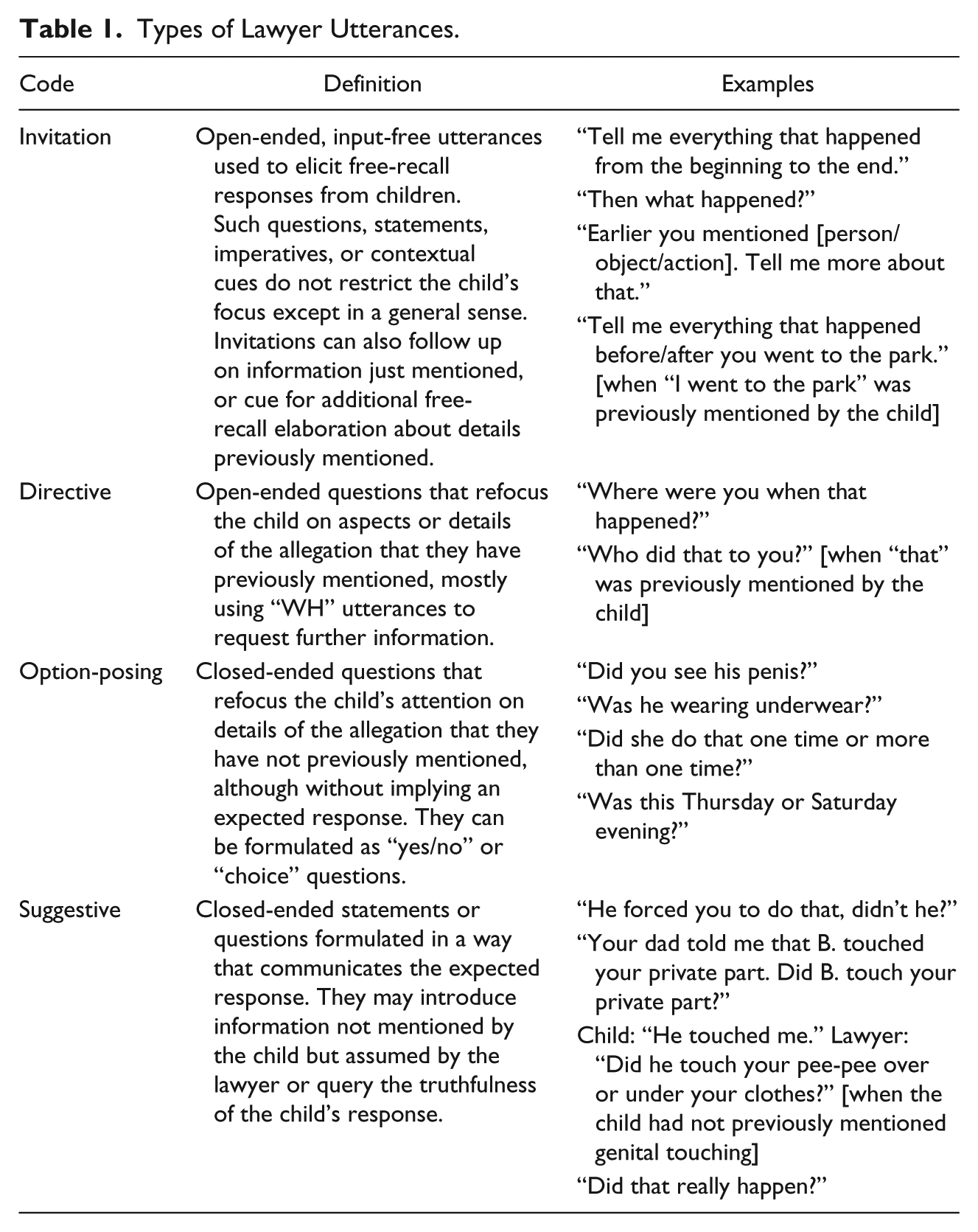
After repeated questions had been identified, the types of lawyer utterances used to refocus the children were categorized. Lawyers’ questions were categorized into one of the four main categories (invitations, directive prompts, option-posing prompts, and suggestive prompts) that are commonly used to differentiate among interviewer utterances in forensic interviews (e.g., Lamb, Hershkowitz, Orbach, & Esplin, 2008). Definitions and examples of each type are provided in Table 1.
Types of Lawyer Utterances.
Children’s responses
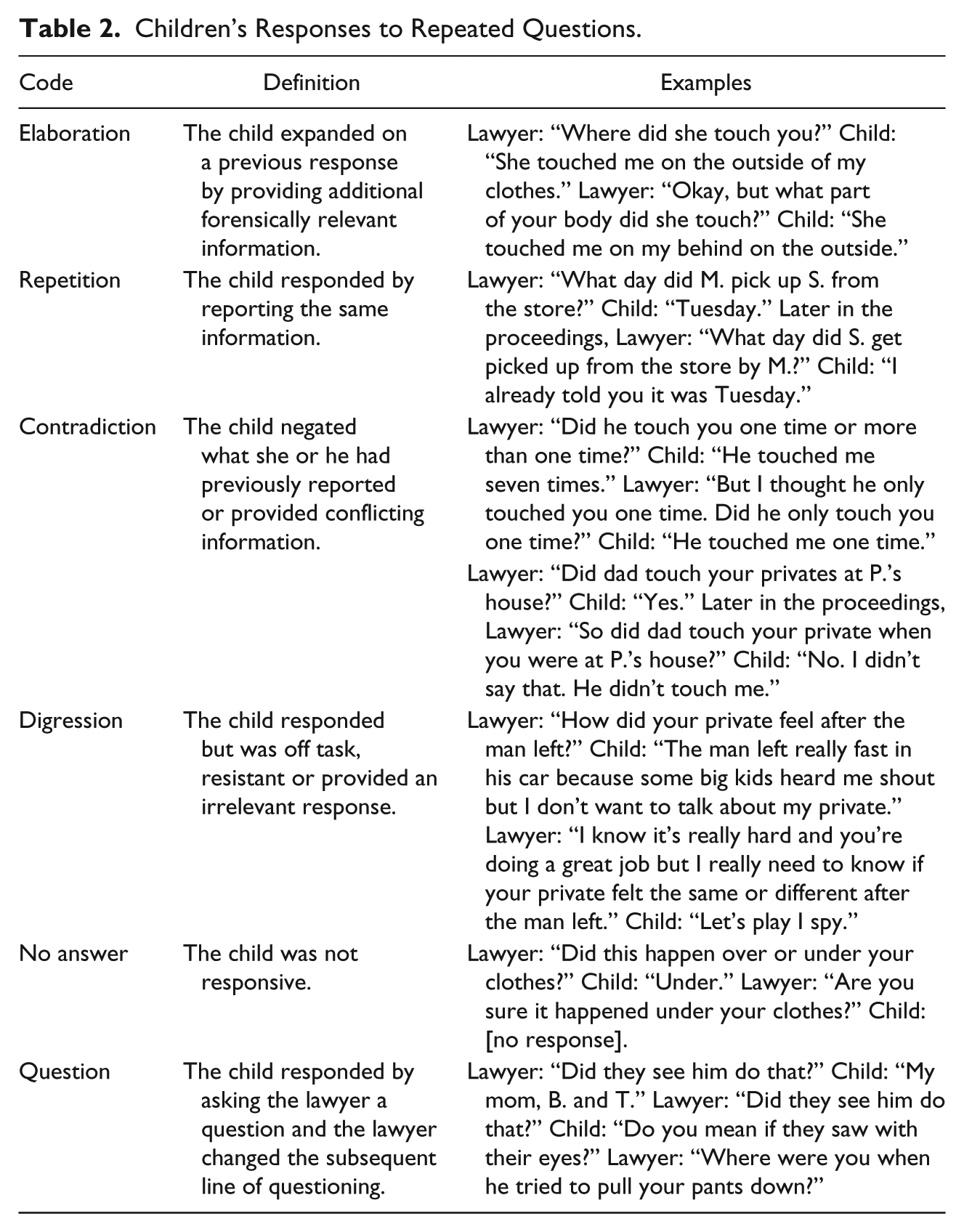
Andrews and Lamb’s (2014) coding scheme was used to identify how children responded to repeated questions (elaboration, repetition, contradiction, digression, no answer, and question). Definitions and examples are provided in Table 2. When a question was repeated more than once, children’s responses were coded in relation to their preceding, rather than initial, answers.
Children’s Responses to Repeated Questions.
Multiple repetition and asked-and-answered objections
The number of times each individual question had been repeated was also recorded. Asked-and-answered objections were coded when either prosecutors or defense lawyers raised the objection.
Interrater Reliability
Another rater independently coded 20% of the transcripts that were randomly selected. Reliability in the identification of repeated questions, and the classification of all question and response codes were consistently high, kappas > .83. We conducted reliability assessments throughout the duration of coding and all disagreements were resolved by discussion.
Results
Preliminary Results
We conducted a series of discriminant function analyses to determine whether there were any associations between children’s gender and case verdicts and the proportional frequency of repeated questions, question types, and children’s responses. The tests revealed no significant associations. Therefore, gender and case verdict were not included in any of the analyses below.
All variables entered into parametric analyses were normally distributed and alpha levels were adjusted by default in all tests to control for multiple comparisons. All parametric tests, unless otherwise stated, were conducted with child as the unit of analysis.
Frequency of Repetition
On average, 416.52 (SD = 250.86) substantive lawyer prompts were identified in each transcript, with 252.46 (SD = 181.98) in direct examinations and 164.05 (SD = 116.05) in cross-examinations. Repeated questions totaled 7,968, with an average of 77.29 (SD = 63.79, range = 0-250) or 30.61% of all prosecutor utterances repeated in direct examinations, and 65.00 (SD = 57.58, range = 0-270) or 39.62% all defense lawyer utterances repeated in cross-examinations. The difference between prosecutors and defense lawyers was significant, t(55) = 4.14, p < .001, d = 0.73. Lawyers repeated questions in all transcripts. Prosecutors repeated their own questions 53.7% (n = 4,278) of the time and repeated defense lawyers’ questions 0.6% (n = 50) of the time. Defense lawyers repeated their own questions 39.9% (n = 3,178) of the time and repeated prosecutors’ questions 5.8% (n = 462) of the time.
Children’s Age
For the following analysis, to create normally distributed data, we calculated proportional scores by dividing the total number of repeated questions each child was asked by the total number of substantive questions they were asked. A simple linear regression revealed that children’s age (in years) was significantly associated with the proportional frequency with which questions were repeated, F(1, 55) = 4.83, β = −.29, p = .03, R2 = .08. Younger children were asked proportionally more repeated questions than older children.
A Repeated-Measures Analysis of Variance (RM-ANOVA) was conducted to assess whether different types of questions were more or less likely to be repeated (within subjects: proportions of repeated invitations, directives, option-posing prompts, and suggestive prompts) depending on the age of the children (between subjects: 12-year-olds and below, 13- to 15-year-olds, 16- to 17-year-olds). We calculated proportional scores by dividing the totals for each question type each child was asked by the total number of repeated questions each child was asked. Mauchly’s test of sphericity was violated so Greenhouse–Geisser corrections were applied. The analyses revealed significant main effects for the different types of questions, F(1.85, 92.41) = 56.03, p < .001,
We conducted an RM-ANOVA to assess whether different types of responses were more or less likely to be elicited by repeated questions (within subjects: proportions of elaborations, repetitions, and self-contradictions) depending on the age of the children (between subjects: 12-year-olds and below, 13- to 15-year-olds, 16- to 17-year-olds). Proportional scores were calculated by dividing the totals for each response type provided by each child by the total number of repeated questions each child was asked. Furthermore, we removed three response types from the analyses (questions [n = 96], nonresponses [n = 250], digressions [n = 74], and nonsubstantive responses [n = 334]) for which numbers were small, reducing the total number of repeated questions analyzed to 7,214. Mauchly’s test of sphericity was violated so Greenhouse–Geisser corrections were applied. The analyses revealed significant main effects for the different types of responses, F(1.57, 82.94) = 331.01, p < .001,
Due to the null findings, age was not included in subsequent analyses.
Effects of Lawyer Role and Question Type on Responses
For the following analysis, to create normally distributed data, we calculated proportional scores by dividing the totals for each question type × response type for each child by the total number of repeated questions asked by each lawyer type for that child. Furthermore, because numbers in the relevant cells were small when cross-tabulated, we removed one question type (invitations [n = 150]) and four response types (questions [n = 96], nonresponses [n = 250], digressions [n = 74], and nonsubstantive responses [n = 334]) from the analyses. These steps reduced the total number of repeated questions analyzed to 7,139.
We conducted an RM-ANOVA to assess whether different types of questions were more or less likely to be repeated (within subjects: proportions of repeated directives, option-posing prompts, and suggestive prompts), what types of responses they elicited from the children (within subjects: proportions of elaborations, repetitions, and contradictions), and whether this differed depending on the lawyers’ role (within subjects: prosecution and defense). Greenhouse–Geisser corrections were applied. The analyses revealed significant main effects for the different types of questions, F(1.78, 95.56) = 178.92, p < .001,
There was a two-way interaction between the types of questions prosecutors or defense lawyers asked repeatedly, F(1.50, 82.28) = 101.28, p < .001,
Lawyer Role by Question Type Interaction.
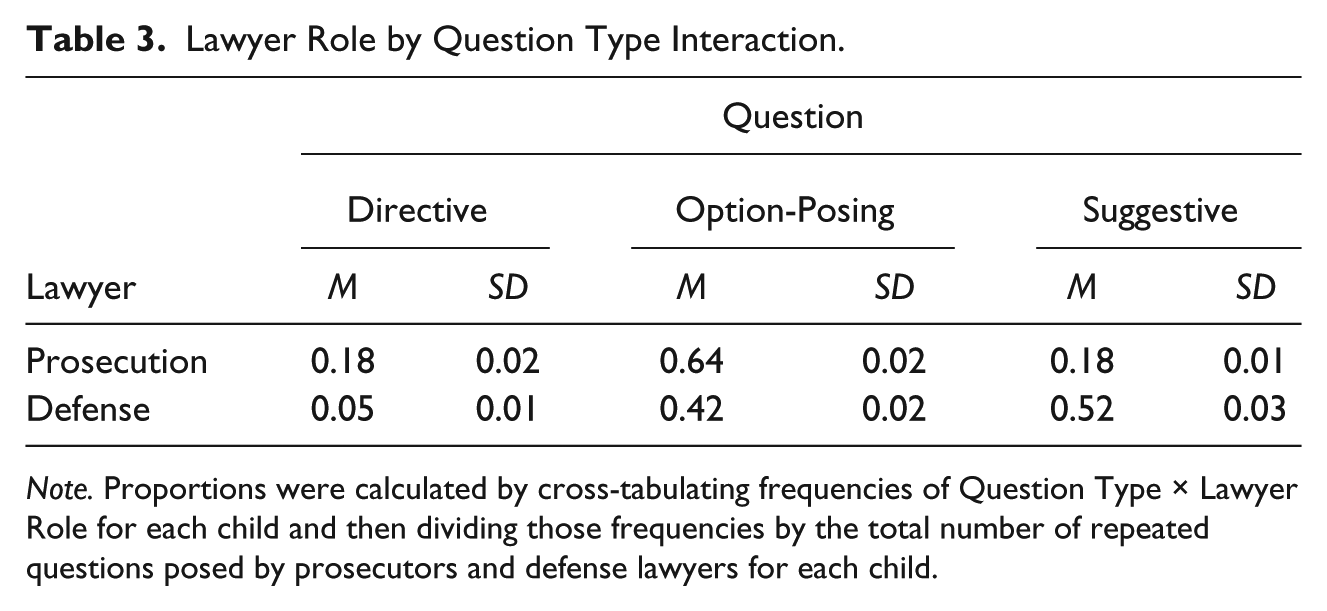
Note. Proportions were calculated by cross-tabulating frequencies of Question Type × Lawyer Role for each child and then dividing those frequencies by the total number of repeated questions posed by prosecutors and defense lawyers for each child.
There was also a two-way interaction between the types of responses prosecutors or defense lawyers elicited, F(1.54, 84.58) = 14.35, p < .001,
Lawyer Role by Response Type Interaction.
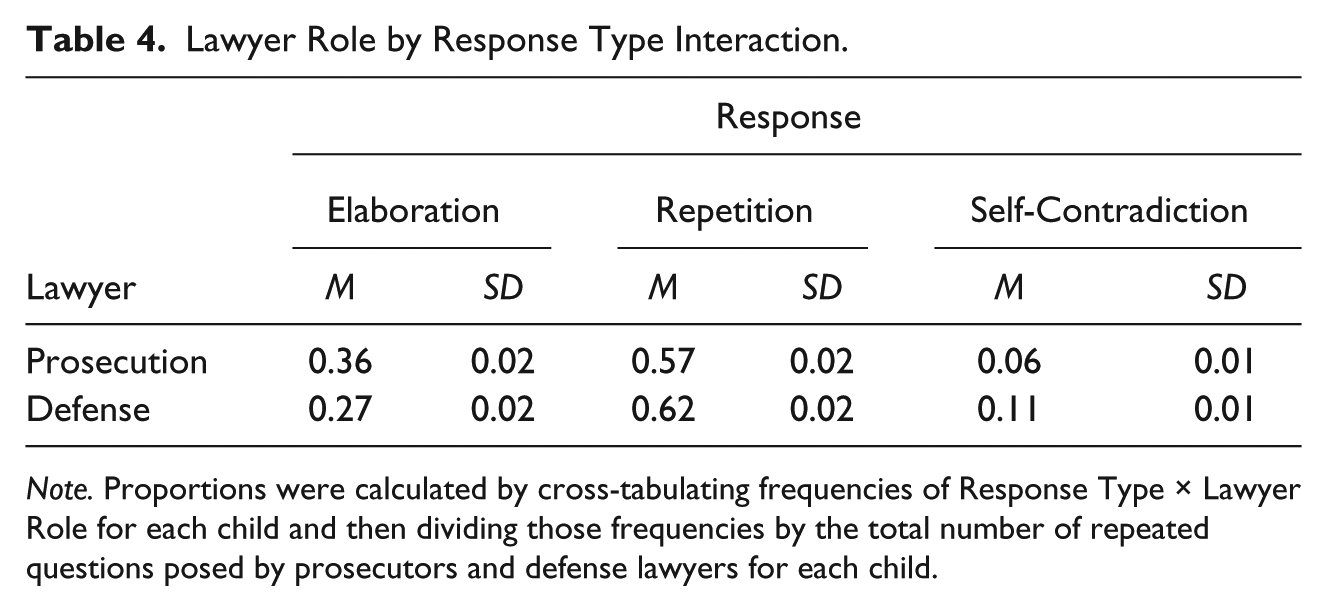
Note. Proportions were calculated by cross-tabulating frequencies of Response Type × Lawyer Role for each child and then dividing those frequencies by the total number of repeated questions posed by prosecutors and defense lawyers for each child.
Finally, there was a two-way interaction between the types of questions asked and the types of responses elicited, F(2.97, 163.24) = 165.32, p < .001,
Question Type by Response Type Interaction.
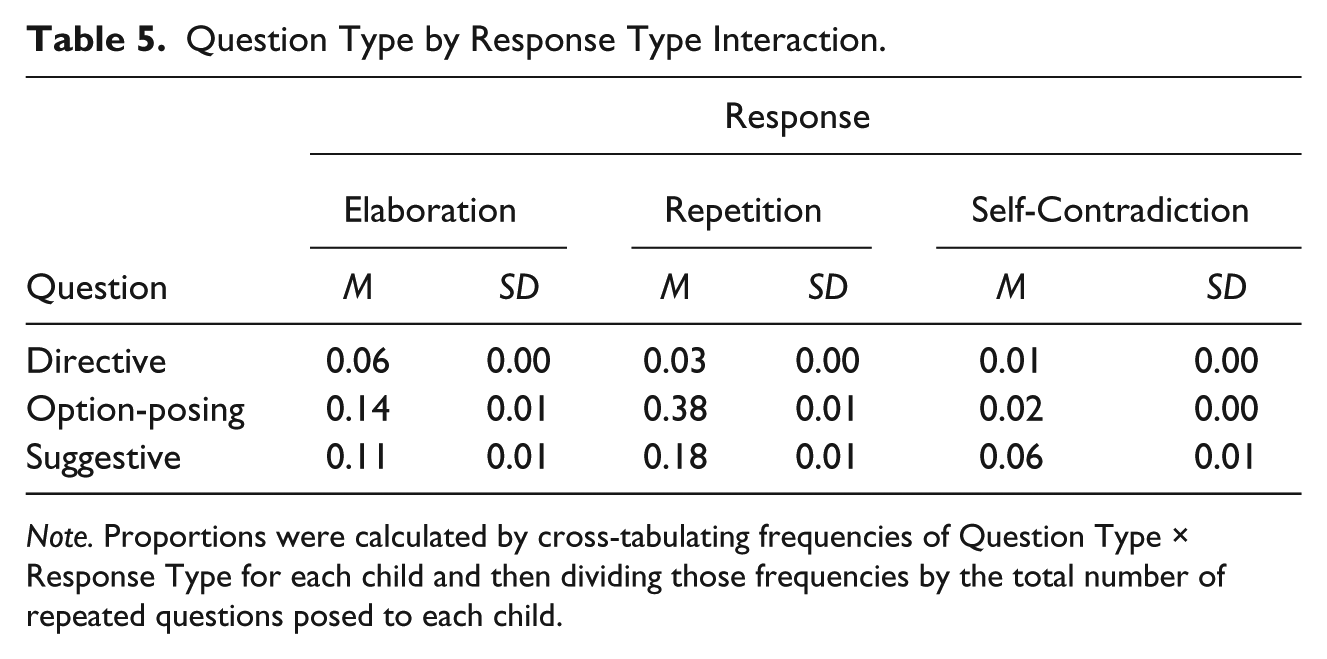
Note. Proportions were calculated by cross-tabulating frequencies of Question Type × Response Type for each child and then dividing those frequencies by the total number of repeated questions posed to each child.
The two-way interactions were qualified by a three-way interaction among lawyers’ role, question type, and response type, F(2.37, 130.57) = 25.97, p < .001,
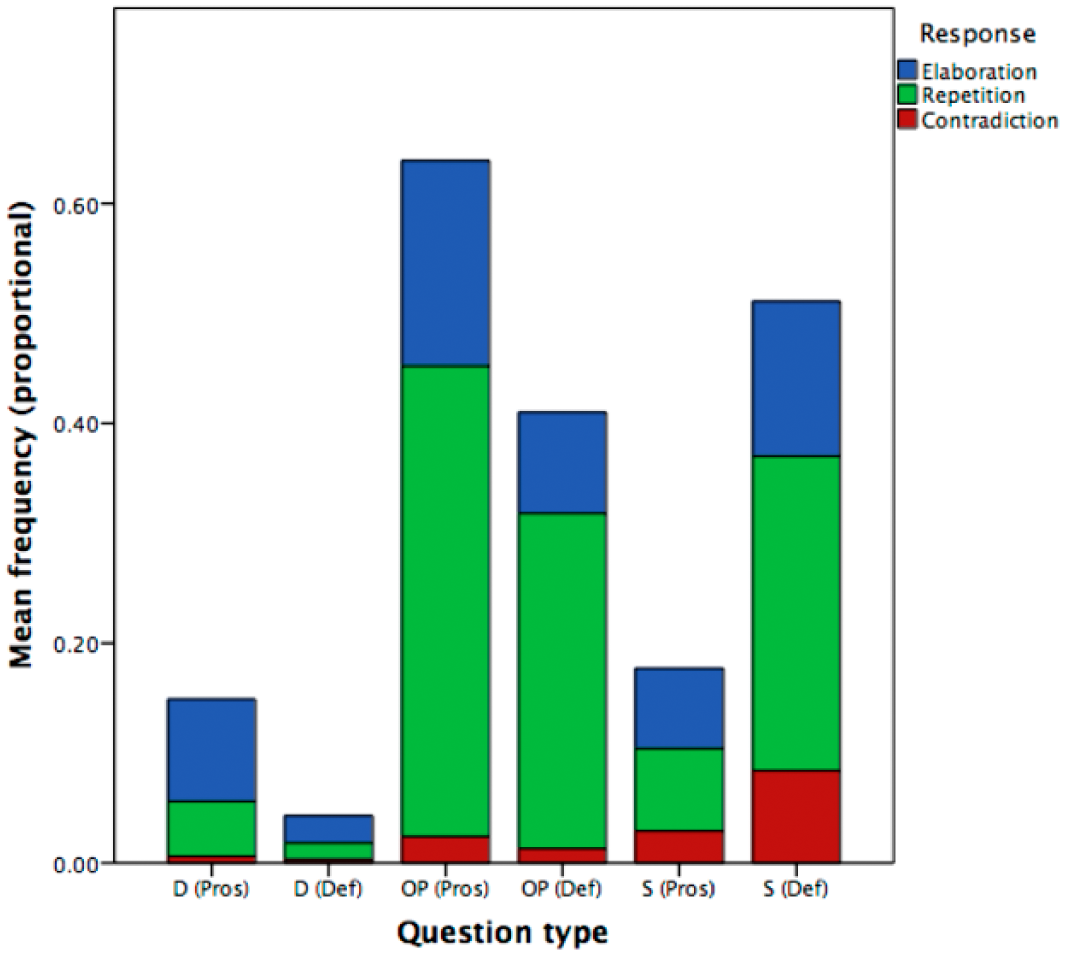
A three-way interaction among lawyer role, question type, and children’s responses.
The Effect of Immediate Versus Delayed Repetition on Children’s Responses
A one-sample t test revealed that repeated questions were asked immediately after preceding prompts (n = 2,739, 34%) significantly less often than after delays (n = 5,229, 66%), t(7,967) = 310.36, p < .001, d = 3.92.
An RM-ANOVA was conducted to determine whether immediacy (within subjects: immediate or delayed repetition) affected the likelihood of eliciting different responses from children (within subjects: elaborations, repetitions, and self-contradictions). We removed the small number of questions (n = 96), nonresponses (n = 250), digressions (n = 74), and nonsubstantive responses (n = 334) from the analyses. This reduced the total number of repeated questions analyzed to 7,214. Greenhouse–Geisser corrections were applied. The RM-ANOVA revealed a main effect for response type, F(1.38, 75.60) = 388.41, p < .001,
Immediacy by Response Type Interaction.
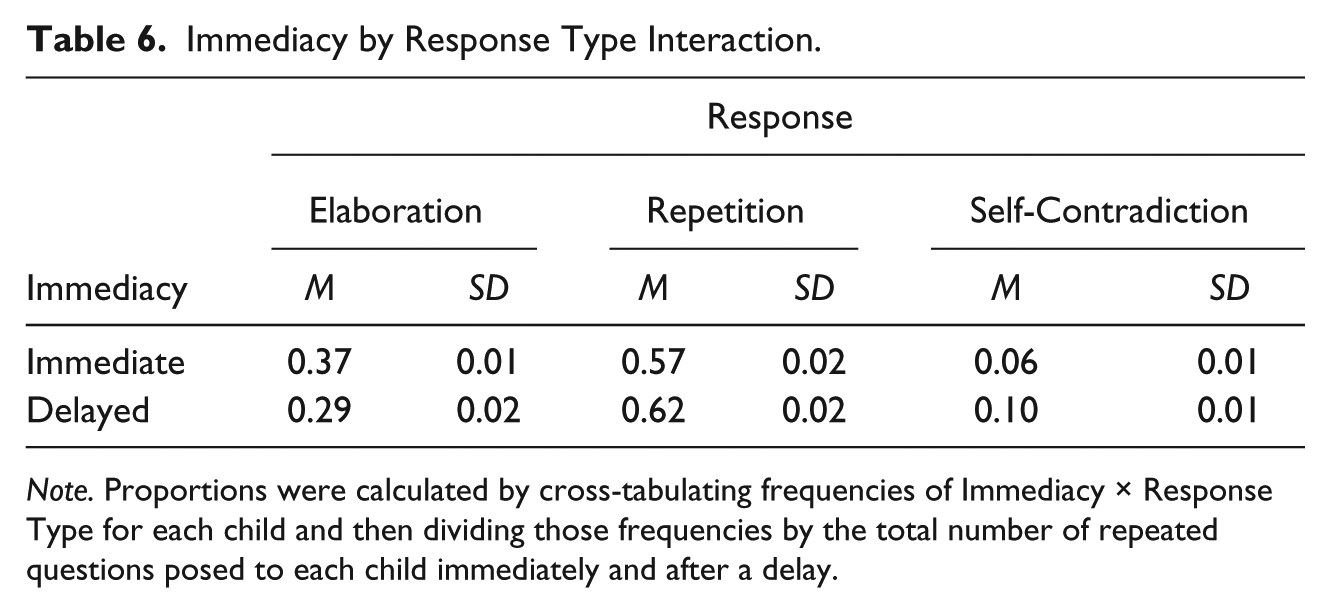
Note. Proportions were calculated by cross-tabulating frequencies of Immediacy × Response Type for each child and then dividing those frequencies by the total number of repeated questions posed to each child immediately and after a delay.
Effects of Multiple Repetition
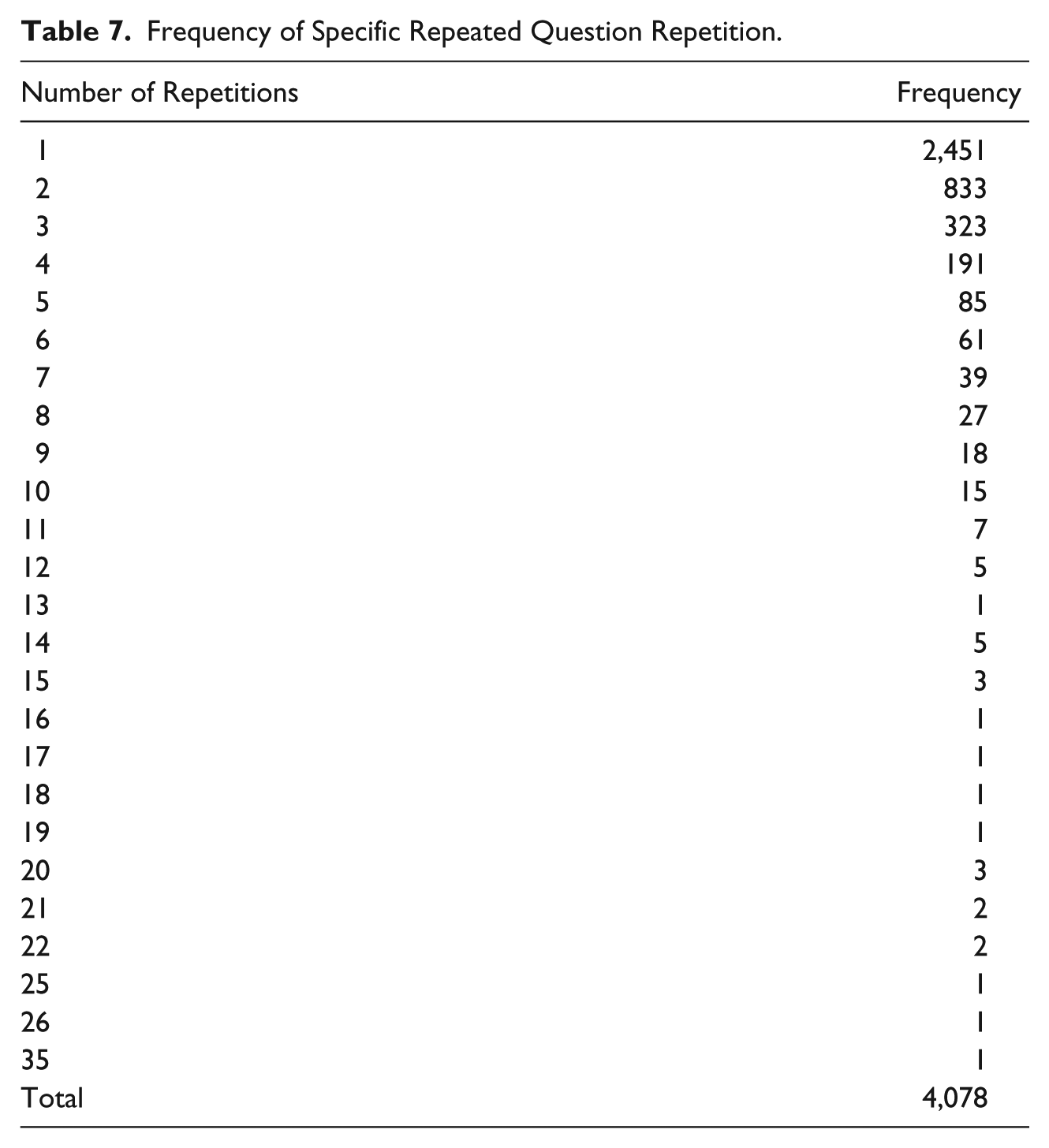
Of all repeated questions (n = 7,968), 30.8% (n = 2,451) were repeated only once and 69.2% (n = 5,517) were repeated more than once. A total of 4,078 specific repeated questions were themselves repeated. Table 7 shows the frequency of repetition in relation to the specific repeated questions. On average, questions were repeated 2.54 (SD = 2.97) times.
Frequency of Specific Repeated Question Repetition.
Asked-and-Answered Objections
No asked-and-answered objections were raised in any of the transcripts.
Discussion
This was the first study to investigate the effects of children’s age, lawyer role, and question type on children’s responses to repeated questions in Scottish direct- and cross-examinations. Repetition immediacy, multiple repetition, and asked-and-answered objections were also examined. This was also the first study to explore the differential effects of question repetition in a sample with a wide age range (5- to 17-year-olds).
We found that all children were prompted with repeated questions in Scottish courts, and that the rates of repetition were considerably higher than in forensic interviews (4.3% of interviewer prompts; Andrews & Lamb, 2014) or in Californian courts: 17.8% of all questions asked by Californian prosecutors and 33.6% of all questions asked by Californian defense lawyers (Andrews et al., 2015a) versus 30.6% of all questions asked by Scottish prosecutors and 39.6% of all questions asked by Scottish defense lawyers. Further research is needed to elucidate the reasons for these differences between jurisdictions. Nevertheless, as in forensic interviews and previous courtroom research, repeated questions most often elicited repetition and elaboration, which may have enhanced the informativeness of the children’s testimony (Andrews & Lamb, 2014; Andrews et al., 2015a; La Rooy & Lamb, 2011). Repeated questions also elicited self-contradictions on occasion and these rates were slightly lower than those found by Andrews et al. (2015a). Although we were unable to assess the accuracy of children’s responses and the rate of self-contradiction was low, the risks of confusion and inaccuracy they foster may be substantial and the consequences may be serious (see Andrews et al., 2015a, for a fuller discussion). Furthermore, although self-contradictions were infrequent overall, Andrews et al. (2015a) showed that the rate increased dramatically as repetition frequency increased. This is of particular concern because nearly 70% of the repeated questions in the present study were repeated more than once.
Unlike Andrews et al. (2015a) but in line with the findings of Andrews and Lamb’s (2014) study of forensic interviews, we found that age was associated with the frequency of question repetition in the courtroom; younger children were asked more repeated questions than older children. This discrepancy is likely attributable to the underpowered sample of repeated questions (n = 333) analyzed by Andrews and Lamb (2014) alongside the wider age range studied in the present study (5-17 years) than by Andrews et al. (2015a; 5-12 years). Further replication in studies involving children of diverse ages is clearly needed. However, we found that, consistent with Andrews et al.’s (2015a) findings and our predictions, the effects of question repetition were no more detrimental for younger children than for older children. This finding is inconsistent with experimental findings (e.g., Howie et al., 2012). Even though younger children may produce shorter and less detailed accounts of abuse than older children (Hershkowitz, Lamb, Orbach, Katz, & Horowitz, 2012; Lamb et al., 2003), and thus perhaps prompt lawyers to repeat more questions, their reports may be no less accurate than older children’s (Oates & Shrimpton, 1991).
Furthermore, as found by Andrews et al. (2015a) and in line with our predictions, we found that defense lawyers repeated more questions than prosecutors, and were more likely to elicit self-contradictions from children than prosecutors. Most notably, suggestive questions had greater effects on children’s consistency when posed by defense lawyers than by prosecutors, whereas nonsuggestive questions resulted in more repetitions and elaborations when posed by prosecutors than by defense lawyers. These findings suggest that question repetition is a technique that is frequently utilized to undermine witness consistency during cross-examination, although children of all ages are somewhat resistant to the implicit coercion. As noted above, however, the risks may be substantial, particularly when questions are repeated multiple times.
Again in line with our predictions and Andrews et al.’s (2015a) findings, we found that questions repeated immediately after preceding prompts elicited more elaborations and repetitions from children than when questions were repeated after delays. However, contrary to the null findings of Andrews et al. (2015a), we found that self-contradictions were more likely when there were delays between initial prompts and repeated prompts than when questions were repeated immediately. Unlike Andrews et al. (2015a), the current study was able to control for the number of questions each child was asked, and immediacy analyses were, therefore, conducted at the level of the children rather than at the level of the questions. Thus, based on the present findings, we suggest with confidence that repeated questions pose less risk to children’s consistency when repeated immediately rather than after a delay.
Multiple question repetition has been studied very little but deserves further attention because, as repetition frequency increases, so does the number of self-contradictions (Andrews et al. (2015a). In line with our predictions, most repeated questions (69.2%) were repeated more than once (cf. Andrews et al., 2015a, 61.5%). Because each repeated question was repeated an average of 2.5 times in the present study, most repeated questions were closed-ended or suggestive, and in 50 separate instances questions were repeated 10 or more times, it is concerning that no Scottish lawyers or judges ever raised an asked-and-answered objection. Such failures to object may have been motivated by lawyers’ expectations of the judges’ responses, because Andrews et al. (2015a) found that when Californian lawyers objected, their objections tended to be overruled. Nevertheless, there is no obvious reason why judges recurrently failed to intervene. Lawyers and judges should be made aware of the potential harm associated with unnecessary question repetition and of how these effects may be reduced (e.g., by explaining to children why the questions are being repeated, and repeating the question using less closed-ended and suggestive prompts). Training should encourage lawyers to utilize the asked-and-answered objection and judges to sustain objections when warranted so that children’s developmental capabilities are respected.
In sum, this study provides further evidence that the questions asked of young witnesses in court are often repeated. Whatever the motivation of the lawyers involved, it is noteworthy that this practice most often leads children to restate what they said earlier, although the repetition, especially of closed-ended and suggestive questions, occasionally led children of all ages to change their responses. We do not know whether the last answers were more or less accurate than those provided initially because this was a field study, although some laboratory studies suggest that the repetition of such “risky” types of questions may lead children to change accurate answers into inaccurate ones. Of course, questions may sometimes need to be repeated and their repetition may lead children to change previously incorrect answers, but the sheer amount of question repetition found in the present study is alarming. The findings suggest that not enough is being done to restrict the unnecessary repetition of questions when lawyers question children in court. Official guidance is needed to ensure that questions are only repeated when necessary and immediately after the initial prompts, reasons for repetition are explicitly explained to children, and repeated suggestive questions are avoided.
Footnotes
Acknowledgements
The authors are extremely thankful to the Court Service Team of the Scottish Court Service and the Typing and Secretarial Team of the Supreme Courts for their assistance with accessing cases and files, their hospitality throughout the transcription process, and their continued support. The authors are also greatly indebted to Katie Vernon, Rosie Barber, Zsófia Szojka, Guy Skinner, Elizabeth Ahern, Misun Yi, and Hayden Henderson for their assistance with data preparation and reliability coding.
Authors’ Note
This research was completed as part of Samantha J. Andrews’s doctoral dissertation at the University of Cambridge.
Declaration of Conflicting Interests
The author(s) declared no potential conflicts of interest with respect to the research, authorship, and/or publication of this article.
Funding
The author(s) disclosed receipt of the following financial support for the research, authorship, and/or publication of this article: This research was supported by an Economic and Social Research Council studentship to Samantha J. Andrews.