







Abstract
This research examined similarities and differences in gender regarding social aggression, criminal assault, depression, and familial factors. The participants were 251 youth offenders (158 males) who were arrested and incarcerated in a juvenile facility. The measures consisted of self-reported acts of social aggression, simple and aggravated assault, subtypes of depression, and self-reports on parental care and control. Our data demonstrate the importance of including gender, types of aggression/assault, subtypes of depression, and familial factors when examining their association. For example, less parental care predicted more social aggression for both males and females. However, neither did parental care predict aggravated assault for either gender, nor did parental care predict general depression or anhedonia. Parental control had different impact depending on gender. More parental control increased rates of social aggression and simple assault for females but not for males. Symptoms of general depression predicted committing simple assault for both males and females, but not anhedonia. However, general depressive symptoms and anhedonia were associated with committing aggravated assault for both genders. Policy implications were discussed.
Adolescent delinquency is costly to both the individual offender and society at large. Researchers have sought to better understand causes and correlates of aggressive behavior with the hope of targeting interventions to increase deterrence. For youth offenders, one of the most important predictors posited thus far is parenting factors (Aquilino & Supple, 2001; Hirschi, 1969; Hoeve et al., 2009). Unfortunately, given the variety and inconsistency in previous research in this area, direct and indirect implications of parenting are still unknown (Hoeve et al., 2009). In this study, we focus on aspects of parental bonding in predicting social aggression, criminal assault, and depression in an adolescent offender sample, with specific attention to gender differences.
Based on Baumrind’s (1967) original conceptualization of parenting factors, researchers (e.g., Deater-Deckard et al., 2011) generally understand parental bonding as comprised of two independent dimensions: parental control (or overprotection; G. Parker, Tupling, & Brown, 1979) and parental care or warmth. Parental control—the restriction of a child’s independence—is accessed via a system of rewards and threats of punishment and is, thus, accomplished by threats of physical or behavioral changes (Maccoby & Martin, 1983), such as the threat to remove enjoyed activities or monetary allowances, if the child does not follow the parents’ wishes. Parental control, then, may be considered the impetus by which a child’s behavior modification is accomplished (Deater-Deckard et al., 2011; Maccoby & Martin, 1983). Parental care/warmth refers to parent–child affection, such as being understanding of a child’s misbehaviors and general acceptance of the child’s perspective. Parental warmth may also be considered an indirect form of parental control. For instance, a child might choose to not break curfew to please the parent (speaking to the warmth in the parent–child relationship), rather than to avoid punishment (which would speak to the control in the relationship).
These two constructs are typically conceptualized and operationalized as separate, unidimensional constructs, such that individuals can be perceived as high or low in both warmth/care and control. However, in determining specific types of parenting dimensions, these two components are combined to provide an understanding of the typical parenting behavior in general (see G. Parker et al., 1979). Parental warmth and care are used interchangeably. For the discussion that follows, we will examine parental care and control as separate behaviors without making assumptions as to the overall parenting constructs.
Parental Behaviors and Youth Outcomes
Parental warmth and control contribute to child outcomes, both independently and in combination. For example, multiple studies show that control, but not warmth, is related to poorer mental health outcomes, such as anxiety (although, notably, only for boys; Rork & Morris, 2009). Furthermore, parenting that is high in both warmth and control, arguably regarded as the most beneficial parenting (Baumrind, 1991), has been linked with not only a lack of negative outcomes but also a wealth of positive outcomes, such as academic achievement and school involvement (Steinberg, Lamborn, Dornbusch, & Darling, 1992).
In examining socioemotional functioning, generally, Davidov and Grusec (2006) found that children who experienced higher levels of parental warmth were better able to regulate their positive affect, and that, for males, parental warmth predicted higher levels of peer acceptance, which was mediated by the regulation of positive affect. Furthermore, parent–adolescent relationships prone to coercive control, a type of control characterized by manipulation, have been linked with the adolescent’s negative well-being into young adulthood (Brendgen, Vitaro, Tremblay, & Lavoie, 2001).
Parental Control, Gender, and Adolescent Delinquency
Studies of delinquent or aggressive youth have typically shown different results than those of nondelinquent groups. For example, delinquent males may be negatively affected by low levels of parental control—they might view the lack of such behavior as passive encouragement for aggressive and violent acts (Brendgen et al., 2001). In turn, then, delinquent males should respond positively to higher levels of control and parental monitoring. Indeed, Harris-McKoy and Cui (2013) found that, for adolescent delinquents in general, a lack of parental control predicted greater offending through adolescence and into adulthood. In addition, experimental studies comparing aggressive with nonaggressive groups show attenuated aggression among both males and females once parental control behaviors increase (Vitaro, Brendgen, & Tremblay, 2002), suggesting that unless direct parental control is high, parental control levels have little impact on an adolescent’s aggression behaviors. That is, higher levels of control are likely to decrease aggression, but lower levels of control do not necessarily suggest higher levels of aggression. However, Hart, O’Toole, Price-Sharps, and Shaffer (2007) compared nondelinquent youths, nonviolent-but-delinquent peers, and violent–delinquent peers, finding that parental demandingness (a strategy highly related to control) did not differ among the three groups, but was considered a more protective factor for males than females. This finding may suggest a more intricate relationship between parenting and youth gender.
Moreover, specific types of aggressive and violent behavior may be more affected by parental control than other types of violent behaviors. For example, Brendgen and colleagues (2001) found that parental monitoring was the best indicator of adolescent delinquency in the general population (not a delinquency-limited sample) compared with paternal or maternal warmth, although this study only focused on males. For these boys, high parental monitoring best predicted future desisting, whereas parental warmth was not related. However, Hoeve and colleagues (2009) have suggested, instead, that parenting styles may best indicate the severity of adolescent delinquency, rather than predicting types of aggressive and delinquent behavior. Therefore, it is entirely possible that parental control only predicts the extent to which one participates in and commits aggression and, thus, delinquency—considering these two behaviors as on the same continuum. In keeping with this idea, higher levels of parental control would likely predict lower levels of delinquent behaviors in general. In sum, several research studies suggest that, at least for males, higher levels of parental control are related to lower levels of delinquency. For females, this may not hold: Burton et al. (1995) found delinquency to be unrelated to control for females, but not males. However, given the limited number of studies examining parental predictors of delinquency among female youth, it is possible that this finding would be limited to a specific sample. Therefore, one goal of the current study is to address the lack of knowledge regarding female delinquency and parental bonding.
Parental Care, Gender, and Adolescent Delinquency
Indicators of positive parent–child relationships, such as parental warmth, could provide insight as to adolescent aggression and delinquency as well. For example, a meta-analysis of 48 studies revealed that positive parenting was linked to lower levels of relational aggression (Kawabata, Alink, Tseng, van IJzendoorn, & Crick, 2011). Although they did not examine other types of aggression, this relationship does adequately represent the findings of other studies as well (e.g., Wang, Iannotti, & Nansel, 2009). At best, parental warmth seems to be related to lower levels of moderate physical aggression (Barnow, Lucht, & Freyberger, 2005) and relational aggression (Kawabata et al., 2011), rather than lower levels of severe violent aggression. For example, parental warmth has been found to predict later social violence (Brendgen et al., 2001); specifically, higher warmth was associated with lower levels of dating violence 3 years later. However, it is possible that the positive effects of parental warmth may not hold true for all genders. For instance, Hart et al. (2007) found parental responsiveness to be a particularly protective factor for females, but less so for males. The number of studies explicitly examining female delinquency is somewhat limited, and so it is difficult to draw conclusions from the current state of research. The current study, therefore, takes aim at answering these yet-unconsidered questions.
As described above, it is likely that higher levels of parental warmth lead to lower levels of many types of aggression in general (Brendgen et al., 2001; Kawabata et al., 2011). That is, it may be that greater parental warmth predicts lower levels of general aggression, but the mechanisms by which this occurs are yet to be uncovered. When seeking these possible intervening mechanisms, some research indicates that a lack of warm, affectionate behavior in the parent–child attachment relationship could disturb the child’s emotional development, which presents initially as internalizing behaviors and later develops to externalizing behaviors and disruption (Baker & Kidwell, 2017). Adolescent aggression, alternatively, could be predicted by mothers’ coercive and antisocial behaviors toward the child (Tremblay et al., 2004). Therefore, it is possible that although high levels of parental warmth may buffer against aggressive behaviors to an extent, a lack of parental warmth may increase problem behaviors, which could develop later into delinquency.
In summary, if we consider parental control and care as two separate facets of parenting, we could expect that high levels of parental control would lead to low levels of general aggression and delinquency (Hoeve et al., 2009). Past research in support of this hypothesis, however, has been largely focused on samples of males (Brendgen et al., 2001), limiting the generalizability of such findings. Completing the model of the parent–child dynamic, higher levels of parental warmth should indicate lower levels of aggression and delinquency (Kawabata et al., 2011), or for specific types of violence (e.g., dating violence; Brendgen et al., 2001). Brendgen and colleagues, however, found that high parental warmth failed to affect general aggression and delinquency, but, again, this study examined an entirely male sample. Furthermore, parental warmth and control differentially offer protection from delinquency, depending on the gender of the child (Hart et al., 2007). The current study focuses on male and female adolescent offenders to address this existing gap.
Parental Bonding and Adolescent Depression
Although much of the extant literature has focused on externalizing factors and their relation to aggression, more recent literature has turned inward to examine internalizing factors, specifically depression, and the corresponding link between depression and aggressive behaviors (e.g., Domalanta, Risser, Roberts, & Risser, 2003; Obeidallah & Earls, 1999; J. S. Parker, Morton, Lingefelt, & Johnson, 2005; Putninš, 2005; Ritakallio, Kaltiala-Heino, Kivivuori, Luukkaala, & Rimpelä, 2006; Wiesner, Capaldi, & Kim, 2007). Numerous studies have shown that when youth report higher rates of general depressive symptoms, higher rates of delinquent behaviors are concurrently reported (Domalanta et al., 2003; Hartinger-Saunders et al., 2011; Mallett, Stoddard Dare, & Seck, 2009; J. S. Parker et al., 2005; Sijtsema, Oldehinkel, Veenstra, Verhulst, & Ormel, 2014; Vieno, Kiesner, Pastore, & Santinello, 2008; Windzio & Baier, 2009). In addition to delinquent behaviors, depression is also related to increased rates of recidivism among juvenile offenders (Wiesner & Kim, 2006). Furthermore, depressed delinquent youth demonstrate a wider range of offenses, including violent offenses (Ritakallio, Kaltiala-Heino, Kivivuori, & Rimpelä, 2005), and this effect seems especially strong for female adolescent offenders (Obeidallah & Earls, 1999). Although the link between depression and aggression during adolescence has been established in the literature, little is known about how subtypes of depression relate to specific aggressive acts. This study aimed to ameliorate this gap within the literature among a sample of delinquent youth. Depression is often characterized by a constellation of symptoms in four areas, including anhedonia (e.g., lack of interest), negative mood (e.g., sadness or irritability among adolescents), negative self-evaluation (e.g., feeling worthless), and somatic complaints (e.g., feeling sick). Whereas some individuals may exhibit symptoms in all four diagnostic domains, others may reveal a different patterning of symptoms (e.g., only exhibit negative mood and negative self-evaluation). This is particularly the case in minority adolescents, who exhibit symptoms of depression differently than majority adolescents on whom much research is conducted (e.g., more externalizing and biological symptoms than their majority peers; Taylor et al., 2014). As depression is diagnosed on a dichotomy, little research has examined the specific effect that particular symptom of depression profiles have on behavior, especially with regard to various types of aggression. This is especially important as much of the current interventions are aimed at general depressive symptoms. However, if research reveals that specific subtypes of depression contribute to more violent types of aggression than others, interventions can be tailored to address these specificity effects.
In addition to the direct impact of adolescent depression on specific types of aggression, predictors of adolescent depression offer another direction for targeted intervention efforts. In this study, the Parent Bonding Instrument (G. Parker et al., 1979; J. S. Parker et al., 2005) was used to assess the predictors of parental care/warmth (e.g., was affectionate) and parental control (e.g., tried to control everything I did). Based on the prior literature on typical nondelinquent samples, youth whose parents are high in warmth and low in control typically have less depressive symptomology than their peers (Ozer, Flores, Tschann, & Pasch, 2013; Yap, Pilkington, Ryan, & Jorm, 2014). However, although these warm and low-control parenting methods may work in suburban and rural areas, “good” parenting strategies in urban centers that are low in social order and high in crime tend to be higher in control and lower in warmth to ensure the physical safety of these youth (Furstenberg, Cook, Eccles, & Elder, 2000). In a recent study, Quiroga, López-Rodriguez, and Willis (2017) reported that parental support appeared to moderate depression for girls who were exposed to violence, but had no effect for boys.
Research has also shown that parental bonding (care and control) is associated differentially with depression among youth offenders (Biggam & Power, 1998; Chambers, Power, Loucks, & Swanson, 2000a, 2000b; Howard, 1981). Chambers et al. (2000a, 2000b) noted that there was a strong association between high levels of psychological distress and low parental care but no association between psychological distress and parental control. Contradictorily, Biggam and Power (1998) found that psychological distress and parental control were related. Given the inconsistent findings, and given that little research has been conducted on the impact of low-warmth/high-control parenting styles on depression in delinquent youth who live in urban centers, we assessed the relationship between parental care and control with different subtypes of aggression.
Current Study
The overall goal of this research was to examine similarities and differences in gender concerning parental bonding, criminal assault, and depression. Specifically, one objective was to investigate whether parental control and parental care/warmth affects male and female offenders in a similar or different manner. Given that females may be more responsive to the positive warmth of the parent, we expected that the more warmth would predict less criminal behavior and less depression. The reverse was predicted for males, in that parental warmth would not be as an important buffer in their criminal behaviors or depression. Given the contradictory findings for parental control, we made no prediction as to the impact of parental control on criminal assaults and depression.
A related purpose was to assess whether parental control and parental care affect social aggression and criminal assault differentially by gender. Past research suggests that it is essential to distinguish between moderate and violent aggression (Caprara et al., 2013; Caprara et al 2014; Paciello, Fida, Tramontano, Lupinetti, & Caprara, 2008; Tisak, Tisak, Baker, & Graupensperger, 2019; Tisak, Wichorek, & Tisak, 2011). In this study, we focused on three types of aggression: social aggression, simple assault, and aggravated assault. Simple and aggravated assault are considered criminal acts (U.S. Department of Justice, 2014). Simple assault is defined as attacks that do not involve the use of a dangerous weapon (such as firearm, knife), or result in bodily injury to the victim, but could produce fear. However, the goal of committing aggravated assault is to inflict death or serious bodily harm with the use of a weapon, such as a knife or firearm. Social aggression, although not a crime, is the use of social bonds with the intention of weakening these bonds or causing emotional damage (Goldstein & Tisak, 2010; Tisak et al., 2011). As per a national statistical report (U.S. Department of Justice), juvenile arrests for aggravated assault consisted of 40,700 or 60% of the arrests for overall violent crimes. An estimated 190,900 juveniles were arrested for simple assault. Moreover, there were gender differences in committing assault (females: 35% for simple and 25% for aggravated assault; males: 65% for simple and 75% for aggravated assault). Thus, we predicted the same pattern with our sample. We predicted that higher levels of parental care and control will be associated with less simple assault for females but not males. We made no prediction regarding care and control on aggravated assault for either males or females. Females were predicted to show higher levels of different types of depression, than males. Due to the inconsistent findings regarding parental control and parental care in predicting depression, we made no specific predictions. We also examined the association between symptoms of depression and committing social aggression, as well as simple and aggravated assault. We expected that greater depressive symptomology would be associated with committing social aggression for both forms of assault across gender.
Method
Participants
The subjects in this study were 251 youth offenders who were arrested and incarcerated in a juvenile facility in Northwest Ohio. The ages ranged from 10.6 years to 17.9 years. There were 158 males (Mage = 15.85, SD = 1.56) and 93 females (Mage = 15.81, SD = 1.35). The participants consisted of 57% African American, 24% White, and 14% multiracial.
Based on the participants’ official arrest record (Tisak et al., 2019), males were arrested for more crimes (M = 18.71, SD = 13.51) than females (M = 14.47, SD = 10.70), p < .05. However, there were no gender differences in the total number of arrests (males: M = 13.50, SD = 9.33; females: M =11.08, SD = 8.50). Regarding the type of crime, males were arrested more often than females for property crimes, drug crimes, traffic violations, and petty offenses. Interestingly, there were no gender differences pertaining to violent crimes. The educational level of the parents ranged from high school graduate to some college (mothers’ Medu = 2.58, SD = 1.27; fathers’ Medu = 2.25, SD = 1.17). The families were from a socioeconomically diverse county. We assessed whether there was a relationship between race and educational level with all the major study variables described below. There was no significant relationship among these variables.
Procedures
Parental consent was provided, and all subjects provided their own consent prior to participating in the study. Each participant sat at a table in a classroom located in the juvenile facility. They were spaced apart so they could not see the responses of others in the room. The number of participants at each session ranged from four to eight. The sessions were separated by gender. After the study was described to them, the participants were first presented with a demographic page, which included questions regarding age, gender, ethnicity/race, and parental education. Next, a set of questionnaires were administered and read to them by a trained researcher, to control for literacy. The questionnaires were contained in four sets, which each presented all questionnaires in a different order. Therefore, for each individual session where data were collected, a different set was administered. There were no statistically significant differences in the order of the questionnaires presented. Moreover, any questions by the participants were answered and no problems were noted.
Measures
Commit aggression scale
Participants completed a 27-item questionnaire, which asked them how often in the past year they had committed aggressive offenses. The scores ranged from 1 (never in the past) to 5 (all the time). The scales consisted of social aggression (10 items, for example, gossiping, laughing at a person), and two dimensions of assault: simple assault (four items, for example, hitting, kicking) and aggravated assault (13 items, for example, using a knife, shooting with a gun). Simple and aggravated assaults were based on the coding definition from the U.S. Department of Justice (2014). The scale scoring was based on the means across the separate subscales. The alpha coefficients in this study were α = .90 for social aggression, α = .81 for simple assault, and α = .85 for aggravated assault.
Parental bonding instrument
The Parental Bonding Instrument (G. Parker et al., 1979) subscales include parental care (12 items, for example, “was affectionate to me,” “spoke to me in a warm and friendly voice”; higher the score, more parental care) and control (13 items, for example, “tried to control everything I did,” “invaded my privacy”; higher the score, more controlling). Subjects indicated whether they were evaluating their mothers or their fathers (due to single-family homes). The scores were based on a Likert-type scale from 0 (very unlike) to 3 (very like). The final scoring consisted of means across the items separately for each subscale. Coefficient alpha was .88 for parental care and .73 for parental control.
Reynolds Adolescent Depression Scale (RADS)
The RADS (Reynolds, 2002) is a 30-item self-report measure that examines the four basic dimensions of depression: dysphoric mood (DM, for example, “I feel SAD,” “I feel upset”), anhedonia/negative affect (NA, for example, “I feel like having fun,” “I feel loved”), negative self-evaluation (NSE, for example, “I feel that other students don’t like me,” “I feel like hurting myself”), and somatic complaints (SC, for example, “I feel sick”; I feel life is unfair”). Items are scored on a 4-point Likert-type scale ranging from 1 (almost never) to 4 (most of the time). The higher the score for dysphoric mood, negative self-evaluation, and somatic complaints, the higher the dimension of depression. For anhedonia, the lower the score, the higher level of symptoms of depression. Subscale means were computed. Coefficient alphas were .81 for dysphoric mood (eight items), .63 for negative affect (seven items), .82 for negative self-evaluation (eight items), and .75 for somatic complaints (seven items).
Statistical Procedures
First, intercorrelations of social aggression, the subscales for Commit Assault, Reynolds Depression Inventory, and the Parental Bonding Instrument were computed. Next, means and standard deviations of these variables were assessed to examine gender differences among the study variables. Finally, differential predictability models (Frederiksen & Melville, 1954) 1 were used to predict (a) committing social aggression, criminal assault, and depression from parental bonding, and (b) committing social aggression and criminal assault from depression. Specifically, we examined gender differences in the regression function with each of the predictor variables. These analyses were undertaken because we were interested in how the regression line was influenced by gender. For differential predictability, an effects coding was used (Kutner, Nachtsheim, Neter, & Li, 2005; Tisak et al., 2019 ). Specifically, females were selected as the base group for each predictor, then the main effect for gender was assessed by a change for males. These main and interaction effects were determined for both the regression intercept and slope.
Results
Intercorrelations
As shown on Table 1, there were interesting significant associations among the variables. For example, committing social aggression and simple assault were highly related (r = .77, p < .00, for females; r = .64, p < .001, for males), and simple and aggravated assault were related (r = .61, p < .001), for both genders. Furthermore, some of the depressive symptoms were associated, notably negative self-evaluation and dysphoric mood (r = .71, p < .001, for females; r = .63, p < .001, for males), and negative self-evaluation and somatic complaints (r =.76, p < .001, for females; r = .67, p < .001, for males). Dysphoric mood and somatic complaints were also highly related (r = .81, p < .001, for females; r = .69, p < .001, for males). Importantly, parental control and parental care were negatively related (r = –.41, p < .001, for both genders).
Intercorrelations Among the Variables: Female Correlations Above the Diagonal and Males Below.
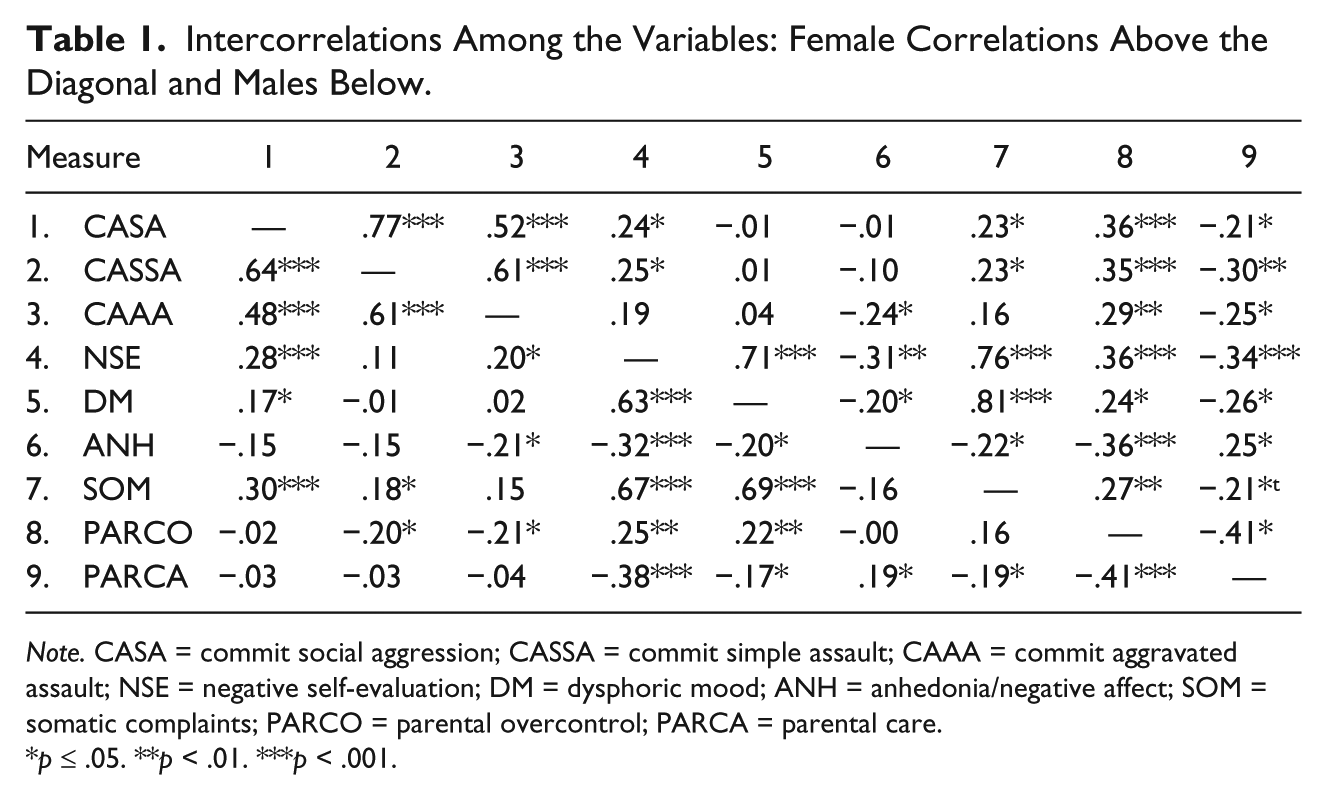
Note. CASA = commit social aggression; CASSA = commit simple assault; CAAA = commit aggravated assault; NSE = negative self-evaluation; DM = dysphoric mood; ANH = anhedonia/negative affect; SOM = somatic complaints; PARCO = parental overcontrol; PARCA = parental care.
p ≤ .05. **p < .01. ***p < .001.
Assessment of Gender Difference
Table 2 describes the means and standard deviation of social aggression, simple and aggravated assault, subscales of depression (dysphoric mood, anhedonia/negative affect, negative self-evaluation, and somatic complaints), and parental bonding (parental care and parental control). Age was assessed as a continuous variable, and initial results revealed that age was not related to any of the study variables. Thus, only gender differences will be described below.
Means (and Standard Deviations) by Gender for Subtypes of Aggression, Depression Subscales, and Parental Bonding Subscales.
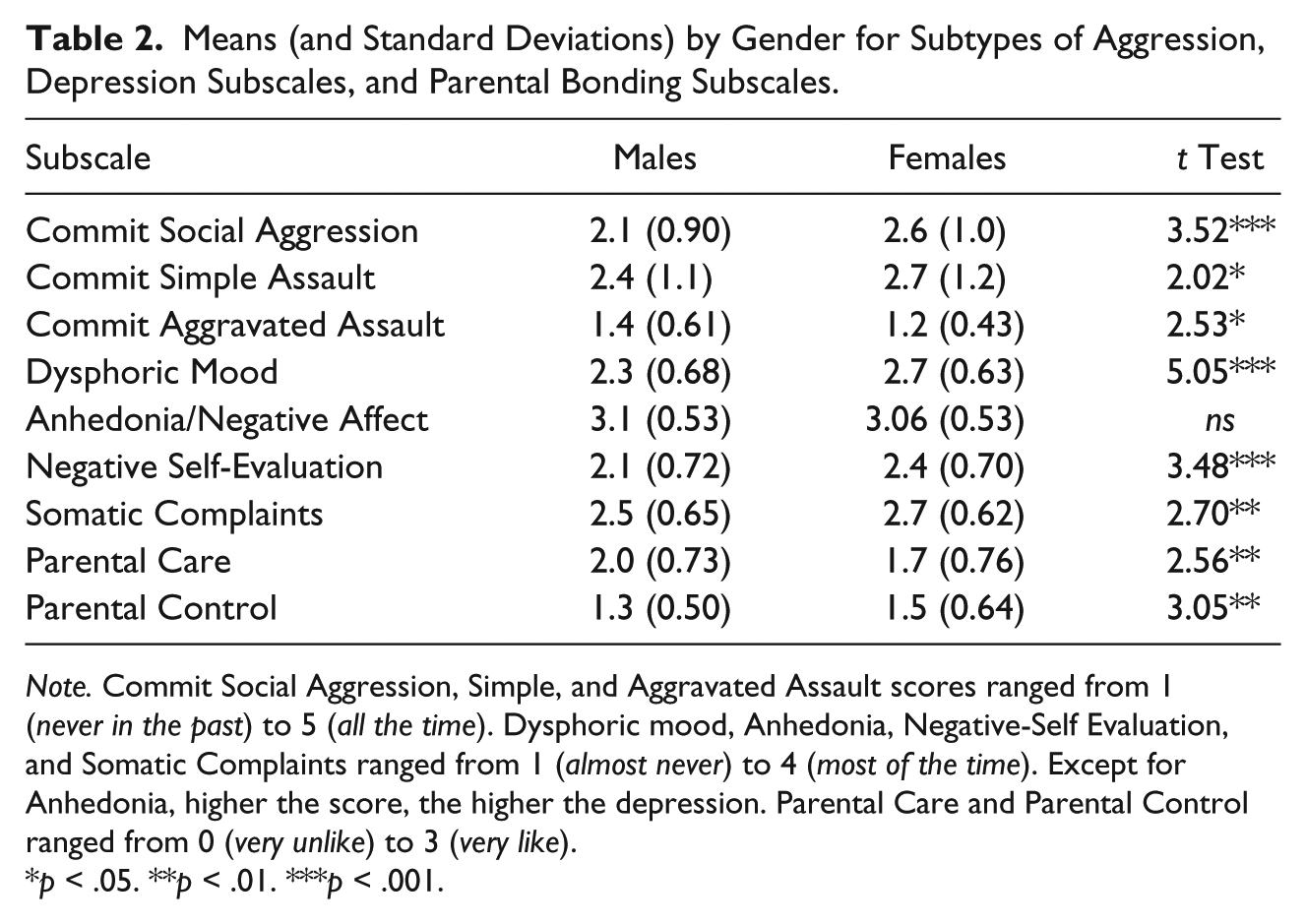
Note. Commit Social Aggression, Simple, and Aggravated Assault scores ranged from 1 (never in the past) to 5 (all the time). Dysphoric mood, Anhedonia, Negative-Self Evaluation, and Somatic Complaints ranged from 1 (almost never) to 4 (most of the time). Except for Anhedonia, higher the score, the higher the depression. Parental Care and Parental Control ranged from 0 (very unlike) to 3 (very like).
p < .05. **p < .01. ***p < .001.
Committing Aggression/Assault
Female offenders committed social aggression, t(225) = 3.52, p < .001, and simple assault, t(225) = 2.06, p < .05, more often than male offenders. However, male offenders committed aggravated assault more often than did females, t(223) = 2.53, p < .05.
RADS
Except for anhedonia/negative affect, there were significant gender differences for the other symptoms of depression. Specifically, females expressed more symptoms of dysphoric mood, t(206) = 5.05, p < .001; negative self-evaluation, t(198) = 3.48, p < .001; and somatic complaints, t(197) = 2.7, p < .05, than did males.
The Parental Bonding Instrument
The results indicated that males considered their parent to be more caring and warm than did females, t(240) = 2.56, p < .01. However, females considered their parent to be more controlling than did males, t(161) = 3.05, p < .01.
Parent Bonding Predicting Committing Aggression/Assault
Two separate differential predictability models were used to predict committing social aggression and simple and aggravated assault. To be precise, we examined gender differences for the regression function with parental care and parental control as predictors. Because we have two different populations (males and females), the regression coefficients were unstandardized.
Social aggression
The results for predicting committing social aggression from parental care were significant, F(3, 225) = 6.60, p < .001, R2 = .08. The change in intercept for males was not significantly different from the intercept for females. For females, there was a significant decrease in slope (β = –0.29, SEB (Standard Error of β) = 0.13, p < .05), which was not significantly different from the males’ slope. Thus, less parental care predicted more social aggression for both males and females.
Parental control predicted committing social aggression, F(3, 225) = 9.00, p < .001, R2 = .11. The change in intercept for males from females was not significant. The results indicated that the change in slope for males (β = –0.62, SEB = 0.22, p < .01) was significantly different from the females’ slope (β = 0.58, SEB = 0.15, p < .001). However, the slope for males was not significantly different from zero; thus, there was no relationship between social aggression and parental control for males. For females, the more their parents were controlling, the more they committed social aggression.
Simple assault
The results revealed that parental care predicted committing simple assault, F(3, 222) = 4.43, p < .01, R2 = .06. There was a decrease in the change in intercept for males (β = –0.98, SEB = 0.39, p < .01). Thus, for a given level of parental care, females committed more simple assault in comparison with males up to a scale score of 2.18. For a scale score larger than 2.18 on parental care, males committed more simple assault (see Figure 1). The change in the slope for males (β = 0.41, SEB = 0.20, p < .05) was significantly different from the slope of females (β = –0.45, SEB = 0.15, p < .05). Nonetheless, the slope for males was not significantly different from zero, indicating that there was no relationship between simple assault and parental care for males.
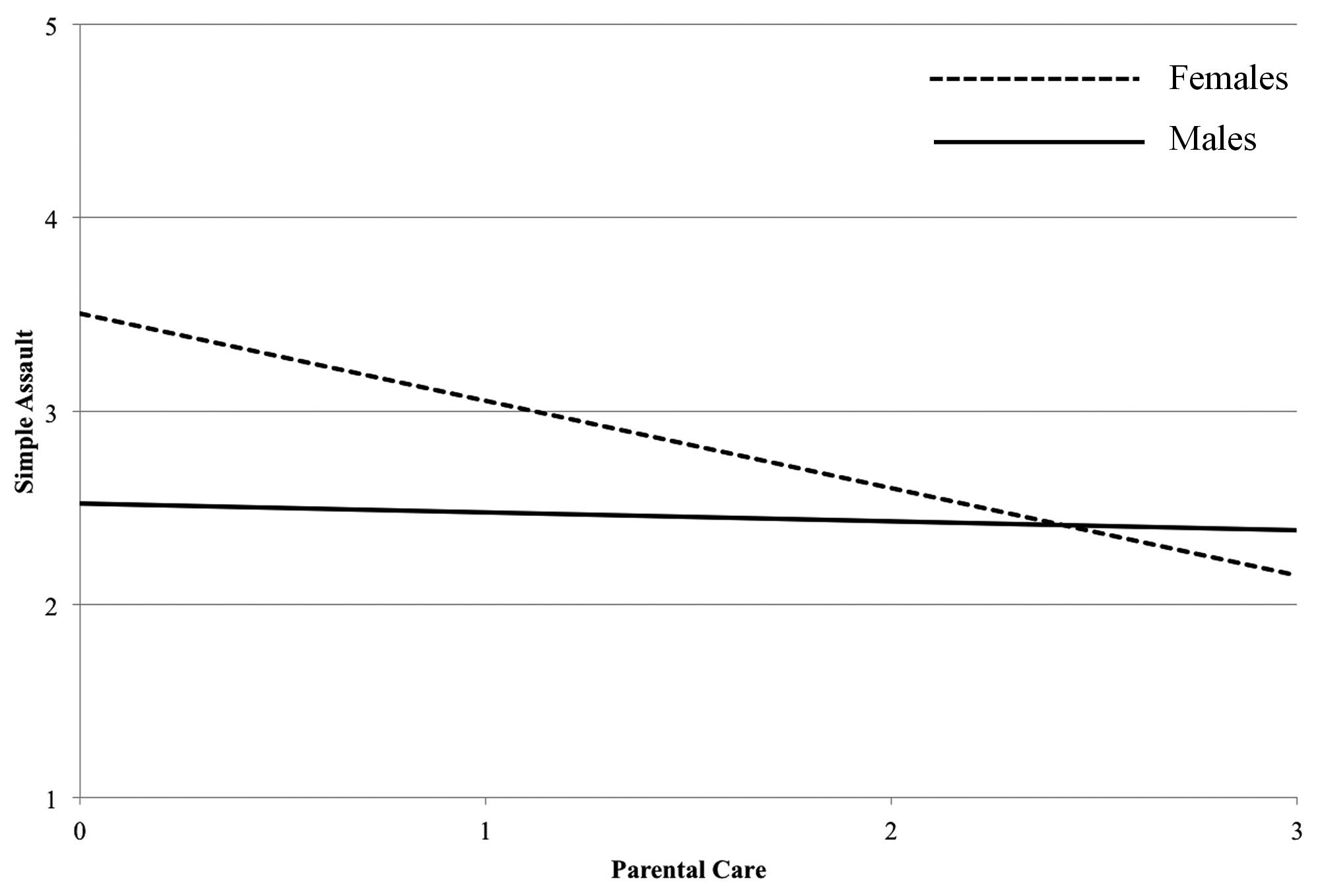
Parental care predicting perpetration of simple assault.
Parental control predicted committing simple assault, F(3, 222) = 7.5, p < .001, R2 = .09. Males had a greater intercept because the change in intercept was positive (β = 1.18, SEB = 0.38, p < .01; see Figure 2). In other words, for any given level of parental control, males committed more simple assault up to a scale score of 1.11. For a scale score larger than 1.11 on parental control, females committed more simple assault. There was also a significant gender difference in the change of slope for males (β = –1.1, SEB = 0.25, p < .001) from females (β = 0.62, SEB = 0.18, p < .001). The slopes for both males and females are significantly different from zero, F(1, 222) = 5.5, p < .05. Accordingly, because the relationship between simple assault and parent control was positive for females and negative for males, more control on the part of parents increased simple assault for females and decreased it for males.
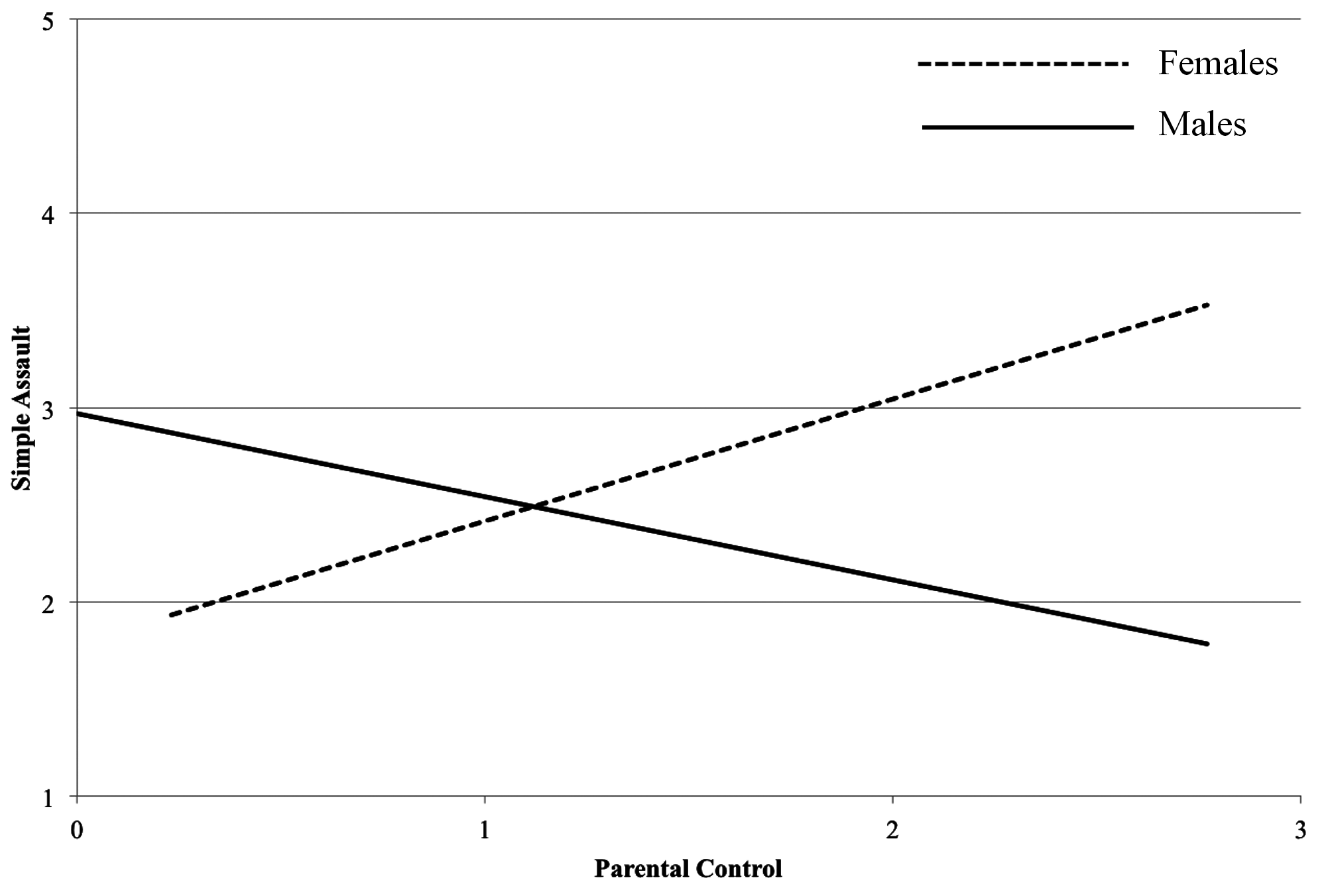
Parental control predicting perpetration of simple assault.
Aggravated assault
For parental care as the predictor, the results showed that the model was significant, F(3, 223) = 4.61, p < .05, R2 = .04. Subsequent analyses revealed that males committed more aggravated assault than females. However, parental care had no effect for either males or females.
Parental control predicted committing aggravated aggression, F(3, 222) = 6.38, p < .001, R2 = .08. There was a positive change in intercept for males (β = 0.80, SEB = 4.2, p < .001), from the females’ intercept (β = 0.94, SEB = 0.15, p < .001). There was also a significant change in slope for males (β = –0.45, SEB = 0.13, p < .001) from females’ slope (β = 0.20, SEB = 0.09, p < .05; see Figure 3). The slopes for males was significantly different from zero, F(1, 222) = 7.5, p < .01. In summary, for females, the more they perceived parental control, the more they committed aggravated assault. However, the opposite was true for males. Thus, for males, the more they perceived parental control, the less they committed aggravated assault.
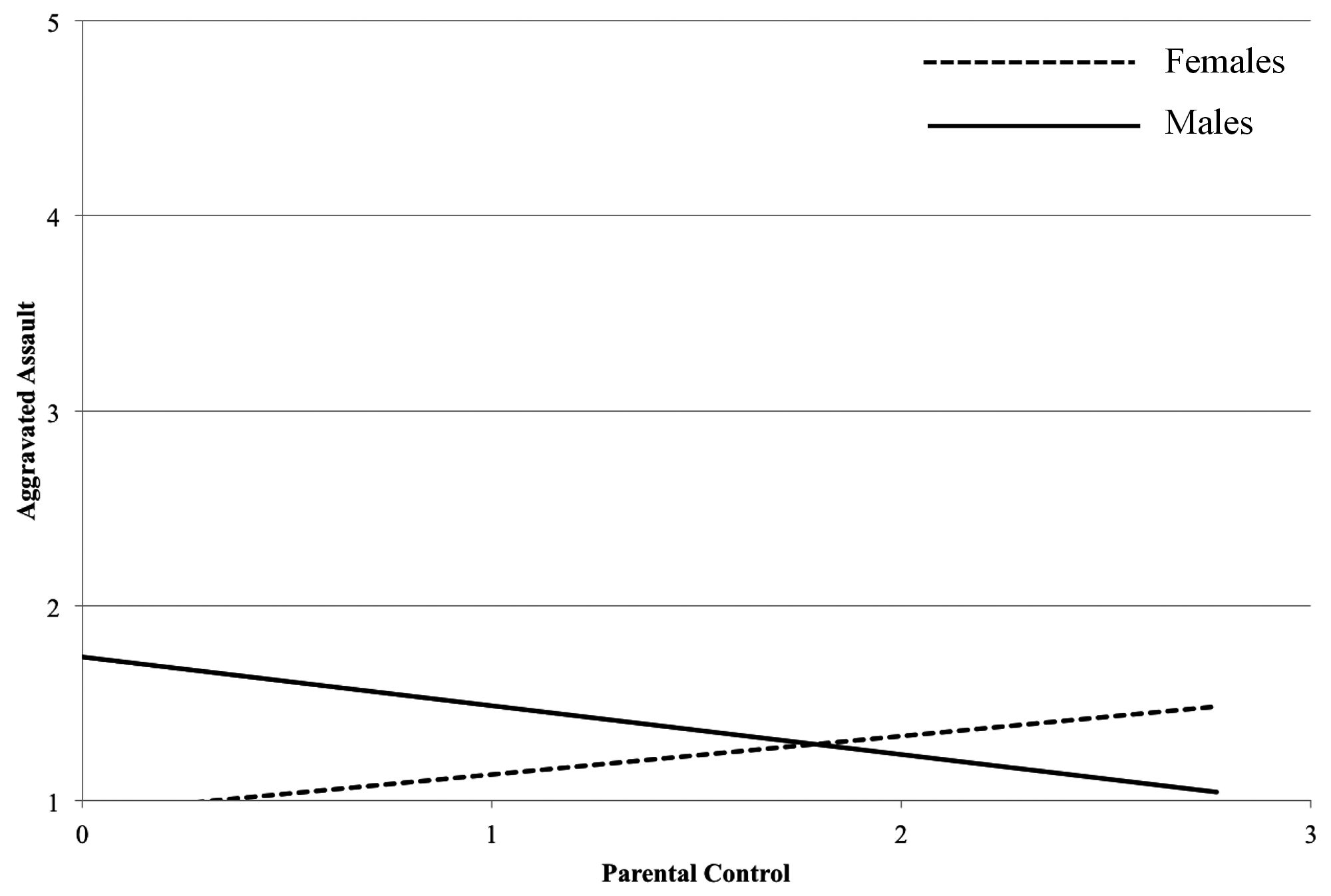
Parental control predicting perpetration of aggravated assault.
Parent Bonding Predicting Depression
As shown in Table 1, there are significant relationships among parental control and parental care with each of the depression subtypes for both males and females. As noted earlier, the intercorrelations among the three types of depression (dysphoric mood, negative self-evaluation, and somatic complaints) were quite high, ranging from r = .63 to r = .81, p < .001. As such, these three scales were combined into one overarching scale termed General Depression. The fourth scale, Anhedonia/negative affect was negatively correlated with the scales comprising General Depression, and was evaluated independent of this new construct. As previously described, the lower the score for anhedonia, the higher level of symptoms of depression. Four separate differential predictability models were used to predict General Depression and Anhedonia scales of depression. We examined gender differences for the regression function with parental care and parental control as predictors.
Parental care
Parental care predicted general depression, F(3, 230) = 12.7, p < .001, R2 = .14, and there were no significant differences between males and females. There was a negative relationship between participant-reported parental caring and general depression, such that participants who reported less symptoms of general depression also reported higher levels of parental care (β = –0.23, SEB = 0.08, p < .01). Parental care also predicted anhedonia, F(3, 230) = 4.13, p < .01, R2 = .05, and there were no significant differences between males and females. A positive relationship between parental care and anhedonia was found, with both males and females who reported higher levels of parental care simultaneously reporting higher levels of anhedonia, indicating less depressive symptoms (β = 0.17, SEB = 0.07, p < .05).
Parental control
Parental control predicted general depression, F(3, 230) = 12.7, p < .001, R2 = .14, and no significant gender differences were found. A positive relationship between parent control and general depression was found, with youth who reported higher levels of parent control also reporting higher levels of general depression. Parental control predicted anhedonia, F(3, 230) = 4.3, p < .01, R2 = .05, as well. The results showed a significant gender difference in intercept between males and females (males: β = –0.38, SEB = 0.18, p < .05; females: β = 3.5, SEB = 0.14, p < .001), with parental control predicting greater anhedonia scores for females than males, up to some point around 1.3. There was also a positive change in the slope for males (β = 0.30, SEB = 0.12, p < .05), from females (β = –0.30, SEB = 0.09, p < .00). Note that the actual slope for males was not significantly different from zero. Female youth exhibited a higher level of symptoms of anhedonia when their parent exerted greater control (Note: The Anhedonia scale is reverse scored, meaning that a higher score is reflective of fewer symptoms of anhedonia).
Depression Predicting Committing Aggression/Assault
Lower scores on anhedonia, F(3, 226) = 5.03, p < .01, R2 = .05, and higher scores on General Depression scale, F(3, 226) = 8.69, p < .001, R2 = .10, were associated with higher levels of social aggression for both males and females. Committing simple assault was also associated with general depression for both males and females, F(3, 223) = 2.97, p < .05, R2 = .04, but not anhedonia. Finally, both anhedonia, F(3, 226) = 6.01, p < .001, R2 = .08, and general depression F(3, 226) = 3.54, p < .05, R2 = .05, predicted aggravated assault, again for both males and females.
Discussion
The objective of this study was to investigate the similarities and dissimilarities between males and females involving social aggression and criminal behaviors, and the impact of familiar factors and depression. Based on female offenders’ self-reports, they committed social aggression and simple assault more often than did male offenders, although males committed more aggravated assault than did female offenders. The findings regarding simple and aggravated assault are consistent with the U.S. Department of Justice (2014) showing that females are arrested more often for simple assault than aggravated assault. As noted earlier, research has shown social aggression is used as a means of weakening social bonds or causing emotional damage (Goldstein & Tisak, 2010; Tisak et al., 2011). Stickle, Marini, and Thomas (2012) reported that female offenders may use social aggression as a way of handling conflict. Although social aggression is not a criminal act, committing social aggression and simple assault may have similar objectives of causing emotional damage (for social aggression) and emotional trauma (for simple assault).
Parental Care and Social Aggression/Criminal Assault
One of the interesting findings was that males considered their parent to be more caring and warm than did females. This finding is consistent with those reported by Quiroga et al. (2017), in that, males viewed their parents as being more supportive than females. However, for males, parental care did not predict their committing simple assault or aggravated assault, although perceived parental care was associated with less social aggression. Conversely, the more females perceived parents to care, the less they committed social aggression and simple assault, but not aggravated assault. These findings suggest that female offenders are much more affected by parental care than are males (consistent with Barnow et al., 2005). Whereas it may be true that relationship indicators of parental warmth and care are less appreciated in male youths, it is more likely that females are simply more receptive to these cues. Nonetheless, parental care was not associated with aggravated assault for females. Again, the literature on the development of socioemotional competence in adolescence would suggest that females develop faster than do males. However, work by Flannery and Smith (2017) adds that males and females might develop these skills at the same rate during adolescence, but that males are less likely to use these skills than are females. That is, although males and females perceive social and familial relationships equally, females attend more to the details of these interactions and likely spend more time considering these relations. This lends itself to the notion that parental warmth/care operates as an indirect control, in that adolescents—particularly females—attempt to refrain from negative behaviors to maintain a stable and loving relationship with the parent (Deater-Deckard et al., 2011).
It is important to note that parental care did not have an effect for either males or females regarding aggravated assault. Perhaps, youth who commit aggravated assault have other psychological issues that inhibit parental care from being either a positive or negative influence. Committing aggravated assault, as noted earlier, is considered by the FBI (U.S. Department of Justice, 2014) as one of the major violent crimes. It may be that these youth lack empathy or other social relational skills, which possibly reflects in their relationship with their parents.
Parental Control and Social Aggression/Criminal Assault
More parental control predicted more social aggression and simple and aggravated assault for females. A different pattern was found for males. That is, more parental control was associated with less simple and aggravated assault for males. However, this was not the case for social aggression. There is scant evidence of parental control and aggression being studied empirically, especially with an adjudicated youth population. The gender differences found here may be interpreted in myriad ways. It may be that adolescent females develop cognitively faster than males, and feel that they deserve more independence and autonomy. Higher levels of parental control, then, could result in female adolescents feeling as if they are not being respected and, therefore, lash out in hostility. According to this theory, males would not find the increased parental control as threatening, as they are still developing their sense of growing independence.
An alternative explanation is that males and females interpret the parenting styles differently. For example, it is possible that males see parental control as an indicator of love. Indeed, in Baumrind’s (1967) original conceptualization of parenting styles, low levels of parental control result in one of two styles: indulgent parenting, wherein the children act out due to lack of control, and neglectful parenting, which results in children who are typically lacking in volition. Therefore, Baumrind’s ideas on parenting would indicate that males value parental control more than do females (Baumrind, 1991, 1996).
Parental Bonding and Depression
No gender differences emerged when using parental care as a predictor for general depression or anhedonia. As expected, participants who reported greater levels of parental care also reported lower levels of general depression symptoms and anhedonia. Although research has demonstrated that there is a concurrent relationship between psychological distress and parental care (e.g., Chambers et al., 2000a; Howard, 1981), other researchers have found no relationship (Biggam & Power, 1998). The current findings support the association between parental care and depression. These results may imply that depression may have a similar impact for males and females regarding the association with parental care.
Parental control also predicted general depression for both males and females, such that greater levels of controlling behavior were associated with greater symptoms of general depression in youth offenders. Interestingly, higher levels of parental control also predicted greater symptoms of anhedonia, and these findings were stronger for females than males. There is scant evidence of parental control, youth aggression, and depression being studied empirically, especially with an adjudicated youth population. Higher levels of parental control may cause female adolescents to feel as though their independence and autonomy are being challenged. This mismatch in youth and parent viewpoints may, therefore, result in female adolescents lashing out in hostility or exhibiting symptoms of depression to cope with a perceived threat to their independence. Based on this theory, males would not find the increased parental control as threatening, as they are still undergoing cognitive development, which will eventually lead to their growing sense of independence.
Depression and Committing Social Aggression/Criminal Assault
We also examined whether different symptoms of depression were associated with committing social, simple, and aggravated assault. Interestingly, there were no gender differences. There was a strong association between being depressed and committing social aggression, and simple and aggravated assault for both males and females.
Conclusion and Policy Implications
The general findings of our study indicate the importance of examining youth offenders, both males and females, when examining parental factors, depression, aggression, and criminal behaviors. Overall, the findings here indicate that male and female delinquent youths differentially give salience to parenting behaviors. For example, although parental control was associated with less simple and aggravated assault for males, parental control also was associated with greater depression for males.
The current findings could provide guidance and support to interventions and policies, which aim to decrease delinquency by recommending a focus on family therapy and parenting interventions. There are two possible points for intervention with aggressive adolescents: preventing delinquency itself and preventing recidivism after an arrest. Some studies have already begun to address the efficacy of family-focused therapies and policies, providing ample evidence that family-focused interventions do decrease recidivism in juvenile delinquents (Humayun et al., 2017; Fagan, 2013; Karam, Sterrett, & Kiaer, 2017; Vries, Hoeve, Assink, Stams, & Asscher, 2015). In addition, there is evidence that parenting style is linked to aggressive and antisocial behavior and that parenting interventions can help decrease aversive behavior (Fagan, 2013; Kawabata et al., 2011; Kuppens, Laurent, Heyvaert, & Onghena, 2013; Tully & Hunt, 2017). The current study adds to this literature by not only confirming the link between parenting and delinquency in adolescents but also highlighting that these interventions may have differential effects based on the gender of the child.
Particularly, increased parental control may help male offenders decrease offending, but was associated with higher levels of assault and aggression in female offenders. Parental care seemed to affect female offenders more strongly than males, indicating that potentially delinquent female adolescents need much higher levels of care for positive outcomes. Parent trainings need to keep these differences in mind, if they are to be effective for both genders. In addition, the current findings highlight that although parenting styles affected some kinds of offending, parental care and control were not related to assault for males. This indicates that some additional, non-family-focused intervention is needed to decrease offending in males. Policies aimed at reducing aggression and delinquent recidivism should include parenting-focused programs; however, these policies need to consider the gender of the child when implementing programs to improve parenting styles. Otherwise, the adolescent may engage in more aggression, rather than less.
Limitations
This study could be extended to examine the relationship among parental bonding and other types of criminal behaviors by gender. However, one limitation is that the current study did not include the parents’ perceptions of their own behaviors toward their children, which could have provided useful insight. In examining the impact of parenting on juvenile behaviors, however, we do feel that having the youths’ perspective is more valuable than only having the parents’ perspective. Moreover, these participants were incarcerated, which could also have an impact on their symptoms of depression. Further research is needed to clarify the association among parental bonding, depression, and different types of criminal behaviors among different youth offenders.
Footnotes
Declaration of Conflicting Interests
The author(s) declared no potential conflicts of interest with respect to the research, authorship, and/or publication of this article.
Funding
The author(s) disclosed receipt of the following financial support for the research, authorship, and/or publication of this article: This research was supported in part by the Center for Family and Demographic Research, Bowling Green State University, which as funding from the Eunice Kennedy Shriver National Institute of Child Health and Human Development (P2CHD050959).