







Abstract
The purpose of this study was to conduct a randomized controlled trial to assess the efficacy of STOP Dating Violence, an online intervention developed to educate students about dating violence and appropriate bystander interventions on college campuses. College students (N = 317) were randomly assigned to one of the three conditions: (a) the STOP Dating Violence intervention, (b) a website containing information about dating violence, or (c) a control condition. Participants completed pre- and posttest quantitative and qualitative measures to assess knowledge of warning signs and appropriate bystander behaviors, attitudes about intervening as a bystander, willingness to intervene, and self-efficacy regarding intervening. The results indicated that students who participated in the STOP Dating Violence intervention were the most knowledgeable about jealous warning signs of dating violence and appropriate bystander interventions, had the greatest intent to assist a victim of dating violence, and were the most confident in their ability to intervene in dating violence situations, when compared with participants in the website and control conditions. Those who participated in the intervention also demonstrated greater knowledge regarding appropriate bystander behaviors 1 month following the intervention. No differences were found in attitudes regarding helping someone in an abusive dating relationship or engagement in bystander behaviors at follow-up. Qualitative analyses provided further support for the efficacy of STOP Dating Violence in increasing knowledge of barriers to bystander intervention and appropriate bystander intervention strategies in dating violence situations. Overall, the STOP Dating Violence intervention has the potential to educate undergraduates about dating violence and bystander interventions on college campuses.
Dating violence (defined as actual or threatened physical harm, verbal, psychological or sexual abuse, monitoring, social isolation, or other controlling behaviors within a dating relationship) occurs frequently among college students, with 43% of college women reporting experiences of dating violence prior to graduation (Knowledge Networks, 2011) and 20% to 30% of college-age men experiencing physical aggression by an intimate partner each year (Shorey, Cornelius, & Bell, 2008). Dating violence has negative effects on the mental health, physical health, and academic functioning of the victims; some victims experience anxiety, depression, alcohol or drug abuse, and eating disorders (Shorey et al., 2011; Wekerle & Tanaka, 2010; Wolitzky-Taylor et al., 2008). Historically, violence prevention programs on college campuses focused on sexual assault (see Banyard, 2014; Dills, Fowler, & Payne, 2016; Leen et al., 2013). More recently, researchers have begun to create and evaluate dating violence interventions on college campuses (Peterson et al., 2018; Shorey et al., 2012). Thus, the overall purpose of the current mixed-methods study was to evaluate a theory-based online intervention (STOP Dating Violence) that was developed to educate college students about dating violence and bystander responses to dating abuse.
Dating Violence Prevalence, Outcomes, and Interventions on College Campuses
Dating violence is prevalent on college campuses. The National Institute of Justice (2017) identified relationship abuse among young people as a public concern that may lead to intimate partner violence in adulthood. According to a national poll of students enrolled in 4-year colleges and universities, nearly one in three women experienced an abusive dating relationship in their lifetime and most had a friend who had been abused (Knowledge Networks, 2011). Many young men reported being a victim of dating violence (Shorey et al., 2008). Moreover, many college students have difficulty identifying dating violence, were unlikely to tell anyone that they had experienced abuse, and were uncertain regarding how to help themselves or other victims of dating violence (Knowledge Networks, 2011). Notably, 60% of college students reported that no one tried to help them when they were being abused (Knowledge Networks, 2011).
Dating violence has been linked to academic and mental health problems (Banyard & Cross, 2008; Shorey et al., 2012), and to increased risk for suicidal behaviors (Belshaw, Siddique, Tanner, & Osho, 2012), suggesting the need for intervention. However, interventions addressing dating violence often are targeted at high school students and have limited effectiveness in reducing dating violence (Leen et al., 2013; Shorey et al., 2012). Most violence prevention programs on college campuses focus on sexual assault (Banyard, 2014; Moynihan & Banyard, 2008). However, several violence prevention programs addressing relationship abuse have been developed and evaluated.
Notably, the Bringing in the Bystander in-person intervention program seeks to reduce sexual assault and dating violence on college campuses. With a sample of female and male intercollegiate athletes, this program was effective with regard to improving confidence in and intent to engage in bystander behaviors (Moynihan, Banyard, Arnold, Eckstein, & Stapleton, 2010). Similarly, participation in the Bringing in the Bystander intervention was associated with enhanced confidence in bystander behaviors, likelihood to help, and feeling responsible for ending violence among sorority women (Moynihan, Banyard, Arnold, Eckstein, & Stapleton, 2011). This program also had lasting effects 1 year after the intervention with regard to involvement in bystander behaviors (Moynihan et al., 2015). Furthermore, the efficacy of an adapted version of the Bringing in the Bystander intervention focused on dating violence was supported when compared with a “traditional awareness” dating violence prevention program, especially with regard to intentions to assist and bystander behaviors 2 months after receipt of the intervention.
Similarly, researchers tested the efficacy of Project PEACE, an in-person intervention to reduce dating violence with a small sample of college students (n = 32; Jaffe, Schreier, & DiLillo, 2017). Findings were mixed with regard to anticipated changes in outcome variables. Also, an examination of an online writing intervention to reduce dating violence among emerging adults (WISER) found that the 14 college students exposed to the writing tasks were able to reflect on and improve the quality of their relationships (Draucker et al., 2019). Thus, our review of existing interventions suggested that small sample sizes, significant costs associated with the interventions and methodological limitations to the evaluation of the programs contribute to the need for the development of cost-effective interventions and research to reduce dating violence on college campuses. To address these limitations, we developed an online intervention that could be administered large scale at low cost to reduce dating violence on college campuses. The efficacy of the intervention was tested with regard to changes in knowledge of warning signs and appropriate bystander behaviors, attitudes about intervening as a bystander, willingness to intervene, and self-efficacy regarding intervening in dating violence situations.
Theoretical Foundations for Our Intervention
The STOP Dating Violence intervention is grounded in the Model of Bystander Behavior (Latane & Darley, 1970) and informed by risk recognition research (Witte & Kendra, 2010), Bandura’s (1977) social learning theory, and prior work on sexual assault prevention (e.g., Banyard, Moynihan, & Plante, 2007). The Model of Bystander Behavior (Latane & Darley, 1970) proposed several contingencies that must be met before bystanders help someone in need: Bystanders must become aware of the problematic situation, perceive the situation as an emergency, decide that they have responsibility to act, determine what type of help they can provide, and then take action. Furthermore, research on bystander intervention (Latane & Darley, 1970) suggested that several psychological processes may impede bystanders’ provision of help to victims when other bystanders are aware of the situation, including diffusion of responsibility (i.e., bystanders believing that other bystanders are responsible for helping), evaluation apprehension (i.e., bystanders being afraid of providing help in ways that will tarnish their reputation to other bystanders), and pluralistic ignorance (i.e., bystanders inferring from the apparent inaction of other bystanders that situations are not emergencies).
Informed by the Model of Bystander Behavior (Latane & Darley, 1970), the STOP Dating Violence intervention was designed to improve problem detection and educate potential bystanders on these common psychological barriers that may impede help provision. The important role of detecting threatening situations also was highlighted in research and theory on risk recognition, which suggested that the ability to detect personal danger is linked to proactive responses, such as reducing unhealthy behaviors (Brewer et al., 2007) and increasing healthy behaviors (e.g., use of mammograms; Orom, Kiviniemi, Shavers, Ross, & Underwood, 2013). Until recently, the concept of risk recognition had been used in interventions developed to prevent sexual assault and domestic violence (i.e., violence that occurs in committed relationships beyond the dating period), but rarely extended to dating violence. For example, one study found that survivors of intimate partner violence were less likely to recognize danger in domestic violence vignettes than individuals who had not experienced interpersonal violence (Witte & Kendra, 2010), which suggests that inability to recognize danger is associated with risk for violence.
Furthermore, theorizing regarding self-efficacy can inform the development of bystander interventions. Bandura (1977) emphasized the important role of self-efficacy, or confidence in performing behaviors required to achieve goals. According to this perspective, people will attempt to enact goal-directed behaviors to the extent that they believe they have the ability to succeed. Hence, providing potential bystanders with easy-to-implement strategies and elevating their confidence may translate to increased provision of help. Finally, bystander interventions in sexual violence prevention appear effective. For example, an intervention addressing bystander responses to sexual violence improved attitudes, efficacy, knowledge, and behavior with regard to helping victims of sexual violence (Banyard et al., 2007).
Components of the STOP Dating Violence Intervention
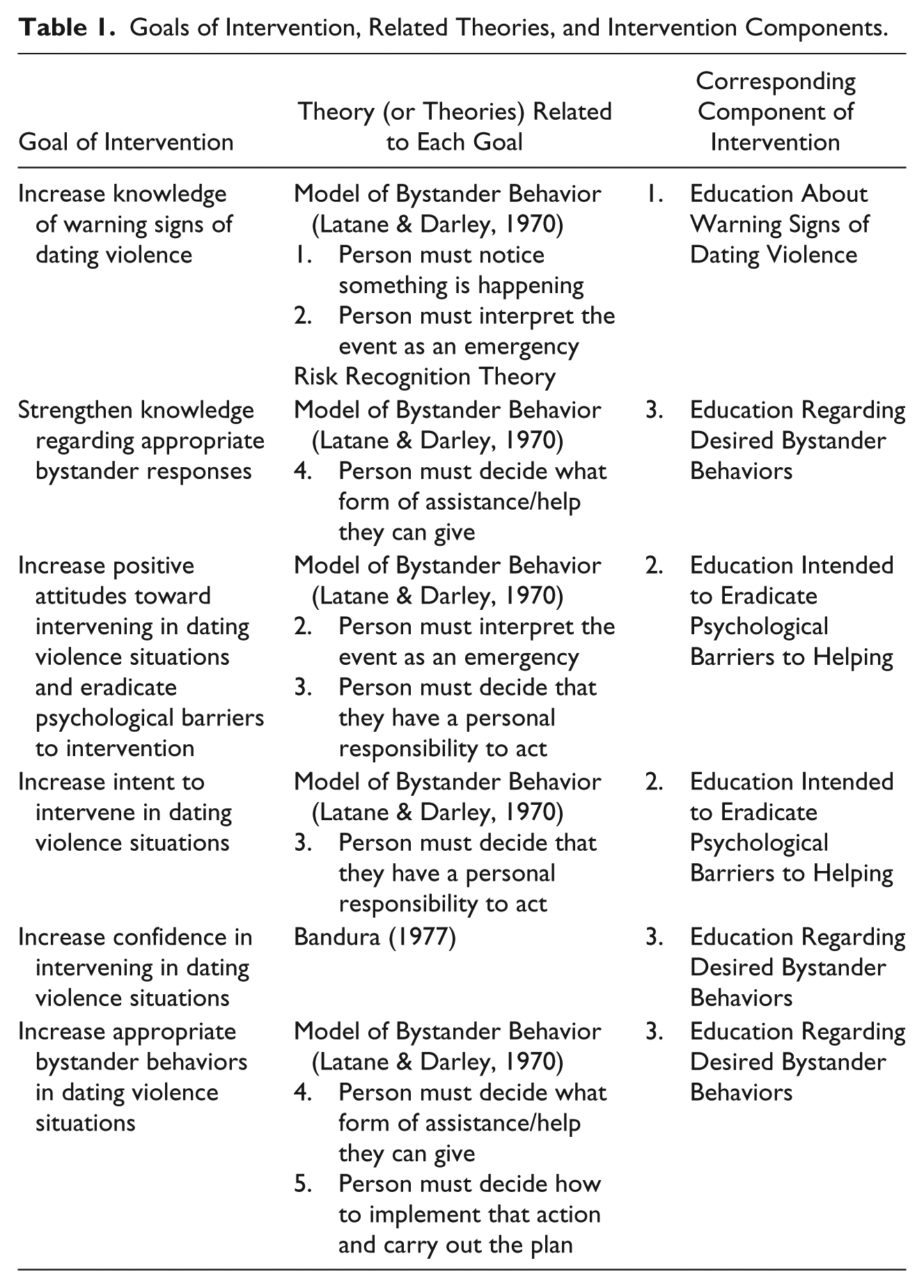
The theoretical perspectives and findings described above informed the development and evaluation of the STOP Dating Violence intervention. Consistent with the first two steps in the Model of Bystander Behavior (Latane & Darley, 1970)—becoming aware of the problematic situation and perceiving the situation as an emergency—the first component of the intervention (Education About Warning Signs of Dating Violence) was designed to educate college students about the warning signs of dating violence (including both physical and psychological abuse). After learning about warning signs, college students may be more likely to intervene as a bystander (Littleton, Axsom, & Grills-Taquechel, 2009).
The second component (Education Intended to Eradicate Psychological Barriers to Helping) addressed the three problematic psychological processes that can impede bystander intervention described above: diffusion of responsibility, evaluation apprehension, and pluralistic ignorance. The education provided in this component corresponds to the second and third steps of the Model of Bystander Behavior (Latane & Darley, 1970)—perceiving the situation as an emergency and deciding that one has a responsibility to act. After being educated about impediments to action, bystanders may more readily interpret dating violence situations as emergencies that necessitate intervention.
Finally, the third component (Education Regarding Desired Bystander Behaviors) educates students regarding a series of actions they can take to provide assistance. This component responds to recommendations to address the role of bystanders in reducing dating violence (Shorey et al., 2012) and builds on research suggesting the usefulness of bystander education in reducing the incidence of sexual abuse and relationship violence (e.g., Banyard, 2011; Banyard, Moynihan, Cares, & Warner, 2014). In fact, research on sexual assault and dating violence prevention identified the education of bystanders to proactively interfere when they witness potentially dangerous or abusive behaviors as key to the prevention of sexual abuse and the escalation of violent behaviors (e.g., Banyard, 2011). Given the centrality of peers in college students’ lives and the likelihood that peers (and not other adults or family members) will know about problematic behaviors in dating relationships, education about (and enhanced confidence regarding) appropriate bystander responses may contribute to efforts to reduce dating violence on college campuses.
Effectiveness of Online Interventions
The STOP Dating Violence intervention was designed to be administered online to college students who tend to be knowledgeable, comfortable, and connected with technology. Online interventions have been shown to be effective for reducing depression, anxiety, and stress in college students (Cavanagh et al 2013; Hintz, Frazier, & Meredith, 2015) and could be used to educate college students about dating violence (Amstadter, Broman-Fulks, Zinzow, Ruggiero, & Cercone, 2009; Beacon, 2013). For example, Hintz et al. (2015) created and tested an online stress management intervention for college students. They found that involvement in the online intervention reduced stress, depression, and anxiety among college students when compared with students in control conditions. Moreover, an empirical evaluation comparing online versus in-person bystander interventions related to sexual and dating violence found that online interventions were equally effective with regard to changes in knowledge and attitudes over time (Hines & Reed, 2017). A benefit of developing a dating violence intervention in an online format is that, after the online intervention has been developed and tested, widespread dissemination of this program is possible with minimal costs.
Current Study and Hypotheses
The current study was a randomized controlled trial designed to assess the efficacy of the STOP Dating Violence intervention, an online intervention (informed by the Model of Bystander Behavior [Latane & Darley, 1970], social learning theory [Bandura, 1977] and risk recognition research, as well as the literature on sexual assault prevention) to educate college students about dating violence and bystander responses. Specifically, we hypothesized that participants who completed the intervention, compared with participants who read a webpage about dating violence (website condition) and those in a no-intervention control condition, would have the most knowledge about warning signs of dating violence and appropriate bystander interventions, the most positive attitudes regarding helping someone in an abusive dating relationship, the greatest intent to intervene in dating violence situations, and the highest bystander self-efficacy. In addition, we conducted a follow-up study of the efficacy of the intervention with a small sample of participants 1 month after exposure to the intervention; we hypothesized that the differences described above would persist over the month and that students previously exposed to the intervention would report greater involvement in bystander behaviors during that month than those in the website and control groups.
Method
Development of the Intervention
A research team comprised of professors and students from counseling and social psychology developed the STOP Dating Violence intervention to educate college students about dating violence and bystander responses. The counseling psychologist and counseling students had extensive experience in studying domestic and dating violence and working or volunteering in shelters for abused women and their children. The professor and graduate student in social psychology had expertise in studying interpersonal relationships.
Initially, an in-depth review of the theoretical and research literature was conducted to inform the content (i.e., dating violence and bystander interventions) and the mechanism for the intervention (i.e., best practices for online interventions). See Table 1 for the goals of the intervention, the underlying theory informing each goal, and the corresponding component of the intervention associated with the goals and theory. Two subteams of two and one other team member individually wrote scripts for the presentations. Team members edited the scripts multiple times. Once consensus was reached regarding the content of the script from all team members, Prezi presentations were developed by the subteams and again, edited by the entire team. Prezi presentations provide one large canvas and allow automatic zooming in and out on selected material. A recent study consisting of two experiments found that Prezi presentations were perceived as more engaging, persuasive, and organized when compared with oral presentations and PowerPoint presentations (Moulton, Turkay, & Kosslyn, 2017).
Goals of Intervention, Related Theories, and Intervention Components.
Thus, the intervention consisted of three narrated Prezi presentations that included information, photos, and dating violence scenarios (contact the first author to view the presentations): (a) Education About Warning Signs of Dating Violence (7 min), (b) Education Intended to Eradicate Psychological Barriers to Helping (7 min), and (c) Education Regarding Desired Bystander Behaviors (10 min). In addition, at several points throughout the intervention, multiple choice questions were posed and then correct responses were provided.
The first presentation educated participants about dating violence (including physical, psychological, and sexual abuse) and warning signs associated with dating violence, including monitoring behaviors, controlling behaviors, demeaning behaviors, threatening and aggressive behaviors, and jealous and possessive behaviors. The second presentation, based on the social psychological literature on bystander intervention, educated participants on psychological barriers that can obstruct helping and arise when participants believe other bystanders are aware of a dating violence situation, including diffusion of responsibility (i.e., believing that other bystanders can or should help instead of the self), evaluation apprehension (i.e., believing that one’s efforts to help could tarnish one’s reputation with others), and pluralistic ignorance (i.e., believing that other bystanders’ inaction suggests the situation is not an emergency). The third presentation, which was based on the domestic and dating violence literature and the researchers’ experiences working with survivors of domestic violence, presented a four-step model of bystander behavior (using the acronym “STOP”): (a) S—Stay safe—ensure that you and the victim are not in danger, (b) T—Tell the victim that you are concerned, (c) O—Offer support—and listen to what the victim needs, and (d) P—Provide the crisis link or number. The intervention advised participants to provide suspected victims of dating violence with contact information for loveisrespect.org, which provides services to engage, educate, and empower young people to prevent and end abusive relationships.
We attended carefully to diversity when developing the intervention. For example, the depicted couples in the scenarios varied in terms of race/ethnicity, gender identity, and sexual orientation. Moreover, the presented scenarios differed with regard to several dimensions of dating violence often depicted in the literature (i.e., the relationship between the participant and the victim whether friend, acquaintance, stranger, the presence of alcohol, gender of the victim, and the type of violence). One example of a scenario in the intervention is as follows: Imagine that you’re walking home on a Saturday night when you see a girl and guy in the hall of your building and he is calling her “stupid, lazy, and worthless.” As they’re yelling, you see him turn around and throw the beer against the wall. She gets up off the floor and starts to leave, but he follows her and continues to call her names. By the time you reach them, it is clear that they are both drunk and the yelling is only getting worse. How might you respond to this situation? (Multiple choice options are presented with a pause for time to select one choice, and then the answer is provided.)
After the scripts were written and edited, professional narrators were hired to provide voiceovers and read the scripts (a female narrator for the first and third components and a male narrator for the second component). Hiring expert narrators enhanced the professionalism of the Prezi presentations. The study was approved by the University institutional review board.
Participants
Data were collected beginning in the fall semester of 2016 through the spring semester of 2017. Initially, 416 undergraduate students accessed the online survey; 53 did not complete the measures and 46 answered the validity questions incorrectly (two items that asked participants to endorse a specific response were included in the online survey to assess attention to the items). The final sample consisted of 317 college students (81.4% self-identified as women, 18% as men, and 0.6% as transgendered individuals) with a mean age of 19.21 (SD = 1.20). The race of the participants varied as follows: 15.8% African American, 5.4% Latina/o, 53% White, 20.5% Asian, 4.4% Biracial/Multiracial, and 0.9% other participants. In addition, 39.1% were first year students, 29.3% second year, 18.6% third year, and 12.9% senior year students.
Participants received invitations to complete a follow-up assessment 1 month following the intervention. One hundred forty-nine participants accessed the online survey; eight did not complete the measures, and five answered the validity questions incorrectly. A total of 99 participants provided data that could be used in the follow-up data analysis. The remaining participants did not provide consistent answers across the first and second assessments on questions used to link these assessments (last four digits of student ID and birth month), which prevented us from using their responses in the follow-up data analysis. Of those who provided usable data for the follow-up analysis, 18 were in the intervention condition, 47 were in the website condition, and 34 were in the control condition.
Procedures
College students enrolled in introductory psychology courses at a Mid-Atlantic university were recruited for a study about dating violence through advertisements posted on a participant pool website. Those who were interested clicked on a link that brought them to a Qualtrics online survey. After obtaining informed consent, the participants were randomly assigned to the intervention (n = 78), website (n = 120), or control (n = 119) conditions (equivalent numbers of participants were assigned to each condition, however, more participants in the intervention condition did not complete the study than in the other conditions, perhaps due to the greater length of time required in the intervention condition). All participants completed the quantitative and qualitative pretest measures on the online Qualtric survey.
In the intervention condition, participants received the STOP Dating Violence intervention embedded in an online survey (24 minutes). Participants could not rewatch the Prezi presentations. In the website condition, students were asked to spend 15 minutes browsing a website on dating violence, which was developed by the National Center for Victims of Crime (https://victimsofcrime.org/help-for-crime-victims/get-help-bulletins-for-crime-victims/bulletins-for-teens/dating-violence). Participants could not move forward in the Qualtrics survey until 15 minutes had elapsed. In the control condition, participants completed several filler tasks on Qualtrics (i.e., listing the states in the United States, listing activities that people engage in during free time, and describing their favorite college course).
Following the tasks associated with each condition, participants were asked to complete the posttest quantitative and qualitative measures on the Qualtrics survey in the same online session. Course credit was provided for participation.
In addition, participants were contacted via email 1 month after completing the study and were asked to complete an online survey containing the measures described below. These data were collected beginning in the fall semester of 2016 through the summer session in 2017. Those who completed the follow-up survey received US$10 in the mail.
Measures
Recognition of warning signs
The Relationship Red Flags scale (Kearney & O’Brien, 2018) is a 25-item measure that assesses the ability to recognize warning signs of dating violence across several domains, including monitoring behaviors (e.g., “Calls multiple times a day to see what dating partner is doing”), controlling behaviors (e.g., “Tells dating partner how to dress”), demeaning behaviors (e.g., “Makes negative comments about dating partner’s body”), threatening and aggressive behaviors (e.g., “Can make dating partner afraid with looks”), and jealous and possessive behaviors (e.g., “Accuses dating partner of flirting with other people”). Five filler items reflecting healthy behaviors (e.g., “Encourages dating partner to spend time with friends”) also were administered so that all items were not indicative of unhealthy behaviors. Participants indicated, on a 4-point Likert scale, the degree to which each item is 1 = not at all a warning sign to 4 = very much a warning sign. Scores on items for each scale were summed to create five subscales assessing varied dimensions of warning signs of dating violence. High scores indicated that the participants perceived the items as warning signs of domestic violence.
In a prior study of college women, the subscales demonstrated adequate internal consistency, test–rest reliability, and validity (Kearney & O’Brien, 2018). For example, scores on this measure were associated with reduced acceptance of dating violence. Most subscales demonstrated adequate internal consistency in the current pretest sample: monitoring behaviors (α = .81), controlling behaviors (α = .73), demeaning behaviors (α = .62), threatening and aggressive behaviors (α = .49), and jealous and possessive behaviors (α = .79).
Knowledge regarding appropriate bystander interventions
Using 6-point response scales (1 = strongly disagree, 6 = strongly agree), participants completed eight items developed by the authors to assess their knowledge about the specific desired bystander behaviors in the STOP Dating Violence intervention. Items included “It’s important to help in a dating violence situation even if it means that I might be in danger,” “Not saying anything about dating violence may be the best response as the victim could be very embarrassed,” “It is important to tell dating violence victims to leave the harmful relationship,” “It’s best if dating violence victims find online resources themselves,” “I know a link that I could share with a friend who is being hurt in a dating relationship,” “Listening to the victim of dating violence is more helpful than telling her that she does not deserve to be with an abusive partner,” “Bystanders should be aware that dating violence situations can be dangerous,” and “Telling a dating violence victim ‘I’m really worried about you’ is a helpful way to say that you are concerned.” After reverse-scoring some items (the first four items listed previously), responses to items were summed to create an index of knowledge regarding recommended behaviors in the STOP Dating Violence intervention. High scores indicated strong levels of knowledge regarding the specific desired bystander behaviors in the STOP Dating Violence intervention. Across the three conditions, students in the present sample who completed the STOP Dating Violence intervention scored the highest, thus offering support for the validity of this measure.
Attitudes regarding helping individuals in dating violence situations
Three items based on prior research on the application of the Theory of Planned Behavior (Ajzen, 1991, 2006) to dating violence were used to assess attitudes toward helping (Lemay, O’Brien, Kearney, Sauber, & Venaglia, 2017). Participants were presented with the following stem: “Helping someone in an abusive relationship would be” and were asked to respond to three 9-point response scales (1 = extremely bad to 9 = extremely good), (1 = extremely unnecessary to 9 = extremely necessary), and (1 = extremely unimportant to 9 = extremely important). Responses to these items were summed to create an index of attitudes toward helping (α = .77). High scores indicated endorsement regarding the importance of helping individuals in dating violence situations. Support for the reliability (α = .88) and validity of this scale was found in a prior study with 248 undergraduate students (i.e., the scale was correlated positively with intentions to help and perceived behavioral control; Lemay et al., 2017).
Intentions regarding helping those in dating violence situations
Three items, also based on prior research on the theory of planned behavior (Ajzen, 1991, 2006) and dating violence, were used to assess intentions to help individuals who are experiencing dating violence (Lemay et al., 2017). Specifically, participants responded to the following three statements using a 9-point response scale (1 = extremely disagree to 9 = extremely agree): “I intend to help someone in an abusive relationship if I ever become aware of this situation in the future,” “I will help someone in an abusive relationship if I ever become aware of this situation in the future,” and “I plan to help someone in an abusive relationship if I ever become aware of this situation in the future.” Responses were summed to create a measure of intentions to help (α = .80). High scores reflected the intention to assist victims of dating violence. In prior research with college students, adequate reliability and validity were found (α = .92; positive associations with attitudes and perceived behavioral control; Lemay et al., 2017).
Bystander self-efficacy in dating violence situations
Similarly, self-efficacy for engaging in bystander interventions was measured with eight items that were adapted from prior research on the theory of planned behavior (Ajzen, 1991, 2006) and self-efficacy in violence intervention (Banyard, 2008). Participants responded to the following items using a 9-point response scale (1 = extremely disagree to 9 = extremely agree): “I am confident that I can help someone in an abusive relationship,” “I am confident that I can listen to someone who is in an abusive relationship without telling them what to do,” “I am confident that I can determine if someone who is in an abusive relationship is in immediate danger,” “I am confident that I know a crisis link/hotline for someone who is in an abusive relationship,” “I am confident that I can provide support to someone who is in an abusive relationship,” “I am confident that I can tell someone who is in an abusive relationship that I am concerned about the abuse,” “I am confident that I can provide referrals for specific resources to someone who is in an abusive relationship,” and “I have the ability to help someone in an abusive relationship”. Responses were summed to create a measure of self-efficacy for bystander interventions (α = .80). High scores indicated considerable confidence in one’s ability to provide assistance to individuals who experience dating violence. Support for the psychometric properties of the measure was demonstrated with undergraduate students (α = .78; positive correlations were found with both attitudes and intentions; Lemay et al., 2017).
Involvement in bystander behaviors
Participants completed 17 items adapted from measures used by Banyard and colleagues to assess bystander behaviors related to dating violence. Specifically, three of the items came directly from the bystander behavior scale (Banyard & Moynihan, 2011), eight items were modified from their scale (original item: “Speak up if I hear someone say,” “She deserved to be raped”; modified item: “I speak up if I hear someone refer to hitting a dating partner”), and six items were created by the authors. Participants indicated their agreement with the item on a scale from 1 = not at all to 4 = to a great extent (e.g., “I talk with my friends about the importance of getting help if their dating relationships become abusive,” and “If a friend has experienced an abusive dating relationship, I ask them if there is something I can do”). Responses were summed to create a measure of involvement in bystander interventions (α = .95). High scores reflected active participation in bystander behaviors.
Qualitative information
Participants also responded to the following open-ended questions before and after the intervention to assess their understanding of dating violence warning signs, barriers to bystander intervention, and appropriate bystander intervention techniques: “What are five warning signs of dating violence? What are three thoughts that get in the way of helping a victim of dating violence? and What are four steps that you might take if you witness or become aware of a dating violence situation?”
Quantitative Results: Pretest (Time 1) to Posttest (Time 2) Evaluation of the Intervention
The means, standard deviations, ranges, reliabilities, and correlations among the variables are provided in Table 2. Multivariate analyses of covariance were used to test hypotheses. The first analysis examined scores on the knowledge of warning signs of dating violence subscales. The second examined bystander intervention constructs (i.e., knowledge about appropriate interventions, attitudes regarding helping others who experience dating violence, intentions to help those in dating violence situations, bystander self-efficacy). For each analysis, experimental condition was the independent variable, Time 1 scores were the covariates (for all variables except bystander behavior, which was not assessed at Time 1), and Time 2 scores were the dependent measures. An alpha level of .01 was used to assess significance.
Means, Standard Deviations, Ranges, Alphas, and Correlations Among the Measures.
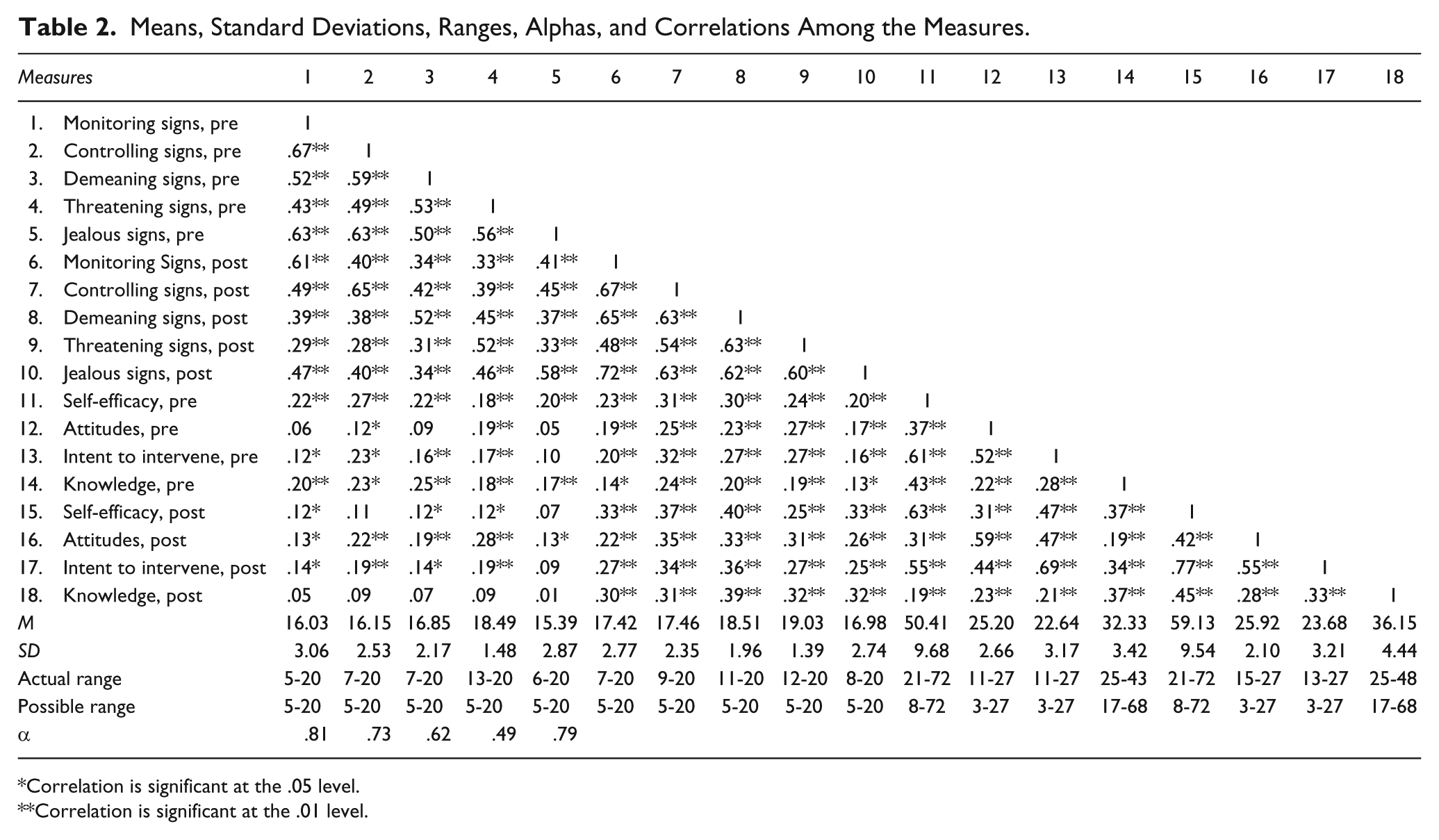
Correlation is significant at the .05 level.
Correlation is significant at the .01 level.
There were significant differences in knowledge of dating violence warning signs related to monitoring behaviors, F(2, 309) = 20.49; p < .00; Wilk’s λ = .75,
Results of Post Hoc Tests for Time 1 to Time 2 Outcomes.
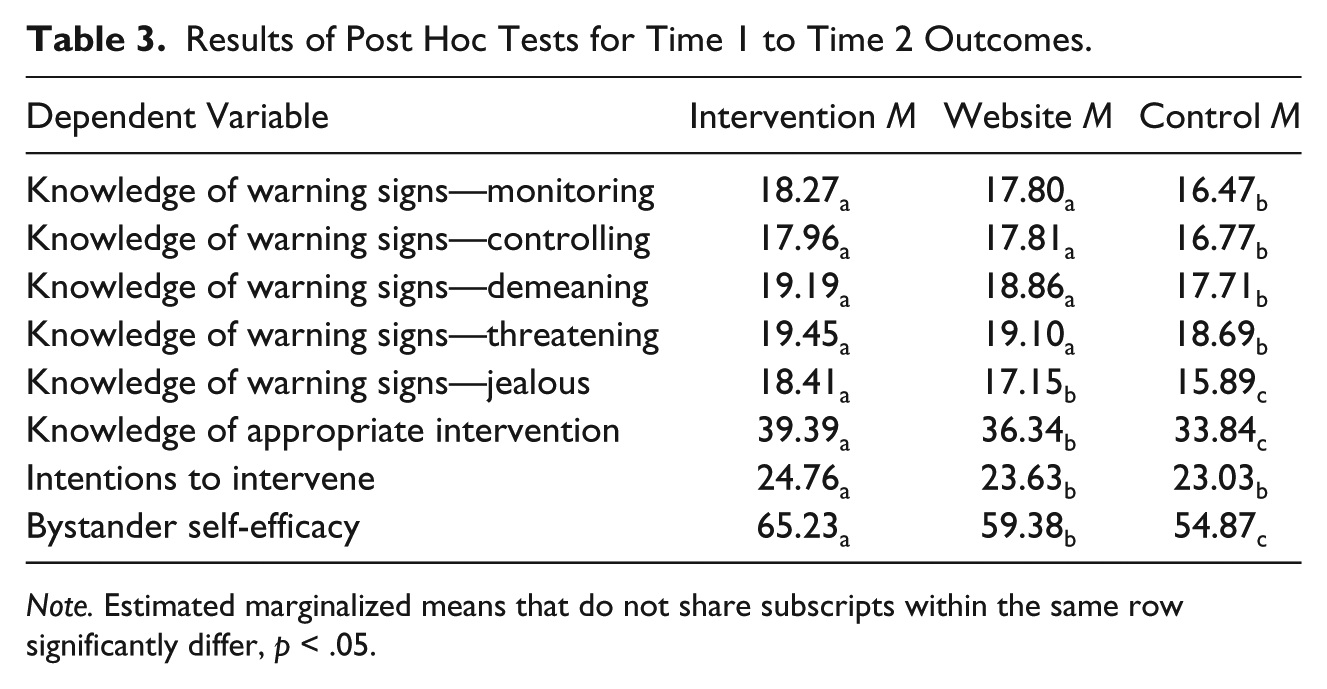
Note. Estimated marginalized means that do not share subscripts within the same row significantly differ, p < .05.
Furthermore, differences were found in constructs related to bystander interventions (i.e., knowledge regarding appropriate bystander interventions, F(2, 310) = 58.64, p < .00; Wilk’s λ = .58,
To summarize, participants exposed to the intervention demonstrated the most knowledge regarding jealous and possessive warning signs, appropriate bystander interventions, intention to help victims, and confidence in their ability to intervene.
Qualitative Results: Pretest (Time 1) to Posttest (Time 2) Evaluation of the Intervention
Qualitative content analysis (Hsieh & Shannon, 2005) was used to identify common themes in participant responses to open-ended questions for use in examining the effectiveness of the intervention. A coding scheme was initially developed based on expected responses to the intervention. After reviewing participants’ responses, the coding scheme was revised to reflect additional themes that emerged. Subsequently, the two undergraduate research assistants separately coded each response in accordance with the coding scheme. In cases where there was disagreement between the two coders, one of the graduate student authors served as a consensus judge. Coders were blind to experimental condition and whether the responses were collected before or after the intervention.
The qualitative responses assessed participants’ knowledge of dating violence warning signs (Table 4), barriers to bystander intervention in dating violence situations (Table 5), and steps that can be taken to help a dating violence victim (Table 6). The percentage of agreement for the rating of the responses between the two undergraduate coders was adequate at Time 1 (88%, 85%, and 83%, respectively) and Time 2 (76%, 84%, and 76%, respectively). We assessed the change in number of correct responses for each component at pre- and posttest using 2 (pre- vs. posttest) × 3 (control vs. information vs. intervention condition) repeated measures ANOVAs.
Qualitative Responses From Participants When Asked to List Five Warning Signs of Dating Violence.
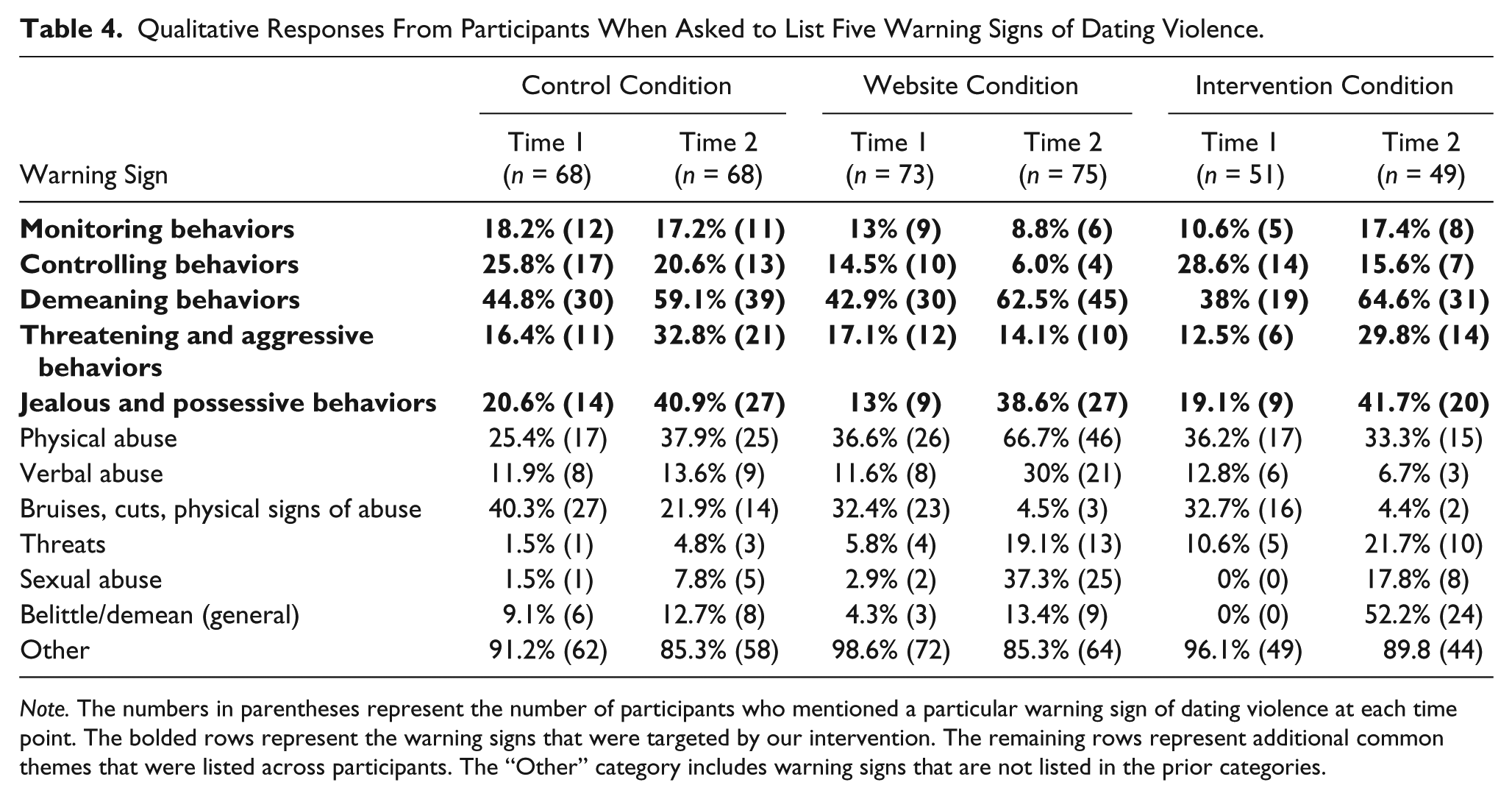
Note. The numbers in parentheses represent the number of participants who mentioned a particular warning sign of dating violence at each time point. The bolded rows represent the warning signs that were targeted by our intervention. The remaining rows represent additional common themes that were listed across participants. The “Other” category includes warning signs that are not listed in the prior categories.
Qualitative Responses From Participants When Asked to List Three Thoughts That Get in the Way of Helping a Victim of Dating Violence.
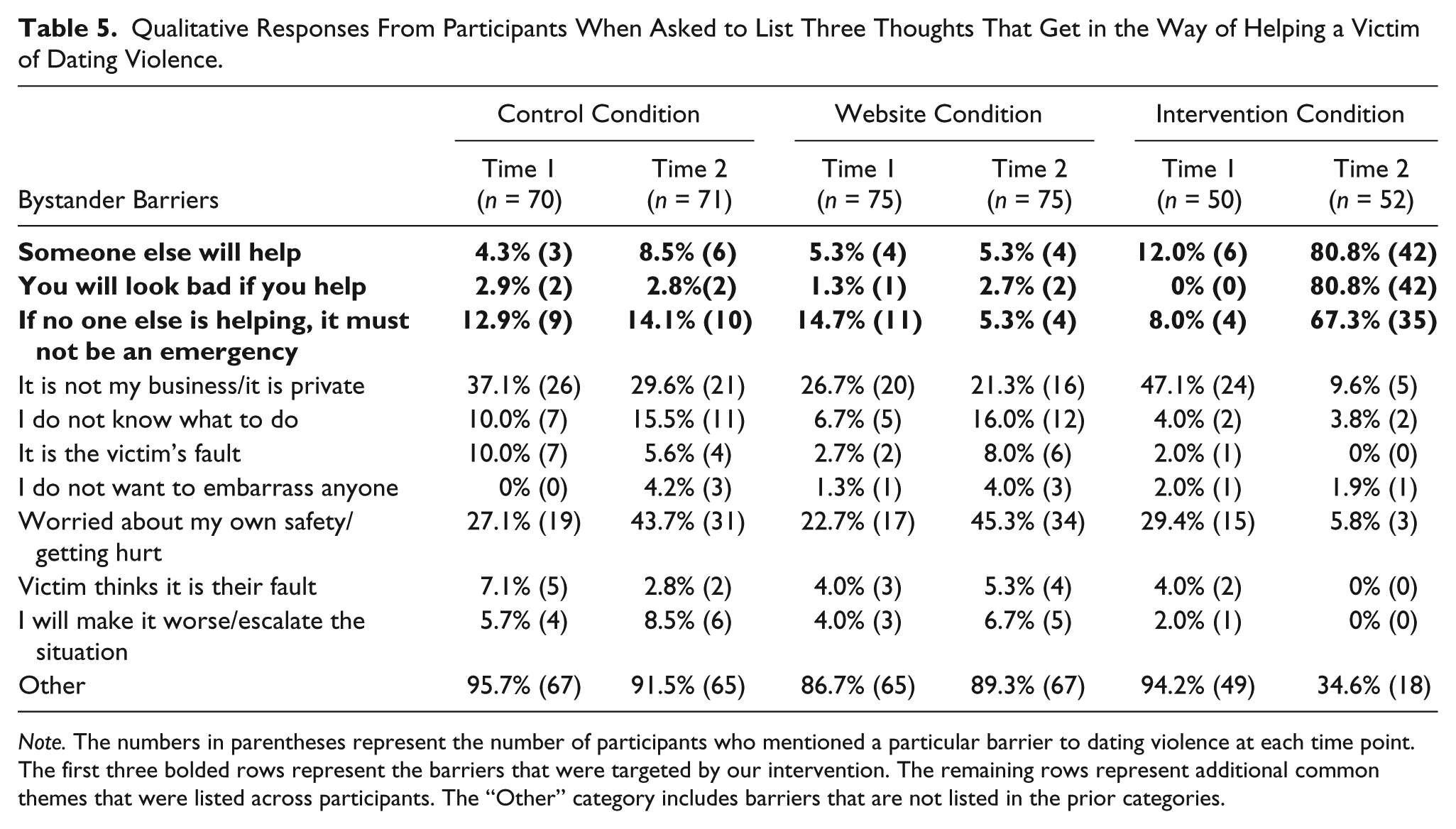
Note. The numbers in parentheses represent the number of participants who mentioned a particular barrier to dating violence at each time point. The first three bolded rows represent the barriers that were targeted by our intervention. The remaining rows represent additional common themes that were listed across participants. The “Other” category includes barriers that are not listed in the prior categories.
Qualitative Responses From Participants When Asked to List Four Steps That They Might Take If They Witness or Become Aware of a Dating Violence Situation.
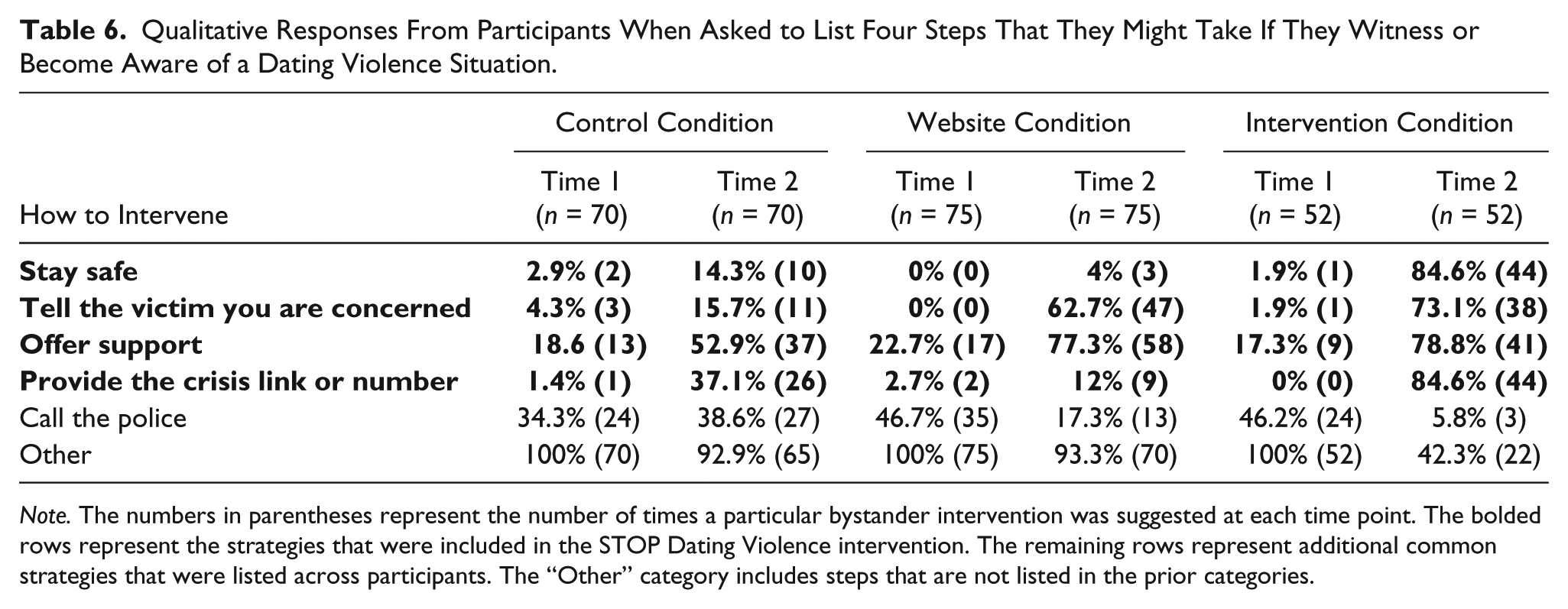
Note. The numbers in parentheses represent the number of times a particular bystander intervention was suggested at each time point. The bolded rows represent the strategies that were included in the STOP Dating Violence intervention. The remaining rows represent additional common strategies that were listed across participants. The “Other” category includes steps that are not listed in the prior categories.
Regarding dating violence warning signs, there was a main effect of time, with participants naming more warning signs targeted by the intervention at Time 2 when compared with Time 1, F(1, 181) = 14.78, p < .001. However, there was no main effect of condition or a significant Time × Condition interaction. Thus, the increase in knowledge of dating violence warning signs from Time 1 to Time 2 was present across all three conditions, with no condition demonstrating a greater increase in knowledge than the others.
With regard to barriers to bystander intervention, there was a significant Time × Condition interaction for the barriers targeted by the intervention (i.e., believing that someone else will help; believing you will look bad if you help; believing it must not be an emergency if no one else is helping), F(2, 192) = 180.67, p < .001. The results of a post hoc Tukey’s HSD (honestly significant difference) test indicated that improvement in number of correct responses regarding barriers to bystander intervention from Time 1 to Time 2 was stronger for participants who were exposed to the intervention when compared with those in the control and website conditions. Notably, there was no difference in change in number of correct responses for those in the control versus the website condition.
In addition, a significant Time × Condition interaction was found for the number of correct bystander intervention strategies targeted by the intervention (i.e., assessing safety, expressing concern, offering support, providing resources), F(2, 194) = 70.70, p < .001. The Tukey’s HSD post hoc test revealed that the improvement in knowledge of the targeted bystander interventions from Time 1 to Time 2 was greater for those in the intervention condition than for those in the control and website conditions. Change in knowledge of appropriate strategies did not differ across control and website conditions.
Quantitative Results: Time 3 (1-Month Follow-Up) Evaluation of the Intervention
Additional analyses examined change during the 1-month following the intervention. First, a series of independent samples t tests were conducted to compare participants who dropped out of the study before the follow-up assessment with those who remained in the study on all study constructs measured at Time 1. Participants who remained in the study did not differ from those who dropped out on any of the Time 1 variables, ps > .10, which suggests that selective attrition was not a problem in this study.
Similar to the approach described above for the pre- and posttest comparisons, one MANCOVA examined differences on the knowledge of warning signs subscales and the other examined differences in bystander intervention related constructs (i.e., knowledge about appropriate interventions, attitudes regarding helping others who experience dating violence, intentions to help those in dating violence situations, bystander self-efficacy, and bystander behavior). For each analysis, condition was the independent variable, Time 1 scores (for all variables except bystander behavior, which was not assessed at Time 1) were the covariates, and Time 3 scores (i.e., 1 month after the intervention) were the dependent variables. An alpha level of .01 was used to assess significance.
There were significant differences in knowledge of dating violence warning signs related to monitoring behaviors, F(2, 91) = 5.36; p < .01; Wilk’s λ = .75,
Results of Post Hoc Tests for 1-Month Follow-Up Outcomes.
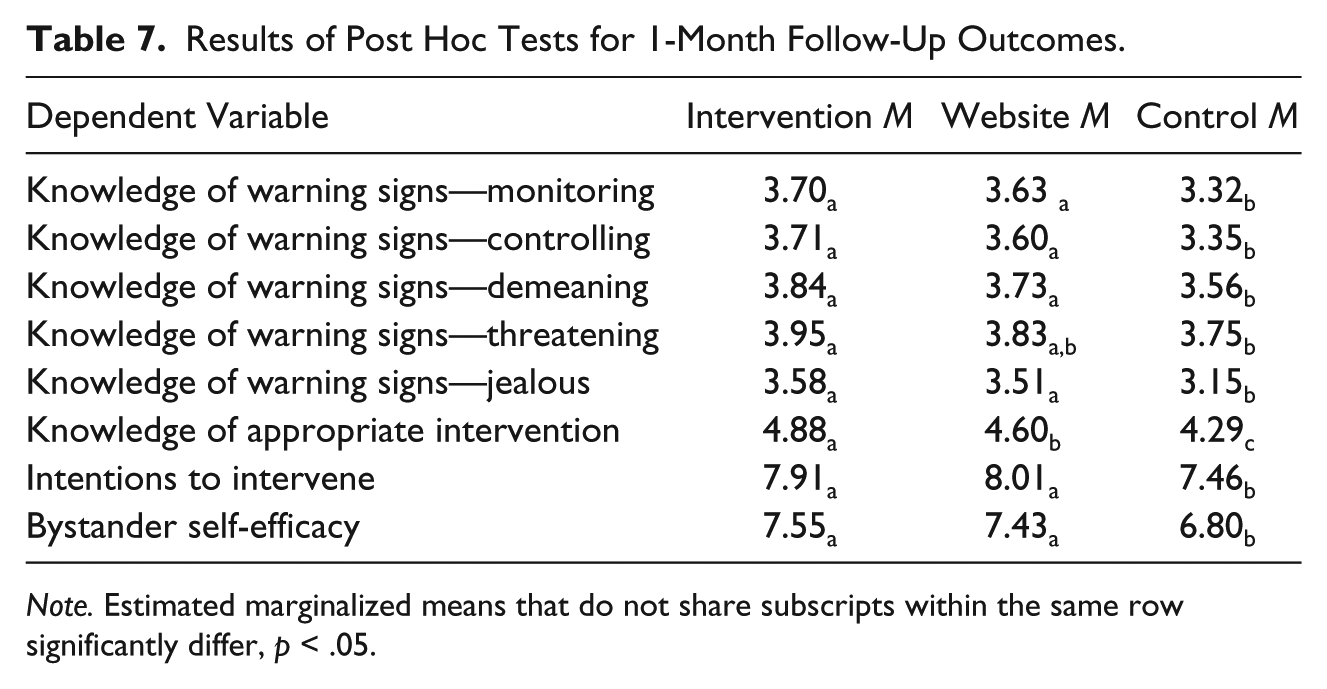
Note. Estimated marginalized means that do not share subscripts within the same row significantly differ, p < .05.
In addition, group differences were found for bystander intervention outcomes, including knowledge regarding appropriate bystander interventions, F(2, 90) = 11.62, p < .001; Wilk’s λ = .73,
To summarize, 1 month following exposure to one of the three conditions, participants in the intervention and website conditions were equivalent on most outcomes, exhibiting greater knowledge, intentions to help, and self-efficacy relative to the control condition. Importantly, knowledge of appropriate bystander interventions was greatest in the intervention condition.
Discussion
Findings from this study suggested that the STOP Dating Violence online intervention was effective in educating undergraduate students about warning signs of dating violence and bystander interventions. Relative to participants receiving no intervention and participants who browsed a website about dating violence, participants who received the STOP Dating Violence intervention reported more knowledge of appropriate interventions, greater intentions to intervene, more bystander self-efficacy, and greater appreciation of jealousy as a warning sign of dating violence. In addition, qualitative analyses indicated that participants could identify more barriers to bystander involvement and more steps in the bystander intervention model after exposure to the Prezi presentations. Importantly, participants who received the intervention continued to demonstrate greater knowledge of appropriate bystander intervention 1 month later. Should these findings be replicated, the intervention may serve as a fiscally sustainable model for widespread service delivery to educate college students about appropriate bystander responses to dating violence.
As hypothesized, the findings from the qualitative analyses provided additional support for the effectiveness of the STOP Dating Violence online intervention. When students were asked to write down warning signs, beliefs that hinder bystander action and appropriate steps to take when confronted by dating violence, those in the intervention condition performed well, indicating that significant learning occurred as it is much more challenging to recall and list items than to endorse items in a survey format. Of great interest was the finding that after participation in the intervention, students were able to create a list of demeaning, jealous, and possessive behaviors that were indicative of dating violence. Similarly, immediately following the intervention, knowledge as assessed by the quantitative measures was enhanced for only one warning sign of dating violence—jealous and possessive behaviors. This particular warning sign may be most likely to be confused with romance or being in love (e.g., my partner is jealous/possessive because he loves me and is worried about losing me). By being able to name jealousy and possessiveness as problematic signs, students could apply this to knowledge to future relationships. Further education targeting the problematic nature of jealous and possessive behaviors has potential to change perceptions of these behaviors and enable students to recognize warning signs of dating violence.
It is important to note that both the intervention and website conditions were effective in educating college students about monitoring, controlling, and demeaning warning signs initially and at follow-up relative to the control group. The qualitative data also indicated that knowledge of warning signs increased regardless of the condition. Completion of the warning signs measure at pretest may have educated participants about warning signs and likely contributed to this finding. Moreover, exposure to information on the website also was effective in enhancing intent to intervene, confidence in intervening, and knowledge at follow-up. Additional research is needed to determine the efficacy (and the relative contributions) of both intervention and webpage mechanisms for disseminating knowledge about dating violence.
In addition, students who were exposed to the intervention showed considerable improvement in their ability to generate a list of thoughts that get in the way of helping victims. It is possible that students who remember these detrimental thoughts may recognize the problematic nature of assuming that someone else will help, that they will look bad if they help, or that the situation must not be an emergency. Finally, participants in the intervention condition were able to correctly identify and list the four components of the STOP Dating Violence intervention.
It is salient to note that no changes were found in attitudes about helping individuals who experience dating violence. This finding is important because some dating violence prevention programs focus on attitude change without the assessment of behavioral change over time (Shorey et al., 2012). This result may have occurred because participants may have had positive attitudes toward helping victims of dating violence at the start of the study. Alternatively, our measure of attitudes was comprised of three items and likely did not assess subtleties related to attitudes about dating violence (that extend beyond socially desirable responses).
The next important step is to determine if this knowledge translates into actual behaviors. Our longitudinal findings did not demonstrate behavior change, but this may have occurred because participants were not exposed to dating violence over the 1-month period. Future studies (similar to Moynihan et al., 2015 and Peterson et al., 2018) should expand the length of time for follow-up assessment and measure whether participants had the opportunity to intervene in violence. Additional longitudinal studies that test the efficacy of dating violence interventions on college campuses are needed.
In summary, the findings from the quantitative and qualitative analyses were consistent in that both indicated that participants in the intervention condition could identify the warning signs of dating violence and were most knowledgeable regarding barriers to bystander intervention and appropriate bystander interventions when compared with participants in the website and control conditions. The quantitative analyses also demonstrated that when compared with participants in the website and control conditions, students in the intervention condition had the greatest intent to assist a victim of dating violence and were the most confident in their ability to intervene in dating violence situations.
Limitations
The limitations of this study included developing several measures for use in this study (as previously used measures assessing the constructs of interest were not available) and low reliability estimates on a few subscales. The phrasing of the open-ended questions may have influenced participants’ responses. Also, there were differences in attrition across conditions. This likely occurred because participation in the intervention condition took longer than the other two conditions, possibly accounting for the smaller number of individuals in the intervention condition at posttest and for the follow-up analyses. Moreover, participants were not asked during the follow-up assessment whether they had an opportunity to intervene in violence in the prior month nor did we assess involvement in bystander behaviors at pretest. Furthermore, it is important to acknowledge the small magnitude of differences on several outcome measures, which may have occurred because most participants had some basic knowledge about dating violence prior to participation.
Although one of the strengths of the study was the racial diversity of the sample (45% were students of color), the majority of participants in the study were women. A recent study showed that college men were less likely to recognize warning signs of dating violence (when compared with college women; Kearney & O’Brien, 2018). Future research might target individuals (e.g., college men, middle school or high school students), who have less knowledge about warning signs or bystander interventions. Also, data were not collected regarding the sexual orientation of the participants and should be included in future research to ensure representation of LGBTQ + individuals in dating violence interventions. In addition, the intervention and website conditions were not equivalent, and we were unable to assess attention within each condition. Finally, nuanced consideration of factors affecting bystander behavior in violence prevention should be addressed in future research (e.g., see Brown, Banyard, & Moynihan, 2014).
Future Research Directions
Future research also is needed to evaluate whether the STOP Dating Violence intervention reduces campuswide occurrences of dating violence. After additional evaluation, online interventions similar to the one proposed in this study might be instituted in colleges during first-year orientation to encourage students to recognize and respond appropriately to dating violence. Also of interest is whether participation in the intervention enhances the ability to accurately detect when one’s relationship may become abusive and, in turn, if this leads to exiting those relationships prior to significant commitment and escalation of violence. Some victims of relationship violence report that after they become committed to the relationship, poor perceived alternatives and substantial investment in the relationship are barriers to ending the relationship (Rhatigan & Street, 2005).
University–community partnerships with agencies addressing domestic violence might be developed to further disseminate the intervention and serve college students who may need intensive assistance (e.g., O’Brien, Risco, Castro, & Goodman, 2014). Also, future research should examine the outcomes for those who intervene in dating violence situations. A recent study showed that although individuals who intervene in violence felt positive about their behaviors, they also experienced stress related to witnessing and intervening in these difficult situations (Witte, Casper, Hackman, & Mulla, 2017).
Conclusion
To conclude, dating violence is a serious problem on college campuses. Findings from this study indicated that the online STOP Dating Violence intervention has great potential to educate students about warning signs of dating violence, problematic thoughts that hinder the provision of assistance to victims of dating violence and appropriate bystander interventions. This study can serve as a model for interdisciplinary collaboration in developing and evaluating easily disseminated online interventions to address social problems. It is our hope that this research will contribute to efforts to reduce dating violence and improve bystander interventions at colleges and universities.
Footnotes
Acknowledgements
Gratitude is extended to Morgan Bennar and Jacquelyn Picciani for their assistance with the coding of the qualitative data.
Declaration of Conflicting Interests
The author(s) declared no potential conflicts of interest with respect to the research, authorship, and/or publication of this article.
Funding
The author(s) disclosed receipt of the following financial support for the research, authorship, and/or publication of this article: Funding for this study was received from the University of Maryland College of Behavioral and Social Sciences Dean’s Research Initiative Grant.
