







Abstract
This study aimed to further understand typologies of trafficking that occur in the home, by an individual’s intimate partner (IP) or family members and this overlap with extant knowledge on perpetrator manipulation via the Power and Control Wheel. Inductive and deductive techniques were used to analyze secondary data from a federally funded anti-trafficking program in a Midwest metropolitan area recorded between 2008 and 2017. Cases were included if there was indication of sex or labor exploitation initiated by an IP, family member, or other in the domestic setting via elements of abuse; 59 cases of 213 met this criteria. Most cases included the IP as the trafficker, followed by family members, then others in the domestic setting. Abuse was more commonly used than the threat of abuse. From the Power and Control Wheel, the most frequent types of abuse were using privilege, physical abuse, economic abuse, isolation, and sexual abuse. Case typologies included: those with elements of sex trafficking, specifically forced commercial sex by an IP or family member; those with elements of labor trafficking such as domestic servitude (with or without childcare provision abuse), exploitation in a family business by an IP or family member, or work environments by family and non-family; those with elements of sex and labor trafficking included servile partnerships and forced marriage. Trafficking exploitation by an IP, family member, or in the domestic setting is not uncommon. Intimate relationships with a trafficker, psychological coercion, and threats may reduce reporting of abuse, subsequent provision of services, and result in misclassification as victims of IP violence. This study sheds light on various typologies of trafficking and exploitation in the domestic setting, further expanding the anti-trafficking movement’s evidence base for intervention and prevention and adding complexity and nuance to the pathways to trafficking exploitation.
Keywords
Introduction
The United States’ (U.S.) Trafficking Victims Protection Act (TVPA) defines trafficking in persons as the recruitment, harboring, transportation, or obtaining of a person via means of force, fraud, or coercion for the purpose of a commercial sex act or for labor or services, whereas for a child under the age of 18 involved in a commercial sex act, force, fraud, or coercion are not necessary (Victims of Trafficking and Violence Protection Act of 2000). The most rigorous estimates to date conservatively suggest that 24.9 million men, women, and children experienced forced labor (including in the sex industry) globally in 2016 (International Labor Organization, 2017).
The dominant narrative of trafficking in the media is one of a female who is sex trafficked by a stranger (Albright & D’Adamo, 2017). However, there is an expanding body of literature that reflects that trafficking may not only be perpetrated by a family member or intimate partner (IP), but also occurs in victim’s own homes (Counter-Trafficking Data Collaborative [CTDC], n.d.). Given the observed similarities in patterns of behavior between traffickers and those who commit acts of intimate partner violence (IPV), the National Human Trafficking Hotline adapted an IPV conceptual framework (the Domestic Abuse Intervention Project’s Duluth Model Power and Control Wheel) to create the “Human Trafficking Power and Control Wheel” (National Human Trafficking Resource Center [NHTRC], 2010).
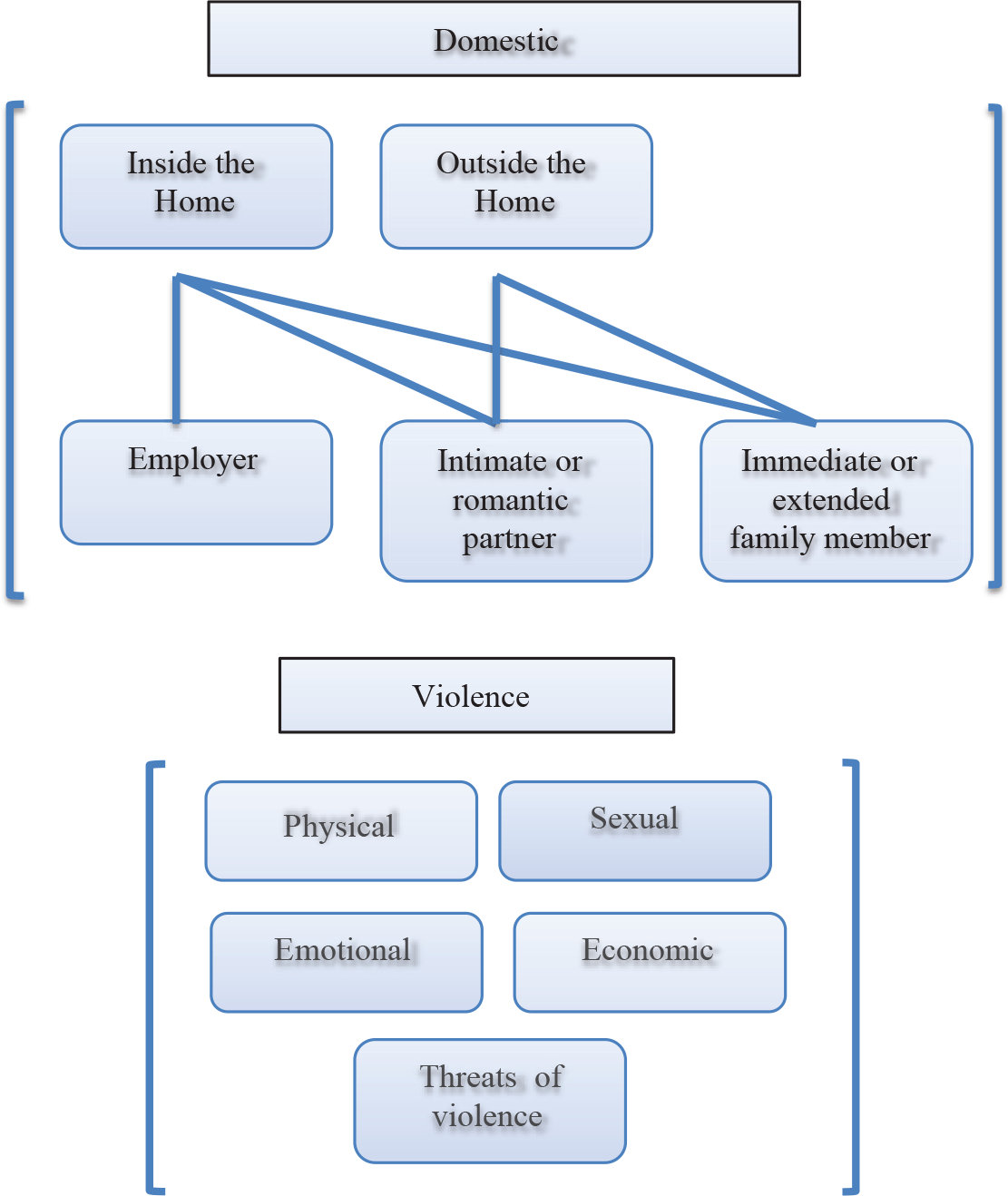
Using the “Human Trafficking Power and Control Wheel” as a conceptual framework, this study aimed to further understand “domestic violence” typologies of trafficking that occur in the home, by an individual’s IP, or by immediate or extended family members. For the purposes of this study, an expansive definition of both words in the term “domestic violence” is used. Domestic perpetrators can include a spouse, IP, child, relative, or other cohabitants in a domicile. Violence can be physical, sexual, emotional, or economic, and includes threats of inflicting violence. Figure 1 pictorially depicts our definition.
Our conceptualization of “Domestic Violence” to examine human trafficking within the Domestic Setting.
Literature Review
There is an emerging body of literature that describes links between trafficking and domestic violence, from risk factors, to recruitment, exploitation methods, and victim decision-making. First, familial dysfunction and a history of abuse have emerged as key elements that are associated with increased risk of trafficking victimization. Limited post-trafficking survey data indicates that 59% of women reported experiences of physical or sexual abuse prior to being trafficked (often by a father or stepfather); 12% of women reported sexual abuse before the age of 15 (Zimmerman et al., 2008). In a study with a small sample of women sex trafficking victims (n = 30), more US victims had experienced physical and/or sexual abuse as a child than international victims (Muftić & Finn, 2013). Surtees found that the strength of family relationships influenced risk for trafficking (Surtees, 2008).
While trafficking victims may be recruited by individuals that they are not familiar with, such as those involved in criminal organizations, gangs, or labor recruiters, it is not uncommon for victims to be recruited by someone with whom they have a close personal relationship (Dank et al., 2014; Rocha Jiménez et al., 2019). In the largest global dataset of trafficking, housed with the Counter-Trafficking Data Collaborative (n.d.), adults were most frequently recruited into situations of trafficking by an IP (15%), though IP recruitment also occurred among children (14%). For example, one report found that approximately 14% of individuals who were victims of sex trafficking were recruited by family members (Newton et al., 2008). In a study of male victims of labor trafficking, recruitment occurred by personal contacts often while they were living with their families (Surtees, 2008).
Beyond recruitment, trafficked persons may be exploited by a romantic or IP (Gerassi, 2015). This often-close relationship between traffickers and their victims creates an additional layer of complexity, as victims may be more likely to show support for or exculpate their abusers (Wasco, 2003; Watts & Zimmerman, 2002). There are multiple ways in which traffickers can use an intimate relationship to take advantage of a victim. Some traffickers lure individuals into a relationship through the promise of a marriage or romantic relationship, only to force the victims into providing commercial sex (Bessell, 2018; Kutner, 2015). Other exploiters might force their existing domestic partners into commercial sex work (Rocha Jiménez, 2019). An analysis of civil federal prosecutions of trafficking demonstrates a link between domestic violence and human trafficking; in these cases of trafficking, many were initially thought to be solely cases of domestic violence (Bessell, 2018).
A study of trafficking among homeless youth revealed that homeless youth are trafficked by family members to sell drugs as well as for commercial sexual exploitation (Murphy, 2016). Additionally, women and girls, from low-income nations, may be sold by family members as “mail-order brides” to men in high-income nations (Yakushko & Rajan, 2017).
In addition to victims being exploited by IPs or family members, there are also forms of non-familial human trafficking that occur in the domestic setting described in the literature. Their exploited domestic labor may entail anything from cleaning houses to providing childcare. These domestic work victims may be recruited with the promise of well-paying employment opportunities overseas to work in homes. They may enter the country, such as the United States, under temporary work visas (Owens et al., 2014). Traffickers then steal or seize their victims’ passports, intimidate or physically harm them, or use threats of deportation to keep them under involuntary servitude (Hargreaves, 2013; Polaris Project, n.d.). During the recruitment process, traffickers may also charge fees, which lead the victims into debt and becomes a foundation for the economic control that can be used to exploit trafficking victims (NHTRC, 2010; Polaris Project, n.d.). Between 2007 and 2016, the National Human Trafficking Hotline (NHTH) documented over 1,000 cases of domestic servitude, yet research into this typology of trafficking remains extremely limited (Polaris Project, 2017).
The parallels between IPV and human trafficking also extend to the tactics used by perpetrators and the decision-making processes of victims (Menon et al., 2018). Traffickers, much like perpetrators of domestic and IPV, use cyclical physical and sexual violence (Breiding et al., 2014; Stanley et al., 2016) and manipulation to control their victims (Busch et al., 2004; Lutya & Lanier, 2012; Watts & Zimmerman, 2002). Moreover, similar to domestic violence perpetrators, traffickers may utilize reproductive coercion (Clark et al., 2014; Ravi et al., 2017), including having children with the victim, and use threats against the child as a means of coercion (Gavin & Thomson, 2017). Psychological aggression is another common thread seen in both the domestic violence and trafficking literature (Baldwin et al., 2015; Kishor & Johnson, 2004).
While there is little literature around decision-making processes among trafficked persons, the IPV literature illustrates that decisions to stay with or leave an exploiter are complex, involving an interplay of socioecological, life course, and interpersonal factors (Purvin, 2007; Sabina et al., 2014; Velonis et al., 2017). For example, the societally generated stress of lack of alternative housing options, fear of deportation, or interpersonal concerns about separation from children, all are considerations affecting a victim of interpersonal violence’s decisions.
The Human Trafficking Power and Control Wheel is a conceptual framework that outlines key components traffickers use to exert control over victims and has a few differences from the IPV Duluth Power and Control Wheel, from which it was adapted (NHTRC, 2010). Structurally, the Duluth Wheel includes eight categories and physical and sexual violence exist around the circumference, rather than as categories. The modified human trafficking wheel has nine categories with sexual and physical abuse as distinct categories and types of sex and labor trafficking around the circumference. “Using children” is a distinct category in the Duluth Wheel and has descriptions such as “making her feel guilty about the children; using visitation to harass her.” In contrast, in the human trafficking wheel, the construct of using children is dispersed throughout other categories (e.g., the intimidation category’s “harms other victims, children or pets”; isolation category’s “denies access to children”). There are also differences in the category descriptions between the two. Notably, the descriptions for the trafficking wheel use gender-neutral language, and distinguish how power and control are enacted in trafficking versus IPV. For example, the isolation category for IPV includes, “limiting her outside involvement; using jealousy to justify actions” whereas considering the risk for traffickers to be identified for their criminal activity, the isolation category includes, “keeps confined; creates distrust of police/others; doesn’t allow victim to learn English or go to school.” Polaris, the organization that runs the National Human Trafficking Hotline, created the wheel based on expertise from listening to and analyzing thousands of trafficking hotline reports across the United States (National Human Trafficking Hotline [NHTH], n.d.). The trafficking wheel categories of physical abuse, using privilege, economic abuse, coercion and threats, intimidation, emotional abuse, isolation, denying, blaming, or minimizing, and sexual abuse and their descriptions match the existing literature on trafficking (Baldwin et al., 2015; Busch et al., 2004; NHTRC, 2010; Stanley et al., 2016). Furthermore, trafficking occurs among those of any gender.
Methods
This document analysis is based off of an academic and anti-human trafficking program partnership. Elements of content analysis (organizing categories) and thematic analysis (recognizing patterns) were used (Bowen, 2009). Using a combination of deductive and inductive approaches, we extracted content from de-identified secondary data from federally funded anti-trafficking programmatic work in a major Midwest metropolitan area. First, we combined detailed documentation (153 pages of text and four spreadsheets) of all human trafficking tips, reported to and recorded by anti-trafficking staff members from one agency between September 1, 2008 and June 30, 2017, into one spreadsheet. Out of a total of 213 trafficking tips that were reported to the agency, 82 potential victims were identified (Koegler et al., 2019). There were 126 labor trafficking tips with 57 potential victims and 59 sex trafficking tips with 17 potential victims. Two victims experienced labor and sex trafficking while six cases were unknown. Three tips included elements of both labor and sex trafficking while 25 tips were uncertain. Different populations were served over the years of the agency’s federal funding, with an exclusive focus on foreign-born individuals throughout several of the award periods (Koegler et al., 2019). Data was not collected for the purposes of this or other research and thus the authors were limited to the content that was recorded by the agency staff members at the time it was collected. Data was recorded inconsistently over award periods, however data generally included demographic information about potential victims (i.e., age, sex, country of origin) elements of the situation, type of exploitation or trafficking, and action plan or response (Koegler et al., 2019). The means of trafficking (i.e., force, fraud, coercion) was only specifically recorded in one of the four spreadsheets from September 2014 to August 2015. A detailed description of the larger dataset can be found in Koegler et al. (2019).
From this anti-trafficking service provider dataset, we extracted data from cases that met the following criteria: (a) there was some indication of sexual or labor exploitation; (b) exploitation was initiated by an IP, family member, or someone in the domestic setting (i.e., where the potential victim lived); (c) elements of abuse (e.g., physical, sexual, verbal, etc.) enabled the exploitation. N = 59 cases met the criteria for inclusion in this study from the 213 trafficking tips that were reported to the agency during this time period (Koegler et al., 2019). Given the limitations of a secondary dataset, it is possible that other cases may have met all inclusion criteria, or that abuse depicted in the human trafficking Power and Control Wheel may have been present, but that this specific information was not shared by the potential victim or specifically asked about or recorded by the agency staff.
Data for the 59 included cases were placed into one spreadsheet with aggregate information and one text document with detailed information. We then created a codebook and added columns to the spreadsheet for each code.
Codebook
Code creation first involved an inductive approach. After reviewing the 59 cases in detail for emerging themes, three investigators (EK, WH, MT) established the codebook, including criteria for coding. Codes included the following. Abuser type referred to which of our second inclusion criteria the case met for type of abuser and was recorded as IP, family, other domestic. Sub-abuser type further clarified the relationship of the abuser to the victim (responses included husband, uncle, employer, etc.). In consideration of the definitional means of human trafficking (i.e., force, fraud, or coercion), and elements of power and control, we coded if abuse or the threat of abuse was used by the abuser in each case. Per the US federal definition of human trafficking we coded the type of trafficking (i.e., labor, sex, uncertain) experienced in each case. Case country of birth was coded as foreign born, domestic born, or unknown. Case age was coded as adult (18+ years), minor, or unknown. Coding for case typology was based on the type of trafficking and the type of exploitative work (e.g., domestic servitude, forced to give wages in marriage, forced commercial sex). Coding for category of abuse was derived deductively from the Human Trafficking Power and Control Wheel (NHTRC, 2010) and included the nine categories discussed above. There was also an open-ended column in the spreadsheet for coders to indicate other notable items.
Analysis
Coders first read the text document data for each case followed by the spreadsheet data. In the text document, only the codes for the nine categories of abuse were tagged; coders highlighted the relevant text and added a comment stating which type(s) of abuse the passage included. Some passages in the text document were tagged as more than one category of abuse if it met the criteria for more than one category of abuse. Coders then entered responses for each code into a spreadsheet. All responses were text except for the nine categories of abuse, which were entered in the spreadsheet as 0 if the type of abuse was not present and 1 if the type of abuse was present.
Coding occurred iteratively. First, all three coders coded the variables for just six of the cases. Then, coders met to resolve and clarify any discrepancies and to refine the coding. The coders identified 12 coding discrepancies (12.5%) during the first resolution meeting. At that meeting, coders together established that “denying access to medical treatment” would be coded under “Physical Abuse.” They also decided that “verbal abuse,” which included “humiliates in front of others” and “calls names” would be coded under “Emotional Abuse” on the Human Trafficking Power and Control Wheel. These additions can be seen in Figure 2.
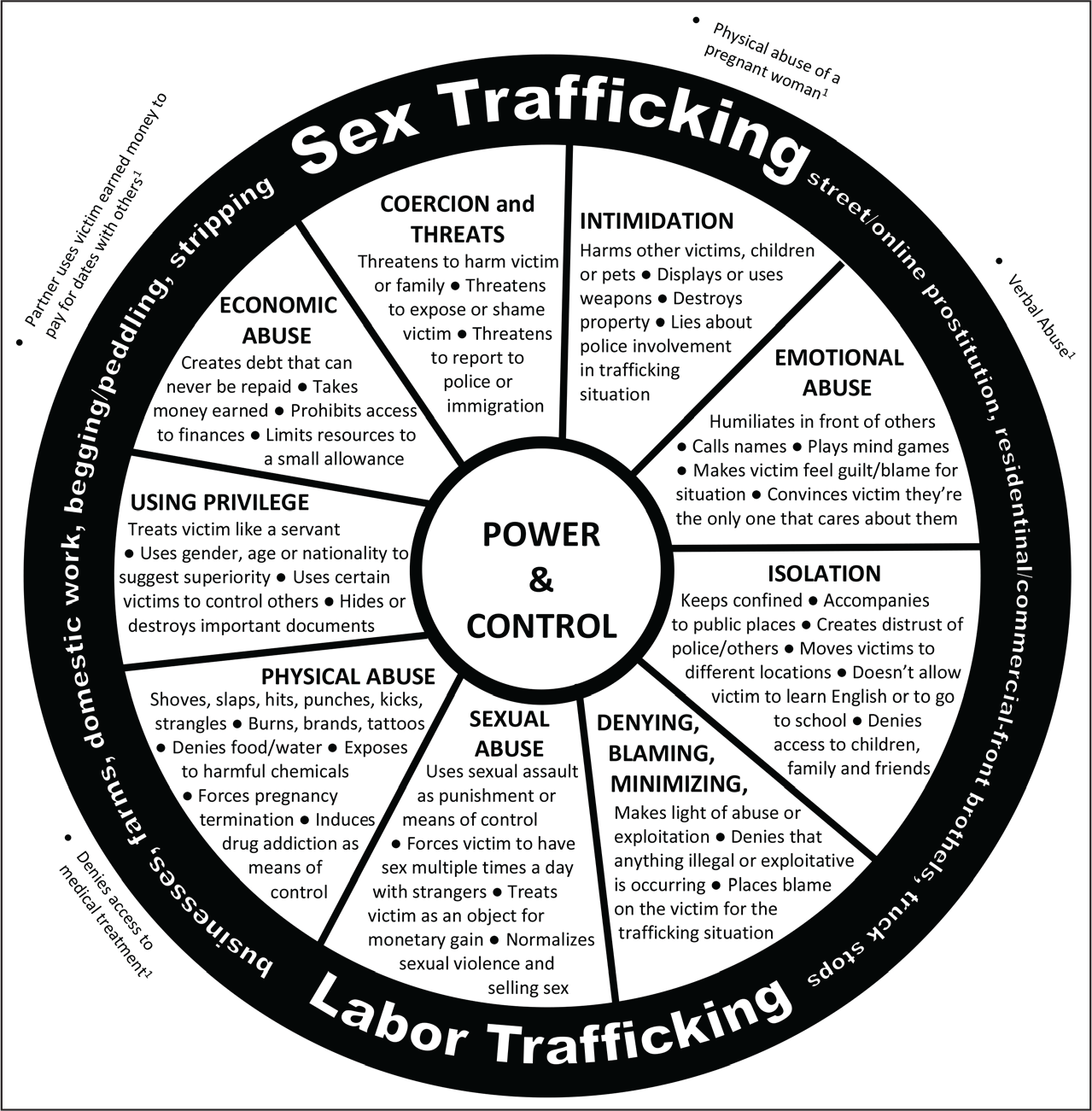
Note. Bullet points outside the circle have been added upon analysis in this article.
All three coders proceeded to analyze another six reported cases. Seven discrepancies (7.3%) in coding were identified, resolved, and clarified. In this round, coders clarified that physical abuse of a pregnant woman would be included both as “Physical Abuse” and as an element of “Intimidation” using the Human Trafficking Power and Control Wheel because the coding team agreed it met the “Harms other victims, children or pets” criteria of the Intimidation category. Coders also agreed that when a male partner used money earned by the female victim to pay for dates or sexual activities with other women that it met the “Using privilege” category, “Uses gender … to suggest superiority” criteria and the “Economic Abuse” category, “Takes money earned” criteria of the Human Trafficking Power and Control Wheel. Some data fit the criteria for more than one category code. Since major discrepancies had been reduced and further clarified, two of the three initial coders coded and together resolved minor discrepancies of coding for the subsequent data (n = 47 reported cases). Illustrative quotes for types of abuse were extracted from the agency’s recorded case data. Any names used are pseudonyms.
Results
Reported cases (N = 59) included victims of exploitation by an IP, family member, or other person in their domestic setting. Victims primarily experienced elements of labor trafficking (n = 28), compared to elements of sex trafficking (n = 18), with n = 9 unclear cases which had a combination of both labor and sex trafficking characteristics, and n = 4 cases that met the inclusion criteria but may not have been trafficking. Victims were predominantly foreign-born (n = 41), female (n = 54), and aged 18 or older (n = 47), but also included US born (n = 13) and a few of unspecified origin (n = 5), male (n = 5), children (n = 12), and victims of unspecified age (n = 9).
Abuser Type
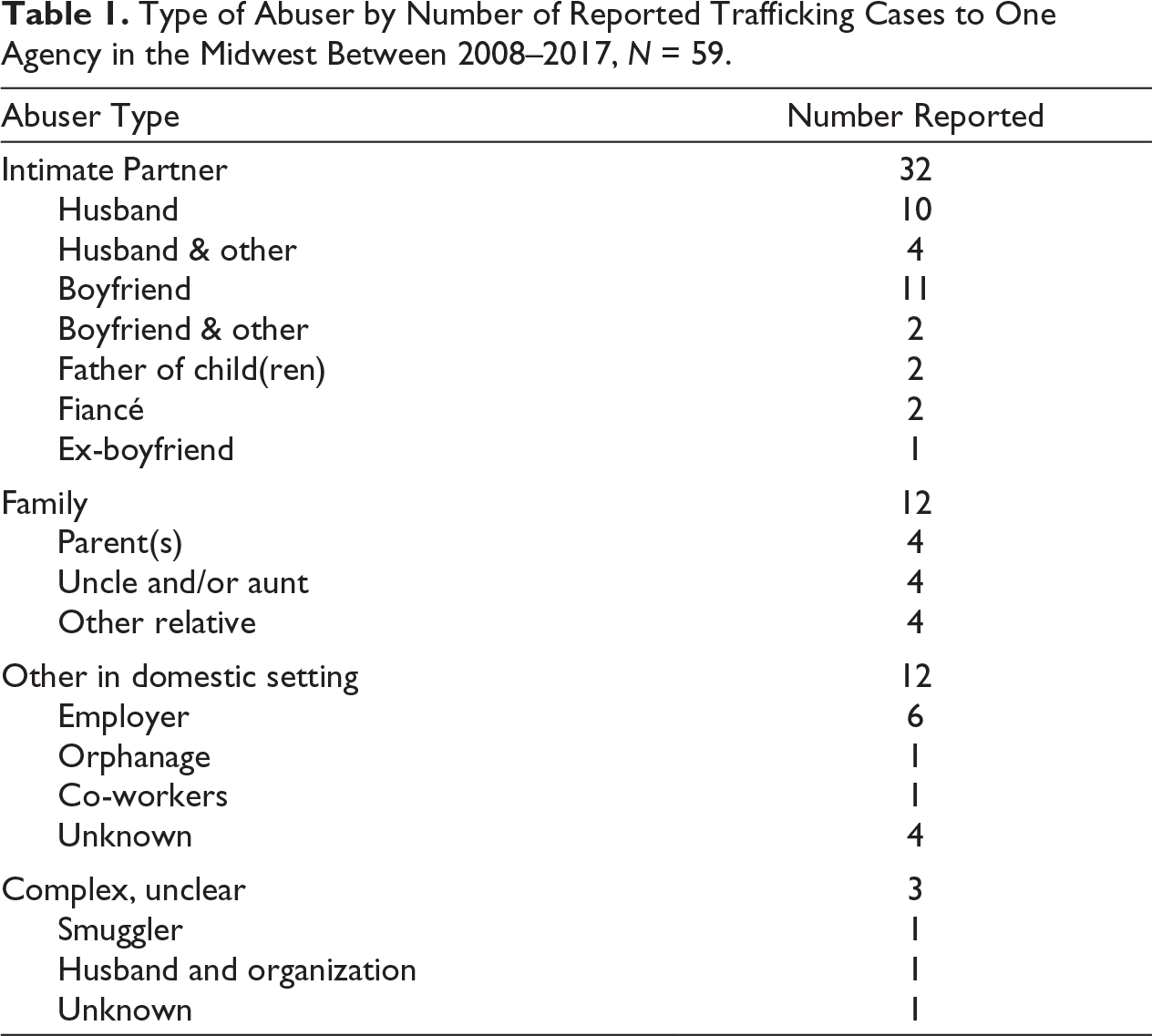
Most reported cases of potential human trafficking in this study included the IP as the abuser (n = 32; Table 1). The sub-types of IP abusers included boyfriends, husbands, fiancés, fathers of women’s child(ren), husbands and boyfriends with another abuser, and an ex-boyfriend. There were n = 12 cases where a non-IP family member exploited another family member. Abusers included parents, uncles and aunts, and other relatives. Within the other domestic settings, half of the reported cases involved the employer as the abuser (n = 6). It was notable that several cases involved more than one abuser. Largely this included the IP and the victim’s in-laws. There was one victim who was documented by the agency as a victim of domestic servitude, but it did not specify who the abuser was.
Type of Abuser by Number of Reported Trafficking Cases to One Agency in the Midwest Between 2008–2017, N = 59.
Abuse or Threat of Abuse
Exploiters predominantly used some actual type of abuse (n = 36), rather than the threat of abuse (n = 10), to exploit and control the individuals. For 13 cases, the documentation did not specify if abuse or threat of abuse was used by the abuser to exploit the individual but it was implied by the case. For example, four of these cases involved elements of child sexual exploitation but it did not specify how the abuser forced this.
Human Trafficking Power and Control Wheel
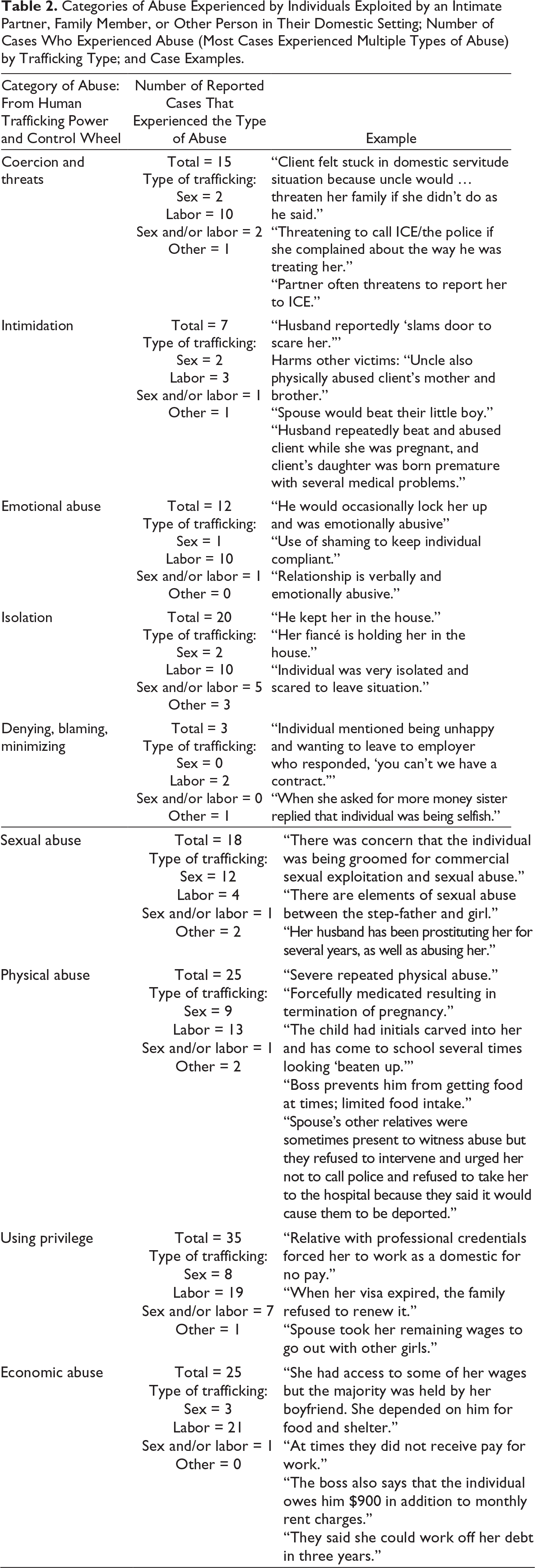
We documented an average of 2.7 types of abuse (from the Human Trafficking Power and Control Wheel) for each case, with a range of 0–6. Most of the individuals in this study experienced more than one type of abuse. The number and types of cases involving each type of abuse is detailed in Table 2 with case examples. The most frequently identified types of abuse were “Using Privilege” (n = 35), “Economic Abuse” (n = 25), “Physical Abuse” (n = 25), “Isolation” (n = 20), and “Sexual Abuse” (n = 18). The least frequently identified types of abuse were “Denying, Blaming, Minimalizing” (n = 3), “Intimidation” (n = 7), “Emotional Abuse” (n = 12), and “Coercion and Threats” (n = 15). Nearly every type of abuse was identified for cases of both labor and sex trafficking with the exception of “Denying, Blaming, Minimalizing,” which was infrequently identified. Notable frequently identified types of abuse by case type are as follows. “Economic Abuse” was identified in 75% and “Using Privilege” was identified in 68% of labor trafficking. “Sexual Abuse” was identified in 67% of sex trafficking cases.
Categories of Abuse Experienced by Individuals Exploited by an Intimate Partner, Family Member, or Other Person in Their Domestic Setting; Number of Cases Who Experienced Abuse (Most Cases Experienced Multiple Types of Abuse) by Trafficking Type; and Case Examples.
Case Typology (With Case Examples)
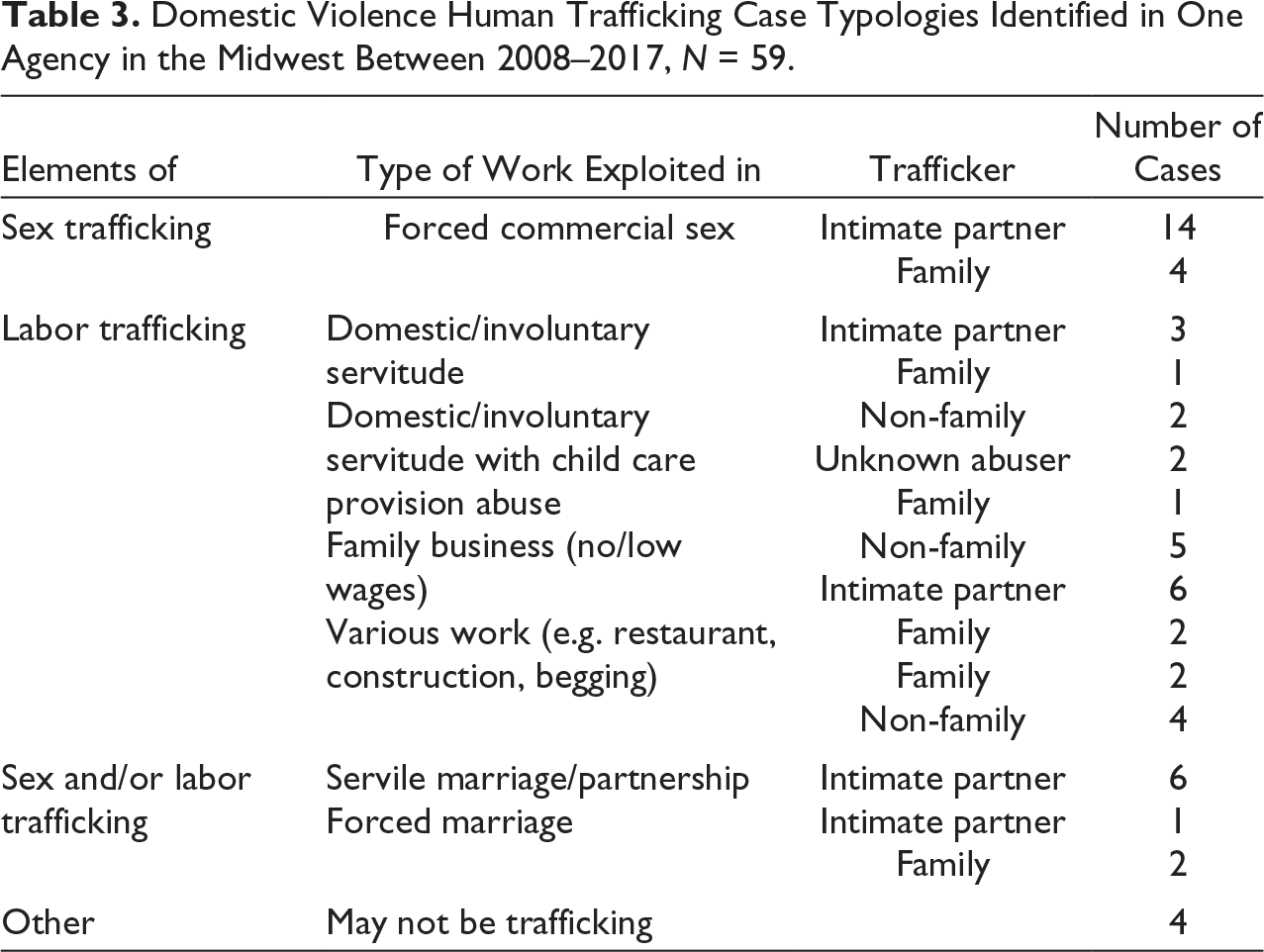
Common case types were grouped together (Table 3). There were 18 cases of forced commercial sex: 14 perpetrated by an IP and four perpetrated by another family member. Of the eight cases of domestic/involuntary servitude, three were perpetrated by an IP, one by another family member, two were not family, and two where the relationship of the perpetrator was unknown. The six cases of domestic/involuntary servitude with childcare provision abuse were largely not perpetrated by family (n = 5) with one family member perpetrator. Other labor trafficking cases were perpetrated by family (n = 2) and not by family (n = 4). All six cases of servile marriage/partnership were perpetrated by IPs. Forced marriage was perpetrated by one IP and two family members. Four complex cases met the criteria for inclusion but may not be trafficking situations. Illustrative case examples are summarized below. Any names used are pseudonyms.
Elements of Sex Trafficking
Forced Commercial Sex by an Intimate Partner, n = 14
Elements of sex trafficking, where there was forced (or attempted forced) commercial sex of an adult or a minor, were primarily perpetrated by the victims’ IPs. These cases involved a variety of types of abuse as mechanisms of force or coercion (e.g., isolation, physical abuse, sexual abuse). Several of these cases involved a similar script of a partnership turning abusive and eventually leading to the partner sexually exploiting the victim. Most of these cases involved US citizens, but there were a couple cases of foreign-born women forced into commercial sex by a partner. For example, Rose, an adult woman from Latin America, was forced into commercial sex by a male acquaintance and the father of her children was acting as her pimp. After forcing Rose into sex trafficking, the abusive partner forced her and the children out of the house.
Other cases captured the overlap between domestic violence and sex trafficking including one American woman, Mandy, whose husband had been abusing her and forcing her into commercial sex for years. Mandy believed the Midwestern city where she lived with her husband was not safe for her because her network of friends and family had close connections to her abuser. She did not have access to her wages because her husband took them from her. Mandy sought assistance to leave the Midwestern city because she was unable to pay for transportation to and accommodation in another city where she had family she trusted.
For a couple of the cases involving minors, forced commercial sex was attempted but not yet completed. For example, one American teenager’s boyfriend asked her to perform commercial sex acts so he could make money to purchase drugs. When she refused, he beat her. She did not leave the relationship at the time.
It was not uncommon for a victim to not leave the trafficking situation involving an IP. One American young adult, Sarah, had been with her partner who was over three decades older than her, since she was a minor. Despite experiencing multiple assaults by the older partner, including being stabbed by him multiple times, Sarah returned to her perpetrator. After connecting with the agency, her phone number was changed the next day and she was no longer able to be contacted by the agency.
There were multiple cases of adults who had begun being forced into commercial sex when they were minors. For example, a young American adult male reported being trafficked for commercial sex by an older boyfriend, but at the time of the report he was out of the situation.
Forced Commercial Sex by Other Family Members, n = 4
The cases of forced commercial sex by other, non-IP family members mainly involved minor victims. In one situation, it was believed that a foreign-born child under the age of 10 was being groomed by her aunt and the aunt’s boyfriend for commercial sexual exploitation. Another situation involved a US born teenager who was not only sexually abused by her step-father, but he would wake her up in the middle of the night to have sex with a “John.” The child’s siblings reported domestic violence in the house and witnessing the exchange of money for sex. Despite the exploitative nature of the situation, the child still returned home.
Elements of Labor Trafficking
IPs, family members, and non-family members living in the domestic setting with the victim exploited individuals for labor. The types of labor exploitation identified for categorization during the analysis were cases where individuals were subjected to domestic or involuntary servitude, those who were in servitude but also were required to care for other people’s children, individuals who were forced to work in a family business with no or little pay, and others who were made to work in a handful of other work settings. Every type of abuse was used to control these victims.
Domestic or Involuntary Servitude, n = 8
Foreign-born young adult women were the primary victims in the cases of domestic or involuntary servitude. One case involved a foreign-born adult man. Half of these cases involved more than one abuser. For example, in two cases the abuser was the IP and his parent. The primary forms of abuse used to control victims, in order of highest frequency, were economic abuse, isolation, using privilege, and physical abuse. Sexual abuse was used to control one victim. IPs forced domestic work both in other’s homes, by taking the victim’s wages, and in the home of the partner, serving those who lived in the house.
In two distinct cases, women had been brought to the USA as minors to be exploited in domestic servitude with no pay. A child Sia, originally from West Africa, and her mother had been promised by a family member that Sia could go to school in the USA. After she arrived, Sia was never allowed to attend school nor was she allowed outside of the relative’s home without her relative accompanying her. The spouse of the relative sexually abused Sia.
One young woman with multiple physical and cognitive disabilities, Sara, was living with her husband, whom she had met online, and another woman. Sara cooked, cleaned, and did laundry for the other woman for little to no pay and was also charged rent. Additionally, Sara was serving as a surrogate for the other woman’s baby. When Sara’s mother tried to intervene, Sara kept deferring her answers to the other woman, who had told Sara that she would help Sara obtain legal status and get a house of her own. Sara declined assistance from the agency.
Domestic or Involuntary Servitude with Childcare Provision, n = 6
“Domestic or involuntary servitude with childcare provision” victims were all foreign-born females. One victim was a child. All but one case of domestic servitude with the provision of childcare for the abusers’ child(ren) was perpetrated by a non-family member. The single case that was perpetrated by a family member was a unique situation where the family member had forced (via five forms of abuse) the victim to lie about his children being hers for immigration purposes. Most of the non-familial domestic exploitation cases involved fraud relating to circumstances where individuals were misled about the nature of domestic work and/or the compensation they would receive. These individuals experienced several forms of abuse: using privilege; physical; economic; isolation; coercion and threats; emotional abuse; and denying, blaming, minimizing.
Several individuals came to the USA as legal immigrants, but their abusers failed to renew their visas. One woman from Latin America, Maria, had worked for the family in their home country before coming to the USA. Maria had been told that she would be cooking and cleaning for the family in the USA but ended up doing everything for the family, including caring for the children. Maria worked 14–18 hours a day, six and a half days a week, while getting paid $7 an hour, with room and board deductions. Maria became pregnant, and because her employers refused to renew her legal status, they did not allow her to use their address to receive temporary Medicaid for pregnant women. The abusers expected her to maintain the same long work hours throughout her pregnancy.
Forced Labor in a Family Business, n = 8
The “forced labor in a family business” cases primarily involved foreign-born adult women, with one case of unknown origin. The abuser was the woman’s IP in all but two of the cases. Several cases involved more than one abuser, for example, the partner and members of his family. Victims were controlled by, in order of frequency: economic abuse, using privilege, physical and emotional abuse, isolation, intimidation and coercion and threats. One victim experienced sexual abuse and one experienced denying, blaming, minimizing.
Asha’s story demonstrates how someone exploited for forced labor in a family business experiences multiple abuses. Asha was refused access to health care when her pain from the forced labor became too great. Asha had met her US citizen spouse online. He wooed Asha and even visited her in her home country to meet her family before the marriage. When Asha arrived in the USA, he forced her to work in a warehouse doing very heavy physical labor starting at 5 or 6 am for nine hours. Asha would then have to do bookkeeping work for several more hours at home. She would frequently get headaches and had pain in her back, leg, and wrist. When she sought relief, her husband shouted that she had no choice but to keep doing the work, without medical care, because she was living rent-free in his house. He never paid Asha the $10 an hour that he said he would and he only gave her $30 a month for food. Very little food was kept in the house and none was at the warehouse.
There were several cases in the category of “forced labor in a family business” where victims had their own child(ren) or were pregnant. In one case, the husband’s sister ran a cleaning business where the victim was forced to work, but did not receive wages. The husband began to beat her when she became pregnant and continued to beat her throughout the pregnancy. In another situation, abusive in-laws took the victim’s travel documents. She was isolated from the community but decided to remain in the situation to be with her small children. Another woman worked in her sister and brother-in-law’s business, seven days a week (12 hours a day Monday through Saturday and 8 hours on Sunday) for $20 to $30 a week. She also cooked and cleaned in the evening for them. When she asked for more money the sister replied that she was paying for the victim’s daughter’s education, although the child attended public school.
Deception was involved in some of these cases. For example, one woman was promised a wonderful life, marriage, and help with a divorce from her previous husband if she were to move to the location of her partner. When she arrived, he coerced her into working for his company full-time. She did not receive any pay for the first year because he said it was a family business. After their first child was born, he began to pay her a little money. He used her immigration status to control her at first and later he physically and sexually abused her.
Various Types of Forced Labor, n = 6
A handful of labor exploitation cases did not involve domestic servitude or work in a family business. Two of the abusers were family members and four were others who lived in the victim’s domestic setting. These cases were mixed regarding age and sex of the victim, but a range of abuse tactics were used to control them.
One foreign-born minor had been sent to the USA to live with an aunt and uncle in order to pay off the mother’s gambling debt. The child was forced to work in various restaurants and did not receive money for the work. Two cousins physically abused the child. Another foreign-born minor who lived in an orphanage was coerced into going door to door to beg for money. The child ended up in the U.S. Office of Refugee Resettlement Unaccompanied Alien Children program after the exploitation.
Another situation involved an adult male who was deceived about the job he took. The man was made to work from 4 am to 9 or 10 pm with no lunch or other breaks, five to seven days a week for a flat, rather than hourly, rate without overtime. The individual’s boss was sexually harassing the victim, asking for sex, and making him live in the same apartment with him. The boss made threats against the man’s family and was told he would not be paid for time worked if he were to leave.
Elements of Sex and/or Labor Trafficking
While classifying cases by the type of work an individual was exploited in, there were several individuals where the commodification of the victim was a core motivation for the abuser entering a partnership or marriage and the work the victim did was meant to serve the partnership. In one case, after marriage, the abuser began directly telling the victim that she was his slave and threatened to kick her and her child out of the house if she did not comply. These cases manifested in two ways: in servile partnerships and forced marriage. While some of these cases were clearly sex trafficking (e.g., there was an exchange of something of value for non-consensual sex) or labor trafficking (e.g., a wife being forced to work and give wages to husband), in other cases it was difficult to distinguish if there was sex or labor trafficking or elements of both. For example, in some cases it was unclear in the data if only elements of labor exploitation were present when a partner exploited the victim for labor in the home, or if there were also elements of sexual exploitation, that is, exchange of sex, where one partner had to provide sex in order to live in the home, receive food and other goods, etc.
Servile Marriage or Intimate Partnership, n = 6
All cases of servile marriage or intimate partnerships included foreign-born adult women, mostly from Asia. The primary forms of abuse used to control victims were using privilege and isolation. Intimidation, physical abuse, emotional abuse, economic abuse, and coercion and threats were also used. Several cases involved victims who chose to return home to the exploitative situation or declined assistance. A couple cases involved a husband or fiancé who refused to update the female partners’ legal status documentation. Several cases involved fraud through deception; the female partner was presented with a different picture of what the partnership would entail prior to the marriage. For example, one woman was promised that she could attend school in the USA and that she would have a great life once she arrived. Upon arrival to the USA, she was told that she would cook and clean the house and take care of those living there and not attend school. She was constantly monitored by her husband, mother-in-law, and a male friend who also lived in the house.
One woman who did leave the situation, Edith, had been in the physically abusive marriage for many years and had a young school age child. Edith’s husband would beat the child so severely that the child was made to scream into a pillow during the beating. The husband had deliberately used fraud to lure Edith to the USA for the purpose of labor in a servile marriage.
Forced or Paid Marriage, n = 3
A few cases involved attempted or forced marriage and a “mail-order bride.” In the attempted forced marriage situation, a minor’s parents were trying to force the minor to marry in the USA in exchange for a dowry, otherwise they threatened that they would send the child to their home country. In the forced marriage situation, a woman had been brought to the USA by her uncle when she was a child. The uncle had sexually assaulted her for over two decades, forcing her to marry him, and have a child by him. Last, there was one situation where a woman was brought to the USA as a mail-order bride. The husband controlled her documents, including her passport, kept her in the house, and did not allow her access to the mail or information regarding her legal status.
Other, Complex Situations, n = 4
Finally, there were cases that had multiple elements of exploitation, but it was not clear if it would be trafficking. In one situation, a minor had been brought to the USA by smugglers who had promised to take care of her. However, once they arrived, one of the smugglers constantly assaulted and raped the child. He refused to let her go to school. It seemed that he recruited her through the use of fraud to subject her to sexual servitude (to him, not commercially) in the USA. In another case, a husband paid for the wife’s daughter and grandchildren to come to the USA but then began having sex with the daughter. The daughter said that she had to because he had paid for them.
Domestic Violence Human Trafficking Case Typologies Identified in One Agency in the Midwest Between 2008–2017, N = 59.
Discussion
This study identified typologies of human trafficking that occur in the home, by an individual’s IP, or by immediate or extended family members. We found that perpetrators used multiple forms of abuse to manipulate and exploit victims. Home should be a place of safety (Somerville, 1997). Unfortunately, across the labor and sex trafficking cases in this study, we saw that victims were exploited by relatives and IPs, often in their physical homes. They were controlled via myriad means including coercion and threats; intimidation; emotional abuse; isolation; denying, blaming, minimizing; sexual abuse; physical abuse; using privilege; and economic abuse.
There are a number of similarities when viewing our study findings in relation to the extant domestic violence literature, including demographics, tactics used by perpetrators, and victim decision-making processes (Menon et al., 2018). Forced commercial sex was primarily perpetrated by IPs, often times by using severe forms of abuse, which mirrors trends from international Counter-Trafficking Data Collaborative (CTDC, n.d.). Victims of domestic/involuntary servitude, forced labor within a family business, and servile marriage were largely foreign-born women; these cases frequently involved multiple abusers. Foreign victims were often fraudulently misled to the USA with false promises of education or agreeable labor or marriage conditions, which ended up as exploitative labor. These cases highlighted known societal inherent gender inequity and legal rights imbalances, which perpetuate exploitation (Lindee, 2007). Many foreign-born victims were coerced to remain in the situation due to the perpetrators exploiting the victims’ immigration status. Several victims who came to the USA as legal immigrants had their temporary legal status used against them. Perpetrators sometimes refused to renew the victims’ visas while other perpetrators made promises that exploitative labor could lead to citizenship.
In several cases, just as we have seen with some prior literature on the intersection of domestic violence and trafficking, the primary tether that kept the victim in a situation of exploitation was a lack of other options to provide for themselves and their families (Oxman-Martinez & Hanley, 2007). We also saw how many victims declined assistance, even after reporting abuse. Purvin (2007) explains, a lack of alternative housing options and being dependent on others to pay the rent are societal realities that may prevent someone from leaving an exploitative situation. In some cases in this study we saw how victims stayed with their exploiter because they worried leaving would result in separation from their children, a decision based on interpersonal factors (Sabina et al., 2014). As well, these domestic trafficking cases demonstrate how elements such as poverty, gender inequity, race, and immigration status all influence the ability of an individual to make choices or take action. Policymakers have the power to equip anti-trafficking service providers with the resources necessary to provide immediate and long-term housing to survivors and their children. Such resources would likely allow service-seeking victims a more readily available escape from their exploitative situation. Further, general policy initiatives to increase access to affordable housing, require livable wages, and decrease harmful immigration policies could reduce vulnerability to trafficking and re-trafficking, perhaps most critically for those who have not sought services from providers.
The dominant narrative of trafficking in media and the trafficking literature is one of sex trafficking through recruitment and exploitation by a stranger. This study allows us to look beyond these standard trafficking troupes and add complexity and nuanced understandings of the variety of pathways into and within trafficking exploitation, which may ultimately inform policy efforts. For example, labor trafficking in domestic work, including for childcare provision is rarely an active focus for anti-trafficking policymakers and funders (Ricard-Guay & Maroukis, 2017). This study defies the dominant narrative and adds nuance to the typologies of exploitation. It leads us to the question of how to make sure that service provision is able to match the multifaceted needs victims express whether they are related to health care, legal rights, childcare, or housing, which ultimately enhance the ability of that person to leave their situation of exploitation. We recommended that future research examine the exploitation of victims in their homes for domestic work or childcare provision, the risks of forced labor in family businesses, forced and servile marriages, and how to reduce exploitation by family members or IPs.
Limitations
As this is a secondary data analysis from a relatively small dataset, these trends are not generalizable to the entirety of labor and sexual exploitation in the domestic setting in the United States. Importantly, this study did not exclude those that did not fall strictly under the TVPA definition of trafficking. Furthermore, while these cases were all referred to an anti-trafficking organization, and in all cases exploitation was clear, the referral organization may have been limited in provision of services because of limitations of governmental funding restrictions.
Conclusion
Exploitation by an IP, family member, or in the domestic setting is not uncommon. Little is known about how traffickers exploit victims in the domestic setting, or those trafficked by family members, IPs, as well as those trafficked within homes, and little funding is directed to address these types of trafficking exploitation (see Figure 1). As Ricard-Guay explains,
an underlying tolerance to substandard working conditions set the stage for certain forms of exploitative practices …. Instances of exploitation occur in private homes and are embedded in complex relationships. The trafficking lens appears ill equipped to confront and address trafficking in family and/or private spheres. (Ricard-Guay & Maroukis, 2017, p. 118)
This study, through analysis of case data from one Midwestern city’s anti-trafficking organization, sheds light on various typologies of trafficking and exploitation in the domestic setting, further expanding the anti-trafficking movement’s evidence base for intervention and prevention. The field of human trafficking needs to adapt theories to understand the decision-making processes of trafficking victims, building on what we have learned from domestic violence and use these theoretical frameworks to inform and guide interventions and their subsequent evaluations (Rhatigan et al., 2006).
Footnotes
Acknowledgements
We would like to acknowledge the employees who recorded agency information between 2008 and 2017, all who made referrals, and those who work to improve the lives of survivors of trafficking.
Declaration of Conflicting Interests
The author(s) declared the following potential conflicts of interest with respect to the research, authorship, and/or publication of this article: Whitney Howland is employed by the agency reported on in this manuscript.
Funding
The author(s) disclosed receipt of the following financial support for the research, authorship, and/or publication of this article: The authors received no financial support for the research, authorship, and/or drafting of this manuscript.
