







Abstract
Although parent violence has been extensively investigated in the literature, few studies have examined its link to adult-initiated family violence. This study investigated the relationship between adult-initiated family violence (i.e., child exposure to intimate partner violence [CEIPV] and child abuse) and adolescent-to-parent violence (APV), with a particular focus on the moderating effect of peer attachment on this relationship. A sample of 709 adolescents from the Children and Adolescent Survey (a subset of the 2010 Nationwide Survey of Domestic Violence in South Korea) was used. The survey included measures of child abuse, CEIPV, APV, peer attachment, and demographic characteristics. Multiple regression analysis was conducted to examine the association between two types of adults-initiated family violence and APV. The interaction terms of peer attachment were included in the regression analysis to test its moderating effect. The results indicate that child abuse victimization is significantly associated with APV, but peer attachment significantly buffers the negative effect of child abuse on APV. CEIPV was not significantly associated with APV. The findings of the current study highlight the importance of breaking cycles of violence and improving children’s relationships with their peers in preventing parent violence. Counselors and social workers should explore APV perpetrators’ child abuse history when conducting interventions. School counseling programs can help reduce adolescents’ violent behaviors towards their parents by promoting positive peer relationships and peer bonding.
Keywords
Adolescent-to-parent violence (APV) is a type of violence that is initiated by a child with the intention to cause psychological, physical, or financial pain to a parent and/or to obtain power over their parents (Walsh & Krienert, 2009). APV is a significant social problem, but it has been neglected in family violence scholarship (Robinson et al., 2004). Mainstream scholarship on family violence has predominantly explored the causes and effects of two types of violence: intimate partner violence and child abuse, which are both initiated by adult family members (Coogan, 2011; Straus et al., 2006). However, the APV rate is not negligible; the prevalence of APV ranges from 5% to 20% for physical violence in previous research, even though it varies depending on the study participants and how APV is defined (Calvete et al., 2011; Calvete et al., 2012; Pagani et al., 2004; Pagani et al., 2009; Ulman & Straus, 2003). The prevalence of APV increases to 40% with clinical samples (Fawzi et al., 2013; Margolin & Baucorm, 2014) and to over 60% when verbal violence toward a parent is included in the definition (Calvete et al., 2012). Considering that parents tend to hide instances in which their children behave aggressively or violently towards them, the reported APV rates may be underestimated (Kennair & Mellor, 2007).
Parent victims of APV share similarities with victims of other types of family violence; they experience polivictimization, feelings of helplessness, and social isolation (Holt, 2016). However, Holt (2016) pointed out that there are limitations in applying the framework of family violence to APV. For example, victim-blaming attitudes are usually combined with parent-blaming, which makes it difficult for victimized parents to report such incidents and seek help. Victims of APV not only feel fear violence but also experience the guilt and shame of their characterization as a “failed parent” (Holt, 2011; Routt & Anderson, 2011). However, APV perpetrators are often victims of adult-initiated violence, indicating the reciprocal nature of APV.
A limited number of previous studies have suggested that mental disorders such as personality disorders, bipolar disorders, and schizophrenia are major risk factors of APV (Cottrell & Monk, 2004; Kethineni, 2004). Calvete et al. (2012) found that psychological and behavioral symptomology such as substance use, proactive aggression, and depression significantly predicted APV (Calvete et al., 2012; Calvetee, Orue, & Gámez-Guadix, 2015). The researchers pointed out that APV should be understood as proactive aggression toward a parent rather than reactive aggression. Thus, APV can occur when there is a lack of limitations and permissibility in a family. Other studies have asserted the importance of family factors in predicting APV. Adolescents from families with indulgent parenting styles had significantly lower APV scores than those from authoritative families (Suárez-Relinque et al., 2019). In another study (Calvete, Orue, Gamez-Guadix, & Bushman, 2015), parenting that lacks warmth led to narcissistic and entitled self-views, and this cognitive schema significantly predicted APV. These findings suggest that parenting styles and child-to-parent relationships may have a pivotal role in predicting APV, and that negative parenting attributes such as child maltreatment may have an even stronger impact on APV.
As implied in previous studies that have identified the importance of family in APV, several researchers have found a link between adult-initiated violence (e.g., child abuse and intimate partner violence) and APV. Victimization through child abuse was significantly associated with APV, and children who are exposed to intimate partner violence were more likely to become perpetrators of APV (Calvete, Orue, Gamez-Guadix, & Bushman, 2015; Ibabe et al., 2013; Ulman & Straus, 2003). Cornell and Gelles (1982) argued that APV can be derived from a continuous learning process through which family violence is transmitted in an intergenerational manner, but the mechanism through which APV occurs is still unclear. It is also unclear whether this relationship holds in different cultures.
Studies on APV and its link to adult-initiated violence in South Korea are very limited. A previous study found that around 24% of South Korean adolescents perpetrated verbal or physical violence towards their parents (Kim & Song, 2007). Child abuse rates are high in the nationwide survey on family violence in South Korea such that almost 50% of adult respondents had experienced child abuse, particularly physical abuse, such as corporal punishment, during their childhood (Ministry of Gender Equality and Family, 2010). In addition, South Korean society has been relatively tolerant to the corporal punishment and physical abuse of children because corporal punishment has often been considered as an effective method for educating children and correcting their behavior (Hahm & Guterman, 2001). Further, victimization from child abuse in childhood has been linked to the perpetration of intimate partner violence among South Korean adults (Song et al., 2017), but the relatively short-term consequences of victimization from child abuse, such as APV have not been sufficiently examined. Indeed, APV is more prevalent in South Korea than in other countries, considering the country’s high child abuse rates. As South Korean society operates under strong patriarchal beliefs—which makes it more challenging for children to confront their parents who are authority figures—APV could be expected to be less prevalent in South Korea, despite its high child abuse rates. However, there is limited empirical evidence to confirm the relationship between victimization from child abuse and violence against parents in South Korea.
Few previous studies have examined the protective factors of APV in this limited area of scholarship. Adolescents develop their personality and behavior not only through interactions with their parents but also with their peers (Bronfenbrenner, 1992). Attachment theory (Bowlby, 1973) provides stronger grounds for exploring the protective role of peer attachment in APV, as adolescents’ early experiences with their parents, their current surroundings, and their interpersonal relationships can determine their behavior. Previous studies on peer relationships have found that peer attachment has a protective role in aggressive behaviors (Criss et al., 2002; Laible et al., 2004) and facilitates positive mental health and relational outcomes (Levendosky et al., 2002). Moreover, peer attachment is protective against bullying, even when family attachment is limited or problematic (Murphy et al., 2017). In this regard, this study aimed to examine the relationship between exposure to adult-initiated violence (i.e., child exposure to intimate partner violence [CEIPV] and child abuse) and APV among adolescents and to explore the buffering effect of peer attachment.
Exposure to Adult-initiated Violence and APV
Cornell and Gelles (1982) argued that APV can be derived from a continuous learning process through which family violence is transmitted in an intergenerational manner, and CEIPV has been suggested as a predictor of APV in this regard (Ibabe et al., 2013; Ulman & Straus, 2003). Adolescents with violent parents showed higher levels of aggression and violence to their parents, as they modeled their parents’ violent behaviors and committed acts of revenge against their abusive parents (Kim & Song, 2007; Margolin & Baucom, 2014; Ulman & Straus, 2003). Father-to-mother abuse has been noted as a significant predictor of son-to-mother violence (Edenborough et al., 2008; Hotaling et al., 1989). Margolin and Baucom (2014) also found that violence between parents was strongly related to children hitting their mothers. Another study showed that CEIPV may increase APV by exacerbating the aggressiveness of adolescents with CEIPV (Kim & Song, 2007).
Another form of adult-initiated family violence, child abuse, is also widely known to increase aggression and anxiety among victimized children (Bacon & Richardson, 2001; Maughan & Cicchetti, 2002), and some previous studies have reported that child abuse victimization can ultimately increase the likelihood that APV will occur (Ghanizadeh & Jafari, 2010; Snyder et al., 2005). For example, Pagani et al. (2004) showed that aggressive parental punishment and child abuse victimization led children to enact verbal and physical violence towards their parents in response. Ulman and Straus (2003) also found a strong relationship between child abuse and APV. Browne and Hamilton (1998) suggested the reciprocal nature of APV and child abuse, finding that a high percentage of reported violence between parents and children was bi-directional. Physically abused children exhibit externalizing and aggressive behavioral problems that they may direct toward their parents (Ghanizadeh & Jafari, 2010). Patterson (1995) pointed out that a child who is the object of coercion tends to become resentful, hostile, coercive, and ultimately physically violent to their parent. Specifically, increased child abuse or corporal punishment of children by parents was related to an increase in parent violence (Brezina, 1999; Mahoney & Donnelly, 2000; Ulman & Straus, 2003). Some previous studies have found that psychological abuse could increase the risk of AVP. Psychological abuse from parents was significantly associated with adolescents’ verbal (Lyons et al., 2015) and physical violence (Gámez-Guadix & Calvete, 2012) toward their parents. These findings suggest that APV is associated with two types of adult-initiated family violence (i.e., CEIPV and child abuse; Ulman & Straus, 2003), and APV is considered to be a reciprocal form of violence, in contrast with unilateral violence (Brezina, 1999). Some studies have pointed out that violence toward family members is more likely to be defensive than offensive, especially among women and adolescents (Dobash et al., 1998; Nazroo, 1995). However, it is unclear which forms of child maltreatment have a greater impact on APV, particularly in Asian culture.
Peer Attachment and Parent Violence
Although a relatively large body of literature has examined the causes and impact of child abuse and CEIPV, few studies have focused on APV. Moreover, even less is known about the protective factors of APV. Attachment theory can provide grounds for exploring the protective role of peer attachment in APV, which suggests a prominent role of attachment in early childhood in predicting psychological health and behavioral development (Bowlby, 1973). Although attachment theory emphasizes early experiences and attachment to parents, the theory is not limited to such experiences; it also emphasizes the critical role of one’s current environment and relationships. Thus, later experiences with friends, significant others, and environmental support can influence development and adaptation (Bowlby, 1973). As the influence of the family environment decreases, school environments and peer relationships may gain greater importance (Repper & Carter, 2011) and peer attachment may become more important and influential than any other relationships in which adolescents are engaged (Brown, & Larson, 2009; Laird et al., 2001). Adolescents with high peer attachment but low parent attachment showed better adjustment than those with low peer attachment but high parent attachment (Laible et al., 2000). Peer attachment also protected adolescents from bullying, even when their attachment to their parents is limited (Murphy et al., 2017).
The role of peer attachment as a buffer for the adverse impacts of negative life experiences has also been explored in previous studies. Peer acceptance and friendship have shown to buffer the negative impacts of family violence on externalizing behaviors (Criss et al., 2002). Secure peer attachment was found to be associated with increased empathy and reduced aggressive behavior in another study of adolescents (Laible et al., 2004). In addition, perceived social support from friends reduced the negative effects of family violence on mental health and helped adolescents develop functional relationships (Levendosky et al., 2002). Another study (Laible, 2007) found that secure peer attachment promotes positive social behaviors by facilitating emotional competence through heightened emotional awareness, empathy, and positive expressiveness. Although research examining the impact of peer attachment on APV is limited, previous studies have shown the protective role of peer relationships and suggest that positive peer attachment can serve as a buffer for the association between family violence victimization and APV. Therefore, we tested the association between adult-initiated family violence (i.e., child abuse and CEIPV) and APV in the present study, treating peer attachment as a potential buffer.
Method
Procedure
Using a quota sampling method, a sample of 709 adolescents was recruited as a subset (the Children and Adolescent Survey) of the 2010 Nationwide Survey of Domestic Violence in South Korea. The country was divided into 5 administrative districts (Metropolitan, Midwest, Southwest, Southeast, and the Northeast area) and a total of 30 schools (10 elementary schools, 10 middle schools, and 10 high schools) were allocated into the 5 administrative areas based on their populations. Members of the research team contacted schools in each district and explained the purpose of the nationwide survey. Thirty schools whose principals or vice principals gave permission for the survey to be conducted among their students were included in this survey. One class was selected from each of the 30 schools and every student in the selected class was asked to participate in the survey during October 2010. The purpose of this survey and the principle of confidentiality were explained to participants and their parents. Students or parents who were not willing to participate in this survey left the survey without any disadvantages. Participants completed a self-administrated, pen-and-paper format questionnaire at school, and trained interviewers assisted them, as needed, in completing the survey. The survey was entirely voluntary, but all students in the selected class completed the survey with a small number of incomplete responses (n = 11). A stationery gift pack valued at $10 was given to each participant as compensation. The participants were adolescents aged 14 to 18 (Korean middle school and high school students).
Measures
Adolescent-to-parent violence.
APV during the past 12 months was measured using 8 items from the conflict tactics scales (CTS; Straus, 1979), the primary purpose of which is to measure partner violence. The scale consists of two categories of violence: psychological and physical violence. Psychological violence against parents was measured with 2 items asking respondents if they had insulted their parents or kicked/smashed walls, doors, or furniture. Physical violence against parents was measured using 6 items such as throwing something at their parents, kicking or hitting their parents with their fist, and beating their parents up. Responses were scored as never (0), 1–2 times (1), 3–5 times (2), and over 6 times (3). The mean score of the 8 items was used for regression analysis. Cronbach’s α was .747.
Child abuse.
Child abuse victimization over the past 12 months was measured using 17 items from the Parent–Child Conflict Tactics Scales (PCCTS; Straus et al., 1998). The scale consists of three categories of child abuse: psychological abuse, physical abuse, and neglect. Psychological abuse consisted of 4 items such as threatening to spank the child and swearing or cursing. Physical abuse consisted of 9 items regarding whether their parents slapped their face or head, hit them with their fists, or burned them on purpose. Neglect was measured using 4 items (e.g., being left at home alone and instances in which their parent did not make sure the child got the food that they needed). Participants were asked to provide responses related to their father and mother separately. The answers were coded into never (0), 1–2 times (1), 3–5 times (2), 6–9 times (3), and over 10 times (4). Mean scores of 34 items (17 items from both father and mother) were used in the analyses. The internal consistency of this scale was good (Cronbach’s α = .885).
CEIPV.
Ten items from the CTS (Straus, 1979) were used to measure CEIPV. Because CTS was designed to measure intimate partner violence, the prompt was adjusted to measure instances in which respondents witnessed IPV. Participants were asked to answer how frequently they witnessed psychological or physical violence between their mother and father. The answers were coded into never (0), 1–2 times (1), 3–5 times (2), and over 6 times (3) for the last 12 months. Mean scores of the 10 items were used in regression analyses in this study. The internal consistency of this scale was very good (Cronbach’s α = .915).
Peer attachment.
Peer attachment was measured using 13 items from the Inventory of Parent and Peer Attachment (IPPA; Armsden & Greenberg, 1987). The scale measured respondents’ perceived psychological support from their peers and bonds with their peers. Respondents were asked to answer how often each statement was true on a 5-point Likert-type scale: never (0), seldom (1), sometimes (2), often (3), and almost always (4). The mean of the 13 items was used for analyses. Cronbach’s α was .738.
Covariates.
Participants’ year in school, gender, perceived family economic status, aggression, and self-esteem were included as covariates. Previous years of education was treated as a continuous variable. Gender was coded into male (0) and female (1). Perceived family economic status was measured using a single item, “How do you think of your standard of living?” The responses were coded as very poor (1), relatively poor (2), average (3), relatively well off (4), and very well off (5). Aggression was measured using 19 items from the Youth Self Report (YSR; Achenbach, 1991). The scale included items such as attacking people, screaming, and fighting on a 3-point Likert-type scale: never (0), sometimes (1), and often (2). Cronbach’s α of this scale was .864 with the study sample. Self-esteem was measured with Rosenberg’s Self-esteem Scale (Rosenberg, 1979). The scale consisted of 10 items such as “I’m satisfied with myself” and “I can do as well as others” on a 4-point Likert-type scale: not at all (0), do not agree (1), agree (2), and strongly agree (3). Cronbach’s α was .842. Mean scores of YSR and Rosenberg’s Self-esteem scale were used for regression analyses.
Data Analysis
All data analysis was conducted using SPSS version 18.0. Univariate analyses were conducted to describe the study sample and evaluate the major variables of the study. Multiple regression analyses with hierarchical variable entry were used to examine associations between family violence and APV. The moderating effect of peer attachment was also examined. To avoid problematic multicollinearity in the identification of the interaction term, child abuse, CEIPV, and peer attachment variables were mean-centered. The VIF values ranged from 1.29 to 1.32, and the lowest tolerance was .76, indicating that there was no problematic multicollinearity in the final models.
Results
Sample Characteristics
The total sample consisted of 44.0% boys and 56% girls. The average age of adolescents in the sample was 16.34 (SD = 1.3). Over 80% of the respondents’ parents had at least a high school education. The sample was approximately divided between middle school (52.1%, n = 369) and high school (47.9%, n = 340) students. Regarding the respondents’ perceived financial status of their family, over half of the respondents considered the financial status of their family to be average (60.2%, n = 427), 19.2% (n = 135) reported that they were relatively poor, and 15.7% (n = 110) were relatively well off. A summary of the sample characteristics is displayed in Table 1.
Sample Characteristics (N = 709).
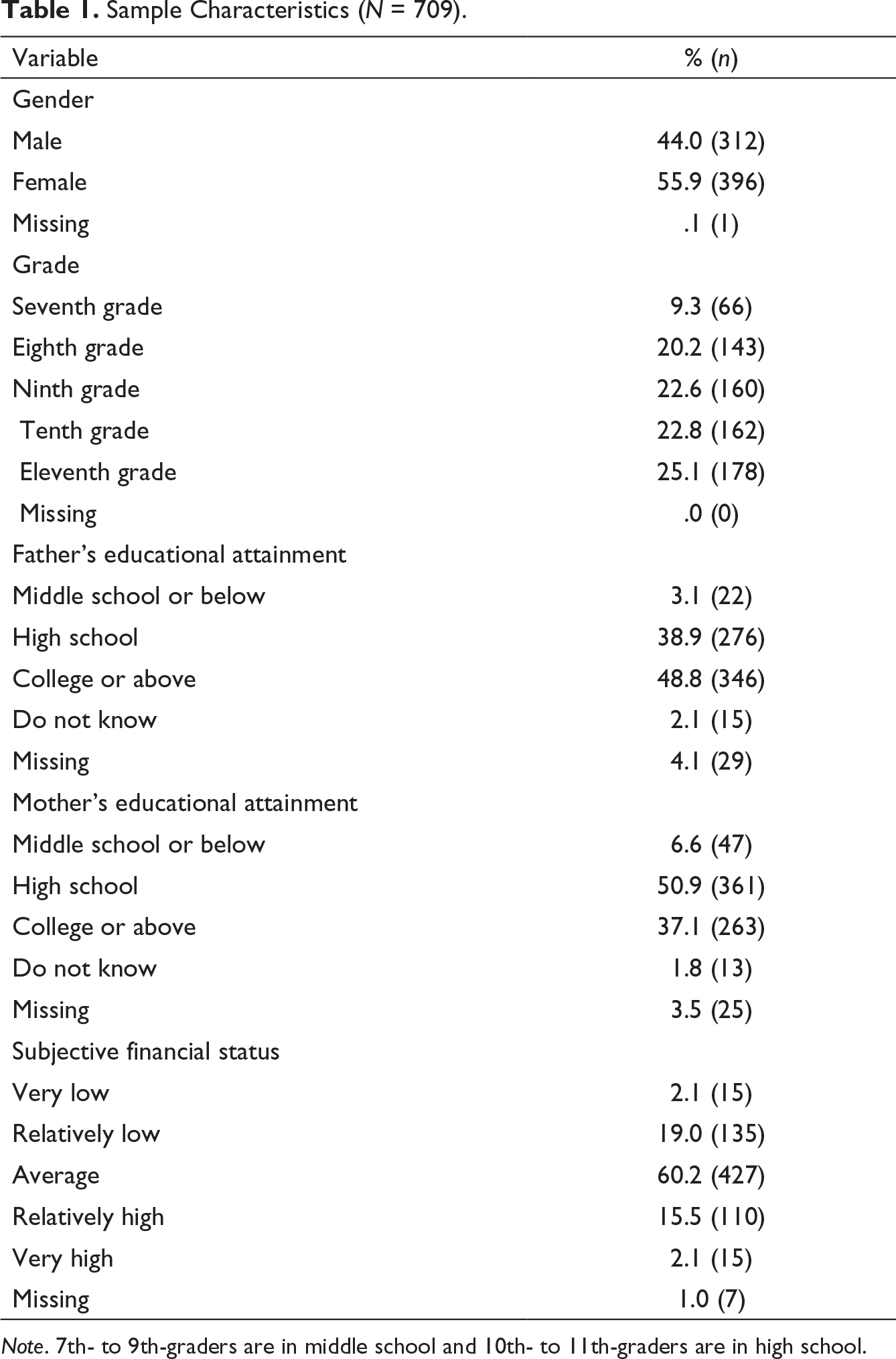
Note. 7th- to 9th-graders are in middle school and 10th- to 11th-graders are in high school.
Prevalence of APV, Child Abuse, and CEIPV
The prevalence of APV is presented in Table 2. About one in 5 respondents (17.1%) perpetrated violence against their parents in the past 12 months. Regarding psychological violence, 16.2% of participants had sworn at their parents, smashed, or kicked walls, doors, or furniture. About 6% of respondents reported enacting physical violence toward their parents in the past 12 months, such as slapping their parents and hitting them with their fist. The results also showed that more participants perpetrated violence against their mother than father in both types of violence.
Prevalence of Adolescent Violence against Parents, Past 12 Months (N = 709).
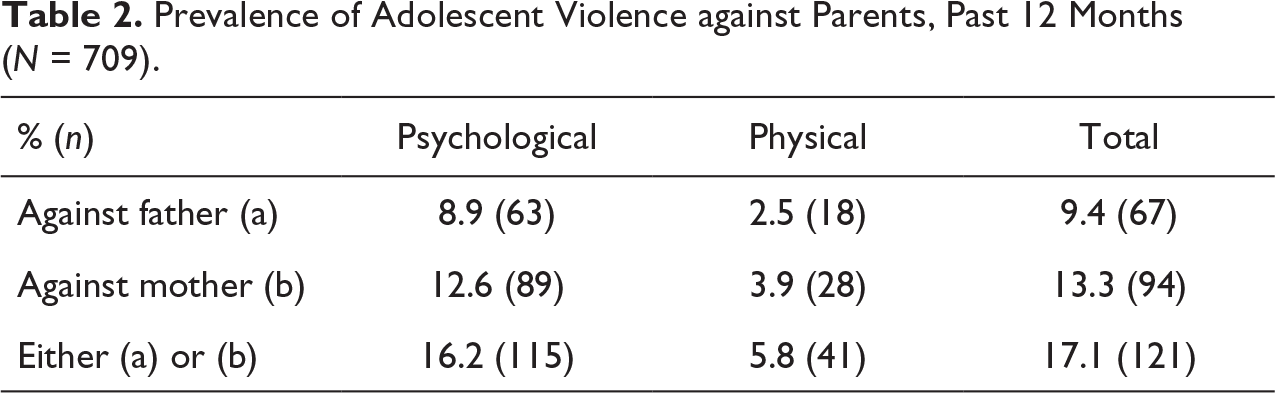
Table 3 shows the prevalence of child abuse and CEIPV. Two-thirds (66.8%) of all participants reported that they had experienced child abuse from their parents. The prevalence of psychological and physical abuse perpetrated by fathers was slightly higher than that by mothers, except for neglect. The results also showed that about one in three respondents (35.2%) had been physically abused by their parents. As for witnessing IPV, 34.4% of respondents witnessed partner violence between their parents. The results showed that partner violence against women (father to mother) was more frequent; 32.7% of participants witnessed partner violence perpetrated by their father, whereas 23.5% witnessed violence by their mother toward their father.
Exposure to Child Maltreatment or Child Abuse (During the Previous Year, N = 709).
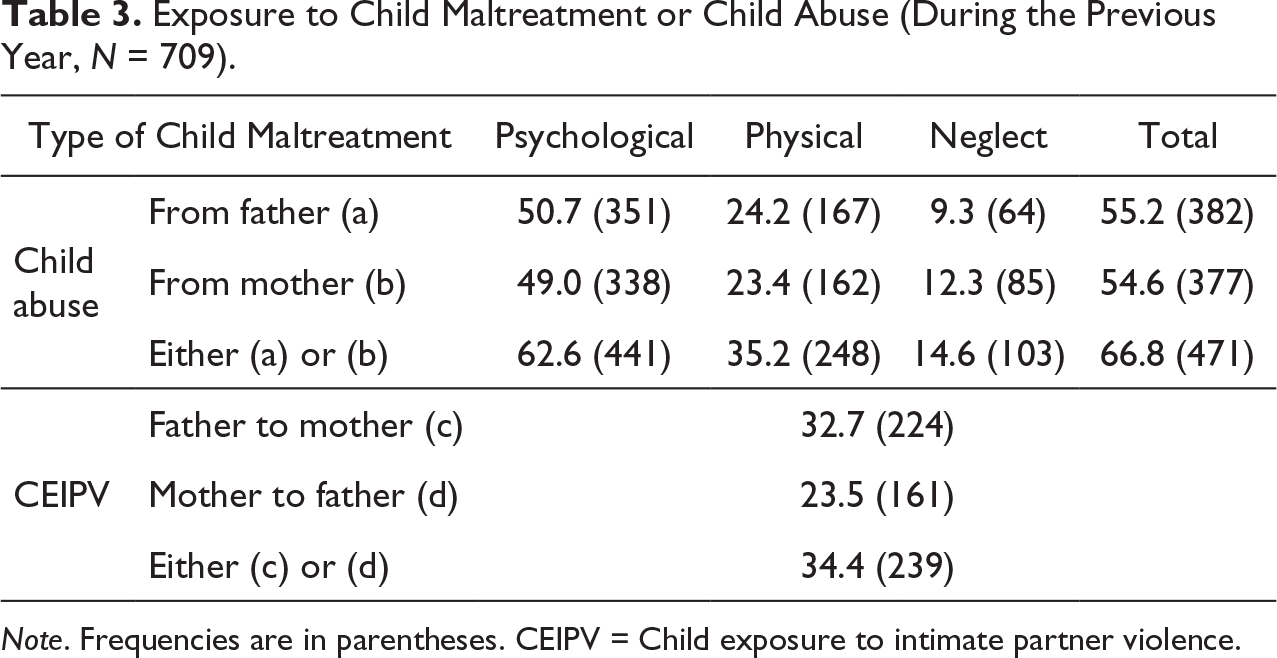
Note. Frequencies are in parentheses. CEIPV = Child exposure to intimate partner violence.
Exposure to Domestic Violence, Parent Violence, and Buffering Effects of Peer Attachment
The results of the hierarchal regression analyses testing the relationship between exposure to family violence and APV are presented in Table 4.
Model 1, including the main effects for the independent variables and covariates, was statistically significant and explained 16% of the variance in APV (F (8, 674) = 17.30, p < .001). Child abuse was significantly associated with APV (p < .001), but CEIPV was not significantly associated with APV (p = .32). Among covariates, self-esteem was significantly associated with APV, so adolescents with low self-esteem showed higher APV (p < .04).
The interaction terms testing the moderating effect of peer attachment were included in Model 2. Model 2 accounted for about 25% of the variance in APV (F (10, 672) = 23.07, p < .001). The interaction terms contributed a significant amount of variance change (∇F = 38.47, p < .001) and R2 increased by 9% over Model 1. The interaction of child abuse and peer attachment was significant (B = –.22, p < .001), indicating that peer attachment buffered, or alleviated, the effect of child abuse on APV. That is, at a high level of peer attachment, the impact of child abuse on APV decreased.
Regression Analysis Predicting Adolescent-to-parent Violence: Moderating Effect of Peer Attachment.
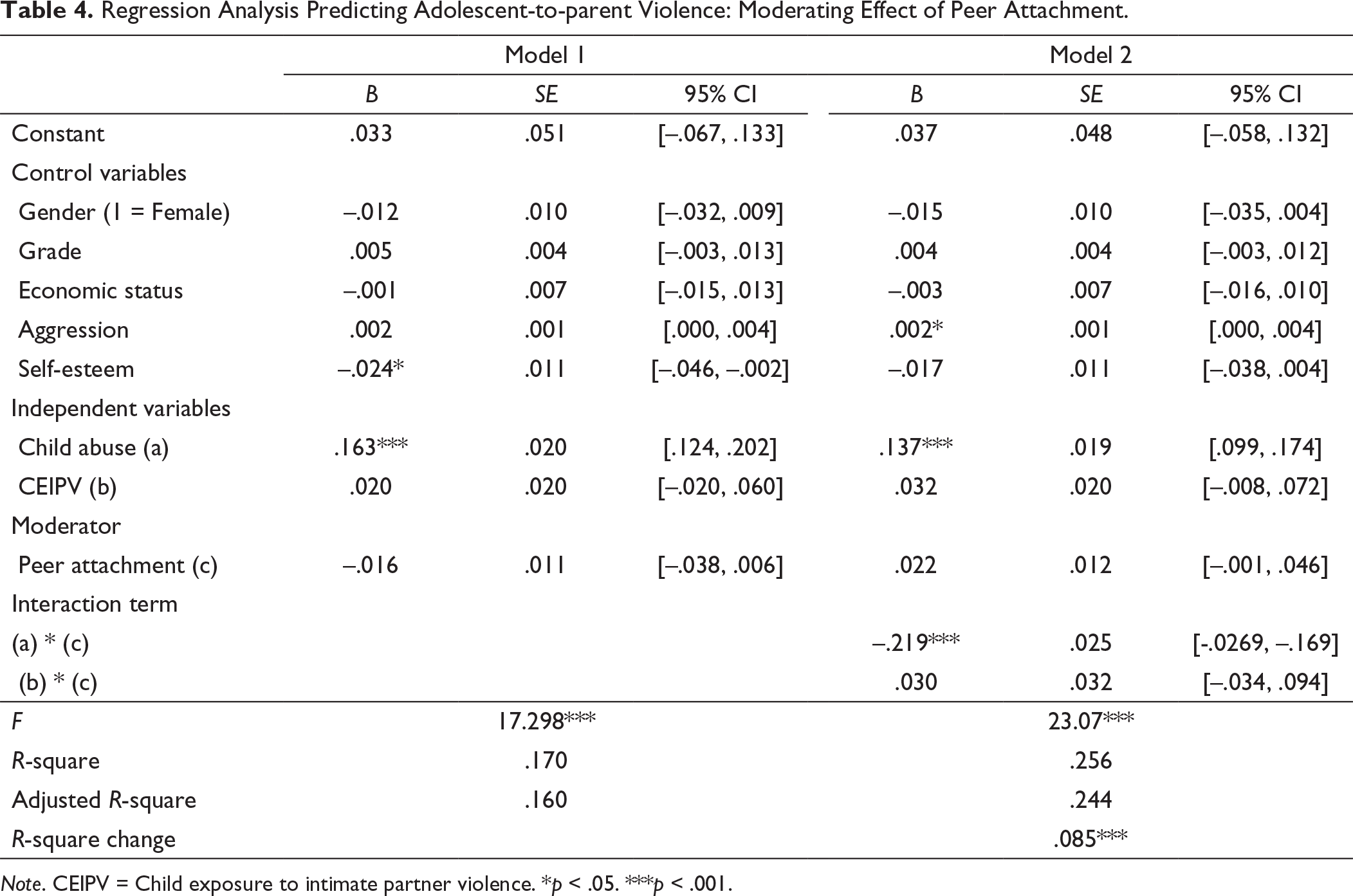
Note. CEIPV = Child exposure to intimate partner violence. *p < .05. ***p < .001.
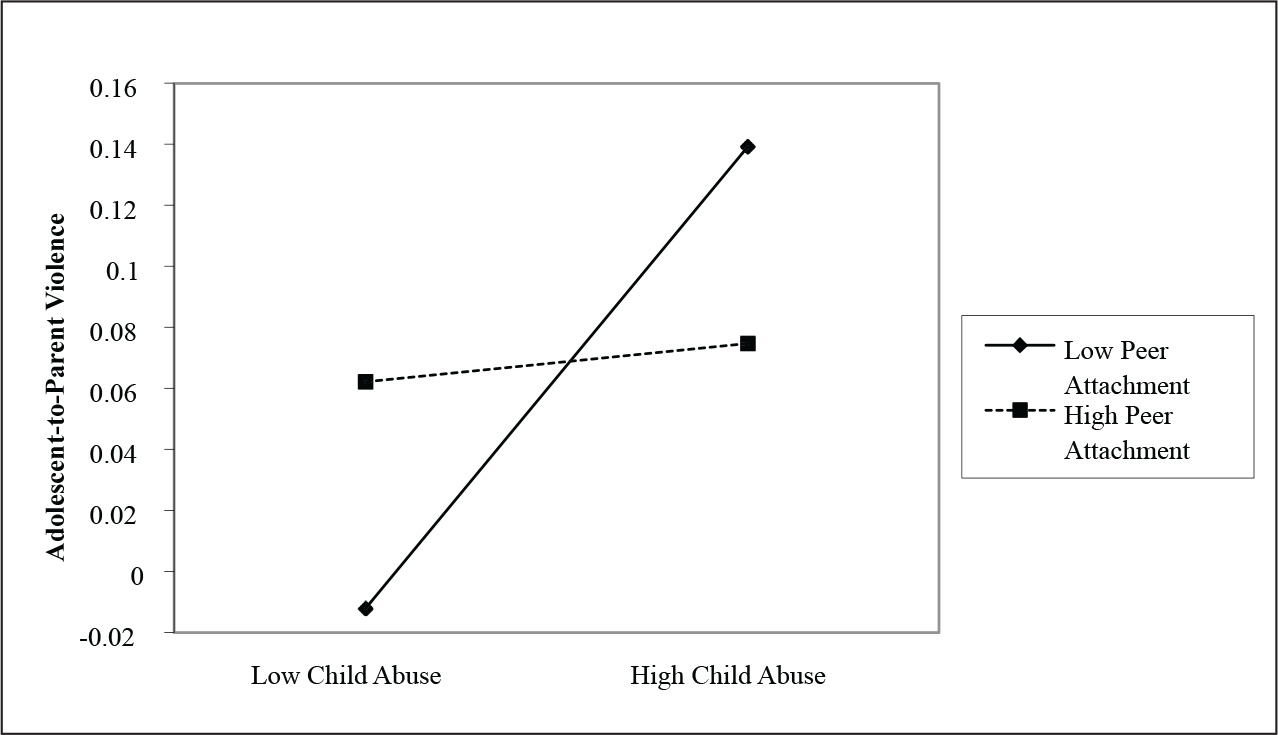
Note. Graphs were constructed at l standard deviation above the mean and 1 standard deviation below the mean of the independent variable (child abuse) and the moderator (peer attachment).
Figure 1 shows the relationship between child abuse and APV as moderated by peer attachment. Child abuse had greater effects on APV among adolescents with a low level of peer attachment. On the other hand, child abuse made little difference in APV among adolescents with high peer attachment.
Discussion
Although the psychological and behavioral consequences of exposure to family violence have been widely examined, only a limited amount of studies have treated the association between family violence and APV. The present study examined the prevalence of APV in a South Korean sample and explored the cycle of family violence (from parents toward children, from children toward parents) with a particular interest in examining the protective role of peer attachment in this cycle. Descriptive statistics showed that about 17% of adolescents in this study had perpetrated parent violence in the past year. More than two-thirds of the respondents had experienced child abuse, and one-third had witnessed IPV between their parents. The model test results showed that child maltreatment significantly increased APV. CEIPV was not a significant factor for APV, but child abuse significantly predicted APV and the impact of child abuse on APV was buffered by peer attachment.
The results of the present study are consistent with previous findings showing that psychological and physical child abuse were associated with adolescents’ violence toward their parents (Brezina, 1999; Kim, 1999; Kim et al., 2008; Kim & Lee, 1999; Mahoney & Donnelly, 2000; Ulman & Straus, 2003). Aggression toward parents could be retaliatory in situations involving child abuse and APV (Cornell & Gelles, 1982; Heide, 1992; Kim & Song, 2007). Previous research showing the significant link between CEIPV and APV implied that adolescents may learn violence as an effective means of handling conflicts as they are exposed to violent behavior in their family (Kim & Song, 2007; Margolin & Baucom, 2014; Ulman & Straus, 2003). This is in line with the cycle of violence literature, describing the intergenerational transmission of violent behavior (e.g., Widom & Maxfield, 1995). However, CEIPV between parents was not significantly associated with APV in this study. In a supplementary analysis conducted to explore the relationship between CEIPV and APV according to the gender of the IPV perpetrator, mother-to-father IPV was a significant risk factor for APV, though father-to-mother IPV was not associated with APV (refer to Supplemental Material 1). Although this study was not able to account for gender difference in parent victims, this finding is different from previous studies that have shown a significant relationship between father-to-mother IPV and APV (Edenborough et al., 2008; Hotaling et al., 1989; Margolin & Baucom, 2014). Patriarchal beliefs and Confucianism are dominant social norms in South Korea and give more power to male figures than female figures and to parents than children. In countries with strong Confucian values like South Korea, children are generally expected to obey their parents, so it may be more difficult for them to behave violently toward their parents. However, adolescents’ perception of obedience to their parents may change as they witness the subversion of the authority of their father by their mother. It goes beyond the scope of this study to determine whether APV takes place as a way to express anger towards an adolescent’s violent parents or as a result of mimicking modeled violent behaviors. The mechanism behind the gender differences in child maltreatment and APV will be worth exploring in future research. Although further examinations of the mechanism of this relationship are needed, child abuse prevention should be an important target of efforts to resolve the cycle of violence, and identifying child abuse history may help us prevent possible APV.
The results also indicated that peer attachment had a moderating effect on the relationship between child abuse and APV. Previous research suggested that adverse effects of family violence can be alleviated as adolescents exchange trust, empathy, and emotional support with their peers (Greenburg et al., 1983; Sentse et al., 2010). In addition, programs focusing on the development of positive peer relationships such as the peer-helper program (Lee, 2008), peer mentoring (Kim et al., 2013), and peer counseling (Eun, 2002) have shown to have positive effects on reducing adolescents’ violent behaviors. In South Korea, school-level counseling programs called the “WEE (We + Education + Emotion) Project” are designed to support students in crisis due to a lack of interpersonal skills, school violence, or juvenile delinquency. As a first-level safety-networking system, school counselors in WEE classes provide programs such as individual counseling, psychological testing, and social welfare services. However, only a limited number of schools run WEE classes staffed by professional school counselors (Korean Educational Development Institute, 2018). Moreover, such programs are focused on individual counseling rather than mobilizing peer resources and facilitating positive peer relationships. South Korea needs to hire more professional school counselors in order to properly support students at risk, and school counselors should design and implement programs focusing on promoting peer support and bonds in South Korea. Although this study was conducted with Korean adolescents, counselors, and social workers at schools in other countries can prevent victims of child maltreatment from perpetrating AVP by organizing resources and efforts to facilitate peer attachment. The impact of child abuse on APV can be reduced through interventions aimed at improving relationships and bonds among peers.
Limitations
Despite the present study’s contributions to the literature, its results are subject to a number of limitations. First, the findings of this study cannot confirm a causal relationship between child abuse and APV due to its cross-sectional research design. Future studies using longitudinal data can clarify the extent of this causal relationship. The use of non-probability sampling may have reduced the generalizability of the study’s findings to other adolescents, but the findings may be still generalizable to other adolescents in South Korea, as the survey geographically covered South Korea and the sample characteristics adequately represent the adolescent population of the country in terms of gender, parental educational attainment, and the perceived financial status of the household. The findings of this study may be more generalizable to Asian adolescents than other racial/ethnic groups, as Asian families typically share similar Confucian characteristics and patriarchal beliefs. The APV status and risk factors of children that are younger or older than the participants of this study may differ from the findings of this study. Future studies using probability samples with more diverse racial/ethnic and age groups can provide more representative interpretations.
There was a limitation in exploring mechanisms that could expand the understanding of APV. Although mental health symptomology may play a significant role in predicting APV, such data were not available in this study. Future research can address this limitation and examine the relative impact of child abuse and mental health symptomology on APV. In addition, the mechanism of the relationship between gender differences in child maltreatment and APV was not fully explored in this study. Supplementary analysis showed the significance of the relationship between mother-to-father IPV and APV, which contradicts previous findings that have shown the significance of father-to-mother IPV (Edenborough et al., 2008; Hotaling et al., 1989; Margolin & Baucom, 2014). The relationship between gender differences in child maltreatment (e.g., the gender of the victim of child abuse and the IPV perpetrator) and APV (e.g., son-to-mother, son-to-father, daughter-to-mother, daughter-to-father) is worth exploring in the future.
The self-report measures may also be considered a limitation of this study. APV and other forms of family violence may have been underreported or minimized due to social pressure. Previous studies have found that parent-reported data also tend to lead to the underreporting of APV due to the shame or stigma parents may feel regarding their inability to control their children (Coogan, 2011; Tew & Nixon, 2010). Therefore, gathering information from both perpetrators and victims would be the best way to increase the accuracy of the results.
Conclusion
The current study examined the relationship between adult-initiated violence (i.e., child abuse and CEIPV) and APV and identified the moderating effect of peer attachment on this relationship. Child abuse was significantly associated with APV, but this relationship was moderated by peer attachment. Therefore, social workers and others working with adolescents who have known or suspected child abuse history should assess APV alongside other internalized and externalized symptoms. Improving adolescents’ relationships with their peers may prevent them from being aggressive towards and perpetrating violence against their parents.
Supplemental Material
Supplemental material for Exposure to Family Violence, Peer Attachment, and Adolescent-to-parent Violence
Supplemental material is available for Exposure to Family Violence, Peer Attachment, and Adolescent-to-parent Violence by Boyoung Nam, Jae Yop Kim, Charlotte Lyn Bright and Daeyeon Jang in Journal of Interpersonal Violence
Footnotes
Declaration of Conflicting Interests
The author(s) declared no potential conflicts of interest with respect to the research, authorship, and/or publication of this article.
Funding
The author(s) disclosed receipt of the following financial support for the research, authorship, and/or publication of this article: This work was supported by the Yonsei University Research Grant of 2020.

Author Biographies
References
Supplementary Material
Please find the following supplemental material available below.
For Open Access articles published under a Creative Commons License, all supplemental material carries the same license as the article it is associated with.
For non-Open Access articles published, all supplemental material carries a non-exclusive license, and permission requests for re-use of supplemental material or any part of supplemental material shall be sent directly to the copyright owner as specified in the copyright notice associated with the article.
