







Abstract
Researchers have expanded the aggressor-victim dyad by showing that bystanders play pivotal roles in the process of cyberbullying. Bystanders’ responses entail moral engagement and are guided by personal and social norms. Most research on normative influences on bystanders’ responses to cyberbullying has focused on personal or social norms but has ignored how they jointly affect bystanders’ responses. Inspiring by the modified Theory of Planned Behavior, a cross-sectional study of Chinese high-school students (N = 333) examined how cyberbullying-related personal and social norms affect adolescent bystanders’ responses to cyberbullying. We collected information on personal norms, social norms, and bystanders’ responses to cyberbullying. Boys reported stronger intentions than girls to reinforce the bully, but intentions to help the victim were equivalent among boys and girls. Regression analysis revealed that pro-cyberbullying personal and social norms combined could negatively predict intentions to help the victim. However, personal and social norms interacted to influence behavioral intentions to reinforce the bully. Specifically, when pro-cyberbullying social norms were at a high level, a higher level of pro-cyberbullying personal norms was correlated with higher intentions to reinforce the bully. Conversely, when pro-cyberbullying social norms were at a low level, the effect of personal norms disappeared. The findings contribute to understanding the process by which adolescents adapt themselves to norms and provide guidance for educational advice on intervening in cyberbullying.
In the era of rapid advances in network technology, practical implements to fight cyberbullying have captured researchers and educators’ attention. (Brochado et al., 2017; Lee & Shin, 2017), and this stems mainly from the increased access to and abuse of social networks and mobile devices among teenagers (Nixon, 2014). A review of 159 studies published between 2004 and 2014 reported the prevalence of cyberbullying as 3%–39% for engaging cyberbullying and 1%–61.1% for being cyberbullied (Brochado et al., 2017). Recent reports showed that the number of adolescent internet users in China reached 144 million and that internet usage rates among Chinese adolescents are over 90% (China Internet Network Information Center, 2019). In China, up to 83% of senior high-school students are involved in cyberbullying, especially as bully-victims (Dang & Liu, 2020). As cyberbullying engenders maladaptive problems among adolescent populations (Beran & Li, 2005; Messias et al., 2014; Nixon, 2014), research is urgently needed to explore the psychological correlates of and intervention in cyberbullying among Chinese adolescents.
Researchers have expanded the aggressor-victim dyad by showing that bystanders play pivotal roles in the process of cyberbullying (Allison & Bussey, 2016). Bystanders’ responses entail moral engagement and are guided by internal moral standards (Allison & Bussey, 2016; Hoffman, 2001). Meanwhile, bystanders’ responses to cyberbullying are also largely determined by the external influences exerted by peers (Bastiaensens et al., 2016; Macháčková & Pfetsch, 2016). However, previous research examined the separate roles of personal and social norms and has largely ignored how these norms jointly affect bystanders’ responses to cyberbullying. To further clarify how adolescent bystanders respond to cyberbullying when personal norms are congruent or incongruent with social norms, the present study adopted a sample of Chinese adolescents and explored the simultaneous influences of personal and social norms on bystanders’ responses to cyberbullying. The current study not only helps to provide a full account of normative influences on bystander behavior but also sheds light on practical implements to fight cyberbullying.
Bystanders’ Responses to Cyberbullying
Cyberbullying, also called internet bullying (Williams & Guerra, 2007) or cyber aggression (Werner et al., 2010), refers to “the use of electronic communication technology as a means to deliberately threaten, harm, embarrass, or socially exclude another” (Ang et al., 2011, p. 2620). Similar to traditional bullying, the concept of cyberbullying has been expanded from a dyadic to a triadic process. Cyber-bullies are those who engage in cyberbullying, and cyber-victims are individuals who are cyberbullied (Festl et al., 2013). In addition to the roles of cyberbully and victim, bystanders form a large group involved in cyberbullying (Bastiaensens et al., 2014, 2015). Bystanders can either promote cyberbullying by reinforcing the bully (e.g., spreading the incident or performing similar behaviors) or stop cyberbullying by helping the victim (e.g., defending the victim or reporting the incident); therefore, bystanders play an essential role in the process of cyberbullying.
Efforts have been made to predict how bystanders respond to cyberbullying, and various factors that determine bystanders’ responses to cyberbullying have been identified. These include personal factors such as gender (Macháčková et al., 2013), age (van Cleemput et al., 2014), cyberbullying experience (Allison & Bussey, 2017), and empathy (Barlińska et al., 2013), and contextual factors such as social support (Olenik-Shemesh et al., 2015) and group-based emotions and norms (Jones et al., 2011). Furthermore, some studies have focused on both personal (e.g., internet use) and contextual correlates (e.g., peer relationships) of bystanders’ reactive behaviors when confronted with cyberbullying (e.g., Ybarra & Mitchell, 2004).
Normative Influences on Bystanders’ Responses to Cyberbullying
The Theory of Planned Behavior (TPB; Ajzen, 1991, 2012) has been used as a practical model to explain bystanders’ responses to cyberbullying (Doane et al., 2020; Leung et al., 2018). According to studies within the TPB framework, subjective norms or the amount of social pressure that individuals perceive to engage in cyberbullying, positive or negative attitudes toward cyberbullying, and perceived behavioral control are the key predictors of bystanders’ responses to cyberbullying. The subjective norms, also named social norms, encompass both the perception of whether others actually perform cyberbullying (i.e., descriptive social norms) and the perception of whether others approve/disapprove cyberbullying (i.e., injunctive social norms; Fishbein & Ajzen, 2010). Although descriptive and injunctive norms are considered distinct constructs, they exert similar influences on various behaviors, including cyberbullying (Doane et al., 2014). Therefore, in the context of cyberbullying, descriptive and injunctive social norms are sometimes conflated (e.g., Bastiaensens et al., 2014; Piccolia et al., 2020).
More recently, the modified TPB model (Arvola et al., 2008; Oteng-Peprah et al., 2020; refer to Figure 1) has included personal norms as another predictor of behavioral intentions, and it can more accurately predict behaviors than the default model. Personal norms reflect individuals’ self-approval or disapproval of engaging in a behavior (Schwartz, 1977; Schwartz & Howard, 1981) or internal moral rules for particular conduct (Parker et al., 1995). Behaving consistently according to personal norms induces feelings of pride, whereas the violation of personal norms results in feelings of guilt (Onwezen et al., 2013). Empirical research on normative influences on bystanders’ responses to cyberbullying has provided support for the modified TPB. When faced with a cyberbullying incident, bystanders’ responses mainly depend on two moral aspects. On the one hand, bystanders’ behavioral intentions regarding harassment on social networking services can be predicted by information about others’ behaviors (; 2016Bastiaensens et al., 2014). On the other hand, for bystanders, personal moral rules that define cyberbullying as wrong may facilitate them to intervene in cyberbullying to avoid feeling guilty (Allison & Bussey, 2017), while self-approval of cyberbullying was positively associated with bystanders’ reinforcement of the bully (Macháčková & Pfetsch, 2016).
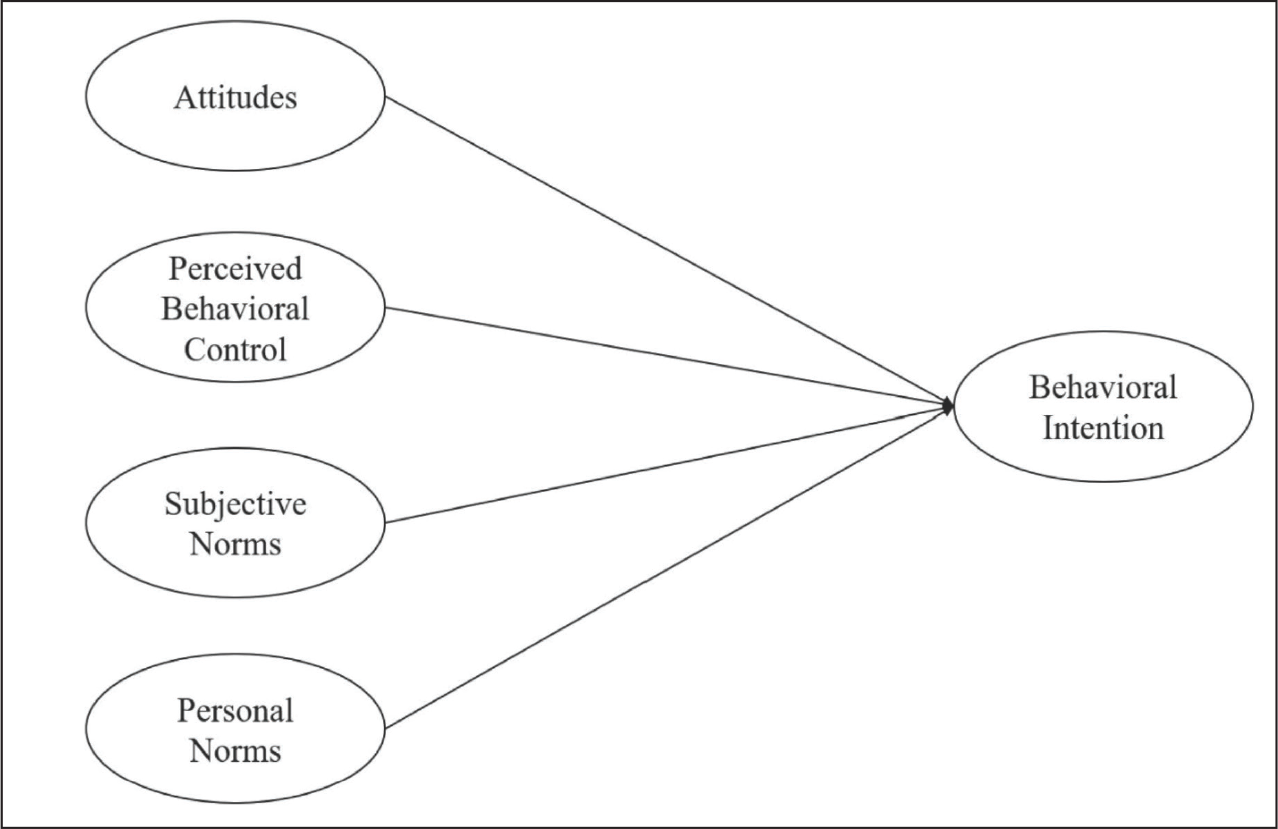
Source. Oteng-Peprah et al. (2020).
However, a common limitation of the aforementioned theoretical and empirical studies is that they focus on the separate roles of personal and social norms and have not yet discussed the question of how they jointly influence bystanders’ responses to cyberbullying. More specifically, previous research only considers the consistency of personal norms with social norms but ignores the fact that personal norms and social norms may conflict with each other (Turner, 1987). Personal norms are internal standards concerning a particular behavior, whereas social norms reflect external pressures (Kallgren et al., 2000). Individuals’ personal norms can reflect their internal rules consistent with or in contrast to the social norms of their referent groups (Etzioni, 2000; Manstead, 2000; Wenzel, 2004a). Therefore, an intriguing and important question arises that how bystanders respond to cyberbullying when personal norms are incongruent with social norms, for example, an adolescent deems cyberbullying as immoral but most of his classmates either cyberbully or approve of cyberbullying. To address this issue, the current study examines how personal and social norms combined and their interaction influence bystanders’ responses to cyberbullying.
Simultaneous Influences of Personal and Social Norms on Intentions to Help the Cyber-victim
Research suggests a congruence between personal and social norms in predicting bystanders’ intentions to help the victim. Taking personal responsibility for helping the victim is a key step for bystanders to intervene in cyberbullying (Dillon & Bushman, 2015; Latané & Darley, 1970). However, bystanders prefer to shirk responsibility due to either personal or social factors. First, higher levels of pro-cyberbullying personal norms are associated with less intention to help the cyber-victim. Intervention in cyberbullying may take time and resources and even bring up risks for bystanders (Alipan et al., 2019; Dillon & Bushman, 2015). Not performing a good action involves less moral engagement than performing the action (Gray & Wegner, 2009). That is to say, not helping the victim will not be morally judged although supportive intervention is viewed as appropriate (Doane et al., 2020; You & Lee, 2019). Thus, bystanders who feel less personal obligations to prevent cyberbullying are less willing to intervene in a cyberbullying situation (Macháčková & Pfetsch, 2016).
Second, the anonymity of cyberspace reduces the sense of responsibility (McKenna, 2008), and pro-cyberbullying social norms may help bystanders to justify their inaction in cyberbullying (Allison & Bussey, 2017). Research on traditional bullying suggests that bystanders are more likely to disengage their moral standards if they believe peers consider bullying to be acceptable or normative (Gini et al., 2015). Therefore, pro-cyberbullying social norms are associated with less willingness to help the victim. Taking the aforementioned analysis together, we assume that bystanders are more likely to intervene in cyberbullying only when both personal and social norms are less in favor of cyberbullying, while they are less likely to intervene in cyberbullying when either personal or social norms are in favor of cyberbullying.
Simultaneous Influences of Personal and Social Norms on Intentions to Reinforce the Cyberbully
Research on undesirable behaviors indicates that personal and social norms interact to impact behavioral intentions. For undesirable behaviors such as cyberbullying, externally imposed beliefs do not necessarily reflect internal moral obligations (Bastiaensens et al., 2016). Allison and Bussey (2017) described a situation in which cyberbullying-related personal and social norms were in conflict; that is, adolescents perceive cyberbullying as immoral even though most of their classmates either cyberbully or approve of cyberbullying. Although knowing the devastating effects of cyberbullying on victims’ mental health, some bystanders still choose to reinforce the bully (Li, 2010; van Cleemput et al., 2014). This is because bystanders feel more impersonal in anonymous cyberspace and they are more easily influenced by their referent groups (Li, 2010; You & Lee, 2019). Therefore, pro-cyberbullying social norms may suppress the effect of personal moral standards to a certain extent.
Despite no direct evidence, prior research on other unfavorable behaviors provides support to this assumption. For example, when provided with a higher level of pro-prejudice social norms, highly prejudiced individuals expressed more discrimination than those with low levels of self-approval of prejudice; however, personal norms failed to influence the expression of discrimination when participants were provided with anti-prejudice social norms (Sechrist & Stangor, 2001). Similarly, personal norms regarding tax compliance elicit concurring behaviors when taxpayers hold social norms against tax evasion, otherwise personal norms are ineffective (Wenzel, 2004b). Along with this line of research, when bystanders believe that most others engage in or approve of cyberbullying, the higher their levels of pro-cyberbullying personal norms are, the stronger their reported intentions are to reinforce the bully. In contrast, when the level of pro-cyberbullying social norms is low, personal norms exert a weaker influence on their behavioral intentions.
Research Hypotheses
Although previous research has revealed the separate roles of personal and social norms in bystanders’ responses toward cyberbullying, less is known how bystanders respond when the two types of norms are consistent with or contrary to each other. The present study addresses this knowledge gap by examining how personal and social norms jointly predict bystanders’ responses. We hypothesize pro-cyberbullying personal and social norms combined negatively predict bystanders’ intentions to help the victim (Hypothesis 1) and they interact to predict bystanders’ intention to reinforce the bully (Hypothesis 2).
As a large portion of cyberbullying occurs among classmates (Juvonen & Gross, 2008; Li, 2007; Smith et al., 2008) and classmates are viewed as a predominant referent group for adolescent students (Festl et al., 2015; Sasson & Mesch, 2014), our hypotheses were tested in the classroom setting. Chinese adolescents aged 14–17 were chosen because the prevalence of cyberbullying in this age group is extraordinarily high (Dang & Liu, 2020; Zhou et al., 2013; Zhu et al., 2018). We predicted that pro-cyberbullying personal and social norms combined negatively predict adolescents’ intentions to help the victim while they interact to predict the intentions to reinforce the victim.
Methods
Participants
Three hundred and thirty-eight students from a public high school in a city in China participated in this study. Five participants were excluded because they did not complete the items of dependent variables. The final sample included 333 adolescents (137 boys, 185 girls, and 11 unreported). All participants were 14–17 years old (M = 15.21 years, SD = .44 years). In China, the school-age for common high schools is 15 or 16, with a term of three school years. The sample reflected the larger school demographic (i.e., average age =15.18 years; the ratio of boys to girls = .81). Seven classrooms were randomly selected from the high school, and the number of participants from each classroom varied from 43 to 49. Students are in their fixed classrooms and their classmates are basically unchanged during the three-year high-school period. Participants’ mothers’ and fathers’ average years of education were 10.95 years and 11.47 years, respectively, which are near to the average mean years of schooling of urban citizens reported in the latest national census in China (i.e., 10.49 years, National Bureau of Statistics, 2011). Household per capita income 1
Socioeconomic status variables (i.e., family income and parents’ education levels) were not controlled in the regression models because 55 participants chose “Don’t know” on relevant items. Supplementary regression analyses with the rest of the 278 participants revealed that socioeconomic status variables could not predict bystanders’ responses to cyberbullying (ps > .17) and, most importantly, the significance levels of key results remained the same after controlling for these variables.
Measures
Two bilingual researchers translated all the materials in the present study from the English version into Chinese and conducted a back-translation to check the equivalence.
Pro-cyberbullying social norms.
Social norms were measured by eight items adapted from previous research (White et al., 2009). The scale has been demonstrated to have high reliability among Chinese adolescents (Cronbach’s α = .92∼.93, Dang & Liu, 2020). Each item (e.g., “Most of my classmates engage in cyberbullying” and “Most of my classmates believe that cyberbullying others is acceptable”) was answered on a 7-point scale ranging from 1 (totally disagree) to 7 (totally agree). The scores from all items were averaged to provide a pro-cyberbullying social norms index (Cronbach’s α = .94). Higher scores indicated a higher level of pro-cyberbullying norms among classmates.
Pro-cyberbullying personal norms.
A 4-item measure adjusted from previous research (Kallgren et al., 2000; Macháčková & Pfetsch, 2016) was used to measure personal norms. Each item (e.g., “In general, I feel a personal obligation to not cyberbully others”) was rated on a 7-point scale (1 = Totally disagree, 7 = Totally agree). After reverse scoring, the scores from all four items were averaged to provide a pro-cyberbullying personal norms index (Cronbach’s α = .94). Higher scores indicated a higher level of personal acceptance of cyberbullying.
Because the items used to measure social and personal norms addressed similar behavioral aspects, we used principal component analysis to confirm that each set of items focused on a specific norm type. As shown in Table 1, personal and social norms were distinguishable.
Factor Pattern Matrix for the Measures of Social and Personal Norms.
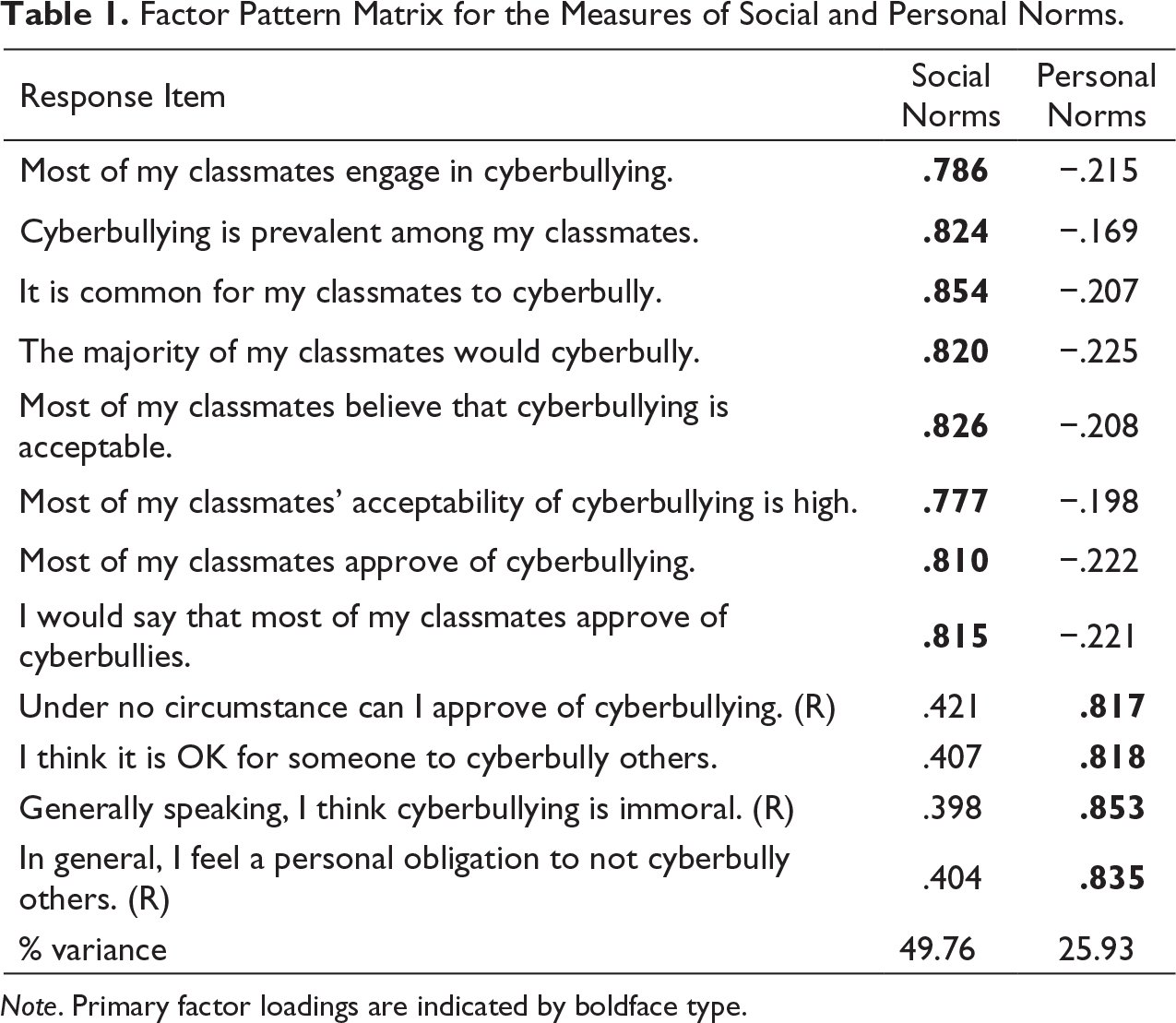
Note. Primary factor loadings are indicated by boldface type.
Bystander responses.
Bystander responses were measured with a scale adapted from Bastiaensens et al. (2014). The scale includes eight behavioral intentions on two dimensions: reinforcing the bully (three items, e.g., “telling the bully you think cyberbullying is funny”), and helping the victim (five items, e.g., “comforting the victim”). Each item was rated on a 7-point scale from 1 (“I would definitely not do this”) to 7 (“I would definitely do this”). Factor analyses with principal axis factoring and oblique oblimin rotation for bystander responses confirmed that the eight items fell into two dimensions. Factor loadings and percentages of variance explained are shown in Table 2. Cronbach’s α coefficients were .83 for reinforcing the bully and .86 for helping the victim.
Factor Pattern Matrix for the Bystander Responses Scale.
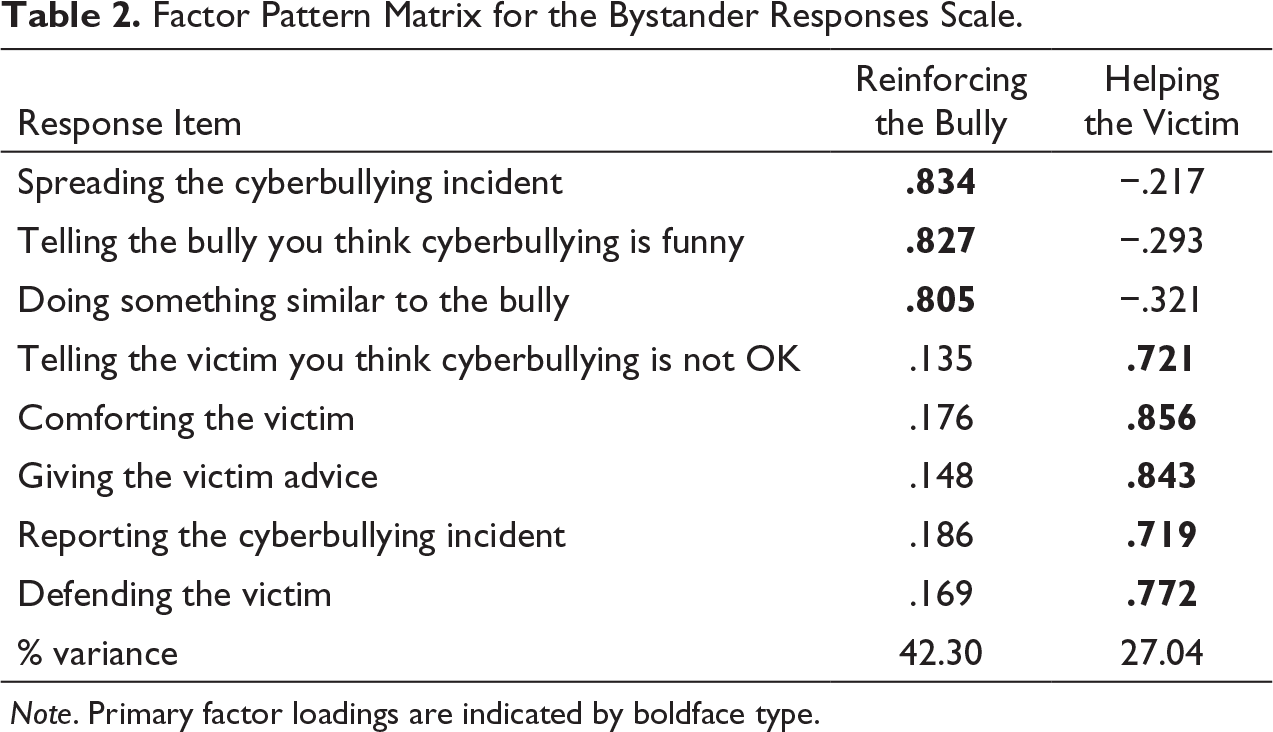
Note. Primary factor loadings are indicated by boldface type.
Cyberbullying experience.
Cyberbullying experience was measured by the adapted European Cyberbullying Intervention Project Questionnaire (ECIPQ; Rey et al., 2015). The questionnaire comprises 11 items measuring cyber victimization (e.g., “Someone said nasty things to me online”) and 11 items measuring cyber aggression (e.g., “I threatened someone through texts or online messages”). The questionnaire has good internal consistency and its structural validity has been verified across six different countries (Rey et al., 2015). The scale is confirmed with high reliability among Chinese adolescents (Cronbach’s α = .77∼.79, Dang & Liu, 2020). Each item was ranked by frequency, with response options ranging from 0 (never) to 4 (always). Scores for the 11 items on each domain were summed to provide a victimization index (Cronbach’s α = .79) and an aggression index (Cronbach’s α = .72). Higher scores indicated a higher level of involvement in cyberbullying.
Social desirability.
The 12-item social desirability scale (Schuessler et al., 1978) was used to measure participants’ tendency to give socially desirable answers. Each item (e.g., “I’m always willing to admit it when I make a mistake”) was answered on a 7-point scale from 1 (totally disagree) to 7 (totally agree). The scores from all items were averaged to provide a social desirability index (Cronbach’s α = .68). Higher scores indicated a greater willingness to answer in a socially desirable way.
Procedure
Ethical approval to conduct this study was obtained from the authors’ institution. Before being enrolled in the study, all participants provided written informed consent. The participation rate was 91.6%. Parental consent was also obtained for each participant. Participants were instructed to complete a paper-and-pencil survey measuring their online activities. Next, participants were presented with a brief definition of cyberbullying and then asked to complete the measures for cyberbullying, personal norms, social norms, bystander responses, and social desirability. The survey was administered in the classroom during class hours, and participants took approximately 20 minutes to complete the survey. The same teacher administered the survey in different classes and answered students’ possible questions about the survey. To improve the likelihood that participants would express their true opinions, they were informed that the survey was anonymous and that their responses would be confidential.
Analytic Strategy
We first visually checked the normality of variables related to cyberbullying. Intention to reinforce the bully (skewness = 1.58) and cyberbullying experience (skewness = 1.49 for cyber victimization and skewness = 2.86 for cyber aggression) were skewed, therefore, they were normalized by taking natural logarithm. Meanwhile, the behavioral intentions to help the victim (skewness = −.78) could be considered as normally distributed. Although the variable of social norms is at the classroom level, in the present study, it did not differ across classrooms (intraclass correlation 2
Intraclass correlation (ICC) is the ratio of the between-classroom variance to the sum of the between- and within-classroom variances (Lai & Kwok, 2015).
Design effect (deff) is the ratio of the actual variance of a sample to the variance of a simple random sample of the same number of elements. If the design effect is smaller than two, using single-level analysis on multilevel data does not seem to lead to overly misleading results (Lai & Kwok, 2015).
We used SPSS 23.0 to perform independent t-test, correlation analysis, and multiple regression. The t-tests were conducted to examine gender differences in bystanders’ responses to cyberbullying. Separate multiple regression analyses were conducted to examine the roles of personal and social norms in predicting behavioral intentions to help the victim and reinforce the bully, respectively. Because previous involvement in cyberbullying as a victim or perpetrator (Barlińska et al., 2013; van Cleemput et al., 2014) is considered a determinant of bystanders’ responses, cyber victimization and aggression were included in the analyses as covariates. Given that many researchers consider their findings could be partly biased due to the possibility that participants gave socially desirable answers on items regarding bystander responses (e.g., Allison & Bussey, 2017; Bastiaensens et al., 2014, 2016; Macháčková & Pfetsch, 2016), social desirability was measured and included as a covariate.
Results
Gender Differences in Bystanders’ Responses to Cyberbullying
Two independent t-tests were conducted to compare gender differences in behavioral intentions to reinforce the bully and help the victim. Boys (M = 2.14, SD = 1.28) reported higher intentions to reinforce the bully than girls (M = 1.45, SD = 0.75), t(320) = 6.05, p < .001, Cohen’s d = .68, 95% CI[.46, .91]. However, boys (M = 4.78, SD = 1.37) reported the same level of intentions as girls (M = 5.00, SD = 1.20) to help the victim, t(320) = −1.57, p = .12, Cohen’s d = −.18, 95% CI[−.40, .05].
Normative Influences on Bystanders’ Responses to Cyberbullying
Descriptive statistics and inter-correlations for all included variables are presented in Table 3. As shown in Table 3, pro-cyberbullying personal and social norms were positively associated with participants’ behavioral intentions to reinforce the bully, whereas they were negatively associated with their behavioral intentions to help the victim. Although personal and social norms were positively correlated with each other, the correlation coefficient was relatively small in size. As sex was correlated with intentions to reinforce the bully, it was controlled when analyzing the normative influences on bystanders’ intentions to reinforce the bully.
Descriptive Statistics and Correlations between Variables.
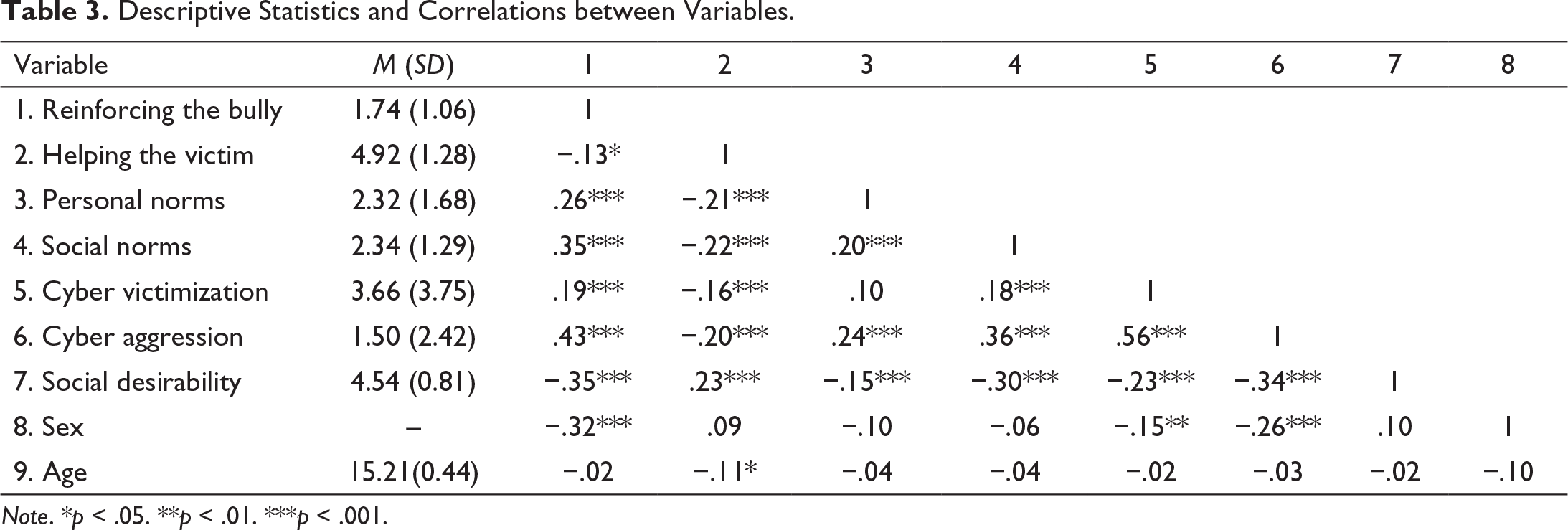
Note. *p < .05. **p < .01. ***p < .001.
Personal and social norms in predicting intentions to help the victim.
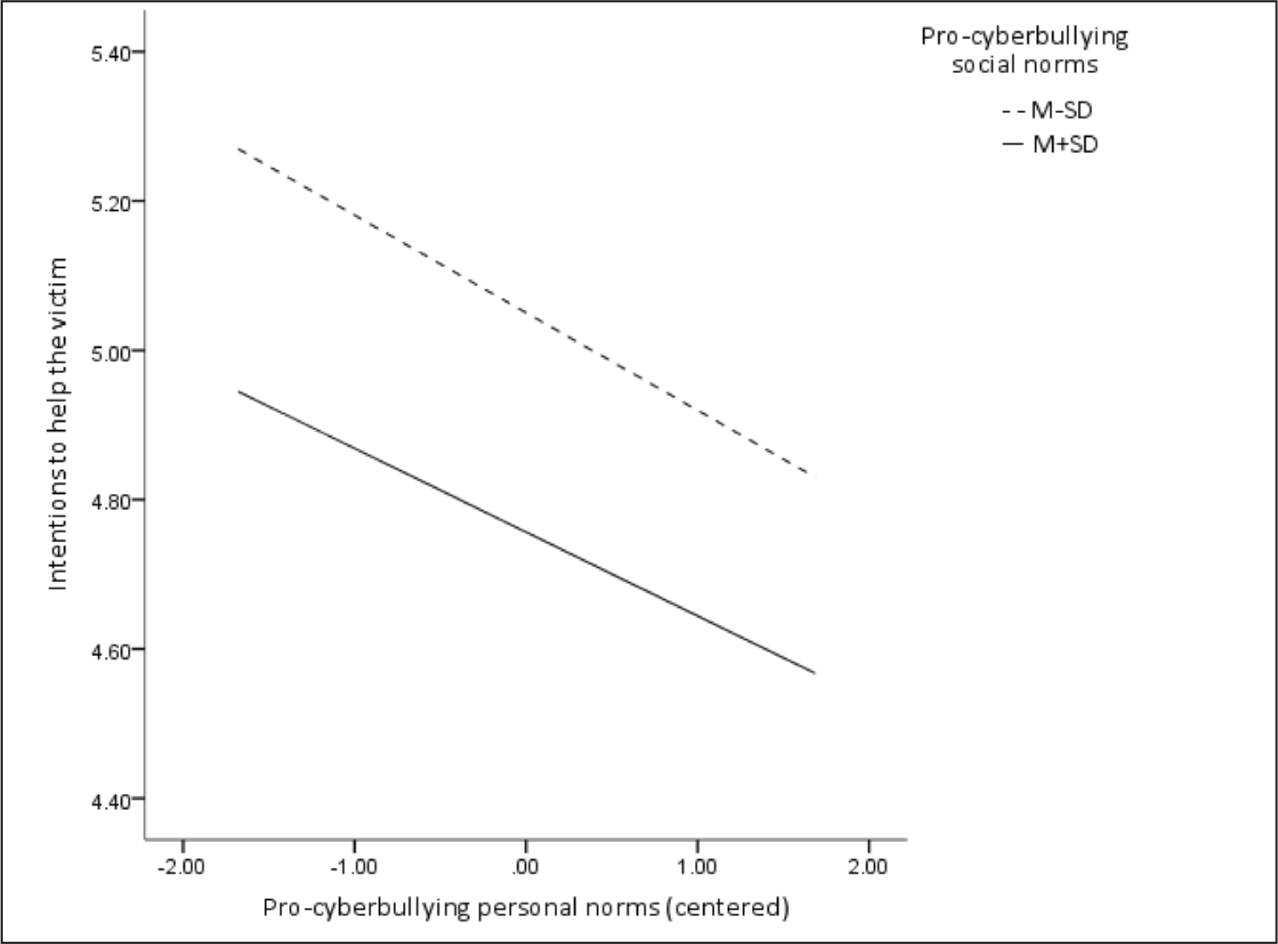
A multiple regression analysis, including intentions to help the victim as the dependent variable, was conducted. The results (refer to Table 4) revealed that after controlling age, sex, cyber victimization, cyber aggression, and social desirability, both pro-cyberbullying personal and social norms negatively predicted behavioral intentions to help the victim. As expected, the interaction between personal and social norms was not significant (refer to Figure 2). To check the robustness of the results, each regression coefficient was tested at the Bonferroni-adjusted α-level (i.e., .05/k, where k is the number of predictors in the model; Mundfrom et al., 2006). Results revealed that the significance level of pro-cyberbullying personal norms (p = .004) was less than the critical value (i.e., .05/7 = .007), suggesting personal norms negatively predicted behavioral intentions to help the victim. However, the significance level of pro-cyberbullying social norms (p = .049) was larger than the critical value (i.e., .05/7 = .007), suggesting the role of social norms was no longer significant. Similarly, the significance level of the interaction between personal and social norms (p = .814) was larger than the critical value (i.e., .05/8 = .006). Therefore, Hypothesis 1 was partially supported. Although the combination of personal and social norms predicted bystanders’ responses, personal norms played a more important role in predicting bystanders’ intentions to help the victim than social norms.
Hierarchical Regression Analysis for Personal and Social Norms Predicting Intentions to Help the Victim.
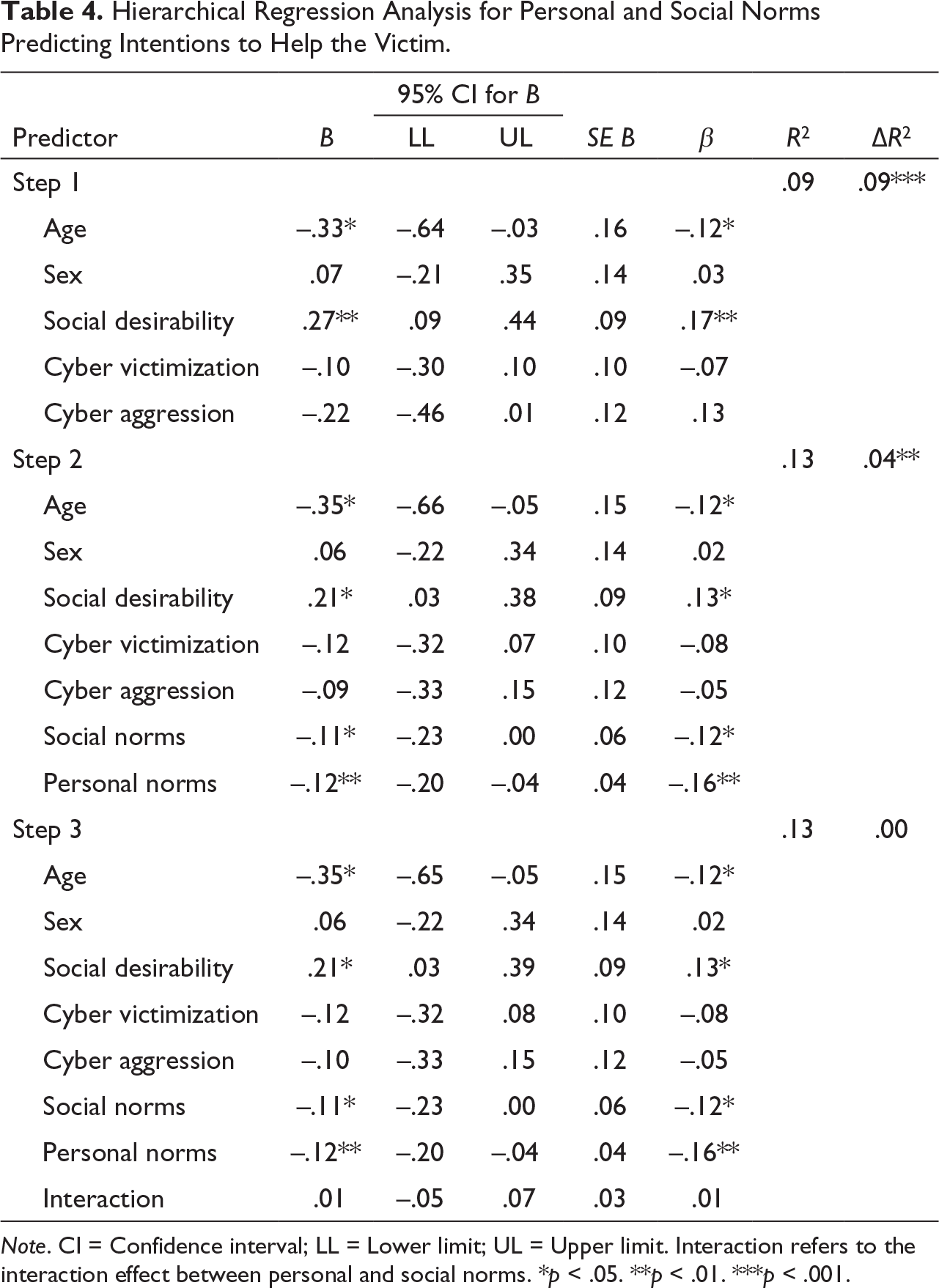
Note. CI = Confidence interval; LL = Lower limit; UL = Upper limit. Interaction refers to the interaction effect between personal and social norms. *p < .05. **p < .01. ***p < .001.
Combined personal and social norms predict intentions to help the victim.
Personal and social norms in predicting intentions to reinforce the bully.
A similar hierarchical regression analysis was conducted, with intentions to reinforce the bully as the dependent variable. As shown in Table 5, after controlling for the effects of age, sex, cyber victimization, cyber aggression, and social desirability, personal and social norms positively predicted behavioral intentions to reinforce the bully. Most importantly, the interaction between personal and social norms was significant. To check the robustness of the results, each regression coefficient was tested at the Bonferroni-adjusted α-level (Mundfrom et al., 2006). Results revealed that the significance level of pro-cyberbullying social norms (p < .001) was less than the critical value (i.e., .05/7 = .007), suggesting social norms negatively predicted behavioral intentions to help the victim. The significance level of pro-cyberbullying personal norms (p = .015) was larger than the critical value (i.e., .05/7 = .007), suggesting the role of personal norms was no longer significant. As expected, the significance level of the interaction between personal and social norms (p < .001) was smaller than the critical value (i.e., .05/8 = .006), and therefore, personal and social norms interacted to predict bystanders’ intentions to reinforce the bully.
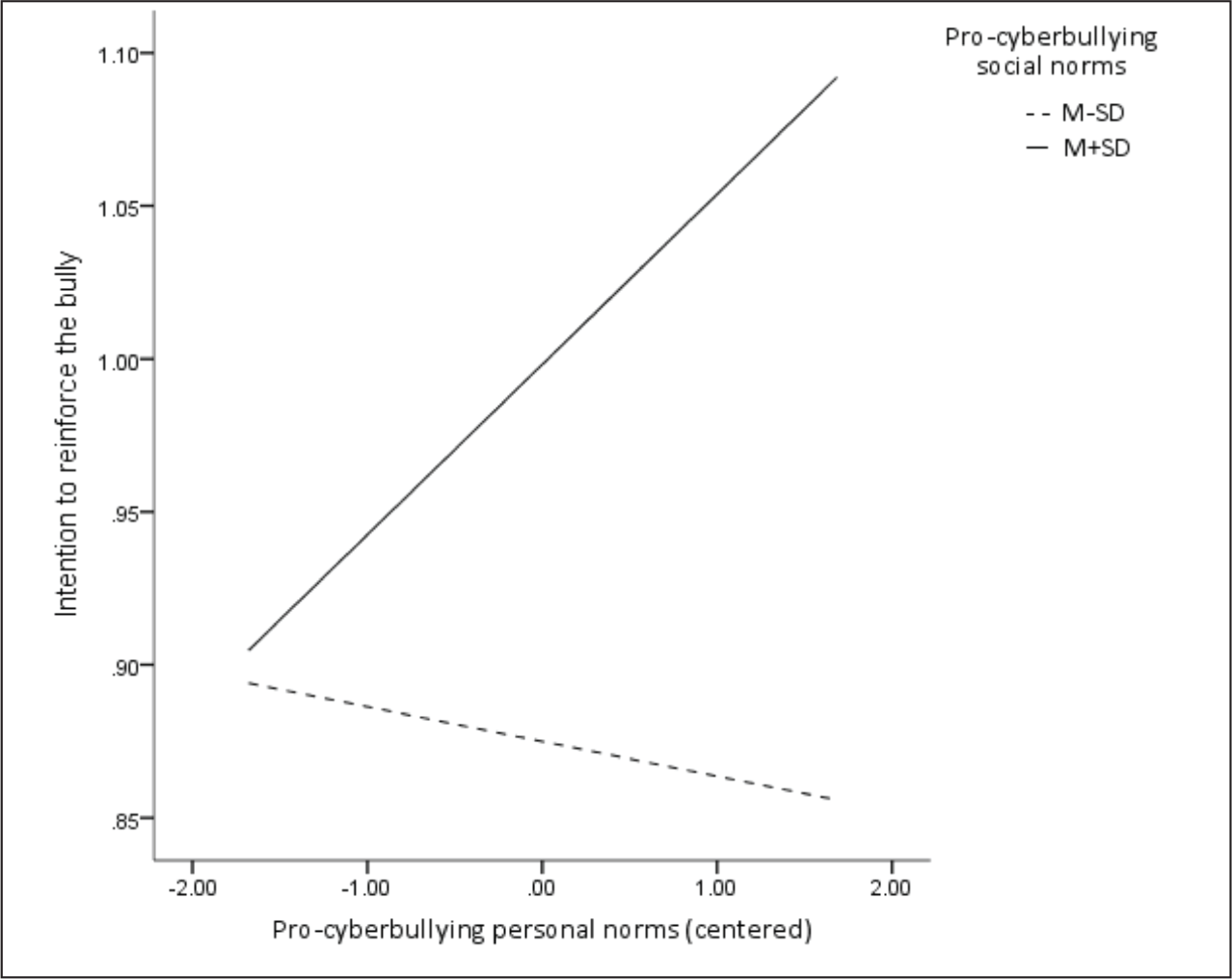
A further simple slope analysis (refer to Figure 3) revealed that when participants believed that most of their classmates engaged in or approved of cyberbullying (M + 1 SD), the higher levels of pro-cyberbullying personal norms they had, the stronger intentions to reinforce the bully they reported, B = .06, 95% CI [.03, .08], SE = .01, t = 4.49, p < .001. However, when the levels of pro-cyberbullying social norms were low (M – 1SD), the effect of personal norms disappeared, B = –.01, 95% CI [–.04, .01], SE = .01, t = –.90, p = .370. Therefore, in line with Hypothesis 2, personal and social norms interacted to predict the students’ intentions to reinforce the bully.
Hierarchical Regression Analysis for Personal and Social Norms Predicting Intentions to Reinforce the Bully.
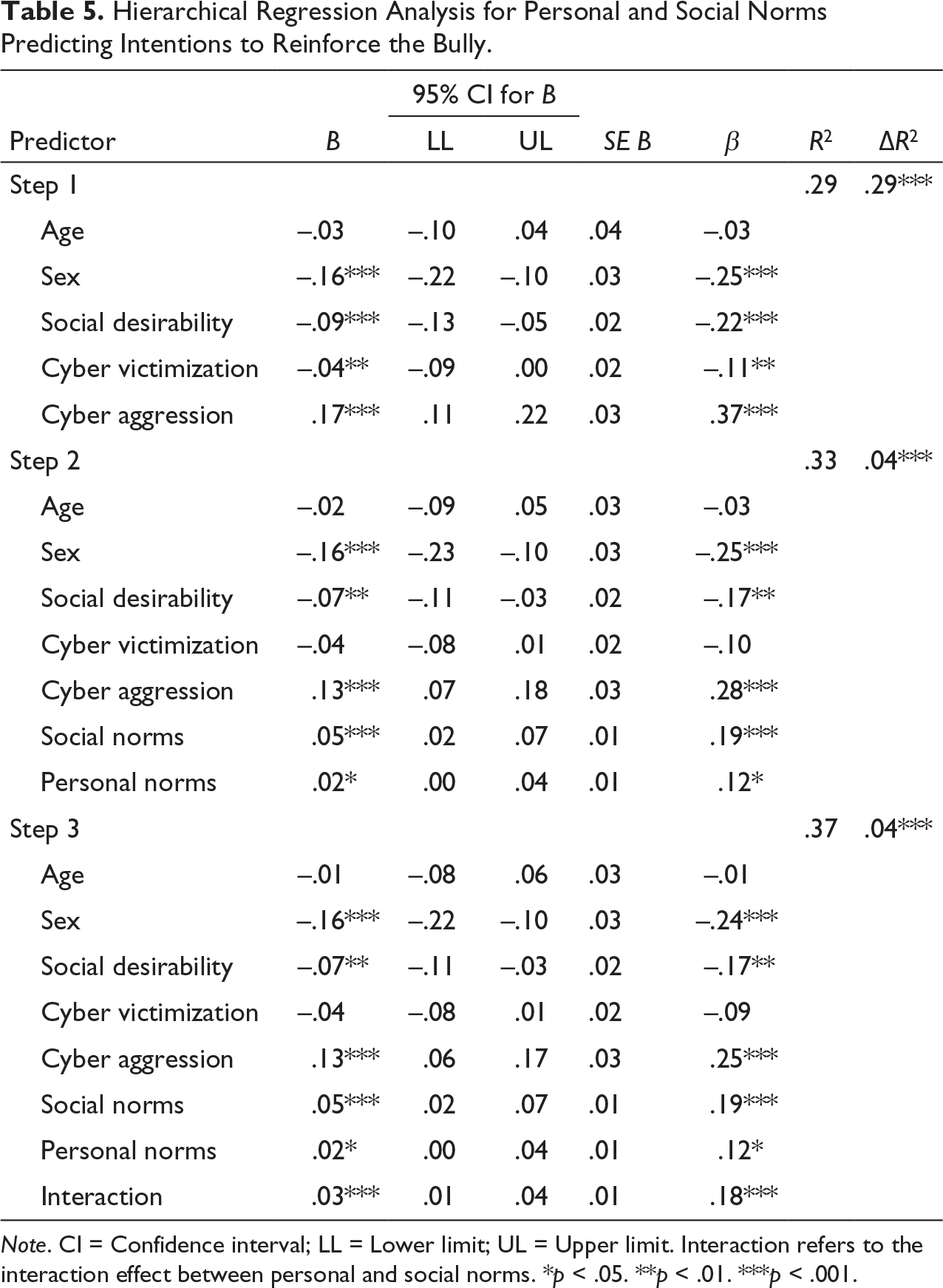
Note. CI = Confidence interval; LL = Lower limit; UL = Upper limit. Interaction refers to the interaction effect between personal and social norms. *p < .05. **p < .01. ***p < .001.
Personal and social norms interact to predict intentions to reinforce the bully.
Discussion
Although bystanders are not direct participants in cyberbullying, their responses can determine the direction of the incident. Drawing on the theoretical foundations of the TPB, normative influences on bystanders’ responses to cyberbullying attract much research attention. Unlike previous research focusing on the separate roles of personal and social norms, the present study examined how they jointly influenced Chinese adolescent bystanders’ responses to cyberbullying. Both of our hypotheses were supported. On the one hand, the results suggested that pro-cyberbullying personal and social norms combined negatively predict intentions to help the victim and that the role of personal norms was more robust than that of social norms. This is in line with previous research which suggests that taking personal responsibility for helping the victim is essential for bystanders to intervene in cyberbullying (Dillon & Bushman, 2015). On the other hand, pro-cyberbullying personal and social norms interact to predict intentions to reinforce the bully.
By examining the simultaneous roles of personal and social norms, the findings in the current study provide a full account of how Chinese adolescent bystanders respond to cyberbullying when their internal moral standards and social influences are congruent or incongruent with each other. This is meaningful for understanding Chinese adolescent bystanders’ responses to cyberbullying, as the prevalence of cyberbullying among Chinese adolescents is high (Dang & Liu, 2020), and thus social norms about cyberbullying may be undesirable. On the one hand, adolescent bystanders are less willing to help the victim when either personal or social norms are in favor of cyberbullying. Moreover, bystanders are least likely to intervene in cyberbullying when pro-cyberbullying personal norms are incongruent with social norms. Stated differently, these findings imply that bystanders’ inaction easily occurs, while positive intervention in cyberbullying needs stronger moral motives. Thus, these findings can help to explain why fewer bystanders choose to defend the victim when witnessing a cyberbullying incident (Li, 2010; van Cleemput et al., 2014).
On the other hand, adolescent bystanders are more likely to reinforce the bully only when their personal norms are in favor of cyberbullying and congruent with social norms. However, they report less willingness to join in cyberbullying when personal and social norms are incongruent with each other or when both types of norms are against cyberbullying. This complements previous research advocating that either cultivating personal obligation not to cyberbullying (Macháčková & Pfetsch, 2016) or highlighting the social disapproval of cyberbullying (Bastiaensens et al., 2016) is useful to preventing bystanders from engaging in cyberbullying. Meanwhile, as reinforcing behaviors make the victim suffer from more negative influences, they always violate personal or/and social norms. Therefore, based on our findings, it is not difficult to understand that it is least common for bystanders to reinforce the bully (Li, 2010; van Cleemput et al., 2014).
Combining the different patterns of normative influences on bystanders’ different responses to cyberbullying, the present study helps to clarify the distinct nature of intentions to help the victim and to reinforce the bully. More specifically, adolescents were more willing to reinforce the bully when both they and others were in favor of cyberbullying, whereas they were less willing to help the victim if they or others were in favor of cyberbullying. These findings suggest that performing a bad action (i.e., reinforcing the bully) involves more moral engagement than not performing a good action (i.e., helping the victim). That is, compared with performing fewer good actions, people undergo more severe punishment when performing more bad actions (Gray & Wegner, 2009). Therefore, an intriguing direction of future research is to compare the determinants of different bystander responses.
The present study also adds to the modified TPB by investigating the simultaneous roles of personal and social norms in bystander responses. Within the modified TPB framework, personal and social norms are seen as two separate predictors of behavioral intentions. Personal norms can be internalized social norms, or they can be contrasted with social norms (Wenzel, 2004a, 2004b). However, the relationship between personal and social norms is largely overlooked in previous research on bystander behaviors, which focused on either personal (Macháčková & Pfetsch, 2016) or social norms (Bastiaensens et al., 2014, 2016). The current study is the first to reveal how personal and social norms combined and their interaction are associated with bystanders’ responses to cyberbullying. By illustrating the simultaneous roles of personal and social norms in behavioral intentions, our findings provide a more thorough account of the normative influences on bystanders’ responses to cyberbullying.
The present study also informs future research directions. First, although we believe that our findings may be generalized to groups outside the sample studied, we focused only on adolescents from mainland China. As the level of cyber freedom differs across regions and is perhaps associated with people’s online behaviors (Chen & Chen, 2020), more research should be conducted to replicate and extend our findings among participants from different populations. Furthermore, this work provides a baseline model of the simultaneous roles of personal and social norms in bystanders’ responses to cyberbullying; however, it used self-reported measures and was correlational in nature. These factors may have reduced the power to examine the interplay between personal and social norms. Therefore, experimental studies that manipulate these two types of norms orthogonally should be advocated in further research.
Last but not the least, the present study sheds light on the practical question of how to fight cyberbullying in the school context. Our findings suggest that lower levels of pro-cyberbullying personal norms are associated with stronger intentions to help the victim and its beneficial effect is more robust than the undesirable influence of pro-cyberbullying social norms. Therefore, efforts to maintain or enhance adolescents’ moral standards and obligations to not cyberbully others should be encouraged. For example, practical exercises to help adolescents realize the harm that cyberbullying causes to the victim may help to achieve this goal (Hinduja & Patchin, 2018). In addition, pro-cyberbullying social norms may facilitate bystanders to reinforce the bully and even suppress the effect of personal moral standards. As cyberbullying is prevalent among Chinese adolescents, it is urgent to establish anti-cyberbullying social norms and stop the further development of cyberbullying. To achieve this goal, parents, teachers, and adolescents should take responsibility for preventing problematic social networking service (SNS) usage (Hinduja & Patchin, 2018; Shen, 2020).
Conclusion
When faced with a cyberbullying incident, bystanders’ responses depend on internal moral standards and external influences exerted by peers. Pro-cyberbullying personal and social norms negatively predict intentions to help the victim, whereas they interact to influence behavioral intentions to reinforce the bully. Our study underscores the simultaneous roles of personal and social norms in bystanders’ responses to cyberbullying. From this perspective, future research can further explore the relationship between personal and social norms about cyberbullying, and more focused strategies to facilitate behavioral intentions to help the victim and prevent behavioral intentions to reinforce the bully can be taken to intervene in cyberbullying.
Footnotes
Acknowledgments
We thank Anita Harman, PhD, from Liwen Bianji, Edanz Editing China (www.liwenbianji.cn/ac), for editing the English text of a draft of this manuscript.
Declaration of Conflicting Interests
The author(s) declared no potential conflicts of interest with respect to the research, authorship, and/or publication of this article.
Funding
The author(s) disclosed receipt of the following financial support for the research, authorship, and/or publication of this article: The authors gratefully acknowledge the financial support provided by the Major Project of the National Social Science Foundation of China (18ZDA332), China Postdoctoral Science Foundation (2020M670188; 2020T130064), and the Fundamental Research Funds for the Central University (2019NTSS30). The funders had no role in study design, data collection, decision to publish, or preparation of the manuscript.
