







Abstract
The peritraumatic response of children during incidents of child sexual abuse (CSA) is a neglected construct in the literature. Despite the widespread use of the fight-flight-freeze model, recent studies have shown that in the unique context of child abuse, additional peritraumatic responses could be relevant. The current mixed-methods study examined children’s peritraumatic responses to CSA. The sample consisted of 249 forensic interviews with children aged from 4 to 13 years. An initial qualitative analysis resulted in identifying various ways in which the children responded to the abuse, the children’s decision-making around these responses, as well their perceptions of their response. This analysis was followed by quantitative analyses, which explored the frequency of these peritraumatic responses and their correlation with the characteristics of the children and abuse. Six peritraumatic response categories were identified, the most common being fight, flight, and fear. Only ethnoreligious identity was significantly correlated with the fight-or-flight response, with a significantly lower frequency among Muslim and ultra-Orthodox Jewish children. Frequency of abuse and perpetrator familiarity
Keywords
Introduction
Child sexual abuse (CSA) is a global phenomenon with adverse consequences for the victims, their environment, and the whole of humanity (Ben-Arieh, 2010; Finkelhor, 2009). In recent years, new evidence and knowledge regarding CSA cases have grown significantly (Katz & Barnetz, 2016). Recent studies have shown that this phenomenon is significantly more widespread than the cases brought to the attention of official welfare departments, underscoring the critical importance of developing the knowledge and raising public awareness of CSA (Fontes & Plummer, 2012; Graham et al., 2016; Katz & Barnetz, 2016).
The current study spotlights the peritraumatic responses of children to CSA. Using a mixed-methods design, it delves into the nature and dynamics of these peritraumatic responses and examines whether characteristics of the children and the abuse are correlated with children’s peritraumatic responses. In addition, this study explores children’s peritraumatic responses to CSA among four ethnoreligious groups in Israel: secular, Orthodox, and ultra-Orthodox Jews and Muslim Arabs.
Children’s Peritraumatic Responses to Sexual Abuse
Studies have long recognized that the way people respond to trauma is critical to its long-term mental and physical health consequences (Katz et al., 2020a; Shalev et al., 2013). It has become customary to refer to responses to traumatic events as instinctual. Thus, the “fight-or-flight” response, described initially by Cannon (1925), has been seen as a binary attempt to stand off or escape a threat, a decision made by the sympathetic nervous system (Katz et al., 2020b). Additionally, during the 1960s, another stress response was identified: “freeze” (Colman, 1967). A freeze response is related to sympathetic arousal under stress and is manifested in a complete halt of any attempts to avoid a perpetrator (Ardizzi et al., 2016; Nunn et al., 2014). It is important to note that the fight-flight-freeze (FFF) model is based mainly on animal research.
Following growing criticism of the FFF model, researchers have uncovered additional responses to trauma (Katz et al., 2020a, 2020b). One study (Blanchard et al., 2001) that examined students identified several other behaviors, such as risk assessment, screaming, or crying for help. A study of adult women survivors of abuse revealed additional responses such as “doing exactly as they were told,” trying to reason, and begging (Kaysen et al., 2005). Yet another human response was termed “tend-and-befriend” (Taylor et al., 2000), manifested as a need for social belonging during traumatic events. These responses appear to have originated in innate social tendencies—in times of stress, people tend to seek social connection (Taylor, 2006). Whereas Taylor et al. (2000) assumed that “tend-and-befriend” responses were more frequent among women, a recent study identified them in men as well (Von Dawans et al., 2012).
The studies reviewed above suggest that, while important, the FFF model does not capture the full complexity of the human response to abuse. In the child abuse literature, in particular, children’s responses have received considerably less attention (Katz et al., 2020a). Finkelhor et al. examined children’s peritraumatic responses during abusive incidents (Asdigian & Finkelhor, 1995; Finkelhor et al., 1995). The researchers referred to four strategies recommended by prevention programs: insisting on being left alone, yelling/screaming, threatening to tell, and telling. The findings showed that children exposed to school-based prevention programs used those four strategies more frequently. Notably, Finkelhor et al. noticed that when children responded with fight, the abuse resulted in severe injury, indicating the risk of teaching children to respond in this way.
Katz and Barnetz (2014b) analyzed children’s peritraumatic responses to maltreatment based on forensic interviews. In addition to identifying fight, flight, and tend-and-befriend behaviors, the researchers identified and termed another peritraumatic response of “adaptation” strategy, which captured responses that reflected the children’s attempts to survive the abuse by complying with the perpetrator. The adaptation peritraumatic response was compromised of children who realized they could not avoid the abuse entirely and, therefore, tried to reduce its duration or consequences. In particular, when responding to parental abuse, most children tended to respond in adaptive ways rather than fight or flight. These “adaptation” peritraumatic responses echo the findings of DiPalma (1994), who described frequent use of pleading with the perpetrator, described by women survivors of CSA.
Recent studies (Andresen, 2018; Katz & Nicolet, 2020; Katz et al., 2020b) further highlighted the irrelevance of fight-or-flight in the context of intrafamilial CSA and the relevance of adaptive responses. While living with the perpetrator and experiencing recurring incidents of abuse, children had little option of fighting, running, or even hiding.
Children’s Peritraumatic Responses to Abuse and Ethnoreligious Identity
Notably, children’s responses to abuse have not yet been studied in the ethnoreligious context (Katz et al., 2020a), despite the developing notion that it is a core component in understanding, addressing, and preventing abuse (e.g., Fontes & Plummer, 2010; Fontes et al., 2011; Graham et al., 2016; Haboush & Alyan, 2013; Reid et al., 2017; Wang & Heppner, 2011). Furthermore, the empirical literature on child abuse in closed ethnoreligious communities remains limited (e.g., Katz et al., 2020a; Tener et al., 2020). This study joins these efforts by examining peritraumatic responses to CSA by children from four ethnoreligious groups in Israel: secular Jews, Orthodox Jews, ultra-Orthodox Jews, and Muslim Arabs.
Israel is made up of varied ethnic and religious groups (Roer-Strier, 2001). The largest ethnoreligious group is secular Jews, representing around 45% of the population (Central Bureau of Statistics [CBS], 2018), and is characterized by an individualistic Western lifestyle (Al-Krenawi, 2002; Karnieli, 2006). Accordingly, secular Jewish parents tend to place children at the center of the family unit and emphasize their gradual separation and individuation (Mahler, 1968; Triandis, 1996). Religious Jews include the Orthodox and ultra-Orthodox groups. Forty percent of Israel’s Jewish population are Orthodox (CBS, 2018), who tend to have large families and prioritize family values (Sheleg, 2000; Yadgar, 2010). The ultra-Orthodox (14% of Jews; CBS, 2018) has a powerful collectivist orientation and tend to isolate and alienate themselves from other groups. They expect children to conform to religious norms, including sexuality (Karnieli, 2006), and support community intervention in children’s lives (Sheleg, 2000).
Muslims are 17.6% of Israel’s population (CBS, 2018) and are similar to the ultra-Orthodox Jewish group in being highly collectivist (Al-Krenawi, 2002; Triandis, 1995). Muslim society is currently undergoing both a process of selective modernization (Jaraisi, 2012; Somekh et al., 2018) and a return to faith (Tatour, 2016). The former is manifested by a reduced influence from the extended family and changes in maternal roles and children’s status (Kimmerling, 2004). Nevertheless, Muslim children are still expected to relinquish their self-realization if it conflicts with family norms. Moreover, as among ultra-Orthodox Jews, Muslim children might avoid contacting state services out of fear of social stigma and “betrayal” of their community (Graham et al., 2010), a norm whose violation could result in familial and social sanctions (Barakat, 1993).
This Study
This study is designed to develop a theoretical framework of children’s peritraumatic responses during CSA. Its hypotheses are: (a) Children may respond in ways other than suggested by the FFF model; (b) Child characteristics, such as age, gender, and ethnoreligious affinity, will be correlated with the prevalence of peritraumatic responses to CSA; and (c) Abuse characteristics, such as severity, frequency, and perpetrator familiarity, will be correlated with the prevalence of children’s peritraumatic responses.
Based on hundreds of forensic interviews with children following CSA, a mixed-method analysis was carried out to capture the multifaceted nature of their peritraumatic responses. A developmental mixed-methods approach was employed, with the first stage guided by a qualitative analysis to answer the following research questions: (a) How did the children describe their peritraumatic responses during the abusive incidents? and (b) What were the children’s perceptions concerning their peritraumatic responses? This stage resulted in key themes used as the basis for the second stage’s quantitative analysis, where the analysis focused on the frequency of each type of peritraumatic response in the children’s narratives as related to the characteristics of the child and abuse.
Method
Sample
Sample Characteristics.
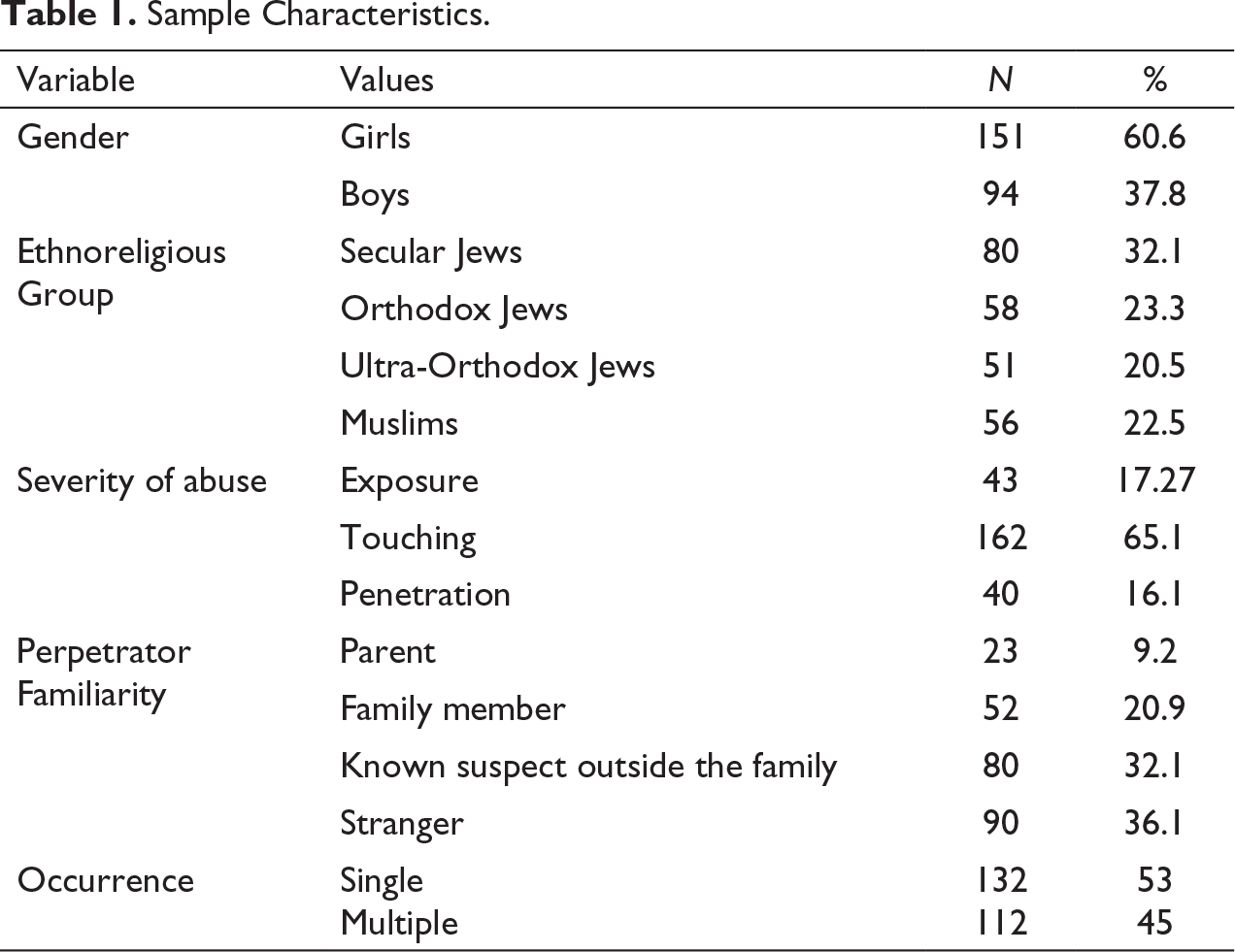
The inclusion criteria were: (a) the child was interviewed as an alleged victim of sexual abuse; (b) the child’s age ranged from 4 to 14 years; (c) the forensic interview was the first with the child; and (d) the child had no developmental disabilities or delays.
The interviews were performed by trained forensic interviewers with at least a bachelor’s degree in social work (BSW). All interviews followed the National Institute of Child Health and Human Development (NICHD) Protocol.
The NICHD Protocol
The NICHD Protocol is fully structured and consists of three stages. In the preparatory phase, the child is introduced to the interviewer and the interview guidelines.
The second phase continues the children’s training in the interviewer’s questioning style, helping them become more comfortable as they move into the third phase. In the third stage, the focus is on the abusive incident. The interviewer taps into the child’s episodic memory through open-ended questions, such as “tell me everything that happened to you from beginning to end.” To complete the interview, the interviewer helps the child relax and shifts the focus to neutral topics, such as the child’s daily routine (Katz & Barnetz, 2016; Malloy et al., 2011).
Procedure
The study was carried out in two stages. During the first, qualitative stage, the forensic interviews were thematically analyzed to interpret the children’s narratives by focusing on the meaning that would generally be understood from the text by others who speak the same language (Clandinin & Connelly, 2000; Riessman, 2008), and to elicit their subjective experience (Morse, 1994). First, the authors identified the responses that children described by repeatedly reading the interviews and breaking each response into discrete units of meaning. Afterward, the identified codes were grouped into the themes, which were then classified, refined, and named (Braun & Clarke, 2006).
In the second quantitative stage, the prevalence of the identified peritraumatic responses was examined. Next, correlations were calculated between this prevalence and child characteristics (age, gender, and ethnoreligious group) and abuse characteristics (severity of abuse, perpetrator familiarity, and frequency of abuse). Logistic regression tests and chi-square tests were then used to test the research hypotheses.
Ethical Approval
This study was committed to protecting the participants’ privacy and dignity. Accordingly, the forensic interviews were provided to the researchers without the names or identifying information of the children, parents, or other individuals and places involved in the incidents. This study was approved by the Director of the Israeli Child Forensic Interviews Service, the Research Board of the Ministry of Welfare, and the Ethics Committee of Tel Aviv University. This study’s importance lies in the opportunity provided to children survivors of sexual abuse to express how they felt and responded to the abuse, from their perspective, and for that perspective to be honored and respected.
Results
Thematic Analysis
The analysis identified three themes: (a) “I just tried”: peritraumatic responses at all levels of human experience; (b) “I realized I had to say ‘stop’”: the decision-making process leading to the peritraumatic response; and (c) “I am just bad at it”: children’s perceptions of their responses to abusive incidents.
“I just tried”- peritraumatic responses at all levels of human experience.
This theme refers to children’s various peritraumatic responses during the abuse. The children described a wide range of peritraumatic responses that can be organized into six subthemes: (a) behavioral-automatic response; (b) dissociative response; (c) behavioral-calculated response; (d) cognitive response; (e) emotional response; and (f) physiological response.
Behavioral-Automatic Response
The automatic response included both fight and flight. The fight response may be reflected in an attempt to resist the offender: “I told him no! I kicked him and tried to release his grip from me.” Flight response was manifested by trying to escape the abusive situation: “I ran as fast as I could, in all my life, I have not run so fast.”
Dissociative Response
The dissociative response was similar to the freeze response. It included children who were unable to move or feel body parts, a sense of truncated memory, and more: “I don't exactly remember how long it was and what exactly he did. I was on his lap, and when it was over, he gave me a lollipop.”
Behavioral-Calculated Response
The calculated behavioral response included elements of tend-and-befriend, adaptation, avoidance, and surrender. Specifically, the tend response included reactive attempts to protect somebody else during an abusive situation: “When he touched my brother, I told him, no one touches my brother, so I tried to hit him.” The befriend response included reaching out to other people for help: “I told him I heard the parents coming... I did not hear the parents; I just did not want it to happen.” The adaptation response included reactive attempts to adapt to the abusive environment to reduce its painful consequences: “He told me to kiss him. I had no choice. I approached him and tried to kiss him on the cheek because I did not want to kiss him on the mouth.” The avoidance response included reactive attempts to delay the abuse or reduce its duration: “I made up excuses and wasted time hoping that he won’t go to the bedroom with me.” Finally, the surrender response involved doing what the offender asked so that the abuse incident would end as quickly as possible: “I just lay on the floor and waited for it to end.”
Cognitive Response
The cognitive response involved thoughts that went through the child’s head during the incident. It appeared that the children referred to their thoughts in two main ways: thoughts about how to act (“I kept thinking what to do now”) and attempts to understand what was happening to them (“I did not understand what he was doing to me. Why is he doing this”).
Emotional Response
The emotional response involved fear, disgust, unpleasantness, sadness, anger, and stress. For example, one child shared, “I felt anger, sadness, even fear... I was afraid of where else it could go.”; “It was just disgusting ... I was not comfortable, and I wanted him to stop.”
Physiological Response
The physiological response included physical reactions and sensations such as crying, trembling, and pain: “I felt my heart beating the fastest I felt in my life, I was shaking.”; “It hurt me as someone stabbed me a hundred times in the stomach.”
It is important to note that there was usually a mixture of all of the response types in the children’s descriptions. The following is an example of this given by a secular Jewish child who was abused by a stranger. Herein the child explained everything he tried to do and every feeling that was aroused during the abusive situation:
I tried to dodge him [fight]. I wanted to run away [cognitive]. I was scared [emotional], but I tried to resist [fight]. I kicked him a little [fight], but could not. He tried to open the door with keys, so I held the key inside so it would not move. [fight]... I told him sorry, let me out [flight]... he told me, “now kiss me.” I had no choice. I told him I do not want to [fight]… I approached him and wanted to kiss him on the cheek [adaptation]. I did not want to kiss him on the mouth... and then he told me to kiss him, so I kissed him [surrender]... disgusting [emotional response]... I thought he was going to kill me [cognitive]... and then I started crying [physiological]... I was terrified [emotional] ... I don’t remember if it was here... oh, I remember he was... I was stunned [dissociative].
Moreover, whether children were able to respond automatically (fight-or-flight) or not, they related to the expected peritraumatic responses on both the cognitive and emotional levels. Thus, in the following narrative, an ultra-Orthodox child tried to explain how he thought about running away while actually doing what he was told:
I had no choice. I did what he told me, but I thought in my head about a plan to escape. Imagine if I had a hammer, I would make a hole in the wall and go to the other bathroom and run away from it.
Similarly, a Muslim Arab child dared to imagine fighting a perpetrator who abused him, with the help of his family and friends:
I would like to put up a camera and film everything he does to me. I would delete what was needed and then show everyone, and everyone would know. Then I would beat him with my legs and arms, and my entire family and school would help me hit him.
“I Understood I Had to Say ‘Stop’”: The Decision-Making Process Leading to the Peritraumatic Response
Children from various ethnoreligious groups talked about the different resources they could rely on when responding to the abuse they had experienced. Mainly, the secular and Orthodox Jewish children discussed their abilities and resources as individuals, whether actually available to them or not. In the following narrative, a secular Jewish child who was abused by his neighbor explains what helped him through the difficult moments: “I learned from a story called ‘I Own My Body.’ I understood from the story that I had to say ‘stop’.” Similarly, another secular Jew shared: “When I ran away, I felt good. And I tried not to let him touch my body, at least that.”
It seems that the Jewish ultra-Orthodox and Muslim Arab children expressed different narratives. An ultra-Orthodox girl who was sexually abused at night by her older brother said:
I didn’t know whether to get up or not. I thought nothing would happen if I told in the morning, my mother is asleep now. On the other hand, I thought my mother must know about it now. It took me hours to think about whether to get up now.
In this example, a girl who had just been sexually abused did not think about herself but debated whether to wake her mother. Similarly, the Muslim Arab children related mainly to the authoritative parental figures in their lives. A Muslim Arab girl explained the dynamics of the abuse at home by her father—she and her siblings did everything their father told them: “I took off the clothes, like everyone else, as we do everything that my father says.”
“I Am Just Bad at It”: Children’s Perceptions of Their Peritraumatic Responses to Abusive Incidents
This theme refers to children’s perceptions of their peritraumatic responses as conveyed to the forensic interviewers. It seems that children who managed to escape the abusive perpetrator described that they felt good about being able to escape the abuse and defend themselves. For example, a secular Jewish boy said: “When I ran away, I felt right. At least I defended myself, and I tried not to let him touch my body, at least that.” Another child said: “When I ran away, I was terrified that he would catch me. But as I turned around, I felt so lucky I managed to escape.”
In contrast, it seems that children who failed to implement a fight-or-flight response felt a sense of failure, as illustrated by the narrative of this child: “I wanted to run away so much, but I couldn’t. I'm just bad at it.” In particular, the secular and Orthodox Jewish children attached great importance to their ability to defend themselves. When unable to respond in this way, the perceived failure was painful. Neither the ultra-Orthodox Jewish nor Muslim Arab children referred to their perceptions or reflections with respect to their peritraumatic responses.
Quantitative Analysis
Possible peritraumatic responses to abusive incidents: descriptive statistics.
Peritraumatic Responses to CSA.
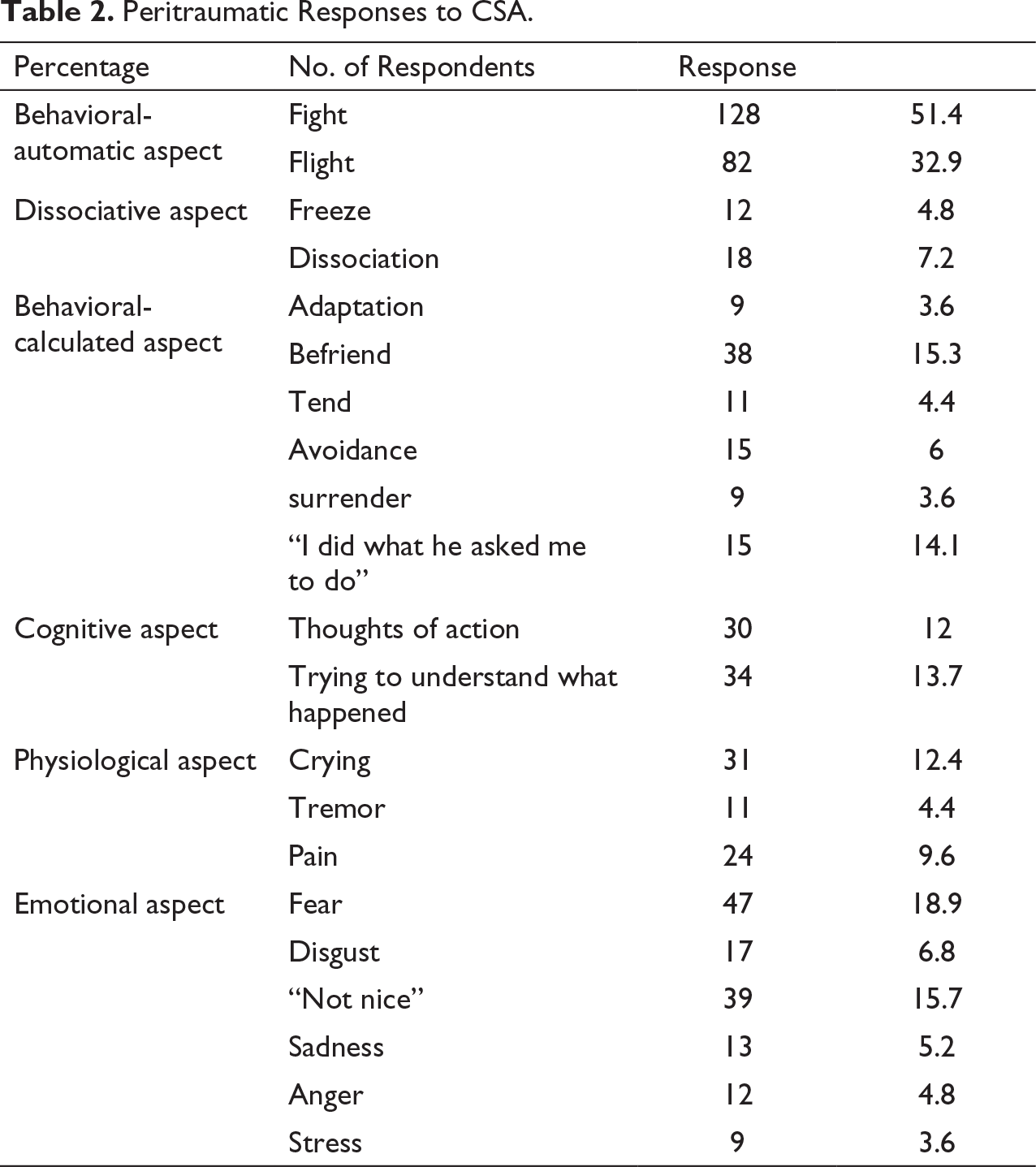
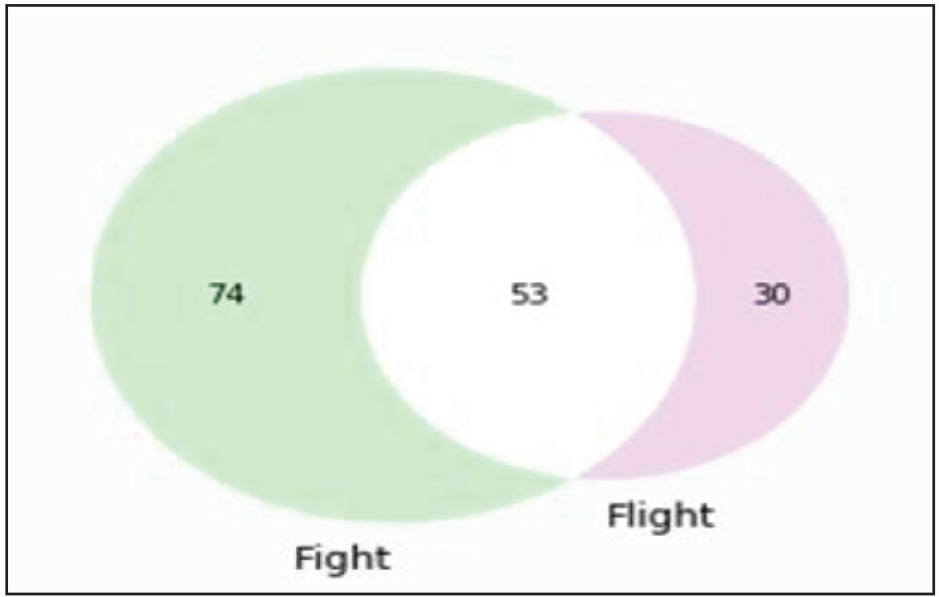
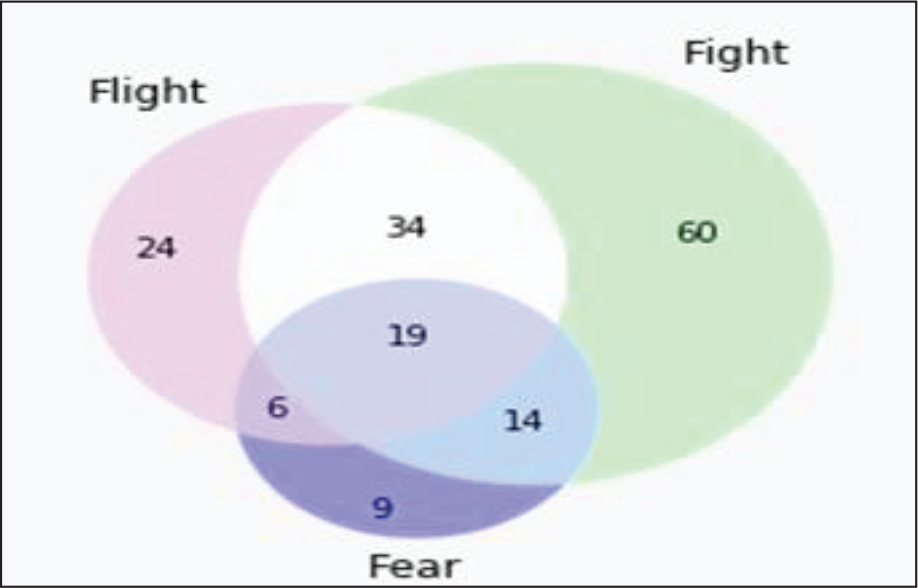
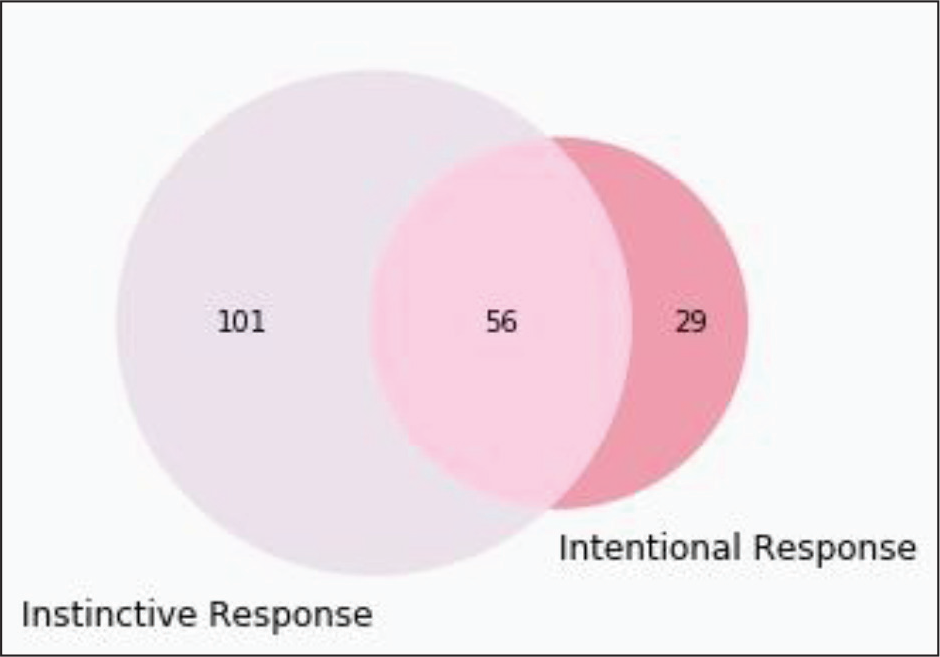
As mentioned, children often reported more than one response. The multiplicity of responses reported by the children is illustrated in Figures 1–3. As shown in Figure 1, approximately 53% of all children reported trying both fight and flight responses. About 30% reported trying to fight the offender without attempting to flee. Finally, 13% of the children tried to flee from their offenders but did not report any attempt to fight them. Figure 2 shows the overlap between the three most frequent responses in the sample: fight, flight, and fear. Nineteen children appear to have responded with all FFF response patterns. Figure 3 illustrates the overlap between the automatic and calculated responses, showing that over 30% of the children responded with at least one of the FFF responses, combined with at least one calculated response pattern.
Frequency of Fight and Flight Responses.
The Frequency of Fight, Flight, and Fear Responses.
The Frequency of Instinctive and Intentional Responses.
Quantitative Analyses
Correlations between child characteristics and responses.
To assess the hypotheses regarding the correlation between child characteristics and reported responses, several statistical tests were performed. Note that only the automated responses were examined, as the examination of the other responses proved impossible due to their low prevalence. Thus, the first exploration aimed at assessing whether there was a correlation between the children’s ages and their reported automatic responses. A logistic regression test was performed and found to be insignificant. The second examination focused on gender. A chi-square test was performed and was also found insignificant as no difference was found between boys and girls in expressing an emotional or physiological response to sexual abuse.
Finally, we examined the correlation between children’s ethnoreligious group and the frequency of automatic responses. Using a chi-square test, we found a significant difference between two groups [χ2(1) = 8.625; p < .01]: 108 secular and Orthodox Jewish children responded more frequently with automatic responses, compared to 64 ultra-Orthodox Jewish and Muslim Arab children who also responded automatically. Moreover, even in the adjusted residual test, it was found that secular and Orthodox Jewish children were more likely to use automatic responses than the ultra-Orthodox Jewish and Muslim Arab children.
Correlations between abuse characteristics and responses.
A chi-square test was performed to explore the correlation between severity of abuse and children’s responses. There was no significant difference between any of the groups based on the level of abuse severity and frequency with which children responded with automatic responses. To explore the correlation between children’s responses and perpetrator familiarity, a chi-square test was performed and found significant [χ2(4) = 10.108; p < .05], indicating a correlation between perpetrator familiarity and the prevalence with which children responded with automatic responses. Specifically, while only 4.4% of the children abused by a parent responded automatically, 13% of the children abused by another family member responded automatically. Comparatively, 24.5% of the children abused by a family acquaintance and 28% of the children abused by a stranger responded automatically. An adjusted residual test showed that children abused by a family acquaintance were most likely to respond with an automatic response.
Finally, to examine the correlation between frequency of the abuse and automatic responses, a chi-square test for independence was performed. A significant difference between the groups was found [χ2(2) = 14.614; p < .01]. Thus, 43% of the children who were abused once responded with automatic responses, while only 26.5% of the children who were continuously abused responded that way.
To conclude, children appeared to respond to sexual abuse using a wide range of peritraumatic responses, including behavioral-calculated, cognitive, physiological, and emotional responses. Moreover, during the abuse itself, children reported implementing more than one peritraumatic response. Children’s ethnoreligious affiliation was correlated with automatic responses. Specifically, children who grew up in Jewish ultra-Orthodox or Muslim Arab societies reported less frequently of fight-or-flight peritraumatic responses than children who grew up in secular and Orthodox Jewish societies. Finally, for all children, familiarity with the perpetrator and abuse frequency was correlated with automatic responses. Specifically, automatic responses were more common in a single abusive incident than in recurring incidents and when the perpetrator was an acquaintance outside the family.
Discussion
This study was designed to examine children’s peritraumatic responses during CSA. The use of a mixed-method methodology guided the exploration of the children’s narratives during their forensic interviews. The findings are discussed within the framework of Bronfenbrenner’s (1979) ecological model.
The fight-or-flight mechanism is considered instinctive and immediate (Bovin & Marx, 2011). Interestingly, the current findings indicated that, at times, this mechanism remained on the cognitive level. Thus, children reported thinking of fighting or fleeing but could not act on these thoughts given the other contexts in their lives. One relevant context might be the children’s relationship to the perpetrators and, more specifically, children’s tendency to do what adults tell them (Bovin & Marx, 2011; Katz & Barnetz, 2014a). However, it is also possible that children hesitated before they dare to respond, as they tried to estimate whether they would be able to defend themselves or escape the abuse (Cesario et al., 2010; DiPalma, 1994; Katz & Barnetz, 2014b). This possibility is also reflected in the way the children reported their responses. It seems that many children did not choose between fight and flight, but tried both together. Similarly, others (Asdigian & Finkelhor, 1995; Finkelhor, et al., 1995) have found that many children attempt multiple strategies simultaneously.
In exploring additional relevant contexts within the children’s lives, this study found that neither age nor gender was correlated with the children’s peritraumatic responses to abuse. These findings are contrary to Asdigian and Finkelhor (1995), who indicated several differences between boys and girls and various age groups with respect to peritraumatic responses. For example, they found that adolescent boys were more likely to respond with aggressive and even violent fight responses than girls, preschoolers, or elementary school children. Another study (Finkelhor et al., 1995) found that both girls and boys tended to respond with a fight response. However, girls resorted to less violence, attempting to shout for help, threatening to expose the abuse, and crying. Further research should explore whether and how age and gender might be correlated with peritraumatic responses to abuse.
Extending the observation to the micro-environment, one can refer to the child’s family, friends, etc. (Bronfenbrenner & Morris, 2007). This study found that children abused by a perpetrator outside the family were most likely to respond automatically. An acquaintance outside the family may be distant enough for the child to not depend on him or her for survival. Thus, there is consensus in the literature that children abused by a relative, especially if on a reoccurring basis, may experience significant helplessness (Katz & Barnetz, 2014a; Katz et al., 2020b; Merrick & Guinn, 2018).
There is also consensus that the closer the perpetrator is to the child’s family circle and the greater the child’s dependence on him or her, the more significant the helplessness becomes (Katz & Barnetz, 2014a; Katz et al., 2020b; Katz & Nicolet, 2020). When the parent is the offender, the children may experience extreme conflict given their physical and emotional dependency on the parent (Katz & Barnetz, 2014a). Although the house is unsafe for them, they have nowhere else to go. This is likely why children abused by a parent or relative may respond less frequently with fight-or-flight. Moreover, as reported in recent studies (Katz et al., 2020; Katz & Nicolet, 2020), children abused by family members also learn that trying to fight or flight could endanger their emotional and physical survival, indicating the necessity of calculated decision-making, for which this study’s findings provided an initial glance.
Similarly, in relation to the frequency of the abuse, this study indicated that the children tended to respond less with automatic responses in regard to ongoing as opposed to one-time abuse. It might be that something in the multiple abuse incidents paralyzed their fight-or-flight mechanism. However, it is difficult to examine the explanations for this finding separate from other factors, such as the perpetrator’s familiarity, the child’s characteristics, and the relation between them, particularly since most abusers are relatives or close family friends. For the most part, children were unable to avoid the perpetrators of their abuse, resulting in what might be considered an adaptation to this unbearable context in which a child learns what needs to be done to survive. This adaptation, although potentially beneficial in surviving the abuse, could be costly in terms of the children’s self-attributions. As found in this study, children interpreted their lack of fight-or-flight responses as incompetency, failure, and “being bad at this.”
Another possible explanation for this finding may be biological. The more often the biological response system is activated, the more it becomes worn out by stress hormones. The sympathetic system continues to function even in the absence of a threatening stimulus. Children who experience ongoing sexual abuse may experience constant arousal or under-activation of the nervous system, manifested in a kind of apathy and unresponsiveness (Shonkoff & Philips, 2000). As such, the apathetic response may be more useful for children who realize they are not able to fight the perpetrator and have nowhere to run. The prevalence and adaptiveness of this response should be further explored.
Concerning the different levels of abuse severity, no significant difference was found in children’s tendency for fight-or-flight. This could indicate that the severity of the abuse can only be defined by the child who experienced the abuse and not by a general standardized measure. Furthermore, every sexual assault constitutes an objectifying act of violence. This can be seen in the words of one of the children who explained that his exposure to pornographic images, considered a minor offense in the Israeli legal system, violated his needs and desires: “He chooses what he wants to do, I don’t choose, he chooses. I do not want to see these things.”
Finally, regarding the macro-environment that constitutes society’s effects on children, Bronfenbrenner and Morris (2007) found that social institutions, political events, and social expectations significantly impact an individual’s worldview, values, beliefs, and behavior. In this study, a correlation was found between the children’s ethnoreligious identity and the frequency with which they responded with automatic responses. The findings showed that Jewish secular and Orthodox children responded automatically more frequently than ultra-Orthodox Jewish and Muslim Arab children. Social codes may largely dictate how children respond to sexual abuse. In more conservative and closed societies, the adult’s status is much higher than the child’s, which may deter children from responding to (and also disclosing) abuse by an adult (Al-Haj, 1987).
From the forensic interviews of the secular Jewish children, it also appears that in times of need, they referred to abilities and resources that were both available and unavailable to them during the threatening situation. Notably, this was also found among Jewish ultra-Orthodox children. Although it is customary to treat religious societies as distinct groups with a typically strong emphasis on family values (Ne’eman, 2005), this finding of resource consideration was most evident in the children exposed to the collectivist ethos in ultra-Orthodox society, which preaches solidarity and community intervention, as opposed to government intervention, in individuals’ lives and especially children (Goldstein, 2005). For example, a girl who had just been sexually abused by her older brother considered her mother’s needs and whether to wake her up and did not think about her own needs. This dilemma may reflect strict adherence to social norms (Karnieli, 2006). Similarly, in Muslim Arab society, children must understand adults’ needs and place the family’s best interests above their own (Budman et al., 1992). Like Jewish ultra-Orthodox society, Muslim Arab society in Israel is characterized by traditional collective social codes (Al-Haj, 1987). These traditional codes sanctify family and social cohesion and are characterized by inherent patriarchy (Triandis, 1996).
Another possible explanation for the individualism demonstrated by the secular and Orthodox Jewish children in this study may lie in the increased exposure to prevention and protection programs in their education systems as well as virtual and real-life social networks (Finkelhor et al., 1995). Conversely, in a traditional and closed society, the flow of information is more limited (Bronfenbrenner, 1979), possibly reducing the children’s access to such networks, affecting their awareness of and ability to identify potential abuse, and their perceived social legitimacy of whether or not they can defend themselves against an abusive situation.
Yet another explanation is related to the forensic interview setting and the cultural influences on how children from different societies react to it. Children who are used to pleasing adults and doing what they are asked may be apprehensive or ashamed in front of the interviewer and thus share less (Katz et al., 2020; Tener, 2019). In the forensic interviews used for this study, there was little emphasis on how children responded to the abuse, as the interview protocol was focused on eliciting concrete information to be used to convict the perpetrator, therefore, focusing on actions rather than thoughts. The possible range of responses might have been blocked by questions such as: “And what did you do?”; “How did you act?” These questions may direct children to one dimension of response—the automatic dimension—that is familiar to the children primarily as fight-or-flight. Perhaps this explains the frequent reports of fight-or-flight responses in this sample; the interviewers’ questions and directions (some of which cannot be evident in the transcripts, such as body language) may have led the children to this type of answer, which is well imprinted in the social expectations of them in the interview setting as well as broader circles.
Limitations and Implications for Future Research and Practice
In this study, we decided to base our analysis of children’s responses to sexual abuse on forensic interviews to learn from their perceptions of the abusive incidents in their own words. However, this decision has several implications concerning the limitations of the study. First, at times the children’s narrative was unclear and limited due to their powers of expression. Retrospective interviews with adults could have allowed for a broader and more coherent narrative, with greater reflection on how the survivors responded to their abuse as children. It also seems that the forensic interview platform allowed for a relatively limited narrative concerning the response patterns that the children were able or encouraged to express. As long as this specific tool is used to gather information on this subject, our ability to elicit broader narratives is also limited. Future studies should examine how in-depth explorations can be done during forensic interviews to better ascertain children’s peritraumatic responses.
Regarding future directions, the current findings indicated a correlation between children’s ethnoreligious identity and the prevalence of their responses to sexual abuse. As mentioned, children who grew up in open societies reported more automatic responses. Hence, this study may have important implications in raising awareness of the fact that children growing up in closed communities may have limited access to internal and external resources in contending with CSA. It is essential to develop and provide accessible prevention and protection programs to closed communities and, more generally, reduce the social isolation that children in these societies experience by increasing their accessibility to community and external resources. It is also necessary to strengthen the children’s internal resources and give them a sense that they have someone to approach for help. It is, however, crucial to stress that this study did not explore preferred ways of responding to abuse. Future studies should further examine this essential aspect.
This study may also have implications for future efforts in the area of forensic interviews with children. One direction could be to examine elements that may help children look more reflectively at themselves and how they reacted during the forensic interview. This is essential for forming a fuller and broader story of the abusive incident and a clearer picture of the unbalanced power relations between the abuse survivor and perpetrator.
Finally, the current findings may contribute to the areas of prevention and therapy. This study highlights that there are various responses children use during incidents of abuse. Hence, developing programs that illustrate multiple response options and explaining such responses to education, health care, and welfare professionals are of the utmost importance.
Overall, this study focused on how characteristics of children and abuse may affect children’s responses to sexual abuse. The study examined these two dimensions and found correlations between response patterns and children’s ethnoreligious identity, frequency of abuse, and familiarity of perpetrators. These three layers together contribute to the complexity of the dynamics of CSA and the relationship between some of the factors involved and the prevalence of the children’s various responses. We found that the more children were raised in closed and patriarchal societies and the more they were abused on an ongoing basis by a relative, the less likely they were to fight or flee. In these cases, children have nowhere to run or hide and are unable to fight back. It seems that it is precisely in these cases that we need to understand children’s responses to sexual abuse because these children, although they did not fight or flee, responded in their own way, and did everything they could to survive.
Footnotes
Declaration of Conflicting Interests
Funding
The authors received no financial support for the research, authorship, and/or publication of this article.
