







Abstract
Given widespread recognition of sexual violence as a public health concern, sexual harassment has garnered considerable attention from researchers and the public. Yet research with adolescent samples has typically focused on the experiences of victims rather than perpetrators, and males as perpetrators and females as victims. In the current article, we consider whether risk and protective factors operate similarly within and across sex assigned at birth. A national sample of youth, ages 14 and 15, were recruited via social media and surveyed online (N = 1,981). At the individual level, girls who sexually harassed others, were more likely to have a propensity to respond to stimuli with anger compared to boys who sexually harassed. At the relational level, girls who sexually harassed were more likely to be victims of sexual harassment compared to boys, and having a negative peer environment (have delinquent peers, seen someone get attacked, and know someone who has been sexually assaulted) was of particular importance in understanding why girls harass others. For boys who harass, family relations, having seen or heard about peer physical or sexual assault and bullying perpetration were important for contextualizing boys’ sexual harassment. As empathy increased, the relative odds of sexually harassing decreased for girls. Future research should explore motivations for perpetrating sexual harassment, bystander interventions, and longitudinal frameworks to identify causal patterns to determine which factors inhibit or facilitate sexual harassment.
Sexual harassment is a form of sexual violence that is broadly defined as unwanted sexual behavior that may be verbal or physical, and involve both direct or indirect behaviors, such as unwanted sexual contact, sexual comments, and rumor spreading (Basile & Saltzman, 2002). Legal definitions sometimes further require that the experience has to have changed the environment so that it no longer feels safe, for example, has become a ‘hostile work environment’ (Fitzgerald et al., 1997). Across age groups and institutions, researchers conceptualize a continuum of harm whereby harassment may progress to more serious forms of sexual violence (Espelage et al., 2012; Farrell, 2017). Thus, researching factors associated with sexual harassment perpetration may result in downstream impacts on reductions in other forms of sexual violence perpetration as well.
Most of the extant literature focuses on sexual harassment victimization. Studies suggest that it is common in adolescence. Lifetime national estimates range from 45 to 88% of male and 52–96% of female students. Sexual harassment is considered as a component of sexual violence (Basile & Saltzman, 2002; Krug et al., 2002). Studies have linked the experience with a range of negative outcomes such as academic problems, school absenteeism, depression, anxiety, substance use, and adjustment problems (Chiodo et al., 2009; Dahlqvist et al., 2016; Goldstein et al., 2007; Gruber & Fineran, 2008; Hill & Kearl, 2011; Lipson, 2001).
Further, while research and the public have primarily focused on males as harassers and females as victims (Brown & Stone, 2016), emerging literature with national and community samples suggests that in adolescence, girls are perpetrators nearly as much as boys (Hill & Kearl, 2011; Ybarra & Thompson, 2018). These findings underscore the need to compare risk and protective factors across sex.
To address the gap in research about adolescent sexual harassment perpetrators, the social-ecological model may be a useful guide, as it has informed our understanding of the potential risk and protective factors for other forms of violence (Bronfenbrenner, 1977; Krug et al., 2002). The model emphasizes the interrelationship between the individual and the environment and the importance of examining both individual and relational factors that may influence violent behavior. Understanding how different levels of influence contextualize sexual harassment perpetration can provide important clues for comprehensive prevention efforts. To this end, we consider individual factors (i.e., empathy, anger), family relationship factors (i.e., witnessing spousal abuse, parental monitoring, trust, and communication), and peer relationships (i.e., social support, peer exposure to violence, peers who are delinquent, previous sexual harassment victimization and peer victimization and bullying) as we endeavor to contextualize perpetration behavior. The following literature speaks to how this model informs the current article and highlights possible sex differences across two levels of social ecology: individual and relational factors. As there is scarce research on the risk and protective factors for sexual harassment perpetration specifically, the following literature draws more broadly from the sexual violence perpetration literature.
Individual Factors Associated With Sexual Violence Perpetration
At the individual level, affective dispositions and processes are robust predictors of aggression (Tangney et al., 2007). In particular, anger is a well-documented risk factor for sexual violence perpetration (Birkley & Eckhardt, 2015; Vagi et al., 2013). Individuals who respond to stimuli with anger are more likely to justify aggressive behavior such as sexual violence and to be aggressively motivated (Basile et al., 2009; Espelage & De La Rue, 2013). This aligns well with qualitative data from the American Association of University Women study where a common motivator for the perpetrator to sexually harass another student was to retaliate for the harassment that was done to them (Hill & Kearl, 2011). However, few studies have focused on anger and how it specifically relates to sexual harassment; this is especially true for female perpetrators (Espelage & De La Rue, 2013). Empathy, on the other hand, is a robust protective factor for sexual violence perpetration (Basile et al., 2018; Marshall & Moulden, 2001; Vagi et al., 2013). Important sex differences have been documented extensively in community samples, with females generally indicating higher empathy than males (Basile et al., 2018; Van der Graaff et al., 2014). Empathy comprises three different dimensions: Perspective taking (e.g., the ability to consider someone’s perspective), empathetic concern (e.g., an affective reaction to someone’s emotional state), and personal distress (e.g., emotional reactions due to self-concern) (Davis, 1980). Perspective taking is of particular importance in relation to sexual harassment perpetration as it measures the perpetrator’s ability to view the experience through the victim’s perspective (Davis, 1980). While this is a known protective factor for sexual violence in general, we know little about how this translates to sexual harassment, specifically. Studies of college samples have found lower levels of perspective taking in students who sexually harass others (Moore & Mennicke, 2020; Pryor, 1987), but we do not know whether this finding applies to adolescent female and male perpetrators.
Relational Factors Associated With Sexual Violence Perpetration
Adolescence marks a period characterized by rapid changes in physical, social, and cognitive development. It is also a developmental phase where sexual attraction arises and youth gain an increased interest in sexuality. Sexual harassment behaviors may increase as a result of this developmental change, combined with the immature ability to express romantic attraction (Pellegrini, 2001; Petersen & Hyde, 2009). Family relationships play a crucial role in the adolescent's life, but as children transition into adolescence, peers become increasingly influential as adolescents endeavor to individuate from their caregivers (Moore et al., 2015). Social support and positive parent–child relationships have been found to reduce the risk of youth violence perpetration in general (Resnick et al., 2004; Shlafer et al., 2013), as they may buffer against negative challenges and support healthy coping (Masten & Monn, 2015; Thoits, 1982). Extant research yields a somewhat mixed picture as to whether these protective factors operate similarly across sex in reducing the risk of sexual violence perpetration. For example, longitudinal research has found no evidence of sex differences; social support and better parental monitoring characterized both male and female non-perpetrators (Basile et al., 2018). On the other hand, prior research with a national sample found that family connectedness was protective for female perpetrators but not for male perpetrators (Resnick et al., 2004). Although we know social support and positive family relations may buffer against negative challenges and contribute to healthy coping, we do not know how these factors relate to sexual harassment behaviors among adolescents, nor whether sex differences exist. Further examination is warranted.
Exposure to interpersonal violence, such as witnessing spousal abuse and having delinquent and violent friends, are well-documented risk factors for aggression generally (Foshee et al., 2013; Foshee et al., 2016; Tharp et al., 2013), but we know less about their role in contextualizing sexual harassment perpetration specifically (Fineran & Bolen, 2006). Social
Learning Theory argues that behavior is learned through observation (Bandura & Walters, 1977). Youth who have witnessed violence at home may believe that this is the appropriate way in which conflict should be addressed. They also may be more likely to socialize with delinquent peers who have similarly accepting attitudes towards violence (Clear et al., 2014; DeGue et al., 2013; Ybarra & Langhinrichsen-Rohling, 2019). This may in turn “normalize” violence and increase the risk of perpetration. That said, these studies have mainly focused on male perpetrators, with scarce attention to female sexual harassment perpetration. However, a recent study examining peer influence on adolescents’ peer-based harassment (relational aggression and sexual harassment), found that girls who were highly vulnerable to peer influence had a greater risk for being both a victim and perpetrator of relational aggression as well as a victim of sexual harassment, compared to boys (Goldstein et al., 2020). Although peer influence did not predict sexual harassment perpetration for girls, findings nevertheless indicate that peer influence may be a unique risk factor worthy of further exploration.
Perhaps not surprisingly, the majority of adolescent sexual harassment perpetrators, both females and males, also report being victims of sexual harassment (Hill & Kearl, 2011; Ybarra & Thompson, 2018). Bullying perpetration and victimization have also been found to associate with sexual harassment perpetration (Clear et al., 2014; Gruber & Fineran, 2008; Pellegrini, 2001; Pepler et al., 2006). Further, bullying perpetration has been found to predict sexual harassment perpetration over time (Espelage et al., 2012). As such, Espelage et al. (2012) argue for a bully-sexual violence pathway: When youth who perpetrate bullying mature and interact more with the opposite sex, they may be more likely to perpetrate sexual violence. This framework aligns with the Continuum of Harm model, emphasizing that less serious behaviors may escalate to more serious forms of sexual violence. Although sexual harassment and bullying may overlap conceptually, there are important semantic nuances that warrant studying these types of perpetration separately: sexual harassment behaviors are perpetrated on the basis of sex or sexual orientation (or use sex or sexual orientation to demean the victim) whereas this is not a defining feature of bullying (Basile & Saltzman, 2002).
Current Study
Using the social-ecological guide as a model, this study aims to investigate the cross-sectional odds of sexual harassment perpetration given individual and relational factors, both within and between male and female youth, in a national sample of 1,981 youth, aged 14 and 15 years old. Based upon the extant literature, three research questions were examined:
What individual and relational factors differentiate female perpetrators from female non-perpetrators? What individual and relational factors differentiate male perpetrators from male non-perpetrators? and Do individual and relational factors differ for female and male perpetrators?
Methods
Participants
Growing up with the Media (GuwM) is a national longitudinal survey designed to study the emergence of sexual violence in adolescence and its persistence or desistence into young adulthood. The study began in 2006 with 1,586 10–15-year-olds. Since then, nine waves of data have been collected, with the most recent wave collected in 2019–2020. Given suggestion that middle adolescence may be a particularly important developmental period to observe (Ybarra & Mitchell, 2013; Ybarra & Thompson, 2018), a second cohort of 4,163 youth 14–15 years of age was recruited in 2018–2019; this is the cohort being used in the current study.
Sociodemographic Characteristics of the Total Sample by Sex and Sexual Harassment Perpetration Status (N = 1, 981).
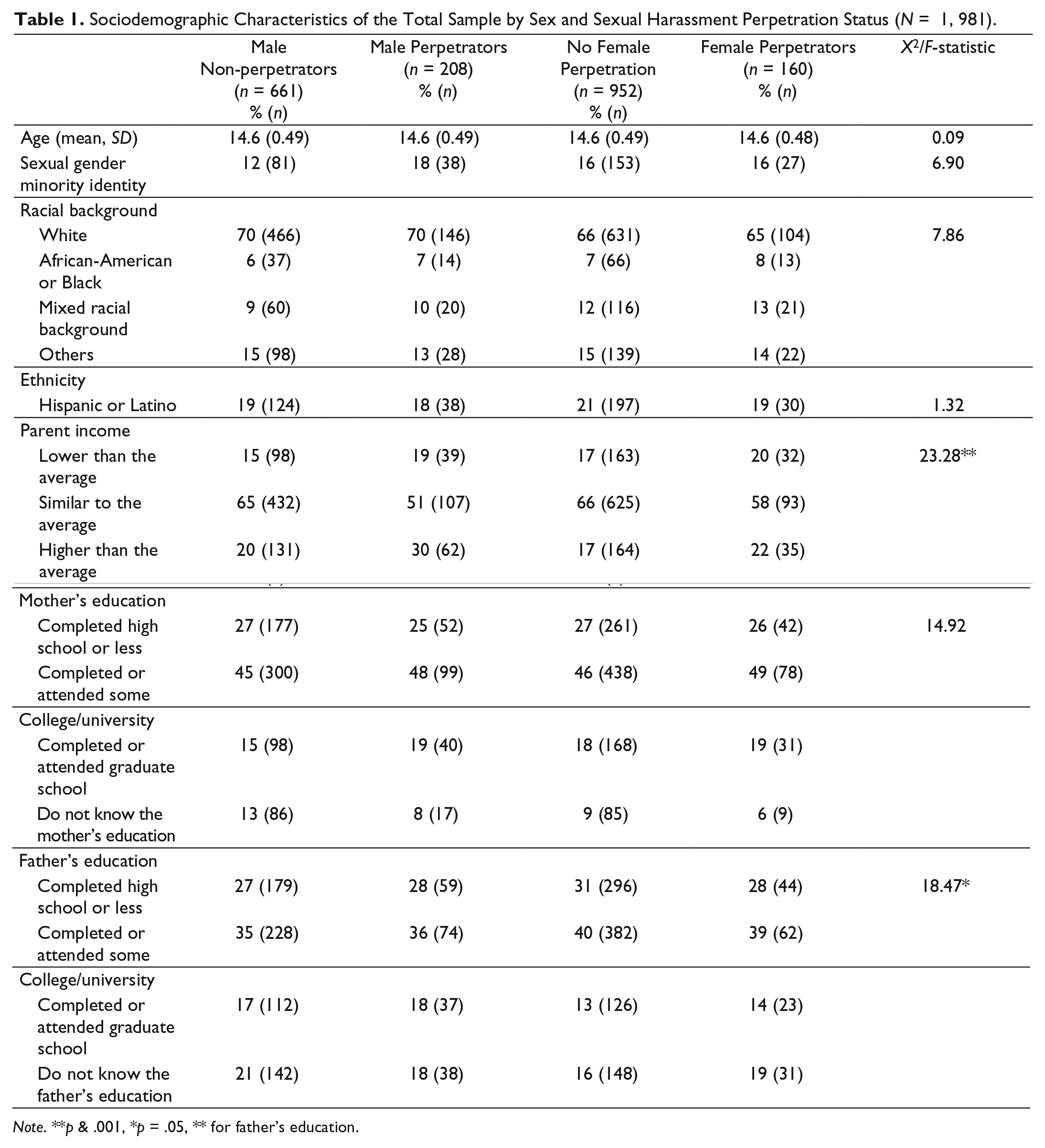
Note. **p & .001, *p = .05, ** for father’s education.
Procedures
Youth were primarily recruited through Instagram and Facebook. To reduce self-selection bias, online ads were neutral and did not refer to the survey focus, reading, for example: “Have your voice be heard.” Those who were interested clicked on the online advertisement and were linked to the secure survey website. The first page provided a study description and contact information for study staff. The subsequent pages asked screener questions to determine eligibility. Those who were eligible (14–15 years old, English or Spanish speaking, able to assent, and resided in the United States) were then asked to read an assent form and to indicate their willingness to participate in the survey before continuing with the main survey. Ineligible youth were directed to a web page that included links to general resources (e.g., youngwomenshealth.org, youngmenshealthsite.org). Participants were incentivized $15, either as a check or an Amazon gift card, for completing the survey.
Measures
Dependent variable.
Sexual Harassment Perpetration was measured with nine questions modified from the Sexual Experiences Survey (Koss & Gidycz, 1985) and the American Association of University of Women survey (Lipson, 2001). Responses were captured with a six-point scale to assess frequency in the last 12 months. Behaviorally specific questions were used to avoid labeling and stigmatization, which may lead to under-reporting of socially undesirable behaviors (Cortina et al., 1998; Felix et al., 2011; Fitzgerald & Ormerod, 1991). For the purposes of this study, perpetration was defined as having an affirmative response to at least one of the following nine items:
Spread sexual rumors or wrote sexual messages about someone in a public place such as the bathroom walls, online, on Facebook, etc. Touched, grabbed or pinched someone, or grabbed someone’s clothing in a sexual way when they did not want me to. Intentionally brushed up against someone in a sexual way when they did not want me to. Blocked someone’s way or cornered someone in a sexual way when they did not want me to. Made sexual or obscene comments to someone that they did not want to hear. Showed or sent someone sexual or obscene messages or pictures when they did not want me to. Asked someone for sexual information about them when they did not want to tell me (really personal questions, like what sexual things they have done or what their body looks like). Asked someone to do something sexual when they did not want me to. You did something or said something else in a sexual way when they did not want you to. (Cronbach’s alpha = .84).
Sexual harassment perpetration was further divided by sex assigned at birth, resulting in four categories: male non-perpetration, male perpetration, female non-perpetration, and female perpetration.
Independent variables.
Individual factors.
Empathy was measured with an abbreviated measure of empathy (Davis, 1980), in which the seven perspective-taking items were utilized:
I believe that there are two sides to every question and try to look at them both. When I am upset at someone, I usually try to think about how they might be feeling about the situation. I try to look at everybody’s side of a disagreement before I make a decision. I sometimes find it difficult to see things from the other person’s point of view. Before saying something bad about somebody, I try to think how I would feel if I were them. If I am sure I am right about something, I do not waste much time listening to other people’s arguments. I sometimes try to understand my friends better by thinking about how things look from their point of view.
The response format was on a 5-point scale ranging from “does not describe me at all” (1) to “describes me completely” (5). Average mean scores were calculated (Cronbach’s alpha = .69).
Propensity to respond to stimuli with anger (Spielberger, 1999; State Trait Anger Expression Inventory, STAXI) was assessed by ten statements asking the respondents whether the they were “hardly ever,” “sometimes” or “often” true, for example, “I feel grouchy,” “I get angry quickly.” Average mean scores were calculated (Cronbach’s alpha = .81).
Family relations.
Witnessing spousal abuse (Hamby et al., 2004) was assessed by asking: “Have you ever, in real life, seen or heard one of your parents get hit, slapped, punched, or beat up by your other parent, or by their boyfriend, girlfriend, or partner?,” with the response options of “yes” and “no.”
Relationship with parents (Finkelhor et al., 2000) had two subscales. Parental monitoring was measured by asking the respondents how often: (a) “Does this person know where you are when you are not at home” and (b) “Does this person know who you are with when you are not at home.” (r = .59). Trust and communication was measured with: (a) “Do you feel that this person trusts you,” (b) “If you were in trouble or were sad would you discuss it with this person,” and (c) “How well would you say you and this person get along? (Cronbach’s alpha = .70). The response format was on a 5-point scale ranging from “never” (1) to “all of the time,” while the latter item ranged from “very badly” to “very well” (5). Average mean scores were calculated for each scale.
Peer relations.
Social support (Zimet et al., 1988) was measured with eight items, for example, “there is a special person who is around when I am in need,” “I have a special person who is a real source of comfort to me.” The response options ranged from (1) Very strongly disagree to (7) Very strongly agree. Average mean scores were calculated (Cronbach’s alpha = .94).
Witnessing peer violence (measure created for the GuWM survey) included two separate indicators drafted for the current survey (Cronbach’s alpha = .74). Seen/heard about a peer sexually assault another person was indicated if youth who endorsed they had ever, in real life, seen or heard about someone you know in real life who:
“Said something sexual to someone when that person did not want to hear it.” “Made someone kiss, touch, or do something sexual when that person did not want to.” “Made someone have sex when that person did not want to” or “Got someone to give into sex when they did not want to,” Seen/heard about a peer physically abuse their partner was indicated for youth who endorsed they had, in real life, seen or heard one of their friends hit, slap, punch or beat up his or her boyfriend, girlfriend, someone they are dating or hooking up with.
Seen someone get attacked (Office of Juvenile Justice and Delinquency Prevention, 1998) was assessed by asking: “Have you ever in real life seen someone get attacked or hit on purpose? Somewhere, like at home, at school, at a store, in a car, on the street or anywhere else?” (Yes/No).
Association with delinquent peers (Dahlberg, 2005) was measured as having one or more close friends who had been arrested or done things that would get them in trouble with the police in the past year.
Victims of sexual harassment included the same items and response options as those for sexual harassment perpetration but were asked whether the experiences had happened to them (Cronbach’s alpha = .90). A follow-up question was asked to individuals who answered affirmative to having been sexually harassed with the intent of identifying those for whom the environment had become hostile: “Thinking about the places where you were sexually harassed in the last 12 months, do any of these places now feel scary, unfriendly or uncomfortable?” A three-category variable indicating sexual harassment victimization was developed: no sexual harassment victimization, sexual harassment (no scary environment), and sexual harassment (scary environment).
Bully victimization (Ybarra et al., 2012) was measured by asking six items, for example: (a) hitting, kicking, pushing, or shoving you and (b) making threatening or aggressive comments to you. Items were inter-related (Cronbach’s alpha = .88). Those who endorsed at least one item were asked about power imbalance and repetition of the bullying. Individuals who endorsed that the bullying occurred repeatedly, and confirmed that it involved power imbalance, where the bully had more power or strength than the victim (e.g., the person was bigger than you, had more friends, was more popular) were defined as bully victims. Generalized peer victimization was defined as having an affirmative answer to at least one of the bullying behaviors listed above which did not include repetition and power imbalance. A three-category variable was developed: no peer victimization, generalized peer victimization (no bullying), and bullying victimization.
Bullying perpetration (Ybarra et al., 2007) in the past year was measured with items that mirrored the victimization items (Cronbach’s alpha = .81). Those who said they did so monthly or more often for at least one of the items was categorized as a bully perpetrator. Those who indicated behaviors at a less frequency was coded as peer harassers.
Statistical Analyses
Stata, Version 14, was used for all analyses (StataCorp, 2015). Sociodemographic characteristics were descriptively analyzed by perpetrator status using chi-square analyses and t-tests. Differences were then quantified using multinomial logistic regression. Three comparisons were examined: (a) female perpetrators versus female non-perpetrators, (b) male perpetrators versus male non-perpetrators, and (c) female perpetrators versus male perpetrators. The same multivariate model was estimated three times so that each reference group could be modeled. Youth characteristics for inclusion were identified based on a series of bivariate unadjusted analyses. Those that were statistically significant at the p & .05 level were included in a multivariate model. We also adjusted for process variables (i.e., self-reported dishonesty in completing the survey, and not being alone when completing the survey). Individuals who answered “declined to answer” (no variable had more than 4.6% missing) were coded as 0 for the categorical variables, assuming that if it was not recalled, it was most likely not retained, and as the mean for continuous variables, with two exceptions: for racial background, “decline to answer” was coded as “Other race,” and for parental education, it was coded as “Do not know mother’s/father’s education.”
Results
Sexual harassment perpetrators and non-perpetrators had similar sociodemographic characteristics, including age, sexual and gender minority identity, and race and ethnicity. Of exception were family income and paternal education (Table 1).
Sexual Harassment Perpetration among Youth
Nearly one in five (18.5%, n = 368) youth reported engaging in at least one instance of sexual harassment perpetration in the past year; 24% (n = 208) of males and 14% (n = 160) of females (p & .001). Among these youth (n = 368), most reported that they rarely (i.e., a few times a year or less) engaged in this behavior: males: 72% (n = 149) and females: 75% (n = 120). For youth who participated in at least one sexual harassment behavior, about one in four males (28%, n = 59) and females (25%, n = 40) reported doing so frequently (i.e., once or twice a month or more often).
The most common type of behavior was verbal sexual harassment perpetration (45%, n = 168), more than one in four reported both verbal and physical sexual harassment (31%, n = 113); and about one in four, physical sexual harassment perpetration (24%, n = 87).
Overview of Individual and Relational Factors by Sex and Sexual Harassment Perpetration Status
All except seven of the female perpetrators experienced sexual harassment victimization. Thus, “no sexual harassment victimization” was not a viable reference group in the regression analyses. We instead compared girls who reported sexual harassment victimization that made places now feel scary, unfriendly, or uncomfortable versus all others.
Overview of Individual and Relational Factors for Total Sample by Sex and Sexual Harassment Perpetration Status (N = 1,981).
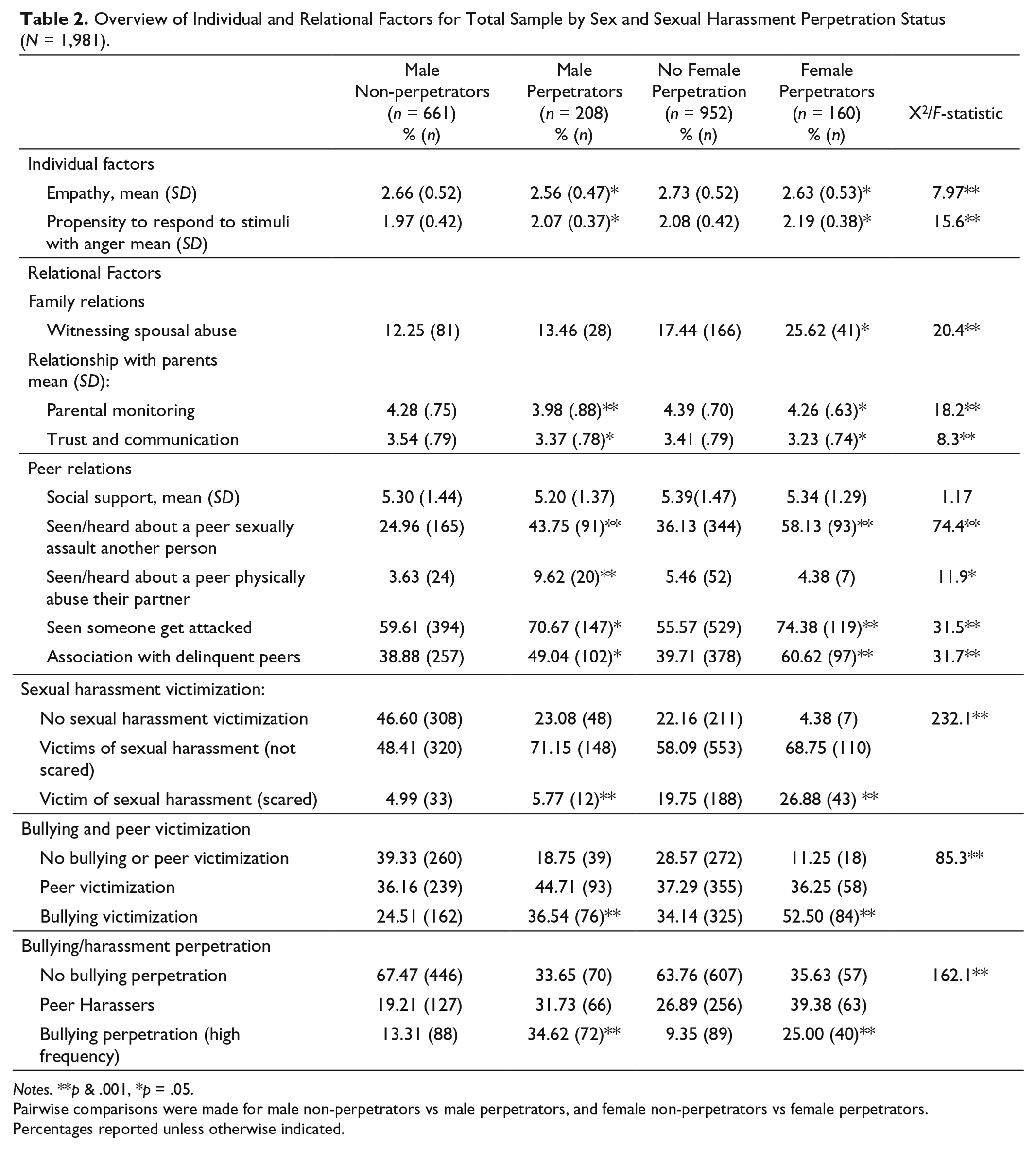
Notes. **p & .001, *p = .05.
Pairwise comparisons were made for male non-perpetrators vs male perpetrators, and female non-perpetrators vs female perpetrators.
Percentages reported unless otherwise indicated.
Individual Factors Related to Sexual Harassment Perpetration
Multinomial Regression of Individual and Relational Factors Associated With Female and Male Sexual Harassment Perpetration, Adjusting for Family Income and Father’s Education (N = 1,981).
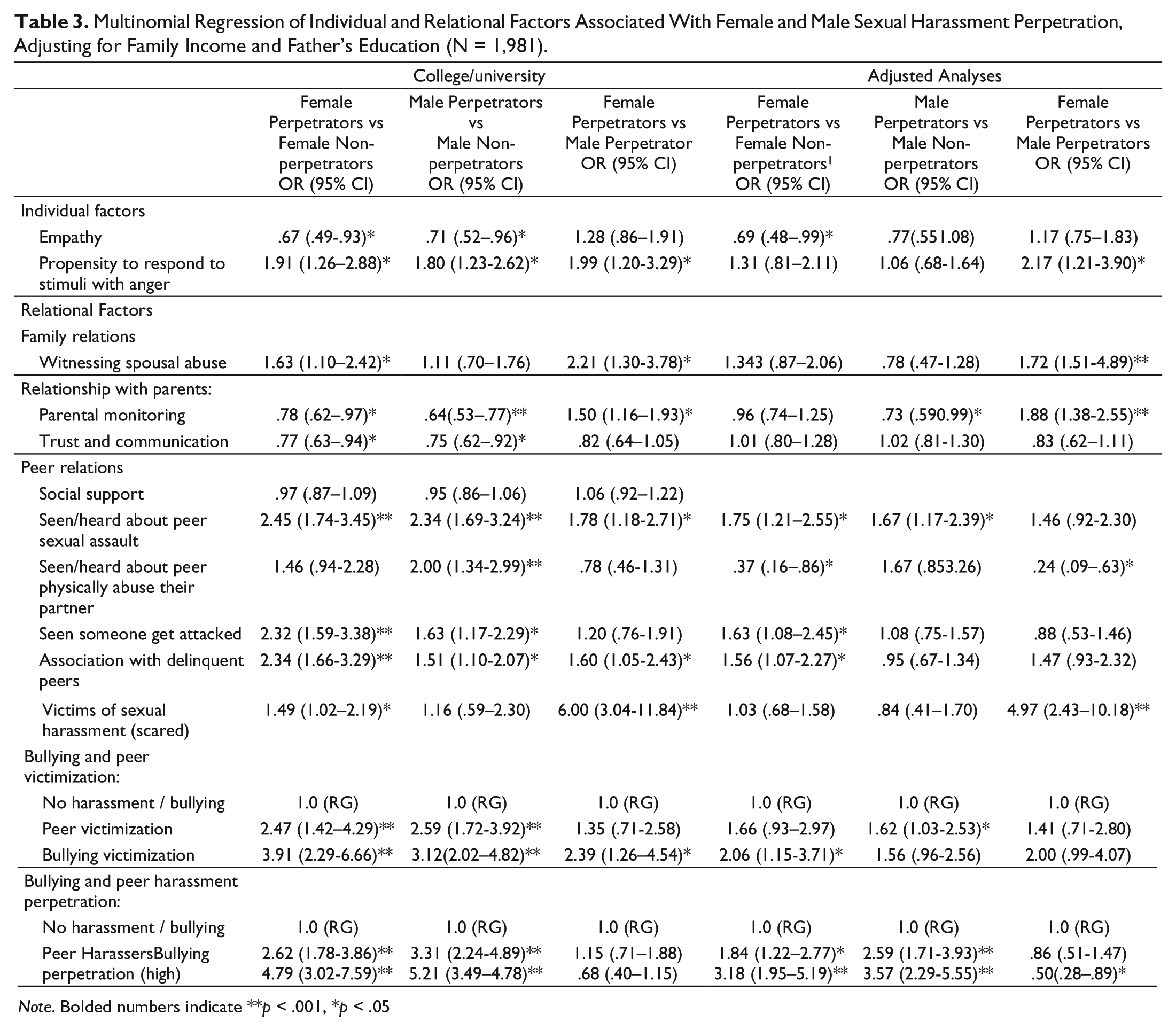
Note. Bolded numbers indicate **p < .001, *p < .05
Relational Factors Related to Sexual Harassment Perpetration
Among females, none of the family factors were associated with elevated odds of female perpetration once the model was adjusted for other potentially influential factors. Among males, parental monitoring significantly reduced the odds of male perpetration.
Among females, multiple peer relational factors were significantly associated with sexual harassment perpetration in the multivariate analyses. Females who had friends that had perpetrated sexual violence, who had seen someone get attacked, associated with delinquent peers, and who had been victims of bullying or bullied others were significantly more likely to also sexually harass others.
Among males, having peers who had perpetrated sexual violence, peer victimization, and bullying others were associated with an increased odds of sexual harassment perpetration after adjusting for other influential factors.
Relational factors that distinguished female and male perpetrators in the adjusted analyses included sexual harassment victimization, having friends that had physically abused their partner, spousal abuse, parental monitoring, and bullying others. Compared to male perpetrators, females who had been victims of sexual harassment had almost a five-fold increase in the odds for perpetration. Having witnessed spousal abuse also increased the odds of sexual harassment perpetration compared to male perpetrators. Having friends who had physically abused their partner, and bullying others was associated with higher odds of male perpetration, while parental monitoring served as a buffer for male sexual harassment perpetration.
The McFadden’s R2 for the adjusted model, including both individual and relational factors was .105.
Discussion
Building upon previous national studies of sexual harassment perpetration among adolescents (Bryant, 1993; Lee et al., 1996; Lipson, 2001; Mitchell et al., 2014), our results highlight the importance of examining female perpetrators alongside male perpetrators. Multiple factors contextualized such behavior, including sexual harassment victimization and witnessing spousal abuse for female perpetrators; and higher levels of bullying perpetration, having friends who had physically abused their partner and lower levels of parental monitoring for male perpetrators of sexual harassment.
Individual Factors Related to Sexual Harassment Perpetration
At the individual level, the ability to consider others’ perspectives was an important protective factor and this was true for both boys and girls in the unadjusted analyses, and for girls even after accounting for other risk and protective factors. This is in line with research that has found empathy to be a protective factor for other forms of sexual violence perpetration (Basile et al., 2018; Marshall & Moulden, 2001; Vagi et al., 2013). This study contributes to the literature by showing how empathy specifically relates to sexual harassment among adolescents, and for girls in particular. Specifically for verbal sexual harassment perpetration, which was the most common type of behavior reported. Our findings also dovetail with recent work examining perspective taking in college students who harass others (Moore & Mennicke, 2020). They found that students who had sexually harassed others underestimated negative outcomes for victims (e.g., interfering with the victim’s academic performance or daily activities, and creating an uncomfortable environment), revealing perpetrators’ deficits in perspective taking (Moore & Mennicke, 2020). These findings along with ours highlight the importance of increasing perspective taking and awareness of the impact sexual harassment may have on a person’s well-being.
Responding to stimuli with anger was associated with a two-fold increase in the odds of female perpetration compared to male perpetration. While anger is a well-known risk factor for male aggression (Birkley & Eckhardt, 2015; Vagi et al., 2013), our findings suggest that anger plays a stronger role for female than male perpetrators of sexual harassment, perhaps in part because girls are seeking justice for the harassment they experienced (Hill & Kearl, 2011). Future work might explore whether anger is a motivational force for girls, especially in light of our finding that the overwhelming majority of girls who reported harassing others had themselves been victims of sexual harassment. Indeed, female perpetrators were five times as likely than male perpetrators to report sexual harassment victimization.
As with previous research (Hill & Kearl, 2011; Ybarra & Thompson, 2018), we find overlaps between victimization and perpetration experiences among adolescence who are involved in sexual harassment. Further, one in four female perpetrators reported experiencing more severe forms of sexual harassment victimization, in which the places where the experience led to the environment feeling scary, unfriendly, or uncomfortable. Together, these findings indicate that multiple individual factors, seen in a relational context, contribute to harassing behavior, and that important sex differences exist. While perspective taking is important, the overlap between victimization and perpetration, in particular for girls, highlights the need to further understand the motivation behind their harassing behavior.
Relational Factors Related to Sexual Harassment Perpetration
In addition to the individual factors, and previous victimization, other relational factors also played an important role in explaining sexual harassment behavior. Females in particular were less influenced by their emotional bond with their parents and their parental monitoring, and more by their negative peer environment. Girls who had seen someone get attacked, who had been bullied or bullied others, or who had friends who were delinquent or had perpetrated sexual violence had an increased likelihood for sexually harassing others, even after accounting for other factors. In addition, females who had witnessed spousal abuse had a two-fold increase in the odds for perpetration, compared to male perpetrators. This aligns well with social learning theory that argues that behavior is learned through observation (Bandura & Walters, 1977), and that a high acceptance of violence in the home and among peers or in the community may normalize perpetrating behavior. Whereas prior work has focused on other forms of sexual violence and on male perpetrators, our findings demonstrate the predictive utility of the peer environment on sexual harassment, and for females in particular. These findings complement emerging evidence finding that girls are especially susceptible to negative peer influence, which in turn may lead to increased involvement in peer-based harassment (Goldstein et al., 2020). Future work should explore additional contextual factors, such as the school environment, to help elucidate how peers may influence harassing behaviors, among girls in particular.
Among boys, parental monitoring distinguished between those who perpetrated and those who did not, and also distinguished male perpetrators from female perpetrators. This highlights the protective role family relations may have on male sexual harassment perpetration. Adolescents who lack support at home may seek support in peers to substitute for what is lacking at home. These youth may push limits to fit in with their peers, such as harassing others (Goldstein et al., 2020). In contrast, engaged and involved parents can buffer youth from perpetrating sexual harassment, but why this is particularly important for boys warrants further investigation.
Finally, males who had seen or heard about people they knew who had physically abused their partner, and bullying perpetration increased the likelihood of perpetrating sexual harassment more for males compared to females. The latter finding supports the possibility of a bully-sexual violence pathway, suggesting that youth who perpetrate bullying are more likely to perpetrate sexual violence (Espelage et al., 2012).
Limitations
This study was cross-sectional, limiting our understanding of temporal relations among the key constructs. Longitudinal research also is needed to determine potential differences by sex assigned at birth and across different developmental stages. In addition, we relied on self-report, and future work should gather data from other informants such as peers.
Measuring sexual harassment perpetration in this age group has its limitations. Research with early adolescents suggests that there are developmental dimensions to empathy that may have implications for self-report measures (Lovett & Sheffield, 2007). Specifically, deficits in empathy that may lead aggressors to consider their victims' willing participants that could in turn affect interpretation of the qualifier “when they did not want me to” in the sexual harassment questions. However, given that one in five youth did report this behavior, findings indicate that some youth are in fact aware of their actions at this age.
The measure “association with delinquent peers,” defined as having one or more close friends who had been arrested or done things that would get them in trouble with the police, also has its limitations. Of the total sample, 42% of the youth met this criterion, which may indicate youth applied a broad definition. It nonetheless discriminated between and within perpetrators and non-perpetrators and therefore appears to be a useful indicator. It bears noting that details about the experience, including the severity of the sexual harassment perpetration and the sex or gender of the person to whom the sexual harassment was targeted, could highlight further differences between and within perpetrators and non-perpetrators. It also meant that we could not examine if it was same-sex or cross-sex harassment. Future work should explore additional factors that add predictive utility, including school climate or relationships with teachers.
Implications
The high overlap between victimization and perpetration among females warrants additional study to elucidate why girls become both victims and perpetrators of sexual harassment. Understanding the lived experience of female perpetrators (including the peer environment and role of anger or retaliation) should be explored further. Similarly, understanding the intention behind sexual harassment behavior (e.g., demeaning others, retaliation) from the perspective of the perpetrator would be useful. Our findings highlight the importance of including both females and males in prevention messaging, especially for younger adolescents when actions may be more verbal than physical, as seen in our data. Moreover, prevention programs for sexual harassment should focus on individuals in relation to their social network and consider the influence that peers have for girls in particular. Finally, prevention programs need to do a better job of addressing modifiable protective factors such as empathy. Indeed, many prevention programs are focusing education on bystanders in order to shift social norms and provide youth with skills to support victims (Polanin et al., 2012; Salmivalli, 2014). In this context, bystanders are third parties who witness sexual harassment, who may know about sexual harassment within a friend’s relationship, or who may hear sexually harassing comments on social media (Bogen et al., 2019). The current findings, which emphasize a strong peer focus and influence, provide support for the potential utility for these types of programs. A bystander focus overcomes limitations of earlier models of prevention that focus only on potential victims or perpetrators, or focus solely on the individual at risk. Involving multiple people from the community has been linked to reductions in interpersonal violence including bullying (Polanin et al., 2012) and sexual harassment and violence (Coker et al., 2017). Such bystander prevention efforts typically focus on supporting victims but given the intersectionality of victimization and perpetration found in this study, efforts to educate bystanders to recognize and intervene safely with perpetrators may also prove useful. Training that helps youth recognize signs of sexual harassment perpetration, both verbally and physically, may help in this regard as is education about the role of both males and females in sexual harassment perpetration. Such programs are particularly important to implement during early adolescence as this is a crucial developmental period where their ability to express romantic relationships are being formed. Learning about healthy sexual behaviors at an early stage may thus have a critical long-term impact in reducing harassing behavior. Bystanders in the peer group and community are ultimately embedded in larger systems that should also be considered in future research. Outer layers of the social ecology include sociopolitical contexts and influences such as the media. Societal attitudes about sexual violence have shifted considerably in recent years with the #MeToo movement. Although this movement has focused on sexual harassment as an adult problem, there has been some discussion among adolescents as well (Alaggia & Wang, 2020; Strauss, 2018; Vredenburgh, 2020). Yet despite the promise of cross-generational progress, the #MeToo movement has generally reinforced the narrative of a female victim and male perpetrator, and silencing of men and boys as victims, perhaps perpetuated in part by salient narratives in news media (Bruggeman, 2019; Kessler et al., 2019). In tandem with policy and funding to address sexual violence, the media can be a powerful force to change societal expectations and norms. Future research will need to take into account this changing landscape when conducting research on sexual harassment.
Conclusion
Although both boys and girls had multifaceted factors associated with perpetration, important sex differences emerged. At the individual level, girls’ sexual harassment victimization and a propensity to respond to stimuli with anger were associated with greater odds of sexually harassing others compared to boys. At the relational level, the peer environment was of particular importance in understanding why girls sexually harass others, while family relations and bullying perpetration were important for understanding why boys sexually harass others. Lastly, it is important to highlight that empathy was a protective factor for reducing the likelihood for perpetrating sexual harassment for girls. Our findings thus show that both individual characteristics and aspects of interpersonal relationships may contribute to sexual harassment perpetrating behavior for both boys and girls. Given that an important minority of girls were nearly as likely to perpetrate sexual harassment as boys in this study, and that individual, family, and peer influences varied for girls and boys, there is a continued need to include girls in perpetration research.
Footnotes
Declaration of Conflicting Interests
Funding
The author(s) received no financial support for the research, authorship, and/or publication of this article.
