







Abstract
Intimate partner violence (IPV) is a significant public health problem among college students and many students have difficulty identifying unhealthy and abusive behaviors. The aims of this mixed methods study are to: (a) create an inclusive tool that illustrates the power and control experiences of a diverse group of young adult college students, (b) ensure a broad scope of tactics are illustrated (related to technology and different types of relationships), and (c) measure the experience of these tactics, including how IPV knowledge, attitudes, and self-efficacy are influenced by a more inclusive tool. In Phase I, semi-structured interviews were conducted with students (n = 33) and staff (n = 10) at campus sexual assault centers at the three University of Michigan (UM) campuses to explore power and control tactics utilized by perpetrators on college campuses. Content analysis revealed 13 categories of tactics in college relationships. A draft tool was created and assessed for accuracy using cognitive interviews with students (n = 20) from all three campuses in Phase II. Cognitive interviews resulted in the following changes to the final tool: (a) new presentation of the Socioecological Model, (b) identification of substance use as a facilitator for multiple forms of violence, and (c) edits to tactic descriptions. In Phase III, 250 students at UM–Ann Arbor participated in a quasi-experimental evaluation in which 133 interacted with the tool and 117 received access to usual care (campus sexual misconduct policy). Both groups answered survey questions about IPV knowledge, attitudes, self-efficacy, and experiences at baseline, and after one month and five months. Among all college participants in Phase III, 33.5% had experienced lifetime IPV and 25.2% had experienced IPV in the past year. There were no significant differences among IPV knowledge, attitudes, or self-efficacy by group. The Dynamics of Interpersonal Coercion Among College Students tool was created by incorporating current tactics utilized among a diverse college population.
Background and Significance
Intimate partner violence (IPV) is a serious public health problem affecting the health and well-being of millions of individuals around the globe, with high rates among college-age youth. Worldwide, one in three women will experience IPV and/or sexual abuse or non-partner sexual violence in their lifetime (World Health Organization, 2021). The Centers for Disease Control and Prevention (CDC, 2017) defines IPV as physical violence, sexual violence, stalking, and/or psychological aggression by a current or past intimate partner. Estimates of IPV for college students range from 10% to 50% (Amar & Gennaro, 2005; Barrick et al., 2013; Kaukinen et al., 2012; Nabors et al., 2006).
Consequences of IPV Among College Students
IPV is associated with myriad negative academic, economic, social, and health outcomes. Not only is IPV detrimental to a college student’s academic career (Banyard et al., 2020; Jordan et al., 2014; Mengo & Black, 2016) but it can also affect their future economic independence and empowerment (Voth Schrag, Edmond, & Nordberg, 2020). Furthermore, IPV can lead to disruptions in relationships as well as increased acute and chronic health problems including musculoskeletal injuries, mental health disorders (e.g., post-traumatic stress disorder, depression, anxiety, disordered eating), substance abuse, reproductive health infections, chronic pain, gastrointestinal conditions, and chronic conditions (Amar & Gennaro, 2005; Campbell, 2002; Coker et al., 2002; Devries et al., 2013; Pico-Alfonso et al., 2006) that may further interfere with academic ability and employment (Brewer et al., 2018). Survivors of IPV also have a higher risk of violence later in life (Abramsky et al., 2011). Yet many young adults may not realize they are experiencing IPV. In fact, more than half of all college students (57%) say it is difficult to identify dating abuse (Knowledge Networks, 2011).
Developmental Transitions
College students are also transitioning into young adulthood. One central feature of emerging and young adulthood are the characteristics of relationships that are formed during this period, particularly romantic and sexual relationships (Arnett, 2010). Compared to relationships in adolescence, which are often more transient, relationships in emerging and young adulthood tend to last longer, include more intimacy, and include shared finances and residences (Collins, 2003; Furman & Shaffer, 2003; Scott et al., 2011). Additionally, college students are often learning to manage school, work, new relationships, stress, conflict, and their own health for the first time as independent young adults with limited experience and communication skills as well as less parental or older adult oversite and support (Fredlanda et al., 2005). A holistic approach focused on shared experiences and similar developmental tasks during a specific time period and context (e.g., young adults in college) therefore recognizes that students are engaging in a variety of new relationships with roommates, faculty, staff, classmates, co-workers, and friends, as well as romantic and sexual relationships.
Power and Control
One of the most commonly used tools to help individuals (including victims and perpetrators) understand and identify different tactics used to maintain power and control in a relationship is the power and control wheel (Corvo et al., 2009; Pence & Paymar, 1993). The power and control wheel was developed in the mid-1980s using interviews with battered women (in predominantly heterosexual relationships) to document the most common abusive behaviors and tactics found in their partnerships (Domestic Abuse Intervention Programs, 2017). It was not intended as a universal description of abusive behavior; however, it has become a tool recognized around the world because of the tool’s ability to graphically display the experiences of victims and perpetrators (Domestic Abuse Intervention Program, 2017; Pope & Ferraro, 2006). The Domestic Abuse Intervention Program has recommended the adaptation of the tool to fit unique populations and cultures and continues to maintain oversight on which versions of the tool it endorses and makes widely available. Although the power and control wheel has been adapted many times to target unique experiences of power and control using different modalities (e.g., mobile phone technologies) and in various populations (e.g., those who are deaf; identify as gay, lesbian, bisexual, and transgender; individuals with HIV/AIDS; or those with multiple intersecting identities), there is a limited evidence base documenting the adaptation process or piloting the efficacy of these tools (Chavis & Hill, 2008; Havard & Lefevre, 2020; National Center on Domestic and Sexual Violence [NCDSV], 2013). Further, an evaluation of power and control among Pacific peoples noted a number of limitations to the power and control wheel that did not accurately represent the violence experienced in collective societies and cultures (Rankine et al., 2017). Without an evidence base, it is unclear if current versions of the power and control wheel are acceptable and effective within diverse populations, including those sharing a common experience based on developmental transitions (e.g., young adults in college). Further, although tools depicting power and control are frequently used as secondary and tertiary prevention strategies, these tools have typically not been systematically evaluated for use in primary violence prevention.
Theoretical Framework
An evidence-based tool for understanding experiences of violence among young adults, particularly those embedded within the college context, should recognize the societal, community, relationship level, and interpersonal aspects of IPV among college students. As such, this project was guided by the Socioecological Model (CDC, 2002) and Theory of Planned Behavior (TPB; Ajzen, 1991). Ecological systems theory, developed by Bronfenbrenner (1977, 1992), describes how development is influenced by interactions between a person, their immediate environment (including family and friends), and the social landscape of the institutions and structures within which they are embedded. The CDC (2002) adopted the Socioecological Model to create a framework for violence prevention and this model continues to examine the interactions between a person and their environment that put people at risk of experiencing or committing violence (Bhochhibhoya et al., 2019).
TPB was developed to explain and predict human behavior in specific situations (Ajzen, 1991). According to TPB, the antecedent factors to intention and ultimately behavior are: (a) personal attitudes (e.g., how do I feel about that?); (b) subjective norms (e.g., what do I know about that from others?); and (c) perceived behavioral control (e.g., do I have the ability to do that?). Together the Socioecological Model and TPB help guide the hypotheses, methods, and interpretation of results from this study.
Purpose
The purpose of this study is to systematically explore current tactics of power and control experienced by a diverse college population. Specifically, we intend to address the following gaps: (a) to create a more inclusive tool that represents the relationships and experiences of a diverse group of young adult college students, (b) to broaden the scope of tactics described, paying particular attention to tactics unique to young adults in college (e.g., technology-based tactics and those related to different types of relationships), and (c) to measure the experience of these tactics on a college campus, including how IPV knowledge, attitudes, and self-efficacy are influenced by a more inclusive tool. We hypothesize that students exposed to an inclusive tool representing power and control tactics relevant to the college population will have higher IPV knowledge, will be less likely to endorse attitudes that support IPV, and will have higher self-efficacy to address IPV within their relationships that could ultimately lead to decreased perpetration and victimization (behaviors/experiences). A more inclusive tool, co-created with college students in the young adult developmental time period, could be used for educational efforts at all levels of prevention (primary, secondary, tertiary) to help a broader population of college students identify and address abusive tactics that may be present in their relationships.
Methods
Design
This mixed methods study utilized three phases to create and pilot a tool representing the experiences of power and control among a diverse college sample. The study took place at the three University of Michigan (UM) campuses. Institutional Review Board approval was attained on all three campuses (HUM00138284 and HUM00133004).
Setting
Description of Study Procedures Based on Study Phase.
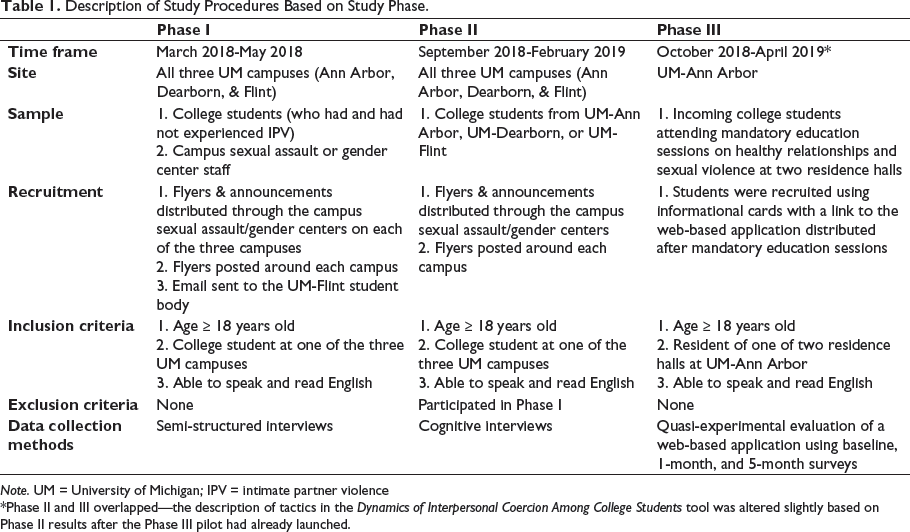
Note. UM = University of Michigan; IPV = intimate partner violence
*Phase II and III overlapped—the description of tactics in the Dynamics of Interpersonal Coercion Among College Students tool was altered slightly based on Phase II results after the Phase III pilot had already launched.
Procedures
Phase I. During Phase I, we aimed to recruit approximately equal numbers of students from each campus. We recruited students who did and did not identify as survivors of IPV in order to identify a range of controlling behaviors, which students described on a spectrum from unhealthy to abusive. This was done intentionally given that not all individuals who experience abusive behaviors identify as survivors of abuse (Williamson & Serna, 2018). Students that were interested in participating in the study contacted the study email included on all promotional materials. For Phase I, students were asked to participate in a brief phone screening to ensure a diverse group of students, including students who had experienced IPV. Semi-structured interviews were then arranged with all eligible participants. Prior to the interview, participants reviewed the consent form and answered a 10-item demographic survey. During the semi-structured interview, participants were asked to describe tactics of power and control used in college interpersonal relationships, as well as to create their own figure to display these tactics in whatever structure made sense to them. After participants described tactics of power and control used in college relationships, all participants viewed the original power and control wheel as an example of a tool used for educational purposes. After the interview, all participants received a resource sheet with campus and community resources related to IPV.
For Phase I, we also recruited staff at each campus’ sexual assault or gender center via email. Individual interviews were scheduled at a private location based on the respondent’s choice. Prior to the interview, the informed consent was provided and the participant answered a seven-item demographic survey.
Interview questions for both students and staff focused on understanding the participants’ knowledge of IPV, their thoughts about current tools that demonstrate power and control in relationships, and how they envisioned a tool that captured tactics specific to a diverse college population. All interviews were digitally recorded and transcribed verbatim. Individual interviews lasted between 35 and 79 minutes and all participants received $10 for their time.
Phase II. For Phase II, students were recruited from all three campuses using flyers and announcements within the campus sexual assault/gender centers on each of the three campuses and through flyers posted around each university campus to participate in a cognitive interview. Prior to the cognitive interview, the consent form was reviewed and the participant answered a 10-item demographic survey. During the cognitive interview, participants were asked to provide feedback on a draft tool created by the study team after Phase I. They were asked to “think aloud” and were also probed with questions such as, “Tell me in your own words what that content means?”, “Are there any overarching categories missing?”, and “Is the content relevant to what you have seen or experienced in terms of abusive/violent relationships in college?” Cognitive interviews lasted between 21 and 64 minutes and all participants received $10 for their time. After the interview, all participants received a resource sheet with campus and community resources related to IPV. Following the cognitive interviews, students’ feedback was incorporated into the final tool.
Phase III. For Phase III, students on the UM–Ann Arbor campus were recruited to participate in a quasi-experimental pilot study evaluating a web-based application. Two residence halls with large populations of first-year students were selected and each residence hall was randomly assigned to the intervention or control group. Participants provided informed consent on the web-based application and completed a baseline survey between October and November 2018, followed by one-month and five-month follow-up surveys.
The tool was embedded into the baseline Qualtrics survey for the intervention group. All participants answered questions about IPV knowledge, attitudes, self-efficacy, and experiences. Following these questions, intervention group participants were shown the tool, while control group participants were provided the link to the UM Student Sexual Misconduct Policy (usual care). The intervention group spent longer on average interacting with the tool (mean = 43.88 seconds, median = 10.30 seconds, SD = 142.20 seconds) than the control group spent looking at the Sexual Misconduct Policy (mean = 15.92 seconds, median = 7.42 seconds, SD = 27.91 seconds). Immediately after interacting with the tool (for the intervention group) or reviewing the policy (for the control group), students answered the same questions about IPV attitudes a second time. Participants repeated the same questions about IPV knowledge, attitudes, self-efficacy, and experiences at one-month and five-month intervals after their baseline survey. Participants received a $15 Amazon e-gift card via email for each survey they completed.
Measures
IPV Experiences. IPV experiences were assessed using an adapted version of the Universal Violence Prevention Screening Protocol (Heron et al., 2003). The IPV experiences scale included 12 yes/no questions asking which IPV tactics they experienced based on the tactics described by participants and included in the tool from Phase I of the study (i.e., “Has a partner ever made you afraid that you could be physically hurt?”). At baseline, participants were asked if they had ever experienced any of the IPV tactics and their experience of IPV tactics in the past year. Additionally, participants were asked if they had experienced any of the IPV tactics in the past month at the time of the one-month follow-up survey, as well as if they had experienced any of the tactics in the past four months at the time of the five-month follow-up survey (only participants that indicated being in a relationship during the follow-up survey time frames were queried about experiences with IPV).
IPV Knowledge. IPV knowledge (subjective norms) was assessed with a 20-item investigator created measure asking participants to rate their knowledge about IPV-related issues (i.e., “What to do if I experience intimate partner violence”) that was created based on expertise (in healthcare, counseling, and advocacy) and the literature. Knowledge is rated on a scale from 1 = no knowledge to 5 = a lot of knowledge. Scores range from 20 to 100 with higher scores indicating greater knowledge. Participants were asked the IPV knowledge questions at baseline, on the one-month, and on the five-month follow-up survey.
IPV Attitudes. IPV attitudes (personal attitudes) were assessed using a revised version of the Intimate Partner Violence Attitude Scale (Finchman et al., 2008). The 17-item revised IPV attitudes scale was scored on a 5-point Likert scale ranging from 1 = strongly disagree to 5 = strongly agree. Scores ranged from 17 to 85, with higher scores indicating greater endorsement that IPV is acceptable. An example item was, “It is no big deal if my partner insults me in front of others.” Participants were asked the IPV attitudes questions at baseline, on the one-month, and five-month follow-up survey.
IPV Self-efficacy. IPV self-efficacy (perceived behavioral control) was assessed with a 15-item investigator created measure (that was created based on expertise and the literature) asking participants to rate their confidence in their ability to handle various IPV-related situations. Self-efficacy was rated on a 7-point Likert scale ranging from 1 = not at all confident to 7 = very confident. Possible scores ranged from 15 to 105, with higher scores indicating greater IPV self-efficacy. A sample item was, “How confident are you that you will only engage in sexual/romantic relationships that meet your values?” Participants were asked the IPV self-efficacy questions on the baseline survey, on the one-month, and on the five-month follow-up survey.
Data Analysis
For Phase I, content analysis was used to provide a concise description of the phenomenon (IPV among college students), with the outcome of the analysis being tactics and descriptions of how those tactics are employed within relationships (Elo & Kyngas, 2008). First, all of the participant-created figures and transcribed interviews were reviewed using an Excel sheet to create record counts of each tactic referenced in the figure or interview. The descriptions of tactics were then condensed into broad categories. The descriptions were retained as examples of tactics. Finally, all authors met to discuss the final categories, descriptions, and seek concordance. A draft tool was created using the final categories and descriptions and was reviewed by the study team, which included a representative from each sexual assault/gender center participating in the study.
For Phase II, an iterative thematic analysis was used to identify patterns that emerged from the individual interviews with students (Terry et al., 2017). First, interviews were reviewed as they were completed. This allowed the research team to identify potential themes as the interviews were being conducted, which resulted in probing and clarification during subsequent interviews. Once all interviews were completed, the research team reviewed the interviews for overarching themes related to the presentation of the tool that either supported the current figure, suggested changes, or clarified components of it.
For Phase III, descriptive statistics and frequencies were calculated using SPSS statistics version 26 (IMB Corp., Armonk, NY). Repeated measures analysis of variance (RM-ANOVA) models were computed to assess for within-group and within-individual changes in IPV knowledge, attitudes, and self-efficacy over time for the intervention and control groups.
Results
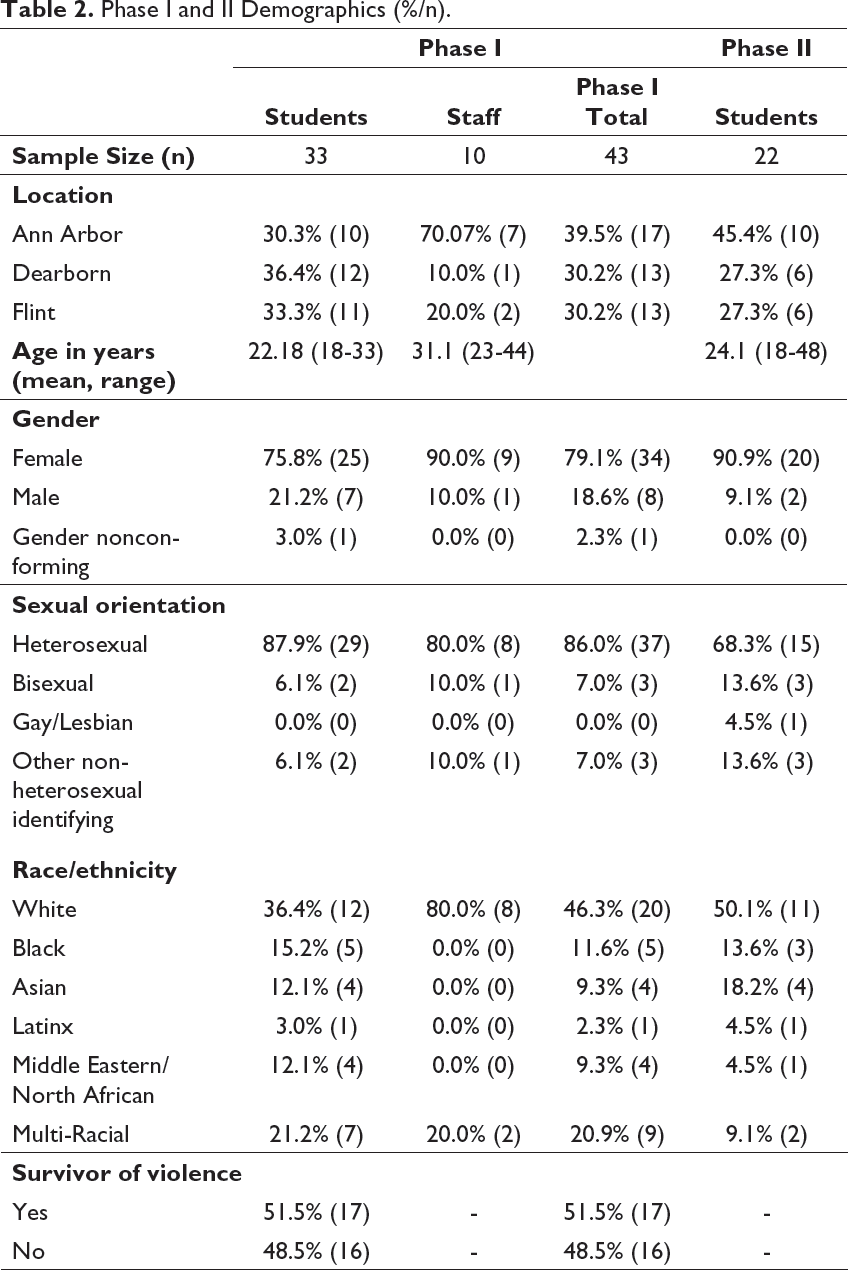
Phase I and II Demographics (%/n).
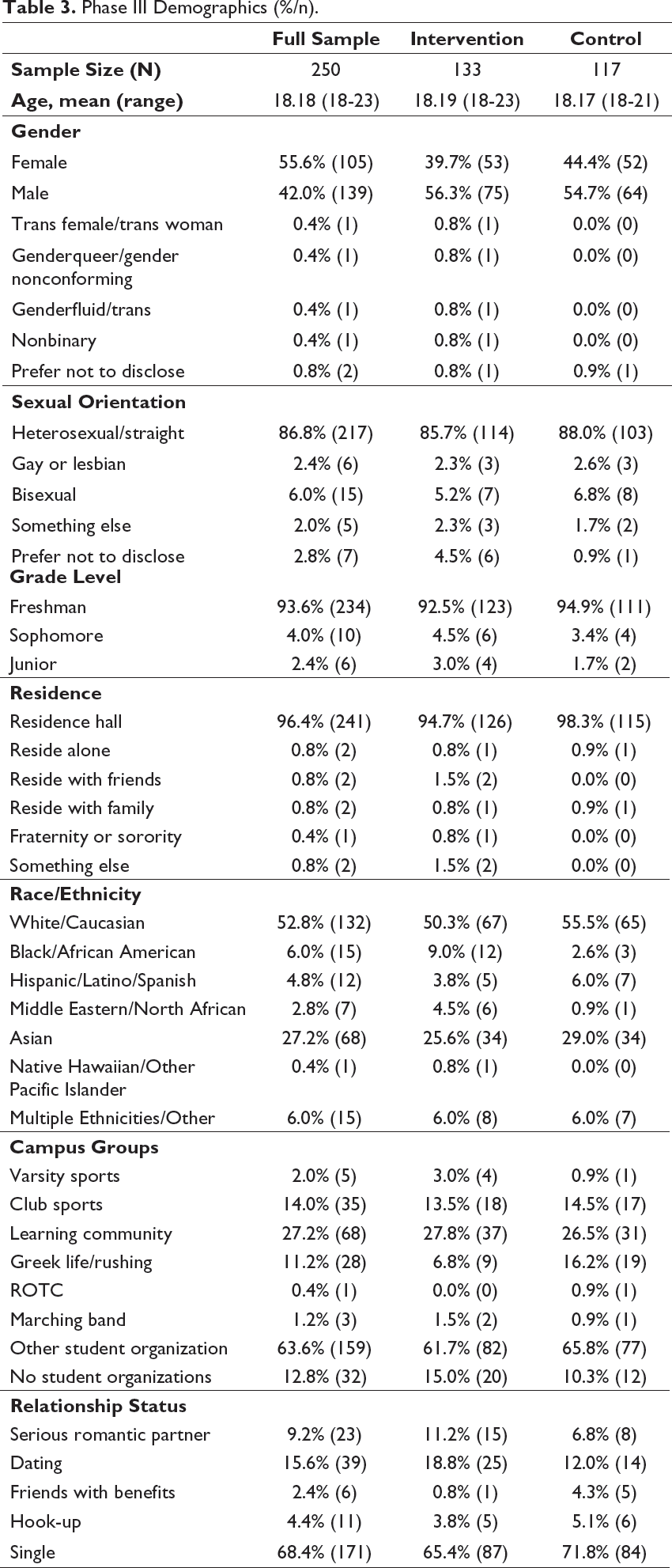
Phase III Demographics (%/n).
Phase I
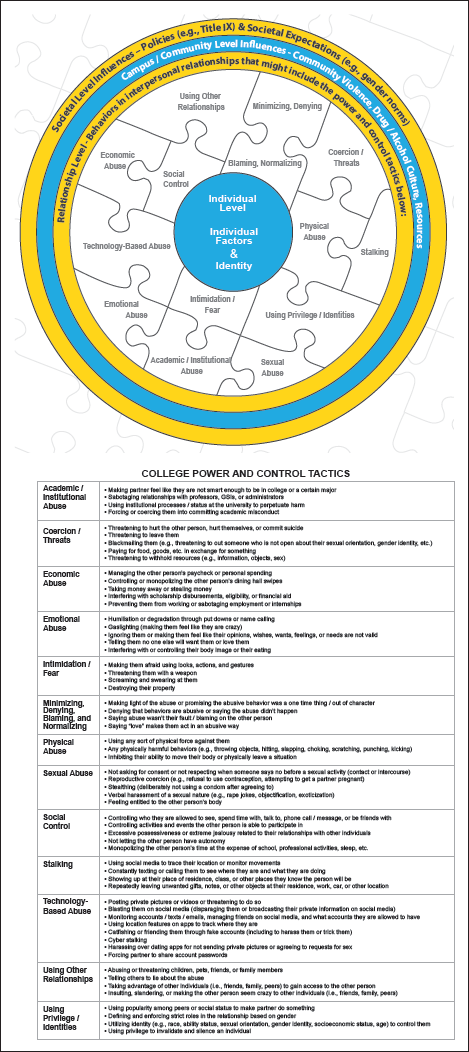
Phase I analyses revealed 13 categories of power and control tactics that may be utilized within college student relationships, detailed in Figure 1. New tactics not frequently represented in previous tools depicting power and control included: academic abuse, technology-based abuse, and stalking. Academic abuse was described as making a partner feel like they were not smart enough to be in college or in a certain major; sabotaging relationships with professors, graduate student instructors, or administrators; or using institutional processes/status at the university to perpetuate harm. Technology-based abuse was mentioned by the majority of participants and mainly described the use of social media to perpetrate abuse. Participants described technology-based abuse as posting (or threatening to post) private pictures or videos on social media; monitoring accounts or managing who they can be friends with on social media; using location features on apps to track where they are; monitoring/reading texts and emails; or constantly texting and calling. Stalking was correlated with technology-based abuse as technology can be used to identify a person’s location by using positional tracking features on apps or constantly texting or calling. Stalking was also described as showing up at their place of residence, class, or other places they know the person will be and repeatedly leaving unwanted gifts, notes, or other objects at their residence, work, car, or other location. Physical and sexual abuse were named as specific tactics.
Dynamics of interpersonal coercion among college students.
Participants also reimagined a number of tactics previously described for primarily female, heterosexual survivors. For instance, the “Using Other Relationships” tactic recognized that perpetrators could use friendships, relationships with family members, as well as bonds with pets to perpetrate abuse. The “Using Privilege/Identity” tactic reflected the use of power related to one’s identities (e.g., gender, race, ability, socioeconomic status, etc.) to perpetrate abuse. The “Social Control” tactic depicted the importance of social life and social connections in the college environment. Finally, the tactic “Minimizing, Denying, Blaming, and Normalizing” illustrates how a perpetrator may create the perception that their behaviors are typical of relationships to downplay their tactics and abuse.
Participants had the opportunity to draw a figure that they believed represented these tactics within the college milieu. Many of the participants used a wheel or circular format (similar to the original power and control wheel). However, some of the participants also introduced new displays such as a triangle/pyramid structure and puzzle. Using the results from Phase I, the research team drafted a new tool, which they named Dynamics of Interpersonal Coercion Among College Students. This new tool displayed the 13 tactics described by participants and used puzzle pieces to represent how the various tactics “fit together” or are interrelated within each unique relationship. Additionally, the tactics were embedded within the Socioecological Model to demonstrate how the tactics occur within the sociopolitical context of the college campus. This figure was then reviewed by representatives from each UM sexual assault/gender center and assessed by students using cognitive interviews in Phase II.
Phase II
In Phase II, the cognitive interviews resulted in the following overarching changes to the tool: (a) a new presentation of the Socioecological Model, (b) identification of substance use as a facilitator for multiple forms of violence, and (c) edits to some of the tactics.
First, as discussed in the background, the tool was created using the Socioecological Model as a guiding framework (Figure 1). The inner blue circle represents individual level factors (i.e., age, race, gender, sexual identity, etc.). The relationship level of the model is represented as “puzzle pieces” that describe the tactics used to perpetrate IPV within relationships. The community level focuses on the campus environment, including such factors at community violence, drug/alcohol culture, and resources. Finally, societal level factors such as policies and gender norms are displayed on the outer ring of the tool.
The second finding was that substance abuse was described as a facilitator for multiple forms of violence. The form of violence most commonly connected with substance abuse was sexual violence, as described by one participant, “There can be use of drugs and alcohol to try and coerce someone into sexual acts.” It was also mentioned how if “a partner is their partner’s like source for drugs or alcohol, then they could go threaten to cut them off” which would be a mechanism of controlling “resources.” Another way substance abuse could be used is to facilitate blackmailing a partner by, “threaten[ing] to say, ‘Oh, I’m gonna tell your parents or your friends that you do this.’”
Phase II also resulted in editing and refining the descriptions and examples of the 13 tactics. Participants provided concrete examples of tactics, such as sexual abuse by naming experiences of reproductive coercion. They also described additional tactics such as gaslighting as a specific form of emotional abuse.
Phase III
In Phase III, we assessed the experience of IPV behaviors over four time periods: (a) ever IPV at baseline, (b) IPV in the past year at baseline, (c) IPV in the one month following baseline, and (d) IPV in the four months following the one-month survey. Supplemental Table 1 shows the reported rates of various forms of IPV at each time period. Individuals who had ever been in a relationship in both the intervention group and control group reported similar rates of ever experiencing IPV at baseline (33.3% intervention versus 33.8% control). However, the control group reported slightly higher rates of past year IPV at baseline (26.8% control versus 23.8% intervention). The forms of IPV that were most commonly reported across time periods were controlling where one could go or who one could see; being slapped, kicked, choked, or punched; being forced or coerced to have sex; a partner repeatedly using words, yelling, or screaming to frighten, threaten, put down, or reject; and minimizing, denying, or normalizing abusive behaviors.
In line with the TPB, we also assessed for differences in knowledge (subjective norms), attitudes (personal attitudes), and self-efficacy (perceived behavioral control) between those exposed to the tool in the intervention group and those who received usual care in the control group. Figure 2 shows the change in the mean IPV Knowledge Scale sum score across three time points: (a) baseline, (b) one-month follow-up, and (c) five-month follow-up. There was no significant interaction between treatment condition and time for the knowledge scale, Wilks Lambda = .99, F (2, 186) = 0.95, p = .39. However, there was a significant main effect for time, Wilks Lambda = .74, F (2, 186) = 32.82, p < .001, with both groups experiencing an increase in IPV knowledge over time, with a slight leveling off after five months. However, IPV knowledge remained higher at five months than at baseline.
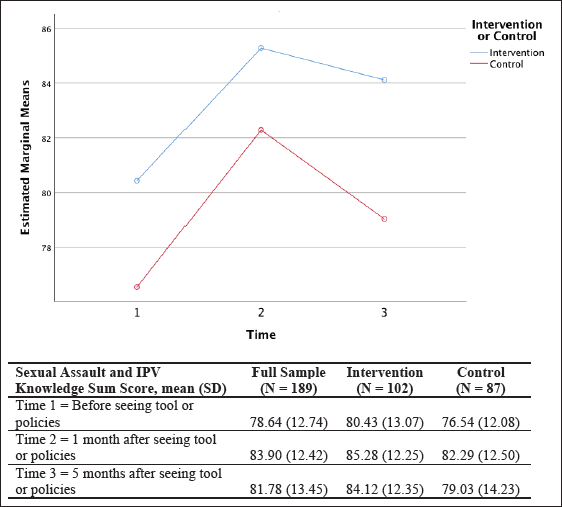
Phase III IPV knowledge at baseline, one-month after viewing tool or policies, and five months after viewing tool or policies.
Figure 3 shows the change in the mean Revised IPV Attitudes Scale sum score across four time points: (a) before seeing the tool, (b) immediately after seeing the tool, (c) one-month follow-up, and (d) five-month follow-up. There was no significant interaction between treatment condition and time, Wilks Lambda = .99, F (3, 185) = 0.78, p = .51. However, there was a significant main effect for time, Wilks Lambda = .90, F (3, 185) = 6.93, p < .001, with both groups experiencing a decrease in attitudes endorsing IPV after seeing the tool or receiving the usual care (exposure to UM Sexual Harassment policy), followed by an increase in IPV attitude endorsement over time.
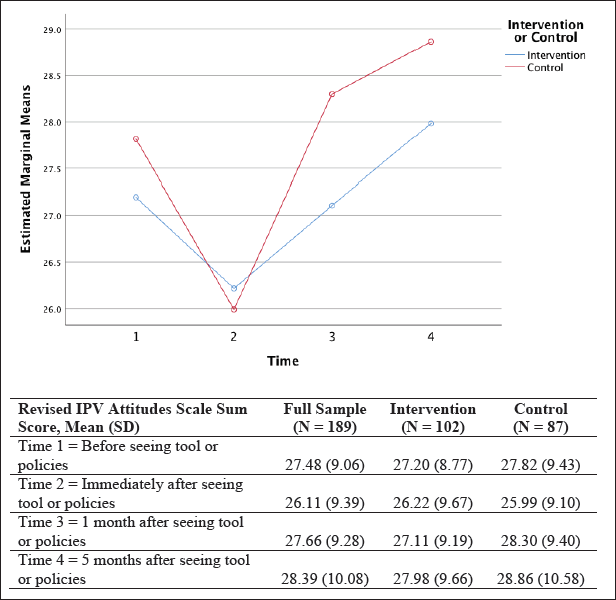
Phase III IPV attitudes at baseline, immediately after viewing tool or policies, one-month after viewing tool or policies, and five months after viewing tool or policies.
Figure 4 shows the change in the mean Self-Efficacy Scale sum score at: (a) baseline, (b) one-month follow-up, and (c) five-month follow-up. There was no significant interaction between treatment condition and time for the self-efficacy scale, Wilks Lambda = .99, F (2, 177) = 0.25, p = .78. However, there was a significant main effect for time, Wilks Lambda = .92, F (2, 177) = 8.04, p < .001, with both groups experiencing an increase in IPV self-efficacy across time, followed by a slight decline between the one-month and five-month surveys. IPV self-efficacy is higher at five months than at baseline.
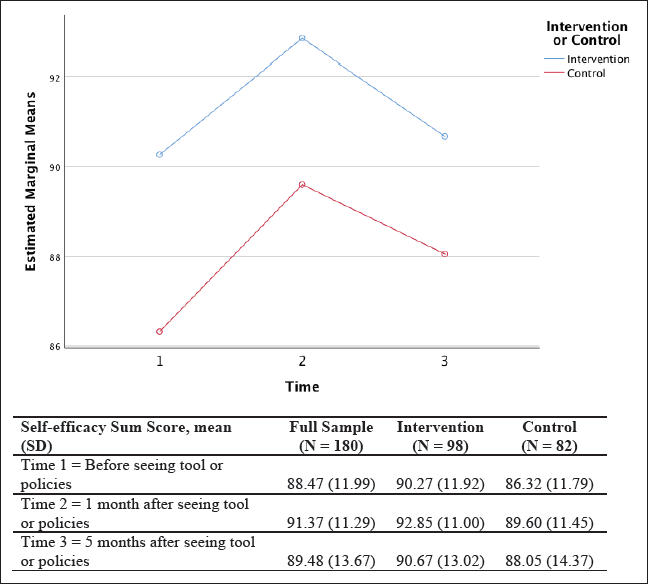
Phase III IPV self-efficacy at baseline, one-month after viewing tool or policies, and five months after viewing tool or policies.
Discussion
This study resulted in a new tool to represent the young adult developmental time period, specifically college students’, experiences with power and control by taking into consideration diverse identities and emerging tactics. The use of the Socioecological Model to frame the tool allowed us to conceptualize the interactions between the individual, relationship, community, and society in order to address the factors that put people at risk of experiencing or committing violence. Tactics highlighted by college students included academic abuse, technology-based abuse, and stalking, as well as a unique puzzle design. The puzzle design was added after continuous feedback that the tool should show how the tactics can be interconnected with each other and that there is overlap in the types of tactics a person may use or experience.
Poor academic performance has been previously described as an outcome of IPV in other research studies (Banyard et al., 2020; Jordan et al., 2014; Mengo & Black, 2016). However, participants in this study noted that academic abuse can be used as its own tactic in order to perpetrate IPV in the college population. Similar to our results, a recent study found that partners perpetrating IPV used multiple tactics in what they termed school sabotage, including, “disrupting financial aid, physical violence or stalking at school, disruption of academic efforts, and applying guilt” (Voth Schrag & Edmond, 2017, p. 176). These tactics overlap with not only our identified academic abuse tactic but also economic abuse (Voth Schrag, Edmond et al., 2020). Viewing academics as not just an outcome of IPV but as a way to perpetrate violence is an important distinction in order to help college students identify abuse that is being perpetrated against them. It also highlights the need for academic safety planning in college settings where survivors of IPV may have needs related to academic accommodations, safety on campus, and rebuilding connections within the college setting (Voth Schrag, Wood et al., 2022).
Technology to control and abuse partners is increasingly being recognized as a common abusive tactic, especially in young adults (Reed et al., 2016). In a study of 365 undergraduate college students, it was found that digital monitoring behaviors, such as monitoring a partner’s location, looking at a partner’s phone or laptop without permission, or threatening to post an embarrassing picture, were experienced by around 33% of the participants within the past year (Reed et al., 2016). Another study conducted in 2010 outlined how being able to constantly contact someone and make information publicly viewable through technology is weaponized in IPV within the college population (Melander, 2010). A more recent study found that mobile phones can be used as a form of “agile technology surveillance” that allows perpetrators to manipulate, surveil, and control their past or present partners (Havard & Lefevre, 2020). These types of behaviors are similar to the tactics outlined by the participants in our study. This solidifies how integrated technology-based abuse has become within the lives of young adults.
Along with technology, stalking has been given more attention in the last decade, with the White House enacting provisions within the Violence Against Women Act that enhanced statutory protections for victims of stalking in 2013 and 2015 requiring all institutions of higher education to collect and report instances of sexual assault, including stalking (Office of the Press Secretary, 2015). Recent research is beginning to illustrate the overlap between technology and stalking. A study of 152 domestic abuse advocates and 42 survivors found that the most commonly used technologies to stalk women are cell phones and social media (Woodlock, 2017). While this study focuses on adult female survivors of IPV, it found that common tactics of abuse were the same as those that were identified by our college-attending participants.
This study did not identify significant or sustained differences in IPV knowledge, attitudes, or self-efficacy in line with our hypotheses among those who interacted with the tool (intervention) and those who did not (usual care). However, the results support the broader literature on sexual violence and IPV prevention efforts that note initial program effects (e.g., an improvement in IPV knowledge, attitudes, and self-efficacy in the short term that are not sustained) and support the need for reinforcement (CDC, 2014; Nation et al., 2003). Additionally, the data did illustrate the alarming rates of IPV among the college students in our sample. We found that 33.5% of college students who had a past relationship had experienced IPV at some point in their lives and 25.2% in relationships had experienced IPV within the last year. These statistics indicate the need for more education, resources, and policies related to IPV among college students. College students would particularly benefit from educational resources that are tailored to the diverse range of relationships (e.g., roommates, dating, hooking up) formed by young adults during this important developmental time period.
The creation of a tool that is applicable to diverse identities (e.g., sexual orientation, gender identity, race/ethnicity, ability status, etc.) among a population in the same developmental time period (e.g., young adults) is an important contribution to primary, secondary, and tertiary prevention. Current tools focus on certain populations and do not account for the shared experiences among individuals with diverse identities in the same developmental time period (NCDSV, 2013). Having a tool that can be used across college campuses for primary prevention when students are entering the college environment or for secondary and tertiary prevention when students are experiencing IPV is a more practical and holistic approach to survivor services. Although sexual violence prevention education has increasingly been incorporated into first year and new student programming on college campuses, sexual violence represents only one piece of IPV. Incorporating tools that describe the range of tactics used by perpetrators of IPV into on-campus and online prevention strategies may be an effective and comprehensive primary prevention strategy. It is imperative that the tools we use to educate the public (including survivors, perpetrators, and policymakers) are backed by rigorous evidence and take into consideration the diverse intersecting identities of survivors.
Limitations
The ability to generalize this data to colleges across the nation is constrained by a few limitations. These data were collected for a pilot study resulting in a small sample size in one geographic location; however, findings from this study provide a valuable foundation on which to reframe our understanding of IPV in the current socio-techno-cultural context. While this study does have its limitations, it is pushing to broaden our understanding of power and control beyond individual relationships with a larger focus on the young adult developmental time period when individuals are most at risk for experiencing IPV.
Conclusion
The Dynamics of Interpersonal Coercion Among College Students tool represents the unique forms of power and control experienced by a diverse college population, broadening the focus beyond violence against women. Future studies should look to validate the Dynamics of Interpersonal Coercion Among College Students on other types of college campuses and should explore the use of an interactive digital format.
Supplemental Material
Supplemental material for this article is available online.
Supplemental Material for The Dynamics of Interpersonal Relationships: Understanding Power and Control Tactics Among College Students by Michelle L. Munro-Kramer, Lauren M. Skidmore, Lindsay M. Cannon, Anne K. Huhman, Shareia N. Carter, Kaaren M. Williamsen and Quyen M. Ngo, in Journal of Interpersonal Violence
Footnotes
Acknowledgments
We would like to acknowledge the contributions of Heather Johnson, Mariam Carson, and Emily Sheridan-Fulton Zagurny for their assistance with recruitment and data collection. We would also like to thank Moraima Randazzo for her creative vision and expertise in creating the Dynamics of Interpersonal Coercion Among College Students figure. This paper is dedicated to Mariam Carson—may we all emulate her selfless nature and commitment to social justice.
Declaration of Conflicting Interests
Funding
The author(s) disclosed receipt of the following financial support for the research, authorship, and/or publication of this article: Research reported herein was supported by a grant to the University of Michigan Injury Prevention Center by the Centers for Disease Control & Prevention Award Number R49-CE-002099 & R49-CE-003085. The content is solely the responsibility of the authors and does not necessarily represent the official views of the Centers for Disease Control & Prevention or the Department of Health and Human Services. This research was also partially supported by generous grants from the Janet Gatherer Boyles Research Fund and the Carl Pursell Endowed Research Fund.

Author Biographies
References
Supplementary Material
Please find the following supplemental material available below.
For Open Access articles published under a Creative Commons License, all supplemental material carries the same license as the article it is associated with.
For non-Open Access articles published, all supplemental material carries a non-exclusive license, and permission requests for re-use of supplemental material or any part of supplemental material shall be sent directly to the copyright owner as specified in the copyright notice associated with the article.
