







Abstract
The link between individual experiences in early childhood or adolescence years and future dating violence (DV) perpetration has been well established and explored across various populations. However, little is known on a worldwide scale, about the association between national conditions during childhood, like overall well-being or status of women in that nation, and perpetration of DV in emerging adulthood. Applying life-course theory and a socioecological framework to data from the International Dating Violence Study and country index scores, this study examines whether the overall well-being of a country during childhood affects the perpetration of DV in emerging adulthood. We also examine if the national status of women during childhood moderates the association between overall well-being of a country during childhood and DV perpetration in emerging adulthood, all while controlling for the individual effects of gender, violence approval, criminal history, neglect history, and anger management. The study’s sample size included 4,280 people from 19 countries. Men reported less likelihood of perpetrating DV compared to women. Cross national comparative analysis revealed a significant interaction effect between country well-being and women status on DV perpetration (β = 0.69, p < .05) at the national level. When women’s status was low or moderate, the well-being status showed an inverse effect on the probability of DV perpetration, but this direction switched in the face of high women’s status. Contrary to previous research, higher women status may contribute to increased intimate partner violence (IPV) perpetration. Our findings underscore the existence of context-specific social conditions in relationship to IPV. Broad implications of the findings, potential explanations and directions for future research are discussed.
Introduction
DV (dating violence) is a form of intimate partner violence (IPV) occurring among dating partners and is usually studied among teens. However, it is noteworthy that the term IPV is more commonly used when referencing violence among individuals cohabiting and/or in marital relationships (Johnson et al., 2015; Sutton & Dawson, 2021). As a pervasive social problem, DV is associated with adverse consequences across several domains (Goncy et al., 2017). Experiencing DV heightens the risk of future perpetration and victimization (Haynie et al., 2013), exacerbates or initiates mental health issues (Brown et al., 2009; Exner-Cortens et al., 2013), increases likelihood of substance misuse (Exner-Cortens et al., 2013), increases antisocial behaviors, and marital violence (Exner-Cortens et al., 2013; White et al., 2001). DV indeed impacts teens but it also occurs among adults. Given that there are more similarities than differences between DV and IPV (Zweig et al., 2014), we use the terms interchangeably and draw on the background literature of both fields.
Among college students, 30% report engaging in physical violence perpetration (Testa et al., 2011). Research indicates that 14% of men and 22.3% of women in the U.S. experience physical IPV during their lifetime (Breiding et al., 2014), while globally, some countries have indicated significantly higher lifetime rates of physical victimization among women. For example, in a study conducted by the World Health Organization, 69% of Nicaraguan women reported DV victimization, which reasonably translates to high perpetration rates (Krug et al., 2002). Research suggests that high rates of IPV experienced by women in developing and western industrialized countries is partly due to cultural traditions and norms that favor males (Dalal, 2008; Heise & Garcia-Moreno, 2002; Mercy, 2006), and normalize violence (Heise & Garcia-Moreno, 2002).
People’s general well-being in the context of their community and environment has a significant relationship with DV perpetration. For example, studies have found that marginalized youth who live in low-income households, engage in substance use, engage in sexually risky behaviors, and attend alternative schools were at an increased risk of engaging in DV perpetration and experiencing victimization (Alleyne-Green et al., 2012; Fedina et al., 2016).
National macro-level contextual factors that may relate to DV are often less common in studies aiming to broaden knowledge about perpetration risk. Country well-being is an indicator of the quality of life of people have in a respective country on an aggregated grand scale, and in some cases well-being may be reflected through indicators of health, education, and income (Popova, 2017). There is evidence that low levels of education (WHO, 2010), economic deprivation (Sabina, 2013) and unemployment (Resko, 2010) are associated with increased likelihood of IPV experience, especially, perpetration.
According to the United Nations Commission on the Status of Women (UN Women, 2017), status of women encompasses the overall conditions of women (i.e., legal, economic, political, and social) and women’s relationship to that society. Women’s status varies from one context to the other, and may have distinct indicators (Benebo et al., 2018). Research shows that overall, as women’s status increases, there is a reduced likelihood of IPV experience. However, even in contexts in which the status of women is high, the likelihood for IPV experience remains higher in communities where men and women justify the use of IPV (Benebo et al., 2018; Sardinha & Catalán, 2018). Yet, less is known about the effects macro-level factors (like countries overall well-being and women’s national status) may have on DV in comparison to individual or mezzo-level factors. Thus, this study examines whether; first, the overall well-being of a country during childhood affects the perpetration of DV in emerging adulthood; and second, whether the national status of women during childhood moderates the association between overall well-being of a country during childhood and DV perpetration in emerging adulthood.
Literature Review
Theoretical Underpinnings
Life course theory suggests that development occurs across the lifetime, from birth to death and does not halt upon one reaching adulthood at age 18. The principles of life course theory also propose that development and human behavior cannot be fully understood without accounting for the influences of historical context (Elder et al., 2003). Studies have established the link between individual exposure to family violence during childhood and increased perpetration risk of IPV in adulthood (Iratzoqui, 2018), but that approach to studying IPV does not draw on all principles of life course theory because it does not take societal level conditions into account. By invoking a wider understanding of life course theory, this study examines how national conditions during the subject’s early-middle childhood and adolescence influences DV in emerging adulthood.
Emerging adulthood, conceptualized by Jeffrey Arnett as encompassing ages 18-29 (Arnett, 2007), is an age range in which people in industrialized countries often make a shift into adult roles, taking on new responsibilities. Many people in this age-range often experience their first intimate partnerships and/or first time living with a romantic partner. Expectantly, research indicates high rates of relationship violence toward dating partners (10%-50%) among emerging adults (Barrick et al., 2013; Kaukinen et al., 2012). On the other hand, these facets of emerging adulthood may be nonexistent in rural areas of unindustrialized countries where youth have less access to education, marry early, and have fewer occupations to explore. Additionally, social norms in some cultures (e.g., South [east] Asian countries) restrict socialization between sexes prior to marriage. Some posit that this may translate to fewer dating options or interactions, reduced time for dating, and therefore lower violence. For example, a study including youth within emerging adulthood bracketing several developing countries (e.g., Chile, Bosnia, India, Brazil, Rwanda) found that the younger men had lower cases of violence perpetration compared to the older men, which they attributed to fewer chances to perpetrate and less permissive attitude toward DV (Fleming et al., 2015). In the recent years, especially with globalization, youth in developing countries may experience pinnacles associated with the westernized conceptualization of emerging adulthood, particularly in urban areas and countries with increased access to education (Arnett, 2000). Yet, this developmental period has also been critiqued in its applicability to countries or cultures that value collectivism over individualism, leaving much unexplored about IPV that occurs in this niche age group.
Most research on IPV using a socioecological framework has explored various parts of the world by examining study participant behaviors and experiences in one specific geographical area such as, in Sub-Saharan Africa (Uthman et al., 2010), various African and Asian countries (Kamimura et al., 2016; Lawoko et al., 2007), Latina refugees in the United States (Sabri et al., 2018), and Mexico (Willie et al., 2020). But, these studies often focus on women in marital relationships and not those in dating relationships. Of notable exception, Kamimura et al. (2016) drew on a mixed gender sample of college students (88.8% dating/unmarried) in China and found that individual, relationship, and community level factors (e.g., substance use, anger management and violence socialization) respectively, influenced IPV perpetration. Furthermore, most IPV studies do not focus on a specific adult age range, rather they examine the phenomena of study among adults in general, combining those in early adulthood with those in later life stages.
Various theories have been used as tools to understand the effect of macro level factors on micro-level relationships. For example, social learning focuses on the social context within which violent behavior is learned and expressed (Laisser et al., 2011; Mihalic & Elliott, 1997) and the feminist perspective posits that patriarchal societies give power to men, thereby sanctioning violence against women. This study employs socioecological theory which suggests that the problem of DV is explained by a combination of each of the aforementioned theories along with other psychosocial frameworks (Chesworth, 2018).
The socioecological framework was developed by Bronfenbrenner’s (1977) in line with a person and environment perspective, and advanced by Heise (1998) and other scholars (Chesworth, 2018) to further understand the existence of IPV/DV. The socioecological perspective on DV posits that DV perpetration is driven by multiple aspects that interplay with one another, from the individual to the societal level (Baker et al., 2013). The first level—the individual, is considered the most immediate influence on victimization and perpetration. Factors such as a person’s age, gender, violence approval, criminal history, neglect history, anger management ability, history of violence, and substance use are associated with a higher likelihood of DV perpetration (Kamimura et al., 2017; Luo, 2018). The second level is interpersonal, in which the interactions between people are taken into account, especially couples, families and other small groups. Tension and discord within these close relationships heighten the possibility that an individual would become a victim and/or perpetrator of DV (Oetzel & Duran, 2004). For example, higher marital conflict and sibling violence have been found to increase odds of engaging in DV (Sims et al., 2008). Likewise, peer deviancy (which includes factors such as peer delinquency and aggression) have been found to be predictors of DV (Miller et al., 2009).
The third level is the community, consisting of factors within formal and informal structures that impact the situation of the persons involved (i.e., socioeconomic status-corresponding to one’s position in society, job/organizational facilitated stress, neighborhood violence, etc.) (Benson et al., 2004; Motley et al., 2017). Intersecting community or individual level factors such as poverty or low socioeconomic status have been linked in DV perpetration across a number of countries. Research shows that individuals living in economically disadvantaged neighborhoods are more likely to perpetrate or experience IPV (Benson et al., 2003; Fox & Benson, 2006; Swahn et al., 2012). Likewise, Spriggs et al. (2009) argue that lower family of origin social economic status contributes to DV perpetration if there is continued proximity between the youth and the family of origin.
The fourth level—society, relates to governmental laws and statutes on violence and other domains such as industrialization (Martínez & Khalil, 2013; Oetzel & Duran, 2004). Prior research has taken the third and fourth levels into account, examining the unique patterns of DV among young adults, finding differences that exist across national and cultural contexts. However, most studies that have examined international differences in DV evaluated violence perpetration in relationship to coinciding national conditions at the time in which respondents’ responses were captured (Ackerson & Subramanian, 2008; Sabina, 2013; Vives-Cases et al., 2007). Examining the perpetration of DV that occurs parallel to the sociopolitical environmental issues of a nation is important for understanding how existing or present stressors and international position impact behavior. However, according to life course and socioecological theories, the national conditions in which people develop during childhood and adolescence may also have an influence on their behavior in intimate relationships during early adulthood as perceptions obtained in youth transfer to the next life stage.
Societal factors such as restrictive gender roles (e.g., women should not enter the workforce) serve as a risk factor for IPV (Jayachandran, 2020), as do attempts to break out of those roles. For example, in many societies, men have been viewed as breadwinners, meaning women’s participation in the labor market may be perceived as threatening to the breadwinning position, ultimately increasing chances that a woman would experience IPV (Jayachandran, 2020). Additionally, tolerance or acceptability (i.e., endorsing attitudes) regarding male to female partner violence, is usually associated with higher partner violence perpetration (VanderEnde et al., 2012). Specifically, individuals who approve of violence tend to engage in DV perpetration (Reyes et al., 2016). Reyes et al. (2016) found that men who have beliefs that men should be tough and aggressive in romantic relationships (Eaton & Rose, 2011) draw from these attitudes and are likely to carry them over to their own relationships (Santana et al., 2006).
Some individual level factors that may further affect these associations are child maltreatment, violence approval, gender, criminal history, and anger management. Child development is a significant predictor of overall behavior and well-being in later years. Children who experience adverse conditions during their early development are likely to face challenges in their relationships growing up (Cadely et al., 2019; Cubellis et al., 2018; Duke et al., 2010; Rosenbaum & Leisring, 2003; Whitfield et al., 2003). With the family being the center of child growth and development, experiences such us domestic violence in the child’s home environment may significantly increase the chances that an individual will perpetrate similar behaviors in dating or marital relationships (Rosenbaum & Leisring, 2003; Whitfield et al., 2003). On the other hand, some studies indicate that exposure to parental IPV is not directly associated with DV perpetration and can depend on differing contexts (Gover et al., 2011; Lichter & McCloskey, 2004). Lichter and McCloskey (2004) found that only youth exposed to parental IPV and having traditional attitudes on family roles and dating relationships experienced heightened DV perpetration and victimization risk. Likewise, Gover et al. (2011) found that low self-control contributed to the relationship between exposure to parental IPV and DV perpetration and victimization.
Other experiences such as surviving child abuse and/or neglect may lead to polyviolence perpetration (criminal violence, child abuse, or IPV) (Fang & Corso, 2007; Milaniak & Widom, 2015; Widom et al., 2014). For example, research based on a prospective cohort study of children aged 0-11 years who experienced childhood neglect and/or abuse paired with a group having no childhood trauma revealed that children with child neglect and/or abuse experiences had a 32.5% likelihood of polyviolence perpetration compared to a 22.7% chance among nonvictims (Lee et al., 2020; Milaniak, & Widom, 2015). Similarly, individuals with poor anger management are more likely to perpetrate DV (Lundeberg et al., 2004). Research on Mexican adolescents found that both acceptance of violence and poor anger management were mediators of the relationship between exposure to interparental conflict and DV (Clarey et al., 2010). Further, research shows that criminal involvement predicts DV perpetration (Straus & Ramirez, 2004). In a study among university students, Straus and Ramirez (2004) found that individuals who self-reported a criminal history, especially violent crimes, as opposed to property crime, were more likely to perpetrate DV.
Considering all of these factors, a socioecological framework with a life course perspective has the most promise in understanding risk and protective factors of IPV across developmental stages. It also accounts for the complexity of relationships and acknowledges that many factors (at different social levels) have an impact on IPV. Thus, in this study we chose to examine previous social and individual risk factors for engaging in DV across the global arena, merging data from three sources. Specifically, the primary aim of the current study is to examine whether the overall well-being of a country during childhood impacts the perpetration of DV in emerging adulthood, and determine if the national status of women during childhood moderates the association between overall well-being of a country during childhood and DV perpetration in emerging adulthood. These aims are explored while controlling for individual levels factors of gender, violence approval, criminal history, neglect history, and anger management.
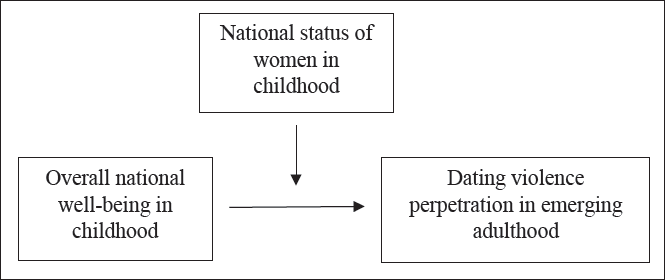
A proposed conceptual model of the mediating effect of national status of women on the association between overall national well-being and dating violence perpetration.
Methods
Design and Participants
Data sources and selection processes.
This study primarily draws on a publicly available dataset obtained from the Inter-university Consortium for Political and Social Research (ICPSR). The International Dating Violence Study (IDVS) provides data from a convenience sample (N = 17,404) of university students in 32 countries. Most respondents (N = 14,252) were in a romantic relationship at the time of data collection (Straus, 2010). Respondents (N = 10,548) from 30 countries between the ages of 18 and 29 (M = 21.39, SD = 2.50) who identified their most recent dating relationship were initially selected for inclusion in this analysis. The IDVS was a massive data collection initiative convened to examine global prevalence, risk factors and consequences of IPV among dating partners. Faculty across various university sites recruited students from introductory-level social science courses and used paper and pencil questionnaires to collect data between 2001 and 2006.
Sample.
Of the 32 countries involved in the original DV study, only data from the respondents of 19 specific countries were used in the current study because data for some country-level variables were not available. However, most country-level data was available, so we were able to draw on the survey data of those countries. The final sample comprised of respondents (N = 4,280) across 19 different countries, with individual country responses as low as 67 respondents in the South African sample to as high as 659 respondents in the Chinese sample. Out of the 4,280 respondents, 67.5% were women and 32.5% were men.
Measures
Dependent variable: Intimate partner violence perpetration. Physical IPV perpetration among dating partners was measured using 12 items from the Revised Conflict Tactics Scale (CTS2; Straus et al., 1999a). Participants were asked if they had ever engaged in or experienced physical IPV, for example, “threw something that could hurt,” and “twisted arm or hair.” Responses indicated on a scale from 0 to 6 how many times they sustained the acts listed, 0 (0 times), 1 (1 time), 2 (2 times), 3 (3-5 times), 4 (6-10 times), 5 (11-20 times), 6 (more than 20 times). Respondents’ scores on perpetration were coded into dichotomous variables, where 1 represented perpetrating at least one form of DV and 0 indicated never perpetrating DV over the length of the relationship. Given the aim of this study to examine influence on participants likelihood to perpetrate violence (compared to those who report neither victimization nor perpetration of IPV), logistic regression with a dichotomous outcome was selected oppose to examining the outcome via a continuous IPV variable (exploring severity or frequency), a practice consistent with the most recent methods (Lee et al., 2021). Reliability analysis produced an alpha of .79 for the physical violence perpetration scale (Straus, 2010). Perpetrator-only status was limited to those who engaged in abusive behavior toward an intimate partner (n = 419).
Individual characteristics: Level one
In addition to gender and the dependent variable classification, five continuous variables at the individual-level were included in the study. Measures used in level-one were taken from the Personal and Relationships Profile (PRP). The PRP is a 22-scale instrument designed for research on partner assault. Some of these scales used short form of original measurements and others were created specific to the manual (Straus et al., 1999a).
Violence approval. Violence approval examined the extent to which the respondent believes use of physical force is acceptable in a variety of interpersonal situations. The measure utilized included three subscales: Male Violence, Family Violence, Sexual Aggression. For example, “It is sometimes necessary to discipline a child with a good, hard spanking,” “When a boy is growing up, it’s important for him to have a few fist fights.” Alpha score was α = .69 (Straus, 2010). In this sample scores ranged from 10 to 38 (M = 20.83, SD = 4.31).
Violent socialization. Violent socialization examined the extent to which respondents experienced and witnessed violence and received proviolence advice during childhood from family and nonfamily persons (Straus et al., 1988). The measure includes five subscales: Family, Nonfamily, Advised Violence, Witnessed Violence, Victim of Violence, Physical Maltreatment (Straus et al., 1999b). For example, sample items are as follows: “When I was less than 12 years old, I was spanked or hit a lot by my mother or father,” “When I was a kid, I often saw kids who were not in my family get into fights and hit each other.” Alpha score was α = .78 (Straus, 2010). In this sample scores ranged from 8 to 32 (M = 14.86, SD = 3.74).
Criminal history. Criminal history examined the extent to which each respondent committed criminal acts (Straus & Ramirez, 2004). The measure used in this study included four subscales: Property Crime, Violent Crime, Early Onset, Later Onset (Straus et al., 1999b). For example, items queried are as follows: “Before age 15, I stole or tried to steal something worth more than $50.00,” “Before age 15, I physically attacked someone with the idea of seriously hurting them.” The IDVS contained eight items gauging self-reported criminal history. The response categories for each item ranged from 1 (strongly disagree) to 4 (strongly agree). There were two items for property crime: an item for theft of physical property (I stole or tried to steal something worth more than U.S. $50) and an item for theft of money (I stole money [from anyone, including family]). There were two items for violent crime: “I have physically attacked someone with the idea of seriously hurting them” and “I hit or threatened to hit someone who is not a member of my family.” Each question was asked for two separate periods in a respondent’s life-course (prior to age 15 and following age 15), making a total of eight items. Alpha score was α = .87 (Straus, 2010). In this sample scores ranged from 8 to 32 (M = 11.74, SD = 3.77).
Neglect history. The neglect history measure examined unfulfilled cognitive, emotional, physical, and supervisory needs in the respondents’ family-of-origin. It included four subscales: Cognitive, Supervisory, Emotional, and Physical. For example, items included “My parents helped me when I had trouble understanding something,” “My parents did not care if I did things like shoplifting,” “My parents did not comfort me when I was upset,” “My parents did not keep me clean.” Alpha score was α = .73 (Straus, 2010). In this sample, scores ranged from 10 to 28 (M = 18.69, SD = 2.35).
Anger management. In this study the anger management scale was assessed using a short form. It measures a protective factor rather than a risk factor. For example, the items included “I can calm myself down when I am upset with my partner,” “I recognize when I am beginning to get angry at my partner.” The scale contained three subscales: behavioral self-soothing, recognizing the signs of anger, and self-talk. Alpha score for the anger management scale was α = .61 (Straus, 2010). In the current study, scores ranged from 24 to 51 (M = 38.71, SD = 2.61).
National factors: Level two
At the time participants completed the IDVS questionnaire they were in emerging adulthood. In order to examine national conditions at the time of their childhood, data from the early 1990s were needed. Subjects took the survey sometime over a 5-year time period (2001-2006), however the data set did not specify the year in which each subject completed their survey. Therefore, respondents between the ages of 18 and 29 would have been between ages 2 and 18 at the time country well-being was measured and between ages 10 and 24 at the time women’s status was measured.
Overall country well-being. Scores from the Human Development Index (HDI; 1990), indicating life expectancy, literacy, and income were used as a measure of overall national well-being. This multidimensional measure was selected because it went beyond a single indicator of well-being, such as gross domestic project (GDP). The continuous index variable was recoded into a three-level ordinal variable. The distribution of well-being per capita in each category was captured as follows with scores ranging from 35.4 to 78.2 (1: low-score = 0-50.9, 23.4%; 2: moderate-score = 51-74.9, 58.3%; and 3: high-score = 75-100, 18.3%).
Status of women. Scores from the Status of Women Index (SWI; 1996), indicated by parliamentary seats occupied by women, their advantage over men in life expectancy, and their proportion in the labor force was used as a measure of gender equality. Scores for Korea, Tanzania, and Venezuela were missing for 1996. For these countries, scores from 2004 were obtained and mathematically transformed for use with the 1996 data. The continuous index variable for women’s status was recoded into a three-level ordinal variable and the distribution was as follows, with scores ranging from 27.8 to 72.8: (1: low status = 0-50.9, 13.9%; 2: moderate status = 51-58.9, 51.4%; and 3: high status = 59-100, 34.7%).
Analysis
In this study we applied multilevel analysis for multicountry data. We used the binary response variable for DV perpetration to assess possible association with personal characteristics. In addition, we examined national indicators to explain violent action; therefore, the binary logistic model was applied in two levels. In other words, surveyed individuals are at level one (level-1), regardless of their nationality. Level two included the country characteristics. This means that the outcome was measured as binary only at the measurement level, while at the country level (level-2), this became an aggregated proportion. Based on that division, we drew a level-2 moderation between country well-being status and country women’s status, to test whether well-being may have a different effect on the probability to execute DV given different women’s status levels, see Figure 1. We used the Mplus V.8.1 (Mplus user’s guide, eighth edition. Muthén & Muthén, 2017) to perform this model and to estimate well-being simple slopes for the different status levels.
Results
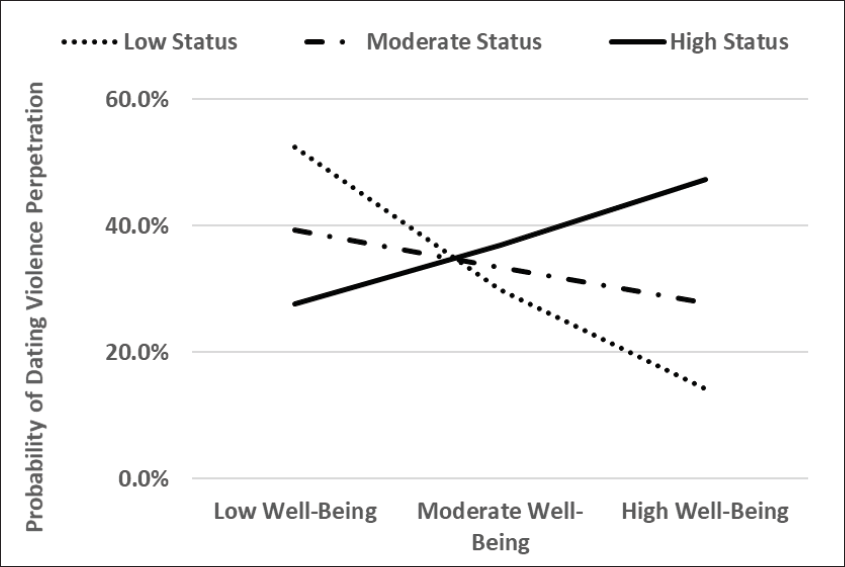
Table 1 provides the descriptive statistics of individual level variables. Table 2 provides the modeling results, alongside each odds ratio (OR). Table 3 provides nation level classifications and number of participants per territory by gender. Men showed a lower likelihood of engaging in DV perpetration in comparison to women (b = –1.01, p < .01) at a ratio of approximately 2:1. Those who were able to manage their anger were more likely to engage in DV (b = 0.05, p < .05). At the nation level, although well-being and women’s status did not independently show an effect on the probability to perpetrate DV, the interaction between the two did work significantly (b = 0.69, p < .05). A decomposition of this interaction is shown in Figure 2. In countries where women’s status was low or moderate, the association between well-being and DV was insignificant. However, when women’s status was high, higher well-being was associated with higher probability to perpetrate DV (linear simple slope = .450, SE = 0.183, OR = 1.53, p < .05). Figure 2 presents these varying effects in probability terms. When women status was low or moderate, the well-being status showed negative effect on the probability to engage in DV perpetration, specifically for the lower moderation effect (b = –0.95, p = .094), but this direction switched in the face of high women’s status (b = 0.43, p = .021).
Decomposition of interaction between well-being and women’s status on dating violence perpetration.
Descriptive Statistics for Continuous Variables and Proportion of Violence Perpetration.
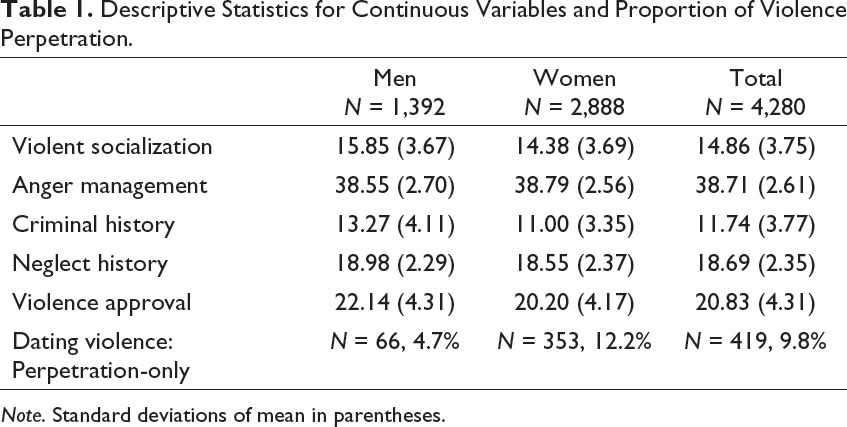
Note. Standard deviations of mean in parentheses.
Two Level Analysis of the Dating Violence Perpetration Response.
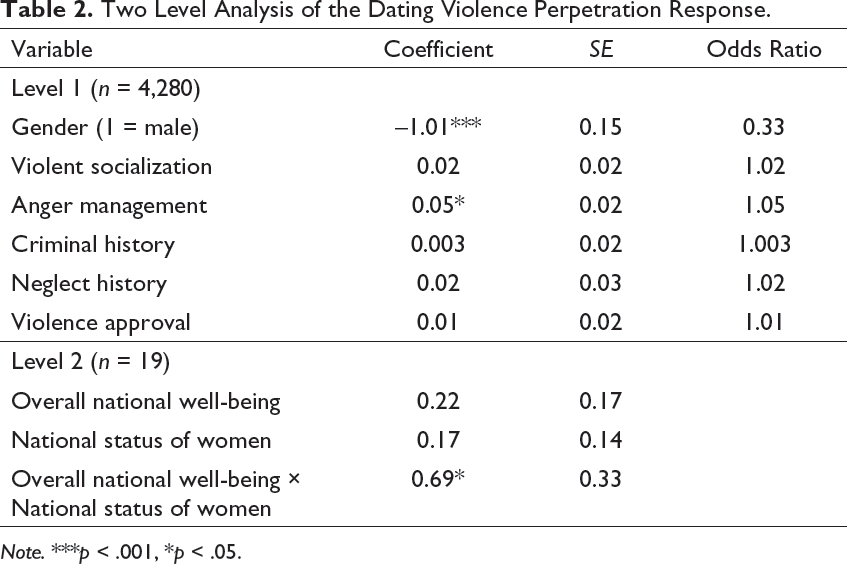
Note. ***p < .001, *p < .05.
Number of Participants per Country and Overall National Categorization of Well-being and Women’s Status.
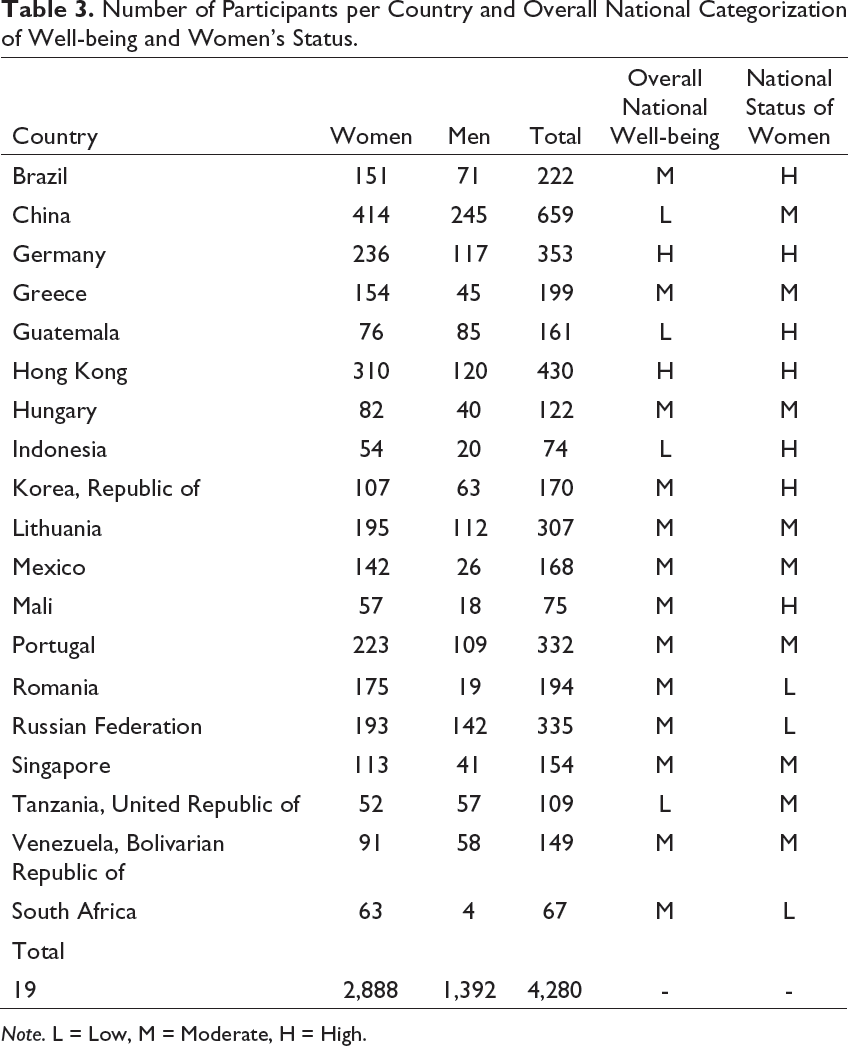
Note. L = Low, M = Moderate, H = High.
Discussion
In order to fairly assess the findings, we first appraise the study strengths, then ponder the meaning of the results, and conclude by highlighting the limitations of this study. In terms of sample size, the large number of respondents across countries/territories offered a substantial dataset which allowed us the latitude to conduct complex statistical analyses. Likewise, with one transcontinental country, six European, five Asian, four Latin/South American, and three African territories, the variety in countries represented permitted us to examine the research questions using more than just a few geographically distinct areas for comparison. A prior study exploring the IDVS dataset revealed that even though these data were collected through a convenience sample, national samples were appropriate to examine differences across countries (Straus, 2009a, 2009b). Missing data were also minimal.
This study revealed a number of interesting, yet puzzling findings. To begin, in contrast with previous scholarship (Kamimura et al., 2017), anger management was positively associated with DV perpetration. We are perplexed as to why a higher degree of anger management would correspond with increased DV perpetration because the direction of the relationship seems counterintuitive.
Perhaps the most interesting findings of this study are related to the status of women variable. We found that there is no overall effect of either general well-being or women’s status, but there is a crossover interaction. The effect of women’s status on DV perpetration is opposite, depending on the value of general well-being. In countries with low-moderate women’s empowerment, increased overall country well-being reduces the probability of DV perpetration, but this was the opposite situation in countries with high women’s empowerment. Identifying this interaction effect is important because it reveals how two or more independent variables work together to impact the dependent variable.
These findings are consistent with the premises of both the socioecological framework and life course theory. Socioecological framework indicates that no one factor is sufficient for understanding why violence occurs (Baker et al., 2013). In this case, both women status and national well-being were collectively responsible for IPV perpetration adding to the existing literature that supports use of this model to explain DV. Life course theory suggests the relevance of context—both cultural and socioeconomic to human development (Elder et al., 2003) and human behavior. This study demonstrates the effect of societal context in childhood influencing a subsequent stage of life.
The combined effect of a high overall well-being and lowered women’s status predicting lowered DV might be explained by acceptability of women “staying in place” (i.e., a lessened position) yielding reduced relational conflict by not combating the status quo. This could be reflective of survival strategies. The findings also reveal two extreme conditions in which violence perpetration is at its highest. The combined effect of low status of women and low overall well-being yielding higher probability of DV offer evidence supporting feminist theories suggesting that women’s subordinate position in society leads to increased violence.
Meanwhile, according to our findings, when both women’s status and overall well-being is high, violence increases. This could be indicative of the idea of that women’s resistance to historically subservient roles yields greater relational conflict. Yet, the findings beg the question of why high women’s status (i.e., empowerment, equality) within a country of high overall well-being would increase DV perpetration? Several studies findings indicate that higher gender equality is usually associated with lower IPV (LeSuer, 2020), situating the finding in this study as contradictory compared to the most related literature, yet not entirely novel. Heightened IPV perpetration in nations where women have high status could be explained by the increased risk of residents upending traditional gender roles, thereby creating a sense of perceived threat to men’s social position. Another potential explanation is as follows: in countries with high women empowerment, women are more likely to obtain high levels of education and with increased education, the pool of desirable intimate partners is smaller, perhaps contributing to the formation of relationships that are vulnerable to higher levels of conflict. However, given that this sample consisted of undergraduate students, enthusiasm for the latter explanation is low. Nonetheless some evidence suggests that the relationship between obtaining more education and IPV may not be as clear-cut as researchers expect because sometimes a moderate-level of education corresponds to experiencing higher IPV victimization (Mengo et al., 2019). A potentially testable explanation of these findings could explore whether high women-status countries reporting of higher levels of violence is accounted for by an increased feeling of freedom to report a more honest representation of violence perpetration. Perhaps emerging adults in countries with high women’s equity feel more comfortable in disclosing their use of violence. Other points of consideration are that financial independence, equity in political participation, and other factors may increase interpersonal conflict in heterosexual couples (the majority composition of relationships in this sample). Additionally, higher violence perpetration in countries with high women’s empowerment could be due to more equal roles within relationships, and thus more autonomy to perpetrate violence with little repercussion. Relatedly, research indicates that women are more likely than men to perpetrate more acts of violence while on the other hand, men are more likely to perpetrate more severe and injurious forms of violence (Archer, 2000), which are not measured in this study. There are several different types of IPV (e.g., situational, intimate terrorism, violent resistance, etc.), and it is unknown what context the violence reported in the study occurred within (Johnson, 2006). Future studies should explore whether familial conflict during early childhood serves as a moderating factor explaining the relationship between women’s status and later use of DV. Future work should also investigate if these findings hold when severity or type of violence is accounted for.
These potential explanations become subjective to even greater debate when considering that in this sample, women were more likely to be a perpetrator of DV than men. Does a feminist explanation of DV still apply to women’s use of force, especially when these same respondents reported no personal DV victimization in the relationship which violence was exerted? This question is certainly important to explore.
This study has several limitations that should be considered alongside the interpretation of results. First, respondents were university students and thus did not represent a full range of emerging adult populations. As a sample, this one is not a random sample—begging the question of if these results would hold true for a noncollegiate sample of emerging adults. Even though the population was composed of students, the cross-country comparison provided a broad range of responses. However, this bias led to another unbalanced sampling issue, as women were the majority, subject to the study fields in which respondents were recruited.
The measure of overall national well-being used in this study was multidimensional, yet still simplified what human development entails, to the exclusion of constructs like health inequity. It is also important to note that we assumed that the country in which respondents took the survey was the same country that they spent majority of their childhood. The assumption was based upon data suggesting that in early adulthood, most people tend to live within a fairly short distance of where they were raised during childhood (Leopold et al., 2012). Obviously, that may have varied case to case, but on the whole international students represent a small, albeit valuable, proportion of the college-university student body (Sherry et al., 2010). Finally, a reasonable limitation is that our construction of DV perpetration did not account for severity and was constrained only to physical violence.
In conclusion, our findings incrementally advance the knowledge on the contexts in which DV perpetration exists. Violence perpetration in young adulthood depends conjointly and equally upon women’s national status and overall national well-being: a crossover interaction with no main effects. The reasons for such complex findings are ultimately unknown and deserving of further inquiry. Yet, the findings do offer important implications. Based upon our results, we declare that women’s equality alone will not end DV or IPV. Interventions that aim to reduce DV by achieving gender equity should not end there, even though it is important to pursue—especially in countries with low and moderate overall well-being. DV persists as a social and public health problem even when women are able to access more social equity. Perhaps, the impact of efforts to reduce DV by improving gender equity may only be realized when there is also effort to improve the general well-being of other health related conditions. Likewise, efforts to reduce DV by addressing overall well-being in isolation of considering gendered influence seems short-sighted especially given that conditions surrounding DV perpetration are multifaceted and not unidimensional (Moagi-Gulubane, 2010). Prevention efforts should simultaneously address gender equity and overall well-being from a national perspective with emphasis on macropolicy. DV intervention should not be limited to individual level practices, rather overarching societal level action that directly addresses national poverty, life expectancy, and literacy is likely to be valuable in ending DV perpetration. The impact of implementing national level changes may not be able to be seen immediately and should account for influence across the populations developmental life stages. Finally, given differential prevalence among marginalized, contemporality, and historically oppressed groups (West, 2021), the outcomes of broad stroke national level changes may vary across groups within the same nation. This should be taken into account when considering equitability regarding the concentration of resources and macro-level efforts to end IPV.
Footnotes
Acknowledgment
Special thanks to the following scholars who helped improve this work by generously providing their time to expand our thinking on varied topics, which were central to this study, during early development and/or throughout later stages of the writing process: Drs. Melissa Jonson-Reid, Beverly Black, Donny Gerke, Vithya Murugan, Hyunil Kim and Keith Davis. Additional gratitude to Ms. Monét Farr and anonymous reviewers for their careful critique.
Author’s Note
Ohad Gilbar is now affiliated with The University of Texas at Arlington. Arlington, TX, USA.
Declaration of Conflicting Interests
Funding
The author(s) received no financial support for the research, authorship, and/or publication of this article.
