






Abstract
This study explores treating violence against others as a precursor to self-directed violence. It tests the utility of including violence against others in the measure of acquired capability to test assumptions from the interpersonal theory of violence. Four theoretical hypotheses are assessed that are consistent with the theory: (1) thwarted belongingness (parental abandonment and rejection) and perceived burdensomeness (exposure to parental interpersonal violence and child abuse) independently increase the likelihood of suicidal ideation; (2) the interaction of thwarted belongingness and perceived burdensomeness increases the likelihood of suicidal ideation controlling for other pertinent variables; (3) the three-way interaction of thwarted belongingness, perceived burdensomeness, and acquired capability (violence against others and prior suicidal attempts) increases the likelihood of suicidal attempts controlling for other pertinent variables; and (4) self-harm responds to the theoretical variables and similarly, to attempts. Subjects are court-adjudicated males (ages 13–18) who were residents for up to 1 year at the Ocean Tides School and rehabilitation center from 1975–2019. The data span 44 years and include 2195 youth. Depression, drug/alcohol use, race, ethnicity, socioeconomic status, and interaction terms between SES and race and SES and ethnicity are also examined. Backward conditional logistic regression analyses find mixed support for the hypotheses, but strong support for including violence against others in the concept of acquired capability. Support is also found for conceptualizing child abuse and exposure to parental interpersonal violence as perceived burdensomeness in tests of this theory as well as measures of depression. Major implications for programming in the treatment and rehabilitation of delinquent boys include conceptualizing and approaching violence against others as a precursor to suicidal attempts and other self-directed harm.
Keywords
This study addresses ambiguity in the conceptual delineation and measurement of key concepts from the interpersonal theory of suicide first introduced by Joiner (2005) (particularly, thwarted belongingness, perceived burdensomeness, and acquired capability for suicide). Although most research on this theory has utilized similar key concepts, where they fit into this theory is inconsistent. For example, child abuse has been operationalized as acquired capability (the ability to commit suicide) in some studies, as perceived burdensomeness (feelings of burdensomeness) in others, and as thwarted belongingness (feeling left out of important relationships) in others. Compounding the issue, Albaugh et al. (2017) and others have found that these theoretical constructs mediate the effects of child abuse on suicidal behaviors. Child abuse may contribute to the theoretical constructs as both a measurement component and as a causal variable, so theoretical specification seems necessary. Violence against others and self-harm have sometimes, but not always been included in these studies. Chu et al. (2017) complained that there is no clear evidence that supports the use of one scale over another for measuring the theory’s constructs. Specifically, the current study uses an archival retrospective study of justice-involved boys to test the utility of including violence against others, child abuse, exposure to parental interpersonal violence, and intersectionality between race, ethnicity, and socioeconomic status in the interpersonal theory of suicide, and it opens discussion about methodological specification within the theory.
Is violence, violence no matter where it strikes? Traditionally, violence against others has been examined separately from self-harm by researchers within disciplinary silos, but a few boundary studies have addressed them together. Rutherford et al. (2007) defined violence as any sort of intentional harm against someone whether it is other- or self-directed. Regardless of the direction violence takes, it produces negative outcomes (psychological or emotional harms, neglect, deprivation, and death). Violence against others and suicide may be two expressions of the same motives, but in the juvenile justice system, violence against others rarely has been thought of as a symptom of underlying trauma or as a warning sign for self-harm. This is slowly beginning to change with court diversionary programs and the incorporation of trauma informed care in juvenile justice (Branson et al., 2017).
Suicidal Ideation, Self-Harm, and Attempts
In the current study, suicidal ideation is defined as having thoughts about killing oneself. Attempts are actions of self-harm with the clear intent to kill oneself (Crosby et al., 2011). Self-harm that does not contain clear immediate intent to die may be an indicator of future attempts to die (James et al., 2012; Toprak et al., 2011), and therefore this kind of behavior may have more in common with attempts than ideation. Indeed, the associations between self-harm and suicidal attempts are complex and not well understood (Huang et al., 2020). For distinction, self-harm with ambiguous aims is referred to as self-harm and is analyzed separately from attempts. Accidents are not included as self-harm.
In 2018, 48,000 deaths in America were from suicide (CDC, 2020). Rates are increasing for all races and ethnicities (Opara et al., 2020), and particularly for Black juveniles (Ivey-Stephenson et al., 2020). “Suicide is the second leading cause of death among youths 14-18 years (at 8.9%) after unintentional injuries” (Ivey-Stephenson et al., 2020, p. 47). Ivey-Stephenson et al. (2020) further added that between 2009 and 2018, suicide for this cohort increased by 61.7%, and nearly 19% of juveniles have seriously considered it. Fortunately, most suicidal ideation does not result in death by suicide (Harmer et al., 2021).
The Interpersonal Theory of Suicide
The interpersonal theory of suicide (ITS) first introduced by Joiner (2005) explained why suicidal ideation typically does not end in suicide, and it encourages combining past violence against others and past suicidal attempts to predict future self-injury. The theory predicts that hopelessness, thwarted belongingness, perceived burdensomeness, and acquired capability for suicide will result in lethal suicide. Lacking a sense of belongingness and feeling like a burden to others, people desire to die. They seek a sense of belongingness and to be perceived as important to others and so when these essential components of life are missing, hopelessness ensues, and life becomes less bearable. It could be argued that hopelessness is the inevitable outcome of thwarted belongingness and perceived burdensomeness since if belongingness was not thwarted and burdensomeness was not perceived, then hopelessness would not ensue. Thwarted belongingness and perceived burdensomeness are both multifaceted concepts. The former includes loneliness, loss, social isolation, conflict and abuse, and absence of reciprocal care, while the later includes homelessness, incarceration, unemployment, physical illness, and family conflict among other similar experiences (Van Orden et al., 2010). Although these concepts are defined as making distinct contributions to suicide, there is considerable overlap in their measurement in the research. For example, conflict and abuse have been identified as indicators of both thwarted belongingness and perceived burdensomeness in different studies. The current study aids in measurement specificity.
Although thwarted belongingness and perceived burdensomeness are sufficient conditions for suicidal ideation, someone must also be capable of completing the suicide and few people are since humans instinctually want to survive. Capability for suicide combines reduced fear of death and physical pain tolerance, often collectively referred to as acquired capability (Chu et al., 2017). Capability is acquired by suicidal attempts. A few studies have included the perpetration of violence against others in this measurement. These experiences desensitize people to physical pain and fear of death and therefore make suicide more viable (Joiner, 2005; Van Orden et al., 2010).
Fear of physical pain and death are strong deterrents to suicide even in the presence of other conditions that are conducive to suicide. However, exposure to pain and near-death can be habit-forming (Van Orden et al., 2010; Joiner et al., 2012). Habituation is not a simple process of desensitization, but instead it is the result of two opposing experiences—physical pain and the thrill of surviving it (Van Orden et al., 2010). For example, getting into a fist fight with someone is painful, but the thrill of the fight may be worth it, especially the more often it occurs. Eventually, the thrill is amplified while the pain diminishes over repeated experiences. It is through this process that Joiner et al. (2012) hinted at similarities between suicidal attempts and self-harm.
Precursors and Moderators for Suicide and Violence
All forms of interpersonal violence share precursors (depression, loneliness, and hopelessness, for example), and some researchers argue that discovering pathways between them will encourage integration between suicide and violence prevention to avert these tragic outcomes more effectively (Lubell & Vetter, 2006). Snir et al. (2017, p.596) suggested that all violent behaviors “represent the expression of the same underlying aggressive impulse.” Cairns et al. (1988) found much higher rates of suicidal attempts in an aggressive sample compared to the general population. Keilp et al. (2006) examined a clinical sample of subjects with major depressive disorder to determine the relative effects of aggression, impulsivity, and hostility on attempts and found that aggression was the strongest correlate. In at least three additional separate samples of violent youth, Cairns et al. (1988) and Swogger et al. (2014) found that controlling for other pertinent variables, aggression significantly increased attempts. Some studies discovered that violence is conditionally related to suicide by gender in high school samples (see Flannery et al., 2001; Garrison et al., 1993). Males are more likely than females to respond with violence against others. Nonetheless, very few ITS studies have included violence against others or aggression as acquired capability (for exceptions, see Chu et al., 2017; Chu et al., 2018; Joiner et al., 2012).
Additional risk factors for suicidal behaviors include gender, race/ethnicity, socioeconomic status (SES), drug and alcohol abuse, and depression. Males engage in more violence against others than females, and they experience a greater risk of death by suicide. Peña et al. (2018) found that the highest risk group for suicide attempts was disproportionately males who were also violent against others. Granato et al. (2015) posited that male risk of suicide is exacerbated by gender norms that increase their exposure to painful and provocative life events. Witte et al. (2012, p. 384) argued that considering the preponderance of studies that identify males as more tolerant to physical pain than females “gender differences in lethal suicidal behavior may be explained by gender differences in acquired capability, i.e., pain tolerance.” They attributed the gender difference to male stoicism, not gender, such that men are socialized not to display their emotions. Donker et al. (2014) located gender differences in the effects of perceived burdensomeness on suicide and provided evidence that more than one aspect of the theory may work differently by gender.
The CDC reported that “suicide varies by race/ethnicity, age and other population characteristics, with the highest rates across the life span occurring among non-Hispanic, American Indian/Alaska Native, and non-Hispanic White population groups” (Stone et al., 2017, p. 8). However, racial and ethnic patterns for suicide are not that clear. In another national CDC study on suicide, Ivey-Stephenson et al. (2020) found no racial/ethnic differences in attempts for males ages 14–18. Swahn et al. (2012) studied almost 4000 youth grades 7–12 and found that Hispanic youth were more likely than non-Hispanics to report self-harm and suicide attempts. Peña et al. (2018) found similar results among high school students. Lower SES, isolation, and depression within the Hispanic population may help to explain this problem (Boyas et al., 2019). Racial and ethnic discrimination may exacerbate the effects of SES on suicide (Opara et al., 2020). Potential interactive effects among these experiences at the individual level on suicide have largely been ignored. Interaction between race/ethnicity and SES may help to explain narrowing gaps in suicide rates between social groups (Kubrin & Wadsworth, 2009).
The effects of drug and alcohol use on suicide are not as clear as expected either, even though these variables are often included in suicide studies. Misuse or addiction to drugs and/or alcohol may be more problematic than common usage (King et al., 2020). Bolanis et al. (2020) found that ideation increased with increased use of cannabis. Carballo et al.’s (2020) review of 77 suicide articles about children and adolescents published up to 2016 concluded that alcohol and drug abuse are salient risk factors for suicidal ideation and attempts, even surpassing depression in some instances.
The most conclusive risk factor for suicidal ideas and behaviors is depression (Carballo et al., 2020). Perhaps this is because depression scales often include a self-diagnostic factor asking patients if they are feeling depressed. A distraught patient may feel that if they are suicidal, that they must be depressed and so they report that they are. In some scales, suicidal ideas and behaviors are operationalized as indicators of depression and so it is not surprising that these indicators predict suicide. The question remains then whether depression offers unique predictive power in the presence of other traditional risk factors for suicidal behaviors.
Suicide patterns in the general population are amplified for those in the justice system, and risk-factors for suicide in this population mirror the larger population (McNair et al., 2019; Suk et al., 2009; Wasserman et al., 2010). Hawton et al. (2013) found that risk hovers around 5–6%. “Incarcerated youth die by suicide at a rate two to three times higher than of youth in the general population, and ideation for this group while incarcerated is higher than in the general population” (Abram et al., 2014, p. 1). Non-Hispanic whites appear to have higher rates of suicide than other ethnicities in prisons (Cauffman, 2004). They also experience higher rates of mental health problems including PTSD and depression (McNair et al., 2019). Gender differences, however, are less consistent in this population than in the general population. About half of the research has found that imprisoned males are more prone to suicidal ideation and half found the opposite (Abram et al., 2014).
Justice-involved youth with suicide risk is grossly under-studied. In a 2014 Juvenile Justice Bulletin, Abram et al. (2014) reported that only three such studies exist that focus on youth in the United States, but Teplin et al. (2015), in a review of the literature and findings uncovered 25 studies. They concluded that not only are suicidal behaviors more common among juvenile justice involved youth, but they posit that the reason is that these youth tend to have a higher risk of related precursors such as child abuse and neglect (Skinner-Osei at al., 2019; Teplin et al., 2015). Adolescence is a difficult time for many people. As a result, some young people are particularly prone to suicidal ideation (Erausquin et al., 2019; Ivey-Stephenson et al., 2020), even when they are not justice-involved. Two very important risk-factors for suicidal ideas, behaviors, and violence against others that adolescents are immediately exposed to that adults are at least separated from by time include physical child abuse and/or exposure to parental interpersonal violence (PIPV).
Violent victimization or vicarious exposure to it are traumatic and often result in several negative conditions including self-directed violence or violence against others. The relationship between child abuse and later violence is well-substantiated (see Alfaro, 1981; Baldry, 2003; English et al., 2002; Grebstein & Van Wyk, 2016; Lansford et al., 2007; Paperny & Deisher, 1983; Rivera & Widom, 1990). Likewise, exposure to (PIPV) can lead to violent behavior against others (see Cuevas et al., 2013; Hamby et al., 2011; Listenbee et al., 2012). Exposure to PIPV also increases self-harm. Lubell and Vetter (2006) identified problematic parent–child relationships as one important precursor to both suicide and violence against others. Flannery et al. (2001) found that dangerously violent adolescents were more likely to have been exposed to violence and were at higher risk of suicidal behaviors. A large longitudinal study of adolescents found that adverse childhood experiences including child abuse and exposure to PIPV were significant risk-factors for both violence against others and all forms of suicidal thoughts and behaviors (Duke et al., 2010). A meta-analysis of 34 longitudinal studies on 12- to 26-year-olds assessing their exposure to violence and risk of suicide was the first study of its kind to focus only on young people. These researchers found that a combination of exposures to interpersonal violence (child abuse and neglect, bullying, dating violence, and community-level violence) significantly predicted suicidal behavior, and physical child abuse increased risk two-fold (Castellvi et al., 2016). The association between physical child abuse and later suicidal behavior is also well-substantiated (see Dube et al., 2001; Franklin et al., 2017; Sigfusdottir et al., 2013).
Child abuse and exposure to PIPV have been considered within the interpersonal theory of suicide, but where they belong in the theory is up for debate. They “may induce the feeling of being a burden on parents, children may experience feelings of isolation or thwarted belongingness…and they may develop acquired capability for later self-harm” (Brausch & Holaday, 2015, p. 441). Although they each contribute to perceived burdensomeness, thwarted belongingness, and acquired capability, they cannot be used to measure all of these concepts in the same analyses. Therefore, theoretical specification seems necessary. These risk-factors primarily have been operationalized in the research as pain tolerance (see Brausch & Holaday, 2015). The rationale is that physical child abuse induces physical pain and exposure to PIPV induces emotional harm. Nonetheless, other indicators of physical pain tolerance, such as prior suicidal attempts appear to explain greater variance in suicide. Perhaps child abuse and exposure to PIPV are better conceived of as measures of perceived burdensomeness instead. Children often internalize violent exposure in the household, blaming themselves for their parent’s fights. Certainly, child abuse may be conceived of in the same way. A child might assume that parents harm them because they are a burden. Relatedly, children who are abused or are exposed to PIPV may feel unattached or rejected by their parents creating a dangerous interaction between these experiences.
Several theories explain how and why a child’s attachment to parents is important for proper social functioning into adulthood, and connections between attachment and suicide are evident in the research (Chang et al., 2020; Maimon et al., 2010). In the interpersonal theory of suicide, a lack of attachment is akin to thwarted belongingness. Nonetheless, Venta et al. (2014) measured parental attachment separately from thwarted belongingness using the Interpersonal Needs Questionnaire to measure the later. Adolescents may not be fully capable of understanding their feelings of belongingness or be able to articulate them well. When asked if they feel a sense of belongingness, they may say yes even when they know they are rejected or abandoned by a parent. The parent who is present may take up the perceived slack of the other one. The child may not understand the extent to which the absence of the other parent influences their internal sense of belongingness. Therefore, it may be advantageous to use proxy measures of thwarted belongingness when studying children and adolescents.
The present study tests associations between thwarted belongingness, perceived burdensomeness, and acquired capability predicted by the interpersonal theory of suicide in a sample of adolescent adjudicated
1
males in a residential school and treatment facility. Four hypotheses are tested from the IPS theory: (1) thwarted belongingness and perceived burdensomeness independently increase the likelihood of suicidal ideation; (2) the interaction of thwarted belongingness and perceived burdensomeness increases the likelihood of suicidal ideation controlling for other pertinent variables identified by the current literature; (3) the three-way interaction of thwarted belongingness, perceived burdensomeness, and acquired capability increases the likelihood of suicidal attempts net controls, and (4) self-harm responds to the theoretical variables similarly to attempts.
Method
The Ocean Tides School and Database
This study uses the Ocean Tides database to test hypotheses from the interpersonal theory of suicide. Ocean Tides is a fully accredited school and residential facility for justice-involved boys. From 1975 through 2015 the residents were sentenced to serve on further order of the court (FOC) in temporary community placement (TCP) from the Rhode Island Training School (RITS), the youth prison in the state. Since 2017, 17 (less than 1%) of the residents were not adjudicated delinquent, but were incorrigible at home; on probation, referred from Diversionary Court that is designed to keep children out of the juvenile justice system, or they were designated as youth in need of residential treatment by the Rhode Island Department of Children, Youth, and Families (DCYF). They spend their days alongside the resident population and are very similar to the residents at Ocean Tides on FOC/TCP. Court officials, in conjunction with Ocean Tides staff make decisions to place boys at the facility. Boys who pose an immediate danger to themselves or to others cannot be housed at the facility because it is a non-locked facility that includes an in-house school, vocational, and rehabilitation programs. Residents are males ages 13–18
Data includes information on 2195 court adjudicated boys who entered the Ocean Tides program to serve 3- to 12-month terms from 1975 through December 2019. When Ocean Tides accepts a new resident into the program, they receive information from DCYF and the juvenile court that includes police and court records, educational records and test scores, counseling transcripts, social worker and home visit reports, and health records. Ocean Tides gathers further information via intake interviews with each boy and his custodial parents. They also administer behavioral tests. Since its inception, this has included an array of tests such as the Youth Self-Report (YSR), the Ohio Youth Problems, Functioning, and Satisfaction Scales, and the Adverse Child Experiences (ACE) scale. To create the Ocean Tides Database, a codebook was created to glean information from the boys’ files that could be understood and recorded from all sources. Then, each of the boy’s hard-copy files containing all this information were culled by researchers for information to record into the electronic database. Each completed file took approximately 5 hours to record into the database. IRB approval has been maintained on the project since its inception in 2003 and continues today. Data entry personnel are trained and supervised to maintain uniformity, reliability, and validity. The Ocean Tides database is not a sample but a census of all the residents across 44 years. This database is not yet available to the public, but statistical results from this study are available upon request.
The Ocean Tides database offers unique benefits for studying suicidal and violent behaviors. First, the information is cross-checked for accuracy against multiple sources about the boys (by social workers, police, teachers, home visits, clinical reports, interviews with parents, and interviews with the boys). As such, it is unlikely that suicidal ideas or behaviors would be missed even if a child himself does not define the behavior as such. It is not subject to social desirability in the way that only self-reports are. Third, this is not a cross-sectional study but instead gleans information in real time from the resident’s lives as incidents occurred. Using cross-sectional data typically makes it very difficult to include a large enough population of youth who have suicidal tendencies since such tendencies can be fleeting instead of permanent. The Ocean Tides database is also not a traditional panel longitudinal study of a single group of respondents since there is one datapoint for each variable, and so it does not suffer from attrition problems. The information for each resident is not dependent on the recall of a single informant which tends to produce false negative reports in retrospective self-report studies (Hardt & Rutter, 2004). It is a study of troubled male adolescent behavior. Since evidence from research on ITS suggests that different components of ITS may impact males differently than females, limiting the study to males allows for a fuller exploration within this population.
Variables
Suicidal Ideation, Attempts, and Self-Harm
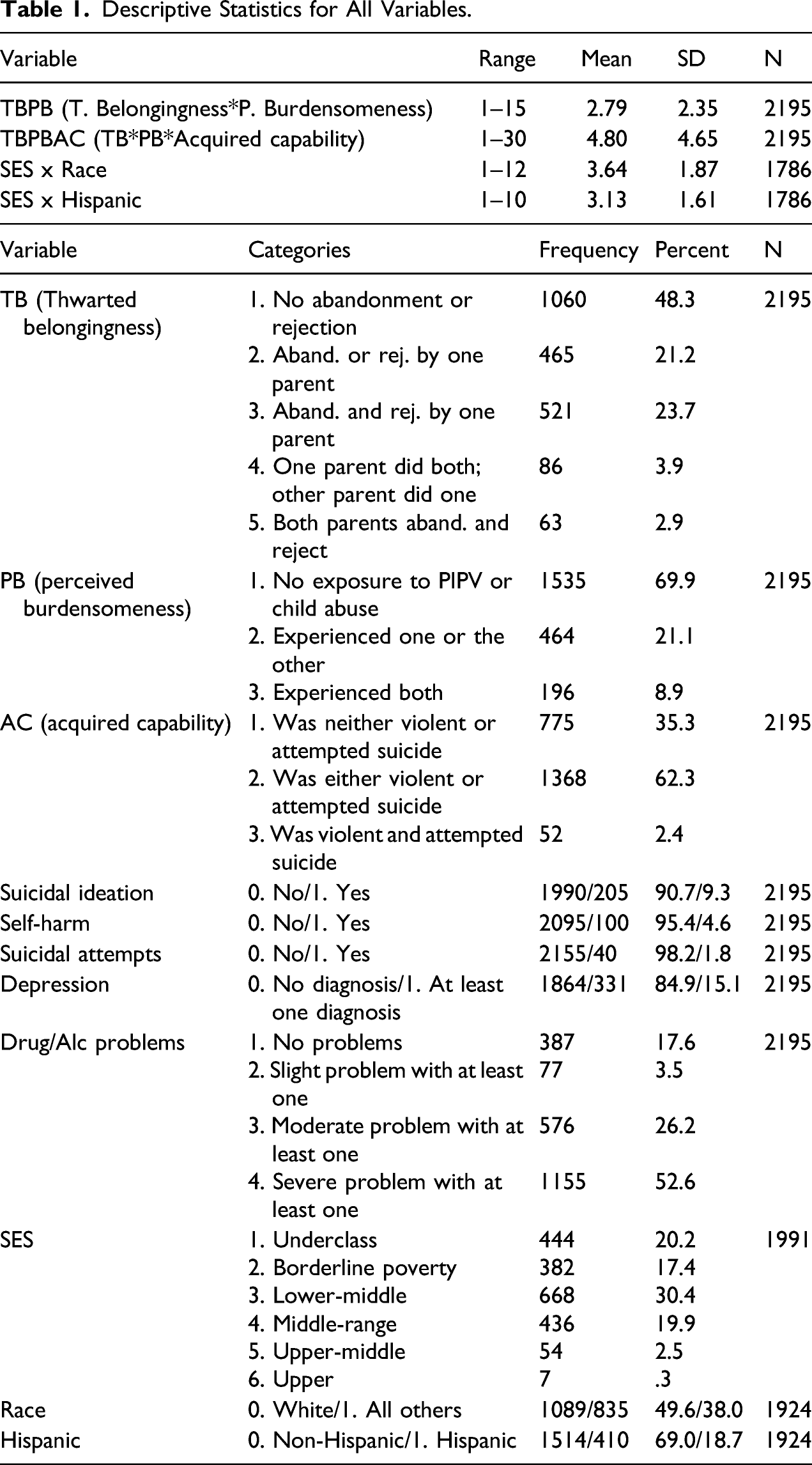
Descriptive Statistics for All Variables.
Thwarted Belongingness
Thwarted belongingness is an ordinal variable with five categories that measure the extent to which a resident was either abandoned or emotionally rejected by a biological parent in his lifetime leading up to detention. Although it is possible that a boy in the study may have been abandoned or emotionally rejected by a non-biological parent, cultural assumptions dictate that biological parents should provide physical and emotional support for their children, regardless of their marital status or living arrangements and so rejection or abandonment by a biological parent may be more detrimental to youth than by someone else. “All adopted children grieve the loss of their biological family, their heritage and their culture to some extent” (Pediatric Child Health, 2001). Abandonment means that a parent willfully dropped out of the child’s life completely having no, or little, contact with him. The death of a parent was not counted as abandonment since the concept is meant as an indicator of willful abandonment, but parents serving prison sentences were counted as abandonment since there are alternatives to criminal behavior making this kind of abandonment more, rather than less willful. Cultural expectations for parents also dictate that they should not engage in illegal behaviors because their children need them to care for them. The US Department of Health and Human Services report multiple poor child outcomes in families where a parent is incarcerated that include feelings of abandonment (Parke & Clarke-Stewart, 2002). Therefore, parents going to prison is considered in this study as willful abandonment. Emotional rejection means that the child knew his parent and had regular contact with the parent, but he felt as though the parent did not want him in his life. This information was primarily obtained from transcripts from interviews and counseling sessions with the resident or with his custodial parents. About 41% (n = 902) of the residents were abandoned by their fathers and 12.4% (n = 272) by their mothers; 26.6% (n = 584) were emotionally rejected by their fathers, and 11.8% (n = 259) by their biological mothers. In the final variable for analysis, 1= no abandonment or rejection, 2 = abandonment OR rejection by one parent, 3 = abandonment and rejection by one parent, but not the other one, 4 = one parent both abandoned and rejected the boy and the other one did one or the other, and 5 = both biological parents abandoned and rejected the boy. Hence, this enumeration creates an ordinal variable with higher scores representing greater abandonment and rejection/thwarted belongingness. Research indicates that emotional rejection by both maternal and paternal biological parents is important in adolescence and can lead to mental health problems (Mendo-Lázaro et al., 2019).
Perceived Burdensomeness
Perceived burdensomeness is an ordinal variable with three categories that capture the cumulative impact of polyvictimization by exposure to physical PIPV and physical child abuse. Exposure to physical PIPV means that the resident either witnessed, overheard, or knew about the violence between parental figures by some other means, such as seeing bruises on a parent and knowing how they got there. These measurements are consistent with best research practices established by the Crimes Against Children Research Center (http://unh.edu/ccrc/researchers/index.html). Although exposure to interparental violence has not always been perceived as a form of child abuse, it has always been thought of as culturally inappropriate for parents to fight and harm each other in front of their children. That explains why this information was reported in the data by social workers and others even in the early Ocean Tides data. Parental figures include biological, step, or cohabitating parents, as well as foster parents or other relatives who served in that capacity for the child. They are lifetime measures leading up to the time of detention. Physical child abuse indicates that a boy sustained physical injury by a parental figure at least once in his lifetime before detention (n = 446, 20.3%). The final variable, perceived burdensomeness includes three categories (1 = no exposure to physical PIPV or child abuse (n = 1,535, 69.9%), 2 = experienced one or the other (n = 464, 21.1%), and 3=experienced both (n = 196, 8.9%). The interaction term between thwarted belongingness and perceived burdensomeness (TBPB) creates the opportunity to test the ITS theory assumptions that people who feel separated from society and feel as though they are a burden to others creates a heightened risk of suicidal ideation. TBPB ranges from 1 to 15 (
Acquired Capability
Acquired capability is an ordinal variable with three categories that combines past violence against others (VAO) and suicidal attempts that occurred prior to 1 year before entering Ocean Tides(1 = neither VAO or attempts [n = 775, 35.3%], 2 = either VAO or attempts at least once [n = 1,368, 62.3%], and 3 = violence against others and attempted suicide [n = 52, 2.4%]). The timeframe was selected to manage time sequencing between the independent and dependent variables in the analyses. Research on the interpersonal theory of suicide sometimes measures acquired capability as violence against others and at other times it is measured as suicidal attempts. Therefore, in the current study, the two are combined. VAO is constructed from all sources in the database and does not rely solely on arrest reports, although they are included as sources. Almost 66% (n = 1,445) of the residents had engaged in some form of violent behavior against others in their lifetimes (including while they resided at Ocean Tides) that was serious enough to be mentioned in the boys’ file, while just 48.8% (n = 1072) faced official delinquency charges for violent offenses (simple assault, aggravated assault, attempted murder, robbery, and rape, against others—strangers, acquaintances, friends, or relatives). Past suicidal attempts were gathered primarily from clinical reports in the boys’ files but also from parent and resident interviews upon intake. A three-way interaction term (TBPBAC) is created between thwarted belongingness, perceived burdensomeness, and acquired capability (range = 1–30,
Control Variables
Depression was constructed from clinical DSM (Diagnostic Statistical Manual) diagnostic reports and includes all subtypes of depression. The variable identifies subjects who were clinically diagnosed with depression at any time in the boy’s lifetime leading up to his most recent detention. Since the data spans 44 years, DSM III-V were used, which does not present a problem in the current study since prior diagnoses based on earlier versions of the DSM are not clinically discounted by professionals. This variable is nominal and dichotomous and identifies all diagnoses. Its construction makes sense for young people who are under 18 years old since few of them have been diagnosed with any type of depressive disorder (n = 1,864, 15.1%). Drug and alcohol abuse is measured as an ordinal variable with four categories (1 = no problem with any drugs or alcohol (n = 387, 17.6%), 2 = slight (but no greater) problem with at least one type of drug or alcohol (n = 77, 3.5%), 3 = a moderate (but no greater) problem with at least one type (n = 576, 26.2%), and 4 = severe problem with at least one type (n = 1,155, 52.6%). “No problem” does not necessarily indicate that the resident did not use an illegal substance or alcohol, but that it has not presented itself as a problem in the boy’s life. A serious problem is indicated as presenting interference in the boy’s daily functioning. Several sources in the database were cross-referenced with others to create this variable, including positive drug screenings at Ocean Tides. Socioeconomic status (SES) is measured by six categories ranging from poorest to wealthiest (
Analyses
Bivariate Correlations for All Models.
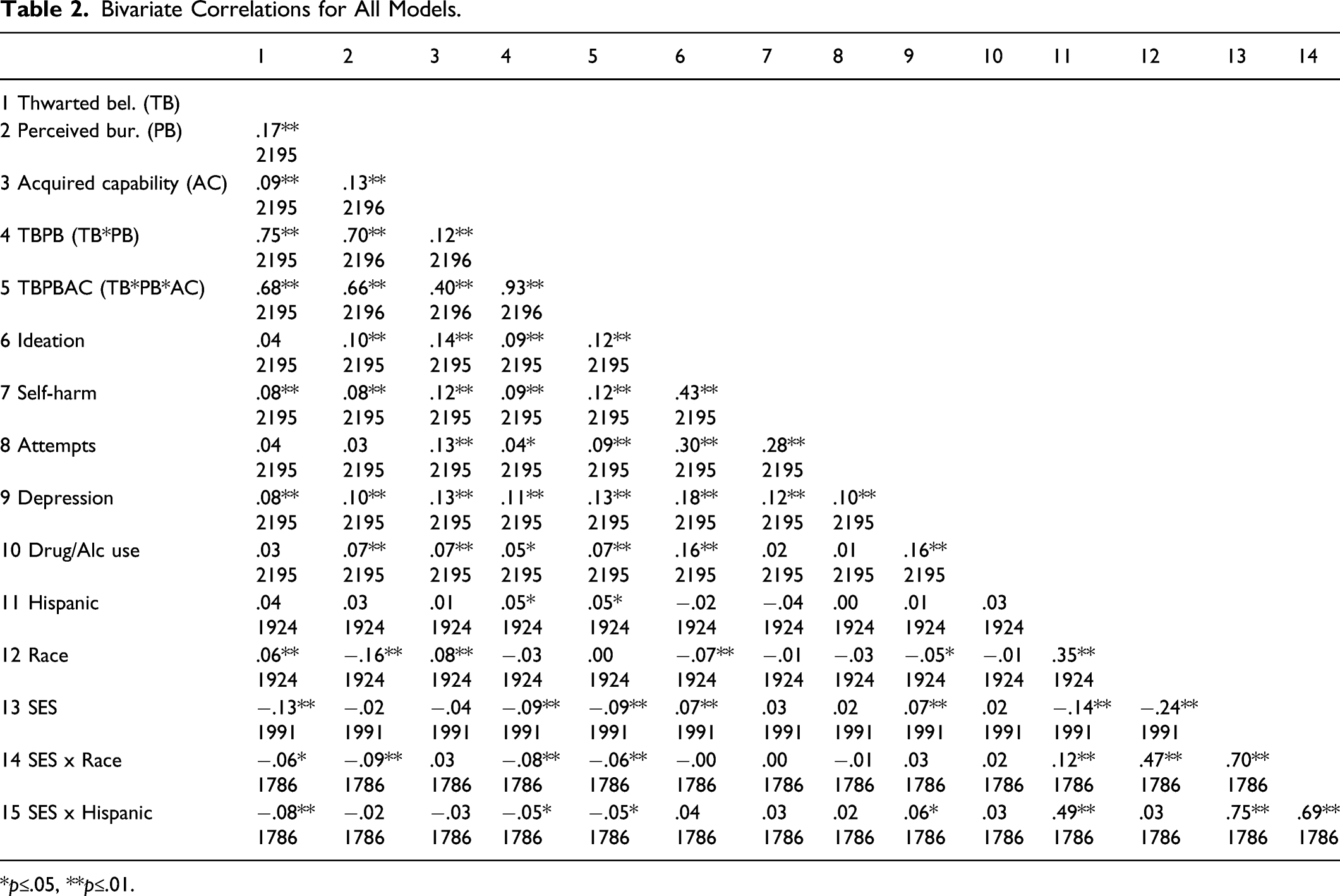
*p≤.05, **p≤.01.
Logistic Regression—Backwards Conditional for Ideation.
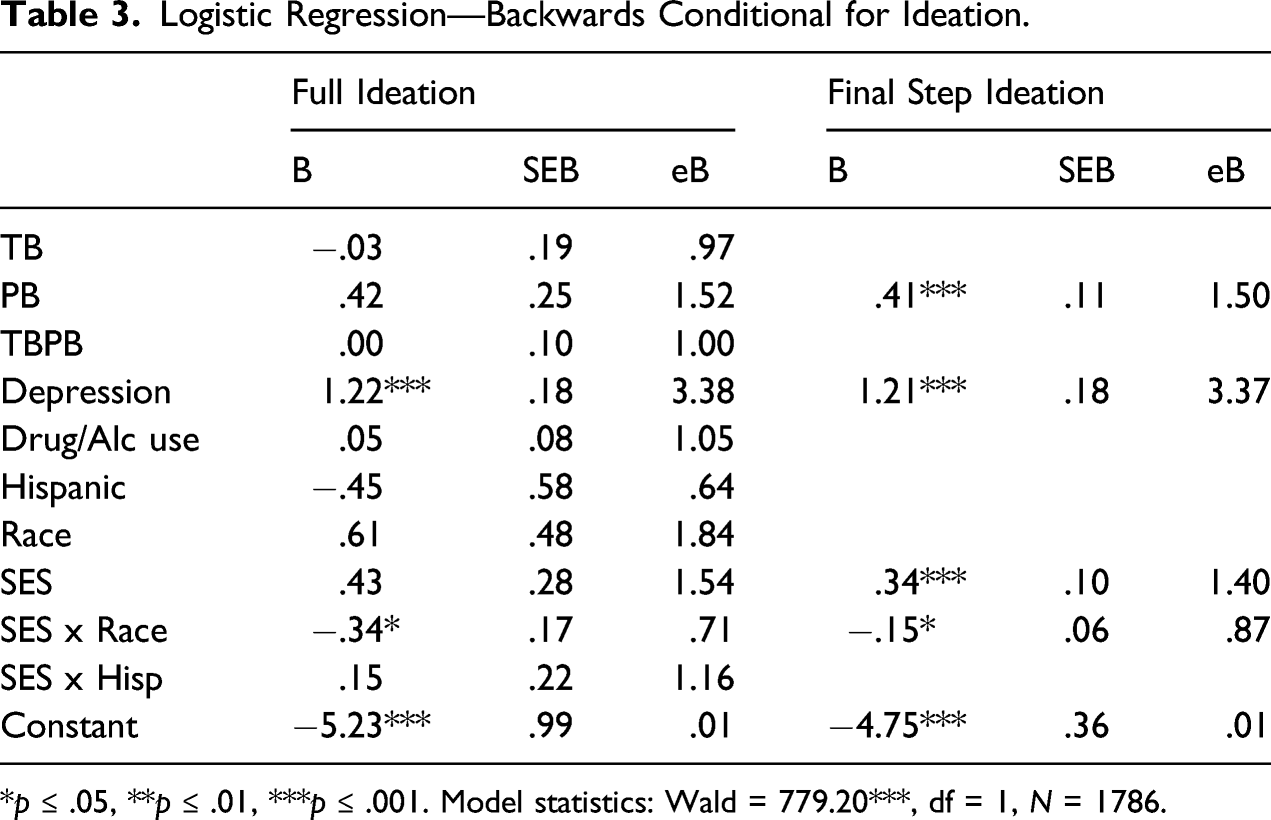
*p ≤ .05, **p ≤ .01, ***p ≤ .001. Model statistics: Wald = 779.20***, df = 1, N = 1786.
In the multivariate models, the number of cases was reduced due to missing information for either SES, race, or Hispanic (n = 271, 12.3% missing for race and Hispanic, and n = 204, 9.2% missing for SES). This database is constructed from hard-copy files that are up to 44 years old. It was culturally a very different time in the 1970s than it is now and the source agencies for the information in the files may have taken some things for granted and did not record them. An outdated and racist ideology identifies white/non-Hispanic as the standard race/ethnicity, and older records were likely recorded predominantly by white employees. For these reasons, it is assumed that white/non-Hispanic may be the race that is missing. Seventy-three percent of cases missing race were from files prior to 1995, which increases the plausibility of this explanation. 2 It is important to note that in the original construction of the Ocean Tides database, the presence of conditions and/or events was recorded. If no indication was noted in the boy’s file, then that case was recorded as null for that variable. Clearly, this process is not fool proof as some positive cases may have been recorded as negative if the information was not included in the boy’s file. However, since every variable in the database was constructed from multiple sources of information it is unlikely that at least serious experiences were missed. However, race/ethnicity and SES could not be coded in this manner since there was no way to assess these characteristics if no information about them was included in the file or if contradictory evidence from two or more sources prevented clarification.
In the full model that explains ideation, only depression and the interaction term for SES by Race significantly predict it. The procedure produced seven steps. In the final step, perceived burdensomeness predicted ideation (e 2 = 1.50, p < .001), but not thwarted belongingness or the interaction term between those two variables as predicted. Depression (e 2 = 3.37, p < .001), SES (e 2 = 1.4, p < .001) and the SES/Race interaction term (e 2 = .87, p = .024) remain in the final step. 3 The interaction term is negatively correlated with suicidal ideation, which means that people with lower SES who are white are more likely than others to experience suicidal ideation. This is an interesting finding since the analysis also indicates that higher SES increases chances of suicidal ideation.
Logistic Regression—Backwards Conditional for Attempts.
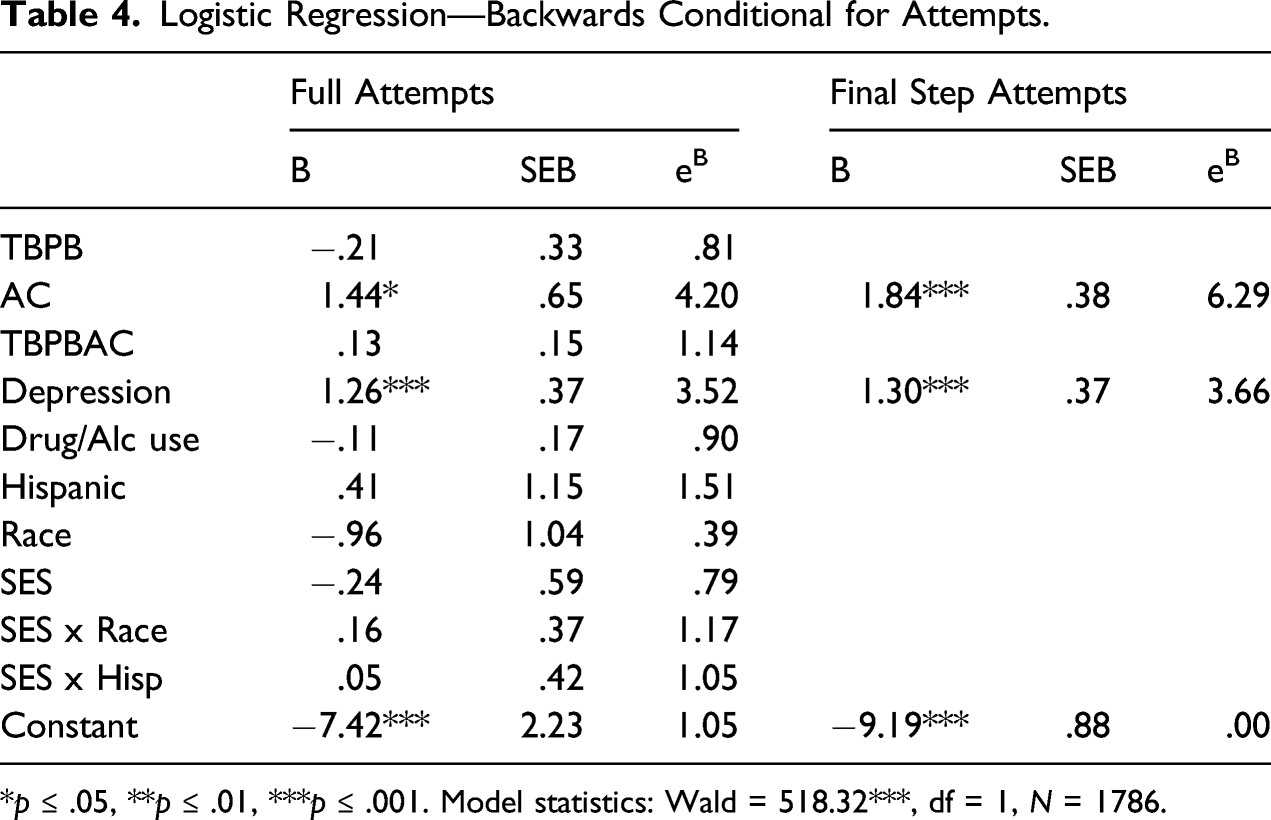
*p ≤ .05, **p ≤ .01, ***p ≤ .001. Model statistics: Wald = 518.32***, df = 1, N = 1786.
Logistic Regression—Backwards Conditional for Self-Harm.
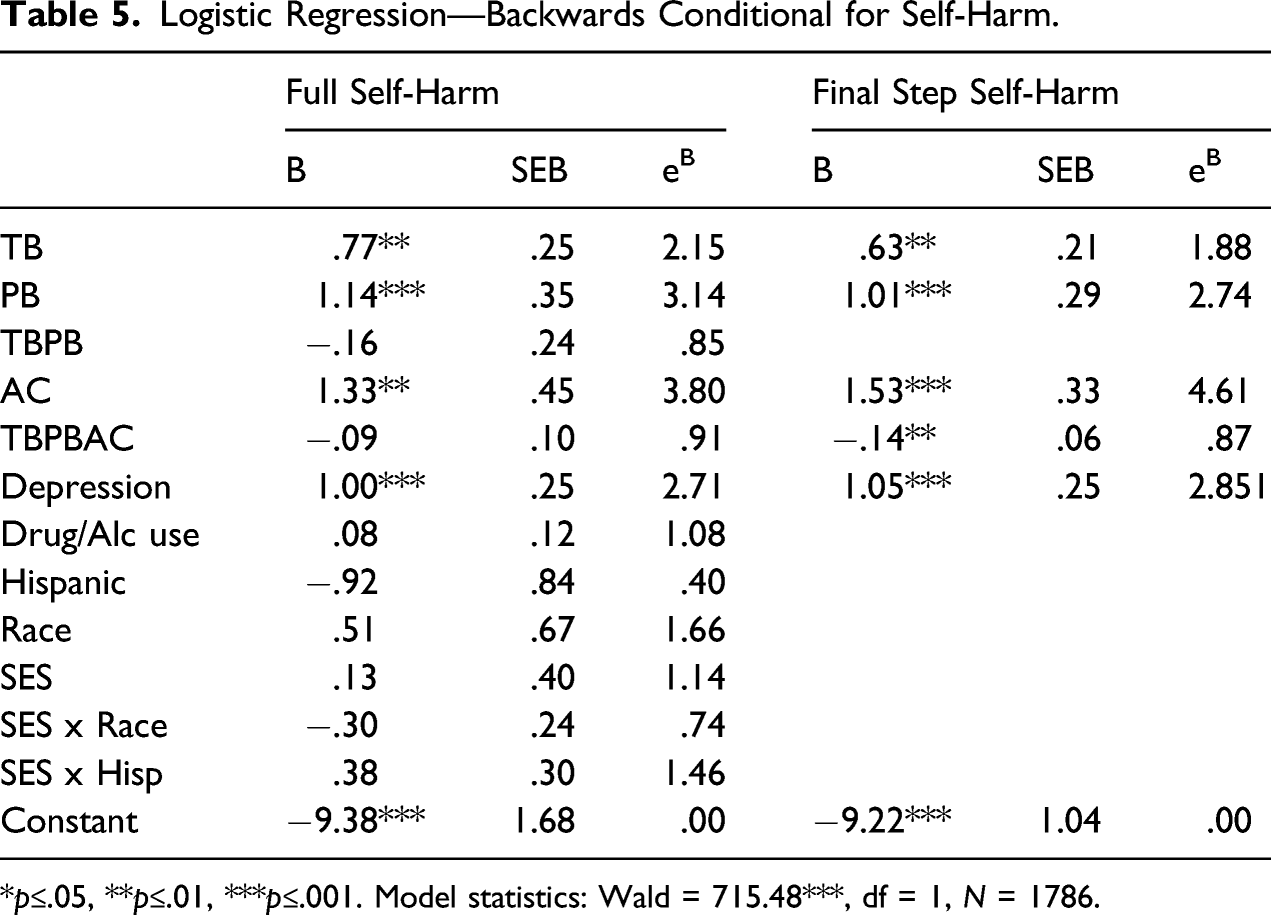
*p≤.05, **p≤.01, ***p≤.001. Model statistics: Wald = 715.48***, df = 1, N = 1786.
Discussion
Four hypotheses derived from the interpersonal theory of suicide are tested in this research. The first one that thwarted belongingness and perceived burdensomeness independently increase the likelihood of suicidal ideation is partially supported. Thwarted belongingness is not correlated with ideation, but perceived burdensomeness is, and that relationship is in the predicted direction. Chu et al. (2017) conducted a meta-analysis of ITS studies and concluded that perceived burdensomeness consistently predicts suicidal ideation better than thwarted belongingness does, regardless of how these concepts are operationalized and so results from the current study are not surprising. Overall in this study, thwarted belongingness measured, as parental abandonment and/or rejection performed poorly. Since thwarted belongingness plays such a significant role in this theory, its measurement deserves much further attention. Consistent with prior studies, this was the weak link in this study (except for the prediction of self-harm). Parental abandonment and rejection only included biological parents. It is possible that when a boy is abandoned or rejected by a biological parent, or by both, then he finds a sense of belongingness with others, although this idea contradicts the literature in this field. However, this would speak to the resiliency of troublesome boys, which may also deserve further focus in the theory.
The second hypothesis, that the interaction of thwarted belongingness and perceived burdensomeness increases the likelihood of suicidal ideation controlling for other pertinent variables identified by the current literature is also partially supported, consistent with the independent effects of the two on ideation. Perceived burdensomeness increases ideation, but thwarted belongingness does not. Depression remains in the model and exerts the strongest impact on ideation net theoretical controls.
The third hypothesis, that the three-way interaction of thwarted belongingness, perceived burdensomeness, and acquired capability increase the likelihood of suicidal attempts controlling for other pertinent variables identified by the current literature is not supported. The three-way interaction term, regardless of how it is measured often produces poor results. Czyz et al. (2014) used more traditional measures of the concept but found similar results in their study of juveniles and they cited several other studies that found this concept problematic. Czyz et al. (2014) findings could aid in explaining why acquired capability as a separate measure successfully explains attempts in this model since they find similar results for male juveniles 1 year out from treatment and assessment. The current study uses measures up to 1 year prior to entering Ocean Tides to construct the variables that make up the acquired capability construct (past suicidal attempts and past violence). Czyz et al. (2014) and the current study found a delayed association between acquired capability and suicide attempts. So, controlling for the sequencing of events in future studies is recommended. Acquired capability and depression increase suicidal attempts even when controlling for the effects of the three-way interaction term, drug/alcohol abuse, race, ethnicity, and the SES/race and SES/ethnicity variables. Furthermore, acquired capability exerts twice the impact on attempts in the model as does depression.
The fourth hypothesis that self-harm responds to the theoretical variables and similarly to attempts is not supported. In fact, the theoretical concepts do a better job predicting self-harm than either ideation or attempts, which runs counter to this theory’s predictions. Self-harm is more likely to occur in the presence of thwarted belongingness, perceived burdensomeness, acquired capability, and the three-way theoretical interaction terms, and depression. One explanation may be that self-harm in a population of juvenile justice involved youth may differ from other settings, such as in mental health facilities or in the general population. Scoliers et al. (2008) studied adolescents in seven countries and found two distinctly different self-reported motives for self-harm. One is a cry for help whereby self-harm is meant to signal to others that help is needed, or at least some form of recognition that the youth needs assistance. The other is a cry of pain, and this motive is similar to an attempt whereby the youth desires to die (Scoliers et al., 2008). These two motives can be seen as a continuum with a cry for help on one end and a desire to die at the other. It is possible that the self-harm inflicted by boys in this sample did garner the attention and assistance needed, and this prevented escalation to suicidal attempts. Placement at Ocean Tides and the care they received there may have saved some of their lives. Self-harm and suicidal attempts need to be more closely studied in the context of the interpersonal theory of suicide.
From the interpersonal theory of suicide, the strongest explanation for suicidal ideation comes from perceived burdensomeness as measured by exposure to PIPV and physical child abuse. The strongest explanation for suicidal attempts is acquired capability measured by prior suicide attempts and violence against others. Even though self-harm is not an outcome that is traditionally predicted by this theory, perhaps it should be since perceived burdensomeness, thwarted belongingness, and acquired capability successfully predict it. In terms of statistical power, acquired capability is a stronger predictor of self-harm.
Depression is the most consistent predictor for all three types of behaviors—ideation, attempts, and self-harm. It does not always have the strongest impact on the outcomes, but it remains significant in every step and in every model. These findings indicate that clinical diagnoses of depression indeed measures something unique in the explanation of suicidal behaviors and self-harm. Clearly, screening for depression should be an essential part of intake for adjudicated delinquent boys. It is worth noting that since the Ocean Tides program began in 1975, 71.2% of the boys received some kind of DSM diagnosis, but only 15.1% of those boys were diagnosed with depression of any sort. Depression screening may also reveal other potentially dangerous situations. Abram et al. (2008, p. 291) found that in a study of detained children ages 10–18 in Chicago “Fewer than half with recent thoughts of suicide had told anyone about their (suicidal) ideation.”Chu et al. (2017) argued that psychiatric diagnoses are usually better predictors of suicidal risk than ITS predictors are. This study bears that out. It is equally important to mention that most ITS studies do not include depression in statistical models that test this theory, and perhaps they should. The present study uniquely identifies any clinical diagnosis of depression by a professional at any point in the respondent’s lifetime prior to adjudication in adolescence, which may explain why its predictive ability is so strong. Depression can be sporadic and can reoccur. Most suicide studies are cross-sectional data and only account for depressive symptoms within a limited time frame.
Drug/alcohol abuse is a poor predictor of suicidal behavior in this study. This may be because drug/alcohol abuse, perceived abandonment, and thwarted belongingness may mediate the relationship between depression and suicidal behaviors. Adolescents may drink and take drugs because they are depressed, feeling abandoned, and feel like they do not belong, and those feelings increase suicidal behaviors. Certainly, these mediating associations deserve further investigation in the suicide and ITS literature.
Results for race, ethnicity, and SES are mixed. Race or ethnicity does not independently affect any of the outcomes, but the interaction of race and SES do remain in the model predicting ideation along with SES. This means that residents who are white and experience lower SES experience increased risk of ideation net controls, but higher SES also increases ideation. So, poorer whites and wealthier people in general are more prone to suicidal ideation. This intersection between race and SES deserves further attention in suicide studies since most of these studies ignore possible intersections and focus on their independent impacts. Interestingly, race and ethnicity studies on suicide tend to theorize why minorities may experience greater rates of suicidal behaviors, but the research consistently finds weak support for the opposite, that whites tend to experience higher rates (see Acosta et al., 2017; Cauffman, 2004; De Luca et al., 2020; Peña et al., 2018). Unemployment and other SES indicators are often associated with suicidal behaviors; SES alone may be a spurious predictor as it is at least temporarily affected by conditions such as job loss, family mental illness, or family history of suicide (Agerbo et al., 2002). As a broader measure then, the effects of SES on suicide may wane.
Study Limitations
The race and ethnicity measures were simplified. Some evidence indicates that Asians and Pacific Islanders may experience elevated risk of suicidal behaviors compared to other minorities and to whites in the United States (Erausquin et al., 2019; Heaton, 2018). Therefore, lumping all racial minorities into a single category may have produced ambiguous results in this study. Likewise, ethnicity was also simplified as non-Hispanic/Hispanic. Hispanic is a rather diverse population, and it is reasonable to believe that Latinx boys may have different experiences in the United States than those of Spanish descent. More dynamic measures of race and ethnicity may be needed in this research, which poses another problem. To isolate racial and ethnic differences, researchers need a lot of data; however, in very large national studies, it is difficult to gather information from multiple sources to garner the greatest accuracy and detail.
When generalizing the results of this study, it is important to recognize that Ocean Tides is not a typical youth prison, although its population is very similar to the RITS by race, ethnicity, and crimes committed, it is a residential non-locked facility in which boys are in house and constantly supervised Monday–Friday and at home on weekends. It is not an alternative program either. It simply is not structured the same way as traditional youth prisons or as an alternative to adjudication. Ocean Tides also has the luxury of refusing residents, and so the most serious offenders are either not sent there to begin with, or they are returned to the RITS before their sentence is completed. On average, Ocean Tides accepts about half of the RITS boys who are referred to them. Rejections are typically based on administrative reasons (a relative is already there), assaults against placement staff, entrenched gang involvement, non-compliance (not willing to interview), and imminent danger of suicide. Severe mental health issues would be problematic at Ocean Tides since success in the program is based on a boy’s ability to make reasonably rational decisions. Although the Ocean Tides boys do differ significantly from one another in their behaviors, the most troubled youth are not included in this database.
Conclusions
It remains unclear in the literature whether suicidal behaviors among juvenile justice involved male populations are more prevalent or mirror the general population. Among the Ocean Tides residents (ages 13–18), 13.9% have engaged in suicidal behaviors at least once in their lifetimes, while the national average for males ages 14–18 is 13.3% (Ivey-Stephenson et al., 2020). This study’s findings support the argument that there is little difference.
In the literature on ITS, conceptual delineation between its main concepts can be ambiguous. For example, child abuse has been operationalized as acquired capability in some studies, as perceived burdensomeness in others, and as thwarted belongingness in some. Violence against others is rarely included in the measurement of acquired capability, and self-harm is rarely studied as an outcome of ITS. It is a relatively new theory having only been in the literature on suicide for 15 years. The current study significantly contributes to theoretical specification within the theory; particularly for troublesome boys by identifying linkages between violence against others and self-directed violence. It does appear that violence is violence no matter where it strikes, and multiple forms of violence should factor into explanations for suicidal behaviors and self-harm.
Child exposure to PIPV, child abuse, prior suicidal attempts, and violence against others are important precursors for future self-directed violence. Beyond opening dialog about the methodological specification within the theory, these are incredibly important findings for informing programming for troublesome boys. With increased focus on mental health issues and on trauma-informed care nationally, the importance of depression, child abuse, exposure to PIPV, and depression are well understood, but violence against others is an equally informative behavior in the care and rehabilitation of juvenile boys. It is easy to understand that some conditions are beyond the immediate control of troublesome juveniles, but violence against others is still often seen as a rational decision that is only important in its consequences for others. Skinner-Osei et al. (2019, p. 2) argue that “Children in the justice system are often viewed as beyond hope and uncontrollable. They may appear angry and defiant when, in actuality, they are stricken with loneliness, depression, abandonment, powerlessness, and fear.” Violence against others should be evaluated as a symptom of underlying trauma and as a warning signal for future self-harm and suicidal behaviors.
Footnotes
Declaration of Conflicting Interests
The author(s) declared no potential conflicts of interest with respect to the research, authorship, and/or publication of this article.
Funding
The author(s) disclosed receipt of the following financial support for the research, authorship, and/or publication of this article: This project was supported in part by the State of Rhode Island and Providence Plantations, Rhode Island Justice Commission, Juvenile Justice and Delinquency Prevention/Intervention (JJDP) grant # GR-7808 and 7580; also from Grant No. 2015-JF-FX-0062 awarded by the Office of Juvenile Justice and Delinquency Prevention, Office of Justice Programs, U.S. Department of Justice. The opinions, findings, and conclusions or recommendations expressed in this publication/program/exhibition are those of the author(s) and do not necessarily reflect those of the funding agencies.
