







Abstract
Institutions of higher education have attempted to respond to students’ experiences of sexual victimization by developing resources and processes for addressing sexual misconduct. However, extant research suggests that students rarely use campus-based resources and many students lack knowledge about campus services and the processes that institutions of higher education take to respond to sexual misconduct. This study uses data from a campus climate survey at one midsized southeast university to examine students’ perceived and actual knowledge about help-seeking and policies and procedures (i.e., mandatory reporting, investigation mandates, confidential resources, accommodations for survivors) at their university. Additionally, we explore gaps in their knowledge of these measures (N = 2261). We also consider the factors that predict these outcomes. On average, students report moderate perceived knowledge about help-seeking on campus. However, roughly 67% did not have a fully comprehensive and accurate understanding of policies and procedures to address sexual misconduct at the university. These findings are problematic, as institutions of higher education rely on survivors coming forward to report their experiences and participate in investigative processes when detecting and elevating complaints. We highlight implications for institutions of higher education.
Introduction
Issues related to college 1 student sexual victimization experiences have received focused attention. The 2019 Association of American Universities survey reported that, since enrolling in school, 13% of students experienced nonconsensual sexual contact (including nonconsensual penetration and nonconsensual touching) and roughly 42% had experienced some form of sexual harassment (Cantor et al., 2020). As a result, scholars have attempted to understand approaches taken by institutions of higher education (IHEs) to address sexual violence (SV) 2 , including the campus resources available, the policies and procedures in place, and the efforts of students to seek help from campus entities or officials. Still, more research is necessary (Spencer et al., 2017; Walsh et al., 2010).
Extant research has found that very few students actually use campus resources or contact campus officials about SV (Fisher et al., 2003; Krebs et al., 2016; Sabina & Ho, 2014; Spencer et al., 2017; Stoner & Cramer, 2019; Walsh et al., 2010) for a number of reasons, including not knowing who to contact or where to go. At the most basic level, if IHEs have a chance at effectively handling sexual misconduct, members of the campus community need to be aware of campus-based help-seeking efforts and processes. Logically, before students can seek help from campus-based resources, they must have the knowledge and confidence to use those resources and awareness about IHEs’ responsibilities to respond to SV.
This exploratory study uses data from a campus climate survey administered at a midsized southeast university to understand the extent to which students believe they are knowledgeable about help-seeking as well as the policies/procedures available to them on their campus to address SV. From these responses, we also aim to identify gaps in students’ understanding of sexual misconduct policies and procedures. Finally, we consider the correlates of student knowledge. The findings of this study provide concrete recommendations for improving student understanding of SV and university approaches to addressing it.
Literature Review
Despite the ubiquity of SV experienced by college students, questions remain regarding what IHEs are doing to address adverse student experiences and increase students’ ability and confidence to seek help. Resources to address SV are available on campuses, although there is variation in the types of services offered across campuses (Karjane et al., 2002; Richards, 2019). For example, survivors might use mental health counseling services, the campus health center, and on-campus advocates (Cantor et al., 2020; Graham et al., 2021; Nasta et al., 2005; Sabri et al., 2019; Walsh et al., 2010). However, despite the presence of these services on many campuses, very few students actually use campus resources or contact campus officials about SV (Fisher et al., 2003; Krebs et al., 2016; Sabina & Ho, 2014; Spencer et al., 2017; Stoner & Cramer, 2019; Walsh et al., 2010). The question that scholars have attempted to answer is why? Students may not seek assistance from campus entities because they do not think the incident was serious enough, do not want anything to happen (e.g., want to protect those in their social circle that may have been involved), are fearful (e.g., retribution, code of conduct violations) or embarrassed about their experiences, do not want to deal with the issue or want to forget the incident, do not know if it is appropriate to contact the university about a non-university-related incident, have concerns about confidentiality, and/or do not know who or where to contact (Krebs et al., 2016; Mennicke et al., 2021; Nasta et al., 2005; Sabina & Ho, 2014; Sabri et al., 2019; Spencer et al., 2017; Stoner & Cramer, 2019; Walsh et al., 2010). The latter point warrants further discussion for this study.
Student Knowledge of Campus Resources
DeLoveh and Cattaneo’s (2017) framework of survivor help-seeking identified knowledge of resources as a significant indicator of help-seeking. Certainly, students cannot seek help if they do not know where to go or do not have accurate or comprehensive knowledge about available resources. Unfortunately, existing literature suggests that many students know little about campus services and resources for SV (Burgess-Proctor et al., 2016; Cantor et al., 2020; McMahon & Stepleton, 2018; Sabina & Ho, 2014; Sabri et al., 2019).
The lack of knowledge about campus resources is highly problematic considering the high prevalence of SV experienced by this population. Student survivors may not know if they can report, who they can report to, and/or how to report and receive assistance for their experiences of SV (Krebs et al., 2016; Mennicke et al., 2021; Spencer et al., 2017). The same may apply to peers wanting to assist survivors. Given that informal peer help-seeking is common, ensuring the larger student body is equipped with correct and comprehensive knowledge is salient (Puzio & Konradi, 2016). Stated pointedly by Burgess-Proctor et al. (2016): “Even the best campus programming cannot be effective if students are unaware or uncertain about its existence or if they are reluctant or otherwise disinclined to participate due to instrumental or perceptual barriers.” (p. 216)
Student Awareness of Campus Policies and Procedures for Addressing Misconduct
Although the above section identified some research that has considered student awareness of campus resources for addressing sexual misconduct, much less work has explored student knowledge about campus policies and procedures for responding to SV. The research that does exist, however, suggests that few students are familiar with such policies and procedures. For example, the Association of American Universities study found that less than 20% of students were “very” or “extremely” knowledgeable about what happens when a student reports an incident of sexual assault or other sexual misconduct at their institution (Cantor et al., 2020). In fact, over half reported they were “not at all” or only “a little” knowledgeable. As another example, according to the 2018 results of the Rutgers Campus Climate Survey, only 36% of students “agreed” or “strongly agreed” with the statement that they were aware of and understood Rutgers’ procedures for addressing sexual misconduct (Seabrook et al., 2018). Further, only 25% of students were “very aware” or “extremely aware” that Student Affairs Compliance and Title IX was a campus resource for interpersonal violence (i.e., sexual and dating violence; Seabrook et al., 2018). Although Student Affairs Compliance and Title IX was only one of many campus resources that the survey asked students about, this particular entity is important, considering that formal procedures for addressing sexual misconduct run through a Title IX Office. Therefore, students’ lack of knowledge about the Office suggests they likely lack awareness about campus policies and procedures for addressing sexual misconduct.
It should be noted, however, that it is more common for studies to include a general measure of student awareness about procedures which asks students to self-reflect on their level of knowledge rather than asking them statements about specific campus procedures and assessing the accuracy of their responses. This more general approach is limited as many students do not know specific information about sexual misconduct policies and procedures. For example, studies examining students’ knowledge about mandatory reporting policies (i.e., policies that require faculty or staff to report sexual misconduct to a university official, regardless of the survivors’ wishes) have found that students—including student survivors—have significant gaps in their factual knowledge about these policies (Amin, 2019; Holland et al., 2021). Importantly, Puzio and Konradi (2016) found that while many students may have confidence in their knowledge about issues related to SV, their actual knowledge about these issues may not be wholly accurate.
Thus, it is important to account for student perceived and actual knowledge about campus policies and procedures—as well as the gaps in that knowledge—when understanding student awareness of university responses to SV. It is also key to understand the correlates of this knowledge to better aid the development and implementation of campus programming and resources. Doing so has implications for ensuring that students are fully empowered to make informed decisions (or, in the case of peers, making informed recommendations) about reporting and participation in campus investigations.
The Current Study
Although college student experiences of SV have received much attention since the 1980s, research on student awareness and knowledge about campus resources, policies, and procedures for SV is in its infancy in comparison. The current study contributes to literature on the latter. Four research questions guide this study. First, to what extent do students perceive they are knowledgeable and are actually knowledgeable about help-seeking and the policies and procedures related to SV on their campus? Second, what factors predict students’ perceived knowledge about help-seeking on campus? Third, what factors predict students’ knowledge about policies and procedures related to sexual misconduct (i.e., mandatory reporting, investigative mandates, confidential resources, and accommodations)? Lastly, what factors predict having a gap in knowledge about campus reporting and investigative procedures for addressing SV?
Materials and Methods
The data for this study comes from a campus climate survey administered to undergraduate and graduate students at a midsized southeast university (hereon referred to as SE4YU) during the Spring 2017 semester. The survey was adapted from the University of Kentucky’s campus climate survey and conducted in coordination with SE4YU’s Title IX office.
To generate the sample for this study, the research team randomly selected 10% of courses offered during the Spring 2017 semester (n = 198), and contacted the instructors of record for each class to gauge their availability and interest in the researchers administering the survey to students in their classes. Almost half of the instructors agreed 3 , and approximately 90% of students in those classes participated. 4 In total, 2265 students at SE4YU handed in the survey (by paper and pen). After addressing some missingness (see analyses section below), the final sample size for the data presented here was 2261 students.
Dependent Variables
Perceived help-seeking knowledge
Our first dependent variable centered on students’ perceived help-seeking knowledge about where to seek help if they or someone close to them experienced SV. Three Likert-type scales were reversed coded (0 = Strongly Disagree and 3 = Strongly Agree) and combined into an additive index. The following items were used to create the scalar measure: “I know what SE4YU’s procedures are for handling complaints of unwanted sexual experiences,” “I know how to report an unwanted sexual experience at SE4YU,” and “I know where to go to get help at SE4YU if a friend or I had an unwanted sexual experience.” The scalar item had good reliability (Cronbach’s alpha = 0.91) 5 . Higher scores indicate the participant perceived greater knowledge about where to seek help.
Knowledge of policies and procedures
We assessed students’ knowledge about four policies and/or procedures: knowledge of mandatory reporting, knowledge of investigation mandates, knowledge of confidential resources, and knowledge of accommodations for survivors. The survey asked to students to “Please answer the following to the best of your knowledge” and then presented students with a series of statements (see below). If they answered affirmatively, they were coded as having knowledge about the specific policy or procedure.
Respondents were coded as having knowledge of mandatory reporting if they answered “yes” to the statement “Reports of unwanted sexual experiences to SE4YU faculty, coaches, teaching/research assistants, or resident advisors must be reported to SE4YU administrators” (1 = yes; 0 = no; don’t know). 6 Knowledge of investigation mandates referred to knowing that “All unwanted sexual experiences reported to SE4YU officials will lead to an investigation” (1 = yes; 0 = no; don’t know). Knowledge of confidential resources reflected students’ responses to “Reports of unwanted sexual experiences to staff at SE4YU’s counseling center, women’s clinic, or student health center must be kept confidential” (1 = yes; 0 = no; don’t know). Finally, knowledge of accommodations referred to students’ responses to “SE4YU can make accommodations (transportation, academic, and financial) for victims of unwanted sexual experiences” (1 = yes; 0 = no; don’t know).
Gap in knowledge
The final dependent variable reflected respondents’ gaps in knowledge about policies and/or procedures for SE4YU’s responses to sexual misconduct. If the student reported “no” or “don’t know” on any of the four aforementioned items, then we coded them as having a gap in knowledge (1 = yes; 0 = no).
Independent Variables
Victim of sexual violence
To assess whether victimization experiences impacted any outcomes, we disaggregated victimization into contact sexual victimization (e.g., rape, unwanted sexual touching, sexual coercion) and non-contact sexual victimization (e.g., sexual harassment).
The contact sexual victimization measure was developed from six behaviorally-specific questions. Specifically, respondents were coded as experiencing contact sexual victimization if any of the following occurred in the past 12 months: “have you been physically forced to have sex (intercourse, oral sex, anal sex, or penetration with an object) against your will?,” “have you been forced to have sex because a person threatened to harm you if you did not give in?,” “did someone have sex with you against your will when you were physically unable to consent to sex (e.g. passed out, unconscious, or not physically able to respond) because someone had slipped you drugs or extra alcohol?,” “did someone have sex with you against your will when you were physically unable to consent to sex because of the alcohol or drugs that you took voluntarily?,” “were you in a situation where someone was in the process of physically forcing you to have sex but you managed to escape before intercourse, oral sex, anal sex, or penetration with an object occurred?,” and anyone (not a spouse or dating partner) “touched you sexually (breast, buttocks, or genitals) when you did not want them to?” If the respondent experienced any of the six behaviors, they were coded as having experienced contact sexual victimization (1 = yes; 0 = no).
Five questions focused on non-contact sexual victimization. Specifically, respondents were asked how often in the past 12 months someone outside of a dating partner or spouse did any of the following: “Said sexual things to you that you did not want to hear?,” “Sent sexual messages or pictures that you did not want (including porn)?,” “Asked or pressured you for a date, hook up, or sexual favors even though you had already said no?,” Made unwanted sexual gestures or imitated sexual motions when you did not want them to?,” and “Exposed themselves to you (breasts, buttocks, or genitals) when you did not want them to?”. If the respondent reported that they experienced any of the five incidents in the last 12 months, they were coded as having experienced non-contact sexual victimization (1 = yes; 0 = no). Because these statements ask the respondent to think about incidents that did not involve a spouse or dating partner, it is very likely that the indicator of non-contact sexual victimization used in this study under-estimates the true prevalence of these forms of victimization. According to the Association of American Universities survey, of those who had experienced sexually harassing behaviors, roughly 9% and 10% said it was perpetrated by a current and former intimate partner, respectively (Cantor et al., 2020). Therefore, we urge the reader to remember that in our study, the measure of non-contact sexual victimization is limited to non-partners and is an underestimation of the true prevalence of non-contact sexual victimization.
Friend experienced sexual victimization
Respondents also answered questions about the experiences of their friends or acquaintances at SE4YU. Friend experienced sexual victimization referred to respondents who thought any of their friends or acquaintances at SE4YU were forced or pressured into having sex (1 = yes; 0 = no).
Know someone involved with title IX
Two binary indicators captured if the respondent knew someone accused of sexual misconduct or someone who filed a complaint. The first binary item—knowledge of someone accused of sexual misconduct—reflected responses to the question “I know someone at SE4YU who has been accused of committing sexual misconduct that resulted in a formal investigation” (1 = yes; 0 = no or don’t know). The second dichotomous item—knowledge of someone who filed a complaint—reflected responses from the question “I know someone at SE4YU who has filed a complaint against another student for an unwanted sexual experience” (1 = yes; 0 = no or don’t know).
Perceptions of safety scale
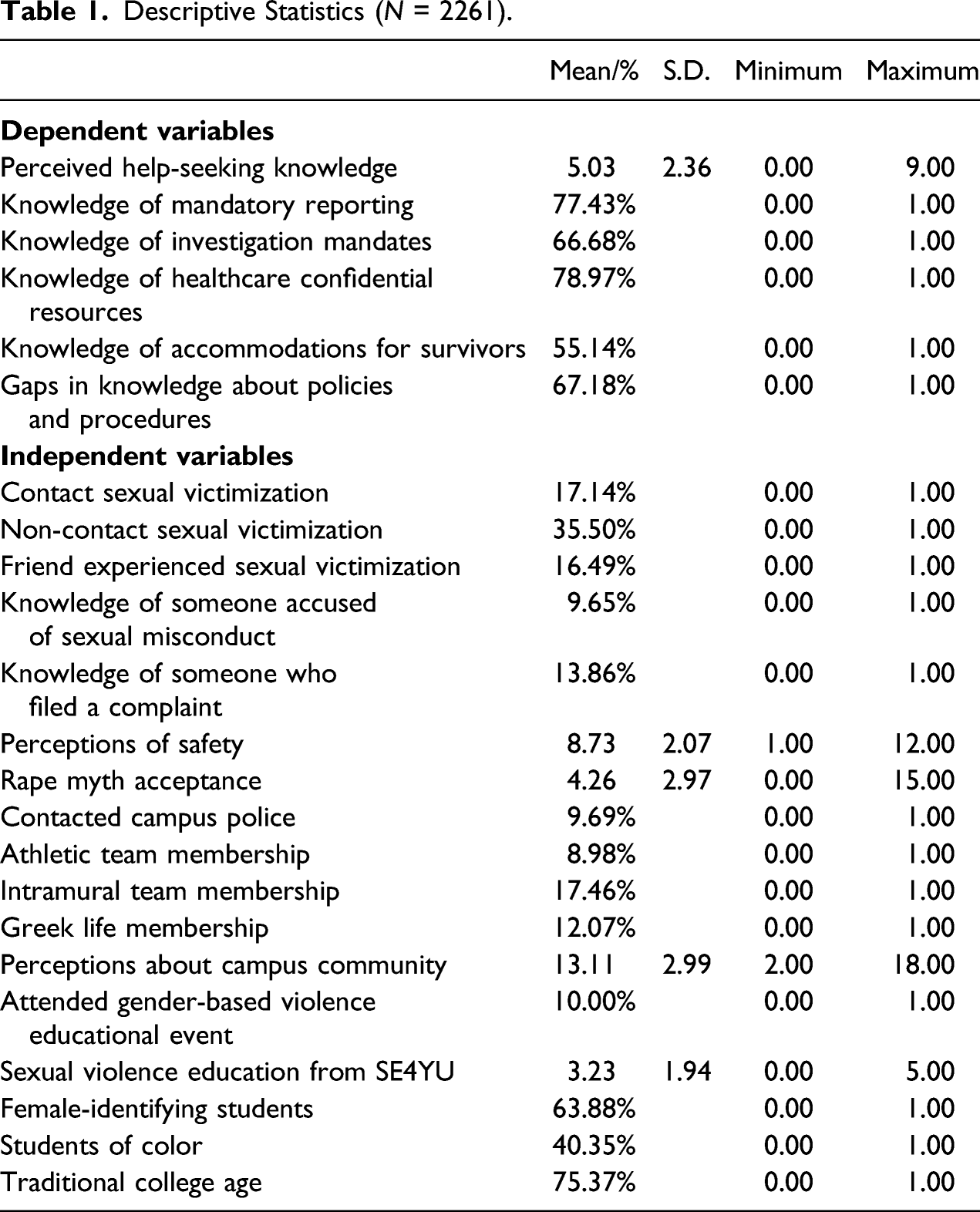
A scalar item was generated to gauge overall perceptions of campus safety (Author’s Names Removed). Four items that were measured on Likert-scales were reverse coded (0 = Strongly Disagree and 3 = Strongly Agree) and added together. These four items included “SE4YU cares about my personal safety,” “I generally feel safe on campus during the day,” “I generally feel safe on campus at night,” and “Violence is not a problem at SE4YU.” Higher scores on this scale indicate greater feelings of safety (Mean = 8.73, SD = 2.07, Range = 1.00–12.00, Cronbach’s alpha = 0.70).
Rape myth acceptance
Rape myth acceptance (RMA) was measured on a five-item scale. The gender-neutral scale captured attitudes toward SV. Each of the items were measured with Likert-type scales that were reversed coded (0 = Strongly Disagree and 3 = Strongly Agree). The five items were summed together (Mean = 4.26, SD = 2.97, Range = 0.00–15.00). Higher scores indicate higher levels of RMA (Cronbach’s alpha = 0.73).
Contacted campus police
We also included a binary measure for whether the respondent contacted campus police in the last 12 months (1 = yes; 0 = no). This measure was not specific to contacting campus police for SV.
Perceptions about the campus community
Six Likert-type scale items were reverse coded (“0” = Strongly Disagree and “3” = Strongly Agree) and combined into an additive scale to represent the respondent’s perceptions about the campus community. These six items included “SE4YU faculty, staff, and administrators respect what students think,” “Faculty, staff, and administrators at SE4YU are genuinely concerned about students’ welfare,” “Faculty, staff and administrators at SE4YU treat students fairly,” “Students at SE4YU are genuinely concerned about the welfare of other students,” “SE4YU administrators would handle the report [of unwanted sexual experiences] fairly,” and “Steps would be taken to prevent retaliation and make sure the reporting person felt safe on campus.” The scalar measure had good reliability (Mean = 13.11, SD = 2.99, Range = 2.00–18.00, Cronbach’s alpha = 0.82). Higher scores represent better perceptions about SE4YU’s response to students and their safety.
Attended gender-based violence educational event
A binary item (attended gender-based violence educational event) represented if the respondent attended a campus program on gender-based violence (e.g., a kickoff event for sexual assault awareness month, Walk a Mile In Her Shoes event; 1 = yes; 0 = no).
Sexual violence education from SE4YU
A scalar measure (sexual violence education from SE4YU) was generated from five questions to capture if the respondent received any information or education from SE4YU about “what unwanted sexual experiences are and how to recognize them,” “how to report an incident of an unwanted sexual experience,” “SE4YU’s confidential resources for unwanted sexual experiences and how to locate them on campus,” “the procedures for investigating an unwanted sexual experience,” and “the actions you take to help prevent unwanted sexual experiences, such as bystander intervention, clear communication with a potential partner, or some other action.” Respondents could respond “yes” or “no” to each of the items. Responses across these five items were then combined into an additive scale (Mean = 3.23, SD = 1.94, Range = 0.00–5.00, Cronbach’s alpha = 0.89), where higher scores indicate the respondent received more education about unwanted sexual experiences.
Membership in extracurricular activities
Three dichotomous measures were created to account for student membership in campus activities, as such groups may receive different types or frequencies of messaging about sexual violence: athletic team membership; intramural team membership; Greek life membership (i.e., fraternities and sororities; all coded 1 = yes; 0 = no).
Control variables
Lastly, we accounted for student demographic characteristics. Due to low numbers of students identifying as a gender identity other than male or female, we used the gender binary in this study (1 = female-identifying students; 0 = male-identifying students). Similarly, due to the racial and ethnic heterogeneity of the sample, race/ethnicity was treated as a dummy variable for analyses (1 = Students of Color; 0 = White students). Age was included as a binary item to capture whether or not the respondent was a traditional college age of 18–22 years old (1 = traditional college age; 0 = 23 years of age or older).
Analyses
The analyses for this study were multi-faceted. First, we explored the extent to which students perceived knowledge about help-seeking and were aware of policies and procedures related to addressing sexual misconduct at SE4YU. Then, we used ordinary least squares regression to examine the influence of predictors on the linear outcome of perceived help-seeking knowledge. Next, given the binary nature of the remaining dependent variables, we estimated logistic regressions to predict student knowledge of mandatory reporting, investigation mandates, confidential resources, and availability of accommodations for survivors. Lastly, we assessed gaps in students’ knowledge about policies and procedures for addressing sexual misconduct by estimating a logistic regression. VIF and tolerance statistics were within acceptable ranges, indicating that multicollinearity was not present in the data.
Little’s MCAR test suggested that data were not missing completely at random (Little’s MCAR χ2 = 98.15, p ≤ 0.01). Data were imputed using multiple imputation methods. Four respondents did not answer the first question on the survey and were dropped from analyses. The final sample size of the imputed data was 2261 respondents. The number of imputations was increased to 10, rather than the typical standard of five (Rubin, 1987), to increase the stability of standard error estimates, confidence intervals, and p-values (Bodner, 2008). Because we had several scalar items, we imputed for overall scales rather than by item (Parent, 2013). Pooled estimates are presented.
Results
Descriptive Statistics (N = 2261).
Findings from OLS Regression on Perceived Help-Seeking Knowledge (N = 2261).
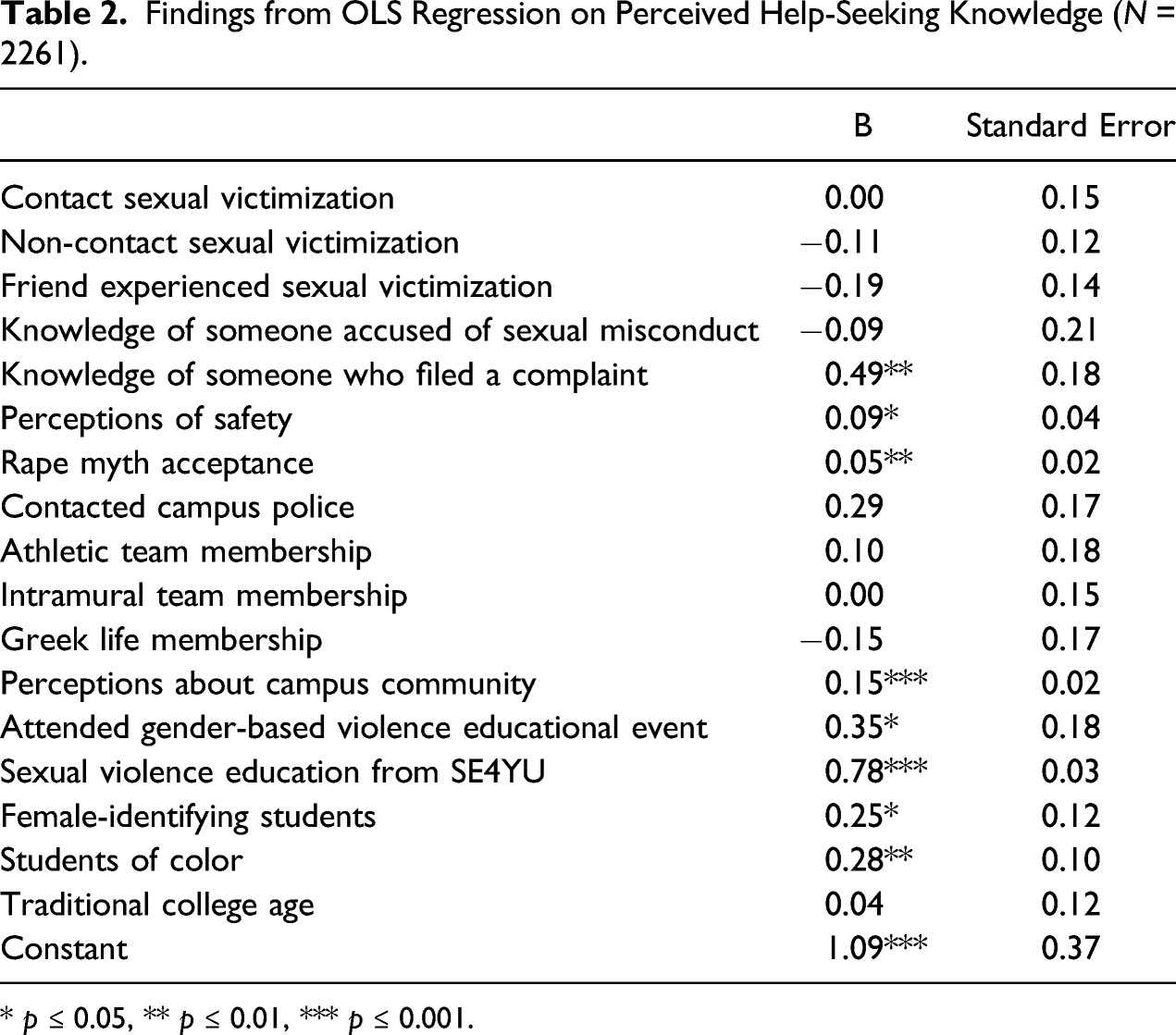
* p ≤ 0.05, ** p ≤ 0.01, *** p ≤ 0.001.
Findings from Logistic Regression on Knowledge and Gaps in Knowledge About Policies and Procedures (N = 2261).
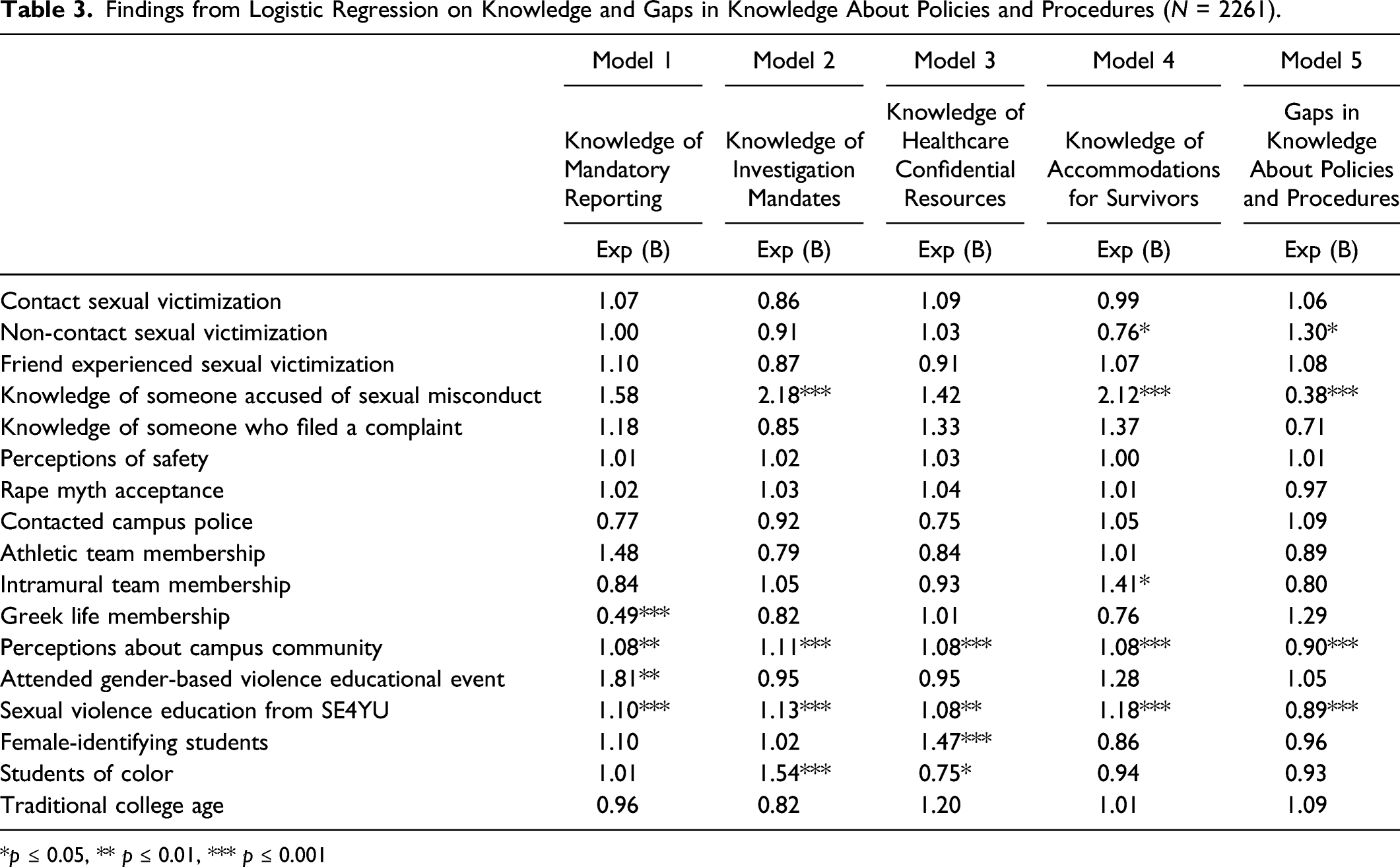
*p ≤ 0.05, ** p ≤ 0.01, *** p ≤ 0.001
Model 2 within Table 3 presents the results of predicting knowledge that an investigation will ensue if SE4YU officials become aware of sexual misconduct. On average, chi square values for model fit produced statistically significant results (p ≤ 0.001; Average Nagelkerke R2 = 0.09). Students who knew someone who was accused of sexual misconduct were more likely to be aware of the university’s investigation mandate compared to students who did not know someone accused. In addition, students who held more positive views of the campus and students who received education about SV were more likely to know about the investigation mandate. Lastly, students of Color were more likely than White students to be knowledgeable about SE4YU’s investigation mandate.
Model 3 presents the results predicting knowledge about confidential resources at SE4YU. On average, chi square values for model fit produced statistically significant results (p ≤ 0.001; Average Nagelkerke R2 = 0.05). Students who held more positive views of SE4YU and students who received SV education from the university were more likely to know that the women’s center, counseling center, and student health center were confidential resources. Female-identifying students were more likely to be aware of the confidential resources than male-identifying students. Students of Color were less likely than White students to know about the confidential resources.
Model 4 in Table 3 presents the results of knowledge about the availability of accommodations for survivors. On average, chi square values for model fit produced statistically significant results (p ≤ 0.001). The average Nagelkerke R2 was 0.10. Students who experienced non-contact sexual victimization were less likely than those who had not experienced this form of victimization to know about available accommodations. However, students who knew someone who had been accused of sexual misconduct were more likely to be aware of accommodations than students who did not know someone accused of sexual misconduct. Students involved in intramural sports were more likely to be aware of accommodations than students not involved in intramural sports. Similar to each of the policies/procedures discussed earlier, students with more positive perceptions about the campus community and students who received SV education were more likely to know about accommodations for survivors.
Finally, Model 5 of Table 3 presents the results from analyses predicting a gap in knowledge. Chi square values for model fit across all models produced statistically significant results (p ≤ 0.001; Average Nagelkerke R2 = 0.10). Students who had experienced non-contact sexual victimization were more likely to have a gap in knowledge relative to those who had not experienced this form of victimization. Students who knew someone accused of committing sexual misconduct that resulted in a formal investigation were less likely to have a gap in knowledge compared to students who did not know someone accused of sexual misconduct. Respondents who held more positive feelings toward campus and respondents who had more education about SV from SE4YU were also less likely to report a gap in knowledge.
Discussion
This exploratory study sought to contribute to the literature by examining college students’ perceived help-seeking knowledge, awareness about sexual misconduct policies and procedures, and gaps in knowledge about policies and procedures for addressing sexual misconduct. Although little extant research has explored this line of inquiry, we believe it has implications for IHEs’ ability to effectively respond to SV. We highlight some of the main findings below.
We found that students perceived they have only moderate help-seeking knowledge. This finding is similar to prior research that finds students do not have comprehensive knowledge about campus resources and options for help-seeking (Burgess-Proctor et al., 2016; Franklin & Menaker, 2014; McMahon & Stepleton, 2018; Sabina & Ho, 2014), Further, over 22% of students were not aware that the university has a mandatory reporting policy and more than 21% did not know that certain entities on campus were confidential resources. Even greater percentages of students were not familiar with investigation mandates (33%) and accommodations available to survivors (45%). Additionally, when these items were considered in tandem, about 67% of students indicated they had a gap in their knowledge about campus policies and procedures for addressing sexual misconduct. These descriptive findings indicate students are not fully knowledge about all the campus resources and processes for addressing SV. Similar to Puzio and Konradi’s (2016) study, these findings suggest there may be a disconnect between what students believe they understand about SV policies and procedures and what they actually know. These findings are problematic for at least two reasons.
First, the rates of SV both at SE4YU and nationally are high. In this sample alone, over 17% of students had experienced contact SV in the past 12-months and almost 36% had experienced non-contact SV by a non-intimate partner during the same reference period. Therefore, it is paramount that persons directly affected by SV know where, how, and who to get assistance from should they want it, and know what the university will do to address SV. Based on the findings from this study, it does not appear that survivors differ in perceived help-seeking knowledge or awareness of specific policies or procedures from students who had not experienced these forms of victimization. The aforementioned statement is conditioned by one finding: persons who experienced non-contact SV in the past 12-months were more likely to have gaps in their knowledge about campus practices for reporting and investigating sexual misconduct, particularly as it relates to the availability of accommodations. Taken together, it appears that many survivors may not know where to get the assistance they might find beneficial and/or may not have the most accurate information about the approaches the university would take to address sexual misconduct. If students seek help, they should be able to make an informed decision about who they tell, understand the potential impacts of that disclosure, and be aware of how the university will respond. Not having such knowledge and inadvertently triggering the university response can exacerbate trauma for survivors of sexual assault (Holland et al., 2018).
Second, since the majority of survivors of SV tell an informal support about their experiences before or in lieu of formally disclosing, it is possible that many of these friends also do not know where to seek help to assist others. Our study did find that knowing someone who has filed a complaint against another student was associated with increased help-seeking knowledge. Furthermore, we found that knowing someone who had a complaint filed against them was associated with an increased likelihood in being aware of investigation mandates and being aware of survivor accommodations, and lower odds of having gaps in knowledge about policies and procedures. Therefore, it is possible that peers can assist both survivors and accused students with navigating resources and awareness of some of the policies and procedures pertaining to sexual misconduct. It is also possible that students become knowledgeable about these resources through their friends’ experiences. Unfortunately, these possibilities are pure speculation and cannot be tested with the current data. Such questions require longitudinal data or in-depth qualitative data with students who have been involved or who had friends involved in these processes.
Fortunately, the results also point to promising approaches IHEs can take to increase student awareness about help-seeking and policies and procedures used to address sexual misconduct. In this study, greater education about SV provided by SE4YU was positively associated with perceived help-seeking knowledge and awareness of all policies and procedures related to sexual misconduct. It was also associated with a lower likelihood of having a gap in knowledge. Such education includes information about sexual experiences, how to report it, confidential resources, procedures, and prevention strategies. It makes intuitive sense then, that this measure should be related to greater awareness about help-seeking and procedures. Other studies have also found that increased messages and/or training are associated with increased knowledge (McMahon & Stepleton, 2018; Tredinnick, 2022), however, it is highly likely that student recall about information will depend on the methods with which they are exposed and the exposure dosage (Potter et al., 2016). For example, research suggests that often students may receive important information about sexual misconduct, including campus resources, at orientations and other events, but may also be unable to recall much information (Franklin & Menaker, 2014; Hayes-Smith & Levett, 2010). Thus, schools should consider research that finds that more intensive, face-to-face education encourages active engagement and may provide students with greater confidence about their knowledge related to SV (Puzio & Konradi, 2016). Schools must go beyond the benchmark of achieving confidence in knowledge, however. Administrators need to ensure that students’ knowledge is accurate.
Universities should engage in strategies not just focused on exposing students to pertinent information, but in ways that reduce RMA and ultimately impact help-seeking behaviors and awareness (see McMahon & Stepleton, 2018), such as interactive and engaging events (Sabri et al., 2019). In fact, in this study, participating in a campus educational program on gender-based violence was positively associated with perceived help-seeking knowledge and awareness about mandatory reporting. Such programs may empower students or simply provide them information on SV they have not been exposed to previously. It is likely, however, that persons attending programs on gender-based violence are already more aware of issues related to sexual misconduct, so there may be a selection bias. Thus, increasing participation among the general campus community is important. Extra credit or other incentives are one way to increase attendance, but faculty, staff, and administrators must be mindful that simply attending one event will likely not increase students’ knowledge substantially; rather, attention to dosage and information boosters will be important.
Targeted training to certain groups on campus may also be important for spreading messages and information about SV. In our study, although students participating in intramural sports were more likely than other students to be aware of available accommodations for survivors, students in other membership groups may be less aware of policies and procedures for sexual misconduct at the university. Specifically, members of Greek life were less likely to be aware of mandatory reporting policies. Having targeted training and/or required attendance at certain active engagement and educational events for these students may be especially important to increase awareness and to address long-standing concerns about sexual misconduct in sororities and fraternities
Our argument that efforts should be made to reach all students is further supported by our results that students of Color may have differential knowledge of sexual misconduct resources, policies, and procedures compared to White students. In our study, students of Color reported increased help-seeking awareness (see also McMahon & Stepleton, 2018) and were more likely to be knowledgeable about investigation mandates. However, students of Color were less likely than White students to be aware that healthcare providers are confidential resources. This latter finding is especially problematic in light of research that suggests that persons of Color may be treated poorly by many health care providers (Campbell & Raja, 1999). Further, according to participants in Zounlome et al. (2019) study, Black women and their experiences have been “excluded from conversations surrounding sexual violence” (p. 889) in colleges and universities; some participants specifically mentioned mistrust of institutional reporting mechanisms. Thus, IHEs must ensure that programs and information distributed to the campus community are culturally-relevant and speak to the needs and experiences of diverse groups of students to ensure all students are reached and included in prevention and response efforts (see, e.g., McMahon et al., 2020). Otherwise, IHEs risk preventing students from becoming aware of and accessing the very services put in place to protect and respond to them. Scholars have called for more research in this area (Bonar et al., 2020).
Limitations
Despite this study’s contribution to the extant literature on student awareness about campus help-seeking, reporting, and procedures related to sexual misconduct, some limitations must be discussed. Our measure of help-seeking awareness was a composite that asked students whether they knew about procedures, knew how to report, or knew how to get help at SE4YU. Although this approach is fairly standard, it does not allow us to assess whether students’ self-reported awareness was factually correct. It is possible, for example, that students were limited in their knowledge about all of the places they could receive help. Consider Halstead et al. (2018) study exploring students’ views of student health centers as a campus resource for addressing sexual violence; the researchers found that students generally believed that student health centers were for “non-emergent or minor medical issues” (p. 116) rather than places that could be a resource for addressing SV. Further, Puzio and Konradi (2016) reported that having higher confidence in knowledge related to SV may not necessarily equate to actually having higher knowledge related to SV. That is, students may have “an inflated sense of confidence or awareness, yet lack the necessary educational scaffolding for responding to assaults” (Puzio & Konradi, 2016, p. 27). Therefore, it is possible that although students report having awareness of help-seeking, their knowledge in this area may still have some gaps. Future research should consider exploring not just student perceptions about their knowledge, but also student accuracy in these perceptions.
Second, the survey was designed with “yes” being the correct response to all of the factual knowledge questions. Therefore, it is possible that students simply defaulted to selecting “yes” for all statements based on the survey design (e.g., answer straight down in a row) 7 . In retrospect, it would have been more ideal to vary the correct response to the question. However, our findings do suggest that a non-trivial portion of students did not just default to answering “yes,” as evidenced by the 67% of students who indicated at least some gap in knowledge. Further, descriptive statistics also reveal the opposite is true—roughly 5% of respondents said no to all items (findings not shown). Future research including these questions should consider varying the correct answer choices and examine threshold in knowledge (e.g., correctly answer half of the questions; correctly answer only one question).
Third, this survey did not ask students to reflect on their perceived knowledge about help-seeking generally or questions about university policies and procedures for other types of incidents. Therefore, it is unclear if students in our study lack the knowledge about sexual misconduct only, or if they lack knowledge about help-seeking and university responses generally (i.e., for any type of incident). This is especially pertinent given Title IX mandates cover other forms of gender-based violence, such as intimate partner violence or stalking. Future research might consider comparing student awareness of help-seeking options and policies and procedures across different types of incidents.
Fourth, the survey was framed as one on perceptions about safety, campus climate, and the experiences of students. Questions covered a range of topics, including, but not limited to, perceptions of the campus environment and safety, experiences of sexual victimization, rape myth acceptance, substance use, and perceptions of friends’ misconduct. Although the questions of primary interest in this study were asked in the early pages of the survey, it is possible that ones’ responses to the survey might be influenced by other questions. That is, the potential for social desirability cannot be eliminated, but is a possibility in all survey research. Nevertheless, given the anonymous nature of the survey, this potential is reduced.
Finally, another limitation of the current study is in the models themselves. The explained variance statistics for our logistic regressions were low, indicating we did not capture some important factors related to some dependent variables. As future research continues to explore these outcomes, we encourage scholars to consider additional factors that may be relevant to understand student awareness about campus help-seeking and SV policies and procedures.
Conclusion
College students are affected by SV at alarming rates. Therefore, it is important to consider the available campus resources, policies, and procedures for addressing SV, and assess students’ knowledge of them. It is clear from this study that students have only moderate perceived knowledge about help-seeking available on campus, and non-trivial percentages are unfamiliar with various policies and procedures related to sexual misconduct. As IHEs continue to grapple with how to best serve the needs of their students, it is important to consider how to best reach students to ensure that they are equipped with the knowledge and agency to make decisions, should they or someone they know need assistance with SV.
Footnotes
Declaration of Conflicting Interests
The author(s) declared no potential conflicts of interest with respect to the research, authorship, and/or publication of this article.
Funding
The author(s) received no financial support for the research, authorship, and/or publication of this article.
