







Abstract
Although the use of self-defense is common in incidents of intimate partner violence (IPV), correlates of self-protective behaviors in IPV are less known. Furthermore, while research has examined the unintended consequence of dual arrest as a result of using self-defense in IPV incidents, research has not examined whether self-defense is associated with the likelihood of reporting the victimization to the police. The purpose of this study is to first examine the racial differences in the use of self-defense in incidents of IPV. Second, this study examines the relationship between the use of physical self-defense and formal help-seeking (i.e., calling the police) and whether those relationships vary across race/ethnicity for White, Black, and Hispanic women. Using a large nationally representative sample of IPV incidents in the United States, this study found that incidents with Black female victims were more likely to feature physical self-defense compared to incidents with White female victims. Furthermore, incidents with Black female victims were more likely to be reported to the police. There was a positive relationship between physical self-defense and reporting to the police for Black women and an inverse relationship between physical self-defense and reporting to the police for Hispanic women.
Introduction
Approximately 1 in 4 women and 1 in 10 men will be the victim of intimate partner violence (IPV) over the course of their lifetime (Truman & Morgan, 2014). IPV entails a range of behaviors, including physical and sexual violence, stalking, psychological aggression, and control used to harm a current or former partner. Race and ethnicity contextualize experiences with IPV, including differential risk, health consequences, and help-seeking behaviors and experiences. Women who are racial minorities may experience a higher likelihood of victimization (Breiding et al., 2014). While all victims of IPV disproportionately face poor physical, mental, and sexual health outcomes compared to nonvictims (Anderson et al., 2015), Black women victims of IPV are particularly likely to experience disordered eating patterns, physical injury (i.e., broken bones, head injuries, etc.), and poor overall health (Stockman et al., 2015). Furthermore, Black women face mental health disorders such as depression and Post-traumatic stress disorder (PTSD), as well as reproductive health outcomes such as unwanted pregnancy as a result of IPV (Stockman et al., 2015). In addition, research suggests that Hispanic women victims of IPV are more likely to experience certain physical and mental health outcomes, such as depression, as well as a higher likelihood of IPV victimization, particularly when compared to White women (Bonomi et al., 2009; Caetano et al., 2005; Caetano & Cunradi, 2003).
Despite the deleterious health consequences associated with IPV, the majority of victims do not seek help following their victimization (Bureau of Justice Statistics, 2016). Help-seeking sources include both formal services (e.g., reporting to police, medical care) and informal resources (e.g., friends and family, community groups). The use of formal services following victimization also differs based on race, with White women being more likely to use victim services following an incident of IPV compared to Black and Hispanic women (Satyen et al., 2019), Black women being more likely to formally report to police (Cheng & Lo, 2019; Holliday et al., 2020; Lipsky et al., 2009) and Hispanic women often using no formal services (Ingram, 2007). Choosing to report to the police is particularly important, as it may reduce the likelihood of subsequent violence and increases the likelihood that other victim services are sought out (Xie & Lynch, 2017).
The choice of engaging with the criminal legal system may be based, in part, on the dynamics of the assaultive encounters. In particular, what victims do during incidents may influence their help-seeking behavior. Self-defense includes a variety of responses by victims, both physical or verbal behaviors used to protect themselves from violence or mitigate the severity of the assault. In this study, we focus on the use of physical resistance as a form of self-defense (referred to simply as self-defense from this point forward). This form of self-defense in incidents of IPV is common, with more than half of the IPV victims reporting physically resisting an assaultive partner at least once (Fanslow et al., 2015). Racial differences in the use of self-defense are less known as many studies have examined self-defense for specific groups rather than comparisons across groups. Likewise, research has not examined the relationship between self-defense and formal help-seeking and whether those relationships differ across race. This is important as there is evidence to suggest that the use of self-defense may be uniquely detrimental for Black women as they are more likely to be arrested in a dual arrest situation after physically resisting (Simpson et al., 2006). This suggests that there may be racial differences in the relationships between self-defense and willingness to report IPV to police. Understanding self-defense as a potential barrier to formal help-seeking can inform policies designed to encourage victim usage of the criminal legal system and victim services.
Using a large nationally representative sample in the United States, the purpose of this study is threefold: (1) examine the differences between White, Black, and Hispanic women in the likelihood of using self-defense in IPV incidents, (2) examine the relationship between self-defense and police reporting, and (3) examine the racial/ethnic differences in the association between self-defense and police reporting. While we recognize that IPV encompasses a wide range of behaviors, we focus on violent assaultive incidents which are more likely to come under the purview of the police and feature self-defense. The extant literature on police reporting and self-defense is reviewed below.
Literature Review
Police Reporting of IPV
IPV remains a largely underreported form of violent crime (Kaukinen, 2004; Morgan & Truman, 2018). In general, factors such as consequences of disclosure, lack of material resources, and personal barriers are related to a reluctance to report victimization to formal sources (Robinson et al., 2021). Consequences of disclosure include factors such as the potential to lose custody of a child or retaliation by the perpetrator, while material and personal barriers refer to loss of economic stability and emotional support (Robinson et al., 2021). In addition, victims are more likely to report in instances where IPV is severe, such as when the victim is physically injured, a weapon is involved, or they are concerned for their safety (Bonomi et al., 2006; Cheng & Lo, 2019). Other measures that indicate potential severity or increased harm, such as the presence of children and perpetrator substance use, also increases reporting IPV to police (Cheng & Lo, 2019; Novisky & Peralta, 2015).
Gender and race inequities in treatment and response to victims of IPV are also associated with the likelihood of reporting, such that negative police perceptions regarding IPV reduce the likelihood that victims of IPV will report to police (Wolf et al., 2003). Leisenring (2011) highlights the importance of police discretion in arrest-making decisions and finds that despite efforts such as mandatory arrest policies to decrease discretion, victims may not be considered credible if their situation does not align with traditional beliefs surrounding what constitutes victimization (e.g., women who readily report to the police and do not physically resist their assailant). Furthermore, police discriminatory misconduct, a perceived lack of concern for citizens, power disparities, fear of harm from police, IPV and sexual violence minimization, victim-blaming, and community social norms of police avoidance are particularly influential in reducing the likelihood that Black women will report (Decker et al., 2019). In a study of Black women IPV victims, Duhaney (2022) found that Black women who reported to the police often had negative encounters, which were influenced by gendered and racist understandings of IPV. More specifically, they perceived police as having perceptions of the Black community as being more aggressive and criminal, which may result in police questioning their credibility (Duhaney, 2022). Fear of police among Black women also occurs in the way of police doing “too much,” such as unjust treatment of male partners (Decker et al., 2019). Community and cultural concerns are important here, as Black women victims must navigate their needs along with the potential blame for consequences of seeking help (Decker et al., 2019). However, despite racial disparities in services and discriminatory treatment by the criminal legal system, research suggests that Black women are more likely to report IPV to police when compared to White women (Akers & Kaukinen, 2009; Cheng & Lo, 2019; Holliday et al., 2020; Kelley et al., 2022; Lipsky et al., 2009; Lucea et al., 2013; Satyen et al., 2019). While some research has found that Hispanic women may also be more likely to call the police in cases of IPV when compared to White women (Ackerman & Love, 2014; Lipsky et al., 2009; Satyen et al., 2019), other research has found that Hispanic women are less likely to seek out any formal sources of help when compared to White or Black women (Ingram, 2007; Lipsky et al., 2006). White women, compared to Hispanic and Black women, are more likely to use other services and resources following IPV victimization, such as mental health resources, instead of calling the police (Satyen et al., 2019).
Differences in reporting by race and ethnicity have been suggested to be a result of a number of factors, though research is not conclusive. Higher rates of police reporting for IPV among Black women, compared to White and Hispanic women, may be due to IPV-related fear and severity. More specifically, Black victims are at a disproportionate risk for homicide and often have different family dynamics related to economic independence (Holliday et al., 2020). Similarly, Hispanic women indicate cultural values indicative of a commitment to the family and tolerance of abuse creating a reluctance to seek outside services (Postmus et al., 2014; Rizo & Macy, 2011). Furthermore, some research suggests that Hispanic culture overall may be more accepting of violence within the family based on traditional beliefs of gender roles, including their responsibilities and commitment as a wife and mother (Acevedo, 2000). More specifically, Acevedo (2000) suggests that even though Hispanic women victims of IPV label their partners’ behaviors as abusive, they are less likely to seek help because of cultural expectations of marriage. However, it is important to note that there may be important differences among Hispanic women based on immigration status, such that migrant survivors are less likely than non-immigrant women to seek formal services of any kind (Ingram, 2007; Satyen et al., 2019).
Barriers exist when accessing these sources of help, such as a lack of awareness (e.g., lack of awareness that culturally sensitive agencies exist), challenges to accessing services (e.g., transportation), consequences of disclosure (e.g., fear of familial consequences), lack of material resources (e.g., economic dependence), and personal barriers (e.g., mental health and support) (Robinson et al., 2021). Many of these barriers are race and ethnicity specific, such that concerns of cultural insensitivity and discrimination are specific to racial/ethnic minority women (Anyikwa, 2015; Mookerjee et al., 2015; Postmus et al., 2014). Furthermore, lack of knowledge and access results in minority women under-utilizing other domestic violence (DV) services and resources (Satyen et al., 2019). Socioeconomic status and status more generally have been suggested as a reason for why White women are more likely to use other services and resources than Black and Hispanic women following IPV, rather than reporting. White women survivors often have better financial resources which allow them to receive services without seeking help from the police (Holliday et al., 2020). They may be more likely to reside in areas with a wider range of victim services and are more aware of those services. Research has suggested that the use of help-seeking behaviors (e.g., seeking mental health counseling) can alleviate some of some of the deleterious effects of IPV (Waller et al., 2022); however, as access, use, and treatment differ across race, this creates additional concern for outcomes of minority women survivors of IPV.
Self-Defense in IPV Incidents
Physical self-defense, or fighting back against a perpetrator of IPV, is one type of self-protective behavior used by victims of IPV to mitigate an assault. While passive forms of self-defense (e.g., verbal attacks) are more common, in instances of physical violence IPV, approximately 64% of survivors have reported fighting back at least once (Fanslow et al., 2015). The use of self-defense tactics usually matches perpetrator tactics, such that physical violence is more likely to result in physical self-defense (Edwards et al., 2014). Similar to formal reporting, survivors of IPV are more likely to fight back against a perpetrator in instances of severe IPV or if a child is present (Edwards et al., 2014). More recent research has begun to acknowledge self-defense that may occur in the context of violent and nonviolent incidents of partner abuse as violent resistance, as the term self-defense is most often thought of in the legal definition, which primarily acknowledges the use of resistant behaviors by victims in physically abusive scenarios (Kelly & Johnson, 2008). While the use of self-defense is not limited to instances of violence in IPV, and may occur due to threat of violence and efforts at controlling a victim’s behavior through exploitation or deprivation, the current study examines physically violent instances of IPV and therefore distinguishes resistant tactics as physical self-defense.
The impact of self-defense on situations of IPV largely depends on the type of strategy employed. Verbal strategies are generally protective factors against injury within instances of IPV; however, the use of forceful physical behaviors increases the likelihood of an injury occurring (Powers & Simpson, 2012; Renner & Hartley, 2021). Furthermore, engaging in physical self-defense does not decrease the likelihood of IPV occurring in the future (Fanslow et al., 2015) and creates the potential for dual arrest to occur (Simpson et al., 2006). Furthermore, in instances where victims engage in self-defense, dual arrest is more common among Black women (Simpson et al., 2006). Sheehy (2014), in her in-depth analysis of multiple cases of women victims of IPV who killed their abusive partner and were arrested, emphasizes how the criminal justice system is not able to properly protect women from violence and may instead further negatively impact victims (e.g., arrest, re-victimization, mental health). Sheehy (2014) highlights how criminal justice system practices and policies, such as mandatory life sentences for murder and specific requirements for battered woman syndrome as a self-defense strategy, in culmination with legal actors’ discretionary ability in many of these cases, create barriers to accessing justice. Taken together, this research suggests that physical self-defense may exacerbate the severity of a violent incident, does not serve to prevent future violence, and may complicate interactions with the criminal legal system following the victimization.
Very few studies have compared self-defense in instances of IPV across race or ethnicity, the majority of research focuses on a singular group, such as only Black women or only White women. However, some research has compared the use of self-defense in instances of another form of gender-based violence, sexual assault, across race. Atkeson et al. (1989) suggest that race does not play a role in the likelihood of victim resistance to sexual assault. Using a sample of 116 sexual assault victims from a hospital crisis center in Georgia, victims were interviewed on characteristics related to their assault and use of resistance. Resistance was measured as “no resistance,” “verbal resistance,” and “physical resistance.” There were no significant differences in terms of race for the type of resistance used, however, being verbally threatened, physically restrained, and injured were related to greater resistance and alcohol use was related to both no resistance and physical resistance (Atkeson et al., 1989).
While little research has examined whether there are differences in the likelihood to use self-defense in instances of IPV, research does highlight that reasons for fighting back may be different based on race. Similar to police reporting, Black women report employing physical self-defense in efforts to save their lives, due to an increased fear of risk of homicide (St. Vil et al., 2017). The extent to which this occurs for Hispanic women is less known.
Self-protective behaviors and reporting IPV to the police
Little research has examined the relationship between the use of physical self-defense and subsequent police reporting. Much of the research that exists examines this relationship in the context of dual arrest among victims and perpetrators of IPV. Muftić et al. (2007) conducted an exploratory study of women arrested for IPV, comparing dual arrest and sole arrest perpetrators of IPV. These authors used a sample of 83 women who were convicted of DV and mandated to have a DV assessment from a local community corrections agency, including women who were dual arrestees and sole arrestees. In terms of dual arrest instances, women were more likely to be the ones who called the police, suffered more severe injury, and sought medical attention (Muftić et al., 2007). In addition, in dual arrest situations, police were more likely to report that the male partner started the incident. Similarly, Wolf et al. (2003) identified barriers to reporting to the police among victims of IPV. The author’s sample consisted of 41 women from four DV service providers in Seattle, with 40% of the victims having had prior contact with police (Wolf et al., 2003). Focus groups were conducted with these victims to identify perceived barriers for contacting the police in instances of IPV. One common theme was “Mistaken Identification of Victim as Batterer” in which the victims may be misidentified as the primary aggressor or would face repercussions because of the use of self-defense (Wolf et al., 2003).
Paralleling the focus of the literature on self-defense, more research has examined police reporting following self-defense in instances of sexual assault. For example, Pinciotti and Seligowski (2021) examined how different types of resistance in cases of sexual assault influenced the likelihood to report to the police using the NCVS, and the outcome of reporting to the police. Participants were asked if they “froze during assault” or if forceful (i.e., verbal and physical such as yelling or weapon use) or non-forceful strategies (i.e., blocking hits, stalling) were used. Those who engaged in forceful strategies were more likely to call the police than those who engaged in passive resistance or no resistance (Pinciotti & Seligowski, 2021). Instances of IPV could potentially be consistent with the above study, as sexual assault is often done at the hands of someone known to the victim. However, while “likely victims” are often those who engage in measures such as fighting back, there are additional concerns for IPV victims in terms of dual arrest if they choose to fight back. This is particularly relevant for Black women who are disproportionately affected by dual arrest policies when compared to White women (Simpson et al., 2006). Barrios et al. (2020) suggest that sociocultural factors intersect and interact with individual factors to influence leaving abusive relationships, such as structural explanations of a “community code of silence” and having Black men in their community arrested. Similarly, for Latina women, family loyalty is prioritized and there can be fear in shaming the family when outside services are recruited for help (Barrios et al., 2020). Thus, Black women and Hispanic women may be more likely to engage in other measures, such as self-defense, to mitigate harm in instances of IPV, rather than calling the police.
Current Study
The current study draws on prior research on IPV reporting and self-protective behaviors, by examining the extent to which the use of physical self-defense is associated with reporting incidents of IPV to the police. Prior research examines the two phenomena separately, however, as the use of self-defense may potentially lead to poor outcomes including injury and dual arrest (Muftić et al., 2007; Simpson et al., 2006), examining how this relates to subsequent reporting is warranted. Furthermore, we extend the research by examining the differences in use of self-protective behaviors and reporting across race and ethnicity. Previous research suggests that differences exist in terms of reporting IPV, using self-defense, and outcomes of IPV for victims (Holliday et al., 2020; Satyen et al., 2019); however, little research has examined how these factors differ across race and ethnicity. The current study addresses three aims: (1) examine the differences between White, Black, and Hispanic women in the likelihood of using physical self-defense in assaultive IPV incidents, (2) examine the relationship between physical self-defense and police reporting, and (3) examine the racial/ethnic differences in the association between physical self-defense and police reporting.
Methods
Data
Data came from the National Crime Victimization Survey (NCVS), a nationally representative sample of U.S. households. The NCVS uses a multi-stage, clustered sampling design to obtain household measures of victimization as well as information on the victimization of non-institutionalized persons over the age of 12. These data are ideally suited for this study because it is a large sample of racially diverse respondents and the questionnaire includes a wide range of situational correlates, including self-protective behaviors, and does not rely on official reports of victimization, rather behavioral measures of IPV are included and respondents are asked whether the incident was reported to the police. IPV was defined as current or former male spouse or boyfriend/girlfriend. The current study included all incidents of physical or sexual IPV aggregated from survey years 1992 to 2019 in which the victim indicated that they were a non-Hispanic White, Black, or Hispanic woman (n = 5,782). Data are publicly available through the National Archive of Criminal Justice Data housed in the Inter-University Consortium for Political and Social Research.
Measures
Physical self-defense and police reporting
Physical self-defense
Victims were asked, “Did you do anything with the idea of protecting yourself or your property while the incident was going on?” Physical self-defense as a self-protective strategy was measured as a dichotomous variable that reflects whether the victim engaged in any of the following forceful physical behaviors during the violent incident; attacked the offender with a gun, fired a gun; attacked the offender with a weapon that was not a gun; attacked the offender without a weapon (hit, kicked, etc.); defended self (struggled, blocked blows); threatened the offender with a gun; threatened the offender with another weapon; threatened to injure the offender, with no weapon. Of the overall incidents of IPV, 1,639 (28.3%) featured physical self-defense.
Police reporting
The second dependent variable indicated whether the victim chose to report the incident of IPV to law enforcement. This was a dichotomous measure which indicated whether the victim reported. Some incidents were reported to law enforcement by other parties at the scene rather than the victim. Considering that this study is interested in predictors of victim reporting, these incidents were coded as non-reporting. Sensitivity analyses were conducted omitting these incidents since third party reporting may preclude victim reporting and there were no substantive differences in the results. A small number of incidents in which the police were already at the scene when the IPV incident began or the offender was a police officer (n = 23) were excluded from the analysis. Overall, 2,419 (41.8%) incidents were reported to the police.
Control Variables
Control variables included demographic characteristics of the offender and victim (other than race), situational characteristics that reflect the dynamics of the incident, the type of victimization, and survey controls. Table 1 displays the descriptive statistics for all included variables in this study, disaggregated by the race/ethnicity of the victim.
Descriptive Statistics (N = 5,782).
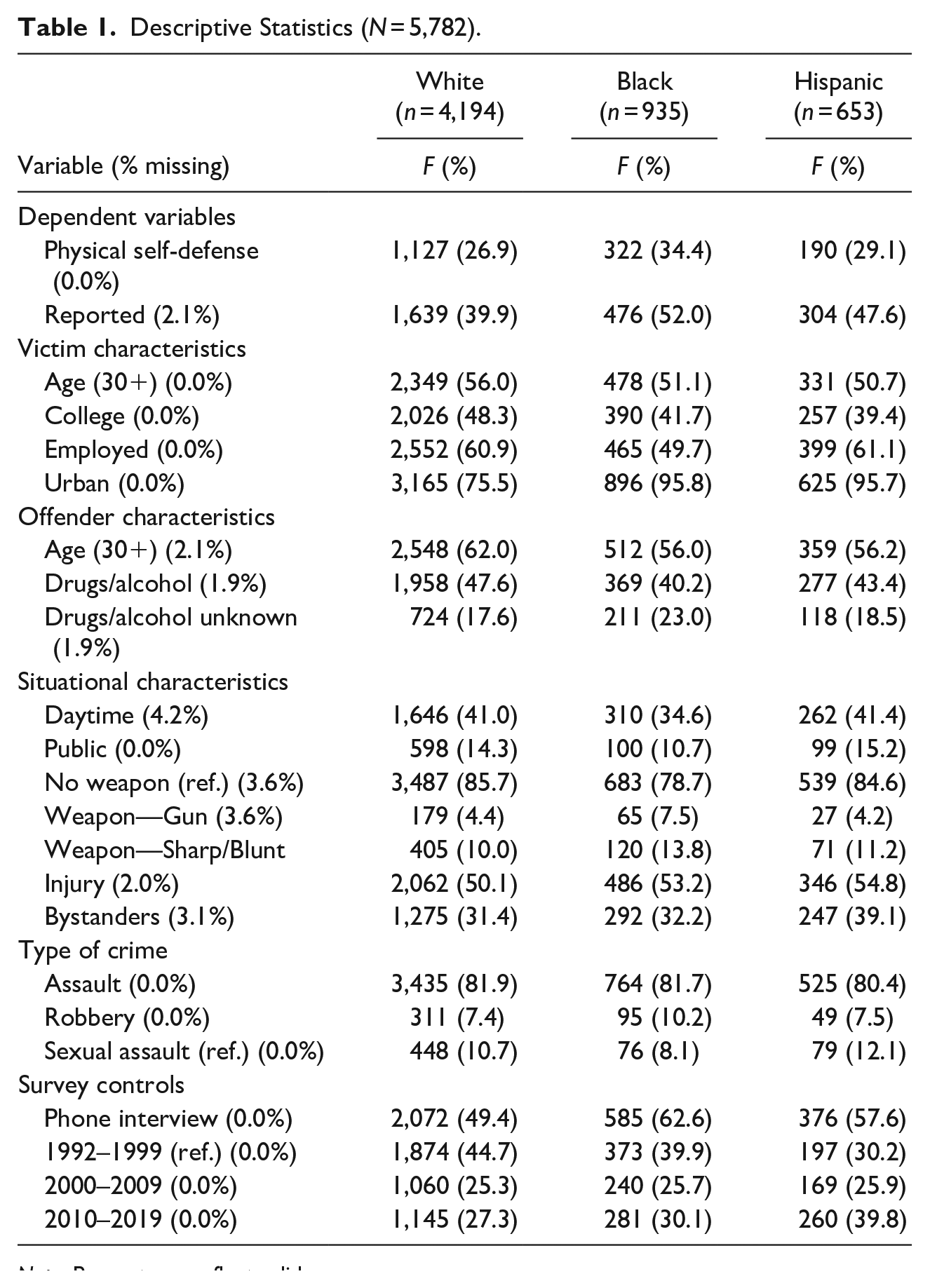
Note. Percentages reflect valid cases.
Relevant victim characteristics included age, which was measured dichotomously with a threshold of 30; whether the respondent had at least some college education; whether they were employed at the time of the incident; and whether they lived in an urban location. Offender demographics included age with a parallel operationalization to victim age, whether the offender was on drugs or alcohol at the time of the incident and whether the respondent was not sure whether the offender was on drugs or alcohol. 1 Situational characteristics included the time of day (daytime = 06:00 am – 06:00 pm vs. nighttime 06:00 pm – 06:00 am), location (public vs. private), weapon use (none, gun, blunt/sharp), physical injuries sustained by the victim, and the presence of bystanders. 2 This study also controlled for the type of IPV violent incident (assault, robbery, or sexual assault) and a number of variables relevant to the survey design including whether the interview was conducted on the phone (as opposed to in-person), and a series of indicators reflecting the decade of the survey implementation to control for temporal variation.
Analytic Strategy
Both dependent variables were dichotomous; therefore, logistic regressions were estimated. The first part of the analysis regressed physical self-defense on indicators of victim race/ethnicity as well as the relevant controls (Model 1). Of interest for the second stage of the analysis was the comparative role of physical self-defense on decisions to report incidents of IPV to the police. These models were estimated separately for White, Black, and Hispanic women and coefficients across models were compared using equality of coefficient tests (Clogg et al., 1995) when appropriate (Models 2–4).
Considering the NCVS is a survey that relies on victims’ recollection for all information surrounding victimization incidents, there was a non-trivial amount of missing data for some indicators, particularly as it relates to some situational characteristics. Table 1 also displays the frequency of missing data for each variable. To account for missing data, multiple imputation procedures were used (Allison, 2002). Values of the dependent variables were included in the imputation procedure, but regression analyses were estimated using only complete cases of the dependent variables. Using a two-stage approach to determine the total number of imputations (von Hippel, 2018), 30 imputations were included in the final analytic models which were above the number of required imputations.
One of the main functions of the NCVS is to provide information to estimate nationally representative rates of victimization. As such, the survey includes a number of survey weights that can be applied to regression analyses as well. However, their use in regression analyses has been questioned (Lohr & Liu, 1994) and their use for incident-level analyses can sometimes pose problems for analyses. For this study, the excessive number of singleton primary sampling units and missing person-level weights required substantial adjustment to models and loss of cases. Likewise, their inclusion with multiple imputation procedures precluded some postestimation techniques. In line with guidance on analyses of survey data, to the extent possible, baseline models were estimated with the available information and substantive results were the same and therefore the models presented do not employ survey weights (Solon et al., 2015).
Results
Figure 1 shows the frequency of physical self-defense and police reporting for incidents of IPV across incidents with White, Black, and Hispanic victims. As shown, 26.9% of incidents with White victims featured physical self-defense, compared to 34.4% with Black victims and 29.1% with Hispanic victims. The difference between incidents with White and Black victims was statistically significant, but the effect size was modest (X2 = 21.60, p < .001, V = .06). Likewise, the difference between Black and Hispanic victims was also significant, but with a modest effect size (X2 = 5.02, p = .025, V = .06). There was no significant difference in the use of physical self-defense in IPV incidents between White and Hispanic victims. Incidents with Black victims featured the highest frequency of reporting to the police (52.0%), followed by Hispanic victims (47.6%) and lastly White victims (39.9%). The differences between Black and White victims and Hispanic and White victims were significant (X2 = 45.12, p < .001, V = .09 and X2 = 13.72, p < .001, V = .05, respectively), but again, the effect sizes were fairly modest. There was no significant difference in the frequency of reporting incidents to the police between Black and Hispanic victims.
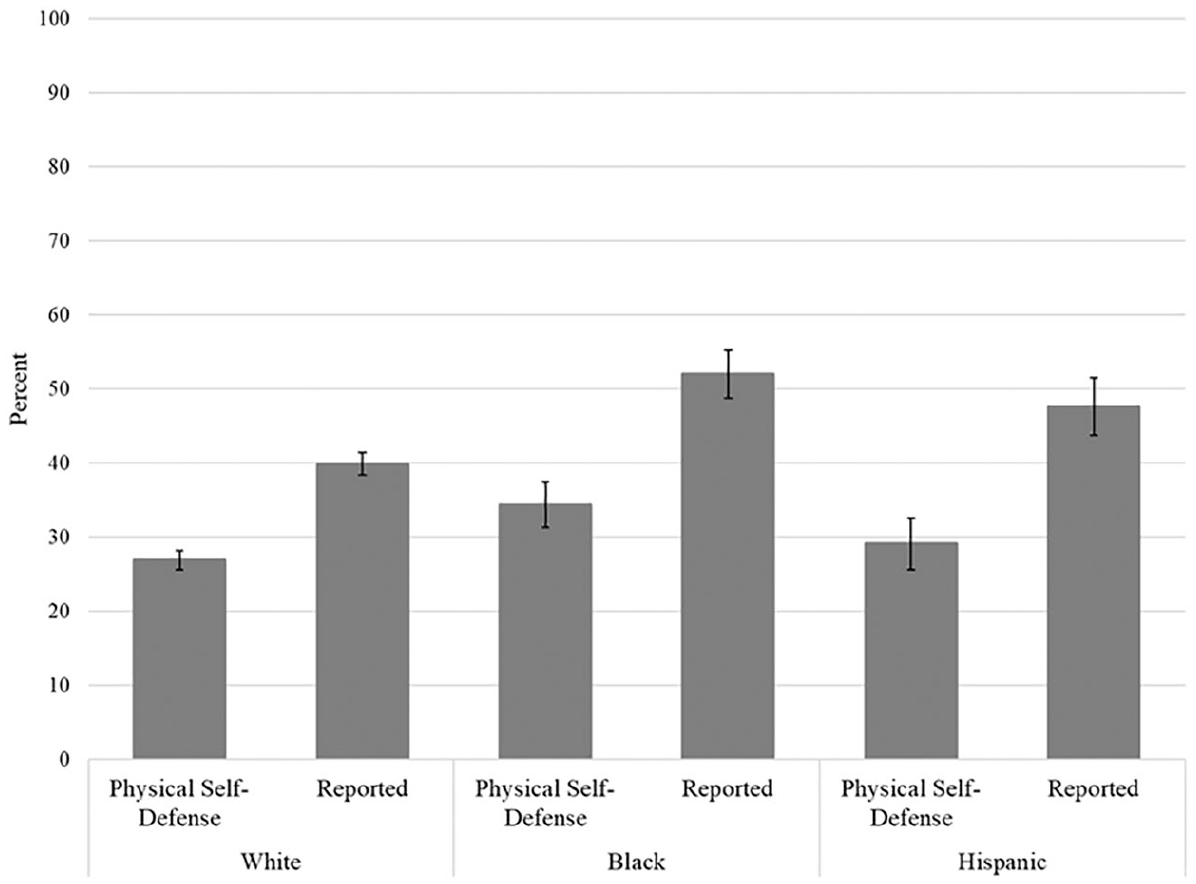
Physical self-defense and reporting to law enforcement by race/ethnicity.
Table 2 displays the results of the analysis examining the relationship between race/ethnicity and the use of physical self-defense in IPV incidents. Black women were more likely to use physical self-defense compared to their White counterparts. More specifically, the odds for incidents with Black victims was 43% higher than the odds for White women (b = .36, p < .001). There was no significant difference in physical self-defense between incidents with Hispanic and White victims.
Logistic Regression of Physical Self-Defense as a Function of Victim Race and Controls.
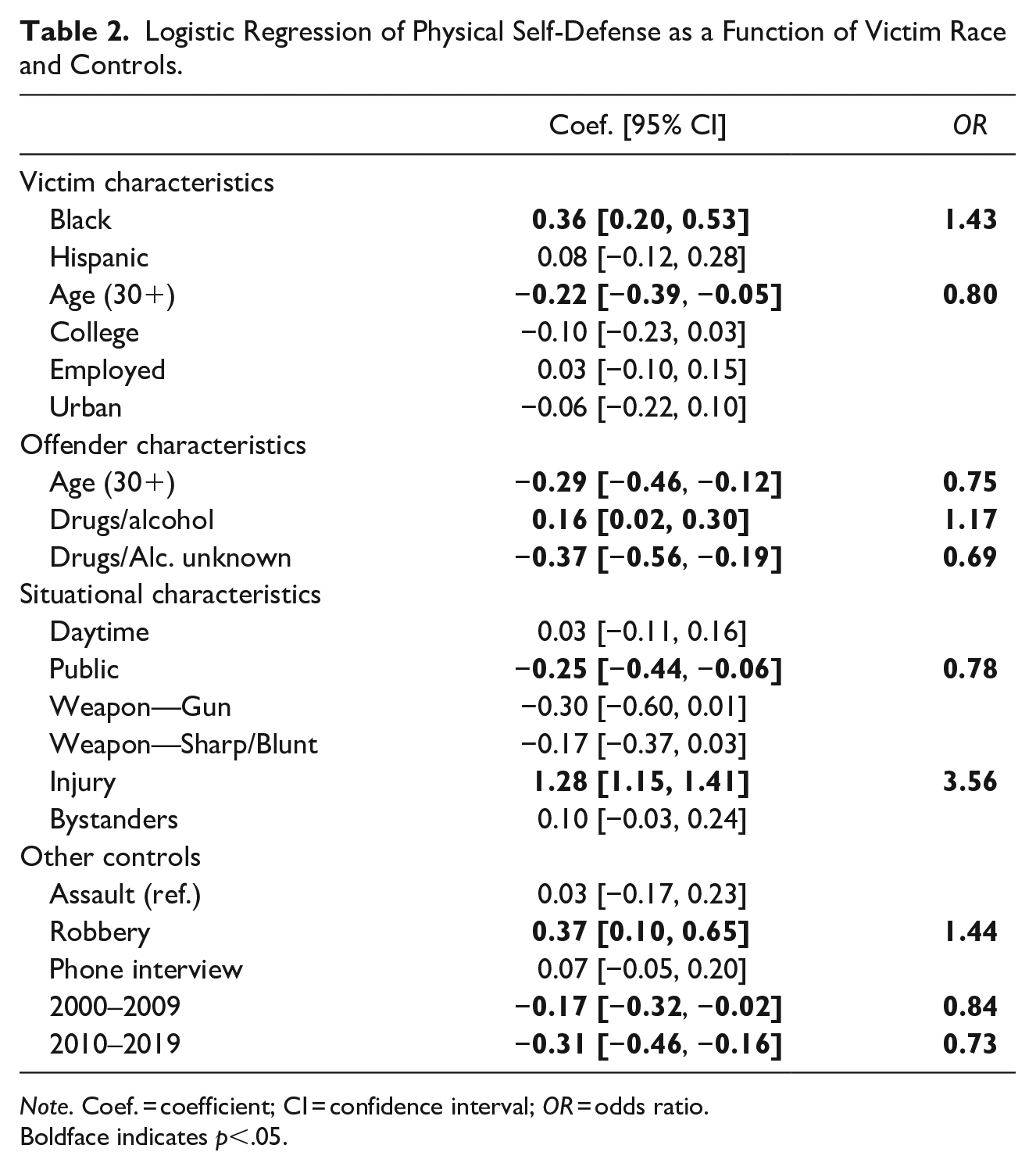
Note. Coef. = coefficient; CI = confidence interval; OR = odds ratio.
Boldface indicates p<.05.
Several control variables were also significant correlates of physical self-defense. Victim age was inversely associated with physical self-defense (OR = 0.80, p = .01). 3 Likewise, incidents in which offenders were over 30 also featured less physical resistance from victims and to a comparable magnitude as victim age (OR = 0.75, p = .001). Incidents where the offender was on drugs or drinking featured more physical self-defense (OR = 1.17, p = .03), whereas incidents in which the respondent was unsure were associated with less resistance (OR = 0.69, p < .001). With regard to situational characteristics, incidents that occurred in public were inversely associated with physical resistance (OR = 0.78, p = .009), whereas incidents in which the victim was injured were associated with substantially more physical self-defense (OR = 3.56, p < .001). 4 Compared to sexual assault, incidents of robbery were positively associated with physical self-defense (OR = 1.44, p = .008). With the earliest decade as the reference category, physical self-defense was less likely in incidents that occurred between 2000 and 2009 (OR = 0.84, p = .028) and 2010 and 2019 (OR = 0.73, p < .001).
The results for the models that examine the relationship between self-defense and police reporting, disaggregated by the victims’ race/ethnicity, are shown in Table 3. Physical self-defense was associated with a higher likelihood of reporting IPV victimization to the police for Black women. Specifically, for Black women, the odds of reporting to the police in incidents where physical self-defense was used was 48% higher than incidents without physical self-defense (b = .39, p = .01). Conversely, for Hispanic women, the odds of reporting to the police in incidents where physical self-defense was used was 54% lower than in incidents without physical self-defense (b = −.77, p < .001). The difference between these coefficients was statistically significant (z = 4.49, p < .001). For incidents involving White victims, physical self-defense was not a significant correlate of reporting the incident to the police.
Logistic Regressions of Reporting IPV Incidents to Law Enforcement by Physical Self-Defense and Controls.
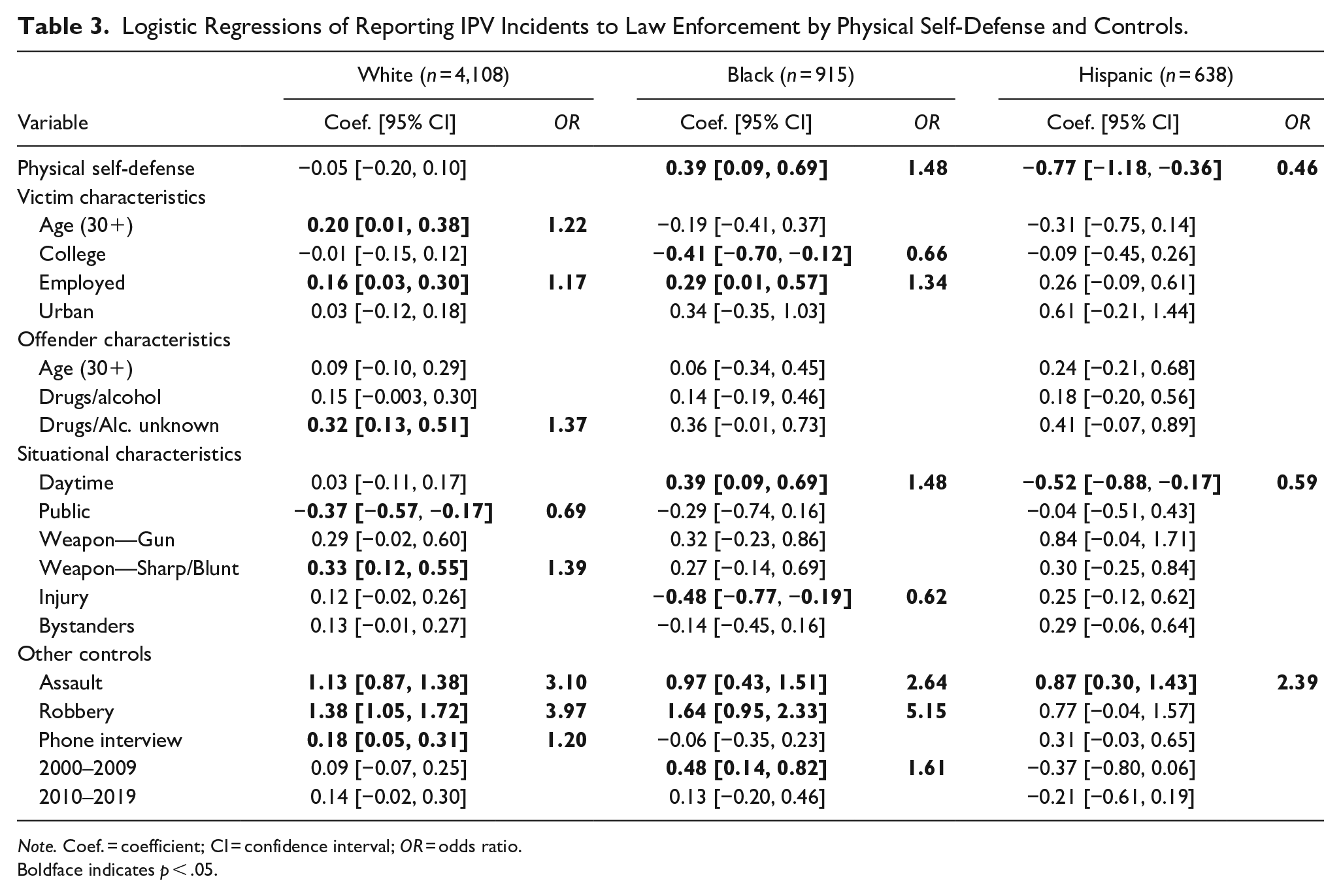
Note. Coef. = coefficient; CI = confidence interval; OR = odds ratio.
Boldface indicates p < .05.
Several control variables were significant within the race disaggregated models of formal reporting. With regard to victim demographics, in incidents involving White victims, age and employment were positively associated with police reporting (b = .20, p = .04 and b = .16, p = .02, respectively). Employment was also positively associated with reporting in incidents with Black victims (b = .29, p = .05). Although the magnitude of the effect for Black women was stronger, the coefficients were statistically comparable. In incidents involving Black victims, college education was inversely associated with police reporting (b = −.41, p = .006). For characteristics related to the offender, in incidents involving White victims where the respondent was unsure whether the offender was under the influence of alcohol/drugs, there was an increase in the likelihood of reporting to the police (b = .32, p = .001). Incidents that occurred during the day, as opposed to night, were associated with a higher likelihood of reporting among Black victims (b = .39, p = .01) and a lower likelihood of reporting for Hispanic victims (b = −.52, p = .004) and the difference between these coefficients was significant (z = 3.88, p < .001). Incidents that occurred in public were associated with a lower likelihood of police reporting by the victim, but only in incidents involving White women (b = −.37, p < .001). Incidents with White victims involving sharp/blunt weapons were positively associated with formal reporting (b = .33, p = .002) and incidents with Black women that featured injury were less likely to be reported (b = −.48, p = .001). Finally, the type of victimization was a significant factor for police reporting. Compared to sexual assault, assault was a strong predictor across all models. However, these coefficients did not differ across the models, suggesting that the effect of assault on reporting is comparable for White, Black, and Hispanic women. Robbery was associated with a higher likelihood of police reporting in incidents involving White and Black victims and the coefficients were also statistically comparable.
Discussion
Summary of Results and Directions for Future Research
Our findings are consistent with prior research which suggests that Black women are more likely to report IPV to the police (Akers & Kaukinen, 2009; Cheng & Lo, 2019; Holliday et al., 2020; Kelley et al., 2022; Lipsky et al., 2009; Lucea et al., 2013; Satyen et al., 2019). Furthermore, Black women were more likely to employ self-defense in IPV incidents and those who engaged in physical self-defense were also more likely to report IPV to the police. Black women victims of IPV may use self-defense in efforts to mitigate the severity of the attack or as a defensive mechanism (St. Vil et al., 2017). St. Vil et al. (2017) examined survival strategies among Black women IPV survivors, identifying how fighting back may become a norm in relationships, with survivors suggesting being “always prepared” to engage in defensive violence. Furthermore, Black women indicate an increased fear of homicide in incidences of IPV (Holliday et al., 2020). The current study, while examining severity through incident level measures of injury, is limited in its ability to capture the totality of severity, such as fear of injury or incident escalation. Sabri et al. (2014) found that perceived fear of an abusive partner among Black women was associated with an increased risk of lethal violence, such that Black women who reported being more fearful of a partner were more likely to be victims of homicide. Furthermore, fear of violence within a relationship leads to more harmful health effects of IPV, such as PTSD and depression (Caldwell et al., 2012). Therefore, future research should examine the relationship between self-defense and reporting within the context of violent relationships overall, and how Black women navigate violence through the use of self-defense and formal help-seeking.
In addition, the lower rates of formal reporting of IPV among White women are consistent with prior research (Akers & Kaukinen, 2009; Cheng & Lo, 2019; Kelley et al., 2022). For White women, using self-protective behaviors was not associated with the likelihood of calling the police. In line with research that suggests that White women are more likely to seek out alternative resources (e.g., victim services) (Satyen et al., 2019), it is possible that there is a relationship between self-defense and victim service usage. Prior research suggests that White women are less likely to contact police for a number of reasons, such as resource availability (Ackerman & Love, 2014), IPV-related stigma (Holliday et al., 2020), and negative police perceptions of IPV (Leisenring, 2011). Thus, future research should examine resource and service usage among survivors beyond reporting to the police, specifically in instances where victims engage in self-defense, in addition to how negative perceptions of IPV survivors may differentially impact victims by race.
Our findings also suggest that Hispanic women who fight back were less likely to call the police. This is contrary to the finding for Black women. Prior research finds that Hispanic women widely identify cultural values as barriers to help-seeking (Postmus et al., 2014). More specifically, a woman’s loyalty to her family, as well as values of masculine pride within the family, was a barrier to seeking help from one’s family and formal services such as the police (Postmus et al., 2014). Furthermore, cultural tolerance of male violence and misunderstandings of IPV are barriers to help-seeking among Hispanic IPV survivors (Rizo & Macy, 2011). Acevedo (2000) found that Mexican women admitted tolerance of abuse within their relationship due to cultural factors such as gender-role expectations, commitment within their marriage, and children’s welfare. Thus, cultural factors pertaining to the family may make Hispanic women more comfortable in engaging in self-defense rather than engaging with the police or other services. Future research should aim to disentangle the mechanism underlying the relationship between self-defense and reporting among Hispanic women, to determine whether cultural understandings of IPV impact the decision to engage in formal help-seeking.
Policy Implications
Higher rates of reporting among Black women who engage in self-defense is of concern because of the potential of dual arrest. Black women are more likely to be victims of dual arrest (Simpson et al., 2006); thus, understanding how engagement in self-defense during IPV affects arrest and participation in the criminal legal system is of important, particularly if the use of self-defense is a salient factor in the decision to engage in the criminal legal system or victim services. A more thorough understanding of mutual combatancy in relationships compared to self-defense is needed for the appropriate disposition of IPV cases and the allocation of victim services. Likewise, efforts should be made to increase access to victim services for Black women, beyond those that are reliant on police reporting, through removing both tangible and perceptual barriers to service utilization. Research suggests that barriers in services exist for Black women at a number of levels, including service access and use. Barriers such as not knowing where to go, issues with transportation, and negative or ineffective prior experiences contribute to lower rates of service utilization among Black women (Sabri et al., 2015).
Efforts to increase access to services are also relevant to Hispanic survivors of IPV as those women who are using self-defense within incidents are less likely to turn to the criminal legal system and may be escalating the violence over time. Fanslow et al. (2015) suggest that among women who fight-back in efforts to mitigate IPV, 38% indicated that the severity of violence experienced within their relationships became worse. In addition, anti-carceral strategies which recognize cultural differences and strengthen informal help-seeking services may also be beneficial within Hispanic communities. These strategies may cater to cultures which often value family and do not include more formal services such as police, because services may be integrated in the community.
Limitations
This study contributes to the literature on IPV generally, and in particularly understanding how race contextualizes the decisions and behaviors of victims. However, there are some limitations that provide additional avenues for future research. Our study does not recognize heterogeneity in violence, such as Johnson’s (2010) typology of IPV which acknowledges that there are multiple ways in which relationship violence can present itself with different underlying motivations and concerns of power and control. It is possible that these relationships manifest themselves differently in relationships that are characterized as intimate partner terrorism compared to situational couple violence. This is particularly relevant because the type of IPV may impact the decision to engage in self-defense and the choice to report. While the NCVS provides a wealth of information on violent incidents, it is designed to apply to a wide range of incidents and therefore does not include nuanced information that pertains specifically to IPV. Future research should pursue disentangling these relationships with survey instruments that are designed to capture the complex nature of IPV.
The current study was unable to reflect the heterogeneity of the Hispanic population; understanding cultural differences within Hispanic women is important in understanding IPV response. As cultural tolerance and understandings of IPV may differ based on the Hispanic population, different barriers to resource access may become apparent.
Lastly, we do not examine the relationship between self-defense and reporting for the LGBTQ+ community. Same-sex and opposite-sex victims of IPV experience similar poor health outcomes (Blosnich & Bossarte, 2009), yet same-sex victims are less likely to report victimization (Liang et al., 2005). Furthermore, transgender Black women are disproportionately at risk for violence and incarceration (Reisner et al., 2014), thus are of particular importance when examining IPV and dual arrest outcomes. A need for a truly intersectional lens for examining IPV and the relationship between fighting back and reporting is required to better understand the nuanced experiences of survivors.
Conclusion
The current study aimed to examine the relationship between fighting back in instances of IPV and reporting to the police. Furthermore, our study contributes to the literature by disaggregating these relationships across race and comparing the effects for White, Black, and Hispanic women victims. We find important racial differences in the use of physical resistance within IPV incidents and the association between self-defense and willingness to engage with the criminal legal system. These results have important implications for understanding how race contextualizes the experience of IPV for women, including within incident dynamics and post-incident support. Future research should continue to explicitly compare across demographic characteristics to develop a more thorough understanding of IPV for marginalized populations. Furthermore, policy should consider how race is associated with victim agency and be responsive to ensure that agency does not perpetuate racial disparities in the criminal legal system or victim services.
Footnotes
Declaration of Conflicting Interests
The authors declared no potential conflicts of interest with respect to the research, authorship, and/or publication of this article.
Funding
The authors received no financial support for the research, authorship, and/or publication of this article.
