







Abstract
Aggressive behavior is considered one of the indicators of maladjustment and increases during the transition to college. Previous studies have demonstrated that having identity fusion with particular social groups significantly predicts college adjustment among freshmen. However, the relationship between identity fusion and aggressive behavior in college freshmen has rarely been studied. Thus, guided by the frustration-aggression theory, this study aimed to explore the association between identity fusion with class and aggressive behavior among Chinese college freshmen and examine the potential mediating roles of depressive mood and sleep quality. A cross-sectional survey study was carried out among 1,037 Chinese college freshmen (Mage = 19.56, SD = 1.068, 29.12% males). Class identity fusion, depressive mood, sleep quality, and aggressive behavior were measured via four self-reported questionnaires. Structural equation modeling was used to test the mediation model. Analyses showed that identity fusion was negatively related to depressive mood and aggressive behavior and positively correlated with sleep quality. The results also revealed that the direct effect of identity fusion on aggressive behavior was significant, and identity fusion can indirectly affect aggressive behavior not only through the mediation effect of depressive mood but also through the chain mediation effect of depressive mood and sleep quality. Moreover, the mediating effect of depressive mood varied by gender. These findings suggest that strategies that help freshmen promote identity fusion and those that alleviate depressive mood and sleep problem may help reduce aggressive behavior.
Introduction
Aggressive behavior is considered to play an important role in individuals’ psychological, emotional, and social adaption (Ostrov et al., 2019; van den Berg et al., 2019). In the college stage, the forms of aggression are more diverse, such as physical aggression, relationship aggression, cyber aggression, and intimate partner aggression (Marganski & Melander, 2018; Thomas, 2019). In addition, several studies have revealed that aggressive behavior increases during the first year of college (Hu et al., 2022; Swartout et al., 2015). Hu et al. (2022) found that physical aggression showed an increased linear trajectory across the first 4 months of college. Swartout et al. (2015) also found that sexually aggressive behavior was highest in the first year of college and decreased in subsequent years. Given the increasing frequency and the harmful impacts of aggressive behavior, studies analyzing aggression-related factors in freshmen are much needed.
Although considerable research has demonstrated that group factors, such as identity fusion, play important roles in predicting individuals’ aggressive behavior (Buhrmester et al., 2018; Swann et al., 2010), the bulk of the research has only investigated the relationship between identity fusion and out-group aggression (i.e., aggression against out-group members when their group is threatened), and relatively few studies have focused on the effect of identity fusion on individual daily aggression, with even fewer targeted specifically toward college freshmen. The first year of college is a critical transition period in which students integrate into new social environments and subsequently develop identity fusion with multiple new social groups. In addition, studies have shown that sociocultural and contextual factors, such as collectivism and individualism, influence individuals’ perceptions of the relationship between the individual and the collective (Zhang & Kulich, 2022). However, the extent of research on identity fusion is mainly restricted to the West’s individualistic culture and little is known about the impact of identity fusion on individuals’ physical and mental health within an Eastern collectivist culture. Furthermore, since identity fusion can not only directly affect personal performance and well-being but also indirectly through the behaviors it promotes (Swann & Talaifar, 2018), it is necessary to explore the underlying mechanism of the link between identity fusion and aggression. Therefore, the present research aims to investigate the mechanism underlying the effect of identity fusion on individuals’ aggressive behavior among Chinese freshmen.
Relationship Between Identity Fusion and Aggressive Behavior
When entering the university, a major challenge for freshmen is to integrate into multiple new groups, and class is one of the most critical groups for freshmen. Identity fusion, which refers to a visceral feeling of “oneness” with the group and group members (Swann et al., 2009), has been proven to play an important role in shaping and maintaining new groups (Swann et al., 2012). A longitudinal study in America has shown that identity fusion can be a positive factor that assists freshmen in successfully adapting to their college life. Specifically, high identity fusion is concurrently and longitudinally correlated with a stronger sense of belonging, more perceived social support, higher mental well-being, and less loneliness (Kiang et al., 2021). In contrast, individuals with low identity fusion may put themselves at a higher risk of maladaptation to university life, which, in turn, leads to more aggressive behavior (Larose et al., 2019).
The frustration-aggression theory provides the theoretical foundation for the relationship between identity fusion and aggression, which suggests that feelings of frustration, which occurred when efforts to reach a desired goal are thwarted, evoke negative affect and anger and, therefore, can lead to aggression (Berkowitz, 1989). According to this theory, aggression appears when the self-expansion of the individual is frustrated. The processing of fostering identity fusion is closely interconnected to self-expansion, which refers to a motivation to increase one’s self-concept through engaging in novel, exciting, and interesting activities or by taking on one’s partner’s qualities (Besta et al., 2018). In this case, freshmen with low identity fusion may feel frustrated, finally leading to increased aggressive behavior.
The Mediating Role of Depressive Mood
College freshmen are confronted with multiple stressors including new peer networks, financial concerns, and decision-making responsibilities, which may lead to an increased risk of depression (Leipold et al., 2019). According to a study on a large cohort of Chinese freshmen, approximately 65.55% of first-year students have experienced depression (Lu et al., 2015). Recent research has revealed that having identity fusion with particular groups can increase individuals’ psychological well-being (Kiang et al., 2021). A study based on a large community sample in the US and Canada supported that identity fusion is a strong positive predictor of life satisfaction (Grinde et al., 2018). Individuals with high life satisfaction are less likely to develop depressive moods. Therefore, identity fusion may be positively correlated with depressive mood. Moreover, empirical studies have verified the influence of depression on individuals’ aggressive behavior (Melhem et al., 2019; Rothenberg et al., 2019). In a depressive state, individuals exhibit altitude sensitivity, increased impulsivity, and decreased ability of self-control, which ultimately lead to aggressive and violent behavior (Dutton & Karakanta, 2013).
Thus, in this context, the depressive mood may play a mediating role between identity fusion and aggressive behavior. Individuals with high identity fusion have a low level of depressive mood and, in turn, high levels of aggressive behavior.
The Mediating Role of Sleep Quality
Results from a meta-analysis showed that sleep problem was the severest mental health problem among Chinese college students from 2010 to 2020, with a prevalence of 23.5% (Chen et al., 2022). Although there is limited research investigating the close relationship between identity fusion and sleep quality, some explanations concerning this relationship have been offered in other aspects. Previous research has shown that identity fusion fosters a perception of kinship (Newson et al., 2018), which also provides a sense of belonging. Further, according to Maslow’s need hierarchy theory, having the feeling of belongingness with a particular group or group members is one of the basic human needs (McLeod, 2007). When basic needs are restricted, it will inevitably produce a bad psychological state and in which case, poor sleep quality follows (John-Henderson et al., 2019). Thus, identity fusion may negatively predict sleep quality. From the affective perspective, low sleep quality increased the propensity toward anger and irritation (Kamphuis & Lancel, 2015). In addition, from the cognitive perspective, sleep problems increased negative interpretations of others’ behavior, which further increased aggressive behavior (Tsuchiyama et al., 2013). In this context, sleep quality may play a mediating role in the relationship between identity fusion and aggressive behavior.
The Chain Mediating Effect of Depressive Mood and Sleep Quality
Depression and sleep quality are tightly intertwined (Tsuno et al., 2005). The broaden-and-build theory emphasizes the importance of emotion for the construction of mental and physical resources, which suggests that experiences of positive emotions can broaden thought-action repertoire and facilitate the use of individuals’ mental and physical resources; however, negative emotions hinder the construction of mental and physical resources (Fredrickson, 2004). According to this theory, depressive mood, as a negative emotion, can have a negative impact on sleep quality, which has been considered an important aspect of physical health. Empirical research has also demonstrated the adverse effect of depressive mood on sleep quality (Raniti et al., 2017). For example, results of a cross-sectional study of over 3,000 Chinese adolescents indicated students who had depressive symptoms were 2.47 times more likely to suffer from sleep disturbance than those who did not (Guo et al., 2014). Therefore, the present study assumes that depressive mood predicts sleep quality, which, in turn, predicts aggressive behavior. Thus, depressive mood and sleep quality may serve as chain mediators in the relationship between identity fusion and aggressive behavior.
The Current Study
This study aims to constitute a chain mediation model to test the mechanisms underlying the associations between identity fusion and aggressive behavior in college freshmen. Since previous research suggests that both family socioeconomic status (SES) and parents’ marital status have significant effects on aggressive behavior (Andrew & Segun, 2019; Greitemeyer & Sagioglou, 2018), we included these two variables as control variables in our hypothesized model. Moreover, previous studies have demonstrated that there are significant gender differences (Björkqvist, 2018; Fatima et al., 2016) and regional differences (Friborg et al., 2012; Tang et al., 2017) in aggression, depression, and sleep quality. Therefore, gender and regional differences were examined in the mediation model. Based on the above literature review, we hypothesized that after controlling for SES and parents’ marriage status:
H1: Class identity fusion would be negatively associated with depressive mood and aggressive behavior, while it would be positively associated with students’ sleep quality;
H2: Identity fusion would exert a significant indirect effect on aggressive behavior through the three-path mediation effect of depressive mood and sleep quality. A detailed model of the hypothesized mediating role of depressive mood and sleep quality in the relationship between class identity fusion and aggressive behavior is presented in Figure 1.
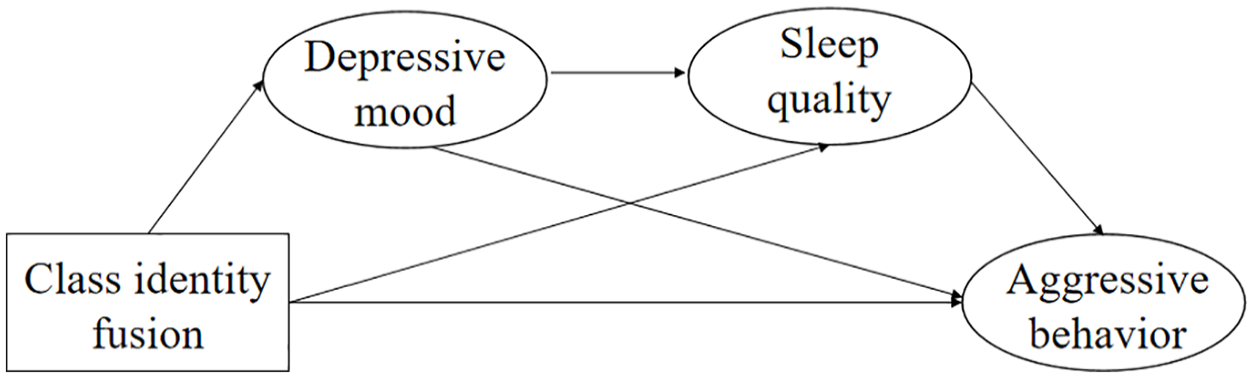
Model of hypothesized mediating roles of depressive mood and sleep quality in the relationship between class identity fusion and aggressive behavior.
Method
Participants and Procedure
Participants included 1,144 Chinese college freshmen recruited from a normal university via cluster sampling with classes within schools as the primary sampling unit. Exclusion criteria were: (1) not answering the two lie detection items correctly; (2) The time took to fill out the questionnaire was too short ( < 1.5 s / item); (3) More than half of all items of questionnaires were filled with the same answer continuously. Finally, a total of 1,037 students (with a response rate of 90.65%) were included in the survey. All the participants were aged between 16 and 23 (M = 19.56 ± 1.068 years). Among them, 302 (29.12%) were male and 735 (70.88%) were female. The distribution of majors was balanced, with arts representing 45.8% and sciences representing 54.2% of the sample population.
A cross-sectional online questionnaire comprising questions designed to assess the relationship between identity fusion, depressive mood, sleep quality, and aggressive behavior. Prior to testing, all the participants gave their informed consent after being fully informed about the study. Participants were given a link to open an online consent form that described their rights as participants. Only if they agreed to participate did the online survey appear. For those who refuse to participate, the survey is concluded. For all others, the survey began with items regarding demographics (e.g., age), followed by questions on identity fusion, sleep quality, depressive mood, aggressive behavior, and two randomly inserted lie detection items. This study conformed to the principles of the Declaration of Helsinki (World Medical Association, 2013) and was approved by our university academic ethics committee.
Measures
Identity Fusion
To assess the degree of identity fusion, we used a 5-point pictorial scale (see Figure 2), in which participants selected from among five pictures the one that best represented their relationship with their class (Swann et al., 2009). In this scale, five pictures of two circles are shown, as the smaller circle representing the “Self” and the larger circle representing the “Group.” The images illustrate different degrees of overlap between these circles (0%, 25%, 50%, 75%, and 100%) and are coded from 1 to 5. Participants indicate which image best characterizes the way in which they perceive their relationship with the class. The greater overlap depicted at higher scores. This measure has been used in multiple previous studies and has proven to be valid and reliable (Páez et al., 2015; Zumeta et al., 2016).
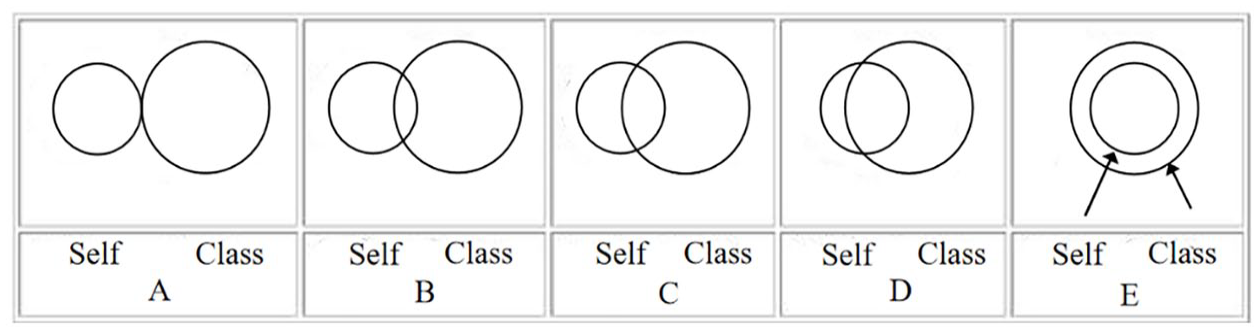
The pictographic identity fusion scale (adapted from Swann et al. 2009).
Depressive Mood
Depressive mood was evaluated by the Center for Epidemiologic Studies Depression Scale (CES-D) (Radloff, 1991). This scale consists of 20 items which was designed to measure depressive symptomatology in the general population in the past week. The scale was answered using a 4-point Likert-type scale from 0 (<1 day per week) to 3 (5–7 days per week). After correcting four reverse-scored items, all the scores are summed to generate a total score (range 0–40). The higher scores indicate depressive symptoms of greater severity. This scale has demonstrated good reliability and validity in Chinese college students (Jiang et al., 2019). The internal consistency for the present study, estimated by Cronbach’s alpha, was 0.86.
Sleep Quality
Sleep quality was assessed with the Chinese version of the Pittsburgh Sleep Quality Index (PSQI), which has been proven to have good reliability and validity to assess the sleep quality of Chinese college students (Guo et al., 2016). The PSQI contains 19 items that assess the seven areas of sleep quality: (a) subjective sleep quality; (b) sleep latency; (c) sleep duration; (d) habitual sleep efficiency; (e) sleep disturbance; (f) used sleep medication; and (g) daytime dysfunction. The seven areas based on a 0–3 Likert scale and the sum of scores ranged from 0 to 21, with higher scores denoting poorer sleep quality (thus labeled as sleep problems in the results section). In this study, the Cronbach’s α coefficient was 0.78. Similar values were found in other research with non-clinical Chinese samples (Qiu et al., 2022).
Aggressive Behavior
Aggressive behavior in this study was measured by the Chinese revision of the Buss-Perry aggression questionnaire (Buss & Perry, 1992). It is a brief aggression screening questionnaire consisting of 25 items. The items are classified into four sub-scales including physical aggression, verbal aggression, anger, and hostility. Each item is scored on 5-point scale from 1 (not true) to 5 (certainly true), and all are summed to generate a total aggression score that represents participants’ overall aggressive behaviors. A higher score reflected higher levels of aggression. The scale has been used widely with Chinese university students and demonstrated excellent reliability and validity (Yu et al., 2022). In the present study, the internal consistencies of the physical aggression, verbal aggression, anger, and hostility subscales were 0.75, 0.71, 0.83, and 0.79, respectively. The Cronbach’s alpha for the total scale was 0.90.
Demographic Measures
Demographic variables included in the present analysis were gender, residential area, parental marital status and SES, and all of them were self-reported by participants. Gender was coded as 0 = female, 1 = male; residential area as 0 = urban, 1 = rural; and parental marital status as 0 = married, 1 = divorced or widowed. For SES, we collected household income, parents’ education, and parents’ occupations. A principal components analysis was performed, with SES computed using the following formula: SES = (β1 × Z income + β2 × Z education + β3 × Z occupation)/εf, where β1–3 are the factor loadings and εf is the eigenvalue for the first factor (Wu et al., 2015). In the current study, the participants’ SES range was −2.34 to 2.81.
Statistical Analysis
First, the Harman’s single-factor test was used to test the common method deviation caused by the questionnaire survey. Second, preliminary analysis including means, standard deviations, bivariate correlations, as well as the gender and residential area differences for the main variables were conducted in SPSS 26.0. Then, structural equation modeling, consisting of a measurement model and a structural model, was conducted using Mplus 8.0 to test the proposed multiple mediation model. Considering the possible multivariate non-normality in the measures, the maximum likelihood χ² estimator with adjusted means and variances (MLMV) estimator was used. The MLMV estimator provides Chi-square values and estimates with standard errors that are robust to non-normality. Missing data were handled with listwise deletion. To control for possible inflated measurement errors resulting from the use of multiple items to examine the latent variable, we adapted methods from Matsunaga (2008) and created three separate item parcels for the depressive mood. The number of items in each parcel was roughly equal. At last, multigroup analysis was used to further examine potential gender and residence differences in the tested mediation model. The Wald test of parameter constraints was used to test gender and place of residence differences in each path in the mediation model.
The comparative fit index (CFI), the Tucker–Lewis index (TLI), the root-mean-square error of approximation (RMSEA), and the standardized root-mean-square residual (SRMR) indices were used to evaluate the model fit. The following values indicated good model fit: > 0.90 for the CFI and TLI, < 0.06 for the RMSEA, and < 0.08 for the SRMR (Hu & Bentler, 1999).
Results
Common Method Bias
In order to assess the extent of common method variance, Harman’s single-factor test was performed before data analysis (Harman, 1976). All the items used in the analysis were integrated for exploratory factor analysis. The results showed that there were 11 factors with characteristic roots > 1, and 19.36% (< 40%) of the total variation was explained by the first factor. Therefore, no common method bias was observed in this study.
Descriptive Statistics of Variables
Table 1 summarizes the means and standard deviations and the gender and residential area differences for the main variables of interest. The multivariate analysis of variance results shows significant gender differences in class identity fusion, depressive mood, and sleep problem. No significant differences are found according to residential area.
The Means and Standard Deviations, and Gender and Residential Area Differences in Class Identity Fusion, Depressive Mood, Sleep Problem, and Aggressive Behavior.
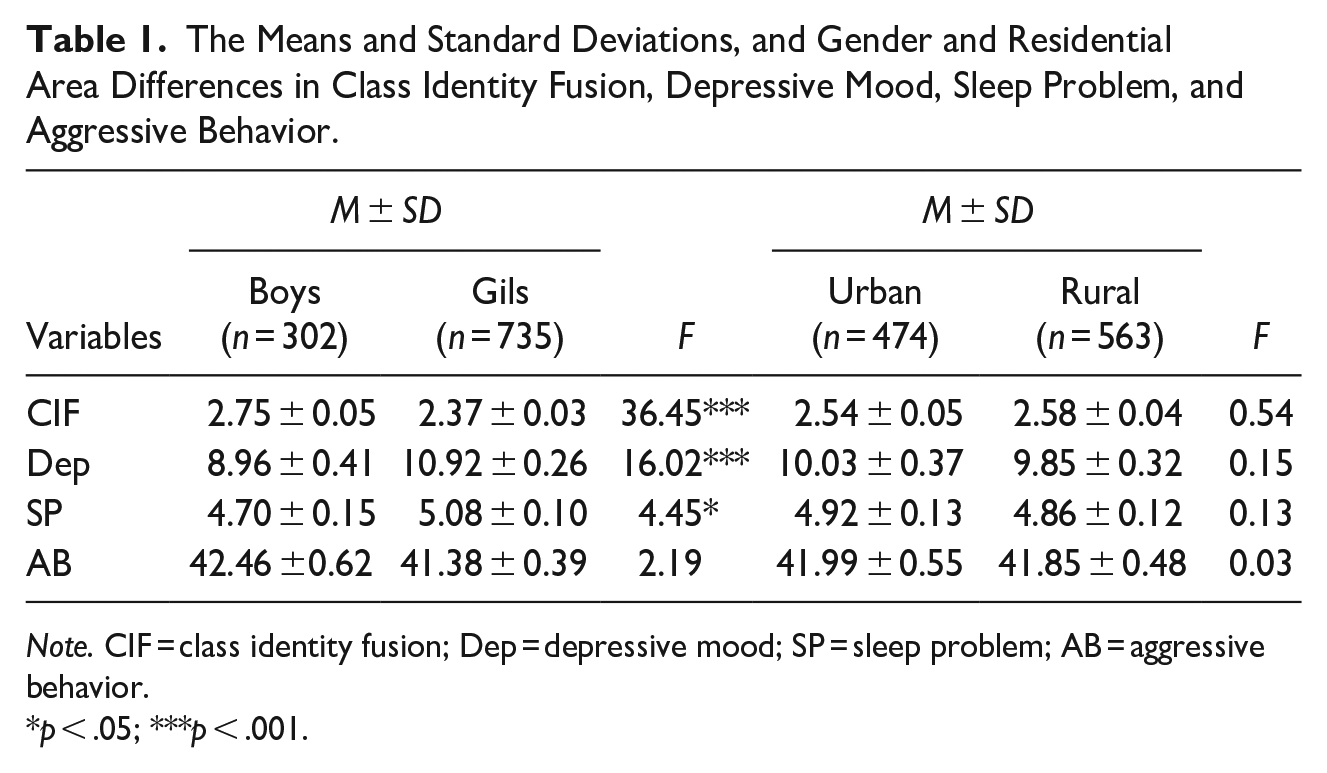
Note. CIF = class identity fusion; Dep = depressive mood; SP = sleep problem; AB = aggressive behavior.
p < .05; ***p < .001.
Table 2 shows the means, standard deviations, and correlations of study variables. Class identity fusion was negatively related to depressive mood, sleep problem, and aggressive behavior, while depressive mood, sleep problem, and aggressive behavior were positively correlated with each other. Although in our study, SES is not correlated with other variables and aggressive behavior is not differed significantly according to parental marital status, t(1,037) = 0.50, p > .05, SES and parental marital status have been proved to have significant effect on aggressive behavior (Andrew & Segun, 2019; Greitemeyer & Sagioglou, 2018). Thus, they were controlled for in the subsequent analysis.
Descriptive Statistics and Bivariate Correlations Between Class Identity Fusion, Depressive Mood, Sleep Problem, SES, and Aggressive Behavior.
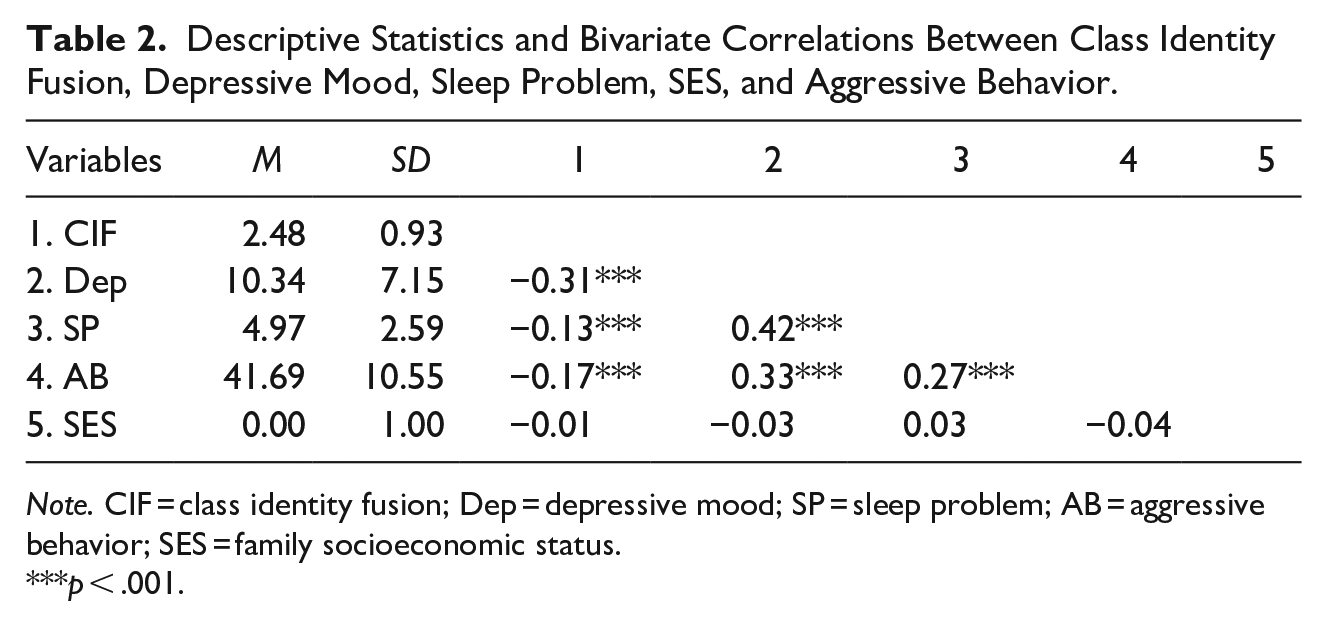
Note. CIF = class identity fusion; Dep = depressive mood; SP = sleep problem; AB = aggressive behavior; SES = family socioeconomic status.
***p < .001.
Measurement Model
Confirmatory factor analysis was conducted to test the measurement model comprising the three interrelated latent variables: depressive mood, sleep problems, and aggressive behaviors. The results of the measurement model revealed a good model fit to the data: χ2(73) = 296.78, p < .001, RMSEA = 0.054 (90% CI [0.048, 0.061]), CFI = 0.946, TLI = 0.932, and SRMR = 0.048. All factor loadings on latent variables were significant (p < .001), indicating that all latent variables were well represented by their respective indicators.
Structural Equation Modeling
The parameter estimates of the model are presented in Figure 3. Results showed a good data fit, χ2(106) = 401.146, p < .001, χ2/df = 3.78, RMSEA = 0.052 (90% CI [0.046, 0.057]), CFI = 0.939, TLI = 0.924, and SRMR = 0.045. As presented in Table 3, after controlling for SES and parental marital status, higher class identity fusion directly predicts lower aggressive behavior (β = −0.086, SE = 0.031, p < .001, 95% CI [−0.151, −0.028]). Tests of the indirect effects indicated that depressive mood and sleep problems partially mediated the relationship between class identity fusion and aggressive behavior (β = −0.122, SE = 0.019, p < .001, 95% CI [−0.164, −0.087]). Meanwhile, when indirect paths were examined separately, two indirect paths were significant: class identity fusion→depressive mood→aggressive behavior (β = −0.061, SE = 0.019, p = .001, 95% CI [−0.101, −0.028]) and class identity fusion→depressive mood→sleep problem→aggressive behavior (β = −0.055, SE = 0.012, p < .001, 95% CI [−0.082, −0.034]).
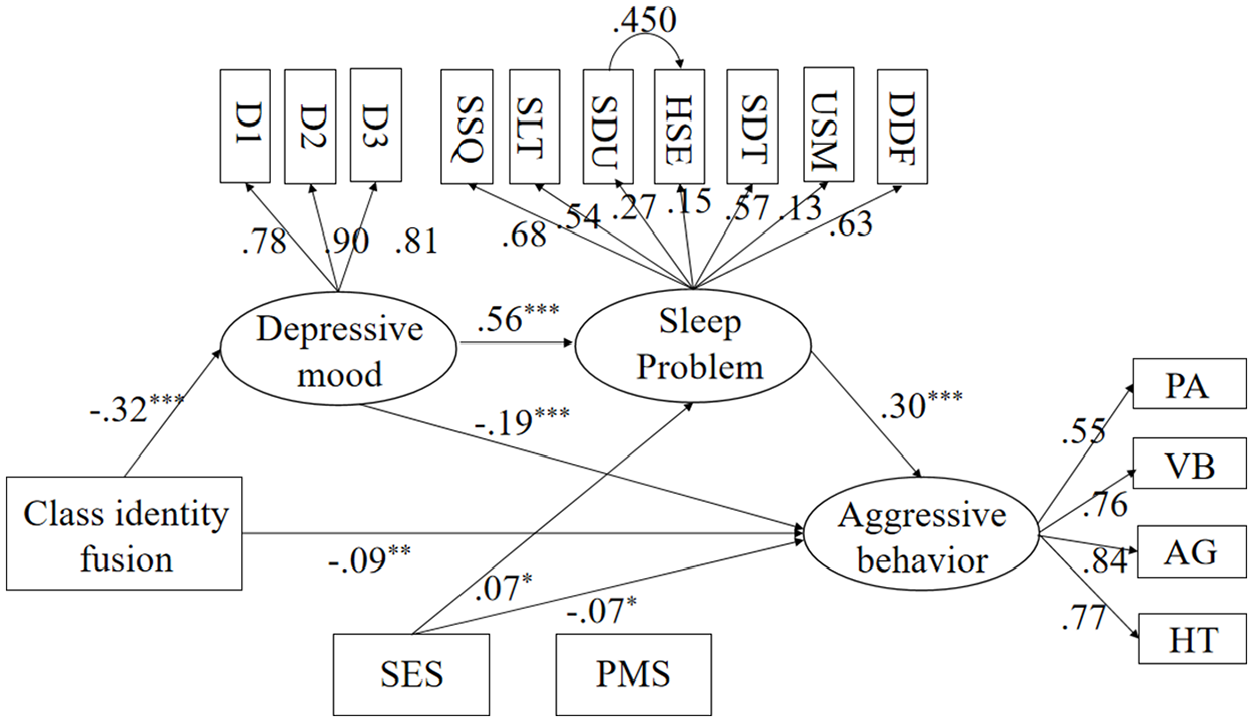
Standardized parameter estimates of the final model.
Standardized Indirect Effects of Class Identity Fusion on Aggressive Behavior.
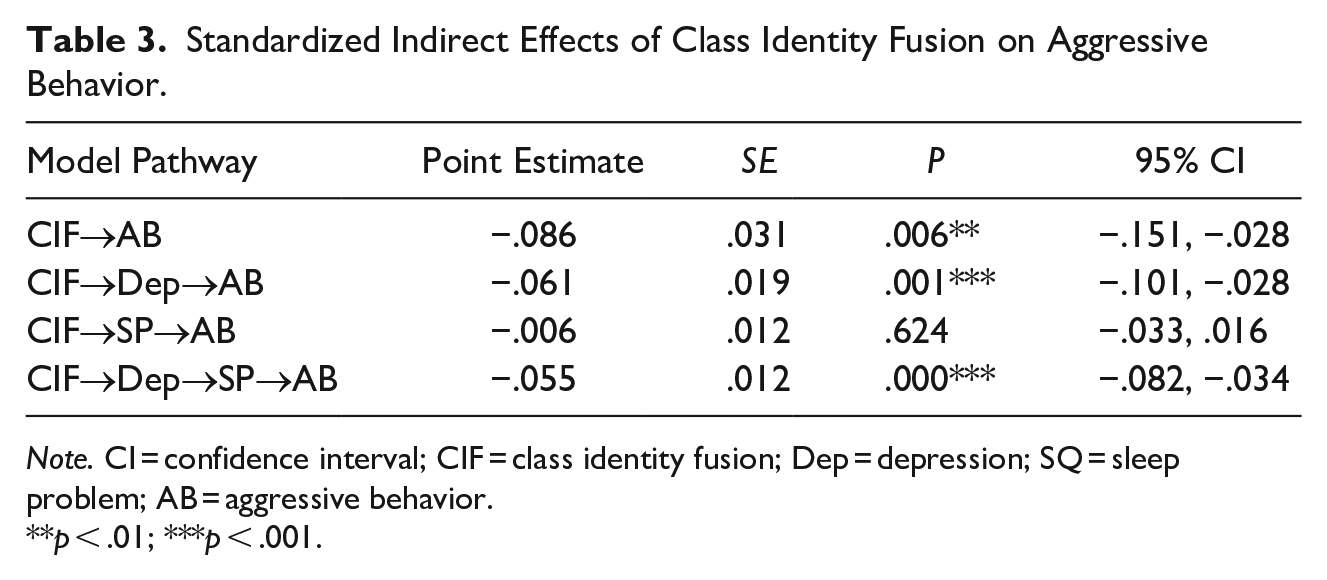
Note. CI = confidence interval; CIF = class identity fusion; Dep = depression; SQ = sleep problem; AB = aggressive behavior.
p < .01; ***p < .001.
Finally, we used the “Model Constraint” commands to set auxiliary variables and limit the corresponding parameters to be equal to further examine the residential area (urban and rural) and gender (male and female) difference in the mediation model. The results also showed a good fit for the residential area difference model: χ²(234) = 408.434 (p < .001), χ²/df = 1.75, CFI = 0.934, TLI = 0.925, RMSEA = 0.038 (90% CI [0.032, 0.044]), SRMR = 0.051. The results showed that the direct effect of class identity fusion on aggressive behavior (Wald χ²[1] = 0.822, p = .36) and the mediating effect of depressive mood and sleep problem (Wald χ²[3] = 1.930, p = .59) had cross residential area stability.
The results showed an acceptable fit for the gender difference model: χ²(234) = 478.403 (p < .001), χ²/df = 2.04, CFI = 0.901, TLI = 0.887, RMSEA = 0.045 (90% CI [0.039, 0.051]), SRMR = 0.059. The direct effect of class identity fusion on aggressive behavior had transgender stability (Wald χ2[1] = 0.316, p = .5741). Notably, the mediating effect of depressive mood and sleep problem exhibited a significant difference between males and females (Wald χ²[3] = 12.827, p = .005). The mediating effect of depressive mood on the relationship between class identity fusion and aggressive behavior was only significant in females (β = −0.168, SE = 0.043, p < .001), but not in males (β = −0.024, SE = 0.026, p = .359).
Discussion
The current study investigated the underlying mechanisms for the link between identity fusion and aggression by examining their interrelationships with depressive mood and sleep quality after controlling family SES and parental marital status. We sought to overcome the limitations of previous research in this field by: (1) investigating the effect of identity fusion on freshmen’s daily aggression, (2) exploring the underlying mechanism of the link between freshmen’s identity fusion and aggression, and (3) focusing on the impact of identity fusion on individuals’ physical and mental health within an Eastern collectivist culture. This study expanded our understanding of the underlying relationship between freshmen class identity fusion and daily aggression via different pathways.
The Relationship Between Identity Fusion and Aggressive Behavior
The finding that higher class identity fusion directly predicts lower aggressive behavior is not in line with previous research (Buhrmester et al., 2018; Swann et al., 2010), but conformed to our expectation. The reason for the inconsistency between our results and those of others could be the different definitions of aggressive behavior. Previous research showed that strong fusion leads to greater out-group aggression when individuals group is threatened (Buhrmester et al., 2018). However, in our study, we mainly focus on college freshmen overall daily aggressive behaviors. The results supported the frustration-aggression theory, where freshmen with low class identity fusion feel frustrated with self-expansion and therefore increase aggressive behavior (Berkowitz, 1989). In addition, Empirical research also indicates that group members with high levels of identity fusion are adept at active coping (Walsh & Neff, 2018). Freshmen who perceived greater fusion with their class may enact more constructive coping responses when facing relationship conflict and therefore decrease aggressive behaviors. Thus, freshmen who perceived more identity fusion with their class exhibited lower levels of aggressive behavior.
The Mediating Effect of Depressive Mood and Sleep Quality
This study found that depressive mood plays a mediating role between class identity fusion and aggression. This is consistent with previous studies on the effect of class identity fusion on individuals’ well-being (Kiang et al., 2021), and well-being negatively affects aggressive behavior (Dutton & Karakanta, 2013). Identity fusion was regarded as a result of the emotional synchrony engendered via a regular shared activity, while college students with high shared in-group membership can feel more intragroup trust and social support (De Dreu et al., 2020; Howard & Magee, 2013), which have protective effects on individuals’ mental health and, therefore, reduces the risk of depression (Grey et al., 2020). Furthermore, according to the acting-out model, underlying depressive feelings are likely to act out as aggressive behavior to express individuals’ distress (Carlson & Cantwell, 1980). Therefore, freshmen with high class identity fusion experienced lower levels of depressive mood and finally act out as less aggressive behavior.
The findings further revealed that depressive mood and sleep quality play a chain mediating role in the path of identity fusion affecting college freshman’s aggressive behavior. Consistent with previous research, sleep quality plays a mediating role in the relationship between depressive mood and aggression (Freitag et al., 2017). The finding that depressive mood predicts decreased sleep quality supported the broaden-and-build theory, which proposes that negative emotion impairs the availability of physical resources (Fredrickson, 2004). A systematic review has also demonstrated that sleep quality was strongly associated with depression among college students (Çelik et al., 2019). Concerning the finding that sleep quality negatively predicts aggressive behavior, past research has revealed from a neurophysiological perspective that sleep problems may impair prefrontal cortical functioning and thereby weakening the top-down inhibition of aggressive impulses and ultimately leading to aggression (Kamphuis et al., 2012). Thus, sleep quality served to mediate the relationship between depressive mood and aggression. Overall, class identity fusion alleviates depressive mood, and individuals with less depressive feelings reported better sleep quality, which finally reduce aggressive behavior.
Gender Differences in the Chain Mediating Model
Moreover, gender differences were found in the chain mediating model. Specifically, the mediating role of depressive mood on the path between identity fusion and aggressive behavior was significant in females, while it was not significant in males. This result was in agreement with the previous study, which suggests that females with depressive symptoms were more likely to present aggressive behaviors than males (Benarous et al., 2015). Previous research found that irritability, which is a core symptom of depression, appears to be more common in females than in males (Nardi et al., 2013), and excessive reactivity to negative emotional stimuli that occur with irritability would lead to aggression in response to provocation (Siever, 2008). In this manner, depressed females can exhibit more aggressive behaviors than males. Therefore, gender difference is present in the mediating effect of depressive mood in the relationship between identity fusion and aggressive behavior.
Limitations and Implications
As with any other research study, some limitations were identified in this study. First, this is a cross-sectional study based on a self-reported questionnaire, so causal inferences may not be drawn and random error and social desirability bias are possible. Thus, future research should attempt to overcome this limitation by using other-report methods, and longitudinal or experimental research is needed to demonstrate the possible causal relationships. Second, the participants enrolled in this study were limited to native Chinese university freshmen. In China, deeply influenced by Confucianism, there is a strong “holism” ideation in Chinese culture. Therefore, caution is needed when generalizing these results to other cultural groups. And an interesting question for future research could be the assessment of cross-cultural invariance of the influence on individual identity fusion. Third, we did not consider the potential influence of school location and school-home distance. Previous studies have suggested that these two variables are risk factors for freshmen’s depressive mood, sleep quality, and aggressive behavior (Chen et al., 2022; Xu et al., 2015). Therefore, future studies should consider using multiregion sampling data and including school location and school–home distance as control variables. Fourth, participants in this study were recruited from a “normal university,” and consisted of a smaller proportion of males and a larger proportion of females. Although gender was controlled in our analyses, imbalanced gender in this sample may limit to capture gender effects. Thus, data from samples with a larger representation of males are needed in the future. Fifth, in present study, the pictorial identity fusion scale was adopted to measure freshman identity fusion. Although we believed that the pictorial identity fusion scale is simple, widely used, and easily understood by participants, the construct validity of this scale has been questioned by previous research (Gómez et al., 2011). Thus, in our future research, the verbal scale of identity fusion developed by Gómez et al. (2011) will be considered.
Despite these shortcomings, this study still contributes some theoretical and practical implications. Theoretically, the findings of this study deepen our understanding of the underlying mechanisms linking class identity fusion to aggressive behavior. Moreover, the current findings have several practical implications. First, school leaders and teachers should plan and implement more meaningful collective activities to improve freshman’s class identity fusion such as mindfulness practice courses and music festivals (Amutio et al., 2022; Besta et al., 2018) to alleviate freshman’s depressive mood and sleep problems, thereby preventing aggressive behavior and helping freshmen adapting to their college life well. Second, the first year of college is a critical period during which time students are more vulnerable to psychological and behavioral problems. Interventions that help freshmen improve the ability of self-regulation, which are effective in reducing depressive mood, sleep problems, as well as aggressive behaviors in freshmen are much needed (Blair, 2010). Third, when school counselors interview female freshmen who exhibit aggressive behaviors, they should carefully identify whether their aggression occurred as a result of depressive mood. Then, more targeted and tailored psychological interventions and humanistic care instead of critical should be given to those students.
Conclusions
The present study implied that identity fusion with class can not only directly affect freshman’s aggression but also indirectly affect freshman’s aggression through the mediating effect of depressive mood and the chain mediating effect of depressive mood and sleep quality. Moreover, the mediating effect of depressive mood differed by gender. Specifically, the mediating effect of depressive mood on the relationship between class identity fusion and aggression was significant in females but not in males. The results of this study provide a new perspective on the prevention of aggressive behavior within a campus environment. It is important for education agencies to promote college freshmen’s identity fusion with class so as to relieve depression and improve the sleep quality, and reduce aggression.
Footnotes
Acknowledgements
We give special thanks to all students who participated in our study. Furthermore, we thank all the administrators of each school who helped arrange the investigation of this study.
Declaration of Conflicting Interests
The author(s) declared no potential conflicts of interests with respect to the authorship and/or publication of this article.
Funding
The author(s) disclosed receipt of the following financial support for the research and/or authorship of this article: This research was supported by the National Natural Science Foundation of China (NSFC, Project No. 32000774); the Social Science Planning Fund Project of Liaoning Province (L22CSH005); the Science and Technology Foundation of Liaoning Province (2021-BS-202) awarded to Lili Wu.
