







Abstract
Sexual harassment continues to be a pervasive problem in institutes of higher education. Despite this, there are significant gaps in research and our understanding related to students’ help-seeking associated with sexual harassment. Understanding students’ help-seeking patterns is critical in improving and streamlining campus-wide resources. The following study uses a latent class analysis to examine whether unique patterns of help-seeking exist among students experiencing sexual harassment and whether there are meaningful differences between help-seeking groups with respect to incident characteristics, campus climate, and demographic profiles. Data used in this analysis are from an anonymous, web-based campus climate survey across a university system that included 7,318 undergraduate and 3,484 graduate students. Of these, 704 undergraduates and 229 graduate students reported experiencing sexual harassment. Our results indicated four help-seeking groups: Comprehensive help-seeking group (engaged in multiple types of formal and informal help-seeking), Informal help-seeking group (relied exclusively on friends as sources of support), Low help-seeking group (individuals in this group told virtually no one about their experience, including friends or family), and Unsure group (reached out to friends in large numbers but universally characterized themselves as not knowing what to do). Across classes, findings highlight significant differences related to incident characteristics (offender identity and incident location), student status, and racial identity. Our results point to the heterogeneity of patterns and responses in help-seeking for students experiencing sexual harassment. Variations in help-seeking across different classes highlight that students’ perceptions and preferences for formal and informal support depend on their specific type. Our study is a reminder that survivors access support through diverse ways; understanding these distinct patterns in help-seeking behaviors based on specific subgroups will help universities tailor programs that better align with students’ contextual needs and realities.
Introduction
Sexual harassment (SH) among students on campus has remained shockingly high over several decades (Rosenthal et al., 2016). According to the 2019 Association of American Universities survey, approximately 47% of students have experienced some form of SH since the start of their time on campus (Cantor et al., 2020). Women and students who identify as gender and sexual minority experience SH at higher rates compared to cisgender and heterosexual majority (Casey & Bhattacharya, 2023; Klein et al., 2023; Fedina et al., 2023). A recent systematic review reports that gender harassment and unwanted sexual attention are the more common forms of SH students experience (Klein & Martin, 2021). SH significantly predicts depression, posttraumatic stress disorder, and diminished mental health for students (Ho et al., 2012; Klein & Martin, 2021; Rosenthal et al., 2016; Street et al., 2007). In addition to mental health challenges, SH experiences impact students’ academic performance and the likelihood of completing their degrees (Cantor et al., 2020; Klein & Martin, 2021). Our earlier study (based on the same campus climate survey) found that SH victimization was associated with an increased likelihood of students leaving; 40.7% of students who experienced harassment thought about leaving, compared to 25.6% of students who had not (Authors, Blinded for Review). Timely and effective interventions that align with students’ needs are critical to mitigate the high prevalence and long-term impact of SH. One important starting point is to understand the different help-seeking strategies students combine to seek support for SH and how these strategies are shaped by different subgroup characteristics. Using a latent class analysis (LCA), our study examines whether unique patterns of help-seeking exist among students experiencing SH and whether there are meaningful differences between help-seeking groups with respect to incident characteristics, perceptions of campus climate, and demographic profiles.
SH and Help-Seeking
Despite the alarming presence of SH on campus and its profound impact on students, few students access campus resources and support (Klein & Martin, 2021; Pinchevsky & Hayes, 2023; Spencer et al., 2017; Stoner & Cramer, 2019). While campus-based resources related to sexual violence victimization exist, few students contact campus officials after an adverse experience. Some studies have hypothesized that students tend not to seek help if they do not know where to go or do not know enough about available resources (Burgess-Proctor et al., 2016; Pinchevsky & Hayes, 2023). The help-seeking process is complex and usually involves three cyclical steps: defining the problem, deciding whether to seek help, and selecting which resources to use (Liang et al., 2005). Service utilization among survivors is a function of individual, family, economic, social, and cultural factors (Ben-Porat, 2020; Overstreet & Quinn, 2013). In addition, survivors’ unique circumstances, needs, characteristics, resources, and the nature and extent of victimization also influence survivors’ decisions and choices (Ben-Porat, 2020; Cho et al., 2020). For instance, the type of services sought is shaped by the degree of emotional distress and severity of violence that survivors experience; the severity of physical violence is related to increased rates of legal help-seeking. Survivors who are economically independent and ready to move away from their abusive partners and end their relationships are more likely to seek formal help (Ben-Porat, 2020). Survivors whose physical and mental health is significantly impacted as a result of the violence are also more likely to seek out social and mental health services. Cultural familiarity and immigration status are also common variables that survivors consider while deciding to seek help. Despite this complexity in decision-making, violence-related research has focused mainly on variable-centered analyses examining linear relationships between help-seeking and its various predictors. Variable-centered analytical approaches help us assess associations between critical variables (e.g., sociodemographic characteristics, nature, and extent of victimization) and help-seeking (Nurius et al., 2011). However, considerable heterogeneity exists in survivors’ responses to experiencing violence, which is hard to examine using variable-centered analytical approaches (Cheng et al., 2022; Hanson et al., 2021). Person-oriented methods are helpful because they allow us to determine whether there are discernable patterns of service utilization based on subgroup characteristics (Ben-Porat, 2020; Nurius et al., 2011). Based on their help-seeking behavioral patterns, survivors are placed in mutually exclusive groups (Cheng et al., 2022). These subgroups also reveal significant group differences that are clinically meaningful and honor the heterogeneity in survivors’ experiences. For instance, using LCA, Jonker et al. (2012) constructed needs profiles of 218 shelter-based women survivors (High Needs, Practical Needs, Empowerment Needs, and Low Needs) and highlighted how these classes differed with respect to migration, mental health, and overall well-being status of survivors. This approach showcased that different patterns of needs exist among women in shelters, a population that, on the surface, may seem relatively homogenous. Person-centered analytical approaches such as LCA hold important implications for prevention and intervention programs. If we can understand help-seeking behaviors based on specific subgroups, we can tailor programs to better align with these subgroups’ contextual needs and realities. LCA also contributes to survivor-centered approaches to service delivery because it acknowledges the heterogeneity in women’s experiences, vulnerabilities, risks, and, consequently, their differing needs related to services (Kulkarni, 2019; Nurius et al., 2011).
Systematic reviews highlight that research on campus sexual violence has not paid much attention to SH (Klein & Martin, 2021; Fedina et al., 2018). Abuse of power in universities by those in positions of authority and inappropriate conduct by mentors is extensively discussed in gray literature but lacking in academic journals (Bloom et al., 2021). Similarly, while there is consistent evidence that students are hesitant to seek campus-based support or make an official report, a systematic investigation of why that might be is limited (Klein & Martin, 2021). Consequently, significant gaps in research and our understanding related to students’ help-seeking associated with SH exist. SH is embedded in power-based and noncontact abuse and is often perpetrated by those on campus who are in positions of authority. If unaddressed, SH can lead to other forms of sexual violence on campus (Klein & Martin, 2021). Understanding students’ help-seeking patterns is critical to improving and streamlining campus-wide resources and support (Pinchevsky & Hayes, 2023). Also, given that students’ identities are intersectional, it is crucial to examine how students’ intersecting identities are associated with patterns of help-seeking decision-making.
Based on prior studies that have used an LCA to examine help-seeking patterns, we know that there are not necessarily linear relationships between different characteristics of victimization experiences of a survivor and how that survivor seeks support. Instead, there may be different overall patterns in how people combine help-seeking strategies, and each pattern may hold different implications for the kinds of support a survivor encounters. However, to our knowledge, no research has taken a person-centered approach to search for help-seeking patterns among people who experience SH. It remains unclear what the different “styles” of help-seeking are among those who experience SH. LCA is an analytical technique well-suited to identify these possible patterns that may be obscured in variable-centered research.
The following study aims to address some of these current gaps and is guided by the following aims:
Examine whether unique patterns of help-seeking among students experiencing SH can be identified in the sample.
Examine whether there are meaningful differences between help-seeking groups with respect to incident characteristics, perceptions of campus climate, and demographic profiles.
Methods
Procedures
Data used in these secondary analyses are from an anonymous, web-based campus climate survey. All students and personnel across a university system with multiple campuses in the Western U.S. had the opportunity to participate in the survey. Procedures for both the original implementation of the climate survey and these secondary analyses were approved by the institution’s. Internal Review Board (IRB). To protect participant anonymity and prevent triangulation of identity, the secondary data provided for these analyses included limited and aggregated information regarding demographic characteristics. Invitations to participate in the survey were provided to university-affiliated individuals via email and introduced the survey as covering “a broad range of experiences that affect your ability to thrive and succeed here.” Participants consenting to take the survey then completed the survey online by clicking a link in the email. Campus by campus response rates across the university system varied from 13% to 30% for undergraduate students and 8% to 21% for graduate students.
Measures
The overall climate survey included measures capturing a broad array of related issues including but not limited to climate with respect to racialized, gender, sexual, (dis)ability, and other aspects of identity. Rankin Climate developed the original instrument, which has been used at more than 200 institutions of higher education in the U.S. Measurement of sexual misconduct-related experiences, including SH, was adapted from the original Rankin survey by a panel of violence scholars and practitioners at the institution. Because the survey addressed a broad swath of topics, the number of items allotted to any individual issue was limited to reduce participant burden.
SH victimization was measured via a single item that asked whether participants had ever experienced “sexual harassment (for example, unwelcome comments, jokes, innuendoes, remarks about personal appearance, pressure to engage in sexual activity or unwanted requests for dates),” since enrolling in the institution. This resulted in a binary (yes/no) victimization variable for SH.
Post-SH Help Seeking
Participants who indicated that they had experienced SH at least once since enrolling in the institution were presented with a series of follow-up items that asked them to reflect on the incident that “had the most significant effect on you.” Post-incident help-seeking was assessed via a select all that apply item asking “what did you do in response to experiencing harassment?” Responses included “I did not do anything,” “I did not know what to do,” “I contacted a local law enforcement official,” “I sought support from off-campus hotline/advocacy services,” “I sought information online,” “I told a family member,” “I told a friend,” and “I contacted a [University] resource.” Respondents were also asked to indicate whether the incident was ever officially reported (yes/no) to the University.
Incident Characteristics
Similar to the help-seeking item, participants who experienced SH were asked branched questions about the nature of the incident. These included an item regarding possible locations of the incident, including “on campus, e.g. [university] building or facility, stadium, parking lot/structure, residence hall),” “Off campus,” “Fraternity or sorority house,” or “Rental apartment/house/private residence.” A question assessing the identity of the harasser asked respondents to indicate whether this person was an acquaintance/friend, current or former dating/intimate partner, stranger, university employee, university student, and, in a separate item, “someone in a position of authority.” For location and offender identity variables, respondents could check all options that apply; totals for these variables thus exceed 100%.
Campus Climate Variables
Four indicators of campus climate, belongingness, and knowledge of campus resources were used. All items associated with these indicators were from the original Rankin Survey. Perception of campus climate was measured with a single item, “Overall, how comfortable are you with the climate in your campus?” with response options (recoded) ranging from 1 (very uncomfortable) to 5 (very comfortable). Feeling valued by other students on campus was measured as the mean of two items (“I feel valued by other students in the classroom” and “I feel valued by other students outside of the classroom”) also measured on a five-point scale recoded to range from 1 (strongly disagree) to 5 (strongly agree). Similarly, feeling valued by University personnel was measured as the mean of two items (“I feel valued by faculty,” and “I feel valued by staff”) with identical response options. Finally, knowledge of sexual misconduct-related resources was assessed as the mean of four items asking students about their level of agreement with statements with the stem “I am aware of” followed by four resources including the Title IX Office, the violence response office in the system, the availability of confidential survivor advocates, and a bias incident reporting resource, respectively. Response options on these items were recoded to range from 1 (strongly disagree) to 5 (strongly agree). Thus, higher scores on all four of these variables reflect more comfort with the campus climate and greater awareness of violence-related resources.
Demographic Variables
Participants indicated whether they were graduates or undergraduates, as well as whether they lived in on-campus housing or in the Greek system (designated for analysis as on-campus), or in non-University housing, off-campus. Demographic data regarding gender, racial, and sexual identity were also collected. To protect student anonymity, and pursuant to IRB requirements, these variables were collapsed into broad categories prior to the release of the climate survey data for secondary data analysis. For similar reasons, the ages of respondents were not provided in the secondary data.
Analytic Approach
The first aim of the analysis was to determine whether unique patterns of help-seeking behaviors could be detected among survivors of SH in the sample. We conducted an LCA in Mplus 8.3 to address aim 1. The nine binary help-seeking behaviors described above were indicators for the latent classes. Among individuals who reported SH, there were no missing data on help-seeking items. Latent class models were obtained iteratively, increasing the number of estimated classes with each additional test. The models were compared using a range of fit criteria (Muthén & Muthén, 2000), including Bayesian information criterion (BIC) and Akaike information criterion (AIC) values, strength of classification indices, likelihood ratio test (LRT), and class size and conceptual meaningfulness. Although greater weight was placed on the LRT, which, if significant, suggests that the current model is an empirically better fit to the data than the model with one fewer class, we selected solutions which generally maximized fit criteria
Aim 1b of the study was to examine whether individuals with different patterns of help-seeking following SH differed in meaningful ways across incident characteristics, school climate variables, and demographic profiles. These analyses were conducted in SPSS V.27 (IBM) using chi-square tests of independence or ANOVA omnibus tests for categorical and continuous data, respectively. Bonferroni corrections were used within each test to account for multiple pairwise comparisons.
Results
Sample Description
The overall climate survey sample included 7,318 undergraduate and 3,484 graduate students. Of these, 705 undergraduates (9.6%) and 229 (6.6%) graduate students reported experiencing SH. Because the aims of this analysis were centered on help-seeking patterns, only students who reported experiencing SH were included—thus, our final sample consisted of 934 students. Of these, 12.2% identified as Asian, Asian American, and/or South Asian, 16.7% identified as an Underrepresented Minority, 51.6% identified as EuroAmerican/white, and 19.1% as multiracial. Further, 62.7% reported their sexual identity as heterosexual, and 35.0% as gay, bisexual, lesbian, or queer, with 2.3% of students not responding to this question. The breakdown of gender identity among victims of SH was 86.9% women, 8.0% men, and 5.2% transgender and gender nonbinary. Women, transgender/nonbinary students, LGBQ students, and EuroAmerican and multiracial students were overrepresented among those reporting SH; prevalence rates by these demographic characteristics are presented in detail in Authors, 2023 (masked for review).
Aim 1a—LCA of Post-SH Help-Seeking
Two through five-class models were tested; fit indices for each are described at the top of Table 1. The four-class model of patterns of post-SH help-seeking was selected as the optimal solution. The four-class model had a significant LRT, suggesting better fit than the three-class solution, and contained conceptually meaningful classes. This model also had a smaller AIC than the three-class solution (though a slightly larger BIC), and acceptable classification indices.
Latent Class Model Comparison Criteria.
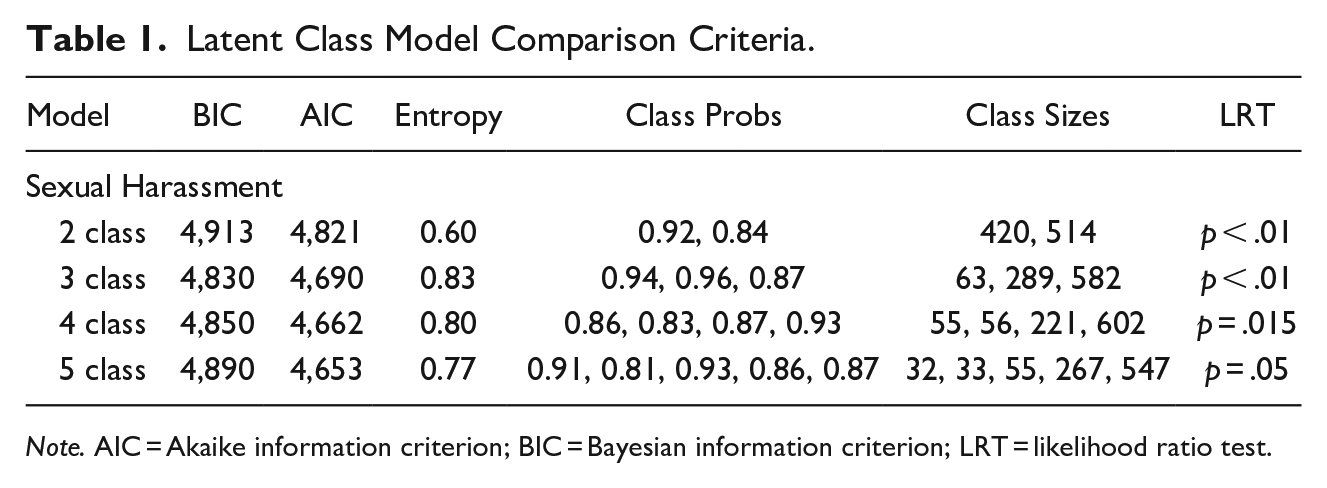
Note. AIC = Akaike information criterion; BIC = Bayesian information criterion; LRT = likelihood ratio test.
Help-Seeking Class Descriptions
The proportion of individuals using each type of help-seeking resource or behavior within the four identified classes is reported in Table 2. For ease of differentiating these classes, we have named each group according to the overall theme of the pattern of help-seeking behaviors reported within the class. It is also worth noting that because latent classes are derived based on the totality of the pattern of responses across all indicators (here, help-seeking behaviors), it is not expected that all classes will significantly differ from one another on every single individual indicator/behavior. It is important to assess the collective pattern of all indicators within and across profiles; for this reason, pairwise significance tests of individual indicators are not reported here.
Four-Class Model of Patterns of Help-Seeking Following Victimization.
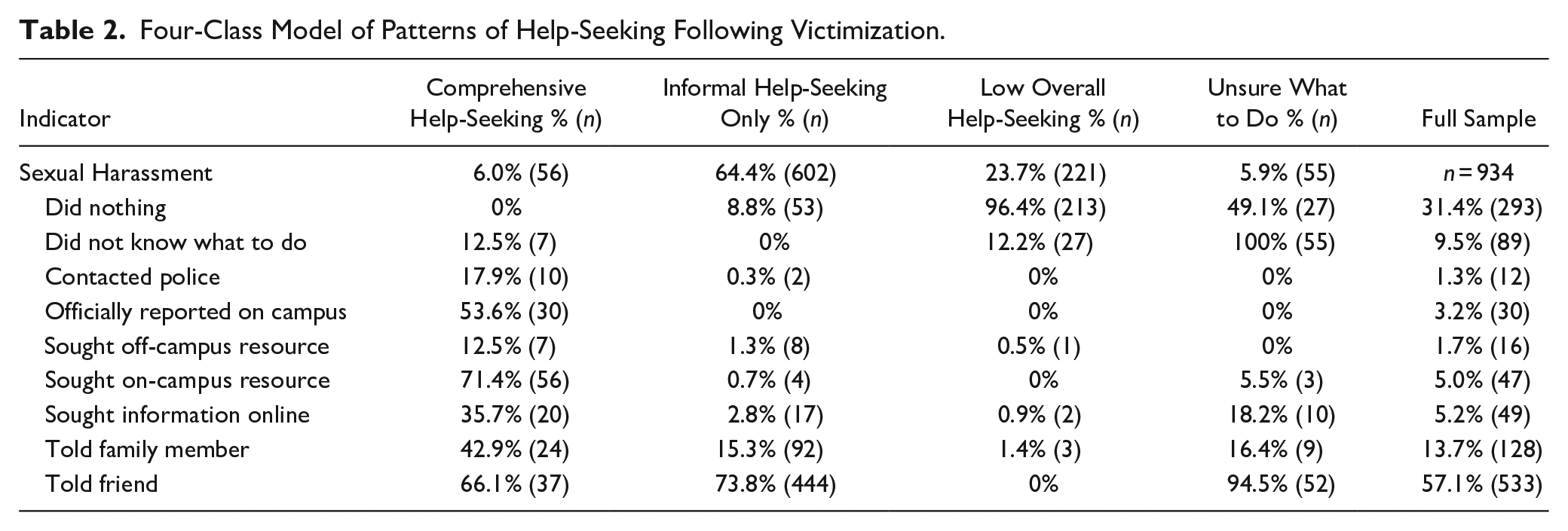
“Comprehensive” help-seekers, the first class, consisted of 6% of the SH victim sample (n = 56) and engaged in multiple types of both formal and informal help-seeking. This group sought formal resources both on and off-campus in larger proportions than other groups but also tapped informal support like friends and family at relatively high rates. Notably, over half of the people in this sample made an official report following the SH incident, and no one in this class felt that they “did nothing” (though 12.5% still categorized themselves as not knowing what to do). The second class contained approximately 64% (n = 602) of SH survivors and was termed “Informal Help-Seeking Only.” This group relied almost exclusively on friends as sources of support, with over 73% of the class reporting that they told a friend about the incident. Very few members of this group reported accessing formal resources or law enforcement, and no member of this group filed an official report. At the same time, and unlike in other classes, no one in the Informal Help-Seeking Only class reported being unsure of what to do. The final two groups also reported low to nonexistent formal help-seeking but differed from one another in important ways. The “Low Help-Seeking” group was comprised of 23.7% of individuals reporting SH (n = 221); individuals in this group told virtually no one about their experience, including friends or family. In contrast, almost everyone in this group saw themselves as “doing nothing” (96.4%, n = 213), although very few characterized themselves as not knowing what to do. In contrast, the “Unsure” group reached out in large numbers to friends (94.5%, n = 52) but universally characterized themselves as not knowing what to do after the SH incident. This group seems to have leaned primarily on friends in the midst of this uncertainty, with a handful seeking information online (18.2% n = 10) and/or reaching out to family (16.4%, n = 9). About half of the Unsure group also saw themselves as doing “nothing.”
SH Help-Seeking Classes—Post-Hoc Comparisons
Following the identification of patterns of help-seeking, we examined whether the four post-SH help-seeking groups differed based on incident characteristics, perceived campus climate and knowledge of resources, and demographic profiles. Several differences emerged related to offender identity and incident location across classes (Table 3). People in the Comprehensive help-seeking group were more likely to have experienced harassment by a university employee and less likely to have been harassed by a stranger than were respondents in the Informal Only and Low Overall help-seeking groups. Both Comprehensive help-seekers, and those in the Unsure group reported experiencing harassment by a person in a position of authority in larger proportions than did Informal Only help-seekers. Unsure help-seekers also reported a greater proportion of harassment perpetrated by friends and by undergraduate students than did Informal or Low overall help-seekers. In terms of campus location, a larger percentage of Comprehensive help-seekers experienced harassment on campus than the Informal and Low help-seeking groups. The Comprehensive and Unsure groups were also more likely to experience harassment at a private residence than other groups.
Sexual Harassment Help-Seeking Classes by Incident Characteristics, Climate, and Demographic Profiles.
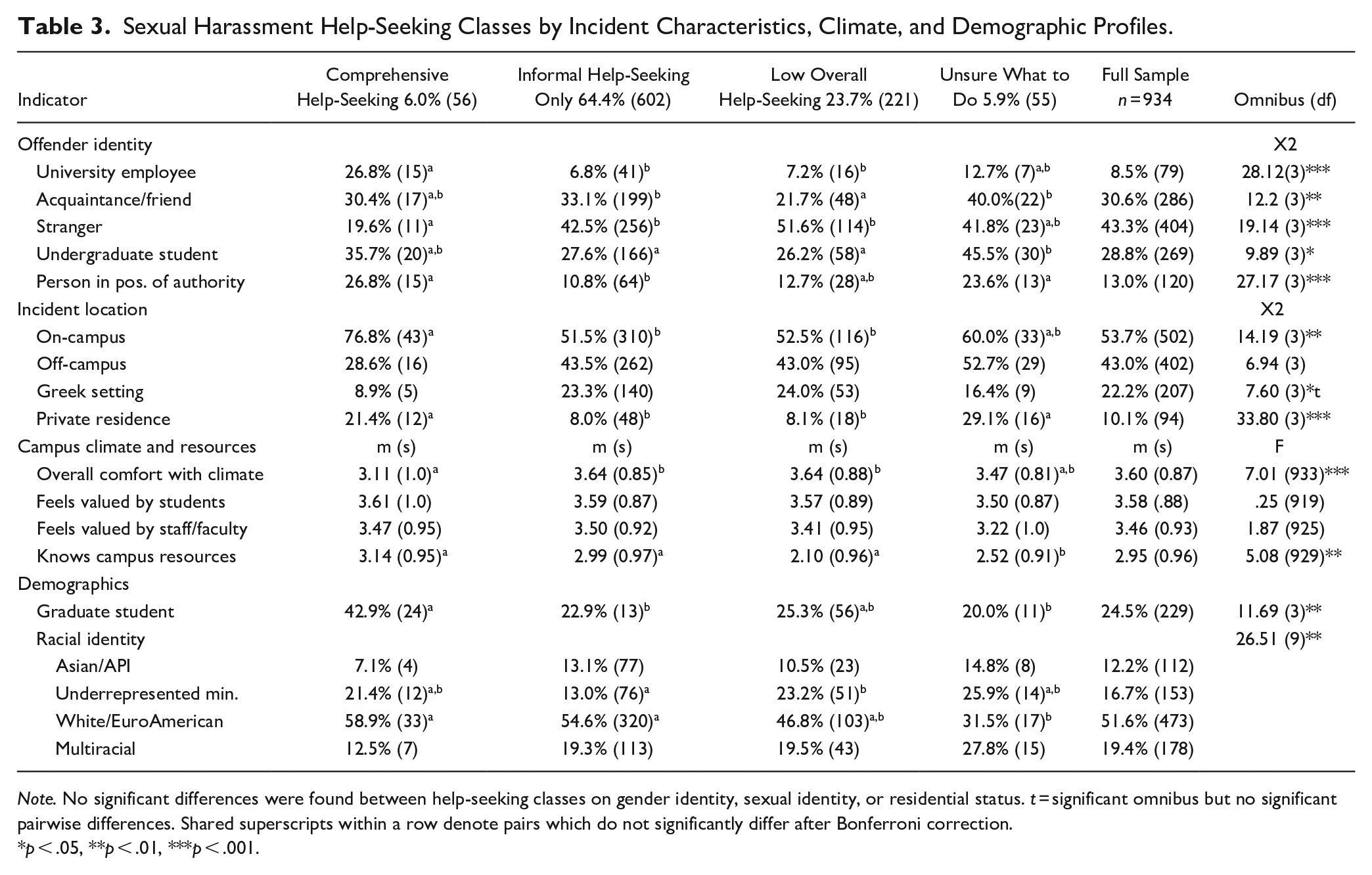
Note. No significant differences were found between help-seeking classes on gender identity, sexual identity, or residential status. t = significant omnibus but no significant pairwise differences. Shared superscripts within a row denote pairs which do not significantly differ after Bonferroni correction.
p < .05, **p < .01, ***p < .001.
Only a few differences emerged related to perceived campus climate and resource knowledge between help-seeking groups. Feeling valued by university employees and by students, respectively, did not differ between the latent classes. Comprehensive help-seekers reported lower overall comfort with the campus climate than members of the informal and low help-seeking groups. Unsurprisingly, individuals in the “Unsure” group reported significantly less knowledge about sexual misconduct-related campus resources than did any of the other groups.
Finally, different styles of help-seeking were statistically significantly associated with student status and racial identity. Specifically, Comprehensive help-seekers were more likely to be graduate students than were members of the Informal or Unsure groups. In terms of racial identity, the percentage of students from underrepresented minoritized groups in the Unsure and Low help-seeking groups was higher than their proportion in the overall sample, while EuroAmerican students were overrepresented in the Comprehensive group and underrepresented in the Unsure help-seeking group. Help-seeking groups did not differ in terms of gender identity, sexual identity, or housing status.
Discussion
Different Help-Seeking Patterns Among Students Experiencing SH
The study’s first aim was to examine whether we could identify unique help-seeking patterns among students experiencing SH in the sample. Our results indicated four help-seeking groups: Comprehensive help-seeking group, Informal help-seeking group, Low help-seeking group, and Unsure group. Aligned with previous studies examining patterns of help-seeking among survivors of intimate partner violence and sexual assault (Ben-Porat, 2020; Cheng et al., 2022; Hanson et al., 2021), our analysis revealed few similarities and important points of difference for help-seeking among students experiencing SH. For instance, the comprehensive help-seeking group in which students combined formal and informal sources of support is similar to the broadly engaged in formal and informal networks class found in a prior study on help-seeking patterns among intimate partner violence (IPV) survivors (Cheng et al., 2022). However, the sizes of these subgroups differ significantly. Compared to our study, which found only 6% of the sample in the comprehensive group, the broadly engaged in formal and informal network subgroup in the study on IPV survivors comprised 50% of the study sample (Cheng et al., 2022). However, our findings show some similarity with Ben-Porat’s study on patterns of service utilization among domestic violence survivors in Israel. This study only included formal services and found three distinct classes: Substantial use of all services, frequent use of welfare and criminal justice services, and minimal use of all types of services. Substantial use of all services constituted 9.3% of the sample, close to the size of our comprehensive help-seeking group, with the caveat that our comprehensive help-seeking group also included informal support. Our low help-seeking group (23.7% of the sample), where students did not reach out to anyone for support, is much like the third class in Ben-Porat’s study (2020), where survivors reported minimal use of all services (35% of the sample). Interestingly, our study revealed a much higher informal help-seeking group (64%) compared to the 15% of the sample that primarily engaged in informal networks in the study on IPV survivors (Cheng et al., 2022). One reason for the higher proportion of our study sample in the informal group is attributed to the differences between the nature of SH victimization and IPV. Those who experience SH may perceive it as “not serious enough,” deterring several survivors from reaching out to formal avenues as the first line of support. Another potential reason for this difference is that the earlier study employed a sample of women engaged in IPV services and, therefore, more likely to have already engaged with their informal networks before moving to formal services.
Our findings highlight the heterogeneity of patterns and responses in help-seeking for students experiencing SH. For example, we often perceive informal help-seeking as one distinct type of seeking support, predicted in a linear way by survivors or incident-related variables. However, our results indicate that there may be significant heterogeneity even within the larger category of informal help-seeking and that survivors pursue informal help-seeking for different reasons and in different combinations with other strategies. For example, the LCA revealed that in the informal help-seeking group, no member reported being unsure of what to do, and 73% of survivors in this group reached out to friends for support. On the other hand, those in the unsure group who also largely sought informal help universally reported being unsure of what to do. These differences within informal help-seeking indicate that informal help-seeking can be a conscious choice and preference for some who are impacted by SH. Students experiencing SH on campus may know of formal mechanisms but still choose informal support over formal services. In comparison, some may choose informal help-seeking pathways as a starting point to get initial guidance and support on how best to report and seek help. It is also worth noting that students in the unsure group reached out to friends in large numbers despite stating that they did not know what to do after the SH incident. A handful of students in this group also sought information online and contacted friends. This finding highlights that limited knowledge and understanding of existing resources/supports do not necessarily deter help-seeking. Students may explore resources, reach out for support, or share their experiences despite not knowing what to do.
The concerning finding is that in the low help-seeking group, despite very few reporting not knowing what to do, almost everyone in the group (96.4%) shared doing nothing and did not tell anyone about their experiences, including friends or family members. Students may not seek help if they fear not being believed or being negatively impacted following an official report (Rosenthal et al., 2016). This fear is understandable, given that students who do report SH often experience bullying, further harassment through lawsuits, or threats of being terminated from programs, while those perpetrating the behavior face no repercussions at all (Bloom et al., 2021). Academia is a small and well-connected world, and students may fear that speaking out about their experiences can threaten confidentiality and future career prospects in other academic domains (Pinchevsky & Hayes, 2023; Rosenthal et al., 2016). Students may also not seek support because they do not perceive the incident as severe or cope with the experiences by avoiding the perpetrator (Klein & Martin, 2021).
Help-Seeking Patterns Based on Incident Characteristics, Demographic Profiles, and Perceived Campus Climate
In our second aim, we examined whether there were meaningful differences between the groups based on incident characteristics, students’ demographics, and campus climate perceptions. Our findings highlight some differences in help-seeking based on incident characteristics (incident location and offender identity) and demographic profiles. Relationships with the perpetrator and the location of the experience were associated with help-seeking among students. As just one example, students in the comprehensive help-seeking group who reached out to both formal and informal support were more likely to experience harassment by a university employee, and to have experienced harassment on campus or in a private residence than some other groups. It may be that when students experience harassment on campus that they must frequent every day or by those in positions of authority or by peers within their close networks, they may experience more significant distress. Also, when students experience multiple forms of harassment (harassment on campus and within private settings), they may perceive the incidents as more severe and feel the urgent need to seek help. This finding aligns with previous studies that also found associations between the perceived severity of incidents and increased help-seeking (Ben-Porat, 2020; Hanson et al., 2021; Nurius et al., 2011). In a study on help-seeking patterns among domestic violence survivors in Israel, women who sought both welfare and criminal justice services experienced more violence than women who reported minimal service use (Ben-Porat, 2020). Similarly, in a study that identified patterns of engagement in safety behaviors, survivors in the trying everything cluster reported the highest levels of physical, sexual, and psychological IPV. Higher violence was associated with a higher likelihood of finding safety planning useful (Hanson et al., 2021).
Different help-seeking patterns were also associated with student status and students’ racial identity. Students in the comprehensive group were more likely to be graduate students than members of informal or unsure groups. Program-level and work expectations that require graduate students to be more present in academic spaces on and off-campus (e.g., paid assistantship positions, academic conferences) contribute to the increased perceived severity of SH experiences, thereby leading students to seek out resources (Bloom et al., 2021). Graduate students are also better acclimatized to higher education and may feel less hesitant to seek help and advocate for themselves. Our finding related to differences in help-seeking based on students’ racial identities is important given the limited discourse on how intersecting identities shape students’ SH experiences and help-seeking. In our analysis, EuroAmerican students were overrepresented in the Comprehensive Help-Seeking Group. The percentage of students from underrepresented minoritized groups in the unsure and low help-seeking groups was higher than the overall sample. Students in the comprehensive group (largely EuroAmerican students) accessed both formal and informal support, while those in the unsure group reported not knowing what to do and reached out to friends in large numbers. This difference in response across these two groups may be a function of students’ demographic characteristics. Research suggests that students of color report increased help-seeking awareness and are more knowledgeable about formal mechanisms in place (Pinchevsky & Hayes, 2023). However, despite greater knowledge, students of color are more likely to be treated poorly when they do make an official report. Therefore, students from minoritized communities are less likely to access campus-based resources because of past experiences of institutional betrayal (Freyd, 1994) and their resulting mistrust in reporting mechanisms (Pinchevsky & Hayes, 2023; Zounlome et al., 2019)
Our analyses did not reveal significant differences in perceived campus climate and resource knowledge between help-seeking groups. There were no differences between feeling valued by university employees and students across the help-seeking groups. Interestingly, comprehensive help-seekers who sought formal and informal support reported lower overall comfort with the campus climate than members of the Informal and Low help-seeking groups. One possible reason is that students in this group were disproportionately graduate students. Many graduate students continue to be on the same campus after completing their undergraduate degrees and may be better connected and informed about resources. More importantly, when students are dissatisfied with campus climate, they are more motivated to advocate for change. So, when negative experiences occur, they may be more inclined to report them despite their overall discomfort with the institution. Also, when students perceive SH experiences as severe and unavoidable, they will likely report and seek help despite their low comfort with the campus climate. Alternatively, it may be that students in this group had the most contact with campus offices and had become disillusioned with campus climate as a result of their harassment experiences and subsequent help-seeking attempts. Individuals in the “Unsure” group reported significantly less knowledge about sexual misconduct-related campus resources than any other group, corroborating earlier research evidence that students’ limited knowledge about campus resources can be a barrier to formal help-seeking (Burgess-Proctor et al., 2016; Pinchevsky & Hayes, 2023).
Integrating a Diversity Lens: Implications for Practice and Further Research
One critical gap in research on SH and help-seeking among students is the much-needed intersectional perspective. Students’ SH experiences are complicated when they experience other forms of discrimination on campus, and their intersecting identities play a crucial role in help-seeking decision-making (Klein & Martin, 2021). Our findings corroborate prior research (Klein & Martin, 2021) that the percentage of students who seek on-campus support following SH incidents continues to be low. More importantly, EuroAmerican students were overrepresented in the Comprehensive Help-Seeking Group, and the percentage of students from underrepresented minoritized groups in the Unsure and Low help-seeking groups was higher than their proportion in the overall sample. The climate survey for this study was conducted across a tri-campus setting, including residential and nonresidential campuses. Students, particularly those enrolled in the nonresidential campuses, are more likely to be from minoritized communities (e.g., women, racially minoritized, disabled, and with limited financial resources). Many nontraditional students are also older, hold family and caregiving responsibilities, maintain full-time employment, and are more likely first-generation students. These students enroll in higher education after surpassing several barriers, and the stakes of not completing their degrees are high (Authors, Blinded for Review). Therefore, when these students experience SH on campus, they may be less likely to report their adverse experiences to campus officials because they do not want to jeopardize their academic standing. In addition, owing to their unique contexts and needs, they experience significant barriers to seeking on-campus support (e.g., physical disconnect from campus, difficulties in commuting to campus, juggling multiple responsibilities, etc.). Given that the study found that the percentage of students from underrepresented minoritized groups was higher in the Unsure and Low help-seeking groups, future research needs to focus on racial and ethnic differences in help-seeking. While help-seeking groups did not differ in terms of gender or sexual identity, previous studies based on the same campus survey highlighted that women, gender nonbinary, and LGBTQ+ students experienced SH at higher rates than men (Authors, Blinded for Review). Despite experiencing higher rates of discrimination based on gender identity and expression, students belonging to gender minority groups (e.g., students who identify as nonbinary) are understudied (Fedina et al., 2023; Klein et al., 2023). Violence prevention efforts are primarily heteronormative, and there is a need to revisit existing campus support to ensure that they are gender-inclusive, address systemic trans- and homophobia, and are accessible to students (Casey & Bhattacharya, 2023). More inclusive measurement instruments and assessment questions are needed to better understand risk factors for victimization across diverse and intersecting identities (e.g., race, gender and sexual identity, disability, etc.) and subsequent help-seeking experiences.
Our study findings highlight that informal help-seeking continues to be the more common way of seeking help among students experiencing SH, particularly seeking support from friends. Interestingly, our analysis highlighted that students in the unsure group reached out to friends even when they did not know what to do following an SH incident. Based on the supportive role that friends and peers offer in mitigating the impact of SH on campus, campus officials can engage in more focused discussions with the student body to better understand the practices, strategies, and tools they employ to support their friends who share SH experiences. Given that students often reach out to peers for support, keeping students well-informed about campus resources is critical to strengthening informal support networks and bridging the gap between formal and informal support (Pinchevsky & Hayes, 2023). Our analysis found that incident location (on campus, in-private residence, or victimization in multiple places) and relationship with the offender (if the offender is a university employee and/or is in a position of authority) determined help-seeking patterns among students. Campus-based resources and support should account for the unique nature of SH and the specific dynamics between students and perpetrators while providing support. While sharing resources with students, students can be informed about the accessibility of these supports, the potential impacts of disclosure, and how the University will respond (Pinchevsky & Hayes, 2023). Assuring students that resources are confidential, that there are designated confidential campus officials, and that making a report will not further harm them is imperative to encourage help-seeking.
Similarly, the variations in help-seeking strategies across the different classes highlight that students’ perceptions and preferences for formal and informal services depend on their specific type. Not all formal services hold the same value and relevance for students. For instance, while students may engage in formal networks, they may strategically avoid certain types of formal care. Therefore, bolstering support requires first understanding which sources students are comfortable with or fearful of. It is also critical to look at disclosure more broadly and understand why and with whom survivors choose to share their experiences. This will enable us to bring more targeted improvement and change in services. The different subgroups highlighted in our study suggest that different students have differing needs. Given the heterogeneity in help-seeking responses, we need heterogeneous support strategies. For instance, some groups like the unsure group highlight the need for increased visibility of resources and education about what “counts” as SH and as something you can get help for. Our analysis also found that there were groups that were aware of resources but did not trust them or consider them relevant; learning more about why campus-based services do not feel helpful is an important avenue. Designing programs and resources that can reach students remotely is critical to fostering help-seeking among commuter students, a population largely underrepresented and underserved in campus sexual violence research and programming.
Campus climate and the larger culture of academia are critical in preventing SH and fostering help-seeking. Unfortunately, research on SH and help-seeking among students has focused on individual-level variables and has not adequately considered the role of campus cultures and environments. This is a significant gap given that the risk for SH is greater in institutional settings and academic disciplines where higher level administration holds identities that do not represent the student body they serve (Bloom et al., 2021). In addition to exploring individual-level risk and protective factors, students’ help-seeking decisions and behaviors are determined by institutional environments. Future research should explore critical institutional-level variables that foster or deter help-seeking, as we know little about how campus environments promote or discourage help-seeking (Wood et al., 2021; Klein & Martin, 2021). To enhance institutional accountability, future research should integrate students’ experiences (particularly those from minoritized communities) in accessing support and the outcomes that occur once they report.
Limitations
Some limitations were created by the secondary nature of the analyses presented here. Due to the wide scope of the original climate survey and the need to reduce participant burden, only one item was used to assess SH. Although the item included several specific behavioral examples of what could constitute harassment, the use of a single item may have resulted in an undercount of the prevalence of SH on these campuses and may mean that incidents captured here are more “serious” or obvious cases of harassment than if a wider array of items had been used. A related limitation is that the perceived severity of the reference SH incident could not be determined. The aggregated demographic information contained in the data made available for analysis also limited the extent to which associations between help-seeking patterns and racial, gender, and sexual identities could be fully explored. The cross-sectional nature of the data prohibits causal inferences about various help-seeking patterns and campus climate variables; students’ perceptions of campus climate may have been shaped by their SH experiences and subsequent help-seeking approach, or vice versa. It is also pertinent to note that the sample size in the comprehensive and unsure groups is lower compared to the other two groups. Therefore, it is possible that we were less likely to capture small differences for the comprehensive and unsure groups. As a result, inferences made for these two groups may be limited as compared to the other two larger groups (i.e., informal help-seeking and low overall help-seeking). Finally, this climate survey was conducted within a single university system, and findings may not be generalizable outside of this kind of system or the region in which it sits; further research to replicate these or other patterns of post-SH help-seeking is needed.
Conclusion
SH on campus remains a common phenomenon for many students. While significant strides have been made in campus-based resources and policies (e.g., Title IX) to support students experiencing sexual victimization, the likelihood of students accessing formal support remains low. Our findings highlight that students predominantly prefer informal support and reach out to their peers and friends even when they face uncertainty about the next steps. Furthermore, multiple forms of victimization are associated with greater help-seeking, as past research shows. Our study is a reminder that survivors access support through diverse ways—understanding these distinct patterns is critical to effectively support students and mitigate barriers they face.
Footnotes
Declaration of Conflicting Interests
The author(s) declared no potential conflicts of interests with respect to the authorship and/or publication of this article.
Funding
The author(s) received no financial support for the research and/or authorship of this article.
