







Abstract
Victimization of college students is widespread, and it is not uncommon for students to disclose these experiences to faculty. Given that how faculty respond to disclosures may have implications for students’ psychosocial and academic outcomes, it is key to know more about disclosures to help faculty prepare a supportive response. This study used data from an online survey of members of two U.S.-based professional scholarly associations for criminal justice and criminology (N = 637) to look at the nature of student disclosure of victimization and which faculty are more likely to receive such disclosures. Disclosure to faculty was widespread (87% of faculty had received at least one disclosure of victimization from a student), and disclosures were mostly made in person. Over half the time (52.3%), participants thought the disclosure was prompted by an incident in class or another aspect of the course, and more than a quarter of the time (28.8%), the disclosure came from a student in a course that utilized trigger warnings. A faculty member’s individual identities, such as gender or race and ethnicity, did not appear to render them more or less likely to receive student disclosures. However, faculty with victimization experiences who had links to victim services organizations, who were teaching in a Sociology department, or who had been teaching longer were more likely to have received a disclosure. Graduate student instructors were less likely to have received a disclosure, even controlling for years of teaching. This suggests widespread training of college-level instructors in how to respond to a student’s disclosure of victimization may be warranted, at least for faculty teaching courses focusing on criminology and criminal justice.
Keywords
Introduction
Victimization is a common experience for college students (Carmody et al., 2022; Daigle et al., 2024; Reyns et al., 2021), including interpersonal violence victimization, particularly intimate partner violence, sexual assault, sexual harassment, and stalking (Barrick et al., 2013; Cantor et al., 2019; Whitfield et al., 2018). Based on self-reports of faculty (Hayes-Smith et al., 2010; Klein, 2018; Richards et al., 2013; Root & Godderis, 2016) and students (Cantor et al., 2019), it is clear many students disclose these experiences to faculty. A disclosure of this nature has implications for the students, who can be impacted by the reaction of the recipient of the disclosure (Dardis et al., 2019; Orchowski & Gidycz, 2015; Orchowski et al., 2013). Disclosures can also be distressing for faculty (Carello & Butler, 2015; Hayes-Smith et al., 2010; Hulme & Kitching, 2017) and can trigger formal responses, as many faculty in the U.S. are designated mandated reporters by their institutions under Title IX and the Clery Act (Holland et al., 2018). Specifically, as mandated reporters, faculty must report instances of sexual harassment, sexual assault, domestic violence, and stalking to campus Title IX coordinators. In spite of this, much of the research on disclosures by college students does not look specifically at faculty and instead includes them in a broad category of formal support sources (e.g., Mennicke et al., 2021). Knowing which faculty are more likely to receive disclosures can help in the creation of customized efforts to ensure they respond in a supportive manner to students and receive support for themselves from their institution. This study uses data from a survey of faculty teaching criminal justice and criminology courses to explore the nature of disclosures to faculty and if particular faculty, based on their identities, experiences, and teaching, are more likely to receive student disclosures of victimization.
Literature Review
Student disclosures of victimization to faculty are common. One of the few studies that quantitatively explored student disclosures found that 42% of faculty have received a disclosure of victimization from a student, with 27% of those receiving multiple disclosures (Richards et al., 2013).
Reactions to Disclosure
Research with college students (albeit largely white heterosexual women who have experienced sexual assault) has illustrated that how recipients of disclosures react to disclosures matters for students. Negative reactions are linked to poorer mental health (e.g., anxiety, depression, paranoia, post-traumatic stress), lower self-esteem, and utilizing fewer adaptive coping strategies (Dardis et al., 2019; Orchowski & Gidycz, 2015; Orchowski et al., 2013). Positive reactions are linked to use of a greater number of adaptive coping strategies (Orchowski et al., 2013). Based on that, disclosure to a faculty member could have implications for the student’s psychological outcomes and for their course engagement and academic success. For example, if a student perceives a faculty member’s reaction as controlling, which is considered a negative reaction (Orchowski et al., 2013), it may increase the student’s symptoms of anxiety, depression, or post-traumatic stress. In turn, the increase in those symptoms could interfere with their ability to sleep and concentrate (as examples), undermining key skills needed for academic success.
Disclosures also impact faculty. Disclosures can be distressing for faculty (Hayes-Smith et al., 2010). For some, this distress may be due to a faculty member’s own personal experiences with victimization (e.g., Lindner, 2004) or working with those who have experienced trauma (Graziano, 2001). Past research reveals faculty often do not feel ready to respond to disclosures or have demonstrated a lack of knowledge of what to do and have expressed a desire for more training and support (Branch et al., 2011; Carello & Butler, 2015; Hayes-Smith et al., 2010; Hulme & Kitching, 2017). Even those who have received many disclosures and were thoughtful about how to handle them have expressed uncertainty about if they did enough (e.g., Root & Godderis, 2016).
Which Faculty Are More Likely to Receive Disclosures by Students?
To our knowledge, only one study has looked at what faculty characteristics are related to receiving a student disclosure (Richards et al., 2013). Richards and colleagues surveyed faculty at two universities about student disclosures of victimization. That study found faculty gender identity was not related to disclosure (Richards et al., 2013), in spite of the focus of the broader scholarly discussion of disclosures largely being on the experiences of women faculty (e.g., Branch et al., 2011; Hayes-Smith et al., 2010; Root & Godderis, 2016). Political affiliation was not related to disclosure, but age was, with younger faculty more likely to have received a disclosure (Richards et al., 2013).
Some of what predicts which faculty receive disclosures is about what or how they teach. The pedagogical literature around disclosure is often targeted toward those who teach about sensitive topics (e.g., Barlow & Becker-Blease, 2012; Durfee & Rosenberg, 2009). What are considered sensitive topics varies but can generally be defined as topics that may evoke emotional responses or increase distress for students (Hulme & Kitching, 2017). This has been highlighted to include topics on crime and victimization (including sexual assault), gender identity, inequality, trauma, sexuality, and mental health (including suicide; Boysen et al., 2021; Nolan & Roberts, 2021; Richards et al., 2013). Richards et al. (2013) found those teaching sensitive topics were two and a half times more likely to have received a disclosure, although in their sample, only 29% of faculty who received a disclosure taught sensitive topics. Some teaching practices may prompt more disclosures, such as the use of trigger warnings. Trigger warnings are written or oral notifications of course content meant to provide students advance notice of sensitive material that may produce adverse health responses and, therefore, inhibit academic performance (Cares et al., 2023). Use of trigger warnings is often recommended for faculty teaching courses that include sensitive topics, such as victimization (e.g., Cares et al., 2014; Root & Godderis, 2016). Trigger warnings may prompt disclosure if they are seen by students as a signal that their faculty member is a safe or appropriate person or that the classroom environment the faculty has created is a safe or appropriate place to share their experience (Byron, 2017; Spencer & Kulbaga, 2018). However, to date, no study has investigated a link between trigger warning use and student disclosures of victimization to faculty.
What and how faculty teach may also be related to the manner in which a student discloses. In Richards et al. (2013), faculty across disciplines overwhelmingly reported receiving disclosures in their office (73%), with much smaller proportions receiving disclosures via email, in assignments, and in class, with none on a discussion board. Over half thought the most recent disclosure they received was provoked by a specific topic or incident that occurred in class. In an earlier study with interviews of faculty who had received disclosures, disclosures were received after class (30%), during office hours (30%), via email (20%), on an assignment (16%), and by phone (3%; Branch et al., 2011). It is not clear if this may differ in disciplines like criminal justice and criminology, which are heavily weighted toward sensitive topics, and if this may have shifted given the rise in online courses and use of online course management systems.
Contributions of This Study
This study expands on the work of Richards et al. (2013) using survey data from members of two U.S.-based professional scholarly associations for criminal justice and criminology who also teach college courses. In doing so, this study seeks to answer: What is known about student disclosures to faculty? Are some faculty more likely to get disclosures and if so, which ones? Are those faculty identifiable in some way that lends itself to targeted training and support? Are there aspects about some faculty that should be highlighted in general training because they are more likely to get disclosures or may be impacted in different ways by disclosures?
Methods
Procedure
This study gathered data via an online survey of members of the two largest U.S. scholarly professional organizations for criminal justice and criminology. Data collection spanned 6 weeks, starting in February 2019. The survey invitation was sent to 3,919 email addresses of organization members, yielding 929 responses (24% response rate). One hundred thirty-eight participants either did not provide consent (n = 4) or did not meet the inclusion criteria of having taught in the past 3 years at the college level (n = 134), resulting in a 20% participation rate (N = 791). Participants included graduate students who taught courses. The survey focused on attitudes and use of trigger warnings but also gathered information on disclosure experiences of participants. The survey comprised 59 questions, and the average length of participation was <12 min. The survey was comprised of 59 questions, and the average length of participation was less than 12 minutes. Participants could choose to enter a raffle to win 1 of 10 $25 Amazon gift cards.
Measures
Student Disclosure of Victimization
Questions were adapted or borrowed from Richards et al. (2013), with the exception of new questions measuring if the disclosure was linked to trigger warning use. Received a disclosure was measured via a single item: “Have you ever had a student disclose to you that they have been a victim of crime?” with response options of yes and no. For those who selected “yes,” they were asked multiple follow-up questions. Number of disclosures received was measured from 0 to 6 or more. Nature of most recent disclosure included options of in your office, via email, in an assignment, on an online discussion board, in class, and others, please specify (participants could select only one). Seventy-six participants provided an “other, please specify” response. Those responses were assigned to an existing response (n = 15) or a new category (n = 61). New categories were before class (n = 3), after class (n = 40), and misunderstood the question (n = 19, e.g., “All occurred in informal discussions after class” even though participants were asked to report on the location of only the most recent disclosure). Participants were asked, “Do you believe that a specific incident in class or aspect of class provoked the student to disclose?” with options of yes and no. Trigger warning use in the course had the following answer choices: yes, that day; yes, on that assignment or for that assigned material; yes, only at another time in the course; no; and I do not recall.
Instructor Characteristics
Gender Identity
Options for gender identity were male, female, genderqueer or nonbinary, and others; please specify. 1 Four responses to “other, please specify” were recoded—transgender man (n = 1) was recoded to male, biological sex: female, social gender: woman (n = 1) was recoded to female, and the two others (no; not answering) were recoded to missing.
Racial Identity and Hispanic, Latino, or Spanish Origin
Racial identity was gathered via a “check all that apply” question with categories of white, Black or African American, Asian, American Indian or Alaska Native, and Native Hawaiian or other Pacific Islander. Participants who checked more than one were categorized as more than one race. A separate yes or no question asked if participants were of Hispanic, Latino, or Spanish origin.
Age
Age had five categories: 18 to 34, 35 to 44, 45 to 54, 55 to 64, and 65 or older.
Scale of Political Views
Scale of political views was a 7-point scale, with 1 = extremely liberal and 7 = extremely conservative.
Victimization Exposure
Participants were defined as having victimization exposure if they, a close family member, or a close friend had ever been a victim of violent and/or property crime.
Victim Services Organization Link
Participants were considered to have a link to a victim services organization if they were ever employed by, volunteered for, or collaborated on research or teaching with a victim services organization.
Victim-oriented Professional Organization Membership
Victim-oriented professional organization membership (e.g., American Society of Criminology, Victimology section; American Professional Society on the Abuse of Children) was measured through a yes or no question.
Aspects of Teaching
Years Teaching
How long someone had been teaching at the college level had categories of first-year teaching, 1 to 5 years, 6 to 10 years, and more than 10 years.
Taught Victimology
This study’s measure of teaching sensitive materials was if a participant indicated they had taught a victimology course.
Trigger Warning Use
Any trigger warning use (not specific to the course related to the most recent disclosure) was measured by a single item: “Have you ever used trigger warnings in your courses? This includes in your course syllabus, as an announcement in class, as an announcement via an online teaching platform, or on an assignment.” Response options were yes or no.
Teaching Position
Current teaching positions had options of graduate instructor, adjunct, lecturer, visiting faculty, assistant professor, associate professor, full professor, emeritus faculty, and other, please specify. These were aggregated into four categories: adjunct, graduate instructor, department faculty, and other positions. Department faculty included instructors (when entered as an other, please specify response), lecturers, assistants, associates, full, and emeriti professors. These groups would be targeted differently for training—graduate instructors are almost entirely graduate students, who could be trained in graduate teaching courses; instructors, lecturers, assistant, associate, full, and emeritus faculty still teaching could be targeted for training together; and adjuncts are typically not included in department activities, so their needs would be different. The other position is included but is not a focus of analysis as that is a small, heterogenous category that would be difficult to target with training (e.g., research analyst who teaches some courses, postdoc).
Department Characteristics
Disciplines of Home Department
Participants were asked to identify all the disciplines of their home department. This mark “all that apply” format allowed for those in multi-disciplinary departments to include all the disciplines represented in their department.
Graduate Degree
If a participant’s home department awarded any graduate degrees was measured as yes or no.
Analysis Plan
Missing Data
Thirteen and a half percent (n = 107) of cases were missing data on whether or not they had ever received a disclosure, and an additional 5.9% (n = 47) were missing data on other study variables. Missing data was largely due to survey breakoff, as the disclosure questions were in the second half of the survey, and most questions about individual and department characteristics were at the end of the survey. Listwise deletion reduced the sample by 19.4% (N = 637), and the results of Little’s MCAR tests rejected the null hypothesis that the data were missing completely at random (χ2 [107, 791] = 140.73, p < .05). Multiple imputation procedures in SPSS 28 were utilized to handle the missing data. The imputation model included all of the variables used in the multivariate analysis (see Table 4) plus auxiliary variables. 2 The multivariate analysis is based on the pooled results across all imputed datasets (m = 25, N = 784). Following best practices, univariate and bivariate analyses were performed using listwise deletion rather than imputed data (Enders, 2022).
Analysis
For questions about faculty receiving disclosures, how many, and the nature of disclosures, we used univariate statistics appropriate to the level of measurement. For questions about factors associated with receiving a disclosure, we employed cross-tabulation, ANOVA, and logistic regression to explore bivariate associations. Given the large number of factors examined, to be parsimonious, we limited the multivariate model to factors that were significantly associated at the bivariate level. For the multivariate model, we employed logistic regression with imputed data to examine factors related to the probability of receiving a disclosure.
Findings
Sample Description
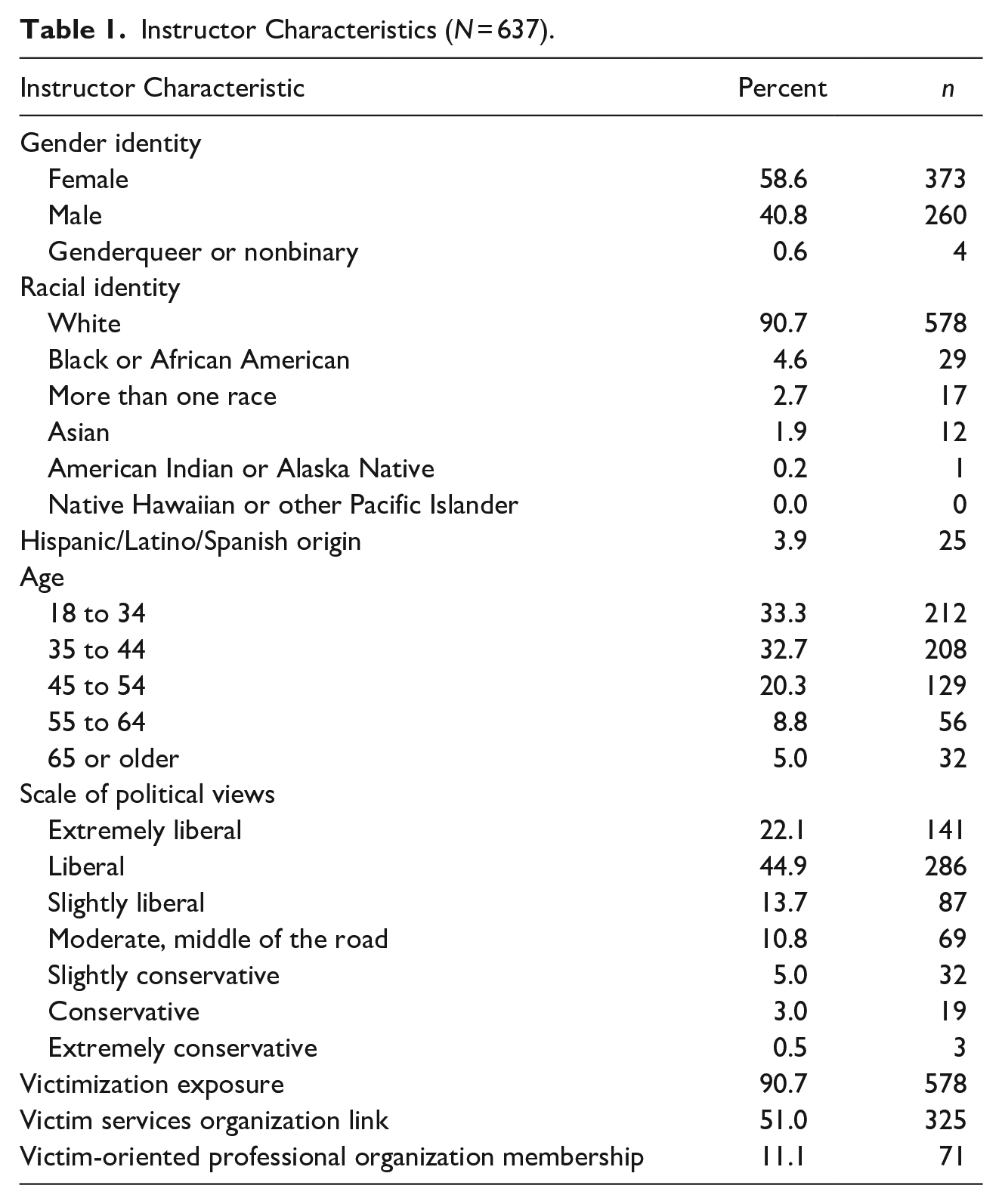
The sample was predominantly female (58.6%, n = 373) and identified as white (90.7%, n = 578) and non-Hispanic (96.1%, n = 612). The sample skewed toward younger ages, with one-third at 34 years of age or younger (33.3%, n = 212), followed closely by those aged 35 to 44 (32.7%, n = 208), and participants overwhelmingly identified as more liberal than conservative in their political views (80.7%, n = 514). Almost all had some exposure to victimization (90.7%, n = 578), half had a link to a victim services organization (51.0%, n = 325), and 1 in 10 were members of a victim-oriented professional organization (11.1%, n = 71; Table 1).
Instructor Characteristics (N = 637).
The largest number of faculty had been teaching more than 10 years (40.0%, n = 255) with a small number of participants in their first year of teaching (5.0%, n = 32). Three-quarters were department faculty (77.2%, n = 492). A minority had taught victimology (16.0%, n = 102), yet the vast majority of the overall sample had used trigger warnings (68.1%, n = 434). The top three home department disciplines were criminal justice (72.2%, n = 460), criminology (41.4%, n = 264), and sociology (26.7%, n = 170), and most faculty worked in departments that awarded a graduate degree (80.8%, n = 515; Table 2).
Aspects of Teaching and Department Characteristics (N = 637).
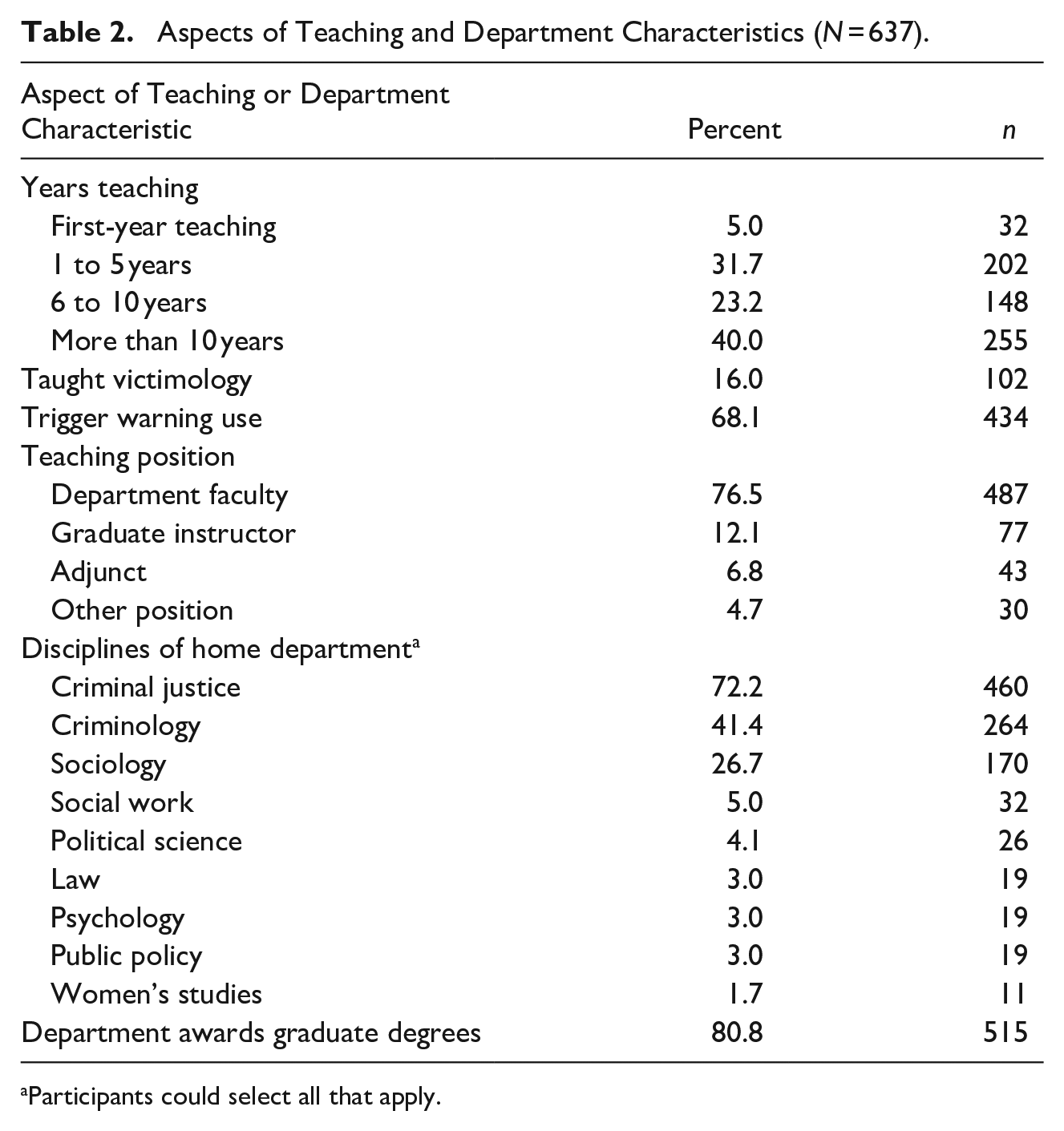
Participants could select all that apply.
Frequency and Nature of Disclosures
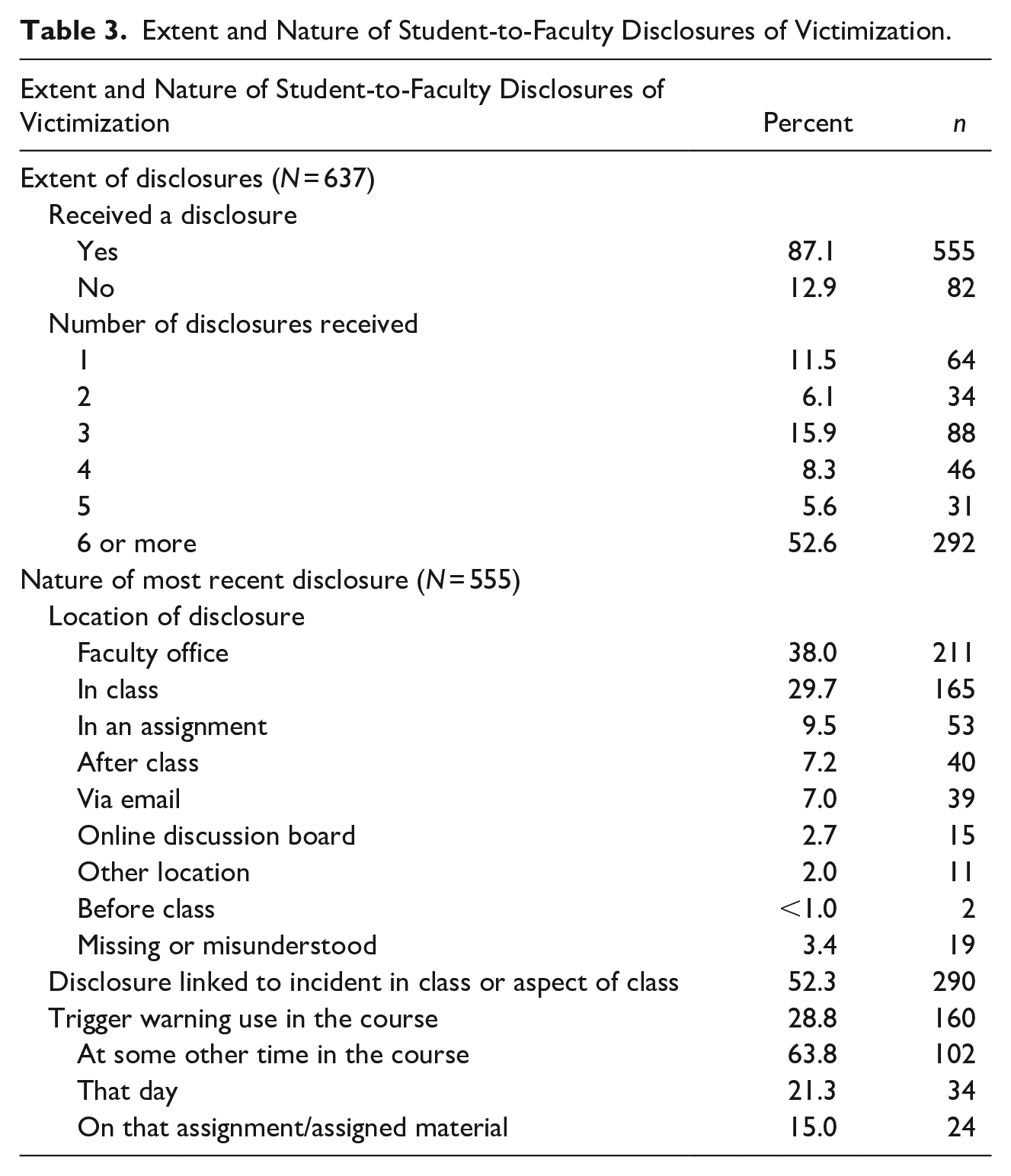
The vast majority of faculty (87.1%, n = 555) had received at least one disclosure of victimization from a student. For those who had received a disclosure, 52.6% (n = 292) received six or more disclosures, and 88.5% had received two or more (n = 491). Disclosures were usually made in person (75.3%, n = 418). The most common disclosure location was the participant’s office (38.0%, n = 211), followed by in class (29.7%, n = 165). Much less common was in an assignment (9.5%, n = 53), after class (7.2%, n = 40), via email (7.0%, n = 39), on an online discussion board (2.7%, n = 15), or before class (<1.0%, n = 2). Small numbers of participants received disclosures in another way (e.g., in student evaluations, by phone; 2.0%, n = 11) or did not answer or misunderstood the question (3.4%, n = 19; Table 3).
Extent and Nature of Student-to-Faculty Disclosures of Victimization.
Disclosure Linked to Course Content
Over half of participants (52.3%, n = 290) believed that a specific incident in class or aspect of the course provoked the student to disclose. Additionally, over a quarter (28.8%, n = 160) of disclosures occurred in a course where the participants had used a trigger warning at some point. Well over half (58.7%, n = 326) did not use a trigger warning, 11.9% (n = 66) could not remember about trigger warning use, and <1% (n = 3) were missing data on this item. Among faculty who received a disclosure and had used a trigger warning, 21.3% (n = 34) had used it the day the student disclosed, 15% (n = 24) on that assignment or for that assigned material, and 63.8% (n = 102) at some other time in the course (Table 3).
Likelihood of Disclosures
To identify which faculty were more likely to receive disclosures, we first conducted bivariate analyses to see if there were participant characteristics, aspects of teaching, and department characteristics related to likelihood of disclosure. Participants who were older (χ2 [4, 637] = 34.39, p < .001), had victimization exposure (χ2 [1, 637] = 14.73, p < .001), had a victim services organization link (χ2 [1, 637] = 26.71, p < .001), had taught longer (χ2 [3, 637] = 61.38, p < .001), had taught victimology (χ2 [1, 637] = 8.68, p < .01), used trigger warnings (χ2 [1, 637] = 14.25, p < .001), were in a department that included sociology (χ2 [1, 637] = 11.88, p < .001), or were in a department that awarded graduate degrees (χ2 [1, 637] = 4.06, p < .05) were more likely to receive a disclosure. Teaching position was also related to receiving a disclosure (χ2 [3, 637] = 69.05, p < .001), with department faculty being the most likely to have received a disclosure and graduate instructors being the least likely. The likelihood of receiving disclosure was not related to gender identity, racial or ethnic identity, political views, being a member of a victim-oriented professional organization, or any department discipline besides sociology.
Factors significant at the bivariate level were included in a multivariate logistic regression predicting disclosure (see Table 4). Although it was significantly associated with disclosure, we did not include age as it was highly correlated with years of teaching (r = .66, p < .001), which was more germane to the study’s focus. In the multivariate model, victimization exposure (b = 0.49, SE = 0.17, OR = 1.53, p < .001), having a victim services organization link (b = 1.25, SE = 0.29, OR = 3.49, p < .001), years taught (b = 0.49, SE = 0.17, OR = 1.53, p < .01), and being in a sociology department (b = 0.90, SE = 0.37, OR = 2.45, p < .05) increased the odds of having received a student disclosure. Being a graduate instructor, compared to department faculty, decreased the odds of having received a student disclosure (b = −1.09, SE = 0.37, OR = 0.34, p < .01), even after accounting for years taught.
Logistic Regression Predicting Disclosure of Victimization Using Multiply Imputed Data (N = 784).
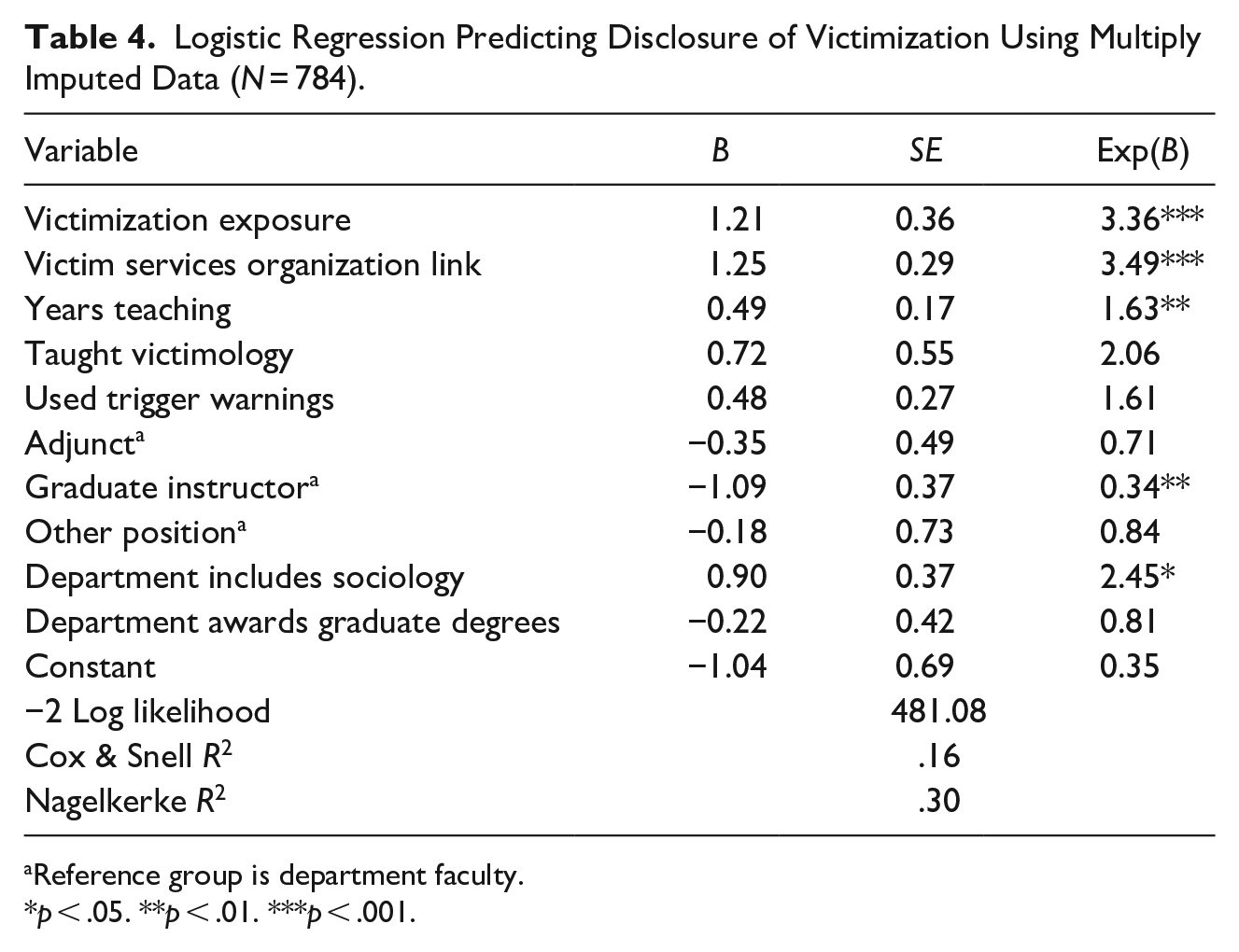
Reference group is department faculty.
p < .05. **p < .01. ***p < .001.
Discussion
We set out to see if there were faculty who were more likely to receive disclosures and, therefore, have an elevated need to know how to respond to disclosures. Our findings suggest that among faculty who teach about criminal justice and criminology, receiving disclosures from students is a normal experience. Eighty-seven percent of the sample had received a victimization disclosure from a student, 52.6% received six or more, and individual faculty characteristics seemingly did not matter. The proportion of faculty receiving a disclosure in our study (87%) was higher than in Richards et al. (2013) earlier work (42%). That may be due in part to the fact that theirs was a sample of faculty across disciplines, and ours was a sample of faculty predominantly in departments of criminal justice, criminology, and/or sociology (95% included at least one of those disciplines). That may also be why their measure of teaching sensitive topics (“teach courses on crime, victims, assault, gender, and/or sexuality,” p. 1412) was a significant predictor of disclosure while our narrower proxy, teaching a victimology course, was not. Perhaps in the three primary disciplines represented in our sample, many or most faculty are teaching courses that include the sensitive topics Richards et al. (2013) identified, which accounts in part for the high prevalence of student disclosures of victimization. It may also be that in the years that elapsed between their data collection and ours (in 2019), lower stigma in disclosing sexual assault as a result of the #MeToo movement led to greater student disclosures.
This study adds to the limited knowledge about which faculty are more likely to receive disclosures and about the nature of disclosures. However, the data in this study were from a survey focused on trigger warning use, so there were limited questions about disclosures, and the participants were members of two professional organizations for criminal justice and criminology. Those limitations, combined with the paucity of other existing research on student-to-faculty disclosures, leave much about disclosures unknown. The remainder of this section outlines next research steps with faculty and students.
Given past evidence that student disclosures can be distressing for faculty (Carello & Butler, 2015; Hayes-Smith et al., 2010; Hulme & Kitching, 2017), it would be helpful to know how widespread those negative psychological impacts for faculty are, how serious, and if the impacts are short- or long-term. This information can be used to ensure appropriate supports are in place to help faculty manage any negative psychological impacts of disclosures. A logical next step in such research is to include an examination of this question specifically for faculty with victimization experiences, given that in this study, they were more likely to have received student disclosures. In doing so, it would be helpful to have a more detailed measure of faculty victimization experiences, as we used a single dichotomous variable for any lifetime violent or property victimization for themselves or a close family member or close friend.
Although in Richards and colleagues’ study (2013) and the current study aspects of faculty identity (e.g., gender, race, and ethnicity) were not related to disclosures, that does not mean they are not related to the impact of disclosure. Faculty in minoritized groups are burdened with a high amount of invisible labor, as they are sought out by minoritized students for mentoring and assigned a disproportionately high level of service on committees in order to have diverse representation. This increased burden exists in addition to the chronic stress due to systematic bias and microaggressions in the broader academy (Gordon et al., 2022; Social Sciences Feminist Network Research Interest Group, 2017; Vargas et al., 2018), possibly resulting in depleted emotional reserves of minoritized faculty and increased negative impacts of disclosure. Future investigations should be more intentional in sampling design and measurement related to minoritized identities, such as gender, race and ethnicity, and sexual orientation. As an example of past limitations, in this study, the measure of gender identity was not inclusive of the spectrum of identities, the terminology was inaccurate, and the number of faculty identifying as genderqueer or nonbinary was too small for multivariate analysis. Similarly, participants predominantly identified as white, the number of participants in some racial identity groups was too small for statistical testing, and racial and ethnic identification was not measured in a way that is reflective of how people see themselves. As an example, Hispanic was a separate question from the racial identity question, but many people identify only as Hispanic or Latino/a/x, so recommended practice is to offer Hispanic/Latino/a/x as an option in a combined racial and ethnic identity question (Mathews et al., 2017). Finally, this study did not include a measure of sexual identity.
Disclosure may also impact faculty pedagogical practices. Future research can explore if receiving disclosures lead to pedagogical changes, such as in course content or how course content is covered. If faculty make changes, it would be important to evaluate how such changes impact students and their learning, as well as if disclosures then increased, decreased, or did not change.
There have been calls for more faculty training (Laguardia et al., 2017) and reports that rates of training are too low (e.g., less than half of institutions provided faculty training on how to respond to sexual assault; Karjane et al., 2002). Survey results reflect that large proportions of adjunct faculty report not having adequate training or information to prepare them to effectively respond to disclosures (American Federation of Teachers, 2022). However, it is not clear if substantial numbers of faculty overall identify a need for training on how to handle disclosures. In regard to training, an important starting point would be to assess faculty’s need for training and, if so, the topics and preferred modality. This would include a need to know more about what, how, when, and why students disclose.
There is anecdotal evidence that how faculty respond can either support students in taking further action or further silence them (Newman, 1999). We need to know from the student perspective how faculty respond to disclosures and how faculty responses impact students. Such studies should include psychological impact, given past research that negative reactions to disclosures (not specific to disclosing to faculty) were related to increased symptoms of anxiety, depression, post-traumatic stress, and other negative mental health outcomes (Dardis et al., 2019; Orchowski & Gidycz, 2015; Orchowski et al., 2013), as well as academic outcomes, such as course engagement and grades. It would also be helpful to know from students why they disclosed: are they seeking accommodations for the course, information about support resources, or social support from the faculty member? Knowing this information could be used to inform any training for faculty.
Research with faculty and students on disclosures needs to be expanded across the full range of academic disciplines. Although courses in criminal justice and criminology may include substantial content on what are considered sensitive topics, that is true of many other disciplines as well (e.g., English, Hanlon, 2015; medicine, Nolan & Roberts, 2021; psychology, Boysen et al., 2021; Hulme & Kitching, 2017; social work, Graziano, 2001). Also, only 52% of the participants in this study thought that the most recent disclosure they received was related to course content or something that happened in the class, and only 29% of participants in Richards et al. (2013) study taught sensitive topics, highlighting that faculty may receive disclosures regardless of course content. Expanding research on faculty disclosures across disciplines would aid in understanding if this is a broader issue in higher education teaching or an issue relevant to only some disciplines and faculty.
In conclusion, it is clear that students disclose victimization experiences to faculty at very high levels, at least in the disciplines of criminal justice, criminology, and sociology, which means faculty need to be ready to respond in an appropriate and supportive manner. Given the variety in where and when students make disclosures, faculty need to be ready at any time when interacting with students. Moving ahead, it would be helpful to know more about the impacts of disclosure on faculty and students, as well as what faculty identify as training needs. This information could be used to design training for faculty on how to respond and what referral resources are available, as well as how to manage any personal distress that disclosures may have on them.
Footnotes
Acknowledgements
Our thanks to the undergraduate (Daniella Pitruzzello, Assumption University) and graduate students (Benjamin Comer, Texas Christian University; Shameika Daye, University of Central Florida) who assisted during the life of this project and to Dr. Cortney Franklin at University of Idaho for contributions to our larger Trigger Warnings Attitudes Study.
Declaration of Conflicting Interests
The author(s) declared no potential conflicts of interests with respect to the authorship and/or publication of this article.
Funding
The author(s) disclosed receipt of the following financial support for the research and/or authorship of this article: This work was supported by an Assumption College Faculty Development Grant and a Faculty Research Support Grant, Center for Criminal Justice Research, School of Criminal Justice, University of Cincinnati.
