






Abstract
Sexual assault (SA) victimization is a prevalent issue both in the U.S. and globally. Although SA victimization is usually perpetrated by a single-perpetrator, multiple-perpetrator sexual assaults (MPSAs) also occur. Unfortunately, there is less literature concerning MPSAs, including the well-being of survivors’ post-assault. One factor that has been shown to be important in the well-being of SA survivors’ post-assault are the social reactions survivors receive from others following disclosure. The current study sought to compare social reactions received by MPSA survivors to the social reactions received by single-perpetrator sexual assault (SPSA) survivors in a community sample of adult female SA survivors (N = 1,863). We examined “turning against” (TA) reactions, a type of negative social reaction in which the supporter expresses more overtly distressing reactions that focus blame on the victim. We also examined unsupportive acknowledgment reactions (UA) the second type of negative reaction in which survivors receive acknowledgment that the assault occurred but are not supported. Additionally, we examined differences in positive reactions that survivors received from their support systems. One-way Analysis of Variance showed statistically significant differences in social reactions to disclosure according to number of offenders in the SA, with MPSA survivors receiving more TA and UA negative reactions than SPSA survivors. There were no differences in positive reactions by number of offenders. Multiple regression analyses also revealed that several demographics, assault characteristics, and post-assault factors (total Post-Traumatic Stress Disorder (PTSD) symptoms, coping, attributions of self-blame) were related to the social reactions received by MPSA survivors post-assault. Implications and recommendations for support providers are discussed.
Sexual assault is a prevalent concern worldwide (Morgan & Truman, 2019; Smith et al., 2018). Previous research has shown that 21% of women have experienced either an attempted or completed rape at some point in their lives (Smith et al., 2018). Although most sexual assaults involve one perpetrator, assaults with two or more perpetrators, known as Multiple-Perpetrator Sexual Assault (MPSA) also occur. There is a range of prevalence for MPSA, but it typically accounts for 2%–26% of sexual assaults within the U.S. with lower reporting in student populations and higher reporting in community samples (Horvath & Kelly, 2009, originally stated by Da Silva et al., 2014; Harris et al., 2021; O’Sullivan, 1991; Ullman, 2013).
Previous research indicates that terms such as “gang rape” are problematic and can be confusing as not all multiple perpetrators are members of gangs. Woodhams and Horvath (2013) explained that terminology such as “gang rape” does not consider the complexities of MPSA crimes. Given the recommendations in the literature, we will refer to sexual assaults that involve at least two people as MPSA rather than “group rape” or “gang rape,” as previous research has recommended (Horvath & Kelly, 2009). Additionally, although we will typically refer to those who were victimized as “survivors” in cases that individuals were killed, we will use the term “victim.”
Following sexual assault, survivors have a variety of concerns that are related to their long-term outcomes, such as an increased risk for mental and physical health concerns, social network and relationship impacts, and academic impacts (Dworkin et al., 2017; Jaffe et al., 2022; Molstad et al., 2023; Pegram & Abbey, 2019). One concern in particular is how informal support network members respond to survivors’ disclosures of sexual assault. For example, many survivors rarely report their experiences to formal support providers while disclosing more often to informal support providers (Scoglio et al., 2022; Ullman, 2023a). Survivors’ experiences with sexual assault vary and each assault and its context is unique. While most research focuses on the experiences of survivors of Single-Perpetrator Sexual Assault (SPSA), to our knowledge, there is a lack of information about the social reactions that MPSA survivors receive when disclosing assaults to others.
Social Reactions
There are several types of social reactions documented in research using the Social Reactions Questionnaire (Relyea & Ullman, 2015; Ullman, 2000). The first overarching negative social reaction is: “turning against” (TA) the victim, or more explicitly hurtful reactions that problematize the victim (e.g., stigmatizing/treating differently, victim-blaming, infantilizing). The second negative reaction is: “unsupportive acknowledgment,” (UA) or reactions that recognize the assault but offer unsupportive methods of dealing with it (Relyea & Ullman, 2015). This means someone is acknowledging that an assault occurred without providing support such as distracting, controlling, or egocentric responses. Positive social reactions to assault disclosure include three major types of responses: emotional support, tangible aid, and information support (Ullman, 2000).
Previous research indicates that assault-specific social reactions made in response to disclosures can impact survivors’ healing. Relyea and Ullman (2015) found that negative TA reactions were associated with negative post-assault outcomes for survivors of sexual assault (e.g., higher levels of self-blame, social withdrawal, and lower levels of sexual assertiveness). Additionally, UA responses were also associated with negative post-assault outcomes (e.g., PTSD, depression). Relyea and Ullman (2015) also found that for survivors who experienced UA, there was a stronger relationship with maladaptive coping than there was for women who received hostile TA reactions. Hakimi et al. (2018) found a relationship between survivors experiencing higher levels of negative reactions following sexual assault disclosure and higher levels of PTSD. Hakimi et al. (2018) also found that survivors who received negative social reactions also used substances at a higher rate than survivors who did not.
Previous research shows that positive social reactions are related to better outcomes for sexual assault survivors. Ullman and Peter-Hagene (2014) found that positive social reactions to disclosures of sexual assault were associated with higher levels of perceived control over recovery, which was also related to lower PTSD symptoms. Survivors who received positive reactions to disclosures also had higher levels of both adaptive social and individual coping. Specifically concerning MPSA survivors, Harris et al. (2021) found that there was a relationship between receiving UA and greater PTSD symptoms.
There are several factors related to how individuals react to a survivor disclosing sexual assault. Studies have found that post-assault factors such as coping, mental health symptomatology, self-blame, and background factors like demographics (race and ethnicity) are related to receipt of negative social reactions (Ullman, 2023b; Ullman and Peter-Hagene, 2016). However, most studies identifying correlates of negative social reactions have only been comprised of SPSA survivors. Therefore, it is necessary to examine whether these relationships are also shown in samples of MPSA survivors.
Currently, there is a gap in literature concerning social reactions to MPSA survivors, but some research suggests that MPSA survivors may receive more negative reactions to sexual assault disclosures than SPSA survivors. For example, in a large community sample, Ullman (2007) found that there were no significant differences in positive social reactions received by SPSA and MPSA survivors but that MPSA survivors received significantly more negative social reactions than SPSA survivors. Additionally, some experimental vignette research has examined attributions of blame in MPSAs. Adolfsson et al. (2020) examined how Swedish participants responded to hypothetical MPSA scenarios. Adolfsson et al. (2020) found that when comparing MPSA to SPSA, there was more blame toward victims in a hypothetical MPSA than a SPSA and that the level of victim-blaming was not impacted by the force used by the perpetrator during the assault. Additionally, Adolfsson et al. (2020) found that both level of rape myth acceptance and participants’ perceptions of consent in sexual scenarios were better predictors of attributions of blame toward the victim and the perpetrator. Studies of actual MPSA survivors have yet to examine how different types of social reactions from persons told about the assault relate to survivors’ self-blame attributions, but are needed, as research on sexual assault in general shows victims who are blamed are more likely to blame themselves (Peter-Hagene & Ullman, 2018). This is particularly important as self-blame relates to poorer recovery from sexual assault generally (Frazier, 2003; Koss et al., 2002). Given that MPSAs differ from SPSAs in various ways, it is of the utmost importance that we examine how support systems respond to survivors of both MPSA and SPSA, following sexual assault disclosure.
Current Study
The majority of research regarding social reactions to sexual assault survivors upon disclosure has focused on those who experienced SPSA, so prior research on this topic is sparse. Although Ullman (2007) did examine social reaction differences between SPSA and MPSA in another sample, they did not utilize the same scales as the current dataset (using instead an earlier version of the Social Reactions Questionnaire [SRQ]), nor did they examine correlates of social reactions. Given that the characteristics of MPSA and SPSA are usually different (da Silva et al., 2014), it is extremely important to gain an understanding of experiences of MPSA survivors upon sexual assault disclosures. The current study examined if there were group differences among social reactions received by survivors, based on the number of perpetrators (one person, two people, or three or more people). Additionally, we examined several correlates of social reactions for MPSA survivors to build on previous studies that only examined social reactions but did not examine their correlates. This MPSA study also builds on previous studies that examined correlates of social reactions in survivors, but not in an MPSA sample specifically. In the current cross-sectional study, we hypothesized that there will be group differences in social reactions based on the number of perpetrators. Given the previous research showing more negative reactions to MPSA survivors, we expected that SPSA survivors would receive more positive social reactions than MPSA survivors. Furthermore, we hypothesized that MPSA survivors will receive more TA and UA negative reactions than SPSA survivors. We also hypothesized that demographics, assault characteristics (e.g., depressive symptoms, total PTSD symptoms, coping, attributions of blame), and post-assault factors would be significantly related to the social reactions that MPSA survivors received upon disclosure.
Method
Sample
Participants (N = 1,863) were volunteers from the Chicago metropolitan area who participated in a survey concerning the social reactions received when disclosing their unwanted sexual experiences (for full study description, please see Ullman & Peter-Hagene, 2016). Survivors in this sample all identified as female and ranged from 18 (minimum age for participation) to 78 years old (M = 36.52, SD = 12.54). Most participants (42.3%) completed some college, 32.1% completed college or beyond, 15.4% completed high school or their General Educational Development (GED), and 10.2% completed less than 12th grade. A majority of participants were unemployed (56.7%). Participants were asked to select all that applied for their racial identities. Of our total sample, 41.2% of participants identified as White, 49.3% identified as Black or African American, 2.9% identified as Asian, .6% identified as Pacific Islander or Native Hawaiian, and 9% of participants identified as another racial identity. Thirteen percent of participants identified as Hispanic or Latina. Forty percent of participants had annual incomes of $10,000 or less, 19.2% earned $10,001 to $20,000, 11.3% earned $20,001 to $30,000, 9.9% earned $30,001 to $40,000, 5.8% between $40,001 to $50,000, and 13.2% more than $50,000 (See Table 1).
Demographics.
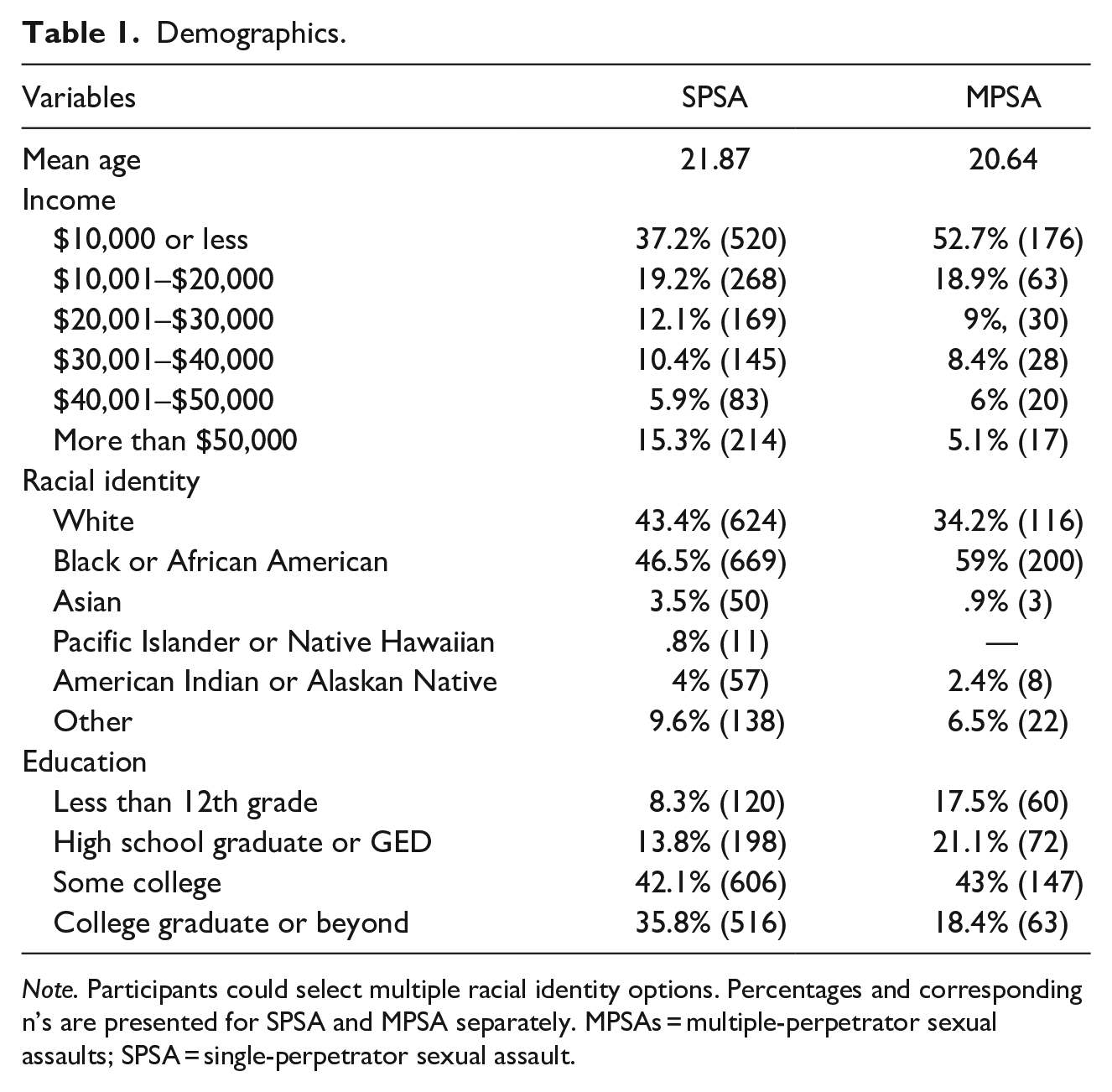
Note. Participants could select multiple racial identity options. Percentages and corresponding n’s are presented for SPSA and MPSA separately. MPSAs = multiple-perpetrator sexual assaults; SPSA = single-perpetrator sexual assault.
Procedures
Women living in the Chicago metropolitan area were recruited through advertisements in local newspapers, Craigslist ads, as well as university mailings. The research team posted fliers throughout the Chicago metropolitan area and community organizations that work with survivors of violence, substance use, and cultural centers as well as local colleges and universities. Individuals who were interested in participation called the research team who then screened their eligibility. In order to be eligible, participants had to have had an unwanted sexual experience at age 14 or older, be at least 18 years old upon participation, and had disclosed their unwanted sexual experiences to someone previously. Eligible participants filled out consent forms and surveys. Given that survivors were asked to recall their post-assault experiences, they were also given materials such as a referral list of community resources including mental health, physical health, and rape crisis organizations. Once the completed surveys were received, the participants received compensation of $25. The response rate was 85% and the university’s institutional review board approved all study procedures and documents (Protocol #2001-0156).
Measures
Demographics
In the present study, we collected demographic data of survivors, such as age at the time of sexual assault, racial identity of survivors, and the highest level of education.
Assault Characteristics
In the present study, we used a modified version of the Sexual Experiences Survey (Koss & Gidycz, 1985) to assess sexual victimization in adulthood (i.e., 14 or older). Testa et al.’s (2004) modified Sexual Experiences Survey (SES-Revised) assesses various forms of sexual assault such as unwanted sexual contact, verbal coercion, attempted rape, and forced or incapacitated rape. The SES-Revised was found to be reliable in the current sample (M = 7.17, SD = 2.64, α = .76).
We assessed the number of perpetrators by asking participants how many individuals assaulted them (1, 2, or 3+). Please see Table 2 for sexual assault characteristics. We also assessed the highest level of sexual abuse experienced by survivors, which ranged in severity from non-consensual fondling, kissing, oral sex, and anal sex to vaginal sex. Additionally, we measured the highest level of violence severity experienced by survivors, ranging from insistence, threats, twisting arms or holding down, hitting or slapping, choking or beating, and the use of weapons. We assessed the highest level of injury severity that survivors sustained during the assault, which ranged from soreness, bruises or scratches, cuts, and broken bones to knife or gunshot wounds. Lastly, we measured highest level of resistance that survivors used, which included staying still or freezing, reasoning or pleading with the perpetrator(s), crying or sobbing, screaming for help, running away, physically struggling, pushing away, hitting or scratching, and physically fighting, kicking, using a weapon or martial arts.
Characteristics of Assault.
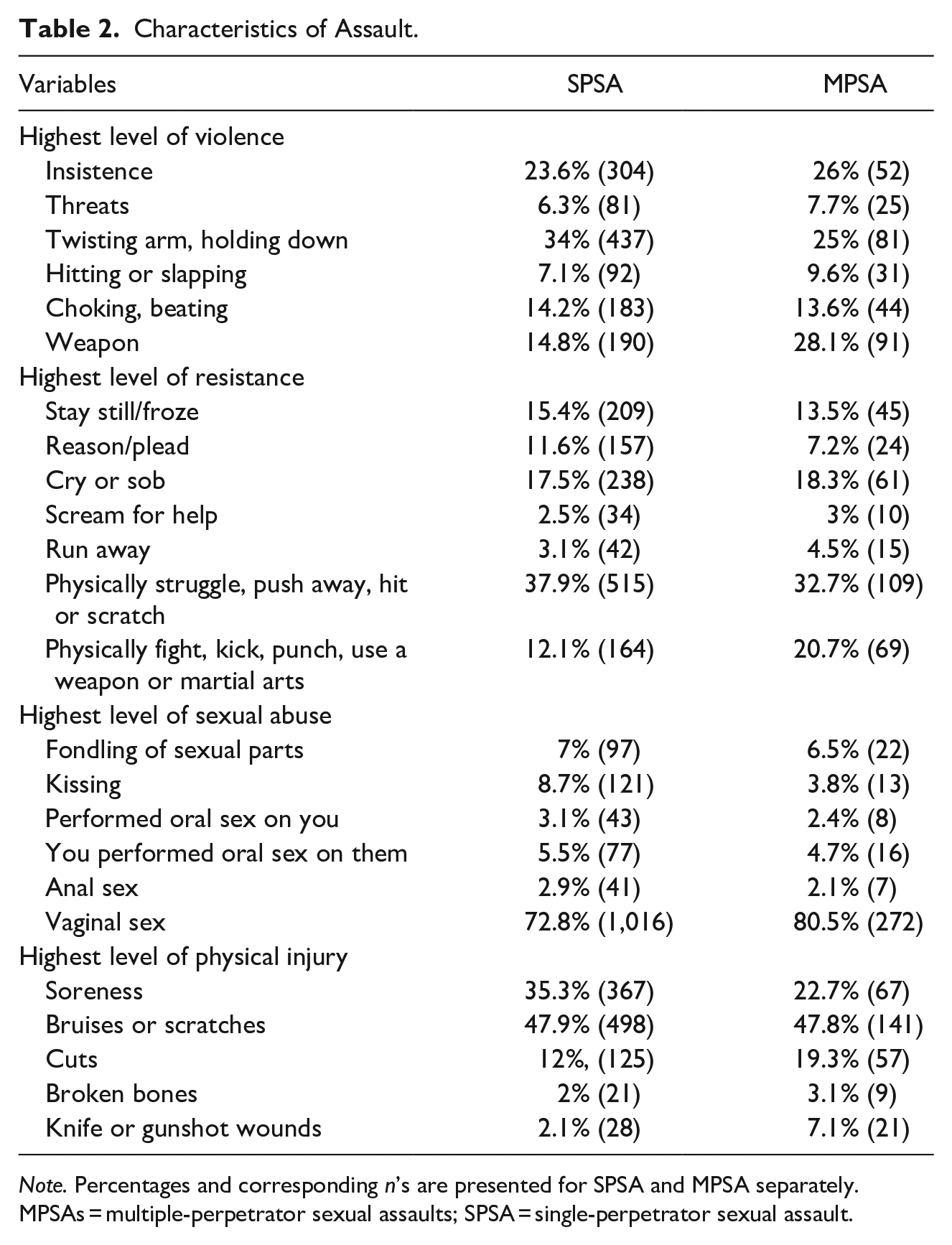
Note. Percentages and corresponding n’s are presented for SPSA and MPSA separately. MPSAs = multiple-perpetrator sexual assaults; SPSA = single-perpetrator sexual assault.
Depressive Symptoms
We used a modified seven-item version of the Center of Epidemiologic Studies Depression Scale (CES-D-7) (Mirowsky & Ross, 1990) in which participants rated between 0 (never) to 5 (always) their depressive symptoms over the past 12 months. Internal consistency reliability analysis indicate a high level of reliability (α = .84, SD = 5.34, M = 15.22).
Posttraumatic Stress Disorder
Survivors completed the Posttraumatic Stress Diagnostic Scale (PDS; Foa, 1995), a 17-item measure from the DSM-IV TR criteria (APA, 2000). Survivors indicated the frequency of their symptoms over the past 12 months ranging from 0 (not at all) to 3 (almost always) in relation to their most serious sexual assault. The PDS has acceptable test–retest reliability for a PTSD diagnosis in assault survivors over 2 weeks (α = .74; Foa et al., 1997). The scale was shown to be reliable in the current study (α = .93, SD = 13.10, M = 25.02).
Coping Strategies
Participants completed a 28-item self-report scale of coping strategies known as the Brief COPE (Carver, 1997) to assess coping in response to the assault. Participants reported how often over the past month they employed coping strategies from 1 (I didn’t do this at all) to 4 (I did this a lot). Maladaptive coping was computed as the mean responses to eight items concerning factors such as denial, self-blame, substance use, and behavioral disengagement. In the current study, the scale was found to be reliable (α = .85, SD = 14.05, M = 37.06).
Social Reactions Questionnaire
The 48-item SRQ (Ullman, 2000; Relyea & Ullman, 2015) assesses how frequently survivors experienced reactions to their sexual assault disclosure. The SRQ is made up of seven different subscales that measure negative reactions such as controlling behaviors, victim-blaming, and egocentric responses as well as positive responses, such as emotional support or providing tangible support to the survivor. The positive responses consist of 20 items and was shown to be reliable in our MPSA subsample (M = 45.13, SD = 20.36, α = .93), as well as for our full sample (M = 43.59, SD = 19.02, α = .92). The negative social reactions are further broken down into two subscales (UA and TA reactions) which came from a previously reported confirmatory factor analysis (Relyea & Ullman, 2015). UA reactions are characterized by responses in which the disclosure recipient acknowledges that the assault occurred but fails to provide sufficient support to the survivor. For example, disclosure recipients may focus on their own needs rather than survivors’, take over the survivors’ healing experience, and/or make decisions for the survivor. TA reactions are characterized by victim-blaming reactions or not believing the survivor. The TA scale consists of 13 items and was found to be reliable in our MPSA subsample (M = 13.99, SD = 14.44, α = .94), as well as in the full sample (M = 10.03, SD = 11.83, α = .92). The UA scale also consists of 13 items and was reliable in our MPSA subsample (M = 17.33, SD = 11.61, α = .86) as well as in the full sample (M = 13.89, SD = 10.57, α = .85).
Attributions of Self-Blame
One five-item subscale of the Rape Attribution Questionnaire (Frazier, 2003), a self-report scale which measures survivors’ attributions of why the sexual assault occurred, assessed characterological self-blame (e.g., “I am a careless person”) from 1 (strongly disagree) to 5 (strongly agree). We utilized this subscale as previous research has indicated a relationship between characterological self-blame and more negative social reactions (Ullman, 1996) and less positive social reactions (Ullman & Najdowski, 2011). This subscale has been shown to be valid and reliable in previous research and showed good reliability in the current study (M = 13.87, SD = 4.87, α = .73).
Analysis Strategy
Social Reactions Group Differences
We utilized Statistical Package for the Social Sciences (SPSS) Version 28, Chicago, IL to conduct the analyses. First, we conducted Levene’s test of homogeneity of variances among our groups and then one-way Analysis of Variance (ANOVA) to determine if there were differences in social reactions based on the number of perpetrators involved in the sexual assault. Following the ANOVAs, post-hoc analyses were conducted to determine which means significantly differed from each other.
Multivariate Analyses—Predicting Social Reactions
Prior to conducting multivariate analyses with MPSA survivors, we ran descriptive statistics on demographic variables (age, highest level of education, and racial identity), and Pearson R correlation coefficients were calculated for MPSA survivors with pairwise deletion of missing data. We then ran multiple linear regressions predicting TA social reactions, UA social reactions, and positive social reactions to determine if there were any significant relationships between independent variables with these social reaction outcome variables. We entered several variables into each regression model, if significant in correlational analyses at the p < .05 level. For the TA model, we entered demographics (racial identity), assault-related factors (highest level of resistance, highest level of physical injury), as well as post-assault variables (CES-D-7, total PTSD symptoms, maladaptive coping, and characterological self-blame). In the UA model, we entered demographics (highest level of education and racial identity), assault-related factors (highest level of resistance and highest level of physical injury), and post-assault factors (CES-D-7, total PTSD symptoms, maladaptive coping, and characterological self-blame). In the Positive reactions model, we entered demographics (age, racial identity, education), assault-related factors (highest levels of sexual abuse, resistance, and violence), and post-assault variables (Depression, total PTSD symptoms). In our regression analysis, we removed our missing data casewise to minimize loss of cases.
Results
Demographics and Assault Characteristics
Most participants in the MPSA subsample (N = 350) indicated that they were vaginally raped (80.5), while some participants were fondled (6.5%), forced to perform oral sex (2.4%), forcibly kissed (3.8%), forced to receive oral sex (4.7%), and anally raped (2.1%). Participants utilized several resistance tactics such as: physically struggling with the offenders (32.7%), physically fighting the offenders (20.7%), crying or sobbing (18.3%), staying still or freezing (13.5%), reasoning or pleading with the perpetrators (7.2%), running away (4.5%), and screaming for help (3.0%). Perpetrators used various methods of violence such as: insistence (16%), threats (7.7%), twisting arm or holding down (25%), hitting or slapping (9.6%), choking or beating (13.6%), and weapon use (28.1%). Participants experienced injuries such as bruises and scratches (47.8%), soreness (22.7%), cuts (19.3%), knife or gunshot wounds (7.1%), and broken bones (3.1%). Participant age at the time of the assault ranged from 7 to 56 years old, with the mode age being 14. One-third (34.2%) of participants identified their racial identity as White, while 59% of participants identified as Black or African American. The majority of participants completed some college (43%), high school or GED (21.1%), less than 12th grade (17.5%), or graduated college or beyond (18.4%).
Correlations
We conducted Pearson’s correlations to explore associations among all study variables with participants’ experiences of TA, UA, and positive social reactions. The variables included in this analysis were demographics of education, racial identity (dummy-coded), age, assault characteristics, highest level of sexual abuse, victim resistance, offender violence, and physical injury sustained during the assault, and post-assault factors, including survivor’s CES-D and total PTSD symptoms, maladaptive coping, and characterological self-blame. (See Table 3 for significant correlations).
Pearsons Correlations with Social Reactions.
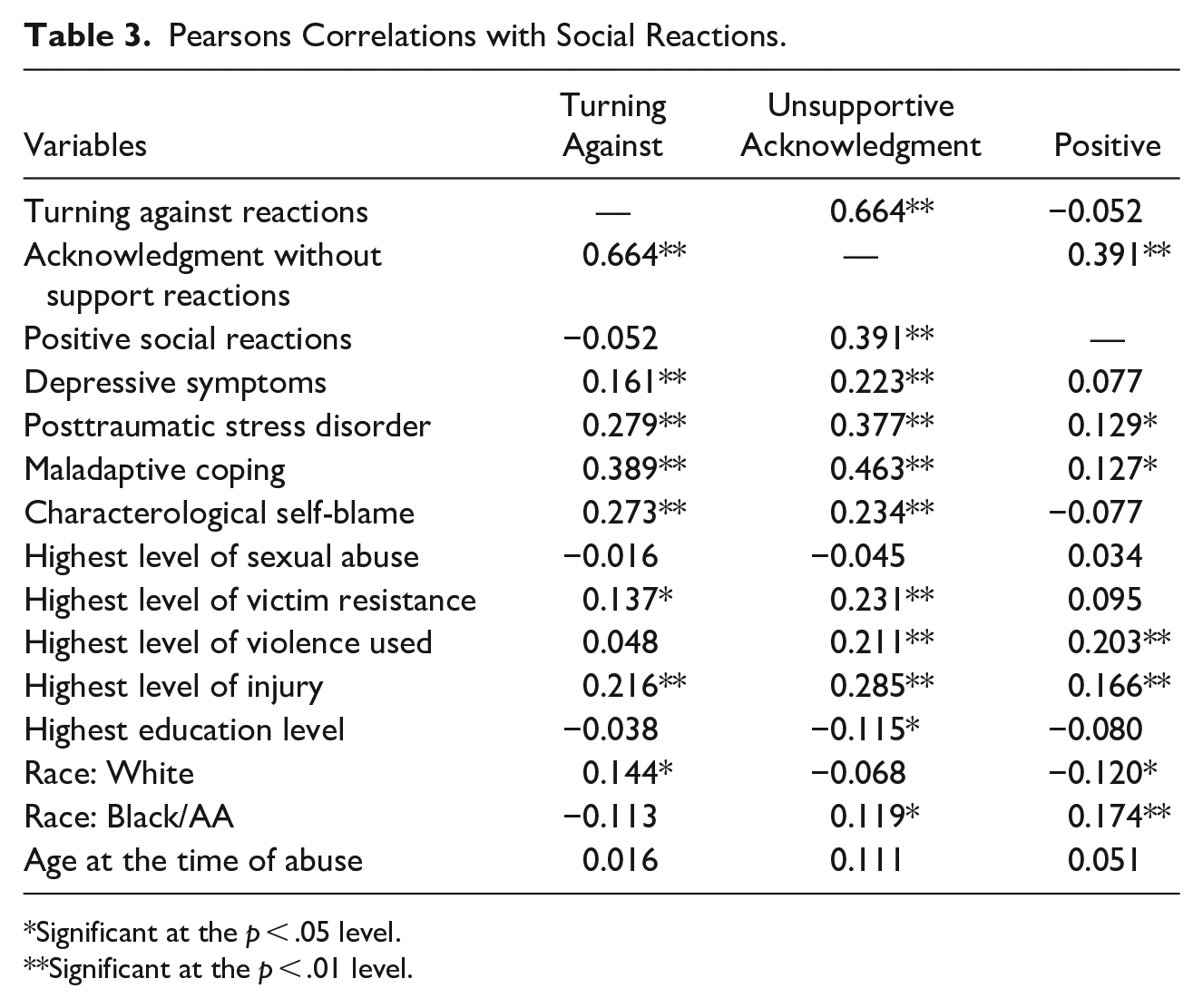
Significant at the p < .05 level.
Significant at the p < .01 level.
Comparisons of Social Reactions in MPSA and SPSA Victims
One-way ANOVA with follow up post-hoc comparisons were conducted to test whether social reactions made to victims varied based on number of offenders committing their assaults. Participants indicated that they were assaulted by one person (N = 1,463), two people (N = 187) or three or more people (N = 163). Results of Levene’s test of homogeneity of variance was significant, indicating a violation of homogeneity of variances, so a Welch test was used to interpret the ANOVA. Results of our one-way ANOVA indicated significant differences in TA reactions, F (2,224.70) = 18.88, p < .001, η2 = .036 and UA reactions F (2, 230.71) = 17.14, p < .001, η2 = .027 based on the number of offenders. There were no statistically significant differences in positive reactions, F (2,237.07) = 1.07, p > .05, η2 = .002. In order to understand where the differences were between the groups of perpetrators, we conducted Bonferroni post-hoc comparison analyses. Results of our post-hoc analyses indicate that for TA reactions, individuals who were assaulted by one person received significantly less TA reactions (M = .74) than individuals who were assaulted by two perpetrators (M = .97; p = .008) and people who were assaulted by three or more perpetrators (M = 1.33; p < .001). Additionally, individuals who were assaulted by two perpetrators received significantly less TA reactions (M = .97) than individuals who were assaulted by three or more perpetrators (M = 1.33; p < .005). Results of our post-hoc analysis also indicated that for UA reactions, individuals who were assaulted by one person received less UA reactions (M = 1.04) than individuals who were assaulted by two perpetrators (M = 1.27; p = .003) and those who were assaulted by three or more perpetrators (M = 1.48; p < .001). Given the higher levels of TA reactions and of UA reactions for survivors of MPSA, we next turn to analyses within the MPSA subsample (N = 350) in order to better understand their experiences with negative social reactions such as TA and UA.
Multiple Regression Analyses
We entered independent variables that were shown to be significant in the preliminary correlational analyses into each regression model (see Table 4 for regression models). Results of the first multiple regression indicated several significant variables such as more maladaptive coping, characterological self-blame, and being White were related to higher TA reactions, F(7,248) = 9.62, p < .001, with 21.4% of variance explained in the dependent variable. Results of the second multiple regression also indicated significant variables related to UA reactions such as being Black, greater physical injury and victim resistance during assault, higher total PTSD symptoms, and more maladaptive coping, F(8,245) = 13.75, p < .001, with 31% of variance explained in the dependent variable. Finally, in the third regression, the highest level of violence experienced during the sexual assault and being Black were significantly related to positive social reactions F(6,251) = 4.35, p < .001, with 9.4% of variance explained in the dependent variable.
Multivariate Linear Regression Analysis Predicting Negative and Positive Social Reactions.
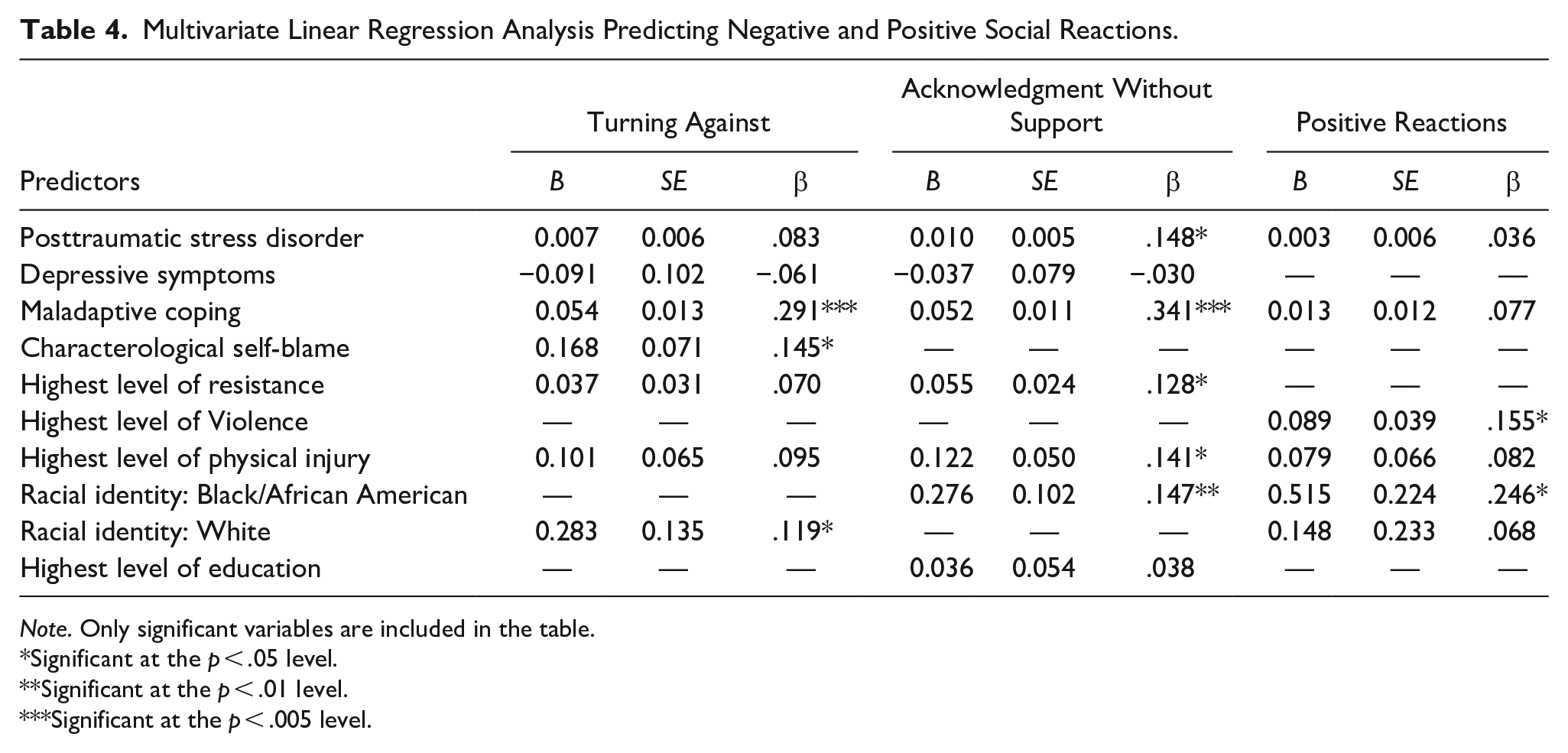
Note. Only significant variables are included in the table.
Significant at the p < .05 level.
Significant at the p < .01 level.
Significant at the p < .005 level.
Discussion
Results of the current study replicate and expand on previous research, showing that negative social reactions are common for sexual assault survivors disclosing their experiences after the assault, which have been associated with various psychological symptoms, including PTSD and depression (Ullman, 2023b). However, little research has examined social reactions to MPSA victims or potential differences in reactions victims receive according to the number of offenders committing such assaults. The current study indicates that numbers of offenders may impact how informal support providers respond to sexual assault survivors and that several variables may impact these social reactions. Negative social reactions (UA and TA differed significantly based on the number of perpetrators. Such MPSAs were related to more negative social reactions made to victims disclosing assaults than those who experienced SPSA. This finding replicates previous research that has also found that survivors of MPSA experience more negative social reactions than survivors of SPSA. However, it is worth noting that the earlier study’s measurement of negative social reactions did not differentiate between TA and UA (Ullman, 2007). This study also replicates previous research showing that post-assault factors and demographics were related to social reactions received by survivors, although these studies did not explicitly examine survivors of MPSA (Ullman, 2013; Ullman & Peter-Hagene, 2016). Additionally, among MPSA survivors, there were some significant differences based on number of perpetrators. Survivors of MPSAs with three or more perpetrators received significantly more TA social reactions than those with two perpetrators. However, for UA, there were no significant differences based on number of offenders for multiple-offender assaults. This study, while replicating previous results, also addresses some gaps in the literature. While we have seen that MPSA survivors experience more negative social reactions, previous research has not examined differences in assaults and post-assault outcomes by different numbers of perpetrators in MPSA assaults. Additionally, this study also examined correlates of positive, TA, and UA social reactions to understand whether they have distinct relationships with demographics, assault characteristics, and post-assault factors. For example, TA reactions were significantly related to assault characteristics, such as highest level of victim resistance and injury, as well as post-assault factors like characterological self-blame, maladaptive coping, total PTSD symptoms, and depressive symptoms. Similarly, UA reactions were significantly related to assault characteristics, such as highest level of violence, victim resistance and injury, depressive symptoms, and total PTSD symptoms. These associations indicate that certain assault and post-assault characteristics may impact negative social reactions received upon disclosure. Although previous research has examined correlates of social reactions for sexual assault survivors in general, to our knowledge, there is no previous research that examined these broader social reaction measures in assaults with multiple perpetrators.
In the future, it is important to further examine the experiences of MPSA survivors to better understand why these differences may be present. One possibility is such assaults, while more severe, are more stigmatized in society and thus paradoxically less likely to be responded to with support for victims. While there is little research examining why MPSA survivors experience more negative reactions than SPSA victims, previous research has shown a relationship between blame attributions and rape myth acceptance (i.e., the victim is responsible because they were flirting with the perpetrators, the victim is lying, the victim was embarrassed, etc.) (Adolfsson et al., 2020). In a real-life example, during an actual criminal trial concerning two men accused of perpetrating MPSA, their defense argued that the victim consented to rough group sex, and later was too embarrassed to tell her friend and boyfriend leading to her lying about the sexual assault (Hasham, 2019). During publicized MPSA cases, victim-blaming responses to survivors, such as attitudes that they invited the MPSA based on their behaviors such as drinking prior to the assault, are common (McNamara, 2013).
In addition, our regression analysis showed several variables associated with UA in MPSA survivors. We found that post-assault factors (total PTSD symptoms and maladaptive coping), assault characteristics (highest level of resistance and highest level of physical injury), as well as identifying as a Black or African American woman were significantly associated with receiving more UA reactions. We also found that maladaptive coping, characterological self-blame, and identifying as a White woman were associated with receiving more TA reactions. These results indicate that specific assault and post-assault characteristics, as well as racial identity of the survivor, may relate to negative social reactions received in response to assault disclosure. Those who work with MPSA survivors, as well as who work with survivors’ informal support network members, can utilize this information to better understand and treat survivors with different assault experiences.
Many of our results replicate previous research, which has shown relationships between post-assault factors (e.g., coping, mental health symptoms, self-blame) and demographics (e.g., racial identity and ethnicity) with negative social reactions, although these previous studies have only examined SPSA survivors (Ullman, 2023a; Ullman & Peter-Hagene, 2016). For positive social reactions, the only two significant predictor variables were highest level of violence and Black/African American racial identity. Results indicated that the higher the level of violence endured during the MPSA, the more positive social reactions survivors received. Additionally, identifying as a Black or African American woman was related to receiving more positive social reactions. One possible explanation of this relationship could be that Black or African American survivors sought out informal support sources as previous research indicates that they are less likely to seek out formal support services (Tillman et al., 2010). Additionally, previous research has indicated more perceived positive social reactions for Black women who experienced high levels of violence during sexual assault (Gibson, 2018). Given that MPSAs tend to be more violent, this could also be a possible explanation. More research is needed in order to better understand the experiences of Black or African American women’s experiences following MPSA. Interestingly, maladaptive coping was the only factor that was associated in our regression model with both UA and TA, consistent with past research on sexual assault in general (Ullman & Relyea, 2016). Additionally, the only assault characteristic related to positive social reactions was the highest level of violence used. This relationship may be explained by the “real-rape” stereotype, which refers to the belief that only sexual assaults with certain characteristics, such as severe violence, are considered valid assaults (Ellison & Munrow, 2013). Previous research has shown that formal support providers such as law enforcement believe more violent sexual assaults are a sign of a “real” rapes occurring (Venema, 2016). The alignment of violence with the “real-rape” stereotype may, in part, help to explain the relationship between positive social reactions and higher levels of violence. This finding is also interesting as it contradicts findings in SPSA samples in which perpetrator violence was related to more negative reactions (Ullman, 2023b). It would be advantageous for future scholarship to further explore maladaptive coping in MPSA survivors as well as to focus on why a higher level of violence is related to positive social reactions, such as further exploring the “real-rape” stereotype in relation to social reactions. At this point, to our knowledge, there is not research examining the disclosure behaviors of MPSA survivors, however one study found that following a publicized and violent MPSA case in 2012, sexual assault reporting to police significantly increased in India (McDougal et al., 2021). Future scholarship should further examine the relationship between violence and disclosure behavior among MPSA survivors. The findings of the current study may be helpful for those who work with survivors and their supporters in both formal and informal settings. Individuals who work with sexual assault survivors should differentiate by number of offenders as there could be implications for treatment. For example, mental health practitioners may intervene with support systems as we found a significant difference with higher TA and UA reactions, through providing education in supportive behaviors following sexual assault experiences. Additionally, victim advocates can work with survivors of MPSA to link them to medical and long-term services related to treatment.
Previous research examining survivors’ experiences participating in studies of sexual violence shows that the majority of survivors described the potential to help other survivors through telling their stories as their main motivation for participating (Campbell & Adams, 2009). Additionally, survivors indicated that they were ready to tell their stories, wanted their stories represented in research, and felt it would help their healing journey. Another analysis of the same full dataset from which the current subsample was drawn found that 90% of participants indicated having more positive than negative experiences from participating (Kirkner et al., 2019). Results also indicated that more than half of the sample sought additional services following research participation, particularly individuals who stated that their participation led to them gaining insight. These positive findings regarding the impact of participating are likely due in part to survivors volunteering to participate in a study of unwanted sexual experiences. Voluntary participation typically leads to survivors engaging in research who are ready and wanting to share their experiences sometime after the assault and is less likely to include survivors recently assaulted and/or in crisis.
Limitations
The current study used a volunteer sampling strategy and collected retrospective self-report data that relied on participants’ recollections of details of their assaults, such as the offenders’ use of violence, injuries sustained, levels of resistance, etc. Additionally, this study was part of a larger study that examined sexual assault experiences broadly without questions specific to MPSA survivors, and several of the variables were not significant. In future studies, researchers should prioritize examining the experiences of MPSA survivors in the study design to better understand their experiences. Specifically, it would be ideal to utilize both quantitative and qualitative data to gain a more comprehensive understanding of MPSA survivors’ experiences.
Conclusions
The current study adds to the sparse body of sexual assault research addressing MPSA survivors’ experiences post-assault by contributing to further understanding of their post-assault disclosure experiences, including social reactions from those told about their assaults. While this research indicates more negative social reactions to disclosure are made overall to MPSA survivors’ assault disclosures, it also examines factors that may be impactful in how informal support providers react to MPSA survivors. This study may be useful for both informal support providers as well as for formal support providers (mental health practitioners, advocates, etc.). Because this study demonstrates the experiences of MPSA survivors and how their post-assault experiences may differ from that of SPSA survivors, it can be used as a resource for practitioners who work with MPSA and SPSA survivors as the outcomes for MPSA survivors are not equivalent to the experiences of SPSA survivors. The results of the current study have implications specific to those working with survivors of sexual assault. Specifically, MPSA survivors typically experience more severe and sometimes life-threatening assaults. In addition, they also may experience more secondary victimization through the higher level of negative social reactions that they receive upon disclosure. If survivors seek help and formal treatment following sexual assault, mental health professionals can screen for MPSA experiences specifically and provide specific types of support based on the number of perpetrators in the assault. They can also counsel survivors’ social network members regarding how to support the survivor, specifically if those individuals are also in the therapeutic context (e.g., individual, couples and/or family counseling). Formal supports who have survivor contact, such as advocates and clinicians, may also assist with safety planning with their clients, referrals to medical care for injuries sustained as well as long-term medical and/or psychological treatment. It is also important for mental health practitioners to screen for mental health concerns such as depression, suicidality, PTSD, and other health concerns likely to be more prevalent in MPSA victims. Additionally, clinicians should support survivors’ adaptive coping in place of maladaptive strategies, reinforcing they are not to blame and normalizing their responses to a severe traumatic experience. While there is limited research concerning the outcomes for survivors of MPSA, it is important for scholars to continue to study their needs in order to provide data that can be used to ameliorate negative outcomes and facilitate recovery.
Footnotes
Acknowledgements
We thank Amanda Vasquez, Katherine Lorenz, Rannveig Sigurvinsdottir, Mark Relyea, Liana Peter-Hagene, Meghna Bhat, Cynthia Najdowski, Saloni Shah, Susan Zimmerman, Rene Bayley, Farnaz Mohammad-Ali, Shana Dubinsky, Diana Acosta, Brittany Tolar, and Gabriela Lopez for assistance with data collection.
Declaration of Conflicting Interests
The author(s) declared no potential conflicts of interests with respect to the authorship and/or publication of this article.
Funding
The author(s) disclosed receipt of the following financial support for the research and/or authorship of this article: This study was supported by a grant from the National Institute on Alcohol Abuse and Alcoholism (AA 17429) to Sarah Ullman, principal investigator.
