







Abstract
Bullying victimization and its impact on the mental health of incarcerated adolescents remains unclear. To address the issues, we discover the experiences and perspectives of the victims of bullying through semi-structured interviews and focus group discussions with 20 male incarcerated juvenile offenders. Findings reveal pervasive patterns of mental health problem, including depression, anxiety, fear, loneliness, low self-esteem, rumination, sleep disturbances, and physical symptoms among participants. Furthermore, the behavioral and performance issues arise from victimization that impact the academic and rehabilitation programs of these juvenile offenders. Victims encounter negative environmental factors such as lacking support, deficiencies in policy clarity and implementation, severe power imbalance, and restricted movements and interactions that exacerbate the symptoms resulting from bullying victimization, consequently intensifying negative beliefs and attitudes toward their surroundings within the reformatory facility. This, in turn, affects their relationships and the overall atmosphere of the facility. The study also highlights positive coping strategies such as social support and resilience that could mitigate the deleterious consequences of bullying victimization among these victims. These factors act as buffers, helping victims navigate the challenges of bullying victimization, and maintain their well-being. Integrating theoretical frameworks such as trauma theory and psychological resilience theory, the study offers insights into the complex interplay between bullying victimization, mental health, and rehabilitation outcomes. This study discovers some unique features and deleterious effects of bullying victimization on mental health, which contribute to the existing literature on bullying victimization among a special population in a unique environment. Furthermore, the study underscores the urgent need for evidence-based interventions and policy reforms to address bullying victimization among incarcerated adolescents.
Keywords
Introduction
Bullying victimization refers to the recurrent exposure to detrimental actions from one or more persons over an extended period (Olweus, 2013; Salmivalli, 2014). An adolescent becomes a target of bullying when another adolescent directs unpleasant and hurtful remarks, engages in physical aggression such as kicking or hitting, issues threats, sends malicious notes, confines them in a room, and when they face social isolation with no one communicating with them (Shetgiri, 2013). On a global scale, adolescents face widespread bullying victimization (WHO, 2023). For instance, recent research (Due et al., 2008; Ndumba & Ngulube, 2018; Njelesani et al., 2022) reported the prevalence of bullying victimization to be ranged from 67.1% to over 70% among Zambian adolescents. Studies show that a significant number of adolescents experience bullying, with notable reports indicating that up to 63% of students are subjected to peer bullying (Zulu &Tembo, 2020). Another survey indicated that 62.8% of students in schools reported being bullied in the 30 days prior to the survey. This rate is more than twice as high as reported in similar studies in Venezuela and China (UNICEF, 2019). Factors like cultural norms, facility policies, and socio-economic conditions might influence bullying dynamics differently in Zambia. For instance, the absence of clear, coordinated national policies and guidelines regarding bullying in Zambia contributes to inconsistent policy implementation at the juvenile reformatory facility (Siziya et al., 2012). Furthermore, in the reformatory and prison environment, dominance is an encouraged element, and the inmate subculture often enforces sanctions against reporting bullying to prison officials, leaving victims with no means of escape (Njelesani et al., 2022).
Youth incarceration in Zambia remains a pressing issue, exacerbated by systemic inadequacies within the judiciary and correctional systems. Research indicates that a significant percentage of the prison population is composed of young individuals, with about 7.2% of the inmate population under the age of 20 (Zambia 2022 human rights report). Instances of adolescents being detained raise serious concerns regarding their protection and rehabilitation, often placing them at risk of various forms of abuse and violence, including bullying. Moreover, the bullying discourse within the context of Zambia is a critical concern that intersects with the realities of youth incarceration. The high rates of youth incarceration amplified by a culture of bullying necessitate a comprehensive understanding of these dynamics, especially when assessing well-being.
Bullying victimization can exert various detrimental impacts on the mental health of adolescents, such as heightening levels of depression, anxiety, and diminishing self-esteem, with an increased risk of suicide (Bansal et al., 2024). For example, Ranta et al. (2009) indicate that there is an association between bullying victimization and mental health problems among adolescents and longitudinal studies have linked bullying victimization at school to depression and depressive symptoms in adolescence (Zwierzynska et al., 2013). Encountering bullying victimization in the juvenile reformatory facility seems to lead to similarly adverse outcomes for individuals (Allison & Ireland, 2009; Ireland, 2010; Ye et al., 2023). This research on bullying victimization in reformatory facilities is relevant because it has not received as much attention as bullying in other populations. Relatively little has been reported on the characteristics of victims, and on the reactions of victims to their bullying. There is a lack of published research in this area. There is a significant gap in knowledge regarding how juvenile offenders perceive and experience bullying victimization (Hall & Killacky, 2008), and the specifical impact of bullying victimization on adolescent mental health within reformatory facilities are uncovered. Furthermore, a major limitation of research on the relationship between bullying victimization and mental health is that to date most of the research into bullying has been confined to schools and has mainly been conducted in the developed world (Hawker & Boulton, 2000; Mungala & Nabuzoka, 2020). Whether these findings could be replicated in reformatory facilities in developing countries is unclear. Thus, we want to address these issues by further exploring the experiences and outcomes of bullying victimization of adolescents at a juvenile reformatory facility in Zambia. This study exclusively examines male juvenile offenders as it is the only juvenile reformatory facility within the Zambia Correction Service that accommodates only male adolescents undergoing rehabilitation.
Theoretical Framework
The study will be guided by the trauma and psychological resilience theories (PRT). According to trauma theory (Smith et al., 2018), psychological trauma occurs when individuals face events that are overwhelming, threaten their safety, and evoke feelings of helplessness. Experiences such as bullying or severe neglect can lead to such trauma ( Idsoe, et al., 2021; Xu, et al., 2023). The theory examines how repeated victimization leaves lasting psychological effects on individuals. Trauma impacts emotional, cognitive, and physical functioning, often resulting in intense emotions like fear, anxiety, and sadness. Victims may also experience guilt or shame, even when they are not to blame, and struggle with emotional regulation, including mood swings or emotional numbness. If left untreated, trauma can lead to mental health issues such as depression, anxiety disorders, and PTSD (Calumbiran, 2021; Obermaier et al., 2023). Vulnerable groups, such as those in juvenile reformatory facilities, may experience trauma more acutely due to social, economic, and environmental factors that heighten their risk and affect their recovery process.
Meanwhile PRT, as outlined by Masten (2001), emphasizes the role of protective factors and coping mechanisms in mitigating the adverse effects of stress and adversity. In the context of bullying victimization, PRT posits that individuals who possess resilience factors, such as positive self-esteem, social support networks, and effective coping strategies, are better equipped to withstand and overcome the psychological challenges associated with victimization. Research by Sapouna and Wolke (2013) supports this perspective, demonstrating how resilient individuals exhibit adaptive coping behaviors and maintain psychological well-being despite exposure to adverse experiences. Additionally, Ndumba and Ngulube (2018) highlight the importance of resilience-building strategies in fostering psychological well-being among adolescents exposed to bullying victimization. By examining the factors that promote resilience in the face of bullying victimization, PRT provides insights into the processes underlying psychological adaptation and recovery. Figure 1 illustrates how bullying victimization, trauma, and protective buffers interrelate.
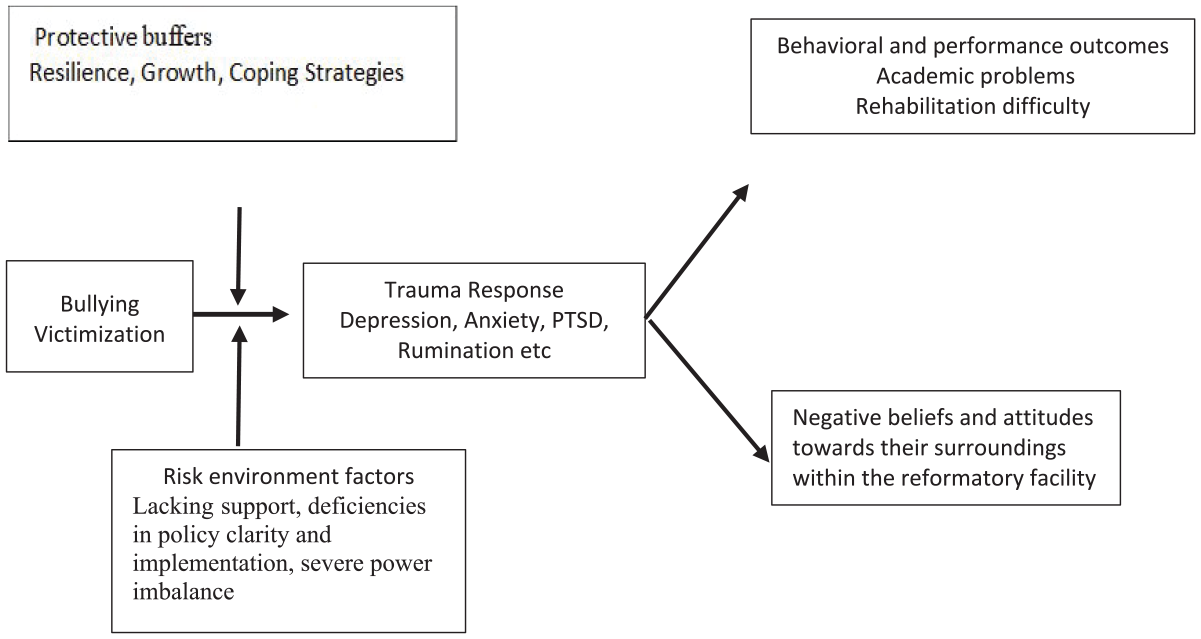
Conceptual framework.
Current Study
This study diverges from traditional quantitative approaches to bullying victimization research (O’Brien, 2019) by embracing a qualitative methodology (Kvale & Brinkmann, 2015) to capture the nuanced experiences of bullied juvenile offenders. Through a qualitative phenomenological case study design, participants can articulate their narratives, perceptions, and coping strategies authentically (Cohen et al., 2011), providing a deeper understanding rooted in lived experiences rather than statistical analysis (Flick, 2002). The rationale for choosing this design was deeply to seek to understand the phenomenon of bullying victimization as it is experienced by juveniles within the reformatory facility and to provide a holistic and nuanced understanding of complex issues, combining the strengths of both phenomenological and case study methodologies (Kvale & Brinkmann, 2015). This approach offers a robust framework for exploring the subjective realities of incarcerated adolescents regarding bullying victimization. It transcends the limitations of quantitative methods and offers a comprehensive insight into the complex nature of victimization in juvenile reformatory facilities, particularly its impact on mental health.
Research questions: The study set out to answer the following: (a) What are the deleterious impacts of bullying victimization on the mental health of juvenile offenders in a reformatory facility? (b)What are some of the coping strategies the victims implore to reduce the impact of bullying victimization and mental health problems? (c) Are the victims aware of any anti-bullying policies regarding bullying victimization?
Methods
Participants
The general study involved 20 juvenile offenders, ranging in age from 11 to 19 years, 10 for individual interviews and 10 for focus group discussions. The study utilized purposeful sampling to capture interviewees’ crucial views and opinions, recognizing their expertise on the subject (Silverman, 2013). This method targeted juvenile offenders with significant bullying victimization experiences through qualitative exploration (Cohen et al., 2011), incorporating preliminary interviews and group discussions. Ethical clearance consistent with Southwest University was sought and approved under IRB number H25119. Participants were approached sensitively, beginning with facility administration approval. Information sessions detailed the study’s purpose. Selection criteria included factors like being a victim, an adolescent, and residing in the juvenile reformatory facility. Before inclusion, participants were asked to describe their experiences with bullying in their personal lives, which helped establish credibility and relevance to the study. Gathering such information ensured that the selected individuals genuinely contribute valuable perspectives to the discussion of bullying victimization. The selection process was enhanced by employing the Olweus Bullying-Victimization Questionnaire (Olweus, 1996) to evaluate participants’ encounters with bullying. Participants were asked to indicate whether they were bullied between the age of 10 and 19 in the juvenile reformatory facility. The answer options were (1) “no,” (2) “lightly bullied for a short period of time,” (3) “lightly bullied for a long period of time,” (4) “severely bullied for a short period of time,” and (5) “severely bullied for a long period of time.” This single-item measure has already been used in previous retrospective research on bullying (Lund & Holstein, 2009; Olweus, 2007). Respondents who answered “no” to this question were not included in the analytic samples. Maximization variation sampling (Benoot et al., 2016) determined the participant count, ensuring a comprehensive documentation of a broad spectrum of experiences, information, and dimensions associated with the phenomenon and context under investigation. This approach facilitated the inclusion of individuals with diverse backgrounds, characteristics, and circumstances, spanning ages from 11 to 19 years to capture developmental variations.
Data saturation, as recommended by Strauss and Corbin (1990), informed the sample size, indicating that new insights ceased to emerge from discussions, thus determining sufficiency in participants. Data saturation was operationalized by assessing when no new themes or information emerged from the data. Indicators included redundancy in participants’ responses, consistency in themes across interviews, and a point where additional interviews did not yield novel insights, signifying that saturation had been reached. Acknowledging the vulnerabilities of incarcerated adolescents, the research provided deliberate sensitization about its objectives and potential benefits, adhering to ethical guidelines for studies involving human subjects who are minors. Participants were given the freedom to withdraw at any point, participation was voluntary, and informed assent was obtained to uphold their rights throughout the study. The juvenile offenders are protected by the Juveniles Act CAP 53 of the Laws of Zambia (Corrections Act, 2021). In line with this act, the authorities for Juvenile Welfare were legally empowered to consent for or on behalf of the participants, with or without parental consent. Consent to interview the juveniles was thus sought from the authorities at Zambia Correctional Service Headquarters and the authorities at the juvenile reformatory facility. The study also considered the United Nations Convention on the Rights of the Child (UNCRC) and the Zambian Constitution, emphasizing adolescents’ rights and providing guidelines for their protection (Child Rights Resource Centre, 2016). Pseudonyms were used throughout the article to protect participants’ identities. Table 1 shows the participants’ demographic profiles alongside their respective periods of incarceration. The Juveniles Act, 2021 stipulates that the maximum detention period of Juvenile offenders spans up to 36 months, subject to considerations of their reformation progress and exhibited character or behavior (Corrections Act, 2021).
Participants’ Demographic Profiles.
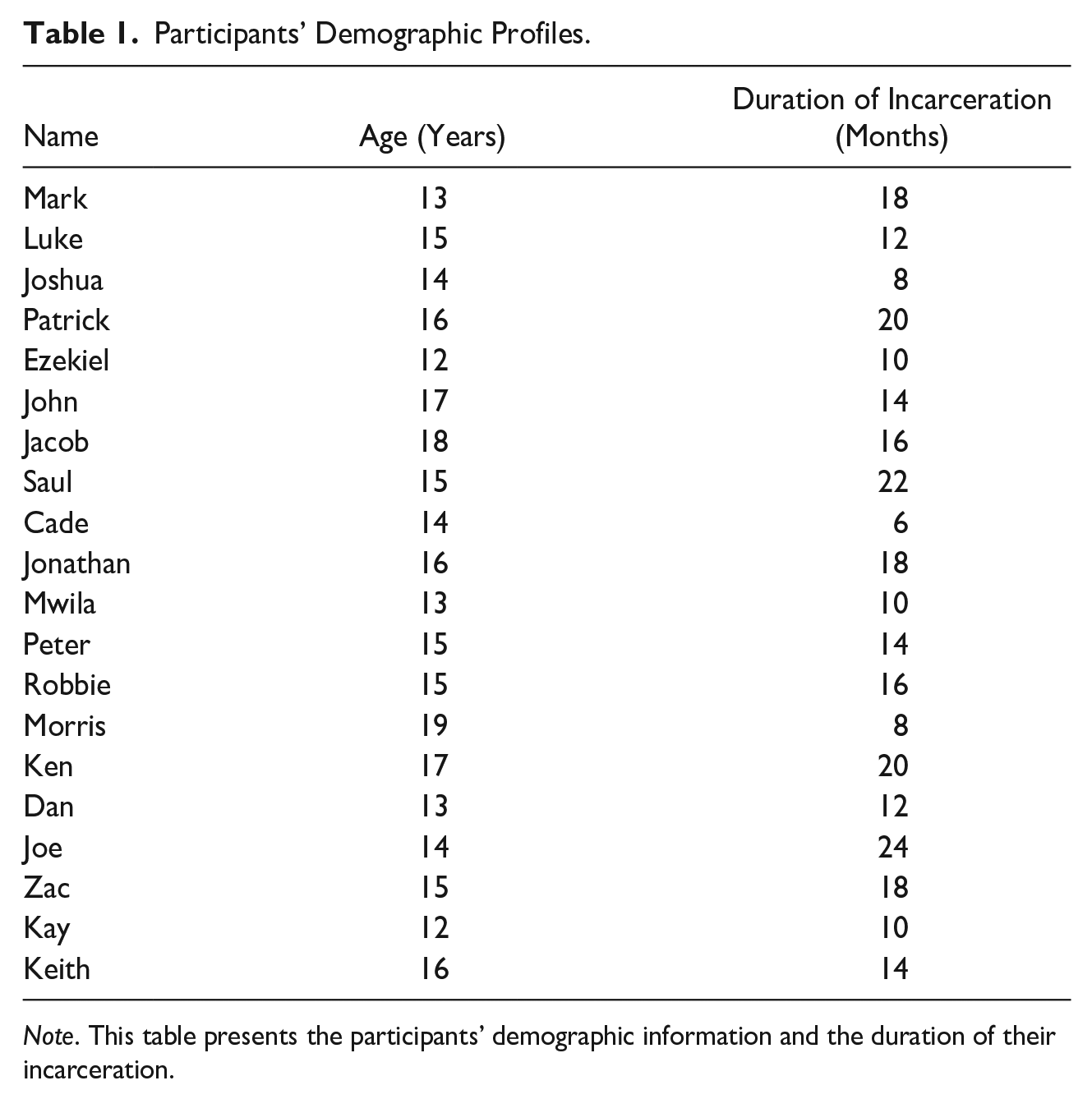
Note. This table presents the participants’ demographic information and the duration of their incarceration.
Procedure
Semi-structured interviews were chosen to explore the participants’ behavior and emotions related to bullying victimization. The collection of data was conducted through in-person, in-depth interviews. Bullying was defined by the participants as behavior that is unwanted, aggressive, repeated over time, or is highly likely to be repeated and involves a power imbalance from youth who are not siblings or intimately involved (Gladden et al., 2014; Olweus, 1993). The types of bullying victimization (e.g., physical, verbal, relational, cyberbullying, or mixed) were also explained. After presenting this definition, respondents were asked to indicate whether they were bullied between the age of 10 and 19. (Lund & Holstein, 2009; Olweus, 2007; Olweus & Limber, 2007).
Ten participants were individually interviewed to explore the specific bullying experiences of juvenile offenders, emphasizing the importance of each participant’s words as highlighted by Seidman (1998). Open-ended questions encouraged participants to express themselves freely in an unbiased setting. Additionally, in line with previous research (Cohen et al., 2011; Morgan, 1988), focus group discussions involving 10 juvenile offenders not part of the individual interviews were conducted to gain a comprehensive understanding of their experiences. Individual interviews employed purposive sampling to gain profound insights from bullying victims relevant to the research questions. Conversely, focus groups utilized homogeneous groups of participants sharing key characteristics as bullying victims to foster open discussion and diverse opinions. Cross-validation process was used to strengthen the study’s credibility. Thematic parallels were used to enhance methodological transparency. While focus groups aimed to facilitate a dynamic exchange of ideas among participants, interviews were designed to elicit deeper, more individualized perspectives from participants.
Both the semi-structured interviews and focus group discussions were guided by interview guides to standardize the process, maintain focus, ensure data consistency, and allow for probing questions. The interview guides were developed by first reviewing existing research to identify key themes and knowledge gaps. Preliminary research questions were then created to guide the interview process. The guide was structured to allow flexibility for follow-up questions and exploration of unexpected themes. A pilot study was carried out with the view of determining the effectiveness of the instruments used in data collection. This is in line with Yin’s (2009) assertion that a pilot study refines data collection plans and develops relevant lines of questions. The pilot study was conducted with four juvenile offenders distinct from the final sample to mitigate bias. This led to modifications in the study design, research questions, methodology, and interview guide based on the outcomes of piloted methods like individual interviews and focus groups, ensuring sharply focused objectives aligned with the study’s aims (Yin, 2009). These methods were vital in collecting relevant and reliable data for the study. The interviews began with open-ended questions like “Please tell us about yourself and your experiences at the juvenile reformatory facility,” followed by probing questions seeking detailed explanations of the participants’ bullying experiences, including initiation, reasons for victimization, types of bullying encountered, and emotional impacts. Participants were also asked about the responses of instructors and teachers to bullying, awareness of anti-bullying policies, and suggestions for beneficial programs for individuals who have experienced bullying. Prior to the interviews, participants were briefed on the study’s objectives and ethical considerations. Special attention was given to the potentially traumatic nature of the research topic. We prioritized participants’ well-being and confidentiality. Interviews were conducted in two local languages—Bemba and Nyanja, as most participants could not express themselves in English, and efforts were made to preserve the essence of their narratives during transcription and translation for clarity. Interviews were audio-recorded for accurate data capture. The total interview time was around 11 h, with each session lasting approximately 50 min. To address potential limitations such as participant behavior during interviews and restricted generalizability due to sample size, measures were taken to enhance credibility and trustworthiness.
Bloor et al. (2001) argue that the venue for focus group is important and should, ideally, be accessible, comfortable, private, quiet, and free from distractions. Therefore, the focus group discussion consisting all 10 participants in one group was held separately in a private setting to ensure confidentiality. It was held in the chapel within the juvenile reformatory facility. Focus group discussions enabled the participants to express themselves freely and spoke out with much enthusiasm. Individual interviews and focus groups ensure a balanced approach to data collection. This method captures a diverse range of perspectives while maintaining a manageable sample size, allowing for both depth and breadth in the insights gathered. To ensure consistency, clear protocols were established before data collection for conducting interviews and focus groups. The interviewers and question guides were kept constant across all modalities, with procedures consistent within each modality. Peer debriefing, structured observation, and detailed data descriptions were used to enrich understanding and credibility.
Structured observations were implemented by observing juvenile offenders in the natural setting of the juvenile reformatory facility to capture real-world dynamics without interference (Patton & Cochran, 2002). This approach provides insights into how juvenile offenders behave in everyday situations within the facility. Checklists were used to observe and record specific behaviors related to bullying victimization and mental health indicators such as signs of depressed mood (Best & Kahn, 2006). Data transcripts were reviewed by participants to ensure accuracy, with researchers developing themes independently and reaching consensus, bolstering the study’s rigor (Baxter & Jack, 2008; Lincoln & Guba, 1985; Welles et al., 2022).
Data Analysis
The study utilized rigorous thematic analysis to explore the effects of bullying victimization on the mental health of incarcerated juvenile offenders, beginning with the transcription of audio recordings and an iterative coding process to identify broad themes and nuanced sub-themes, facilitated by framework matrices for data organization. To enhance this process, NVivo software was employed for transcription via NVivo Transcription, organization of responses, automated coding, sentiment analysis, and data visualization to identify connections between emerging themes (Glaser, 2005). Inter-rater reliability was ensured through consensus coding, where researchers coded transcripts and reconciled differences, alongside the development of a detailed codebook and regular team discussions to fine-tune the codebook, ensuring a consistent and transparent analysis.
Results
The Detrimental Impact of Bullying Victimization on Mental Health
Bullying victimization emerges as a pervasive and deeply impactful experience among juvenile offenders within the reformatory facility. The participant narratives reveal a complex interplay of emotional and psychological challenges resulting from sustained victimization by peers. Structured observations also revealed that bullying incidents were most frequent during unstructured time in the dormitory, workshop, the facility surrounding, and in the dinning. These observations are consistent with focus group findings and individual interviews, where participants reported feeling unsafe in these locations due to the lack of supervision and the presence of certain aggressive individuals.
Anxiety, Fear, and Low Self-Esteem
Juvenile offenders reported ongoing anxiety, fear, low self-esteem, and emotional distress, all intensified by repeated victimization. These persistent experiences contribute to a deepening sense of trauma, reinforcing feelings of helplessness and psychological harm. Observe responses: I am very nervous because I am mostly a target. . . my peers take advantage of my quiet personality making me feel stressed and anxious most of the time. When I arrived as a newly admitted juvenile offender, I was welcomed by slaps from peers who have been here much longer and this went for some time. They say it’s a norm for newcomers. (Ezekiel). I am frustrated and agitated, the senior and long-serving peers at the reformatory facility force me to wash their clothes. If I refuse they resort to beat. I am worried because I don’t know their next move. It makes me upset. (Mwila). It’s a sad and distressing story. There is so much torture and tension. I have been insulted over shared tools in a workshop leading to arguments, escalating into a physical altercation, resulting in me being pushed and sustaining injuries. . .causing overwhelming worry and apprehension. I received multiple verbal threats and insults such as thief, junky, murderer, and defiler because I was charged with defilement. They ridicule you based on the offence you were charged and incarcerated for. This has deeply caused me so much distress and panicking all the time. I am uneasy most times because the pain is unbearable and unpleasant (Robbie).
Victimization is often regarded as a rite of passage for newcomers entering the facility, as well as for juveniles who have committed heinous crimes. The hierarchical structure and power dynamics within the institution may reinforce and perpetuate these practices. Additionally, the confined and controlled environment amplifies the influence of peer pressure and the need to establish dominance, resulting in the normalization of bullying behaviors as part of the social fabric within these contexts. Ultimately, these factors create an environment where bullying victimization is accepted and even expected, leading to persistent anxiety, fear, and low self-esteem among victims.
Depression and Loneliness
Participants grapple with deep depression and loneliness stemming from their experiences of victimization by their peers reflecting the psychological trauma inflicted by continuous emotional and social harm. Participants reflect on their experiences: I feel extremely lonely and desperate most of the time. . . the exclusion by peers from activities and the propagation of hurtful rumors makes me feel low and unwanted. I am miserable. I feel very empty. My peers ignore me and I feel like I am alone. I think everyone is against me. . . most of the time I am alone either in the dormitory or outside hiding somewhere. (Peter). Knowing that I am on my own depresses me. They exclude me from most activities because they are jealousy of my exceptional performance in the workshop and classroom. Once the instructor told everyone to emulate my hard work and they were not happy. I could see the nasty looks and the pernicious whispers. I knew they were talking about me. I feel restless and irritated by their behavior. Now my mood is low and I have lost interest in all activities. (Dan).
Participants’ reported that experiences of relational victimization intensified their emotional distress and exacerbated feelings of depression and loneliness. They resorted to holding back and “hiding” to have a peace of mind. Consequently, the dissemination of false information and the erosion of interpersonal trust fracture social bonds, compounding participants’ sense of marginalization and alienation.
Rumination
The profound impact of victimization leaves a lasting imprint on the minds of the victims, leading to a persistent process of rumination that becomes a daily occurrence. They narrate their ordeal.
Emotionally it’s draining. I keep having flashbacks of everything I have been going through. Thinking about the bullying incidents makes me feel sad. It brings back negative feelings and it is hard to forget all this. It is a horrible experience (Saul). It is a struggle to let go of the pain and hurt from the bullies. The experience has left an indelible mark in my mind. It’s like having an emotional scar which never goes away. I keep thinking about the specific beatings, insults, gossip and torture. . . The hurtful incidents are stuck in my mind. I keep questioning myself what I did to deserve such mistreatment. (Patrick).
Physical Symptoms and Sleep Disturbances
The psychological impact of bullying victimization manifests in tangible physical symptoms. The notable effects include disrupted sleep patterns, loss of appetite, headaches, and nightmares resulting from the replay of victimization experiences: It has affected my desire to eat as I completely lost appetite. Sharing the dining hall with bullies makes the situation worse. See I have lost so much weight because I rarely eat. (Luke). I have bad dreams related to the traumatic experiences of victimization. I keep experiencing recurring and unsettling dreams of being harassed by my peers. (Joe).
The incessant rumination on these experiences prevents juvenile offenders from attaining restorative sleep, further exacerbating their sleep deprivation. Consequently, they experience physical body pains, nightmares, loss of appetite, and headaches.
Behavior and Performance Problems
Our participants also began to reflect on the negative impact of victimization on their academic and rehabilitation programs. The negative feelings of victimization inhibit their ability to actively participate in rehabilitative and education programs, thwarting their prospects for successful reintegration into society: Being bullied has a profound impact on my rehabilitation journey as it has affected my ability to fully concentrate on rehabilitation programs and in the long run reducing my progress and chances toward reintegrating into society (Jacob).
Coping Strategies to Mitigate the Mental Health Problems Derived From Bullying Victimization
Resilience and social support help in mitigating the adverse effects of bullying victimization on mental health. Resilience helps individuals recover from negative emotional experiences. Social support and relationships enhance individual resilience (Seon & Smith-Adcock, 2023). Resilience is influenced by factors like emotional control, coping abilities, and social support. Providing support helps bullied adolescents strengthen their personal resources and minimize negative mental health outcomes.
Resilience and Coping Styles
Amidst the pervasive culture of bullying, some participants exhibit resilience and employ positive coping mechanisms to navigate their challenging circumstances. They shared their approaches: I faced the bullies. With the support of some peers, some instructors/teachers, I built my confidence. I focused on my strengths. I stood up to the bullies and set boundaries. Sometimes I retaliated. I have learnt to be assertive and many times I am forced to defend myself because instructors/teachers are not with us in the dormitory. (Zac).
Despite the adversities they face, some participants draw upon their inner resilience and external support networks to confront bullying and assert their agency. Their narratives underscore the importance of resilience-building strategies in mitigating the adverse effects of bullying victimization and fostering psychological well-being within correctional settings.
Social Support
Social support seems to act an important role in the effects of bullying victimization on mental health among juvenile offenders within the reformatory facility. Some participants highlighted instances of supportive interventions to resist the deleterious effects of bullying victimization. See responses: I was grateful for the intervention of my peers who noticed the bullying and stepped in to help and offer support. Their actions made a significant difference (Joe).
Some other participants acknowledged the positive impact of teacher/instructor support.
The teachers and instructors were empathetic and understood my situation. They gave guidance on how to handle the bullies. They shared strategies on how to be assertive and challenge the bullies. (Robbie).
However, most participants expressed contrasting views regarding support. They expressed dissatisfaction with the insufficient support from their peers within the juvenile reformatory facility. They lamented the absence of intervention from peers, who often either stood by as bystanders or, distressingly, actively contributed to the perpetuation of the bullying culture. They shared their harrowing ordeal, reflecting the pervasive lack of support whilst voicing out their frustrations: Maltreatment became common in my daily life. . . my clothes were forcibly taken by the senior peers (juvenile offenders) who had been in the facility for a longer period. . . nobody showed any concern or took action. (Jonathan).
Moreover, the study also uncovered a deficit in support from teachers/instructors, with some juvenile offenders reporting a lack of meaningful intervention or assistance when bullying incidents were brought to their attention. This failure to address bullying not only thwarted resolution efforts but also exacerbated the emotional toll on victims, fostering feelings of helplessness and depression. Participants recounted poignant experiences that shed light on the inadequacies of support systems within the juvenile facility.
I reported them for frequently laughing at my nose, nothing happened and the bullies found out, and now things are worse. I don’t think reporting does anything, so why bother? (Zac). Whenever I reported, the instructors didn’t do much. It felt like they didn’t take it seriously. . .Once I was told to check where I was going wrong as I can’t be the only one reporting and complaining all the time. We don’t get the much needed help. Once I reported a bully but the instructor exclaimed! “Keep quiet”. Maybe they think we are criminals (Kay). It appears the structure and nature of the reformatory environment makes it very difficult to report bullies.
In summary, the prevailing narrative illuminated systemic deficiencies in the provision of assistance and intervention within the juvenile facility. The participants’ accounts underscored the imperative of fostering a supportive and nurturing environment that prioritizes the well-being and safety of juvenile offenders grappling with bullying victimization.
Deficiencies in Policy Clarity and Implementation
The study also revealed significant challenges regarding the deficiencies in policy clarity and implementation in the reformatory facility, which would impact the symptoms caused by bullying victimization. Despite the existence of established policies aimed at preventing and addressing instances of bullying, their effective implementation remained a point of concern. Consequently, participants’ levels of anxiety, fear, and distress intensify, as they navigate the bullying incidents. They noted: I am afraid. I am scared and I feel lost because I don’t know what to do with bullies. I am very anxious and feel like I can’t do anything about the bullies. I never heard of any anti-bullying policies (Ezekiel). Mark expressed his heartbreak. He echoed this sentiment, lamenting, I feel helpless and hopeless I didn’t even know we had any policies against bullying here. No one ever told us about any anti-bullying policies. We get stranded when bullied because we don’t know the step to take.
The absence of such educational interventions during critical moments left victims feeling abandoned, exacerbating the symptoms of depression, low self-esteem, and a sense of helplessness. A participant added: I felt weak and had no idea how to protect myself because we never have any classes about bullying. If they want us to follow the rules, they should teach us what those rules are. (Kay).
Participants also expressed dissatisfaction with the perceived no response or inconsistency in policy enforcement, which eroded trust in the effectiveness of existing measures. The no or inconsistent response to reported incidents undermines the victims’ confidence. Consequently, victims may be reluctant to come forward leading to heightened levels of abandonment and a sense of powerlessness: I felt so alone, unfair and hurtful because I reported once, but nothing happened. It was just a waste of time. Now, I just try to avoid the bullies instead of reporting. (Keith) reflecting on the lack of tangible outcomes following reporting incidents. There doesn’t seem to be a consistent system in place. Sometimes they don’t take actions to stop bullies. There is inequality and confusion. (Mark).
The no response and inconsistency undermines the credibility of anti-bullying policies and diminishes juvenile offenders’ confidence in the reporting process leading to heightened levels of fear and tension as they grapple with the decision to seek help or suffer in silence. Furthermore, participants highlighted disparities in the application of disciplinary measures, contributing to confusion and leading to a perceived lack of fairness and accountability. This ambiguity in the disciplinary system exacerbates the victims’ symptoms of distress resulting to feelings of frustration and resentment: I saw some peers getting punished for bullying behavior while others got away with it, leaving us without support and protection. It’s disturbing.
This disparity highlights the need for a standardized and equitable approach to disciplinary actions to decrease the symptoms caused by bullying victimization and better protect the victims.
Discussion
This section discusses the results of the study presented above. The current study aimed to investigate the mental health problems caused by bullying victimization among incarcerated juveniles. The structure and organization of the reformatory facility seem to promote bullying because maintenance of discipline and authority has been linked to bullying (Askew, 1989). The results show a great deal of bullying took place as part of initiation ceremonies, and that juvenile offenders new to the reformatory facility were bullied by those who had been there longer and who had seniority. Juveniles did not consider this to be bullying, but rather a rite of passage. This notion of victimization as a rite of passage was also evident in previous studies (Kuo et al., 2014; Teasdale et al., 2016; Wooldredge, 2020), where any perceived difference was enough to subject peers to bullying behaviors. In another study by McGurk and McDougall (1986), initiation ceremonies, such as dormitory death runs, have been described. During the focus group discussions, participants revealed that individual demographic variables such as being newcomers, younger, personality, physical appearance or convicted of serious crimes like murder or defilement lead to certain individuals being targeted as victims of bullying. These factors exacerbate mental health issues, increase trauma and exhaustion. The trauma of being bullied fosters a negative outlook on the facility, reinforcing hostile attitudes and resistance to rehabilitation efforts and other education programs. While similar mental health problems are observed among bullied adolescents, differences exist in the severity, subtypes, and specific concerns of these issues between juvenile offenders and normative adolescents. Bullied juvenile offenders in reformatory settings endure heightened levels of depression, anxiety, fear, loneliness, low self-esteem, and persistent rumination, disrupting their ability to engage in programs effectively. Trauma intensifies emotions such as depression and loneliness, leading to persistent rumination, which differs from bullying in other contexts (e.g., middle school) Ndumba and Ngulube (2018). The subtypes of mental health issues among juvenile offenders vary, with their worries often rooted in a threatening environment, particularly concerns about safety due to bullying and future prospects. This heightened anxiety exacerbates existing mental health issues, such as fear and depression, ultimately affecting their well-being and future opportunities (Gini & Pozzoli, 2009; Miranda et al., 2019; Moore et al., 2017; Savahl et al., 2019; Seals & Young, 2003; Wang et al., 2009). Research on bullying among male juvenile offenders in reformatory facilities offers valuable insights applicable to other populations. However, juvenile offenders may be reluctant to acknowledge bullying, as they do not always perceive it as relevant to their experiences (Randall, 1997; Ireland, 1997). Connell and Farrington (1996) found that victimization had to be severe before juvenile offenders recognized it as bullying, suggesting that their understanding of bullying differs from that of school children. Despite contextual and severity differences, the psychological and social mechanisms underlying bullying remain similar, making some findings transferable across different settings (Gladden et al., 2014).
Coping Strategies to Mitigate the Deleterious Consequences of Bullying Victimization
Our findings have also highlighted the importance of coping strategies in counteracting the adverse consequences of bullying victimization with respect to juvenile offenders’ mental health. First, we find that some positive environment experiences such as strong social support from peers and instructors/teachers, coupled with a positive reformatory environment serve as vital buffers against the psychological toll of bullying, which are in accordance with prior studies (Holt et al., 2018; Ttofi & Farrington, 2011; Waasdorp & Bradshaw, 2015). Second, some personal variables such as positive coping style and resilience also help victims to navigate their challenging circumstances. Psychological resilience theory emphasizes the role of coping mechanisms in mitigating the adverse impacts of bullying victimization (Masten, 2001). Equipping victims with coping skills, fostering resilience through empowerment and self-advocacy, and promoting access to mental health resources are essential strategies in mitigating the impact of bullying on mental well-being (Fergus & Zimmerman, 2005; Gaffney et al., 2019). By nurturing these coping strategies, victims create a supportive framework that bolsters resilience and fosters positive outcomes for juvenile offenders facing bullying victimization. Implementation of evidence-based intervention programs that promote empathy, positive social interactions, and conflict resolution skills may also contribute to reducing victimization rates and mitigating its psychological effects (Espelage et al., 2010; Salmivalli, 1999). The study highlights the necessity for a broader theoretical engagement with the social-ecological model (SEM) to understand the layers of influence on bullying and victimization. The SEM emphasizes that these coping strategies operate within various levels of the social environment, including individual, interpersonal, institutional, community, and societal levels (Bronfenbrenner’s, 1979). Understanding micro-level factors, such as how peer relationships intersect with macro-level influences like school and facility policies and community norms, the study elucidates the mechanisms through which coping strategies operate. By nurturing these coping strategies at multiple levels, victims create a robust framework that supports resilience and leads to positive mental health outcomes for juvenile offenders experiencing bullying victimization. Implementing anti-bullying strategies in juvenile reformatories requires a multifaceted approach encompassing clear policies, comprehensive training (e.g., Bullying Prevention Training Module is a resource that can help lead bullying prevention efforts), and concrete support measures (e.g., offering counseling services to address the emotional and psychological impact of bullying for victims, perpetrators, and bystanders to foster a safer, more supportive environment (Cascardi et al., 2014; Rodkin et al., 2015; Swearer et al., 2009).
Some Environmental Factors Within Reformatory Settings Exacerbating the Symptoms Caused by Bullying Victimization
Focus group discussions and individual interviews with juvenile offenders revealed numerous negative experiences within reformatory facilities. While a few participants received some support from peers and authority figures, most reported a lack of assistance from both groups. This reflects earlier research (Randall, 1997), which highlights the power imbalances common in such environments, where bullies often dominate and victims are reluctant to report abuse. The structured yet poorly supervised nature of reformatories creates conditions that allow bullying to thrive, enabling stronger individuals to establish control over weaker peers (Home Office Prison Service, 1993).
Participants expressed frustration with the reporting process, citing inconsistencies, lack of response, and uneven policy enforcement. These factors contribute to a stressful environment, amplified by the confined setting of reformatories. Victims often experience intensified feelings of depression, loneliness, low self-esteem, and social isolation, as supported by Hall & Killacky (2008). The inability to approach authority figures within these hierarchies fosters an environment conducive to bullying (Ireland, 1995). The constant stress and emotional toll of victimization hinder victims’ participation in activities and social engagement, leading to a more negative perception of their environment. Reformatory facilities have been characterized as “violent environments” where bullying is prevalent (Mandaraka-Sheppard, 1986).
Additionally, victims face physical symptoms of distress and limited access to mental health care, worsening their emotional well-being (Miranda, Barbosa, & Rodrigues, 2019). The poor implementation and unclear nature of anti-bullying policies further harm victims’ mental health, contributing to depression, anxiety, and helplessness. The failure to effectively enforce these policies undermines efforts to create a safe and supportive environment (Olweus & Limber, 2007).
Conclusion
Contributions and Limitations
The study delves into the unique context of a juvenile reformatory facility that is a novel dimension, shedding light on bullying victimization among juvenile offenders. Recommendations include prioritizing victims’ narratives, avoiding victim blaming, and swift resolution of issues by educators and staff interacting closely with victimized offenders (Mungala and Nabuzoka, 2020). We recommend concerted efforts by adults in the justice system to advocate for policy changes that prioritize bullying prevention and support for affected youth. Policymakers must be urged to allocate funds toward anti-bullying programs, providing juvenile reformatory facilities with the resources necessary to implement effective interventions.
A notable limitation of the study’s findings may lack generalizability beyond the specific context of juvenile reformatory facility in Zambia, as experiences in other settings like community-based programs or educational institutions could differ significantly (Desai & Potter, 2006). Secondly, the absence of clear national policies creates climate of fear and silence, making it difficult to address bullying effectively. To improve the safety and well-being of juvenile offenders, it is essential to develop culturally sensitive interventions that challenge these dynamics and promote a more supportive and respectful environment. Future research should focus on exploring the specific cultural factors that contribute to bullying in Zambian juvenile reformatories and evaluating the effectiveness of different intervention strategies. The study highlights the urgent need for comprehensive, trauma-informed interventions to prevent and address bullying in carceral settings.
Footnotes
Declaration of Conflicting Interests
The author(s) declared no potential conflicts of interests with respect to the authorship and/or publication of this article.
Funding
The author(s) disclosed receipt of the following financial support for the research, authorship, and/or publication of this article:
This work was supported by the western project of the National Social Science Fund of China (20XSH025).
